

Years of life gained by multifactorial intervention in patients with type 2 diabetes mellitus and microalbuminuria: 21 years follow-up on the Steno-2 randomised trial
Open accessThe DOI matches its Crossref record; 31 of the 31 references it cites were found in a registry or an index.
Abstract
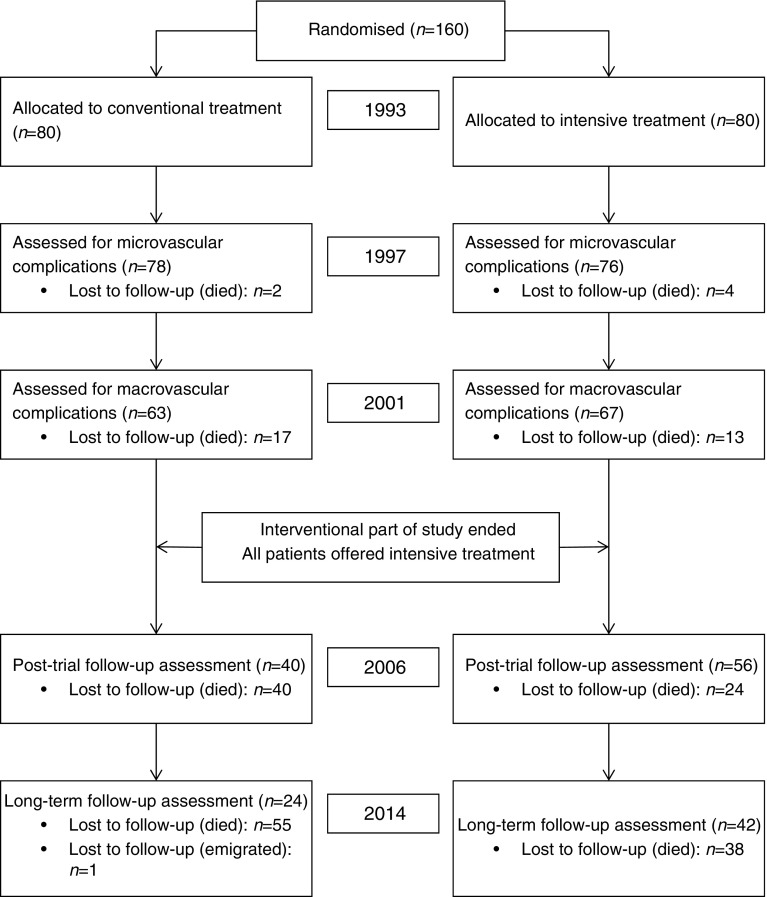
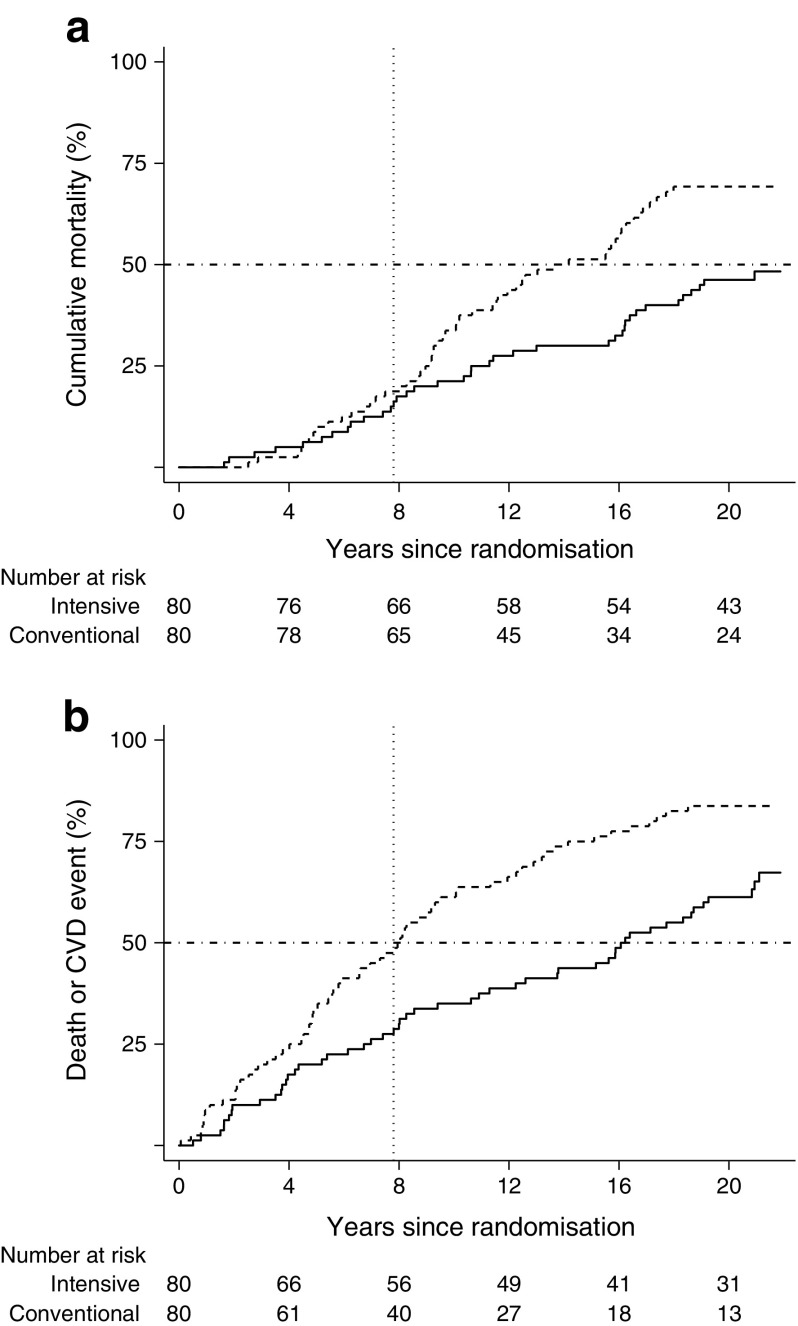
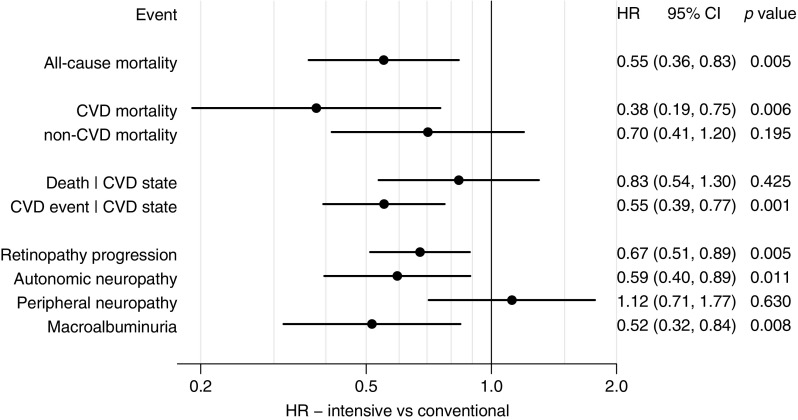
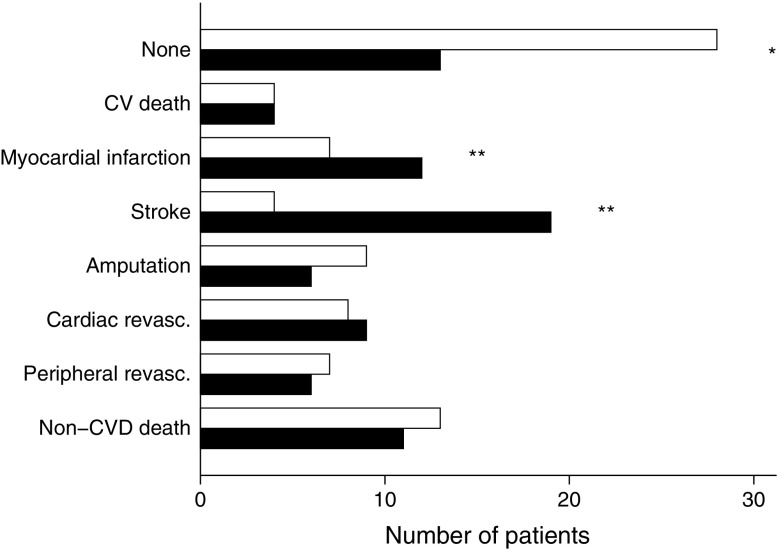
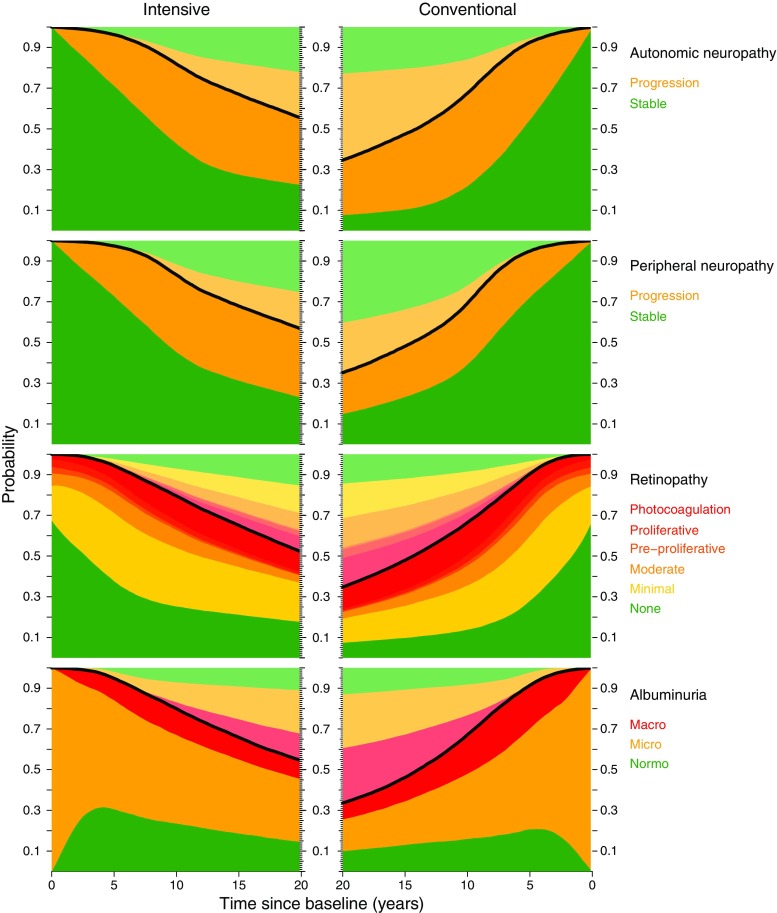
AIMS/HYPOTHESIS: The aim of this work was to study the potential long-term impact of a 7.8 years intensified, multifactorial intervention in patients with type 2 diabetes mellitus and microalbuminuria in terms of gained years of life and years free from incident cardiovascular disease. METHODS: The original intervention (mean treatment duration 7.8 years) involved 160 patients with type 2 diabetes and microalbuminuria who were randomly assigned (using sealed envelopes) to receive either conventional therapy or intensified, multifactorial treatment including both behavioural and pharmacological approaches. After 7.8 years the study continued as an observational follow-up with all patients receiving treatment as for the original intensive-therapy group. The primary endpoint of this follow-up 21.2 years after intervention start was difference in median survival time between the original treatment groups with and without incident cardiovascular disease. Non-fatal endpoints and causes of death were adjudicated by an external endpoint committee blinded for treatment allocation. RESULTS: Thirty-eight intensive-therapy patients vs 55 conventional-therapy patients died during follow-up (HR 0.55 [95% CI 0.36, 0.83], p = 0.005). The patients in the intensive-therapy group survived for a median of 7.9 years longer than the conventional-therapy group patients. Median time before first cardiovascular event after randomisation was 8.1 years longer in the intensive-therapy group (p = 0.001). The hazard for all microvascular complications was decreased in the intensive-therapy group in the range 0.52 to 0.67, except for peripheral neuropathy (HR 1.12). CONCLUSIONS/INTERPRETATION: At 21.2 years of follow-up of 7.8 years of intensified, multifactorial, target-driven treatment of type 2 diabetes with microalbuminuria, we demonstrate a median of 7.9 years of gain of life. The increase in lifespan is matched by time free from incident cardiovascular disease. TRIAL REGISTRATION: ClinicalTrials.gov registration no. NCT00320008. FUNDING: The study was funded by an unrestricted grant from Novo Nordisk A/S.
Overview
The claims and statistics of this paper haven’t been checked yet.
Free: it reads the open-access text and checks the first 5 claims that cite a source we can check. Create a free account to check every claim.
Integrity signals
Registry
Cites
Statistics
Figures
Verification
Claims the paper makes
The claims and statistics of this paper haven’t been checked yet.
Free: it reads the open-access text and checks the first 5 claims that cite a source we can check. Create a free account to check every claim.
Claims other papers make about this one
Each is checked against this paper’s own text: does it say what the citing paper says it does?
The source backs part of the claim, not all of it — or backs it for a different population, condition or comparison.
In the citing paper
“High levels, as well as variability, of both BG and BP are important risk factors for DKD. 89,184,400–403”
From American Association of Clinical Endocrinology Clinical Practice Guideline: Developing a Diabetes Mellitus Comprehensive Care Plan-2022 Update. (2022) · cites this paper as [400]
Experimental — accuracy not yet measuredThe source backs part of the claim, not all of it — or backs it for a different population, condition or comparison.
In the citing paper
“Evidence also supports the use of multifactorial risk-reduction strategies in addition to A1C control for CV prevention, including blood pressure (BP) and lipid targets; CV prevention medications; physical activity and other healthy behaviours; as well as smoking cessation (see Cardiovascular Protection in People with Diabetes chapter, p. S162).”
From Targets for Glycemic Control (2018) · cites this paper as [34]
Experimental — accuracy not yet measuredThe cited source says what the claim attributes to it.
In the citing paper
“Such multifactorial interventions have recently been suggested to lead to not only significant microvascular and CV benefits but also mortality reduction in the 21-year follow up of the Steno-2 study (34).”
From Targets for Glycemic Control (2018) · cites this paper as [34]
The cited source says what the claim attributes to it.
In the citing paper
“The salient results of this study include: increased survival for a median of 7.9 years; 8.1 years longer median time before first CV event; and reduction in all microvascular complications, except for peripheral neuropathy, for participants in the intensive-therapy group compared to the conventional therapy group.”
From Targets for Glycemic Control (2018) · cites this paper as [34]
The cited source says what the claim attributes to it.
In the citing paper
“In addition, studies in people with T2D and early CKD demonstrated the long-term bene fi t of multifactorial intervention on the development of microvascular and macrovascular complications and mortality.”
From KDIGO 2022 Clinical Practice Guideline for Diabetes Management in Chronic Kidney Disease (2022) · cites this paper as [8]
5 more claims about this paper
Create a free account to see every claim other papers make about this one.
Self-check
Percentages, sums and reported differences re-computed from the paper’s own numbers.
The self-check needs the paper’s full text.
Citations
Cites
10-year follow-up of intensive glucose control in type 2 diabetes
Holman, R. R., Paul, S. K., Bethel, M. A., Matthews, D. R., & Neil, H. A. W. (2008) · New England Journal of Medicine · doi:10.1056/nejmoa0806470 · Cited by 7,751 · cited 1×
“Long-term beneficial effects of glucose-lowering treatment in reducing microvascular complications have been demonstrated beyond the duration of a clinical trial in both type 1 and type 2 diabetes [20, 25, 26].”
BackgroundThe Danish Civil Registration System
Pedersen, C. B. (2011) · Scandinavian Journal of Public Health · doi:10.1177/1403494810387965 · Cited by 4,632 · cited 1×
“The registries have proven highly valid and complete [16, 17].”
BackgroundEzetimibe Added to Statin Therapy after Acute Coronary Syndromes
Cannon, C. P., Blazing, M. A., Giugliano, R. P., McCagg, A., White, J. A., Theroux, P., Darius, H., Lewis, B. S., Ophuis, T. O., Jukema, J. W., et al. (2015) · New England Journal of Medicine · doi:10.1056/nejmoa1410489 · Cited by 4,487
Multifactorial intervention and cardiovascular disease in patients with type 2 diabetes
Gæde, P., Vedel, P., Larsen, N., Jensen, G. V. H., Parving, H.-H., & Pedersen, O. (2003) · New England Journal of Medicine · doi:10.1056/nejmoa021778 · Cited by 4,378
Self-citationThe Danish National Patient Register
Lynge, E., Sandegaard, J. L., & Rebolj, M. (2011) · Scandinavian Journal of Public Health · doi:10.1177/1403494811401482 · Cited by 3,968 · cited 1×
“The registries have proven highly valid and complete [16, 17].”
BackgroundEffect of a multifactorial intervention on mortality in type 2 diabetes
Gæde, P., Lund-Andersen, H., Parving, H.-H., & Pedersen, O. (2008) · New England Journal of Medicine · doi:10.1056/nejmoa0706245 · Cited by 3,465 · cited 2×
“All measurement methods were in accordance with previous follow-up protocols [13].”
MethodResultSelf-citationInzucchi, S. E., Bergenstal, R. M., Buse, J. B., Diamant, M., Ferrannini, E., Nauck, M., Peters, A. L., Tsapas, A., Wender, R., & Matthews, D. R. (2015) · Diabetes Care · doi:10.2337/dc14-2441 · Cited by 3,066 · cited 1×
“Over the past two decades, a number of single-risk-factor intervention and post-trial studies have provided evidence for recommending multifactorial treatment of this common disorder (as reviewed in [1]).”
Background(2013) · European Heart Journal · doi:10.1093/eurheartj/eht108 · Cited by 1,955
Changes in diabetes-related complications in the United States, 1990-2010
Gregg, E. W., Li, Y., Wang, J., Rios Burrows, N., Ali, M. K., Rolka, D., Williams, D. E., & Geiss, L. (2014) · New England Journal of Medicine · doi:10.1056/nejmoa1310799 · Cited by 1,749 · cited 2×
“Similar findings have been reported from the ADVANCE (Action in Diabetes and Vascular Disease: Preterax and Diamicron MR Controlled Evaluation) trial examining a combined approach of intensified blood pressure lowering and intensive glucose control [23] as well as from registry-based studies [2, 10].”
BackgroundResultLong-term effects of intensive glucose lowering on cardiovascular outcomes
The ACCORD Study Group (2011) · New England Journal of Medicine · doi:10.1056/nejmoa1006524 · Cited by 1,035
Cited by
Items 501–526 of 526
Yeh, Y.-K., Lin, K.-H., Sheu, W. H., Lo, S.-H., Yeh, Y.-P., Huang, C.-N., Hwu, C.-M., & Lu, C.-H. (2024) · Figshare · doi:10.6084/m9.figshare.25608741
Penno, G., Solini, A., Orsi, E., Bonora, E., Fondelli, C., Trevisan, R., Vedovato, M., Cavalot, F. L., Zerbini, G., Lamacchia, O., et al. (2021) · Figshare · doi:10.6084/m9.figshare.14214588
Penno, G., Solini, A., Orsi, E., Bonora, E., Fondelli, C., Trevisan, R., Vedovato, M., Cavalot, F. L., Zerbini, G., Lamacchia, O., et al. (2021) · Figshare · doi:10.6084/m9.figshare.14214597
Penno, G., Solini, A., Orsi, E., Bonora, E., Fondelli, C., Trevisan, R., Vedovato, M., Cavalot, F. L., Zerbini, G., Lamacchia, O., et al. (2021) · Figshare · doi:10.6084/m9.figshare.14214591
Penno, G., Solini, A., Orsi, E., Bonora, E., Fondelli, C., Trevisan, R., Vedovato, M., Cavalot, F. L., Zerbini, G., Lamacchia, O., et al. (2021) · Figshare · doi:10.6084/m9.figshare.14214594
Penno, G., Solini, A., Orsi, E., Bonora, E., Fondelli, C., Trevisan, R., Vedovato, M., Cavalot, F. L., Zerbini, G., Lamacchia, O., et al. (2021) · Figshare · doi:10.6084/m9.figshare.14214606
Kiburg, K., MacIsaac, A. I., McCluskey, G. E., Sundararajan, V., & MacIsaac, R. J. (2021) · Figshare · doi:10.6084/m9.figshare.16682780
Kuo, Y., Lin, C., & Wang, J. (2025) · Nigerian Journal of Clinical Practice · doi:10.4103/njcp.njcp_567_25
Zhang, Z., Wang, C., Zhou, X., Lu, J., Chen, B., Wu, M. C., Zhang, X., Yang, Y., Cui, J., Xu, W., et al. (2026) · European Journal of Preventive Cardiology · doi:10.1093/eurjpc/zwag012 · Cited by 1
Ceriello, A., Fontanella, A., Attardo, T. M., Beltramello, G., Fierro, A., Prattichizzo, F., Pellegrini, V., Fiore, M. S., Menis, E. D., Maffettone, A., et al. (2026) · Internal and Emergency Medicine · doi:10.1007/s11739-025-04238-1
“Several studies have shown that early and aggressive control of all the most relevant risk factors, in particular hyperglycemia, dyslipidemia and hypertension can effectively prevent the development of these complications [1–3].”
Sone, H. (2026) · Elsevier eBooks · doi:10.1016/b978-0-443-15734-9.00162-x
ОСОБЕННОСТИ ФАРМАКОТЕРАПИИ ФИБРИЛЛЯЦИИ ПРЕДСЕРДИЙ У ПАЦИЕНТОВ С САХАРНЫМ ДИАБЕТОМ
Abbasova, A. F., & Джафарзаде, Ф. Я. (2026) · Успехи геронтологии · doi:10.34922/ae.2025.38.6.014
Eurasian clinical guidelines for the diagnosis and treatment of cardiorenal syndrome (2026)
Mitkovskaya, N. P., Chazova, I. E., Sudzhaeva, O. A., Grigorenko, E., Калачик, О. В., Геннадьевна, Ш. Л., Бранковская, Е. Ю., Смолякова, М. В., Trushina, O. I., Podzolkov, V. I., et al. (2026) · Eurasian heart journal · doi:10.38109/2225-1685-2026-2-6-41
Reduced Tissue Oxygenation and Altered Valsalva Hemodynamics in Young Adults with Type 1 Diabetes
Poulsen, M. B., Julu, P. O. O., Memon, S., Shah, M., & Brock, C. (2026) · International Physiology Journal · doi:10.14302/issn.2578-8590.ipj-26-6121
Flood, D., Wellmann, I. A., Ayala, L. F., Tschida, S., Chary, A. N., Donis, R., Nufio, A. I. A. A., Kilbourne, A. M., Watkins, D., Huffman, M. D., et al. (2026) · Implementation Science Communications · doi:10.1186/s43058-026-00993-0
“While pharmacological treatment of hypertension and diabetes in primary care is highly effective [3–5], only 30% of people with hypertension and 50% of people with diabetes in LMICs are treated, and far fewer are controlled [2, 6].”
Les traitements du diabète de type 2 : les preuves
Bordier, L., & Bauduceau, B. (2026) · La Presse Médicale Formation · doi:10.1016/j.lpmfor.2026.100822
Kwon, S. Y., Kim, G. S., Han, K. D., Lee, K. N., & Kim, J. (2026) · Hypertension Research · doi:10.1038/s41440-026-02726-1
Cosmo, S. D., Lucisano, G., Nicolucci, A., Copetti, M., Menzaghi, C., Cianni, G. D., Russo, G., Candido, R., & Trischitta, V. (2026) · Diabetes Research and Clinical Practice · doi:10.1016/j.diabres.2026.113426
Wu, X. B., Sha, J., Zhang, T., Gu, Y., Zhong, Y., Wang, L., Yuan, Y., & yinquanzhong (2026) · Diabetes Research and Clinical Practice · doi:10.1016/j.diabres.2026.113463
Zhang, Z., Li, L., Yang, M., Chen, W., Xiao, L., Sun, L., & Agarwal, R. (2026) · Nephrology Dialysis Transplantation · doi:10.1093/ndt/gfag179
Early combination therapy in type 2 diabetes: Rethinking initial treatment strategies
Janež, A., Smid, T., Rizzo, M., & Tankova, T. I. (2026) · Journal of Diabetes and its Complications · doi:10.1016/j.jdiacomp.2026.109392
Mateu, N. C., Rossing, P. R., Neergaard, K. P., & Thybo, T. (2026) · BMJ Open Diabetes Research & Care · doi:10.1136/bmjdrc-2026-006034
Self-citationPrise en charge thérapeutique du diabète de type 2
Rigalleau, V., Cherifi, B., Blanco, L., Larroumet, A., Foussard, N., & Mohammedi, K. (2026) · EMC - Traité de médecine AKOS · doi:10.1016/s1634-6939(26)50825-1
The association between albuminuria and coronary atherosclerotic burden in the general population
Pegelow, F. B., Lin, Y., Larsson, A. O., Malinovschi, A., Engström, G., & Ärnlöv, J. (2026) · Atherosclerosis Plus · doi:10.1016/j.athplu.2026.100610
“It has been shown that multifactorial intervention in patients with type 2 diabetes mellitus and micro-albuminuria lower the risk of cardiovascular morbidity and mortality [26].”
Cai, Y., He, S., Zeng, F., & Liu, C. (2026) · Frontiers in Endocrinology · doi:10.3389/fendo.2026.1954392 · Cited by 1
“Early intensive glycemic and multifactorial management provides the strongest clinical evidence for reducing later complications (1 – 6 , 102).”
Continuous Glucose Monitoring Glucometrics and Their Role in Predicting Diabetes Complications
Schweiger, D. Š., Mozzillo, E., & Battelino, T. (2026) · Endocrinology and Metabolism Clinics of North America · doi:10.1016/j.ecl.2026.08.019
Metadata
- Authors
- Gæde, P., Oellgaard, J., Carstensen, B., Rossing, P., Lund-Andersen, H., Parving, H.-H., & Pedersen, O.
- Affiliations
- University of Southern Denmark (DK)
- University of Copenhagen (DK)
- Corresponding author
- Pedersen, Oluf
- Venue
- Diabetologia
- Published
- 2016-08-16
- Volume
- 59
- Issue
- 11
- Pages
- 2298-2307
- ISSN
- 0012-186X (ISSN-L)
- 1432-0428
- PMC
- PMC5506099
- OpenAlex
- W2513040800
- Cited by
- 528
- References
- 31
- Citations by year
- 2026: 28 · 2025: 35 · 2024: 54 · 2023: 49 · 2022: 42 · 2021: 50 · 2020: 56 · 2019: 68 · 2018: 75 · 2017: 57 · 2016: 12
- FWCI
- 71.03
- Type
- journal article
- Language
- en
- Open access
- hybrid
- doi.org
- Locations
- Diabetologia (publishedVersion, cc-by)
- PubMed Central (publishedVersion, cc-by)
- PubMed (publishedVersion)
- Research at the University of Copenhagen (University of Copenhagen) (publishedVersion, cc-by)
- University of Southern Denmark Research Portal (University of Southern Denmark) (submittedVersion, other-oa)
- Funders
- Novo Nordisk
- Topics
- Health Sciences › Medicine › Endocrinology, Diabetes and Metabolism › Diabetes Treatment and Management
- Health Sciences › Medicine › Endocrinology, Diabetes and Metabolism › Diabetes, Cardiovascular Risks, and Lipoproteins
- Health Sciences › Medicine › Endocrinology, Diabetes and Metabolism › Diabetes Management and Research
- Keywords
- type 2 diabetes, microalbuminuria, multifactorial intervention, intensive treatment, Steno-2 trial, life-years gained, survival, cardiovascular disease, microvascular complications, peripheral neuropathy, long-term follow-up
- MeSH terms
- Adult, Aged, Aged, 80 and over, Albuminuria, Cardiovascular Diseases, Diabetes Mellitus, Type 2, Diabetic Nephropathies, Diabetic Neuropathies, Diabetic Retinopathy, Female, Follow-Up Studies, Humans, Hypoglycemic Agents, Male, Middle Aged, Time Factors, Diabetes Complications
About these checks
Registry, retraction, Cites and statistics results are computed, not judged, with one exception: a printed reference that no index lists is read once by a model before it counts as a citation error. Claims are extracted by a model and kept only when their quote appears verbatim in the text; each cited source is then checked, with a model’s help, for whether it says what the claim relies on. Those verdicts can be wrong — read the claim’s quote and the cited source before relying on one.
Statistics and arithmetic are recomputed, not judged.
Confidence bands are shown only for fields calibrated on our annotated test set. None is calibrated yet, so no band is shown.
What counts as a claim ›How we measure confidence ›How we check this ›
Are you an author, or do you see a problem with this page? Request a review
Data sources
Bibliographic data: Semantic Scholar, OpenAlex, Crossref.
Contains information from the Semantic Scholar Academic Graph Datasets, made available under the ODC Attribution License (ODC-BY 1.0).
Semantic Scholar’s data is described in: Kinney, R., et al. (2023). The Semantic Scholar Open Data Platform. arXiv:2301.10140.
