

Years of life gained by multifactorial intervention in patients with type 2 diabetes mellitus and microalbuminuria: 21 years follow-up on the Steno-2 randomised trial
Open accessThe DOI matches its Crossref record; 31 of the 31 references it cites were found in a registry or an index.
Abstract
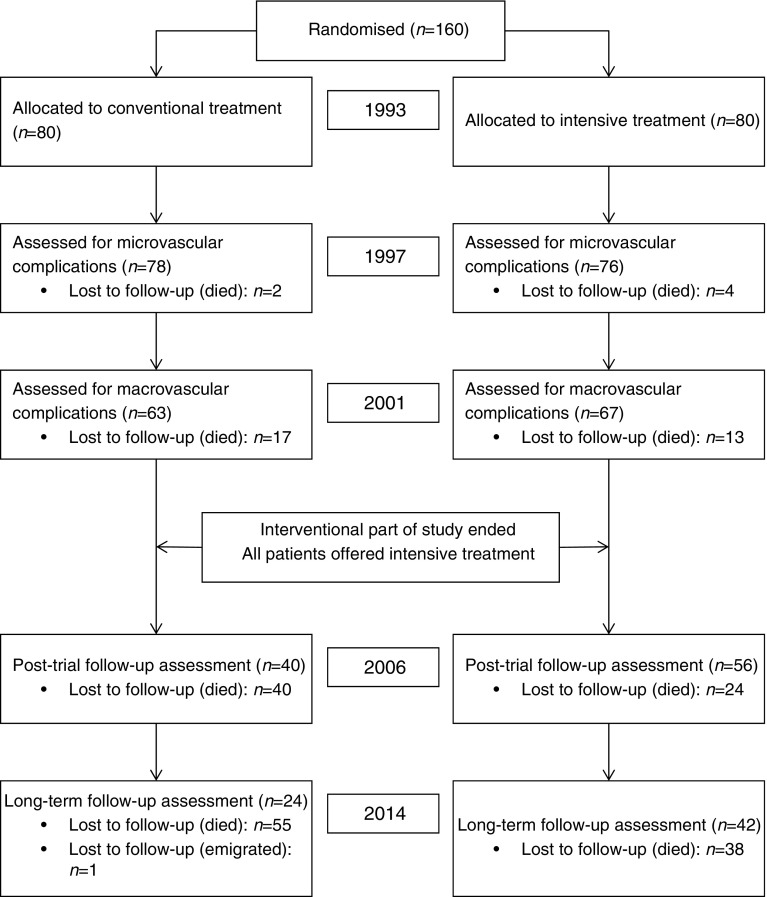
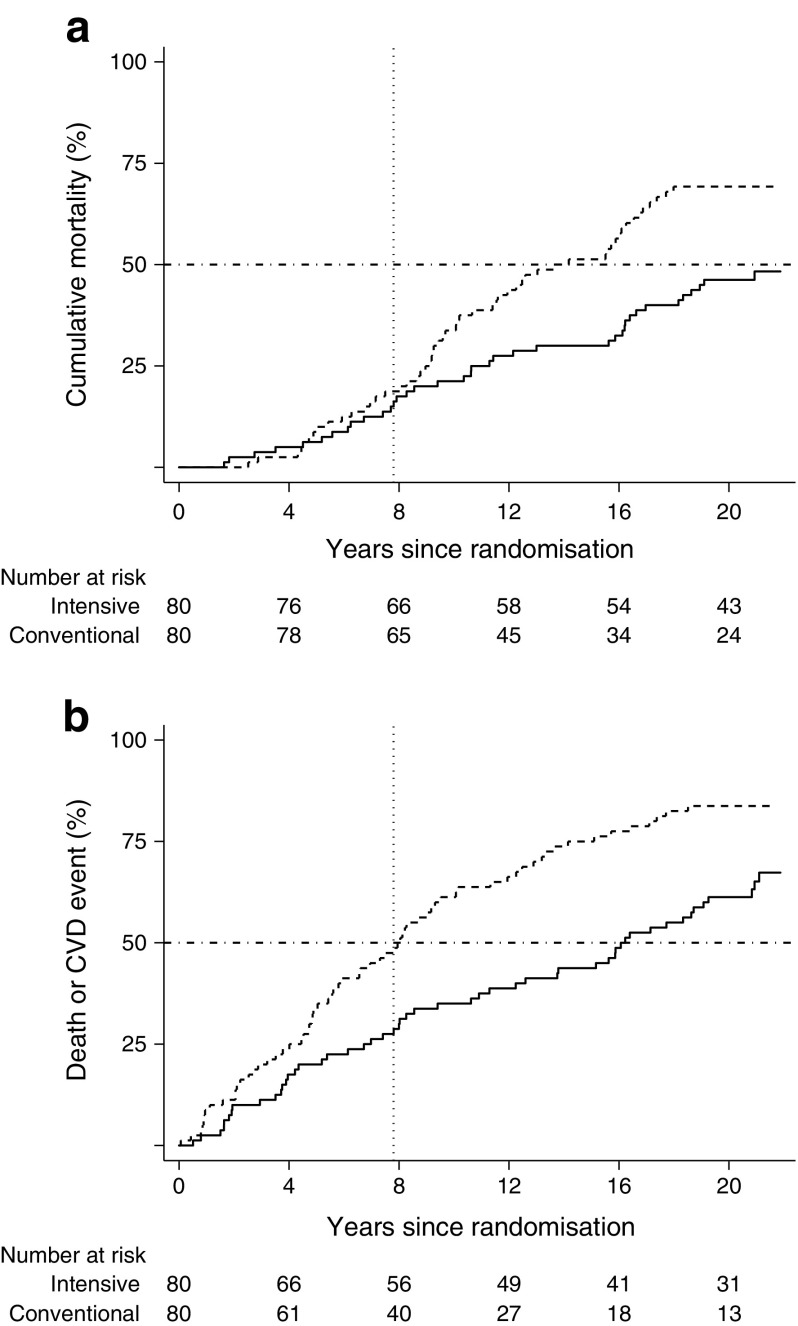
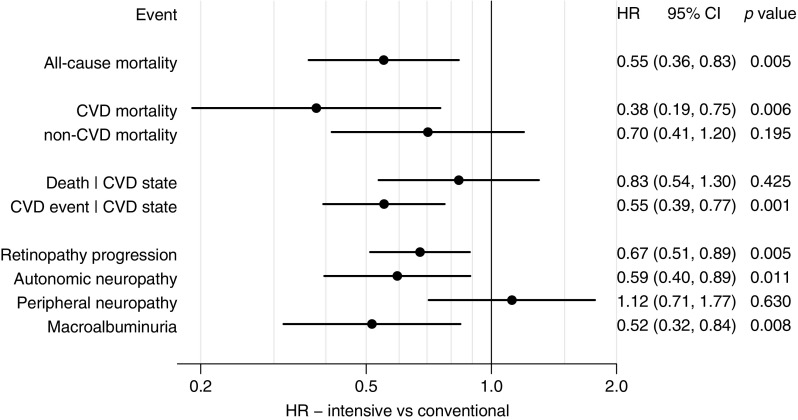
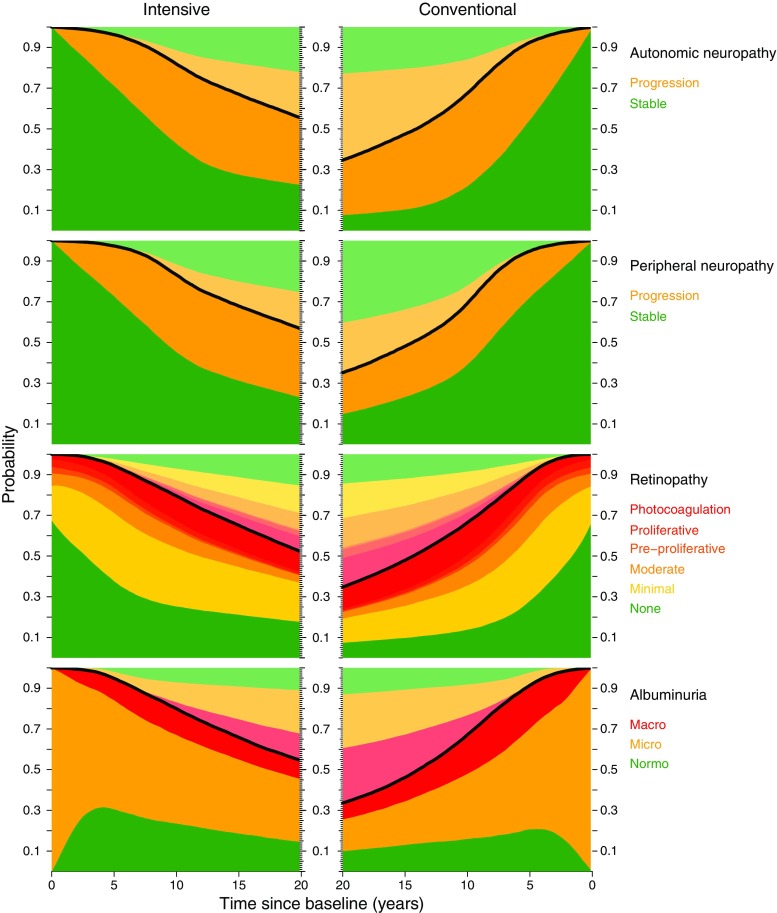
AIMS/HYPOTHESIS: The aim of this work was to study the potential long-term impact of a 7.8 years intensified, multifactorial intervention in patients with type 2 diabetes mellitus and microalbuminuria in terms of gained years of life and years free from incident cardiovascular disease. METHODS: The original intervention (mean treatment duration 7.8 years) involved 160 patients with type 2 diabetes and microalbuminuria who were randomly assigned (using sealed envelopes) to receive either conventional therapy or intensified, multifactorial treatment including both behavioural and pharmacological approaches. After 7.8 years the study continued as an observational follow-up with all patients receiving treatment as for the original intensive-therapy group. The primary endpoint of this follow-up 21.2 years after intervention start was difference in median survival time between the original treatment groups with and without incident cardiovascular disease. Non-fatal endpoints and causes of death were adjudicated by an external endpoint committee blinded for treatment allocation. RESULTS: Thirty-eight intensive-therapy patients vs 55 conventional-therapy patients died during follow-up (HR 0.55 [95% CI 0.36, 0.83], p = 0.005). The patients in the intensive-therapy group survived for a median of 7.9 years longer than the conventional-therapy group patients. Median time before first cardiovascular event after randomisation was 8.1 years longer in the intensive-therapy group (p = 0.001). The hazard for all microvascular complications was decreased in the intensive-therapy group in the range 0.52 to 0.67, except for peripheral neuropathy (HR 1.12). CONCLUSIONS/INTERPRETATION: At 21.2 years of follow-up of 7.8 years of intensified, multifactorial, target-driven treatment of type 2 diabetes with microalbuminuria, we demonstrate a median of 7.9 years of gain of life. The increase in lifespan is matched by time free from incident cardiovascular disease. TRIAL REGISTRATION: ClinicalTrials.gov registration no. NCT00320008. FUNDING: The study was funded by an unrestricted grant from Novo Nordisk A/S.
Overview
The claims and statistics of this paper haven’t been checked yet.
Free: it reads the open-access text and checks the first 5 claims that cite a source we can check. Create a free account to check every claim.
Integrity signals
Registry
Cites
Statistics
Figures
Verification
Claims the paper makes
The claims and statistics of this paper haven’t been checked yet.
Free: it reads the open-access text and checks the first 5 claims that cite a source we can check. Create a free account to check every claim.
Claims other papers make about this one
Each is checked against this paper’s own text: does it say what the citing paper says it does?
The source backs part of the claim, not all of it — or backs it for a different population, condition or comparison.
In the citing paper
“High levels, as well as variability, of both BG and BP are important risk factors for DKD. 89,184,400–403”
From American Association of Clinical Endocrinology Clinical Practice Guideline: Developing a Diabetes Mellitus Comprehensive Care Plan-2022 Update. (2022) · cites this paper as [400]
Experimental — accuracy not yet measuredThe source backs part of the claim, not all of it — or backs it for a different population, condition or comparison.
In the citing paper
“Evidence also supports the use of multifactorial risk-reduction strategies in addition to A1C control for CV prevention, including blood pressure (BP) and lipid targets; CV prevention medications; physical activity and other healthy behaviours; as well as smoking cessation (see Cardiovascular Protection in People with Diabetes chapter, p. S162).”
From Targets for Glycemic Control (2018) · cites this paper as [34]
Experimental — accuracy not yet measuredThe cited source says what the claim attributes to it.
In the citing paper
“Such multifactorial interventions have recently been suggested to lead to not only significant microvascular and CV benefits but also mortality reduction in the 21-year follow up of the Steno-2 study (34).”
From Targets for Glycemic Control (2018) · cites this paper as [34]
The cited source says what the claim attributes to it.
In the citing paper
“The salient results of this study include: increased survival for a median of 7.9 years; 8.1 years longer median time before first CV event; and reduction in all microvascular complications, except for peripheral neuropathy, for participants in the intensive-therapy group compared to the conventional therapy group.”
From Targets for Glycemic Control (2018) · cites this paper as [34]
The cited source says what the claim attributes to it.
In the citing paper
“In addition, studies in people with T2D and early CKD demonstrated the long-term bene fi t of multifactorial intervention on the development of microvascular and macrovascular complications and mortality.”
From KDIGO 2022 Clinical Practice Guideline for Diabetes Management in Chronic Kidney Disease (2022) · cites this paper as [8]
5 more claims about this paper
Create a free account to see every claim other papers make about this one.
Self-check
Percentages, sums and reported differences re-computed from the paper’s own numbers.
The self-check needs the paper’s full text.
Citations
Cites
10-year follow-up of intensive glucose control in type 2 diabetes
Holman, R. R., Paul, S. K., Bethel, M. A., Matthews, D. R., & Neil, H. A. W. (2008) · New England Journal of Medicine · doi:10.1056/nejmoa0806470 · Cited by 7,751 · cited 1×
“Long-term beneficial effects of glucose-lowering treatment in reducing microvascular complications have been demonstrated beyond the duration of a clinical trial in both type 1 and type 2 diabetes [20, 25, 26].”
BackgroundThe Danish Civil Registration System
Pedersen, C. B. (2011) · Scandinavian Journal of Public Health · doi:10.1177/1403494810387965 · Cited by 4,632 · cited 1×
“The registries have proven highly valid and complete [16, 17].”
BackgroundEzetimibe Added to Statin Therapy after Acute Coronary Syndromes
Cannon, C. P., Blazing, M. A., Giugliano, R. P., McCagg, A., White, J. A., Theroux, P., Darius, H., Lewis, B. S., Ophuis, T. O., Jukema, J. W., et al. (2015) · New England Journal of Medicine · doi:10.1056/nejmoa1410489 · Cited by 4,487
Multifactorial intervention and cardiovascular disease in patients with type 2 diabetes
Gæde, P., Vedel, P., Larsen, N., Jensen, G. V. H., Parving, H.-H., & Pedersen, O. (2003) · New England Journal of Medicine · doi:10.1056/nejmoa021778 · Cited by 4,378
Self-citationThe Danish National Patient Register
Lynge, E., Sandegaard, J. L., & Rebolj, M. (2011) · Scandinavian Journal of Public Health · doi:10.1177/1403494811401482 · Cited by 3,968 · cited 1×
“The registries have proven highly valid and complete [16, 17].”
BackgroundEffect of a multifactorial intervention on mortality in type 2 diabetes
Gæde, P., Lund-Andersen, H., Parving, H.-H., & Pedersen, O. (2008) · New England Journal of Medicine · doi:10.1056/nejmoa0706245 · Cited by 3,465 · cited 2×
“All measurement methods were in accordance with previous follow-up protocols [13].”
MethodResultSelf-citationInzucchi, S. E., Bergenstal, R. M., Buse, J. B., Diamant, M., Ferrannini, E., Nauck, M., Peters, A. L., Tsapas, A., Wender, R., & Matthews, D. R. (2015) · Diabetes Care · doi:10.2337/dc14-2441 · Cited by 3,066 · cited 1×
“Over the past two decades, a number of single-risk-factor intervention and post-trial studies have provided evidence for recommending multifactorial treatment of this common disorder (as reviewed in [1]).”
Background(2013) · European Heart Journal · doi:10.1093/eurheartj/eht108 · Cited by 1,955
Changes in diabetes-related complications in the United States, 1990-2010
Gregg, E. W., Li, Y., Wang, J., Rios Burrows, N., Ali, M. K., Rolka, D., Williams, D. E., & Geiss, L. (2014) · New England Journal of Medicine · doi:10.1056/nejmoa1310799 · Cited by 1,749 · cited 2×
“Similar findings have been reported from the ADVANCE (Action in Diabetes and Vascular Disease: Preterax and Diamicron MR Controlled Evaluation) trial examining a combined approach of intensified blood pressure lowering and intensive glucose control [23] as well as from registry-based studies [2, 10].”
BackgroundResultLong-term effects of intensive glucose lowering on cardiovascular outcomes
The ACCORD Study Group (2011) · New England Journal of Medicine · doi:10.1056/nejmoa1006524 · Cited by 1,035
Cited by
Items 101–200 of 526
Tan, E. J. H., Khoo, J. J. C., Gani, L. U., Malakar, R. D., Tay, T. L., Tirukonda, P. S., Kam, J. W., Tin, A. S., & Tang, T. Y. (2019) · Trials · doi:10.1186/s13063-019-3601-3 · Cited by 50
Mancini, G. B. J., Maron, D. J., Hartigan, P. M., Spertus, J. A., Kostuk, W. J., Berman, D. S., Teo, K. K., Weintraub, W. S., & Boden, W. E. (2019) · Journal of the American College of Cardiology · doi:10.1016/j.jacc.2018.11.067 · Cited by 33
Vitale, M., Masulli, M., Rivellese, A. A., Bonora, E., Babini, A. C., Sartore, G., Corsi, L., Buzzetti, R., Citro, G., BALDASSARRE, M. P. A., et al. (2019) · Nutrients · doi:10.3390/nu12010101 · Cited by 36
Varming, A. R., Rasmussen, L. B., Husted, G. R., Olesen, K., Grønnegaard, C., & Willaing, I. (2019) · Patient Education and Counseling · doi:10.1016/j.pec.2019.06.014 · Cited by 35
Amod, A., Buse, J. B., McGuire, D. K., Pieber, T. R., Pop‐Busui, R., Pratley, R. E., Zinman, B., Hansen, M. B., Jia, T., Mark, T., et al. (2019) · Diabetes Therapy · doi:10.1007/s13300-019-00715-x · Cited by 34
State-of-the-art pharmacotherapy for diabetic neuropathy
Azmi, S., Alam, U., Burgess, J., & Malik, R. A. (2020) · Expert Opinion on Pharmacotherapy · doi:10.1080/14656566.2020.1812578 · Cited by 32
“the 21-year follow-up analysis [57], but had no impact on DPN.”
BackgroundSk, S., Singh, R., Singh, S. K., Iquebal, M. A., Jaiswal, S., & Singh, A. (2022) · Diabetes Metabolic Syndrome and Obesity · doi:10.2147/dmso.s363311 · Cited by 31
Epigenetics of the Pathogenesis and Complications of Type 2 Diabetes Mellitus
Mannar, V., Boro, H., Patel, D., Agstam, S., Dalvi, M., & Bundela, V. (2023) · touchREVIEWS in Endocrinology · doi:10.17925/ee.2023.19.1.46 · Cited by 50
Metabolic Karma—The Atherogenic Legacy of Diabetes: The 2017 Edwin Bierman Award Lecture
Cooper, M. E., El‐Osta, A., Allen, T. J., Watson, A. M. D., Thomas, M. C., & Jandeleit-Dahm, K. A. M. (2018) · Diabetes · doi:10.2337/dbi18-0010 · Cited by 35
“For example, in the Steno-2 study and in its most recent report of the follow-up phase, at least a decade after cessation of the active treatment phase, there remained a high risk of death, primarily from CV disease despite aggressive control of the traditional risk factors, in this originally microalbuminuric populat…”
MethodCavaiola, T. S., Kiriakov, Y., & Reid, T. (2019) · Clinical Therapeutics · doi:10.1016/j.clinthera.2018.11.015 · Cited by 33
“354 death from CV causes.(28,29) However, intensive therapy was reported to lead to an increase in overall mortality rate and CV deaths in a study including an older, higher risk population with established CV disease or additional CV risk factors (eg, evidence of significant atherosclerosis, or at least 2 additional…”
BackgroundWang, Z., Wang, J., Hu, J., Chen, Y., Dong, B., & Wang, Y. (2021) · Life Sciences · doi:10.1016/j.lfs.2021.119069 · Cited by 31
Intensified Multifactorial Intervention in Patients with Type 2 Diabetes Mellitus
Sasako, T., Yamauchi, T., & Ueki, K. (2023) · Diabetes & Metabolism Journal · doi:10.4093/dmj.2022.0325 · Cited by 35
“9 years, as well as a significant reduction in other events [23].”
BackgroundGastaldi, G., Lucchini, B., Thalmann, S., Alder, S., Laimer, M. W., Brändle, M., Wiesli, P., Lehmann, R., & Working group of the SGED/SSED (2023) · Swiss Medical Weekly · doi:10.57187/smw.2023.40060 · Cited by 38
Gæde, P., Oellgaard, J., Kruuse, C., Rossing, P., Parving, H.-H., & Pedersen, O. (2019) · Diabetologia · doi:10.1007/s00125-019-4920-3 · Cited by 29
Self-citationKimando, M. W., Otieno, F. C. F., Ogola, E. N., & Mutai, K. (2017) · BMC Endocrine Disorders · doi:10.1186/s12902-017-0223-1 · Cited by 33
Handelsman, Y. (2019) · Advances in Therapy · doi:10.1007/s12325-019-01054-w · Cited by 34
Wang, K., Zhao, S., Lee, E. K. P., Yau, S. Z.-M., Wu, Y., Hung, C.-T., & Yeoh, E. (2024) · JAMA Network Open · doi:10.1001/jamanetworkopen.2023.55733 · Cited by 38
Fountoulakis, N., Miyamoto, Y., Pavkov, M. E., Karalliedde, J. J., & Maltese, G. (2024) · Diabetic Medicine · doi:10.1111/dme.15464 · Cited by 31
Kalra, S., Ghosh, S. K., Aamir, A., Ahmed, M. T., Amin, M. F., Bajaj, S., Baruah, M., Bulugahapitiya, U., Das, A., Giri, M., et al. (2016) · Indian Journal of Endocrinology and Metabolism · doi:10.4103/2230-8210.196029 · Cited by 31
“Indian Journal of Endocrinology and Metabolism / Jan‐Feb 2017 / Vol 21 | Issue 1 212 control of glycemia, body weight, blood pressure (BP), and lipids, has convincingly demonstrated health benefits beyond the control of any single risk factor.[3] This, coupled with the multifactorial pathogenesis of diabetes, necessit…”
Cseh, D., Climie, R. E., Offredo, L., Guibout, C., Thomas, F., Zanoli, L., Danchin, N., Sharman, J. E., Laurent, S., Jouven, X., et al. (2020) · Arteriosclerosis, Thrombosis, and Vascular Biology · doi:10.1161/atvbaha.120.314102 · Cited by 25
Philis-Tsimikas, A., Wysham, C. H., Hardy, E., Han, J., & Iqbal, N. (2019) · Journal of Diabetes and its Complications · doi:10.1016/j.jdiacomp.2018.11.012 · Cited by 25
Strategies for Diabetes Management: Using Newer Oral Combination Therapies Early in the Disease
Zonszein, J., & Groop, P. (2016) · Diabetes Therapy · doi:10.1007/s13300-016-0208-5 · Cited by 33
“In the recently published long-term follow-up to the Steno-2 trial of patients with T2DM and microalbuminuria, more intensified, multifactorial, target-driven treatment resulted in an almost 8-year longer survival with fewer CV complications [17].”
BackgroundAndersson, T., Hjerpe, P., Carlsson, A. C., Pivodic, A., Wändell, P. E., Manhem, K., & Boström, K. B. (2018) · Diabetes Research and Clinical Practice · doi:10.1016/j.diabres.2018.01.038 · Cited by 27
Estándares SEA 2019 para el control global del riesgo cardiovascular
Mostaza, J. M., Pintó, X., Armario, P., Masana, L., Ascaso, J. F., Valdivielso, P., Velilla, T. A., Brea, Á., Calmarza, P., Cebollada, J., et al. (2019) · Clínica e Investigación en Arteriosclerosis · doi:10.1016/j.arteri.2019.03.004 · Cited by 84
Perco, P., Pena, M. J., Heerspink, H. J. L., & Mayer, G. J. (2018) · Kidney International Reports · doi:10.1016/j.ekir.2018.12.001 · Cited by 26
“Paradoxically, the recent improvements in cardiovascular survival will allow more patients to develop renal impairment.(4,5) The aim of this viewpoint article was to summarize evidence on the variation of DKD disease progression and the variation of therapy response.”
BackgroundSadeghi, M. B., Nakhaee, A., Saravani, R., Sadeghi, M., Sargazi, S., & Nia, M. H. (2021) · International Journal of Diabetes in Developing Countries · doi:10.1007/s13410-020-00898-1 · Cited by 23
Bala, C. G., Cerghizan, A., Mihai, B. M., Moise, M., & Guja, C. (2022) · BMJ Open · doi:10.1136/bmjopen-2022-060852 · Cited by 26
Laurberg, T., Graversen, S. B., Sandbæk, A., Wild, S. H., Vos, R. C., & Støvring, H. (2024) · The Lancet Regional Health - Europe · doi:10.1016/j.lanepe.2024.100909 · Cited by 30
“24 Although dementia-related asMRs also rose for those without diabetes, our study revealed a 15% higher increase per decade in individuals with T2D compared to those without diabetes.”
Rouland, A., Thuillier, P., Al‐Salameh, A., Benzerouk, F., Bahougne, T., Tramunt, B., Berlin, I., Clair, C., Thomas, D., Faou, A.-L. L., et al. (2024) · Annales d Endocrinologie · doi:10.1016/j.ando.2024.08.001 · Cited by 33
Nova abordagem para o tratamento da diabetes: da glicemia à doença cardiovascular
Aguíar, C., Duarte, R., & Carvalho, D. M. (2019) · Revista Portuguesa de Cardiologia · doi:10.1016/j.repc.2018.03.013 · Cited by 50
Hellgren, M. I., Svensson, A., Franzén, S., Ericsson, Å., Guðbjörnsdóttir, S., Ekström, N., Bertilsson, R., Valentine, W. J., & Malkin, S. J. P. (2021) · Diabetes Obesity and Metabolism · doi:10.1111/dom.14376 · Cited by 23
Bjerg, L., Dalsgaard, E., Norman, K., Isaksen, A. A., & Sandbæk, A. (2022) · BMJ Open · doi:10.1136/bmjopen-2021-060410 · Cited by 22
Araki, E., Tanaka, A., Inagaki, N., Ito, H., Ueki, K., Murohara, T., Imai, K., Sata, M., Sugiyama, T., Ishii, H., et al. (2020) · Circulation Journal · doi:10.1253/circj.cj-20-0865 · Cited by 26
“The Steno-2 trial is a representative study that showed the importance of comprehensive intervention in patients with diabetes [141, 234, 235].”
BackgroundKhunti, K., Gavin, J. R., Boulton, A. J. M., Blickstead, R., McGill, M. J., Ceriello, A., Raz, I., SADIKOT, S. M., Wood, D., Cos, X., et al. (2018) · Primary care diabetes · doi:10.1016/j.pcd.2018.04.003 · Cited by 26
Cardiovascular Risk/Disease in Type 2 Diabetes Mellitus
Román, G., & Stoian, A. P. (2021) · IntechOpen eBooks · doi:10.5772/intechopen.97422 · Cited by 31
EMPA-REG OUTCOME: The Cardiologist's Point of View
Pham, S. V., & CHILTON, R. J. (2017) · The American Journal of Cardiology · doi:10.1016/j.amjcard.2017.05.011 · Cited by 21
Ng, I. H. Y., Cheung, K. K.-T., Yau, T., Chow, E., Ozaki, R., & Chan, J. C. N. (2018) · Endocrinology and Metabolism · doi:10.3803/enm.2018.33.1.17 · Cited by 22
Gæde, J., Oellgaard, J., Ibsen, R., Gæde, P., Nørtoft, E., Parving, H., Kjellberg, J., & Pedersen, O. B. (2018) · Diabetologia · doi:10.1007/s00125-018-4739-3 · Cited by 21
Self-citationKim, G. S., Park, J. H., & Won, J. C. (2019) · Endocrinology and Metabolism · doi:10.3803/enm.2019.34.2.106 · Cited by 20
Nakajima, H., Hashimoto, Y., Kaji, A., Sakai, R., Takahashi, F., Yoshimura, Y., Bamba, R., Okamura, T., Kitagawa, N., Majima, S., et al. (2020) · Journal of Diabetes Investigation · doi:10.1111/jdi.13459 · Cited by 17
Mezquita‐Raya, P., de Arellano, A. R., Kragh, N., Vega-Hernandez, G., Pöhlmann, J., Valentine, W. J., & Hunt, B. (2017) · Diabetes Therapy · doi:10.1007/s13300-017-0239-6 · Cited by 19
TEMD Study Group, Bayram, F., Sönmez, A., Haymana, C., Sabuncu, T., Dizdar, O. S., Gürkan, E., Çarlıoğlu, A., Ağbaht, K., Özdemir, D., et al. (2020) · Lipids in Health and Disease · doi:10.1186/s12944-020-01408-2 · Cited by 28
Comprehensive Cardiovascular and Renal Protection in Patients with Type 2 Diabetes
Conde, A. C., Martín, D. M., Ruíz, R. C., Olmo, M. R. F., Ariño, C. M., Gómez‐Doblas, J. J., Górriz, J. L., Mazón‐Ramos, P., García–Moll, X., Soler, M. J., et al. (2023) · Journal of Clinical Medicine · doi:10.3390/jcm12123925 · Cited by 23
Vora, J. P., Cherney, D. Z. I., Kosiborod, M., Spaak, J., Kanumilli, N., Khunti, K., Lam, C. S. P., Bachmann, M., Fenici, P., & the CaReMe Global Alliance (2024) · Diabetes Obesity and Metabolism · doi:10.1111/dom.15485 · Cited by 32
“57 However, a later large cohort study showed that a residual HF risk remained for most T2D patients compared with the general population, despite optimal risk factor control minimizing risk of death, MI and stroke.”
BackgroundPrato, S. D., & CHILTON, R. J. (2017) · Diabetes Obesity and Metabolism · doi:10.1111/dom.13169 · Cited by 23
Chazova, I. E., Shestakova, M. V., Zhernakova, Y. V., Blinova, N. V., Маркова, Т. Н., Mazurina, N. V., Владиславович, Е. М., Tereshchenko, S. N., Жиров, И. В., Komarov, A. L., et al. (2021) · Eurasian heart journal · doi:10.38109/2225-1685-2021-2-6-61 · Cited by 27
Stidsen, J. V., Nielsen, J. S., Henriksen, J. E., Friborg, S. G., Thomsen, R. W., Olesen, T. B., Olsen, M. H., & Beck‐Nielsen, H. (2017) · BMJ Open · doi:10.1136/bmjopen-2017-017493 · Cited by 19
“Importance of multifactorial management of t2d The Steno 2 study underlined the importance of multifactorial intervention in longer-standing T2D with a marked and durable reduction in morbidity and mortality associated with multifactorial intervention.(1) A multifactorial approach is also emphasised in the current dia…”
BackgroundAge at diagnosis of type 2 diabetes and cardiovascular risk factor profile: A pooled analysis
Barker, M. M., Zaccardi, F., Brady, E. M., Gulsin, G. S., Hall, A. P., Henson, J., Htike, Z. Z., Khunti, K., McCann, G. P., Redman, E. L., et al. (2022) · World Journal of Diabetes · doi:10.4239/wjd.v13.i3.260 · Cited by 19
Insulin Receptors and Insulin Action in the Heart: The Effects of Left Ventricular Assist Devices
Pantazi, K., Karlafti, E., Bekiaridou, Α., Didagelos, M., Ziakas, A., & Didangelos, T. (2022) · Biomolecules · doi:10.3390/biom12040578 · Cited by 18
“Hospitalization for patients with HF tends to be very difficult since the circumstances are very demanding and challenging [57].”
BackgroundAsghar, S., Asghar, S., Mahmood, T., Bukhari, S. M. H., Mumtaz, M. H., & Rasheed, A. (2023) · Cureus · doi:10.7759/cureus.43190 · Cited by 30
Pandey, A. K., Suskin, N., & Poirier, P. (2017) · Canadian Journal of Cardiology · doi:10.1016/j.cjca.2017.09.019 · Cited by 18
“In patients with type 2 diabetes (T2D), multifactorial treatment, including both behavioural and pharmacologic approaches, may help to reduce the progression of diabetes complications such as microvascular and macrovascular complications.(1,2) Historically, diabetes exercise programs have focused on longer-duration, l…”
BackgroundAntidiabetic Activity of Date Seed Methanolic Extracts in Alloxan-Induced Diabetic Rats
Ayatollahi, S. A. (2019) · Pakistan Veterinary Journal · doi:10.29261/pakvetj/2019.099 · Cited by 19
Kar, D., El-Wazir, A., Delanerolle, G., Forbes, A., Sheppard, J. P., Nath, M., Joy, M., Cole, N. I., Arnold, J. R., Lee, A., et al. (2022) · EClinicalMedicine · doi:10.1016/j.eclinm.2022.101544 · Cited by 19
Liu, X., Chen, D., Fu, H., Liu, X., Zhang, Q.-M., Zhang, J., Ding, M., Wen, J., & Chang, B. (2023) · Frontiers in Public Health · doi:10.3389/fpubh.2023.1128069 · Cited by 23
The Epidemiology of Diabetic Neuropathy
Hansen, C. S., Määttä, L. L., Andersen, S. T., & Charles, M. H. (2023) · Contemporary Diabetes · doi:10.1007/978-3-031-15613-7_2 · Cited by 17
Inagaki, N., Harashima, S., & Iijima, H. (2018) · Expert Opinion on Pharmacotherapy · doi:10.1080/14656566.2018.1473378 · Cited by 18
FITCHETT, D. H. (2018) · touchREVIEWS in Endocrinology · doi:10.17925/ee.2018.14.2.40 · Cited by 19
The Importance and Role of Multiple Risk Factor Control in Type 2 Diabetes
Nørgaard, C. H., Mosslemi, M., Lee, C. J., Torp-Pedersen, C. T., & Wong, N. D. (2019) · Current Cardiology Reports · doi:10.1007/s11886-019-1123-y · Cited by 20
The Legacy Effect in the Prevention of Cardiovascular Disease
Esmel, E. V., Naval-Álvarez, J., & Sacanella, E. (2020) · Nutrients · doi:10.3390/nu12113227 · Cited by 20
“9 and 8 years, respectively, compared to patients in the standard treatment group (Table 4) [63,64].”
BackgroundResultthe directors of the JCS, J., Araki, E., Tanaka, A., Inagaki, N., Ito, H., Ueki, K., Murohara, T., Imai, K., Sata, M., Sugiyama, T., et al. (2020) · Diabetology International · doi:10.1007/s13340-020-00471-5 · Cited by 17
“The Steno-2 trial is a representative study that showed the importance of comprehensive intervention in patients with diabetes [141, 234, 235].”
BackgroundDunger, D. B. (2017) · Diabetic Medicine · doi:10.1111/dme.13299 · Cited by 18
Diabetic Peripheral Neuropathy: New Diagnostics and Treatment Perspectives
Dubský, M., Sojáková, D., Fejfarová, V., & Jude, E. B. (2025) · Drugs & Aging · doi:10.1007/s40266-025-01267-5 · Cited by 29
Type 2 diabetes and treatment intensification in primary care in Finland
NISKANEN, L. K., Hahl, J., Haukka, J. K., Leppä, E., Miettinen, T. A., Mushnikov, V., Sipilä, R., Tamminen, N., Vattulainen, P., & Korhonen, P. (2018) · Acta Diabetologica · doi:10.1007/s00592-018-1199-7 · Cited by 16
Risk factor reduction in type 2 diabetes demands a multifactorial approach
Rydén, L., Ferrannini, G., & Mellbin, L. (2019) · European Journal of Preventive Cardiology · doi:10.1177/2047487319872015 · Cited by 21
Risk factor control and cardiovascular events in patients with type 2 diabetes mellitus
Song, D. K., Hong, Y. S., Sung, Y., & Lee, H. (2024) · PLoS ONE · doi:10.1371/journal.pone.0299035 · Cited by 22
“Fortunately, multiple cardio-vascular risk factor interventions, including drug combinations and behavior modifications, reduced the incidence of cardiovascular events and mortality among patients with diabetes with albuminuria in the Steno-2 Study [5–7].”
BackgroundWebb, D. R., Dales, J., Zaccardi, F., Hill, S., Moore, C., Farooqi, A., Griffin, S. J., Davies, M. J., & Khunti, K. (2018) · Diabetes/Metabolism Research and Reviews · doi:10.1002/dmrr.3111 · Cited by 19
Safai, N., Carstensen, B., Vestergaard, H., & Ridderstråle, M. (2018) · BMJ Open · doi:10.1136/bmjopen-2017-019214 · Cited by 19
“Insulin, N (%) 4299 836 (19) 346 (20) 490 (19)”
Self-citationAl-Arifi, M. N., & Al‐Omar, H. A. (2018) · Saudi Medical Journal · doi:10.15537/smj.2018.7.22194 · Cited by 21
Didangelos, T., & Veves, A. (2019) · Current Vascular Pharmacology · doi:10.2174/1570161117666190521101342 · Cited by 17
Williams, D. M., Atkinson, M., & Evans, M. (2023) · Stroke · doi:10.1161/strokeaha.122.042109 · Cited by 18
EMPA-REG OUTCOME: The Cardiologist's Point of View
Pham, S. V., & CHILTON, R. J. (2017) · The American Journal of Medicine · doi:10.1016/j.amjmed.2017.04.006 · Cited by 18
Yu, C. H. Y., Casey, C. G., Ke, C., Lebovic, G., & Straus, S. E. (2018) · Canadian Journal of Diabetes · doi:10.1016/j.jcjd.2018.08.189 · Cited by 16
New approach to diabetes care: From blood glucose to cardiovascular disease
Aguíar, C., Duarte, R., & Carvalho, D. M. (2019) · Revista Portuguesa de Cardiologia (English Edition) · doi:10.1016/j.repce.2019.01.001 · Cited by 23
An updated review of lipid‐modifying therapy
Simons, L. A. (2019) · The Medical Journal of Australia · doi:10.5694/mja2.50142 · Cited by 18
Raebel, M. A., Dyer, W., Nichols, G. A., Goodrich, G. K., & Schmittdiel, J. A. (2017) · Pharmacotherapy The Journal of Human Pharmacology and Drug Therapy · doi:10.1002/phar.1994 · Cited by 17
“Mean days’ supply of ACEI/ARB or statin dispensed at each dispensing < 31 Not applicable 3526 (4) 4140 (4) 31–60 Not applicable 4732 (5) 4654 (5) 61–90 Not applicable 17,729 (21) 39,813 (43) > 90 Not applicable 60,133 (70) 44,669 (48) ACEI/ARB or statin refilled via mail order pharmacy (% in year) 0 Not applicable 39,…”
Winocour, P. H., Bain, S. C., Chowdhury, T. A., De, P., Pokrajac, A., Fogarty, D. G., Frankel, A., Banerjee, D., Wahba, M. M., & Dasgupta, I. (2018) · British Journal of Diabetes · doi:10.15277/bjd.2018.172 · Cited by 21
Evidence-Based Cardiovascular Risk Management in Diabetes
Mooradian, A. D. (2019) · American Journal of Cardiovascular Drugs · doi:10.1007/s40256-019-00336-6 · Cited by 16
Bril, F., Berg, G. A., Barchuk, M., & Nogueira, J. P. (2025) · Journal of Lipid and Atherosclerosis · doi:10.12997/jla.2025.14.1.5 · Cited by 17
Hunt, B., McConnachie, C. C., Gamble, C. L., & Dang‐Tan, T. (2017) · Journal of Medical Economics · doi:10.1080/13696998.2017.1347793 · Cited by 16
Work-loss years among people diagnosed with diabetes: a reappraisal from a life course perspective
von Bonsdorff, M. B., von Bonsdorff, M. E., Haanpää, M. L., Salonen, M. K., Mikkola, T. M., Kautiainen, H., & Eriksson, J. G. (2018) · Acta Diabetologica · doi:10.1007/s00592-018-1119-x · Cited by 19
“For example, a recent randomized trial with an 8-year intensified multifactorial intervention including behavioral and pharmacological approaches versus standard treatment among diabetics increased the median survival time and time free of cardiovascular disease by an average of 8 years [21].”
BackgroundGjelsvik, B., Tran, A. T. N., Berg, T. J., Bakke, Å., Mdala, I., Nøkleby, K., Cooper, J. G., Claudi, T., Løvaas, K. F., Thue, G., et al. (2019) · BJGP Open · doi:10.3399/bjgpopen18x101636 · Cited by 15
Developmental pathways and programming of diabetes: epidemiological aspects
Eriksson, J. G. (2019) · Journal of Endocrinology · doi:10.1530/joe-18-0680 · Cited by 17
Insulin resistance: Impact on therapeutic developments in diabetes
Bailey, C. J. (2019) · Diabetes and Vascular Disease Research · doi:10.1177/1479164119827570 · Cited by 14
“This in turn has promoted a more holistic multifactorial approach to the assessment and management of type 2 diabetes to accommodate metabolic and cardio-renal aspects [9, 10].”
BackgroundHealth benefits of barley for diabetes
Idehen, E., Wang, W., & Sang, S. (2020) · Journal of Food Bioactives · doi:10.31665/jfb.2020.12246 · Cited by 15
Lindvig, A., Tran, M. P., Kidd, R., Tikkanen, C. K., & Gæde, P. (2021) · Current Medical Research and Opinion · doi:10.1080/03007995.2021.1904863 · Cited by 13
Self-citationManaging the Course of Kidney Disease in Adults With Type 2 Diabetes: From the Old to the New
Goldenberg, R., Berall, M. J., Chan, C. T., Cherney, D. Z. I., Lovshin, J. A., McFarlane, P. A., Senior, P. A., Verma, S., & Weinstein, J. J. (2017) · Canadian Journal of Diabetes · doi:10.1016/j.jcjd.2017.06.008 · Cited by 17
Oellgaard, J., Gæde, P., Persson, F., Rossing, P. R., Parving, H., & Pedersen, O. B. (2018) · Journal of Diabetes and its Complications · doi:10.1016/j.jdiacomp.2018.09.012 · Cited by 12
Self-citationThunander, M., Lindgren, A., Petersson, C., Landin‐Olsson, M., & Holmberg, S. (2019) · Diabetes Research and Clinical Practice · doi:10.1016/j.diabres.2019.107943 · Cited by 17
Knudsen, S. T., Bodegård, J., Birkeland, K. I., Furuseth, K., Thuresson, M., Lindh, A., Nilsson, P. M., Alvarsson, M., Jørgensen, M. E., Søndergaard, J., et al. (2020) · Primary care diabetes · doi:10.1016/j.pcd.2020.09.006 · Cited by 17
Bzowyckyj, A. S. (2020) · Journal of Clinical Pharmacy and Therapeutics · doi:10.1111/jcpt.13229 · Cited by 14
Yu, C. H. Y., McCann, M., & Sale, J. E. M. (2021) · PLoS ONE · doi:10.1371/journal.pone.0254157 · Cited by 16
“Many strategies, both non-pharmacologic and pharmacologic, exist to target these risk factors [1, 2].”
BackgroundRamos, P. M., Giraldo, Y. G., Chiva, V. Á., Arroyo, D., Sango, C., Moncho, F., Ocaña, J., Reque, J., Sánchez-Álvarez, E., Górriz, J. L., et al. (2021) · Metabolites · doi:10.3390/metabo11110760 · Cited by 16
“Nonetheless, the presence of proteinuria or even microalbuminuria (30–299 mg/g) is associated with an increased risk of cardiovascular disease and chronic kidney disease in diabetic and non-diabetic patients [26,27].”
BackgroundOrozco‐Beltrán, D., Morales, C., Artola‐Menéndez, S., Brotons, C., Carrascosa, S., González, C., Baró, O., Verdugo, A. A., de Campos, K. F., Villarejo, M., et al. (2022) · JMIR Diabetes · doi:10.2196/40377 · Cited by 21
“Consequently, to reduce the cardiovascular burden in T2DM, it is necessary to implement a comprehensive approach that includes not only glycemic control but also blood pressure, lipid profile, body weight, and physical activity [48].”
BackgroundHata, S., Ushigome, E., Hosomi, Y., Yoshimura, T., Takegami, M., Kitagawa, N., Tanaka, T., Hasegawa, G., Ohnishi, M., Tsunoda, S., et al. (2023) · Hypertension Research · doi:10.1038/s41440-022-01136-3 · Cited by 14
“Among high-risk people with type 2 diabetes, intensive care, including multidrug interventions and behavior modifications, has shown positive effects on vascular complications [20].”
BackgroundKhalfallah, M., Elnagar, B., Soliman, S., Eissa, A., & Allaithy, A. M. (2023) · Arquivos Brasileiros de Cardiologia · doi:10.36660/abc.20220606 · Cited by 19
Determinants of hypertension among diabetic patients in southern Ethiopia: a case-control study
Anjajo, E. A., Workie, S. B., Tema, Z. G., Woldegeorgis, B. Z., & Bogino, E. A. (2023) · BMC Cardiovascular Disorders · doi:10.1186/s12872-023-03245-4 · Cited by 21
A subset of patients with acquired partial lipodystrophy developing severe metabolic abnormalities
Saydam, B. Ö., Ince, M. S., Şimşir, İ. Y., Ertürk, M. S., Kulaksızoğlu, M., Arkan, T., Hekimsoy, Z., Çavdar, Ü., Akıncı, G., Demir, T., et al. (2018) · Endocrine Research · doi:10.1080/07435800.2018.1513029 · Cited by 12
“Numerous epidemiological studies have reported a significant relationship between metabolic control and cardiovascular outcome in diabetic patients.(24,27,28) Lipodystrophy patients with triglyceride concentrations greater than 500mg/dL are also at high risk for pancreatitis.”
BackgroundDecline in the Severity of Carotid Atherosclerosis and Associated Risk Factors From 2002 to 2014
Hackam, D. G., & Spence, J. D. (2018) · Stroke · doi:10.1161/strokeaha.118.021445 · Cited by 12
Eye Outcomes in Veteran Affairs Diabetes Trial (VADT) After 17 Years
Azad, N., Agrawal, L., Bahn, G., Emanuele, N., Reaven, P. D., Hayward, R. A., Reda, D. J., & the VADT Study Group (2021) · Diabetes Care · doi:10.2337/dc20-2882 · Cited by 14
Janota, O., Mantovani, M., Irlik, K., Kwiendacz, H., Olejarz, A., Pabis, P., Włosowicz, A., Piaśnik, J., Wójcik, W., Szromek‐Białek, P., et al. (2025) · Cardiovascular Diabetology · doi:10.1186/s12933-025-02852-z · Cited by 15
“…by the Steno-2 study in which 21.2 years of follow-up after 7.8 years of intensified, multifactorial, target-driven treatment of type 2 DM with microalbuminuria, demonstrated a median of 7.9 years of gain of life with additional benefit in lower rates of DM complications including albuminuria [38].”
Influential
Metadata
- Authors
- Gæde, P., Oellgaard, J., Carstensen, B., Rossing, P., Lund-Andersen, H., Parving, H.-H., & Pedersen, O.
- Affiliations
- University of Southern Denmark (DK)
- University of Copenhagen (DK)
- Corresponding author
- Pedersen, Oluf
- Venue
- Diabetologia
- Published
- 2016-08-16
- Volume
- 59
- Issue
- 11
- Pages
- 2298-2307
- ISSN
- 0012-186X (ISSN-L)
- 1432-0428
- PMC
- PMC5506099
- OpenAlex
- W2513040800
- Cited by
- 528
- References
- 31
- Citations by year
- 2026: 28 · 2025: 35 · 2024: 54 · 2023: 49 · 2022: 42 · 2021: 50 · 2020: 56 · 2019: 68 · 2018: 75 · 2017: 57 · 2016: 12
- FWCI
- 71.03
- Type
- journal article
- Language
- en
- Open access
- hybrid
- doi.org
- Locations
- Diabetologia (publishedVersion, cc-by)
- PubMed Central (publishedVersion, cc-by)
- PubMed (publishedVersion)
- Research at the University of Copenhagen (University of Copenhagen) (publishedVersion, cc-by)
- University of Southern Denmark Research Portal (University of Southern Denmark) (submittedVersion, other-oa)
- Funders
- Novo Nordisk
- Topics
- Health Sciences › Medicine › Endocrinology, Diabetes and Metabolism › Diabetes Treatment and Management
- Health Sciences › Medicine › Endocrinology, Diabetes and Metabolism › Diabetes, Cardiovascular Risks, and Lipoproteins
- Health Sciences › Medicine › Endocrinology, Diabetes and Metabolism › Diabetes Management and Research
- Keywords
- type 2 diabetes, microalbuminuria, multifactorial intervention, intensive treatment, Steno-2 trial, life-years gained, survival, cardiovascular disease, microvascular complications, peripheral neuropathy, long-term follow-up
- MeSH terms
- Adult, Aged, Aged, 80 and over, Albuminuria, Cardiovascular Diseases, Diabetes Mellitus, Type 2, Diabetic Nephropathies, Diabetic Neuropathies, Diabetic Retinopathy, Female, Follow-Up Studies, Humans, Hypoglycemic Agents, Male, Middle Aged, Time Factors, Diabetes Complications
About these checks
Registry, retraction, Cites and statistics results are computed, not judged, with one exception: a printed reference that no index lists is read once by a model before it counts as a citation error. Claims are extracted by a model and kept only when their quote appears verbatim in the text; each cited source is then checked, with a model’s help, for whether it says what the claim relies on. Those verdicts can be wrong — read the claim’s quote and the cited source before relying on one.
Statistics and arithmetic are recomputed, not judged.
Confidence bands are shown only for fields calibrated on our annotated test set. None is calibrated yet, so no band is shown.
What counts as a claim ›How we measure confidence ›How we check this ›
Are you an author, or do you see a problem with this page? Request a review
Data sources
Bibliographic data: Semantic Scholar, OpenAlex, Crossref.
Contains information from the Semantic Scholar Academic Graph Datasets, made available under the ODC Attribution License (ODC-BY 1.0).
Semantic Scholar’s data is described in: Kinney, R., et al. (2023). The Semantic Scholar Open Data Platform. arXiv:2301.10140.
