

Years of life gained by multifactorial intervention in patients with type 2 diabetes mellitus and microalbuminuria: 21 years follow-up on the Steno-2 randomised trial
Open accessThe DOI matches its Crossref record; 31 of the 31 references it cites were found in a registry or an index.
Abstract
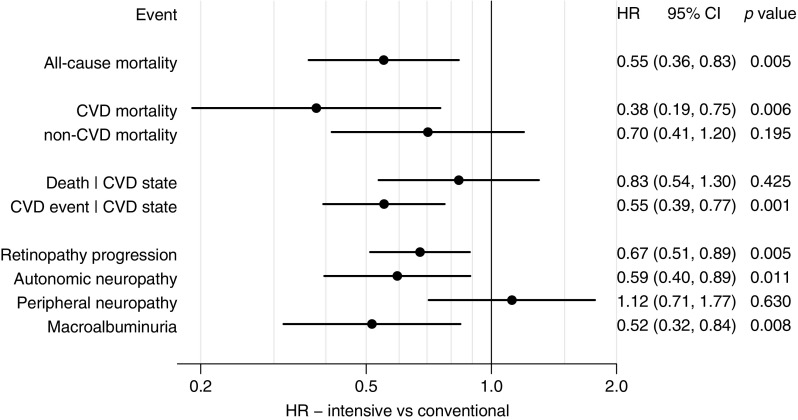
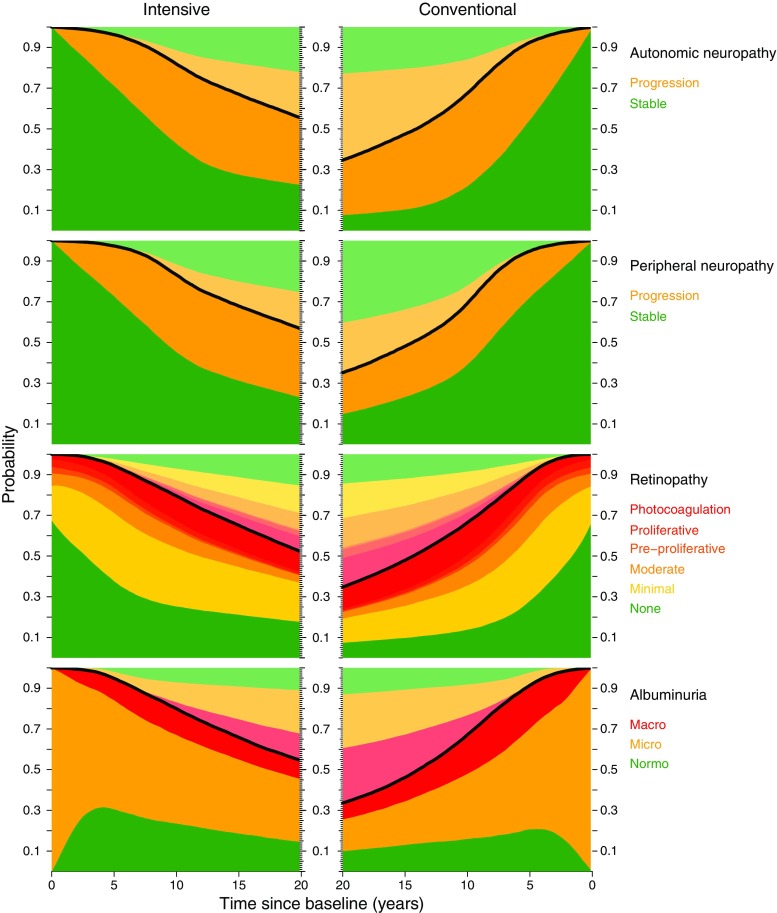
AIMS/HYPOTHESIS: The aim of this work was to study the potential long-term impact of a 7.8 years intensified, multifactorial intervention in patients with type 2 diabetes mellitus and microalbuminuria in terms of gained years of life and years free from incident cardiovascular disease. METHODS: The original intervention (mean treatment duration 7.8 years) involved 160 patients with type 2 diabetes and microalbuminuria who were randomly assigned (using sealed envelopes) to receive either conventional therapy or intensified, multifactorial treatment including both behavioural and pharmacological approaches. After 7.8 years the study continued as an observational follow-up with all patients receiving treatment as for the original intensive-therapy group. The primary endpoint of this follow-up 21.2 years after intervention start was difference in median survival time between the original treatment groups with and without incident cardiovascular disease. Non-fatal endpoints and causes of death were adjudicated by an external endpoint committee blinded for treatment allocation. RESULTS: Thirty-eight intensive-therapy patients vs 55 conventional-therapy patients died during follow-up (HR 0.55 [95% CI 0.36, 0.83], p = 0.005). The patients in the intensive-therapy group survived for a median of 7.9 years longer than the conventional-therapy group patients. Median time before first cardiovascular event after randomisation was 8.1 years longer in the intensive-therapy group (p = 0.001). The hazard for all microvascular complications was decreased in the intensive-therapy group in the range 0.52 to 0.67, except for peripheral neuropathy (HR 1.12). CONCLUSIONS/INTERPRETATION: At 21.2 years of follow-up of 7.8 years of intensified, multifactorial, target-driven treatment of type 2 diabetes with microalbuminuria, we demonstrate a median of 7.9 years of gain of life. The increase in lifespan is matched by time free from incident cardiovascular disease. TRIAL REGISTRATION: ClinicalTrials.gov registration no. NCT00320008. FUNDING: The study was funded by an unrestricted grant from Novo Nordisk A/S.
Overview
The claims and statistics of this paper haven’t been checked yet.
Free: it reads the open-access text and checks the first 5 claims that cite a source we can check. Create a free account to check every claim.
Integrity signals
Registry
Cites
Statistics
Figures
Verification
Claims the paper makes
The claims and statistics of this paper haven’t been checked yet.
Free: it reads the open-access text and checks the first 5 claims that cite a source we can check. Create a free account to check every claim.
Claims other papers make about this one
Each is checked against this paper’s own text: does it say what the citing paper says it does?
The source backs part of the claim, not all of it — or backs it for a different population, condition or comparison.
In the citing paper
“High levels, as well as variability, of both BG and BP are important risk factors for DKD. 89,184,400–403”
From American Association of Clinical Endocrinology Clinical Practice Guideline: Developing a Diabetes Mellitus Comprehensive Care Plan-2022 Update. (2022) · cites this paper as [400]
Experimental — accuracy not yet measuredThe source backs part of the claim, not all of it — or backs it for a different population, condition or comparison.
In the citing paper
“Evidence also supports the use of multifactorial risk-reduction strategies in addition to A1C control for CV prevention, including blood pressure (BP) and lipid targets; CV prevention medications; physical activity and other healthy behaviours; as well as smoking cessation (see Cardiovascular Protection in People with Diabetes chapter, p. S162).”
From Targets for Glycemic Control (2018) · cites this paper as [34]
Experimental — accuracy not yet measuredThe cited source says what the claim attributes to it.
In the citing paper
“Such multifactorial interventions have recently been suggested to lead to not only significant microvascular and CV benefits but also mortality reduction in the 21-year follow up of the Steno-2 study (34).”
From Targets for Glycemic Control (2018) · cites this paper as [34]
The cited source says what the claim attributes to it.
In the citing paper
“The salient results of this study include: increased survival for a median of 7.9 years; 8.1 years longer median time before first CV event; and reduction in all microvascular complications, except for peripheral neuropathy, for participants in the intensive-therapy group compared to the conventional therapy group.”
From Targets for Glycemic Control (2018) · cites this paper as [34]
The cited source says what the claim attributes to it.
In the citing paper
“In addition, studies in people with T2D and early CKD demonstrated the long-term bene fi t of multifactorial intervention on the development of microvascular and macrovascular complications and mortality.”
From KDIGO 2022 Clinical Practice Guideline for Diabetes Management in Chronic Kidney Disease (2022) · cites this paper as [8]
5 more claims about this paper
Create a free account to see every claim other papers make about this one.
Self-check
Percentages, sums and reported differences re-computed from the paper’s own numbers.
The self-check needs the paper’s full text.
Citations
Cites
10-year follow-up of intensive glucose control in type 2 diabetes
Holman, R. R., Paul, S. K., Bethel, M. A., Matthews, D. R., & Neil, H. A. W. (2008) · New England Journal of Medicine · doi:10.1056/nejmoa0806470 · Cited by 7,751 · cited 1×
“Long-term beneficial effects of glucose-lowering treatment in reducing microvascular complications have been demonstrated beyond the duration of a clinical trial in both type 1 and type 2 diabetes [20, 25, 26].”
BackgroundThe Danish Civil Registration System
Pedersen, C. B. (2011) · Scandinavian Journal of Public Health · doi:10.1177/1403494810387965 · Cited by 4,632 · cited 1×
“The registries have proven highly valid and complete [16, 17].”
BackgroundEzetimibe Added to Statin Therapy after Acute Coronary Syndromes
Cannon, C. P., Blazing, M. A., Giugliano, R. P., McCagg, A., White, J. A., Theroux, P., Darius, H., Lewis, B. S., Ophuis, T. O., Jukema, J. W., et al. (2015) · New England Journal of Medicine · doi:10.1056/nejmoa1410489 · Cited by 4,487
Multifactorial intervention and cardiovascular disease in patients with type 2 diabetes
Gæde, P., Vedel, P., Larsen, N., Jensen, G. V. H., Parving, H.-H., & Pedersen, O. (2003) · New England Journal of Medicine · doi:10.1056/nejmoa021778 · Cited by 4,378
Self-citationThe Danish National Patient Register
Lynge, E., Sandegaard, J. L., & Rebolj, M. (2011) · Scandinavian Journal of Public Health · doi:10.1177/1403494811401482 · Cited by 3,968 · cited 1×
“The registries have proven highly valid and complete [16, 17].”
BackgroundEffect of a multifactorial intervention on mortality in type 2 diabetes
Gæde, P., Lund-Andersen, H., Parving, H.-H., & Pedersen, O. (2008) · New England Journal of Medicine · doi:10.1056/nejmoa0706245 · Cited by 3,465 · cited 2×
“All measurement methods were in accordance with previous follow-up protocols [13].”
MethodResultSelf-citationInzucchi, S. E., Bergenstal, R. M., Buse, J. B., Diamant, M., Ferrannini, E., Nauck, M., Peters, A. L., Tsapas, A., Wender, R., & Matthews, D. R. (2015) · Diabetes Care · doi:10.2337/dc14-2441 · Cited by 3,066 · cited 1×
“Over the past two decades, a number of single-risk-factor intervention and post-trial studies have provided evidence for recommending multifactorial treatment of this common disorder (as reviewed in [1]).”
Background(2013) · European Heart Journal · doi:10.1093/eurheartj/eht108 · Cited by 1,955
Changes in diabetes-related complications in the United States, 1990-2010
Gregg, E. W., Li, Y., Wang, J., Rios Burrows, N., Ali, M. K., Rolka, D., Williams, D. E., & Geiss, L. (2014) · New England Journal of Medicine · doi:10.1056/nejmoa1310799 · Cited by 1,749 · cited 2×
“Similar findings have been reported from the ADVANCE (Action in Diabetes and Vascular Disease: Preterax and Diamicron MR Controlled Evaluation) trial examining a combined approach of intensified blood pressure lowering and intensive glucose control [23] as well as from registry-based studies [2, 10].”
BackgroundResultLong-term effects of intensive glucose lowering on cardiovascular outcomes
The ACCORD Study Group (2011) · New England Journal of Medicine · doi:10.1056/nejmoa1006524 · Cited by 1,035
Cited by
Items 401–500 of 526
Theodoraki, A. (2025) · BMJ · doi:10.1136/bmj.r1726 · Cited by 1
Diabetes medications improve cardiovascular outcomes: the paradigm shifts
Cusi, K. J. (2016) · Current Opinion in Lipidology · doi:10.1097/mol.0000000000000361
“These patients often develop steatohepatitis [nonalcoholic steatohepatitis (NASH)] and are at a very high risk not only of cirrhosis and hepatocellular carcinoma, but of death from CVD (their major cause of mortality) [19].”
BackgroundInfluentialGibt es eine „untere Grenze“ beim LDL-C?
Leitolf, H., & Klose, G. (2016) · CardioVasc · doi:10.1007/s15027-016-1031-7
8 Jahre länger leben mit intensiver Diabetestherapie
Müller, T. M. (2016) · CME · doi:10.1007/s11298-016-6014-6
Diabetes mellitus-bedingte Mortalität in Ländern mit mittlerem Einkommen
Ebert, T. (2017) · Der Diabetologe · doi:10.1007/s11428-016-0178-2
Kardiovaskuläre Aspekte der Diabetestherapie: Endlich Grund zur Freude für Kardiologen
Forst, T. M., Plum‐Mörschel, L., & Weber, M. M. (2017) · Der Internist · doi:10.1007/s00108-017-0189-0
Cardiodiabetology: The convergence of diabetes and cardiovascular disease
Wong, N. D. (2017) · Cardiovascular Endocrinology · doi:10.1097/xce.0000000000000113
Neuropathies diabétiques périphériques : compléter notre trousse à outils
Rigalleau, V., Monlun, M., Blanco, L., Hadjadj, S., Archambeaud, F., & Mohammedi, K. (2017) · Médecine des Maladies Métaboliques · doi:10.1016/s1957-2557(17)30032-9
Kar, D., Seidu, S., Davies, M. J., & Khunti, K. (2017) · British Journal of Diabetes · doi:10.15277/bjd.2017.120
Merkel, M. (2017) · Der Diabetologe · doi:10.1007/s11428-017-0216-8
Assessment of putative risk factors in the development of Diabetic Retinopathy in Wales
Chowdhury, S. R. (2016) · ORCA Online Research @Cardiff (Cardiff University)
Some Doubts About the Mantra on the Deleterious Cardiovascular Effects of Sulfonylureas
Trischitta, V., & Prudente, S. (2017) · Diabetes · doi:10.2337/dbi17-0023
“On the basis of the evidence that a pharmacological approach against hypertension, dyslipidemia, and hyperglycemia is needed to tackle this devastating clinical outcome (2), such patients are usually aggressively treated.”
BackgroundEinfluss von Empagliflozin auf die Albuminurie in der EMPA-REG OUTCOME-Studie
Ebert, T. (2017) · Der Diabetologe · doi:10.1007/s11428-017-0261-3
“Die Frage bleibt daher, ob es ein „renales Gedächtnis“ unter SGLT-2Hemmung gibt, ähnlich denErgebnissen der STENO-2-Studie [7].”
BackgroundTherapie postprandialer Blutzuckerspitzen – sinnvoll oder nur Blutzuckerkosmetik?
Müller, U. A. (2017) · Der Diabetologe · doi:10.1007/s11428-017-0260-4
Mangum, B. P., Dacanay, P. O., & Mangum, A. P. (2018) · SSRN Electronic Journal · doi:10.2139/ssrn.3246467
Khunti, K. K., & Kosiborod, M. (2017) · Diabetes Obesity and Metabolism · doi:10.1111/dom.13142
“There is robust evidence that comprehensive management of risk factors such as blood pressure, and dyslipidaemia can reduce the risk of macrovascular complications in people with Type 2 diabetes (2) although the benefits of glycaemic control on macrovascular outcomes have not been clearly established .”
BackgroundHypertonie und Typ-2-Diabetes: zwei „üble Gesellen“
Kristian, R. E. T. T. (2017) · MMW - Fortschritte der Medizin · doi:10.1007/s15006-017-0175-4
Does Chronic Obstructive Pulmonary Disease Cause Cardiovascular Disease?
Mancini, G. B. J., & Fleetham, J. A. (2018) · Hypertension · doi:10.1161/hypertensionaha.117.10277
Sone, H. (2017) · Elsevier eBooks · doi:10.1016/b978-0-12-801238-3.99593-x
Aber ich habe doch schon eine Krankheit...
Trenkwalder, P. (2018) · CardioVasc · doi:10.1007/s15027-018-1364-5
Gestione terapeutica del diabete di tipo 2
Rigalleau, V., Cherifi, B. G., Blanco, L., Alexandre, L., & Mohammedi, K. (2018) · EMC - AKOS - Trattato di Medicina · doi:10.1016/s1634-7358(18)90444-4
Reduktion des kardiovaskulären Risikos
Siegmund, T. (2018) · CardioVasc · doi:10.1007/s15027-018-1367-2
Diabetestherapie richtig eskalieren
Hummel, M. (2018) · MMW - Fortschritte der Medizin · doi:10.1007/s15006-018-0024-0
Medikamentöse Therapie von Fettstoffwechselstörungen bei Patienten mit Typ-2-Diabetes
Müller‐Wieland, D., & Parhofer, K. G. (2018) · Diabetologie und Stoffwechsel · doi:10.1055/s-0043-124740
Frühe, effektive Therapie zahlt sich aus
Grätzel, P. (2018) · Info Diabetologie · doi:10.1007/s15034-018-1387-0
Modern type 2 diabetes treament - practical implications
Doležalová, B. (2018) · Medicína pro praxi · doi:10.36290/med.2018.015
Metabolic Control of GP-led Hypertensive Type 2 Diabetes Patients on Oral Antidiabetic Drugs
Kirov, L. K., Mihai, B., Emil, M., Dimitrov, H., & Nevena, I. (2018) · Diabetes & its Complications · doi:10.33425/2639-9326.1027
“The combined effect of all three interventions was proven in interventional trials such as the STENO-2 and the ADVANCE-ON studies [5,19].”
BackgroundMethodMedikamentöse Therapie von Fettstoffwechselstörungen bei Patienten mit Typ-2-Diabetes
Müller‐Wieland, D., & Parhofer, K. G. (2019) · Gefäßmedizin Scan - Zeitschrift für Angiologie Gefäßchirurgie diagnostische und interventionelle Radiologie · doi:10.1055/a-0858-3922
“Interessanterweise reduzierte sich das relative Risiko auch für mikrovaskuläre Komplikationen um mehr als 40% [4].”
BackgroundThe combination of coronary artery disease and type 2 diabetes: a therapeutic challenge
Johansson, I., & Cosentino, F. (2019) · European Heart Journal Supplements · doi:10.1093/eurheartj/suz037
“Evidence of the impact of optimal multifactorial treatment for the reduction of future cardiovascular risk is well established.(5,6) However, this clinical case clearly shows how in the real world the picture is very disappointing.”
BackgroundIn Stufen zu möglichst niedrigem LDL-Cholesterin bei Diabetes
Stirban, O. A. (2019) · Info Diabetologie · doi:10.1007/s15034-019-1461-2
Prise en charge thérapeutique du diabète de type 2
Rigalleau, V., Cherifi, B., Blanco, L., Alexandre, L., & Mohammedi, K. (2017) · Time to knit · doi:10.1016/s1634-6939(17)69798-9 · Cited by 2
Kardiovaskuläre Aspekte der Diabetestherapie: Endlich Grund zur Freude für Kardiologen
Forst, T. M., Plum‐Mörschel, L., & Weber, M. M. (2017) · Der Internist
12th Roche Diabetes Care Network Meeting: April 11–13, 2019, Copenhagen, Denmark
Parkin, C. G., Zepezauer, C., & Hinzmann, R. (2020) · Diabetes Technology & Therapeutics · doi:10.1089/dia.2019.0392
“2 years of follow-up.(19) In a populationbased study that looked on five clinical measures—glucose, blood pressure, lipids, albuminuria, and smoking—investigators found that individuals with T2D who were well controlled in all of these measures had the same risk for CV disease and mortality as individuals without diab…”
BackgroundCardiovascular and Cerebral Dysfunction
Kelkar, S. (2020) · Springer eBooks · doi:10.1007/978-981-15-2417-2_4
Nakajima, H., Hashimoto, Y., Kaji, A., Sakai, R., Takahashi, F., Yoshimura, Y., Bamba, R., Okamura, T., Kitagawa, N., Majima, S., et al. (2020) · doi:10.21203/rs.2.24737/v1
“Background The incidence of diabetic kidney disease (DKD), which is the leading cause of end stage renal disease (ESRD), have been increasing worldwide (1).”
BackgroundInfluentialMirzazada, V., Huseynova, R., Mustafayeva, S., Gasimova, F., Ahmadova, U., Ismayilova, N., Kerimova, V., Mehdiyeva, H., Suleymanova, R., Maharramova, Z., et al. (2020) · Journal of Diabetology · doi:10.4103/jod.jod_5_20 · Cited by 1
Cardiodiabetology: Reducing Risks to Optimize Cardiovascular Disease Outcomes
Wong, N. D., & Handelsman, Y. (2020) · Contemporary cardiology · doi:10.1007/978-3-030-56279-3_12 · Cited by 1
Kiburg, K., MacIsaac, A. I., McCluskey, G. E., Sundararajan, V., & MacIsaac, R. J. (2021) · BMC Cardiovascular Disorders · doi:10.1186/s12872-021-02265-2
История Кавказской войны XIX В. : источники личного происхождения
Владимирович, Д. А. (2012) · Вестник Адыгейского государственного университета. Серия 1: Регионоведение: философия, история, социология, юриспруденция, политология, культурология
Implementation of Battlefield Advanced Trauma Life Support (BATLS) in the Danish Armed Forces
Jensen, C. T., Johansson, A., Emmertsen, N.-C., de Mello, W., & Lundberg, L. E. R. (2013) · Borås Academic Digital Archive (University of Borås)
Burgess, J., Petropoulos, I. N., Gad, H., Nevitt, S. J., Ponirakis, G., Ferdousi, M., Kalteniece, A., Azmi, S., Kaye, S. B., Malik, R. A., et al. (2021) · Cochrane Database of Systematic Reviews · doi:10.1002/14651858.cd014675
Gnudi, L., & Marshall, S. M. (2022) · doi:10.1093/med/9780198870197.003.0277
(2021) · Elsevier eBooks · doi:10.1016/b978-3-437-21421-9.00026-5
Type 2 diabetes: glycaemic control
FRCP, D. L. M. (2017) · Wiley eBooks · doi:10.1002/9781119052210.ch10
Management von Risikofaktoren bei Typ-2-Diabetes
Schamarek, I. (2022) · Der Diabetologe · doi:10.1007/s11428-022-00878-5
Gorzelak‐Pabiś, P., & Broncel, M. (2019) · Springer eBooks · doi:10.1007/978-3-030-30332-7_11
FRCP, D. L. M. (2017) · Wiley eBooks · doi:10.1002/9781119052210.ch4
Saeed, A. H. A. (2019) · Saudi Medical Journal · doi:10.15537/smj.2019.1.23832
Abeyaratne, D., Priya, G., Kalra, S., Aye, T. T., Aung, M. W., & Sumanatilleke, M. (2019) · Journal of Social Health and Diabetes · doi:10.1055/s-0039-1683468
Greener, M. (2016) · Independent Nurse · doi:10.12968/indn.2016.15.14
Mirza, O. A., Iftekhar, M. F., Hussain, R., Din, H.-U., Kumar, A., & Ibrahim, M. T. (2022) · Pakistan Journal of Medical and Health Sciences · doi:10.53350/pjmhs22164833
Argenis, G., Aguilar, A., & Najar, K. (2022) · European Scientific Journal ESJ · doi:10.19044/esj.2022.v18n17p78
Cardiovascular Risk Assessment in Metabolic Syndrome and Diabetes
Wong, N. D. (2022) · Contemporary cardiology · doi:10.1007/978-3-030-98824-1_6
Bjerg, L., Laugesen, E., Andersen, S. T., Schaarup, J. R., Charles, M., Vistisen, D., & Witte, D. R. (2022) · Diabetology & Metabolic Syndrome · doi:10.1186/s13098-022-00890-1
Secondary Diseases of the Kidney
Natale, P., Wong, M. G., Strippoli, G. F., Tunnicliffe, D. J., Cooper, T. E., & Pollock, C. A. (2022) · Wiley eBooks · doi:10.1002/9781119105954.ch24
Évolution des cibles glycémiques chez le patient diabétique de type 2 au cours des dernières années
Bordier, L., & Bauduceau, B. (2023) · Médecine des Maladies Métaboliques · doi:10.1016/j.mmm.2022.12.005
Type 2 Diabetes Mellitus: Beyond the Beta Cell
Morris, N. (2016) · EMJ Diabetes · doi:10.33590/emjdiabet/10311885
Focus on Cardiovascular Risk Reduction in Type 2 Diabetes Mellitus: Multifactorial Approach
Мохорт, Т. В. (2023) · Рецепт · doi:10.34883/pi.2023.26.1.008
Embedding guidelines into clinical practice
Winter, J. (2023) · Practical Diabetes · doi:10.1002/pdi.2447
Dzubur, E., Yu, J., Hoffman, J. E., Painter, S. L., Dama, S., James, R. A., & Liu, H. (2023) · Research Square · doi:10.21203/rs.3.rs-2530128/v1 · Cited by 1
Personalised and patient-centred diabetes care
den Ouden, H. (2023) · Utrecht University Repository (Utrecht University) · doi:10.33540/1762
Clinical Practice Guidelines, Evidence-Based Medicine and Diabetes
Rodríguez‐Saldaña, J. (2023) · Springer eBooks · doi:10.1007/978-3-031-25519-9_23
Ganda, O. P., Busch, R. S., Nelson, J. R., & Philip, S. (2023) · Contemporary diabetes · doi:10.1007/978-3-031-26681-2_25 · Cited by 1
Hussein, M. M., & Mohammed, H. S. (2023) · Journal of Kufa for Chemical Sciences · doi:10.36329/jkcm/2022/v2.i9.13320
Alicic, R. Z., Neumiller, J. J., & Tuttle, K. R. (2023) · Elsevier eBooks · doi:10.1016/b978-0-323-88369-6.00039-6
Yeh, Y., Lin, K., Sheu, W. H., Lo, S.-H., Yeh, Y., Huang, C., Hwu, C., & Lu, C. (2023) · Research Square · doi:10.21203/rs.3.rs-3600357/v1
¿Por qué es necesaria la protección holística de la persona con diabetes mellitus tipo 2?
Bravo, J. J. M. (2023) · Diabetes práctica · doi:10.52102/diabet/pract.proteccionholistica.art1
Management of type 2 diabetes after metabolic bariatric surgery
Tham, K. W., & Lee, P. C. (2023) · Mini-invasive Surgery · doi:10.20517/2574-1225.2023.80 · Cited by 1
Gale, E. A. (2023) · Copernicus books · doi:10.1007/978-3-031-47190-2_16
Prevention and management of chronic kidney disease in diabetes
Barlovič, D. P., & Groop, P. (2024) · Elsevier eBooks · doi:10.1016/b978-0-323-88426-6.00004-x
Xu, X., Zhu, H., Wang, H., Zhu, X., Liu, L., Zhang, F., Zhou, H., Zhu, M., Dai, L., & Cai, L. (2024) · Aging · doi:10.18632/aging.205709 · Cited by 1
Orna, J. A. G., Martínez, A. B. M., Padial, L. R., Sánchez, M. A., Barrios, V., García, J. M., & Pérez, A. (2024) · Endocrinología Diabetes y Nutrición · doi:10.1016/j.endinu.2024.03.008
Smetana, G. W., Romeo, G. R., Rosas, S. E., & Burns, R. B. (2024) · Annals of Internal Medicine · doi:10.7326/m24-0764 · Cited by 2
“Dr. Romeo notes that combination therapy with SGLT2i and GLP-1RA reduces cardiovascular morbidity to a greater extent than either alone.”
BackgroundExperimental Designs for Multicomponent Interventions in Kidney and Cardiometabolic Diseases
Rossing, P. R. (2024) · Journal of the American Society of Nephrology · doi:10.1681/asn.0000000000000449
Self-citationSchmidt, S., Busch, M., & Wolf, G. (2024) · Nephrologie aktuell · doi:10.1055/a-2308-4674
Bortoto, S. F., de Carvalho, J. X., de Matos, M. R., Cavalcante, C. D. G. D., Andrade, E. A. S., & Queiroz, M. S. (2024) · Journal of Public Health · doi:10.1007/s10389-024-02349-1
Was ist gesichert in der Therapie der Fettstoffwechselstörungen?
Leitolf, H., & Hellweg, S. (2024) · Die Innere Medizin · doi:10.1007/s00108-024-01813-0
Effects on HbA1c of referral of type 2 diabetes patients to secondary care
Nøkleby, K., Jenum, A. K., Buhl, E. S., Claudi, T., Cooper, J. G., Flottorp, S. A., Løvaas, K. F., Sandberg, S., & Berg, T. J. (2024) · Scandinavian Journal of Primary Health Care · doi:10.1080/02813432.2024.2433107
“With screening of albuminuria performed in less than half of patients in the capital region, opportunities for improved treatment and prognosis might have been lost [27].”
Jowi, S. O., Otieno, F. C. F., & Ogola, E. N. (2024) · British journal of healthcare and medical research · doi:10.14738/bjhmr.115.17745
Bril, F., Berg, G. A., Barchuk, M., & Nogueira, J. P. (2025) · Journal of Lipid and Atherosclerosis · doi:10.12997/jla.2025.14.1.69 · Cited by 1
Davies, M. J., Agarwal, S., Bodicoat, D. H., Brennan, A., Dixon, S., Eborall, H., Glab, A., Gray, L. J., Hadjiconstantinou, M., Huddlestone, L., et al. (2025) · Programme Grants for Applied Research · doi:10.3310/kwyf5914
Managing diabetes and cardiovascular disease
Morris, D. (2025) · Independent Nurse · doi:10.12968/indn.2025.4.18
Association of Diabetes Outcome and Atrazine Exposure among Pennsylvania Counties, 2011-2019
Warrick, T., Shaju, S., Khedekar, M., & Rajput, A. (2024) · ASEAN Journal of Psychiatry · doi:10.54615/2231-7805.12.3.004 · Cited by 1
Ritsinger, V., Gunnarsson, R., Melin, E. O., Hillman, M., Stogianni, A., Holmberg, S., Johansson, K., Neumark, A.-S. N., Krol, H., Rööst, M., et al. (2025) · BMJ Open · doi:10.1136/bmjopen-2024-095630
“Still, despite this, a number of significant associations could be established.”
2025 Clinical Practice Guidelines for Diabetes: Cardiovascular Risk Management
Kim, H. J. (2025) · Journal of Korean Diabetes · doi:10.4093/jkd.2025.26.3.164
Objective Clinical Approach to a Hard to Heal Wound of the Lower Limb in Diabetes
Herrera, J. M., Morales-Suarez, D., Fonseca, C., Bernal-Ovalle, P., & Cortes-Sarmiento, D. S. (2025) · IntechOpen eBooks · doi:10.5772/intechopen.1012743
Cardiovascular Disease and Risk Management
(2025) · American Diabetes Association eBooks · doi:10.2337/9781580408462-ch17
Bayram, F., Sonmez, A., Haymana, C., Sabuncu, T., Dizdar, O. S., Gurkan, E., Carlioglu, A. K., Agbaht, K., Ozdemir, D., Demirci, İ., et al. (2020) · Figshare · doi:10.6084/m9.figshare.13225670
Kiburg, K., MacIsaac, A. I., McCluskey, G. E., Sundararajan, V., & MacIsaac, R. J. (2021) · Figshare · doi:10.6084/m9.figshare.16682777
Gerber, F., Gupta, R., Lejone, T. I., Tahirsylaj, T., Lee, T. T., Kohler, M., Haldemann, M. I., Raeber, F., Chitja, M., Manthabiseng, M., et al. (2024) · Figshare · doi:10.6084/m9.figshare.26631454
Wang, B., Fu, Y., Tan, X., Wang, N., Qi, L., & Lu, Y. (2024) · Figshare · doi:10.6084/m9.figshare.25397494
Bjerg, L., Laugesen, E., Andersen, S. T., Schaarup, J. R., Charles, M., Vistisen, D., & Witte, D. R. (2022) · Figshare · doi:10.6084/m9.figshare.20508618
Anjajo, E. A., Workie, S. B., Tema, Z. G., Woldegeorgis, B. Z., & Bogino, E. A. (2024) · Figshare · doi:10.6084/m9.figshare.26586696
Penno, G., Solini, A., Orsi, E., Bonora, E., Fondelli, C., Trevisan, R., Vedovato, M., Cavalot, F. L., Zerbini, G., Lamacchia, O., et al. (2021) · Figshare · doi:10.6084/m9.figshare.14214600
Penno, G., Solini, A., Orsi, E., Bonora, E., Fondelli, C., Trevisan, R., Vedovato, M., Cavalot, F. L., Zerbini, G., Lamacchia, O., et al. (2021) · Figshare · doi:10.6084/m9.figshare.14214603
Zhou, J., Wang, X., Tang, R., Kou, M., Ma, H., Li, X., Heianza, Y., Fonseca, V. A., & Qi, L. (2024) · Figshare · doi:10.6084/m9.figshare.25367287
Metadata
- Authors
- Gæde, P., Oellgaard, J., Carstensen, B., Rossing, P., Lund-Andersen, H., Parving, H.-H., & Pedersen, O.
- Affiliations
- University of Southern Denmark (DK)
- University of Copenhagen (DK)
- Corresponding author
- Pedersen, Oluf
- Venue
- Diabetologia
- Published
- 2016-08-16
- Volume
- 59
- Issue
- 11
- Pages
- 2298-2307
- ISSN
- 0012-186X (ISSN-L)
- 1432-0428
- PMC
- PMC5506099
- OpenAlex
- W2513040800
- Cited by
- 528
- References
- 31
- Citations by year
- 2026: 28 · 2025: 35 · 2024: 54 · 2023: 49 · 2022: 42 · 2021: 50 · 2020: 56 · 2019: 68 · 2018: 75 · 2017: 57 · 2016: 12
- FWCI
- 71.03
- Type
- journal article
- Language
- en
- Open access
- hybrid
- doi.org
- Locations
- Diabetologia (publishedVersion, cc-by)
- PubMed Central (publishedVersion, cc-by)
- PubMed (publishedVersion)
- Research at the University of Copenhagen (University of Copenhagen) (publishedVersion, cc-by)
- University of Southern Denmark Research Portal (University of Southern Denmark) (submittedVersion, other-oa)
- Funders
- Novo Nordisk
- Topics
- Health Sciences › Medicine › Endocrinology, Diabetes and Metabolism › Diabetes Treatment and Management
- Health Sciences › Medicine › Endocrinology, Diabetes and Metabolism › Diabetes, Cardiovascular Risks, and Lipoproteins
- Health Sciences › Medicine › Endocrinology, Diabetes and Metabolism › Diabetes Management and Research
- Keywords
- type 2 diabetes, microalbuminuria, multifactorial intervention, intensive treatment, Steno-2 trial, life-years gained, survival, cardiovascular disease, microvascular complications, peripheral neuropathy, long-term follow-up
- MeSH terms
- Adult, Aged, Aged, 80 and over, Albuminuria, Cardiovascular Diseases, Diabetes Mellitus, Type 2, Diabetic Nephropathies, Diabetic Neuropathies, Diabetic Retinopathy, Female, Follow-Up Studies, Humans, Hypoglycemic Agents, Male, Middle Aged, Time Factors, Diabetes Complications
About these checks
Registry, retraction, Cites and statistics results are computed, not judged, with one exception: a printed reference that no index lists is read once by a model before it counts as a citation error. Claims are extracted by a model and kept only when their quote appears verbatim in the text; each cited source is then checked, with a model’s help, for whether it says what the claim relies on. Those verdicts can be wrong — read the claim’s quote and the cited source before relying on one.
Statistics and arithmetic are recomputed, not judged.
Confidence bands are shown only for fields calibrated on our annotated test set. None is calibrated yet, so no band is shown.
What counts as a claim ›How we measure confidence ›How we check this ›
Are you an author, or do you see a problem with this page? Request a review
Data sources
Bibliographic data: Semantic Scholar, OpenAlex, Crossref.
Contains information from the Semantic Scholar Academic Graph Datasets, made available under the ODC Attribution License (ODC-BY 1.0).
Semantic Scholar’s data is described in: Kinney, R., et al. (2023). The Semantic Scholar Open Data Platform. arXiv:2301.10140.
