

Glycaemic thresholds for counterregulatory hormone and symptom responses to hypoglycaemia in people with and without type 1 diabetes: a systematic review
Open accessThe DOI matches its Crossref record; 79 of the 79 references it cites were found in a registry or an index; 16 of the 47 sources its claims cite were checked for support.
Abstract
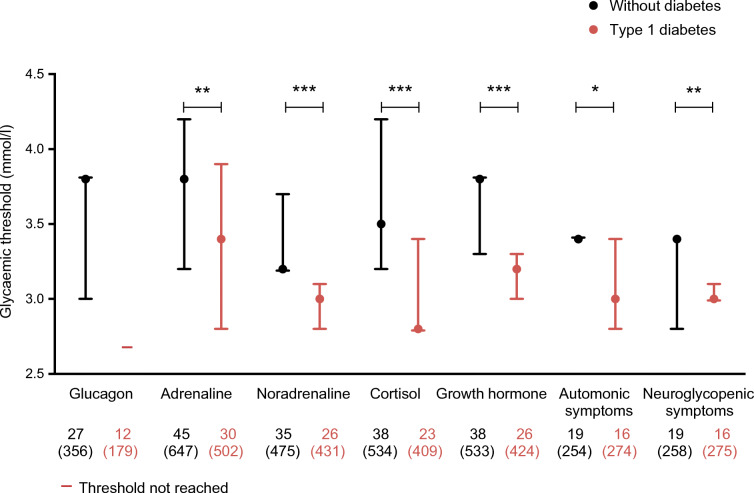
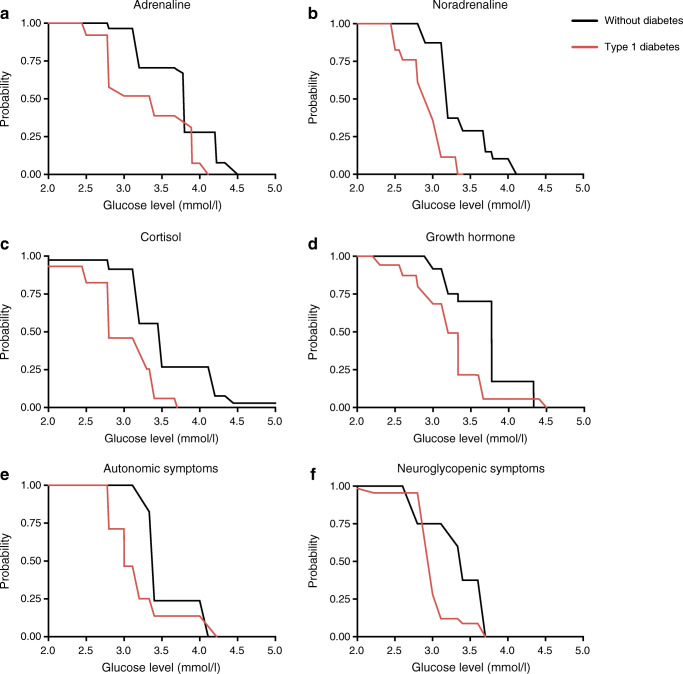
The physiological counterregulatory response to hypoglycaemia is reported to be organised hierarchically, with hormone responses usually preceding symptomatic awareness and autonomic responses preceding neuroglycopenic responses. To compare thresholds for activation of these responses more accurately between people with or without type 1 diabetes, we performed a systematic review on stepped hyperinsulinaemic–hypoglycaemic glucose clamps. A literature search in PubMed and EMBASE was conducted. We included articles published between 1980 and 2018 involving hyperinsulinaemic stepped hypoglycaemic glucose clamps among people with or without type 1 diabetes... A total of 63 articles were included, whereof 37 papers included participants with type 1 diabetes (n=559) and 51 papers included participants without diabetes (n=733)... The glycaemic thresholds for eliciting hormone responses all occurred at lower glucose levels in people with diabetes than in those without diabetes (all p<0.01): 3.8 (3.2–4.2) vs 3.4 (2.8–3.9) mmol/l for adrenaline; 3.2 (3.2–3.7) vs 3.0 (2.8–3.1) mmol/l for noradrenaline; 3.5 (3.2–4.2) vs 2.8 (2.8–3.4) mmol/l for cortisol and 3.8 (3.3–3.8) vs 3.2 (3.0–3.3) mmol/l for growth hormone.
Overview
CoChat Summary
TL;DR
This systematic review of stepped hyperinsulinaemic–hypoglycaemic clamps found that people with type 1 diabetes have lower glycaemic thresholds for counterregulatory hormone and symptom responses than people without diabetes. Within each group, autonomic and neuroglycopenic symptom thresholds were similar.
Key findings
- Across 63 included articles, median (IQR) thresholds in people with type 1 diabetes vs without diabetes were lower for adrenaline (3.4 [2.8–3.9] vs 3.8 [3.2–4.2] mmol/l), noradrenaline (3.0 [2.8–3.1] vs 3.2 [3.2–3.7] mmol/l), cortisol (2.8 [2.8–3.4] vs 3.5 [3.2–4.2] mmol/l) and growth hormone (3.2 [3.0–3.3] vs 3.8 [3.3–3.8] mmol/l) (all p≤0.01).
- Symptom responses were also elicited at lower glucose levels in type 1 diabetes: autonomic symptoms 3.0 (2.8–3.4) vs 3.4 (3.4–3.4) mmol/l (p=0.01) and neuroglycopenic symptoms 3.0 (3.0–3.1) vs 3.4 (2.8–N/A) mmol/l (p=0.007).
- Autonomic and neuroglycopenic symptom thresholds did not differ from each other within either people with type 1 diabetes or people without diabetes.
- Neither diabetes duration nor HbA1c was associated with glycaemic thresholds for any measured hormone or symptom response; glucagon thresholds in type 1 diabetes were excluded because responses were often absent or not provided (n=58).
Methods
- Systematic review of PubMed and EMBASE (November 2018) for English-language articles published 1980–2018 involving hyperinsulinaemic stepped hypoglycaemic glucose clamps in people with or without type 1 diabetes; PROSPERO registration CRD42019120083.
- From 3887 identified articles, 547 full texts assessed, 383 included in the prior systematic review, 108 reported stepped clamps, and 63 articles were included after exclusions; thresholds were extracted or calculated as the glucose level at which the response exceeded the 95% CI of the mean baseline measurement or euglycaemic control clamp.
- Because thresholds were interval-censored, results are median and IQR, compared using generalised logrank tests for interval-censored data; Cox regression assessed HbA1c and diabetes duration. Symptom scores were classified as autonomic or neuroglycopenic, and whole-blood glucose values were converted to plasma values assuming plasma glucose was 11.1% higher.
Limitations
- The paper states that threshold calculation depends on the level, number and spacing of glycaemic plateaus and on participant numbers, none of which were consistent across studies; high insulin doses in most clamps may affect counterregulatory responses; and whole-blood-to-plasma conversion may differ under hyperinsulinaemia and hypoglycaemia because of haematocrit.
- The paper states that glucagon thresholds in type 1 diabetes could not be investigated because most studies did not report them or described absent/variable responses, and that the included studies had relatively few participants with very short or very long diabetes duration and a narrow age range, limiting detection of age or duration effects.
- Evident from the text: there was considerable methodological variation across articles, and the review relies on experimental stepped-clamp data rather than spontaneous hypoglycaemia in clinical practice.
Model-written summary. Check it against the paper before relying on it.
Integrity signals
Registry
Cites
Statistics
Figures
Verification
Claims the paper makes
9 Valid · 2 Not valid · 12 Not checked · 63 Own results and interpretations
Every source the paper cites for this claim was checked and supports it.
In the paper
“In addition, factors such as the inability to dissipate insulin, blunted glucagon secretion and reduced catecholaminergic responses in people with type 1 diabetes [7] can influence each component of the counterregulatory hormone and symptom response and so thresholds may differ between those with and without type 1 diabetes.”
§ Glycaemic thresholds for counterregulatory hormone and symptom responses to hypoglycaemia in people with and without type 1 diabetes: a systematic review > Introduction
What the sources say
- Supportedcites [7] Martín-Timón I Mechanisms of hypoglycemia unawareness and implications in diabetic patients World J Diabetes 2015 6 912 10.4239/wjd.v6.i7.912 26185599 PMC4499525 source
The MECHANISMS OF HU section describes failed reduction of insulin, an inadequate glucagon response, and attenuated sympathoadrenal activity as components of impaired hypoglycemia counterregulation. It also reports blunted catecholamine responses after prior hypoglycemia. The citation is attached to those factors; the subsequent inference about differing thresholds is the citing authors’ own. (LLM, conf=0.90)
plainstates a possible cause- Asserted: passes — The authors put it forward as true.
- Checkable: passes — It can be checked against evidence.
- Load-bearing: passes — The paper’s conclusions depend on it.
- Based: passes — The paper gives a reason why it holds.
- Supported
The cited sources support only part of this claim — read each source’s verdict below.
In the paper
“Our data underscore, however, that merely directing people with type 1 diabetes to allow their HbA1c to increase is not expected to alter glycaemic thresholds or the associated burden of hypoglycaemia unless the rate of hypoglycaemia drops considerably [6, 32, 60].”
§ Glycaemic thresholds for counterregulatory hormone and symptom responses to hypoglycaemia in people with and without type 1 diabetes: a systematic review > Discussion
What the sources say
- Partly supportedcites [6] Dagogo-Jack SE Craft S Cryer PE Hypoglycemia-associated autonomic failure in insulin-dependent diabetes mellitus. Recent antecedent hypoglycemia reduces autonomic responses to, symptoms of, and defense against subsequent hypoglycemia J Clin Invest 1993 91 819 828 10.1172/JCI116302 8450063 PMC288033 sourceExperimental — accuracy not yet measured
The Discussion (page not available in our copy) reports that recent antecedent hypoglycaemia reduces responses to subsequent hypoglycaemia and physiological defence against it, supporting the importance of hypoglycaemia exposure. But this short-term experiment did not test advice to raise HbA1c, whether thresholds would remain unchanged, or how much the rate of hypoglycaemia must fall to reduce its burden. (LLM, conf=0.84)
- Partly supportedcites [32] Fanelli C Pampanelli S Epifano L Long-term recovery from unawareness, deficient counterregulation and lack of cognitive dysfunction during hypoglycaemia, following institution of rational, intensive insulin therapy in IDDM Diabetologia 1994 37 1265 1276 10.1007/BF00399801 7895957 sourceExperimental — accuracy not yet measured
The Results (page not provided) report that meticulous prevention reduced hypoglycaemia about tenfold, and the Experimental group section reports normalized glycaemic thresholds after two weeks. The paper supports the importance of reducing hypoglycaemia, but it did not test whether merely allowing HbA1c to rise, without reducing episodes, leaves thresholds or hypoglycaemia burden unchanged. (LLM, conf=0.84)
- Not checked — no full text of the sourcecites [60] Cranston I Lomas J Amiel SA Restoration of hypoglycaemia awareness in patients with long-duration insulin-dependent diabetes Lancet 1994 344 283 287 10.1016/S0140-6736(94)91336-6 7914259 source
plain- Asserted: passes — The authors put it forward as true.
- Checkable: passes — It can be checked against evidence.
- Load-bearing: passes — The paper’s conclusions depend on it.
- Based: passes — The paper gives a reason why it holds.
- Partly supported
The cited sources support only part of this claim — read each source’s verdict below.
In the paper
“Nevertheless, two studies dating back to the 1990s that used such a gradual glucose-lowering method to assess glycaemic thresholds in children with type 1 diabetes reported results that were in line with our findings [17, 18].”
§ Glycaemic thresholds for counterregulatory hormone and symptom responses to hypoglycaemia in people with and without type 1 diabetes: a systematic review > Discussion
What the sources say
- Not checked — no full text of the sourcecites [17] Jones TW Boulware SD Kraemer DT Independent effects of youth and poor diabetes control on responses to hypoglycemia in children Diabetes 1991 40 358 363 10.2337/diab.40.3.358 1999278 source
- Partly supportedcites [18] Vea H Jorde R Sager G Reproducibility of glycaemic thresholds for activation of counterregulatory hormones and hypoglycaemic symptoms in healthy subjects Diabetologia 1992 35 10 958 961 10.1007/BF00401425 1451953 sourceExperimental — accuracy not yet measured
The Subjects and methods section describes a gradual glucose-lowering study of glycaemic thresholds, but its participants were nine healthy subjects tested on two occasions—not children with type 1 diabetes. The paper therefore supports the method attributed to it, but not the claimed study population. Whether its results align with the citing review cannot be determined from this source alone. (LLM, conf=0.88)
plainstates an association- Asserted: passes — The authors put it forward as true.
- Checkable: passes — It can be checked against evidence.
- Load-bearing: unclear — It is unclear whether the paper’s conclusions depend on it.
- Based: passes — The paper gives a reason why it holds.
The sources with a verdict support this claim; the rest weren’t checked yet, have no full text we could read, or their verdicts aren’t rated yet.
In the paper
“A total of 25 studies (40%) provided data to either calculate or extract the glycaemic threshold for symptom responses to hypoglycaemia [6, 13, 16–18, 20, 23, 24, 26, 29, 31, 33–37, 46, 51–53, 56, 57, 58, 63, 68].”
§ Glycaemic thresholds for counterregulatory hormone and symptom responses to hypoglycaemia in people with and without type 1 diabetes: a systematic review > Results > Glycaemic thresholds for symptom responses
What the sources say
- Supportedcites [6] Dagogo-Jack SE Craft S Cryer PE Hypoglycemia-associated autonomic failure in insulin-dependent diabetes mellitus. Recent antecedent hypoglycemia reduces autonomic responses to, symptoms of, and defense against subsequent hypoglycemia J Clin Invest 1993 91 819 828 10.1172/JCI116302 8450063 PMC288033 source
The Methods passage describes symptom scores collected at each glycaemic step, and the Discussion (p. 823) states that the study's data show altered glycaemic thresholds for symptoms. This supports citing the paper as one study providing data on symptom-response thresholds; the count of 25 studies (40%) is the citing authors' aggregate, not a result attributed to this paper alone. (LLM, conf=0.90)
- Not checked — no full text of the sourcecites [13] Dagogo-Jack S Askari H Morrill B Physiological responses during hypoglycaemia induced by regular human insulin or a novel human analogue, insulin glargine Diabetes, Obes Metab 2000 2 373 383 10.1046/J.1463-1326.2000.00109.X 11225967 source
- Not checked — no full text of the sourcecites [16] Mitrakou A Ryan C Veneman T Hierarchy of glycemic thresholds for counterregulatory hormone secretion, symptoms, and cerebral dysfunction Am J Physiol 1991 260 E67 E74 10.1152/AJPENDO.1991.260.1.E67 1987794 source
- Not checked — no full text of the sourcecites [17] Jones TW Boulware SD Kraemer DT Independent effects of youth and poor diabetes control on responses to hypoglycemia in children Diabetes 1991 40 358 363 10.2337/diab.40.3.358 1999278 source
- Supportedcites [18] Vea H Jorde R Sager G Reproducibility of glycaemic thresholds for activation of counterregulatory hormones and hypoglycaemic symptoms in healthy subjects Diabetologia 1992 35 10 958 961 10.1007/BF00401425 1451953 source
The citation identifies this paper as one of the studies providing symptom-threshold data, rather than as the source of the citing paper’s count of 25 studies (40%). The Results report glycaemic thresholds for autonomic and neuroglycopoenic symptoms, and Statistical analysis describes how thresholds were determined. (LLM, conf=0.91)
- Not checked — no full text of the sourcecites [20] Powers WJ Boyle PJ Hirsch IB Cryer PE Unaltered cerebral blood flow during hypoglycemic activation of the sympathochromaffin system in humans Am J Physiol 1993 265 R8883 R8887 10.1152/AJPREGU.1993.265.4.R883 8238461 source
- Not checked — no full text of the sourcecites [23] Mellman MJ Davis MR Brisman M Shamoon H Effect of antecedent hypoglycemia on cognitive function and on glycemic thresholds for counterregulatory hormone secretion in healthy humans Diabetes Care 1994 17 183 188 10.2337/DIACARE.17.3.183 8174445 source
- Not checked — no full text of the sourcecites [24] Meneilly GS Cheung E Tuokko H Counterregulatory hormone responses to hypoglycemia in the elderly patient with diabetes Diabetes 1994 43 403 410 10.2337/DIAB.43.3.403 8314012 source
- Not checked — no full text of the sourcecites [26] Snorgaard O Lassen LH Rosenfalck AM Binder C Glycaemic thresholds for hypoglycaemic symptoms, impairment of cognitive function, and release of counterregulatory hormones in subjects with functional hypoglycaemia J Intern Med 1991 229 343 350 10.1111/J.1365-2796.1991.TB00357.X 2026987 source
- Supportedcites [29] Smith D Pernet A Rosenthal JM The effect of modafinil on counter-regulatory and cognitive responses to hypoglycaemia Diabetologia 2004 47 1704 1711 10.1007/S00125-004-1513-5 15517154 source
The citation sits in a list of the studies pooled for glycaemic-threshold data, so what is attributed to this source is that it provided such data for symptom responses. Our copy supports that: the Data analysis section defines the plasma-glucose threshold method ('the plasma glucose concentration associated with the onset of a significant change in any parameter... exceeded baseline by more than two standard deviations... on two or more consecutive occasions'), and Table 1 reports symptom thresholds during hypoglycaemic clamps (total symptom score 3.0±0.4 and 3.1±0.4 mmol/l; autonomic 3.1±0.3/3.1±0.4; neuroglycopenic 2.6±0.3/2.6±0.3). The aggregate figures (25 studies, 40%) are the citing paper's own synthesis and are not attributed to this source, so nothing here is unsupported. (LLM, conf=0.85)
plain- Asserted: passes — The authors put it forward as true.
- Checkable: passes — It can be checked against evidence.
- Load-bearing: unclear — It is unclear whether the paper’s conclusions depend on it.
- Based: passes — The paper gives a reason why it holds.
- Supported
The cited sources that could be checked couldn’t confirm or dispute this claim.
In the paper
“All but one [6] of the studies (98%) provided data to either calculate or extract the glycaemic threshold for counterregulatory hormone responses to hypoglycaemia.”
§ Glycaemic thresholds for counterregulatory hormone and symptom responses to hypoglycaemia in people with and without type 1 diabetes: a systematic review > Results > Glycaemic thresholds for counterregulatory hormone responses
What the sources say
- Could not verifycites [6] Dagogo-Jack SE Craft S Cryer PE Hypoglycemia-associated autonomic failure in insulin-dependent diabetes mellitus. Recent antecedent hypoglycemia reduces autonomic responses to, symptoms of, and defense against subsequent hypoglycemia J Clin Invest 1993 91 819 828 10.1172/JCI116302 8450063 PMC288033 sourceExperimental — accuracy not yet measured
The citation is attached to the one study said not to provide usable threshold data. The Introduction describes stepped hypoglycemic clamps, and the Discussion describes threshold abnormalities, but neither passage establishes whether the paper supplied data that the citing authors could calculate or extract as a glycaemic threshold. The paper also does not address the citing review’s count of studies. (LLM, conf=0.70)
plain- Asserted: passes — The authors put it forward as true.
- Checkable: passes — It can be checked against evidence.
- Load-bearing: unclear — It is unclear whether the paper’s conclusions depend on it.
- Based: passes — The paper gives a reason why it holds.
- Could not verify
37 more claims · 2 with their cited sources checked
Create a free account to see all 86 claims and to verify the 2 references still open.
- Probably not a substantial claim. 18
- It may state two separate claims as one. 33
- The quote only partly states this claim. 2
Self-check
Percentages, sums and reported differences re-computed from the paper’s own numbers.
Each contradiction between two passages listed here was confirmed by an independent check.
Rated minor: it would not touch a result — a value no result rests on, a p-value that stays on the same side of the significance level, or a conflict that is clerical, resolved elsewhere in the paper, or outside its own findings.
In the paper
§ Glycaemic thresholds for counterregulatory hormone and symptom responses to hypoglycaemia in people with and without type 1 diabetes: a systematic review > Discussion
“In people with type 1 diabetes, the release of counterregulatory hormones and generation of warning symptoms occur at glucose levels that are 0.1–0.4 mmol/l lower than in people without diabetes”
§ Glycaemic thresholds for counterregulatory hormone and symptom responses to hypoglycaemia in people with and without type 1 diabetes: a systematic review > Discussion
“In people with type 1 diabetes, we observed glycaemic thresholds at 0.2–0.7 and 0.4 mmol/l lower glucose levels for counterregulatory hormone and symptom responses, respectively, compared with people without diabetes”
Rated minor: it would not touch a result — a value no result rests on, a p-value that stays on the same side of the significance level, or a conflict that is clerical, resolved elsewhere in the paper, or outside its own findings.
In the paper
§ Glycaemic thresholds for counterregulatory hormone and symptom responses to hypoglycaemia in people with and without type 1 diabetes: a systematic review > Abstract > Results
“37 papers included participants with type 1 diabetes (n=559; 67.4% male sex, aged 32.7±10.2 years, BMI 23.8±1.4 kg/m2)”
§ Glycaemic thresholds for counterregulatory hormone and symptom responses to hypoglycaemia in people with and without type 1 diabetes: a systematic review > Results
“| No. of participants | 733 | 599 |”
Citations
Cites
Cryer, P. E., Davis, S. N., & Shamoon, H. (2003) · Diabetes Care · doi:10.2337/diacare.26.6.1902 · Cited by 1,160
Defining and Reporting Hypoglycemia in Diabetes
American Diabetes Association Workgroup on Hypoglycemia (2005) · Diabetes Care · doi:10.2337/diacare.28.5.1245 · Cited by 1,146
International Hypoglycaemia Study Group (2017) · Diabetes Care · doi:10.2337/dc16-2215 · Cited by 608
Mitrakou, A., Ryan, C., Veneman, T., Mokan, M., Jenssen, T., Kiss, I., Durrant, J., Cryer, P., & Gerich, J. (1991) · American Journal of Physiology-Endocrinology and Metabolism · doi:10.1152/ajpendo.1991.260.1.e67 · Cited by 558 · cited 1×
“contributing to their often good glycaemic control combined with low hypoglycaemia risk [15, 16], it is almost universally lost within the first few years after diagnosis [14, 15].”
(1998) · Annals of Internal Medicine · doi:10.7326/0003-4819-128-7-199804010-00001 · Cited by 546
Dagogo-Jack, S. E., Craft, S., & Cryer, P. E. (1993) · Journal of Clinical Investigation · doi:10.1172/jci116302 · Cited by 471 · cited 4×
“Our data underscore, however, that merely directing people with type 1 diabetes to allow their HbA1c to increase is not expected to alter glycaemic thresholds or the associated burden of hypoglycaemia unless the rate of hypoglycaemia drops considerably [6, 32, 60].”
InfluentialHypoglycemia in Type 2 Diabetes
Zammitt, N. N., & Frier, B. M. (2005) · Diabetes Care · doi:10.2337/diacare.28.12.2948 · Cited by 435
Bolli, G., Feo, P. D., Compagnucci, P., Cartechini, M. G., Angeletti, G., Santeusanio, F., Brunetti, P., & Gerich, J. E. (1983) · Diabetes · doi:10.2337/diab.32.2.134 · Cited by 433
Restoration of hypoglycaemia awareness in patients with long-duration insulin-dependent diabetes.
Cranston, I., Lomas, J., Amiel, S. A., Maran, A., & Macdonald, I. (1994) · The Lancet · doi:10.1016/s0140-6736(94)91336-6 · Cited by 430
Self-citationFanelli, C. G., Epifano, L., Rambotti, A. M., Pampanelli, S., Di Vincenzo, A., Modarelli, F., Lepore, M., Annibale, B., Ciofetta, M., Bottini, P., et al. (1993) · Diabetes · doi:10.2337/diab.42.11.1683 · Cited by 398
Schwartz, N. S., Clutter, W. E., Shah, S. D., & Cryer, P. E. (1987) · Journal of Clinical Investigation · doi:10.1172/jci112884 · Cited by 394
Effect of intensive insulin therapy on glycemic thresholds for counterregulatory hormone release.
Amiel, S. A., Sherwin, R. S., Simonson, D. C., & Tamborlane, W. V. (1988) · Diabetes · doi:10.2337/diab.37.7.901 · Cited by 393
Self-citationBoyle, P. J., Schwartz, N. S., Shah, S. D., Clutter, W. E., & Cryer, P. E. (1988) · New England Journal of Medicine · doi:10.1056/nejm198806093182302 · Cited by 258
Fanelli, C., Pampanelli, S., Epifano, L., Rambotti, A. M., Di Vincenzo, A., Modarelli, F., Ciofetta, M., Lepore, M., Annibale, B., Torlone, E., et al. (1994) · Diabetologia · doi:10.1007/bf00399801 · Cited by 212 · cited 1×
“Our data underscore, however, that merely directing people with type 1 diabetes to allow their HbA1c to increase is not expected to alter glycaemic thresholds or the associated burden of hypoglycaemia unless the rate of hypoglycaemia drops considerably [6, 32, 60].”
Adaptation in brain glucose uptake following recurrent hypoglycemia.
Boyle, P. J., Nagy, R. J., O'Connor, A. M., Kempers, S. F., Yeo, R. A., & Qualls, C. (1994) · Proceedings of the National Academy of Sciences · doi:10.1073/pnas.91.20.9352 · Cited by 208
Mechanisms of hypoglycemia unawareness and implications in diabetic patients
Martín-Timón, I. (2015) · World Journal of Diabetes · doi:10.4239/wjd.v6.i7.912 · Cited by 204
Altered Hierarchy of Protective Responses Against Severe Hypoglycemia in Normal Aging in Healthy Men
Matyka, K., Evans, M., Lomas, J., Cranston, I., Macdonald, I., & Amiel, S. A. (1997) · Diabetes Care · doi:10.2337/diacare.20.2.135 · Cited by 195
Self-citationFanelli, C., Pampanelli, S., Epifano, L., Rambotti, A. M., Ciofetta, M., Modarelli, F., Di Vincenzo, A., Annibale, B., Lepore, M., Lalli, C., et al. (1994) · Diabetologia · doi:10.1007/bf00404337 · Cited by 193
Counterregulatory hormone responses to hypoglycemia in the elderly patient with diabetes
Meneilly, G. S., Cheung, E., & Tuokko, H. (1994) · Diabetes · doi:10.2337/diab.43.3.403 · Cited by 167
Counterregulatory hormone responses to hypoglycemia in the elderly patient with diabetes
Meneilly, G. S., Cheung, E., & Tuokko, H. (1994) · Diabetes · doi:10.2337/diabetes.43.3.403 · Cited by 167
SANTIAGO, J. V., CLARKE, W. L., SHAH, S. D., & CRYER, P. E. (1980) · The Journal of Clinical Endocrinology & Metabolism · doi:10.1210/jcem-51-4-877 · Cited by 166 · cited 1×
“5 mmol/l are reported to trigger symptomatic awareness [72].”
Altered responses to hypoglycemia of healthy elderly people
Meneilly, G. S. (1994) · Journal of Clinical Endocrinology & Metabolism · doi:10.1210/jc.78.6.1341 · Cited by 122
Impact of nocturnal hypoglycemia on hypoglycemic cognitive dysfunction in type 1 diabetes.
Fanelli, C. G., Paramore, D. S., Hershey, T., Terkamp, C., Ovalle, F., Craft, S., & Cryer, P. E. (1998) · Diabetes · doi:10.2337/diabetes.47.12.1920 · Cited by 119
Ovalle, F., Fanelli, C. G., Paramore, D. S., Hershey, T., Craft, S., & Cryer, P. E. (1998) · Diabetes · doi:10.2337/diabetes.47.9.1472 · Cited by 117
Hypoglycemia Unawareness in IDDM
Cryer, P. E. (1993) · Diabetes Care · doi:10.2337/diacare.16.3.40 · Cited by 112
Hypoglycemia Unawareness in IDDM
Mokan, M., Mitrakou, A., Veneman, T., Ryan, C., Korytkowski, M., Cryer, P., & Gerich, J. (1994) · Diabetes Care · doi:10.2337/diacare.17.12.1397 · Cited by 109
Maran, A., Lomas, J., Macdonald, I. A., & Amiel, S. A. (1995) · Diabetologia · doi:10.1007/bf00400601 · Cited by 102
Self-citationEffect of Antecedent Glucose Control on Cerebral Function During Hypoglycemia
Amiel, S. A., Pottinger, R. C., Archibald, H. R., Chusney, G., Cunnah, D. T., Prior, P. F., & Gale, E. A. (1991) · Diabetes Care · doi:10.2337/diacare.14.2.109 · Cited by 96
Self-citationMeyer, C., Grossmann, R., Mitrakou, A., Mahler, R., Veneman, T., Gerich, J., & Bretzel, R. G. (1998) · Diabetes Care · doi:10.2337/diacare.21.11.1960 · Cited by 95 · cited 1×
“This large variability in glycaemic thresholds in type 1 diabetes can probably be explained by different prior hypoglycaemia exposure rates between individuals [7], the loss of glucagon secretion within years after diagnosis [9, 10], blunted catecholamine responses and impaired hypoglycaemic awareness [11, 12].”
Independent Effects of Youth and Poor Diabetes Control on Responses to Hypoglycemia in Children
Jones, T. W., Boulware, S. D., Kraemer, D. T., Caprio, S., Sherwin, R. S., & Tamborlane, W. V. (1991) · Diabetes · doi:10.2337/diab.40.3.358 · Cited by 85
Maran, A., Crepaldi, C., Trupiani, S., Lucca, T., Jori, E., Macdonald, I. A., Tiengo, A., Avogaro, A., & Prato, S. D. (2000) · Diabetologia · doi:10.1007/s001250051371 · Cited by 70
Reduced awareness of hypoglycaemia in the elderly despite an intact counter-regulatory response
(1995) · QJM: An International Journal of Medicine · doi:10.1093/oxfordjournals.qjmed.a069086 · Cited by 69
Weinger, K., Jacobson, A. M., Draelos, M. T., Finkelstein, D. M., & Simonson, D. C. (1995) · The American Journal of Medicine · doi:10.1016/s0002-9343(99)80077-1 · Cited by 68
Mild Hypoglycemia and Impairment of Brain Stem and Cortical Evoked Potentials in Healthy Subjects
Jones, T. W., McCarthy, G., Tamborlane, W. V., Caprio, S., Roessler, E., Kraemer, D., Starick-Zych, K., Allison, T., Boulware, S. D., & Sherwin, R. S. (1990) · Diabetes · doi:10.2337/diab.39.12.1550 · Cited by 68
Kanc, K., Janssen, M. M. J., Keulen, E. T. P., Jacobs, M., Popp‐Snijders, C., Snoek, F. J., & Heine, R. J. (1998) · Diabetologia · doi:10.1007/s001250050910 · Cited by 67
Adaptation of cognitive function to hypoglycemia in healthy men.
Fruehwald-Schultes, B., Born, J., Kern, W., Peters, A., & Fehm, H. L. (2000) · Diabetes Care · doi:10.2337/diacare.23.8.1059 · Cited by 67
Meyer, C., Hering, B. J., Gromann, R., Brandhorst, H., Brandhorst, D., Gerich, J., Federlin, K., & Bretzel, R. G. (1998) · Transplantation · doi:10.1097/00007890-199807270-00017 · Cited by 66
Fanelli, C., Pampanelli, S., Lalli, C., Sindaco, P. D., Ciofetta, M., Lepore, M., Porcellati, F., Bottini, P., Di Vincenzo, A., Brunetti, P., et al. (1997) · Diabetes · doi:10.2337/diab.46.7.1172 · Cited by 63 · cited 2×
“contributing to their often good glycaemic control combined with low hypoglycaemia risk [15, 16], it is almost universally lost within the first few years after diagnosis [14, 15].”
Alpha cell dysfunction in type 1 diabetes
Yosten, G. L. C. (2018) · Peptides · doi:10.1016/j.peptides.2017.12.001 · Cited by 62
Koivikko, M. L., Salmela, P. I., Airaksinen, K. E. J., Tapanainen, J. S., Ruokonen, A., Mäkikallio, T. H., & Huikuri, H. V. (2005) · Diabetes · doi:10.2337/diabetes.54.3.744 · Cited by 59
Rickels, M. R., Schutta, M. H., Mueller, R., Kapoor, S., Markmann, J. F., Naji, A., & Teff, K. L. (2007) · The Journal of Clinical Endocrinology & Metabolism · doi:10.1210/jc.2006-2426 · Cited by 59
Theophylline Improves Hypoglycemia Unawareness in Type 1 Diabetes
de Galan, B. E., Tack, C. J., Lenders, J. W., Pasman, J. W., Elving, L. D., Russel, F. G., Lutterman, J. A., & Smits, P. (2002) · Diabetes · doi:10.2337/diabetes.51.3.790 · Cited by 58
Self-citationVascular Endothelial Growth Factor: A Novel Endocrine Defensive Response to Hypoglycemia
Dantz, D., Bewersdorf, J., Fruehwald-Schultes, B., Kern, W., Jelkmann, W., Born, J., Fehm, H. L., & Peters, A. (2002) · The Journal of Clinical Endocrinology & Metabolism · doi:10.1210/jcem.87.2.8215 · Cited by 56 · cited 1×
“This large variability in glycaemic thresholds in type 1 diabetes can probably be explained by different prior hypoglycaemia exposure rates between individuals [7], the loss of glucagon secretion within years after diagnosis [9, 10], blunted catecholamine responses and impaired hypoglycaemic awareness [11, 12].”
Restoration of Self-Awareness of Hypoglycemia in Adults With Long-Standing Type 1 Diabetes
Leelarathna, L., Little, S. A., Walkinshaw, E., Tan, H. K., Lubina-Solomon, A., Kumareswaran, K., Lane, A. P., Chadwick, T., Marshall, S. M., Speight, J., et al. (2013) · Diabetes Care · doi:10.2337/dc13-1004 · Cited by 56
Self-citationDual effect of insulin on plasma volume and transcapillary albumin transport
Hilsted, J., & Christensen, N. J. (1992) · Diabetologia · doi:10.1007/bf00402539 · Cited by 48
Blood Glucose Measurement: Is Serum Equal to Plasma?
Kim, H. S. (2016) · Diabetes & Metabolism Journal · doi:10.4093/dmj.2016.40.5.365 · Cited by 46
Mellman, M. J., Davis, M. R., Brisman, M., & Shamoon, H. (1994) · Diabetes Care · doi:10.2337/diacare.17.3.183 · Cited by 44
ter Braak, E. W. M. T., Appelman, A. M. M. F., van der Tweel, I., Erkelens, D. W., & van Haeften, T. W. (2002) · Diabetes Care · doi:10.2337/diacare.25.1.107 · Cited by 40
Losartan attenuates symptomatic and hormonal responses to hypoglycemia in humans
Deininger, E., Oltmanns, K. M., Wellhoener, P., Fruehwald‐Schultes, B., Kern, W., Heuer, B., Dominiak, P., Born, J., Fehm, H. L., & Peters, A. (2001) · Clinical Pharmacology & Therapeutics · doi:10.1016/s0009-9236(01)26448-0 · Cited by 39
Jones, T. W., Borg, W. P., Borg, M. A., Boulware, S. D., McCarthy, G., Silver, D., Tamborlane, W. V., & Sherwin, R. S. (1997) · The Journal of Clinical Endocrinology & Metabolism · doi:10.1210/jcem.82.6.3993 · Cited by 36
Kerr, D. E., Macdonald, I. A., & Tattersall, R. B. (1989) · Diabetologia · doi:10.1007/bf00285293 · Cited by 33
Evans, M. L., Matyka, K. A., Lomas, J., Pernet, A., CRANSTON, I. C., Macdonald, I. A., & Amiel, S. A. (1998) · The Journal of Clinical Endocrinology & Metabolism · doi:10.1210/jcem.83.8.4937 · Cited by 33
Self-citationThe effect of modafinil on counter-regulatory and cognitive responses to hypoglycaemia
Smith, D., Pernet, A., Rosenthal, J. M., Bingham, E. M., Reid, H., Macdonald, I. A., & Amiel, S. A. (2004) · Diabetologia · doi:10.1007/s00125-004-1513-5 · Cited by 31
Self-citationSchultes, B., Peters, A., Kern, W., Gais, S., Oltmanns, K. M., Fehm, H. L., & Born, J. (2005) · Psychoneuroendocrinology · doi:10.1016/j.psyneuen.2004.12.006 · Cited by 28
George, E., Marques, J. L., Harris, N. D., Macdonald, I. A., Hardisty, C. A., & Heller, S. R. (1997) · Diabetes Care · doi:10.2337/diacare.20.8.1293 · Cited by 28
Self-citationFructose Amplifies Counterregulatory Responses to Hypoglycemia in Humans
Gabriely, I., Hawkins, M., Vilcu, C., Rossetti, L., & Shamoon, H. (2002) · Diabetes · doi:10.2337/diabetes.51.4.893 · Cited by 27
Kinsley, B. T. (1996) · Journal of Clinical Endocrinology & Metabolism · doi:10.1210/jc.81.2.684 · Cited by 25
SNORGAARD, O., LASSEN, L. H., ROSENFALCK, A. M., & BINDER, C. (1991) · Journal of Internal Medicine · doi:10.1111/j.1365-2796.1991.tb00357.x · Cited by 24
Influence of Duration of Hypoglycemia on the Hormonal Counterregulatory Response in Normal Subjects
Kerr, D. E., Macdonald, I. A., & TATTERSALI, R. B. (1989) · The Journal of Clinical Endocrinology & Metabolism · doi:10.1210/jcem-68-6-1118 · Cited by 24
Dagogo‐Jack, S., Askari, H., Morrill, B., Lehner, L. L., Kim, B., & Sha, X. (2000) · Diabetes, Obesity and Metabolism · doi:10.1046/j.1463-1326.2000.00109.x · Cited by 23
Opioid receptor activation impairs hypoglycemic Counterregulation in humans
Carey, M., Gospin, R., Goyal, A., Tomuta, N., Sandu, O., Mbanya, A., Lontchi-Yimagou, E., Hulkower, R., Shamoon, H., Gabriely, I., et al. (2017) · Diabetes · doi:10.2337/db16-1478 · Cited by 23
Bingham, E., Hopkins, D., Pernet, A., Reid, H., Macdonald, I. A., & Amiel, S. A. (2003) · Diabetic Medicine · doi:10.1046/j.1464-5491.2003.00922.x · Cited by 22
Self-citationKinsley, B., Widom, B., & Simonson, D. C. (1995) · Diabetes Care · doi:10.2337/diacare.18.1.17 · Cited by 22
Gabriely, I., & Shamoon, H. (2005) · Diabetes · doi:10.2337/diabetes.54.3.609 · Cited by 22
Rodrigues, A. S., Calsavara, V. F., Silva, F. I. B., Alves, F. A., & Vivas, A. P. M. (2018) · Applied Cancer Research · doi:10.1186/s41241-018-0067-7 · Cited by 21
Kinsley, B. T. (1994) · Journal of Clinical Endocrinology & Metabolism · doi:10.1210/jc.79.5.1383 · Cited by 20
Senthilkumaran, M., Zhou, X.-F., & Bobrovskaya, L. (2016) · International Journal of Endocrinology · doi:10.1155/2016/9801640 · Cited by 19
Vea, H., Jorde, R., Sager, G., Vaaler, S., & Sundsfjord, J. (1992) · Diabetologia · doi:10.1007/bf00401425 · Cited by 18 · cited 2×
“and two studies using a graded stepped hypoglycaemic clamp reported similar results [18, 19].”
Fabricius, T. W., Verhulst, C. E. M., Kristensen, P. L., Tack, C. J., McCrimmon, R. J., Heller, S. R., Evans, M. L., Amiel, S. A., Pieber, T. R., de Galan, B. E., et al. (2021) · Diabetologia · doi:10.1007/s00125-020-05361-8 · Cited by 18
Self-citationInfluence of captopril on symptomatic and hormonal responses to hypoglycaemia in humans
Oltmanns, K. M., Deininger, E., Wellhoener, P., Schultes, B., Kern, W., Marx, E., Dominiak, P., Born, J., Fehm, H. L., & Peters, A. (2003) · British Journal of Clinical Pharmacology · doi:10.1046/j.1365-2125.2003.01771.x · Cited by 16
de Galan, B. E., Netea, M. G., Smits, P., & van der Meer, J. W. M. (2003) · Cytokine · doi:10.1016/s1043-4666(03)00113-3 · Cited by 16
Self-citationPowers, W. J., Boyle, P. J., Hirsch, I. B., & Cryer, P. E. (1993) · American Journal of Physiology-Regulatory, Integrative and Comparative Physiology · doi:10.1152/ajpregu.1993.265.4.r883 · Cited by 16
Fanelli, C. G., Pampanelli, S., Calderone, S., et al. (1995) · Diabetes · doi:10.2337/diab.44.5.513 · Cited by 12
DEGALAN, B., TACK, C., LENDERS, J., LUTTERMAN, J., & SMITS, P. (2003) · Clinical Pharmacology & Therapeutics · doi:10.1016/s0009-9236(03)00093-6 · Cited by 12 · cited 1×
“This large variability in glycaemic thresholds in type 1 diabetes can probably be explained by different prior hypoglycaemia exposure rates between individuals [7], the loss of glucagon secretion within years after diagnosis [9, 10], blunted catecholamine responses and impaired hypoglycaemic awareness [11, 12].”
Self-citationTroglitazone Amplifies Counterregulatory Responses to Hypoglycemia in Nondiabetic Subjects1
Gabriely, I., Wozniak, R., Hawkins, M., & Shamoon, H. (2001) · The Journal of Clinical Endocrinology & Metabolism · doi:10.1210/jcem.86.2.7197 · Cited by 11 · cited 1×
“This large variability in glycaemic thresholds in type 1 diabetes can probably be explained by different prior hypoglycaemia exposure rates between individuals [7], the loss of glucagon secretion within years after diagnosis [9, 10], blunted catecholamine responses and impaired hypoglycaemic awareness [11, 12].”
Taverna, M. J., M’Bemba, J., Sola‐Gazagnes, A., Chevalier, A., Slama, G., & Sélam, J. L. (2000) · PubMed · Cited by 4
Hermanns, N., Plate, M., Kulzer, B., Fischer, B., Linn, T., Bretzel, R. G., & Haak, T. (2008) · Experimental and Clinical Endocrinology & Diabetes · doi:10.1055/s-2007-993143 · Cited by 4
Evaluation of hypoglycemic counterregulation using a modification of the Andres glucose clamp
Sherwin, R. S. (1993) · Experimental Gerontology · doi:10.1016/0531-5565(93)90064-k · Cited by 3
Maran, A., Crepaldi, C., Piccolo, F. D., Macdonald, I. A., Zarantonello, L., Avogaro, A., & Amodio, P. (2017) · Metabolic Brain Disease · doi:10.1007/s11011-017-0041-1 · Cited by 3
Research works printed but not linked: 1
- Covidence (2019) Covidence - Better systematic review management. In: Cochrane. https://www.covidence.org/home. Accessed 13 Jan 2020
Cited by
Kumar, K. K., Aburawi, E. H., Ljubisavljević, M., Leow, M. K., Xu, F., Ansari, S. A., & Emerald, B. S. (2024) · Clinical Epigenetics · doi:10.1186/s13148-024-01692-0 · Cited by 24
“…(adrenaline), and growth hormone are also known to affect glucose levels under stress or exercise by working antagonistically to insulin [40], disrupting glucose homeostasis resulting in chronically elevated (hyper-glycemia) or insufficient (hypoglycemia) blood glucose levels when these…”
BackgroundLin, Y. K., Ye, W., Hepworth, E., Agni, A., MATUS, A. M., Flatt, A. J., Shaw, J., Rickels, M. R., Amiel, S. A., & Speight, J. (2024) · Diabetologia · doi:10.1007/s00125-024-06310-5 · Cited by 13
Self-citationSong, S., Luo, Q., Zhong, X., Huang, M., & Zhu, J. (2025) · Archives of Gynecology and Obstetrics · doi:10.1007/s00404-025-07973-0 · Cited by 18
Fano, M. D., Porcellati, F., Fanelli, C. G., Corio, S., Mazzieri, A., Lucidi, P., Bolli, G. B., & Bassotti, G. (2023) · Diabetes Research and Clinical Practice · doi:10.1016/j.diabres.2023.110828 · Cited by 15
Zucchini, S., Tumini, S., Scaramuzza, A. E., Bonfanti, R., Delvecchio, M., Franceschi, R., Iafusco, D., Lenzi, L., Mozzillo, E., Passanisi, S., et al. (2024) · Frontiers in Endocrinology · doi:10.3389/fendo.2024.1387537 · Cited by 12
Metadata
- Authors
- Verhulst, C. E. M., Fabricius, T. W., Teerenstra, S., Kristensen, P. L., Tack, C. J., McCrimmon, R. J., Heller, S., Evans, M. L., Amiel, S. A., Pedersen-Bjergaard, U., de Galan, B. E., & on behalf of the Hypo-RESOLVE consortium
- Affiliations
- Radboud University Medical Center (NL)
- Nordsjællands Hospital (DK)
- University of Copenhagen (DK)
- University of Dundee (GB)
- University of Sheffield (GB)
- University of Cambridge (GB)
- King's College London (GB)
- Corresponding author
- Verhulst, Clementine E. M.
- Fabricius, Therese W.
- ORCID
- Venue
- Diabetologia
- Published
- 2022-07-22
- Volume
- 65
- Issue
- 10
- Pages
- 1601-1612
- ISSN
- 0012-186X (ISSN-L)
- 1432-0428
- PMC
- PMC9477942
- OpenAlex
- W4286447738
- Cited by
- 34
- References
- 79
- Citations by year
- 2026: 7 · 2025: 14 · 2024: 10 · 2023: 3
- FWCI
- 0.96
- Type
- journal article
- Language
- en
- Open access
- hybrid
- doi.org
- Licence
- cc-by
- creativecommons.org/licenses/by/4.0 (tdm)
- creativecommons.org/licenses/by/4.0 (vor)
- Locations
- Diabetologia (publishedVersion, cc-by)
- PubMed Central (publishedVersion, cc-by)
- PubMed (publishedVersion)
- Research Publications (Maastricht University) (publishedVersion, cc-by)
- Discovery Research Portal (University of Dundee) (publishedVersion, cc-by)
- Research Portal (King's College London) (publishedVersion, other-oa)
- Research at the University of Copenhagen (University of Copenhagen) (publishedVersion, cc-by)
- White Rose Research Online (University of Leeds, The University of Sheffield, University of York) (acceptedVersion)
- Radboud Repository (Radboud University) (submittedVersion, cc-by)
- Apollo (University of Cambridge) (submittedVersion, cc-by)
- Radboud Repository (Radboud University) (submittedVersion, other-oa)
- Research Publications (Maastricht University) (submittedVersion, other-oa)
- Apollo (cc-by)
- Apollo
- Funders
- Horizon 2020 Framework Programme (777460)
- Topics
- Health Sciences › Medicine › Endocrinology, Diabetes and Metabolism › Diabetes Management and Research
- Life Sciences › Biochemistry, Genetics and Molecular Biology › Genetics › Diabetes and associated disorders
- Health Sciences › Medicine › Endocrinology, Diabetes and Metabolism › Pancreatic function and diabetes
- Keywords
- hypoglycemia, type 1 diabetes, counterregulatory response, epinephrine, norepinephrine, cortisol, growth hormone, autonomic responses, hypoglycaemic symptoms, interval-censored data, autonomic dysfunction
- MeSH terms
- Blood Glucose, Diabetes Mellitus, Type 1, Epinephrine, Female, Humans, Hydrocortisone, Hypoglycemia, Hypoglycemic Agents, Insulin, Male, Norepinephrine, Growth Hormone
About these checks
Registry, retraction, Cites and statistics results are computed, not judged, with one exception: a printed reference that no index lists is read once by a model before it counts as a citation error. Claims are extracted by a model and kept only when their quote appears verbatim in the text; each cited source is then checked, with a model’s help, for whether it says what the claim relies on. Those verdicts can be wrong — read the claim’s quote and the cited source before relying on one.
The claim verdicts this report counts are experimental: their accuracy is not yet measured.
A language model drew the claims from the paper on 2026-10-10, under version 3 of the claim definition (model deepseek-v4.1-flash, prompt extract-v3).
A second model labelled each claim on 2026-10-10 (model jev-1.13-20260917, definition revision gold-guideline-v0.2).
Cited sources are checked with a language model’s help (gpt-6-sol and qwen3.8-omni-flash).
Statistics and arithmetic are recomputed, not judged.
Confidence bands are shown only for fields calibrated on our annotated test set. None is calibrated yet, so no band is shown.
What counts as a claim ›How we measure confidence ›How we check this ›
Are you an author, or do you see a problem with this page? Request a review
Data sources
Bibliographic data: Semantic Scholar, OpenAlex, Crossref.
Contains information from the Semantic Scholar Academic Graph Datasets, made available under the ODC Attribution License (ODC-BY 1.0).
Semantic Scholar’s data is described in: Kinney, R., et al. (2023). The Semantic Scholar Open Data Platform. arXiv:2301.10140.
