

Effects of acute tryptophan depletion on affective processing in first-degree relatives of depressive patients and controls after exposure to uncontrollable stress
Open accessThe DOI matches its Crossref record; 75 of the 75 references it cites were found in a registry or an index.
Abstract
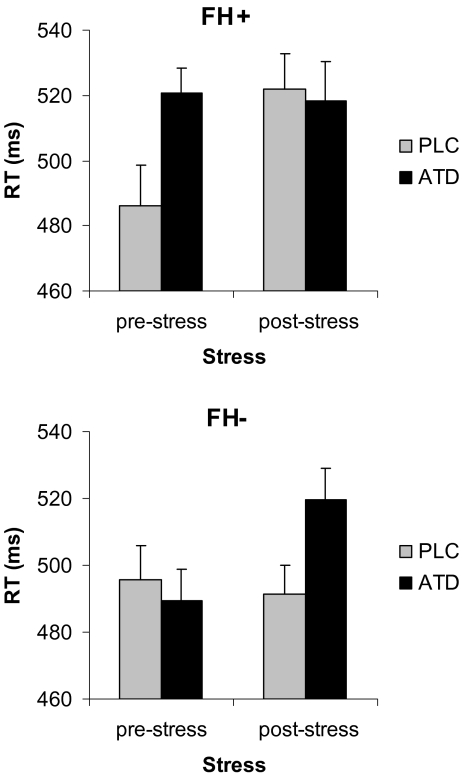
RATIONALE: Individuals with a family history of depression may be more likely to develop depression due to an innate vulnerability of their serotonergic system. However, even though serotonergic vulnerability may constitute a risk factor in the development of depression, it does not seem to be sufficient to cause a depressive episode. Based on previous data, it is suggested that stress may be a mediating factor. OBJECTIVES: This study examined the role of serotonin (5-HT) in stress coping in individuals with or without a family history of depression. MATERIALS AND METHODS: Nineteen healthy first-degree relatives of depressive patients (FH+) and 19 healthy controls without a family history of depression (FH-) were tested in a double-blind placebo-controlled design for affective processing under acute stress exposure, following acute tryptophan depletion (ATD) or placebo. RESULTS: Significant negative effects were found of stress on affective processing in FH- and FH+. In addition, FH- responded slower to positive words after stress only following ATD, whereas FH+ responded marginally slower under stress already after placebo and before stress following ATD. CONCLUSION: Acute stress exposure reduces positive affective bias; supporting the role of stress as an important predecessor in the development of depression. Furthermore, FH+ may be more susceptible than FH- to the negative effects of stress as well as to the negative effects of ATD. The results support the assumption that the 5-HT system is involved in stress resilience and may be more vulnerable in first-degree relatives of depression.
Overview
The claims and statistics of this paper haven’t been checked yet.
Free: it reads the open-access text and checks the first 5 claims that cite a source we can check. Create a free account to check every claim.
Integrity signals
Registry
Cites
Statistics
Figures
Verification
Claims the paper makes
The claims and statistics of this paper haven’t been checked yet.
Free: it reads the open-access text and checks the first 5 claims that cite a source we can check. Create a free account to check every claim.
Claims other papers make about this one
Each is checked against this paper’s own text: does it say what the citing paper says it does?
In the citing paper
“Two of the overall negative studies found subtle effects; slower responses to happy targets with ATD in those with a positive family history of depression (Firk and Markus, 2008) and a reduction by ATD of commission errors to happy distractors (Robinson and Sahakian, 2009).”
From Affective Cognition and its Disruption in Mood Disorders (2011) · cites this paper as Firk and Markus, 2008
In the citing paper
“Similarly 4 out of 5 studies found no overall effect of ATD on reaction times in the affective Go/No-Go task (Firk and Markus, 2008;Robinson and Sahakian, 2009;Roiser et al., 2008;Rubinsztein et al., 2001); one study did find that ATD prevented the baseline faster reaction times to happy targets, consistent with a negative bias caused by ATD (Murphy et al., 2002).”
From Affective Cognition and its Disruption in Mood Disorders (2011) · cites this paper as Firk and Markus, 2008
Self-check
Percentages, sums and reported differences re-computed from the paper’s own numbers.
The self-check needs the paper’s full text.
Citations
Cites
An inventory for measuring depression
BECK, A. T. (1961) · Archives of General Psychiatry · doi:10.1001/archpsyc.1961.01710120031004 · Cited by 38,032
Influence of life stress on depression: moderation by a polymorphism in the 5-HTT gene
Caspi, A., Sugden, K., Moffitt, T. E., Taylor, A., Craig, I. W., Harrington, H., McClay, J., Mill, J., Martin, J., Braithwaite, A., et al. (2003) · Science · doi:10.1126/science.1083968 · Cited by 8,120
Genetic Epidemiology of Major Depression: Review and Meta-Analysis
Sullivan, P. F., Neale, M. C., & Kendler, K. S. (2000) · American Journal of Psychiatry · doi:10.1176/appi.ajp.157.10.1552 · Cited by 3,431 · cited 2×
“Although environmental factors play a role, adoption and twin studies indicate that the heritability ranges between 31% and 41% (Sullivan et al. 2000).”
BackgroundPsychopharmacology: The Fourth Generation of Progress
Bloom, F. E., & Kupfer, D. J. (1995) · Medical Entomology and Zoology · Cited by 2,985
Monsell, S. (2003) · Trends in Cognitive Sciences · doi:10.1016/s1364-6613(03)00028-7 · Cited by 2,984
Heim, C., & Nemeroff, C. B. (2001) · Biological Psychiatry · doi:10.1016/s0006-3223(01)01157-x · Cited by 2,791 · cited 2×
“Stressful life events often precede the onset of depression (Brown et al. 1987; Heim and Nemeroff 2001; Van Praag 2004) and individuals with a genetic 5-HT vulnerability respond more readily to stressful life events with depressive feelings than individuals without a genetic vulnerability (Caspi et al.”
BackgroundResultKaplan & Sadock's Comprehensive Textbook of Psychiatry
Sadock, B. J., & Sadock, V. A. (2000) · Cited by 1,523
Brain Serotonin Content: Physiological Dependence on Plasma Tryptophan Levels
Fernstrom, J. D., & Wurtman, R. J. (1971) · Science · doi:10.1126/science.173.3992.149 · Cited by 1,016
Role of serotonin in the pathophysiology of depression: focus on the serotonin transporter
Owens, M. J., & Nemeroff, C. B. (1994) · Clinical Chemistry · doi:10.1093/clinchem/40.2.288 · Cited by 929 · cited 1×
“Although the neurobiological equivalent of this genetic predisposition remains unclear, the brain serotonergic system seems to be involved (Maes and Meltzer 1995; Owens and Nemeroff 1994).”
BackgroundDelgado, P. L. (1990) · Archives of General Psychiatry · doi:10.1001/archpsyc.1990.01810170011002 · Cited by 924
Differences between males and females in rates of serotonin synthesis in human brain
Nishizawa, S., Benkelfat, C., Young, S. N., Leyton, M., Mzengeza, S., de Montigny, C., Blier, P., & Diksic, M. (1997) · Proceedings of the National Academy of Sciences · doi:10.1073/pnas.94.10.5308 · Cited by 900 · cited 1×
“Reduced 5-HT neurotransmission after ATD is indicated by decreased brain 5-HT synthesis and release as well as by lower concentrations of cerebrospinal fluid 5hydroxyindoleacetic acid (5-HIAA) (Carpenter et al. 1998; Nishizawa et al. 1997; Williams et al. 1999).”
BackgroundRuhé, H. G., Mason, N. S., & Schene, A. H. (2007) · Molecular Psychiatry · doi:10.1038/sj.mp.4001949 · Cited by 861
Psychopharmacology: The Fourth Generation of Progress
Kramlinger, K. G. (1995) · Mayo Clinic Proceedings · doi:10.4065/70.10.1021-a · Cited by 779
Mini International Neuropsychiatric Interview
Lecrubier, Y., Sheehan, D. V., Weiller, E., Amorim, P., Bonora, I., Sheehan, K. H., Janavs, J., & Dunbar, G. C. (2013) · PsycTESTS Dataset · doi:10.1037/t18597-000 · Cited by 720
Tryptophan depletion causes a rapid lowering of mood in normal males
Young, S. N., Smith, S. E., Pihl, R. O., & Ervin, F. R. (1985) · Psychopharmacology · doi:10.1007/bf00431803 · Cited by 713 · cited 1×
“Acute tryptophan depletion (ATD) is commonly used to study serotonergic vulnerability (for a review, see Fusar-Poli et al. 2006; Young et al. 1985).”
BackgroundEmotional bias and inhibitory control processes in mania and depression
MURPHY, F. C., SAHAKIAN, B. J., RUBINSZTEIN, J. S., MICHAEL, A., ROGERS, R. D., ROBBINS, T. W., & PAYKEL, E. S. (1999) · Psychological Medicine · doi:10.1017/s0033291799001233 · Cited by 659 · cited 2×
“Previous findings already demonstrated slowed or diminished responses to happy words in depressed patients compared to healthy controls (Deveney and Deldin 2004; Erickson et al. 2005; Murphy et al. 1999), which may reflect lower mood and subsequent increased interference from sad distractors.”
BackgroundResultNeurocognitive impairment in drug-free patients with major depressive disorder
Porter, R. J., Gallagher, P., Thompson, J. M., & Young, A. H. (2003) · British Journal of Psychiatry · doi:10.1192/bjp.182.3.214 · Cited by 519 · cited 1×
“Depression is associated with reduced attention, memory and executive functioning (Elliott et al. 1996; PaeleckeHabermann et al. 2005; Porter et al. 2003; Tavares et al. 2003); among which attention bias towards negative information has frequently been demonstrated (e.”
BackgroundAttention and executive functions in remitted major depression patients
Paelecke-Habermann, Y., Pohl, J., & Leplow, B. (2005) · Journal of Affective Disorders · doi:10.1016/j.jad.2005.09.006 · Cited by 487 · cited 1×
“Depression is associated with reduced attention, memory and executive functioning (Elliott et al. 1996; Paelecke-Habermann et al. 2005; Porter et al. 2003; Tavares et al. 2003); among which attention bias towards negative information has frequently been demonstrated (e.g., Lim and Kim 2005; Rinck and Becker 2005).”
BackgroundElliott, R., Sahakian, B. J., McKay, A. P., Herrod, J. J., Robbins, T. W., & Paykel, E. S. (1996) · Psychological Medicine · doi:10.1017/s0033291700035303 · Cited by 469 · cited 1×
“Depression is associated with reduced attention, memory and executive functioning (Elliott et al. 1996; PaeleckeHabermann et al. 2005; Porter et al. 2003; Tavares et al. 2003); among which attention bias towards negative information has frequently been demonstrated (e.”
BackgroundLife Events, Vulnerability and Onset of Depression: Some Refinements
Brown, G. W., Bifulco, A., & Harris, T. O. (1987) · British Journal of Psychiatry · doi:10.1192/bjp.150.1.30 · Cited by 428 · cited 2×
“This further supports the hypothesis of stress as an important predecessor in the development of depression ( Brown et al. 1987; Heim and Nemeroff 2001; Van Praag 2004).”
BackgroundResultvan Praag, H. M. (2004) · Progress in Neuro-Psychopharmacology and Biological Psychiatry · doi:10.1016/j.pnpbp.2004.05.031 · Cited by 377 · cited 4×
“This further supports the hypothesis of stress as an important predecessor in the development of depression (Brown et al. 1987; Heim and Nemeroff 2001; Van Praag 2004 ).”
BackgroundResultInfluentialBenkelfat, C. (1994) · Archives of General Psychiatry · doi:10.1001/archpsyc.1994.03950090019003 · Cited by 336
Delgado, P. L., Miller, H. L., Salomon, R. M., Licinio, J., Krystal, J. H., Moreno, F. A., Heninger, G. R., & Charney, D. S. (1999) · Biological Psychiatry · doi:10.1016/s0006-3223(99)00014-1 · Cited by 307 · cited 1×
“Acute TRP depletion is found to reverse antidepressantinduced remission (Booij et al. 2005; Delgado et al. 1990, 1999 ) and induces depressive symptoms in remitted depressive patients (Booij and Van der Does 2007; Hayward et al. 2005 ;M oreno et al.2000, 2006 ;N eumeister et al.2004a), whereas in healthy subjects, no…”
BackgroundSerotonin and the regulation of hypothalamic-pituitary-adrenal axis function
Dinan, T. G. (1996) · Life Sciences · doi:10.1016/0024-3205(96)00066-5 · Cited by 303 · cited 1×
“Furthermore, there is considerable evidence for complex interactions between the serotonergic system and neuroendocrine stress mechanisms (Van Praag 2004) and 5HT is involved in the initiation and termination of the stress response (Dinan 1996; Fuller 1996; Lefebvre et al. 1992).”
BackgroundTryptophan Depletion During Continuous CSF Sampling in Healthy Human Subjects
Carpenter, M. D. (1998) · Neuropsychopharmacology · doi:10.1016/s0893-133x(97)00198-x · Cited by 298
Markus, C. R., Olivier, B., Panhuysen, G. E., Van der Gugten, J., Alles, M. S., Tuiten, A., Westenberg, H. G., Fekkes, D., Koppeschaar, H. F., & de Haan, E. E. (2000) · The American Journal of Clinical Nutrition · doi:10.1093/ajcn/71.6.1536 · Cited by 296
Self-citationNeumeister, A., Nugent, A. C., Waldeck, T., Geraci, M., Schwarz, M., Bonne, O., Bain, E. E., Luckenbaugh, D. A., Herscovitch, P., Charney, D. S., et al. (2004) · Archives of General Psychiatry · doi:10.1001/archpsyc.61.8.765 · Cited by 273
Tryptophan depletion in normal volunteers produces selective impairment in memory consolidation.
Riedel, W. J., Klaassen, T., Deutz, N. E. P., van Someren, A., & van Praag, H. M. (1999) · Psychopharmacology · doi:10.1007/s002130050845 · Cited by 271
The effects of tryptophan depletion on cognitive and affective processing in healthy volunteers
Murphy, F., Smith, K., Cowen, P., Robbins, T., & Sahakian, B. (2002) · Psychopharmacology · doi:10.1007/s00213-002-1128-9 · Cited by 255 · cited 3×
“Previous ATD studies with healthy subjects revealed mixed results; either reporting negative affective bias following ATD for shift and non-shift blocks (Murphy et al. 2002) or no effects at all (Roiser et al.”
BackgroundMethodResultInfluentialMarkus, C. R., Olivier, B., & de Haan, E. H. (2002) · The American Journal of Clinical Nutrition · doi:10.1093/ajcn/75.6.1051 · Cited by 230
Self-citationNeumeister, A., Konstantinidis, A., Stastny, J., Schwarz, M. J., Vitouch, O., Willeit, M., Praschak-Rieder, N., Zach, J., de Zwaan, M., Bondy, B., et al. (2002) · Archives of General Psychiatry · doi:10.1001/archpsyc.59.7.613 · Cited by 223 · cited 1×
“Healthy subjects with a positive family history (FH+) of depression show greater depressed mood after ATD than healthy controls without a family history (FH−) (Benkelfat et al. 1994; Klaassen et al. 1999; Neumeister et al. 2002; Sobczak et al. 2002a; van der Veen et al. 2007).”
BackgroundWilliams, W. A., Shoaf, S. E., Hommer, D., Rawlings, R., & Linnoila, M. (1999) · Journal of Neurochemistry · doi:10.1046/j.1471-4159.1999.721641.x · Cited by 217 · cited 1×
“Reduced 5-HT neurotransmission after ATD is indicated by decreased brain 5-HT synthesis and release as well as by lower concentrations of cerebrospinal fluid 5hydroxyindoleacetic acid (5-HIAA) (Carpenter et al. 1998; Nishizawa et al. 1997; Williams et al. 1999).”
BackgroundPeters, M. L., Godaert, G. L. R., Ballieux, R. E., van Vliet, M., Willemsen, J. J., Sweep, F. C. G. J., & Heijnen, C. J. (1998) · Psychoneuroendocrinology · doi:10.1016/s0306-4530(97)00082-6 · Cited by 208 · cited 2×
“This task has been demonstrated to induce psychological and physiological stress (Markus et al. 1998, 2000a, b; Peters et al. 1998).”
BackgroundErickson, K., Drevets, W. C., Clark, L., Cannon, D. M., Bain, E. E., Zarate, C. A., Charney, D. S., & Sahakian, B. J. (2005) · American Journal of Psychiatry · doi:10.1176/appi.ajp.162.11.2171 · Cited by 203 · cited 2×
“Previous findings already demonstrated slowed or diminished responses to happy words in depressed patients compared to healthy controls (Deveney and Deldin 2004; Erickson et al. 2005; Murphy et al. 1999), which may reflect lower mood and subsequent increased interference from sad distractors.”
BackgroundResultMARKUS, C. R., PANHUYSEN, G., TUITEN, A., KOPPESCHAAR, H., FEKKES, D., & PETERS, M. L. (1998) · Appetite · doi:10.1006/appe.1997.0155 · Cited by 202
Self-citationRinck, M., & Becker, E. S. (2005) · Journal of Abnormal Psychology · doi:10.1037/0021-843x.114.1.62 · Cited by 195 · cited 2×
“The 27 happy words and 27 sad words were derived from previous studies (e.g., Lim and Kim 2005; Rinck and Becker 2005) and were matched on frequency, word length, and valence.”
BackgroundMethodGessa, G. L., Biggio, G., Fadda, F., Corsini, G. U., & Tagliamonte, A. (1974) · Journal of Neurochemistry · doi:10.1111/j.1471-4159.1974.tb04308.x · Cited by 191
Van Praag, H. M. (2005) · The World Journal of Biological Psychiatry · doi:10.1080/15622970510030018 · Cited by 184
Task-set reconfiguration processes do not imply a control homunuculus: Reply to Altmann
Monsell, S. (2003) · Trends in Cognitive Sciences · doi:10.1016/s1364-6613(03)00170-0 · Cited by 182
The effects of tryptophan depletion on mood and psychiatric symptoms
Van der Does, A. J. W. (2001) · Journal of Affective Disorders · doi:10.1016/s0165-0327(00)00209-3 · Cited by 176 · cited 1×
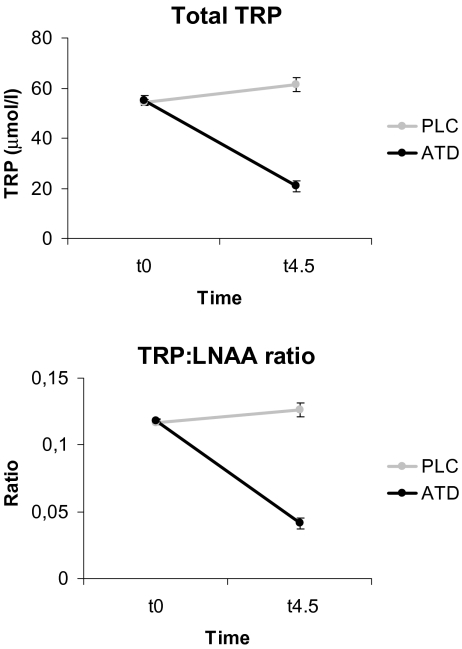
“Tryptophan depletion lowered the plasma TRP:LNAA ratio by 65%, which is comparable with previous studies using the collagen– protein (Evers et al. 2005) or classic ATD mixture ( Van der Does 2001 ).”
ResultCorticosteroid–serotonin interactions in depression: a review of the human evidence
Porter, R. J., Gallagher, P., Watson, S., & Young, A. H. (2004) · Psychopharmacology · doi:10.1007/s00213-004-1774-1 · Cited by 169 · cited 1×
“Hence, serotonin plays an important role in stress coping, and clear interactions appear between 5-HT and the neuroendocrine stress system (Porter et al. 2004).”
BackgroundLefebvre, H., Contesse, V., Delarue, C., Feuilloley, M., Hery, F., Grise, P., Raynaud, G., Verhofstad, A. A. J., Wolf, L. M., & Vaudry, H. (1992) · Neuroscience · doi:10.1016/0306-4522(92)90047-6 · Cited by 164 · cited 1×
“Furthermore, there is considerable evidence for complex interactions between the serotonergic system and neuroendocrine stress mechanisms (Van Praag 2004) and 5HT is involved in the initiation and termination of the stress response (Dinan 1996; Fuller 1996; Lefebvre et al. 1992).”
BackgroundHayward, G., Goodwin, G. M., Cowen, P. J., & Harmer, C. J. (2005) · Biological Psychiatry · doi:10.1016/j.biopsych.2004.11.016 · Cited by 162 · cited 1×
“1990, 1999) and induces depressive symptoms in remitted depressive patients (Booij and Van der Does 2007; Hayward et al. 2005; Moreno et al. 2000, 2006; Neumeister et al. 2004a), whereas in healthy subjects, no or only modest effects are found (e.”
BackgroundNeumeister, A., Hu, X.-Z., Luckenbaugh, D. A., Schwarz, M., Nugent, A. C., Bonne, O., Herscovitch, P., Goldman, D., Drevets, W. C., & Charney, D. S. (2006) · Archives of General Psychiatry · doi:10.1001/archpsyc.63.9.978 · Cited by 161 · cited 1×
“Furthermore, mood lowering effects of ATD may depend on the 5-HT transporter genotype, a gene-linked polymorphic region (5-HTTLPR) with two functional variants ( Neumeister et al. 2002, 2006; Roiser et al. 2007; Walderhaug et al. 2007) that has been shown to modulate the vulnerability to depression (Caspi et al. 2003).”
BackgroundCognitive Processing of Emotional Information in Depression, Panic, and Somatoform Disorder.
Lim, S.-L., & Kim, J.-H. (2005) · Journal of Abnormal Psychology · doi:10.1037/0021-843x.114.1.50 · Cited by 155
Stress, the Brain and Depression
Praag, H. M. V., Kloet, E. R. D., & Os, J. V. (2004) · Cambridge University Press eBooks · doi:10.1017/cbo9780511544422 · Cited by 150
Walderhaug, E., Magnússon, A., Neumeister, A., Lappalainen, J., Lunde, H. A., Refsum, H., & Landrø, N. I. (2007) · Biological Psychiatry · doi:10.1016/j.biopsych.2007.02.012 · Cited by 149 · cited 1×
“Furthermore, mood lowering effects of ATD may depend on the 5-HT transporter genotype, a gene-linked polymorphic region (5-HTTLPR) with two functional variants (Neumeister et al. 2002, 2006; Roiser et al. 2007; Walderhaug et al. 2007) that has been shown to modulate the vulnerability to depression (Caspi et al.”
Backgroundde Kloet, E. R., Kovács, G. L., Szabó, G., Telegdy, G., Bohus, B., & Versteeg, D. H. G. (1982) · Brain Research · doi:10.1016/0006-8993(82)90546-7 · Cited by 145
Klaassen, T., Riedel, W. J., van Someren, A., Deutz, N. E. P., Honig, A., & van Praag, H. M. (1999) · Biological Psychiatry · doi:10.1016/s0006-3223(99)00082-7 · Cited by 140 · cited 2×
“2004a), whereas in healthy subjects, no or only modest effects are found (e.g., Benkelfat et al. 1994; Bhatti et al. 1998; Evers et al. 2005; Fusar-Poli et al. 2007; Klaassen et al. 1999; Ruhe et al. 2007).”
BackgroundMarkus, R., Panhuysen, G., Tuiten, A., & Koppeschaar, H. (2000) · Physiology & Behavior · doi:10.1016/s0031-9384(00)00265-1 · Cited by 139
SOBCZAK, S., RIEDEL, W. J., BOOIJ, I., AAN HET ROT, M., DEUTZ, N. E. P., & HONIG, A. (2002) · Psychological Medicine · doi:10.1017/s0033291702005342 · Cited by 125
Resistance to inhibiting effect of dexamethasone in patients with endogenous depression
Nuller, J. L., & Ostroumova, M. N. (1980) · Acta Psychiatrica Scandinavica · doi:10.1111/j.1600-0447.1980.tb00576.x · Cited by 118 · cited 2×
“1982, 1983), which promotes stress adaptation by mediating negative feedback control of cortisol on the HPA axis (Nuller and Ostroumova 1980; Van Praag 2004).”
Backgroundvan der Veen, F. M., Evers, E. A. T., Deutz, N. E. P., & Schmitt, J. A. J. (2007) · Neuropsychopharmacology · doi:10.1038/sj.npp.1301212 · Cited by 118 · cited 3×
“Healthy subjects with a positive family history (FH+) of depression show greater depressed mood after ATD than healthy controls without a family history (FH� )( Benkelfat et al. 1994 ;K laassen et al.1999; Neumeister et al. 2002 ;S obczak et al. 2002a; van der Veen et al. 2007 ).”
BackgroundInfluentialRoiser, J. P., Müller, U., Clark, L., & Sahakian, B. J. (2007) · The International Journal of Neuropsychopharmacology · doi:10.1017/s146114570600705x · Cited by 117 · cited 1×
“Furthermore, mood lowering effects of ATD may depend on the 5-HT transporter genotype, a gene-linked polymorphic region (5-HTTLPR) with two functional variants (Neumeister et al. 2002, 2006; Roiser et al. 2007; Walderhaug et al. 2007) that has been shown to modulate the vulnerability to depression (Caspi et al.”
BackgroundCognition in mania and depression
TAVARES, J. V. T., DREVETS, W. C., & SAHAKIAN, B. J. (2003) · Psychological Medicine · doi:10.1017/s0033291703008432 · Cited by 113 · cited 1×
“Depression is associated with reduced attention, memory and executive functioning (Elliott et al. 1996; PaeleckeHabermann et al. 2005; Porter et al. 2003; Tavares et al. 2003); among which attention bias towards negative information has frequently been demonstrated (e.”
BackgroundAldosterone blocks the response to corticosterone in the raphe-hippocampal serotonin system
de Kloet, E. R., Versteeg, D. H. G., & Kovács, G. L. (1983) · Brain Research · doi:10.1016/0006-8993(83)90834-x · Cited by 111
Neumeister, A., Young, T. A., & Stastny, J. (2004) · Psychopharmacology · doi:10.1007/s00213-004-1950-3 · Cited by 107
Review: Serotonin by stress interaction: a susceptibility factor for the development of depression?
Firk, C., & Markus, C. R. (2007) · Journal of Psychopharmacology · doi:10.1177/0269881106075588 · Cited by 106 · cited 1×
“In addition, this may even be more profound after ATD (Firk and Markus 2007).”
BackgroundSelf-citationRubinsztein, J. S., Rogers, R. D., Riedel, W. J., Mehta, M. A., Robbins, T. W., & Sahakian, B. J. (2001) · Psychopharmacology · doi:10.1007/s002130000655 · Cited by 100 · cited 1×
“Previous ATD studies with healthy subjects revealed mixed results; either reporting negative affective bias following ATD for shift and non-shift blocks (Murphy et al. 2002) or no effects at all (Roiser et al. 2007; Rubinsztein et al. 2001 ).”
ResultSerotonin receptors involved in regulation of pituitary-adrenocortical function in rats
Fuller, R. W. (1995) · Behavioural Brain Research · doi:10.1016/0166-4328(96)00099-x · Cited by 91 · cited 1×
“Furthermore, there is considerable evidence for complex interactions between the serotonergic system and neuroendocrine stress mechanisms (Van Praag 2004) and 5HT is involved in the initiation and termination of the stress response (Dinan 1996; Fuller 1996; Lefebvre et al. 1992).”
BackgroundBhatti, T., Gillin, J. C., Seifritz, E., Moore, P., Clark, C., Golshan, S., Stahl, S., Rapaport, M., & Kelsoe, J. (1998) · Biological Psychiatry · doi:10.1016/s0006-3223(97)80252-1 · Cited by 85
Moreno, F., Heninger, G. R., McGahuey, C. A., & Delgado, P. L. (2000) · Biological Psychiatry · doi:10.1016/s0006-3223(00)00893-3 · Cited by 82
Fusar‐Poli, P., Allen, P., McGuire, P. K., Placentino, A., Cortesi, M., & Pérez, J. (2006) · Psychopharmacology · doi:10.1007/s00213-006-0493-1 · Cited by 75 · cited 1×
“Acute tryptophan depletion (ATD) is commonly used to study serotonergic vulnerability (for a review, see Fusar-Poli et al. 2006; Young et al. 1985).”
BackgroundEvers, E. A. T., Tillie, D. E., van der Veen, F. M., Lieben, C. K., Jolles, J., Deutz, N. E. P., & Schmitt, J. A. J. (2004) · Psychopharmacology · doi:10.1007/s00213-004-2141-y · Cited by 74 · cited 5×
“After administration, these peptides are decomposed into amino acids and the mechanism of depletion is identical to the classic ATD method (Blokland et al. 2004; Evers et al. 2005).”
BackgroundMethodResultInfluentialBooij, L., Van Der Does, A. J. W., Haffmans, P. M. J., Spinhoven, P., & McNally, R. J. (2005) · British Journal of Psychiatry · doi:10.1192/bjp.187.2.148 · Cited by 69 · cited 1×
“Acute TRP depletion is found to reverse antidepressantinduced remission ( Booij et al. 2005; Delgado et al. 1990, 1999) and induces depressive symptoms in remitted depressive patients (Booij and Van der Does 2007; Hayward et al. 2005 ;M oreno et al.2000, 2006 ;N eumeister et al.2004a), whereas in healthy subjects, no…”
BackgroundSobczak, S. (2002) · Neuropsychopharmacology · doi:10.1016/s0893-133x(02)00345-7 · Cited by 67
Memory of Faces: A Slow Wave ERP Study of Major Depression.
Deveney, C. M., & Deldin, P. J. (2004) · Emotion · doi:10.1037/1528-3542.4.3.295 · Cited by 66 · cited 1×
“Previous findings already demonstrated slowed or diminished responses to happy words in depressed patients compared to healthy controls (Deveney and Deldin 2004; Erickson et al. 2005; Murphy et al. 1999), which may reflect lower mood and subsequent increased interference from sad distractors.”
ResultCognitive and serotonergic vulnerability to depression: Convergent findings.
Booij, L., & Van der Does, A. J. W. (2007) · Journal of Abnormal Psychology · doi:10.1037/0021-843x.116.1.86 · Cited by 55 · cited 1×
“Acute TRP depletion is found to reverse antidepressantinduced remission (Booij et al. 2005; Delgado et al. 1990, 1999) and induces depressive symptoms in remitted depressive patients ( Booij and Van der Does 2007; Hayward et al. 2005 ;M oreno et al.2000, 2006 ;N eumeister et al.2004a), whereas in healthy subjects, no…”
BackgroundSex Differences in Depressive Response During Monoamine Depletions in Remitted Depressive Subjects
Moreno, F. A., McGahuey, C. A., Freeman, M. P., & Delgado, P. L. (2006) · The Journal of Clinical Psychiatry · doi:10.4088/jcp.v67n1019 · Cited by 49
Davis, S., Stanford, S. C., & Heal, D. J. (1995) · Psychopharmacology · doi:10.1007/bf02245954 · Cited by 45
Effect of acute tryptophan depletion on the response to controllable and uncontrollable noise stress
Richell, R. A., Deakin, J. F. W., & Anderson, I. M. (2004) · Biological Psychiatry · doi:10.1016/j.biopsych.2004.10.010 · Cited by 45 · cited 2×
“In accordance, Richell et al. (2005) reported that even healthy subjects are susceptible to the moodlowering effects of stress exposure following ATD.”
BackgroundModulation of neural response to happy and sad faces by acute tryptophan depletion
Fusar-Poli, P., Allen, P., Lee, F., Surguladze, S., Tunstall, N., Fu, C. H. Y., Brammer, M. J., Cleare, A. J., & McGuire, P. K. (2007) · Psychopharmacology · doi:10.1007/s00213-007-0757-4 · Cited by 43 · cited 1×
“2004a), whereas in healthy subjects, no or only modest effects are found (e.g., Benkelfat et al. 1994; Bhatti et al. 1998; Evers et al. 2005; Fusar-Poli et al. 2007; Klaassen et al. 1999; Ruhe et al. 2007).”
BackgroundSeckl, J. R., & Fink, G. (1991) · The Journal of Steroid Biochemistry and Molecular Biology · doi:10.1016/0960-0760(91)90291-c · Cited by 35 · cited 1×
“2004), whereas dysfunctional brain 5-HT is found to reduce HPA function and stress adaptation (Maes et al. 1991; Seckl and Fink 1991).”
BackgroundMaes, M. H. J., Minner, B., & Suy, E. (1991) · Amino Acids · doi:10.1007/bf00808091 · Cited by 18
Moja, E. A., Rocchi, E., Benedetti, F., Paolillo, F., Casalgrandi, G., & de Leòn, M. P. (1991) · Life Sciences · doi:10.1016/0024-3205(91)90496-x · Cited by 14
Research works printed but not linked: 1
- Blokland A Lieben C Deutz NEP Schmitt J Acute tryptophan depletion: comparing the effects of an amino acid mixture with a gelatin-based protein in man and rats Curr Top Nutraceutical Res 2004 2 161 169
Cited by
Affective Cognition and its Disruption in Mood Disorders
Elliott, R., Zahn, R., Deakin, J. F. W., & Anderson, I. M. (2011) · Neuropsychopharmacology · doi:10.1038/npp.2010.77 · Cited by 330
“studies found subtle effects; slower responses to happy targets with ATD in those with a positive family history of depression (Firk and Markus, 2008) and a reduction by ATD of commission errors to happy distractors (Robinson and Sahakian, 2009).”
BackgroundMacKenzie, L. E., Uher, R., & Pavlova, B. (2019) · JAMA Psychiatry · doi:10.1001/jamapsychiatry.2018.3672 · Cited by 60
Tryptophan Depletion and Emotional Processing in Healthy Volunteers at High Risk for Depression
Feder, A., Skipper, J., Blair, J. R., Buchholz, K., Mathew, S. J., Schwarz, M., Doucette, J. T., Alonso, A., Collins, K. A., Neumeister, A., et al. (2011) · Biological Psychiatry · doi:10.1016/j.biopsych.2010.12.033 · Cited by 44
“Published ATD studies comparing affective processing in HR and low familial risk (LR) groups have yielded mixed results (11,12), with one study suggesting a differential effect of ATD when combined with stress (13).”
ResultFirk, C., & Markus, C. R. (2008) · Psychopharmacology · doi:10.1007/s00213-008-1428-9 · Cited by 39
“…the classic ATD mixture have reported an increase in plasma TRP of up to 200% in the balanced (TRP+) condition (for a review see Fusar-Poli et al. 2006), whereas the CP ATD method has been found to be more effective in maintaining a stable TRP+ condition (Evers et al. 2005; Firk and Markus 2008).”
BackgroundMethodSelf-citationAffective Biases in Humans and Animals
Robinson, E. S. J., & Roiser, J. P. (2015) · Current Topics in Behavioral Neurosciences · doi:10.1007/7854_2015_5011 · Cited by 37
“…noradrenaline, could elicit negative processing biases on “hot” processing tests, including emotional and reinforcement processing (Cools et al. 2005; Firk and Markus 2008; Hasler et al. 2009; McLean et al. 2004; Murphy et al. 2002; Robinson et al. 2011; Rogers et al. 2003; Roiser et al. 2006;…”
Metadata
- Authors
- Firk, C., & Markus, C. R.
- Affiliations
- Maastricht University (NL)
- Corresponding author
- Firk, Christine
- ORCID
- Firk, Christine
- Venue
- Psychopharmacology
- Published
- 2008-06-13
- Volume
- 199
- Issue
- 2
- Pages
- 151-160
- ISSN
- 0033-3158 (ISSN-L)
- 1432-2072
- PMC
- PMC2493867
- OpenAlex
- W1969993111
- Cited by
- 19
- References
- 75
- Citations by year
- 2025: 1 · 2022: 1 · 2020: 1 · 2018: 1 · 2016: 1 · 2015: 5 · 2013: 1
- FWCI
- 0.89
- Type
- journal article
- Language
- en
- Open access
- hybrid
- doi.org
- Licence
- cc-by-nc
- Locations
- Psychopharmacology (publishedVersion, cc-by-nc)
- Europe PMC (PubMed Central) (publishedVersion, cc-by-nc)
- PubMed Central (publishedVersion, cc-by-nc)
- PubMed (publishedVersion)
- Research Publications (Maastricht University) (publishedVersion, cc-by-nc)
- Research Publications (Maastricht University) (submittedVersion, other-oa)
- Topics
- Life Sciences › Neuroscience › Biological Psychiatry › Tryptophan and brain disorders
- Life Sciences › Neuroscience › Cellular and Molecular Neuroscience › Neurotransmitter Receptor Influence on Behavior
- Life Sciences › Neuroscience › Behavioral Neuroscience › Stress Responses and Cortisol
- Keywords
- acute tryptophan depletion, family history of depression, emotional processing, serotonin, stress resilience, depression risk, stress coping
- MeSH terms
- Adolescent, Affect, Amino Acids, Brain Chemistry, Depressive Disorder, Double-Blind Method, Female, Humans, Male, Reaction Time, Stress, Psychological, Tryptophan, Cross-Over Studies, Young Adult
About these checks
Registry, retraction, Cites and statistics results are computed, not judged, with one exception: a printed reference that no index lists is read once by a model before it counts as a citation error. Claims are extracted by a model and kept only when their quote appears verbatim in the text; each cited source is then checked, with a model’s help, for whether it says what the claim relies on. Those verdicts can be wrong — read the claim’s quote and the cited source before relying on one.
Statistics and arithmetic are recomputed, not judged.
Confidence bands are shown only for fields calibrated on our annotated test set. None is calibrated yet, so no band is shown.
What counts as a claim ›How we measure confidence ›How we check this ›
Are you an author, or do you see a problem with this page? Request a review
Data sources
Bibliographic data: Semantic Scholar, OpenAlex, Crossref.
Contains information from the Semantic Scholar Academic Graph Datasets, made available under the ODC Attribution License (ODC-BY 1.0).
Semantic Scholar’s data is described in: Kinney, R., et al. (2023). The Semantic Scholar Open Data Platform. arXiv:2301.10140.
