

Psilocybin with psychological support for treatment-resistant depression: six-month follow-up
Open accessThe DOI matches its Crossref record; 40 of the 40 references it cites were found in a registry or an index.
Abstract
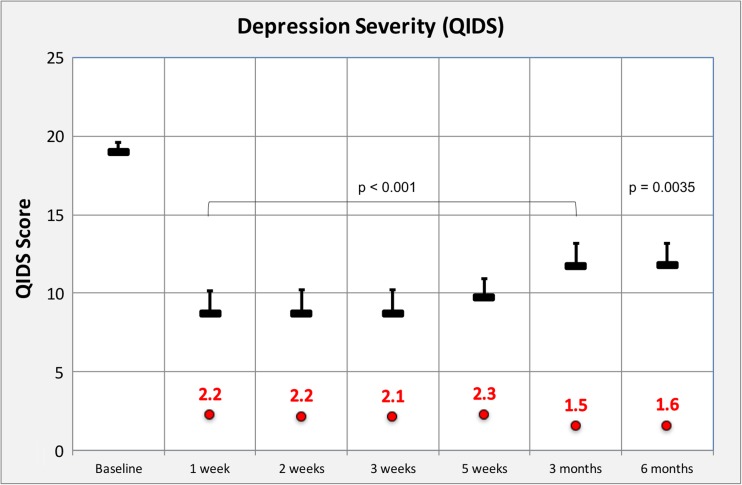
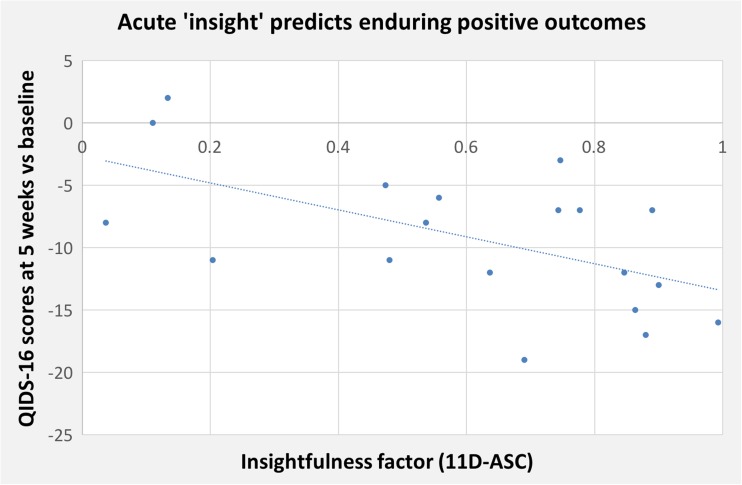
RATIONALE: Recent clinical trials are reporting marked improvements in mental health outcomes with psychedelic drug-assisted psychotherapy. OBJECTIVES: Here, we report on safety and efficacy outcomes for up to 6 months in an open-label trial of psilocybin for treatment-resistant depression. METHODS: Twenty patients (six females) with (mostly) severe, unipolar, treatment-resistant major depression received two oral doses of psilocybin (10 and 25 mg, 7 days apart) in a supportive setting. Depressive symptoms were assessed from 1 week to 6 months post-treatment, with the self-rated QIDS-SR16 as the primary outcome measure. RESULTS: Treatment was generally well tolerated. Relative to baseline, marked reductions in depressive symptoms were observed for the first 5 weeks post-treatment (Cohen's d = 2.2 at week 1 and 2.3 at week 5, both p < 0.001); nine and four patients met the criteria for response and remission at week 5. Results remained positive at 3 and 6 months (Cohen's d = 1.5 and 1.4, respectively, both p < 0.001). No patients sought conventional antidepressant treatment within 5 weeks of psilocybin. Reductions in depressive symptoms at 5 weeks were predicted by the quality of the acute psychedelic experience. CONCLUSIONS: Although limited conclusions can be drawn about treatment efficacy from open-label trials, tolerability was good, effect sizes large and symptom improvements appeared rapidly after just two psilocybin treatment sessions and remained significant 6 months post-treatment in a treatment-resistant cohort. Psilocybin represents a promising paradigm for unresponsive depression that warrants further research in double-blind randomised control trials.
Overview
The claims and statistics of this paper haven’t been checked yet.
Free: it reads the open-access text and checks the first 5 claims that cite a source we can check. Create a free account to check every claim.
Integrity signals
Registry
Cites
Statistics
Figures
Verification
Claims the paper makes
The claims and statistics of this paper haven’t been checked yet.
Free: it reads the open-access text and checks the first 5 claims that cite a source we can check. Create a free account to check every claim.
Claims other papers make about this one
Each is checked against this paper’s own text: does it say what the citing paper says it does?
The source backs part of the claim, not all of it — or backs it for a different population, condition or comparison.
In the citing paper
“Not only do they produce sustained therapeutic effects following a single administration, they also appear to have broad therapeutic potential”
From Psychedelics and Other Psychoplastogens for Treating Mental Illness. (2021) · cites this paper as [41]
Experimental — accuracy not yet measuredThe source backs part of the claim, not all of it — or backs it for a different population, condition or comparison.
In the citing paper
“Unlike traditional antidepressants, psychoplastogens produce both fast-acting and sustained beneficial behavioral effects after a single administration (Figure 1) (38–42).”
From Psychedelics and Other Psychoplastogens for Treating Mental Illness. (2021) · cites this paper as [41]
Experimental — accuracy not yet measuredThe source backs part of the claim, not all of it — or backs it for a different population, condition or comparison.
In the citing paper
“the mood-elevating properties of psilocybin seem to last significantly longer”
From Psychedelics and Other Psychoplastogens for Treating Mental Illness. (2021) · cites this paper as [41]
Experimental — accuracy not yet measuredThe source backs part of the claim, not all of it — or backs it for a different population, condition or comparison.
In the citing paper
“Remarkably, these benefits were incurred even after only a single psychedelic administration and were maintained for as long as 6 months.”
From Examining the Potential Synergistic Effects Between Mindfulness Training and Psychedelic-Assisted Therapy (2021) · cites this paper as [30]
Experimental — accuracy not yet measuredThe source backs part of the claim, not all of it — or backs it for a different population, condition or comparison.
In the citing paper
“Most of these studies however suffer from low methodological validity and are mostly open-label, yet they have yielded preliminary evidence for the capacity of psychedelic substances for treating addiction, depression, anxiety, and eating disorders (29–35).”
From Examining the Potential Synergistic Effects Between Mindfulness Training and Psychedelic-Assisted Therapy (2021) · cites this paper as [30]
Experimental — accuracy not yet measured
13 more claims about this paper
Create a free account to see every claim other papers make about this one.
Self-check
Percentages, sums and reported differences re-computed from the paper’s own numbers.
The self-check needs the paper’s full text.
Citations
Cites
Griffiths, R. R., Johnson, M. W., Carducci, M. A., Umbricht, A., Richards, W. A., Richards, B. D., Cosimano, M. P., & Klinedinst, M. A. (2016) · Journal of Psychopharmacology · doi:10.1177/0269881116675513 · Cited by 2,201 · cited 5×
“Recent studies (Griffiths et al. 2016; Ross et al. 2016; Carhart-Harris et al. 2016), including the present one, help demonstrate the feasibility of treating patients with major depressive disorder with psilocybin plus psychological support.”
BackgroundResultInfluentialRoss, S., Bossis, A., Guss, J., Agin-Liebes, G., Malone, T., Cohen, B., Mennenga, S. E., Belser, A., Kalliontzi, K., Babb, J., et al. (2016) · Journal of Psychopharmacology · doi:10.1177/0269881116675512 · Cited by 1,698 · cited 8×
“Recent studies (Griffiths et al. 2016; Ross et al. 2016; Carhart-Harris et al. 2016), including the present one, help demonstrate the feasibility of treating patients with major depressive disorder with psilocybin plus psychological support.”
BackgroundResultInfluentialCarhart-Harris, R. L., Bolstridge, M., Rucker, J., Day, C. M. J., Erritzoe, D., Kaelen, M., Bloomfield, M., Rickard, J. A., Forbes, B., Feilding, A., et al. (2016) · The Lancet Psychiatry · doi:10.1016/s2215-0366(16)30065-7 · Cited by 1,540 · cited 5×
“Recent studies (Griffiths et al. 2016; Ross et al. 2016; Carhart-Harris et al. 2016), including the present one, help demonstrate the feasibility of treating patients with major depressive disorder with psilocybin plus psychological support.”
BackgroundMethodResultInfluentialSelf-citationPilot Study of Psilocybin Treatment for Anxiety in Patients With Advanced-Stage Cancer
Grob, C. S., Danforth, A. L., Chopra, G. S., Hagerty, M., McKay, C. R., Halberstadt, A. L., & Greer, G. R. (2011) · Archives of General Psychiatry · doi:10.1001/archgenpsychiatry.2010.116 · Cited by 1,206 · cited 6×
“…separate trials have reported improvements in depressive symptoms after psilocybin-assisted psychotherapy (Griffiths et al. 2016; Ross et al. 2016; Grob et al. 2011; CarhartHarris et al. 2016), including one in which ‘treatment-resistant depression’ was the primary criterion for inclusion…”
BackgroundResultInfluentialHuman hallucinogen research: guidelines for safety
Johnson, M., Richards, W., & Griffiths, R. (2008) · Journal of Psychopharmacology · doi:10.1177/0269881108093587 · Cited by 1,203 · cited 2×
“Basic principles for safe therapeutic work with psychedelics can be found in guidelines (Johnson et al. 2008) and books (Richards 2015) but more systematic verification, refinement and (eventual) manualisation of treatment approaches are needed for subsequent roll-out (Carhart-Harris and Goodwin…”
BackgroundPsilocybin-assisted treatment for alcohol dependence: A proof-of-concept study
Bogenschutz, M. P., Forcehimes, A. A., Pommy, J. A., Wilcox, C. E., Barbosa, P., & Strassman, R. J. (2015) · Journal of Psychopharmacology · doi:10.1177/0269881114565144 · Cited by 1,151 · cited 1×
“Psilocybin has shown promise in the treatment of obsessive compulsive disorder (Moreno et al. 2006), alcohol (Bogenschutz et al. 2015) and tobacco addiction (Johnson et al. 2014) and anxiety related to terminal diagnoses (Griffiths et al. 2016; Ross et al. 2016; Grob et al. 2011).”
BackgroundPsilocybin induces schizophrenia-like psychosis in humans via a serotonin-2 agonist action
Vollenweider, F. X., Vollenweider-Scherpenhuyzen, M. F. I., Bäbler, A., Vogel, H., & Hell, D. (1998) · NeuroReport · doi:10.1097/00001756-199812010-00024 · Cited by 1,018 · cited 1×
“Like all serotonergic psychedelics, psilocybin initiates its characteristic effects via serotonin 2A receptor (5-HT2AR) agonism (Vollenweider et al. 1998).”
BackgroundPilot study of the 5-HT 2A R agonist psilocybin in the treatment of tobacco addiction
Johnson, M. W., Garcia-Romeu, A., Cosimano, M. P., & Griffiths, R. R. (2014) · Journal of Psychopharmacology · doi:10.1177/0269881114548296 · Cited by 914 · cited 1×
“Psilocybin has shown promise in the treatment of obsessive compulsive disorder (Moreno et al. 2006), alcohol (Bogenschutz et al. 2015) and tobacco addiction (Johnson et al. 2014) and anxiety related to terminal diagnoses (Griffiths et al. 2016; Ross et al. 2016; Grob et al. 2011).”
BackgroundGriffiths, R., Richards, W., Johnson, M., McCann, U., & Jesse, R. (2008) · Journal of Psychopharmacology · doi:10.1177/0269881108094300 · Cited by 905 · cited 2×
“involving appropriate psychological support), sustained improvements in well-being in healthy individuals were observed after a single dose of psilocybin in a doubleblind design incorporating an active placebo (Griffiths et al. 2008).”
BackgroundMethodSafety, tolerability, and efficacy of psilocybin in 9 patients with obsessive-compulsive disorder
Moreno, F. A., Wiegand, C. B., Taitano, E. K., & Delgado, P. L. (2006) · The Journal of Clinical Psychiatry · doi:10.4088/jcp.v67n1110 · Cited by 789 · cited 2×
“Psilocybin has shown promise in the treatment of obsessive compulsive disorder (Moreno et al. 2006),”
BackgroundGasser, P., Holstein, D., Michel, Y., Doblin, R., Yazar-Klosinski, B., Passie, T., & Brenneisen, R. (2014) · Journal of Nervous & Mental Disease · doi:10.1097/nmd.0000000000000113 · Cited by 750 · cited 1×
“…support have found similarly promising outcomes: Sustained reductions in end-of-life anxiety were observed after LSD-assisted psychotherapy (Gasser et al. 2014), and reduced depressive symptoms were seen after ayahuasca in patients with ‘recurrent depression’ (Osorio Fde et al. 2015;…”
ResultSerotonin and brain function: a tale of two receptors
Carhart-Harris, R., & Nutt, D. (2017) · Journal of Psychopharmacology · doi:10.1177/0269881117725915 · Cited by 739 · cited 3×
“This paradox implies that 5-HT2AR agonism and antagonism can achieve consistent ends, in terms of alleviating depressive symptoms, but via different mechanisms (see Carhart-Harris et al. (2017) and Carhart-Harris and Nutt (2017) for a relevant discussion).”
BackgroundSelf-citationThe Therapeutic Potential of Psychedelic Drugs: Past, Present, and Future
Carhart-Harris, R. L., & Goodwin, G. M. (2017) · Neuropsychopharmacology · doi:10.1038/npp.2017.84 · Cited by 706 · cited 6×
“See Carhart-Harris and Goodwin (2017) for a review of historical and recent trials with psychedelics.”
BackgroundInfluentialSelf-citationPsychometric evaluation of the altered states of consciousness rating scale (OAV)
Studerus, E., Gamma, A., & Vollenweider, F. X. (2010) · PLoS ONE · doi:10.1371/journal.pone.0012412 · Cited by 683 · cited 3×
“Previous work has indicated a strong relationship between the following 11D-ASC factors: experience of unity, spiritual experience and blissful state (Studerus et al. 2010); and a multiple correlation analysis confirmed their interrelatedness here (r > 0.92 for all permutations).”
BackgroundMethodInfluentialWatts, R., Day, C., Krzanowski, J., Nutt, D., & Carhart-Harris, R. (2017) · Journal of Humanistic Psychology · doi:10.1177/0022167817709585 · Cited by 589 · cited 4×
“Six-month follow-up interviews were carried out by RW with all 20 patients and the relevant qualitative data are reported elsewhere (Watts et al. 2017).”
BackgroundMethodResultInfluentialSelf-citationPsilocybin for treatment-resistant depression: fMRI-measured brain mechanisms
Carhart-Harris, R. L., Roseman, L., Bolstridge, M., Demetriou, L., Pannekoek, J. N., Wall, M. B., Tanner, M., Kaelen, M., McGonigle, J., Murphy, K., et al. (2017) · Scientific Reports · doi:10.1038/s41598-017-13282-7 · Cited by 587
Self-citationLysergic acid diethylamide (LSD) for alcoholism: meta-analysis of randomized controlled trials
Krebs, T. S., & Johansen, P.-Ø. (2012) · Journal of Psychopharmacology · doi:10.1177/0269881112439253 · Cited by 583 · cited 2×
“…can be found in literature documenting the extensive research carried out with these compounds in the mid-twentieth century, e.g. two relevant meta-analyses have found positive safety and efficacy data for LSD for alcohol dependence (Krebs and Johansen 2012) and mood disorders (Rucker et al. 2016).”
BackgroundOsório, F. D. L., Sanches, R. F., Macedo, L. R., dos Santos, R. G., Maia-de-Oliveira, J. P., Wichert-Ana, L., de Araujo, D. B., Riba, J., Crippa, J. A., & Hallak, J. E. (2015) · Revista Brasileira de Psiquiatria · doi:10.1590/1516-4446-2014-1496 · Cited by 488
Hartogsohn, I. (2016) · Journal of Psychopharmacology · doi:10.1177/0269881116677852 · Cited by 483 · cited 1×
“…‘most beneficial’ drug of potential misuse (Carhart-Harris and Nutt 2013; van Amsterdam et al. 2015)—although the influence of context (e.g. expectations and environmental factors) on potential harms and benefits has been much emphasised (Hartogsohn 2016; CarhartHarris et al., in review).”
BackgroundSanches, R. F., de Lima Osório, F., dos Santos, R. G., Macedo, L. R. H., Maia-de-Oliveira, J. P., Wichert-Ana, L., de Araujo, D. B., Riba, J., Crippa, J. A. S., & Hallak, J. E. C. (2016) · Journal of Clinical Psychopharmacology · doi:10.1097/jcp.0000000000000436 · Cited by 466 · cited 2×
“2014), and reduced depressive symptoms were seen after ayahuasca in patients with ‘recurrent depression’ (Osorio Fde et al. 2015; Sanches et al. 2016).”
BackgroundHendricks, P. S., Thorne, C. B., Clark, C. B., Coombs, D. W., & Johnson, M. W. (2015) · Journal of Psychopharmacology · doi:10.1177/0269881114565653 · Cited by 381 · cited 2×
“2012) and a recent population survey found lower rates of suicidality and psychological distress in association with psychedelic drug use (Hendricks et al. 2015)—an anomalous association for a drug of potential misuse.”
BackgroundAyahuasca-Assisted Therapy for Addiction: Results from a Preliminary Observational Study in Canada
Thomas, G., Lucas, P., Capler, N., Tupper, K., & Martin, G. (2013) · Current Drug Abuse Reviews · doi:10.2174/15733998113099990003 · Cited by 330
Bouso, J. C., González, D., Fondevila, S., Cutchet, M., Fernández, X., Ribeiro Barbosa, P. C., Alcázar-Córcoles, M. Á., Araújo, W. S., Barbanoj, M. J., Fábregas, J. M., et al. (2012) · PLoS ONE · doi:10.1371/journal.pone.0042421 · Cited by 313 · cited 2×
“ing and anti-addiction properties (Thomas et al. 2013; Bouso et al. 2012) and a recent population survey found lower rates of suicidality and psychological distress in association with psychedelic drug use (Hendricks et al.”
BackgroundRisperidone Augmentation of Selective Serotonin Reuptake Inhibitors in Major Depression
Ostroff, R. B., & Nelson, J. C. (1999) · The Journal of Clinical Psychiatry · doi:10.4088/jcp.v60n0410 · Cited by 248
van Amsterdam, J., Nutt, D., Phillips, L., & van den Brink, W. (2015) · Journal of Psychopharmacology · doi:10.1177/0269881115581980 · Cited by 229 · cited 1×
“…have consistently rated psilocybin as the least harmful and potentially ‘most beneficial’ drug of potential misuse (Carhart-Harris and Nutt 2013; van Amsterdam et al. 2015)—although the influence of context (e.g. expectations and environmental factors) on potential harms and benefits has been…”
BackgroundSelf-citationLSD enhances the emotional response to music
Kaelen, M., Barrett, F. S., Roseman, L., Lorenz, R., Family, N., Bolstridge, M., Curran, H. V., Feilding, A., Nutt, D. J., & Carhart-Harris, R. L. (2015) · Psychopharmacology · doi:10.1007/s00213-015-4014-y · Cited by 203 · cited 2×
“…e.g. the quality of the relationships with persons attending to them before, during and after the experience and patients’ relationship to the music listened to during the sessions (Kaelen et al. 2015)—and this matter has recently been discussed in length (Carhart-Harris et al., in review).”
BackgroundSelf-citationPsychedelics in the treatment of unipolar mood disorders: a systematic review
Rucker, J. J., Jelen, L. A., Flynn, S., Frowde, K. D., & Young, A. H. (2016) · Journal of Psychopharmacology · doi:10.1177/0269881116679368 · Cited by 185 · cited 2×
“…can be found in literature documenting the extensive research carried out with these compounds in the mid-twentieth century, e.g. two relevant meta-analyses have found positive safety and efficacy data for LSD for alcohol dependence (Krebs and Johansen 2012) and mood disorders (Rucker et al. 2016).”
BackgroundSelf-citationBonson, K. R., Buckholtz, J. W., & Murphy, D. L. (1996) · Neuropsychopharmacology · doi:10.1016/0893-133x(95)00145-4 · Cited by 170 · cited 1×
“With the exception of patient 2 (Table 1), eligible patients medicated with an antidepressant were advised to stop this for the trial, to avoid suspected attenuation of psilocybin’s effects (Bonson et al. 1996).”
BackgroundBranchi, I. (2011) · Psychoneuroendocrinology · doi:10.1016/j.psyneuen.2010.08.011 · Cited by 156 · cited 1×
“…a model by which psychedelic-induced 5-HT2AR signalling rapidly induces an acute state of plasticity in which an enriched context (Carhart-Harris et al., in review) may lead to cognitive biases being revised (Carhart-Harris and Nutt 2017; Carhart-Harris and Goodwin 2017)—see also Branchi (2011).”
BackgroundSacred Knowledge: Psychedelics and Religious Experiences
Richards, W. (2015) · Columbia University Press eBooks · doi:10.7312/columbia/9780231174060.001.0001 · Cited by 148 · cited 2×
“Basic principles for safe therapeutic work with psychedelics can be found in guidelines (Johnson et al. 2008) and books (Richards 2015) but more systematic verification, refinement and (eventual) manualisation of treatment approaches are needed for subsequent roll-out (Carhart-Harris and Goodwin…”
BackgroundKubitz, N., Mehra, M., Potluri, R. C., Garg, N., & Cossrow, N. (2013) · PLoS ONE · doi:10.1371/journal.pone.0076882 · Cited by 143 · cited 2×
“resistant depression may be marginally higher in women than in men (Kubitz et al. 2013).”
BackgroundMirtazapine Augmentation in the Treatment of Refractory Depression
Carpenter, L. L., Jocic, Z., Hall, J. M., Rasmussen, S. A., & Price, L. H. (1999) · The Journal of Clinical Psychiatry · doi:10.4088/jcp.v60n0110 · Cited by 135 · cited 2×
“cations have 5-HT2AR antagonist properties (Carpenter et al. 1999).”
BackgroundSacred Knowledge: Psychedelics and Religious Experiences
Richards, W. A. (2015) · doi:10.7312/rich17406 · Cited by 114
Buchborn, T., Schröder, H., Höllt, V., & Grecksch, G. (2014) · Journal of Psychopharmacology · doi:10.1177/0269881114531666 · Cited by 72 · cited 5×
“clinical work indicates that 5-HT2AR signalling may mediate (at least some of) the therapeutic effects of SSRIs (Nic Dhonnchadha et al. 2005; Buchborn et al. 2014).”
BackgroundInfluentialGueorguieva, R., Chekroud, A. M., & Krystal, J. H. (2017) · The Lancet Psychiatry · doi:10.1016/s2215-0366(17)30038-x · Cited by 67 · cited 1×
“…imply that psilocybin may protect against relapse to an equivalent extent to daily use of an established antidepressant—as seen in discontinuation trials where responders either continue on medication (33% relapse) or transfer to placebo (46% relapse) for 6 months (Gueorguieva et al. 2017).”
BackgroundExperienced Drug Users Assess the Relative Harms and Benefits of Drugs: A Web-Based Survey
Carhart-Harris, R. L., & Nutt, D. J. (2013) · Journal of Psychoactive Drugs · doi:10.1080/02791072.2013.825034 · Cited by 54 · cited 2×
“Drug experts and users have consistently rated psilocybin as the least harmful and potentially ‘most beneficial’ drug of potential misuse (Carhart-Harris and Nutt 2013; van Amsterdam et al. 2015)—although the influence of context (e.”
BackgroundSelf-citationPetit, A., Quesseveur, G., Gressier, F., Colle, R., David, D. J. P., Gardier, A. M., Ferreri, F., Lépine, J., Falissard, B., Verstuyft, C., et al. (2014) · Progress in Neuro-Psychopharmacology and Biological Psychiatry · doi:10.1016/j.pnpbp.2014.04.013 · Cited by 53 · cited 2×
“5-HT2AR signalling has been associated with better responses to conventional antidepressants (Qesseveur et al. 2016; Petit et al. 2014), and pre-”
BackgroundQesseveur, G., Petit, A., Nguyen, H. T., Dahan, L., Colle, R., Rotenberg, S., Seif, I., Robert, P., David, D. J. P., Guilloux, J., et al. (2016) · Neuropharmacology · doi:10.1016/j.neuropharm.2015.12.022 · Cited by 48 · cited 2×
“5-HT2AR signalling has been associated with better responses to conventional antidepressants (Qesseveur et al. 2016; Petit et al. 2014), and pre-”
BackgroundDhonnchadha, B. �. N., Ripoll, N., Cl�net, F., Hascoët, M., & Bourin, M. (2004) · Psychopharmacology · doi:10.1007/s00213-004-2044-y · Cited by 43 · cited 1×
“…has been associated with better responses to conventional antidepressants (Qesseveur et al. 2016; Petit et al. 2014), and preclinical work indicates that 5-HT2AR signalling may mediate (at least some of) the therapeutic effects of SSRIs (Nic Dhonnchadha et al. 2005; Buchborn et al. 2014).”
BackgroundQuestion-based Drug Development for psilocybin – Authors' reply
Carhart-Harris, R. L., & Nutt, D. (2016) · The Lancet Psychiatry · doi:10.1016/s2215-0366(16)30217-6 · Cited by 1 · cited 1×
“A fast and sustained response exceeding what might be expected from a placebo response was observed in many of the patients (see Carhart-Harris and Nutt (2016) for a relevant discussion).”
BackgroundSelf-citation
Cited by
Trial of Psilocybin versus Escitalopram for Depression
Carhart-Harris, R., Giribaldi, B., Watts, R., Baker-Jones, M., Murphy-Beiner, A., Murphy, R., Martell, J., Blemings, A., Erritzoe, D., & Nutt, D. J. (2021) · New England Journal of Medicine · doi:10.1056/nejmoa2032994 · Cited by 1,391
Self-citationREBUS and the anarchic brain: Toward a unified model of the brain action of psychedelics
Carhart-Harris, R. L., & Friston, K. J. (2019) · Pharmacological Reviews · doi:10.1124/pr.118.017160 · Cited by 1,180
“If mediated properly, this belief – recalibration process may have long-term positive consequences for mental health; indeed, the described process is the very essence of effective psychedelic therapy (Haijen et al., 2018; Lyons and Carhart-Harris, 2018b).”
BackgroundMethodInfluentialRoseman, L., Nutt, D. J., & Carhart-Harris, R. L. (2018) · Frontiers in Pharmacology · doi:10.3389/fphar.2017.00974 · Cited by 808
“We recently completed an open-label clinical trial assessing the feasibility of treating 20 patients with treatment-resistant depression (TRD) with psilocybin (Carhart-Harris et al., 2017).”
BackgroundSelf-citationSerotonin and brain function: a tale of two receptors
Carhart-Harris, R., & Nutt, D. (2017) · Journal of Psychopharmacology · doi:10.1177/0269881117725915 · Cited by 739
Self-citationThe Therapeutic Potential of Psychedelic Drugs: Past, Present, and Future
Carhart-Harris, R. L., & Goodwin, G. M. (2017) · Neuropsychopharmacology · doi:10.1038/npp.2017.84 · Cited by 706
“…clinical development of psychedelics, RLC-H sees it as a potentially exploitable component—especially as it has been shown to be predictive of long-term clinical outcomes (eg, in Johnson et al, 2014; Bogenschutz et al, 2015; Griffiths et al, 2016; Ross et al, 2016; Carhart-Harris et al, 2016a,b).”
BackgroundInfluentialSelf-citation
Metadata
- Authors
- Carhart-Harris, R. L., Bolstridge, M., Day, C. M. J., Rucker, J., Watts, R., Erritzoe, D. E., Kaelen, M., Giribaldi, B., Bloomfield, M., Pilling, S., Rickard, J. A., Forbes, B., Feilding, A., Taylor, D., Curran, H. V., & Nutt, D. J.
- Affiliations
- Imperial College London (GB)
- South London and Maudsley NHS Foundation Trust (GB)
- King's College London (GB)
- University College London (GB)
- Barts Health NHS Trust (GB)
- Beckley Foundation (GB)
- Corresponding author
- Carhart-Harris, R. L.
- ORCID
- Venue
- Psychopharmacology
- Published
- 2017-11-08
- Volume
- 235
- Issue
- 2
- Pages
- 399-408
- ISSN
- 0033-3158 (ISSN-L)
- 1432-2072
- PMC
- PMC5813086
- OpenAlex
- W2767530231
- Cited by
- 970
- References
- 40
- Citations by year
- 2026: 87 · 2025: 153 · 2024: 171 · 2023: 143 · 2022: 152 · 2021: 110 · 2020: 93 · 2019: 29 · 2018: 27 · 2017: 4
- FWCI
- 51.90
- Type
- journal article
- Language
- en
- Open access
- hybrid
- doi.org
- Locations
- Psychopharmacology (publishedVersion, cc-by)
- Europe PMC (PubMed Central) (publishedVersion, cc-by)
- PubMed Central (publishedVersion, cc-by)
- PubMed (publishedVersion)
- UCL Discovery (University College London) (submittedVersion)
- eScholarship (California Digital Library) (submittedVersion, cc-by)
- Research Portal (King's College London) (submittedVersion, cc-by)
- Spiral (Imperial College London) (submittedVersion, other-oa)
- Funders
- Medical Research Council (MR/J00460X/1)
- Topics
- Social Sciences › Psychology › Clinical Psychology › Psychedelics and Drug Studies
- Health Sciences › Medicine › Pharmacology (medical) › Treatment of Major Depression
- Social Sciences › Psychology › Clinical Psychology › Psychotherapy Techniques and Applications
- Keywords
- psilocybin, treatment-resistant depression, psychedelic-assisted psychotherapy, major depressive disorder, depressive symptom reduction, tolerability, long-term follow-up, QIDS-SR16
- MeSH terms
- Psychosocial Support Systems, Adult, Antidepressive Agents, Combined Modality Therapy, Double-Blind Method, Feasibility Studies, Female, Follow-Up Studies, Hallucinogens, Humans, Male, Middle Aged, Psilocybin, Time Factors, Treatment Outcome, Depressive Disorder, Treatment-Resistant
About these checks
Registry, retraction, Cites and statistics results are computed, not judged, with one exception: a printed reference that no index lists is read once by a model before it counts as a citation error. Claims are extracted by a model and kept only when their quote appears verbatim in the text; each cited source is then checked, with a model’s help, for whether it says what the claim relies on. Those verdicts can be wrong — read the claim’s quote and the cited source before relying on one.
Statistics and arithmetic are recomputed, not judged.
Confidence bands are shown only for fields calibrated on our annotated test set. None is calibrated yet, so no band is shown.
What counts as a claim ›How we measure confidence ›How we check this ›
Are you an author, or do you see a problem with this page? Request a review
Data sources
Bibliographic data: Semantic Scholar, OpenAlex, Crossref.
Contains information from the Semantic Scholar Academic Graph Datasets, made available under the ODC Attribution License (ODC-BY 1.0).
Semantic Scholar’s data is described in: Kinney, R., et al. (2023). The Semantic Scholar Open Data Platform. arXiv:2301.10140.
