

Psilocybin with psychological support for treatment-resistant depression: six-month follow-up
Open accessThe DOI matches its Crossref record; 40 of the 40 references it cites were found in a registry or an index.
Abstract
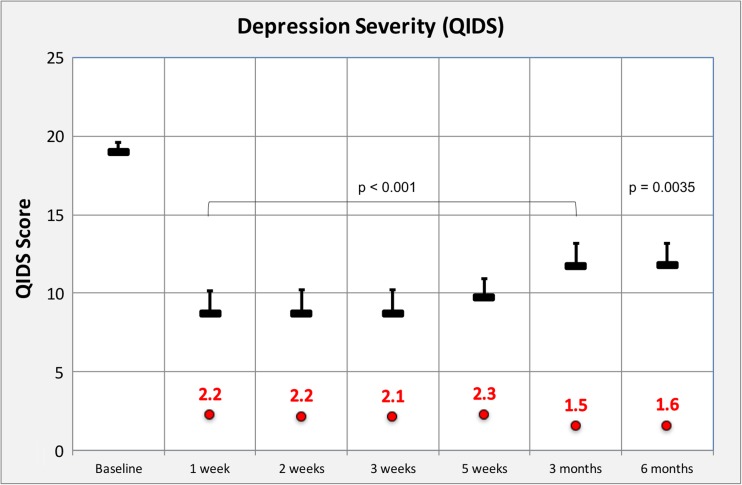
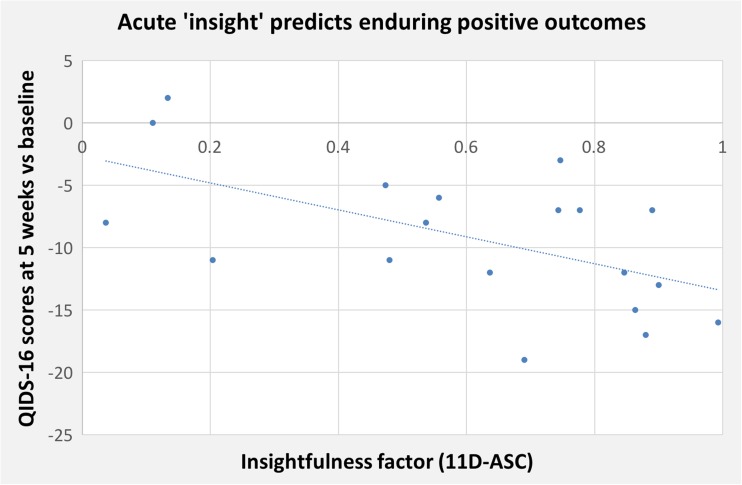
RATIONALE: Recent clinical trials are reporting marked improvements in mental health outcomes with psychedelic drug-assisted psychotherapy. OBJECTIVES: Here, we report on safety and efficacy outcomes for up to 6 months in an open-label trial of psilocybin for treatment-resistant depression. METHODS: Twenty patients (six females) with (mostly) severe, unipolar, treatment-resistant major depression received two oral doses of psilocybin (10 and 25 mg, 7 days apart) in a supportive setting. Depressive symptoms were assessed from 1 week to 6 months post-treatment, with the self-rated QIDS-SR16 as the primary outcome measure. RESULTS: Treatment was generally well tolerated. Relative to baseline, marked reductions in depressive symptoms were observed for the first 5 weeks post-treatment (Cohen's d = 2.2 at week 1 and 2.3 at week 5, both p < 0.001); nine and four patients met the criteria for response and remission at week 5. Results remained positive at 3 and 6 months (Cohen's d = 1.5 and 1.4, respectively, both p < 0.001). No patients sought conventional antidepressant treatment within 5 weeks of psilocybin. Reductions in depressive symptoms at 5 weeks were predicted by the quality of the acute psychedelic experience. CONCLUSIONS: Although limited conclusions can be drawn about treatment efficacy from open-label trials, tolerability was good, effect sizes large and symptom improvements appeared rapidly after just two psilocybin treatment sessions and remained significant 6 months post-treatment in a treatment-resistant cohort. Psilocybin represents a promising paradigm for unresponsive depression that warrants further research in double-blind randomised control trials.
Overview
The claims and statistics of this paper haven’t been checked yet.
Free: it reads the open-access text and checks the first 5 claims that cite a source we can check. Create a free account to check every claim.
Integrity signals
Registry
Cites
Statistics
Figures
Verification
Claims the paper makes
The claims and statistics of this paper haven’t been checked yet.
Free: it reads the open-access text and checks the first 5 claims that cite a source we can check. Create a free account to check every claim.
Claims other papers make about this one
Each is checked against this paper’s own text: does it say what the citing paper says it does?
The source backs part of the claim, not all of it — or backs it for a different population, condition or comparison.
In the citing paper
“Not only do they produce sustained therapeutic effects following a single administration, they also appear to have broad therapeutic potential”
From Psychedelics and Other Psychoplastogens for Treating Mental Illness. (2021) · cites this paper as [41]
Experimental — accuracy not yet measuredThe source backs part of the claim, not all of it — or backs it for a different population, condition or comparison.
In the citing paper
“Unlike traditional antidepressants, psychoplastogens produce both fast-acting and sustained beneficial behavioral effects after a single administration (Figure 1) (38–42).”
From Psychedelics and Other Psychoplastogens for Treating Mental Illness. (2021) · cites this paper as [41]
Experimental — accuracy not yet measuredThe source backs part of the claim, not all of it — or backs it for a different population, condition or comparison.
In the citing paper
“the mood-elevating properties of psilocybin seem to last significantly longer”
From Psychedelics and Other Psychoplastogens for Treating Mental Illness. (2021) · cites this paper as [41]
Experimental — accuracy not yet measuredThe source backs part of the claim, not all of it — or backs it for a different population, condition or comparison.
In the citing paper
“Remarkably, these benefits were incurred even after only a single psychedelic administration and were maintained for as long as 6 months.”
From Examining the Potential Synergistic Effects Between Mindfulness Training and Psychedelic-Assisted Therapy (2021) · cites this paper as [30]
Experimental — accuracy not yet measuredThe source backs part of the claim, not all of it — or backs it for a different population, condition or comparison.
In the citing paper
“Most of these studies however suffer from low methodological validity and are mostly open-label, yet they have yielded preliminary evidence for the capacity of psychedelic substances for treating addiction, depression, anxiety, and eating disorders (29–35).”
From Examining the Potential Synergistic Effects Between Mindfulness Training and Psychedelic-Assisted Therapy (2021) · cites this paper as [30]
Experimental — accuracy not yet measured
13 more claims about this paper
Create a free account to see every claim other papers make about this one.
Self-check
Percentages, sums and reported differences re-computed from the paper’s own numbers.
The self-check needs the paper’s full text.
Citations
Cites
Griffiths, R. R., Johnson, M. W., Carducci, M. A., Umbricht, A., Richards, W. A., Richards, B. D., Cosimano, M. P., & Klinedinst, M. A. (2016) · Journal of Psychopharmacology · doi:10.1177/0269881116675513 · Cited by 2,201 · cited 5×
“Recent studies (Griffiths et al. 2016; Ross et al. 2016; Carhart-Harris et al. 2016), including the present one, help demonstrate the feasibility of treating patients with major depressive disorder with psilocybin plus psychological support.”
BackgroundResultInfluentialRoss, S., Bossis, A., Guss, J., Agin-Liebes, G., Malone, T., Cohen, B., Mennenga, S. E., Belser, A., Kalliontzi, K., Babb, J., et al. (2016) · Journal of Psychopharmacology · doi:10.1177/0269881116675512 · Cited by 1,698 · cited 8×
“Recent studies (Griffiths et al. 2016; Ross et al. 2016; Carhart-Harris et al. 2016), including the present one, help demonstrate the feasibility of treating patients with major depressive disorder with psilocybin plus psychological support.”
BackgroundResultInfluentialCarhart-Harris, R. L., Bolstridge, M., Rucker, J., Day, C. M. J., Erritzoe, D., Kaelen, M., Bloomfield, M., Rickard, J. A., Forbes, B., Feilding, A., et al. (2016) · The Lancet Psychiatry · doi:10.1016/s2215-0366(16)30065-7 · Cited by 1,540 · cited 5×
“Recent studies (Griffiths et al. 2016; Ross et al. 2016; Carhart-Harris et al. 2016), including the present one, help demonstrate the feasibility of treating patients with major depressive disorder with psilocybin plus psychological support.”
BackgroundMethodResultInfluentialSelf-citationPilot Study of Psilocybin Treatment for Anxiety in Patients With Advanced-Stage Cancer
Grob, C. S., Danforth, A. L., Chopra, G. S., Hagerty, M., McKay, C. R., Halberstadt, A. L., & Greer, G. R. (2011) · Archives of General Psychiatry · doi:10.1001/archgenpsychiatry.2010.116 · Cited by 1,206 · cited 6×
“…separate trials have reported improvements in depressive symptoms after psilocybin-assisted psychotherapy (Griffiths et al. 2016; Ross et al. 2016; Grob et al. 2011; CarhartHarris et al. 2016), including one in which ‘treatment-resistant depression’ was the primary criterion for inclusion…”
BackgroundResultInfluentialHuman hallucinogen research: guidelines for safety
Johnson, M., Richards, W., & Griffiths, R. (2008) · Journal of Psychopharmacology · doi:10.1177/0269881108093587 · Cited by 1,203 · cited 2×
“Basic principles for safe therapeutic work with psychedelics can be found in guidelines (Johnson et al. 2008) and books (Richards 2015) but more systematic verification, refinement and (eventual) manualisation of treatment approaches are needed for subsequent roll-out (Carhart-Harris and Goodwin…”
BackgroundPsilocybin-assisted treatment for alcohol dependence: A proof-of-concept study
Bogenschutz, M. P., Forcehimes, A. A., Pommy, J. A., Wilcox, C. E., Barbosa, P., & Strassman, R. J. (2015) · Journal of Psychopharmacology · doi:10.1177/0269881114565144 · Cited by 1,151 · cited 1×
“Psilocybin has shown promise in the treatment of obsessive compulsive disorder (Moreno et al. 2006), alcohol (Bogenschutz et al. 2015) and tobacco addiction (Johnson et al. 2014) and anxiety related to terminal diagnoses (Griffiths et al. 2016; Ross et al. 2016; Grob et al. 2011).”
BackgroundPsilocybin induces schizophrenia-like psychosis in humans via a serotonin-2 agonist action
Vollenweider, F. X., Vollenweider-Scherpenhuyzen, M. F. I., Bäbler, A., Vogel, H., & Hell, D. (1998) · NeuroReport · doi:10.1097/00001756-199812010-00024 · Cited by 1,018 · cited 1×
“Like all serotonergic psychedelics, psilocybin initiates its characteristic effects via serotonin 2A receptor (5-HT2AR) agonism (Vollenweider et al. 1998).”
BackgroundPilot study of the 5-HT 2A R agonist psilocybin in the treatment of tobacco addiction
Johnson, M. W., Garcia-Romeu, A., Cosimano, M. P., & Griffiths, R. R. (2014) · Journal of Psychopharmacology · doi:10.1177/0269881114548296 · Cited by 914 · cited 1×
“Psilocybin has shown promise in the treatment of obsessive compulsive disorder (Moreno et al. 2006), alcohol (Bogenschutz et al. 2015) and tobacco addiction (Johnson et al. 2014) and anxiety related to terminal diagnoses (Griffiths et al. 2016; Ross et al. 2016; Grob et al. 2011).”
BackgroundGriffiths, R., Richards, W., Johnson, M., McCann, U., & Jesse, R. (2008) · Journal of Psychopharmacology · doi:10.1177/0269881108094300 · Cited by 905 · cited 2×
“involving appropriate psychological support), sustained improvements in well-being in healthy individuals were observed after a single dose of psilocybin in a doubleblind design incorporating an active placebo (Griffiths et al. 2008).”
BackgroundMethodSafety, tolerability, and efficacy of psilocybin in 9 patients with obsessive-compulsive disorder
Moreno, F. A., Wiegand, C. B., Taitano, E. K., & Delgado, P. L. (2006) · The Journal of Clinical Psychiatry · doi:10.4088/jcp.v67n1110 · Cited by 789 · cited 2×
“Psilocybin has shown promise in the treatment of obsessive compulsive disorder (Moreno et al. 2006),”
Background
Cited by
Trial of Psilocybin versus Escitalopram for Depression
Carhart-Harris, R., Giribaldi, B., Watts, R., Baker-Jones, M., Murphy-Beiner, A., Murphy, R., Martell, J., Blemings, A., Erritzoe, D., & Nutt, D. J. (2021) · New England Journal of Medicine · doi:10.1056/nejmoa2032994 · Cited by 1,391
Self-citationREBUS and the anarchic brain: Toward a unified model of the brain action of psychedelics
Carhart-Harris, R. L., & Friston, K. J. (2019) · Pharmacological Reviews · doi:10.1124/pr.118.017160 · Cited by 1,180
“If mediated properly, this belief – recalibration process may have long-term positive consequences for mental health; indeed, the described process is the very essence of effective psychedelic therapy (Haijen et al., 2018; Lyons and Carhart-Harris, 2018b).”
BackgroundMethodInfluentialRoseman, L., Nutt, D. J., & Carhart-Harris, R. L. (2018) · Frontiers in Pharmacology · doi:10.3389/fphar.2017.00974 · Cited by 808
“We recently completed an open-label clinical trial assessing the feasibility of treating 20 patients with treatment-resistant depression (TRD) with psilocybin (Carhart-Harris et al., 2017).”
BackgroundSelf-citationSerotonin and brain function: a tale of two receptors
Carhart-Harris, R., & Nutt, D. (2017) · Journal of Psychopharmacology · doi:10.1177/0269881117725915 · Cited by 739
Self-citationThe Therapeutic Potential of Psychedelic Drugs: Past, Present, and Future
Carhart-Harris, R. L., & Goodwin, G. M. (2017) · Neuropsychopharmacology · doi:10.1038/npp.2017.84 · Cited by 706
“…clinical development of psychedelics, RLC-H sees it as a potentially exploitable component—especially as it has been shown to be predictive of long-term clinical outcomes (eg, in Johnson et al, 2014; Bogenschutz et al, 2015; Griffiths et al, 2016; Ross et al, 2016; Carhart-Harris et al, 2016a,b).”
BackgroundInfluentialSelf-citationNovel and emerging treatments for major depression
Marwaha, S., Palmer, E., Suppes, T., Cons, E., Young, A. H., & Upthegrove, R. (2023) · The Lancet · doi:10.1016/s0140-6736(22)02080-3 · Cited by 588
Psychedelic drugs: neurobiology and potential for treatment of psychiatric disorders
Vollenweider, F. X., & Preller, K. H. (2020) · Nature Reviews Neuroscience · doi:10.1038/s41583-020-0367-2 · Cited by 570
The entropic brain - revisited
Carhart-Harris, R. L. (2018) · Neuropharmacology · doi:10.1016/j.neuropharm.2018.03.010 · Cited by 522
“It was an original hypothesis of the initial entropic brain paper (Carhart-Harris et al., 2014) that psychedelics tune the brain even closer to criticality 6 than is evident in normal waking consciousness and importantly, recent findings with fMRI and LSD do seem to support this idea (Atasoy et…”
InfluentialSelf-citationSingle-Dose Psilocybin Treatment for Major Depressive Disorder: A Randomized Clinical Trial
Raison, C. L., Sanacora, G., Woolley, J., Heinzerling, K., Dunlop, B. W., Brown, R. T., Kakar, R., Hassman, M., Trivedi, R. P., Robison, R., et al. (2023) · JAMA · doi:10.1001/jama.2023.14530 · Cited by 545
Johnson, M. W., Hendricks, P. S., Barrett, F. S., & Griffiths, R. R. (2019) · Pharmacology & Therapeutics · doi:10.1016/j.pharmthera.2018.11.010 · Cited by 506
Structure of a Hallucinogen-Activated Gq-Coupled 5-HT2A Serotonin Receptor
Kim, K., Che, T., Panova, O., DiBerto, J. F., Lyu, J., Krumm, B. E., Wacker, D., Robertson, M. J., Seven, A. B., Nichols, D. E., et al. (2020) · Cell · doi:10.1016/j.cell.2020.08.024 · Cited by 481
“Remarkably, psilocybin’s effects appear to be both rapid and enduring (Carhart-Harris et al., 2018; Ross et al., 2016; Griffiths et al., 2016).”
Gukasyan, N., Davis, A. K., Barrett, F. S., Cosimano, M. P., Sepeda, N. D., Johnson, M. W., & Griffiths, R. R. (2022) · Journal of Psychopharmacology · doi:10.1177/02698811211073759 · Cited by 425
“This latter observation contrasts with a previous study in which 5 of 19 participants reported use of psilocybin outside of the research setting by the end of the 6-month follow-up period (Carhart-Harris et al., 2018).”
BackgroundResultEmotional breakthrough and psychedelics: Validation of the Emotional Breakthrough Inventory
Roseman, L., Haijen, E., Idialu-Ikato, K., Kaelen, M., Watts, R., & Carhart-Harris, R. (2019) · Journal of Psychopharmacology · doi:10.1177/0269881119855974 · Cited by 413
“…et al., 2018; Hyde, 1960; Lasagna, 1963; Leary et al., 1963; Studerus et al., 2012) that context is an essential component of the psychedelic model (Carhart-Harris et al., 2017b; Hartogsohn, 2017; Leary et al., 1963) and that if one wishes to promote a positive therapeutic response to a…”
BackgroundInfluentialSelf-citationHesselgrave, N., Troppoli, T. A., Wulff, A. B., Cole, A. B., & Thompson, S. M. (2021) · Proceedings of the National Academy of Sciences · doi:10.1073/pnas.2022489118 · Cited by 378
von Rotz, R., Schindowski, E. M., Jungwirth, J., Schuldt, A., Rieser, N. M., Zahoranszky, K., Seifritz, E., Nowak, A., Nowak, P., Jäncke, L., et al. (2023) · eClinicalMedicine · doi:10.1016/j.eclinm.2022.101809 · Cited by 354
Andersen, K. A. A., Carhart‐Harris, R., Nutt, D. J., & Erritzoe, D. (2021) · Acta Psychiatrica Scandinavica · doi:10.1111/acps.13249 · Cited by 347
Self-citationPsychiatry & the psychedelic drugs. Past, present & future
Rucker, J. J. H., Iliff, J., & Nutt, D. J. (2018) · Neuropharmacology · doi:10.1016/j.neuropharm.2017.12.040 · Cited by 343
“and a 25mg therapeutic dose) 1 week apart with psychological support before and after the experience to 20 patients with treatment resistant depression who were moderately to severely depressed, but without psychotic features(Carhart-Harris et al., 2017; 2016a).”
BackgroundSelf-citationPsychedelic Psychiatry’s Brave New World
Nutt, D., Erritzoe, D., & Carhart-Harris, R. (2020) · Cell · doi:10.1016/j.cell.2020.03.020 · Cited by 319
Self-citationTowards an understanding of psychedelic-induced neuroplasticity
Calder, A. E., & Hasler, G. (2023) · Neuropsychopharmacology · doi:10.1038/s41386-022-01389-z · Cited by 313
Structure-based discovery of nonhallucinogenic psychedelic analogs
Cao, D., Yu, J., Wang, H., Luo, Z., Liu, X., He, L., Qi, J., Fan, L., Tang, L., Chen, Z., et al. (2022) · Science · doi:10.1126/science.abl8615 · Cited by 312
Psychedelics, mystical experience, and therapeutic efficacy: a systematic review
Ko, K., Knight, G., Rucker, J. J., & Cleare, A. J. (2022) · Frontiers in Psychiatry · doi:10.3389/fpsyt.2022.917199 · Cited by 306
Self-citationAnderson, B. T., Danforth, A., Daroff, P. R., Stauffer, C., Ekman, E., Agin-Liebes, G., Trope, A., Boden, M. T., Dilley, P. J., Mitchell, J., et al. (2020) · EClinicalMedicine · doi:10.1016/j.eclinm.2020.100538 · Cited by 284
“tolerating psilocybin and other altered states of consciousness, [43,44] but also that challenging psilocybin experiences may nevertheless be beneficial [45].”
BackgroundNeuroplasticity as a convergent mechanism of ketamine and classical psychedelics
Aleksandrova, L. R., & Phillips, A. G. (2021) · Trends in Pharmacological Sciences · doi:10.1016/j.tips.2021.08.003 · Cited by 276
Psychedelics as anti-inflammatory agents
Flanagan, T. W., & Nichols, C. D. (2018) · International Review of Psychiatry · doi:10.1080/09540261.2018.1481827 · Cited by 267
“This study, however, was smaller and open label, with no placebo-control group (Carhart-Harris et al., 2016a, 2017a).”
BackgroundEffects of psilocybin therapy on personality structure
Erritzoe, D., Roseman, L., Nour, M. M., MacLean, K., Kaelen, M., Nutt, D. J., & Carhart‐Harris, R. L. (2018) · Acta Psychiatrica Scandinavica · doi:10.1111/acps.12904 · Cited by 267
“As described in (23), one patient decided not to complete most follow-up measures, including NEO-PI-R at 3-month follow-up, therefore leaving 19 complete datasets (6 females and 13 males; mean age = 44.”
BackgroundMethodInfluentialSelf-citationDesigner drugs: mechanism of action and adverse effects
Luethi, D., & Liechti, M. E. (2020) · Archives of Toxicology · doi:10.1007/s00204-020-02693-7 · Cited by 262
Reviewing the Potential of Psychedelics for the Treatment of PTSD
Krediet, E., Bostoen, T., Breeksema, J., van Schagen, A., Passie, T., & Vermetten, E. (2020) · International Journal of Neuropsychopharmacology · doi:10.1093/ijnp/pyaa018 · Cited by 260
Long-term effects of psychedelic drugs: A systematic review
Aday, J. S., Mitzkovitz, C. M., Bloesch, E. K., Davoli, C. C., & Davis, A. K. (2020) · Neuroscience & Biobehavioral Reviews · doi:10.1016/j.neubiorev.2020.03.017 · Cited by 257
Default Mode Network Modulation by Psychedelics: A Systematic Review
Gattuso, J. J., Perkins, D., Ruffell, S., Lawrence, A. J., Hoyer, D., Jacobson, L. H., Timmermann, C., Castle, D., Rossell, S. L., Downey, L. A., et al. (2023) · International Journal of Neuropsychopharmacology · doi:10.1093/ijnp/pyac074 · Cited by 256
“…dissolution, top-down cognitive processes (executive function), cognitive flexibility, awareness, and a number of neuropsychiatric conditions (Andrews-Hanna et al., 2014; Lebedev et al., 2015; Palhano-Fontes et al., 2015; Mohan et al., 2016; Carhart-Harris et al., 2018; Smigielski et al., 2019).”
BackgroundSelf-citationClassical psychedelics for the treatment of depression and anxiety: A systematic review
Muttoni, S., Ardissino, M., & John, C. (2019) · Journal of Affective Disorders · doi:10.1016/j.jad.2019.07.076 · Cited by 256
Therapeutic alliance and rapport modulate responses to psilocybin assisted therapy for depression
Murphy, R., Kettner, H., Zeifman, R., Giribaldi, B., Kartner, L., Martell, J., Read, T., Murphy-Beiner, A., Baker-Jones, M., Nutt, D., et al. (2022) · Frontiers in Pharmacology · doi:10.3389/fphar.2021.788155 · Cited by 250
Self-citationPsychedelic-Assisted Psychotherapy: A Paradigm Shift in Psychiatric Research and Development
Schenberg, E. E. (2018) · Frontiers in Pharmacology · doi:10.3389/fphar.2018.00733 · Cited by 240
Psychedelics in Psychiatry: Neuroplastic, Immunomodulatory, and Neurotransmitter Mechanisms
Inserra, A., De Gregorio, D., & Gobbi, G. (2021) · Pharmacological Reviews · doi:10.1124/pharmrev.120.000056 · Cited by 232
The experimental effects of psilocybin on symptoms of anxiety and depression: A meta-analysis
Goldberg, S. B., Pace, B. T., Nicholas, C. R., Raison, C. L., & Hutson, P. R. (2020) · Psychiatry Research · doi:10.1016/j.psychres.2020.112749 · Cited by 229
Ot’alora G, M., Grigsby, J., Poulter, B., Van Derveer, J. W., Giron, S. G., Jerome, L., Feduccia, A. A., Hamilton, S., Yazar-Klosinski, B., Emerson, A., et al. (2018) · Journal of Psychopharmacology · doi:10.1177/0269881118806297 · Cited by 226
DMT Models the Near-Death Experience
Timmermann, C., Roseman, L., Williams, L., Erritzoe, D., Martial, C., Cassol, H., Laureys, S., Nutt, D., & Carhart-Harris, R. (2018) · Frontiers in Psychology · doi:10.3389/fpsyg.2018.01424 · Cited by 220
Self-citationMertens, L. J., Wall, M. B., Roseman, L., Demetriou, L., Nutt, D. J., & Carhart-Harris, R. L. (2020) · Journal of Psychopharmacology · doi:10.1177/0269881119895520 · Cited by 208
“…the default mode network (DMN) and decreased parahippocampal-prefrontal RSFC; both predictive of treatment response at five weeks, and (b) decreased cerebral blood flow in the temporal cortex (including the amygdala) that correlated with reductions in depressed mood (Carhart-Harris et al., 2017).”
BackgroundSelf-citationHibicke, M., Landry, A. N., Kramer, H. M., Talman, Z. K., & Nichols, C. D. (2020) · ACS Chemical Neuroscience · doi:10.1021/acschemneuro.9b00493 · Cited by 205
Learning to Let Go: A Cognitive-Behavioral Model of How Psychedelic Therapy Promotes Acceptance
Wolff, M., Evens, R., Mertens, L. J., Koslowski, M., Betzler, F., Gründer, G., & Jungaberle, H. (2020) · Frontiers in Psychiatry · doi:10.3389/fpsyt.2020.00005 · Cited by 194
The promises and perils of psychedelic pharmacology for psychiatry
McClure-Begley, T. D., & Roth, B. L. (2022) · Nature Reviews Drug Discovery · doi:10.1038/s41573-022-00421-7 · Cited by 194
Must Psilocybin Always “Assist Psychotherapy”?
Goodwin, G. M., Malievskaia, E., Fonzo, G. A., & Nemeroff, C. B. (2024) · American Journal of Psychiatry · doi:10.1176/appi.ajp.20221043 · Cited by 189
Walsh, Z., Mollaahmetoglu, O. M., Rootman, J., Golsof, S., Keeler, J., Marsh, B., Nutt, D. J., & Morgan, C. J. A. (2022) · BJPsych Open · doi:10.1192/bjo.2021.1061 · Cited by 186
Self-citationPsilocybin for treatment resistant depression in patients taking a concomitant SSRI medication
Goodwin, G. M., Croal, M., Feifel, D., Kelly, J. R., Marwood, L., Mistry, S., O’Keane, V., Peck, S. K., Simmons, H., Sisa, C., et al. (2023) · Neuropsychopharmacology · doi:10.1038/s41386-023-01648-7 · Cited by 187
Becker, A. M., Holze, F., Grandinetti, T., Klaiber, A., Toedtli, V. E., Kolaczynska, K. E., Duthaler, U., Varghese, N., Eckert, A., Grünblatt, E., et al. (2022) · Clinical Pharmacology & Therapeutics · doi:10.1002/cpt.2487 · Cited by 184
Madsen, M. K., Fisher, P. M., Stenbæk, D. S., Kristiansen, S., Burmester, D., Lehel, S., Páleníček, T., Kuchař, M., Svarer, C., Ozenne, B., et al. (2020) · European Neuropsychopharmacology · doi:10.1016/j.euroneuro.2020.02.001 · Cited by 183
Unifying Theories of Psychedelic Drug Effects
Swanson, L. R. (2018) · Frontiers in Pharmacology · doi:10.3389/fphar.2018.00172 · Cited by 181
“In supportive environments, classic psychedelic drugs can promote feelings of trust, empathy, bonding, closeness, tenderness, forgiveness, acceptance, and connectedness (Dolder et al., 2016; Belser et al., 2017; Carhart-Harris et al., 2017b; Pokorny et al., 2017; Watts et al., 2017).”
BackgroundLyons, T., & Carhart-Harris, R. L. (2018) · Journal of Psychopharmacology · doi:10.1177/0269881117748902 · Cited by 178
Self-citationAwe: a putative mechanism underlying the effects of classic psychedelic-assisted psychotherapy
Hendricks, P. S. (2018) · International Review of Psychiatry · doi:10.1080/09540261.2018.1474185 · Cited by 179
Breeksema, J. J., Kuin, B. W., Kamphuis, J., van den Brink, W., Vermetten, E., & Schoevers, R. A. (2022) · Journal of Psychopharmacology · doi:10.1177/02698811221116926 · Cited by 178
“One participant experienced confusing traumatic memories, in which a parent held a pillow over his face, which worsened his depression for several weeks post-treatment (Carhart-Harris et al., 2018; Watts et al., 2017); another patient became incommunicative during the psilocybin session (Carhart-Harris et al.”
BackgroundSmigielski, L., Kometer, M., Scheidegger, M., Krähenmann, R., Huber, T., & Vollenweider, F. X. (2019) · Scientific Reports · doi:10.1038/s41598-019-50612-3 · Cited by 176
Psychedelic-Assisted Psychotherapy—A Systematic Review of Associated Psychological Interventions
Cavarra, M., Falzone, A., Ramaekers, J. G., Kuypers, K. P. C., & Mento, C. (2022) · Frontiers in Psychology · doi:10.3389/fpsyg.2022.887255 · Cited by 171
Watts, R., Kettner, H., Geerts, D., Gandy, S., Kartner, L., Mertens, L., Timmermann, C., Nour, M. M., Kaelen, M., Nutt, D., et al. (2022) · Psychopharmacology · doi:10.1007/s00213-022-06187-5 · Cited by 164
“1 3 intense in the weeks to months after psilocybin therapy and occurred alongside a temporary reduction in depression scores (Carhart-Harris et al. 2017).”
BackgroundSelf-citationPsychedelics and Other Psychoplastogens for Treating Mental Illness.
Vargas, M. V., Meyer, R., Avanes, A. A., Rus, M., & Olson, D. E. (2021) · Frontiers in Psychiatry · doi:10.3389/fpsyt.2021.727117 · Cited by 166
Kettner, H., Gandy, S., Haijen, E. C. H. M., & Carhart-Harris, R. L. (2019) · International Journal of Environmental Research and Public Health · doi:10.3390/ijerph16245147 · Cited by 157
Self-citationGarcia-Romeu, A., Davis, A. K., Erowid, E., Erowid, F., Griffiths, R. R., & Johnson, M. W. (2020) · Frontiers in Psychiatry · doi:10.3389/fpsyt.2019.00955 · Cited by 157
Madsen, M. K., Stenbæk, D. S., Arvidsson, A., Armand, S., Marstrand-Joergensen, M. R., Johansen, S. S., Linnet, K., Ozenne, B., Knudsen, G. M., & Fisher, P. M. (2021) · European Neuropsychopharmacology · doi:10.1016/j.euroneuro.2021.06.001 · Cited by 151
Esketamine for treatment resistant depression
Swainson, J., Thomas, R. K., Archer, S., Chrenek, C., MacKay, M.-A., Baker, G., Dursun, S., Klassen, L. J., Chokka, P., & Demas, M. L. (2019) · Expert Review of Neurotherapeutics · doi:10.1080/14737175.2019.1640604 · Cited by 151
Brouwer, A., & Carhart-Harris, R. L. (2021) · Journal of Psychopharmacology · doi:10.1177/0269881120959637 · Cited by 143
“…factors need to be treated with special attention and therapeutic care (where possible) if an individual’s psychological wellbeing is to be safeguarded, whenever a PiMS arises or seems imminent (Carhart-Harris et al., 2018c; Hartogsohn, 2016; Hayes, 2019; Johnson et al., 2008; Leary et al., 1963).”
BackgroundInfluentialSelf-citationTimmermann, C., Bauer, P. R., Gosseries, O., Vanhaudenhuyse, A., Vollenweider, F., Laureys, S., Singer, T., Antonova, E., & Lutz, A. (2023) · Trends in Cognitive Sciences · doi:10.1016/j.tics.2022.11.006 · Cited by 150
Psychedelic therapy for depressive symptoms: A systematic review and meta-analysis
Ko, K., Kopra, E. I., Cleare, A. J., & Rucker, J. J. (2023) · Journal of Affective Disorders · doi:10.1016/j.jad.2022.09.168 · Cited by 150
Self-citationEthics and ego dissolution: the case of psilocybin
Smith, W. R., & Sisti, D. (2021) · Journal of Medical Ethics · doi:10.1136/medethics-2020-106070 · Cited by 146
Yao, Y., Guo, D., Lu, T., Liu, F.-L., Huang, S., Diao, M.-Q., Li, S., Zhang, X.-J., Kosten, T. R., Shi, J., et al. (2024) · Psychiatry Research · doi:10.1016/j.psychres.2024.115886 · Cited by 175
“…for TRD and recurrent depression (Carhart-Harris et al., 2018, 2016a; Daws et al., 2022; Goodwin et al., 2022; G.M. Goodwin et al., 2023a; Lyons and Carhart-Harris, 2018; Os ´ orio Fde et al., 2015; Palha-no-Fontes et al., 2019; Sanches et al., 2016; Stroud et al., 2018; Wall et al., 2023; Zeifman…”
DARK Classics in Chemical Neuroscience: Psilocybin
Geiger, H. A., Wurst, M. G., & Daniels, R. N. (2018) · ACS Chemical Neuroscience · doi:10.1021/acschemneuro.8b00186 · Cited by 141
Ethical and legal issues in psychedelic harm reduction and integration therapy
Pilecki, B., Luoma, J. B., Bathje, G. J., Rhea, J., & Narloch, V. F. (2021) · Harm Reduction Journal · doi:10.1186/s12954-021-00489-1 · Cited by 141
“While previous decades of psychedelic research have focused on a wide array of psychological problems using many different psychedelic substances, modern research has demonstrated the strongest evidence for psychedelic-assisted therapy in the treatment of post-traumatic stress disorder (PTSD) [18], depression [19], en…”
BackgroundPeill, J. M., Trinci, K. E., Kettner, H., Mertens, L. J., Roseman, L., Timmermann, C., Rosas, F. E., Lyons, T., & Carhart-Harris, R. L. (2022) · Journal of Psychopharmacology · doi:10.1177/02698811211066709 · Cited by 141
“Using a generic altered state of consciousness scale, our team previously found scores on an ‘Insight’ subscale predicting subsequent improvements in depressive symptoms in a trial of psilocybin therapy for treatment-resistant depression (Carhart-Harris et al., 2018).”
ResultSelf-citationRoss, S., Agin-Liebes, G., Lo, S., Zeifman, R. J., Ghazal, L., Benville, J., Franco Corso, S., Bjerre Real, C., Guss, J., Bossis, A., et al. (2021) · ACS Pharmacology & Translational Science · doi:10.1021/acsptsci.1c00020 · Cited by 139
Exploratory Controlled Study of the Migraine-Suppressing Effects of Psilocybin
Schindler, E. A. D., Sewell, R. A., Gottschalk, C. H., Luddy, C., Flynn, L. T., Lindsey, H. M., Pittman, B. P., Cozzi, N. V., & D’Souza, D. C. (2020) · Neurotherapeutics · doi:10.1007/s13311-020-00962-y · Cited by 157
A non-hallucinogenic LSD analog with therapeutic potential for mood disorders
Lewis, V., Bonniwell, E. M., Lanham, J. K., Ghaffari, A., Sheshbaradaran, H., Cao, A. B., Calkins, M. M., Bautista-Carro, M. A., Arsenault, E., Telfer, A., et al. (2023) · Cell Reports · doi:10.1016/j.celrep.2023.112203 · Cited by 168
Galvão-Coelho, N. L., Marx, W., Gonzalez, M., Sinclair, J., de Manincor, M., Perkins, D., & Sarris, J. (2021) · Psychopharmacology · doi:10.1007/s00213-020-05719-1 · Cited by 137
“…et al. 2015; Carhart-Harris et al. 2018; Carhart-Harris et al. 2016a; Carhart-Harris et al. 2017; Carhart-Harris et al. 2011; Kaelen et al. 2018; Lyons and Carhart-Harris 2018a; Lyons and Carhart-Harris 2018b; Osorio Fde et al. 2015; Roseman et al. 2017; Sanches et al. 2016; Stroud et al. 2018).”
Accelerated TMS - moving quickly into the future of depression treatment
van Rooij, S. J. H., Arulpragasam, A. R., McDonald, W. M., & Philip, N. S. (2023) · Neuropsychopharmacology · doi:10.1038/s41386-023-01599-z · Cited by 166
“Psychedelics (e.g., psilocybin assisted psychotherapy), have evidence for ef fi cacy in depression after only one or two sessions and this antidepressant ef fi cacy is durable in many patients [15].”
BackgroundCarhart-Harris, R. L. (2019) · Current Opinion in Psychiatry · doi:10.1097/yco.0000000000000467 · Cited by 133
Self-citationPsilocybin-assisted therapy for depression: A systematic review and meta-analysis
Haikazian, S., Chen-Li, D. C. J., Johnson, D. E., Fancy, F., Levinta, A., Husain, M. I., Mansur, R. B., McIntyre, R. S., & Rosenblat, J. D. (2023) · Psychiatry Research · doi:10.1016/j.psychres.2023.115531 · Cited by 134
Psychedelic drugs—a new era in psychiatry?
Nutt, D. J. (2019) · Dialogues in Clinical Neuroscience · doi:10.31887/dcns.2019.21.2/dnutt · Cited by 180
Self-citationBiochemical Mechanisms Underlying Psychedelic-Induced Neuroplasticity
Olson, D. E. (2022) · Biochemistry · doi:10.1021/acs.biochem.1c00812 · Cited by 129
Jefsen, O. H., Elfving, B., Wegener, G., & Müller, H. K. (2021) · Journal of Psychopharmacology · doi:10.1177/0269881120959614 · Cited by 127
Milne, N., Thomsen, P., Knudsen, N., Rubaszka, P., Kristensen, M., & Borodina, I. (2020) · Metabolic Engineering · doi:10.1016/j.ymben.2019.12.007 · Cited by 122
Psychedelic microdosing benefits and challenges: an empirical codebook
Anderson, T., Petranker, R., Christopher, A., Rosenbaum, D., Weissman, C., Dinh-Williams, L.-A., Hui, K., & Hapke, E. (2019) · Harm Reduction Journal · doi:10.1186/s12954-019-0308-4 · Cited by 124
“These rates of reported improvement suggest future research into microdosing for mood and anxiety may be warranted, complementing the recent work treating depression and anxiety with psilocybin [19, 20].”
BackgroundResultTransient stimulation with psychoplastogens is sufficient to initiate neuronal growth
Ly, C., Greb, A. C., Vargas, M. V., Duim, W. C., Grodzki, A. C. G., Lein, P. J., & Olson, D. E. (2021) · ACS Pharmacology & Translational Science · doi:10.1021/acsptsci.0c00065 · Cited by 123
Microdosing psychedelics: Motivations, subjective effects and harm reduction
Lea, T., Amada, N., Jungaberle, H., Schecke, H., & Klein, M. (2020) · International Journal of Drug Policy · doi:10.1016/j.drugpo.2019.11.008 · Cited by 121
5-HT2ARs Mediate Therapeutic Behavioral Effects of Psychedelic Tryptamines
Cameron, L. P., Patel, S. D., Vargas, M. V., Barragan, E. V., Saeger, H. N., Warren, H. T., Chow, W. L., Gray, J. A., & Olson, D. E. (2023) · ACS Chemical Neuroscience · doi:10.1021/acschemneuro.2c00718 · Cited by 118
Timmermann, C., Watts, R., & Dupuis, D. (2022) · Transcultural Psychiatry · doi:10.1177/13634615221082796 · Cited by 119
Self-citationRosenblat, J. D., Meshkat, S., Doyle, Z., Kaczmarek, E. S., Brudner, R. M., Kratiuk, K., Mansur, R. B., Schulz-Quach, C., Sethi, R., Abate, A., et al. (2024) · Med · doi:10.1016/j.medj.2024.01.005 · Cited by 154
Jha, M. K., & Mathew, S. J. (2023) · American Journal of Psychiatry · doi:10.1176/appi.ajp.20230025 · Cited by 114
Psychedelic microdosing: a subreddit analysis
Lea, T., Amada, N., & Jungaberle, H. (2020) · Journal of Psychoactive Drugs · doi:10.1080/02791072.2019.1683260 · Cited by 115
“have been reported to be minimal (Carhart-Harris et al. 2018; Gasser et al. 2014; Johnson and Griffiths 2017), but it is yet to be determined whether this translates to nonclinical contexts in which unsupervised microdosing occurs.”
BackgroundMeditation Increases the Entropy of Brain Oscillatory Activity
Vivot, R. M., Pallavicini, C., Zamberlán, F., Vigo, D. E., & Tagliazucchi, E. (2020) · Neuroscience · doi:10.1016/j.neuroscience.2020.01.033 · Cited by 130
Efficacy of psychedelic treatments on depressive symptoms: A meta-analysis
Romeo, B., Karila, L., Martelli, C., & Benyamina, A. (2020) · Journal of Psychopharmacology · doi:10.1177/0269881120919957 · Cited by 113
“Carhart-Harris et al. (2017) found a more surprising result showing an increase in default mode network (DMN) integrity in resting-state functional connectivity 1 day after psilocybin treatment and notably between ventromedial prefrontal cortex and infero-lateral parietal cortex which was…”
BackgroundVargas, A. S., Luís, Â., Barroso, M., Gallardo, E., & Pereira, L. (2020) · Biomedicines · doi:10.3390/biomedicines8090331 · Cited by 113
“…assessed for eligibility through full-text evaluation and four of them were excluded (Stroud et al., 2018 [21], Lyons and Carhart-Harris, 2018 [22], Carhart-Harris et al., 2017 [23] and Carhart-Harris et al., 2016 [24]), because they were secondary analyses of the same data, and as such none was…”
BackgroundJiménez-Garrido, D. F., Gómez-Sousa, M., Ona, G., Dos Santos, R. G., Hallak, J. E. C., Alcázar-Córcoles, M. Á., & Bouso, J. C. (2020) · Scientific Reports · doi:10.1038/s41598-020-61169-x · Cited by 110
Novel drug developmental strategies for treatment‐resistant depression
Borbély, É., Simon, M., Fuchs, E., Wiborg, O., Czéh, B., & Helyes, Z. (2022) · British Journal of Pharmacology · doi:10.1111/bph.15753 · Cited by 106
“…and anxiety symptoms, and therefore, it is considered to be a promising and safe agent, even relevant for first-line treatment (2013-003196-35, Carhart-Harris et al., 2016, 2018; Vargas et al., 2020), where a psychological support therapy comprising three parts (preparation, acute and…”
BackgroundMcCulloch, D. E.-W., Knudsen, G. M., Barrett, F. S., Doss, M. K., Carhart-Harris, R. L., Rosas, F. E., Deco, G., Kringelbach, M. L., Preller, K. H., Ramaekers, J. G., et al. (2022) · Neuroscience & Biobehavioral Reviews · doi:10.1016/j.neubiorev.2022.104689 · Cited by 122
Self-citationZeifman, R. J., Wagner, A. C., Watts, R., Kettner, H., Mertens, L. J., & Carhart-Harris, R. L. (2020) · Frontiers in Psychiatry · doi:10.3389/fpsyt.2020.00782 · Cited by 106
“, (12–14)], and suicidal ideation (13, 15).”
BackgroundInfluentialSelf-citationWojtas, A., Bysiek, A., Wawrzczak‐Bargieła, A., Szych, Z., Majcher‐Maślanka, I., Herian, M., Maćkowiak, M., & Gołembiowska, K. (2022) · International Journal of Molecular Sciences · doi:10.3390/ijms23126713 · Cited by 119
“Similar to ketamine, psilocybin has been known to induce a rapid antidepressant effect that lasts for up to 6 months after a single administration, a level of effectiveness that is at least as high as “classic” antidepressants [6,24].”
BackgroundRucker, J. J., Marwood, L., Ajantaival, R.-L. J., Bird, C., Eriksson, H., Harrison, J., Lennard-Jones, M., Mistry, S., Saldarini, F., Stansfield, S., et al. (2022) · Journal of Psychopharmacology · doi:10.1177/02698811211064720 · Cited by 104
Self-citationDavis, A. K., Agin-Liebes, G., España, M., Pilecki, B. C., & Luoma, J. B. (2021) · Journal of Psychoactive Drugs · doi:10.1080/02791072.2021.1971343 · Cited by 137
Becker, A., Klaiber, A., Holze, F., Istampoulouoglou, I., Duthaler, U., Varghese, N., Eckert, A., & Liechti, M. E. (2022) · The International Journal of Neuropsychopharmacology · doi:10.1093/ijnp/pyac075 · Cited by 120
“This is one reason why psilocybin has been used in most recent clinical trials that evaluated the efficacy of psychedelics to assist psychotherapy (Grob et al., 2011; Carhart-Harris et al., 2016; Griffiths et al., 2016; Ross et al., 2016; Carhart-Harris et al., 2018).”
Canalization and plasticity in psychopathology
Carhart-Harris, R. L., Chandaria, S., Erritzøe, D., Gazzaley, A. H., Girn, M., Kettner, H., Mediano, P. A. M., Nutt, D. J., Rosas, F. E., Roseman, L., et al. (2022) · Neuropharmacology · doi:10.1016/j.neuropharm.2022.109398 · Cited by 115
“The RElaxed Beliefs Under pSychedelics (REBUS) model (Carhart-Harris and Friston, 2019) is inspired by the free-energy principle (Friston, 2013) - and the ‘the entropic brain’ hypothesis (Carhart-Harris, 2018; Carhart-Harris et al., 2014).”
InfluentialSelf-citationTherapeutic use of psilocybin: Practical considerations for dosing and administration
MacCallum, C. A., Lo, L. A., Pistawka, C. A., & Deol, J. K. (2022) · Frontiers in Psychiatry · doi:10.3389/fpsyt.2022.1040217 · Cited by 102
McCulloch, D. E.-W., Grzywacz, M. Z., Madsen, M. K., Jensen, P. S., Ozenne, B., Armand, S., Knudsen, G. M., Fisher, P. M., & Stenbæk, D. S. (2022) · Frontiers in Pharmacology · doi:10.3389/fphar.2022.841648 · Cited by 126
Kadriu, B., Greenwald, M., Henter, I. D., Gilbert, J. R., Kraus, C., Park, L. T., & Zarate, C. A. (2021) · International Journal of Neuropsychopharmacology · doi:10.1093/ijnp/pyaa087 · Cited by 99
Mescaline: The forgotten psychedelic
Vamvakopoulou, I. A., Narine, K. A. D., Campbell, I., Dyck, J. R. B., & Nutt, D. J. (2022) · Neuropharmacology · doi:10.1016/j.neuropharm.2022.109294 · Cited by 124
Self-citation
Metadata
- Authors
- Carhart-Harris, R. L., Bolstridge, M., Day, C. M. J., Rucker, J., Watts, R., Erritzoe, D. E., Kaelen, M., Giribaldi, B., Bloomfield, M., Pilling, S., Rickard, J. A., Forbes, B., Feilding, A., Taylor, D., Curran, H. V., & Nutt, D. J.
- Affiliations
- Imperial College London (GB)
- South London and Maudsley NHS Foundation Trust (GB)
- King's College London (GB)
- University College London (GB)
- Barts Health NHS Trust (GB)
- Beckley Foundation (GB)
- Corresponding author
- Carhart-Harris, R. L.
- ORCID
- Venue
- Psychopharmacology
- Published
- 2017-11-08
- Volume
- 235
- Issue
- 2
- Pages
- 399-408
- ISSN
- 0033-3158 (ISSN-L)
- 1432-2072
- PMC
- PMC5813086
- OpenAlex
- W2767530231
- Semantic Scholar
- 54241eed73a6a87c456f4b880ffcb168b50851f0
- Cited by
- 970
- References
- 40
- Citations by year
- 2026: 87 · 2025: 153 · 2024: 171 · 2023: 143 · 2022: 152 · 2021: 110 · 2020: 93 · 2019: 29 · 2018: 27 · 2017: 4
- FWCI
- 51.90
- Type
- journal article
- Language
- en
- Open access
- hybrid
- doi.org
- Locations
- Psychopharmacology (publishedVersion, cc-by)
- Europe PMC (PubMed Central) (publishedVersion, cc-by)
- PubMed Central (publishedVersion, cc-by)
- PubMed (publishedVersion)
- UCL Discovery (University College London) (submittedVersion)
- eScholarship (California Digital Library) (submittedVersion, cc-by)
- Research Portal (King's College London) (submittedVersion, cc-by)
- Spiral (Imperial College London) (submittedVersion, other-oa)
- Funders
- Medical Research Council (MR/J00460X/1)
- Topics
- Social Sciences › Psychology › Clinical Psychology › Psychedelics and Drug Studies
- Health Sciences › Medicine › Pharmacology (medical) › Treatment of Major Depression
- Social Sciences › Psychology › Clinical Psychology › Psychotherapy Techniques and Applications
- Keywords
- psilocybin, treatment-resistant depression, psychedelic-assisted psychotherapy, major depressive disorder, depressive symptom reduction, tolerability, long-term follow-up, QIDS-SR16
- MeSH terms
- Psychosocial Support Systems, Adult, Antidepressive Agents, Combined Modality Therapy, Double-Blind Method, Feasibility Studies, Female, Follow-Up Studies, Hallucinogens, Humans, Male, Middle Aged, Psilocybin, Time Factors, Treatment Outcome, Depressive Disorder, Treatment-Resistant
About these checks
Registry, retraction, Cites and statistics results are computed, not judged, with one exception: a printed reference that no index lists is read once by a model before it counts as a citation error. Claims are extracted by a model and kept only when their quote appears verbatim in the text; each cited source is then checked, with a model’s help, for whether it says what the claim relies on. Those verdicts can be wrong — read the claim’s quote and the cited source before relying on one.
Statistics and arithmetic are recomputed, not judged.
Confidence bands are shown only for fields calibrated on our annotated test set. None is calibrated yet, so no band is shown.
What counts as a claim ›How we measure confidence ›How we check this ›
Are you an author, or do you see a problem with this page? Request a review
Data sources
Bibliographic data: Semantic Scholar, OpenAlex, Crossref.
Contains information from the Semantic Scholar Academic Graph Datasets, made available under the ODC Attribution License (ODC-BY 1.0).
Semantic Scholar’s data is described in: Kinney, R., et al. (2023). The Semantic Scholar Open Data Platform. arXiv:2301.10140.
