

Interference of Aspergillus fumigatus with the immune response
Open accessThe DOI matches its Crossref record; 134 of the 134 references it cites were found in a registry or an index.
Abstract
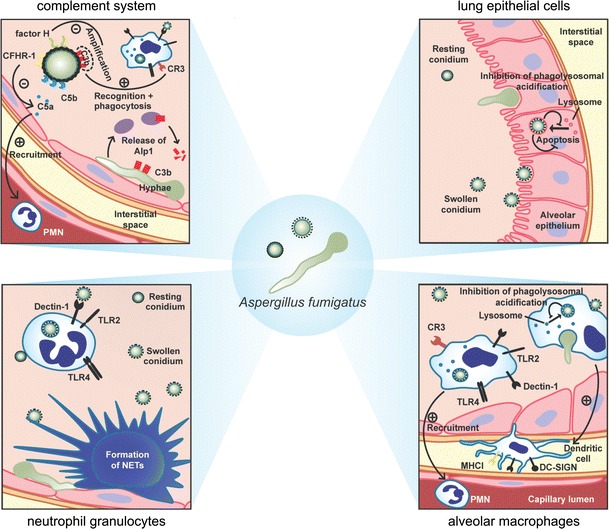
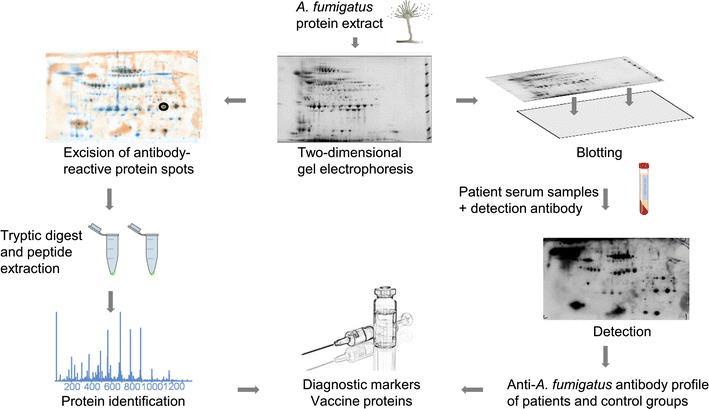
Aspergillus fumigatus is a saprotrophic filamentous fungus and also the most prevalent airborne fungal pathogen of humans. Depending on the host's immune status, the variety of diseases caused by A. fumigatus ranges from allergies in immunocompetent hosts to life-threatening invasive infections in patients with impaired immunity. In contrast to the majority of other Aspergillus species, which are in most cases nonpathogenic, A. fumigatus features an armory of virulence determinants to establish an infection. For example, A. fumigatus is able to evade the human complement system by binding or degrading complement regulators. Furthermore, the fungus interferes with lung epithelial cells, alveolar macrophages, and neutrophil granulocytes to prevent killing by these immune cells. This chapter summarizes the different strategies of A. fumigatus to manipulate the immune response. We also discuss the potential impact of recent advances in immunoproteomics to improve diagnosis and therapy of an A. fumigatus infection.
Overview
The claims and statistics of this paper haven’t been checked yet.
Free: it reads the open-access text and checks the first 5 claims that cite a source we can check. Create a free account to check every claim.
Integrity signals
Registry
Cites
Statistics
Figures
Verification
Claims the paper makes
The claims and statistics of this paper haven’t been checked yet.
Free: it reads the open-access text and checks the first 5 claims that cite a source we can check. Create a free account to check every claim.
Claims other papers make about this one
Each is checked against this paper’s own text: does it say what the citing paper says it does?
The cited source says what the claim attributes to it.
In the citing paper
“Firstly, A. fumigatus can survive within phagocytes [189, 190].”
From Mechanisms of fungal dissemination (2021) · cites this paper as [189]
Self-check
Percentages, sums and reported differences re-computed from the paper’s own numbers.
The self-check needs the paper’s full text.
Citations
Cites
Neutrophil Extracellular Traps Kill Bacteria
Brinkmann, V., Reichard, U., Goosmann, C., Fauler, B., Uhlemann, Y., Weiss, D. S., Weinrauch, Y., & Zychlinsky, A. (2004) · Science · doi:10.1126/science.1092385 · Cited by 10,268
Meijer, L., Nelson, D. J., Riazanski, V., Gabdoulkhakova, A. G., Hery-Arnaud, G., Le Berre, R., Loaëc, N., Oumata, N., Galons, H., Nowak, E., et al. (2016) · Journal of Innate Immunity · doi:10.1159/000444256 · Cited by 4,992
Hidden Killers: Human Fungal Infections
Brown, G. D., Denning, D. W., Gow, N. A. R., Levitz, S. M., Netea, M. G., & White, T. C. (2012) · Science Translational Medicine · doi:10.1126/scitranslmed.3004404 · Cited by 4,284 · cited 1×
“, in chemotherapy and organ or bone marrow transplantation, contributes to the steadily increasing number of patients with impaired immune status [1].”
BackgroundCalamita, E., Schmid, M., Kunz, M., Ndebele-Murisa, M. R., Magadza, C. H. D., Nyambe, I., & Wehrli, B. (2019) · Figshare · doi:10.26181/6153922fe919c · Cited by 4,222
Complement: a key system for immune surveillance and homeostasis
Ricklin, D., Hajishengallis, G., Yang, K., & Lambris, J. D. (2010) · Nature Immunology · doi:10.1038/ni.1923 · Cited by 3,654 · cited 3×
“Moreover, the complement system provides a platform for the cross-talk between innate and humoral circuits via the interaction of complement activation products and surface receptors resulting in governing both T and B cell responses [87].”
BackgroundInfluentialNovel cell death program leads to neutrophil extracellular traps
Fuchs, T. A., Abed, U., Goosmann, C., Hurwitz, R., Schulze, I., Wahn, V., Weinrauch, Y., Brinkmann, V., & Zychlinsky, A. (2007) · The Journal of Cell Biology · doi:10.1083/jcb.200606027 · Cited by 3,197
Aspergillus fumigatus and Aspergillosis
Latgé, J.-P. (1999) · Clinical Microbiology Reviews · doi:10.1128/cmr.12.2.310 · Cited by 2,307 · cited 1×
“Accordingly, neutropenic patients face the highest risk to develop an invasive aspergillosis [50].”
BackgroundNeutrophil elastase and myeloperoxidase regulate the formation of neutrophil extracellular traps
Papayannopoulos, V., Metzler, K. D., Hakkim, A., & Zychlinsky, A. (2010) · Journal of Cell Biology · doi:10.1083/jcb.201006052 · Cited by 2,103 · cited 4×
“Primary or azurophilic granules contain myeloperoxidase (MPO), lysozyme, and antimicrobial proteins like cathepsin G, elastase, and proteinase 3.”
BackgroundInfluentialMedzhitov, R., & Janeway, C. (2000) · New England Journal of Medicine · doi:10.1056/nejm200008033430506 · Cited by 1,825
Segal, A. W. (2005) · Annual Review of Immunology · doi:10.1146/annurev.immunol.23.021704.115653 · Cited by 1,789 · cited 1×
“Tertiary granules contain gelatinase [57, 58].”
Cited by
Complement factor H in host defense and immune evasion
Parente, R., Clark, S. J., Inforzato, A., & Day, A. J. (2017) · Cellular and Molecular Life Sciences · doi:10.1007/s00018-016-2418-4 · Cited by 193
“For example, the opportunistic fungus Aspergillus fumigatus has acquired the ability to recruit both FH and C4BP onto its cell wall [128], however, in this case the microbial ligands are unknown [142].”
BackgroundSantus, W., Devlin, J. R., & Behnsen, J. (2021) · Infection and Immunity · doi:10.1128/iai.00648-20 · Cited by 129
“Inhaled spores of the mold 49 Aspergillus fumigatus can germinate and cause invasive lung disease in immunocompromised 50 patients (18, 19).”
BackgroundFungal iron homeostasis with a focus on Aspergillus fumigatus
Misslinger, M., Hortschansky, P., Brakhage, A. A., & Haas, H. (2020) · Biochimica et Biophysica Acta (BBA) - Molecular Cell Research · doi:10.1016/j.bbamcr.2020.118885 · Cited by 154
Self-citationMechanisms of fungal dissemination
Strickland, A. B., & Shi, M. (2021) · Cellular and Molecular Life Sciences · doi:10.1007/s00018-020-03736-z · Cited by 127
Pathophysiological aspects of Aspergillus colonization in disease
Gago, S., Denning, D. W., & Bowyer, P. (2018) · Medical Mycology · doi:10.1093/mmy/myy076 · Cited by 135
“15,16,107 Immunocompromised patients such as those on acute immunosuppression with neutropenia are at risk of developing invasive fungal disease such as invasive pulmonary aspergillosis.”
BackgroundPathogenicity and virulence of Aspergillus fumigatus
Earle, K., Valero, C., Conn, D. P., Vere, G., Cook, P. C., Bromley, M., Bowyer, P., & Gago, S. (2023) · Virulence · doi:10.1080/21505594.2023.2172264 · Cited by 132
“As previously discussed, a lack of neutrophils (neutropenia) is a significant risk factor for invasive aspergillosis [191].”
BackgroundInfluentialVirulence factors in fungal pathogens of man
Brunke, S., Mogavero, S., Kasper, L., & Hube, B. (2016) · Current Opinion in Microbiology · doi:10.1016/j.mib.2016.05.010 · Cited by 128
Wiemann, P., Perevitsky, A., Lim, F. Y., Shadkchan, Y., Knox, B. P., Landero Figueora, J. A., Choera, T., Niu, M., Steinberger, A. J., Wüthrich, M., et al. (2017) · Cell Reports · doi:10.1016/j.celrep.2017.04.019 · Cited by 104
Alonso, R., Pisa, D., Aguado, B., & Carrasco, L. (2017) · Journal of Alzheimer's Disease · doi:10.3233/jad-170058 · Cited by 103
Complement and platelets: Mutual interference in the immune network
Speth, C., Rambach, G., Würzner, R., Lass‐Flörl, C., Kozarcanin, H., Hamad, O. A., Nilsson, B., & Ekdahl, K. N. (2015) · Molecular Immunology · doi:10.1016/j.molimm.2015.03.244 · Cited by 87
Mechanisms of Alternaria pathogenesis in animals and plants
Fernandes, C., Casadevall, A., & Gonçalves, T. (2023) · FEMS Microbiology Reviews · doi:10.1093/femsre/fuad061 · Cited by 87
Briard, B., Karki, R., Malireddi, R. K. S., Bhattacharya, A., Place, D. E., Mavuluri, J., Peters, J. L., Vogel, P., Yamamoto, M., & Kanneganti, T.-D. (2018) · Nature Microbiology · doi:10.1038/s41564-018-0298-0 · Cited by 72
Voltersen, V., Blango, M. G., Herrmann, S., Schmidt, F., Heinekamp, T., Strassburger, M., Krüger, T., Bacher, P., Lother, J., Weiss, E., et al. (2018) · mBio · doi:10.1128/mbio.01557-18 · Cited by 71
“fumigatus infection remains insufficiently understood (6, 7).”
Self-citationThe Multifaceted Role of T-Helper Responses in Host Defense against Aspergillus fumigatus
Dewi, I., Van de Veerdonk, F., & Gresnigt, M. (2017) · Journal of Fungi · doi:10.3390/jof3040055 · Cited by 69
Dasari, P., Koleci, N., Shopova, I. A., Wartenberg, D., Beyersdorf, N., Dietrich, S., Sahagún-Ruiz, A., Figge, M. T., Skerka, C., Brakhage, A. A., et al. (2019) · Frontiers in Immunology · doi:10.3389/fimmu.2019.02573 · Cited by 74
Self-citationMattern, D. J., Schoeler, H., Weber, J., Novohradská, S., Kraibooj, K., Dahse, H., Hillmann, F., Valiante, V., Figge, M. T., & Brakhage, A. A. (2015) · Applied Microbiology and Biotechnology · doi:10.1007/s00253-015-6898-1 · Cited by 69
Self-citationSprenkeler, E. G. G., Gresnigt, M. S., & van de Veerdonk, F. L. (2016) · Cellular Microbiology · doi:10.1111/cmi.12616 · Cited by 58
“An efficient clearance of inhaled A. fumigatus spores is crucial for the first line of defence against infection and is dependent on professional phagocytes, including alveolar macrophages, neutrophils, monocytes, and dendritic cells (Ramirez-Ortiz and Means, 2012; Heinekamp et al., 2015).”
Niu, Y., Zhao, G., Li, C., Lin, J., Jiang, N., Che, C., Zhang, J., & Xu, Q. (2018) · Investigative Ophthalmology & Visual Science · doi:10.1167/iovs.17-21887 · Cited by 60
“determinants to elicit a strong host immune response in general.(4) Hosts recognized and eliminated these pathogenic”
BackgroundHigh‐Throughput Gene Replacement in Aspergillus fumigatus
Zhao, C., Fraczek, M. G., Dineen, L., Lebedinec, R., Macheleidt, J., Heinekamp, T., Delneri, D., Bowyer, P., Brakhage, A., & Bromley, M. (2019) · Current Protocols in Microbiology · doi:10.1002/cpmc.88 · Cited by 61
Self-citationAspf2 From Aspergillus fumigatus Recruits Human Immune Regulators for Immune Evasion and Cell Damage
Dasari, P., Shopova, I. A., Stroe, M. C., Wartenberg, D., Dahse, H., Beyersdorf, N., Hortschansky, P., Dietrich, S., Cseresnyés, Z., Figge, M. T., et al. (2018) · Frontiers in Immunology · doi:10.3389/fimmu.2018.01635 · Cited by 64
Self-citationCurrent Infections of the Orofacial Region: Treatment, Diagnosis, and Epidemiology
Tahmasebi, E., Keshvad, A., Alam, M. M. R., Abbasi, K., Rahimi, S., Nouri, F., Yazdanıan, M., Tebyanian, H., Heboyan, A. G., & Fernandes, G. V. O. (2023) · Life · doi:10.3390/life13020269 · Cited by 57
Aspergillus fumigatus conidial metalloprotease Mep1p cleaves host complement proteins
Shende, R., Wong, S. S. W., Rapole, S., Beau, R., Ibrahim-Granet, O., Monod, M., Gührs, K.-H., Pal, J. K., Latgé, J.-P., Madan, T., et al. (2018) · Journal of Biological Chemistry · doi:10.1074/jbc.ra117.001476 · Cited by 49
“Because cleavage of C3, C4, and C5 would result in better clearance of conidia (41, 42), we asked whether the generated C3b-, C4b-, and C5b-like fragments are stable or are further cleaved and inactivated by Mep1p.”
BackgroundCopper Utilization, Regulation, and Acquisition by Aspergillus fumigatus
Raffa, N., Osherov, N., & Keller, N. P. (2019) · International Journal of Molecular Sciences · doi:10.3390/ijms20081980 · Cited by 48
“Copper also participates in the generation of reactive oxygen species (ROS) through Fenton chemistry, a process host cells use to kill pathogenic microbes [7].”
BackgroundSchmidt, H., Vlaic, S., Krüger, T., Schmidt, F., Balkenhol, J., Dandekar, T., Guthke, R., Kniemeyer, O., Heinekamp, T., & Brakhage, A. A. (2018) · Molecular & Cellular Proteomics · doi:10.1074/mcp.ra117.000069 · Cited by 46
“In immunocompromised hosts, the impaired immune cell function allows fungal colonization of the lung tissue and the establishment of a life-threatening infection (3).”
BackgroundSelf-citationHoang, T. N. M., Cseresnyés, Z., Hartung, S., Blickensdorf, M., Saffer, C., Rennert, K., Mosig, A. S., von Lilienfeld‐Toal, M., & Figge, M. T. (2022) · Biomaterials · doi:10.1016/j.biomaterials.2022.121420 · Cited by 40
Seidel, C., Moreno-Velásquez, S. D., Ben-Ghazzi, N., Gago, S., Read, N. D., & Bowyer, P. (2020) · Frontiers in Microbiology · doi:10.3389/fmicb.2020.01955 · Cited by 40
“This delay in spore germination within epithelial cells is not surprising considering the stressful conditions within phagosomes and phagolysosomes (Heinekamp et al., 2015).”
BackgroundCharacterization and pro‐inflammatory potential of indoor mold particles
Holme, J. A., Øya, E., Afanou, A. K., Øvrevik, J., & Eduard, W. (2020) · Indoor Air · doi:10.1111/ina.12656 · Cited by 41
“fumigatus, which is associated with invasive lung diseases, is generally low (44).”
BackgroundPollmächer, J., & Figge, M. T. (2015) · Frontiers in Microbiology · doi:10.3389/fmicb.2015.00503 · Cited by 39
“Introduction Aspergillus fumigatus is the most dangerous airborne fungal pathogen in humans leading to high mortality rates (Heinekamp et al., 2014).”
BackgroundCo-recognition of β-glucan and chitin and programming of adaptive immunity to Aspergillus fumigatus
Amarsaikhan, N., & Templeton, S. P. (2015) · Frontiers in Microbiology · doi:10.3389/fmicb.2015.00344 · Cited by 37
“Epithelial cells act as the first barrier and immunologically active surface in host tissues, serving as nonprofessional phagocytes where engulfed conidia persist in the pulmonary epithelial space (Heinekamp et al., 2015).”
BackgroundShankar, J., Tiwari, S., Shishodia, S. K., Gangwar, M., Hoda, S., Thakur, R., & Vijayaraghavan, P. (2018) · Frontiers in Cellular and Infection Microbiology · doi:10.3389/fcimb.2018.00180 · Cited by 37
“If they successfully evade the phagocytic cells, conidia adhere to the respiratory epithelium cells and germinate to form hyphae, thus initiate the invasion into the host tissues (Heinekamp et al., 2015).”
BackgroundWiemann, P., Perevitsky, A., Lim, F. Y., Shadkchan, Y., Knox, B. P., Figueroa, J. A. L., Choera, T., Niu, M., Steinberger, A. J., Wüthrich, M., et al. (2017) · Cell Reports · doi:10.1016/j.celrep.2017.05.075 · Cited by 36
Manipulation of host phagocytosis by fungal pathogens and therapeutic opportunities
Jia, L., González, K., Orasch, T., Schmidt, F., & Brakhage, A. A. (2024) · Nature Microbiology · doi:10.1038/s41564-024-01780-0 · Cited by 47
“At each of these stages, pathogens can interfere with the progress of phagocytosis, hindering phagosome maturation and initiating the infection process 9,13,18 .”
Self-citationChilders, D. S., Avelar, G. M., Bain, J. M., Larcombe, D. E., Pradhan, A., Budge, S., Heaney, H., & Brown, A. J. P. (2019) · Current topics in microbiology and immunology · doi:10.1007/82_2019_182 · Cited by 36
König, S., Pace, S., Pein, H., Heinekamp, T., Kramer, J. S., Romp, E., Straßburger, M., Troisi, F., Proschak, A., Dworschak, J., et al. (2019) · Cell chemical biology · doi:10.1016/j.chembiol.2019.01.001 · Cited by 33
Self-citationXie, Q., Li, Q., Fang, H. Y., Zhang, R., Tang, H., & Chen, L. (2024) · Clinical Reviews in Allergy & Immunology · doi:10.1007/s12016-024-08999-z · Cited by 32
“Corticosteroids inhibit the production of pro-inflammatory cytokines and reduce the oxidative burst capacity of macrophages, which are essential for effective fungal clearance [76, 77].”
Zhang, X., Jia, X., Tian, S., Zhang, C., Lu, Z., Chen, Y., Chen, F., Li, Z., Su, X., Han, X., et al. (2018) · Fungal Genetics and Biology · doi:10.1016/j.fgb.2018.09.003 · Cited by 31
Pinzan, C. F., Valero, C., de Castro, P. A., da Silva, J. L., Earle, K., Liu, H., Horta, M. A. C., Kniemeyer, O., Krüger, T., Pschibul, A., et al. (2024) · Nature Microbiology · doi:10.1038/s41564-024-01782-y · Cited by 32
“The conidial cell wall comprises a β-1,3-glucan and chitin body, which is covered by rodlet and melanin layers, where proteins are anchored 3,4 .”
Self-citationPaving the way for predictive diagnostics and personalized treatment of invasive aspergillosis
Coelho, A., Rodrigues, F. J. S., Campos, A. N., de Lacerda, J. F., Carvalho, A., & Cunha, C. (2015) · Frontiers in Microbiology · doi:10.3389/fmicb.2015.00411 · Cited by 32
“…oxygen species (ROS) by resident macrophages, whereas neutrophils are instead proficient at handling hyphae germinating from conidia that escape macrophage surveillance through an array of extracellular killing mechanisms (Ibrahim-Granet et al., 2003; Cunha et al., 2014b; Heinekamp et al., 2015).”
BackgroundØya, E., Becher, R., Ekeren, L., Afanou, A. K., Øvrevik, J., & Holme, J. A. (2019) · International Journal of Environmental Research and Public Health · doi:10.3390/ijerph16061085 · Cited by 30
Wong, S. S. W., Daniel, I., Gangneux, J., Jayapal, J. M., Guegan, H., Dellière, S., Lalitha, P., Shende, R., Madan, T., Bayry, J., et al. (2020) · Infection and Immunity · doi:10.1128/iai.00212-20 · Cited by 30
“Aspergillus fumigatus conidia are covered by a cell wall (CW), consisting of a proteinaceous rodlet layer and a melanin pigment layer, and an inner CW, composed of different polysaccharides, including -(1,3)-glucan (BG), -(1,3)-glucan, chitin, and galactomannan (GM) (1, 8, 9).”
BackgroundInfluentialØya, E., Afanou, A. K., Malla, N., Uhlig, S., Rolén, E., Skaar, I., Straumfors, A., Winberg, J., Bang, B. E., Schwarze, P. E., et al. (2017) · Indoor Air · doi:10.1111/ina.12426 · Cited by 26
Soluble mediators in anti-fungal immunity
Dellière, S., Wong, S. S. W., & Aimanianda, V. (2020) · Current Opinion in Microbiology · doi:10.1016/j.mib.2020.05.005 · Cited by 26
Abdallah, B. M., & Ali, E. M. (2022) · Journal of Fungi · doi:10.3390/jof8050442 · Cited by 27
Fuji, S., Löffler, J., Savani, B. N., Einsele, H., & Kapp, M. (2016) · Bone Marrow Transplantation · doi:10.1038/bmt.2016.306 · Cited by 24
Expression and role of calcitonin gene-related peptide in mouse Aspergillus fumigatus keratitis
Yin, M., Cui, L., Peng, X., Zhao, G., Wu, Y., Zheng, H., Wang, Q., Xu, Q., & Jiang, N. (2019) · International Journal of Ophthalmology · doi:10.18240/ijo.2019.05.01 · Cited by 24
Srivastava, M., Bencúrová, E., Gupta, S. K., Weiß, E., Löffler, J., & Dandekar, T. (2019) · Frontiers in Cellular and Infection Microbiology · doi:10.3389/fcimb.2019.00168 · Cited by 26
“The successful colonization of the fungi depends on the complex interaction of them with human innate and acquired immunity (Cramer et al., 2011; Heinekamp et al., 2015) and determines the successful colonization of the fungi.”
BackgroundPathogenesis and Pathology of Invasive Aspergillosis
Challa, S. (2018) · Current Fungal Infection Reports · doi:10.1007/s12281-018-0310-4 · Cited by 28
Nanoparticle decoration impacts airborne fungal pathobiology
Westmeier, D., Solouk-Saran, D., Vallet, C., Siemer, S., Docter, D., Götz, H., Männ, L., Hasenberg, A., Hahlbrock, A., Erler, K., et al. (2018) · Proceedings of the National Academy of Sciences · doi:10.1073/pnas.1804542115 · Cited by 22
Lipoxin A4 activates ALX/FPR2 to attenuate inflammation in Aspergillus fumigatus keratitis
Zhu, X., Peng, X., Lin, J., Zhang, Y., He, H. Z., & Zhao, G. (2021) · International Immunopharmacology · doi:10.1016/j.intimp.2021.107785 · Cited by 22
Liu, C., Wang, M., Sun, W., Cai, F., Geng, S., Su, X., & Shi, Y. P. (2017) · Molecular Medicine Reports · doi:10.3892/mmr.2017.6504 · Cited by 23
“Recognition of conidia by different PRRs expressed on the membrane of AMs leads to the phagocytosis and killing of inhaled conidia, and induces the expression of inflammatory cytokines and chemokines (23).”
Copper Homeostasis in Aspergillus fumigatus: Opportunities for Therapeutic Development
Song, J., Li, R., & Jiang, J. (2019) · Frontiers in Microbiology · doi:10.3389/fmicb.2019.00774 · Cited by 23
Caspofungin Functionalized Polymethacrylates with Antifungal Properties
Alex, J., González, K., Kindel, T., Bellstedt, P., Weber, C., Heinekamp, T., Orasch, T., Guerrero‐Sánchez, C., Schubert, U. S., & Brakhage, A. A. (2020) · Biomacromolecules · doi:10.1021/acs.biomac.0c00096 · Cited by 22
Self-citationPLB-985 Neutrophil-Like Cells as a Model To Study Aspergillus fumigatus Pathogenesis
Rafiq, M., Rivieccio, F., Zimmermann, A.-K., Visser, C., Bruch, A., Krüger, T., González, K., Kniemeyer, O., Blango, M. G., & Brakhage, A. A. (2022) · mSphere · doi:10.1128/msphere.00940-21 · Cited by 23
“The interference of the acidification pathway in alveolar macrophages by fungal DHN-melanin occurs through the inhibition of V-ATPase assembly (27, 28).”
BackgroundSelf-citationThe therapeutic potential of chondroitin sulfate in Aspergillus fumigatus keratitis
Luan, J., Peng, X., Lin, J., Zhang, Y., Tian, X., Zhan, L., & Zhao, G. (2022) · Molecular Immunology · doi:10.1016/j.molimm.2022.04.007 · Cited by 21
Overton, N. L. D., Brakhage, A. A., Thywißen, A., Denning, D. W., & Bowyer, P. (2018) · PLoS ONE · doi:10.1371/journal.pone.0185706 · Cited by 20
Self-citationThe role of netrin-1 in the mouse cornea during Aspergillus fumigatus infection
Zhou, Y., Lin, J., Peng, X., Li, C., Zhang, J., Wang, Q., Zhu, G., You, J., & Zhao, G. (2019) · International Immunopharmacology · doi:10.1016/j.intimp.2019.03.047 · Cited by 20
Ali, E. M., & Abdallah, B. M. (2021) · Nanomaterials · doi:10.3390/nano12010051 · Cited by 21
Marischen, L., Englert, A., Schmitt, A., Einsele, H., & Loeffler, J. (2018) · BMC Immunology · doi:10.1186/s12865-018-0276-6 · Cited by 23
Ewald, J., Rivieccio, F., Radosa, L., Schuster, S., Brakhage, A. A., & Kaleta, C. (2021) · PLoS Computational Biology · doi:10.1371/journal.pcbi.1009645 · Cited by 19
Self-citationRecognition of Fungal Components by the Host Immune System
García-Carnero, L. C., Martínez-Álvarez, J. A., Salazar-García, L. M., Lozoya‐Pérez, N. E., González-Hernández, S. E., & Tamez-Castrellón, A. K. (2019) · Current Protein and Peptide Science · doi:10.2174/1389203721666191231105546 · Cited by 20
Pollmächer, J., Timme, S., Schuster, S., Brakhage, A. A., Zipfel, P. F., & Figge, M. T. (2016) · Scientific Reports · doi:10.1038/srep27807 · Cited by 18
“As a consequence, invasive pulmonary aspergillosis is associated with high mortality rates ranging from 30–90% 32 .”
BackgroundResultInfluentialSelf-citationThe Role of Phagocytes and NETs in Dermatophytosis
Yoshikawa, F. S. Y., & de Almeida, S. R. (2016) · Mycopathologia · doi:10.1007/s11046-016-0069-5 · Cited by 18
“Curiously, a similar immune evasion strategy was well established for Aspergillus, in which resting conidia express the hydrophobic protein RodA to escape immune recognition [95, 96].”
BackgroundSteger, M., Bermejo‐Jambrina, M., Yordanov, T. E., Wagener, J., Brakhage, A. A., Pittl, V., Huber, L. A., Haas, H., Lass‐Flörl, C., Posch, W., et al. (2018) · Virulence · doi:10.1080/21505594.2018.1528843 · Cited by 19
“thioester-containing domain (TED) of complement proteins [23] or that the WT strains exert higher complement-degrading or -inactivating capacities [5,24].”
BackgroundSelf-citationSantos, C. S., Bannitz-Fernandes, R., Lima, A. S., Junior, C. A. T., Malavazi, I., Netto, L. E. S., & Bertotti, M. (2018) · Analytical Chemistry · doi:10.1021/acs.analchem.7b04074 · Cited by 22
Xu, M. (2020) · International Journal of Ophthalmology · doi:10.18240/ijo.2020.05.02 · Cited by 19
MybA, a new player driving survival of the conidium of the human pathogen Aspergillus fumigatus
Bayram, Ö. S., Latgé, J. P., & Bayram, Ö. (2017) · Current Genetics · doi:10.1007/s00294-017-0740-5 · Cited by 19
Colabardini, A. C., Wang, F., Miao, Z., Pardeshi, L. A., Valero, C., de Castro, P. A., Akiyama, D. Y., Tan, K., Nora, L. C., Silva‐Rocha, R., et al. (2022) · PLoS Genetics · doi:10.1371/journal.pgen.1010001 · Cited by 18
Ben-Ghazzi, N., Moreno-Velásquez, S. D., Seidel, C., Thomson, D. D., Denning, D. W., Read, N. D., Bowyer, P., & Gago, S. (2021) · Journal of Fungi · doi:10.3390/jof7060454 · Cited by 19
Goldmann, M., Schmidt, F., Cseresnyés, Z., Orasch, T., Jahreis, S., Hartung, S., Figge, M. T., von Lilienfeld‐Toal, M., Heinekamp, T., & Brakhage, A. A. (2023) · mSphere · doi:10.1128/msphere.00523-22 · Cited by 16
“Within the macrophage, the conidium-containing phagosome fuses with lysosomes to form a phagolysosome (8, 9).”
BackgroundSelf-citationImmunoproteomics: Approach to Diagnostic and Vaccine Development
Gomase, V. S., Dhamane, S. P., Kemkar, K. R., Kakade, P. G., & Sakhare, A. D. (2024) · Protein and Peptide Letters · doi:10.2174/0109298665342261240912105111 · Cited by 15
Hossain, M. M., Sultana, F., Mostafa, M., Ferdus, H., Kundu, M., Adhikary, S., Akter, N., Saha, A., & Sabbir, M. A. A. (2025) · Stresses · doi:10.3390/stresses5020028 · Cited by 16
“This cross-kingdom pathogenesis challenges the traditional understanding of host specificity and is driven by several interrelated ecological, genetic, and environmental factors.”
Krüger, T., Luo, T., Schmidt, H., Shopova, I. A., & Kniemeyer, O. (2015) · Proteomes · doi:10.3390/proteomes3040467 · Cited by 15
“fumigatus protein antigens in patients with invasive aspergillosis has been investigated as well [12].”
BackgroundSelf-citationNiu, Y., Ren, C., Peng, X., Li, C., Xu, Q., Hu, L., Zhang, Z., Zhao, G., & Lin, J. (2021) · Investigative Ophthalmology & Visual Science · doi:10.1167/iovs.62.4.16 · Cited by 13
Niu, Y., Lin, J., Li, C., Peng, X., Jiang, N., Xu, Q., Yin, M., Lin, H., Gu, L., & Zhao, G. (2021) · International Immunopharmacology · doi:10.1016/j.intimp.2021.107706 · Cited by 13
Innate immunity of the lungs in homeostasis and disease
Norris, P. A. A., & Kubes, P. (2025) · Mucosal Immunology · doi:10.1016/j.mucimm.2025.04.001 · Cited by 14
Proteomic analysis of Aspergillus fumigatus – clinical implications
Moloney, N. M., Owens, R. A., & Doyle, S. (2016) · Expert Review of Proteomics · doi:10.1080/14789450.2016.1203783 · Cited by 13
Santoro, K., Matić, S., Gisi, U., Spadaro, D., Pugliese, M., & Gullino, M. L. (2017) · Pest Management Science · doi:10.1002/ps.4642 · Cited by 12
“Neosartorya fumigata , O'Gorman, Fuller and Dyer) is a saprophytic filamentous fungus widespread in soil and decaying matter; it is also capable of causing serious infections in immunocompromised human hosts as invasive aspergillosis (Pringle et al., 2015; Heinekamp et al., 2015).”
Ismat, A., Alt, V., Heiß, C., & Rupp, M. (2020) · Strategies in Trauma and Limb Reconstruction · doi:10.5005/jp-journals-10080-1445 · Cited by 12
“J Biomed Mater Res Part B Appl Biomater 2010;94(1):196–202.”
BackgroundZhou, X., Yang, G., Li, C., Yang, F., & Chang, X. (2022) · Frontiers in Microbiology · doi:10.3389/fmicb.2022.957857 · Cited by 11
“Pathogens that cause the disease need to fit in the host environment and competitively utilize the host’s nutrients to combat macrophage phagocytosis (Heinekamp et al., 2015).”
BackgroundCaminati, M., Annesi‐Maesano, I., Feleszko, W., Guida, G., Janson, C., Hägg, S. A., Malinovschi, A., Tanno, L. K., Vitte, J., Ambrosani, F., et al. (2025) · Allergy · doi:10.1111/all.16687 · Cited by 11
“Therefore, β-glucans drive innate immune cells to phagocytose and kill co-nidia as well as elicit a proinflammatory response [19].”
Hassan, M. I. A., Keller, M., Hillger, M., Binder, U., Reuter, S., Herold, K., Telagathoti, A., Dahse, H., Wicht, S., Trinks, N., et al. (2021) · Computational and Structural Biotechnology Journal · doi:10.1016/j.csbj.2021.01.023 · Cited by 11
“due presence of rely on 1,8-dihydroxynaphthalene (DHN) melanin on the surface of spores [41].”
BackgroundNasiri-Jahrodi, A., Barati, M., Ahmadabad, H. N., Badali, H., & Morovati, H. (2024) · Human Immunology · doi:10.1016/j.humimm.2024.110763 · Cited by 12
Bruch, A., Lazarova, V., Berg, M., Krüger, T., Schäuble, S., Kelani, A. A., Mertens, B., Lehenberger, P., Kniemeyer, O., Kaiser, S., et al. (2024) · Nucleic Acids Research · doi:10.1093/nar/gkae1205 · Cited by 11
Self-citationEarly Interaction of Alternaria infectoria Conidia with Macrophages
Almeida, M. C., Antunes, D., Silva, B. M. A., Rodrigues, L., Mota, M., Borges, O., Fernandes, C., & Gonçalves, T. (2019) · Mycopathologia · doi:10.1007/s11046-019-00339-6 · Cited by 10
Pérez‐Cantero, A., Serrano, D. R., Navarro-Rodríguez, P., Schätzlein, A. G., Uchegbu, I. F., Torrado, J. J., & Capilla, J. (2019) · Pharmaceutics · doi:10.3390/pharmaceutics11090456 · Cited by 11
Zhou, X., Huang, F., Zhang, J., Gong, S., Wei, L., Liu, F., & Song, Z. (2025) · Chinese Medicine · doi:10.1186/s13020-025-01157-3 · Cited by 8
“Meanwhile, PRR and cytokines play important roles during recognition and phagocytosis [56].”
Margalit, A., Kavanagh, K. A., & Carolan, J. C. (2019) · Journal of Proteome Research · doi:10.1021/acs.jproteome.9b00520 · Cited by 10
Piva, D. H., Rocha, M. C., Piva, D. H., Montedo, O. R. K., Imasato, H., Malavazi, I., & Filho, U. P. R. (2017) · Journal of Materials Chemistry B · doi:10.1039/c7tb02763j · Cited by 7
Activation of Secondary Metabolite Production in Fungi
Zehner, L. M., Krespach, M. K. C., Stroe, M. C., Rosin, M., Schroeckh, V., & Brakhage, A. A. (2023) · The mycota · doi:10.1007/978-3-031-29199-9_11 · Cited by 6
Self-citationVisser, C., Rivieccio, F., Krüger, T., Schmidt, F., Cseresnyés, Z., Rohde, M., Figge, M. T., Kniemeyer, O., Blango, M. G., & Brakhage, A. A. (2024) · microLife · doi:10.1093/femsml/uqae022 · Cited by 7
Self-citationWang, L., Zhu, J. F., Zhang, Y., Wu, J., Guo, H., & Wu, X. (2021) · Experimental Eye Research · doi:10.1016/j.exer.2021.108644 · Cited by 6
Nikitashina, L., Chen, X., Radosa, L., Li, K., Straßburger, M., Seelbinder, B., Böhnke, W., Vielreicher, S., Nietzsche, S., Heinekamp, T., et al. (2025) · Cell Reports · doi:10.1016/j.celrep.2025.115442 · Cited by 6
Self-citationSpadaro, D., Matić, S., Prencipe, S., Ferrero, F., Borreani, G., Gisi, U., & Gullino, M. L. (2019) · Pest Management Science · doi:10.1002/ps.5566 · Cited by 5
“Neosartorya fumigata, O'Gorman, Fuller and Dyer), common soil inhabiting fungus and saprophyte of decomposing organic matter, is an important human pathogen provoking serious to life-threatening diseases in immunocompromised patients, such as invasive pulmonary aspergillosis.(1,2) It propagates by releasing into the a…”
BackgroundNoßmann, M., Pieper, J., Hillmann, F., Brakhage, A. A., & Münder, T. (2017) · Current Genetics · doi:10.1007/s00294-017-0774-8 · Cited by 4
Self-citationPathogen Enzyme-Mediated Alkoxyamine Homolysis as a Killing Mechanism of Aspergillus fumigatus
Filliâtre, M., Voisin, P. J., Seren, S., Kelkoul, I., Gléhen, O., Mellet, P., Laurent, S., Ménotti, J., Marque, S. R. A., Audran, G., et al. (2025) · Journal of Fungi · doi:10.3390/jof11070503 · Cited by 3
“And patients with immune deficiencies (e.g., defects in lymphocytes, macrophages, or neutrophils) are particularly exposed to invasive Aspergillus infections [2].”
Zhang, P., Xin, X., Xu, X., Fang, L.-P., Wu, J., & Shi, Y. P. (2017) · Experimental and Therapeutic Medicine · doi:10.3892/etm.2017.5000 · Cited by 3
Does SARS-CoV-2 Possess “Allergen-Like” Epitopes?
Rubio‐Casillas, A., Cowley, D., Uversky, V. N., Redwan, E. M. M. M., Brogna, C., & Piscopo, M. (2025) · COVID · doi:10.3390/covid5040055 · Cited by 3
Measuring Phagocytosis of Aspergillus fumigatus Conidia by Human Leukocytes using Flow Cytometry
Hartung, S., Rauh, C., Böttcher, S., Hoang, M. T. N., Jahreis, S., Rummler, S., Hochhaus, A., & von Lilienfeld‐Toal, M. (2019) · Journal of Visualized Experiments · doi:10.3791/60397 · Cited by 2
Pinzan, C. F., Diehl, C., de Castro, P. A., Delbaje, E., Rocha, P. S., Marciano, C. L., da Rosa-Garzon, N. G., Cabral, H., Sprute, R., Kolovou, A., et al. (2025) · mBio · doi:10.1128/mbio.02481-25 · Cited by 2
Wolter, S., Krüger, T., Pelzel, D., Jacobsen, I. D., Brakhage, A. A., von Eggeling, F., & Kniemeyer, O. (2026) · microLife · doi:10.1093/femsml/uqag010 · Cited by 2
“Aspergillus fumigatus suppresses the host’s immune response at the molecular level, thereby operating under the radar and promoting its spread (Heinekamp et al. 2015 ).”
Self-citation
Metadata
- Authors
- Heinekamp, T., Schmidt, H., Lapp, K., Pähtz, V., Shopova, I., Köster-Eiserfunke, N., Krüger, T., Kniemeyer, O., & Brakhage, A. A.
- Affiliations
- Leibniz-Institut für Naturstoff-Forschung und Infektionsbiologie e. V. - Hans-Knöll-Institut (HKI) (DE)
- Jena University Hospital (DE)
- Corresponding author
- Heinekamp, Thorsten
- Brakhage, Axel A.
- Venue
- Seminars in Immunopathology
- Published
- 2014-11-18
- Volume
- 37
- Issue
- 2
- Pages
- 141-152
- ISSN
- 1863-2297 (ISSN-L)
- 1863-2300
- PMC
- PMC4326658
- OpenAlex
- W1973988376
- Cited by
- 123
- References
- 133
- Citations by year
- 2026: 6 · 2025: 12 · 2024: 12 · 2023: 7 · 2022: 9 · 2021: 11 · 2020: 8 · 2019: 18 · 2018: 17 · 2017: 10 · 2016: 7 · 2015: 6
- FWCI
- 1.06
- Type
- journal article
- Language
- en
- Open access
- hybrid
- doi.org
- Locations
- Seminars in Immunopathology (publishedVersion, cc-by)
- Europe PMC (PubMed Central) (publishedVersion, cc-by)
- PubMed Central (publishedVersion, cc-by)
- PubMed (publishedVersion)
- Funders
- Deutsche Forschungsgemeinschaft (0315900, CRC/Transregio 124, Transregio 124)
- Bundesministerium für Bildung und Forschung
- Topics
- Health Sciences › Medicine › Infectious Diseases › Antifungal resistance and susceptibility
- Life Sciences › Biochemistry, Genetics and Molecular Biology › Molecular Biology › Fungal and yeast genetics research
- Health Sciences › Medicine › Infectious Diseases › Fungal Infections and Studies
- Keywords
- Aspergillus fumigatus, fungal virulence factors, immune evasion, complement evasion, complement regulatory proteins, lung epithelial cells, alveolar macrophages, neutrophils, invasive aspergillosis, allergic bronchopulmonary aspergillosis, immunoproteomics, fungal pathogenesis
- MeSH terms
- Antigens, Fungal, Aspergillosis, Aspergillus fumigatus, Complement System Proteins, Humans, Neutrophils, Macrophages, Alveolar, Proteomics, Host-Pathogen Interactions, Alveolar Epithelial Cells, Immune Evasion
About these checks
Registry, retraction, Cites and statistics results are computed, not judged, with one exception: a printed reference that no index lists is read once by a model before it counts as a citation error. Claims are extracted by a model and kept only when their quote appears verbatim in the text; each cited source is then checked, with a model’s help, for whether it says what the claim relies on. Those verdicts can be wrong — read the claim’s quote and the cited source before relying on one.
Statistics and arithmetic are recomputed, not judged.
Confidence bands are shown only for fields calibrated on our annotated test set. None is calibrated yet, so no band is shown.
What counts as a claim ›How we measure confidence ›How we check this ›
Are you an author, or do you see a problem with this page? Request a review
Data sources
Bibliographic data: Semantic Scholar, OpenAlex, Crossref.
Contains information from the Semantic Scholar Academic Graph Datasets, made available under the ODC Attribution License (ODC-BY 1.0).
Semantic Scholar’s data is described in: Kinney, R., et al. (2023). The Semantic Scholar Open Data Platform. arXiv:2301.10140.
