

Interference of Aspergillus fumigatus with the immune response
Open accessThe DOI matches its Crossref record; 134 of the 134 references it cites were found in a registry or an index.
Abstract
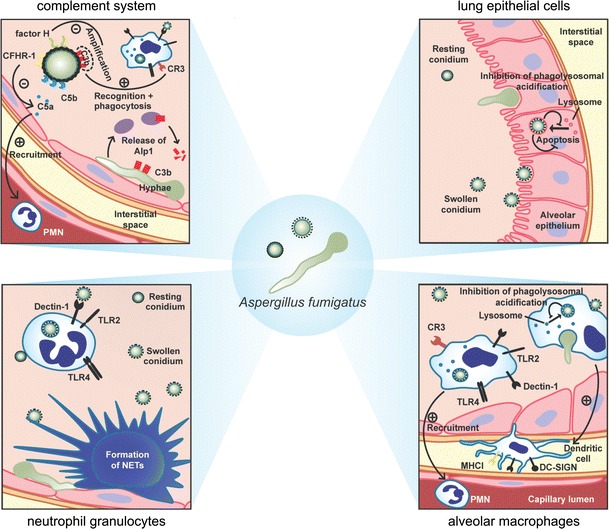
Aspergillus fumigatus is a saprotrophic filamentous fungus and also the most prevalent airborne fungal pathogen of humans. Depending on the host's immune status, the variety of diseases caused by A. fumigatus ranges from allergies in immunocompetent hosts to life-threatening invasive infections in patients with impaired immunity. In contrast to the majority of other Aspergillus species, which are in most cases nonpathogenic, A. fumigatus features an armory of virulence determinants to establish an infection. For example, A. fumigatus is able to evade the human complement system by binding or degrading complement regulators. Furthermore, the fungus interferes with lung epithelial cells, alveolar macrophages, and neutrophil granulocytes to prevent killing by these immune cells. This chapter summarizes the different strategies of A. fumigatus to manipulate the immune response. We also discuss the potential impact of recent advances in immunoproteomics to improve diagnosis and therapy of an A. fumigatus infection.
Overview
The claims and statistics of this paper haven’t been checked yet.
Free: it reads the open-access text and checks the first 5 claims that cite a source we can check. Create a free account to check every claim.
Integrity signals
Registry
Cites
Statistics
Figures
Verification
Claims the paper makes
The claims and statistics of this paper haven’t been checked yet.
Free: it reads the open-access text and checks the first 5 claims that cite a source we can check. Create a free account to check every claim.
Claims other papers make about this one
Each is checked against this paper’s own text: does it say what the citing paper says it does?
The cited source says what the claim attributes to it.
In the citing paper
“Firstly, A. fumigatus can survive within phagocytes [189, 190].”
From Mechanisms of fungal dissemination (2021) · cites this paper as [189]
Self-check
Percentages, sums and reported differences re-computed from the paper’s own numbers.
The self-check needs the paper’s full text.
Citations
Cites
Neutrophil Extracellular Traps Kill Bacteria
Brinkmann, V., Reichard, U., Goosmann, C., Fauler, B., Uhlemann, Y., Weiss, D. S., Weinrauch, Y., & Zychlinsky, A. (2004) · Science · doi:10.1126/science.1092385 · Cited by 10,268
Meijer, L., Nelson, D. J., Riazanski, V., Gabdoulkhakova, A. G., Hery-Arnaud, G., Le Berre, R., Loaëc, N., Oumata, N., Galons, H., Nowak, E., et al. (2016) · Journal of Innate Immunity · doi:10.1159/000444256 · Cited by 4,992
Hidden Killers: Human Fungal Infections
Brown, G. D., Denning, D. W., Gow, N. A. R., Levitz, S. M., Netea, M. G., & White, T. C. (2012) · Science Translational Medicine · doi:10.1126/scitranslmed.3004404 · Cited by 4,284 · cited 1×
“, in chemotherapy and organ or bone marrow transplantation, contributes to the steadily increasing number of patients with impaired immune status [1].”
BackgroundCalamita, E., Schmid, M., Kunz, M., Ndebele-Murisa, M. R., Magadza, C. H. D., Nyambe, I., & Wehrli, B. (2019) · Figshare · doi:10.26181/6153922fe919c · Cited by 4,222
Complement: a key system for immune surveillance and homeostasis
Ricklin, D., Hajishengallis, G., Yang, K., & Lambris, J. D. (2010) · Nature Immunology · doi:10.1038/ni.1923 · Cited by 3,654 · cited 3×
“Moreover, the complement system provides a platform for the cross-talk between innate and humoral circuits via the interaction of complement activation products and surface receptors resulting in governing both T and B cell responses [87].”
BackgroundInfluentialNovel cell death program leads to neutrophil extracellular traps
Fuchs, T. A., Abed, U., Goosmann, C., Hurwitz, R., Schulze, I., Wahn, V., Weinrauch, Y., Brinkmann, V., & Zychlinsky, A. (2007) · The Journal of Cell Biology · doi:10.1083/jcb.200606027 · Cited by 3,197
Aspergillus fumigatus and Aspergillosis
Latgé, J.-P. (1999) · Clinical Microbiology Reviews · doi:10.1128/cmr.12.2.310 · Cited by 2,307 · cited 1×
“Accordingly, neutropenic patients face the highest risk to develop an invasive aspergillosis [50].”
BackgroundNeutrophil elastase and myeloperoxidase regulate the formation of neutrophil extracellular traps
Papayannopoulos, V., Metzler, K. D., Hakkim, A., & Zychlinsky, A. (2010) · Journal of Cell Biology · doi:10.1083/jcb.201006052 · Cited by 2,103 · cited 4×
“Primary or azurophilic granules contain myeloperoxidase (MPO), lysozyme, and antimicrobial proteins like cathepsin G, elastase, and proteinase 3.”
BackgroundInfluentialMedzhitov, R., & Janeway, C. (2000) · New England Journal of Medicine · doi:10.1056/nejm200008033430506 · Cited by 1,825
Segal, A. W. (2005) · Annual Review of Immunology · doi:10.1146/annurev.immunol.23.021704.115653 · Cited by 1,789 · cited 1×
“Tertiary granules contain gelatinase [57, 58].”
Urban, C. F., Ermert, D., Schmid, M., Abu-Abed, U., Goosmann, C., Nacken, W., Brinkmann, V., Jungblut, P. R., & Zychlinsky, A. (2009) · PLoS Pathogens · doi:10.1371/journal.ppat.1000639 · Cited by 1,673 · cited 1×
“albicans [74, 80, 81], they only act fungistatically against A.”
BackgroundNeutrophils, from Marrow to Microbes
Borregaard, N. (2010) · Immunity · doi:10.1016/j.immuni.2010.11.011 · Cited by 1,573 · cited 1×
“Tertiary granules contain gelatinase [57, 58].”
Yoshimori, T., Yamamoto, A., Moriyama, Y., Futai, M., & Tashiro, Y. (1991) · Journal of Biological Chemistry · doi:10.1016/s0021-9258(19)47429-2 · Cited by 1,328 · cited 1×
“Treatment of macrophages with the vATPase inhibitor bafilomycin A resulted in a complete abolishment of acidification and confirmed the major role of the vATPase in the phagolysosomal acidification [38].”
BackgroundMACROPHAGE RECEPTORS AND IMMUNE RECOGNITION
Taylor, P. R., Martinez-Pomares, L., Stacey, M., Lin, H.-H., Brown, G. D., & Gordon, S. (2005) · Annual Review of Immunology · doi:10.1146/annurev.immunol.23.021704.115816 · Cited by 1,324 · cited 2×
“In particular, β-1,3-glucans and galactomannans are highly immunogenic molecules and prominent pathogen-associated patterns (PAMPs) of fungi [15, 16].”
BackgroundComplement regulators and inhibitory proteins
Zipfel, P. F., & Skerka, C. (2009) · Nature Reviews Immunology · doi:10.1038/nri2620 · Cited by 1,264 · cited 1×
“The human complement system comprises approximately 30 serum-derived or membrane-associated proteins to exert its manifold effects on host-pathogen interactions and inflammatory events [86].”
BackgroundNeutrophil kinetics in health and disease
Summers, C., Rankin, S. M., Condliffe, A. M., Singh, N., Peters, A. M., & Chilvers, E. R. (2010) · Trends in Immunology · doi:10.1016/j.it.2010.05.006 · Cited by 1,242 · cited 1×
“Each day, around 5– 10×10(10) neutrophils are produced in the bone marrow [47].”
BackgroundKilling activity of neutrophils is mediated through activation of proteases by K+ flux
Reeves, E. P., Lu, H., Jacobs, H. L., Messina, C. G. M., Bolsover, S., Gabella, G., Potma, E. O., Warley, A., Roes, J., & Segal, A. W. (2002) · Nature · doi:10.1038/416291a · Cited by 1,153 · cited 1×
“Furthermore, serine proteases like the PMN elastase (ELA) contribute to microbial killing [71, 72].”
BackgroundNeutrophil extracellular traps: Is immunity the second function of chromatin?
Brinkmann, V., & Zychlinsky, A. (2012) · Journal of Cell Biology · doi:10.1083/jcb.201203170 · Cited by 1,021 · cited 1×
“In addition to histones, NETs mainly contain the proteins elastase, lactoferrin, cathepsin G, calprotectin, andMPO [77].”
BackgroundPollock, J. D., Williams, D. A., Gifford, M. A. C., Li, L. L., Du, X., Fisherman, J., Orkin, S. H., Doerschuk, C. M., & Dinauer, M. C. (1995) · Nature Genetics · doi:10.1038/ng0295-202 · Cited by 921
In vivo labeling with 2H2O reveals a human neutrophil lifespan of 5.4 days
Pillay, J., den Braber, I., Vrisekoop, N., Kwast, L. M., de Boer, R. J., Borghans, J. A. M., Tesselaar, K., & Koenderman, L. (2010) · Blood · doi:10.1182/blood-2010-01-259028 · Cited by 872
The neutrophil as a cellular source of chemokines
Scapini, P., Lapinet‐Vera, J. A., Gasperini, S., Calzetti, F., Bazzoni, F., & Cassatella, M. A. (2000) · Immunological Reviews · doi:10.1034/j.1600-065x.2000.17706.x · Cited by 802 · cited 1×
“, CXCL1/ 2/3, CCL2/3/4, and IL-8 to attract further immune cells [52, 59].”
BackgroundActivation of the Raf-MEK-ERK pathway is required for neutrophil extracellular trap formation
Hakkim, A., Fuchs, T. A., Martinez, N. E., Hess, S., Prinz, H., Zychlinsky, A., & Waldmann, H. (2011) · Nature Chemical Biology · doi:10.1038/nchembio.496 · Cited by 793 · cited 1×
“Also, the Raf-MEK-ERK-pathway plays a role in the formation of NETs [78].”
BackgroundSurface hydrophobin prevents immune recognition of airborne fungal spores
Aimanianda, V., Bayry, J., Bozza, S., Kniemeyer, O., Perruccio, K., Elluru, S. R., Clavaud, C., Paris, S., Brakhage, A. A., Kaveri, S. V., et al. (2009) · Nature · doi:10.1038/nature08264 · Cited by 792 · cited 2×
“fumigatus conidia render the conidia largely inert towards recognition by the immune system [17].”
BackgroundSelf-citationGarin, J., Diez, R., Kieffer, S., Dermine, J.-F., Duclos, S., Gagnon, E., Sadoul, R., Rondeau, C., & Desjardins, M. (2001) · The Journal of Cell Biology · doi:10.1083/jcb.152.1.165 · Cited by 684 · cited 1×
“Further enzymes are hydrolases such as β-hexosaminidase and β-glucoronidase, lipases, and DNases [37].”
BackgroundNon-redundant role of the long pentraxin PTX3 in anti-fungal innate immune response
Garlanda, C., Hirsch, E., Bozza, S., Salustri, A., De Acetis, M., Nota, R., Maccagno, A., Riva, F., Bottazzi, B., Peri, G., et al. (2002) · Nature · doi:10.1038/nature01195 · Cited by 669
Luther, K., Torosantucci, A., Brakhage, A. A., Heesemann, J., & Ebel, F. (2007) · Cellular Microbiology · doi:10.1111/j.1462-5822.2006.00796.x · Cited by 582
Self-citationNeth, O., Jack, D. L., Dodds, A. W., Holzel, H., Klein, N. J., & Turner, M. W. (2000) · Infection and Immunity · doi:10.1128/iai.68.2.688-693.2000 · Cited by 561 · cited 1×
“terreus [93].”
von Köckritz-Blickwede, M., Goldmann, O., Thulin, P., Heinemann, K., Norrby-Teglund, A., Rohde, M., & Medina, E. (2008) · Blood · doi:10.1182/blood-2007-07-104018 · Cited by 553
Jaillon, S., Peri, G., Delneste, Y., Frémaux, I., Doni, A., Moalli, F., Garlanda, C., Romani, L., Gascan, H., Bellocchio, S., et al. (2007) · The Journal of Experimental Medicine · doi:10.1084/jem.20061301 · Cited by 534
Bellocchio, S., Montagnoli, C., Bozza, S., Gaziano, R., Rossi, G., Mambula, S. S., Vecchi, A., Mantovani, A., Levitz, S. M., & Romani, L. (2004) · The Journal of Immunology · doi:10.4049/jimmunol.172.5.3059 · Cited by 515 · cited 1×
“TLR2 was ascribed to sense chitin on the fungal surface, and TLR4 presumably detects α-glucans [30, 31].”
BackgroundThe Beta-Glucan Receptor Dectin-1 Recognizes Specific Morphologies of Aspergillus fumigatus
Steele, C., Rapaka, R. R., Metz, A., Pop, S. M., Williams, D. L., Gordon, S., Kolls, J. K., & Brown, G. D. (2005) · PLoS Pathogens · doi:10.1371/journal.ppat.0010042 · Cited by 509 · cited 1×
“The main route of fungal recognition is the specific binding of the C-type lectin dectin-1 to β-1,3-glucans which are exposed on the fungal surface [11].”
BackgroundAspergillus fumigatus Triggers Inflammatory Responses by Stage-Specific β-Glucan Display
Hohl, T. M., Van Epps, H. L., Rivera, A., Morgan, L. A., Chen, P. L., Feldmesser, M., & Pamer, E. G. (2005) · PLoS Pathogens · doi:10.1371/journal.ppat.0010030 · Cited by 428 · cited 1×
“Swelling and germination of conidia are accompanied by a subsequent loss of the protective melanin and hydrophobin layer and thereby lead to an increasing exposure of immunological surface components and enhanced phagocytosis [16, 18].”
BackgroundBruns, S., Kniemeyer, O., Hasenberg, M., Aimanianda, V., Nietzsche, S., Thywißen, A., Jeron, A., Latgé, J.-P., Brakhage, A. A., & Gunzer, M. (2010) · PLoS Pathogens · doi:10.1371/journal.ppat.1000873 · Cited by 421 · cited 1×
“fumigatus [75].”
Self-citationPhilippe, B., Ibrahim-Granet, O., Prévost, M. C., Gougerot-Pocidalo, M. A., Sanchez Perez, M., Van der Meeren, A., & Latgé, J. P. (2003) · Infection and Immunity · doi:10.1128/iai.71.6.3034-3042.2003 · Cited by 415 · cited 1×
“Killing of the pathogen is observed starting around 6 h after ingestion [34].”
BackgroundRequisite Role for the Dectin-1 β-Glucan Receptor in Pulmonary Defense against Aspergillus fumigatus
Werner, J. L., Metz, A. E., Horn, D., Schoeb, T. R., Hewitt, M. M., Schwiebert, L. M., Faro-Trindade, I., Brown, G. D., & Steele, C. (2009) · The Journal of Immunology · doi:10.4049/jimmunol.0804250 · Cited by 412 · cited 1×
“fumigatus at least via dectin-1 and TLRs 2 and 4 [52–54] and possess different mechanisms to kill the fungus.”
BackgroundGersuk, G. M., Underhill, D. M., Zhu, L., & Marr, K. A. (2006) · The Journal of Immunology · doi:10.4049/jimmunol.176.6.3717 · Cited by 334 · cited 1×
“The recognition of conidia by alveolar macrophages leads to phagocytosis and induces the expression of inflammatory chemokines and cytokines such as TNF-α, IL-12, IFN-γ, IL-18, IL-6, IL-1β, MIP-1, MIP-1α, MIP-2, G-CSF, and GM-CSF [10–12].”
BackgroundTsai, H.-F., Chang, Y. C., Washburn, R. G., Wheeler, M. H., & Kwon-Chung, K. J. (1998) · Journal of Bacteriology · doi:10.1128/jb.180.12.3031-3038.1998 · Cited by 334 · cited 1×
“DHN-melanin-deficient conidia bind more C3 fragments on their surface and exhibit reduced virulence in mice [19, 92].”
BackgroundGenetic PTX3 Deficiency and Aspergillosis in Stem-Cell Transplantation
Cunha, C., Aversa, F., Lacerda, J. F., Busca, A., Kurzai, O., Grube, M., Löffler, J., Maertens, J. A., Bell, A. S., Inforzato, A., et al. (2014) · New England Journal of Medicine · doi:10.1056/nejmoa1211161 · Cited by 307
Meier, A., Kirschning, C. J., Nikolaus, T., Wagner, H., Heesemann, J., & Ebel, F. (2003) · Cellular Microbiology · doi:10.1046/j.1462-5822.2003.00301.x · Cited by 296 · cited 1×
“Toll-like receptors (TLRs) 2 and 4 have been attributed with immune recognition and modulation of the immune response in Aspergillus infections [27–29], although their actual function in invasive aspergillosis has not been rigorously elucidated yet.”
BackgroundLangfelder, K., Jahn, B., Gehringer, H., Schmidt, A., Wanner, G., & Brakhage, A. A. (1998) · Medical Microbiology and Immunology · doi:10.1007/s004300050077 · Cited by 290 · cited 2×
“DHN-melanin-deficient conidia bind more C3 fragments on their surface and exhibit reduced virulence in mice [19, 92].”
BackgroundSelf-citationNetea, M. G., Warris, A., Van der Meer, J. W. M., Fenton, M. J., Verver‐Janssen, T. J. G., Jacobs, L. E. H., Andresen, T., Verweij, P. E., & Kullberg, B. J. (2003) · The Journal of Infectious Diseases · doi:10.1086/376456 · Cited by 284 · cited 1×
“Toll-like receptors (TLRs) 2 and 4 have been attributed with immune recognition and modulation of the immune response in Aspergillus infections [27–29], although their actual function in invasive aspergillosis has not been rigorously elucidated yet.”
BackgroundPhagocytosis and Intracellular Fate of Aspergillus fumigatus Conidia in Alveolar Macrophages
Ibrahim-Granet, O., Philippe, B., Boleti, H., Boisvieux-Ulrich, E., Grenet, D., Stern, M., & Latgé, J. P. (2003) · Infection and Immunity · doi:10.1128/iai.71.2.891-903.2003 · Cited by 277 · cited 2×
“Swelling of the conidium and acidification of the phagolysosome is prerequisite for efficient elimination [35].”
BackgroundWillment, J. A., Marshall, A. S. J., Reid, D. M., Williams, D. L., Wong, S. Y. C., Gordon, S., & Brown, G. D. (2005) · European Journal of Immunology · doi:10.1002/eji.200425725 · Cited by 257 · cited 1×
“Dectin-1 is expressed on macrophages, monocytes, neutrophils, DCs, and a subset of T cells [33].”
BackgroundLiving and dying for inflammation: neutrophils, eosinophils, basophils
Geering, B., Stoeckle, C., Conus, S., & Simon, H.-U. (2013) · Trends in Immunology · doi:10.1016/j.it.2013.04.002 · Cited by 256 · cited 1×
“In the event of infection, a large number of neutrophils is recruited to the affected tissue in response to cytokines such as IL-8, IFN-γ, C5a, and leukotriene B4 [49].”
BackgroundNETs formed by human neutrophils inhibit growth of the pathogenic mold Aspergillus fumigatus
McCormick, A., Heesemann, L., Wagener, J., Marcos, V., Hartl, D., Loeffler, J., Heesemann, J., & Ebel, F. (2010) · Microbes and Infection · doi:10.1016/j.micinf.2010.06.009 · Cited by 254 · cited 1×
“fumigatus [75, 85].”
Pihet, M., Vandeputte, P., Tronchin, G., Renier, G., Saulnier, P., Georgeault, S., Mallet, R., Chabasse, D., Symoens, F., & Bouchara, J.-P. (2009) · BMC Microbiology · doi:10.1186/1471-2180-9-177 · Cited by 253 · cited 1×
“DHN-melanin has been shown to be important for correct cell wall assembly and ascribed a function in the defense against the host’s immune response [22, 23].”
BackgroundJahn, B., Koch, A., Schmidt, A., Wanner, G., Gehringer, H., Bhakdi, S., & Brakhage, A. A. (1997) · Infection and Immunity · doi:10.1128/iai.65.12.5110-5117.1997 · Cited by 240 · cited 1×
“Pigmentless strains, due to deletion or mutation of the pksP gene encoding the polyketide synthase essential for melanin biosynthesis, display a smooth surface structure and enhanced phagocytosis during coincubation with macrophages [19–21].”
BackgroundSelf-citationSub-Telomere Directed Gene Expression during Initiation of Invasive Aspergillosis
McDonagh, A., Fedorova, N. D., Crabtree, J., Yu, Y., Kim, S., Chen, D., Loss, O., Cairns, T., Goldman, G., Armstrong-James, D., et al. (2008) · PLoS Pathogens · doi:10.1371/journal.ppat.1000154 · Cited by 235
Balloy, V., Huerre, M., Latgé, J.-P., & Chignard, M. (2005) · Infection and Immunity · doi:10.1128/iai.73.1.494-503.2005 · Cited by 231 · cited 1×
“The recognition of conidia by alveolar macrophages leads to phagocytosis and induces the expression of inflammatory chemokines and cytokines such as TNF-α, IL-12, IFN-γ, IL-18, IL-6, IL-1β, MIP-1, MIP-1α, MIP-2, G-CSF, and GM-CSF [10–12].”
BackgroundCryptococcus neoformans Resides in an Acidic Phagolysosome of Human Macrophages
Levitz, S. M., Nong, S.-H., Seetoo, K. F., Harrison, T. S., Speizer, R. A., & Simons, E. R. (1999) · Infection and Immunity · doi:10.1128/iai.67.2.885-890.1999 · Cited by 231 · cited 1×
“Other melanins such as DOPA melanin were not able to inhibit phagolysosomal acidification [40].”
BackgroundLessing, F., Kniemeyer, O., Wozniok, I., Loeffler, J., Kurzai, O., Haertl, A., & Brakhage, A. A. (2007) · Eukaryotic Cell · doi:10.1128/ec.00267-07 · Cited by 221 · cited 2×
“fumigatus wild type [64–66].”
BackgroundSelf-citationInnate Immunity to Aspergillus Species
Park, S. J., & Mehrad, B. (2009) · Clinical Microbiology Reviews · doi:10.1128/cmr.00014-09 · Cited by 220 · cited 2×
“conidia and germlings very rapidly to kill them by a respiratory burst and degranulation [55, 56].”
BackgroundSerrano-Gómez, D., Domínguez-Soto, A., Ancochea, J., Jimenez-Heffernan, J. A., Leal, J. A., & Corbí, A. L. (2004) · The Journal of Immunology · doi:10.4049/jimmunol.173.9.5635 · Cited by 218 · cited 1×
“The DC-specific intracellular adhesion molecule 3-grabbing nonintegrin (DC-SIGN), which is mainly expressed on DCs, binds fungal galactomannans also on macrophages and initiates phagocytosis [26].”
BackgroundHeinekamp, T., Thywißen, A., Macheleidt, J., Keller, S., Valiante, V., & Brakhage, A. A. (2013) · Frontiers in Microbiology · doi:10.3389/fmicb.2012.00440 · Cited by 216 · cited 4×
“Melanin ghosts showed the same effect of reduced acidification, emphasizing the role of DHN-melanin in this mechanism [24, 39].”
BackgroundInfluentialSelf-citationMircescu, M. M., Lipuma, L., van Rooijen, N., Pamer, E. G., & Hohl, T. M. (2009) · The Journal of Infectious Diseases · doi:10.1086/600380 · Cited by 216
Auvynet, C., & Rosenstein, Y. (2009) · The FEBS Journal · doi:10.1111/j.1742-4658.2009.07360.x · Cited by 212 · cited 1×
“fumigatus extracellularly [69, 70].”
Allergic Bronchopulmonary Aspergillosis in Asthma and Cystic Fibrosis
Knutsen, A. P., & Slavin, R. G. (2011) · Clinical and Developmental Immunology · doi:10.1155/2011/843763 · Cited by 209 · cited 2×
“Therefore, the clinical picture is generally accompanied with an elevated total IgE level and Aspergillus-specific elevated IgE and IgG levels [115].”
BackgroundMoalli, F., Doni, A., Deban, L., Zelante, T., Zagarella, S., Bottazzi, B., Romani, L., Mantovani, A., & Garlanda, C. (2010) · Blood · doi:10.1182/blood-2009-12-258376 · Cited by 205 · cited 1×
“Aspergillus-driven complement activation can also occur via the opsonization by PTX3 receptor that interacts either with ficolin-2 [96] via the lectin pathway or associates with C1q from the classical pathway [97].”
BackgroundLysosomal Enzyme Trafficking between Phagosomes, Endosomes, and Lysosomes in J774 Macrophages
Claus, V., Jahraus, A., Tjelle, T., Berg, T., Kirschke, H., Faulstich, H., & Griffiths, G. (1998) · Journal of Biological Chemistry · doi:10.1074/jbc.273.16.9842 · Cited by 205 · cited 1×
“They comprise proteases, most importantly the cathepsins D, B, H, L, and S [36].”
BackgroundStanzani, M., Orciuolo, E., Lewis, R., Kontoyiannis, D. P., Martins, S. L. R., St. John, L. S., & Komanduri, K. V. (2005) · Blood · doi:10.1182/blood-2004-09-3421 · Cited by 203 · cited 1×
“fumigatus induce apoptosis via the release of the toxin gliotoxin in a dectin-1 and TLR2-dependent manner to evade immune responses [44, 45].”
BackgroundLevitz, S. M., Selsted, M. E., Ganz, T., Lehrer, R. I., & Diamond, R. D. (1986) · Journal of Infectious Diseases · doi:10.1093/infdis/154.3.483 · Cited by 195 · cited 1×
“fumigatus extracellularly [69, 70].”
Diamond, R. D., & Clark, R. A. (1982) · Infection and Immunity · doi:10.1128/iai.38.2.487-495.1982 · Cited by 194 · cited 1×
“This enzyme complex produces superoxide anions that are further converted to toxic compounds like H2O2, hydroxyl anions, and hypochlorous acid [61].”
BackgroundBrakhage, A. (2005) · Current Drug Targets · doi:10.2174/138945005774912717 · Cited by 190 · cited 2×
“To date, neither reliable diagnostic tools nor effective treatment options are available resulting in unacceptable high mortality rates of patients suffering from invasive fungal infections [2].”
BackgroundSelf-citationFunctional analysis of the superoxide dismutase family in Aspergillus fumigatus
Lambou, K., Lamarre, C., Beau, R., Dufour, N., & Latge, J. (2010) · Molecular Microbiology · doi:10.1111/j.1365-2958.2009.07024.x · Cited by 188 · cited 1×
“fumigatus wild type [64–66].”
Zarember, K. A., Sugui, J. A., Chang, Y. C., Kwon-Chung, K. J., & Gallin, J. I. (2007) · The Journal of Immunology · doi:10.4049/jimmunol.178.10.6367 · Cited by 186 · cited 2×
“[56] showed that lactoferrin can inhibit fungal growth by sequestering free iron ions.”
BackgroundInnate Recognition of Fungal Cell Walls
Levitz, S. M. (2010) · PLoS Pathogens · doi:10.1371/journal.ppat.1000758 · Cited by 184
Synergy between Ficolin-2 and Pentraxin 3 Boosts Innate Immune Recognition and Complement Deposition
Ma, Y. J., Doni, A., Hummelshøj, T., Honoré, C., Bastone, A., Mantovani, A., Thielens, N. M., & Garred, P. (2009) · Journal of Biological Chemistry · doi:10.1074/jbc.m109.009225 · Cited by 183 · cited 1×
“Aspergillus-driven complement activation can also occur via the opsonization by PTX3 receptor that interacts either with ficolin-2 [96] via the lectin pathway or associates with C1q from the classical pathway [97].”
BackgroundMenacing Mold: The Molecular Biology of Aspergillus fumigatus
Brakhage, A. A., & Langfelder, K. (2002) · Annual Review of Microbiology · doi:10.1146/annurev.micro.56.012302.160625 · Cited by 183 · cited 1×
“They are propagated easily through the air and enter the human host via the airway, where they infect the lung tissue and intrude to the lower respiratory system [3].”
BackgroundSelf-citationAspergillus fumigatus antigens activate innate immune cells via toll‐like receptors 2 and 4
Braedel, S., Radsak, M., Einsele, H., Latgé, J., Michan, A., Loeffler, J., Haddad, Z., Grigoleit, U., Schild, H., & Hebart, H. (2004) · British Journal of Haematology · doi:10.1111/j.1365-2141.2004.04922.x · Cited by 180 · cited 1×
“, CXCL1/ 2/3, CCL2/3/4, and IL-8 to attract further immune cells [52, 59].”
BackgroundInteraction of phagocytes with filamentous fungi
Brakhage, A. A., Bruns, S., Thywißen, A., Zipfel, P. F., & Behnsen, J. (2010) · Current Opinion in Microbiology · doi:10.1016/j.mib.2010.04.009 · Cited by 172 · cited 2×
“fumigatus conidia creates a protective intracellular niche for the fungus to evade fungicidal effects of immune cells and to escape the disruption of infected cells by cytotoxic T cells as well as a shuttle for transport to lymph nodes and spleen [24, 46].”
BackgroundSelf-citationAspergillus fumigatus conidia survive and germinate in acidic organelles of A549 epithelial cells
Wasylnka, J. A., & Moore, M. M. (2003) · Journal of Cell Science · doi:10.1242/jcs.00329 · Cited by 161 · cited 1×
“Endocytosed conidia are able to survive and reside inside A549 cells [4, 5].”
BackgroundThywißen, A., Heinekamp, T., Dahse, H.-M., Schmaler-Ripcke, J., Nietzsche, S., Zipfel, P. F., & Brakhage, A. A. (2011) · Frontiers in Microbiology · doi:10.3389/fmicb.2011.00096 · Cited by 161
Self-citationCrosdale, D. J., Poulton, K. V., Ollier, W. E., Thomson, W., & Denning, D. W. (2001) · The Journal of Infectious Diseases · doi:10.1086/322791 · Cited by 149 · cited 1×
“Crosdale and colleagues [94] highlighted the crucial role of serumMBL levels in the immune clearance of Aspergilli by investigating the correlation between the presence of mutations in the MBL gene promoter region that downregulated serum levels of MBL and the severity of chronic necrotizing pulmonary aspergillosis [9…”
BackgroundInternalization of Aspergillus fumigatus conidia by epithelial and endothelial cells
Paris, S., Boisvieux-Ulrich, E., Crestani, B., Houcine, O., Taramelli, D., Lombardi, L., & Latgé, J. P. (1997) · Infection and Immunity · doi:10.1128/iai.65.4.1510-1514.1997 · Cited by 149 · cited 1×
“Endocytosed conidia are able to survive and reside inside A549 cells [4, 5].”
BackgroundBruneau, J.-M., Magnin, T., Tagat, E., Legrand, R., Bernard, M., Diaquin, M., Fudali, C., & Latgé, J.-P. (2001) · ELECTROPHORESIS · doi:10.1002/1522-2683(200108)22:13<2812::aid-elps2812>3.0.co;2-q · Cited by 144
Bayry, J., Beaussart, A., Dufrêne, Y. F., Sharma, M., Bansal, K., Kniemeyer, O., Aimanianda, V., Brakhage, A. A., Kaveri, S. V., Kwon-Chung, K. J., et al. (2014) · Infection and Immunity · doi:10.1128/iai.01726-14 · Cited by 137
Self-citationDectin‐1 promotes fungicidal activity of human neutrophils
Kennedy, A. D., Willment, J. A., Dorward, D. W., Williams, D. L., Brown, G. D., & DeLeo, F. R. (2007) · European Journal of Immunology · doi:10.1002/eji.200636653 · Cited by 135 · cited 1×
“fumigatus at least via dectin-1 and TLRs 2 and 4 [52–54] and possess different mechanisms to kill the fungus.”
BackgroundVödisch, M., Scherlach, K., Winkler, R., Hertweck, C., Braun, H.-P., Roth, M., Haas, H., Werner, E. R., Brakhage, A. A., & Kniemeyer, O. (2011) · Journal of Proteome Research · doi:10.1021/pr1012812 · Cited by 128 · cited 1×
“, upon confrontation with particular stresses [65, 103–106], Aspergillus cell wall and cell membrane subproteomes are of especial interest in the context of A.”
BackgroundSelf-citationBarker, B. M., Kroll, K., Vödisch, M., Mazurie, A., Kniemeyer, O., & Cramer, R. A. (2012) · BMC Genomics · doi:10.1186/1471-2164-13-62 · Cited by 127
Self-citationJahn, B., Langfelder, K., Schneider, U., Schindel, C., & Brakhage, A. A. (2002) · Cellular Microbiology · doi:10.1046/j.1462-5822.2002.00228.x · Cited by 122 · cited 1×
“Pigmentless strains, due to deletion or mutation of the pksP gene encoding the polyketide synthase essential for melanin biosynthesis, display a smooth surface structure and enhanced phagocytosis during coincubation with macrophages [19–21].”
BackgroundSelf-citationSecreted Aspergillus fumigatus Protease Alp1 Degrades Human Complement Proteins C3, C4, and C5
Behnsen, J., Lessing, F., Schindler, S., Wartenberg, D., Jacobsen, I. D., Thoen, M., Zipfel, P. F., & Brakhage, A. A. (2010) · Infection and Immunity · doi:10.1128/iai.01353-09 · Cited by 122 · cited 1×
“For example, Alp1, a serine protease shown to degrade collagen, fibrinogen, and other extracellular matrix proteins, also targets complement components such as C1q, C3, C4, C5, MBL, and factor D [100, 101].”
BackgroundSelf-citationThe Cell Cycle Independence of HIV Infections Is Not Determined by Known Karyophilic Viral Elements
Yamashita, M., & Emerman, M. (2005) · PLoS Pathogens · doi:10.1371/journal.ppat.0010018 · Cited by 118
Asif, A. R., Oellerich, M., Amstrong, V. W., Riemenschneider, B., Monod, M., & Reichard, U. (2006) · Journal of Proteome Research · doi:10.1021/pr0504586 · Cited by 117 · cited 2×
“The presence of an extracellular lipase on the conidial surface may induce cell damage and adherence of the spores within the bronchoalveolar tract during inhalation [108].”
BackgroundSugui, J. A., Kim, H. S., Zarember, K. A., Chang, Y. C., Gallin, J. I., Nierman, W. C., & Kwon-Chung, K. J. (2008) · PLoS ONE · doi:10.1371/journal.pone.0002655 · Cited by 117 · cited 1×
“fumigatus hyphae with human neutrophils led to upregulation of genes encoding catalases and cytochrome c peroxidase [63].”
BackgroundThe Opportunistic Human Pathogenic Fungus Aspergillus fumigatus Evades the Host Complement System
Behnsen, J., Hartmann, A., Schmaler, J., Gehrke, A., Brakhage, A. A., & Zipfel, P. F. (2008) · Infection and Immunity · doi:10.1128/iai.01037-07 · Cited by 116 · cited 1×
“As a functional consequence, complement system is downregulated [98].”
BackgroundSelf-citationActivation of C3 and binding to Aspergillus fumigatus conidia and hyphae
Kozel, T. R., Wilson, M. A., Farrell, T. P., & Levitz, S. M. (1989) · Infection and Immunity · doi:10.1128/iai.57.11.3412-3417.1989 · Cited by 115 · cited 1×
“fumigatus features specific kinetics with slowest initiation by resting conidia [91].”
BackgroundAspergillus fumigatus cell wall components differentially modulate host TLR2 and TLR4 responses
Chai, L. Y. A., Vonk, A. G., Kullberg, B. J., Verweij, P. E., Verschueren, I., van der Meer, J. W. M., Joosten, L. A. B., Latgé, J., & Netea, M. G. (2010) · Microbes and Infection · doi:10.1016/j.micinf.2010.10.005 · Cited by 115 · cited 1×
“Toll-like receptors (TLRs) 2 and 4 have been attributed with immune recognition and modulation of the immune response in Aspergillus infections [27–29], although their actual function in invasive aspergillosis has not been rigorously elucidated yet.”
BackgroundCharacterization of the SKN7 ortholog of Aspergillus fumigatus
Lamarre, C., Ibrahim-Granet, O., Du, C., Calderone, R., & Latgé, J.-P. (2007) · Fungal Genetics and Biology · doi:10.1016/j.fgb.2007.01.009 · Cited by 109 · cited 1×
“fumigatus wild type [64–66].”
Pardo, J., Urban, C., Galvez, E. M., Ekert, P. G., Müller, U., Kwon-Chung, J., Lobigs, M., Müllbacher, A., Wallich, R., Borner, C., et al. (2006) · The Journal of Cell Biology · doi:10.1083/jcb.200604044 · Cited by 108 · cited 1×
“fumigatus induce apoptosis via the release of the toxin gliotoxin in a dectin-1 and TLR2-dependent manner to evade immune responses [44, 45].”
BackgroundIntegrative analysis of the heat shock response in Aspergillus fumigatus
Albrecht, D., Guthke, R., Brakhage, A. A., & Kniemeyer, O. (2010) · BMC Genomics · doi:10.1186/1471-2164-11-32 · Cited by 105 · cited 1×
“, upon confrontation with particular stresses [65, 103–106], Aspergillus cell wall and cell membrane subproteomes are of especial interest in the context of A.”
BackgroundSelf-citationImmunology of Infectious Disease
Kaufmann, S. H. E., Sher, A., & Ahmed, R. (2002) · Medical Entomology and Zoology · Cited by 102
Immune responses against Aspergillus fumigatus: what have we learned?
Cramer, R. A., Rivera, A., & Hohl, T. M. (2011) · Current Opinion in Infectious Diseases · doi:10.1097/qco.0b013e328348b159 · Cited by 101
Bruns, S., Seidler, M., Albrecht, D., Salvenmoser, S., Remme, N., Hertweck, C., Brakhage, A. A., Kniemeyer, O., & Müller, F. C. (2010) · PROTEOMICS · doi:10.1002/pmic.201000129 · Cited by 95 · cited 1×
“, upon confrontation with particular stresses [65, 103–106], Aspergillus cell wall and cell membrane subproteomes are of especial interest in the context of A.”
BackgroundSelf-citationVolling, K., Thywissen, A., Brakhage, A. A., & Saluz, H. P. (2011) · Cellular Microbiology · doi:10.1111/j.1462-5822.2011.01605.x · Cited by 87 · cited 3×
“The apoptosis inhibition was further attributed to the reactive oxygen intermediates (ROI) quenching effect of melanins: Enhanced ROI signaling usually promotes cytochrome c release but is counteracted by the presence of the pigment on internalized conidia [41].”
BackgroundSelf-citationProtective role of mannan-binding lectin in a murine model of invasive pulmonary aspergillosis
Kaur, S., Gupta, V. K., Thiel, S., Sarma, P. U., & Madan, T. (2007) · Clinical and Experimental Immunology · doi:10.1111/j.1365-2249.2007.03351.x · Cited by 86 · cited 1×
“Crosdale and colleagues [94] highlighted the crucial role of serumMBL levels in the immune clearance of Aspergilli by investigating the correlation between the presence of mutations in the MBL gene promoter region that downregulated serum levels of MBL and the severity of chronic necrotizing pulmonary aspergillosis [9…”
BackgroundRamirez-Ortiz, Z. G., & Means, T. K. (2012) · Virulence · doi:10.4161/viru.22295 · Cited by 84 · cited 1×
“Dendritic cells are able to phagocytose conidia and even hyphae, and their function in antigen presentation via the major histocompatibility complex class I (MHC I) is important to initiate the adaptive branch of the immune system by the activation of T cell and antibody responses [13, 14].”
BackgroundD'Angelo, C., De Luca, A., Zelante, T., Bonifazi, P., Moretti, S., Giovannini, G., Iannitti, R. G., Zagarella, S., Bozza, S., Campo, S., et al. (2009) · The Journal of Immunology · doi:10.4049/jimmunol.0900345 · Cited by 80 · cited 1×
“fumigatus [83].”
Melanin dependent survival of Apergillus fumigatus conidia in lung epithelial cells
Amin, S., Thywißen, A., Heinekamp, T., Saluz, H. P., & Brakhage, A. A. (2014) · International Journal of Medical Microbiology · doi:10.1016/j.ijmm.2014.04.009 · Cited by 76
Self-citationUse of DBA/2N mice in models of systemic candidiasis and pulmonary and systemic aspergillosis
Hector, R. F., Yee, E., & Collins, M. S. (1990) · Infection and Immunity · doi:10.1128/iai.58.5.1476-1478.1990 · Cited by 74 · cited 1×
“The nonredundant role of the complement system in the onset of invasive aspergillosis has been well documented in DBA/2N mouse models [88].”
BackgroundRamaprakash, H., Ito, T., Standiford, T. J., Kunkel, S. L., & Hogaboam, C. M. (2009) · Infection and Immunity · doi:10.1128/iai.00998-08 · Cited by 74 · cited 1×
“A contribution of TLR9 to spore detection is discussed [32].”
BackgroundSystems Biology of Fungal Infection
Horn, F., Heinekamp, T., Kniemeyer, O., Pollmächer, J., Valiante, V., & Brakhage, A. A. (2012) · Frontiers in Microbiology · doi:10.3389/fmicb.2012.00108 · Cited by 73 · cited 1×
“Combined in a systems biology approach [127, 128], all these data will allow to model the interaction of fungal pathogens with different immune cells and to identify regulatory circuits of this interaction with the overall aim to improve diagnosis and to identify novel targets for the development of tailormade antifun…”
BackgroundSelf-citationIdentification of novel allergens of Aspergillus fumigatus using immunoproteomics approach
Gautam, P., Sundaram, C. S., Madan, T., Gade, W. N., Shah, A., Sirdeshmukh, R., & Sarma, P. U. (2007) · Clinical & Experimental Allergy · doi:10.1111/j.1365-2222.2007.02765.x · Cited by 66 · cited 1×
“[116], for example, studied the IgE immunoreactivity of A.”
BackgroundKniemeyer, O. (2011) · PROTEOMICS · doi:10.1002/pmic.201100087 · Cited by 65 · cited 3×
“The resulting peptide sequences are commonly measured by high-resolution tandem mass spectrometry and finally matched and statistically evaluated by sophisticated protein database search algorithms such as Mascot or Sequest [102].”
BackgroundMethodInfluentialSelf-citationPhagocyte responses towards Aspergillus fumigatus
Hasenberg, M., Behnsen, J., Krappmann, S., Brakhage, A. A., & Gunzer, M. (2011) · International Journal of Medical Microbiology · doi:10.1016/j.ijmm.2011.04.012 · Cited by 64 · cited 2×
“Alveolar macrophages originate from immigrating blood monocytes or from precursor cells residing in the lung [8].”
BackgroundSelf-citationMech, F., Thywißen, A., Guthke, R., Brakhage, A. A., & Figge, M. T. (2011) · PLoS ONE · doi:10.1371/journal.pone.0019591 · Cited by 64 · cited 1×
“Last and not the least, automated analysis of digitalized and processed images or movies of the interaction of the pathogen with host cells was recently established [126].”
BackgroundSelf-citationBerkova, N., Lair-Fulleringer, S., Féménia, F., Huet, D., Wagner, M.-C., Gorna, K., Tournier, F., Ibrahim-Granet, O., Guillot, J., Chermette, R., et al. (2006) · International Immunology · doi:10.1093/intimm/dxh356 · Cited by 61 · cited 1×
“fumigatus inhibits apoptosis in different epithelial cell types [6].”
BackgroundImmuno-Reactive Molecules Identified from the Secreted Proteome of Aspergillus fumigatus
Singh, B., Oellerich, M., Kumar, R., Kumar, M., Bhadoria, D. P., Reichard, U., Gupta, V. K., Sharma, G. L., & Asif, A. R. (2010) · Journal of Proteome Research · doi:10.1021/pr100604x · Cited by 53 · cited 1×
“fumigatus sensitized asthmatics) have been analyzed in a number of immunoproteomic studies [116–119].”
BackgroundMorton, C. O., Bouzani, M., Loeffler, J., & Rogers, T. R. (2012) · Frontiers in Microbiology · doi:10.3389/fmicb.2012.00413 · Cited by 50
Washburn, R. G., DeHart, D. J., Agwu, D. E., Bryant-Varela, B. J., & Julian, N. C. (1990) · Infection and Immunity · doi:10.1128/iai.58.11.3508-3515.1990 · Cited by 49 · cited 1×
“fumigatus produces complement inhibitor (CI) with yet unresolved structure that interferes with the alternative pathway and C3b-driven phagocytosis and killing [99].”
BackgroundShi, L.-N., Li, F., Huang, M., Lu, J., Kong, X.-X., Wang, S., & Shao, H. (2012) · BMC Microbiology · doi:10.1186/1471-2180-12-11 · Cited by 49 · cited 2×
“Shi et al. (2012) tested the immunoreactivity of 2D gel electrophoresis-separated extracellular proteins of A. fumigatuswith sera from such patients with proven IA [122].”
BackgroundKniemeyer, O., Schmidt, A. D., Vödisch, M., Wartenberg, D., & Brakhage, A. A. (2011) · International Journal of Medical Microbiology · doi:10.1016/j.ijmm.2011.04.001 · Cited by 47 · cited 1×
“The fungal cell wall and the cytoplasmic membrane have a crucial impact on the virulence of the pathogen by constituting the first barriers interacting with the environment and consequently with the host’s immune defense [107].”
BackgroundSelf-citationSecretion of a fungal protease represents a complement evasion mechanism in cerebral aspergillosis
Rambach, G., Dum, D., Mohsenipour, I., Hagleitner, M., Würzner, R., Lass‐Flörl, C., & Speth, C. (2010) · Molecular Immunology · doi:10.1016/j.molimm.2010.02.010 · Cited by 47 · cited 1×
“For example, Alp1, a serine protease shown to degrade collagen, fibrinogen, and other extracellular matrix proteins, also targets complement components such as C1q, C3, C4, C5, MBL, and factor D [100, 101].”
BackgroundComplement binding to Aspergillus conidia correlates with pathogenicity.
Henwick, S., Hetherington, S., & Patrick, C. C. (1993) · PubMed · Cited by 44
Lapp, K., Vödisch, M., Kroll, K., Strassburger, M., Kniemeyer, O., Heinekamp, T., & Brakhage, A. A. (2014) · Frontiers in Microbiology · doi:10.3389/fmicb.2014.00469 · Cited by 42 · cited 3×
“A. fumigatus employs two systems to detoxify RNI: flavohemoglobins (FhpA and FhpB) and the S-nitrosoglutathione reductase GnoA [68].”
BackgroundInfluentialSelf-citationAsif, A. R., Oellerich, M., Amstrong, V. W., Groß, U., & Reichard, U. (2010) · Electrophoresis · doi:10.1002/elps.201000015 · Cited by 41 · cited 2×
“For identification of protective antibodies, Asif et al. (2010), for example, investigated two infected rabbits developing a protective immune response against invasive Aspergillosis by application of a 2D gel electrophoresis immunoblotting approach that has been combined with an identification of…”
BackgroundGlaser, A. G., Kirsch, A. I., Zeller, S., Menz, G., Rhyner, C., & Crameri, R. (2009) · Allergy · doi:10.1111/j.1398-9995.2009.02029.x · Cited by 40 · cited 1×
“Based on an enzyme-linked immunosorbent assay (ELISA), Glaser et al. (2009) showed that 94 % of ABPA patients (n=64) and 46 % of A. fumigatus-sensitized asthmatics (n=24) had Asp f 34- specific serum IgE [120].”
MethodPrüfer, S., Weber, M., Stein, P., Bosmann, M., Stassen, M., Kreft, A., Schild, H., & Radsak, M. P. (2013) · Immunobiology · doi:10.1016/j.imbio.2013.08.010 · Cited by 37
Chow, L., Liu, S., Yu, C., Liao, H., Tsai, J., & Tang, T. (2000) · Biochemical Journal · doi:10.1042/bj3460423 · Cited by 35
Susceptibility of mice to invasive aspergillosis correlates with delayed cell influx into the lungs
Svirshchevskaya, E. V., Shevchenko, M. A., Huet, D., Femenia, F., Latgé, J. ‐., Boireau, P., & Berkova, N. P. (2009) · International Journal of Immunogenetics · doi:10.1111/j.1744-313x.2009.00869.x · Cited by 35 · cited 1×
“fumigatus [89, 90].”
Ouyang, H., Luo, Y., Zhang, L., Li, Y., & Jin, C. (2009) · Molecular Biotechnology · doi:10.1007/s12033-009-9224-2 · Cited by 31 · cited 1×
“[109] analyzed total membrane preparations of A.”
Allergic Aspergillosis and the Antigens of Aspergillus fumigatus
Singh, B., Singh, S., Asif, A. R., Oellerich, M., & Sharma, G. L. (2014) · Current Protein and Peptide Science · doi:10.2174/1389203715666140512120605 · Cited by 28 · cited 1×
“fumigatus [121].”
The HGF-Met Signaling Axis: Emerging Themes and Targets of Inhibition
Coleman, D. T., Cardelli, J. A., & Steffan, J. J. (2011) · Current Protein and Peptide Science · doi:10.2174/138920311795659425 · Cited by 26
Shi, L.-N., Li, F., Lu, J., Kong, X.-X., Wang, S., Huang, M., Shao, H., & Shao, S. (2012) · Clinica Chimica Acta · doi:10.1016/j.cca.2012.02.011 · Cited by 25 · cited 1×
“Shi et al. (2012) tested the immunoreactivity of 2D gel electrophoresis-separated extracellular proteins of A. fumigatuswith sera from such patients with proven IA [122].”
BackgroundFekkar, A., Balloy, V., Pionneau, C., Marinach-Patrice, C., Chignard, M., & Mazier, D. (2012) · The Journal of Infectious Diseases · doi:10.1093/infdis/jis031 · Cited by 25 · cited 1×
“In addition to analyzing solitary cultures, it has recently become attractive to directly investigate the interplay of Aspergillus with selected host cells by studying the changes in the individual proteomes and the interactome of co-cultures by proteomic (and transcriptomic) procedures [63, 111–113].”
BackgroundCurty, N., Kubitschek-Barreira, P. H., Neves, G. W. P., Gomes, D., Pizzatti, L., Abdelhay, E. S. F. W., Souza, G. H. M. F., & Lopes-Bezerra, L. M. (2013) · Journal of Proteomics · doi:10.1016/j.jprot.2013.07.003 · Cited by 24 · cited 2×
“fumigatus was recently performed [114].”
BackgroundFéménia, F., Huet, D., Lair-Fulleringer, S., Wagner, M. C., Sarfati, J., Shingarova, L. N., Guillot, J., Boireau, P., Chermette, R., & Berkova, N. (2009) · Mycopathologia · doi:10.1007/s11046-008-9175-3 · Cited by 23 · cited 1×
“PI 3-kinase/Akt signaling was demonstrated to further enhance activation of FoxO and NFkB that initiates gene expression and production of inflammatory cytokines [6, 41–43].”
BackgroundActivation of the neutrophil NADPH oxidase by Aspergillus fumigatus
Boyle, K. B., Stephens, L., & Hawkins, P. T. (2012) · Annals of the New York Academy of Sciences · doi:10.1111/j.1749-6632.2012.06821.x · Cited by 21
Chow, L., Shu-Ling, L. I. U., Yu, C., et al. (2000) · Biochemical Journal · doi:10.1042/0264-6021:3460423 · Cited by 19 · cited 1×
“fumigatus sensitized asthmatics) have been analyzed in a number of immunoproteomic studies [116–119].”
BackgroundOn the way toward systems biology of Aspergillus fumigatus infection
Albrecht, D., Kniemeyer, O., Mech, F., Gunzer, M., Brakhage, A. A., & Guthke, R. (2011) · International Journal of Medical Microbiology · doi:10.1016/j.ijmm.2011.04.014 · Cited by 17 · cited 1×
“Combined in a systems biology approach [127, 128], all these data will allow to model the interaction of fungal pathogens with different immune cells and to identify regulatory circuits of this interaction with the overall aim to improve diagnosis and to identify novel targets for the development of tailormade antifun…”
BackgroundSelf-citationApoptosis inhibition of alveolar macrophages upon interaction with conidia ofAspergillus fumigatus
Volling, K., Brakhage, A. A., & Saluz, H. P. (2007) · FEMS Microbiology Letters · doi:10.1111/j.1574-6968.2007.00883.x · Cited by 16 · cited 1×
“The internalization of melanized conidia prevented macrophages from cell death when apoptosis was induced via the intrinsic pathway with staurosporine or via the extrinsic pathway with the Fas ligand [41, 42].”
BackgroundSelf-citationReactive Oxygen and Reactive Nitrogen Intermediates in the Immune System
Bogdan, C. (2014) · ASM Press eBooks · doi:10.1128/9781555816872.ch5 · Cited by 9
Gautam, P., Madan, T., Gade, W. N., & Sarma, P. U. (2006) · Indian Journal of Clinical Biochemistry · doi:10.1007/bf02912905 · Cited by 6 · cited 1×
“fumigatus sensitized asthmatics) have been analyzed in a number of immunoproteomic studies [116–119].”
BackgroundVaccination Approaches Against Opportunistic Fungal Infections Caused by Aspergillus fumigatus
Reichard, U., Herrmann, S., & Asif, A. R. (2014) · Current Protein and Peptide Science · doi:10.2174/1389203715666140512122037 · Cited by 5 · cited 1×
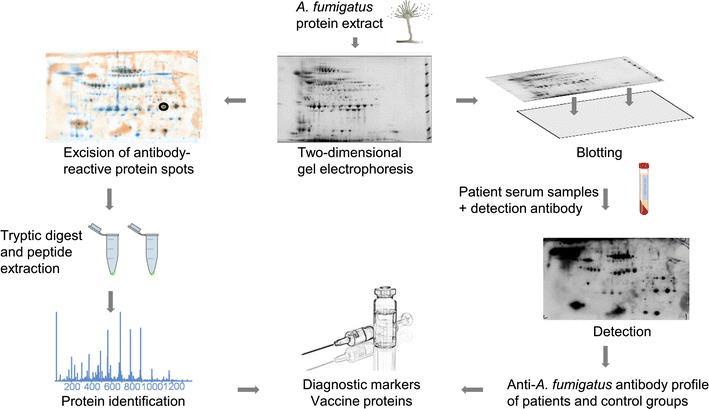
“Aside from detection of relevant Aspergillus proteins that have to be expressed during infection to elicit an immune response and their potential as diagnostic markers, the identification of vaccine candidates is an important objective in immunoproteomic approaches [124].”
BackgroundInnate Defense against Aspergillus : the Phagocyte
Chignard, M. (2014) · ASM Press eBooks · doi:10.1128/9781555815523.ch18 · Cited by 4
Cited by
Complement factor H in host defense and immune evasion
Parente, R., Clark, S. J., Inforzato, A., & Day, A. J. (2017) · Cellular and Molecular Life Sciences · doi:10.1007/s00018-016-2418-4 · Cited by 193
“For example, the opportunistic fungus Aspergillus fumigatus has acquired the ability to recruit both FH and C4BP onto its cell wall [128], however, in this case the microbial ligands are unknown [142].”
BackgroundSantus, W., Devlin, J. R., & Behnsen, J. (2021) · Infection and Immunity · doi:10.1128/iai.00648-20 · Cited by 129
“Inhaled spores of the mold 49 Aspergillus fumigatus can germinate and cause invasive lung disease in immunocompromised 50 patients (18, 19).”
BackgroundFungal iron homeostasis with a focus on Aspergillus fumigatus
Misslinger, M., Hortschansky, P., Brakhage, A. A., & Haas, H. (2020) · Biochimica et Biophysica Acta (BBA) - Molecular Cell Research · doi:10.1016/j.bbamcr.2020.118885 · Cited by 154
Self-citationMechanisms of fungal dissemination
Strickland, A. B., & Shi, M. (2021) · Cellular and Molecular Life Sciences · doi:10.1007/s00018-020-03736-z · Cited by 127
Pathophysiological aspects of Aspergillus colonization in disease
Gago, S., Denning, D. W., & Bowyer, P. (2018) · Medical Mycology · doi:10.1093/mmy/myy076 · Cited by 135
“15,16,107 Immunocompromised patients such as those on acute immunosuppression with neutropenia are at risk of developing invasive fungal disease such as invasive pulmonary aspergillosis.”
Background
Metadata
- Authors
- Heinekamp, T., Schmidt, H., Lapp, K., Pähtz, V., Shopova, I., Köster-Eiserfunke, N., Krüger, T., Kniemeyer, O., & Brakhage, A. A.
- Affiliations
- Leibniz-Institut für Naturstoff-Forschung und Infektionsbiologie e. V. - Hans-Knöll-Institut (HKI) (DE)
- Jena University Hospital (DE)
- Corresponding author
- Heinekamp, Thorsten
- Brakhage, Axel A.
- Venue
- Seminars in Immunopathology
- Published
- 2014-11-18
- Volume
- 37
- Issue
- 2
- Pages
- 141-152
- ISSN
- 1863-2297 (ISSN-L)
- 1863-2300
- PMC
- PMC4326658
- OpenAlex
- W1973988376
- Cited by
- 123
- References
- 133
- Citations by year
- 2026: 6 · 2025: 12 · 2024: 12 · 2023: 7 · 2022: 9 · 2021: 11 · 2020: 8 · 2019: 18 · 2018: 17 · 2017: 10 · 2016: 7 · 2015: 6
- FWCI
- 1.06
- Type
- journal article
- Language
- en
- Open access
- hybrid
- doi.org
- Locations
- Seminars in Immunopathology (publishedVersion, cc-by)
- Europe PMC (PubMed Central) (publishedVersion, cc-by)
- PubMed Central (publishedVersion, cc-by)
- PubMed (publishedVersion)
- Funders
- Deutsche Forschungsgemeinschaft (0315900, CRC/Transregio 124, Transregio 124)
- Bundesministerium für Bildung und Forschung
- Topics
- Health Sciences › Medicine › Infectious Diseases › Antifungal resistance and susceptibility
- Life Sciences › Biochemistry, Genetics and Molecular Biology › Molecular Biology › Fungal and yeast genetics research
- Health Sciences › Medicine › Infectious Diseases › Fungal Infections and Studies
- Keywords
- Aspergillus fumigatus, fungal virulence factors, immune evasion, complement evasion, complement regulatory proteins, lung epithelial cells, alveolar macrophages, neutrophils, invasive aspergillosis, allergic bronchopulmonary aspergillosis, immunoproteomics, fungal pathogenesis
- MeSH terms
- Antigens, Fungal, Aspergillosis, Aspergillus fumigatus, Complement System Proteins, Humans, Neutrophils, Macrophages, Alveolar, Proteomics, Host-Pathogen Interactions, Alveolar Epithelial Cells, Immune Evasion
About these checks
Registry, retraction, Cites and statistics results are computed, not judged, with one exception: a printed reference that no index lists is read once by a model before it counts as a citation error. Claims are extracted by a model and kept only when their quote appears verbatim in the text; each cited source is then checked, with a model’s help, for whether it says what the claim relies on. Those verdicts can be wrong — read the claim’s quote and the cited source before relying on one.
Statistics and arithmetic are recomputed, not judged.
Confidence bands are shown only for fields calibrated on our annotated test set. None is calibrated yet, so no band is shown.
What counts as a claim ›How we measure confidence ›How we check this ›
Are you an author, or do you see a problem with this page? Request a review
Data sources
Bibliographic data: Semantic Scholar, OpenAlex, Crossref.
Contains information from the Semantic Scholar Academic Graph Datasets, made available under the ODC Attribution License (ODC-BY 1.0).
Semantic Scholar’s data is described in: Kinney, R., et al. (2023). The Semantic Scholar Open Data Platform. arXiv:2301.10140.
