

Increasing vegetable intakes: rationale and systematic review of published interventions
Open accessThe DOI matches its Crossref record; 206 of the 208 references it cites were found in a registry or an index; 7 of the 51 sources its claims cite were checked for support.
Abstract
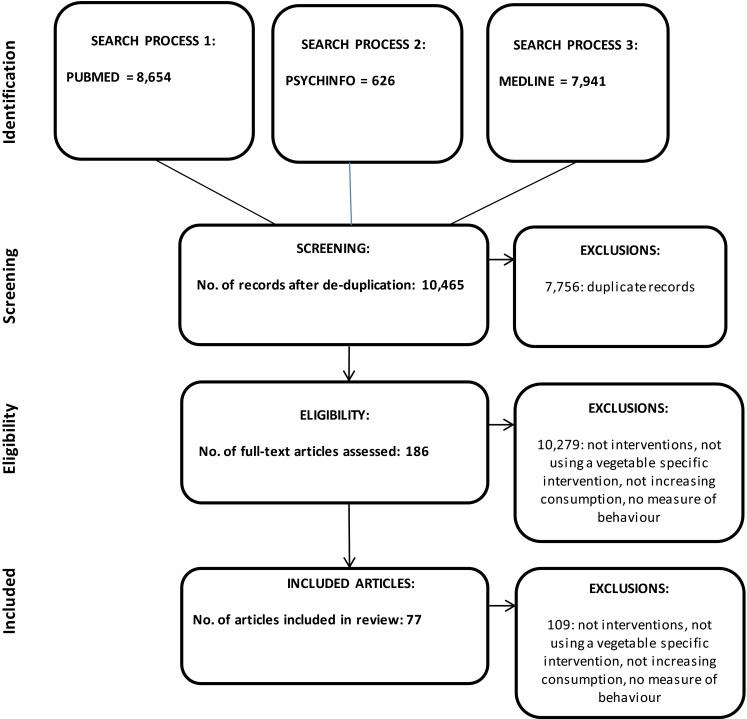
PURPOSE: While the health benefits of a high fruit and vegetable consumption are well known and considerable work has attempted to improve intakes, increasing evidence also recognises a distinction between fruit and vegetables, both in their impacts on health and in consumption patterns. Increasing work suggests health benefits from a high consumption specifically of vegetables, yet intakes remain low, and barriers to increasing intakes are prevalent making intervention difficult. A systematic review was undertaken to identify from the published literature all studies reporting an intervention to increase intakes of vegetables as a distinct food group. METHODS: Databases-PubMed, PsychInfo and Medline-were searched over all years of records until April 2015 using pre-specified terms. RESULTS: Our searches identified 77 studies, detailing 140 interventions, of which 133 (81 %) interventions were conducted in children. Interventions aimed to use or change hedonic factors, such as taste, liking and familiarity (n = 72), use or change environmental factors (n = 39), use or change cognitive factors (n = 19), or a combination of strategies (n = 10). Increased vegetable acceptance, selection and/or consumption were reported to some degree in 116 (83 %) interventions, but the majority of effects seem small and inconsistent. CONCLUSIONS: Greater percent success is currently found from environmental, educational and multi-component interventions, but publication bias is likely, and long-term effects and cost-effectiveness are rarely considered. A focus on long-term benefits and sustained behaviour change is required. Certain population groups are also noticeably absent from the current list of tried interventions.
Overview
CoChat Summary
TL;DR
This review identifies 77 published studies reporting 140 interventions to increase vegetable-specific intake, and concludes that many strategies can work but effects are often small, short-term, and not yet well tested for cost-effectiveness or sustainability. The strongest evidence in the paper is for environmental changes and repeated exposure/conditioning approaches, especially in children.
Key findings
- The review found 77 studies reporting 140 interventions; 113 of 140 interventions (81%) targeted children.
- Environmental interventions were highly successful: 39 interventions were found, and all except 3 reported increased vegetable selection and/or consumption.
- Repeated exposure/conditioning approaches also often worked: among interventions using repeated exposure, 16 of 23 (70%) improved liking and/or consumption; pairing with liked flavours succeeded in 12 of 14 (86%); pairing with nutrients in 4 of 6 (67%); pairing with reinforcement in 7 of 7 (100%); and reinforcement plus modelling in 1 of 1 (100%).
- The paper states that evaluation periods are typically short, effect sizes are often small, and when follow-up is longer, effects often diminish; it also notes that few interventions were identified specifically for adolescents or older individuals.
Methods
- Systematic review of published interventions aimed specifically at increasing vegetable intakes as a distinct food group, with vegetable selection, purchasing, or consumption as outcomes.
- Searched PubMed, PsychInfo, and Medline over all years using “vegetable” and “vegetables” in the title; last searches were conducted on 28 April 2015.
- Two authors independently screened titles and abstracts; 77 studies were included. Data were tabulated, but the authors did not assess risk of bias and did not meta-analyze because of heterogeneity and the early state of the literature.
Limitations
- Stated by the paper: the review only considered published literature, so it is likely biased toward English-language articles and away from grey literature; publication bias is also likely because failures and negative findings are underreported.
- Stated by the paper: the authors did not combine studies quantitatively because there were too few studies per intervention type and study methods were highly heterogeneous.
- Evident from the text: the search strategy used only title terms and did not search conference abstracts or book chapters, so it may have missed relevant interventions.
Model-written summary. Check it against the paper before relying on it.
Integrity signals
Registry
Cites
Statistics
Figures
Verification
Claims the paper makes
2 Valid · 1 Not valid · 13 Not checked · 22 Own results and interpretations
Every source the paper cites for this claim was checked and supports it.
In the paper
“Associations with all-cause mortality [ 2 , 3 ]”
What the sources say
- Supportedcites [2] Oyebode O, Gordon-Dseagu V, Walker A, Mindell JS (2014) Fruit and vegetable consumption and all-cause, cancer and CVD mortality: analysis of Health Survey for England data. J Epidemiol Community Health 68:856–862 source
The Abstract Results (p. 1) report fruit and vegetable consumption associated with decreased all-cause mortality (adjusted HR 0.67, 95% CI 0.58–0.78 for 7+ vs <1 portion daily), and the Discussion (p. 6) states 'a strong inverse relationship between fruit and vegetable consumption and all-cause mortality'. The key-points box likewise lists 'Fruit and vegetable consumption is inversely associated with all-cause, cancer and cardiovascular mortality in a nationally representative non-institutionalised population' with the lowest risk at 7+ portions. (LLM, conf=0.95)
- Supportedcites [3] Wang X, Ouyang Y, Liu J et al (2014) Fruit and vegetable consumption and mortality from all causes, cardiovascular disease, and cancer: systematic review and dose–response meta-analysis of prospective cohort studies. BMJ 349:g4490 source
The Abstract (p. 1) and Conclusions state that higher consumption of fruit and vegetables was significantly associated with a lower risk of all-cause mortality (pooled HR 0.95, 95% CI 0.92-0.98 per additional serving a day). The Discussion and Results sections (Table 3; dose-response analyses showing HR 0.83 for fruit at ~2 servings/day and 0.75 for vegetables at ~3 servings/day) reinforce this inverse association, with a threshold around five servings a day. (LLM, conf=0.95)
plainstates an association- Asserted: passes — The authors put it forward as true.
- Checkable: passes — It can be checked against evidence.
- Load-bearing: unclear — It is unclear whether the paper’s conclusions depend on it.
- Based: passes — The paper gives a reason why it holds.
- Supported
Every source the paper cites for this claim was checked and supports it.
In the paper
“mortality from cardiovascular disease [ 2 , 3 ], including coronary heart disease [ 4 ] and stroke [ 5 , 6 ], are well evidenced.”
What the sources say
- Supportedcites [2] Oyebode O, Gordon-Dseagu V, Walker A, Mindell JS (2014) Fruit and vegetable consumption and all-cause, cancer and CVD mortality: analysis of Health Survey for England data. J Epidemiol Community Health 68:856–862 source
The cited source is attached to the cardiovascular-disease mortality clause; the sentence cites other works for coronary heart disease and stroke. The Abstract Results report an association between fruit and vegetable consumption and reduced cardiovascular mortality, and the Discussion describes increasing benefits up to seven or more portions daily. (LLM, conf=0.93)
- Supportedcites [3] Wang X, Ouyang Y, Liu J et al (2014) Fruit and vegetable consumption and mortality from all causes, cardiovascular disease, and cancer: systematic review and dose–response meta-analysis of prospective cohort studies. BMJ 349:g4490 source
The Results section, under “Fruit and vegetable consumption and risk of cardiovascular mortality,” reports lower cardiovascular mortality with each additional daily serving of fruit and vegetables. In the citing sentence, separate citations accompany coronary heart disease and stroke; this source is cited for the broader cardiovascular-mortality association. (LLM, conf=0.94)
- Supportedcites [4] Dauchet L, Amouyel P, Hercberg S, Dallongeville J (2006) Fruit and vegetable consumption and risk of coronary heart disease: a meta-analysis of cohort studies. J Nutr 136:2588–2593 source
The citation to this paper is attached to coronary heart disease, not to the sentence’s separate claims about overall cardiovascular mortality or stroke. The Results (page unavailable) report an inverse association between fruit and vegetable intake and CHD risk; the analyzed outcomes include coronary death. (LLM, conf=0.90)
boostedstates an association- Asserted: passes — The authors put it forward as true.
- Checkable: passes — It can be checked against evidence.
- Load-bearing: passes — The paper’s conclusions depend on it.
- Based: passes — The paper gives a reason why it holds.
- Supported
A result the paper reports from its own data — it cites no other source for it, so there is none to check. The quote shows it is in the paper.
In the paper
“All of these, with the exception of three interventions (one increasing variety [ 158 ] and two improving presentation [ 141 , 164 ]) resulted in increased selection and/or consumption of vegetables in children and adults”
plainstates a cause- Asserted: passes — The authors put it forward as true.
- Checkable: passes — It can be checked against evidence.
- Load-bearing: passes — The paper’s conclusions depend on it.
- Based: passes — The paper gives a reason why it holds.
None of the sources cited for this claim have been checked yet.
In the paper
“Strategies such as pricing and marketing interventions, improved product provision, government subsidies, and population-wide awareness and education campaigns [ 205 – 207 ] specifically for vegetables do not yet exist or have not yet been evaluated as far as we are aware.”
hedged- Asserted: passes — The authors put it forward as true.
- Checkable: passes — It can be checked against evidence.
- Load-bearing: unclear — It is unclear whether the paper’s conclusions depend on it.
- Based: passes — The paper gives a reason why it holds.
A result the paper states — it cites no source for it, so there is none to check. The quote shows it is in the paper.
In the paper
“At present, there is a real lack of comparisons between interventions—i.e. interventions have not been compared, e.g. in the same age group or population, with the exception of comparisons of differing exposure and conditioning strategies in young children.”
plain- Asserted: passes — The authors put it forward as true.
- Checkable: passes — It can be checked against evidence.
- Load-bearing: passes — The paper’s conclusions depend on it.
- Based: passes — The paper gives a reason why it holds.
6 more claims
Create a free account to see all 38 claims and to verify the 44 references still open.
- It may state two separate claims as one. 22
- Probably not a substantial claim. 6
Citations
Cites
1 retracted
RETRACTED: Attractive names sustain increased vegetable intake in schools
Wansink, B. C., Just, D. R., Payne, C. R., & Klinger, M. Z. (2012) · Preventive Medicine · doi:10.1016/j.ypmed.2012.07.012 · Cited by 141 · cited 2×
“All of these, with the exception of three interventions (one increasing variety [158] and two improving presentation [141, 164]) resulted in increased selection and/or consumption of vegetables in children and adults, through the increased provision of vegetables (n = 20), through the increased provision of a variety…”
BackgroundRetractedFood, nutrition, physical activity, and the prevention of cancer: a global perspective
(2008) · Choice Reviews Online · doi:10.5860/choice.45-5024 · Cited by 5,350
Health Benefits of Fruits and Vegetables
Slavin, J. L., & Lloyd, B. (2012) · Advances in Nutrition · doi:10.3945/an.112.002154 · Cited by 2,128 · cited 4×
“Potatoes, for example, are sometimes included among vegetables, sometimes included as ‘white’ vegetables, and sometimes not considered at all [21, 22].”
BackgroundInfluentialWang, X., Ouyang, Y., Liu, J., Zhu, M., Zhao, G., Bao, W., & Hu, F. B. (2014) · BMJ · doi:10.1136/bmj.g4490 · Cited by 1,596 · cited 2×
“Associations also suggest a reduced risk of hypertension [7], osteoporosis [8], body weight and adiposity [9, 10], dementia and cognitive decline [11, 12], and some cancers [13–15], although the evidence for cancers is less consistent [1, 3].”
BackgroundLongitudinal tracking of adolescent smoking, physical activity, and food choice behaviors
Kelder, S. H., Perry, C. L., Klepp, K. I., & Lytle, L. L. (1994) · American Journal of Public Health · doi:10.2105/ajph.84.7.1121 · Cited by 1,388
Health-promoting components of fruits and vegetables in the diet.
Liu, R. H. (2013) · Advances in Nutrition · doi:10.3945/an.112.003517 · Cited by 1,310 · cited 2×
“Potatoes, for example, are sometimes included among vegetables, sometimes included as ‘white’ vegetables, and sometimes not considered at all [21, 22].”
BackgroundFood neophobia and ‘picky/fussy’ eating in children: A review
Dovey, T. M., Staples, P. A., Gibson, E. L., & Halford, J. C. G. (2008) · Appetite · doi:10.1016/j.appet.2007.09.009 · Cited by 1,222 · cited 2×
“In young children, the bitter and undesirable taste of vegetables is often provided as a major barrier to vegetable consumption [73–75], and food neophobia (the reluctance to eat, or the avoidance of, novel foods [76]) particularly, can interfere with young children’s acceptance of vegetables [76–78].”
BackgroundDauchet, L., Amouyel, P., Hercberg, S., & Dallongeville, J. (2006) · The Journal of Nutrition · doi:10.1093/jn/136.10.2588 · Cited by 1,204 · cited 1×
“1 3 mortality [2, 3] and mortality from cardiovascular disease [2, 3], including coronary heart disease [4] and stroke [5, 6], are well evidenced.”
BackgroundCarter, P., Gray, L. J., Troughton, J., Khunti, K., & Davies, M. J. (2010) · BMJ · doi:10.1136/bmj.c4229 · Cited by 728
De Irala-Estévez, J., Groth, M., Johansson, L., Oltersdorf, U., Prättälä, R., & Martínez-González, M. (2000) · European Journal of Clinical Nutrition · doi:10.1038/sj.ejcn.1601080 · Cited by 682
Cited by
Items 101–200 of 278
Consumers attitude toward lack of food safety
Niewczas-Dobrowolska, M. (2022) · British Food Journal · doi:10.1108/bfj-03-2022-0277 · Cited by 18
Nakamura, S., Inayama, T., Harada, K., & Arao, T. (2017) · Journal of Medical Internet Research · doi:10.2196/jmir.8031 · Cited by 17
“A Theory Suitable for Nutrition Education A systematic review revealed that research has utilized multiple health behavior theories in attempting to increase vegetable intake, such as stages of change [15], social cognitive theory [16], the theory of planned behavior [17], and technology-based behavior change models […”
Appleton, K. M., Passmore, D., Burn, I., Pidgeon, H., Nation, P., Boobyer, C., & Jiang, N. (2019) · JMIR mhealth and uhealth · doi:10.2196/14380 · Cited by 19
“Nutrition-related knowledge has previously been related to FV consumption [29-31] and is traditionally increased through educational campaigns and classes [1,31-33].”
BackgroundSelf-citationOlmedilla‐Alonso, B., Rodríguez‐Rodríguez, E., de Miguel, B. B., Sánchez-Prieto, M., & Estévez-Santiago, R. (2021) · Nutrients · doi:10.3390/nu13103614 · Cited by 22
“Although there are numerous studies including dietary intervention with fruit and vegetables to achieve different aims, these foods are usually supplied jointly [11].”
BackgroundInfluentialBel‐Serrat, S., Greene, E., Mullee, A., & Murrin, C. M. (2022) · Nutrition Reviews · doi:10.1093/nutrit/nuab120 · Cited by 20
“Another aspect to consider when implementing multicomponent interventions is their cost-effectiveness, because they can be time consuming and costly.(65) In general, most of the intervention studies collected multiple measures, because intervention outcomes and success were not observed for all the measures.”
BackgroundAppleton, K. M., Boxall, L. R., Adenuga-Ajayi, O., & Seyar, D. F. (2023) · British Journal Of Nutrition · doi:10.1017/s0007114523001423 · Cited by 17
“…included studies that used a distinct FV consumption intervention; we did not look at multi-component interventions that were only effective for changing FV consumption, nor did we look at alternative interventions that may be expected to increase FV consumption, such as vegetable gardening (58) .”
BackgroundSelf-citationNakamura, S., Inayama, T., & Arao, T. (2017) · BMC Public Health · doi:10.1186/s12889-016-3907-y · Cited by 15
de Carvalho, M. C. R., de Menezes, M. C., Toral, N., & Lopes, A. C. S. (2021) · Appetite · doi:10.1016/j.appet.2021.105159 · Cited by 15
Overcash, F. M., VICKERS, Z. M., Ritter, A., Mann, T. L., Mykerezi, E., Redden, J. P., Rendahl, A., Davey, C. S., & Reicks, M. M. (2019) · BMC Public Health · doi:10.1186/s12889-019-7079-4 · Cited by 19
“The few interventions set in the home have produced mixed results [9].”
ResultAsher, R. C., Clarke, E. D., Bucher, T., Shrewsbury, V. A., Roberts, S., & Collins, C. E. (2022) · Journal of Human Nutrition and Dietetics · doi:10.1111/jhn.13109 · Cited by 13
“38,39 The additional questions were, ‘ I currently eat enough vegetables to meet my needs ’ , ‘ I do not like to eat vegetables ’ and ‘ I do not like to prepare vegetables ’ .”
BackgroundDelbaere, S. M., Bernaerts, T., Vancoillie, F., Buvé, C., Hendrickx, M., Grauwet, T., & Loey, A. M. V. (2022) · LWT · doi:10.1016/j.lwt.2022.114205 · Cited by 15
“This approach could be relevant in the context of increasing the consumption of vegetables by humans, since the daily intake is still not met by a large part of the population (Appleton et al., 2016).”
To Eat or Not to Eat: Seafood Consumption Habit Formation
Musarskaya, M., Birch, D., & Memery, J. (2017) · Journal of International Food & Agribusiness Marketing · doi:10.1080/08974438.2017.1412376 · Cited by 16
“Lack of proper nourishment, such as not meeting the recommended daily allowance requirements for fruits and vegetables, affects a child’s health, hampers growth and contributes to a lack of concentration and energy, resulting in poor academic performance (Appleton et al., 2016; Jyoti, Frongillo, & Jones, 2005; Weinreb…”
BackgroundMore Frequent Food Shopping May Promote Fruit and Vegetable Intake: A Systematic Review
Fultz, A. K., Sundermeir, S. M., Katz, S. E., & Robson, S. M. (2021) · Journal of Nutrition Education and Behavior · doi:10.1016/j.jneb.2021.07.010 · Cited by 12
Migliavada, R., Ricci, F. Z., Denti, F., Haghverdian, D., & Torri, L. (2022) · Appetite · doi:10.1016/j.appet.2022.105995 · Cited by 16
Comparison of sensitivity to taste and astringency stimuli among vegans and omnivores
Nuvoli, C., Fillion, L., Gregorutti, C. L., & Labbe, D. (2023) · Physiology & Behavior · doi:10.1016/j.physbeh.2023.114092 · Cited by 12
Noia, J. D., Monica, D., Jensen, H. H., & Sikorskii, A. E. (2021) · Public Health Nutrition · doi:10.1017/s1368980021001981 · Cited by 12
“individuals of low socio-economic status, were noticeably absent(1).”
BackgroundInfluentialMcIver, M. B., Colby, S. E., Hansen‐Petrik, M., & Steeves, E. A. (2021) · Nutrients · doi:10.3390/nu13082773 · Cited by 14
“The present study analyzed fruits and vegetables as individual variables, as children’s consumption patterns of fruit and vegetables differ, with the general consensus being that among children, fruit consumption is easier to modify than vegetable consumption [3,41], which is potentially due to a variety of factors su…”
BackgroundRiding the elephant in the room: Towards a revival of the optimal level of stimulation model
de Aldecoa, P. I., Burdett, E., & Gustafsson, E. (2022) · Developmental Review · doi:10.1016/j.dr.2022.101051 · Cited by 23
“In line with the optimal-level of stimulation model, exposure during infancy increases the appeal of a novel food (Appleton et al., 2016; Birch, 1998; Birch et al., 1987; Carruth et al., 2004; Gerrish & Mennella, 2001; Maier et al., 2007; Maier-N ¨ oth et al., 2016; Mennella et al., 2008) but…”
BackgroundDrying of fruits and vegetables
Ertekin, C., Aktaş, T., Alibaş, İ., & Essalhi, H. (2023) · Elsevier eBooks · doi:10.1016/b978-0-12-819895-7.00004-3 · Cited by 16
Cooking and Its Impact on Childhood Obesity: A Systematic Review
Dimple, D., & Ramesh, G. (2023) · Journal of Nutrition Education and Behavior · doi:10.1016/j.jneb.2023.06.004 · Cited by 19
Rioux, C. (2019) · Springer eBooks · doi:10.1007/978-3-032-03228-7_159 · Cited by 27
Odds of fussy eating are greater among children with obesity and anxiety
Þorsteinsdóttir, S., Ólafsdóttir, A. S., Brynjólfsdóttir, B., Bjarnason, R. G., & Njarðvík, U. (2021) · Obesity Science & Practice · doi:10.1002/osp4.548 · Cited by 10
Harris, K. F., Overcash, F. M., Belobrajdic, D. P., & Slavin, J. L. (2022) · Frontiers in Public Health · doi:10.3389/fpubh.2022.817967 · Cited by 15
Nucci, A. D., Scognamiglio, U., Grant, F., & Rossi, L. (2022) · Frontiers in Nutrition · doi:10.3389/fnut.2022.1070388 · Cited by 10
“In contrast, an open attitude based on dialogue with convincing themes (80) or preparing the food to make it more palatable (81) are considered most efficient.”
BackgroundFruit and Vegetable Consumption Behavior Among Asian Americans: A Thematic Analysis
Dai, C., Sharma, M., Haider, T., & Sunchu, H. (2021) · Journal of Primary Care & Community Health · doi:10.1177/2150132720984776 · Cited by 10
Appleton, K. M., Barrie, E., & Samuel, T. J. (2019) · Appetite · doi:10.1016/j.appet.2019.05.003 · Cited by 11
Self-citationBeyene, S. A., Gebremariam, L. W., Tela, F. G., Seid, O., Brown, A. T., & Mulugeta, A. (2021) · PLoS ONE · doi:10.1371/journal.pone.0250696 · Cited by 10
“The unavailability of water as a key cause for the low consumption of fruits and vegetables due to limited home garden practices was also reported in other studies [38, 39].”
ResultGodrich, S. L., Davies, C., Darby, J., & Devine, A. (2018) · Nutrients · doi:10.3390/nu10111603 · Cited by 12
“These actions resulted in increased selection and consumption of these foods in children [1].”
BackgroundPerception of Healthy Eating among Romanian Adults
Cînpeanu, O. C., Tarcea, M., Cojan, P., Iorga, D., Olah, P., & Guiné, R. P. F. (2019) · Journal of Interdisciplinary Medicine · doi:10.2478/jim-2019-0008 · Cited by 11
Ahmed, K. R., Kolbe-Alexander, T. L., & Khan, A. (2023) · Public Health Nutrition · doi:10.1017/s1368980023002094 · Cited by 12
“Systematic reviews indicated that school-based intervention is likely to be effective in increasing fruit and vegetable intake and decreasing carbonated soft drink consumption among adolescents (18,19) .”
BackgroundKorus, A., & Korus, J. (2024) · Agriculture · doi:10.3390/agriculture14101784 · Cited by 9
Nguyen, B., Smith, J. L., Clare, P. J., Phongsavan, P., Cranney, L., & Ding, D. (2023) · PLOS Global Public Health · doi:10.1371/journal.pgph.0001606 · Cited by 9
“A state-wide and potentially national approach to promote fruit and vegetable consumption separately, and further research on effective interventions that increase vegetable consumption, including in more socially disadvantaged groups, may be needed [55].”
BackgroundPerception versus intake of fruit and vegetables
de Carvalho, M. C. R., de Menezes, M. C., & Lopes, A. C. S. (2018) · Revista de Nutrição · doi:10.1590/1678-98652018000200008 · Cited by 11
Madden, G. J., Price, J., & Wengreen, H. J. (2018) · Nebraska Symposium on Motivation/The Nebraska symposium on motivation · doi:10.1007/978-3-319-96920-6_4 · Cited by 9
Yeary, K. H. K., Clark, N., Saad‐Harfouche, F. G., Erwin, D. O., Gates, M. A., Li, Q., McCann, S. E., Yu, H., Lincourt, C., Zoellner, J., et al. (2022) · JMIR Cancer · doi:10.2196/32291 · Cited by 8
“There were 6 review articles on dietary change interventions [30-35], of which 2 (33%) focused on dietary change in older adults [30,31].”
BackgroundRioux, C. (2020) · Springer eBooks · doi:10.1007/978-3-030-14504-0_159 · Cited by 20
Qiu, L., Wang, C., & Wan, X. I. (2023) · Food Quality and Preference · doi:10.1016/j.foodqual.2023.104987 · Cited by 8
Horton, L. A., Ayala, G. X., Slymen, D. J., Ibarra, L., Hernández, E., Parada, H., Rock, C. L., Arredondo, E. M., & Elder, J. P. (2017) · Health Education & Behavior · doi:10.1177/1090198117742439 · Cited by 11
Petruzzelli, M., Iori, E., Ihle, R., & Vittuari, M. (2024) · Food Policy · doi:10.1016/j.foodpol.2024.102784 · Cited by 9
Afonso, L., Aboim, S., Pessoa, P., & Sá‐Pinto, X. (2020) · Public Health Nutrition · doi:10.1017/s1368980020004371 · Cited by 13
“Vegetables differ from fruits mainly in their lower sugar and higher fibre content, and its consumption, independently of fruits consumption, has the potential to protect from several diseases(4).”
BackgroundInfluentialRapson, J., von Hurst, P. R., Hetherington, M. M., & Conlon, C. A. (2021) · Trials · doi:10.1186/s13063-021-05374-7 · Cited by 12
“Discussion Despite the known health benefits of a diet rich in vegetables and fruit [2, 68, 69], children’s vegetable consumption remains lower than recommended worldwide [8–12].”
BackgroundDeterminants of Consumption of Vegetables among the Spanish Population: A Cross-Sectional Study
Lucha-López, M. O., Hidalgo-García, C., Lucha-López, A. C., Monti-Ballano, S., Márquez-Gonzalvo, S., Ferrández-Laliena, L., Tricás-Vidal, H. J., & Tricás-Moreno, J. M. (2023) · Foods · doi:10.3390/foods12214030 · Cited by 8
“…and cultural factors behind mayor vegetable consumption range from taste and pleasure to individual cognitions about nutritional and culinary knowledge and a higher appreciation of health, increased time to prepare meals, and an increased availability and reduced cost of vegetables [5].”
BackgroundFlavour and nutrition of fruits and vegetables create added value to consumers
Labrie, C. W., Sijtsema, S. J., Snoek, H. M., et al. (2020) · Acta Horticulturae · doi:10.17660/actahortic.2020.1277.61 · Cited by 7
Noia, J. D., Monica, D., Sikorskii, A. E., & Nelson, J. (2021) · Journal of the Academy of Nutrition and Dietetics · doi:10.1016/j.jand.2020.12.020 · Cited by 9
Meta-analysis of community-based interventions on fruits and vegetables consumption in adults
Jabbari, M., Namazi, N., Irandoost, P., Rezazadeh, L., Ramezani‐Jolfaie, N., Babashahi, M., Pourmoradian, S., & Barati, M. (2023) · Nutrition & Food Science · doi:10.1108/nfs-05-2023-0115 · Cited by 9
Mihrshahi, S., Partridge, S. R., Zheng, X., Ramachandran, D., Chia, D., Boylan, S. M., & Chau, J. Y. (2020) · International Journal of Environmental Research and Public Health · doi:10.3390/ijerph17114154 · Cited by 9
“These approaches have had mixed success and evaluation periods are often short in duration and effect sizes can be small [9,10].”
BackgroundFamiliarity and liking of vegetables: Is it important for vegetable consumption?
Bevan, A., Hemingway, A., Appleton, K. M., Hartwell, H., Magnante, O., Pérez-Cueto, A., Monteleone, E., Giboreau, A., & Depezay, L. (2016) · British Journal of School Nursing · doi:10.12968/bjsn.2016.11.3.125 · Cited by 7
“Interventions to date to improve vegetable intake have been tried with varying degrees of success (Appleton et al, 2016).”
BackgroundSelf-citationGarden-based interventions and early childhood health: a protocol for an umbrella review
Skelton, K. R., Herbert, A., & Benjamin‐Neelon, S. E. (2019) · Systematic Reviews · doi:10.1186/s13643-019-1229-8 · Cited by 7
Middle School Students’ Perceptions of the Lunchroom: Implications for Future Interventions
Askelson, N. M., Ryan, G. W., Brady, P., Meier, C. L., Delger, P. J., & Scheidel, C. A. (2020) · The Journal of School Nursing · doi:10.1177/1059840520928504 · Cited by 6
“interventions include promotion of the school lunch program, delivering nutrition education to students, and engaging parents in fruit and vegetable promotion efforts (Appleton et al., 2016; Blanchette & Brug, 2005).”
BackgroundKoyratty, N., Azupogo, F., Smith, T. J., Hinnouho, G., Tharaney, M., Bliznashka, L., Olney, D. K., & Hess, S. Y. (2025) · Food and Nutrition Bulletin · doi:10.1177/03795721251350208 · Cited by 13
“140,141 However, inconsistent effects on vegetable intake suggest that additional strategies may be needed to address taste preferences, particularly among children.”
Appleton, K. M., & Pidgeon, H. (2018) · BMC Public Health · doi:10.1186/s12889-018-5528-0 · Cited by 6
“Recognition of the health benefits and the low consumption of vegetables specifically has resulted in the use of separate messages for fruits and for vegetables by certain Governments [34].”
BackgroundMethodSelf-citationSaliva in Ingestive Behavior Research: Association with Oral Sensory Perception and Food Intake
Lamy, E., Torregrossa, A., Castelo, P. M., & Silva, F. C. E. (2020) · Springer eBooks · doi:10.1007/978-3-030-37681-9_2 · Cited by 8
Zeinstra, G. G., Hoefnagels, F. A., Meijboom, S., & Battjes‐Fries, M. C. E. (2022) · Appetite · doi:10.1016/j.appet.2022.106378 · Cited by 7
“Finally, exposure via pictures, books and games might be beneficial for willingness to taste F&V, but effects are inconsistent (Appleton et al., 2016; Coulthard & Sealy, 2017; Folkvord & Laguna-Camacho, 2019; Nicklas, Lopez, Liu, Saab, & Reiher, 2017; Owen, Kennedy, Hill, & Houston-Price, 2018).”
BackgroundSensory characteristics of vegetables consumed by Australian children
Cox, D. N., Baird, D., Rebuli, M. A., Hendrie, G. A., & Poelman, A. A. M. (2021) · Public Health Nutrition · doi:10.1017/s1368980021000847 · Cited by 7
“However, another review(7) that focused on intake of specific target vegetables as an outcome in contrast to usual intakes found positive effects of exposure-type interventions.”
BackgroundThe development and validation of a food chain engagement measurement scale
O’Kane, N., Lavelle, F., Brooks, S., Brereton, P. A., & Dean, M. (2022) · Food Quality and Preference · doi:10.1016/j.foodqual.2022.104546 · Cited by 7
Appleton, K. M. (2022) · Journal of Public Health · doi:10.1007/s10389-022-01746-8 · Cited by 6
“Snack-ing on FV was investigated as a behaviour with health benefits, which may be more amenable to change than FV consumption in general, based on usual use and dietary practices (Appleton et al. 2016; Glasson et al. 2011).”
BackgroundSelf-citationHetherington, M. M., & Chawner, L. R. (2022) · Appetite · doi:10.1016/j.appet.2022.106051 · Cited by 7
Kaschalk, E., Fly, A. D., Foland, E., Dickinson, S., & Chen, X. (2020) · Current Developments in Nutrition · doi:10.1093/cdn/nzaa101 · Cited by 7
Tani, Y., Ochi, M., & Fujiwara, T. (2021) · Nutrients · doi:10.3390/nu13072236 · Cited by 6
“To assess children’s eating behaviours related to vegetable intake, we evaluated the frequency of eating vegetable dishes and two behaviours related to neophobia that interfere with children’s vegetable consumption [14].”
BackgroundYin, Z., Li, B., Gu, D., Huang, J., & Zhang, L. (2021) · Risk Analysis · doi:10.1111/risa.13843 · Cited by 8
“…vitamins, minerals, dietary fiber, and many other nutrients (Lewis Ivey, LeJeune, & Miller, 2012), and which provide many health benefits for humans (Appleton et al., 2016; Wang X. et al., 2014; Woodside, Young, & McKinley, 1College of Information and Electrical Engineering, China Agricultural…”
BackgroundMora, A., López-Espinoza, A., Moreno, A. G. M., et al. (2021) · Nutrición Hospitalaria · doi:10.20960/nh.03668 · Cited by 5
“También se ha sugerido que los determinantes relacionados con el patrón de consumo, para ambos tipos de alimentos, son distintos y que deben plantearse estrategias diferenciadas para mejorar el consumo de frutas y verduras (12).”
A role for enjoyment for encouraging fruit consumption
Appleton, K. M., & Adams, C. (2023) · Appetite · doi:10.1016/j.appet.2023.106609 · Cited by 6
“Use of short simple messages, such as those provided on posters, have been found to improve a range of health behaviours (Forberger, Reisch, Kampfmann, & Zeeb, 2019; Gallagher & Updegraff, 2011), including FV consumption (Appleton, 2016; Robinson, Fleming, & Higgs, 2014; Thomas et al., 2017).”
BackgroundMethodResultInfluentialSelf-citationTauriello, S., Bowker, J. C., Wilding, G. E., Epstein, L. H., & Anzman‐Frasca, S. (2020) · Pediatric Obesity · doi:10.1111/ijpo.12660 · Cited by 7
Global scoping study on fruits and vegetables : results from literature and data analysis
Piters, B. D. S., Dijkxhoorn, Y., Hengsdijk, H., Guo, X., Brouwer, I. D., Likoko, E., Tichař, T., Carrico, C., Conijn, J. G., Oostewechel, R., et al. (2021) · doi:10.18174/552129 · Cited by 15
Lehto, R., Vepsäläinen, H., Lehtimäki, A.-V., Lehto, E., Leppänen, M. H., Skaffari, E., Abdollahi, A. M., Roos, E., Erkkola, M., & Ray, C. (2022) · BMC Public Health · doi:10.1186/s12889-022-14639-y · Cited by 8
“Repeated exposure to vegetables in order to increase liking is a method that many interventions use to promote vegetable intake [51].”
BackgroundKeding, G. B., Sarfo, J., & Pawelzik, E. (2023) · Nutrients · doi:10.3390/nu15122699 · Cited by 6
Karpouzis, F., Walsh, A., Shah, S., Ball, K., & Lindberg, R. (2024) · BMC Pediatrics · doi:10.1186/s12887-024-04643-z · Cited by 6
“It has been suggested that interventions targeting F&V intakes should be conducted separately [26, 27].”
BackgroundInfluentialLee, C., Hwang, J., & Kwak, H. S. (2025) · Journal of Sensory Studies · doi:10.1111/joss.70031 · Cited by 6
Bel-Serrat, S., von der Schulenburg, A., Mullee, A., & Murrin, C. M. (2021) · Public Health Nutrition · doi:10.1017/s136898002100464x · Cited by 7
“Although fruit and vegetable intake is usually assessed in combination in most studies because they share certain health benefits due to their content in bioactive compounds (11 – 13) , they differ in other many aspects.”
Poelman, A. A. M., Heffernan, J. E., Cochet-Broch, M. O., & Beelen, J. (2021) · Foods · doi:10.3390/foods11010096 · Cited by 5
“Several reviews have shown that repeated exposure is also effective in increasing vegetable acceptance and intake in primary school children [59,60].”
BackgroundCasperson, S. L., Jahns, L., Duke, S. E., Nelson, A. M., Appleton, K. M., Larson, K., & Roemmich, J. N. (2022) · Journal of the Academy of Nutrition and Dietetics · doi:10.1016/j.jand.2022.03.008 · Cited by 6
“Understanding how vegetables are incorporated into the diet, especially 56 in the types and amounts recommended by the DGA, and how this alters dietary intake patterns 57 is vital for developing targeted behavior change interventions that improve long-term adherence 58 to DGA recommendations.(4) 59 The relationship be…”
BackgroundSelf-citationVegetable finger foods - Preferences among older adults with motoric eating difficulties
Forsberg, S., Olsson, V., Bredie, W. L. P., & Wendin, K. (2022) · International Journal of Gastronomy and Food Science · doi:10.1016/j.ijgfs.2022.100528 · Cited by 5
Brief Report: A Latent Class Analysis of Guideline Compliance Across Nine Health Behaviors
Pettigrew, S., Dana, L. M., McAleese, A., Bastable, A., Drane, C. F., & Sapountsis, N. (2021) · International Journal of Behavioral Medicine · doi:10.1007/s12529-021-09988-8 · Cited by 4
“To date, interventions focusing on vegetable consumption have tended to be directed to children and have demonstrated limited success [22], suggesting a need for new approaches.”
BackgroundEffect of home vegetable gardening on the household availability of fruits and vegetables
Gomes, F. D. S., Silva, G. D. A. E., & de Castro, I. R. R. (2017) · Revista de Nutrição · doi:10.1590/1678-98652017000200009 · Cited by 5
“However, most of them address a single setting, especially schools and work environments [29,30].”
BackgroundLivingstone, K. M., Rawstorn, J. C., Partridge, S. R., Zhang, Y., Eric, O., Godrich, S. L., McNaughton, S. A., Hendrie, G. A., Dullaghan, K., Abbott, G., et al. (2025) · International Journal of Behavioral Nutrition and Physical Activity · doi:10.1186/s12966-025-01796-7 · Cited by 5
“Interventions to increase vegetable intake frequently target fruit intake concurrently yet typically result in increased fruit rather than vegetable intake [8].”
Swoboda, C. M., Pardi, O., & McAlearney, A. S. (2025) · Cancer Causes & Control · doi:10.1007/s10552-025-02051-x · Cited by 6
“For example, while people are aware that vegetables are healthy, they may need information about where to acquire them, interventions to help them learn how to prepare them, culturally and skill-concordant recipes, and modeling of positive behaviors from others [29, 30].”
Mikkelsen, B. E., Romani, A. Q., & Brandão, M. P. (2021) · International Journal of Environmental Research and Public Health · doi:10.3390/ijerph182111127 · Cited by 4
Laviolette, C., Johnson, C., Butler, J., Biediger‐Friedman, L., & Sharkey, J. R. (2023) · Nutrients · doi:10.3390/nu15071600 · Cited by 6
“Our findings provide evidence for strengths-based approaches in behavioral nutrition and strengthening federal nutrition and food assistance programs, like the National School Lunch Program, which have been shown to increase fruit and vegetable intake among children and support food security for their families [68,69].”
BackgroundLorimer, B., Traviss‐Turner, G., Hill, A. J., Baker, S., Gilbody, S. M., & Peckham, E. J. (2023) · Social Psychiatry and Psychiatric Epidemiology · doi:10.1007/s00127-023-02514-z · Cited by 4
“In terms of effective interventions developed for adults in the general population, behaviour-based interventions [15-17].”
Kim, S.-Y. (2023) · British Food Journal · doi:10.1108/bfj-07-2022-0655 · Cited by 4
Daas, M. C., Gebremariam, M. K., Poelman, M. P., Andersen, L. F., Klepp, K., Bjelland, M., & Lien, N. (2024) · Public Health Nutrition · doi:10.1017/s1368980024000260 · Cited by 5
“Effects on FV consumption and their determinants were examined and reported separately as they follow different consumption patterns (51) .”
BackgroundThe impact of a fairytale-like story on the food choices of preschool children
Zahedi, A., Katembu, S., Sind, S. M., Sommer, U., Kimamo, C. O., & Sommer, W. (2024) · Appetite · doi:10.1016/j.appet.2024.107839 · Cited by 6
Herman, C. P., Polivy, J., Pliner, P. P., & Vartanian, L. R. (2019) · Springer eBooks · doi:10.1007/978-3-030-28817-4_5 · Cited by 7
Antibacterial potential of fresh fruit juices against multi-drug resistant pathogens
Abdallah, E. M. (2020) · Journal of Acute Disease · doi:10.4103/2221-6189.281324 · Cited by 3
Eating behaviours and the workplace: the role of socioeconomic and sociodemographic characteristics
Grant, J. (2018) · Nottingham ePrints (University of Nottingham) · Cited by 5
Riding the elephant in the room: Towards a revival of the optimal level of stimulation modelPreprint
de Aldecoa, P. I., Burdett, E., & Gustafsson, E. (2022) · doi:10.31234/osf.io/xnteu · Cited by 3
Ishiekwene, I. C., Egwenu, S. E. O., Chime, H., Igumbor, E. O., & Nwose, E. U. (2020) · Bioactive Compounds in Health and Disease · doi:10.31989/bchd.v3i9.739 · Cited by 3
“It is known that individual’s age as well as vegetable’s familiarity and taste are among factors associated with taste [16, 17].”
BackgroundVandyousefi, S., Ranjit, N., Landry, M. J., Jeans, M., Ghaddar, R., & Davis, J. N. (2023) · Journal of the Academy of Nutrition and Dietetics · doi:10.1016/j.jand.2023.03.015 · Cited by 3
Baliga, V., Shetty, S. G., Gil, M. T., Ravindra Shenoy, U., & Rao, K. (2024) · Agris on-line Papers in Economics and Informatics · doi:10.7160/aol.2024.160201 · Cited by 8
Lecêtre, F., Marco, N., Méjean, C., Blanc, N., & Cousson‐Gélie, F. (2024) · Pratiques Psychologiques · doi:10.1016/j.prps.2024.05.001 · Cited by 2
Nutritional Adequacy of Flour Product Enrichment with Iodine-Fortified Plant-Based Products
Jankowska, A., & Szymandera-Buszka, K. E. (2024) · Nutrients · doi:10.3390/nu16244261 · Cited by 2
Do School Menus in Zagreb Municipality Offer Enough Fruits and Vegetables?
Ilić, A., Bituh, M., Brečić, R., & Barić, I. C. (2022) · Springer eBooks · doi:10.1007/978-3-031-04797-8_23 · Cited by 2
Don’t forget the veggies! Identifying and addressing a lack of vegetable education in physiology
Moro, C., Phelps, C., & McLean, M. (2023) · AJP Advances in Physiology Education · doi:10.1152/advan.00052.2023 · Cited by 5
Beverage Intake: Nutritional Role, Challenges, and Opportunities for Developing Countries
Wenhold, F. A. M., & Faber, M. (2019) · Elsevier eBooks · doi:10.1016/b978-0-12-816842-4.00005-8 · Cited by 2
Ribas, S. A., Santos, D. M. G., Rosa, G., Teixeira, M. T., Rodrigues, L. G., & Marques, E. S. (2020) · British Journal Of Nutrition · doi:10.1017/s0007114520004729 · Cited by 2
“as well as a reduced risk of chronic diseases, including CVD, diabetes, certain types of cancer and the metabolic syndrome(49).”
BackgroundBiomolecules from Vegetable Wastes
de Ancos, B., & Sánchez‐Moreno, C. (2022) · Wiley eBooks · doi:10.1002/9781119769620.ch9 · Cited by 3
FEED your mind: The evolutionary roots of human food cognitionPreprint
Rioux, C., Wertz, A. E., Rumiati, R. I., & Coricelli, C. (2022) · PsyArXiv (OSF Preprints) · doi:10.31234/osf.io/kb3s7 · Cited by 2
Rezazade, F., & Summers, J. (2023) · Journal of International Food & Agribusiness Marketing · doi:10.1080/08974438.2023.2175097 · Cited by 1
“Indeed, a successful strategy should consider the barriers and determinants of vegetable consumption, such as preferences for taste, time constraints (if cooking is required), and cost (Appleton et al., 2016).”
BackgroundInfluentialAyvar‐Gama, Y., Lara‐Mejía, V., Munguía, A., Cruz‐Casarrubias, C., Sagaceta‐Mejía, J., Tolentino‐Mayo, L., & Barquera, S. (2025) · Food and Humanity · doi:10.1016/j.foohum.2025.100676 · Cited by 2
Children's Introduction to Novel Plant-Based Foods through Varying Repeated Exposure Schedules
Shapiro, A. L. B., Barrett, K., Tanner, B., et al. (2026) · The Journal of Pediatrics · doi:10.1016/j.jpeds.2026.115082 · Cited by 1
Metadata
- Authors
- Appleton, K. M., Hemingway, A., Saulais, L., Dinnella, C., Monteleone, E., Depezay, L., Morizet, D., Armando Perez-Cueto, F. J., Bevan, A., & Hartwell, H.
- Affiliations
- Bournemouth University (GB)
- Institut Paul Bocuse (FR)
- University of Florence (IT)
- Fondation Louis Bonduelle (FR)
- Corresponding author
- Appleton, Katherine M.
- ORCID
- Venue
- European Journal of Nutrition
- Published
- 2016-01-11
- Volume
- 55
- Issue
- 3
- Pages
- 869-896
- ISSN
- 1436-6207 (ISSN-L)
- 1436-6215
- PMC
- PMC4819941
- OpenAlex
- W2238644473
- Semantic Scholar
- e90c7ea86b75b611a3bfce8c298a3bf6016e0583
- Cited by
- 275
- References
- 208
- Citations by year
- 2026: 11 · 2025: 13 · 2024: 33 · 2023: 23 · 2022: 35 · 2021: 50 · 2020: 33 · 2019: 27 · 2018: 27 · 2017: 19 · 2016: 4
- FWCI
- 3.43
- Type
- journal article
- Language
- en
- Open access
- hybrid
- doi.org
- Locations
- European Journal of Nutrition (publishedVersion, cc-by)
- Europe PMC (PubMed Central) (publishedVersion, cc-by)
- PubMed Central (publishedVersion, cc-by)
- PubMed (publishedVersion)
- Research at the University of Copenhagen (University of Copenhagen) (publishedVersion, cc-by)
- HAL (submittedVersion)
- Florence Research (University of Florence) (submittedVersion)
- Funders
- European Commission (612326)
- Topics
- Health Sciences › Nursing › Nutrition and Dietetics › Nutrition, Health and Food Behavior
- Health Sciences › Medicine › Public Health, Environmental and Occupational Health › Nutritional Studies and Diet
- Health Sciences › Medicine › Public Health, Environmental and Occupational Health › Obesity, Physical Activity, Diet
- Keywords
- vegetable consumption, fruit and vegetable intake, dietary intervention, children, food acceptance, food familiarity, environmental factors, cognitive factors, behavior change
- MeSH terms
- Diet, Healthy, Fruit, Humans, Health Knowledge, Attitudes, Practice, Vegetables
About these checks
Registry, retraction, Cites and statistics results are computed, not judged, with one exception: a printed reference that no index lists is read once by a model before it counts as a citation error. Claims are extracted by a model and kept only when their quote appears verbatim in the text; each cited source is then checked, with a model’s help, for whether it says what the claim relies on. Those verdicts can be wrong — read the claim’s quote and the cited source before relying on one.
The claim verdicts this report counts are experimental: their accuracy is not yet measured.
A language model drew the claims from the paper on 2026-10-11, under version 3 of the claim definition (model deepseek-v4.1-flash, prompt extract-v3).
A second model labelled each claim on 2026-10-11 (model jev-1.13-20260917, definition revision gold-guideline-v0.2).
Cited sources are checked with a language model’s help (qwen3.8-omni-flash and gpt-6-sol).
Statistics and arithmetic are recomputed, not judged.
Confidence bands are shown only for fields calibrated on our annotated test set. None is calibrated yet, so no band is shown.
What counts as a claim ›How we measure confidence ›How we check this ›
Are you an author, or do you see a problem with this page? Request a review
Data sources
Bibliographic data: Semantic Scholar, OpenAlex, Crossref.
Contains information from the Semantic Scholar Academic Graph Datasets, made available under the ODC Attribution License (ODC-BY 1.0).
Semantic Scholar’s data is described in: Kinney, R., et al. (2023). The Semantic Scholar Open Data Platform. arXiv:2301.10140.
