

Increasing vegetable intakes: rationale and systematic review of published interventions
Open accessThe DOI matches its Crossref record; 206 of the 208 references it cites were found in a registry or an index; 7 of the 51 sources its claims cite were checked for support.
Abstract
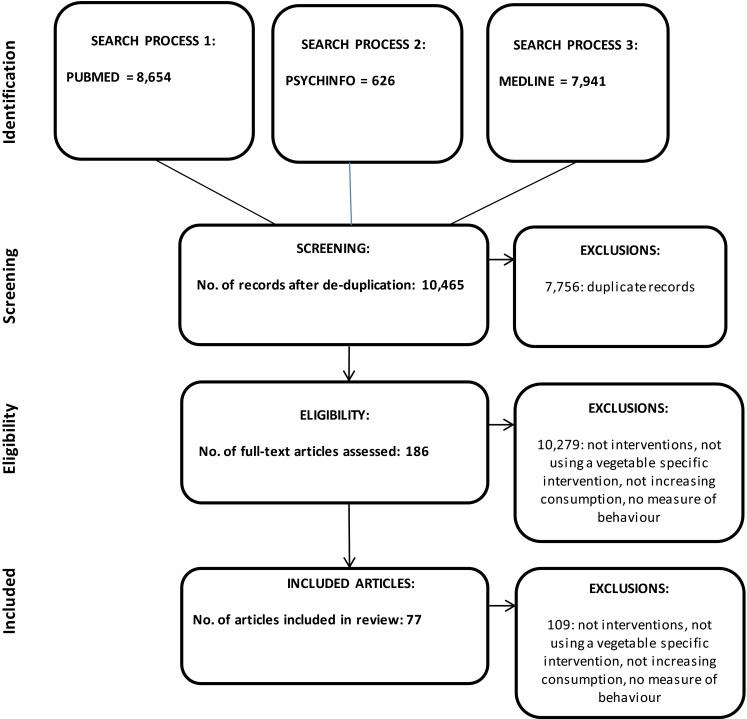
PURPOSE: While the health benefits of a high fruit and vegetable consumption are well known and considerable work has attempted to improve intakes, increasing evidence also recognises a distinction between fruit and vegetables, both in their impacts on health and in consumption patterns. Increasing work suggests health benefits from a high consumption specifically of vegetables, yet intakes remain low, and barriers to increasing intakes are prevalent making intervention difficult. A systematic review was undertaken to identify from the published literature all studies reporting an intervention to increase intakes of vegetables as a distinct food group. METHODS: Databases-PubMed, PsychInfo and Medline-were searched over all years of records until April 2015 using pre-specified terms. RESULTS: Our searches identified 77 studies, detailing 140 interventions, of which 133 (81 %) interventions were conducted in children. Interventions aimed to use or change hedonic factors, such as taste, liking and familiarity (n = 72), use or change environmental factors (n = 39), use or change cognitive factors (n = 19), or a combination of strategies (n = 10). Increased vegetable acceptance, selection and/or consumption were reported to some degree in 116 (83 %) interventions, but the majority of effects seem small and inconsistent. CONCLUSIONS: Greater percent success is currently found from environmental, educational and multi-component interventions, but publication bias is likely, and long-term effects and cost-effectiveness are rarely considered. A focus on long-term benefits and sustained behaviour change is required. Certain population groups are also noticeably absent from the current list of tried interventions.
Overview
CoChat Summary
TL;DR
This review identifies 77 published studies reporting 140 interventions to increase vegetable-specific intake, and concludes that many strategies can work but effects are often small, short-term, and not yet well tested for cost-effectiveness or sustainability. The strongest evidence in the paper is for environmental changes and repeated exposure/conditioning approaches, especially in children.
Key findings
- The review found 77 studies reporting 140 interventions; 113 of 140 interventions (81%) targeted children.
- Environmental interventions were highly successful: 39 interventions were found, and all except 3 reported increased vegetable selection and/or consumption.
- Repeated exposure/conditioning approaches also often worked: among interventions using repeated exposure, 16 of 23 (70%) improved liking and/or consumption; pairing with liked flavours succeeded in 12 of 14 (86%); pairing with nutrients in 4 of 6 (67%); pairing with reinforcement in 7 of 7 (100%); and reinforcement plus modelling in 1 of 1 (100%).
- The paper states that evaluation periods are typically short, effect sizes are often small, and when follow-up is longer, effects often diminish; it also notes that few interventions were identified specifically for adolescents or older individuals.
Methods
- Systematic review of published interventions aimed specifically at increasing vegetable intakes as a distinct food group, with vegetable selection, purchasing, or consumption as outcomes.
- Searched PubMed, PsychInfo, and Medline over all years using “vegetable” and “vegetables” in the title; last searches were conducted on 28 April 2015.
- Two authors independently screened titles and abstracts; 77 studies were included. Data were tabulated, but the authors did not assess risk of bias and did not meta-analyze because of heterogeneity and the early state of the literature.
Limitations
- Stated by the paper: the review only considered published literature, so it is likely biased toward English-language articles and away from grey literature; publication bias is also likely because failures and negative findings are underreported.
- Stated by the paper: the authors did not combine studies quantitatively because there were too few studies per intervention type and study methods were highly heterogeneous.
- Evident from the text: the search strategy used only title terms and did not search conference abstracts or book chapters, so it may have missed relevant interventions.
Model-written summary. Check it against the paper before relying on it.
Integrity signals
Registry
Cites
Statistics
Figures
Verification
Claims the paper makes
2 Valid · 1 Not valid · 13 Not checked · 22 Own results and interpretations
Every source the paper cites for this claim was checked and supports it.
In the paper
“Associations with all-cause mortality [ 2 , 3 ]”
What the sources say
- Supportedcites [2] Oyebode O, Gordon-Dseagu V, Walker A, Mindell JS (2014) Fruit and vegetable consumption and all-cause, cancer and CVD mortality: analysis of Health Survey for England data. J Epidemiol Community Health 68:856–862 source
The Abstract Results (p. 1) report fruit and vegetable consumption associated with decreased all-cause mortality (adjusted HR 0.67, 95% CI 0.58–0.78 for 7+ vs <1 portion daily), and the Discussion (p. 6) states 'a strong inverse relationship between fruit and vegetable consumption and all-cause mortality'. The key-points box likewise lists 'Fruit and vegetable consumption is inversely associated with all-cause, cancer and cardiovascular mortality in a nationally representative non-institutionalised population' with the lowest risk at 7+ portions. (LLM, conf=0.95)
- Supportedcites [3] Wang X, Ouyang Y, Liu J et al (2014) Fruit and vegetable consumption and mortality from all causes, cardiovascular disease, and cancer: systematic review and dose–response meta-analysis of prospective cohort studies. BMJ 349:g4490 source
The Abstract (p. 1) and Conclusions state that higher consumption of fruit and vegetables was significantly associated with a lower risk of all-cause mortality (pooled HR 0.95, 95% CI 0.92-0.98 per additional serving a day). The Discussion and Results sections (Table 3; dose-response analyses showing HR 0.83 for fruit at ~2 servings/day and 0.75 for vegetables at ~3 servings/day) reinforce this inverse association, with a threshold around five servings a day. (LLM, conf=0.95)
plainstates an association- Asserted: passes — The authors put it forward as true.
- Checkable: passes — It can be checked against evidence.
- Load-bearing: unclear — It is unclear whether the paper’s conclusions depend on it.
- Based: passes — The paper gives a reason why it holds.
- Supported
Every source the paper cites for this claim was checked and supports it.
In the paper
“mortality from cardiovascular disease [ 2 , 3 ], including coronary heart disease [ 4 ] and stroke [ 5 , 6 ], are well evidenced.”
What the sources say
- Supportedcites [2] Oyebode O, Gordon-Dseagu V, Walker A, Mindell JS (2014) Fruit and vegetable consumption and all-cause, cancer and CVD mortality: analysis of Health Survey for England data. J Epidemiol Community Health 68:856–862 source
The cited source is attached to the cardiovascular-disease mortality clause; the sentence cites other works for coronary heart disease and stroke. The Abstract Results report an association between fruit and vegetable consumption and reduced cardiovascular mortality, and the Discussion describes increasing benefits up to seven or more portions daily. (LLM, conf=0.93)
- Supportedcites [3] Wang X, Ouyang Y, Liu J et al (2014) Fruit and vegetable consumption and mortality from all causes, cardiovascular disease, and cancer: systematic review and dose–response meta-analysis of prospective cohort studies. BMJ 349:g4490 source
The Results section, under “Fruit and vegetable consumption and risk of cardiovascular mortality,” reports lower cardiovascular mortality with each additional daily serving of fruit and vegetables. In the citing sentence, separate citations accompany coronary heart disease and stroke; this source is cited for the broader cardiovascular-mortality association. (LLM, conf=0.94)
- Supportedcites [4] Dauchet L, Amouyel P, Hercberg S, Dallongeville J (2006) Fruit and vegetable consumption and risk of coronary heart disease: a meta-analysis of cohort studies. J Nutr 136:2588–2593 source
The citation to this paper is attached to coronary heart disease, not to the sentence’s separate claims about overall cardiovascular mortality or stroke. The Results (page unavailable) report an inverse association between fruit and vegetable intake and CHD risk; the analyzed outcomes include coronary death. (LLM, conf=0.90)
boostedstates an association- Asserted: passes — The authors put it forward as true.
- Checkable: passes — It can be checked against evidence.
- Load-bearing: passes — The paper’s conclusions depend on it.
- Based: passes — The paper gives a reason why it holds.
- Supported
A result the paper reports from its own data — it cites no other source for it, so there is none to check. The quote shows it is in the paper.
In the paper
“All of these, with the exception of three interventions (one increasing variety [ 158 ] and two improving presentation [ 141 , 164 ]) resulted in increased selection and/or consumption of vegetables in children and adults”
plainstates a cause- Asserted: passes — The authors put it forward as true.
- Checkable: passes — It can be checked against evidence.
- Load-bearing: passes — The paper’s conclusions depend on it.
- Based: passes — The paper gives a reason why it holds.
None of the sources cited for this claim have been checked yet.
In the paper
“Strategies such as pricing and marketing interventions, improved product provision, government subsidies, and population-wide awareness and education campaigns [ 205 – 207 ] specifically for vegetables do not yet exist or have not yet been evaluated as far as we are aware.”
hedged- Asserted: passes — The authors put it forward as true.
- Checkable: passes — It can be checked against evidence.
- Load-bearing: unclear — It is unclear whether the paper’s conclusions depend on it.
- Based: passes — The paper gives a reason why it holds.
A result the paper states — it cites no source for it, so there is none to check. The quote shows it is in the paper.
In the paper
“At present, there is a real lack of comparisons between interventions—i.e. interventions have not been compared, e.g. in the same age group or population, with the exception of comparisons of differing exposure and conditioning strategies in young children.”
plain- Asserted: passes — The authors put it forward as true.
- Checkable: passes — It can be checked against evidence.
- Load-bearing: passes — The paper’s conclusions depend on it.
- Based: passes — The paper gives a reason why it holds.
6 more claims
Create a free account to see all 38 claims and to verify the 44 references still open.
- It may state two separate claims as one. 22
- Probably not a substantial claim. 6
Citations
Cites
1 retracted
RETRACTED: Attractive names sustain increased vegetable intake in schools
Wansink, B. C., Just, D. R., Payne, C. R., & Klinger, M. Z. (2012) · Preventive Medicine · doi:10.1016/j.ypmed.2012.07.012 · Cited by 141 · cited 2×
“All of these, with the exception of three interventions (one increasing variety [158] and two improving presentation [141, 164]) resulted in increased selection and/or consumption of vegetables in children and adults, through the increased provision of vegetables (n = 20), through the increased provision of a variety…”
BackgroundRetractedFood, nutrition, physical activity, and the prevention of cancer: a global perspective
(2008) · Choice Reviews Online · doi:10.5860/choice.45-5024 · Cited by 5,350
Health Benefits of Fruits and Vegetables
Slavin, J. L., & Lloyd, B. (2012) · Advances in Nutrition · doi:10.3945/an.112.002154 · Cited by 2,128 · cited 4×
“Potatoes, for example, are sometimes included among vegetables, sometimes included as ‘white’ vegetables, and sometimes not considered at all [21, 22].”
BackgroundInfluentialWang, X., Ouyang, Y., Liu, J., Zhu, M., Zhao, G., Bao, W., & Hu, F. B. (2014) · BMJ · doi:10.1136/bmj.g4490 · Cited by 1,596 · cited 2×
“Associations also suggest a reduced risk of hypertension [7], osteoporosis [8], body weight and adiposity [9, 10], dementia and cognitive decline [11, 12], and some cancers [13–15], although the evidence for cancers is less consistent [1, 3].”
BackgroundLongitudinal tracking of adolescent smoking, physical activity, and food choice behaviors
Kelder, S. H., Perry, C. L., Klepp, K. I., & Lytle, L. L. (1994) · American Journal of Public Health · doi:10.2105/ajph.84.7.1121 · Cited by 1,388
Health-promoting components of fruits and vegetables in the diet.
Liu, R. H. (2013) · Advances in Nutrition · doi:10.3945/an.112.003517 · Cited by 1,310 · cited 2×
“Potatoes, for example, are sometimes included among vegetables, sometimes included as ‘white’ vegetables, and sometimes not considered at all [21, 22].”
BackgroundFood neophobia and ‘picky/fussy’ eating in children: A review
Dovey, T. M., Staples, P. A., Gibson, E. L., & Halford, J. C. G. (2008) · Appetite · doi:10.1016/j.appet.2007.09.009 · Cited by 1,222 · cited 2×
“In young children, the bitter and undesirable taste of vegetables is often provided as a major barrier to vegetable consumption [73–75], and food neophobia (the reluctance to eat, or the avoidance of, novel foods [76]) particularly, can interfere with young children’s acceptance of vegetables [76–78].”
BackgroundDauchet, L., Amouyel, P., Hercberg, S., & Dallongeville, J. (2006) · The Journal of Nutrition · doi:10.1093/jn/136.10.2588 · Cited by 1,204 · cited 1×
“1 3 mortality [2, 3] and mortality from cardiovascular disease [2, 3], including coronary heart disease [4] and stroke [5, 6], are well evidenced.”
BackgroundCarter, P., Gray, L. J., Troughton, J., Khunti, K., & Davies, M. J. (2010) · BMJ · doi:10.1136/bmj.c4229 · Cited by 728
De Irala-Estévez, J., Groth, M., Johansson, L., Oltersdorf, U., Prättälä, R., & Martínez-González, M. (2000) · European Journal of Clinical Nutrition · doi:10.1038/sj.ejcn.1601080 · Cited by 682
Cited by
Schoeppe, S., Alley, S., Van Lippevelde, W., Bray, N. A., Williams, S. L., Duncan, M. J., & Vandelanotte, C. (2016) · International Journal of Behavioral Nutrition and Physical Activity · doi:10.1186/s12966-016-0454-y · Cited by 949
Changing children's eating behaviour - A review of experimental research
DeCosta, P., Møller, P., Frøst, M. B., & Olsen, A. (2017) · Appetite · doi:10.1016/j.appet.2017.03.004 · Cited by 376
“Children's preferences for vegetables are generally low compared to other foods (Appleton et al., 2016).”
Tapping the economic and nutritional power of vegetables
Schreinemachers, P., Simmons, E. B., & Wopereis, M. C. S. (2018) · Global Food Security · doi:10.1016/j.gfs.2017.09.005 · Cited by 350
“Other “nudges” to changing eating behaviors involve simply cutting vegetables into smaller pieces or serving vegetables before serving meat and staples (e.g. Appleton et al., 2016; Wansink et al., 2012).”
BackgroundGlobal Vegetable Intake and Supply Compared to Recommendations: A Systematic Review
Kalmpourtzidou, A., Eilander, A., & Talsma, E. F. (2020) · Nutrients · doi:10.3390/nu12061558 · Cited by 233
“Moreover, fruits have usually a higher concentration of sugars than vegetables, while vegetables are more likely to have a higher concentration of fibers and proteins [40].”
BackgroundExploring influences on food choice in a large population sample: The Italian Taste project
Monteleone, E., Spinelli, S., Dinnella, C., Endrizzi, I., Laureati, M., Pagliarini, E., Sinesio, F., Gasperi, F., Torri, L., Aprea, E., et al. (2017) · Food Quality and Preference · doi:10.1016/j.foodqual.2017.02.013 · Cited by 178
“…1) understanding consumer liking for vegetables is relevant in itself because of the general interest in promoting health eating in many countries (Appleton et al., 2016); 2) the sensory properties of radish and rocket (bitterness and pungency) may represent a potential barrier to consumption…”
Self-citationBarriers and facilitators towards adopting a more plant-based diet in a sample of Danish consumers
Reipurth, M. F. S., Hørby, L., Gregersen, C. G., Bonke, A., & Perez Cueto, F. J. A. (2019) · Food Quality and Preference · doi:10.1016/j.foodqual.2018.10.012 · Cited by 173
Smethers, A. D., & Rolls, B. J. (2018) · Medical Clinics of North America · doi:10.1016/j.mcna.2017.08.009 · Cited by 156
Nekitsing, C., Blundell-Birtill, P., Cockroft, J. E., & Hetherington, M. M. (2018) · Appetite · doi:10.1016/j.appet.2018.04.019 · Cited by 174
“A systematic research review by Appleton et al. (2016) described vegetable promoting interventions across the lifespan. From their search, 77 studies detailing 140 interventions were found, most (81%) of these were conducted in children. This may be attributable to a greater opportunity to intervene in school settings…”
BackgroundInfluentialNekitsing, C., Hetherington, M. M., & Blundell-Birtill, P. (2018) · Current Obesity Reports · doi:10.1007/s13679-018-0297-8 · Cited by 207
Appleton, K. M., Hemingway, A., Rajska, J., & Hartwell, H. J. (2018) · American Journal of Clinical Nutrition · doi:10.1093/ajcn/nqy143 · Cited by 132
“Furthermore, although much of the evidence to date aims to increase consumption of a single vegetable, strategies to increase the consumption of vegetables as a whole food group may be more beneficial for health (20).”
BackgroundMethodSelf-citationGerritsen, S., Renker-Darby, A., Harré, S., Rees, D. H. E., Raroa, D. A., Eickstaedt, M., Sushil, Z., Allan, K., Bartos, A. E., Waterlander, W. E., et al. (2019) · PLoS ONE · doi:10.1371/journal.pone.0221107 · Cited by 125
“FV consumption in childhood provides valuable nutrients for growth and development, strengthens immunity, and aids digestion [1,4].”
BackgroundFriis, R. V. H., Skov, L. R., Olsen, A., Appleton, K. M., Saulais, L., Dinnella, C., Hartwell, H., Depezay, L., Monteleone, E., Giboreau, A., et al. (2017) · PLoS ONE · doi:10.1371/journal.pone.0176028 · Cited by 127
“After decades of addressing unhealthy dietary behaviours through information campaigns, legislation and education, the public health sector now suggests targeting the food environment in order to promote desirable food choices [13].”
BackgroundSelf-citationRodrigues, V. M., Bray, J., Fernandes, A. C., Bernardo, G. L., Hartwell, H. J., Martinelli, S. S., Uggioni, P. L., Cavalli, S. B., & Proença, R. P. D. C. (2019) · Nutrients · doi:10.3390/nu11071634 · Cited by 129
“The majority of interventions aiming to increase the intake of vegetables as a separate and distinct food group have focused on younger children [16].”
BackgroundSelf-citationA Systematic Review of Behavioural Interventions Promoting Healthy Eating among Older People
Zhou, X., Pérez-Cueto, F. J. A., dos Santos, Q., Monteleone, E., Giboreau, A., Appleton, K. M., Bjørner, T., Bredie, W. L. P., & Hartwell, H. (2018) · Nutrients · doi:10.3390/nu10020128 · Cited by 94
“However, interventions with the aim of increasing vegetable intake for this age group have been notably omitted from study groups [22].”
BackgroundSelf-citationUsing social norms to encourage healthier eating
Higgs, S., Liu, J., Collins, E. I. M., & Thomas, J. M. (2019) · Nutrition Bulletin · doi:10.1111/nbu.12371 · Cited by 104
“Although these interventions appear to be effective in altering attitudes and intentions towards healthy eating, assessment of the effectiveness of such campaigns on actual behaviour has been limited and the available data suggest that the effect sizes are small and inconsistent (Rekhy & McConchie 2014; Appleton et al…”
BackgroundPérez-Cueto, F. J. A. (2019) · Nutrients · doi:10.3390/nu11102398 · Cited by 87
Self-citationVegan nutrition: a preliminary guide for health professionals
Koeder, C., & Pérez-Cueto, F. J. A. (2022) · Critical Reviews in Food Science and Nutrition · doi:10.1080/10408398.2022.2107997 · Cited by 80
Self-citationAppleton, K. M., Dinnella, C., Spinelli, S., Morizet, D., Saulais, L., Hemingway, A., Monteleone, E., Depezay, L., Pérez-Cueto, F. J. A., & Hartwell, H. J. (2019) · Food Quality and Preference · doi:10.1016/j.foodqual.2019.02.007 · Cited by 77
Self-citationPagliarini, E., Proserpio, C., Spinelli, S., Lavelli, V., Laureati, M., Arena, E., Monaco, R. D., Menghi, L., Toschi, T. G., Braghieri, A., et al. (2021) · Food Quality and Preference · doi:10.1016/j.foodqual.2021.104250 · Cited by 69
“…it is clear that a diet rich in fruit and vegetables has several positive aspects, adults often 74 fail to reach the recommend daily intake (Appleton et al., 2016), since the consumption of these 75 products has to face with consumer sensory perception, which is determinant in defining…”
BackgroundSelf-citationToffoli, A. D., Spinelli, S., Monteleone, E., Arena, E., Monaco, R. D., Endrizzi, I., Toschi, T. G., Laureati, M., Napolitano, F., Torri, L., et al. (2019) · Nutrients · doi:10.3390/nu11061329 · Cited by 72
“A greater appreciation of health-related food aspects, greater nutritional and culinary knowledge, and an increased interest in preparing home-cooked meals are all positively associated with vegetable consumption [83] and were likely to be responsible for the higher familiarity for vegetables in females than in males…”
BackgroundSelf-citationDinnella, C., Morizet, D., Masi, C., Cliceri, D., Depezay, L., Appleton, K. M., Giboreau, A., Pérez-Cueto, F. J. A., Hartwell, H. J., & Monteleone, E. (2016) · Appetite · doi:10.1016/j.appet.2016.08.110 · Cited by 71
Self-citationWhen are “Dish of the Day” nudges most effective to increase vegetable selection?
Saulais, L., Massey, C., Pérez-Cueto, F. J. A., Appleton, K. M., Dinnella, C., Monteleone, E., Depezay, L., Hartwell, H. J., & Giboreau, A. (2019) · Food Policy · doi:10.1016/j.foodpol.2019.04.003 · Cited by 68
“Yet, vegetables 49 present specific health benefits, distinct sensory properties and consumption characteristics, 50 suggesting a need for more targeted actions (Appleton et al., 2016; Glasson, Chapman, & James, 2011).”
BackgroundSelf-citationRioux, C., Lafraire, J., & Picard, D. (2017) · Appetite · doi:10.1016/j.appet.2017.08.016 · Cited by 78
Bell, L., Gardner, C., Tian, E. J., Cochet-Broch, M. O., Poelman, A. A. M., Cox, D. N., Nicklaus, S., Matvienko‐Sikar, K., Daniels, L., Kumar, S., et al. (2020) · American Journal of Clinical Nutrition · doi:10.1093/ajcn/nqaa384 · Cited by 64
“A consistent positive effect was found on vegetable liking (32, 33) and/or intake (32, 37, 48) in toddlers aged 21 to 24 mo (33, 37), preschoolers aged 3–5 y (32), and children up to 5 y (48).”
BackgroundInfluentialAppleton, K., Dinnella, C., Spinelli, S., Morizet, D., Saulais, L., Hemingway, A., Monteleone, E., Depezay, L., Perez-Cueto, F., & Hartwell, H. (2017) · Nutrients · doi:10.3390/nu9090923 · Cited by 53
“Knowledge of the health benefits of vegetables and concern for consuming a healthy diet can be increased through educational and motivational campaigns [35], and various studies demonstrate the benefits of these types of intervention for increasing vegetable consumption in adults [52].”
BackgroundResultSelf-citationOdongo, G. A., Schlotz, N., Herz, C., et al. (2017) · Food & Nutrition Research · doi:10.1080/16546628.2017.1271527 · Cited by 51
“In Kenya this includes cooking [31,32] and fermentation [33].”
BackgroundLeuven, J. R. F. W., Rutenfrans, A. H. M., Dolfing, A. G., & Leuven, R. S. E. W. (2018) · Food Science & Nutrition · doi:10.1002/fsn3.758 · Cited by 51
Drivers of Vegetable Consumption in Urban Nigeria: Food Choice Motives, Knowledge, and Self-Efficacy
Raaijmakers, I., Snoek, H. M., Maziya-Dixon, B. B., & Achterbosch, T. J. (2018) · Sustainability · doi:10.3390/su10124771 · Cited by 63
Zhou, X., Pérez-Cueto, F. J. A., dos Santos, Q., Bredie, W. L. P., Mollá-Bauza, M. M. B., Rodrigues, V. M., Buch‐Andersen, T., Appleton, K. M., Hemingway, A., Giboreau, A., et al. (2018) · Food Quality and Preference · doi:10.1016/j.foodqual.2018.12.003 · Cited by 53
Self-citationeHealth Interventions for Fruit and Vegetable Intake: A Meta-Analysis of Effectiveness
Rodriguez Rocha, N. P., & Kim, H. (2019) · Health Education & Behavior · doi:10.1177/1090198119859396 · Cited by 48
“Additionally, since vegetable consumption appears to be influenced by distinct factors (Appleton et al., 2016), future interventions should develop specific strategies for fruit and vegetable intake and evaluate these outcomes individually.”
BackgroundDigital Interventions to Promote Healthy Eating in Children: Umbrella Review
Prowse, R. J. L., & Carsley, S. (2021) · JMIR Pediatrics and Parenting · doi:10.2196/30160 · Cited by 64
Social information reduces infants’ avoidance of plants
Włodarczyk, A., Rioux, C., & Wertz, A. E. (2020) · Cognitive Development · doi:10.1016/j.cogdev.2020.100867 · Cited by 43
Calvert, S., Dempsey, R. C., & Povey, R. (2019) · Obesity Reviews · doi:10.1111/obr.12797 · Cited by 40
“A recommendation based on this review, supported by prior reviews (63), is that future studies need to include follow-up assessments at both the short and longer term to better account for possible changes in dietary behaviour.”
BackgroundMarshall, A. N., Markham, C. M., Ranjit, N., Bounds, G. W., Chow, J., & Sharma, S. V. (2020) · Preventive Medicine Reports · doi:10.1016/j.pmedr.2020.101247 · Cited by 49
“There is a need for long-term follow-up of dietary interventions among low-income populations to determine sustainability of intervention effects, and to further refine intervention strategies (Zarnowiecki et al., 2014; Jones et al., 2011; Appleton et al., 2016); supported by multiple systematic reviews (Jones et al.”
BackgroundLim, S. Y., Lee, K. W., Seow, W.-L., Mohamed, N. A., Devaraj, N. K., & Nordin, S. A. (2021) · Foods · doi:10.3390/foods10081861 · Cited by 50
Garden-based interventions and early childhood health: an umbrella review
Skelton, K. R., Lowe, C. L., Zaltz, D. A., & Benjamin‐Neelon, S. E. (2020) · International Journal of Behavioral Nutrition and Physical Activity · doi:10.1186/s12966-020-01023-5 · Cited by 59
Appleton, K. M., Krumplevska, K., Smith, E., Rooney, C., McKinley, M. C., & Woodside, J. V. (2018) · Journal of Human Nutrition and Dietetics · doi:10.1111/jhn.12487 · Cited by 37
“FV knowledge was assessed in all respondents who were aware of the message, using four structured closedresponse questions on: (1) the foods that are included in the message; (2) the portion sizes that are required for the message; (3) the variety that is required for the message; and (4) the reasons for FV consumptio…”
BackgroundMethodSelf-citationThe role of saliva in taste and food intake
Martin, L. E., Gutierrez, V. A., & Torregrossa, A. (2023) · Physiology & Behavior · doi:10.1016/j.physbeh.2023.114109 · Cited by 37
Modesti, M., Tonacci, A., Sansone, F., Billeci, L., Bellincontro, A., Cacopardo, G., Sanmartin, C., Taglieri, I., & Venturi, F. (2022) · Chemosensors · doi:10.3390/chemosensors10070244 · Cited by 40
dos Santos, Q., Pérez-Cueto, F. J. A., Rodrigues, V. M., Appleton, K. M., Giboreau, A., Saulais, L., Monteleone, E., Dinnella, C., Mollá-Bauza, M. M. B., & Hartwell, H. (2019) · European Journal of Nutrition · doi:10.1007/s00394-019-01903-y · Cited by 43
Self-citationCooking together: The IKEA effect on family vegetable intake
Radtke, T., Liszewska, N., Horodyska, K., Boberska, M., Schenkel, K., & Łuszczyńska, A. (2019) · British Journal of Health Psychology · doi:10.1111/bjhp.12385 · Cited by 38
Røed, M. H., Medin, A. C., Vik, F. N., Hillesund, E. R., Lippevelde, W. V., Campbell, K. J., & Øverby, N. C. (2021) · Journal of Medical Internet Research · doi:10.2196/18311 · Cited by 44
“The lack of effect on fruit intake contrary to vegetable intake may be explained by the differences between the two types of foods in terms of skills and time needed for preparation, consumption patterns, and the parents’ readiness to make changes [62-64].”
Yoong, S. L., Grady, A., Wiggers, J., Stacey, F. G., Rissel, C. E., Flood, V. M., Finch, M., Wyse, R., Sutherland, R., Salajan, D., et al. (2020) · American Journal of Clinical Nutrition · doi:10.1093/ajcn/nqaa025 · Cited by 38
“Such findings suggest that although the web-based intervention was able to overcome many important barriers to healthy eating, there may be unique barriers related to consumption of vegetables that need to be better targeted by the online program (47, 48).”
BackgroundMeasuring Food Waste and Consumption by Children Using Photography
Giboreau, A., Schwartz, C., Morizet, D., & Meiselman, H. L. (2019) · Nutrients · doi:10.3390/nu11102410 · Cited by 35
“Much of the research on measuring food intake and food waste has been directed to children [1].”
BackgroundSelf-citationBernardo, G. L., Rodrigues, V. M., Bastos, B. S., Uggioni, P. L., Hauschild, D. B., Fernandes, A. C., Martinelli, S. S., Cavalli, S. B., Bray, J., Hartwell, H. J., et al. (2021) · Appetite · doi:10.1016/j.appet.2021.105432 · Cited by 35
Self-citationAbderbwih, E., Mahanani, M. R., Deckert, A., Antia, K., Agbaria, N., Dambach, P., Kohler, S., Horstick, O., Winkler, V., & Wendt, A. S. (2022) · Nutrients · doi:10.3390/nu14122399 · Cited by 32
“Similarly, a previous systematic review reported a lack of evidence on the long-term impact of interventions to increase vegetable intake among children [45].”
BackgroundProximate Composition and Nutritive Value of Some Leafy Vegetables from Faisalabad, Pakistan
Mobeen, Wang, X., Saleem, M. H., Parveen, A., Mumtaz, S., Hassan, A., Adnan, M., Fiaz, S., Ali, S., Khan, Z. I., et al. (2021) · Sustainability · doi:10.3390/su13158444 · Cited by 36
A virtual reality‐based study of color contrast to encourage more sustainable food choices
Wan, X. I., Qiu, L., & Wang, C. (2021) · Applied Psychology Health and Well-Being · doi:10.1111/aphw.12321 · Cited by 34
Houston‐Price, C., Owen, L. H., Kennedy, O. B., & Hill, C. (2018) · Food Quality and Preference · doi:10.1016/j.foodqual.2018.08.003 · Cited by 37
“…opportunities to taste new or disliked foods is an established technique for increasing their liking and consumption of fruits and vegetables (for recent reviews of this literature, see Appleton et al., 2016; Holley, Farrow & Haycraft, 2017; Nekitsing, Hetherington & Blundell-Birtill, 2018).”
Trude, A. C. B., Surkan, P. J., Steeves, E. A., Porter, K. M. P., & Gittelsohn, J. (2018) · Public Health Nutrition · doi:10.1017/s1368980018003038 · Cited by 41
“(63) (64; 65) Unexpectedly, we found that an increased frequency of unhealthful food acquisition was correlated with greater exposure to the BHCK social media component.”
Serebrennikov, D., Katare, B., Kirkham, L. P., & Schmitt, S. A. (2020) · PLoS ONE · doi:10.1371/journal.pone.0226181 · Cited by 42
“Research has shown little robust evidence to suggest the effectiveness of these school nutrition policies toward improving dietary intake in school children during school lunch [14, 15, 16, 17].”
BackgroundRagelienė, T. (2021) · Appetite · doi:10.1016/j.appet.2021.105276 · Cited by 41
“Nonetheless, children’s vegetable preferences are typically low in comparison with other types of food (Appleton et al., 2016).”
BackgroundNudging plant-based meals through the menu
Pérez-Cueto, F. J. A. (2021) · International Journal of Gastronomy and Food Science · doi:10.1016/j.ijgfs.2021.100346 · Cited by 35
Self-citationInductive reasoning, food neophobia, and domain-specificity in preschoolers
Rioux, C., Leglaye, L., & Lafraire, J. (2018) · Cognitive Development · doi:10.1016/j.cogdev.2018.05.001 · Cited by 37
Karpouzis, F., Lindberg, R., Walsh, A., Shah, S., Abbott, G., Lai, J., Berner, A., & Ball, K. (2021) · BMC Public Health · doi:10.1186/s12889-021-10302-0 · Cited by 36
Hendrie, G. A., Hussain, M. S., Brindal, E., James‐Martin, G., Williams, G., & Crook, A. (2019) · JMIR mhealth and uhealth · doi:10.2196/14726 · Cited by 28
“Most large-scale population campaigns [7] and research interventions target fruit and vegetable consumption concurrently [10,11], with very few interventions focusing solely on vegetable intake.”
Roccaldo, R., Censi, L., D’Addezio, L., Canani, S. B., & Gennaro, L. (2017) · International Journal of Food Sciences and Nutrition · doi:10.1080/09637486.2017.1303826 · Cited by 36
“It is important that children become familiar with fruits and vegetables, and then the healthy behavior acquired seems to continue (Horne et al. 2004; White 2006; Van Cauwenberghe et al. 2010; Laureati et al. 2014; Appleton et al. 2016; Methner et al. 2016).”
BackgroundDifferences in the Prevalence of Fruit and Vegetable Consumption in Spanish Workers
Ronda, E., Campos-Mora, J., Juan, A. D., Gea, T., Reid, A., & Caballero, P. (2020) · Nutrients · doi:10.3390/nu12123848 · Cited by 33
“In contrast, vegetables have a harder texture, generally require cooking and are more often eaten as part of a meal [34].”
BackgroundCapper, T., Brennan, S., Woodside, J. V., & McKinley, M. C. (2022) · Public Health Nutrition · doi:10.1017/s1368980022000829 · Cited by 33
“Considering fruit and vegetable intakes as separate dietary behaviours, which was suggested by two SR and supported by other literature(35), is likely to have an impact on how environmental interventions that involve restructuring of the physical environment or provision of FV are implemented.”
Sustainability, health and consumer insights for plant-based food innovation
Pérez-Cueto, F. J. A. (2020) · International Journal of Food Design · doi:10.1386/ijfd_00017_3 · Cited by 36
Self-citationRijnaarts, I., de Roos, N. M., Wang, T., Zoetendal, E. G., Top, J. L., Timmer, M., Bouwman, E. P., Hogenelst, K., Witteman, B. J. M., & de Wit, N. J. W. (2020) · Public Health Nutrition · doi:10.1017/s1368980020002980 · Cited by 27
“Short-term intervention studies are often successful in increasing fibre intake, but it remains difficult to sustainably increase fibre intake in large healthy populations(20).”
BackgroundCliceri, D., Dinnella, C., Depezay, L., Morizet, D., Giboreau, A., Appleton, K. M., Hartwell, H., & Monteleone, E. (2017) · Food Quality and Preference · doi:10.1016/j.foodqual.2017.03.006 · Cited by 23
Self-citationKaragiannaki, K., Ritz, C., Jensen, L. G. H., Tørsleff, E. H., Møller, P., Hausner, H., & Olsen, A. (2021) · Foods · doi:10.3390/foods10050913 · Cited by 31
Baghaie, A. H., & Aghili, F. (2021) · Environmental Science and Pollution Research · doi:10.1007/s11356-021-15599-3 · Cited by 23
Ilić, A., Rumbak, I., Brečić, R., Barić, I. C., & Bituh, M. (2022) · Nutrients · doi:10.3390/nu14194197 · Cited by 33
“Common criticisms of the evaluation of the interventions in the available reviews and meta-analyses are that they were carried out on a small number of subjects, that the interventions were of short duration, that the period for monitoring behavioral changes after the end of the intervention was too short, and that th…”
BackgroundGreer, A. E., Davis, S. L., Sandolo, C., Gaudet, N., & Castrogivanni, B. (2017) · Journal of Nutrition Education and Behavior · doi:10.1016/j.jneb.2017.08.009 · Cited by 24
Store profitability and public policies to improve food access in non-metro U.S. counties
Cleary, R., Bonanno, A., Chenarides, L., & Goetz, S. J. (2018) · Food Policy · doi:10.1016/j.foodpol.2017.12.004 · Cited by 26
A process and outcome evaluation of an in-class vegetable promotion program
Myers, G., Wright, S., Blane, S., Pratt, I., & Pettigrew, S. (2018) · Appetite · doi:10.1016/j.appet.2018.01.023 · Cited by 28
Supersize me. Serving carrots whole versus diced influences children’s consumption
Liem, D. G., & Russell, C. G. (2019) · Food Quality and Preference · doi:10.1016/j.foodqual.2019.01.006 · Cited by 23
Understanding children’s perspectives of the influences on their dietary behaviours
Chan, M. J., Tay, G. W. N., Kembhavi, G., Lim, J., Rebello, S. A., Ng, H., Lin, C., Wang, M. C., Müller‐Riemenschneider, F., & Chong, M. F.-F. (2022) · Public Health Nutrition · doi:10.1017/s1368980022000404 · Cited by 38
Impact of the COVID-19 pandemic on food and drink consumption and related factors: A scoping review
Shimpo, M., Akamatsu, R., & Kojima, Y. (2022) · Nutrition and Health · doi:10.1177/02601060221078161 · Cited by 23
“In a previous study, higher vegetable consumption was associated with more free time and home-cooked meals (Appleton et al., 2016).”
BackgroundRaaijmakers, I., Sijtsema, S. J., Labrie, C. W., & Snoek, H. M. (2018) · British Food Journal · doi:10.1108/bfj-02-2018-0098 · Cited by 21
Kaukonen, R., Lehto, E., Ray, C., Vepsäläinen, H., Nissinen, K., Korkalo, L., Koivusilta, L. K., Sajaniemi, N. K., Erkkola, M., & Roos, E. (2019) · Appetite · doi:10.1016/j.appet.2019.03.023 · Cited by 27
“Temperament's associations with the consumption of vegetables and fruit and berries were examined separately, as they are often eaten in different kinds of situations, and fruit and berries are usually more easily accepted than vegetables (Appleton et al., 2016).”
Kristiansen, A. L., Bjelland, M., Himberg-Sundet, A., Lien, N., Holst, R., & Andersen, L. F. (2019) · BMC Public Health · doi:10.1186/s12889-019-7436-3 · Cited by 28
Lafarga, T., Villaró, S., Rivera, A., Bobo, G., & Aguiló‐Aguayo, I. (2019) · Journal of Food Science and Technology · doi:10.1007/s13197-019-04108-7 · Cited by 27
Karpouzis, F., Anastasiou, K., Lindberg, R., Walsh, A. D., Shah, S., & Ball, K. (2025) · Journal of Nutrition Education and Behavior · doi:10.1016/j.jneb.2025.02.008 · Cited by 45
Influence of container color on food ratings and choices: Evidence from a desktop VR study
Zhang, W., Wang, C., & Wan, X. I. (2021) · Food Quality and Preference · doi:10.1016/j.foodqual.2021.104448 · Cited by 19
Sakai, Y., Rahayu, Y. Y. S., & Araki, T. (2022) · Nutrients · doi:10.3390/nu14091911 · Cited by 43
Bel‐Serrat, S., von der Schulenburg, A., Marques-Previ, M., Mullee, A., & Murrin, C. M. (2022) · International Journal of Behavioral Nutrition and Physical Activity · doi:10.1186/s12966-022-01396-9 · Cited by 30
“These different consumption patterns between fruits and vegetables may suggest that their intakes are determined by different factors [9].”
BackgroundAgovi, H., Pierguidi, L., Dinnella, C., Viggiano, M. P., Monteleone, E., & Spinelli, S. (2021) · Food Quality and Preference · doi:10.1016/j.foodqual.2021.104429 · Cited by 24
Self-citationChawner, L. R., Blundell-Birtill, P., & Hetherington, M. M. (2020) · British Journal Of Nutrition · doi:10.1017/s0007114520004109 · Cited by 19
Teschl, C., Nössler, C., Schneider, M., Carlsohn, A., & Lührmann, P. M. (2018) · Health Education Journal · doi:10.1177/0017896917751833 · Cited by 25
“Furthermore, a recent systematic review shows increasing evidence to suggest health benefits accrue from the high consumption of vegetables alone (Appleton et al., 2016).”
BackgroundAn innovative school-based intervention to promote healthy lifestyles
Piana, N., Ranucci, C., Buratta, L., Foglia, E., Fabi, M., Novelli, F., Casucci, S., Reginato, E., Pippi, R., Aiello, C., et al. (2017) · Health Education Journal · doi:10.1177/0017896917712549 · Cited by 25
“Many studies reveal the difficulty in maintaining the change – in terms of diet as a healthy lifestyle – for a sustained period after the end of the intervention (Appleton et al., 2016; Larson et al., 2008).”
BackgroundHeart checks in college-aged students link poor sleep to cardiovascular risk
Gawlik, K. S., Melnyk, B. M., Tan, A., & Amaya, M. (2019) · Journal of American College Health · doi:10.1080/07448481.2018.1462823 · Cited by 23
Appleton, K. M., McGrath, A. J., McKinley, M. C., Draffin, C. R., Hamill, L. L., Young, I. S., & Woodside, J. V. (2018) · BMC Public Health · doi:10.1186/s12889-018-5202-6 · Cited by 22
Self-citationPerceptions of adequacy of fruit and vegetable intake as a barrier to increasing consumption
Wellard‐Cole, L., Watson, W. L., Hughes, C., Tan, N., Dibbs, J., Edge, R., & Dessaix, A. (2022) · Nutrition & Dietetics · doi:10.1111/1747-0080.12735 · Cited by 18
Migliavada, R., Coricelli, C., Bolat, E. E., UÇUK, C., & Torri, L. (2022) · Scientific Reports · doi:10.1038/s41598-022-24325-z · Cited by 18
Whittall, B., Warwick, S. M., Jackson, M., & Appleton, K. M. (2024) · Journal of Nutritional Science · doi:10.1017/jns.2023.119 · Cited by 20
“Similar concerns are also expressed speci fi cally for vegetables (38 – 40, 42 , 45, Related to this, some participants also expressed concerns that it may not be appropriate to incorporate pulses into all dishes or into their existing diet, either now or in the future.”
Self-citationHollis‐Hansen, K., Janda, K. M., Tiscareño, M., Filipowicz, C., & van den Berg, A. E. (2022) · Appetite · doi:10.1016/j.appet.2022.106130 · Cited by 18
Pineda, E., Cunha, D. B., Sharabiani, M. T. A., & Millett, C. J. (2023) · PLOS Global Public Health · doi:10.1371/journal.pgph.0001069 · Cited by 21
“However, many interventions focused on increasing fruit and vegetable availability have mostly identified that fruit, but not vegetable consumption, has increased after interventions [44, 45].”
BackgroundLeon, A. D., Jahns, L., & Casperson, S. L. (2020) · Food Quality and Preference · doi:10.1016/j.foodqual.2020.103903 · Cited by 19
Røed, M. H., Vik, F. N., Hillesund, E. R., Lippevelde, W. V., & Øverby, N. C. (2020) · Food & Nutrition Research · doi:10.29219/fnr.v64.3730 · Cited by 18
Karpouzis, F., Lindberg, R., Walsh, A., Shah, S., Abbott, G., & Ball, K. (2024) · BMC Public Health · doi:10.1186/s12889-024-18079-8 · Cited by 15
“Reviews have revealed inconsistent findings [20, 22, 23], generally reporting only small to moderate increases in combined F&V intakes [15–17 , 24].”
BackgroundGiampietri, E., Bugin, G., & Trestini, S. (2021) · Agricultural and Food Economics · doi:10.1186/s40100-021-00194-4 · Cited by 17
Hollis‐Hansen, K., Haskins, C. G., Turcios, J., Bowen, M. E., Leonard, T., Lee, M., Albin, J. L., Wadkins-Chambers, B., Thompson, C., Hall, T., et al. (2023) · BMC Public Health · doi:10.1186/s12889-023-17355-3 · Cited by 18
“…preliminary implementation outcomes in the present study (e.g., acceptability, feasibility, fidelity), it is imperative to measure and compare intervention cost effectiveness and sustainability to ensure funds and efforts are being used effectively and able to be implemented on a wider scale [19].”
BackgroundEffect of Impulsivity Traits on Food Choice within a Nudging Intervention
Marques, I. F., Ting, M., Cedillo-Martínez, D., & Pérez-Cueto, F. J. A. (2020) · Nutrients · doi:10.3390/nu12051402 · Cited by 23
“The purpose of developing the scale was to provide a consensus on which traits are measured across different existing impulsivity measures [35].”
BackgroundSelf-citationAssociations between feeding practices in infancy and fruit and vegetable consumption in childhood
Moss, K. M., Dobson, A. J., Tooth, L. R., & Mishra, G. D. (2020) · British Journal Of Nutrition · doi:10.1017/s000711452000238x · Cited by 17
Increasing vegetable consumption out‐of‐home: VeggiEAT and Veg+projects
Hartwell, H. J., Bray, J., Lavrushkina, N., Rodrigues, V. M., Saulais, L., Giboreau, A., Pérez-Cueto, F. J. A., Monteleone, E., Depezay, L., & Appleton, K. M. (2020) · Nutrition Bulletin · doi:10.1111/nbu.12464 · Cited by 15
“A systematic review of interventions aimed at increasing intake of vegetables as a distinct food group identified 77 studies, detailing 140 interventions, of which 133 (81%) were conducted in children (Appleton et al. 2016).”
BackgroundInfluentialSelf-citationKullamethee, P., Nipawan, K., Chadapon, C., Daluwan, S., & Kunjana, R. (2020) · E3S Web of Conferences · doi:10.1051/e3sconf/202014102007 · Cited by 18
Karmakar, K., Krishna, S., Majumdar, S., Nath, U., Nataraj, K. N., Prakash, N. B., & Chakravortty, D. (2020) · International Journal of Food Microbiology · doi:10.1016/j.ijfoodmicro.2020.108768 · Cited by 14
Metadata
- Authors
- Appleton, K. M., Hemingway, A., Saulais, L., Dinnella, C., Monteleone, E., Depezay, L., Morizet, D., Armando Perez-Cueto, F. J., Bevan, A., & Hartwell, H.
- Affiliations
- Bournemouth University (GB)
- Institut Paul Bocuse (FR)
- University of Florence (IT)
- Fondation Louis Bonduelle (FR)
- Corresponding author
- Appleton, Katherine M.
- ORCID
- Venue
- European Journal of Nutrition
- Published
- 2016-01-11
- Volume
- 55
- Issue
- 3
- Pages
- 869-896
- ISSN
- 1436-6207 (ISSN-L)
- 1436-6215
- PMC
- PMC4819941
- OpenAlex
- W2238644473
- Semantic Scholar
- e90c7ea86b75b611a3bfce8c298a3bf6016e0583
- Cited by
- 275
- References
- 208
- Citations by year
- 2026: 11 · 2025: 13 · 2024: 33 · 2023: 23 · 2022: 35 · 2021: 50 · 2020: 33 · 2019: 27 · 2018: 27 · 2017: 19 · 2016: 4
- FWCI
- 3.43
- Type
- journal article
- Language
- en
- Open access
- hybrid
- doi.org
- Locations
- European Journal of Nutrition (publishedVersion, cc-by)
- Europe PMC (PubMed Central) (publishedVersion, cc-by)
- PubMed Central (publishedVersion, cc-by)
- PubMed (publishedVersion)
- Research at the University of Copenhagen (University of Copenhagen) (publishedVersion, cc-by)
- HAL (submittedVersion)
- Florence Research (University of Florence) (submittedVersion)
- Funders
- European Commission (612326)
- Topics
- Health Sciences › Nursing › Nutrition and Dietetics › Nutrition, Health and Food Behavior
- Health Sciences › Medicine › Public Health, Environmental and Occupational Health › Nutritional Studies and Diet
- Health Sciences › Medicine › Public Health, Environmental and Occupational Health › Obesity, Physical Activity, Diet
- Keywords
- vegetable consumption, fruit and vegetable intake, dietary intervention, children, food acceptance, food familiarity, environmental factors, cognitive factors, behavior change
- MeSH terms
- Diet, Healthy, Fruit, Humans, Health Knowledge, Attitudes, Practice, Vegetables
About these checks
Registry, retraction, Cites and statistics results are computed, not judged, with one exception: a printed reference that no index lists is read once by a model before it counts as a citation error. Claims are extracted by a model and kept only when their quote appears verbatim in the text; each cited source is then checked, with a model’s help, for whether it says what the claim relies on. Those verdicts can be wrong — read the claim’s quote and the cited source before relying on one.
The claim verdicts this report counts are experimental: their accuracy is not yet measured.
A language model drew the claims from the paper on 2026-10-11, under version 3 of the claim definition (model deepseek-v4.1-flash, prompt extract-v3).
A second model labelled each claim on 2026-10-11 (model jev-1.13-20260917, definition revision gold-guideline-v0.2).
Cited sources are checked with a language model’s help (qwen3.8-omni-flash and gpt-6-sol).
Statistics and arithmetic are recomputed, not judged.
Confidence bands are shown only for fields calibrated on our annotated test set. None is calibrated yet, so no band is shown.
What counts as a claim ›How we measure confidence ›How we check this ›
Are you an author, or do you see a problem with this page? Request a review
Data sources
Bibliographic data: Semantic Scholar, OpenAlex, Crossref.
Contains information from the Semantic Scholar Academic Graph Datasets, made available under the ODC Attribution License (ODC-BY 1.0).
Semantic Scholar’s data is described in: Kinney, R., et al. (2023). The Semantic Scholar Open Data Platform. arXiv:2301.10140.
