

Impact of energy density on energy intake in children and adults: a systematic review and meta-analysis of randomized controlled trials
Open accessThe DOI matches its Crossref record; 85 of the 85 references it cites were found in a registry or an index.
Abstract
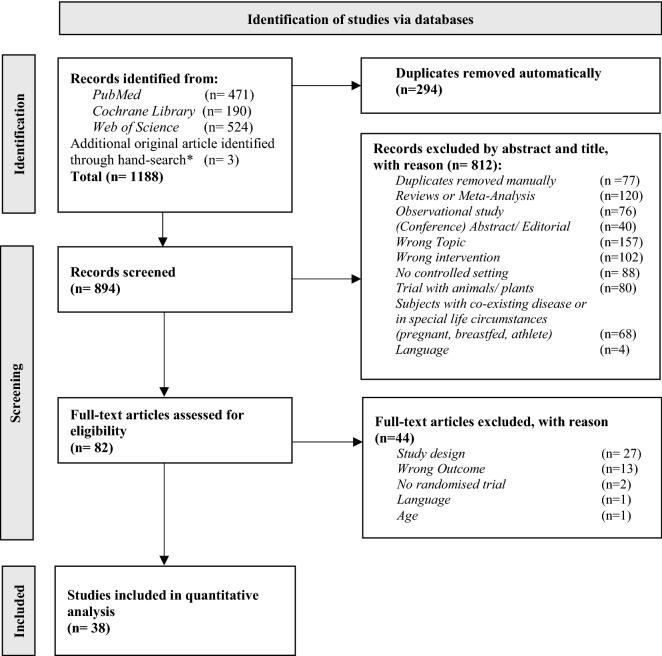
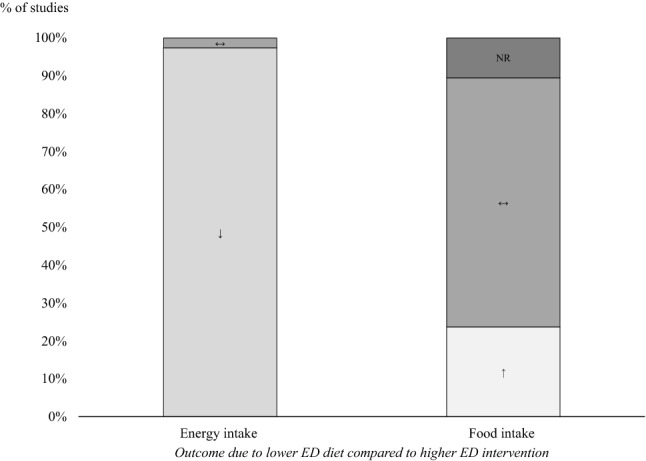
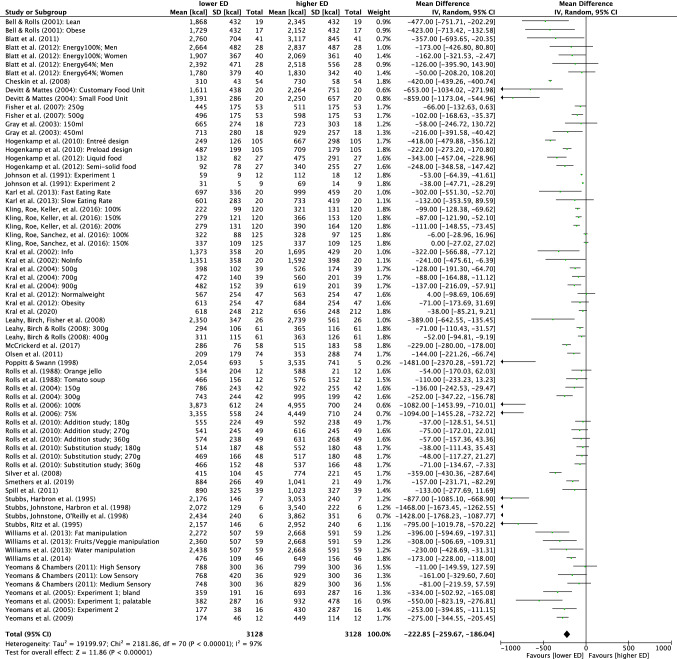
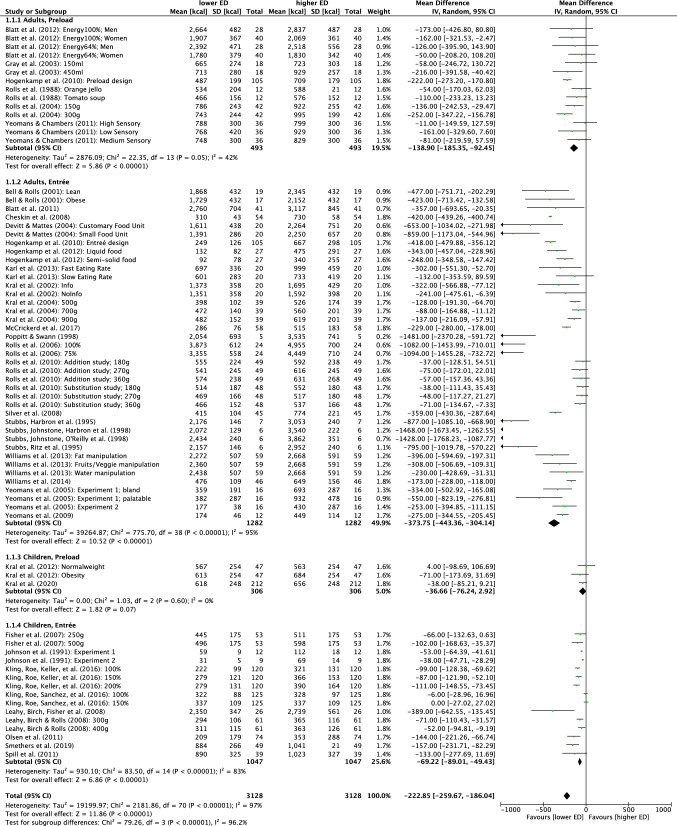
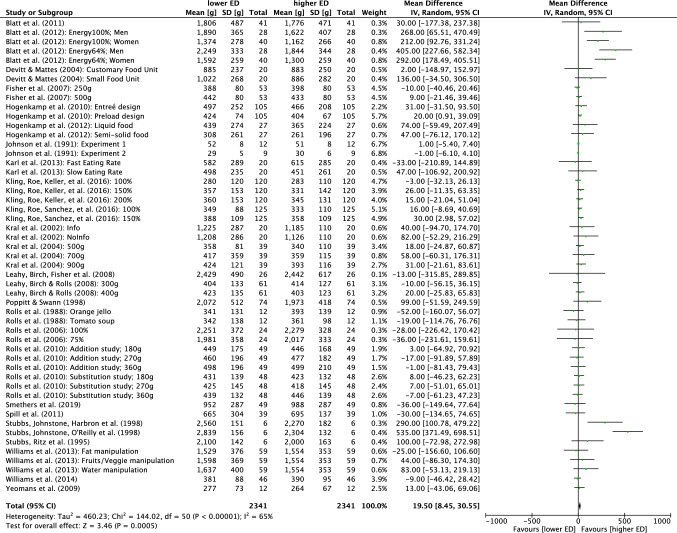
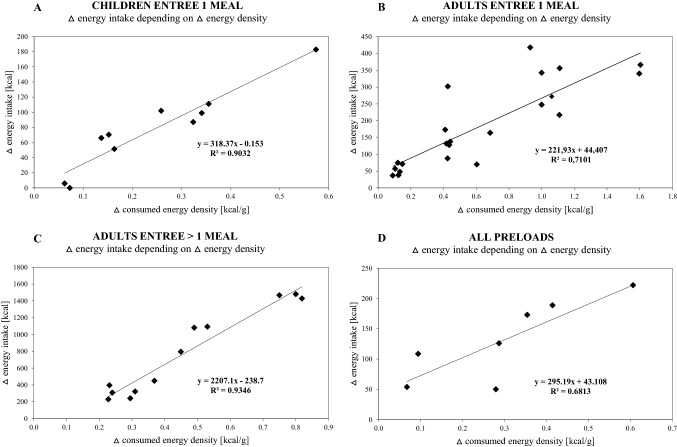
Purpose: The energy density (ED) of a diet can be leveraged to prevent weight gain or treat overweight and obesity. By lowering the ED of the diet, energy intake can be reduced while maintaining portion size. However, a reliable meta-analysis of data from randomized controlled trials (RCTs) is missing. Therefore, this meta-analysis synthesized the evidence of ED manipulation on energy intake in RCTs. Methods: The systematic literature search of multiple databases according to PRISMA criteria considered RCTs investigating the objectively measured energy intake from meals with different ED (lower ED (median 1.1 kcal/g) versus higher ED (median 1.5 kcal/g)) under controlled conditions. Subgroup analyses for age (children versus adults), meal type (preload versus entrée design), and intervention length (1 meal versus > 1 meal) were performed to achieve the most homogeneous result. Results: The meta-analysis of 38 included studies demonstrated that lowering ED considerably reduced energy intake – 223 kcal (95% CI: – 259.7, – 186.0) in comparison to the higher ED interventions. As heterogeneity was high among studies, subgroup analyses were conducted. Heterogeneity decreased in subgroup analyses for age and meal type combined, strengthening the results. An extended analysis showed a positive linear relationship between ED and energy intake. Dietary ED did not affect the amount of food intake. Conclusion: Manipulating ED substantially affects energy intake whereas food intake remains constant. Thus, this approach can be regarded as a powerful tool for weight management through nutrition therapy. Registration on 08/08/2021: CRD42021266653.
Overview
The claims and statistics of this paper haven’t been checked yet.
Free: it reads the open-access text and checks the first 5 claims that cite a source we can check. Create a free account to check every claim.
Integrity signals
Registry
Cites
Statistics
Figures
Verification
Claims the paper makes
The claims and statistics of this paper haven’t been checked yet.
Free: it reads the open-access text and checks the first 5 claims that cite a source we can check. Create a free account to check every claim.
Claims other papers make about this one
Each is checked against this paper’s own text: does it say what the citing paper says it does?
In the citing paper
“Increasing the consumption of low energy density foods such as vegetables, fruits, lean protein sources, whole grains, and low-fat dairy products was associated with larger meal volume at lower caloric cost [80].”
From Dietary and Behavioral Strategies for Weight Loss and Weight Loss Maintenance: A Narrative Review (2025) · cites this paper as [80]
In the citing paper
“Increasing the share of low energy density products allowed for larger meal volumes with a relatively lower energy intake [80,81].”
From Dietary and Behavioral Strategies for Weight Loss and Weight Loss Maintenance: A Narrative Review (2025) · cites this paper as [80]
Self-check
Percentages, sums and reported differences re-computed from the paper’s own numbers.
The self-check needs the paper’s full text.
Citations
Cites
The PRISMA 2020 statement: An updated guideline for reporting systematic reviews
Page, M. J., McKenzie, J. E., Bossuyt, P. M., Boutron, I., Hoffmann, T. C., Mulrow, C. D., Shamseer, L., Tetzlaff, J. M., Akl, E. A., Brennan, S. E., et al. (2021) · BMJ · doi:10.1136/bmj.n71 · Cited by 108,283
Meta-analysis in clinical trials
DerSimonian, R., & Laird, N. (1986) · Controlled Clinical Trials · doi:10.1016/0197-2456(86)90046-2 · Cited by 39,552
RoB 2: a revised tool for assessing risk of bias in randomised trials
Sterne, J. A. C., Savović, J., Page, M. J., Elbers, R. G., Blencowe, N. S., Boutron, I., Cates, C. J., Cheng, H.-Y., Corbett, M. S., Eldridge, S. M., et al. (2019) · BMJ · doi:10.1136/bmj.l4898 · Cited by 34,787 · cited 1×
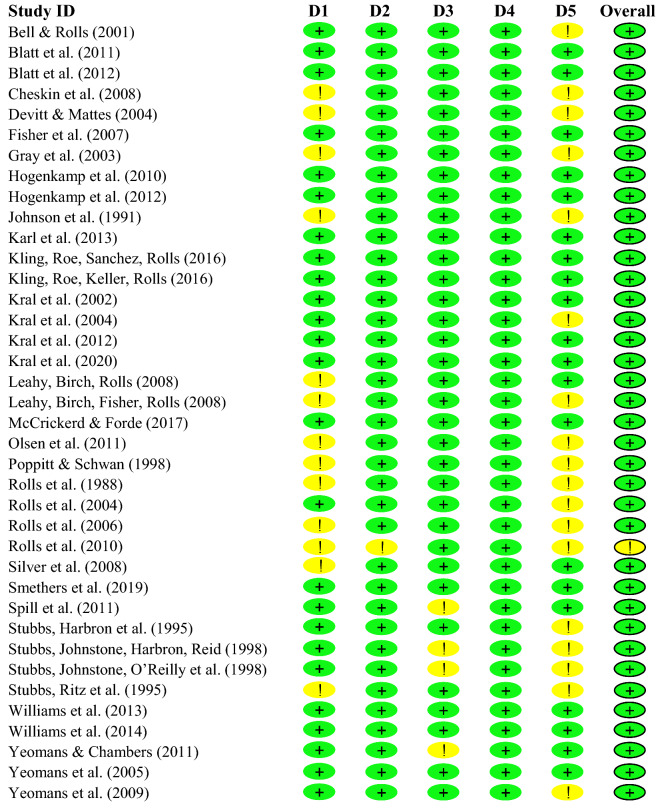
“For the eligible studies, a risk of bias assessment was conducted using the Cochrane risk-of-bias tool for randomized trials (RoB2) [34].”
MethodGenetics of Food Intake Self-Regulation in Childhood: Literature Review and Research Opportunities
Faith, M. S., Carnell, S., & Kral, T. V. E. (2013) · Human Heredity · doi:10.1159/000353879 · Cited by 7,601
Utilization of the PICO framework to improve searching PubMed for clinical questions
Schardt, C., Adams, M. B., Owens, T., Keitz, S., & Fontelo, P. (2007) · BMC Medical Informatics and Decision Making · doi:10.1186/1472-6947-7-16 · Cited by 3,053 · cited 1×
“, participants, interventions, comparator, outcome and study design [27].”
BackgroundAppetite control: methodological aspects of the evaluation of foods
Blundell, J., De Graaf, C., Hulshof, T., Jebb, S., Livingstone, B., Lluch, A., Mela, D., Salah, S., Schuring, E., Van Der Knaap, H., et al. (2010) · Obesity Reviews · doi:10.1111/j.1467-789x.2010.00714.x · Cited by 1,007 · cited 2×
“The division of the subgroups ‘preload’ versus ‘entrée’ appeared essential due to their differing mechanism (inter-meal-satiety in preload versus intra-meal-satiation in ad libitum entrées) [76].”
BackgroundThe relationship between dietary energy density and energy intake
Rolls, B. J. (2009) · Physiology & Behavior · doi:10.1016/j.physbeh.2009.03.011 · Cited by 484 · cited 1×
“Studies in which subjects received intragastric infused preloads bypassing sensory stimuli showed that the volume was more decisive for the feeling of satiety than the energy content [80, 81].”
BackgroundSensory influences on food intake control: moving beyond palatability
McCrickerd, K., & Forde, C. G. (2016) · Obesity Reviews · doi:10.1111/obr.12340 · Cited by 426 · cited 1×
“[57] SGP i: 4 × 1 meal N: 61 (58); f: 53.”
Raynor, H. A., & Champagne, C. M. (2016) · Journal of the Academy of Nutrition and Dietetics · doi:10.1016/j.jand.2015.10.031 · Cited by 379 · cited 2×
“Consequently, the principles of weight management focus on reducing energy intake by changing diet and eating patterns while increasing energy expenditure through higher levels of physical activity and reduced sedentary behavior [1].”
BackgroundSizing up the Effect of Portion Size on Consumption: A Meta-Analytic Review
Zlatevska, N., Dubelaar, C., & Holden, S. S. (2014) · Journal of Marketing · doi:10.1509/jm.12.0303 · Cited by 378 · cited 1×
“In contrast, food intake exhibits a non-linear relationship in regard to portion size [73] and rather a person’s consumption approaches an asymptote after exceeding a certain portion size [74, 75].”
BackgroundClinical application of intermittent fasting for weight loss: progress and future directions
Varady, K. A., Cienfuegos, S., Ezpeleta, M., & Gabel, K. (2022) · Nature Reviews Endocrinology · doi:10.1038/s41574-022-00638-x · Cited by 357
Dietary energy density in the treatment of obesity: a year-long trial comparing 2 weight-loss diets
Ello-Martin, J. A., Roe, L. S., Ledikwe, J. H., Beach, A. M., & Rolls, B. J. (2007) · The American Journal of Clinical Nutrition · doi:10.1093/ajcn/85.6.1465 · Cited by 356
Stubbs, R., Harbron, C., Murgatroyd, P., & Prentice, A. (1995) · The American Journal of Clinical Nutrition · doi:10.1093/ajcn/62.2.316 · Cited by 329 · cited 1×
“[65] UK i: 3 × 9 days N: 6 (6); f: 0%; age: 41.”
Rolls, B. J., Roe, L. S., & Meengs, J. S. (2006) · The American Journal of Clinical Nutrition · doi:10.1093/ajcn/83.1.11 · Cited by 322 · cited 1×
“[61] US i: 4 × 2 days N: 25 (24); f: 100%; age: 21.”
Bell, E. A., & Rolls, B. J. (2001) · The American Journal of Clinical Nutrition · doi:10.1093/ajcn/73.6.1010 · Cited by 319 · cited 7×
“[59] US i: 2 × 1 meals N: 24 (24); f: 100%; age: 21.8 (4.4) LED: 0.1 + 4.5 LED: 1.5 EI [LED]: ↓ w: 1 × 7 days HED: 0.5 + 4.5 HED: 1.6 FI [LED]: ↔ Rolls et al.”
InfluentialWater incorporated into a food but not served with a food decreases energy intake in lean women
Rolls, B. J., Bell, E. A., & Thorwart, M. L. (1999) · The American Journal of Clinical Nutrition · doi:10.1093/ajcn/70.4.448 · Cited by 312 · cited 2×
“0 kcal/g) consumed during meals in the form of a beverage were excluded since it was found that water had a greater impact on satiety when included in food than when consumed as beverage along with food [28], as water blended into foods has been shown to slow stomach emptying more than consuming the water separately […”
BackgroundResultKendall, A., Levitsky, D., Strupp, B., & Lissner, L. (1991) · The American Journal of Clinical Nutrition · doi:10.1093/ajcn/53.5.1124 · Cited by 311 · cited 2×
“Many laboratory studies have shown that the reduction of meal ED allows for consumption of a satiating amount of food while simultaneously reducing energy intake [8, 9] due to relatively constant amounts of food consumed across conditions [10, 11].”
BackgroundDuncan, K., Bacon, J., & Weinsier, R. (1983) · The American Journal of Clinical Nutrition · doi:10.1093/ajcn/37.5.763 · Cited by 302 · cited 1×
“Conversely, when subjects were satiated consuming either high or low ED ad libitum entrées for 5 days, the subjects in the low ED group halved their energy intake without any compensation [24].”
BackgroundConditioned preferences: Young children prefer flavors associated with high dietary fat
Johnson, S. L., McPhee, L., & Birch, L. L. (1991) · Physiology & Behavior · doi:10.1016/0031-9384(91)90590-k · Cited by 275
Dietary Energy Density and Body Weight in Adults and Children: A Systematic Review
Pérez-Escamilla, R., Obbagy, J. E., Altman, J. M., Essery, E. V., McGrane, M. M., Wong, Y. P., Spahn, J. M., & Williams, C. L. (2012) · Journal of the Academy of Nutrition and Dietetics · doi:10.1016/j.jand.2012.01.020 · Cited by 267 · cited 1×
“Many laboratory studies have shown that the reduction of meal ED allows for consumption of a satiating amount of food while simultaneously reducing energy intake [8, 9] due to relatively constant amounts of food consumed across conditions [10, 11].”
BackgroundCombined effects of energy density and portion size on energy intake in women
Kral, T. V., Roe, L. S., & Rolls, B. J. (2004) · The American Journal of Clinical Nutrition · doi:10.1093/ajcn/79.6.962 · Cited by 264 · cited 1×
“[56] US i: 6 × 1 day N: 45 (39); f: 100%; age: 23.”
The effect of fruit in different forms on energy intake and satiety at a meal
Flood-Obbagy, J. E., & Rolls, B. J. (2009) · Appetite · doi:10.1016/j.appet.2008.12.001 · Cited by 262 · cited 1×
“Preload studies with low ED foods such as salad [60], fruit [77] or soup [78] reported a reduction in energy intake in the following ad libitum meal.”
BackgroundEffects of portion size and energy density on young children's intake at a meal
Fisher, J. O., Liu, Y., Birch, L. L., & Rolls, B. J. (2007) · The American Journal of Clinical Nutrition · doi:10.1093/ajcn/86.1.174 · Cited by 250 · cited 1×
“[35] US i: 4 × 1 meal N: 53 (53); f: 52.”
Stubbs, R., Ritz, P., Coward, W., & Prentice, A. (1995) · The American Journal of Clinical Nutrition · doi:10.1093/ajcn/62.2.330 · Cited by 243 · cited 1×
“[67] UK i: 3 × 16 days N: 7 (7); f: 0%; age: 36.”
Energy Density of Foods: Effects on Energy Intake
Stubbs, J., Ferres, S., & Horgan, G. (2000) · Critical Reviews in Food Science and Nutrition · doi:10.1080/10408690091189248 · Cited by 218 · cited 1×
“Second, differences in intervention length contribute to more heterogeneity since the effects of ED manipulation differ in short-to-medium term studies versus longer term interventions [25].”
BackgroundEnergy density and portion size: their independent and combined effects on energy intake
Kral, T. V. E., & Rolls, B. J. (2004) · Physiology & Behavior · doi:10.1016/j.physbeh.2004.04.063 · Cited by 212 · cited 2×
“Many laboratory studies have shown that the reduction of meal ED allows for consumption of a satiating amount of food while simultaneously reducing energy intake [8, 9] due to relatively constant amounts of food consumed across conditions [10, 11].”
BackgroundRolls, B. J., Roe, L. S., & Meengs, J. S. (2004) · Journal of the American Dietetic Association · doi:10.1016/j.jada.2004.07.001 · Cited by 192 · cited 3×
“Preload studies with low ED foods such as salad [60], fruit [77] or soup [78] reported a reduction in energy intake in the following ad libitum meal.”
BackgroundDietary energy density: Applying behavioural science to weight management
Rolls, B. J. (2017) · Nutrition Bulletin · doi:10.1111/nbu.12280 · Cited by 165 · cited 4×
“In practice, the methods that lower ED are not only flexible and adaptive, but also allow for application in a great variety of dietary patterns, aligning with individual food preferences as well as personal and cultural backgrounds [2, 17, 18].”
BackgroundInfluentialProvision of Foods Differing in Energy Density Affects Long‐Term Weight Loss
Rolls, B. J., Roe, L. S., Beach, A. M., & Kris‐Etherton, P. M. (2005) · Obesity Research · doi:10.1038/oby.2005.123 · Cited by 159
Hunger and Satiety Mechanisms and Their Potential Exploitation in the Regulation of Food Intake
Amin, T., & Mercer, J. G. (2016) · Current Obesity Reports · doi:10.1007/s13679-015-0184-5 · Cited by 159
Smethers, A. D., & Rolls, B. J. (2018) · Medical Clinics of North America · doi:10.1016/j.mcna.2017.08.009 · Cited by 156 · cited 2×
“In practice, the methods that lower ED are not only flexible and adaptive, but also allow for application in a great variety of dietary patterns, aligning with individual food preferences as well as personal and cultural backgrounds [2, 17, 18].”
BackgroundHalford, J. C. G., & Harrold, J. A. (2012) · Proceedings of the Nutrition Society · doi:10.1017/s0029665112000134 · Cited by 151
Stubbs, R. J., Johnstone, A. M., O’Reilly, L., Barton, K., & Reid, C. (1998) · International Journal of Obesity · doi:10.1038/sj.ijo.0800715 · Cited by 150 · cited 1×
“[66] UK i: 3 × 16 days N: 6 (6); f: 0%; age: 30.”
Rouhani, M. H., Haghighatdoost, F., Surkan, P. J., & Azadbakht, L. (2016) · Nutrition · doi:10.1016/j.nut.2016.03.017 · Cited by 149
Sensory-specific satiety is affected more by volume than by energy content of a liquid food
Bell, E. A., Roe, L. S., & Rolls, B. J. (2003) · Physiology & Behavior · doi:10.1016/s0031-9384(03)00055-6 · Cited by 141 · cited 1×
“It has also been shown that the decreasing hedonic response to foods during consumption depends more on the volume of the food than on its energy content [82].”
BackgroundThe Influence of Dietary Fat on Food Intake and Body Weight
Rolls, B. J., & Shide, D. J. (2009) · Nutrition Reviews · doi:10.1111/j.1753-4887.1992.tb02466.x · Cited by 133
Spill, M. K., Birch, L. L., Roe, L. S., & Rolls, B. J. (2011) · American Journal of Clinical Nutrition · doi:10.3945/ajcn.111.015206 · Cited by 132 · cited 2×
“1 3 Studies indicate that a covert incorporation of puréed vegetables into entrées significantly reduced energy intake in children [45] and adults [47].”
BackgroundChallenges in conducting clinical nutrition research
Weaver, C. M., & Miller, J. W. (2017) · Nutrition Reviews · doi:10.1093/nutrit/nux026 · Cited by 132 · cited 1×
“A limiting factor is the possibility for performance bias, as a common problem with nutritional studies in a controlled environment is that blinding of the participants and research personnel is impossible [88].”
BackgroundKral, T. V. E., Allison, D. B., Birch, L. L., Stallings, V. A., Moore, R. H., & Faith, M. S. (2012) · American Journal of Clinical Nutrition · doi:10.3945/ajcn.112.037952 · Cited by 127 · cited 2×
“[39] US i: 3 × 1 meal N: 94 (94); f: 53.”
BackgroundReducing the energy density of multiple meals decreases the energy intake of preschool-age children
Leahy, K. E., Birch, L. L., & Rolls, B. J. (2008) · The American Journal of Clinical Nutrition · doi:10.3945/ajcn.2008.26522 · Cited by 124 · cited 7×
“[59] US i: 2 × 1 meals N: 24 (24); f: 100%; age: 21.8 (4.4) LED: 0.1 + 4.5 LED: 1.5 EI [LED]: ↓ w: 1 × 7 days HED: 0.5 + 4.5 HED: 1.6 FI [LED]: ↔ Rolls et al.”
InfluentialPortion size can be used strategically to increase vegetable consumption in adults
Rolls, B. J., Roe, L. S., & Meengs, J. S. (2010) · American Journal of Clinical Nutrition · doi:10.3945/ajcn.2009.28801 · Cited by 120 · cited 2×
“Excluding the 4 studies (n = 430, [49, 55, 62, 63]) with overt manipulation did not influence the findings and no sub-group differences were observed between overt and covert manipulation (data not shown).”
BackgroundReductions in Entrée Energy Density Increase Children's Vegetable Intake and Reduce Energy Intake
Leahy, K. E., Birch, L. L., Fisher, J. O., & Rolls, B. J. (2008) · Obesity · doi:10.1038/oby.2008.257 · Cited by 114 · cited 1×
“[42] US i: 4 × 1 meal N: 75 (61); f: 50.”
Preventing Gastric Sieving by Blending a Solid/Water Meal Enhances Satiation in Healthy Humans
Marciani, L., Hall, N. J., Pritchard, S. E., Cox, E. F., Totman, J. J., Lad, M., Hoad, C. L., Foster, T. J., Gowland, P. A., & Spiller, R. E. (2012) · Journal of Nutrition · doi:10.3945/jn.112.159830 · Cited by 105 · cited 1×
“0 kcal/g) consumed during meals in the form of a beverage were excluded since it was found that water had a greater impact on satiety when included in food than when consumed as beverage along with food [28], as water blended into foods has been shown to slow stomach emptying more than consuming the water separately […”
BackgroundSoup preloads in a variety of forms reduce meal energy intake
Flood, J. E., & Rolls, B. J. (2007) · Appetite · doi:10.1016/j.appet.2007.04.002 · Cited by 102 · cited 1×
“Preload studies with low ED foods such as salad [60], fruit [77] or soup [78] reported a reduction in energy intake in the following ad libitum meal.”
BackgroundYeomans, M. R., & Chambers, L. C. (2011) · American Journal of Clinical Nutrition · doi:10.3945/ajcn.111.011650 · Cited by 102 · cited 2×
“[72] UK i: 6 × 1 meal N: NR (36); f: 50.”
BackgroundHunger and food intake following consumption of low-calorie foods
Rolls, B. J., Laster, L. J., & Summerfelt, A. T. (1989) · Appetite · doi:10.1016/0195-6663(89)90109-8 · Cited by 100 · cited 2×
“Nevertheless, the participants showed a non-significant trend of compensation for the reduction in energy intake [23].”
BackgroundLink between Food Energy Density and Body Weight Changes in Obese Adults
Stelmach-Mardas, M., Rodacki, T., Dobrowolska-Iwanek, J., Brzozowska, A., Walkowiak, J., Wojtanowska-Krosniak, A., Zagrodzki, P., Bechthold, A., Mardas, M., & Boeing, H. (2016) · Nutrients · doi:10.3390/nu8040229 · Cited by 99
Camps, G., Mars, M., de Graaf, C., & Smeets, P. A. M. (2016) · American Journal of Clinical Nutrition · doi:10.3945/ajcn.115.129064 · Cited by 99 · cited 1×
“In addition, the duration of oral exposure is at least as important for the reduction of energy intake as the gastric filling volume [83, 84].”
BackgroundBlatt, A. D., Roe, L. S., & Rolls, B. J. (2011) · American Journal of Clinical Nutrition · doi:10.3945/ajcn.110.009332 · Cited by 98 · cited 2×
“[47] US i: 3 × 1 day N: 48 (41); f: 51.”
BackgroundKral, T. V. E., Roe, L. S., & Rolls, B. J. (2002) · Appetite · doi:10.1006/appe.2002.0498 · Cited by 98
Effect of the volume of liquid food infused intragastrically on satiety in women
Rolls, B. J., & Roe, L. S. (2002) · Physiology & Behavior · doi:10.1016/s0031-9384(02)00801-6 · Cited by 96 · cited 2×
“As reported earlier [79, 80], satiety/satiation processes are not only dependent on the caloric content of the food but also on gastric capacity.”
BackgroundSensory stimulation and energy density in the development of satiety
Rolls, B. J., Hetherington, M., & Burley, V. J. (1988) · Physiology & Behavior · doi:10.1016/0031-9384(88)90053-4 · Cited by 92 · cited 2×
“As a result, a total of eight studies [39, 40, 48, 51, 52, 59, 60, 72] served a compulsory manipulated preload and measured the food intake of the following unmanipulated ad libitum test meal.”
BackgroundKling, S. M. R., Roe, L. S., Keller, K. L., & Rolls, B. J. (2016) · Physiology & Behavior · doi:10.1016/j.physbeh.2016.02.019 · Cited by 91 · cited 1×
“[37] US i: 6 × 1 meal N: 131 (120); f: 49.”
Covert manipulation of energy density of high carbohydrate diets in ‘pseudo free-living’ humans
Stubbs, R. J., Johnstone, A. M., Harbron, C. G., & Reid, C. (1998) · International Journal of Obesity · doi:10.1038/sj.ijo.0800676 · Cited by 88 · cited 1×
“[64] UK i: 2 × 16 days N: 6 (6); f: 0%; age: 32.”
Leslie, W. S., Taylor, R., Harris, L., & Lean, M. E. J. (2017) · International Journal of Obesity · doi:10.1038/ijo.2016.175 · Cited by 88
Energy Density, Energy Intake, and Body Weight Regulation in Adults
Karl, J. P., & Roberts, S. B. (2014) · Advances in Nutrition · doi:10.3945/an.114.007112 · Cited by 78
Effects of food unit size and energy density on intake in humans
Devitt, A. A., & Mattes, R. D. (2004) · Appetite · doi:10.1016/j.appet.2003.10.003 · Cited by 77 · cited 2×
“Devitt and Mattes [50] US i: 4 days N: 26 (20); f: 45.”
InfluentialYEOMANS, M., WEINBERG, L., & JAMES, S. (2005) · Physiology & Behavior · doi:10.1016/j.physbeh.2005.08.019 · Cited by 76 · cited 1×
“[70] UK E1: i: 4 × 1 meal (w: 3×) N: 16(16); f: 0%; age: 21.”
Robinson, E., Khuttan, M., McFarland-Lesser, I., Patel, Z., & Jones, A. (2022) · International Journal of Behavioral Nutrition and Physical Activity · doi:10.1186/s12966-022-01287-z · Cited by 75 · cited 4×
“The meta-analysis of 41 studies with human participants examined randomized and non-randomized experimental studies that took place either in the laboratory or in a free-living setting [19].”
BackgroundResultInfluentialHogenkamp, P. S., Mars, M., Stafleu, A., & de Graaf, C. (2010) · American Journal of Clinical Nutrition · doi:10.3945/ajcn.2009.28360 · Cited by 71 · cited 4×
“One study applied both preload and entrée design [52].”
BackgroundMethodInfluentialKarl, J. P., Young, A. J., Rood, J. C., & Montain, S. J. (2013) · Obesity · doi:10.1002/oby.20075 · Cited by 67
Willems, A. E. M., Sura–de Jong, M., van Beek, A. P., Nederhof, E., & van Dijk, G. (2021) · Nutrition Reviews · doi:10.1093/nutrit/nuaa044 · Cited by 66
Mack, I., Reiband, N., Etges, C., Eichhorn, S., Schäffeler, N., Zurstiege, G., Gawrilow, C., Weimer, K., Peeraully, R., Teufel, M., et al. (2020) · Journal of Medical Internet Research · doi:10.2196/15725 · Cited by 64 · cited 1×
“In line, two randomized controlled trials have shown that already primary school children can understand and are able to apply ED knowledge to their daily routine, even at six months follow-up [86, 87].”
BackgroundSelf-citationEffects of Oral and Gastric Stimulation on Appetite and Energy Intake
Wijlens, A. G. M., Erkner, A., Alexander, E., Mars, M., Smeets, P. A. M., & de Graaf, C. (2012) · Obesity · doi:10.1038/oby.2012.131 · Cited by 61
What is eaten when all of the foods at a meal are served in large portions?
Roe, L. S., Kling, S. M. R., & Rolls, B. J. (2016) · Appetite · doi:10.1016/j.appet.2016.01.001 · Cited by 53 · cited 1×
“In contrast, food intake exhibits a non-linear relationship in regard to portion size [73] and rather a person’s consumption approaches an asymptote after exceeding a certain portion size [74, 75].”
BackgroundWilliams, R. A., Roe, L. S., & Rolls, B. J. (2014) · Obesity · doi:10.1002/oby.20589 · Cited by 47 · cited 1×
“[68] US i: 6 × 1 meal N: 53 (46); f: 100%; age: 25.”
Smethers, A. D., Roe, L. S., Sanchez, C. E., Zuraikat, F. M., Keller, K., & Rolls, B. J. (2019) · Physiology & Behavior · doi:10.1016/j.physbeh.2019.02.042 · Cited by 46 · cited 1×
“[44] US i: 3 × 5 days N: 56 (49); f: 46.”
Lack of energy compensation over 4 days when white button mushrooms are substituted for beef
Cheskin, L. J., Davis, L., Lipsky, L. M., Mitola, A. H., Lycan, T. W., Mitchell, V., Mickle, B., & Adkins, E. (2007) · Appetite · doi:10.1016/j.appet.2007.11.007 · Cited by 45 · cited 2×
“Excluding the 4 studies (n = 430, [49, 55, 62, 63]) with overt manipulation did not influence the findings and no sub-group differences were observed between overt and covert manipulation (data not shown).”
BackgroundSCHUSDZIARRA, V., Hausmann, M., Wiedemann, C., Hess, J., Barth, C., Wagenpfeil, S., & Erdmann, J. (2010) · European Journal of Nutrition · doi:10.1007/s00394-010-0143-6 · Cited by 44
Silver, H. J., Dietrich, M. S., & Castellanos, V. H. (2008) · Journal of the American Dietetic Association · doi:10.1016/j.jada.2008.09.005 · Cited by 43 · cited 2×
“Excluding the 4 studies (n = 430, [49, 55, 62, 63]) with overt manipulation did not influence the findings and no sub-group differences were observed between overt and covert manipulation (data not shown).”
BackgroundComparison of three methods to reduce energy density. Effects on daily energy intake
Williams, R. A., Roe, L. S., & Rolls, B. J. (2013) · Appetite · doi:10.1016/j.appet.2013.03.004 · Cited by 42
Yeomans, M. R., Gould, N. J., Leitch, M., & Mobini, S. (2009) · Appetite · doi:10.1016/j.appet.2008.12.010 · Cited by 35
Bauer, K., Lau, T., Schwille‐Kiuntke, J., Schild, S., Hauner, H., Stengel, A., Zipfel, S., & Mack, I. (2020) · European Eating Disorders Review · doi:10.1002/erv.2741 · Cited by 31
Self-citationGray, R. W., French, S., Robinson, T. M., & Yeomans, M. R. (2003) · Nutritional Neuroscience · doi:10.1080/1028415021000056032 · Cited by 27 · cited 2×
“[51] UK i: 5 × 1 meal N: 18 (18); f: 0%; age: 26.”
BackgroundEffects of Energy Content and Energy Density of Pre‐Portioned Entrées on Energy Intake
Blatt, A. D., Williams, R. A., Roe, L. S., & Rolls, B. J. (2012) · Obesity · doi:10.1038/oby.2011.391 · Cited by 27 · cited 2×
“[48] US i: 4 × 1 day N: 73 (68); f: 58.”
BackgroundObese children and adolescents need increased gastric volumes in order to perceive satiety
Mack, I., Sauer, H., Weimer, K., Dammann, D., Zipfel, S., Enck, P., & Teufel, M. (2014) · Obesity · doi:10.1002/oby.20850 · Cited by 27 · cited 1×
“As reported earlier [79, 80], satiety/satiation processes are not only dependent on the caloric content of the food but also on gastric capacity.”
BackgroundSelf-citationDoes milk matter: Is children’s intake affected by the type or amount of milk served at a meal?
Kling, S. M. R., Roe, L. S., Sanchez, C. E., & Rolls, B. J. (2016) · Appetite · doi:10.1016/j.appet.2016.06.022 · Cited by 26 · cited 2×
“1 3 Only one study [38] showed no change in energy intake in children after the lower ED intervention, indicating that the same amount of energy was consumed via both the lower ED and higher ED diets.”
BackgroundPoppitt, S., & Swann, D. (1998) · International Journal of Obesity · doi:10.1038/sj.ijo.0800726 · Cited by 24 · cited 2×
“[57] SGP i: 4 × 1 meal N: 61 (58); f: 53.5%; LED: 0.6 N.A. EI [LED]: ↓ w: 3 x ≥ 3 days age: m: 25.6 (5.3), f: 23.5 (3.5) HED: 1.0 FI [LED]: ↔ Poppitt and Swann [58] UK i: 2 × 12 days N: 6 (5); f: 0%; age: 35.0 (8.9) LED: 0.9 N.A. EI [LED]: ↓ w: 1 × 3 days HED: 2.0 FI [LED]: ↔ Rolls et al.”
InfluentialLearning about the energy density of liquid and semi-solid foods
Hogenkamp, P. S., Stafleu, A., Mars, M., & de Graaf, C. (2011) · International Journal of Obesity · doi:10.1038/ijo.2011.231 · Cited by 23 · cited 1×
“[53] NL i: 4 × 4 days N: 38 (27); f: 66.”
Kral, T. V. E., Moore, R. H., Chittams, J. L., O’Malley, L., Jones, E., Quinn, R. J., & Fisher, J. O. (2020) · Appetite · doi:10.1016/j.appet.2020.104701 · Cited by 19 · cited 2×
“As a result, a total of eight studies [39, 40, 48, 51, 52, 59, 60, 72] served a compulsory manipulated preload and measured the food intake of the following unmanipulated ad libitum test meal.”
BackgroundRouhani, M. H., Surkan, P. J., & Azadbakht, L. (2017) · Eating Behaviors · doi:10.1016/j.eatbeh.2016.12.011 · Cited by 19 · cited 1×
“The analysis revealed that compared to a high ED preload, a low ED preload resulted in higher subsequent energy intake, but the total energy intake (preload + subsequent meal) was still lower in the latter condition [22].”
ResultCahayadi, J., Geng, X., Mirosa, M., & Peng, M. (2019) · Appetite · doi:10.1016/j.appet.2019.01.012 · Cited by 13 · cited 1×
“In contrast, food intake exhibits a non-linear relationship in regard to portion size [73] and rather a person’s consumption approaches an asymptote after exceeding a certain portion size [74, 75].”
BackgroundWeiland, A., Reiband, N., Schäffeler, N., Zurstiege, G., Giel, K. E., Zipfel, S., & Mack, I. (2022) · Life · doi:10.3390/life12060779 · Cited by 13 · cited 1×
“In line, two randomized controlled trials have shown that already primary school children can understand and are able to apply ED knowledge to their daily routine, even at six months follow-up [86, 87].”
BackgroundSelf-citationOlsen, A., van Belle, C. J., Meyermann, K., & Keller, K. (2011) · Appetite · doi:10.1016/j.appet.2011.07.007 · Cited by 12
Foreyt, J. P. (2012) · American Journal of Clinical Nutrition · doi:10.3945/ajcn.112.041418 · Cited by 8
Research works printed but not linked: 2
- (2020) Review Manager (RevMan)
- Frost J (2019) Interpret the Pearson’ correlation coefficient. In: Regression analysis: an intuitive guide for using and interpreting linear models. p 7
Cited by
Dicken, S. J., Batterham, R. L., & Brown, A. (2024) · British Journal of Nutrition · doi:10.1017/s0007114524000096 · Cited by 39
Making Sense of the Relationship Between Ultra-Processed Foods, Obesity, and Other Chronic Diseases
Temple, N. J. (2024) · Nutrients · doi:10.3390/nu16234039 · Cited by 23
Dietary and Behavioral Strategies for Weight Loss and Weight Loss Maintenance: A Narrative Review
Żurawski, T., & Bartosiewicz, A. (2025) · Nutrients · doi:10.3390/nu18010012 · Cited by 18
Sweetness preference and its impact on energy intake and body weight – a review of evidence
Prinz, P. (2023) · Frontiers in Nutrition · doi:10.3389/fnut.2023.1289028 · Cited by 15
Hahn, H., Friedel, M., Niessner, C., Zipfel, S., & Mack, I. (2024) · International Journal of Behavioral Nutrition and Physical Activity · doi:10.1186/s12966-024-01620-8 · Cited by 17
“It is conceivable that increased drinking, due to thirst after exercise, led to a feeling of fullness and reduced food intake, as distension of the gastric wall is a key signal generator for satiety [99–101].”
BackgroundSelf-citation
Metadata
- Authors
- Klos, B., Cook, J., Crepaz, L., Weiland, A., Zipfel, S., & Mack, I.
- Affiliations
- Universitätsklinikum Tübingen (DE)
- Corresponding author
- Mack, Isabelle
- Venue
- European Journal of Nutrition
- Published
- 2022-12-02
- Volume
- 62
- Issue
- 3
- Pages
- 1059-1076
- ISSN
- 1436-6207 (ISSN-L)
- 1436-6215
- PMC
- PMC10030411
- OpenAlex
- W4310641910
- Cited by
- 27
- References
- 85
- Citations by year
- 2026: 8 · 2025: 7 · 2024: 9 · 2023: 3
- FWCI
- 0.64
- Type
- journal article
- Language
- en
- Open access
- hybrid
- doi.org
- Licence
- cc-by
- creativecommons.org/licenses/by/4.0 (tdm)
- creativecommons.org/licenses/by/4.0 (vor)
- Locations
- European Journal of Nutrition (publishedVersion, cc-by)
- PubMed Central (publishedVersion, cc-by)
- PubMed (publishedVersion)
- Funders
- Innovation Committee of the German Joint Federal (01NVF18013)
- Universitätsklinikum Tübingen
- Topics
- Health Sciences › Nursing › Nutrition and Dietetics › Nutrition, Health and Food Behavior
- Health Sciences › Medicine › Public Health, Environmental and Occupational Health › Obesity, Physical Activity, Diet
- Life Sciences › Neuroscience › Endocrine and Autonomic Systems › Regulation of Appetite and Obesity
- Keywords
- energy density, energy intake, weight management, obesity prevention, overweight, children, adults, portion size, nutritional therapy
- MeSH terms
- Adult, Energy Intake, Child, Diet, Humans, Obesity, Randomized Controlled Trials as Topic, Overweight
About these checks
Registry, retraction, Cites and statistics results are computed, not judged, with one exception: a printed reference that no index lists is read once by a model before it counts as a citation error. Claims are extracted by a model and kept only when their quote appears verbatim in the text; each cited source is then checked, with a model’s help, for whether it says what the claim relies on. Those verdicts can be wrong — read the claim’s quote and the cited source before relying on one.
Statistics and arithmetic are recomputed, not judged.
Confidence bands are shown only for fields calibrated on our annotated test set. None is calibrated yet, so no band is shown.
What counts as a claim ›How we measure confidence ›How we check this ›
Are you an author, or do you see a problem with this page? Request a review
Data sources
Bibliographic data: Semantic Scholar, OpenAlex, Crossref.
Contains information from the Semantic Scholar Academic Graph Datasets, made available under the ODC Attribution License (ODC-BY 1.0).
Semantic Scholar’s data is described in: Kinney, R., et al. (2023). The Semantic Scholar Open Data Platform. arXiv:2301.10140.
