

The DOI matches its Crossref record; 78 of the 78 references it cites were found in a registry or an index.
White matter maturation profiles through early childhood predict general cognitive ability
Open accessAbstract
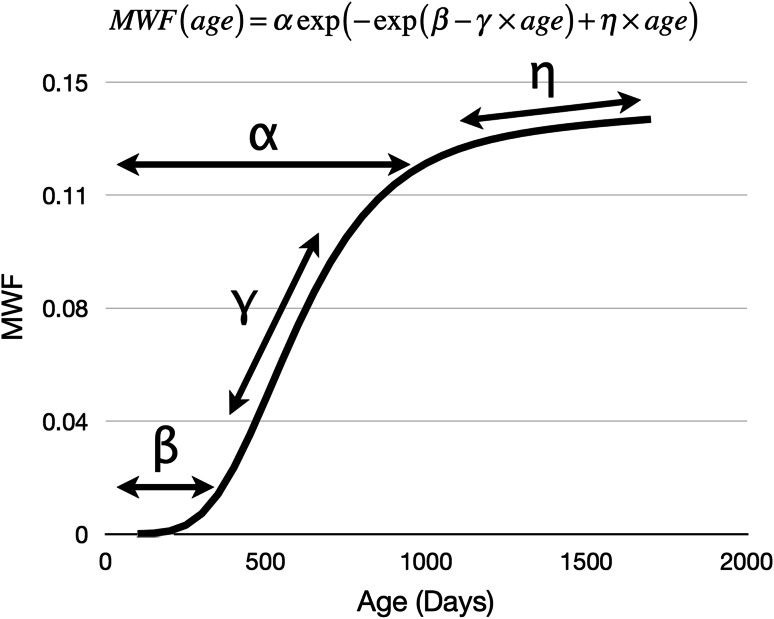
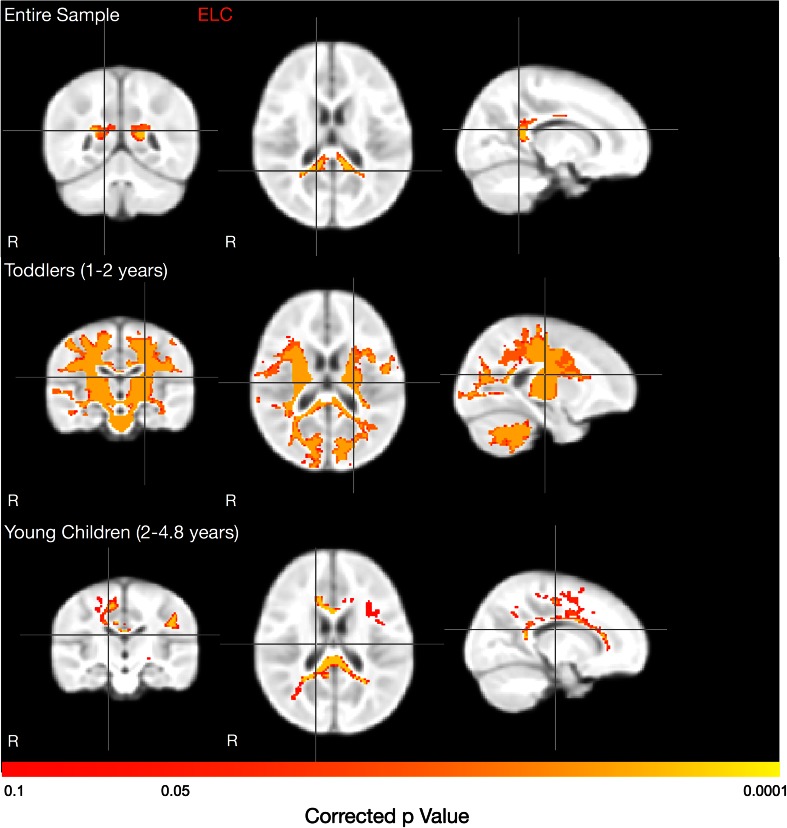
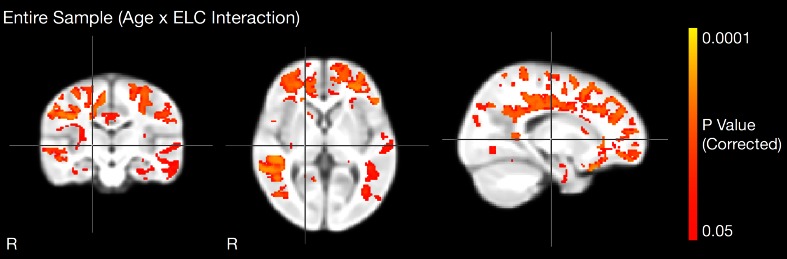
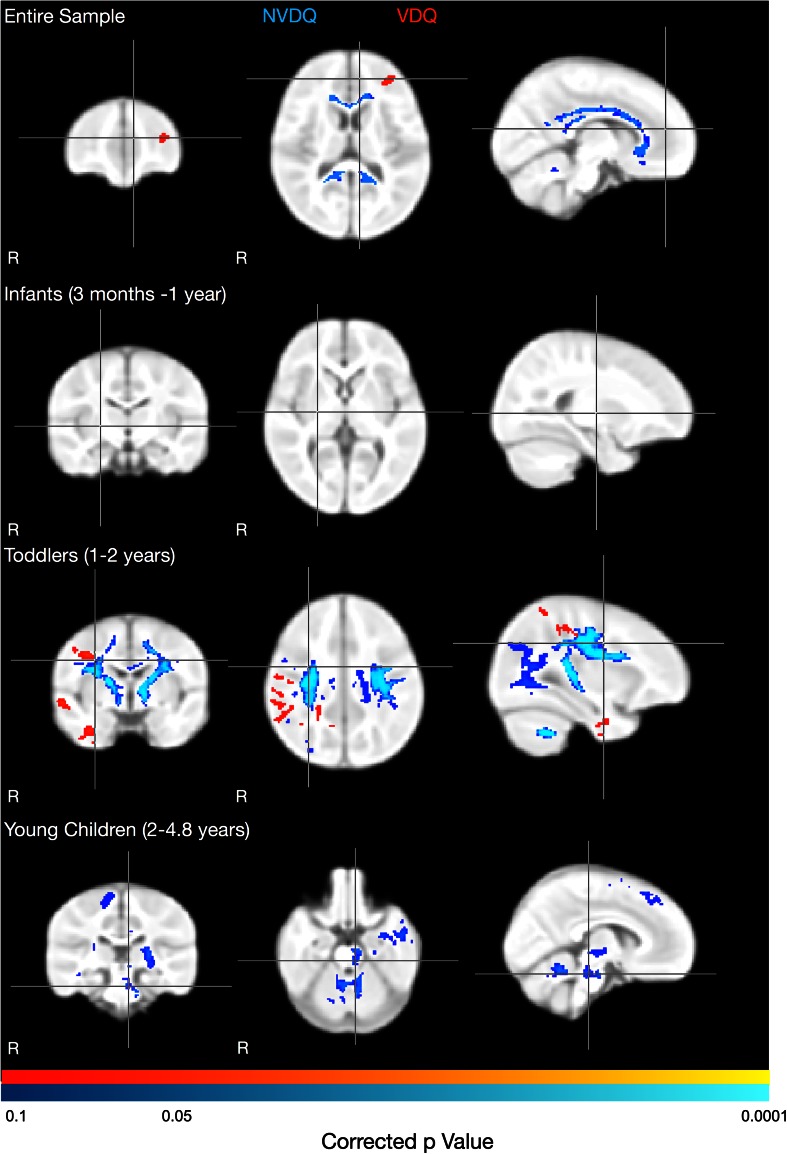
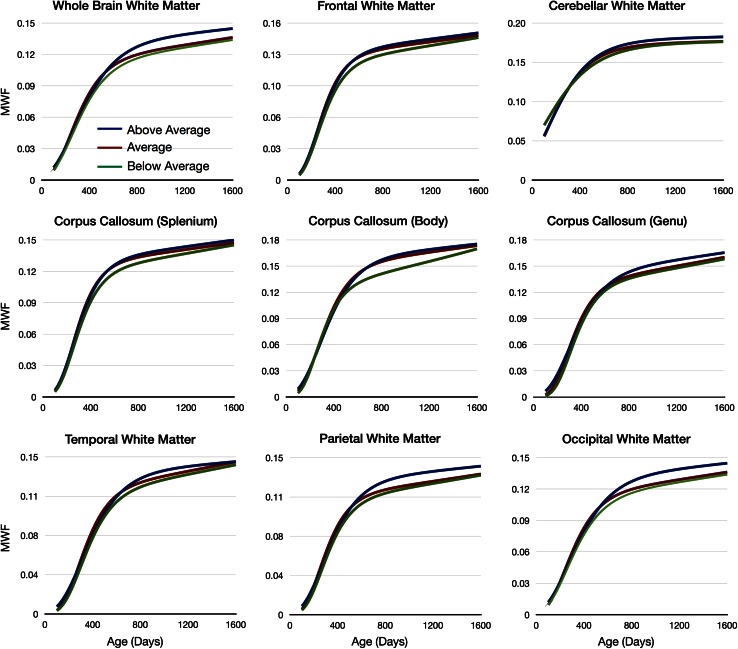
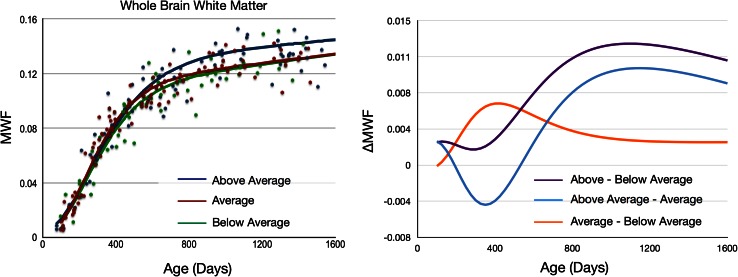
Infancy and early childhood are periods of rapid brain development, during which brain structure and function mature alongside evolving cognitive ability. An important neurodevelopmental process during this postnatal period is the maturation of the myelinated white matter, which facilitates rapid communication across neural systems and networks. Though prior brain imaging studies in children (4 years of age and above), adolescents, and adults have consistently linked white matter development with cognitive maturation and intelligence, few studies have examined how these processes are related throughout early development (birth to 4 years of age). Here, we show that the profile of white matter myelination across the first 5 years of life is strongly and specifically related to cognitive ability. Using a longitudinal design, coupled with advanced magnetic resonance imaging, we demonstrate that children with above-average ability show differential trajectories of myelin development compared to average and below average ability children, even when controlling for socioeconomic status, gestation, and birth weight. Specifically, higher ability children exhibit slower but more prolonged early development, resulting in overall increased myelin measures by ~3 years of age. These results provide new insight into the early neuroanatomical correlates of cognitive ability, and suggest an early period of prolonged maturation with associated protracted white matter plasticity may result in strengthened neural networks that can better support later development. Further, these results reinforce the necessity of a longitudinal perspective in investigating typical or suspected atypical cognitive maturation.
Overview
The claims and statistics of this paper haven’t been checked yet.
Run the check — free, no account needed. It reads the open-access text and checks the sources it cites.
Integrity signals
Registry
Cites
Statistics
Figures
Verification
Claims the paper makes
The claims and statistics of this paper haven’t been checked yet.
Run the check — free, no account needed. It reads the open-access text and checks the sources it cites.
Claims other papers make about this one
Each is checked against this paper’s own text: does it say what the citing paper says it does?
In the citing paper
“age-dependent relationships between myelination and general cognitive ability from 3 months to 5 years200.”
From Imaging structural and functional brain development in early childhood (2018) · cites this paper as [200]
Self-check
Percentages, sums and reported differences re-computed from the paper’s own numbers.
The self-check needs the paper’s full text.
Citations
Cites
An Introduction to the Bootstrap
Efron, B., & Tibshirani, R. J. (1993) · doi:10.1007/978-1-4899-4541-9 · Cited by 21,230
Jenkinson, M., Bannister, P., Brady, M., & Smith, S. (2002) · NeuroImage · doi:10.1006/nimg.2002.1132 · Cited by 11,888
Fast robust automated brain extraction
Smith, S. M. (2002) · Human Brain Mapping · doi:10.1002/hbm.10062 · Cited by 10,496
Four Factor Index of Social Status
Paschou, R. (1975) · Cited by 6,989
Brain development during childhood and adolescence: a longitudinal MRI study
Giedd, J. N., Blumenthal, J., Jeffries, N. O., Castellanos, F. X., Liu, H., Zijdenbos, A., Paus, T., Evans, A. C., & Rapoport, J. L. (1999) · Nature Neuroscience · doi:10.1038/13158 · Cited by 5,552
SMITH, S., & NICHOLS, T. (2009) · NeuroImage · doi:10.1016/j.neuroimage.2008.03.061 · Cited by 5,250
A reproducible evaluation of ANTs similarity metric performance in brain image registration
Avants, B. B., Tustison, N. J., Song, G., Cook, P. A., Klein, A., & Gee, J. C. (2011) · NeuroImage · doi:10.1016/j.neuroimage.2010.09.025 · Cited by 4,796
An Introduction to the Bootstrap.
Buckland, S. T., Efron, B., & Tibshirani, R. J. (1994) · Biometrics · doi:10.2307/2532810 · Cited by 3,236
Within-subject template estimation for unbiased longitudinal image analysis
Reuter, M., Schmansky, N. J., Rosas, H. D., & Fischl, B. (2012) · NeuroImage · doi:10.1016/j.neuroimage.2012.02.084 · Cited by 2,356
Mullen Scales of Early Learning
Bradley‐Johnson, S. (1997) · Psychology in the Schools · doi:10.1002/(sici)1520-6807(199710)34:4 · Cited by 2,329
Research works printed but not linked: 2
- Campbell J, Stikov N, RF D, Pike GB (2014) Combined NODDI and qMT for full-brain g-ratio mapping with complex subvoxel microstructure. In: Proc. Intl. Soc. Mag. Reson. Med., Milan, p 393
- Hurley SA, Mossahebi PM, Samsonov AA (2010) Multicomponent Relaxometry (mcDESPOT) in the Shaking Pup Model of Dysmyelination. In: Proceedings of ISMRM, Stockholm, p 4516
Cited by
Sorted by citations
Imaging structural and functional brain development in early childhood
Gilmore, J. H., Knickmeyer, R. C., & Gao, W. (2018) · Nature Reviews Neuroscience · doi:10.1038/nrn.2018.1 · Cited by 1,013
The Neuroscience of Drug Reward and Addiction
Volkow, N. D., Michaelides, M., & Baler, R. (2019) · Physiological Reviews · doi:10.1152/physrev.00014.2018 · Cited by 863
The development of brain white matter microstructure
Lebel, C., & Deoni, S. (2018) · NeuroImage · doi:10.1016/j.neuroimage.2017.12.097 · Cited by 602
Self-citationKostyrka-Allchorne, K., Cooper, N. R., & Simpson, A. (2017) · Developmental Review · doi:10.1016/j.dr.2016.12.002 · Cited by 302
Ronan, V., Yeasin, R., & Claud, E. C. (2020) · Gastroenterology · doi:10.1053/j.gastro.2020.08.065 · Cited by 278
Metadata
- Authors
- Deoni, S. C. L., O’Muircheartaigh, J., Elison, J. T., Walker, L., Doernberg, E., Waskiewicz, N., Dirks, H., Piryatinsky, I., Dean, D. C., & Jumbe, N. L.
- Affiliations
- Brown University (US)
- King's College London (GB)
- University of Minnesota (US)
- Gates Foundation (US)
- Corresponding author
- Deoni, Sean C. L.
- ORCID
- Venue
- Brain Structure and Function
- Published
- 2014-11-29
- Volume
- 221
- Issue
- 2
- Pages
- 1189-1203
- ISSN
- 1863-2653 (ISSN-L)
- 1863-2661
- PMC
- PMC4771819
- OpenAlex
- W2000113085
- Cited by
- 147
- References
- 78
- Citations by year
- 2026: 10 · 2025: 11 · 2024: 10 · 2023: 22 · 2022: 17 · 2021: 19 · 2020: 16 · 2019: 11 · 2018: 14 · 2017: 5 · 2016: 5 · 2015: 6
- FWCI
- 4.17
- Type
- journal article
- Language
- en
- Open access
- hybrid
- doi.org
- Licence
- Locations
- Brain Structure and Function (publishedVersion, cc-by)
- Europe PMC (PubMed Central) (publishedVersion, cc-by)
- PubMed Central (publishedVersion, cc-by)
- PubMed (publishedVersion)
- Research Portal (King's College London) (publishedVersion, cc-by)
- Funders
- Bill and Melinda Gates Foundation
- Wellcome Trust (096195)
- National Institute of Mental Health (R01MH087510)
- Topics
- Health Sciences › Medicine › Radiology, Nuclear Medicine and Imaging › Advanced Neuroimaging Techniques and Applications
- Social Sciences › Psychology › Experimental and Cognitive Psychology › Cognitive Abilities and Testing
- Social Sciences › Psychology › Neuropsychology and Physiological Psychology › Developmental and Educational Neuropsychology
- Keywords
- white matter maturation, myelination, cognitive ability, early childhood, infancy, brain development, white matter plasticity, intelligence, longitudinal brain development
- MeSH terms
- Brain, Brain Mapping, Child Development, Child, Preschool, Cognition, Female, Forecasting, Humans, Infant, Intelligence, Magnetic Resonance Imaging, Male, Myelin Sheath, Nerve Fibers, Myelinated, Case-Control Studies, White Matter
About these checks
Registry, retraction, Cites and statistics results are computed, not judged, with one exception: a printed reference that no index lists is read once by a model before it counts as a citation error. Claims are extracted by a model and kept only when their quote appears verbatim in the text; each cited source is then checked, with a model’s help, for whether it says what the claim relies on. Those verdicts can be wrong — read the claim’s quote and the cited source before relying on one.
Statistics and arithmetic are recomputed, not judged.
Confidence bands are shown only for fields calibrated on our annotated test set. None is calibrated yet, so no band is shown.
What counts as a claim ›How we measure confidence ›How we check this ›
Are you an author, or do you see a problem with this page? Request a review
