

Translating cancer genomics into precision medicine with artificial intelligence: applications, challenges and future perspectives
Open accessThe DOI matches its Crossref record; 165 of the 165 references it cites were found in a registry or an index.
Abstract
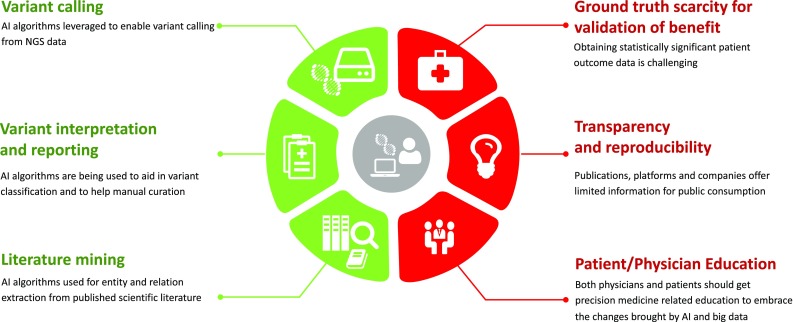
In the field of cancer genomics, the broad availability of genetic information offered by next-generation sequencing technologies and rapid growth in biomedical publication has led to the advent of the big-data era. Integration of artificial intelligence (AI) approaches such as machine learning, deep learning, and natural language processing (NLP) to tackle the challenges of scalability and high dimensionality of data and to transform big data into clinically actionable knowledge is expanding and becoming the foundation of precision medicine. In this paper, we review the current status and future directions of AI application in cancer genomics within the context of workflows to integrate genomic analysis for precision cancer care. The existing solutions of AI and their limitations in cancer genetic testing and diagnostics such as variant calling and interpretation are critically analyzed. Publicly available tools or algorithms for key NLP technologies in the literature mining for evidence-based clinical recommendations are reviewed and compared. In addition, the present paper highlights the challenges to AI adoption in digital healthcare with regard to data requirements, algorithmic transparency, reproducibility, and real-world assessment, and discusses the importance of preparing patients and physicians for modern digitized healthcare. We believe that AI will remain the main driver to healthcare transformation toward precision medicine, yet the unprecedented challenges posed should be addressed to ensure safety and beneficial impact to healthcare.
Overview
The claims and statistics of this paper haven’t been checked yet.
Free: it reads the open-access text and checks the first 5 claims that cite a source we can check. Create a free account to check every claim.
Integrity signals
Registry
Cites
Statistics
Figures
Verification
Claims the paper makes
The claims and statistics of this paper haven’t been checked yet.
Free: it reads the open-access text and checks the first 5 claims that cite a source we can check. Create a free account to check every claim.
Claims other papers make about this one
Each is checked against this paper’s own text: does it say what the citing paper says it does?
In the citing paper
“AI causes challenges to patient-clinician interactions, as clinicians need to learn how to interact with the AI system for healthcare delivery, and patients are required to reduce the fear of technology [32].”
From Use of AI-based tools for healthcare purposes: a survey study from consumers’ perspectives (2020) · cites this paper as [32]
Self-check
Percentages, sums and reported differences re-computed from the paper’s own numbers.
The self-check needs the paper’s full text.
Citations
Cites
Going deeper with convolutions
Szegedy, C., Liu, W., Jia, Y., Sermanet, P., Reed, S., Anguelov, D., Erhan, D., Vanhoucke, V., & Rabinovich, A. (2015) · 2015 IEEE Conference on Computer Vision and Pattern Recognition (CVPR) · doi:10.1109/cvpr.2015.7298594 · Cited by 48,562
Richards, S., Aziz, N., Bale, S., Bick, D., Das, S., Gastier-Foster, J., Grody, W. W., Hegde, M., Lyon, E., Spector, E., et al. (2015) · Genetics in Medicine · doi:10.1038/gim.2015.30 · Cited by 32,594 · cited 2×
“…such as the American College of Medical Genetics and Genomics and the Association for Molecular Pathology (ACMG-AMP), who, in 2015, published a series of guidelines for the interpretation of germline genetic variants for genes causative of hereditary human disorders (Richards et al. 2015).”
BackgroundPD-1 and PD-L1 Immune Checkpoint Blockade to Treat Breast Cancer
Hartkopf, A. D., Taran, F.-A., Wallwiener, M., Walter, C. B., Krämer, B., Grischke, E.-M., & Brucker, S. Y. (2016) · Breast Care · doi:10.1159/000453569 · Cited by 30,845
A method and server for predicting damaging missense mutations.
Adzhubei, I. A., Schmidt, S., Peshkin, L., Ramensky, V. E., Gerasimova, A., Bork, P., Kondrashov, A. S., & Sunyaev, S. R. (2010) · Nature Methods · doi:10.1038/nmeth0410-248 · Cited by 13,194 · cited 1×
“In silico prediction tools like PolyPhen and SIFT are widely used to assist the manual curation but have not established themselves as the determining factors in the clinical setting (Adzhubei et al. 2010; Vaser et al. 2016).”
MethodNishimura, R., Osako, T., Nishiyama, Y., Tashima, R., Nakano, M., Fujisue, M., Toyozumi, Y., & Arima, N. (2013) · Oncology · doi:10.1159/000353099 · Cited by 13,166
Comprehensive molecular portraits of human breast tumours
The Cancer Genome Atlas Network (2012) · Nature · doi:10.1038/nature11412 · Cited by 12,129
The cancer genome atlas pan-cancer analysis project
The Cancer Genome Atlas Research Network, Weinstein, J. N., Collisson, E. A., Mills, G. B., Shaw, K. R. M., Ozenberger, B. A., Ellrott, K., Shmulevich, I., Sander, C., & Stuart, J. M. (2013) · Nature Genetics · doi:10.1038/ng.2764 · Cited by 9,092
The genomic and transcriptomic architecture of 2,000 breast tumours reveals novel subgroups
METABRIC Group, Curtis, C., Shah, S. P., Chin, S.-F., Turashvili, G., Rueda, O. M., Dunning, M. J., Speed, D., Lynch, A. G., Samarajiwa, S., et al. (2012) · Nature · doi:10.1038/nature10983 · Cited by 6,097 · cited 1×
“Molecular sub-types discovered in the pan-cancer studies also help to personalize the treatment and improve patient’s survival outcome (Cancer Genome Atlas Network 2012; Curtis et al. 2012; Vaske et al. 2010).”
BackgroundMachine Learning Applications in Cancer Prognosis and Prediction
Kourou, K., Exarchos, T. P., Exarchos, K. P., Karamouzis, M. V., & Fotiadis, D. I. (2015) · Computational and Structural Biotechnology Journal · doi:10.1016/j.csbj.2014.11.005 · Cited by 3,338 · cited 1×
“Multiple review papers have already covered different ML applications on gene expression data (Molla et al. 2004; Sajda 2006; Kourou et al. 2014; Libbrecht 2015; Bashiri et al. 2017; Noor and Narwal 2017).”
BackgroundEhteshami Bejnordi, B., Veta, M., Johannes van Diest, P., van Ginneken, B., Karssemeijer, N., Litjens, G., van der Laak, J. A. W. M., and the CAMELYON16 Consortium, Hermsen, M., Manson, Q. F., et al. (2017) · JAMA · doi:10.1001/jama.2017.14585 · Cited by 3,293 · cited 1×
“Through application of deep learning on medical imaging data, AI has outperformed expert pathologists and dermatologists in diagnosing metastatic breast cancer, melanoma, and several eye diseases (De Fauw et al. 2018; Ehteshami Bejnordi et al. 2017; Haenssle et al. 2018).”
Research works printed but not linked: 1
- Molla M, Waddell M, Page D, Shavlik J (2004) Using machine learn- ing to design and interpret gene-expression microarrays. AI Mag 25:23-44. https ://doi.org/10.1609/aimag .v25i1 .1745 · doi:10.1609/aimag.v25i1.1745
Cited by
Items 101–200 of 359
Artificial Intelligence in Pathology: A Simple and Practical Guide
Yao, K., Singh, A., Sridhar, K., Blau, J., & Ohgami, R. S. (2020) · Advances in Anatomic Pathology · doi:10.1097/pap.0000000000000277 · Cited by 22
“27 At the moment, NGS data pipeline have stand-ardization and quality control issues and ML methods can be potential solutions.”
BackgroundBokhari, Y., Alhareeri, A. A., Aljouie, A., Alkhaldi, A., Rashid, M., Alawad, M., Alhassnan, R., Samargandy, S. J., Panahi, A., Heidrich, W., et al. (2022) · Cells · doi:10.3390/cells11142244 · Cited by 21
“Precision cancer care is another example of the amalgamation of AI/ML algorithms and big cancer genomics data sets to identify or discover individual genetic or genomics diagnostic and/or prognostic factors, helping to charter personalized treatment plans [4].”
BackgroundFEDERATED LEARNING FOR PRIVACY-PRESERVING HEALTHCARE DATA SHARING: ENABLING GLOBAL AI COLLABORATION
Matta, S. S., & Bolli, M. (2025) · American Journal of Scholarly Research and Innovation · doi:10.63125/jga18304 · Cited by 21
Sevgili, S. A., & Şenol, S. (2022) · Pediatric Research · doi:10.1038/s41390-022-02356-6 · Cited by 24
“32,33 There are examples of ML, particularly in genomics, 34 pharmacology, 35,36 radiology, and other imaging technologies.”
BackgroundStem Cell-Derived Exosomes: An Advanced Horizon to Cancer Regenerative Medicine
Ramachandran, A., Dhar, R., & Devi, A. (2024) · ACS Applied Bio Materials · doi:10.1021/acsabm.4c00089 · Cited by 19
Impact of AI on drug delivery and pharmacokinetics: The present scenario and future prospects
Prajapati, J. B., Paliwal, H., Saikia, S., Prajapati, B. G., Prajapati, D. N., Philip, A. K., & Faiyazuddin, M. (2023) · Elsevier eBooks · doi:10.1016/b978-0-323-89925-3.00016-2 · Cited by 20
The transformative role of Artificial Intelligence in genomics: Opportunities and challenges
Dara, M., Dianatpour, M., Azarpira, N., & Tanideh, N. (2025) · Gene Reports · doi:10.1016/j.genrep.2025.102314 · Cited by 18
Integrating AI and RNA biomarkers in cancer: advances in diagnostics and targeted therapies
Hussen, B. M., Abdullah, S. R., Hidayat, H. J., Samsami, M., & Taheri, M. (2025) · Cell Communication and Signaling · doi:10.1186/s12964-025-02434-2 · Cited by 18
“A persistent challenge is the lack of sufficiently large, standardized, and phenotypically annotated datasets, particularly for rare cancers [122].”
Wang, Y., Wang, H., Li, L., Li, Y., Sun, J. P., Song, X., & Zhou, H. (2021) · BMJ Open · doi:10.1136/bmjopen-2021-053173 · Cited by 18
Shah, S. N. A., & Parveen, R. (2025) · Biomarkers · doi:10.1080/1354750x.2025.2461698 · Cited by 18
“DeGs can reveal critical insights into the mechanisms driving cancer and help identify targets for therapeutic intervention (Xu et al. 2019; Fitzgerald et al. 2022). the promise of RNa-seq and DeG analysis is further amplified by advancements in computational biology and bioinformatics, which…”
Harnessing machine learning to support evidence-based medicine: A pragmatic reconciliation framework
Abujaber, A. A., Nashwan, A. J., & Fadlalla, A. M. (2022) · Intelligence-Based Medicine · doi:10.1016/j.ibmed.2022.100048 · Cited by 18
Taliaz, D., & Souery, D. (2021) · Journal of Clinical Medicine · doi:10.3390/jcm10143109 · Cited by 17
Healthcare applications of computational genomics
Rodrigues, J. J. P. C., Sikkander, A. R. M., Tripathi, S. L., Kumar, K., Mishra, S. R., & Theivanathan, G. (2025) · Elsevier eBooks · doi:10.1016/b978-0-443-30080-6.00012-2 · Cited by 16
Artificial Intelligence in Precision Medicine and Patient-Specific Drug Design
Ranjan, S., Singh, A., & Yadav, R. (2025) · Biomedical & Pharmacology Journal · doi:10.13005/bpj/3088 · Cited by 17
Artificial Intelligence in Software Testing
Banala, S., Panyaram, S., & Selvakumar, P. (2025) · Advances in computational intelligence and robotics book series · doi:10.4018/979-8-3693-9356-7.ch009 · Cited by 16
How Artificial Intelligence for Healthcare Look Like in the Future?
Denecke, K., & Gabarrón, E. (2021) · Studies in health technology and informatics · doi:10.3233/shti210301 · Cited by 16
“There are clearly more challenges than those, such as: the burden of missing training data, reproducibility of AI-decisions [27], privacy considerations [28], implementation challenges [29] or the possible overuse of healthcare due to overdiagnosis done by AI [30], etc.”
BackgroundZaman, M. A. U. (2024) · American Journal of Advanced Technology and Engineering Solutions · doi:10.63125/apftx366 · Cited by 15
Embedding genomics across the NHS: a primary care perspective
Hayward, J., Evans, W. R. H., Miller, E., & Rafi, I. (2023) · Future Healthcare Journal · doi:10.7861/fhj.2023-0116 · Cited by 15
“17,18 A requirement for these informatic solutions to genomic interpretation is ensuring that clinical information is captured in a format interpretable for analysis.”
BackgroundDakal, T. C., Philip, R. R., Bhushan, R., Sonar, P. V., Rajagopal, S., & Kumar, A. (2024) · Pathology - Research and Practice · doi:10.1016/j.prp.2024.155728 · Cited by 14
AI in Personalized Medicine: Transforming Treatment Plans through Precision Health
Neoaz, N., Shah, H. H., & Zainab, H. (2025) · Global Journal of Emerging AI and Computing · doi:10.70445/10.70445/gjeac.1.1.2025.34-50 · Cited by 14
The Role of Tissue Engineering in Orthodontic and Orthognathic Treatment: A Narrative Review
Farjaminejad, R., Farjaminejad, S., Hasani, M., García-Godoy, F., Sayahpour, B., Marya, A., & Jamilian, A. (2025) · Oral · doi:10.3390/oral5010021 · Cited by 14
“The integration of nanotechnology, 3D printing, and bioengineered scaffolds is advancing orthodontic and orthognathic treatment by addressing key challenges such as prolonged treatment duration, inadequate bone regeneration, and biofilm-related complications [168,169].”
Healthcare Artificial Intelligence in India and Ethical Aspects
Sarkar, A., Singh, P., & Varkey, M. (2024) · Springer eBooks · doi:10.1007/978-981-97-0503-0_7 · Cited by 14
Cutting-edge AI tools revolutionizing scientific research in life sciences
Lorenc-Kukuła, K. (2025) · Biotechnologia · doi:10.5114/bta/200803 · Cited by 14
“…tools are utilized in genetic and genomic research across various diseases (Libbrecht and Noble, 2015; Yan, et al., 2016; Dias and Torkamani, 2019; Xu et al., 2019; Alimadadi et al., 2020; De Marvao et al., 2020), biomarker discovery studies (Seashore-Ludlow et al., 2015; Mamatjan et al., 2017),…”
Watson for oncology decision system for treatment consistency study in breast cancer
Liu, Y., Huo, X., Li, Q., Li, Y., Shen, G., Wang, M., Ren, D., Zhao, F., Liu, Z., Zhao, J., et al. (2022) · Clinical and Experimental Medicine · doi:10.1007/s10238-022-00896-z · Cited by 14
AI-Driven Biomarker Discovery and Personalized Allergy Treatment: Utilizing Machine Learning and NGS
Fazlali, M., Nasira, M., & Moravej, A. (2025) · Current Allergy and Asthma Reports · doi:10.1007/s11882-025-01207-8 · Cited by 13
“Nonetheless, the widespread implementation of such models requires overcoming persistent challenges related to algorithmic opacity, data quality, and context-specific validation [90].”
Latinović, M., & Pammer‐Schindler, V. (2021) · Hawaii International Conference on System Sciences (HICSS) · doi:10.24251/hicss.2021.017 · Cited by 13
Swami, A. K., Verma, D. K., Soni, R., & Goswami, D. (2025) · Materials Today Communications · doi:10.1016/j.mtcomm.2025.112553 · Cited by 12
Chen, R., He, Y., Chen, Z., Ruan, H., Pan, Y., Nezamzadeh‐Ejhieh, A., Liu, J., & Lu, C. (2026) · Dalton Transactions · doi:10.1039/d5dt02184g · Cited by 12
No-boundary thinking: a viable solution to ethical data-driven AI in precision medicine
Obafemi-Ajayi, T., Perkins, A., Nanduri, B., Wunsch, D. C., Foster, J. A., & Peckham, J. (2021) · AI and Ethics · doi:10.1007/s43681-021-00118-4 · Cited by 12
“AI analysis of biological and medical data [14, 18–21] brings with it a special set of difficulties that parallel many of the oft cited challenges of Big Data as follows.”
BackgroundAchieving Personalized Oncology Care: Insights and Challenges in Sub-Saharan Africa
MATTHEW, K. A., Opia, F. N., Matthew, A. O., Kumolu, A. F., & Matthew, T. F. (2022) · International Journal of Multidisciplinary Research and Growth Evaluation · doi:10.54660/.ijmrge.2022.3.1.775-783 · Cited by 12
Using real-world evidence in haematology
Passamonti, F., Corrao, G., Castellani, G., Mora, B., Maggioni, G., Porta, M. G. D., & Gale, R. P. (2024) · Best Practice & Research Clinical Haematology · doi:10.1016/j.beha.2024.101536 · Cited by 11
Nittas, V., Ormond, K. E., Vayena, E., & Blasimme, A. (2025) · BMC Cancer · doi:10.1186/s12885-025-13621-2 · Cited by 11
“High-throughput sequencing enables fast and reliable mapping of germline and somatic DNA variants and high-resolution transcriptomic and proteomic analyses, which, combined with other emerging methods such as liquid biopsies, are expected to significantly advance the field [9–11].”
Ejas, F., Khan, S. A., Mujahid, A., AlJoker, F., Mautong, H., Alvarado-Villa, G., Kashyap, A., Yasir, M. U., Woubshet, K., Jain, N., et al. (2025) · Journal of Medical Education and Curricular Development · doi:10.1177/23821205251331124 · Cited by 11
“Ruksakulpiwat et al 26 highlight that ChatGPT, although not explicitly designed for medical research, has demonstrated impressive performance in this domain.”
Kalhori, S. R. N., Tanhapour, M., & Gholamzadeh, M. (2021) · Journal of Biomedical Informatics · doi:10.1016/j.jbi.2021.103687 · Cited by 11
Huang, G., Zhang, J., Gong, L., Liu, D., Wang, X., Chen, Y., & Guo, S. (2020) · Medical Science Monitor · doi:10.12659/msm.929524 · Cited by 11
“With precision medicine and the advancement of high-throughput sequencing technologies, genomic profiles of patients have been used for risk prediction, diagnosis, and treatment in cancers [29].”
BackgroundAhmed, M. K., Rozario, E., Mohonta, S. C., Ferdousmou, J., Saimon, A. S. M., Moniruzzaman, M., Manik, M. M. T. G., & Hasan, R. (2025) · Journal of Engineering · doi:10.1155/je/9928467 · Cited by 10
Harnessing machine learning for improved diagnosis, drug discovery, and patient care
Paul, J. K., Azmal, M., Talukder, O. F., Haque, A. S. N. B., Meem, M., & Ghosh, A. (2025) · Computational and Structural Biotechnology Reports · doi:10.1016/j.csbr.2025.100051 · Cited by 10
Yang, E.-W., Waldrup, B., & Velazquez-Villarreal, E. I. (2025) · Cancers · doi:10.3390/cancers17142376 · Cited by 10
“Advances in artificial intelligence (AI), including the application of large language models (LLMs), are transforming our ability to extract insights from complex biomedical datasets [33–37].”
Ekusai‐Sebatta, D., Kyaddondo, D., Mafigiri, D. K., Barugahare, J., Ssentongo, J. S., Singh, S., & Mwaka, E. (2025) · Research Ethics · doi:10.1177/17470161251361575 · Cited by 10
“Advancements in sequencing combined with artificial intelligence (AI) have significantly accelerated genetics and genomics research (Mulder et al., 2017; Paul et al., 2024; Xu et al., 2019).”
Toward Systems Pathology for PTEN Diagnostics
Haddadi, N., Travis, G., Nassif, N. T., Simpson, A. M., & Marsh, D. J. (2019) · Cold Spring Harbor Perspectives in Medicine · doi:10.1101/cshperspect.a037127 · Cited by 10
Rizi, F. R., Jamadi, M. S., Rahimi, S., Bighamian, M., Paidar, P., Taki, M. J., & Bahmaie, N. (2026) · Frontiers in Oncology · doi:10.3389/fonc.2026.1763359 · Cited by 10
Artificial Intelligence for the Management of Breast Cancer: An Overview
Gandhi, H., & Kumar, K. (2023) · Current Drug Discovery Technologies · doi:10.2174/0115701638262066231030052520 · Cited by 10
Identifications of Similarity Metrics for Patients With Cancer: Protocol for a Scoping Review
Manuilova, I., Bossenz, J., Weise, A. B., Boehm, D., Strantz, C., Unberath, P., Reimer, N., Metzger, P., Pauli, T., Werle, S. D., et al. (2024) · JMIR Research Protocols · doi:10.2196/58705 · Cited by 9
“Finally, identifying indicators of similarity supports ongoing treatment by allowing one to act more efficiently and effectively, armed with knowledge drawn from a broader data set [11,26].”
BackgroundSmart Material‐Integrated Systems for Isolation and Profiling of Rare Cancer Cells and Emboli
Sagdic, K., & İnci, F. (2021) · Advanced Engineering Materials · doi:10.1002/adem.202100857 · Cited by 9
Artificial Intelligence in the Genetic Diagnosis of Rare Disease
James, K. N., Phadke, S. S., Wong, T. C., & Chowdhury, S. (2023) · Clinics in Laboratory Medicine · doi:10.1016/j.cll.2022.09.023 · Cited by 9
Computer Intelligence in Detection of Malignant or Premalignant Oral Lesions: The Story So Far
Singh, A., Sahu, A., & Verma, S. M. (2022) · Studies in computational intelligence · doi:10.1007/978-981-16-9221-5_11 · Cited by 9
FIMBA: Evaluating the Robustness of AI in Genomics via Feature Importance Adversarial AttacksPreprint
Skovorodnikov, H., & Alkhzaimi, H. A. (2024) · arXiv (Cornell University) · doi:10.48550/arxiv.2401.10657 · Cited by 9
From Genes to Recovery: Precision Medicine and Its Influence on Multidrug Resistant Breast Cancer
Rajkhowa, S., Zeenat, S., Agarwal, M., Zaheen, A., Zaki, M. E. A., & Sinha, S. (2024) · Interdisciplinary cancer research · doi:10.1007/16833_2024_248 · Cited by 8
Application of Machine Learning for Early Disease Diagnosis in Healthcare
Asad, S. M., Hussain, M., Monim, R. M., & Islam, K. (2022) · Cuestiones de Fisioterapia · doi:10.48047/bp9aw408 · Cited by 8
“Additionally, because ML solutions are scalable, high-quality diagnostic assistance can be provided in settings with limited resources or marginalized populations, thus lowering inequities in healthcare outcomes and access [13].”
Sharma, A. M., Malviya, R., Awasthi, R., & Sharma, P. K. (2020) · Springer eBooks · doi:10.1007/978-3-030-57552-6_10 · Cited by 9
Artificial Intelligence in Oncology
Boutayeb, S., & Majbar, M. A. (2020) · Springer eBooks · doi:10.1007/978-3-030-34702-4_8 · Cited by 8
Can artificial intelligence predict clinical trial outcomes?Preprint
Jin, S., Chen, L., Ding, H., Wang, M., & Yu, L. (2024) · arXiv (Cornell University) · doi:10.48550/arxiv.2411.17595 · Cited by 8
“Therefore, we considered whether LLMs could be used to predict the likelihood of clinical trial success, enabling us to anticipate trial outcomes and address potential issues that may lead to trial failure[15].”
An Active Learning Framework Improves Tumor Variant Interpretation
Blee, A. M., Li, B., Pecen, T., Meiler, J., Nagel, Z. D., Capra, J. A., & Chazin, W. J. (2022) · Cancer Research · doi:10.1158/0008-5472.can-21-3798 · Cited by 7
The Use of Precision Medicine to Support the Precision of Clinical Decisions in care delivery
Sulieman, L. M., McCoy, A. B., Sama, L., & Peterson, J. F. (2024) · Yearbook of Medical Informatics · doi:10.1055/s-0044-1800738 · Cited by 7
“Translating and adopting precision medicine models such as machine learning and genotyping models is challenging [45,46].”
Miglioli, C., Bakalli, G., Orso, S., Karemera, M., Molinari, R., Guerrier, S., & Mili, N. (2022) · Scientific Reports · doi:10.1038/s41598-022-08737-5 · Cited by 7
Application in medicine: Has artificial intelligence stood the test of time
Sajid, M. I., Ahmed, S., Waqar, U., Tariq, J., Chundrigarh, M., Balouch, S. S., & Abaidullah, S. (2022) · Chinese Medical Journal · doi:10.1097/cm9.00000000000020s8 · Cited by 7
Application of artificial intelligence to hepatobiliary cancer clinical outcomes research
Endo, Y., Alaimo, L., Catalano, G., Chatzipanagiotou, O. P., & Pawlik, T. M. (2024) · Artificial Intelligence Surgery · doi:10.20517/ais.2024.09 · Cited by 7
Bhuvaneswari, R., Prabu, M., Diviya, M., Subramanian, M., & Natarajan, A. K. (2024) · Advances in medical technologies and clinical practice book series · doi:10.4018/979-8-3693-7462-7.ch015 · Cited by 7
Broad Learning with Attribute Selection for Rheumatoid Arthritis
Yang, J., Huang, S., Tang, R., Hu, Q., Lan, K., Wang, H., Zhao, Q., & Fong, S. J. (2020) · Conference proceedings/Conference proceedings - IEEE International Conference on Systems, Man, and Cybernetics · doi:10.1109/smc42975.2020.9283396 · Cited by 7
“However, it is well known that the the performance of deep learning is to the choice of many parameters, and their values should be optimized, which requires certain time and machine resources for finetuning [17].”
BackgroundSocol, Y., Richardson, A., Garali, I., Grison, S., Varès, G., & Klokov, D. Y. (2024) · Frontiers in Artificial Intelligence · doi:10.3389/frai.2023.1291136 · Cited by 7
Artificial Intelligence and the Challenge for Rural Medicine
Denvir, J. (2019) · Marshall Journal of Medicine · doi:10.33470/2379-9536.1246 · Cited by 7
“In cancer genomics, whole-genome and transcriptome profiles of thousands of patients have been analyzed in conjunction with treatment and outcome data in order to personalize treatment on a per-patient basis.(4)”
MethodAn active learning framework improves tumor variant interpretation
Blee, A. M., Li, B., Pecen, T., Meiler, J., Nagel, Z. D., Capra, J. A., & Chazin, W. J. (2021) · doi:10.1101/2021.11.08.467747 · Cited by 7
Artificial Intelligence Applied to Software Testing
Singh, A. K., & Al-Azzam, O. (2023) · doi:10.5121/csit.2023.132001 · Cited by 6
“…by the article, Translating Cancer Genomics into Precision Medicine with Artificial Intelligence: applications, challenges, and future perspectives; Xu et al. (2019), where precision medicine is grown and built on the integration of artificial intelligence (AI) techniques like machine learning,…”
BackgroundARSLANTAŞ, S. (2024) · Journal of Health Organization and Management · doi:10.1108/jhom-06-2024-0241 · Cited by 6
The Impact of Artificial Intelligence on Diagnostic Medicine
Wheatley, M. (2024) · Premier Journal of Artificial Intelligence · doi:10.70389/pjai.100007 · Cited by 6
Gupta, A. A., Bajaj, S., Nema, P., Purohit, A., Kashaw, V., Soni, V., & Kashaw, S. K. (2025) · Computers in Biology and Medicine · doi:10.1016/j.compbiomed.2025.109918 · Cited by 6
A review on artificial intelligence-aided design of surface textures
Zheng, J., Jiang, S., & Dong, G. (2025) · Friction · doi:10.26599/frict.2025.9441121 · Cited by 6
Future Directions in Oncology Research: Addressing Resistance and Improving Patient Outcomes
Mohammadi, Y., Jalali, F., Sheikh, M., Shakiba, D., & Shabestari, A. M. (2025) · Asian Pacific Journal of Cancer Nursing · doi:10.31557/apjcn.1733.20250308 · Cited by 6
Hajdari, S., Farooq, M., Habib, A., Siddiqui, A. A., Sarfraz, L., Habib, S. M., Mirza, U. A., Boshara, M., & Fadlalla, M. B. A. (2025) · Journal of Clinical Neuroscience · doi:10.1016/j.jocn.2025.111597 · Cited by 6
Ahmad, M. M. (2025) · Electronic Journal of General Medicine · doi:10.29333/ejgm/17046 · Cited by 6
Nithikarnjanatharn, J., Pimollukanakul, J., Nutkhum, W., Rongchai, K., Arunchai, T., & Satuwong, P. (2025) · Results in Engineering · doi:10.1016/j.rineng.2025.108459 · Cited by 6
Diaz, F. C., Waldrup, B., Carranza, F., Manjarrez, S., & Velazquez-Villarreal, E. I. (2026) · International Journal of Molecular Sciences · doi:10.3390/ijms27010479 · Cited by 6
“Large language models and conversational AI systems are increasingly being used to integrate clinical, genomic, imaging, and molecular data, enabling dynamic and interpretable precision oncology analyses [32–37].”
Ali, A. M., Kausar, M. A., Anwar, S., Khan, F. H., Elagib, H. M., Shahien, M. M., & Alshabrmi, F. M. (2026) · Frontiers in Medicine · doi:10.3389/fmed.2026.1795879 · Cited by 6
“The incorporation of AI in cancer genomics and other domains is increasing, although obstacles remain regarding data prerequisites, algorithmic openness, platform standardization complications, reproducibility, difficulties in clinical workflows and real-world evaluation (69).”
Artificial Intelligence Could be the Personalized Treatment Strategy for Cancer
Ugemuge, P. K., Khandalkar, G. G., & Ingle, R. G. (2024) · International Journal of Pharmaceutical Quality Assurance · doi:10.25258/ijpqa.15.2.72 · Cited by 6
Mugisha, N., Uwishema, O., Fatokun, B. S., Noureddine, R., Fawaz, L., & Wellington, J. (2025) · Postgraduate Medical Journal · doi:10.1093/postmj/qgaf069 · Cited by 6
Sharma, B., Willis, V. C., Huettner, C. S., Beaty, K. A., Snowdon, J. L., Xue, S., South, B. R., Jackson, G. P., Weeraratne, D., & Michelini, V. V. (2020) · JAMIA Open · doi:10.1093/jamiaopen/ooaa028 · Cited by 6
Self-citationPekçevik, Y., Orbatu, D., Güngör, F., Yıldırım, O., Yaşar, E., Yimer, M. A., Şişman, A. R., Emiroğlu, M., Dao, L., Cohen, J., et al. (2022) · British Journal of Radiology · doi:10.1259/bjr.20210688 · Cited by 6
Utilization of Blockchain Technology in Artificial Intelligence–Based Healthcare Security
Shah, P., Mishra, S., & Adrian, A. M. (2024) · Signals and communication technology · doi:10.1007/978-3-031-49593-9_2 · Cited by 6
The evolving landscape: Role of artificial intelligence in cancer detection
Kumar, P., Izankar, S. V., Weerarathna, I. N., Raymond, D., & Verma, P. (2024) · AIMS bioengineering · doi:10.3934/bioeng.2024009 · Cited by 6
“Furthermore, AI-powered models enable the identification of biomarkers that predict treatment response and guide the selection of targeted therapies, leading to more effective and individualized treatment strategies [15,54–58].”
BackgroundPerforming Uni-variate Analysis on Cancer Gene Mutation Data Using SGD Optimized Logistic Regression
Kandula, A. R., Sathya, R., & Narayana, S. (2021) · International Journal of Engineering Trends and Technology · doi:10.14445/22315381/ijett-v69i2p209 · Cited by 6
“In [21] [22] SVM algorithm was utilized to predict chemotherapeutic drugs among the gene-expression profiles (RNA-Seq or microarray) in the patient tumors.”
MethodApplications of Artificial Intelligence and Pharmacogenomics in Cardiovascular and Cancer Treatment
Velumani, D., & Caroline Rega, P. (2025) · Journal of Pharma Insights and Research. · doi:10.69613/4zg3nk03 · Cited by 5
Appropriating Empowerment: Precision Medicine’s Proclivity to Epistemic Injustice
Kenis, D. (2025) · Hypatia · doi:10.1017/hyp.2025.17 · Cited by 5
Artificial intelligence in medical physics
Amoroso, N., Errico, R., Pantaleo, E., Monaco, A., & Bellotti, R. (2025) · Rivista Del Nuovo Cimento · doi:10.1007/s40766-025-00073-4 · Cited by 5
Emerging Approaches in Data-Driven Drug Discovery for Rare Diseases
Abbas, M. A. E., Parayangat, M., Al-Hamami, M. A., Elshafie, H., Al-Shamri, M. Y. H., & Resmi, R. (2025) · Current Drug Metabolism · doi:10.2174/0113892002383220250729100138 · Cited by 5
Neural Collective Matrix Factorization for integrated analysis of heterogeneous biomedical data
Mariappan, R., Jayagopal, A., Sien, H. Z., & Rajan, V. (2022) · Bioinformatics · doi:10.1093/bioinformatics/btac543 · Cited by 5
Understanding Challenges of Genetic Testing on Neuromuscular Disorders from the Parental Lens
Zada, F. H., Azahari, A. H. S. A., Wong, S. W., Ali, A., & Ismail, N. A. S. (2023) · Journal of Personalized Medicine · doi:10.3390/jpm13121652 · Cited by 5
Leveraging Artificial Intelligence to Optimize the Care of Peripheral Artery Disease Patients
Song, J. H., Tomihama, R. T., Roh, D., Cabrera, A., Dardik, A., & Kiang, S. C. (2024) · Annals of Vascular Surgery · doi:10.1016/j.avsg.2023.11.057 · Cited by 5
Yadav, M., Singh, P. K., Gochhait, S., Gaur, N., & Wijethilaka, P. G. D. (2024) · Advances in medical diagnosis, treatment, and care (AMDTC) book series · doi:10.4018/979-8-3693-1243-8.ch006 · Cited by 5
An Update and Translational Perspective in Genetics and Genomics of Breast Cancer
Umadevi, K., Priyanka, L. G., Clementina, R., Rao, E. S., Sundeep, D., & Kumari, S. (2025) · Current Breast Cancer Reports · doi:10.1007/s12609-024-00567-w · Cited by 5
“The integration of genomic alterations with gene expression data is shaping a new frontier in breast cancer management, pushing towards personalized treatment strategies [96].”
Rosis, S. D., Monaco, G., Hu, J. K., Hett, E., Lappano, R., Marincola, F. M., Asadi, A., & Maggiolini, M. (2025) · Journal of Translational Medicine · doi:10.1186/s12967-025-06839-y · Cited by 5
“By identifying and targeting key regulators within the dark matter of cancer immunology, researchers can develop novel immunotherapies that overcome immune resistance and improve patient outcomes [212].”
Tenedini, E., Celestini, F., Iapicca, P., Marino, M., Castellano, S., Artuso, L., Biagiarelli, F., Cortesi, L., Toss, A., Barbieri, E., et al. (2021) · Diagnosis · doi:10.1515/dx-2021-0051 · Cited by 5
Rastogi, R., Chaturvedi, D. K., Sagar, S., Tandon, N., & Rastogi, M. (2021) · EAI/Springer Innovations in Communication and Computing · doi:10.1007/978-3-030-77528-5_9 · Cited by 5
Wang, Z., & Gao, Y. (2020) · International Conference on Electronics and Sustainable Communication Systems (ICESC) · doi:10.1109/icesc48915.2020.9155795 · Cited by 5
“The sketching function of plane and tangent plane simplifies the design of high-complexity models [14-18].”
MethodUser-centric genomics infrastructure: trends and technologies
Krishna, R., & Elisseev, V. (2020) · Genome · doi:10.1139/gen-2020-0096 · Cited by 5
Deep Learning and Precision Medicine
Selvasudha, N., Khan, S. A., Ganesan, P., Sweety, J. P., Francis, A. P., Sekar, M., Rajagopalan, R., & Meenakshi, D. U. (2022) · Wiley eBooks · doi:10.1002/9781119857983.ch5 · Cited by 5
Computational Resources for Oncology Research: A Comprehensive Analysis
Sheikh, K., Ramlal, A., & Khan, F. N. (2022) · Studies in computational intelligence · doi:10.1007/978-981-16-9221-5_4 · Cited by 5
Relevance of Artificial Intelligence in Wastewater Management
Ramesh, P., Suganya, K., Maheswari, T. U., Sebastian, S. P., & Banu, K. S. P. (2022) · Wiley eBooks · doi:10.1002/9781119823469.ch14 · Cited by 5
Government Augmented Intelligence - The Use of AI to Improve Citizen Relationship Management
Carvalho, A. M. G. D. (2023) · Portuguese National Funding Agency for Science, Research and Technology (RCAAP Project by FCT) · Cited by 5
Raposo, D. R. A., Júnior, J. S. A., da Silva, D. T. O., Alves, R. D. A., dos Santos, D. C. M., Alves, T. M., da Silva, J. K. S., Aragão, S. F., & Farias, C. M. S. (2024) · Contribuciones a las Ciencias Sociales · doi:10.55905/revconv.17n.7-417 · Cited by 4
Ramesh, A., Bharde, A., D’Souza, A., Jadhav, B., Prajapati, S., Hariramani, K., Basavalingegowda, M., Iyer, S., Halder, S., Deochake, M., et al. (2024) · Cancers · doi:10.3390/cancers16193415 · Cited by 4
“Next-generation sequencing technologies with higher sensitivity combined with appropriate bioinformatics analysis and artificial intelligence algorithms have significantly improved our understanding of the mutational landscape of human cancers [1,2].”
Background
Metadata
- Authors
- Xu, J., Yang, P., Xue, S., Sharma, B., Sanchez-Martin, M., Wang, F., Beaty, K. A., Dehan, E., & Parikh, B.
- Affiliations
- IBM (United States) (US)
- Corresponding author
- Xu, Jia
- Venue
- Human Genetics
- Published
- 2019-01-22
- Volume
- 138
- Issue
- 2
- Pages
- 109-124
- ISSN
- 0018-7348 (ISSN-L)
- 0340-6717
- 1432-1203
- PMC
- PMC6373233
- OpenAlex
- W2911526543
- Cited by
- 305
- References
- 163
- Citations by year
- 2026: 33 · 2025: 64 · 2024: 47 · 2023: 38 · 2022: 35 · 2021: 35 · 2020: 40 · 2019: 13
- FWCI
- 1.49
- Type
- journal article
- Language
- en
- Open access
- hybrid
- doi.org
- Licence
- cc-by
- creativecommons.org/licenses/by/4.0 (tdm)
- Locations
- Human Genetics (publishedVersion, cc-by)
- Europe PMC (PubMed Central) (publishedVersion, other-oa)
- PubMed Central (publishedVersion, cc-by)
- PubMed (publishedVersion)
- Topics
- Health Sciences › Medicine › Health Informatics › Artificial Intelligence in Healthcare and Education
- Life Sciences › Biochemistry, Genetics and Molecular Biology › Cancer Research › Cancer Genomics and Diagnostics
- Physical Sciences › Computer Science › Artificial Intelligence › AI in cancer detection
- Keywords
- cancer genomics, artificial intelligence, precision medicine, variant calling, variant interpretation, cancer genetic testing, natural language processing, literature mining, clinical guidelines, machine learning, deep learning, algorithmic transparency, reproducibility, digital healthcare, next-generation sequencing, big data
- MeSH terms
- Animals, Electronic Data Processing, Diagnosis, Computer-Assisted, Humans, Natural Language Processing, Neoplasms, Genomics, Data Mining, Precision Medicine
About these checks
Registry, retraction, Cites and statistics results are computed, not judged, with one exception: a printed reference that no index lists is read once by a model before it counts as a citation error. Claims are extracted by a model and kept only when their quote appears verbatim in the text; each cited source is then checked, with a model’s help, for whether it says what the claim relies on. Those verdicts can be wrong — read the claim’s quote and the cited source before relying on one.
Statistics and arithmetic are recomputed, not judged.
Confidence bands are shown only for fields calibrated on our annotated test set. None is calibrated yet, so no band is shown.
What counts as a claim ›How we measure confidence ›How we check this ›
Are you an author, or do you see a problem with this page? Request a review
Data sources
Bibliographic data: Semantic Scholar, OpenAlex, Crossref.
Contains information from the Semantic Scholar Academic Graph Datasets, made available under the ODC Attribution License (ODC-BY 1.0).
Semantic Scholar’s data is described in: Kinney, R., et al. (2023). The Semantic Scholar Open Data Platform. arXiv:2301.10140.
