

The impact of COVID-19 on the lives and mental health of Australian adolescents
Open accessPublished version of a preprint
The DOI matches its Crossref record; 57 of the 57 references it cites were found in a registry or an index.
Abstract
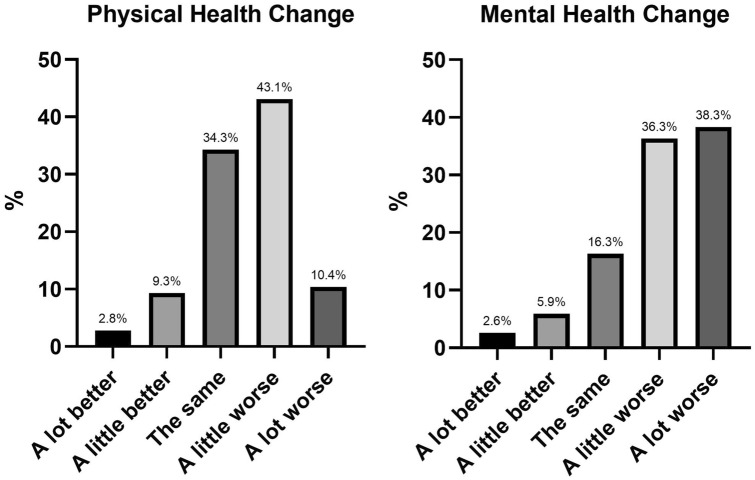
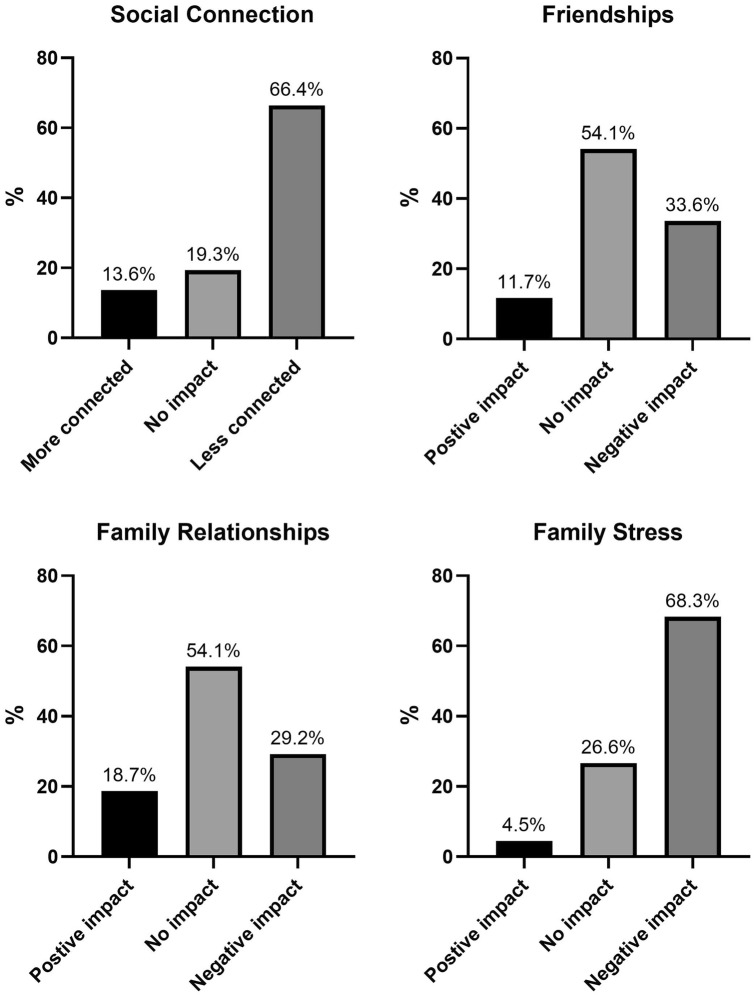
There has been significant disruption to the lives and mental health of adolescents during the COVID-19 pandemic. The purpose of this study was to assess the psychological and lifestyle impact of the pandemic on Australian adolescents, using an online survey, administered during the outbreak. Self-report surveys were administered online to a sample of 760 Australian adolescents aged 12–18 years assessing impact on a range of domains including behaviour, education, relationships, lifestyle factors (exercise, technology use, and sleep), and mental health outcomes (psychological distress, loneliness, health anxiety and well-being). Results showed that three quarters of the sample experienced a worsening in mental health, since the pandemic began, with negative impacts reported on learning, friendships and family relationships. There were also high higher levels of sleep disturbance, psychological distress and health anxiety, relative to normative samples. Effects on mental health were worse among those who reported a previous diagnosis of depression and/or anxiety relative to those without no such history. Adolescents are already vulnerable to the onset of mental illness at this developmental stage, and the current research underscores the need to find rapid and accessible ways to support adolescent mental health during times of crisis.
Overview
The claims and statistics of this paper haven’t been checked yet.
Free: it reads the open-access text and checks the first 5 claims that cite a source we can check. Create a free account to check every claim.
Integrity signals
Registry
Cites
Statistics
Figures
Verification
Claims the paper makes
The claims and statistics of this paper haven’t been checked yet.
Free: it reads the open-access text and checks the first 5 claims that cite a source we can check. Create a free account to check every claim.
Claims other papers make about this one
Each is checked against this paper’s own text: does it say what the citing paper says it does?
The cited source doesn’t support the claim as written.
In the citing paper
“In the meta-analysis, including two studies (40, 41), a non-significant relationship between lifestyle behaviors and social media use during the pandemic was found.”
From Digital Media Use and Adolescents' Mental Health During the Covid-19 Pandemic: A Systematic Review and Meta-Analysis (2022) · cites this paper as [41]
Checked by a reasoning model — may be wrong.
Experimental — accuracy not yet measuredThe cited source doesn’t support the claim as written.
In the citing paper
“Higher increases in loneliness from the first time point assessed between 2018 and 2019 to the second time point assessed between May and July 2020 significantly predicted an increase in negative mood (β = 0.44, p < 0.001, 95% CI [0.39, 0.54]) and anhedonia (β = 0.38, p < 0.001, 95% CI [0.37, 0.54]) across those same two time points.”
From Loneliness and Well-Being in Children and Adolescents during the COVID-19 Pandemic: A Systematic Review (2023) · cites this paper as [60]
Checked by a reasoning model — may be wrong.
Experimental — accuracy not yet measuredThe source backs part of the claim, not all of it — or backs it for a different population, condition or comparison.
In the citing paper
“Two studies reported comparable effect sizes for screen time and well-being, the latter measured as general well-being and happiness (41, 54).”
From Digital Media Use and Adolescents' Mental Health During the Covid-19 Pandemic: A Systematic Review and Meta-Analysis (2022) · cites this paper as [41]
Experimental — accuracy not yet measuredThe source backs part of the claim, not all of it — or backs it for a different population, condition or comparison.
In the citing paper
“In two studies, mean levels of loneliness significantly increased from pre-pandemic (2018/2019) to during the pandemic (April to July 2020) [60,65].”
From Loneliness and Well-Being in Children and Adolescents during the COVID-19 Pandemic: A Systematic Review (2023) · cites this paper as [60]
Experimental — accuracy not yet measuredThe cited source says what the claim attributes to it.
In the citing paper
“Participants with previous mental health problems were also at higher risk of an unhealthy lifestyle, including lower levels of physical activity, higher levels of screen time, and poorer sleep quality (41).”
From Digital Media Use and Adolescents' Mental Health During the Covid-19 Pandemic: A Systematic Review and Meta-Analysis (2022) · cites this paper as [41]
1 more claim about this paper
Create a free account to see every claim other papers make about this one.
Self-check
Percentages, sums and reported differences re-computed from the paper’s own numbers.
The self-check needs the paper’s full text.
Citations
Cites
KESSLER, R. C., ANDREWS, G., COLPE, L. J., HIRIPI, E., MROCZEK, D. K., NORMAND, S.-L. T., WALTERS, E. E., & ZASLAVSKY, A. M. (2002) · Psychological Medicine · doi:10.1017/s0033291702006074 · Cited by 10,327 · cited 1×
“The Kessler-6 (K6) assessed general psychological distress over the past 30 days [32, 33].”
BackgroundSelf-rated health and mortality: a review of twenty-seven community studies.
Idler, E. L., & Benyamini, Y. (1997) · Journal of Health and Social Behavior · doi:10.2307/2955359 · Cited by 8,598 · cited 1×
“Participants rated their self-rated health [27], and were asked whether they had a chronic illness, had ever been diagnosed with depression or anxiety by a professional, and current mental health treatments.”
BackgroundValidation of the Insomnia Severity Index as an outcome measure for insomnia research
Bastien, C. (2001) · Sleep Medicine · doi:10.1016/s1389-9457(00)00065-4 · Cited by 8,067 · cited 2×
“• Sleep: sleep was measured using the Insomnia Severity Index (ISI), which is a seven-item self-report measure of insomnia symptoms over the previous 2 weeks [29].”
BackgroundMethodMerikangas, K. R., He, J.-P., Burstein, M., Swanson, S. A., Avenevoli, S., Cui, L., Benjet, C., Georgiades, K., & Swendsen, J. (2010) · Journal of the American Academy of Child & Adolescent Psychiatry · doi:10.1016/j.jaac.2010.05.017 · Cited by 6,278
UCLA loneliness scale (version 3): reliability, validity, and factor structure
Russell, D. W. (1996) · Journal of Personality Assessment · doi:10.1207/s15327752jpa6601_2 · Cited by 5,800 · cited 1×
“• Loneliness: a single item was selected to assess loneliness and was taken from the UCLA Loneliness Scale [31].”
MethodHolmes, E. A., O'Connor, R. C., Perry, V. H., Tracey, I., Wessely, S., Arseneault, L., Ballard, C., Christensen, H., Cohen Silver, R., Everall, I., et al. (2020) · The Lancet Psychiatry · doi:10.1016/s2215-0366(20)30168-1 · Cited by 5,715 · cited 1×
“The overall objective of the current study is to address this gap and answer calls from the scientific community to assess how young people’s lives and mental health has been impacted by the pandemic [23, 24].”
BackgroundSelf-citationScreening for serious mental illness in the general population
Kessler, R. C., Barker, P. R., Colpe, L. J., Epstein, J. F., Gfroerer, J. C., Hiripi, E., Howes, M. J., Normand, S.-L. T., Manderscheid, R. W., Walters, E. E., et al. (2003) · Archives of General Psychiatry · doi:10.1001/archpsyc.60.2.184 · Cited by 5,692 · cited 2×
“92, and has comparable psychometric properties to clinical tools, such as the Compositive International Diagnostic Inventory in assessing the presence of probable mental illness [33].”
BackgroundMethodThe Warwick-Edinburgh Mental Well-being Scale (WEMWBS): development and UK validation
Tennant, R., Hiller, L., Fishwick, R., Platt, S., Joseph, S., Weich, S., Parkinson, J., Secker, J., & Stewart-Brown, S. (2007) · Health and Quality of Life Outcomes · doi:10.1186/1477-7525-5-63 · Cited by 5,031 · cited 1×
“The seven-item Warwick Edinburgh Mental Well-Being Scale—short form (SWEMWS; [36]) assessed mental wellbeing over the past 2 weeks and has validated for use in young people [37].”
MethodWHO Coronavirus Disease (COVID-19) Dashboard
(2020) · Bangladesh Physiotherapy Journal · doi:10.46945/bpj.10.1.03.01 · Cited by 3,806
Loades, M. E., Chatburn, E., Higson-Sweeney, N., Reynolds, S., Shafran, R., Brigden, A., Linney, C., McManus, M. N., Borwick, C., & Crawley, E. (2020) · Journal of the American Academy of Child & Adolescent Psychiatry · doi:10.1016/j.jaac.2020.05.009 · Cited by 2,906 · cited 2×
“Given a lack of social connection has negative consequences on social and cognitive development [9], and loneliness increases the risk of the development of depression and other disorders [12], mental health prevention and intervention efforts need to focus on improving social connection, particularly in areas that ha…”
Background
Research works printed but not linked: 1
- Spriggs M Understanding consent in research involving children: a handbook for Human Research Ethics Committees and researchers 2010 Melbourne University of Melbourne
Cited by
Items 201–241 of 241
Sleep Problems During the COVID-19 Pandemic in Children and Adolescents
Chowdhury, S. R., Gautam, K., & Gulati, S. (2023) · Progress in Sleep Research · doi:10.1007/978-981-99-0240-8_4
Digital Inter-est: On Being Together in a Global Digital World
Lee, J., Branford, A., Karakas, G., Kayes, L., & Quek, K. (2023) · Springer eBooks · doi:10.1007/978-981-19-9980-2_10
Asfuroğlu, P., Eyüboğlu, T. Ş., Aslan, A. T., Gürsoy, T. R., Acar, A. Ş. S., Yapar, D., & ILHAN, M. N. (2023) · The Journal of Pediatric Academy · doi:10.4274/jpea.2023.208
“State anxiety score Children Aged 9-12 [median (range)] (n=6) 26 (22-30) (n=33) 29 (21-44) 0.”
InfluentialNguyen, V. L., Tse, T., Willcock, S., Vagholkar, S., & Wu, B. (2023) · Australian Journal of General Practice · doi:10.31128/ajgp-10-22-6588
Judd, J., Pilkington, R. M., Malvaso, C., Procter, A. M., Montgomerie, A., Anderson, J. J. A., Jureidini, J. N., Petersen, J., Lynch, J., & Chittleborough, C. (2023) · medRxiv · doi:10.1101/2023.09.19.23295224
SAÚDE MENTAL DOS ADOLESCENTES NA PANDEMIA: UMA REVISÃO INTEGRATIVA
Santos, J. D. S. D., de Almeida, V. R. S., Souza, S. D. L., Nery, G. D. S., & de Carvalho, R. C. (2023) · Revista Contemporânea · doi:10.56083/rcv3n10-073
Schütz, R., & Bilz, L. (2024) · Research Square · doi:10.21203/rs.3.rs-4183346/v1
Using Twitter to predict the start and progression of mental illness
Lavania, G., Sharma, G., Goyal, D., Sharma, R., & Kumari, A. (2023) · International Conference on Information Management & Machine Intelligence (ICIMMI) · doi:10.1145/3647444.3652486
Álvaro Cavieres, F., & López‐Silva, P. (2024) · Revista chilena de neuro-psiquiatría · doi:10.4067/s0717-92272024000100054
Denson, N., Dunn, K. M., Kamp, A., Ben, J., Pitman, D., Sharples, R., Lim, G., Paradies, Y., & McGarty, C. (2024) · Journal of Clinical Medicine · doi:10.3390/jcm13247495 · Cited by 1
Mauroy, A., Rossignol, M., Dieu, C., Laforgue, F., Lahrour, S., Sibeni, A., & Gaugue, J. (2025) · Neuropsychiatrie de l Enfance et de l Adolescence · doi:10.1016/j.neurenf.2024.12.002
The psychometric properties of the child anxiety and depression life interference scale (CADLIS)
O’Gradey‐Lee, M., Jones, A., Gandhi, E., Lyneham, H. J., Rapee, R. M., & Hudson, J. L. (2025) · Child and Adolescent Psychiatry and Mental Health · doi:10.1186/s13034-024-00856-3
Subotic-Kerry, M., Mackinnon, A. J., Gallen, D., Baker, S. T. E., Parker, B., Achilles, M. R., Chakouch, C., Cockayne, N. L., Christensen, H. M., & O’Dea, B. (2025) · medRxiv · doi:10.1101/2025.02.14.25322324
Self-citationRashad, A. A., El-Bostany, E. A., Salama, I. I., Abdellatif, G. A., Ragab, S. M., Abelhamid, G. L., Tantway, A. A., Elghoroury, E. A., Hamid, N. A., & Hamed, A. E. (2024) · South East European Journal of Immunology · doi:10.3889/seejim.2024.6082
“…Canada, Germany, US, and Australia had assessed adolescent mental health in response to the COVID-19 pandemic [48], [49], [50], [51], [52], [53], [54], [55], [56], [57], [58] which collectively showed that the prevalence of mental illness was elevated and the most important types of mental…”
Duholm, C. S. (2025) · Journal of Psychosomatic Research · doi:10.1016/j.jpsychores.2025.112126
Pratt, M. T. G., Le, H., Lin, A. P., Mace, A. O., Blyth, C. C., & Moore, H. C. (2025) · Journal of Paediatrics and Child Health · doi:10.1111/jpc.70111
Csajbók, Z., & Kearns, P. B. (2025) · European Psychiatry · doi:10.1192/j.eurpsy.2025.10067
“Adolescent and young adult mental health is an increasing concern, as recent studies indicate worsening of both internalizing and externalizing symptoms [1, 2].”
Yu, Y., Zheng, Y., Chua, J. J. E., Yang, Y., & Rifkin‐Graboi, A. (2025) · Journal of Child and Family Studies · doi:10.1007/s10826-025-03191-z · Cited by 2
“In Australia, effects on mental health were worse among adoles - cents with a previous diagnosis of depression and/or anxiety (Li et al., 2021).”
Protective factors in potential trauma for adolescent surf lifesavers
Lawes, J. C., Fien, S., Ledger, J., Drummond, M., Simon, P., Joseph, N., Daw, S., Best, T., Stanton, R., & de Terte, I. (2025) · Journal of Safety Research · doi:10.1016/j.jsr.2025.10.026 · Cited by 1
Orozco, A. L., Thomas, A. J., Raggatt, M. H., Scott, N., Eddy, S., Douglass, C. H., Wright, C. C. J., Spelman, T., & Lim, M. S. C. (2024) · Figshare · doi:10.6084/m9.figshare.27116073
Orozco, A. L., Thomas, A. J., Raggatt, M. H., Scott, N., Eddy, S., Douglass, C. H., Wright, C. C. J., Spelman, T., & Lim, M. S. C. (2024) · Figshare · doi:10.6084/m9.figshare.27116076
Hamshari, S., Yaseen, S., Zayed, M., Dalasha, A., Maraqa, B. N., & Nazzal, Z. A. S. (2024) · Figshare · doi:10.6084/m9.figshare.24979495
Fujimoto, H., Heywood, A. E., Maston, K., Brown, L., Bartholomew, A., Werner‐Seidler, A., Christensen, H. M., & Batterham, P. J. (2024) · Figshare · doi:10.6084/m9.figshare.26728663
Self-citationHamshari, S., Yaseen, S., Zayed, M., Dalasha, A., Maraqa, B. N., & Nazzal, Z. A. S. (2024) · Figshare · doi:10.6084/m9.figshare.24980081
Orozco, A. L., Thomas, A. J., Raggatt, M. H., Scott, N., Eddy, S., Douglass, C. H., Wright, C. C. J., Spelman, T., & Lim, M. S. C. (2024) · Figshare · doi:10.6084/m9.figshare.27116079
Thomas, H. M., Runions, K., Lester, L., Lombardi, K., Epstein, M., Mandzufas, J., Barrow, T., Ang, S., Leahy, A., Mullane, M., et al. (2022) · Figshare · doi:10.6084/m9.figshare.18393530
Orozco, A. L., Thomas, A. J., Raggatt, M. H., Scott, N., Eddy, S., Douglass, C. H., Wright, C. C. J., Spelman, T., & Lim, M. S. C. (2024) · Figshare · doi:10.6084/m9.figshare.27116067
Fujimoto, H., Heywood, A. E., Maston, K., Brown, L., Bartholomew, A., Werner‐Seidler, A., Christensen, H. M., & Batterham, P. J. (2024) · Figshare · doi:10.6084/m9.figshare.26728666
Self-citationBeames, J. R., Huckvale, K., Fujimoto, H., Maston, K., Batterham, P. J., Calear, A. L., Mackinnon, A. J., Werner‐Seidler, A., & Christensen, H. M. (2024) · Figshare · doi:10.6084/m9.figshare.26573980
Self-citationGrøsland, M., Larsen, V. B., Reneflot, A., & Hart, R. K. (2023) · Figshare · doi:10.6084/m9.figshare.22612604
Fujimoto, H., Heywood, A. E., Maston, K., Brown, L., Bartholomew, A., Werner‐Seidler, A., Christensen, H. M., & Batterham, P. J. (2024) · Figshare · doi:10.6084/m9.figshare.26728669
Self-citationOrozco, A. L., Thomas, A. J., Raggatt, M. H., Scott, N., Eddy, S., Douglass, C. H., Wright, C. C. J., Spelman, T., & Lim, M. S. C. (2024) · Figshare · doi:10.6084/m9.figshare.27116070
Subotic-Kerry, M., Mackinnon, A. J., Gallen, D., Baker, S. T. E., Parker, B., Achilles, M. R., Chakouch, C., Cockayne, N. L., Christensen, H. M., & O’Dea, B. (2025) · Child and Adolescent Psychiatry and Mental Health · doi:10.1186/s13034-025-00975-5
“Alternatively, students may not have found the service relevant at the time, particularly in the context of heightened loneliness, isolation, and uncertainty during the pandemic (e.g., [57]).”
Self-citationS.P.A.C.E.: a case study on navigating challenges and opportunities in online social work placements
Saxton, K., Barry, J., Artes, D., Gonzalez, D., DeLuca, I., & Sherpa, T. (2026) · Social Work Education · doi:10.1080/02615479.2025.2608896
Langfield, C. T. (2026) · Youth Justice · doi:10.1177/14732254261428263
Erbasi, E., Muir, S., & McLean, K. (2026) · Child and Adolescent Social Work Journal · doi:10.1007/s10560-026-01093-7
“Increased mental health needs during the pandemic support existing related Australian research (Li et al., 2021; Thomas et al., 2022; Upton et al., 2021), including that involving children with increased adversity (Bryson et al., 2021), and international findings (Panchal et al., 2023 ; Wolf &…”
Predictors of rural mothers’ promotion of early adolescents' peer adjustment during COVID-19
Mack, D. R., Parker, J. G., & Berryhill, M. B. (2026) · Journal of Applied Developmental Psychology · doi:10.1016/j.appdev.2026.101959
Daniunaite, I. (2022) · doi:10.15388/vu.thesis.410 · Cited by 1
Park, J.-Y., Endo, B., & Flores, S. (2026) · Journal of Child and Adolescent Mental Health · doi:10.2989/17280583.2026.2680867
McLean, M., Phelps, C., Moro, C., van Herwerden, L. A., & Brandis, S. J. (2026) · Emerald Group Publishing Limited eBooks · doi:10.1108/978-1-83742-484-920261007
Metadata
- Authors
- Li, S. H., Beames, J. R., Newby, J. M., Maston, K., Christensen, H., & Werner-Seidler, A.
- Affiliations
- Black Dog Institute (AU)
- ORCID
- Venue
- European Child & Adolescent Psychiatry
- Published
- 2021-04-28
- Volume
- 31
- Issue
- 9
- Pages
- 1465-1477
- ISSN
- 1018-8827 (ISSN-L)
- 1435-165X
- PMC
- PMC8080862
- OpenAlex
- W3158069654
- Cited by
- 242
- References
- 57
- Citations by year
- 2026: 9 · 2025: 19 · 2024: 52 · 2023: 56 · 2022: 75 · 2021: 30
- FWCI
- 36.32
- Type
- journal article
- Language
- en
- Open access
- hybrid
- doi.org
- Licence
- cc-by
- creativecommons.org/licenses/by/4.0 (tdm)
- creativecommons.org/licenses/by/4.0 (vor)
- Locations
- European Child & Adolescent Psychiatry (publishedVersion, cc-by)
- medRxiv (acceptedVersion)
- PubMed Central (publishedVersion, cc-by)
- PubMed (publishedVersion)
- Lirias (KU Leuven) (submittedVersion, cc-by)
- Funders
- NSW Ministry of Health (Fellowship)
- Medical Research Future Fund (Career Development Fellowship)
- Topics
- Social Sciences › Psychology › Clinical Psychology › COVID-19 and Mental Health
- Social Sciences › Psychology › Clinical Psychology › Child and Adolescent Psychosocial and Emotional Development
- Social Sciences › Sociology and Political Science › Impact of Technology on Adolescents
- Keywords
- COVID-19 pandemic, adolescent mental health, psychological distress, loneliness, health anxiety, sleep disorders, lifestyle factors, physical activity, technology use, school disruption, Australian adolescents
- MeSH terms
- COVID-19, SARS-CoV-2, Adolescent, Anxiety, Australia, Depression, Humans, Mental Health, Pandemics
About these checks
Registry, retraction, Cites and statistics results are computed, not judged, with one exception: a printed reference that no index lists is read once by a model before it counts as a citation error. Claims are extracted by a model and kept only when their quote appears verbatim in the text; each cited source is then checked, with a model’s help, for whether it says what the claim relies on. Those verdicts can be wrong — read the claim’s quote and the cited source before relying on one.
Statistics and arithmetic are recomputed, not judged.
Confidence bands are shown only for fields calibrated on our annotated test set. None is calibrated yet, so no band is shown.
What counts as a claim ›How we measure confidence ›How we check this ›
Are you an author, or do you see a problem with this page? Request a review
Data sources
Bibliographic data: Semantic Scholar, OpenAlex, Crossref.
Contains information from the Semantic Scholar Academic Graph Datasets, made available under the ODC Attribution License (ODC-BY 1.0).
Semantic Scholar’s data is described in: Kinney, R., et al. (2023). The Semantic Scholar Open Data Platform. arXiv:2301.10140.
