

The DOI matches its Crossref record; 69 of the 69 references it cites were found in a registry or an index; none of the 21 sources its claims cite is checked for support yet.
Acute and chronic hypopituitarism following traumatic brain injury: a systematic review and meta-analysis
Open accessAbstract
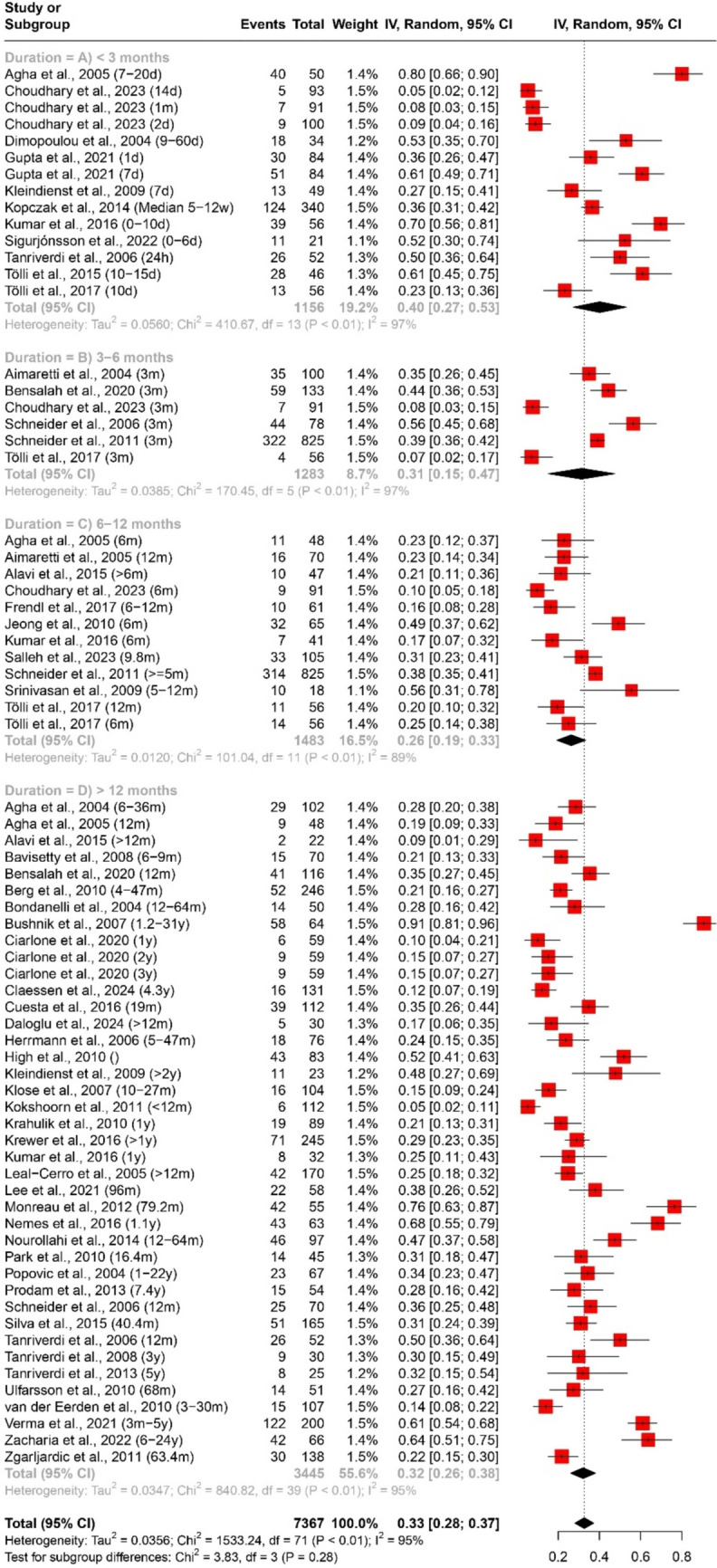
Traumatic brain injury (TBI) is associated with various endocrine abnormalities, including pituitary axis dysfunction. Understanding the prevalence and temporal patterns of these dysfunctions is crucial for effective clinical management. This study aimed to systematically review the literature and conduct a meta-analysis to determine the prevalence of pituitary axis dysfunction following TBI, assess temporal patterns across different post-injury durations, and identify potential contributing factors. A comprehensive search was conducted across multiple electronic databases between 1st of January 2000 until 31st March 2024. Studies reporting the prevalence of pituitary axis dysfunction post-TBI were included. Pooled estimates with 95% confidence intervals (CIs) were calculated using random-effects models in the R statistical software. Subgroup analyses were performed based on duration post-TBI (< 3 months, 3–6 months, 6–12 months, > 12 months) to explore temporal variations. Heterogeneity was assessed using the I^2 statistic. A total of 52 studies were included in the meta-analysis, encompassing 7367 participants. The pooled estimate for the prevalence of any pituitary axis dysfunction post-TBI was 33% (95% CI [28%; 37%]). Subgroup analysis by duration revealed varying prevalence rates: < 3 months (40%, 95% CI [27%; 53%]), 3–6 months (31%, 95% CI [15%; 47%]), 6–12 months (26%, 95% CI [19%; 33%]), and > 12 months (32%, 95% CI [26%; 38%]). Prevalence of multiple axes affection was 7% (95% CI [6%; 9%]), with varying rates across durations. Specific axes affection varied: Growth Hormone (GH) deficiency was 18% (95% CI [14%; 21%]), adrenocorticotropic hormone (ACTH) deficiency was 10% (95% CI [8%; 13%]), pituitary–gonadal axis hormones deficiency was 16% (95% CI [12%; 19%]), and thyroid-stimulating hormone (TSH) deficiency was 6% (95% CI [5%; 7%]). This meta-analysis highlights a significant prevalence of pituitary axis dysfunction following TBI, with temporal variations observed across different post-injury durations. The findings underscore the importance of tailored clinical management strategies based on the duration and type of dysfunction. Further research addressing potential contributing factors is warranted to enhance understanding and management of these conditions.
Overview
CoChat Summary
TL;DR
This systematic review and meta-analysis of 52 studies and 7367 participants found that the pooled prevalence of any pituitary axis dysfunction after traumatic brain injury was 33% (95% CI [28%; 37%]). Prevalence varied by time since injury and by specific pituitary axis, with growth hormone deficiency being the most common.
Key findings
- Pooled prevalence of any pituitary axis dysfunction post-TBI was 33% (95% CI [28%; 37%]); by duration, it was 40% (95% CI [27%; 53%]) at <3 months, 31% (95% CI [15%; 47%]) at 3–6 months, 26% (95% CI [19%; 33%]) at 6–12 months, and 32% (95% CI [26%; 38%]) at >12 months.
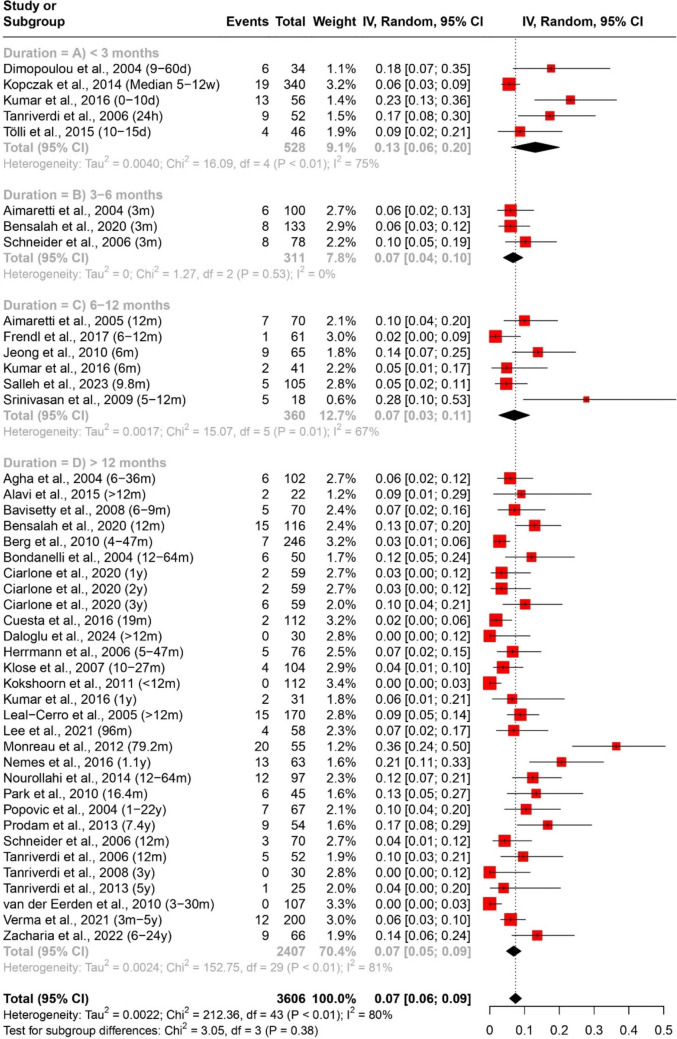
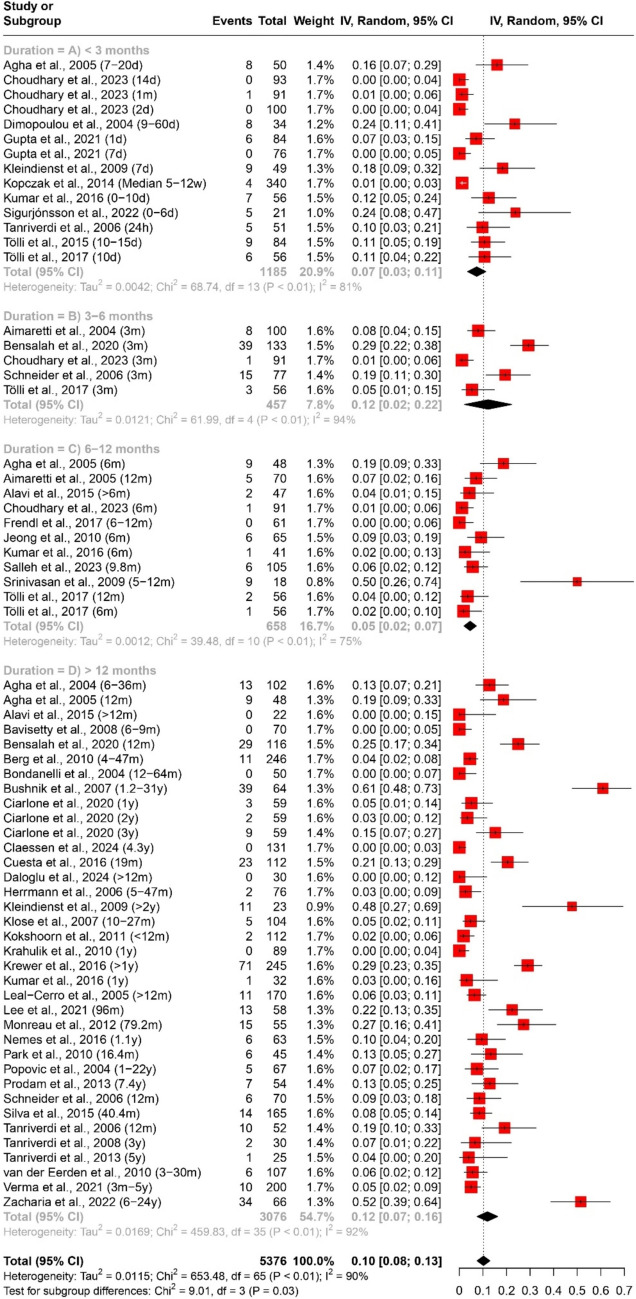
- Multiple axes affection had an overall pooled prevalence of 7% (95% CI [6%; 9%]), with 13% (95% CI [6%; 20%]) at <3 months and 7% at later intervals.
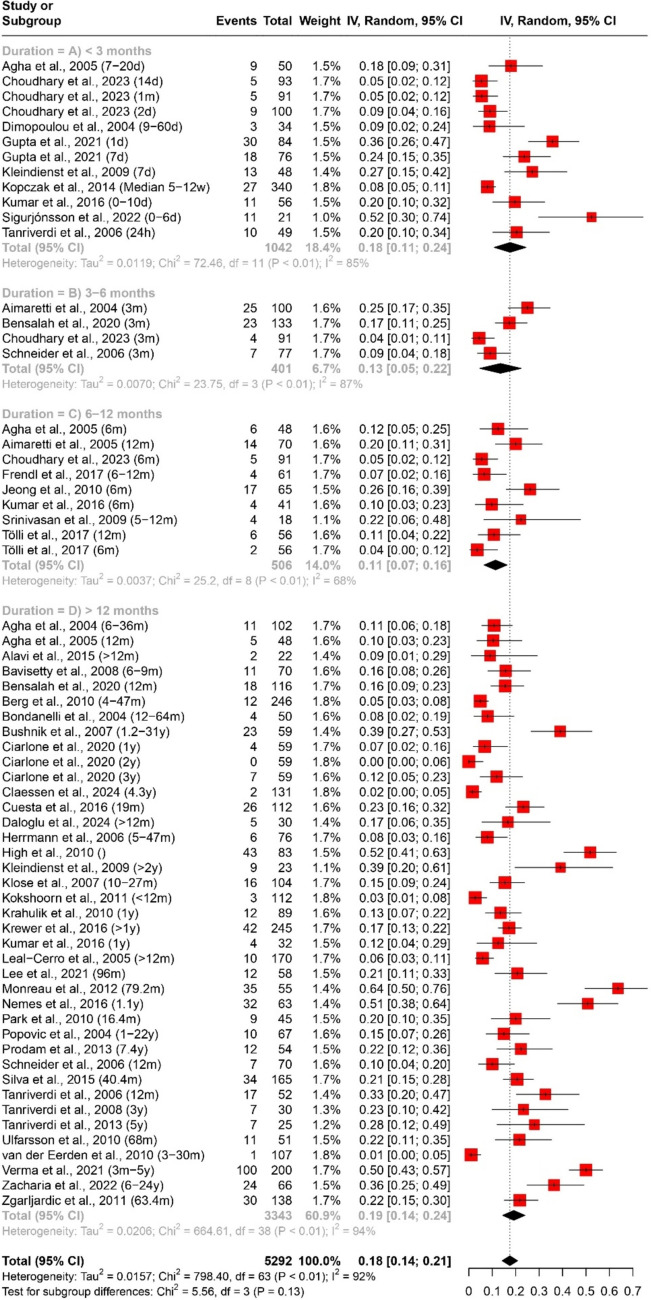
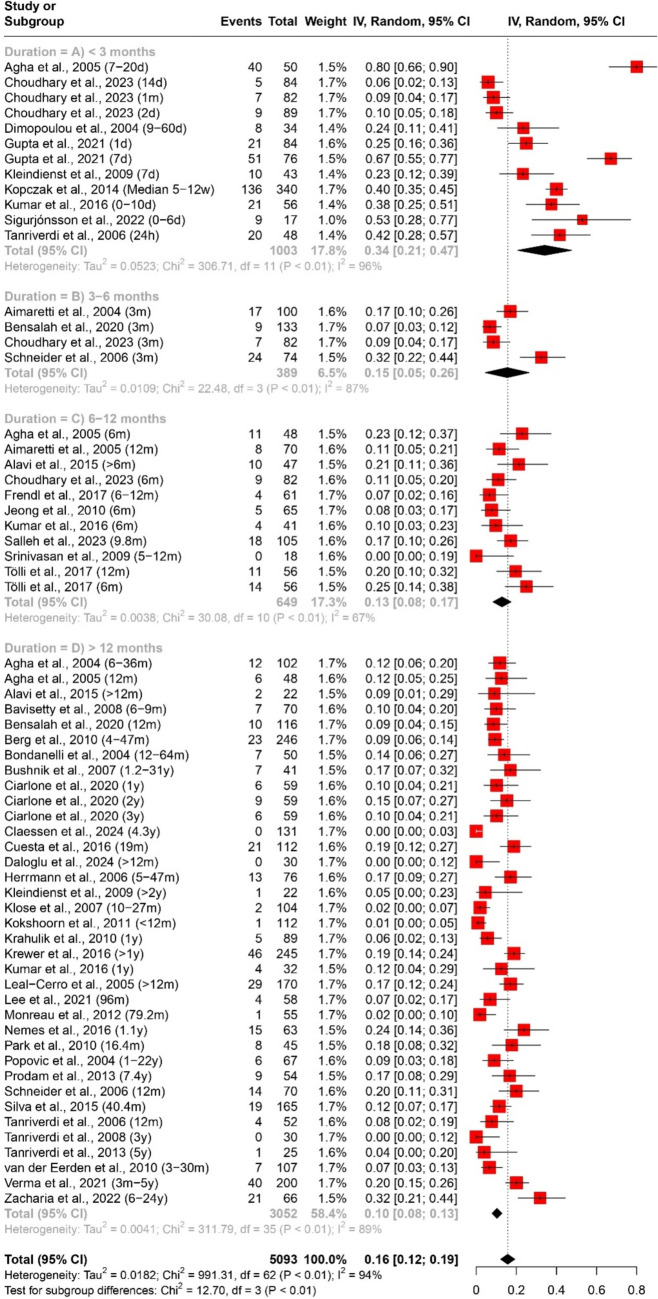
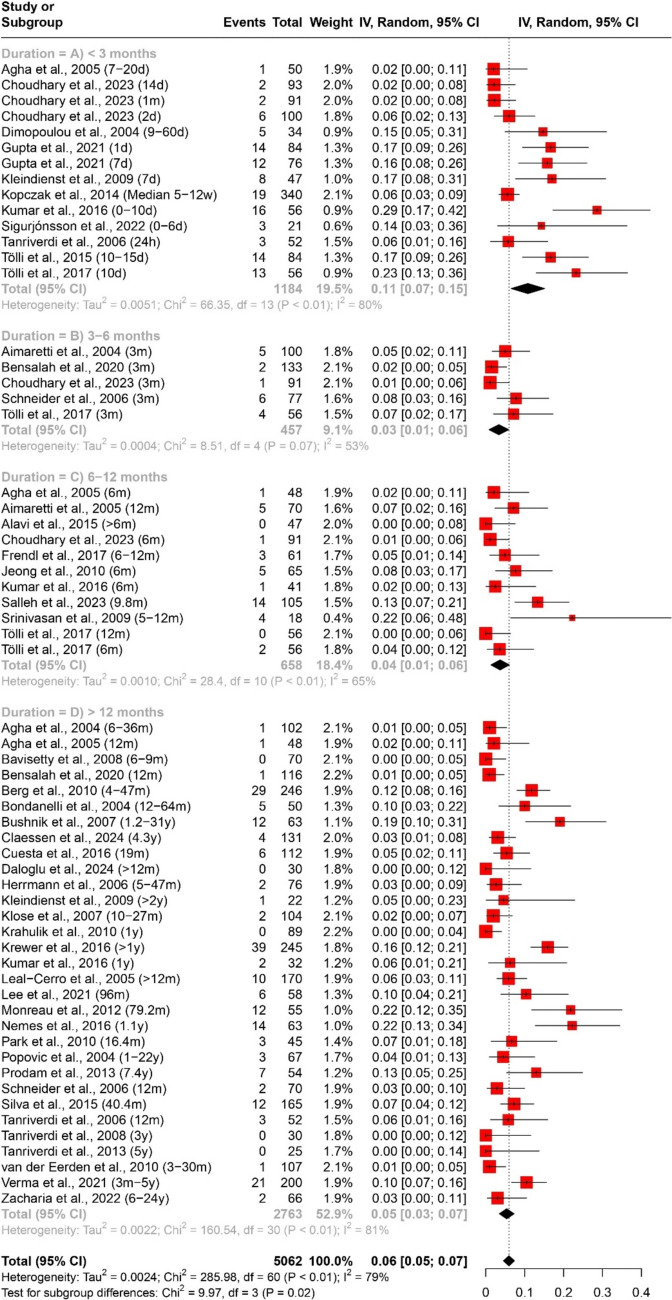
- Specific axis deficiencies: GH deficiency 18% (95% CI [14%; 21%]), pituitary–gonadal axis hormones deficiency 16% (95% CI [12%; 19%]), ACTH deficiency 10% (95% CI [8%; 13%]), and TSH deficiency 6% (95% CI [5%; 7%]).
- Pituitary–gonadal axis deficiency was highest within the first 3 months at 34% (95% CI [21%; 47%]), while GH deficiency was highest beyond 12 months at 19% (95% CI [14%; 24%]).
Methods
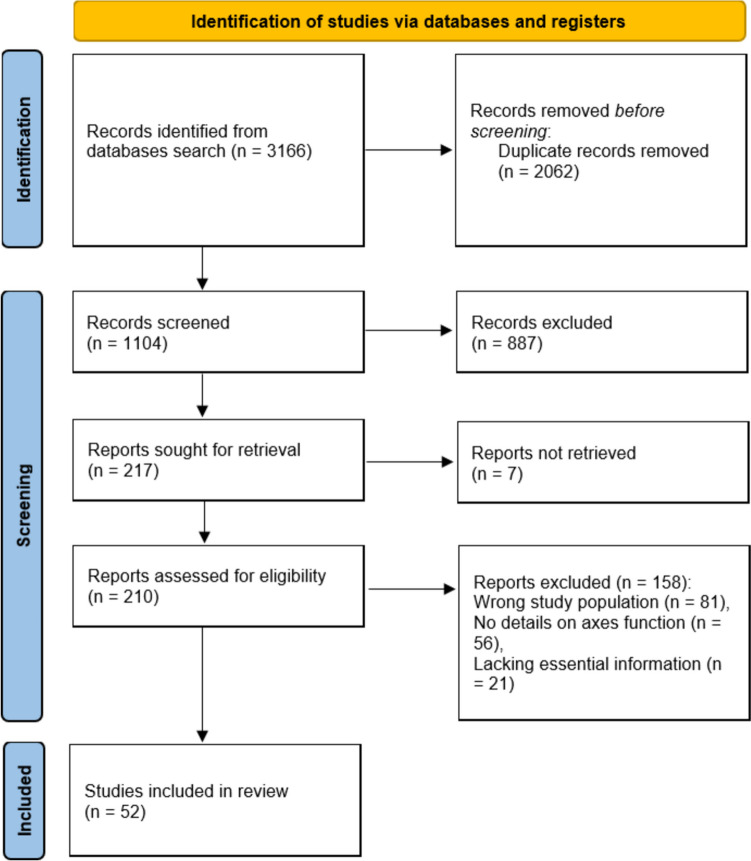
- Systematic review and meta-analysis following PRISMA; searched PubMed, Web of Science, Scopus, Medline, Cochrane Library, and Google Scholar for English-language studies published from 1 January 2000 to 31 March 2024.
- Included observational, cohort, case–control, and cross-sectional studies of adults with TBI, requiring clear diagnostic criteria, prevalence data, sample size ≥10, and Newcastle–Ottawa Scale score ≥7; 52 studies with 7367 participants were included.
- Pooled prevalence estimates used random-effects models in R with the DerSimonian–Laird method; subgroup analyses were by duration post-TBI (<3, 3–6, 6–12, >12 months), with heterogeneity assessed by I² and publication bias by funnel plots.
Limitations
- The paper states that potential risk factors remain unclear, publication bias is possible, English-language restriction may limit generalizability, incomplete reporting challenged data extraction/quality assessment, and some relevant recent studies may have been overlooked.
- The text makes evident substantial heterogeneity: overall I² was 95% for any axis affection, 89–97% across duration subgroups, and up to 96% for specific axes, so pooled estimates should be interpreted cautiously.
- The text also makes evident variability across included study designs (28 prospective, 9 retrospective, 15 cross-sectional) and diagnostic/time definitions, which likely contributes to inconsistent prevalence estimates.
Model-written summary. Check it against the paper before relying on it.
Integrity signals
Registry
Cites
Statistics
Figures
Verification
Claims the paper makes
0 Valid · 0 Not valid · 12 Not checked · 72 Own results and interpretations
A result the paper reports from its own data — it cites no other source for it, so there is none to check. The quote shows it is in the paper.
In the paper
“The overall prevalence was 10% (95% CI [8%; 13%]).”
§ Acute and chronic hypopituitarism following traumatic brain injury: a systematic review and meta-analysis > Characteristics of the included studies > Quantitative data synthesis
plainn = 5,376- Asserted: passes — The authors put it forward as true.
- Checkable: passes — It can be checked against evidence.
- Load-bearing: unclear — It is unclear whether the paper’s conclusions depend on it.
- Based: passes — The paper gives a reason why it holds.
A result the paper reports from its own data — it cites no other source for it, so there is none to check. The quote shows it is in the paper.
In the paper
“our analysis revealed an overall prevalence of 7% (95% CI [6%; 9%])”
§ Acute and chronic hypopituitarism following traumatic brain injury: a systematic review and meta-analysis > Discussion
plain- Asserted: passes — The authors put it forward as true.
- Checkable: passes — It can be checked against evidence.
- Load-bearing: unclear — It is unclear whether the paper’s conclusions depend on it.
- Based: passes — The paper gives a reason why it holds.
A result the paper reports from its own data — it cites no other source for it, so there is none to check. The quote shows it is in the paper.
In the paper
“Notably, heterogeneity levels varied across these subgroups, ranging from 0 to 81%.”
§ Acute and chronic hypopituitarism following traumatic brain injury: a systematic review and meta-analysis > Characteristics of the included studies > Quantitative data synthesis
plain- Asserted: passes — The authors put it forward as true.
- Checkable: passes — It can be checked against evidence.
- Load-bearing: unclear — It is unclear whether the paper’s conclusions depend on it.
- Based: passes — The paper gives a reason why it holds.
- Rests on an assumption not shown here.
A result the paper reports from its own data — it cites no other source for it, so there is none to check. The quote shows it is in the paper.
In the paper
“7% (95% CI [3%; 11%]) for < 3 months”
§ Acute and chronic hypopituitarism following traumatic brain injury: a systematic review and meta-analysis > Characteristics of the included studies > Quantitative data synthesis
plainn = 5,376- Asserted: passes — The authors put it forward as true.
- Checkable: passes — It can be checked against evidence.
- Load-bearing: unclear — It is unclear whether the paper’s conclusions depend on it.
- Based: passes — The paper gives a reason why it holds.
A result the paper reports from its own data — it cites no other source for it, so there is none to check. The quote shows it is in the paper.
In the paper
“Prevalence of multiple axes affection was 7% (95% CI [6%; 9%])”
- Also stated in: § Quantitative data synthesis · plain
“the overall prevalence of multiple axes affection was 7% (95% CI [6%; 9%]), as depicted in Fig. 3.”
§ Acute and chronic hypopituitarism following traumatic brain injury: a systematic review and meta-analysis > Abstract
plainn = 36- Asserted: passes — The authors put it forward as true.
- Checkable: passes — It can be checked against evidence.
- Load-bearing: unclear — It is unclear whether the paper’s conclusions depend on it.
- Based: passes — The paper gives a reason why it holds.
- Rests on 4 assumptions not shown here.
- Also stated in: § Quantitative data synthesis · plain
54 more claims
Create a free account to see all 84 claims and to verify the 21 references still open.
- It may state two separate claims as one. 10
- The quote only partly states this claim. 2
- Probably not a substantial claim. 15
Claims other papers make about this one
Each is checked against this paper’s own text: does it say what the citing paper says it does?
In the citing paper
“A 2024 international meta-analysis, encompassing 72 datasets from 52 studies and 7,367 subjects, reported an overall prevalence of approximately 33% for PTHP involving any hormonal axis [27].”
From Pediatric osmotic demyelination syndrome triggered by post-traumatic pituitary stalk injury: a case report (2026) · cites this paper as [27]
Self-check
Percentages, sums and reported differences re-computed from the paper’s own numbers.
Each contradiction between two passages listed here was confirmed by an independent check.
Rated minor: it would not touch a result — a value no result rests on, a p-value that stays on the same side of the significance level, or a conflict that is clerical, resolved elsewhere in the paper, or outside its own findings.
In the paper
“| van der Eerden et al., 2010 [66] | Netherlands | Cross-sectional | 107 | 65.4% | 45 (22–63) | 3-30 m | NR | 77 | 30 | 30 | 8 |”
§ Acute and chronic hypopituitarism following traumatic brain injury: a systematic review and meta-analysis > Results > Search results
Reported 107 · recomputed 137
Rated minor: it would not touch a result — a value no result rests on, a p-value that stays on the same side of the significance level, or a conflict that is clerical, resolved elsewhere in the paper, or outside its own findings.
In the paper
§ Acute and chronic hypopituitarism following traumatic brain injury: a systematic review and meta-analysis > Characteristics of the included studies > Quality assessment (NOS)
“Studies like Choudhary et al. (2023) and Tanriverdi et al. (2006, 2008) obtained NOS scores of 9”
§ Acute and chronic hypopituitarism following traumatic brain injury: a systematic review and meta-analysis > Results > Search results
“| Tanriverdi et al., 2008 [62] | Turkey | Prospective | 30 | 83.3% | 37.2 ± 2.4 | 3y | NR | 19 | 6 | 5 | 8 |”
Rated minor: it would not touch a result — a value no result rests on, a p-value that stays on the same side of the significance level, or a conflict that is clerical, resolved elsewhere in the paper, or outside its own findings.
In the paper
§ Acute and chronic hypopituitarism following traumatic brain injury: a systematic review and meta-analysis > Characteristics of the included studies > Patient demographics
“The mean age of participants varied from 29.2 years (Leal-Cerro et al., 2005) to 48.3 years (Tölli et al., 2015) [46, 63].”
§ Acute and chronic hypopituitarism following traumatic brain injury: a systematic review and meta-analysis > Results > Search results
“| Kleindienst et al., 2009 [39] | Germany | Prospective | 71 | 80.3% | 53 ± 20 | 7d, 2y | 25.6 ± 3.9 | 24 | 32 | 15 | 7 |”
Rated minor: it would not touch a result — a value no result rests on, a p-value that stays on the same side of the significance level, or a conflict that is clerical, resolved elsewhere in the paper, or outside its own findings.
In the paper
§ Acute and chronic hypopituitarism following traumatic brain injury: a systematic review and meta-analysis > Methodology > Study duration
“No restrictions were placed on the publication year to ensure the inclusion of relevant studies spanning a wide timeframe.”
§ Acute and chronic hypopituitarism following traumatic brain injury: a systematic review and meta-analysis > Methodology > Search strategy
“The search was limited to studies published in English between 1st of January 2000 until the search date of 31st of March 2024.”
Rated minor: it would not touch a result — a value no result rests on, a p-value that stays on the same side of the significance level, or a conflict that is clerical, resolved elsewhere in the paper, or outside its own findings.
In the paper
§ Acute and chronic hypopituitarism following traumatic brain injury: a systematic review and meta-analysis > Results > Search results
“| Ulfarsson et al., 2010 [65] | Sweden | Retrospective | 51 | 74.5% | 37.9 (16–64) | 68 m | 24.0 (18–29) | NR | NR | NR | 8 |”
§ Acute and chronic hypopituitarism following traumatic brain injury: a systematic review and meta-analysis > References
“65. Ulfarsson T, Arnar Gudnason G, Rosén T, Blomstrand C, Stibrant Sunnerhagen K, Lundgren-Nilsson Å, Nilsson M (2013) Pituitary function and functional outcome”
5 more findings
Create a free account to see every finding of this check.
Citations
Cites
Page, M. J., Moher, D., Bossuyt, P. M., Boutron, I., Hoffmann, T. C., Mulrow, C. D., Shamseer, L., Tetzlaff, J. M., Akl, E. A., Brennan, S. E., et al. (2021) · BMJ · doi:10.1136/bmj.n160 · Cited by 13,262 · cited 3×
“This prevalence gradually decreased over time: 31% (95% CI [15%; 47”
BackgroundMethodHow to perform a meta-analysis with R: a practical tutorial
Balduzzi, S., Rücker, G., & Schwarzer, G. (2019) · Evidence Based Mental Health · doi:10.1136/ebmental-2019-300117 · Cited by 5,827
Capizzi, A., Woo, J., & Verduzco-Gutierrez, M. (2020) · Medical Clinics of North America · doi:10.1016/j.mcna.2019.11.001 · Cited by 955
Epidemiology of traumatic brain injury
(2015) · Handbook of Clinical Neurology · doi:10.1016/b978-0-444-52892-6.00001-5 · Cited by 504
McCrea, M. A., Giacino, J. T., Barber, J., Temkin, N. R., Nelson, L. D., Levin, H. S., Dikmen, S., Stein, M., Bodien, Y. G., Boase, K., et al. (2021) · JAMA Neurology · doi:10.1001/jamaneurol.2021.2043 · Cited by 411
Anterior Pituitary Dysfunction in Survivors of Traumatic Brain Injury
Agha, A., Rogers, B., Sherlock, M., O’Kelly, P., Tormey, W., Phillips, J., & Thompson, C. J. (2004) · The Journal of Clinical Endocrinology & Metabolism · doi:10.1210/jc.2004-0511 · Cited by 390
Residual pituitary function after brain injury-induced hypopituitarism: a prospective 12-month study
Aimaretti, G., Ambrosio, M. R., Di Somma, C., Gasperi, M., Cannavò, S., Scaroni, C., Fusco, A., Del Monte, P., De Menis, E., Faustini-Fustini, M., et al. (2005) · The Journal of Clinical Endocrinology & Metabolism · doi:10.1210/jc.2005-0504 · Cited by 370
Traumatic brain injury: neuropathological, neurocognitive and neurobehavioral sequelae
Pavlovic, D., Pekic, S., Stojanovic, M., & Popovic, V. (2019) · Pituitary · doi:10.1007/s11102-019-00957-9 · Cited by 369
Aimaretti, G., Ambrosio, M. R., Di Somma, C., Fusco, A., Cannavò, S., Gasperi, M., Scaroni, C., De Marinis, L., Benvenga, S., Uberti, E. C. D., et al. (2004) · Clinical Endocrinology · doi:10.1111/j.1365-2265.2004.02094.x · Cited by 339 · cited 1×
“Similarly, Aimaretti et al. (2004) [18] and Bondanelli et al. (2004) [26] highlighted the dynamic nature of pituitary dysfunction post-TBI, with prevalence rates mirroring our subgroup analyses based on duration [72, 73].”
Tanriverdi, F., Senyurek, H., Unluhizarci, K., Selcuklu, A., Casanueva, F. F., & Kelestimur, F. (2006) · The Journal of Clinical Endocrinology & Metabolism · doi:10.1210/jc.2005-2476 · Cited by 336
Occurrence of pituitary dysfunction following traumatic brain injury
Bondanelli, M., De Marinis, L., Ambrosio, M. R., Monesi, M., Valle, D., Zatelli, M. C., Fusco, A., Bianchi, A., Farneti, M., & Degli, E. C. I. (2004) · Journal of Neurotrauma · doi:10.1089/0897715041269713 · Cited by 322
Prevalence of anterior pituitary insufficiency 3 and 12 months after traumatic brain injury
Schneider, H. J., Schneider, M., Saller, B., Petersenn, S., Uhr, M., Husemann, B., von Rosen, F., & Stalla, G. K. (2006) · European Journal of Endocrinology · doi:10.1530/eje.1.02071 · Cited by 224
Leal‐Cerro, A., Flores, J. M., Rincon, M., Murillo, F., Pujol, M., Garcia‐Pesquera, F., Dieguez, C., & Casanueva, F. F. (2005) · Clinical Endocrinology · doi:10.1111/j.1365-2265.2005.02250.x · Cited by 199
Popovic, V., Pekic, S., Pavlovic, D., Maric, N., Jasovic-Gasic, M., Djurovic, B., Medic-Stojanoska, M., Zivkovic, V., Stojanovic, M., Doknic, M., et al. (2004) · Journal of Endocrinological Investigation · doi:10.1007/bf03345308 · Cited by 195
Effect of growth hormone replacement therapy on cognition after traumatic brain injury
High, W. M., Briones-Galang, M., Clark, J. A., Gilkison, C., Mossberg, K. A., Zgaljardic, D. J., Masel, B. E., & Urban, R. J. (2010) · Journal of Neurotrauma · doi:10.1089/neu.2009.1253 · Cited by 176 · cited 3×
“The pooled prevalence of any axis affection was found to be 33% (95% CI [28%; 37%]), indicating a substantial burden of pituitary dysfunction in this population.”
BackgroundPrevalence and predictive factors of post-traumatic hypopituitarism
Klose, M., Juul, A., Poulsgaard, L., Kosteljanetz, M., Brennum, J., & Feldt‐Rasmussen, U. (2007) · Clinical Endocrinology · doi:10.1111/j.1365-2265.2007.02860.x · Cited by 176
The natural history of post-traumatic hypopituitarism: implications for assessment and treatment
Agha, A., Phillips, J., O’Kelly, P., Tormey, W., & Thompson, C. J. (2005) · The American Journal of Medicine · doi:10.1016/j.amjmed.2005.02.042 · Cited by 173
Tanriverdi, F., De Bellis, A., Ulutabanca, H., Bizzarro, A., Sinisi, A. A., Bellastella, G., Amoresano Paglionico, V., Dalla Mora, L., Selcuklu, A., Unluhizarci, K., et al. (2013) · Journal of Neurotrauma · doi:10.1089/neu.2012.2752 · Cited by 129
CHRONIC HYPOPITUITARISM AFTER TRAUMATIC BRAIN INJURY: RISK ASSESSMENT AND RELATIONSHIP TO OUTCOME
Bavisetty, S., McArthur, D. L., Dusick, J. R., Wang, C., Cohan, P., Boscardin, W. J., Swerdloff, R., Levin, H., Chang, D. J., Muizelaar, J. P., et al. (2008) · Neurosurgery · doi:10.1227/01.neu.0000325870.60129.6a · Cited by 126
Tanriverdi, F., Ulutabanca, H., Unluhizarci, K., Selcuklu, A., Casanueva, F. F., & Kelestimur, F. (2008) · Clinical Endocrinology · doi:10.1111/j.1365-2265.2007.03070.x · Cited by 117
Krahulik, D., Zapletalova, J., Frysak, Z., & Vaverka, M. (2010) · Journal of Neurosurgery · doi:10.3171/2009.10.jns09930 · Cited by 108
The Outcome of Severe Traumatic Brain Injury in Latin America
Bonow, R. H., Barber, J. K., Temkin, N. R., Videtta, W., Rondina, C., Petroni, G. J., Lujan, S., Alanis, V., Fuente, G. L., Lavadenz, A., et al. (2017) · World Neurosurgery · doi:10.1016/j.wneu.2017.11.171 · Cited by 102
Hypopituitarism following severe traumatic brain injury
Herrmann, B., Rehder, J., Kahlke, S., Wiedemayer, H., Doerfler, A., Ischebeck, W., Laumer, R., Forsting, M., Stolke, D., & Mann, K. (2006) · Experimental and Clinical Endocrinology & Diabetes · doi:10.1055/s-2006-924254 · Cited by 101
Fatigue after TBI: Association with neuroendocrine abnormalities
Bushnik, T. L., Englander, J., & Katznelson, L. J. (2007) · Brain Injury · doi:10.1080/02699050701426915 · Cited by 93
Schneider, H. J., Schneider, M., Kreitschmann-Andermahr, I., Tuschy, U., Wallaschofski, H., Fleck, S., Faust, M., Renner, C. I. E., Kopczak, A., Saller, B., et al. (2011) · Journal of Neurotrauma · doi:10.1089/neu.2011.1887 · Cited by 92
Dimopoulou, I., Tsagarakis, S., Θεοδωρακοπούλου, Μ., Douka, E., Zervou, M., Kouyialis, A. T., Thalassinos, N., & Roussos, C. (2004) · Intensive Care Medicine · doi:10.1007/s00134-004-2257-x · Cited by 89
Kleindienst, A., Brabant, G., Bock, C., Maser-Gluth, C., & Buchfelder, M. (2009) · Journal of Neurotrauma · doi:10.1089/neu.2008.0601 · Cited by 76
Pituitary pathology in traumatic brain injury: A review
Sav, A., Rotondo, F., Syro, L. V., Serna, C. A., & Kovacs, K. (2019) · Pituitary · doi:10.1007/s11102-019-00958-8 · Cited by 69
Low prevalence of hypopituitarism after traumatic brain injury: a multicenter study
Kokshoorn, N. E., Smit, J. W. A., Nieuwlaat, W. A., Tiemensma, J., Bisschop, P. H., Groote Veldman, R., Roelfsema, F., Franken, A. A. M., Wassenaar, M. J. E., Biermasz, N. R., et al. (2011) · European Journal of Endocrinology · doi:10.1530/eje-11-0365 · Cited by 65
Predictors of Hypopituitarism in Patients with Traumatic Brain Injury
Silva, P. P. B., Bhatnagar, S., Herman, S. D., ZAFONTE, R. D., Klibanski, A., Miller, K. K., & Tritos, N. A. (2015) · Journal of Neurotrauma · doi:10.1089/neu.2015.3998 · Cited by 62
Molaie, A. M., & Maguire, J. (2018) · Frontiers in Endocrinology · doi:10.3389/fendo.2018.00176 · Cited by 60
Lasting pituitary hormone deficiency after traumatic brain injury
Moreau, O. K., Yollin, E., Merlen, E., Daveluy, W., & Rousseaux, M. (2012) · Journal of Neurotrauma · doi:10.1089/neu.2011.2048 · Cited by 59
Post-Traumatic Hypopituitarism—Who Should Be Screened, When, and How?
Quinn, M., & Agha, A. (2018) · Frontiers in Endocrinology · doi:10.3389/fendo.2018.00008 · Cited by 54
Berg, C., Oeffner, A., Schumm‐Draeger, P. ‐., Badorrek, F., Brabant, G. E., Gerbert, B., Bornstein, S., Zimmermann, A., Weber, M., Broecker‐Preuss, M., et al. (2009) · Experimental and Clinical Endocrinology & Diabetes · doi:10.1055/s-0029-1225611 · Cited by 54
Neuroinflammation and hypothalamo-pituitary dysfunction: focus of traumatic brain injury
Mele, C., Pingue, V., Caputo, M., Zavattaro, M., Pagano, L., Prodam, F., Nardone, A., Aimaretti, G., & Marzullo, P. (2021) · International Journal of Molecular Sciences · doi:10.3390/ijms22052686 · Cited by 53
Posterior pituitary dysfunction following traumatic brain injury: review
Tudor, R. M., & Thompson, C. J. (2019) · Pituitary · doi:10.1007/s11102-018-0917-z · Cited by 52
van der Eerden, A. W., Twickler, M. T. B., Sweep, F. C. G. J., Beems, T., Hendricks, H. T., Hermus, A. R. M. M., & Vos, P. E. (2010) · European Journal of Endocrinology · doi:10.1530/eje-09-0436 · Cited by 51
Screening for Hypopituitarism in 509 Patients with Traumatic Brain Injury or Subarachnoid Hemorrhage
Kopczak, A., Kilimann, I., von Rosen, F., Krewer, C., Schneider, H. J., Stalla, G. K., & Schneider, M. (2014) · Journal of Neurotrauma · doi:10.1089/neu.2013.3002 · Cited by 50
Park, K. D., Kim, D. Y., Lee, J. K., Nam, H.-S., & Park, Y.-G. (2010) · Brain Injury · doi:10.3109/02699052.2010.506863 · Cited by 49
Krewer, C., Schneider, M., Schneider, H. J., Kreitschmann-Andermahr, I., Buchfelder, M., Faust, M., Berg, C., Wallaschofski, H., Renner, C., Uhl, E., et al. (2016) · Journal of Neurotrauma · doi:10.1089/neu.2015.4109 · Cited by 47
Srinivasan, L., Roberts, B. K., Bushnik, T. L., Englander, J., Spain, D. A., Steinberg, G. K., Ren, L., Sandel, M. E., Al-Lawati, Z. H., Teraoka, J. K., et al. (2009) · Brain Injury · doi:10.1080/02699050902970778 · Cited by 43
Chronic endocrine consequences of traumatic brain injury — what is the evidence?
Klose, M., & Feldt-Rasmussen, U. (2018) · Nature Reviews Endocrinology · doi:10.1038/nrendo.2017.103 · Cited by 41
The frequency and the diagnosis of pituitary dysfunction after traumatic brain injury
Glynn, N., & Agha, A. (2019) · Pituitary · doi:10.1007/s11102-019-00938-y · Cited by 36
Metabolic alterations in patients who develop traumatic brain injury (TBI)-induced hypopituitarism
Prodam, F., Gasco, V., Caputo, M., Zavattaro, M., Pagano, L., Marzullo, P., Belcastro, S., Busti, A., Perino, C., Grottoli, S., et al. (2013) · Growth Hormone & IGF Research · doi:10.1016/j.ghir.2013.04.001 · Cited by 35
Alavi, S. A., Tan, C. L., Menon, D. K., Simpson, H. L., & Hutchinson, P. J. (2016) · British Journal of Neurosurgery · doi:10.3109/02688697.2015.1109060 · Cited by 35
Ulfarsson, T., Gudnason, G. A., Rosén, T., Blomstrand, C., Sunnerhagen, K. S., Lundgren‐Nilsson, Å., & Nilsson, M. (2012) · Journal of Neurotrauma · doi:10.1089/neu.2012.2494 · Cited by 34
Clinical picture and the treatment of TBI-induced hypopituitarism
Caputo, M., Mele, C., Prodam, F., Marzullo, P., & Aimaretti, G. (2019) · Pituitary · doi:10.1007/s11102-019-00956-w · Cited by 34
Jeong, J. H., Kim, Y. Z., Cho, Y. W., & Kim, J. S. (2010) · Journal of Neurosurgery · doi:10.3171/2009.10.jns091152 · Cited by 32
Pituitary function within the first year after traumatic brain injury or subarachnoid haemorrhage
Tölli, A., Borg, J., Bellander, B.-M., Johansson, F., & Höybye, C. (2017) · Journal of Endocrinological Investigation · doi:10.1007/s40618-016-0546-1 · Cited by 30
Cuesta, M., Hannon, M. J., Crowley, R. K., Behan, L. A., Tormey, W., Rawluk, D., Delargy, M., Agha, A., & Thompson, C. J. (2016) · Clinical Endocrinology · doi:10.1111/cen.12874 · Cited by 29
Prevalence of hypothalamo pituitary dysfunction in patients of traumatic brain injury
Kumar, K. V. S. H., Swamy, M. N., & Khan, M. (2016) · Indian Journal of Endocrinology and Metabolism · doi:10.4103/2230-8210.192917 · Cited by 28
Zgaljardic, D. J., Guttikonda, S., Grady, J. J., Gilkison, C. R., Mossberg, K. A., High, W. M., Masel, B. E., & Urban, R. J. (2010) · Clinical Endocrinology · doi:10.1111/j.1365-2265.2010.03935.x · Cited by 23
Post-Traumatic Hypopituitarism: A Neglected Consequence of Traumatic Brain Injury
Kałas, M., Miksiewicz, M., Kowalke, A., & Siemiński, M. (2023) · Neuroendocrinology · doi:10.1159/000529327 · Cited by 20
A clinical and pathophysiological approach to traumatic brain injury-induced pituitary dysfunction
Temizkan, S., & Kelestimur, F. (2019) · Pituitary · doi:10.1007/s11102-019-00941-3 · Cited by 20
Experience of a Pituitary Clinic for US Military Veterans With Traumatic Brain Injury
Lee, J., Anderson, L. J., Migula, D., Yuen, K. C. J., McPeak, L., & Garcia, J. M. (2021) · Journal of the Endocrine Society · doi:10.1210/jendso/bvab005 · Cited by 17
Pituitary dysfunction after traumatic brain injury: prevalence and screening strategies
Ntali, G., & Tsagarakis, S. (2020) · Expert Review of Endocrinology & Metabolism · doi:10.1080/17446651.2020.1810561 · Cited by 17
Pituitary dysfunction following mild traumatic brain injury in female athletes
Claessen, L. Ó. E., Kristjánsdóttir, H., Jónsdóttir, M. K., Lund, S. H., Kristensen, I. U., & Sigurjónsdóttir, H. Á. (2023) · Endocrine Connections · doi:10.1530/ec-23-0363 · Cited by 17
Ciarlone, S. L., Statz, J. K., Goodrich, J. A., Norris, J. N., Goforth, C. W., Ahlers, S. T., & Tschiffely, A. E. (2020) · Journal of Neuroscience Research · doi:10.1002/jnr.24604 · Cited by 16
Quality-of-life in patients with post-traumatic hypopituitarism
Nourollahi, S., Wille, J., Weiß, V., Wedekind, C., & Lippert-Grüner, M. (2014) · Brain Injury · doi:10.3109/02699052.2014.917201 · Cited by 15
Prevalence of hypopituitarism and quality of life in survivors of post‐traumatic brain injury
Meriem, B., Donaldson, M., Labassen, M., Cherfi, L., Nebbal, M., Haffaf, E. M., Abdennebi, B., Guenane, K., Kemali, Z., & Kablia, S. O. (2020) · Endocrinology Diabetes & Metabolism · doi:10.1002/edm2.146 · Cited by 15
A neurosurgical approach to traumatic brain injury and post-traumatic hypopituitarism
Tan, C. L., & Hutchinson, P. J. (2019) · Pituitary · doi:10.1007/s11102-018-0925-z · Cited by 14
Pituitary Function in the Acute Phase of Traumatic Brain Injury and Subarachnoid Hemorrhage
Tölli, A., Borg, J., Bellander, B., & Höybye, C. (2015) · International Journal of Clinical Medicine · doi:10.4236/ijcm.2015.66054 · Cited by 11
Nemes, O., Kovacs, N., Szujo, S., Bodis, B., Bajnok, L., Buki, A., Doczi, T., Czeiter, E., & Mezosi, E. (2016) · Acta Neurochirurgica · doi:10.1007/s00701-016-2995-x · Cited by 9
Frendl, I., Katkó, M., Galgoczi, E., Boda, J., Zsíros, N., Nemeti, Z., Bereczky, Z., Hudák, R., Kappelmayer, J., Erdei, A., et al. (2017) · Journal of Neurotrauma · doi:10.1089/neu.2017.5198 · Cited by 7
Salleh, N. M., Theophilus, S. C., Rahman, N., Ghani, A. R. I., Abdullah, J. M., Idris, Z., Tan, Z. H., & Kamil, N. M. (2023) · Malaysian Journal of Medical Sciences · doi:10.21315/mjms2023.30.1.9 · Cited by 4
Endocrine Dysfunction in Traumatic Subarachnoid Hemorrhage: A Prospective Study
Gupta, P. K., Mittal, R., Sharma, A., & Kumar, V. V. (2021) · Indian Journal of Neurosurgery · doi:10.1055/s-0041-1722835 · Cited by 2
Sigurjonsson, P., Jónasdóttir, Á. Í., Ólafsson, I. H., Kárason, S., Sigthorsson, G., & Sigurjónsdóttir, H. Á. (2022) · Medical Research Archives · doi:10.18103/mra.v10i9.3055 · Cited by 2
Daloğlu, O. O., Ünal, M. Ç., Kemaloğlu, C. A., Bolattürk, Ö. F., Özyazgan, İ., Tanrıverdi, F., Çoruh, A., & Keleştimur, F. (2024) · Journal of Endocrinological Investigation · doi:10.1007/s40618-024-02349-8 · Cited by 2
Choudhary, A., Sobti, S., Dev, N., Kulshreshtha, B., Sharma, R., Kaushik, K., & Kumar, A. (2024) · Indian Journal of Neurotrauma · doi:10.1055/s-0043-1769802
Research works printed but not linked: 2
- Verma PK, Rege SV, Jatav G, Kumar A (2021) Assessment of patterns of pituitary dysfunction after severe traumatic brain injury. Int J Surg 5(4):251–4
- Zacharia SS (2022) Endocrine dysfunction in patients with moderate to severe traumatic brain injury 6 months to 2 years after injury. Doctoral Dissertation, Christian Medical College, Vellore
Cited by
Fluid and electrolyte disorders following traumatic brain injury
Tomkins, M., Green, D., O’Reilly, M., & Sherlock, M. (2025) · Best Practice & Research Clinical Endocrinology & Metabolism · doi:10.1016/j.beem.2025.102014 · Cited by 15
Iglesias, P. (2025) · Endocrine Practice · doi:10.1016/j.eprac.2025.02.004 · Cited by 8
Hasan, S., & Uff, C. E. G. (2025) · Best Practice & Research Clinical Endocrinology & Metabolism · doi:10.1016/j.beem.2025.102006 · Cited by 7
Mavroudis, I. A., Petridis, F., Kazis, D. A., Dăscălescu, G., Ciobica, A. S., Ilea, C. G., Anton, S. C., & Anton, E. (2025) · Life · doi:10.3390/life15111659 · Cited by 7
Epidemiology and risk factors for hypopituitarism due to traumatic brain injury
Ünlühızarcı, K., & Urhan, E. (2025) · Best Practice & Research Clinical Endocrinology & Metabolism · doi:10.1016/j.beem.2025.101997 · Cited by 6
Metadata
- Authors
- Aljboor, G. S., Tulemat, A., Al-Saedi, A. R., Radoi, M. P., Toader, C., & Papacocea, T. M.
- Affiliations
- Carol Davila University of Medicine and Pharmacy (RO)
- Corresponding author
- Aljboor, Ghaith S.
- Venue
- Neurosurgical Review
- Published
- 2024-11-11
- Volume
- 47
- Issue
- 1
- Pages
- 841-841
- ISSN
- 0344-5607 (ISSN-L)
- 1437-2320
- PMC
- PMC11554839
- OpenAlex
- W4404221588
- Cited by
- 30
- References
- 69
- Citations by year
- 2026: 16 · 2025: 14
- FWCI
- 1.40
- Type
- journal article
- Language
- en
- Open access
- hybrid
- doi.org
- Licence
- cc-by
- creativecommons.org/licenses/by/4.0 (tdm)
- creativecommons.org/licenses/by/4.0 (vor)
- Locations
- Neurosurgical Review (publishedVersion, cc-by)
- PubMed Central (publishedVersion, cc-by)
- PubMed (publishedVersion)
- Topics
- Health Sciences › Medicine › Endocrinology, Diabetes and Metabolism › Pituitary Gland Disorders and Treatments
- Health Sciences › Medicine › Clinical Neurology › Traumatic Brain Injury and Neurovascular Disturbances
- Health Sciences › Medicine › Clinical Neurology › Traumatic Brain Injury Research
- Keywords
- traumatic brain injury, hypopituitarism, growth hormone deficiency, ACTH deficiency, gonadotropin deficiency, thyroid-stimulating hormone deficiency, prevalence, temporal patterns, endocrine dysfunction, risk factors, pituitary imaging, pituitary surgery, hormone replacement therapy, quality of life
- MeSH terms
- Brain Injuries, Traumatic, Chronic Disease, Humans, Hypopituitarism, Prevalence
About these checks
Registry, retraction, Cites and statistics results are computed, not judged, with one exception: a printed reference that no index lists is read once by a model before it counts as a citation error. Claims are extracted by a model and kept only when their quote appears verbatim in the text; each cited source is then checked, with a model’s help, for whether it says what the claim relies on. Those verdicts can be wrong — read the claim’s quote and the cited source before relying on one.
A language model drew the claims from the paper on 2026-11-14, under version 3 of the claim definition (model deepseek-v4.1-flash, prompt extract-v3).
A second model labelled each claim on 2026-11-14 (model jev-1.13-20260917, definition revision gold-guideline-v0.2).
Statistics and arithmetic are recomputed, not judged.
Confidence bands are shown only for fields calibrated on our annotated test set. None is calibrated yet, so no band is shown.
What counts as a claim ›How we measure confidence ›How we check this ›
Are you an author, or do you see a problem with this page? Request a review
Data sources
Bibliographic data: Semantic Scholar, OpenAlex, Crossref.
Contains information from the Semantic Scholar Academic Graph Datasets, made available under the ODC Attribution License (ODC-BY 1.0).
Semantic Scholar’s data is described in: Kinney, R., et al. (2023). The Semantic Scholar Open Data Platform. arXiv:2301.10140.
