

All better than being disengaged: Student engagement patterns and their relations to academic self-concept and achievement
Open accessThe DOI matches its Crossref record; 96 of the 96 references it cites were found in a registry or an index.
Abstract
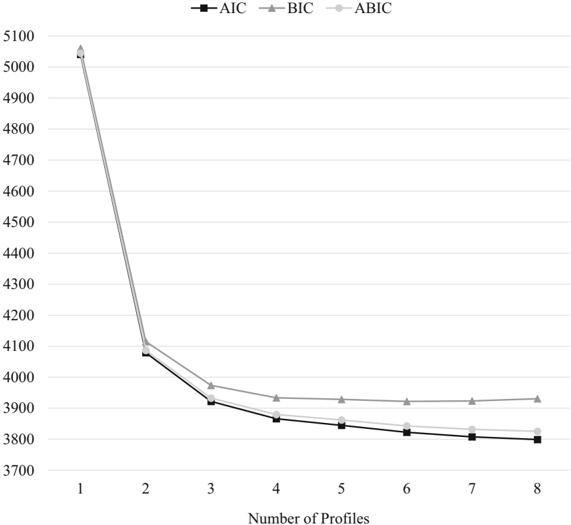
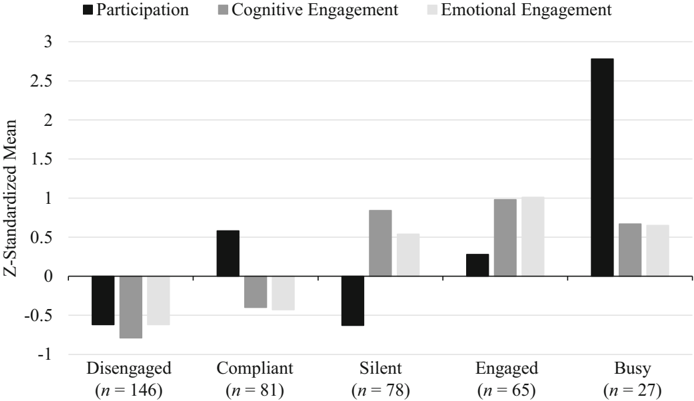
Student participation and cognitive and emotional engagement in learning activities play a key role in student academic achievement and are driven by student motivational characteristics such as academic self-concept. These relations have been well established with variable-centered analyses, but in this study, a person-centered analysis was applied to describe how the different aspects of student engagement are combined within individual students. Specifically, we investigated how the number of hand-raisings interacts with student cognitive and emotional engagement in various engagement patterns. Additionally, it was analyzed how these engagement patterns relate to academic self-concept as an antecedent and achievement as an outcome. In an empirical study, high school students ( N = 397) from 20 eighth-grade classrooms were surveyed and videotaped during one mathematics school lesson. The design included a pre- and post-test, with the videotaping occurring in between. Five within-student engagement patterns were identified by latent profile analysis: disengaged, compliant, silent, engaged, and busy. Students with higher academic self-concept were more likely to show a pattern of moderate to high engagement. Compared with students with low engagement, students with higher engagement patterns gained systematically in end-of-year achievement. These findings illustrate the power of person-centered analyses to illuminate the complexity of student engagement. They imply the need for differentiation beyond disengaged and engaged students and bring along the recognition that being engaged can take on various forms, from compliant to busy.
Overview
The claims and statistics of this paper haven’t been checked yet.
Free: it reads the open-access text and checks the first 5 claims that cite a source we can check. Create a free account to check every claim.
Integrity signals
Registry
Cites
Statistics
Figures
Verification
Claims the paper makes
The claims and statistics of this paper haven’t been checked yet.
Free: it reads the open-access text and checks the first 5 claims that cite a source we can check. Create a free account to check every claim.
Claims other papers make about this one
Each is checked against this paper’s own text: does it say what the citing paper says it does?
The cited source says what the claim attributes to it.
In the citing paper
“In the long-term, this could lead to decreased academic achievement and increased dropout rates [58].”
From Impact of online learning on student's performance and engagement: a systematic review (2024) · cites this paper as [58]
Self-check
Percentages, sums and reported differences re-computed from the paper’s own numbers.
The self-check needs the paper’s full text.
Citations
Cites
Ryan, R. M., & Deci, E. L. (2000) · American Psychologist · doi:10.1037//0003-066x.55.1.68 · Cited by 54,599
Estimating the Dimension of a Model
Schwarz, G. (1978) · The Annals of Statistics · doi:10.1214/aos/1176344136 · Cited by 47,033
Information Theory and an Extension of the Maximum Likelihood Principle
Akaike, H. (1998) · Springer Series in Statistics · doi:10.1007/978-1-4612-1694-0_15 · Cited by 17,781
School Engagement: Potential of the Concept, State of the Evidence
Fredricks, J. A., Blumenfeld, P. C., & Paris, A. H. (2004) · Review of Educational Research · doi:10.3102/00346543074001059 · Cited by 12,581 · cited 12×
“This approach does not fully use current methodological advances in its differentiation between the interdependencies of the engagement dimensions and identification of subgroups of students that share specific patterns across engagement dimensions (Fredricks et al. 2004).”
BackgroundInfluentialNylund, K. L., Asparouhov, T., & Muthén, B. O. (2007) · Structural Equation Modeling: A Multidisciplinary Journal · doi:10.1080/10705510701575396 · Cited by 11,415
Testing the number of components in a normal mixture
Lo, Y. (2001) · Biometrika · doi:10.1093/biomet/88.3.767 · Cited by 4,640
Self-concept: validation of construct interpretations.
Shavelson, R. J., Hubner, J. J., & Stanton, G. C. (1976) · Review of Educational Research · doi:10.3102/00346543046003407 · Cited by 4,164 · cited 1×
“One construct capturing student self-evaluations of their domain-specific competence is academic self-concept—the perception of one’s subject-specific academic abilities emerging from prior experiences (Shavelson et al. 1976).”
BackgroundPekrun, R., Goetz, T., Titz, W., & Perry, R. P. (2002) · Educational Psychologist · doi:10.1207/s15326985ep3702_4 · Cited by 3,931 · cited 2×
“…processing prompted, for example, by teacher questions and peer contributions (Chi et al. 2018; Jurik et al. 2014; Liem et al. 2008); and the experience of interest (Jansen et al. 2016; Wigfield and Cambria 2010) and enjoyment (Pekrun et al. 2002) are antecedents of academic achievement.”
BackgroundAuxiliary Variables in Mixture Modeling: Three-Step Approaches Using M plus
Asparouhov, T., & Muthén, B. (2014) · Structural Equation Modeling: A Multidisciplinary Journal · doi:10.1080/10705511.2014.915181 · Cited by 3,535
Skinner, E. A., & Belmont, M. J. (1993) · Journal of Educational Psychology · doi:10.1037/0022-0663.85.4.571 · Cited by 3,428 · cited 1×
“Silent students, for example, may be confronted with increased teacher control nurturing unfavorable motivational processes and decreased engagement over time due to their low participation (Skinner and Belmont 1993).”
Background
Research works printed but not linked: 5
- Muthén, L. K., & Muthén, B. O. (1998-2017). Mplus user's guide (8th ed.). Los Angeles: Muthén & Muthén.
- Seidel, T. (2005). Video analysis strategies of the IPN Video Study -a methodological overview. In T. Seidel, M. Prenzel, & M. Kobarg (Eds.). How to run a video study: Technical report of the IPN Video Study (pp. 70-78). Münster: Waxmann.
- Seidel, T., Rimmele, R., & Dalehefte, I. M. (2003). Skalendokumentation: Schülerfragebogen [Scales: student questionaire]. In T. Seidel, M. Prenzel, R. Duit, & M. Lehrke (Eds.). Technischer Bericht zur Videostudie "1Lehr-Lern-Prozesse im Physikunterricht" (pp. 317-388). Kiel: IPN.
- Böheim, R., Schnitzler, K., Gröschner, A., Weil, M., Knogler, M., Schindler, A.-K., Alles, M., & Seidel, T. (in press). How changes in teachers' dialogic discourse practice relate to changes in students' activation, motivation and cognitive engagement. Learning, Culture, and Social Interaction
- Seidel, T., Schnitzler, K., Kosel, C., Stürmer, K., & Holzberger, D. (2020). Student characteristics in the eyes of teachers: differences between novice and expert teachers in judgment accuracy, observed behavioral cues, and gaze. Educational Psychology Review. https://doi.org/10.1007/s10648-020-09532-2 · DOI
Cited by
Impact of online learning on student's performance and engagement: a systematic review
Akpen, C. N., Asaolu, S., Atobatele, S., Okagbue, H., & Sampson, S. (2024) · Discover Education · doi:10.1007/s44217-024-00253-0 · Cited by 205
“In the long-term, this could lead to decreased academic achievement and increased dropout rates [58].”
Iranian EFL Students’ L2 Engagement: The Impact of Teacher Support and Teacher-student Rapport
Shakki, F. (2022) · Language Related Research · doi:10.52547/lrr.13.3.8 · Cited by 109
Exploring Factors That Support Pre-service Teachers’ Engagement in Learning Artificial Intelligence
Ayanwale, M. A., Frimpong, E. K., Opesemowo, O. A. G., & Sanusi, I. T. (2024) · Journal for STEM Education Research · doi:10.1007/s41979-024-00121-4 · Cited by 150
Wang, L., & Yu, Z. (2023) · Frontiers in Psychology · doi:10.3389/fpsyg.2023.1136141 · Cited by 144
Afzali, Z., & Izadpanah, S. (2021) · Cogent Education · doi:10.1080/2331186x.2020.1870801 · Cited by 127
The Influence of Student Engagement on Mathematical Achievement among Secondary School Students
Maamin, M., Maat, S. M., & Iksan, Z. H. (2021) · Mathematics · doi:10.3390/math10010041 · Cited by 140
Student engagement in K12 online education during the pandemic: The case of Turkey
Kurt, G., Atay, D., & Öztürk, H. A. (2021) · Journal of Research on Technology in Education · doi:10.1080/15391523.2021.1920518 · Cited by 72
Mihelič, K. K., Lim, V. K. G., & Culiberg, B. (2022) · European Journal of Psychology of Education · doi:10.1007/s10212-022-00617-w · Cited by 86
Examining the mediation of engagement between self-efficacy and language achievement
Cai, Y., & Xing, K. (2025) · Journal of Multilingual and Multicultural Development · doi:10.1080/01434632.2023.2217801 · Cited by 46
Nickl, M., Huber, S. A., Sommerhoff, D., Codreanu, E., Ufer, S., & Seidel, T. (2022) · International Journal of Educational Technology in Higher Education · doi:10.1186/s41239-022-00351-9 · Cited by 70
Self-citationTomaszewski, W., Xiang, N., Huang, Y., Western, M., McCourt, B., & McCarthy, I. (2022) · Education Sciences · doi:10.3390/educsci12050358 · Cited by 80
Schnitzler, K., Holzberger, D., & Seidel, T. (2020) · Frontiers in Education · doi:10.3389/feduc.2020.602470 · Cited by 46
Self-citationYılmaz, F. G. K., Zhang, K., Üstün, A. B., & Yılmaz, R. (2022) · Interactive Learning Environments · doi:10.1080/10494820.2022.2091603 · Cited by 41
Exploring the roles of academic self-concept and perseverance of effort in self-assessment practices
Yang, L., Yan, Z., Zhang, D., Boud, D. J., & Datu, J. A. D. (2023) · Assessment in Education Principles Policy and Practice · doi:10.1080/0969594x.2023.2191161 · Cited by 44
Decristan, J., Jansen, N. C., & Fauth, B. (2023) · Learning and Instruction · doi:10.1016/j.learninstruc.2023.101748 · Cited by 53
Supervía, P. U., Salavera, C., & Lorente, V. M. (2020) · International Journal of Environmental Research and Public Health · doi:10.3390/ijerph17228323 · Cited by 34
Liu, Y., Di, S., Zhang, Y., & Ma, C. (2023) · International Journal of Environmental Research and Public Health · doi:10.3390/ijerph20064808 · Cited by 35
Earl, S. R., Taylor, I. M., Meijen, C., & Passfield, L. (2022) · Learning and Individual Differences · doi:10.1016/j.lindif.2022.102248 · Cited by 30
Desmet, O. A., & Pereira, N. (2021) · Journal of Advanced Academics · doi:10.1177/1932202x211057424 · Cited by 31
Flipped learning: facilitating student engagement through repeated instruction and direct feedback
Masruddin, M., Hartina, S., Arifin, M. A., & Langaji, A. (2024) · Cogent Education · doi:10.1080/2331186x.2024.2412500 · Cited by 256
Ncube, M., & Luneta, K. (2025) · Pythagoras · doi:10.4102/pythagoras.v46i1.815 · Cited by 85
Fomina, T. G., Filippova, E. V., & Morosanova, V. I. (2021) · Psychological Science and Education · doi:10.17759/pse.2021260503 · Cited by 29
The effect of leisure engagement on preschool teachers’ job stress and sustainable well-being
Nong, L., Wu, Y.-F., Ye, J., Liao, C., & Wei, C. (2022) · Frontiers in Psychology · doi:10.3389/fpsyg.2022.912275 · Cited by 27
Ye, X., Cheng, T., & Yang, W. (2025) · Behavioral Sciences · doi:10.3390/bs15070881 · Cited by 43
Morosanova, V. I., Bondarenko, I. N., & Fomina, T. G. (2022) · Psychology in Russia State of Art · doi:10.11621/pir.2022.0411 · Cited by 44
Schnell, J., Saxer, K., Morinaj, J., & Hascher, T. (2025) · European Journal of Psychology of Education · doi:10.1007/s10212-025-00947-5 · Cited by 47
Yang, D., Cai, Z., Tan, Y., Zhang, C., Li, M., Fei, C., & Huang, R. (2022) · Behavioral Sciences · doi:10.3390/bs12110408 · Cited by 31
Student engagement and its development in university education: A three-year follow-up study
Korhonen, V. A., Ketonen, E. E., & Toom, A. (2024) · Learning and Individual Differences · doi:10.1016/j.lindif.2024.102465 · Cited by 39
How and Why Teachers Use Technology: Distinct Integration Practices in K-12 Education
Raave, D. K., Saks, K., Pedaste, M., & Roldan-Roa, E. (2024) · Education Sciences · doi:10.3390/educsci14121301 · Cited by 51
STEM students conceptions of online learning during COVID-19 pandemic: A phenomenographic study
Beruin, L. C. (2022) · Journal of Pedagogical Research · doi:10.33902/jpr.202217716 · Cited by 23
Vo, H. (2023) · Educational Review · doi:10.1080/00131911.2022.2159935 · Cited by 23
Subiyantoro, S., Degeng, I. N. S., Kuswandi, D., & Ulfa, S. U. (2024) · International Journal of Information and Education Technology · doi:10.18178/ijiet.2024.14.1.2020 · Cited by 46
How vocal and silent forms of participation in combination relate to student achievement
Sedova, K., & Sedlacek, M. (2023) · Instructional Science · doi:10.1007/s11251-022-09609-1 · Cited by 33
“1 3 355 K. Sedova, M. Sedlacek Our results are in line with those of Schnitzler et al. (2020), who found the disengaged profile (low in hand-raising and in cognitive and emotional engagement) to be prevalent in the German eighth grade, and the busy profile (extremely high in hand-raising, high in…”
BackgroundResultInfluentialŠeďová, K., Sedláček, M., Šalamounová, Z., Lintner, T., Švaříček, R., Vlček, J., Malíková, K., & Rozmahel, I. (2025) · Language and Education · doi:10.1080/09500782.2025.2454637 · Cited by 29
Çelik, Ö. C., & Alpan, G. B. (2023) · Educational Process International Journal · doi:10.22521/edupij.2023.122.3 · Cited by 23
Jansen, N. C., Decristan, J., & Fauth, B. (2022) · Unterrichtswissenschaft · doi:10.1007/s42010-021-00141-8 · Cited by 21
Wang, X. (2023) · Journal of Research in Reading · doi:10.1111/1467-9817.12431 · Cited by 14
Phusavat, K., & Buheji, M. (2024) · International Journal of Learning and Development · doi:10.5296/ijld.v14i1.21626 · Cited by 16
Xu, Q., & Yin, J. (2022) · Frontiers in Psychology · doi:10.3389/fpsyg.2022.833285 · Cited by 13
Åström, F., & Almqvist, L. (2022) · Frontiers in Education · doi:10.3389/feduc.2022.982837 · Cited by 20
Li, S., Chen, J., & Liu, S. (2024) · Journal of Computer Assisted Learning · doi:10.1111/jcal.13059 · Cited by 14
How making mistakes shapes students’ situational engagement in chemistry laboratory?
Kyynäräinen, R., Vilhunen, E., & Vesterinen, V.-M. (2026) · International Journal of Science Education · doi:10.1080/09500693.2024.2439142 · Cited by 12
Liu, K., Zhao, Y., Li, M., Li, W., & Yang, Y. (2022) · Frontiers in Psychology · doi:10.3389/fpsyg.2022.977678 · Cited by 23
Morek, M., Heller, V., & Kinalzik, N. (2022) · Language and Education · doi:10.1080/09500782.2022.2155474 · Cited by 18
Jin, G., Wang, Q., Lei, J., Chen, Y., & Liu, S. (2024) · Psychology in the Schools · doi:10.1002/pits.23363 · Cited by 12
Wani, E. A., & Ismail, H. H. (2024) · International Journal of Academic Research in Progressive Education and Development · doi:10.6007/ijarped/v13-i1/20207 · Cited by 34
Honson, V., Vu, T. T., Tran, T. P., & Estay, W. T. (2024) · Journal of Work-Applied Management · doi:10.1108/jwam-11-2023-0121 · Cited by 20
Yang, Y., Govindasamy, P., & Isa, N. J. M. (2024) · Psychology in the Schools · doi:10.1002/pits.23277 · Cited by 18
Peng, Q., Liang, S., Ravindran, L., Li, N., & Zheng, A. (2024) · Current Psychology · doi:10.1007/s12144-024-06378-7 · Cited by 11
Innovative Integration of Poetry and Visual Arts in Metaverse for Sustainable Education
Kim, J.-Y., & Kim, H.-S. (2024) · Education Sciences · doi:10.3390/educsci14091012 · Cited by 12
Metaverse for digital health solutions
Shamim, N., Wei, M., Gupta, S., Verma, D. S., Abdollahi, S., & Shin, M. M. (2025) · International Journal of Information Management · doi:10.1016/j.ijinfomgt.2025.102869 · Cited by 9
Bach, K. M., Reinhold, F., & Hofer, S. I. (2025) · npj Science of Learning · doi:10.1038/s41539-025-00358-7 · Cited by 20
Mundelsee, L., & Jurkowski, S. (2024) · Personality and Individual Differences · doi:10.1016/j.paid.2024.112545 · Cited by 12
Quiet in class? Exploring discourses on verbal participation
Tenglet, E. (2023) · Educational Research · doi:10.1080/00131881.2023.2203138 · Cited by 18
Developing Youth Agricultural Entrepreneurship in Latin America and the Caribbean
Zickafoose, A., Wingenbach, G., Baker, M., & Price, E. (2023) · Sustainability · doi:10.3390/su152215983 · Cited by 17
Moser, M., & Zimmermann, M. (2024) · The Journal of Social Studies Research · doi:10.1177/23522798241278284 · Cited by 19
Ma, J., Zheng, M., & Feng, X. (2024) · The Internet and Higher Education · doi:10.1016/j.iheduc.2024.100974 · Cited by 11
Keller, M. M., Yanagida, T., Lüdtke, O., & Goetz, T. (2025) · Educational Psychology Review · doi:10.1007/s10648-025-09995-1 · Cited by 9
Shi, Y., Chen, M., Wei, Y., Shen, J., Wu, M., & Zhu, K. (2025) · Frontiers in Psychology · doi:10.3389/fpsyg.2025.1614109 · Cited by 12
Tan, Y. S. M., & Caleon, I. S. (2022) · Teaching and Teacher Education · doi:10.1016/j.tate.2022.103816 · Cited by 19
Vogel, S. N. T., Stang‐Rabrig, J., & McElvany, N. (2023) · Social Psychology of Education · doi:10.1007/s11218-023-09801-2 · Cited by 22
Alek, A., Nguyen, T. V., & Dollah, S. (2023) · International Journal of Language Education · doi:10.26858/ijole.v7i2.36048 · Cited by 12
Zhu, S., Yao, Y., Chan, S. D., & Zhu, X. (2024) · Early Education and Development · doi:10.1080/10409289.2024.2338698 · Cited by 10
Dadandı, İ., & Yazıcı, H. (2024) · British Educational Research Journal · doi:10.1002/berj.4027 · Cited by 16
Qian, L. (2025) · Acta Psychologica · doi:10.1016/j.actpsy.2025.104938 · Cited by 12
Lobo, J. (2025) · Physical Culture and Sport Studies and Research · doi:10.2478/pcssr-2025-0030 · Cited by 10
Lowe, T., Naughton, C., Struetzel, T., Adams, R., Walker, J., Kynaston, P., & Mackey, C. (2025) · Active Learning in Higher Education · doi:10.1177/14697874251366213 · Cited by 7
Implizite Fähigkeitstheorien, akademisches Selbstkonzept und schulisches Wohlbefinden
Lüftenegger, M., Holzer, J., & Schober, B. (2021) · Unterrichtswissenschaft · doi:10.1007/s42010-021-00130-x · Cited by 10
Li, H., Wang, C., Yang, Y., & Gu, Y. (2025) · Reading & Writing Quarterly · doi:10.1080/10573569.2025.2509505 · Cited by 12
Lobo, J. (2025) · Research in Dance Education · doi:10.1080/14647893.2025.2524613 · Cited by 6
LIFE PLANS OF ADOLESCENTS AS A FACTOR OF DEVIANT BEHAVIOR PREVENTION
Shulga, T. I. (2021) · Вестник Московского государственного областного университета · doi:10.18384/2310-7235-2021-3-64-75 · Cited by 6
The Influence of School Factors on Students’ Self-Concept: Findings from PIRLS 2016
Geske, A., Kampmane, K., & Ozola, A. (2021) · Human, Technologies and Quality of Education · doi:10.22364/htqe.2021.16 · Cited by 8
Predicting Marginalized Students’ Mathematics Achievement in High School
Rittle‐Johnson, B., Adler, R. M., & Durkin, K. L. (2024) · Journal of Cognition and Development · doi:10.1080/15248372.2024.2384547 · Cited by 8
Mundelsee, L., & Jurkowski, S. (2024) · American Educational Research Journal · doi:10.3102/00028312241278585 · Cited by 11
Wu, H., Shi, Z., Ma, X., & Xu, X. (2025) · Academic Medicine · doi:10.1097/acm.0000000000006145 · Cited by 13
Wang, W., Zheng, L., & Zhang, J. (2026) · Scientific Reports · doi:10.1038/s41598-026-36913-4 · Cited by 19
Farsani, D., & Oates, G. (2023) · Cogent Psychology · doi:10.1080/23311908.2023.2210947 · Cited by 7
Patrick, S. M., Nicholas, N., Maritz, M., & Wolvaardt, L. (2025) · Medical Science Educator · doi:10.1007/s40670-025-02408-6 · Cited by 10
Arthur, F., Yidana, M. B., & Acquah, B. Y. S. (2025) · SAGE Open · doi:10.1177/21582440251342212 · Cited by 11
Stang‐Rabrig, J., Vogel, S. N. T., Forciniti, M., & McElvany, N. (2023) · European Journal of Psychology of Education · doi:10.1007/s10212-023-00739-9 · Cited by 14
Student participation in Irish primary schools
O’Brien, S., O’Hara, J., McNamara, G., O’Hara, J., Hogan, S., Sullivan, J., Tobin, P., Joyce, F., Devine, R., & Irwin-Gowran, S. (2024) · Education 3-13 · doi:10.1080/03004279.2024.2332859 · Cited by 8
Tan, S. F., Ooi, L. H., Ng, L. Y. A. M., Universiti Sains Malaysia, M., & Sim, T. Y. (2024) · International Journal of Instruction · doi:10.29333/iji.2024.17223a · Cited by 11
Categorising student behaviours as manifest indicators of learning engagement: a contextual approach
Lomholt, R., & Qvortrup, A. (2025) · European Journal of Psychology of Education · doi:10.1007/s10212-025-01034-5 · Cited by 10
Hsieh, J., Huang, H.-Y., & Liao, C. H. (2025) · Behaviour and Information Technology · doi:10.1080/0144929x.2025.2590085 · Cited by 5
Extending Token Economy Systems with the Operant Demand Framework
Levins, P., & Gilroy, S. P. (2024) · Journal of Behavioral Education · doi:10.1007/s10864-024-09556-6 · Cited by 4
Mourali, Y., Agrebi, M., Farhat, R., Kolski, C., & Jemni, M. (2024) · International Journal of Human-Computer Interaction · doi:10.1080/10447318.2024.2434765 · Cited by 4
Decolonising Classroom Management and Its Political Hegemony in Universities
Omodan, B. I. (2023) · Social Sciences · doi:10.3390/socsci12120644 · Cited by 4
Desmet, O. A., Austin, G. M., & Pereira, N. (2025) · Gifted Education International · doi:10.1177/02614294251364808 · Cited by 4
Lindermayer, C., Kosiol, T., & Ufer, S. (2026) · ZDM · doi:10.1007/s11858-026-01767-7 · Cited by 3
Liang, Y., Li, S. Z., Li, X., & Yang, L. (2024) · Language Teaching Research · doi:10.1177/13621688241274894 · Cited by 7
Multilevel engagement in academic L2 reading: Developing and validating a scale
Zandi, M., Weisi, H., & Mercer, S. (2025) · Journal of English for Academic Purposes · doi:10.1016/j.jeap.2025.101563 · Cited by 4
Pang, S., Zhang, Y., Zhang, J., Yang, Y., Sun, D., & Xiang, J. (2025) · Education and Information Technologies · doi:10.1007/s10639-025-13809-w · Cited by 6
Gara, M. R., & Cruz, F. M. F. D. (2023) · World Journal of Advanced Research and Reviews · doi:10.30574/wjarr.2023.19.1.1367 · Cited by 6
Leveraging Learning Analytics to Improve Student Engagement
Çiğdem, H., & Öncü, S. (2023) · Advances in educational technologies and instructional design book series · doi:10.4018/978-1-6684-9527-8.ch004 · Cited by 3
Shum, K. Z., Suldo, S. M., Shaunessy‐Dedrick, E., & O’Brennan, L. M. (2024) · Journal of Advanced Academics · doi:10.1177/1932202x231223760 · Cited by 5
Factors Influencing Engagement in Project-Based Learning Among College EFL Speakers
Zhong, J., Ismail, L., & Ahmad, N. K. (2024) · International Journal of Learning Teaching and Educational Research · doi:10.26803/ijlter.23.1.16 · Cited by 11
Gamification in Teacher Education: Teacher Educators and Trainee Teachers' Perspectives in India
Prakasha, G. S., Rawat, S., Ishani, B., & Mathai, S. (2024) · Advances in educational technologies and instructional design book series · doi:10.4018/979-8-3693-2169-0.ch007 · Cited by 4
Awofala, A. O. A., Olaguro, M., Fatade, A. O., & Arigbabu, A. A. (2024) · International Journal of Innovation in Science and Mathematics Education · doi:10.30722/ijisme.32.03.004 · Cited by 11
Sustaining Learning Interest Among Disengaged Students: Impacts of Constructive Feedback
Kanchana, R., Techanan, P., Phusavat, K., Kusumastuti, A., & Lesjak, D. (2025) · Sustainability · doi:10.3390/su17093830 · Cited by 6
Abukasim, S. M., Sutrisno, H., & Rohaeti, E. (2025) · Frontiers in Education · doi:10.3389/feduc.2025.1570760 · Cited by 6
Metadata
- Authors
- Schnitzler, K., Holzberger, D., & Seidel, T.
- Affiliations
- Technical University of Munich (DE)
- Corresponding author
- Schnitzler, Katharina
- Venue
- European Journal of Psychology of Education
- Published
- 2020-09-05
- Volume
- 36
- Issue
- 3
- Pages
- 627-652
- ISSN
- 0256-2928 (ISSN-L)
- 1878-5174
- OpenAlex
- W3083457042
- Semantic Scholar
- 28f3bbb32db53a8237b5ab70a5b7b53cb18d4198
- Cited by
- 213
- References
- 91
- Citations by year
- 2026: 37 · 2025: 58 · 2024: 47 · 2023: 35 · 2022: 24 · 2021: 10 · 2020: 2
- FWCI
- 17.16
- Type
- journal article
- Language
- en
- Open access
- hybrid
- doi.org
- Licence
- cc-by
- creativecommons.org/licenses/by/4.0 (tdm)
- creativecommons.org/licenses/by/4.0 (vor)
- Locations
- European Journal of Psychology of Education (publishedVersion, cc-by)
- mediaTUM – the media and publications repository of the Technical University Munich (Technical University Munich) (submittedVersion, other-oa)
- mediaTUM – the media and publications repository of the Technical University Munich (Technical University Munich) (submittedVersion)
- Funders
- Deutsche Forschungsgemeinschaft (SE1397/7-1 and SE1397/7-3)
- Topics
- Social Sciences › Psychology › Developmental and Educational Psychology › Education, Achievement, and Giftedness
- Social Sciences › Psychology › Developmental and Educational Psychology › Innovative Teaching and Learning Methods
- Social Sciences › Education › Early Childhood Education and Development
- Keywords
- student engagement, academic self-concept, academic performance, cognitive engagement, emotional engagement, engagement patterns, person-centered analysis, latent profile analysis, hand raising, high school students, mathematics education, student motivation
About these checks
Registry, retraction, Cites and statistics results are computed, not judged, with one exception: a printed reference that no index lists is read once by a model before it counts as a citation error. Claims are extracted by a model and kept only when their quote appears verbatim in the text; each cited source is then checked, with a model’s help, for whether it says what the claim relies on. Those verdicts can be wrong — read the claim’s quote and the cited source before relying on one.
Statistics and arithmetic are recomputed, not judged.
Confidence bands are shown only for fields calibrated on our annotated test set. None is calibrated yet, so no band is shown.
What counts as a claim ›How we measure confidence ›How we check this ›
Are you an author, or do you see a problem with this page? Request a review
Data sources
Bibliographic data: Semantic Scholar, OpenAlex, Crossref.
Contains information from the Semantic Scholar Academic Graph Datasets, made available under the ODC Attribution License (ODC-BY 1.0).
Semantic Scholar’s data is described in: Kinney, R., et al. (2023). The Semantic Scholar Open Data Platform. arXiv:2301.10140.
