

All better than being disengaged: Student engagement patterns and their relations to academic self-concept and achievement
Open accessThe DOI matches its Crossref record; 96 of the 96 references it cites were found in a registry or an index.
Abstract
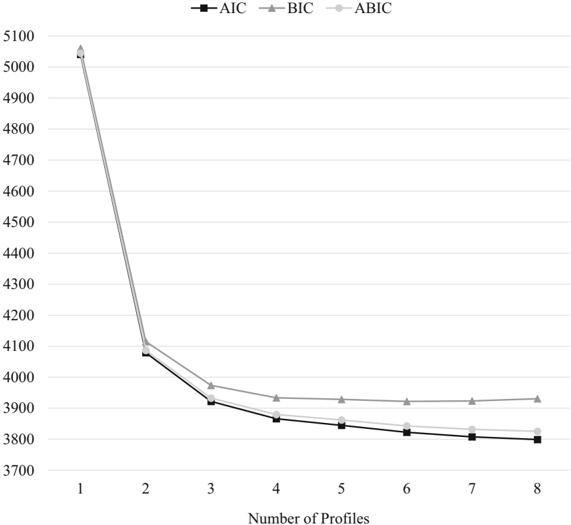
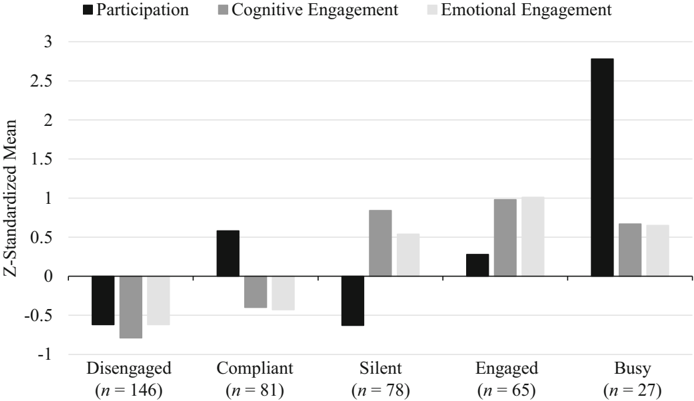
Student participation and cognitive and emotional engagement in learning activities play a key role in student academic achievement and are driven by student motivational characteristics such as academic self-concept. These relations have been well established with variable-centered analyses, but in this study, a person-centered analysis was applied to describe how the different aspects of student engagement are combined within individual students. Specifically, we investigated how the number of hand-raisings interacts with student cognitive and emotional engagement in various engagement patterns. Additionally, it was analyzed how these engagement patterns relate to academic self-concept as an antecedent and achievement as an outcome. In an empirical study, high school students ( N = 397) from 20 eighth-grade classrooms were surveyed and videotaped during one mathematics school lesson. The design included a pre- and post-test, with the videotaping occurring in between. Five within-student engagement patterns were identified by latent profile analysis: disengaged, compliant, silent, engaged, and busy. Students with higher academic self-concept were more likely to show a pattern of moderate to high engagement. Compared with students with low engagement, students with higher engagement patterns gained systematically in end-of-year achievement. These findings illustrate the power of person-centered analyses to illuminate the complexity of student engagement. They imply the need for differentiation beyond disengaged and engaged students and bring along the recognition that being engaged can take on various forms, from compliant to busy.
Overview
The claims and statistics of this paper haven’t been checked yet.
Free: it reads the open-access text and checks the first 5 claims that cite a source we can check. Create a free account to check every claim.
Integrity signals
Registry
Cites
Statistics
Figures
Verification
Claims the paper makes
The claims and statistics of this paper haven’t been checked yet.
Free: it reads the open-access text and checks the first 5 claims that cite a source we can check. Create a free account to check every claim.
Claims other papers make about this one
Each is checked against this paper’s own text: does it say what the citing paper says it does?
The cited source says what the claim attributes to it.
In the citing paper
“In the long-term, this could lead to decreased academic achievement and increased dropout rates [58].”
From Impact of online learning on student's performance and engagement: a systematic review (2024) · cites this paper as [58]
Self-check
Percentages, sums and reported differences re-computed from the paper’s own numbers.
The self-check needs the paper’s full text.
Citations
Cites
Ryan, R. M., & Deci, E. L. (2000) · American Psychologist · doi:10.1037//0003-066x.55.1.68 · Cited by 54,599
Estimating the Dimension of a Model
Schwarz, G. (1978) · The Annals of Statistics · doi:10.1214/aos/1176344136 · Cited by 47,033
Information Theory and an Extension of the Maximum Likelihood Principle
Akaike, H. (1998) · Springer Series in Statistics · doi:10.1007/978-1-4612-1694-0_15 · Cited by 17,781
School Engagement: Potential of the Concept, State of the Evidence
Fredricks, J. A., Blumenfeld, P. C., & Paris, A. H. (2004) · Review of Educational Research · doi:10.3102/00346543074001059 · Cited by 12,581 · cited 12×
“This approach does not fully use current methodological advances in its differentiation between the interdependencies of the engagement dimensions and identification of subgroups of students that share specific patterns across engagement dimensions (Fredricks et al. 2004).”
BackgroundInfluentialNylund, K. L., Asparouhov, T., & Muthén, B. O. (2007) · Structural Equation Modeling: A Multidisciplinary Journal · doi:10.1080/10705510701575396 · Cited by 11,415
Testing the number of components in a normal mixture
Lo, Y. (2001) · Biometrika · doi:10.1093/biomet/88.3.767 · Cited by 4,640
Self-concept: validation of construct interpretations.
Shavelson, R. J., Hubner, J. J., & Stanton, G. C. (1976) · Review of Educational Research · doi:10.3102/00346543046003407 · Cited by 4,164 · cited 1×
“One construct capturing student self-evaluations of their domain-specific competence is academic self-concept—the perception of one’s subject-specific academic abilities emerging from prior experiences (Shavelson et al. 1976).”
BackgroundPekrun, R., Goetz, T., Titz, W., & Perry, R. P. (2002) · Educational Psychologist · doi:10.1207/s15326985ep3702_4 · Cited by 3,931 · cited 2×
“…processing prompted, for example, by teacher questions and peer contributions (Chi et al. 2018; Jurik et al. 2014; Liem et al. 2008); and the experience of interest (Jansen et al. 2016; Wigfield and Cambria 2010) and enjoyment (Pekrun et al. 2002) are antecedents of academic achievement.”
BackgroundAuxiliary Variables in Mixture Modeling: Three-Step Approaches Using M plus
Asparouhov, T., & Muthén, B. (2014) · Structural Equation Modeling: A Multidisciplinary Journal · doi:10.1080/10705511.2014.915181 · Cited by 3,535
Skinner, E. A., & Belmont, M. J. (1993) · Journal of Educational Psychology · doi:10.1037/0022-0663.85.4.571 · Cited by 3,428 · cited 1×
“Silent students, for example, may be confronted with increased teacher control nurturing unfavorable motivational processes and decreased engagement over time due to their low participation (Skinner and Belmont 1993).”
Background
Research works printed but not linked: 5
- Muthén, L. K., & Muthén, B. O. (1998-2017). Mplus user's guide (8th ed.). Los Angeles: Muthén & Muthén.
- Seidel, T. (2005). Video analysis strategies of the IPN Video Study -a methodological overview. In T. Seidel, M. Prenzel, & M. Kobarg (Eds.). How to run a video study: Technical report of the IPN Video Study (pp. 70-78). Münster: Waxmann.
- Seidel, T., Rimmele, R., & Dalehefte, I. M. (2003). Skalendokumentation: Schülerfragebogen [Scales: student questionaire]. In T. Seidel, M. Prenzel, R. Duit, & M. Lehrke (Eds.). Technischer Bericht zur Videostudie "1Lehr-Lern-Prozesse im Physikunterricht" (pp. 317-388). Kiel: IPN.
- Böheim, R., Schnitzler, K., Gröschner, A., Weil, M., Knogler, M., Schindler, A.-K., Alles, M., & Seidel, T. (in press). How changes in teachers' dialogic discourse practice relate to changes in students' activation, motivation and cognitive engagement. Learning, Culture, and Social Interaction
- Seidel, T., Schnitzler, K., Kosel, C., Stürmer, K., & Holzberger, D. (2020). Student characteristics in the eyes of teachers: differences between novice and expert teachers in judgment accuracy, observed behavioral cues, and gaze. Educational Psychology Review. https://doi.org/10.1007/s10648-020-09532-2 · DOI
Cited by
Items 101–200 of 213
Xu, Y., Qi, Y., Tao, Y., JING, X., Wang, Y., Wang, Y., Ning, X., & Yu, X. (2026) · British Journal of Psychology · doi:10.1111/bjop.70055 · Cited by 3
Lohbeck, A., & Møller, J. (2023) · Learning and Individual Differences · doi:10.1016/j.lindif.2023.102301 · Cited by 6
Hammoudi, M. M., & Grira, S. (2023) · Eurasia Journal of Mathematics Science and Technology Education · doi:10.29333/ejmste/13808 · Cited by 7
Liu, L., Aw, E. C., & Cham, T. (2025) · Asia Pacific Business Review · doi:10.1080/13602381.2025.2452857 · Cited by 2
Zhao, Y. E., Zhang, F., & Schunn, C. D. (2025) · Assessment & Evaluation in Higher Education · doi:10.1080/02602938.2025.2512416 · Cited by 2
Space Medicine Meets Serious Games: Boosting Engagement with the Medimon Creature Collector
Hundrup, M., Holte, J., Bordeaux, C., Ferguson, E., Coad, J., Soule, T., & Bland, T. (2025) · Multimodal Technologies and Interaction · doi:10.3390/mti9080080 · Cited by 4
Angraeni, M., Mujiyanto, J., & Suwandi, S. (2023) · International Journal of Research and Review · doi:10.52403/ijrr.20230520 · Cited by 3
Apostol, R. L., & Santos, L. S. P. D. (2023) · European Journal of Education Studies · doi:10.46827/ejes.v10i11.5084 · Cited by 10
Relationship between Ethical Climate and Missed Nursing Care at Teaching Hospitals in Cairo
Abdrbo, A. A., & Bayoumy, S. A. (2022) · Egyptian Journal of Health Care · doi:10.21608/ejhc.2022.309310 · Cited by 1
Munk, S., Holzberger, D., Böheim, R., & Seidel, T. (2025) · Frontiers in Education · doi:10.3389/feduc.2024.1347749 · Cited by 2
Self-citationGamifying Big Data Education: an RPG Approach with Integrated Quiz Assessments
Siswanto, F. K., Hidayat, W. N., Widiyaningtyas, T., Fahlevi, A. R., Ariyandi, H. Z., & Setyawan, A. (2024) · International Conference of Adisutjipto on Aerospace Electrical Engineering and Informatics (ICAAEEI) · doi:10.1109/icaaeei63658.2024.10899145 · Cited by 1
Schmidt, P. P., Lindner, K., Pirker, A., Schwab, S., & Zurbriggen, C. (2025) · European Journal of Special Needs Education · doi:10.1080/08856257.2025.2474843 · Cited by 2
Measures to prevent ragging in medical colleges.
Humerah, S., Iqbal, K., Hamed, Y., Asim, A., & Zainab, S. (2025) · JMMC · doi:10.62118/jmmc.v15i2.498 · Cited by 1
Mundelsee, L., & Reschke, K. (2025) · International Journal of Educational Research · doi:10.1016/j.ijer.2025.102711 · Cited by 11
Xiang, X., Huang, X., Zhao, M., Wang, J., & Shao, Q. (2025) · Frontiers in Psychology · doi:10.3389/fpsyg.2025.1564880 · Cited by 3
Sipiyaruk, K., Srisatjaluk, R. L., Chaisiri, P., Jantawatchai, K., Srihatai, J., Sonyaem, C., Traikorakot, T., & Pookboonmee, S. (2025) · JMIR Medical Education · doi:10.2196/80048 · Cited by 1
Reimagining the Public Speaking Course: Student Experiences and Outcomes in an Online Format
Speer, A. C., Dominguez, V. G., Lussier, C. M., & Ditta, A. S. (2025) · Trends in Higher Education · doi:10.3390/higheredu4040075 · Cited by 1
Surtiningtyas, S. R., Agustono, A., Bahrawi, A., Rosmayanti, L., & Larasati, E. R. (2025) · Journal of Applied Research in Higher Education · doi:10.1108/jarhe-04-2025-0295 · Cited by 2
Akeel, M., Hosseinzadeh, S., Zeeshan, M., Homatash, H., Owoh, N. P., & Ashawa, M. (2026) · Electronics · doi:10.3390/electronics15030582 · Cited by 1
Omarchevska, Y., Schuetze, B. A., Richter, J., Schanze, S., Ulrich, N., & Scheiter, K. (2026) · Educational Psychology Review · doi:10.1007/s10648-026-10120-z · Cited by 1
Students’ Situational Engagement in a Primary School Science Project
Ervelius, P., Lavonen, J., Juuti, K., Ramsaroop, S., & Loukomies, A. (2026) · International Journal of Science and Mathematics Education · doi:10.1007/s10763-026-10648-0 · Cited by 4
Xu, Y., Tong, M., Gao, Q., Xu, J., Zhang, C., & Long, T. (2026) · Journal of Science Education and Technology · doi:10.1007/s10956-026-10305-9 · Cited by 3
Duvivier, V., Derobertmasure, A., & Demeuse, M. (2026) · Revue internationale de pédagogie de l’enseignement supérieur · doi:10.4000/16o8l · Cited by 1
Exploring Higher Education Teachers’ Attitudes Towards Gamification
Marinensi, G., & Carbonell, M. R. (2021) · Lecture notes in computer science · doi:10.1007/978-3-030-92182-8_15 · Cited by 3
The Socio-emotional Classroom Management and Student Engagement of Tertiary Teachers in Davao City
Palarisan, N. J. B., & Domag, C. M. (2023) · Asian Journal of Education and Social Studies · doi:10.9734/ajess/2023/v48i21050 · Cited by 1
Jiang, M. (2023) · International journal of Scientific and Academic Research · doi:10.54756/ijsar.2023.v3.10.2 · Cited by 1
Baiduri, B., & Usmiyatun, U. (2023) · European Journal of Education and Pedagogy · doi:10.24018/ejedu.2023.4.6.744 · Cited by 3
The Role of Self-Concept in Modulating the Effectiveness of Nature-Based Science Instruction
Jatmiko, A., Asyhari, A., Irwandani, İ., & Soeharto, S. (2023) · Jurnal Pendidikan IPA Indonesia · doi:10.15294/jpii.v12i4.48287 · Cited by 1
TORTOGO, B. L. (2024) · International Journal of Innovative Science and Research Technology (IJISRT) · doi:10.38124/ijisrt/ijisrt24mar2179 · Cited by 1
Student Engagement and Student Outcomes: Key Findings from Based on GA-BP-ANN Approach
Anand, T., Sivapurapu, L., Rani, B. A., Akila, D., Soni, D., & Senthamaraiselvi, S. (2024) · International Conference for Innovation in Technology (INOCON) · doi:10.1109/inocon60754.2024.10512022 · Cited by 2
Exploring the effect of online learners’ academic self-concepts on student engagement
Kurnaz, F. B., Ergün, E., & Adıbatmaz, M. (2024) · Journal of Educational Technology and Online Learning · doi:10.31681/jetol.1394946 · Cited by 1
Attitude in Learning as a Mediator for Engagement and Academic Performance in Mathematics
Carcueva, R. (2024) · Journal of interdisciplinary perspectives · doi:10.69569/jip.2024.0097 · Cited by 6
A case study of emergent leadership in whole-class discussion of controversial issues
Shi, Y., Zhang, Z., & Shu, C. (2024) · Language and Education · doi:10.1080/09500782.2024.2391296 · Cited by 3
School disengagement as a policy problem: a frame analysis
Molla, T. (2024) · Critical Policy Studies · doi:10.1080/19460171.2024.2423376 · Cited by 1
Senina, D. J. B., & Manguilimotan, Y. B. (2025) · EPRA International Journal of Multidisciplinary Research (IJMR) · doi:10.36713/epra19883 · Cited by 4
Zhao-hui, C., Yegon, M. C., & Sampene, A. K. (2025) · Psychology in the Schools · doi:10.1002/pits.23558 · Cited by 7
Does Gender Matter in Secondary Students' Cognitive Engagement and Academic Achievement in China?
Yangyang, Z., Ghani, M. F. A., & Hoque, K. E. (2025) · Psychology in the Schools · doi:10.1002/pits.70023 · Cited by 4
Bong, J. Y., Shaw, R., Spérano, I., & Andruchow, R. (2025) · Interactive Learning Environments · doi:10.1080/10494820.2025.2541382 · Cited by 2
Alcopra, A. R., Fadare, S. A., Pandapatan, S. A. T., Villan, K. A., Tawasil, R. I., Cosain, H. O., & Said, A. R. (2025) · Salud Ciencia y Tecnología · doi:10.56294/saludcyt20252656 · Cited by 2
Omarchevska, Y., Lachner, A., Sibley, L., Richter, J., & Scheiter, K. (2023) · doi:10.31234/osf.io/3t6g5 · Cited by 1
What different network models reveal about the relation of engagement to burnoutPreprint
Kulakow, S., & Moeller, J. (2024) · PsyArXiv (OSF Preprints) · doi:10.31234/osf.io/g4pr2 · Cited by 1
Applications of Virtual Reality
Burdea, G. C., & Coiffet, P. (2024) · Wiley eBooks · doi:10.1002/9781119512608.ch9
Tsyganov, I. Y., Fomina, T. G., & Morosanova, V. I. (2021) · Вестник Московского государственного областного университета · doi:10.18384/2310-7235-2021-3-98-115
Public Health Impacts of Drug Overdose and Mental Health
Kedia, S., Dillon, P., Schmidt, M., Entwistle, C., & Arshad, H. (2022) · Springer eBooks · doi:10.1007/978-3-030-67928-6_14-1
Shidaganti, G. I., Shetty, R., Edara, T., Srinivas, P., & Tammineni, S. C. (2022) · Lecture notes in networks and systems · doi:10.1007/978-981-19-2535-1_61
Ardianty, D. D. (2022) · JURNAL PENELITIAN ILMU PENDIDIKAN · doi:10.21831/jpipfip.v15i2.44130
Zakłócanie przebiegu lekcji – różnorodność i sytuacyjna zmienność
Konieczna, A. (2022) · Forum Pedagogiczne · doi:10.21697/fp.2022.1.19
Public Health Impacts of Drug Overdose and Mental Health
Kedia, S., Dillon, P., Schmidt, M., Entwistle, C., & Arshad, H. (2022) · Springer eBooks · doi:10.1007/978-3-030-92392-1_14
Yaseen, S., Mazahir, I., & Surya, Y. W. I. (2022) · International Journal of Media and Information Literacy · doi:10.13187/ijmil.2022.2.606 · Cited by 2
What Can Data Tell Us? Using Classroom Data to Determine Student Engagement
Torres, K. M., & Statti, A. L. C. (2023) · International Journal of Curriculum Development and Learning Measurement · doi:10.4018/ijcdlm.320219 · Cited by 7
Bourget-Piché, G., Chemla, C. L., Bigo, C., & Guay, M. (2023) · Canadian Journal of Learning and Technology · doi:10.21432/cjlt28276
Putri, C., Savitri, J., & Rohinsa, M. (2023) · JPPP - Jurnal Penelitian dan Pengukuran Psikologi · doi:10.21009/jppp.121.06 · Cited by 1
Стеблер, Р., Gmür-Ackermann, P., Reusser, K., & Pauli, C. (2023) · Unterrichtswissenschaft · doi:10.1007/s42010-023-00179-w
Lei, J., Liu, Y., & Salim, Z. (2023) · International Journal of Technology in Teaching and Learning · doi:10.37120/ijttl.2022.18.2.02 · Cited by 1
Second-degree nursing student engagement and the notion of consumerism
McCadden, L. M. (2022) · Digital Repository Service (Northeastern University) · doi:10.17760/d20476865
Rosario, D. S. (2023) · International Journal of Research Publications · doi:10.47119/ijrp10013911220235817
Baytursynova, K. N. A. A., Smagliy, T., Demisenova, S., Baytursynova, K. N. A. A., Utegenova, B., Baytursynova, K. N. A. A., Shalgimbekova, K., & Baytursynova, K. N. A. A. (2023) · 3i intellect idea innovation - интеллект идея инновация · doi:10.52269/22266070_2023_2_225
Bildung und sozialer Zusammenhalt. Gutachten
Anders, Y., Hannover, B., Jungbauer-Gans, M., Lenzen, D., McElvany, N., Seidel, T., Tippelt, R., Wilbers, K., & Woessmann, L. (2024) · Waxmann Verlag GmbH eBooks · doi:10.31244/9783830998709 · Cited by 6
Jin, H. Y., & Tu, C. C. (2024) · Journal of Curriculum and Teaching · doi:10.5430/jct.v13n2p55
Triarchic intelligences and engagement: The erratic factors in mathematics
Flores, G. M. (2024) · International Journal of Educational Management and Development Studies · doi:10.53378/353055 · Cited by 1
Hammoudi, M. M., Grira, S., & Alseksek, Y. (2023) · International Conference on Education and E-Learning (ICEEL) · doi:10.1145/3637989.3637997 · Cited by 2
Agora: Motivating and Measuring Engagement in Large-Class Discussions
Zarkoob, H., Nand, S., Leyton‐Brown, K., & Toti, G. (2024) · ACM Conference on Innovation and Technology in Computer Science Education (ITiCSE) · doi:10.1145/3649217.3653540
Ishak, M., Yunisal, P., Setiawan, E., Fernando, L., & Lobo, J. (2024) · Edu Sportivo/Edu Sportivo · doi:10.25299/esijope.2024.vol5(2).16897
Exploration of the online learners’ actions: A sequence mining approach
Natthaphatwirata, R., & Matcha, W. (2024) · Online Journal of Communication and Media Technologies · doi:10.30935/ojcmt/14957
Muro, M. P., Vargas, J. D. Y., Pontes, L. R. A., Braga, M. M., & the IuSTC collaborative group (2024) · Research Square · doi:10.21203/rs.3.rs-5285930/v1
Tvedt, M. S., Vasalampi, K., & Virtanen, T. E. (2025) · European Journal of Psychology of Education · doi:10.1007/s10212-025-00946-6 · Cited by 3
Phusavat, K., Kanchana, R., Kusumastuti, A., Lesjak, D., & Majava, J. (2025) · The Urban Review · doi:10.1007/s11256-025-00729-9 · Cited by 5
Sedláček, M., Šeďová, K., Švaříček, R., & Šalamounová, Z. (2025) · Studia paedagogica · doi:10.5817/sp2024-3-2 · Cited by 2
Jiang, F. (2025) · Applied Mathematics and Nonlinear Sciences · doi:10.2478/amns-2025-0092
Motivational trajectories and sense of self: A longitudinal study of high school students in Taiwan
Cheng, W., & Kueh, L.-L. (2025) · Journal of Applied Developmental Psychology · doi:10.1016/j.appdev.2025.101790
Roles of Indirect Feedback and Attitude for Sustainability in Learning
Kusumastuti, A., Rodchom, P., Intolo, W., & Phusavat, K. (2025) · Sustainability · doi:10.3390/su17093778 · Cited by 2
Socioeconomic Disadvantage and Schoolwork Engagement in Adolescence: A Systematic Literature Review
Tuohy, M., Symonds, J. E., & D’Urso, G. (2025) · World Futures · doi:10.1080/02604027.2025.2503670
Attitudinal model predictor of academic performance of pre-service teachers
Navalta, C. J. D. (2025) · International Journal of Innovative Research and Scientific Studies · doi:10.53894/ijirss.v8i3.7117
Sanjaya, I., Ananda, A., Rafni, A., Montessori, M., & Hasril, H. (2025) · Edukasi Jurnal Pendidikan dan Pengajaran · doi:10.19109/ppm10j19
Istifadah, I., Usriyah, L., Jauhari, J., Suhma, F. M., & Ardha, M. A. (2025) · Annual Conference of Islamic Education (ACIE) · doi:10.4108/eai.14-10-2024.2356226
Cultura, C., & Curaza, L. J. (2025) · Pantao (International Journal of the Humanities and Social Sciences) · doi:10.69651/pijhss0402265
Experiences of Midwifery Education as a Neurodivergent Student
Henry, K. (2025) · IGI Global eBooks · doi:10.4018/979-8-3693-8044-4.ch013
Fadila, D. R. H., & Fathiyah, K. N. (2025) · Journal of Basic Education Research · doi:10.37251/jber.v6i3.2074
Othman, M. Z., Daud, S., Taib, N. M., Yazid, Z. A., & Hasbullah, N. N. (2025) · Information Management and Business Review · doi:10.22610/imbr.v17i3(i)s.4569
Yu, T., Yang, Y., Zeng, Q., Xu, Z., Li, C., & Zhang, H. (2025) · BMC Medical Education · doi:10.1186/s12909-025-07650-5
Fajariani, Y. L., & Muthmainah, M. (2025) · Jurnal Obsesi Jurnal Pendidikan Anak Usia Dini · doi:10.31004/obsesi.v9i6.7672
Neelawathura, R. W., Tan, L., & Brunhaver, S. R. (2025) · IEEE Frontiers in Education Conference (FIE) · doi:10.1109/fie63693.2025.11328574 · Cited by 1
A Structural Relationship among Mindfulness, Self-Concept Clarity and Learning Engagement
Xu, Q. (2025) · Philosophy and social science. · doi:10.62381/p253413
Chen, Y., Abdullah, N. A., & Shahrıll, M. (2026) · IGI Global eBooks · doi:10.4018/979-8-3373-4212-2.ch003
Reed, K. R., Crawford, O. J., West, H. D., Lewis, J., Hackman, M., de Almeida, A., Hilbourne, A., Short, E. L., Patel, S. S., Hart, K., et al. (2026) · Journal of Medical Education and Curricular Development · doi:10.1177/23821205251406438
Cao, C., Tamas, T., & Liang, R. (2026) · Studies in Higher Education · doi:10.1080/03075079.2026.2626789 · Cited by 1
Cano, L. J. G., Guscas, I. J. U., Correa, M. B., & Serrano, M. V. (2026) · CES Psicología · doi:10.21615/cesp.7772
Exploring growth mindset and mathematics achievement using quantile regression: A study in Malaysia
Lim, Y. W., Gabda, D., Pang, N. T. P., & Ho, C. M. (2026) · International Electronic Journal of Mathematics Education · doi:10.29333/iejme/18130
Sonhaji, I., Wicaksono, A. W., & Hendra, O. (2026) · Journal of Applied Research in Higher Education · doi:10.1108/jarhe-10-2025-0834
How Do Teacher Candidates Develop Their Identities as Teachers? A Philippine Case Study
Vindollo, S. C., & de Guzman, A. B. (2026) · Springer international handbooks of education · doi:10.1007/978-981-95-2423-5_35
Jung, H., & Shin, S. (2026) · Interactive Learning Environments · doi:10.1080/10494820.2026.2662457
Anog, M. D., Sacan, E. R., Sabandal, M., Ylaya, M. M., Balonga, A. M., Tidoso, E., & Peteros, E. D. L. (2026) · Multidisciplinary Science Journal · doi:10.31893/multiscience.2026658
Šumatić, M., Malmberg, L., Pakarinen, E., & Lerkkanen, M. (2026) · Educational Psychology · doi:10.1080/01443410.2026.2662922
Teaching Irregular Words: A Comparison of Mispronunciation Correction and Heart-Word Methods
Lithgow, A., Kohnen, S., Barr, P., Robidoux, S., & Colenbrander, D. (2026) · Scientific Studies of Reading · doi:10.1080/10888438.2026.2671171 · Cited by 2
Fute, A. Z., Oubibi, M., Msafiri, M. M., & Kangwa, D. (2026) · International Journal of Educational Development · doi:10.1016/j.ijedudev.2026.103591
Validation of video engagement assessments using electrodermal activityPreprint
Flø, E. E. (2026) · bioRxiv (Cold Spring Harbor Laboratory) · doi:10.64898/2026.05.13.723692
Capurso, M., & Cozzi‐Lepri, A. (2026) · International Journal of School & Educational Psychology · doi:10.1080/21683603.2026.2689308
Gao, Y., Jiang, R., Zhang, K., & Song, S. (2026) · Frontiers in Psychology · doi:10.3389/fpsyg.2026.1846917 · Cited by 2
Yang, J., & Li, P. (2026) · Frontiers in Psychology · doi:10.3389/fpsyg.2026.1781721
Metadata
- Authors
- Schnitzler, K., Holzberger, D., & Seidel, T.
- Affiliations
- Technical University of Munich (DE)
- Corresponding author
- Schnitzler, Katharina
- Venue
- European Journal of Psychology of Education
- Published
- 2020-09-05
- Volume
- 36
- Issue
- 3
- Pages
- 627-652
- ISSN
- 0256-2928 (ISSN-L)
- 1878-5174
- OpenAlex
- W3083457042
- Semantic Scholar
- 28f3bbb32db53a8237b5ab70a5b7b53cb18d4198
- Cited by
- 213
- References
- 91
- Citations by year
- 2026: 37 · 2025: 58 · 2024: 47 · 2023: 35 · 2022: 24 · 2021: 10 · 2020: 2
- FWCI
- 17.16
- Type
- journal article
- Language
- en
- Open access
- hybrid
- doi.org
- Licence
- cc-by
- creativecommons.org/licenses/by/4.0 (tdm)
- creativecommons.org/licenses/by/4.0 (vor)
- Locations
- European Journal of Psychology of Education (publishedVersion, cc-by)
- mediaTUM – the media and publications repository of the Technical University Munich (Technical University Munich) (submittedVersion, other-oa)
- mediaTUM – the media and publications repository of the Technical University Munich (Technical University Munich) (submittedVersion)
- Funders
- Deutsche Forschungsgemeinschaft (SE1397/7-1 and SE1397/7-3)
- Topics
- Social Sciences › Psychology › Developmental and Educational Psychology › Education, Achievement, and Giftedness
- Social Sciences › Psychology › Developmental and Educational Psychology › Innovative Teaching and Learning Methods
- Social Sciences › Education › Early Childhood Education and Development
- Keywords
- student engagement, academic self-concept, academic performance, cognitive engagement, emotional engagement, engagement patterns, person-centered analysis, latent profile analysis, hand raising, high school students, mathematics education, student motivation
About these checks
Registry, retraction, Cites and statistics results are computed, not judged, with one exception: a printed reference that no index lists is read once by a model before it counts as a citation error. Claims are extracted by a model and kept only when their quote appears verbatim in the text; each cited source is then checked, with a model’s help, for whether it says what the claim relies on. Those verdicts can be wrong — read the claim’s quote and the cited source before relying on one.
Statistics and arithmetic are recomputed, not judged.
Confidence bands are shown only for fields calibrated on our annotated test set. None is calibrated yet, so no band is shown.
What counts as a claim ›How we measure confidence ›How we check this ›
Are you an author, or do you see a problem with this page? Request a review
Data sources
Bibliographic data: Semantic Scholar, OpenAlex, Crossref.
Contains information from the Semantic Scholar Academic Graph Datasets, made available under the ODC Attribution License (ODC-BY 1.0).
Semantic Scholar’s data is described in: Kinney, R., et al. (2023). The Semantic Scholar Open Data Platform. arXiv:2301.10140.
