

Active inference, sensory attenuation and illusions
Open accessThe DOI matches its Crossref record; 81 of the 81 references it cites were found in a registry or an index.
Abstract
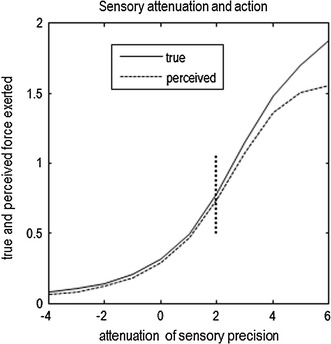
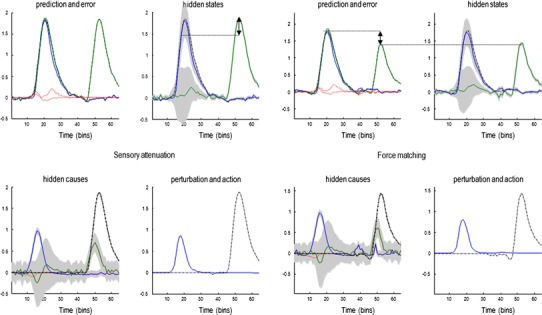
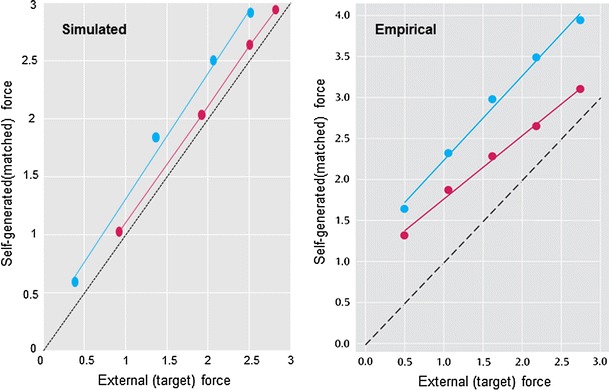
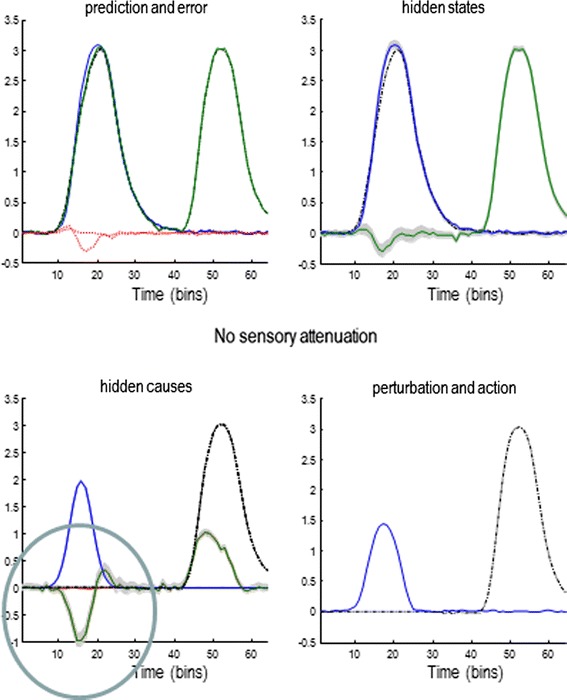
Active inference provides a simple and neurobiologically plausible account of how action and perception are coupled in producing (Bayes) optimal behaviour. This can be seen most easily as minimising prediction error: we can either change our predictions to explain sensory input through perception. Alternatively, we can actively change sensory input to fulfil our predictions. In active inference, this action is mediated by classical reflex arcs that minimise proprioceptive prediction error created by descending proprioceptive predictions. However, this creates a conflict between action and perception; in that, self-generated movements require predictions to override the sensory evidence that one is not actually moving. However, ignoring sensory evidence means that externally generated sensations will not be perceived. Conversely, attending to (proprioceptive and somatosensory) sensations enables the detection of externally generated events but precludes generation of actions. This conflict can be resolved by attenuating the precision of sensory evidence during movement or, equivalently, attending away from the consequences of self-made acts. We propose that this Bayes optimal withdrawal of precise sensory evidence during movement is the cause of psychophysical sensory attenuation. Furthermore, it explains the force-matching illusion and reproduces empirical results almost exactly. Finally, if attenuation is removed, the force-matching illusion disappears and false (delusional) inferences about agency emerge. This is important, given the negative correlation between sensory attenuation and delusional beliefs in normal subjects--and the reduction in the magnitude of the illusion in schizophrenia. Active inference therefore links the neuromodulatory optimisation of precision to sensory attenuation and illusory phenomena during the attribution of agency in normal subjects. It also provides a functional account of deficits in syndromes characterised by false inference and impaired movement--like schizophrenia and Parkinsonism--syndromes that implicate abnormal modulatory neurotransmission.
Overview
The claims and statistics of this paper haven’t been checked yet.
Free: it reads the open-access text and checks the first 5 claims that cite a source we can check. Create a free account to check every claim.
Integrity signals
Registry
Cites
Statistics
Figures
Verification
Claims the paper makes
The claims and statistics of this paper haven’t been checked yet.
Free: it reads the open-access text and checks the first 5 claims that cite a source we can check. Create a free account to check every claim.
Claims other papers make about this one
Each is checked against this paper’s own text: does it say what the citing paper says it does?
The source backs part of the claim, not all of it — or backs it for a different population, condition or comparison.
In the citing paper
“In other words, we have to infer both the cause of our sensations and the context, in terms of the (expected or subjective) precision of sensory evidence.”
From Active interoceptive inference and the emotional brain (2016) · cites this paper as [38]
Experimental — accuracy not yet measuredThe source backs part of the claim, not all of it — or backs it for a different population, condition or comparison.
In the citing paper
“All perceptual inference is at some level active – in the sense that we actively sample our sensorium to create our own sensations (Wurtz et al., 2011; Brown et al., 2013).”
From Virtual reality and consciousness inference in dreaming (2014) · cites this paper as Brown et al., 2013
Experimental — accuracy not yet measuredThe cited source says what the claim attributes to it.
In the citing paper
“Acting thus involves both generating a prediction of the sensory input expected to result from intended movement, and ‘fulfilling’ this prediction by executing the movement, thus effectively suppressing a prediction error signal that would otherwise emerge”
From 'Seeing the Dark': Grounding Phenomenal Transparency and Opacity in Precision Estimation for Active Inference (2018) · cites this paper as Brown et al., 2013
The cited source says what the claim attributes to it.
In the citing paper
“Action initiation involves ‘systematic misrepresentation’ (Wiese 2017)—whereby proprioceptive evidence that, for instance, my arm is not moving, is attenuated to allow the system to bring about the desired movement (Adams et al. 2013; Brown et al. 2013).”
From Consciousness in active inference: Deep self-models, other minds, and the challenge of psychedelic-induced ego-dissolution (2021) · cites this paper as Brown et al. 2013
The cited source says what the claim attributes to it.
In the citing paper
“The first to consider is ‘physiological sensory attenuation’ (Palmer et al. 2016), which is critical for movement initiation in active inference (Brown et al. 2013).”
From Consciousness in active inference: Deep self-models, other minds, and the challenge of psychedelic-induced ego-dissolution (2021) · cites this paper as Brown et al. 2013
2 more claims about this paper
Create a free account to see every claim other papers make about this one.
Self-check
Percentages, sums and reported differences re-computed from the paper’s own numbers.
The self-check needs the paper’s full text.
Citations
Cites
Rao, R. P. N., & Ballard, D. H. (1999) · Nature Neuroscience · doi:10.1038/4580 · Cited by 5,483 · cited 2×
“Within predictive coding formulations of perception (Rao and Ballard 1999; Friston 2005), prediction errors play a crucial role in perception, but again, they are not the percept itself; the percept is a synthesis of prior beliefs and sensory evidence that is conveyed by prediction errors.”
BackgroundMethodA theory of cortical responses.
Friston, K. (2005) · Philosophical Transactions of the Royal Society B: Biological Sciences · doi:10.1098/rstb.2005.1622 · Cited by 4,578 · cited 1×
“Within predictive coding formulations of perception (Rao and Ballard 1999; Friston 2005), prediction errors play a crucial role in perception, but again, they are not the percept itself; the percept is a synthesis of prior beliefs and sensory evidence that is conveyed by prediction errors.”
BackgroundSelf-citationThe Dopamine Hypothesis of Schizophrenia: Version III--The Final Common Pathway
Howes, O. D., & Kapur, S. (2009) · Schizophrenia Bulletin · doi:10.1093/schbul/sbp006 · Cited by 2,693 · cited 2×
“candidate for this modulation is the dopaminergic system, a classical ascending neuromodulatory transmitter system (Howes and Kapur 2009).”
BackgroundHaken, H. (2009) · Encyclopedia of Complexity and Systems Science · doi:10.1007/978-0-387-30440-3_534 · Cited by 2,336
The free-energy principle: a rough guide to the brain?
Friston, K. (2009) · Trends in Cognitive Sciences · doi:10.1016/j.tics.2009.04.005 · Cited by 1,831 · cited 1×
“The final assumption is the Laplace assumption that, in terms of neural codes, leads to the Laplace code that is arguably the simplest and most flexible of all neural codes (Friston 2009).”
BackgroundSelf-citationPredictive coding under the free-energy principle
Friston, K., & Kiebel, S. (2009) · Philosophical Transactions of the Royal Society B: Biological Sciences · doi:10.1098/rstb.2008.0300 · Cited by 1,579 · cited 2×
“This is the essence of recurrent message passing between hierarchical levels to optimise free energy or suppress prediction error: see (Friston and Kiebel 2009a, b; Feldman and Friston 2010) for a more detailed discussion.”
BackgroundSelf-citation(2021) · Modern Aspects of Superconductivity · doi:10.1142/9789811234521_0001 · Cited by 1,498
Central cancellation of self-produced tickle sensation
Blakemore, S.-J., Wolpert, D. M., & Frith, C. D. (1998) · Nature Neuroscience · doi:10.1038/2870 · Cited by 1,467 · cited 2×
“1999a, b, 2001) and thalamic (Blakemore et al. 1998) activity is reduced for self-produced versus externally”
BackgroundHaken, H. (1983) · Springer Series in Synergetics · doi:10.1007/978-3-642-88338-5 · Cited by 1,431
Attention, uncertainty, and free-energy
Feldman, H., & Friston, K. J. (2010) · Frontiers in Human Neuroscience · doi:10.3389/fnhum.2010.00215 · Cited by 1,365 · cited 3×
“This is the essence of recurrent message passing between hierarchical levels to optimise free energy or suppress prediction error: see (Friston and Kiebel 2009a, b; Feldman and Friston 2010) for a more detailed discussion.”
BackgroundSelf-citation
Research works printed but not linked: 1
- Weber E (1846) Der Tatsinn und das Gemeingefuhl. In: Wagner R (ed) Handwörterbuch der Physiologie. Wilhelm Engelmann, Leipzig
Cited by
Items 301–400 of 503
Parvizi-Wayne, D., & Severs, L. (2024) · Cognitive Affective & Behavioral Neuroscience · doi:10.3758/s13415-024-01189-6 · Cited by 9
“…context of active sensing and motor control in the following sense: it enables individuals to ignore sensory evidence that they are not moving and thereby realise prior beliefs that correspond to the anticipated sensory consequences of intended movements (Adams et al., 2013; Brown et al., 2013).”
BackgroundInfluentialMozaffari, B. (2014) · Frontiers in Integrative Neuroscience · doi:10.3389/fnint.2014.00086 · Cited by 8
“…of sensory or lowlevel precision; while during alert waking perception, there is the converse increase in sensory precision: see (Feldman and Friston, 2010) and (Brown et al., 2013) for a simulations of this in terms of predictive coding, biased competition and classical psychophysics experiments.”
BackgroundPerceptual sensory attenuation in chronic pain subjects and healthy controls
McNaughton, D. T., Beath, A., Hush, J. M., & Jones, M. (2022) · Scientific Reports · doi:10.1038/s41598-022-13175-4 · Cited by 9
Natural language syntax complies with the free-energy principlePreprint
Murphy, E., Holmes, E., & Friston, K. J. (2021) · PsyArXiv (OSF Preprints) · doi:10.31234/osf.io/r3fcx · Cited by 8
Self-citationKalman filters as the steady-state solution of gradient descent on variational free energyPreprint
Baltieri, M., & Isomura, T. (2021) · arXiv (Cornell University) · doi:10.48550/arxiv.2111.10530 · Cited by 13
“…series of claims about the relation between Kalman filters and active inference [45, 31, 44, 6, 64, 58, 11, 33, 29, 35, 28, 43, 36, 37, 2, 3, 39, 71, 15, 1, 60, 80, 30, 42, 81, 40, 23, 41, 63, 78, 52, 34, 79, 77, 67, 19, 10, 75, 62, 8, 51, 69, 68, 5, 90, 20, 14, 4], resolving puzzles derived from…”
BackgroundGABAergic modulation of beta power enhances motor adaptation in frontotemporal lobar degeneration
Hughes, L. E., Adams, N., Rouse, M. A., Naessens, M., Shaw, A. D., Murley, A. G., Cope, T., Holland, N., Nesbitt, D., Street, D., et al. (2025) · Alzheimer s & Dementia · doi:10.1002/alz.14531 · Cited by 9
Macerollo, A., Limousin, P. D., Korlipara, P., Foltynie, T., Edwards, M. J., & Kilner, J. M. (2019) · Frontiers in Neurology · doi:10.3389/fneur.2019.01001 · Cited by 7
“The latter is thought to be linked with pathology in reducing the precision of the somatosensory expectations (6).”
BackgroundSelf-citationBrain evolution and the meaning of catatonia - An update
Fricchione, G. L. (2023) · Schizophrenia Research · doi:10.1016/j.schres.2023.01.026 · Cited by 7
Visceral afferent training in action: The origins of agency in early cognitive development
Corcoran, A. W., Feuerriegel, D., Robinson, J., & Perrykkad, K. (2024) · Developmental Review · doi:10.1016/j.dr.2024.101184 · Cited by 7
Valè, N., Tomić, I., Girones, Z., Wolpert, D. M., Kilteni, K., & Bays, P. M. (2025) · Journal of Neurophysiology · doi:10.1152/jn.00055.2025 · Cited by 7
Distract yourself: prediction of salient distractors by own actions and external cues
Havlíček, O., Müller, H. J., & Wykowska, A. (2018) · Psychological Research · doi:10.1007/s00426-018-1129-x · Cited by 7
All grown up: Computational theories of psychosis, complexity, and progress.
Benrimoh, D. A., & Friston, K. J. (2020) · Journal of Abnormal Psychology · doi:10.1037/abn0000543 · Cited by 8
Self-citationCan People with Parkinson’s Disease Self-Trigger Gait Initiation? A Comparison of Cueing Strategies
Petrucci, M. N., Huffmaster, S. L. A., Chung, J. W., Hsiao‐Wecksler, E. T., & MacKinnon, C. D. (2021) · Journal of Parkinson s Disease · doi:10.3233/jpd-212732 · Cited by 7
“This reduction in exteroceptive and proprioceptive precision has been proposed as a mechanism that allows higher-level feedforward predictions to drive the movement (e.g., from motor and premotor regions of cortex) [44].”
Understanding Perceptual Experience of Art Using Mobile Brain/Body Imaging
Djebbara, Z., Fich, L. B., & Gramann, K. (2019) · Springer eBooks · doi:10.1007/978-3-030-14323-7_9 · Cited by 7
Ramstead, M. J. D., Albarracin, M., Kiefer, A. B., Williford, K., Safron, A., Fields, C., Solms, M., & Friston, K. J. (2023) · PsyArXiv (OSF Preprints) · doi:10.31234/osf.io/6eqxh · Cited by 7
Self-citationThe importance of highlighting the role of the self in hypnotherapy and hypnosis
Eason, A. D., & Parris, B. A. (2024) · Complementary Therapies in Clinical Practice · doi:10.1016/j.ctcp.2023.101810 · Cited by 6
Gorka, A. X., Philips, R. T., Torrisi, S., Manbeck, A. B., Goodwin, M., Ernst, M., & Grillon, C. (2023) · Social Cognitive and Affective Neuroscience · doi:10.1093/scan/nsad025 · Cited by 6
Free Will, Emotions and Agency: Pathophysiology of Functional Movement Disorder
Hallett, M. (2022) · Current clinical neurology · doi:10.1007/978-3-030-86495-8_2 · Cited by 8
Eye did this! Sense of agency in eye movements
Gutzeit, J., Weller, L., Muth, F. V., Kürten, J., & Huestegge, L. (2024) · Acta Psychologica · doi:10.1016/j.actpsy.2023.104121 · Cited by 6
Sanz, P., Tur, N., & Lana, F. (2024) · Frontiers in Psychiatry · doi:10.3389/fpsyt.2024.1240393 · Cited by 6
Extended Reality Biofeedback for Functional Upper Limb Weakness: Mixed Methods Usability Evaluation
Dutta, A., Hatjipanagioti, K., Newsham, M. A., Leyland, L., Rickson, L., Buchanan, A., Farkhatdinov, I., Twamley, J., & Das, A. (2025) · JMIR XR and spatial computing. · doi:10.2196/68580 · Cited by 7
Fukushima, H., Tanaka, Y., & Myowa, M. (2018) · Journal of Psychophysiology · doi:10.1027/0269-8803/a000224 · Cited by 6
Phenomenology and Cognitive Science: Don’t Fear the Reductionist Bogey-man
Hohwy, J. (2018) · Australasian Philosophical Review · doi:10.1080/24740500.2018.1552077 · Cited by 6
“Work on efference copies and sensory attenuation [Brown et al. 2013], and intentional binding [Wohlschl€ager et al. 2003] provides further examples, often discussed in the anti-reductionist literature.”
BackgroundApathy is Associated with Reduced Precision of Prior Beliefs about Action OutcomesPreprint
Hezemans, F. H., Wolpe, N., & Rowe, J. B. (2019) · bioRxiv (Cold Spring Harbor Laboratory) · doi:10.1101/672113 · Cited by 7
Dutta, A., & Das, A. (2024) · Preprints.org · doi:10.20944/preprints202407.2520.v1 · Cited by 7
Augmented action observation: Theory and practical applications in sensorimotor rehabilitation
Castro, F., & Schenke, K. C. (2023) · Neuropsychological Rehabilitation · doi:10.1080/09602011.2023.2286012 · Cited by 5
“Sensory attenuation results from the predictive nature of the brain, whereby incoming sensory information are “ subtracted ” from internal sensorimotor models of the action (Brown et al., 2013).”
InfluentialAn active inference account of stuttering behavior
Usler, E. R. (2025) · Frontiers in Human Neuroscience · doi:10.3389/fnhum.2025.1498423 · Cited by 7
“To do so, one must reduce sensory precision relative to prior precision (i.e., sensory attenuation) by disattending to current sensory input (Brown et al., 2013).”
InfluentialJinich‐Diamant, A., Albinni, B., Fishbein, J. N., Jacobson, E., Abraira, V. E., Hong, S., Korgan, A. C., Mazzieri, A. M., & Case, L. K. (2025) · Neuroscience & Biobehavioral Reviews · doi:10.1016/j.neubiorev.2025.106517 · Cited by 5
“…is off, therefore have privileged access to update higher-level beliefs, a configuration that minimizes future prediction errors while also minimizing the metabolically expensive process of updating beliefs (Kok et al., 2012; Brown et al., 2013; Veissière et al., 2020; Limanowski et al., 2020).”
Movement predictability modulates sensorimotor processing
Schrafl‐Altermatt, M., Thomas, F., & Wenderoth, N. (2023) · Frontiers in Human Neuroscience · doi:10.3389/fnhum.2023.1237407 · Cited by 5
Parr, T., Oswal, A., & Manohar, S. (2024) · Neuroscience & Biobehavioral Reviews · doi:10.1016/j.neubiorev.2024.105984 · Cited by 7
Dutta, A., & Das, A. (2025) · JMIR Research Protocols · doi:10.2196/70620 · Cited by 9
“This reduced sense of agency could explain why these patients perceive their movements as involuntary despite their voluntary appearance [9].”
McNaughton, D. T., Bacigalupo, C., Georghiades, A., Beath, A., Hush, J. M., & Jones, M. (2021) · Behavior Research Methods · doi:10.3758/s13428-021-01605-6 · Cited by 5
“Therefore, somatosensory information that is irrelevant — such as that from our own movement — needs to be filtered out in order to more effectively distinguish, and attend to, the sensory information that carries greater evolutionary importance (Brown et al. 2013).”
BackgroundInfluentialWhy Human Prejudice is so Persistent: A Predictive Coding Analysis
Hung, T.-W. (2023) · Social Epistemology · doi:10.1080/02691728.2023.2237942 · Cited by 5
“In research on illusion and sensory attenuation, Brown et al. (2013) argued that active inference can explain how action and perception are integrated to generate Bayesian optimal behavior , which is also the easiest way to minimize prediction error.”
BackgroundHirano, M., & Furuya, S. (2023) · iScience · doi:10.1016/j.isci.2023.108604 · Cited by 5
A Psychophysical Window onto the Subjective Experience of Compulsion
Schmidt, S., Wagner, G., Walter, M., & Stenner, M. (2021) · Brain Sciences · doi:10.3390/brainsci11020182 · Cited by 5
“for an alternative (though predictive) mechanism of sensory attenuation, based on a modulation of precision [39]).”
BackgroundFukumoto, Y., Wakisaka, T., Misawa, K., Hibi, M., & Suzuki, T. (2023) · Experimental Brain Research · doi:10.1007/s00221-023-06556-2 · Cited by 6
“Thus, the attenuation of sensory information irrelevant to motor execution facilitates the capacity to optimize voluntary movements (Brown et al. 2013).”
BackgroundNeural substrates of choking under pressure: A 7T-fMRI study
Ogasawara, K., Koike, T., Fukunaga, M., Yoshioka, A., Yamamoto, T., & Sadato, N. (2024) · Neuroscience Research · doi:10.1016/j.neures.2024.11.004 · Cited by 4
Qualia as query act, the phenomenology of predictive error coding
Harris, H. W. (2025) · Frontiers in Psychology · doi:10.3389/fpsyg.2025.1531269 · Cited by 5
Pathophysiology of functional neurological disorder for the general neurologist
Phillips, W. E. (2025) · BMJ Neurology Open · doi:10.1136/bmjno-2025-001309 · Cited by 6
“22 30 It is also thought to be due to an impairment in motor planning and preparation.”
Virtual occlusion effects on the perception of self-initiated visual stimuli
Kiepe, F., Kraus, N., & Hesselmann, G. (2022) · Consciousness and Cognition · doi:10.1016/j.concog.2022.103460 · Cited by 4
Modelling sensory attenuation as Bayesian causal inference across two datasets
Eckert, A.-L., Fuehrer, E., Schmitter, C. V., Straube, B., Fiehler, K., & Endres, D. (2025) · PLoS ONE · doi:10.1371/journal.pone.0317924 · Cited by 5
“As previously mentioned, failures of sensory attenuation have been connected to false inferences about agency and body ownership in schizophrenia [32, 34–37].”
InfluentialSato, R. (2023) · Philosophical Psychology · doi:10.1080/09515089.2023.2210161 · Cited by 4
“This naturally reflects the separation of temporal causal scales in the world (Brown et al., 2013).”
BackgroundInfluentialIt Is Movement All the Way Down: Broken Rhythms and Embodied Selfhood in Depersonalization
Alekseeva, V., & Ciaunica, A. (2025) · Behavioral Sciences · doi:10.3390/bs15081090 · Cited by 4
“From an Active Inference perspective, sensory attenuation is essential for initiating an action and making the “self-fulfilling prophecy of acting” come true (Brown et al., 2013).”
Brown, E. C., Bowers, A. L., Rafferty, M. B., Casenhiser, D. M., Reilly, K. J., Harkrider, A. W., & Saltuklaroglu, T. (2024) · Clinical Neurophysiology · doi:10.1016/j.clinph.2024.10.017 · Cited by 5
Increased upper-limb sensory attenuation with agePreprint
Parthasharathy, M., Mantini, D., & de Xivry, J. O. (2020) · bioRxiv (Cold Spring Harbor Laboratory) · doi:10.1101/2020.09.17.301739 · Cited by 4
Evidence and implications of abnormal predictive coding in dementia
Kocagoncu, E., Klimovich-Gray, A., Hughes, L. E., & Rowe, J. B. (2021) · Brain · doi:10.1093/brain/awab254 · Cited by 3
“In neurodegenerative parkinsonism, deficits in sensorimotor predictions (reduced precision) results in an over-reliance on sensory evidence and poverty of movement.(12,28) Such deficits in sensorimotor predictions are linked to disease severity of corticobasal syndromes,(28,86) and to atrophy and white matter connecti…”
BackgroundIdei, H., Tani, J., Ogata, T., & Yamashita, Y. (2025) · npj Complexity · doi:10.1038/s44260-025-00046-y · Cited by 7
“Biological and theoretical studies have suggested that different kinds of sensory suppression processes, such as sensory attenuation and gating, may be associated withself-nonself distinctionand a senseofagency 25,48 .”
Apathy as a failure of active inference
Williams, R. S., & Rowe, J. B. (2025) · Trends in Neurosciences · doi:10.1016/j.tins.2025.10.010 · Cited by 3
Kiepe, F., & Hesselmann, G. (2025) · Quarterly Journal of Experimental Psychology · doi:10.1177/17470218251330237 · Cited by 3
“Note, that this approach does emphasize self-initiation as an important factor for SA, as it generally increases stimulus predictability (Brown et al., 2013).”
Stripeikyte, G., Pereira, M., Rognini, G., Potheegadoo, J., Blanke, O., & Faivre, N. (2021) · Journal of Neuroscience · doi:10.1523/jneurosci.3164-20.2021 · Cited by 3
Environment-Related and Body-Related Components of the Minimal Self
Liesner, M., & Kunde, W. (2021) · Frontiers in Psychology · doi:10.3389/fpsyg.2021.712559 · Cited by 3
“Additionally, interoceptive signals are not only important to keep the biological substrate of the agent from harm, but they are also essential for the homeostatic and allostatic regulation of the body and the brain (Sterling, 2004, 2012; Barrett et al., 2016; Burleson and Quigley, 2021).”
BackgroundSame but different: how agency modulates pain perception
Wiech, K. (2023) · Trends in Cognitive Sciences · doi:10.1016/j.tics.2023.04.011 · Cited by 4
“Instead, the likelihood precision hypothesis that is derived from the framework of active inference [7] posits that agency is linked to a less precise representation of sensory input (e.”
BackgroundSanchez, G. (2014) · theses.fr (ABES) · doi:10.70675/fc65e110z9a4dz4e6czb087ze3a49963bc7e · Cited by 6
Dołęga, K. (2018) · Frontiers in Psychology · doi:10.3389/fpsyg.2018.00680 · Cited by 4
“, the second-order statistics that underwrite the confidence placed in ascending sensory prediction errors (Feldman and Friston, 2010; Brown et al., 2013).”
BackgroundThe self as a generative, teleological, and subjective prior: Mutually-modulated temporal agencyPreprint
Asai, T., Imaizumi, S., & Imamizu, H. (2019) · bioRxiv (Cold Spring Harbor Laboratory) · doi:10.1101/519934 · Cited by 4
Active inference under visuo-proprioceptive conflict: Simulation and empirical resultsPreprint
Limanowski, J., & Friston, K. J. (2019) · bioRxiv (Cold Spring Harbor Laboratory) · doi:10.1101/795419 · Cited by 3
“Such a result would demonstrate that in an active inference scheme, behaviour under intersensory conflict can be augmented via top-down precision control; i.e., selective attention (cf. Feldman & Friston, 2010; Edwards et al., 2012; Brown et al., 2013).”
BackgroundMethodResultInfluentialSelf-citationLeptourgos, P. (2018) · theses.fr (ABES) · doi:10.70675/dafacdb1z9072z4ec2z8cebz0ca09b93b7ce · Cited by 4
A survey on neuro-mimetic deep learning via predictive coding
Salvatori, T., Mali, A., Buckley, C. L., Lukasiewicz, T., Rao, R. P. N., Friston, K., & Ororbia, A. (2026) · Neural Networks · doi:10.1016/j.neunet.2025.108161 · Cited by 2
Self-citationTouching and being touched: where knowing and feeling meet
Fischman, L. G. (2023) · Frontiers in Psychology · doi:10.3389/fpsyg.2023.1097402 · Cited by 2
“Speculatively, empathic immersion or absorption in a narrative or work of art requires somatosensory attenuation—in FEP terms, an underweighting of the precision of sensory evidence of the self-model, or diverting attention from self-generated acts (Brown et al., 2013) —to achieve presence, or a sense of reality in th…”
BackgroundShibuya, S., & Ohki, Y. (2025) · European Journal of Neuroscience · doi:10.1111/ejn.70035 · Cited by 2
“Moreover, based on the active inference account, somatosensory attenuation is hypothesized to be a critical mechanism for movement initiation (Brown et al. 2013; Palmer, Zapparoli, and Kilner 2016) Zeller, Friston, and Classen 2016).”
Cortical candidates for self-other distinction based on visual and action cues: where do we stand?
Limanowski, J. (2026) · Brain Structure and Function · doi:10.1007/s00429-025-03065-6 · Cited by 4
“The neurophysiological basis of motor/visuomotor con-trol has been covered by several excellent reviews (e.g., Shadmehr et al. 2010 ; Wolpert and Miall 1996 ; Scott 2012 ; Adams et al. 2013 ; Archambault et al. 2015 ).”
Becattini, V., Lifshitz, M., & Miller, M. M. (2026) · Neuroscience of Consciousness · doi:10.1093/nc/niag001 · Cited by 4
“This is in line with our argument insofar as the body-scan does not lead the meditator to constantly feel an overly sensitive body after the meditation session, a condition that would be closer to psychopathology (Brown et al. 2013).”
Active inference and speech motor control
Bradshaw, A. R., Press, C., & Davis, M. H. (2026) · Psychonomic Bulletin & Review · doi:10.3758/s13423-026-02871-1 · Cited by 2
“…range of processes, including body ownership (Limanowski, 2022b), learning (Friston et al., 2016), attention (Brown et al., 2011), and illusions (Brown et al., 2013), as well as different psychopathologies (Paulus et al., 2019) such as schizophrenia (Adams, Stephan, et al., 2013) and…”
Auerbach-Asch, C. R., Vishne, G., Wertheimer, O., & Deouell, L. Y. (2026) · Journal of Vision · doi:10.1167/jov.26.10.11 · Cited by 2
“Third, internal action-related signals inform sensory systems of the upcoming trajectory, timing, and sensory consequences of eye movements (Brown, Adams, Parees, Edwards, & Friston, 2013; Cavanaugh et al., 2016; Sun & Goldberg, 2016; Subramanian, Alers, & Sommer, 2019).”
Dissociable effects of attention and expectation on perceptual sensitivity to action-outcomes
George, N., & Sunny, M. M. (2022) · Consciousness and Cognition · doi:10.1016/j.concog.2022.103374 · Cited by 2
Bayes’ Theorem in Neurocritical Care: Principles and Practice
Jawa, N. A., & Maslove, D. M. (2023) · Neurocritical Care · doi:10.1007/s12028-022-01665-2 · Cited by 2
“, defective precisionweighting and consequent lack of sensory attenuation [34]), thereby creating false inferences and posterior beliefs that are weighed too heavily toward uncertain evidence and that discount prior beliefs [12].”
BackgroundTactile Hallucinations on Artificial Skin Induced by Homeostasis in a Deep Boltzmann Machine
Deistler, M., Yener, Y., Bergner, F., Lanillos, P., & Cheng, G. (2019) · IEEE International Conference on Cyborg and Bionic Systems (CBS) · doi:10.1109/cbs46900.2019.9114529 · Cited by 3
“However, fewer models like [9], [10] have properly addressed tactile hallucinations despite its implications on prosthetic [11] and embodiment disorders.”
BackgroundNeuronale Substrate im Wechselspiel von Interozeption, Emotionen und Körperbild
Mai‐Lippold, S. A. (2021) · OPen Access Repositorium der Universität Ulm (OPARU) (Ulm University) · doi:10.18725/oparu-37688 · Cited by 2
Friston, K. J. (2021) · Journal of Consciousness Studies · doi:10.53765/20512201.28.11.178 · Cited by 2
Self-citationActive Inference of Interpersonal Trust Within and Across Mental DisordersPreprint
Eckert, A.-L., Pawlowski, J., Rief, W., Endres, D., & Kirchner, L. (2023) · PsyArXiv (OSF Preprints) · doi:10.31234/osf.io/8aexf · Cited by 3
Cortical candidates for self-other distinction based on visual and action cues: Where do we stand?Preprint
Limanowski, J. (2025) · PsyArXiv (OSF Preprints) · doi:10.31234/osf.io/jpbz2_v1 · Cited by 2
Blakeslee, B., & McCourt, M. E. (2023) · Frontiers in Human Neuroscience · doi:10.3389/fnhum.2022.1082059 · Cited by 1
“From the simultaneous contrast literature, we know that induction in a target patch increases in magnitude with increasing surround size (Wallach, 1948; Diamond, 1953, 1955; Stevens, 1967; Heinemann, 1972; Yund and Armington, 1975).”
BackgroundResultInfluentialRengarajan, S., Cannon, J. J., Baron, B., Mohan, N., & Chukoskie, L. (2023) · Lecture notes in computer science · doi:10.1007/978-3-031-37171-4_13 · Cited by 1
Phenomenological Anchors: Mapping Experiences of Agency and Ownership
Gallagher, S. (2023) · Oxford University Press eBooks · doi:10.1093/oso/9780198873068.003.0007 · Cited by 1
Gallagher, S. (2023) · Oxford University Press eBooks · doi:10.1093/oso/9780198873068.003.0001 · Cited by 1
Gallagher, S. (2023) · Oxford University Press eBooks · doi:10.1093/oso/9780198873068.003.0002 · Cited by 1
Pallathadka, H., & Roy, P. D. (2025) · Journal for Research in Applied Sciences and Biotechnology · doi:10.55544/jrasb.4.2.22 · Cited by 1
Hypnosis at the Crossroads: A Primer of the Past and Visions for the Future
Montgomery, G. H., Green, J. P., Apelian, C., Zahedi, A., Polizzi, C. P., Terhune, D. B., & Lynn, S. J. (2025) · International Journal of Clinical and Experimental Hypnosis · doi:10.1080/00207144.2025.2508407 · Cited by 2
“Instead of perceiving that they have not yet moved, the prediction errors will be neglected, and by moving their body, the predicted movement will occur (Adams et al., 2013; H. Brown et al., 2013).”
Born to act: Deferred action and desire as active inference
Krupnik, V. (2025) · Cognitive Affective & Behavioral Neuroscience · doi:10.3758/s13415-025-01334-9 · Cited by 1
“To that end, we approach desire and deferred action from the active inference standpoint, drawing an analogy with the AIF mechanics of motor movement (Brown et al., 2013).”
InfluentialRegression to the mean explains perception of action consequences
Johnen, S., & Zimmermann, E. (2025) · Proceedings of the Royal Society B Biological Sciences · doi:10.1098/rspb.2025.1715 · Cited by 2
“To infer the loudness of the probe sound, the inference process might involve an internal sound representation [53,54].”
Jamieson, G. A. (2025) · International review of neurobiology · doi:10.1016/bs.irn.2025.10.001 · Cited by 3
VibRacket: Designing and Experiencing Embodied Vibrotactile Feedback on a Badminton Racket
Sabnis, N., Vega, G., Martinez-Missir, V., & Strohmeier, P. (2025) · Annual Conference on Human-Computer Interaction and Sports (SportsHCI) · doi:10.1145/3749385.3749417 · Cited by 1
“Recent research shows that the perceptual mechanisms of sense of agency [14] and sensory attenuation [4] contribute to motion-coupled vibration feeling more intrinsic [15, 16].”
Beyond mimicry: a framework for evaluating genuine intelligence in artificial systems
Niazi, S. K. (2026) · Frontiers in Artificial Intelligence · doi:10.3389/frai.2025.1686752 · Cited by 1
Giraldi, E., Frosolone, M., Corcoran, A. W., Barca, L., Corsini, A., Donnarumma, F., D’Ausilio, A., & Pezzulo, G. (2026) · Imaging Neuroscience · doi:10.1162/imag.a.1178 · Cited by 1
“…within this framework, by considering that they result from (Bayes-optimal) integration of priors and sensory evidence— and when the latter is ambiguous, perception is more strongly biased toward one’s prior expectations ( Brown & Friston, 2012; Brown et al., 2013; Parr et al., 2019).”
Schizophrenia and disordered sensorimotor control: challenges, mechanisms and opportunities
Joseph, A., Adams, R. A., Gaughran, F., Howes, O. D., Martino, D., Morgante, F., & Edwards, M. J. (2026) · Brain · doi:10.1093/brain/awag064 · Cited by 1
“156 Broadly, the aim is to minimize prediction error.”
InfluentialSelf-citationPure awareness, entropy, and the foundation of perception
Mago, J., Chandaria, S., Miller, M., & Laukkonen, R. (2026) · Neurocomputing · doi:10.1016/j.neucom.2026.133443 · Cited by 1
Effects of prediction and attention on tactile precision in somatosensory gating
Pacheco, P. N. D., & Zimmermann, E. (2026) · Attention Perception & Psychophysics · doi:10.3758/s13414-026-03288-7 · Cited by 1
“On the other hand, patients with functional neurological disorder, which experience movements as involuntary, show altered sensory attenuation alongside abnormal attention to the body (Brown et al., 2013).”
Prediction in action: Toward an empirical science of active inference
Lageman, J., Fahrenfort, J. J., & Slagter, H. A. (2026) · Neuroscience & Biobehavioral Reviews · doi:10.1016/j.neubiorev.2026.106817 · Cited by 2
Sense of Agency and Its Disruption
Fletcher, P. C., & Fotopoulou, A. (2015) · Oxford University Press eBooks · doi:10.1093/acprof:oso/9780190267278.003.0016 · Cited by 2
“Given that the movement would violate a prediction that the person is not moving (and therefore should militate against movement given the framework that actions are taken to minimize prediction error), it has been speculated (Brown et al., 2013) that the key occurrence that releases the desired movement is a reductio…”
InfluentialThe Extension of the Indicator-Function of Feelings
Pliushch, I. (2015) · doi:10.15502/9783958570399 · Cited by 2
“Switching between perception and action depends on the precision of prediction errors: precise prediction errors change hypotheses, while imprecise ones lead to action (Brown et al. 2013).”
Background(1998) · Routledge eBooks · doi:10.4324/9781843140962-48 · Cited by 1
Moran, R. (2015) · Springer series in computational neuroscience · doi:10.1007/978-3-319-20037-8_1 · Cited by 1
Kukkonen, K. (2019) · Oxford University Press eBooks · doi:10.1093/oso/9780190050955.003.0003 · Cited by 1
Misprediction Sensitivity Is Diminished for Action-effects Resulting from Stimulus-driven Movement
Harrison, A. W., Christensen, B. K., & Whitford, T. J. (2025) · Journal of Cognitive Neuroscience · doi:10.1162/jocn_a_02321 · Cited by 1
Embodied Learning: Capitalizing on Predictive Processing
Pérez, S. A. S. (2021) · Lecture notes in networks and systems · doi:10.1007/978-3-030-80129-8_34 · Cited by 1
Lecaignard, F. (2016) · theses.fr (ABES) · doi:10.70675/e0e65ea5zfd9az4430z9065ze44d9fcc966c · Cited by 3
“, 2010), attribution of agency (Brown et al., 2013), decision-making (Friston, Rigoli, et al.”
Fatigue in perinatal stroke is associated with resting-state functional connectivityPreprint
Wrightson, J. G., Carlson, H. L., Condliffe, E. G., & Kirton, A. (2020) · Research Square · doi:10.1101/2020.04.14.20065326 · Cited by 1
“The predictive coding models of fatigue suggest that insult to the central nervous system causes an incongruity between the efferent sensory predictions encoded by the brain’s generative model of the body, and the afferent sensory prediction errors that arise from an action (Brown et al., 2013; Kuppuswamy, 2017).”
BackgroundNovický, F., Meera, A. A., Zeldenrust, F., & Lanillos, P. (2024) · bioRxiv (Cold Spring Harbor Laboratory) · doi:10.1101/2024.09.04.611162 · Cited by 2
“Prior work suggests that precision optimization may be critical for resolving conflicts between competing models of sensory input [10].”
Becattini, V., Lifshitz, M., & Miller, M. M. (2025) · PsyArXiv (OSF Preprints) · doi:10.31234/osf.io/gcjth_v2 · Cited by 1
Against predictive processing: From flexibility to pseudoscientific vacuityPreprint
Mangalam, M. (2025) · PsyArXiv (OSF Preprints) · doi:10.31234/osf.io/mhw6k_v1 · Cited by 1
Metadata
- Authors
- Brown, H., Adams, R. A., Parees, I., Edwards, M., & Friston, K.
- Affiliations
- Wellcome Centre for Human Neuroimaging (GB)
- University College London (GB)
- Corresponding author
- Brown, Harriet
- Venue
- Cognitive Processing
- Published
- 2013-06-07
- Volume
- 14
- Issue
- 4
- Pages
- 411-427
- ISSN
- 1612-4782 (ISSN-L)
- 1612-4790
- PMC
- PMC3824582
- OpenAlex
- W2151496011
- Semantic Scholar
- 6291e49d4e7c30272a43a212e14aec9fe37dac38
- Cited by
- 488
- References
- 81
- Citations by year
- 2026: 24 · 2025: 38 · 2024: 31 · 2023: 63 · 2022: 45 · 2021: 48 · 2020: 39 · 2019: 58 · 2018: 38 · 2017: 29 · 2016: 22 · 2015: 23 · 2014: 23 · 2013: 5
- FWCI
- 2.09
- Type
- journal article
- Language
- en
- Open access
- hybrid
- doi.org
- Locations
- Cognitive Processing (publishedVersion, cc-by)
- Europe PMC (PubMed Central) (publishedVersion, cc-by)
- PubMed Central (publishedVersion, cc-by)
- PubMed (publishedVersion)
- St George's Online Research Archive (St George's University of London) (acceptedVersion)
- UCL Discovery (University College London) (submittedVersion)
- Funders
- Wellcome Trust (091593, 088130)
- Topics
- Life Sciences › Neuroscience › Cognitive Neuroscience › Embodied and Extended Cognition
- Social Sciences › Arts and Humanities › Philosophy › Free Will and Agency
- Social Sciences › Psychology › Social Psychology › Action Observation and Synchronization
- Keywords
- active inference, sensory attenuation, proprioception, prediction error, sensory precision, schizophrenia, parkinsonism, perception-action coupling, neuromodulation
- MeSH terms
- Algorithms, Attention, Bayes Theorem, Behavior, Humans, Illusions, Psychophysics, Sensation
About these checks
Registry, retraction, Cites and statistics results are computed, not judged, with one exception: a printed reference that no index lists is read once by a model before it counts as a citation error. Claims are extracted by a model and kept only when their quote appears verbatim in the text; each cited source is then checked, with a model’s help, for whether it says what the claim relies on. Those verdicts can be wrong — read the claim’s quote and the cited source before relying on one.
Statistics and arithmetic are recomputed, not judged.
Confidence bands are shown only for fields calibrated on our annotated test set. None is calibrated yet, so no band is shown.
What counts as a claim ›How we measure confidence ›How we check this ›
Are you an author, or do you see a problem with this page? Request a review
Data sources
Bibliographic data: Semantic Scholar, OpenAlex, Crossref.
Contains information from the Semantic Scholar Academic Graph Datasets, made available under the ODC Attribution License (ODC-BY 1.0).
Semantic Scholar’s data is described in: Kinney, R., et al. (2023). The Semantic Scholar Open Data Platform. arXiv:2301.10140.
