

Active inference, sensory attenuation and illusions
Open accessThe DOI matches its Crossref record; 81 of the 81 references it cites were found in a registry or an index.
Abstract
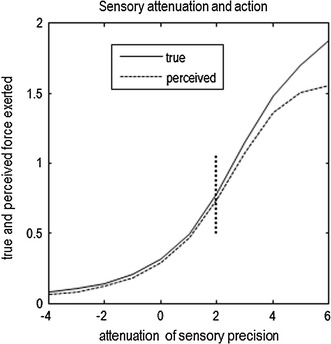
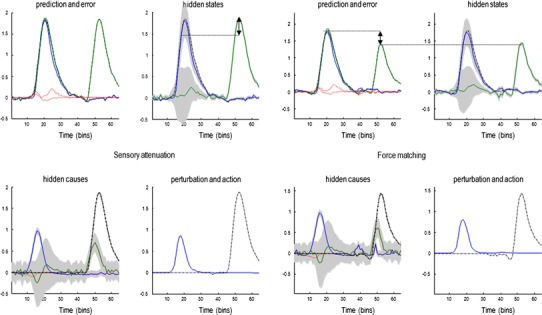
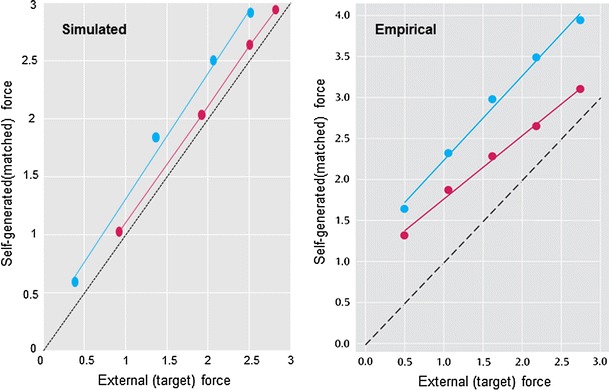
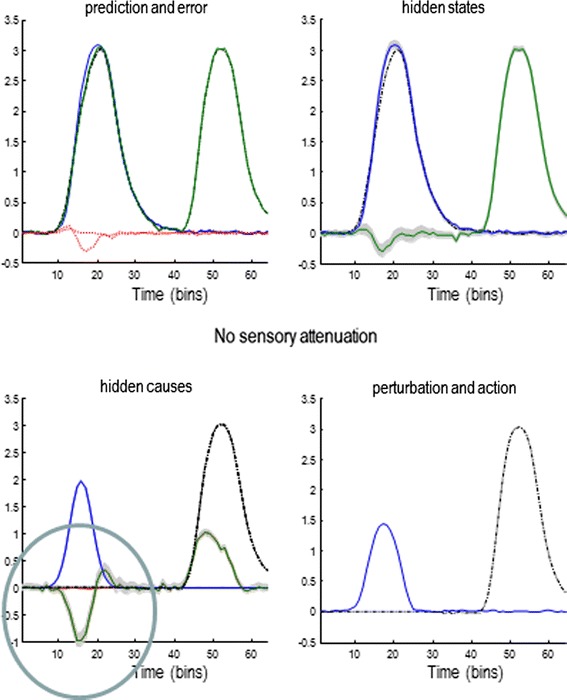
Active inference provides a simple and neurobiologically plausible account of how action and perception are coupled in producing (Bayes) optimal behaviour. This can be seen most easily as minimising prediction error: we can either change our predictions to explain sensory input through perception. Alternatively, we can actively change sensory input to fulfil our predictions. In active inference, this action is mediated by classical reflex arcs that minimise proprioceptive prediction error created by descending proprioceptive predictions. However, this creates a conflict between action and perception; in that, self-generated movements require predictions to override the sensory evidence that one is not actually moving. However, ignoring sensory evidence means that externally generated sensations will not be perceived. Conversely, attending to (proprioceptive and somatosensory) sensations enables the detection of externally generated events but precludes generation of actions. This conflict can be resolved by attenuating the precision of sensory evidence during movement or, equivalently, attending away from the consequences of self-made acts. We propose that this Bayes optimal withdrawal of precise sensory evidence during movement is the cause of psychophysical sensory attenuation. Furthermore, it explains the force-matching illusion and reproduces empirical results almost exactly. Finally, if attenuation is removed, the force-matching illusion disappears and false (delusional) inferences about agency emerge. This is important, given the negative correlation between sensory attenuation and delusional beliefs in normal subjects--and the reduction in the magnitude of the illusion in schizophrenia. Active inference therefore links the neuromodulatory optimisation of precision to sensory attenuation and illusory phenomena during the attribution of agency in normal subjects. It also provides a functional account of deficits in syndromes characterised by false inference and impaired movement--like schizophrenia and Parkinsonism--syndromes that implicate abnormal modulatory neurotransmission.
Overview
The claims and statistics of this paper haven’t been checked yet.
Free: it reads the open-access text and checks the first 5 claims that cite a source we can check. Create a free account to check every claim.
Integrity signals
Registry
Cites
Statistics
Figures
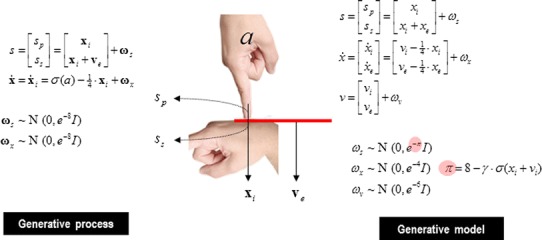
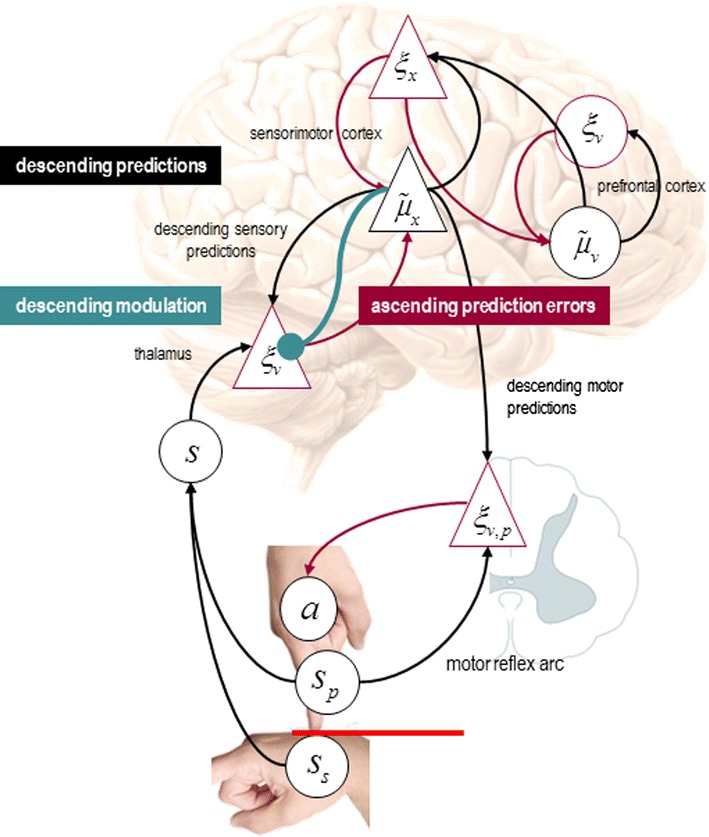
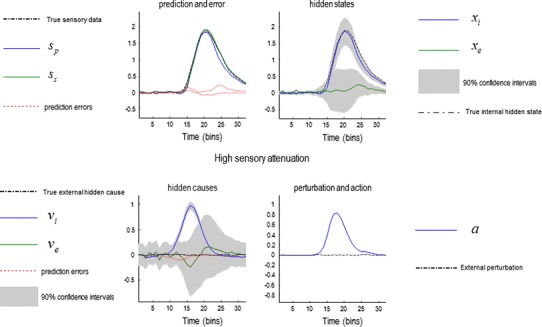
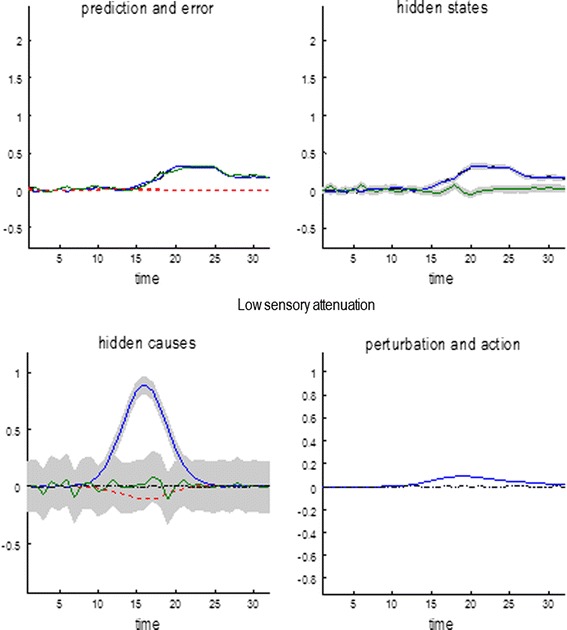
Verification
Claims the paper makes
The claims and statistics of this paper haven’t been checked yet.
Free: it reads the open-access text and checks the first 5 claims that cite a source we can check. Create a free account to check every claim.
Claims other papers make about this one
Each is checked against this paper’s own text: does it say what the citing paper says it does?
The source backs part of the claim, not all of it — or backs it for a different population, condition or comparison.
In the citing paper
“In other words, we have to infer both the cause of our sensations and the context, in terms of the (expected or subjective) precision of sensory evidence.”
From Active interoceptive inference and the emotional brain (2016) · cites this paper as [38]
Experimental — accuracy not yet measuredThe source backs part of the claim, not all of it — or backs it for a different population, condition or comparison.
In the citing paper
“All perceptual inference is at some level active – in the sense that we actively sample our sensorium to create our own sensations (Wurtz et al., 2011; Brown et al., 2013).”
From Virtual reality and consciousness inference in dreaming (2014) · cites this paper as Brown et al., 2013
Experimental — accuracy not yet measuredThe cited source says what the claim attributes to it.
In the citing paper
“Acting thus involves both generating a prediction of the sensory input expected to result from intended movement, and ‘fulfilling’ this prediction by executing the movement, thus effectively suppressing a prediction error signal that would otherwise emerge”
From 'Seeing the Dark': Grounding Phenomenal Transparency and Opacity in Precision Estimation for Active Inference (2018) · cites this paper as Brown et al., 2013
The cited source says what the claim attributes to it.
In the citing paper
“Action initiation involves ‘systematic misrepresentation’ (Wiese 2017)—whereby proprioceptive evidence that, for instance, my arm is not moving, is attenuated to allow the system to bring about the desired movement (Adams et al. 2013; Brown et al. 2013).”
From Consciousness in active inference: Deep self-models, other minds, and the challenge of psychedelic-induced ego-dissolution (2021) · cites this paper as Brown et al. 2013
The cited source says what the claim attributes to it.
In the citing paper
“The first to consider is ‘physiological sensory attenuation’ (Palmer et al. 2016), which is critical for movement initiation in active inference (Brown et al. 2013).”
From Consciousness in active inference: Deep self-models, other minds, and the challenge of psychedelic-induced ego-dissolution (2021) · cites this paper as Brown et al. 2013
2 more claims about this paper
Create a free account to see every claim other papers make about this one.
Self-check
Percentages, sums and reported differences re-computed from the paper’s own numbers.
The self-check needs the paper’s full text.
Citations
Cites
Rao, R. P. N., & Ballard, D. H. (1999) · Nature Neuroscience · doi:10.1038/4580 · Cited by 5,483 · cited 2×
“Within predictive coding formulations of perception (Rao and Ballard 1999; Friston 2005), prediction errors play a crucial role in perception, but again, they are not the percept itself; the percept is a synthesis of prior beliefs and sensory evidence that is conveyed by prediction errors.”
BackgroundMethodA theory of cortical responses.
Friston, K. (2005) · Philosophical Transactions of the Royal Society B: Biological Sciences · doi:10.1098/rstb.2005.1622 · Cited by 4,578 · cited 1×
“Within predictive coding formulations of perception (Rao and Ballard 1999; Friston 2005), prediction errors play a crucial role in perception, but again, they are not the percept itself; the percept is a synthesis of prior beliefs and sensory evidence that is conveyed by prediction errors.”
BackgroundSelf-citationThe Dopamine Hypothesis of Schizophrenia: Version III--The Final Common Pathway
Howes, O. D., & Kapur, S. (2009) · Schizophrenia Bulletin · doi:10.1093/schbul/sbp006 · Cited by 2,693 · cited 2×
“candidate for this modulation is the dopaminergic system, a classical ascending neuromodulatory transmitter system (Howes and Kapur 2009).”
BackgroundHaken, H. (2009) · Encyclopedia of Complexity and Systems Science · doi:10.1007/978-0-387-30440-3_534 · Cited by 2,336
The free-energy principle: a rough guide to the brain?
Friston, K. (2009) · Trends in Cognitive Sciences · doi:10.1016/j.tics.2009.04.005 · Cited by 1,831 · cited 1×
“The final assumption is the Laplace assumption that, in terms of neural codes, leads to the Laplace code that is arguably the simplest and most flexible of all neural codes (Friston 2009).”
BackgroundSelf-citationPredictive coding under the free-energy principle
Friston, K., & Kiebel, S. (2009) · Philosophical Transactions of the Royal Society B: Biological Sciences · doi:10.1098/rstb.2008.0300 · Cited by 1,579 · cited 2×
“This is the essence of recurrent message passing between hierarchical levels to optimise free energy or suppress prediction error: see (Friston and Kiebel 2009a, b; Feldman and Friston 2010) for a more detailed discussion.”
BackgroundSelf-citation(2021) · Modern Aspects of Superconductivity · doi:10.1142/9789811234521_0001 · Cited by 1,498
Central cancellation of self-produced tickle sensation
Blakemore, S.-J., Wolpert, D. M., & Frith, C. D. (1998) · Nature Neuroscience · doi:10.1038/2870 · Cited by 1,467 · cited 2×
“1999a, b, 2001) and thalamic (Blakemore et al. 1998) activity is reduced for self-produced versus externally”
BackgroundHaken, H. (1983) · Springer Series in Synergetics · doi:10.1007/978-3-642-88338-5 · Cited by 1,431
Attention, uncertainty, and free-energy
Feldman, H., & Friston, K. J. (2010) · Frontiers in Human Neuroscience · doi:10.3389/fnhum.2010.00215 · Cited by 1,365 · cited 3×
“This is the essence of recurrent message passing between hierarchical levels to optimise free energy or suppress prediction error: see (Friston and Kiebel 2009a, b; Feldman and Friston 2010) for a more detailed discussion.”
BackgroundSelf-citation
Research works printed but not linked: 1
- Weber E (1846) Der Tatsinn und das Gemeingefuhl. In: Wagner R (ed) Handwörterbuch der Physiologie. Wilhelm Engelmann, Leipzig
Cited by
Items 101–200 of 503
An Introduction to Predictive Processing Models of Perception and Decision‐Making
Sprevak, M. D., & Smith, R. S. (2023) · Topics in Cognitive Science · doi:10.1111/tops.12704 · Cited by 85
“Precision weighting is claimed to be connected to psychological features, such as attention, salience, value, and uncertainty (Brown, Adams, Parees, Edwards, & Friston, 2013; Clark, 2013a; Feldman & Friston, 2010; Friston, 2003; Friston, 2009; Friston, Mattout, & Kilner, 2011).”
MethodThe computational neurology of movement under active inference
Parr, T., Limanowski, J., Rawji, V., & Friston, K. (2021) · Brain · doi:10.1093/brain/awab085 · Cited by 60
Self-citationImmunoceptive inference: why are psychiatric disorders and immune responses intertwined?
Bhat, A., Parr, T., Ramstead, M. J. D., & Friston, K. J. (2021) · Biology & Philosophy · doi:10.1007/s10539-021-09801-6 · Cited by 65
Self-citationMoisello, C., Blanco, D., Lin, J., Panday, P., Kelly, S. P., Quartarone, A., Rocco, A. D., Cirelli, C., Tononi, G., & Ghilardi, M. F. (2015) · Brain and Behavior · doi:10.1002/brb3.374 · Cited by 73
“Also in agreement with other studies (Levy et al. 2002; Priori et al. 2004; Sharott et al. 2005; Kuhn et al. 2006; Mallet et al. 2008; Giannicola et al. 2010; Pollok et al. 2012; Brown et al. 2013; Tan et al. 2013), we found that the greater the beta power, the longer the disease duration and also the more severe the…”
BackgroundResultInfluentialThe contemplative exercise through the lenses of predictive processing: A promising approach
Pagnoni, G. (2019) · Progress in brain research · doi:10.1016/bs.pbr.2018.10.022 · Cited by 73
Speaking-Induced Suppression of the Auditory Cortex in Humans and Its Relevance to Schizophrenia
Whitford, T. J. (2019) · Biological Psychiatry Cognitive Neuroscience and Neuroimaging · doi:10.1016/j.bpsc.2019.05.011 · Cited by 73
Cognitive functions of intracellular mechanisms for contextual amplification
Phillips, W. A. (2017) · Brain and Cognition · doi:10.1016/j.bandc.2015.09.005 · Cited by 62
The Neurobiology of Pathological Fatigue: New Models, New Questions
Kuppuswamy, A. (2021) · The Neuroscientist · doi:10.1177/1073858420985447 · Cited by 66
The role of brain oscillations in predicting self-generated sounds
Cao, L., Thut, G., & Groß, J. (2016) · NeuroImage · doi:10.1016/j.neuroimage.2016.11.001 · Cited by 66
Predicted action consequences are perceptually facilitated before cancellation.
Yon, D., & Press, C. (2017) · Journal of Experimental Psychology Human Perception & Performance · doi:10.1037/xhp0000385 · Cited by 69
Aggelopoulos, N. C. (2015) · Neuroscience & Biobehavioral Reviews · doi:10.1016/j.neubiorev.2015.05.001 · Cited by 74
Action is enabled by systematic misrepresentations
Wiese, W. (2017) · Erkenntnis · doi:10.1007/s10670-016-9867-x · Cited by 60
“Brown et al. (2013) have tested this hypothesis in simulations of the force-matching task.”
BackgroundMethodInfluentialMoumdjian, L., Buhmann, J., Willems, I., Feys, P., & Leman, M. (2018) · Frontiers in Human Neuroscience · doi:10.3389/fnhum.2018.00263 · Cited by 65
“Such an approach would cope with the theory of active inferencing (Brown et al., 2013; Friston et al., 2017), in which a subject’s motor variability is understood as a way to sample audio-motor errors so that statistical inferences about those errors can be more accurate.”
BackgroundArikan, B. E., van Kemenade, B. M., Podranski, K., Steinsträter, O., Straube, B., & Kircher, T. T. J. (2019) · Journal of Vision · doi:10.1167/19.14.4 · Cited by 61
Alterations of agency in hypnosis: A new predictive coding model.
Martin, J.-R., & Pacherie, E. (2019) · Psychological Review · doi:10.1037/rev0000134 · Cited by 57
“According to Brown et al. (2013), this is what explains the presence of sensory attenuation, i.”
BackgroundInfluentialKorka, B., Widmann, A., Waszak, F., Darriba, Á., & Schröger, E. (2021) · Psychonomic Bulletin & Review · doi:10.3758/s13423-021-01992-z · Cited by 60
Bayesian inference, predictive coding and delusions
Adams, R. A., Brown, H. R., & Friston, K. J. (2014) · AVANT. The Journal of the Philosophical-Interdisciplinary Vanguard · doi:10.26913/50302014.0112.0004 · Cited by 51
“We have suggested that sensory attenuation is necessary to allow reflex arcs to operate (Brown et al. 2013).”
BackgroundSelf-citationTactile suppression stems from specific sensorimotor predictions
Fuehrer, E., Voudouris, D., Lezkan, A., Drewing, K., & Fiehler, K. (2022) · Proceedings of the National Academy of Sciences · doi:10.1073/pnas.2118445119 · Cited by 60
Beta‐band oscillations play an essential role in motor–auditory interactions
Abbasi, O., & Groß, J. (2019) · Human Brain Mapping · doi:10.1002/hbm.24830 · Cited by 58
Cognitive effort and active inference
Parr, T., Holmes, E., Friston, K. J., & Pezzulo, G. (2023) · Neuropsychologia · doi:10.1016/j.neuropsychologia.2023.108562 · Cited by 45
“…process is not specific to the Stroop task and has been shown to be applicable to a wide range of tasks and behaviours e.g., (Adams et al., 2015; Brown et al., 2013; Cullen et al., 2018; Dauc ´ e and Perrinet, 2020; FitzGerald et al., 2015; Kaplan and Friston, 2018; Pezzulo et al., 2015; Smith…”
BackgroundSelf-citationSensory attenuation in Parkinson’s disease is related to disease severity and dopamine dose
Wolpe, N., Zhang, J., Nombela, C., Ingram, J. N., Wolpert, D. M., Cam-CAN, Tyler, L. K., Brayne, C., Bullmore, E. T., Calder, A. C., et al. (2018) · Scientific Reports · doi:10.1038/s41598-018-33678-3 · Cited by 48
Predictive processing in cognitive robotics: A review
Ciria, A., Schillaci, G., Pezzulo, G., Hafner, V. V., & Lara, B. (2021) · Neural Computation · doi:10.1162/neco_a_01383 · Cited by 51
“The second strategy is the standard approach to action in predictive processing, known as active inference (Adams et al., 2013a; Brown et al., 2013), which consists of an agent changing sensory inputs through actions that conform to predictions.”
BackgroundHezemans, F. H., Wolpe, N., O’Callaghan, C., Ye, R., Rua, C., Jones, P. S., Murley, A. G., Holland, N., Regenthal, R., Tsvetanov, K. A., et al. (2022) · PLoS Computational Biology · doi:10.1371/journal.pcbi.1010079 · Cited by 53
Expecting some action: predictive processing and the construction of conscious experience
Nave, K., Deane, G., Miller, M., & Clark, A. (2022) · Review of Philosophy and Psychology · doi:10.1007/s13164-022-00644-y · Cited by 50
A Predictive Processing Model of Perception and Action for Self-Other Distinction
Kahl, S., & Kopp, S. (2018) · Frontiers in Psychology · doi:10.3389/fpsyg.2018.02421 · Cited by 56
“Precision as such is believed to be encoded in dopaminergic neuromodulation and can as such be linked to the sensory attenuation effects during the attribution of agency in healthy subjects (Brown et al., 2013).”
Beliefs and desires in the predictive brain
Yon, D., Heyes, C. M., & Press, C. (2020) · Nature Communications · doi:10.1038/s41467-020-18332-9 · Cited by 57
Into the dark room: a predictive processing account of major depressive disorder
Fabry, R. E. (2019) · Phenomenology and the Cognitive Sciences · doi:10.1007/s11097-019-09635-4 · Cited by 52
“In proprioceptive active inference, prediction error is minimized by generating and executing body movements in accordance with proprioceptive predictions about the position of the body (Brown et al. 2013; Clark 2016).”
BackgroundMethodAction biases perceptual decisions toward expected outcomes.
Yon, D., Zainzinger, V., de Lange, F. P., Eimer, M., & Press, C. (2021) · Journal of Experimental Psychology General · doi:10.1037/xge0000826 · Cited by 55
“…using this framework have suggested that sensory precision on certain channels is attenuated during action—explaining “cancellation” phenomena (Brown et al., 2013; Van Doorn, Paton, Howell, & Hohwy, 2015)—while also suggesting that observers can increase the precision afforded to expected…”
InfluentialMotor output, neural states and auditory perception
Reznik, D., & Mukamel, R. (2018) · Neuroscience & Biobehavioral Reviews · doi:10.1016/j.neubiorev.2018.10.021 · Cited by 50
Cingulate-basal ganglia-thalamo-cortical aspects of catatonia and implications for treatment
Fricchione, G. L., & Beach, S. R. (2019) · Handbook of clinical neurology · doi:10.1016/b978-0-444-64196-0.00012-1 · Cited by 51
Action Enhances Predicted Touch
Thomas, E. R., Yon, D., de Lange, F. P., & Press, C. (2021) · Psychological Science · doi:10.1177/09567976211017505 · Cited by 50
“However, in Bayesian models it is assumed that enhanced detection and intensity of expected events relates to the precision of the estimate (Brown et al., 2013, e.g., a force precisely estimated to have occurred on a certain region of tactile space should be feel more intense because of the precise…”
InfluentialChanging motor perception by sensorimotor conflicts and body ownership
Salomon, R., Fernandez, N. B., van Elk, M., Vachicouras, N., Sabatier, F., Tychinskaya, A., Llobera, J., & Blanke, O. (2016) · Scientific Reports · doi:10.1038/srep25847 · Cited by 50
Effect of transcranial direct current stimulation on post-stroke fatigue
Doncker, W. D., Ondobaka, S., & Kuppuswamy, A. (2021) · Journal of Neurology · doi:10.1007/s00415-021-10442-8 · Cited by 52
“integrates both efferent and afferent input to explain motor control[11–19].”
BackgroundSeven computations of the social brain
Molapour, T., Hagan, C. C., Silston, B., Wu, H., Ramstead, M. J. D., Friston, K. J., & Mobbs, D. (2021) · Social Cognitive and Affective Neuroscience · doi:10.1093/scan/nsab024 · Cited by 48
“Psychologically, this has been associated with attentional selection or attentional gain, and indeed, the complement, namely attenuation (such as in sensory attenuation) (Kok et al., 2012; Brown et al., 2013; Wiese, 2017).”
Self-citationMcParlin, Z., Cerritelli, F., Rossettini, G., Friston, K. J., & Esteves, J. E. (2022) · Frontiers in Behavioral Neuroscience · doi:10.3389/fnbeh.2022.897247 · Cited by 49
Self-citationAn active inference implementation of phototaxis
Baltieri, M., & Buckley, C. L. (2017) · European Conference on Artificial Life · doi:10.7551/ecal_a_011 · Cited by 54
Integrating Evolutionary, Cultural, and Computational Psychiatry: A Multilevel Systemic Approach
Constant, A., Badcock, P. B., Friston, K. J., & Kirmayer, L. J. (2022) · Frontiers in Psychiatry · doi:10.3389/fpsyt.2022.763380 · Cited by 45
“Explicitly engaged, or endogenous attention, for instance, can be viewed as a form of internal action (163–166) that assesses the relevance of information, sometimes in a biased fashion (167, 168).”
BackgroundSelf-citationAn Investigation of the Free Energy Principle for Emotion Recognition
Demekas, D., Parr, T., & Friston, K. J. (2020) · Frontiers in Computational Neuroscience · doi:10.3389/fncom.2020.00030 · Cited by 49
“In terms of psychophysics, sensory attenuation is a reduction in the intensity of sensory experience when action is self-generated, which can be measured with newer physiological methods by the amplitude of sensory evoked potentials (Brown et al., 2013).”
BackgroundSelf-citationSubliminal action priming modulates the perceived intensity of sensory action consequences
Stenner, M., Bauer, M., Sidarus, N., Heinze, H., Haggard, P., & Dolan, R. J. (2013) · Cognition · doi:10.1016/j.cognition.2013.11.008 · Cited by 44
“From a theoretical perspective, the comparator model predicts signal cancellation, not a change in the sensory gain function (but see Brown et al., 2013).”
InfluentialInteroceptive technologies for psychiatric interventions: From diagnosis to clinical applications
Schoeller, F., Horowitz, A. H., Jain, A., Maes, P., Reggente, N., Christov-Moore, L., Pezzulo, G., Barca, L., Allen, M., Salomon, R., et al. (2024) · Neuroscience & Biobehavioral Reviews · doi:10.1016/j.neubiorev.2023.105478 · Cited by 42
Self-citationCan you tickle yourself if you swap bodies with someone else?
Doorn, G. H. V., Hohwy, J., & Symmons, M. A. (2013) · Consciousness and Cognition · doi:10.1016/j.concog.2013.10.009 · Cited by 44
Stenner, M., Bauer, M., Haggard, P., Heinze, H., & Dolan, R. J. (2014) · Journal of Cognitive Neuroscience · doi:10.1162/jocn_a_00658 · Cited by 42
Action-Dependent Processing of Touch in the Human Parietal Operculum and Posterior Insula
Limanowski, J., Lopes, P., Keck, J., Baudisch, P., Friston, K. J., & Blankenburg, F. (2019) · Cerebral Cortex · doi:10.1093/cercor/bhz111 · Cited by 48
“Finally, given that predictive coding implies a tight link between action, somatosensory attenuation, and self-other distinction (cf. Adams et al. 2013; Brown et al. 2013), an interesting question for future work is how our findings may relate to the phenomenology of agency (cf.”
BackgroundResultSelf-citationHow hypnotic suggestions work – A systematic review of prominent theories of hypnosis
Zahedi, A., Lynn, S. J., & Sommer, W. (2024) · Consciousness and Cognition · doi:10.1016/j.concog.2024.103730 · Cited by 47
“One of the essential concepts in the predictive coding model is that efferent signals sent through descending projections are predictions and not motor commands (Adams et al., 2013).”
BackgroundInfluentialThe Youth Mental Health Risk and Resilience Study (YouR-Study)
Uhlhaas, P. J., Gajwani, R., Groß, J., Gumley, A. I., Lawrie, S. M., & Schwannauer, M. (2017) · BMC Psychiatry · doi:10.1186/s12888-017-1206-5 · Cited by 44
“passive stimulation or (sensory attenuation) [63].”
Cortical beta oscillations reflect the contextual gating of visual action feedback
Limanowski, J., Litvak, V., & Friston, K. J. (2020) · NeuroImage · doi:10.1016/j.neuroimage.2020.117267 · Cited by 42
Self-citationPagnini, F., Barbiani, D., Cavalera, C., Volpato, E., Grosso, F., Minazzi, G. A., Riboni, F. V., Graziano, F., Tella, S. D., Manzoni, G. M., et al. (2023) · Perspectives on Psychological Science · doi:10.1177/17456916221141383 · Cited by 41
“Crucially, this updating process depends on the precision afforded to prediction errors (Ainley et al., 2016; Brown et al., 2013; Clark, 2013; Feldman & Friston, 2010; Kok et al., 2012; Limanowski, 2017).”
BackgroundMethodAuditory Predictions and Prediction Errors in Response to Self-Initiated Vowels
Knolle, F., Schwartze, M., Schröger, E., & Kotz, S. A. (2019) · Frontiers in Neuroscience · doi:10.3389/fnins.2019.01146 · Cited by 43
“Other current accounts of surprising (e.g., oddball or deviant) responses in a more general, modality-independent framework are usually cast in terms of predictive coding (e.g. Brown et al. 2013; Friston, 2018; Shipp, 2016).”
BackgroundKnowing when to stop: aberrant precision and evidence accumulation in schizophrenia
Limongi, R., Bohaterewicz, B., Nowicka, M., Plewka, A., & Friston, K. J. (2018) · Schizophrenia Research · doi:10.1016/j.schres.2017.12.018 · Cited by 38
“This attenuation is thought to be the computational homologue of sensory attenuation (Brown et al., 2013).”
BackgroundSelf-citationDeane, G. (2021) · Neuroscience of Consciousness · doi:10.1093/nc/niab024 · Cited by 38
“Action initiation involves ‘systematicmisrepresentation’ (Wiese 2017)—whereby proprioceptive evidence that, for instance, my arm is not moving, is attenuated to allow the system to bring about the desired movement (Adams et al. 2013; Brown et al. 2013).”
BackgroundPredictions, precision, and agentive attention
Clark, A. (2017) · Consciousness and Cognition · doi:10.1016/j.concog.2017.06.013 · Cited by 44
Increased upper-limb sensory attenuation with age
Parthasharathy, M., Mantini, D., & de Xivry, J. O. (2021) · Journal of Neurophysiology · doi:10.1152/jn.00558.2020 · Cited by 38
Parvizi-Wayne, D., Sandved-Smith, L., Pitliya, R. J., Limanowski, J., Tufft, M. R. A., & Friston, K. J. (2024) · Frontiers in Psychology · doi:10.3389/fpsyg.2024.1354719 · Cited by 44
“…from psychophysical sensory attenuation to perceptual illusions; and failures in the underlying computations can lead to disruptions in those processes as in schizophrenia or hyperreflective ‘freezing,’ for example (Adams et al., 2013; Brown et al., 2013; Limanowski, 2017; Deane, 2020, 2021).”
BackgroundSelf-citationMacerollo, A., Chen, J., Korlipara, P., Foltynie, T., Rothwell, J., Edwards, M. J., & Kilner, J. M. (2016) · Movement Disorders · doi:10.1002/mds.26493 · Cited by 33
“More recently, a theoretical account, active inference, has been proposed that provides an alternative mechanistic account of this movement-related sensory attenuation.(6) Within the active inference framework, a failure to correctly initiate or maintain movement can be modeled as a failure of adequate sensory attenua…”
BackgroundSelf-citationSensory Attenuation in the Auditory Modality as a Window Into Predictive Processing
Kiepe, F., Kraus, N., & Hesselmann, G. (2021) · Frontiers in Human Neuroscience · doi:10.3389/fnhum.2021.704668 · Cited by 40
Dissolving the self:Active inference, psychedelics, and ego-dissolution
Deane, G. (2020) · Philosophy and the Mind Sciences · doi:10.33735/phimisci.2020.i · Cited by 37
How the conception of control influences our understanding of actions
Floegel, M., Kasper, J., Perrier, P., & Kell, C. A. (2023) · Nature reviews. Neuroscience · doi:10.1038/s41583-023-00691-z · Cited by 39
Apathy is associated with reduced precision of prior beliefs about action outcomes.
Hezemans, F. H., Wolpe, N., & Rowe, J. B. (2020) · Journal of Experimental Psychology: General · doi:10.1037/xge0000739 · Cited by 37
Wheeler, N., Allidina, S., Long, E. U., Schneider, S. P., Haas, I. J., & Cunningham, W. A. (2020) · Current Opinion in Behavioral Sciences · doi:10.1016/j.cobeha.2020.05.002 · Cited by 49
Attention in the predictive mind
Ransom, M., Fazelpour, S., & Mole, C. (2016) · Consciousness and Cognition · doi:10.1016/j.concog.2016.06.011 · Cited by 45
Zhao, Z., Li, X., Feng, G., Shen, Z., Li, S., Xu, Y., Huang, M., & Xu, D. (2018) · Frontiers in Human Neuroscience · doi:10.3389/fnhum.2018.00456 · Cited by 37
Inducing a concurrent motor load reduces categorization precision for facial expressions.
Ipser, A., & Cook, R. (2015) · Journal of Experimental Psychology Human Perception & Performance · doi:10.1037/xhp0000177 · Cited by 41
A Neurorobotics Simulation of Autistic Behavior Induced by Unusual Sensory Precision
Idei, H., Murata, S., Chen, Y., Yamashita, Y., Tani, J., & Ogata, T. (2018) · Computational Psychiatry · doi:10.1162/cpsy_a_00019 · Cited by 37
“…these symptoms and clarify the relationships between abnormalities at neurological and behavioral levels (Barakova & Chonnaparamutt, 2009; Brown, Adams, Parees, Edwards, & Friston, 2013; Diwadkar et al., 2008; Krichmar, 2013; O’Loughlin & Thagard, 2000; Powers, Mathys, & Corlett, 2017;…”
Strube, A., Horing, B., Rose, M., & Büchel, C. (2023) · Neuron · doi:10.1016/j.neuron.2023.01.002 · Cited by 35
On the Role of Interoception in Body and Object Perception: A Multisensory-Integration Account
Kirsch, W., & Kunde, W. (2022) · Perspectives on Psychological Science · doi:10.1177/17456916221096138 · Cited by 35
Perceptual Prediction: Rapidly Making Sense of a Noisy World
Press, C., & Yon, D. (2019) · Current Biology · doi:10.1016/j.cub.2019.06.054 · Cited by 35
“, dampening rather than sharpening processing of predicted inputs ([15]; it had been thought to be for this reason that we cannot tickle ourselves [e.”
BackgroundLimanowski, J., Sarasso, P., & Blankenburg, F. (2018) · European Journal of Neuroscience · doi:10.1111/ejn.13824 · Cited by 34
“sensory areas (Rao & Ballard, 1999), which may be attenuated based on the predictions of the agent’s internal model (Blakemore et al., 1998; Brown et al., 2013).”
BackgroundHolmes, E., Zeidman, P., Friston, K. J., & Griffiths, T. D. (2020) · Cerebral Cortex · doi:10.1093/cercor/bhaa311 · Cited by 37
“From a psychological perspective, this is usually thought of in terms of attentional selection (Auksztulewicz and Friston, 2015; Bauer et al., 2014; Brown et al., 2013; Kanai et al., 2015; Vossel et al., 2015, 2014).”
BackgroundSelf-citationActive inference unifies intentional and conflict-resolution imperatives of motor control
Maselli, A., Lanillos, P., & Pezzulo, G. (2022) · PLoS Computational Biology · doi:10.1371/journal.pcbi.1010095 · Cited by 40
“More broadly, in real life conditions, the respective contributions of perceptual recalibration and compensatory movements to multisensory conflict resolution would depend on the model’s precision parameters, which could lead to subtle dynamics [59,75,76].”
Real and imagined sensory feedback have comparable effects on action anticipation
Pinheiro, A. P., Schwartze, M., Gutiérrez-Domínguez, F.-J., & Kotz, S. A. (2020) · Cortex · doi:10.1016/j.cortex.2020.04.030 · Cited by 32
Exploring the relationship between effort perception and poststroke fatigue
Doncker, W. D., Charles, L., Ondobaka, S., & Kuppuswamy, A. (2020) · Neurology · doi:10.1212/wnl.0000000000010985 · Cited by 32
“The active inference framework of PE assumes that both top-down and bottom-up processes are gain modulated and that PE is a psychophysical output of the gain function.(11,12) We proposed that in PSF heightened PE is driven by altered efferent (top-down) gain.”
BackgroundClassification schemes of altered states of consciousness
Fort, L. D., Costines, C., Wittmann, M., Demertzi, A., & Schmidt, T. T. (2025) · Neuroscience & Biobehavioral Reviews · doi:10.1016/j.neubiorev.2025.106178 · Cited by 36
“…models might incorporate active inference to explain the effects of repetitive, monotonous induction methods, such as chanting or the whirling dervish ritual, which create highly predictable sensory stimulation and thereby facilitate entrance into ASCs (Brown et al., 2013; Vilas et al., 2022).”
Voluntary control of auditory hallucinations: phenomenology to therapeutic implications
Swyer, A., & Powers, A. R. (2020) · Schizophrenia · doi:10.1038/s41537-020-0106-8 · Cited by 32
Predictive visuo-motor communication through neural oscillations
Benedetto, A., Binda, P., Costagli, M., Tosetti, M., & Morrone, M. C. (2021) · Current Biology · doi:10.1016/j.cub.2021.05.026 · Cited by 34
Parallel processing streams for motor output and sensory prediction during action preparation
Stenner, M., Bauer, M., Heinze, H., Haggard, P., & Dolan, R. J. (2014) · Journal of Neurophysiology · doi:10.1152/jn.00616.2014 · Cited by 34
“According to recent theoretical models, sensory attenuation is explained by an anticipatory modulation of sensory processing that occurs before the expected stimulus (Roussel et al. 2013) or even before execution of the action that causes the stimulus (Brown et al. 2013).”
BackgroundMethodInfluentialConte, A., Belvisi, D., Manzo, N., Bologna, M., Barone, F. A., Tartaglia, M., Upadhyay, N., & Berardelli, A. (2016) · Physiological Reports · doi:10.14814/phy2.12899 · Cited by 31
“Ample evidence describes changes in brain processing of tactile sensory information while healthy subjects prepare and execute voluntary movements (Brown et al. 2013).”
BackgroundGetting it: A predictive processing approach to irony comprehension
Fabry, R. E. (2019) · Synthese · doi:10.1007/s11229-019-02470-9 · Cited by 35
How Action Shapes Body Ownership Momentarily and Throughout the Lifespan
Liesner, M., Hinz, N.-A., & Kunde, W. (2021) · Frontiers in Human Neuroscience · doi:10.3389/fnhum.2021.697810 · Cited by 31
“Research on sensory attenuation suggests that events are perceived differently when they are effects of one’s own action compared to when the same events are presented without such a previous action (e.g., Voss et al., 2008; Desantis et al., 2012; Brown et al., 2013; Hughes et al., 2013) which is why it is often also…”
BackgroundAbnormal Temporal Coupling of Tactile Perception and Motor Action in Parkinson’s Disease
Conte, A., Belvisi, D., Tartaglia, M., Cortese, F. N., Baione, V., Battista, E., Zhu, X., Fabbrini, G., & Berardelli, A. (2017) · Frontiers in Neurology · doi:10.3389/fneur.2017.00249 · Cited by 30
Humpston, C. S., Adams, R. A., Benrimoh, D. A., Broome, M. R., Corlett, P. R., Gerrans, P., Horga, G., Parr, T., Pienkos, E., Powers, A. R., et al. (2019) · Schizophrenia Bulletin · doi:10.1093/schbul/sby073 · Cited by 30
Self-citationBe still my heart: Cardiac regulation as a mode of uncertainty reduction
Corcoran, A. W., Macefield, V. G., & Hohwy, J. (2021) · Psychonomic Bulletin & Review · doi:10.3758/s13423-021-01888-y · Cited by 34
What Might Interoceptive Inference Reveal about Consciousness?
Nikolova, N., Waade, P. T., Friston, K. J., & Allen, M. (2022) · Review of Philosophy and Psychology · doi:10.1007/s13164-021-00580-3 · Cited by 27
Self-citationLubinus, C., Einhäuser, W., Schiller, F., Kircher, T. T. J., Straube, B., & van Kemenade, B. M. (2022) · NeuroImage · doi:10.1016/j.neuroimage.2022.119601 · Cited by 34
Active inference, morphogenesis, and computational psychiatry
Pio‐Lopez, L., Kuchling, F., Tung, A., Pezzulo, G., & Levin, M. G. (2022) · Frontiers in Computational Neuroscience · doi:10.3389/fncom.2022.988977 · Cited by 34
“…in much the same way that manipulating the precision of more sophisticated active inference models could reproduce some aspects of psychopathological conditions, such as the positive symptoms of schizophrenia (Brown et al., 2013) or aberrant statistical learning in autism (Arthur et al., 2021).”
BackgroundMethodInfluentialRelative fluency (unfelt vs felt) in active inference
Brouillet, D., & Friston, K. J. (2023) · Consciousness and Cognition · doi:10.1016/j.concog.2023.103579 · Cited by 36
Self-citationWindt, J., Harkness, D. L., & Lenggenhager, B. (2014) · Frontiers in Human Neuroscience · doi:10.3389/fnhum.2014.00717 · Cited by 31
“On this view, “sensory attenuation is a necessary consequence of reducing the precision of sensory evidence during movement to allow the expression of proprioceptive predictions that incite movement” (Brown et al., 2013, p. 413).”
BackgroundA tutorial on variational Bayes for latent linear stochastic time-series models
Ostwald, D., Kirilina, E. P., Starke, L., & Blankenburg, F. (2014) · Journal of Mathematical Psychology · doi:10.1016/j.jmp.2014.04.003 · Cited by 32
A problem of scope for the free energy principle as a theory of cognition
Sims, A. (2016) · Philosophical Psychology · doi:10.1080/09515089.2016.1200024 · Cited by 35
Rapid Eye Movements in Sleep Furnish a Unique Probe Into Consciousness
Hong, C. C.-H., Fallon, J. H., Friston, K. J., & Harris, J. C. (2018) · Frontiers in Psychology · doi:10.3389/fpsyg.2018.02087 · Cited by 30
Self-citationAge effects on sensorimotor predictions: What drives increased tactile suppression during reaching?
Klever, L., Voudouris, D., Fiehler, K., & Billino, J. (2019) · Journal of Vision · doi:10.1167/19.9.9 · Cited by 28
“…is indeed evidence that auditory (Cao & Gross, 2015) as well as tactile (van Hulle, Juravle, Spence, Crombez, & van Damme, 2013) suppression can be modulated by attentional mechanisms in younger adults, suggesting a critical functional role in predictive processes (compare also Brown et al., 2013).”
BackgroundSense of agency disturbances in movement disorders: A comprehensive review
Seghezzi, S., Convertino, L., & Zapparoli, L. (2021) · Consciousness and Cognition · doi:10.1016/j.concog.2021.103228 · Cited by 29
“Those theories imply different levels of description, focusing on the top-down inferential processes (Wegner, 2003), the motor processes (Franklin & Wolpert, 2011; Wolpert & Ghahramani, 2000) and the finegrained neural mechanisms (Brown et al., 2013).”
BackgroundZahedi, A., & Sommer, W. (2022) · Consciousness and Cognition · doi:10.1016/j.concog.2022.103289 · Cited by 30
The response set theory of hypnosis reconsidered: toward an integrative model
Lynn, S. J., Green, J. P., Zahedi, A., & Apelian, C. (2022) · American Journal of Clinical Hypnosis · doi:10.1080/00029157.2022.2117680 · Cited by 31
“On the other hand, if prediction errors are more precise (i.e., have less variance) than predictions, our heuristic models will be updated based on prediction errors (i.e., we will perceive, Adams et al., 2013; Brown et al., 2013).”
BackgroundAction does not enhance but attenuates predicted touch
Job, X., & Kilteni, K. (2023) · eLife · doi:10.7554/elife.90912 · Cited by 32
Minds and Brains, Sleep and Psychiatry
Hobson, J. A., Gott, J., & Friston, K. J. (2020) · Psychiatric Research and Clinical Practice · doi:10.1176/appi.prcp.20200023 · Cited by 29
Self-citationWardrope, A., & Reuber, M. (2022) · Medicine Health Care and Philosophy · doi:10.1007/s11019-022-10086-z · Cited by 30
“Furthermore, such updating is intimately bound to our responses to this information, insofar as we can minimise prediction error through ‘active inference’ – either changing predictions to explain sensory input, or (through action) changing sensory input to match those predictions (Brown et al. 2013).”
BackgroundEmergence of sensory attenuation based upon the free-energy principle
Idei, H., Ohata, W., Yamashita, Y., Ogata, T., & Tani, J. (2022) · Scientific Reports · doi:10.1038/s41598-022-18207-7 · Cited by 29
“(13) can be deformed as follows by introducing a dummy distribution for z1 , q(z1).”
BackgroundMoccia, L., Luzio, M. D., Conte, E., Modica, M., Ambrosecchia, M., Ardizzi, M., Lanzotti, P., Kotzalidis, G. D., Janiri, D., Nicola, M. D., et al. (2023) · Psychiatry and Clinical Neurosciences · doi:10.1111/pcn.13601 · Cited by 35
“65”
Luu, P., Tucker, D. M., & Friston, K. J. (2023) · Cerebral Cortex · doi:10.1093/cercor/bhad458 · Cited by 27
Self-citationLee, M. S., Lee, M. J., Conte, A., & Berardelli, A. (2017) · Clinical Neurophysiology · doi:10.1016/j.clinph.2017.11.022 · Cited by 31
Metadata
- Authors
- Brown, H., Adams, R. A., Parees, I., Edwards, M., & Friston, K.
- Affiliations
- Wellcome Centre for Human Neuroimaging (GB)
- University College London (GB)
- Corresponding author
- Brown, Harriet
- Venue
- Cognitive Processing
- Published
- 2013-06-07
- Volume
- 14
- Issue
- 4
- Pages
- 411-427
- ISSN
- 1612-4782 (ISSN-L)
- 1612-4790
- PMC
- PMC3824582
- OpenAlex
- W2151496011
- Semantic Scholar
- 6291e49d4e7c30272a43a212e14aec9fe37dac38
- Cited by
- 488
- References
- 81
- Citations by year
- 2026: 24 · 2025: 38 · 2024: 31 · 2023: 63 · 2022: 45 · 2021: 48 · 2020: 39 · 2019: 58 · 2018: 38 · 2017: 29 · 2016: 22 · 2015: 23 · 2014: 23 · 2013: 5
- FWCI
- 2.09
- Type
- journal article
- Language
- en
- Open access
- hybrid
- doi.org
- Locations
- Cognitive Processing (publishedVersion, cc-by)
- Europe PMC (PubMed Central) (publishedVersion, cc-by)
- PubMed Central (publishedVersion, cc-by)
- PubMed (publishedVersion)
- St George's Online Research Archive (St George's University of London) (acceptedVersion)
- UCL Discovery (University College London) (submittedVersion)
- Funders
- Wellcome Trust (091593, 088130)
- Topics
- Life Sciences › Neuroscience › Cognitive Neuroscience › Embodied and Extended Cognition
- Social Sciences › Arts and Humanities › Philosophy › Free Will and Agency
- Social Sciences › Psychology › Social Psychology › Action Observation and Synchronization
- Keywords
- active inference, sensory attenuation, proprioception, prediction error, sensory precision, schizophrenia, parkinsonism, perception-action coupling, neuromodulation
- MeSH terms
- Algorithms, Attention, Bayes Theorem, Behavior, Humans, Illusions, Psychophysics, Sensation
About these checks
Registry, retraction, Cites and statistics results are computed, not judged, with one exception: a printed reference that no index lists is read once by a model before it counts as a citation error. Claims are extracted by a model and kept only when their quote appears verbatim in the text; each cited source is then checked, with a model’s help, for whether it says what the claim relies on. Those verdicts can be wrong — read the claim’s quote and the cited source before relying on one.
Statistics and arithmetic are recomputed, not judged.
Confidence bands are shown only for fields calibrated on our annotated test set. None is calibrated yet, so no band is shown.
What counts as a claim ›How we measure confidence ›How we check this ›
Are you an author, or do you see a problem with this page? Request a review
Data sources
Bibliographic data: Semantic Scholar, OpenAlex, Crossref.
Contains information from the Semantic Scholar Academic Graph Datasets, made available under the ODC Attribution License (ODC-BY 1.0).
Semantic Scholar’s data is described in: Kinney, R., et al. (2023). The Semantic Scholar Open Data Platform. arXiv:2301.10140.
