

Active inference, sensory attenuation and illusions
Open accessThe DOI matches its Crossref record; 81 of the 81 references it cites were found in a registry or an index.
Abstract
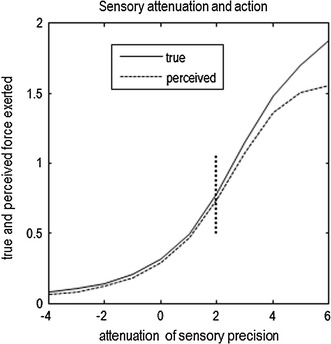
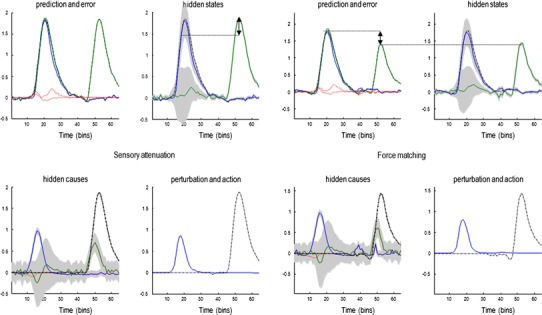
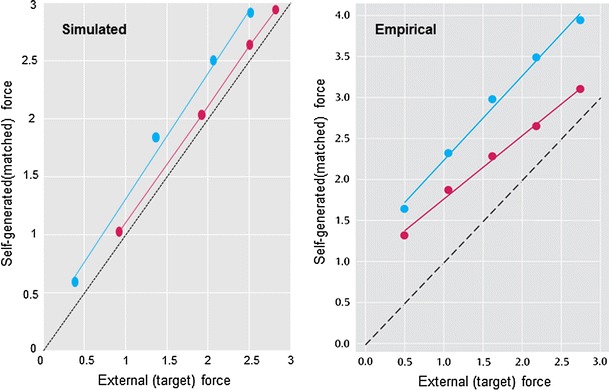
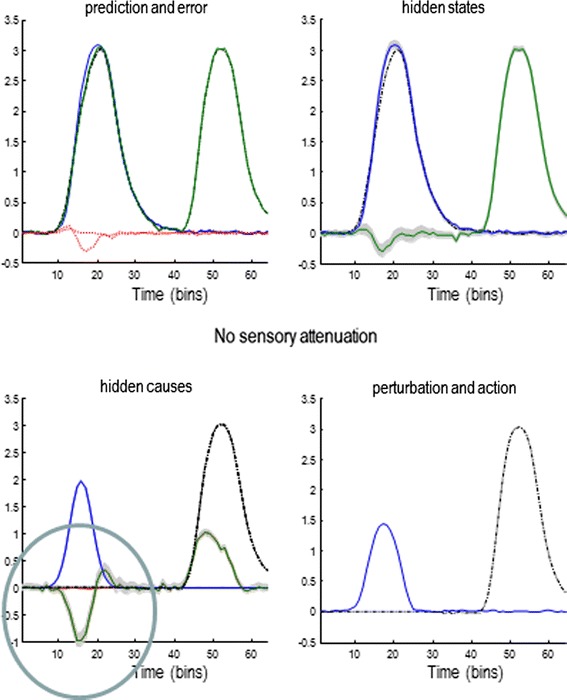
Active inference provides a simple and neurobiologically plausible account of how action and perception are coupled in producing (Bayes) optimal behaviour. This can be seen most easily as minimising prediction error: we can either change our predictions to explain sensory input through perception. Alternatively, we can actively change sensory input to fulfil our predictions. In active inference, this action is mediated by classical reflex arcs that minimise proprioceptive prediction error created by descending proprioceptive predictions. However, this creates a conflict between action and perception; in that, self-generated movements require predictions to override the sensory evidence that one is not actually moving. However, ignoring sensory evidence means that externally generated sensations will not be perceived. Conversely, attending to (proprioceptive and somatosensory) sensations enables the detection of externally generated events but precludes generation of actions. This conflict can be resolved by attenuating the precision of sensory evidence during movement or, equivalently, attending away from the consequences of self-made acts. We propose that this Bayes optimal withdrawal of precise sensory evidence during movement is the cause of psychophysical sensory attenuation. Furthermore, it explains the force-matching illusion and reproduces empirical results almost exactly. Finally, if attenuation is removed, the force-matching illusion disappears and false (delusional) inferences about agency emerge. This is important, given the negative correlation between sensory attenuation and delusional beliefs in normal subjects--and the reduction in the magnitude of the illusion in schizophrenia. Active inference therefore links the neuromodulatory optimisation of precision to sensory attenuation and illusory phenomena during the attribution of agency in normal subjects. It also provides a functional account of deficits in syndromes characterised by false inference and impaired movement--like schizophrenia and Parkinsonism--syndromes that implicate abnormal modulatory neurotransmission.
Overview
The claims and statistics of this paper haven’t been checked yet.
Free: it reads the open-access text and checks the first 5 claims that cite a source we can check. Create a free account to check every claim.
Integrity signals
Registry
Cites
Statistics
Figures
Verification
Claims the paper makes
The claims and statistics of this paper haven’t been checked yet.
Free: it reads the open-access text and checks the first 5 claims that cite a source we can check. Create a free account to check every claim.
Claims other papers make about this one
Each is checked against this paper’s own text: does it say what the citing paper says it does?
The source backs part of the claim, not all of it — or backs it for a different population, condition or comparison.
In the citing paper
“In other words, we have to infer both the cause of our sensations and the context, in terms of the (expected or subjective) precision of sensory evidence.”
From Active interoceptive inference and the emotional brain (2016) · cites this paper as [38]
Experimental — accuracy not yet measuredThe source backs part of the claim, not all of it — or backs it for a different population, condition or comparison.
In the citing paper
“All perceptual inference is at some level active – in the sense that we actively sample our sensorium to create our own sensations (Wurtz et al., 2011; Brown et al., 2013).”
From Virtual reality and consciousness inference in dreaming (2014) · cites this paper as Brown et al., 2013
Experimental — accuracy not yet measuredThe cited source says what the claim attributes to it.
In the citing paper
“Acting thus involves both generating a prediction of the sensory input expected to result from intended movement, and ‘fulfilling’ this prediction by executing the movement, thus effectively suppressing a prediction error signal that would otherwise emerge”
From 'Seeing the Dark': Grounding Phenomenal Transparency and Opacity in Precision Estimation for Active Inference (2018) · cites this paper as Brown et al., 2013
The cited source says what the claim attributes to it.
In the citing paper
“Action initiation involves ‘systematic misrepresentation’ (Wiese 2017)—whereby proprioceptive evidence that, for instance, my arm is not moving, is attenuated to allow the system to bring about the desired movement (Adams et al. 2013; Brown et al. 2013).”
From Consciousness in active inference: Deep self-models, other minds, and the challenge of psychedelic-induced ego-dissolution (2021) · cites this paper as Brown et al. 2013
The cited source says what the claim attributes to it.
In the citing paper
“The first to consider is ‘physiological sensory attenuation’ (Palmer et al. 2016), which is critical for movement initiation in active inference (Brown et al. 2013).”
From Consciousness in active inference: Deep self-models, other minds, and the challenge of psychedelic-induced ego-dissolution (2021) · cites this paper as Brown et al. 2013
2 more claims about this paper
Create a free account to see every claim other papers make about this one.
Self-check
Percentages, sums and reported differences re-computed from the paper’s own numbers.
The self-check needs the paper’s full text.
Citations
Cites
Rao, R. P. N., & Ballard, D. H. (1999) · Nature Neuroscience · doi:10.1038/4580 · Cited by 5,483 · cited 2×
“Within predictive coding formulations of perception (Rao and Ballard 1999; Friston 2005), prediction errors play a crucial role in perception, but again, they are not the percept itself; the percept is a synthesis of prior beliefs and sensory evidence that is conveyed by prediction errors.”
BackgroundMethodA theory of cortical responses.
Friston, K. (2005) · Philosophical Transactions of the Royal Society B: Biological Sciences · doi:10.1098/rstb.2005.1622 · Cited by 4,578 · cited 1×
“Within predictive coding formulations of perception (Rao and Ballard 1999; Friston 2005), prediction errors play a crucial role in perception, but again, they are not the percept itself; the percept is a synthesis of prior beliefs and sensory evidence that is conveyed by prediction errors.”
BackgroundSelf-citationThe Dopamine Hypothesis of Schizophrenia: Version III--The Final Common Pathway
Howes, O. D., & Kapur, S. (2009) · Schizophrenia Bulletin · doi:10.1093/schbul/sbp006 · Cited by 2,693 · cited 2×
“candidate for this modulation is the dopaminergic system, a classical ascending neuromodulatory transmitter system (Howes and Kapur 2009).”
BackgroundHaken, H. (2009) · Encyclopedia of Complexity and Systems Science · doi:10.1007/978-0-387-30440-3_534 · Cited by 2,336
The free-energy principle: a rough guide to the brain?
Friston, K. (2009) · Trends in Cognitive Sciences · doi:10.1016/j.tics.2009.04.005 · Cited by 1,831 · cited 1×
“The final assumption is the Laplace assumption that, in terms of neural codes, leads to the Laplace code that is arguably the simplest and most flexible of all neural codes (Friston 2009).”
BackgroundSelf-citationPredictive coding under the free-energy principle
Friston, K., & Kiebel, S. (2009) · Philosophical Transactions of the Royal Society B: Biological Sciences · doi:10.1098/rstb.2008.0300 · Cited by 1,579 · cited 2×
“This is the essence of recurrent message passing between hierarchical levels to optimise free energy or suppress prediction error: see (Friston and Kiebel 2009a, b; Feldman and Friston 2010) for a more detailed discussion.”
BackgroundSelf-citation(2021) · Modern Aspects of Superconductivity · doi:10.1142/9789811234521_0001 · Cited by 1,498
Central cancellation of self-produced tickle sensation
Blakemore, S.-J., Wolpert, D. M., & Frith, C. D. (1998) · Nature Neuroscience · doi:10.1038/2870 · Cited by 1,467 · cited 2×
“1999a, b, 2001) and thalamic (Blakemore et al. 1998) activity is reduced for self-produced versus externally”
BackgroundHaken, H. (1983) · Springer Series in Synergetics · doi:10.1007/978-3-642-88338-5 · Cited by 1,431
Attention, uncertainty, and free-energy
Feldman, H., & Friston, K. J. (2010) · Frontiers in Human Neuroscience · doi:10.3389/fnhum.2010.00215 · Cited by 1,365 · cited 3×
“This is the essence of recurrent message passing between hierarchical levels to optimise free energy or suppress prediction error: see (Friston and Kiebel 2009a, b; Feldman and Friston 2010) for a more detailed discussion.”
BackgroundSelf-citation
Research works printed but not linked: 1
- Weber E (1846) Der Tatsinn und das Gemeingefuhl. In: Wagner R (ed) Handwörterbuch der Physiologie. Wilhelm Engelmann, Leipzig
Cited by
Active interoceptive inference and the emotional brain
Seth, A. K., & Friston, K. J. (2016) · Philosophical Transactions of the Royal Society B: Biological Sciences · doi:10.1098/rstb.2016.0007 · Cited by 945
Self-citationThe Computational Anatomy of Psychosis
Adams, R. A., Stephan, K. E., Brown, H. R., Frith, C. D., & Friston, K. J. (2013) · Frontiers in Psychiatry · doi:10.3389/fpsyt.2013.00047 · Cited by 850
Self-citationAn aberrant precision account of autism
Lawson, R. P., Rees, G., & Friston, K. J. (2014) · Frontiers in Human Neuroscience · doi:10.3389/fnhum.2014.00302 · Cited by 641
Self-citationPredictive Processes and the Peculiar Case of Music
Koelsch, S., Vuust, P., & Friston, K. (2019) · Trends in Cognitive Sciences · doi:10.1016/j.tics.2018.10.006 · Cited by 557
“In other words, it is necessary to suspend attention (to the consequences of action) by attenuating sensory precision to realize proprioceptive predictions of the sort involved in dancing [39].”
Self-citationHohwy, J. (2016) · Noûs · doi:10.1111/nous.12062 · Cited by 578
The dysconnection hypothesis (2016)
Friston, K., Brown, H. R., Siemerkus, J., & Stephan, K. E. (2016) · Schizophrenia Research · doi:10.1016/j.schres.2016.07.014 · Cited by 561
“Psychophysically, the attenuation of sensory precision is known as sensory attenuation – a reduced sensitivity to the sensory consequences of self-made acts (Brown et al., 2013; Frith et al., 2000).”
BackgroundInfluentialSelf-citationComputational psychiatry: the brain as a phantastic organ
Friston, K. J., Stephan, K. E., Montague, R., & Dolan, R. J. (2014) · The Lancet Psychiatry · doi:10.1016/s2215-0366(14)70275-5 · Cited by 531
Self-citationThe neurobiology of interoception in health and disease
Quadt, L., Critchley, H. D., & Garfinkel, S. N. (2018) · Annals of the New York Academy of Sciences · doi:10.1111/nyas.13915 · Cited by 434
Mentalizing homeostasis: the social origins of interoceptive inference
Fotopoulou, A., & Tsakiris, M. (2017) · Neuropsychoanalysis · doi:10.1080/15294145.2017.1294031 · Cited by 428
The graphical brain: Belief propagation and active inference
Friston, K. J., Parr, T., & de Vries, B. (2017) · Network Neuroscience · doi:10.1162/netn_a_00018 · Cited by 415
“…that follow from the sort of process theory described in this paper; these range from the macroscopic hierarchical organization of cortical areas in the brain to the details of canonical microcircuits (e.g., Adams et al., 2013; Bastos et al., 2012; Friston, 2008; Mumford, 1992; Shipp, 2016).”
BackgroundSelf-citationBeing a Beast Machine: The Somatic Basis of Selfhood
Seth, A. K., & Tsakiris, M. (2018) · Trends in Cognitive Sciences · doi:10.1016/j.tics.2018.08.008 · Cited by 371
“This in turn explains observations of increased sensory thresholds in these modalities during movements [36].”
Friston, K., & Frith, C. (2015) · Consciousness and Cognition · doi:10.1016/j.concog.2014.12.003 · Cited by 359
“This is an example of sensory attenuation or attenuation of sensory precision (Brown et al., 2013).”
BackgroundSelf-citationA Bayesian perspective on magnitude estimation
Petzschner, F. H., Glasauer, S., & Stephan, K. E. (2015) · Trends in Cognitive Sciences · doi:10.1016/j.tics.2015.03.002 · Cited by 327
Bayesian approaches to autism: Towards volatility, action, and behavior.
Palmer, C. J., Lawson, R. P., & Hohwy, J. (2017) · Psychological Bulletin · doi:10.1037/bul0000097 · Cited by 307
‘Bodily precision’: A predictive coding account of individual differences in interoceptive accuracy
Ainley, V., Apps, M. A. J., Fotopoulou, A., & Tsakiris, M. (2016) · Philosophical Transactions of the Royal Society B: Biological Sciences · doi:10.1098/rstb.2016.0003 · Cited by 285
“5 modality, at each level of the hierarchy and taking account of the given context, the brain 126 weighs the relative precision of PEs that inform or revise expectations at higher level of the 127 hierarchy (22,23).”
BackgroundAttention and prediction in human audition: a lesson from cognitive psychophysiology
Schröger, E., Marzecová, A., & SanMiguel, I. (2015) · European Journal of Neuroscience · doi:10.1111/ejn.12816 · Cited by 262
The Perceptual Prediction Paradox
Press, C., Kok, P., & Yon, D. (2020) · Trends in Cognitive Sciences · doi:10.1016/j.tics.2019.11.003 · Cited by 246
Active inference, communication and hermeneutics
Friston, K. J., & Frith, C. D. (2015) · Cortex · doi:10.1016/j.cortex.2015.03.025 · Cited by 266
Self-citationMinimal self-models and the free energy principle.
Limanowski, J., & Blankenburg, F. (2013) · Frontiers in Human Neuroscience · doi:10.3389/fnhum.2013.00547 · Cited by 263
“…to explain symptoms like delusion formation (Fletcher and Frith, 2008; Hohwy, 2013) or failures in sensory attenuation occurring in schizophrenia (Brown et al., 2013), hysteria or functional symptoms (Edwards et al., 2012), out-of-body experiences (Schwabe and Blanke, 2008), and…”
BackgroundInfluentialSeth, A. K. (2015) · Figshare · doi:10.15502/9783958570108 · Cited by 211
“This requires transiently low precision-weighting of these errors (or else predictions would simply be updated instead), which is compatible with evidence showing sensory attenuation during self-generated movements (Brown et al. 2013).”
BackgroundResultReflections on agranular architecture: predictive coding in the motor cortex
Shipp, S., Adams, R. A., & Friston, K. J. (2013) · Trends in Neurosciences · doi:10.1016/j.tins.2013.09.004 · Cited by 239
Self-citationThe cybernetic Bayesian brain : from interoceptive inference to sensorimotor contingencies
Seth, A. K. (2015) · MIND Group · doi:10.25358/openscience-84 · Cited by 239
Active inference on discrete state-spaces: A synthesis
Da Costa, L., Parr, T., Sajid, N., Veselic, S., Neacsu, V., & Friston, K. (2020) · Journal of Mathematical Psychology · doi:10.1016/j.jmp.2020.102447 · Cited by 226
Self-citationSymptom perception, placebo effects, and the Bayesian brain
Ongaro, G., & Kaptchuk, T. J. (2019) · Pain · doi:10.1097/j.pain.0000000000001367 · Cited by 208
“If, in the context of perception, the brain revises its predictions to match the input, in action, it minimizes prediction error by modifying the inputs so that they can fit the prediction.(6,10) In a condition of chronic pain, the brain may nonconsciously initiate visceral sensations (eg, stomach tension) that match…”
BackgroundMillière, R. (2017) · Frontiers in Human Neuroscience · doi:10.3389/fnhum.2017.00245 · Cited by 206
“For example, if prediction error signals are abnormally encoded for self-generated stimuli, these will be experienced as unpredictable and will not be attenuated, which might eventually lead to the suppression of prediction errors in an updated model where these stimuli are not attributed to the self (Brown et al., 20…”
BackgroundLFP and oscillations—what do they tell us?
Friston, K. J., Bastos, A. M., Pinotsis, D., & Litvak, V. (2015) · Current Opinion in Neurobiology · doi:10.1016/j.conb.2014.05.004 · Cited by 188
“This attenuation has been linked to sensory attenuation during self-made acts [49], suggesting a failure of sensory attenuation in Parkinson’s disease that rests on dopaminergic modulation of beta activity [5,50].”
Self-citationVirtual reality and consciousness inference in dreaming
Hobson, J. A., Hong, C. C.-H., & Friston, K. J. (2014) · Frontiers in Psychology · doi:10.3389/fpsyg.2014.01133 · Cited by 197
“All perceptual inference is at some level active – in the sense that we actively sample our sensorium to create our own sensations (Wurtz et al., 2011; Brown et al., 2013).”
BackgroundSelf-citationGetting ahead: forward models and their place in cognitive architecture
Pickering, M. J., & Clark, A. (2014) · Trends in Cognitive Sciences · doi:10.1016/j.tics.2014.05.006 · Cited by 190
Interoceptive inference: From computational neuroscience to clinic
Owens, A. P., Allen, M., Ondobaka, S., & Friston, K. J. (2018) · Neuroscience & Biobehavioral Reviews · doi:10.1016/j.neubiorev.2018.04.017 · Cited by 174
“intentions) are realised by directing (descending) prediction errors to effector organs (Brown et al., 2013; Hughes et al., 2013; Wiese, 2017); i.”
Self-citationSentience and the Origins of Consciousness: From Cartesian Duality to Markovian Monism
Friston, K. J., Wiese, W., & Hobson, J. A. (2020) · Entropy · doi:10.3390/e22050516 · Cited by 186
“, Bayesian brain) accounts of attentional selection and, a particularly important role in interoceptive inference [67,68,76,139,140].”
BackgroundSelf-citationPetzschner, F. H., Weber, L. A. E., Gard, T., & Stephan, K. E. (2017) · Biological Psychiatry · doi:10.1016/j.biopsych.2017.05.012 · Cited by 181
The Insula Mediates Access to Awareness of Visual Stimuli Presented Synchronously to the Heartbeat
Salomon, R., Ronchi, R., Dönz, J., Bello-Ruiz, J., Herbelin, B., Martet, R., Faivre, N., Schaller, K., & Blanke, O. (2016) · The Journal of Neuroscience · doi:10.1523/jneurosci.4262-15.2016 · Cited by 178
“Accordingly, a predictive model (Seth et al., 2011; Brown et al., 2013) based on the frequency but regardless of the phase of the cardiac cycle could be effective for the suppression of its sensory consequences no matter where they occur compared with the heart.”
BackgroundWhat visual illusions teach us about schizophrenia
Notredame, C.-E., Pins, D., Deneve, S., & Jardri, R. (2014) · Frontiers in Integrative Neuroscience · doi:10.3389/fnint.2014.00063 · Cited by 177
“Brown et al. (2013) went further in a recent paper by demonstrating how perception and action were derived from the same Bayes optimal system.”
BackgroundBadcock, P. B., Friston, K. J., Ramstead, M. J. D., Ploeger, A., & Hohwy, J. (2019) · Cognitive, Affective, & Behavioral Neuroscience · doi:10.3758/s13415-019-00721-3 · Cited by 167
Self-citationThe sense of agency in perception, behaviour and human-machine interactions
Wen, W., & Imamizu, H. (2022) · Nature Reviews Psychology · doi:10.1038/s44159-022-00030-6 · Cited by 160
“Owing to the link between sensory attenuation and self-initiated action, sensory attenuation is also used as an implicit measurement of the sense of agency 53–55 .”
MethodPredictive processing as a systematic basis for identifying the neural correlates of consciousness
Hohwy, J., & Seth, A. (2020) · Philosophy and the Mind Sciences · doi:10.33735/phimisci.2020.ii.64 · Cited by 170
Computational psychiatry: from synapses to sentience
Friston, K. J. (2022) · Molecular Psychiatry · doi:10.1038/s41380-022-01743-z · Cited by 194
“…time, it has become dif fi cult to fi nd a psychiatric condition that has not been considered through the lens of aberrant precision, in one form or another [21, 135, A crosscutting theme in many of these accounts is a putative failure of sensory attenuation [53, 93 – 95, 98, 100, 159, 162 – 165].”
BackgroundSelf-citationA new science of emotion: implications for functional neurological disorder
Jungilligens, J., Paredes-Echeverri, S., Popkirov, S., Barrett, L. F., & Perez, D. L. (2022) · Brain · doi:10.1093/brain/awac204 · Cited by 164
Corcoran, A. W., Pezzulo, G., & Hohwy, J. (2020) · Biology & Philosophy · doi:10.1007/s10539-020-09746-2 · Cited by 161
Kuppuswamy, A. (2017) · Brain · doi:10.1093/brain/awx153 · Cited by 160
“The active inference framework of sensorimotor control provides a simple framework that integrates efferent and afferent inputs to explain movement initiation and motor control (Brown et al., 2013).”
Evidence for causal top-down frontal contributions to predictive processes in speech perception
Cope, T. E., Sohoglu, E., Sedley, W., Patterson, K., Jones, P. S., Wiggins, J., Dawson, C., Grube, M., Carlyon, R. P., Griffiths, T. D., et al. (2017) · Nature Communications · doi:10.1038/s41467-017-01958-7 · Cited by 150
Loss of sensory attenuation in patients with functional (psychogenic) movement disorders
Pareés, I., Brown, H., Nuruki, A., Adams, R. A., Davare, M., Bhatia, K. P., Friston, K., & Edwards, M. J. (2014) · Brain · doi:10.1093/brain/awu237 · Cited by 155
“Under an active inference model of human movement generation (Brown et al., 2013), this reduction in gain is necessary to allow movement to occur, as it allows predictions of movement to be doi:10.1093/brain/awu237 Brain 2014: 137; 2916–2921 | 2916 Received April 07, 2014.”
BackgroundInfluentialSelf-citationLimanowski, J., & Friston, K. (2018) · Frontiers in Psychology · doi:10.3389/fpsyg.2018.00643 · Cited by 154
“…of the sensory input expected to result from intended movement, and ‘fulfilling’ this prediction by executing the movement, thus effectively suppressing a prediction error signal that would otherwise emerge (Friston et al., 2010; Adams et al., 2013a; Brown et al., 2013; Seth and Friston, 2016).”
BackgroundSelf-citation(2018) · UCL Discovery (University College London) · Cited by 145
Self-citationThe Brain as an Efficient and Robust Adaptive Learner
Denève, S., Alemi, A., & Bourdoukan, R. (2017) · Neuron · doi:10.1016/j.neuron.2017.05.016 · Cited by 162
Hohwy, J. (2016) · Consciousness and Cognition · doi:10.1016/j.concog.2016.09.004 · Cited by 148
Now you hear it: a predictive coding model for understanding rhythmic incongruity
Vuust, P., Dietz, M. J., Witek, M. A. G., & Kringelbach, M. L. (2018) · Annals of the New York Academy of Sciences · doi:10.1111/nyas.13622 · Cited by 147
Sandved-Smith, L., Hesp, C., Mattout, J., Friston, K., Lutz, A., & Ramstead, M. J. D. (2021) · Neuroscience of Consciousness · doi:10.1093/nc/niab018 · Cited by 110
“Even beyond the obvious relevance to attention-deficit disorders, recent work suggests that attentional control plays an important role in the aetiology of schizophrenia (Brown et al. 2013) and the associated phenomenon of depersonalization disorder (Ciaunica et al.”
BackgroundSelf-citationDynamical Relations in the Self-Pattern
Gallagher, S., & Daly, A. (2018) · Frontiers in Psychology · doi:10.3389/fpsyg.2018.00664 · Cited by 144
“Indeed, predictive processing accounts suggest that although self-recognition may involve the specific congruency of predictions driven by efference processes and incoming sensory input (e.g., Frith, 1992; Gallagher, 2000; Friston et al., 2010; Brown et al., 2013), the FEP framework “provides flexibility, with fewer c…”
BackgroundZavala, B., Jang, A. I., Trotta, M., Lungu, C., Brown, P., & Zaghloul, K. A. (2018) · Brain · doi:10.1093/brain/awy266 · Cited by 135
“Increasing evidence suggests that cortical processing is optimized for predictive coding, and that such top-down predictions are conveyed through beta oscillations (Engel et al., 2001; Buschman and Miller, 2007; van Ede et al., 2011; Brown et al., 2013).”
Mechanisms of poststroke fatigue
Doncker, W. D., Dantzer, R., Ormstad, H., & Kuppuswamy, A. (2017) · Journal of Neurology Neurosurgery & Psychiatry · doi:10.1136/jnnp-2017-316007 · Cited by 138
Predictions, perception, and a sense of self
Picard, F., & Friston, K. (2014) · Neurology · doi:10.1212/wnl.0000000000000798 · Cited by 118
“In other words, precision may be involved in selecting cues that elicit utilitarian action.(12) So far, we have restricted ourselves to perceptual synthesis in the exteroceptive (i.”
BackgroundSelf-citationA social Bayesian brain: how social knowledge can shape visual perception
Otten, M., Seth, A. K., & Pinto, Y. (2017) · Brain and Cognition · doi:10.1016/j.bandc.2016.05.002 · Cited by 124
Model averaging, optimal inference, and habit formation
FitzGerald, T. H. B., Dolan, R. J., & Friston, K. J. (2014) · Frontiers in Human Neuroscience · doi:10.3389/fnhum.2014.00457 · Cited by 121
“A number of psychiatric disorders are associated with symptoms such as delusions and hallucinations which seem likely to reflect dysfunctional models of their environment (Fletcher and Frith, 2008; Adams et al., 2013; Brown et al., 2013).”
BackgroundSelf-citationSensory Processing and the Rubber Hand Illusion—An Evoked Potentials Study
Zeller, D., Litvak, V., Friston, K. J., & Classen, J. (2015) · Journal of Cognitive Neuroscience · doi:10.1162/jocn_a_00705 · Cited by 116
Self-citationBrown, M., & Kuperberg, G. R. (2015) · Frontiers in Human Neuroscience · doi:10.3389/fnhum.2015.00643 · Cited by 109
“…reflexive movements that effectively correct prediction errors and ensure that action outcomes approximate what is predicted (Adams et al., 2013a; Brown et al., 2013). this case, the flow of activity across the producer’s generative model will be primarily top-down, with any small remaining…”
BackgroundFriston, K. J., Sajid, N., Quiroga-Martinez, D. R., Parr, T., Price, C. J., & Holmes, E. (2021) · Hearing Research · doi:10.1016/j.heares.2020.107998 · Cited by 93
Self-citationTschantz, A., Barca, L., Maisto, D., Buckley, C. L., Seth, A. K., & Pezzulo, G. (2022) · Biological Psychology · doi:10.1016/j.biopsycho.2022.108266 · Cited by 118
Sel, A., Azevedo, R. T., & Tsakiris, M. (2016) · Cerebral Cortex · doi:10.1093/cercor/bhw296 · Cited by 111
“Within any modality, at each level of the hierarchy and taking account of the given context, the brain weighs the relative precision of PEs that informs or revises expectations at higher level of the hierarchy (Hohwy 2012; Brown et al. 2013).”
BackgroundEmbodiment and Schizophrenia: A Review of Implications and Applications
Tschacher, W., Giersch, A., & Friston, K. (2017) · Schizophrenia Bulletin · doi:10.1093/schbul/sbw220 · Cited by 102
Self-citationPrecision control for a flexible body representation
Limanowski, J. (2021) · Neuroscience & Biobehavioral Reviews · doi:10.1016/j.neubiorev.2021.10.023 · Cited by 118
“This results in an attenuation of sensory information conveyed via the respective modality, and a correspondingly attenuated impact on higher-level inference (Brown et al., 2013).”
BackgroundDecision-making in schizophrenia: A predictive-coding perspective
Sterzer, P., Voss, M., Schlagenhauf, F., & Heinz, A. (2019) · NeuroImage · doi:10.1016/j.neuroimage.2018.05.074 · Cited by 99
Probability Designs: Literature and Predictive Processing
Kukkonen, K. (2019) · doi:10.1093/oso/9780190050955.001.0001 · Cited by 117
Hohwy, J., Paton, B. K., & Palmer, C. J. (2015) · Phenomenology and the Cognitive Sciences · doi:10.1007/s11097-015-9439-6 · Cited by 110
Bastos-Leite, A. J., Ridgway, G. R., Silveira, C., Norton, A., Reis, S., & Friston, K. J. (2015) · Schizophrenia Bulletin · doi:10.1093/schbul/sbu080 · Cited by 99
Self-citationCognitive Dynamics: From Attractors to Active Inference
Friston, K., Sengupta, B., & Auletta, G. (2014) · Proceedings of the IEEE · doi:10.1109/jproc.2014.2306251 · Cited by 98
“[82] H.”
Self-citationWorld model learning and inference
Friston, K., Moran, R. J., Nagai, Y., Taniguchi, T., Gomi, H., & Tenenbaum, J. (2021) · Neural Networks · doi:10.1016/j.neunet.2021.09.011 · Cited by 90
“Early work focused on nonlinear hierarchical dynamical systems models of environments, where actions reacted online, in continuous time, to the immediate sensory data and represented reflex arcs in central nervous system (Adams et al., 2013).”
BackgroundSelf-citationEvidence for surprise minimization over value maximization in choice behavior
Schwartenbeck, P., FitzGerald, T. H. B., Mathys, C., Dolan, R., Kronbichler, M., & Friston, K. (2015) · Scientific Reports · doi:10.1038/srep16575 · Cited by 96
Self-citationPalmer, C. E., Davare, M., & Kilner, J. M. (2016) · The Journal of Neuroscience · doi:10.1523/jneurosci.1694-16.2016 · Cited by 96
“This same mechanism has also been used to explain perceptual sensory attenuation (Brown et al., 2013).”
BackgroundInfluential“Surprise” and the Bayesian Brain: Implications for Psychotherapy Theory and Practice
Holmes, J., & Nolte, T. (2019) · Frontiers in Psychology · doi:10.3389/fpsyg.2019.00592 · Cited by 90
Neural Mechanisms and Psychology of Psychedelic Ego Dissolution
Stoliker, D., Egan, G. F., Friston, K. J., & Razi, A. (2022) · Pharmacological Reviews · doi:10.1124/pharmrev.121.000508 · Cited by 81
Self-citationOn the functions, mechanisms, and malfunctions of intracortical contextual modulation
Phillips, W. A., Clark, A., & Silverstein, S. M. (2015) · Neuroscience & Biobehavioral Reviews · doi:10.1016/j.neubiorev.2015.02.010 · Cited by 92
“Many behavioural and phenomenological consequences of the suppression of self-generated signals are reviewed by Brown et al (2013), who also show how such findings can be interpreted from the perspective of the theory of free energy reduction.”
Perceptual awareness and active inference
Parr, T., Corcoran, A. W., Friston, K. J., & Hohwy, J. (2019) · Neuroscience of Consciousness · doi:10.1093/nc/niz012 · Cited by 91
“This sort of approach has been employed with great success to aid understanding our susceptibility to a range of visual illusions (Geisler and Kersten 2002; Weiss et al. 2002; Brown and Friston 2012; Brown et al. 2013).”
BackgroundSelf-citationCiaunica, A., Seth, A. K., Limanowski, J., Hesp, C., & Friston, K. J. (2022) · Consciousness and Cognition · doi:10.1016/j.concog.2022.103320 · Cited by 100
“…prediction errors that would otherwise subvert movement: namely, provide irrefutable evidence that “I am not moving”, despite my prior belief or intention to move (Adams, Stephan, Brown, Frith, & Friston, 2013; Brown et al., 2013; Friston, Daunizeau, Kilner, & Kiebel, 2010; Seth & Friston, 2016).”
BackgroundSelf-citation“Stopping for knowledge”: The sense of beauty in the perception-action cycle
Sarasso, P., Neppi-Mòdona, M., Sacco, K., & Ronga, I. (2020) · Neuroscience & Biobehavioral Reviews · doi:10.1016/j.neubiorev.2020.09.004 · Cited by 97
Owens, A. P., Friston, K. J., Low, D. A., Mathias, C. J., & Critchley, H. (2018) · Autonomic Neuroscience · doi:10.1016/j.autneu.2018.01.001 · Cited by 86
Self-citationPredictive joint-action model: A hierarchical predictive approach to human cooperation
Pesquita, A., Whitwell, R. L., & Enns, J. T. (2017) · Psychonomic Bulletin & Review · doi:10.3758/s13423-017-1393-6 · Cited by 93
Palmer, C. J., Paton, B., Kirkovski, M., Enticott, P. G., & Hohwy, J. (2015) · Proceedings of the Royal Society B: Biological Sciences · doi:10.1098/rspb.2014.1557 · Cited by 82
Predictive attenuation of touch and tactile gating are distinct perceptual phenomena
Kilteni, K., & Ehrsson, H. H. (2022) · iScience · doi:10.1016/j.isci.2022.104077 · Cited by 87
Reframing PTSD for computational psychiatry with the active inference framework
Linson, A., & Friston, K. (2019) · Cognitive Neuropsychiatry · doi:10.1080/13546805.2019.1665994 · Cited by 81
“…(from trauma and stress) found in PTSD. Generally, on active inference accounts of psychopathology, sensory attenuation plays a signi fi cant role (Brown, Adams, Parees, Edwards, & Friston, 2013; Friston, 2017; Joyce, Averbeck, Frith, & Shergill, 2013; Oestreich et al., 2015; Parees et al., 2014;…”
BackgroundSelf-citationWilkinson, S. (2014) · Consciousness and Cognition · doi:10.1016/j.concog.2014.09.002 · Cited by 77
Active Inference, Evidence Accumulation, and the Urn Task
FitzGerald, T. H. B., Schwartenbeck, P., Moutoussis, M., Dolan, R. J., & Friston, K. (2015) · Neural Computation · doi:10.1162/neco_a_00699 · Cited by 81
“Prior work has considered how variations in observed behaviour can result from optimal inference, when the parameters governing estimates of environmental volatility (Mathys et al., 2011; Vossel et al., 2013) and sensory precision (Adams et al., 2012; Brown et al., 2013) are altered.”
BackgroundSelf-citationSensory prediction errors in the continuum of psychosis
Randeniya, R., Oestreich, L. K. L., & Garrido, M. I. (2018) · Schizophrenia Research · doi:10.1016/j.schres.2017.04.019 · Cited by 78
“Brown et al. (2013) also draw attention to limitations of the forward model stating that it relates the intensity of the prediction error to the attenuation effects and that it overlooks themultidimensional nature of sensory attributes; they instead suggest a mechanism under the predictive coding…”
BackgroundBeyond Desire? Agency, Choice, and the Predictive Mind
Clark, A. (2020) · Australasian Journal of Philosophy · doi:10.1080/00048402.2019.1602661 · Cited by 78
“Intentional action thus depends upon a delicate balance that combines precise proprioceptive predictions with attenuated information concerning current bodily states [Brown et al. 2013].”
BackgroundDynamic causal modeling of touch-evoked potentials in the rubber hand illusion
Zeller, D., Friston, K. J., & Claßen, J. (2016) · NeuroImage · doi:10.1016/j.neuroimage.2016.05.065 · Cited by 83
“The (Bayesian) resolution of this dilemma we have considered is to weight sensory evidence in terms of its relative precision (O'Reilly et al. 2012; Brown et al. 2013).”
Self-citationA Bayesian Account of the Sensory-Motor Interactions Underlying Symptoms of Tourette Syndrome
Rae, C. L., Critchley, H. D., & Seth, A. K. (2019) · Frontiers in Psychiatry · doi:10.3389/fpsyt.2019.00029 · Cited by 71
“, active inference) is enabled by transiently attenuating proprioceptive prediction errors, instead of updating the predictions themselves (59, 62).”
BackgroundSterzer, P., Mishara, A. L., Voss, M., & Heinz, A. (2016) · Frontiers in Human Neuroscience · doi:10.3389/fnhum.2016.00502 · Cited by 76
“…explain why inserted thoughts are experienced as being caused by another agent, whereas unbidden or intrusive thoughts that run through our heads unexpectedly or even against our will are not (Stephens and Graham, 2000; Gallagher, 2004; Vosgerau and Newen, 2007; Brewin et al., 2010; Heinz, 2014).”
BackgroundGreat expectations: a predictive processing account of automobile driving
Engström, J., Bärgman, J., Nilsson, D., Seppelt, B., Markkula, G. M., Piccinini, G. B., & Victor, T. (2017) · Theoretical Issues in Ergonomics Science · doi:10.1080/1463922x.2017.1306148 · Cited by 95
Tactile suppression in goal-directed movement
Juravle, G., Binsted, G., & Spence, C. J. (2016) · Psychonomic Bulletin & Review · doi:10.3758/s13423-016-1203-6 · Cited by 80
“It has thus been suggested that by attenuating the sensory signals resulting from the movement, such a predictive mechanism serves to enhance the salience of external events, or those events that cannot be predicted from the motor command (Bays &Wolpert, 2007; see also Brown et al., 2013).”
BackgroundRay, D., Bezmaternykh, D., Mel’nikov, M., Friston, K. J., & Das, M. (2021) · Proceedings of the National Academy of Sciences · doi:10.1073/pnas.2105730118 · Cited by 73
“Put simply, in sensory hierarchies, exteroceptive prediction errors are caused by bottom-up (65–67).”
Self-citationThe Interaction between Interoceptive and Action States within a Framework of Predictive Coding
Marshall, A. C., Gentsch, A., & Schütz-Bosbach, S. (2018) · Frontiers in Psychology · doi:10.3389/fpsyg.2018.00180 · Cited by 66
“…note is that a generative explanation of agency is a necessary assumption for active inference which in itself forms a central component of popular predictive coding accounts such as the free energy principle (Friston and Stephan, 2007; Hohwy, 2007, 2010; Friston, 2009; Brown et al., 2013).”
BackgroundDjebbara, Z., Jensen, O. B., Parada, F. J., & Gramann, K. (2022) · Neuroscience & Biobehavioral Reviews · doi:10.1016/j.neubiorev.2022.104715 · Cited by 75
Gallagher, S. (2023) · doi:10.1093/oso/9780198873068.001.0001 · Cited by 82
PID Control as a Process of Active Inference with Linear Generative Models
Baltieri, M., & Buckley, C. (2019) · Entropy · doi:10.3390/e21030257 · Cited by 70
“This is implemented in the weighting mechanism of prediction errors by precisions in equation (19); see also [13,26,70] for similar discussions on the role of precisions for behaviour.”
BackgroundActive inference under visuo-proprioceptive conflict: Simulation and empirical results
Limanowski, J., & Friston, K. (2020) · Scientific Reports · doi:10.1038/s41598-020-61097-w · Cited by 65
Self-citationEsteves, J. E., Cerritelli, F., Kim, J., & Friston, K. J. (2022) · Frontiers in Psychology · doi:10.3389/fpsyg.2022.812926 · Cited by 75
Self-citationHierarchical Bayesian models of delusion
Williams, D. (2018) · Consciousness and Cognition · doi:10.1016/j.concog.2018.03.003 · Cited by 76
Active Inference and Auditory Hallucinations
Benrimoh, D. A., Parr, T., Vincent, P., Adams, R. A., & Friston, K. (2018) · Computational Psychiatry · doi:10.1162/cpsy_a_00022 · Cited by 63
Self-citationHarris, D., Arthur, T., Broadbent, D. P., Wilson, M., Vine, S. J., & Runswick, O. R. (2022) · Sports Medicine · doi:10.1007/s40279-022-01689-w · Cited by 69
“Computational models that simulate the Bayes-optimal behaviour of hypothetical observers have been used widely in the active inference literature and applied to areas such as language, interoception and visual illusions [39–41].”
MethodThe Neural Organ Explains the Mind
Hohwy, J. (2015) · doi:10.15502/9783958570016 · Cited by 54
Metadata
- Authors
- Brown, H., Adams, R. A., Parees, I., Edwards, M., & Friston, K.
- Affiliations
- Wellcome Centre for Human Neuroimaging (GB)
- University College London (GB)
- Corresponding author
- Brown, Harriet
- Venue
- Cognitive Processing
- Published
- 2013-06-07
- Volume
- 14
- Issue
- 4
- Pages
- 411-427
- ISSN
- 1612-4782 (ISSN-L)
- 1612-4790
- PMC
- PMC3824582
- OpenAlex
- W2151496011
- Semantic Scholar
- 6291e49d4e7c30272a43a212e14aec9fe37dac38
- Cited by
- 488
- References
- 81
- Citations by year
- 2026: 24 · 2025: 38 · 2024: 31 · 2023: 63 · 2022: 45 · 2021: 48 · 2020: 39 · 2019: 58 · 2018: 38 · 2017: 29 · 2016: 22 · 2015: 23 · 2014: 23 · 2013: 5
- FWCI
- 2.09
- Type
- journal article
- Language
- en
- Open access
- hybrid
- doi.org
- Locations
- Cognitive Processing (publishedVersion, cc-by)
- Europe PMC (PubMed Central) (publishedVersion, cc-by)
- PubMed Central (publishedVersion, cc-by)
- PubMed (publishedVersion)
- St George's Online Research Archive (St George's University of London) (acceptedVersion)
- UCL Discovery (University College London) (submittedVersion)
- Funders
- Wellcome Trust (091593, 088130)
- Topics
- Life Sciences › Neuroscience › Cognitive Neuroscience › Embodied and Extended Cognition
- Social Sciences › Arts and Humanities › Philosophy › Free Will and Agency
- Social Sciences › Psychology › Social Psychology › Action Observation and Synchronization
- Keywords
- active inference, sensory attenuation, proprioception, prediction error, sensory precision, schizophrenia, parkinsonism, perception-action coupling, neuromodulation
- MeSH terms
- Algorithms, Attention, Bayes Theorem, Behavior, Humans, Illusions, Psychophysics, Sensation
About these checks
Registry, retraction, Cites and statistics results are computed, not judged, with one exception: a printed reference that no index lists is read once by a model before it counts as a citation error. Claims are extracted by a model and kept only when their quote appears verbatim in the text; each cited source is then checked, with a model’s help, for whether it says what the claim relies on. Those verdicts can be wrong — read the claim’s quote and the cited source before relying on one.
Statistics and arithmetic are recomputed, not judged.
Confidence bands are shown only for fields calibrated on our annotated test set. None is calibrated yet, so no band is shown.
What counts as a claim ›How we measure confidence ›How we check this ›
Are you an author, or do you see a problem with this page? Request a review
Data sources
Bibliographic data: Semantic Scholar, OpenAlex, Crossref.
Contains information from the Semantic Scholar Academic Graph Datasets, made available under the ODC Attribution License (ODC-BY 1.0).
Semantic Scholar’s data is described in: Kinney, R., et al. (2023). The Semantic Scholar Open Data Platform. arXiv:2301.10140.
