

Active inference, sensory attenuation and illusions
Open accessThe DOI matches its Crossref record; 81 of the 81 references it cites were found in a registry or an index.
Abstract
Active inference provides a simple and neurobiologically plausible account of how action and perception are coupled in producing (Bayes) optimal behaviour. This can be seen most easily as minimising prediction error: we can either change our predictions to explain sensory input through perception. Alternatively, we can actively change sensory input to fulfil our predictions. In active inference, this action is mediated by classical reflex arcs that minimise proprioceptive prediction error created by descending proprioceptive predictions. However, this creates a conflict between action and perception; in that, self-generated movements require predictions to override the sensory evidence that one is not actually moving. However, ignoring sensory evidence means that externally generated sensations will not be perceived. Conversely, attending to (proprioceptive and somatosensory) sensations enables the detection of externally generated events but precludes generation of actions. This conflict can be resolved by attenuating the precision of sensory evidence during movement or, equivalently, attending away from the consequences of self-made acts. We propose that this Bayes optimal withdrawal of precise sensory evidence during movement is the cause of psychophysical sensory attenuation. Furthermore, it explains the force-matching illusion and reproduces empirical results almost exactly. Finally, if attenuation is removed, the force-matching illusion disappears and false (delusional) inferences about agency emerge. This is important, given the negative correlation between sensory attenuation and delusional beliefs in normal subjects--and the reduction in the magnitude of the illusion in schizophrenia. Active inference therefore links the neuromodulatory optimisation of precision to sensory attenuation and illusory phenomena during the attribution of agency in normal subjects. It also provides a functional account of deficits in syndromes characterised by false inference and impaired movement--like schizophrenia and Parkinsonism--syndromes that implicate abnormal modulatory neurotransmission.
Overview
The claims and statistics of this paper haven’t been checked yet.
Free: it reads the open-access text and checks the first 5 claims that cite a source we can check. Create a free account to check every claim.
Integrity signals
Registry
Cites
Statistics
Figures



Verification
Claims the paper makes
The claims and statistics of this paper haven’t been checked yet.
Free: it reads the open-access text and checks the first 5 claims that cite a source we can check. Create a free account to check every claim.
Claims other papers make about this one
Each is checked against this paper’s own text: does it say what the citing paper says it does?
The source backs part of the claim, not all of it — or backs it for a different population, condition or comparison.
In the citing paper
“In other words, we have to infer both the cause of our sensations and the context, in terms of the (expected or subjective) precision of sensory evidence.”
From Active interoceptive inference and the emotional brain (2016) · cites this paper as [38]
Experimental — accuracy not yet measuredThe source backs part of the claim, not all of it — or backs it for a different population, condition or comparison.
In the citing paper
“All perceptual inference is at some level active – in the sense that we actively sample our sensorium to create our own sensations (Wurtz et al., 2011; Brown et al., 2013).”
From Virtual reality and consciousness inference in dreaming (2014) · cites this paper as Brown et al., 2013
Experimental — accuracy not yet measuredThe cited source says what the claim attributes to it.
In the citing paper
“Acting thus involves both generating a prediction of the sensory input expected to result from intended movement, and ‘fulfilling’ this prediction by executing the movement, thus effectively suppressing a prediction error signal that would otherwise emerge”
From 'Seeing the Dark': Grounding Phenomenal Transparency and Opacity in Precision Estimation for Active Inference (2018) · cites this paper as Brown et al., 2013
The cited source says what the claim attributes to it.
In the citing paper
“Action initiation involves ‘systematic misrepresentation’ (Wiese 2017)—whereby proprioceptive evidence that, for instance, my arm is not moving, is attenuated to allow the system to bring about the desired movement (Adams et al. 2013; Brown et al. 2013).”
From Consciousness in active inference: Deep self-models, other minds, and the challenge of psychedelic-induced ego-dissolution (2021) · cites this paper as Brown et al. 2013
The cited source says what the claim attributes to it.
In the citing paper
“The first to consider is ‘physiological sensory attenuation’ (Palmer et al. 2016), which is critical for movement initiation in active inference (Brown et al. 2013).”
From Consciousness in active inference: Deep self-models, other minds, and the challenge of psychedelic-induced ego-dissolution (2021) · cites this paper as Brown et al. 2013
2 more claims about this paper
Create a free account to see every claim other papers make about this one.
Self-check
Percentages, sums and reported differences re-computed from the paper’s own numbers.
The self-check needs the paper’s full text.
Citations
Cites
Rao, R. P. N., & Ballard, D. H. (1999) · Nature Neuroscience · doi:10.1038/4580 · Cited by 5,483 · cited 2×
“Within predictive coding formulations of perception (Rao and Ballard 1999; Friston 2005), prediction errors play a crucial role in perception, but again, they are not the percept itself; the percept is a synthesis of prior beliefs and sensory evidence that is conveyed by prediction errors.”
BackgroundMethodA theory of cortical responses.
Friston, K. (2005) · Philosophical Transactions of the Royal Society B: Biological Sciences · doi:10.1098/rstb.2005.1622 · Cited by 4,578 · cited 1×
“Within predictive coding formulations of perception (Rao and Ballard 1999; Friston 2005), prediction errors play a crucial role in perception, but again, they are not the percept itself; the percept is a synthesis of prior beliefs and sensory evidence that is conveyed by prediction errors.”
BackgroundSelf-citationThe Dopamine Hypothesis of Schizophrenia: Version III--The Final Common Pathway
Howes, O. D., & Kapur, S. (2009) · Schizophrenia Bulletin · doi:10.1093/schbul/sbp006 · Cited by 2,693 · cited 2×
“candidate for this modulation is the dopaminergic system, a classical ascending neuromodulatory transmitter system (Howes and Kapur 2009).”
BackgroundHaken, H. (2009) · Encyclopedia of Complexity and Systems Science · doi:10.1007/978-0-387-30440-3_534 · Cited by 2,336
The free-energy principle: a rough guide to the brain?
Friston, K. (2009) · Trends in Cognitive Sciences · doi:10.1016/j.tics.2009.04.005 · Cited by 1,831 · cited 1×
“The final assumption is the Laplace assumption that, in terms of neural codes, leads to the Laplace code that is arguably the simplest and most flexible of all neural codes (Friston 2009).”
BackgroundSelf-citationPredictive coding under the free-energy principle
Friston, K., & Kiebel, S. (2009) · Philosophical Transactions of the Royal Society B: Biological Sciences · doi:10.1098/rstb.2008.0300 · Cited by 1,579 · cited 2×
“This is the essence of recurrent message passing between hierarchical levels to optimise free energy or suppress prediction error: see (Friston and Kiebel 2009a, b; Feldman and Friston 2010) for a more detailed discussion.”
BackgroundSelf-citation(2021) · Modern Aspects of Superconductivity · doi:10.1142/9789811234521_0001 · Cited by 1,498
Central cancellation of self-produced tickle sensation
Blakemore, S.-J., Wolpert, D. M., & Frith, C. D. (1998) · Nature Neuroscience · doi:10.1038/2870 · Cited by 1,467 · cited 2×
“1999a, b, 2001) and thalamic (Blakemore et al. 1998) activity is reduced for self-produced versus externally”
BackgroundHaken, H. (1983) · Springer Series in Synergetics · doi:10.1007/978-3-642-88338-5 · Cited by 1,431
Attention, uncertainty, and free-energy
Feldman, H., & Friston, K. J. (2010) · Frontiers in Human Neuroscience · doi:10.3389/fnhum.2010.00215 · Cited by 1,365 · cited 3×
“This is the essence of recurrent message passing between hierarchical levels to optimise free energy or suppress prediction error: see (Friston and Kiebel 2009a, b; Feldman and Friston 2010) for a more detailed discussion.”
BackgroundSelf-citationWolpert, D. M., & Flanagan, J. R. (2001) · Current Biology · doi:10.1016/s0960-9822(01)00432-8 · Cited by 1,257 · cited 2×
“Formal theories of sensory attenuation Previous explanations for the force-matching paradigm— that can be applied to sensory attenuation more generally— have come from engineering approaches to motor control (Wolpert and Flanagan 2001).”
BackgroundOn the fragility of skilled performance: What governs choking under pressure?
Beilock, S. L., & Carr, T. H. (2001) · Journal of Experimental Psychology: General · doi:10.1037/0096-3445.130.4.701 · Cited by 1,201
Carrasco, M., Ling, S., & Read, S. (2004) · Nature Neuroscience · doi:10.1038/nn1194 · Cited by 1,085 · cited 2×
“…to a stimulus can increase its perceived intensity: in the visual domain, this has been demonstrated in the cases of contrast (Liu et al. 2009; Carrasco et al. 2004; Treue 2004), colour saturation (Fuller and Carrasco 2006), speed (Turatto et al. 2007), flicker rate (Montagna and Carrasco…”
BackgroundOn the computational architecture of the neocortex: II The role of cortico-cortical loops
Mumford, D. (1992) · Biological Cybernetics · doi:10.1007/bf00198477 · Cited by 1,074
Hierarchical Models in the Brain
Friston, K. (2008) · PLoS Computational Biology · doi:10.1371/journal.pcbi.1000211 · Cited by 952 · cited 1×
“(3): its solutions grandfather nearly every known statistical estimation scheme, under parametric assumptions about additive or multiplicative noise (Friston 2008).”
BackgroundSelf-citationAbnormalities in the awareness of action.
Blakemore, S.-J., Wolpert, D. M., & Frith, C. D. (2002) · Trends in Cognitive Sciences · doi:10.1016/s1364-6613(02)01907-1 · Cited by 947 · cited 1×
“Some authors have suggested that the experience of sensory attenuation is important in labelling movements as selfgenerated (Blakemore et al. 2002).”
BackgroundOn the computational architecture of the neocortex: I. The role of the thalamo-cortical loop
Mumford, D. (1991) · Biological Cybernetics · doi:10.1007/bf00202389 · Cited by 929 · cited 2×
“Conversely, predictions are conveyed from deep pyramidal cells, by backward connections, to target (polysynaptically) the superficial pyramidal cells encoding prediction error (Mumford 1992; Friston and Kiebel 2009a, b).”
BackgroundAction and behavior: a free-energy formulation
Friston, K. J., Daunizeau, J., Kilner, J., & Kiebel, S. J. (2010) · Biological Cybernetics · doi:10.1007/s00422-010-0364-z · Cited by 866 · cited 4×
“In short, active inference can be regarded as equipping a generalised predictive coding scheme with classical reflex arcs: see (Friston et al. 2009, 2010) for details.”
BackgroundMethodInfluentialSelf-citationSpatio-Temporal Prediction Modulates the Perception of Self-Produced Stimuli
Blakemore, S.-J., Frith, C. D., & Wolpert, D. M. (1999) · Journal of Cognitive Neuroscience · doi:10.1162/089892999563607 · Cited by 829 · cited 6×
“Sensory attenuation and agency The difference between self-generated and externally generated tickle has been the focus of many studies (Weiskrantz et al. 1971; Claxton 1975; Blakemore et al. 1999).”
BackgroundInfluentialA Bayesian account of ‘hysteria’
Edwards, M. J., Adams, R. A., Brown, H., Parees, I., & Friston, K. J. (2012) · Brain · doi:10.1093/brain/aws129 · Cited by 825 · cited 1×
“We have previously suggested that functional motor symptoms can be thought of as a pathological attention to predictions about movement that is mediated by abnormally high levels of precision in the motor hierarchy (Edwards et al. 2012).”
BackgroundSelf-citationPredictions not commands: Active inference in the motor system
Adams, R. A., Shipp, S., & Friston, K. J. (2013) · Brain Structure and Function · doi:10.1007/s00429-012-0475-5 · Cited by 765
Self-citationAnatomy of motor learning. I. Frontal cortex and attention to action
Jueptner, M., Stephan, K. M., Frith, C. D., Brooks, D. J., Frackowiak, R. S. J., & Passingham, R. E. (1997) · Journal of Neurophysiology · doi:10.1152/jn.1997.77.3.1313 · Cited by 624 · cited 1×
“Experimentally, asking healthy subjects to attend the production of an overlearned sequence of key presses impairs performance and elicits activation in prefrontal and anterior cingulate cortex, which is not activated during natural (unattended) sequence production (Jueptner et al. 1997).”
BackgroundThe cerebellum is involved in predicting the sensory consequences of action
Blakemore, S.-J., Frith, C. D., & Wolpert, D. M. (2001) · Neuroreport · doi:10.1097/00001756-200107030-00023 · Cited by 587
The origin and use of positional frames of reference in motor control
Feldman, A. G., & Levin, M. F. (1995) · Behavioral and Brain Sciences · doi:10.1017/s0140525x0004070x · Cited by 585 · cited 2×
“…F ¼ o~s oa nð1Þv ð4Þ The reduction in action to classical reflexes follows because the only way that action can minimise free energy is to change sensory (proprioceptive) prediction errors by changing sensory signals; cf., the equilibrium point formulation of motor control (Feldman and Levin 1995).”
BackgroundMethodBLAKEMORE, S.-J., SMITH, J., STEEL, R., JOHNSTONE, E. C., & FRITH, C. D. (2000) · Psychological Medicine · doi:10.1017/s0033291799002676 · Cited by 497 · cited 1×
“Sensory attenuation is an interesting phenomenon partly because sensory attenuation is reduced in schizophrenia (Blakemore et al. 2000; Shergill et al. 2005), or those at high risk of developing psychosis (Wilquin and DelevoyeTurrell 2012).”
BackgroundReinforcement learning or active inference?
Friston, K. J., Daunizeau, J., & Kiebel, S. J. (2009) · PLoS ONE · doi:10.1371/journal.pone.0006421 · Cited by 443 · cited 1×
“In short, active inference can be regarded as equipping a generalised predictive coding scheme with classical reflex arcs: see (Friston et al. 2009, 2010) for details.”
BackgroundSelf-citationEvidence for sensory prediction deficits in schizophrenia
Shergill, S. S., Samson, G., Bays, P. M., Frith, C. D., & Wolpert, D. M. (2005) · American Journal of Psychiatry · doi:10.1176/appi.ajp.162.12.2384 · Cited by 432 · cited 7×
“controls and—in the force-matching task—they perform more accurately (Shergill et al. 2005).”
BackgroundMethodResultInfluentialTwo Eyes for an Eye: The Neuroscience of Force Escalation
Shergill, S. S., Bays, P. M., Frith, C. D., & Wolpert, D. M. (2003) · Science · doi:10.1126/science.1085327 · Cited by 409 · cited 5×
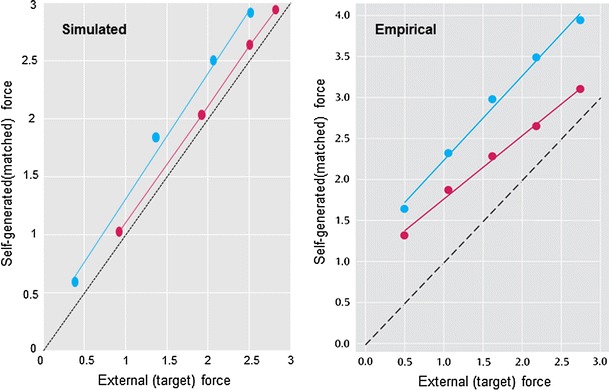
“Right panel empirical results using the same format adapted (with permission) from (Shergill et al. 2003, 2005) are less susceptible to the force-matching illusion.”
BackgroundMethodResultInfluentialDopamine, affordance and active inference
Friston, K. J., Shiner, T., FitzGerald, T., Galea, J. M., Adams, R., Brown, H., Dolan, R. J., Moran, R., Stephan, K. E., & Bestmann, S. (2012) · PLoS Computational Biology · doi:10.1371/journal.pcbi.1002327 · Cited by 381 · cited 1×
“It is this dependency we have proposed mediates attention or selection in hierarchical inference (Feldman and Friston 2010; Friston et al. 2012).”
BackgroundSelf-citationGATING OF SOMATOSENSORY EVOKED POTENTIALS DURING DIFFERENT KINDS OF MOVEMENT IN MAN
RUSHTON, D. N., ROGHWELL, J. C., & CRAGGS, M. D. (1981) · Brain · doi:10.1093/brain/104.3.465 · Cited by 343 · cited 1×
“During self-generated movement, sensory attenuation is often noted in response to externally generated stimuli (Voss et al. 2008; Rushton et al. 1981; Milne et al. 1988; Chapman et al. 1987).”
BackgroundThe self in action: lessons from delusions of control
Frith, C. (2005) · Consciousness and Cognition · doi:10.1016/j.concog.2005.04.002 · Cited by 315 · cited 1×
“A key symptom of schizophrenia is aberrant perception of agency (Frith 2005), particularly the delusion that one’s actions are being controlled by others, suggesting the mechanisms that impair sensory attenuation in schizophrenia are intimately related to the perception of agency.”
BackgroundSelf-Stimulation Alters Human Sensory Brain Responses
Schafer, E. W. P., & Marcus, M. M. (1973) · Science · doi:10.1126/science.181.4095.175 · Cited by 308
Suppressed Responses to Self-triggered Sounds in the Human Auditory Cortex
Martikainen, M. H. (2004) · Cerebral Cortex · doi:10.1093/cercor/bhh131 · Cited by 271 · cited 3×
“Early sensory responses are also modulated in auditory paradigms, where these differences can appear as early as 27 ms after stimulus onset (Baess et al. 2008, 2009; Aliu et al. 2009; Martikainen et al. 2005).”
BackgroundPreliminary Observations on Tickling Oneself
WEISKRANTZ, L., ELLIOTT, J., & DARLINGTON, C. (1971) · Nature · doi:10.1038/230598a0 · Cited by 268 · cited 2×
“The difference between self-generated and externally generated tickle has been the focus of many studies (Weiskrantz et al. 1971; Claxton 1975; Blakemore et al. 1999).”
BackgroundBäß, P., Jacobsen, T., & Schröger, E. (2008) · International Journal of Psychophysiology · doi:10.1016/j.ijpsycho.2008.06.005 · Cited by 259 · cited 4×
“Early sensory responses are also modulated in auditory paradigms, where these differences can appear as early as 27 ms after stimulus onset (Baess et al. 2008, 2009; Aliu et al. 2009; Martikainen et al. 2005).”
BackgroundInfluentialSensory perception during movement in man
Chapman, C. E., Bushnell, M. C., Miron, D., Duncan, G. H., & Lund, J. P. (1987) · Experimental Brain Research · doi:10.1007/bf00249795 · Cited by 243 · cited 1×
“During self-generated movement, sensory attenuation is often noted in response to externally generated stimuli (Voss et al. 2008; Rushton et al. 1981; Milne et al. 1988; Chapman et al. 1987).”
BackgroundPerception of the Consequences of Self-Action Is Temporally Tuned and Event Driven
Bays, P. M., Wolpert, D. M., & Flanagan, J. R. (2005) · Current Biology · doi:10.1016/j.cub.2005.05.023 · Cited by 236 · cited 4×
“Crucially, a self-generated movement that should result in sensation— but does not—can still cause sensory attenuation, despite the implicit production of prediction errors (Bays et al. 2005).”
BackgroundInfluentialAttenuation of Self-Generated Tactile Sensations Is Predictive, not Postdictive
Bays, P. M., Flanagan, J. R., & Wolpert, D. M. (2006) · PLoS Biology · doi:10.1371/journal.pbio.0040028 · Cited by 230
Glutamatergic model psychoses: prediction error, learning, and inference
Corlett, P. R., Honey, G. D., Krystal, J. H., & Fletcher, P. C. (2011) · Neuropsychopharmacology · doi:10.1038/npp.2010.163 · Cited by 229
Sensorimotor attenuation by central motor command signals in the absence of movement
Voss, M., Ingram, J. N., Haggard, P., & Wolpert, D. M. (2006) · Nature Neuroscience · doi:10.1038/nn1592 · Cited by 220 · cited 2×
“…the magnitude of sensory attenuation in the force-matching task, as well as in a grip-production task (Therrien et al. 2011; Voss et al. 2007), whereas single-pulse TMS of M1 just before movement onset (which delays the movement) has no effect on the level of sensory attenuation (Voss et al. 2006).”
BackgroundBlakemore, S.-J., Wolpert, D. M., & Frith, C. D. (1999) · NeuroImage · doi:10.1006/nimg.1999.0478 · Cited by 211 · cited 6×
“Sensory attenuation and agency The difference between self-generated and externally generated tickle has been the focus of many studies (Weiskrantz et al. 1971; Claxton 1975; Blakemore et al. 1999).”
BackgroundInfluentialAttention Alters the Appearance of Spatial Frequency and Gap Size
Gobell, J., & Carrasco, M. (2005) · Psychological Science · doi:10.1111/j.1467-9280.2005.01588.x · Cited by 198 · cited 2×
“2007), flicker rate (Montagna and Carrasco 2006) and spatial frequency (Gobell and Carrasco 2005; Abrams et al. 2010).”
BackgroundMotor-induced Suppression of the Auditory Cortex
Aliu, S. O., Houde, J. F., & Nagarajan, S. S. (2009) · Journal of Cognitive Neuroscience · doi:10.1162/jocn.2009.21055 · Cited by 194 · cited 1×
“Early sensory responses are also modulated in auditory paradigms, where these differences can appear as early as 27 ms after stimulus onset (Baess et al. 2008, 2009; Aliu et al. 2009; Martikainen et al. 2005).”
BackgroundSelective suppression of self‐initiated sounds in an auditory stream: An ERP study
Baess, P., Horváth, J., Jacobsen, T., & Schröger, E. (2011) · Psychophysiology · doi:10.1111/j.1469-8986.2011.01196.x · Cited by 191 · cited 2×
“In support of this idea, Baess et al. (2011) found that sensory attenuation was more pronounced in blocks with mixed self- and externally produced sensations.”
BackgroundERP correlates of action effect prediction and visual sensory attenuation in voluntary action
Hughes, G., & Waszak, F. (2011) · NeuroImage · doi:10.1016/j.neuroimage.2011.02.057 · Cited by 186 · cited 3×
“Indeed, sensory attenuation is not limited to somatosensation; attenuation of self-generated visual (Hughes and Waszak 2011; Cardoso-Leite et al. 2010) and auditory sensations have been reported (Martikainen et al.”
BackgroundCortical circuits for perceptual inference
Friston, K., & Kiebel, S. (2009) · Neural Networks · doi:10.1016/j.neunet.2009.07.023 · Cited by 172 · cited 2×
“This is the essence of recurrent message passing between hierarchical levels to optimise free energy or suppress prediction error: see (Friston and Kiebel 2009a, b; Feldman and Friston 2010) for a more detailed discussion.”
BackgroundSelf-citationVoluntary Attention Enhances Contrast Appearance
Liu, T., Abrams, J., & Carrasco, M. (2009) · Psychological Science · doi:10.1111/j.1467-9280.2009.02300.x · Cited by 172
Friston, K., Stephan, K., Li, B., & Daunizeau, J. (2010) · Mathematical Problems in Engineering · doi:10.1155/2010/621670 · Cited by 171
Self-citationThe self in action effects: Selective attenuation of self-generated sounds
Weiss, C., Herwig, A., & Schütz-Bosbach, S. (2011) · Cognition · doi:10.1016/j.cognition.2011.06.011 · Cited by 170 · cited 2×
“Keywords Free energy Active inference Sensory attenuation Illusion Attention Schizophrenia”
BackgroundA New Look at Sensory Attenuation: Action-Effect Anticipation Affects Sensitivity, Not Response Bias
Cardoso-Leite, P., Mamassian, P., Schütz-Bosbach, S., & Waszak, F. (2010) · Psychological Science · doi:10.1177/0956797610389187 · Cited by 166
Zhu, F. F., Poolton, J. M., Wilson, M. R., Maxwell, J. P., & Masters, R. S. W. (2011) · Biological Psychology · doi:10.1016/j.biopsycho.2011.02.004 · Cited by 159 · cited 1×
“This phenomenon has been described as ‘reinvestment’ in movement and has been shown to impair performance and motor learning in a number of behavioural simulations (Maxwell et al. 2006; Chell et al. 2003; Zhu et al. 2011; Malhotra et al. 2012).”
BackgroundExogenous attention and color perception: Performance and appearance of saturation and hue
Fuller, S., & Carrasco, M. (2006) · Vision Research · doi:10.1016/j.visres.2006.07.014 · Cited by 157 · cited 2×
“2004; Treue 2004), colour saturation (Fuller and Carrasco 2006), speed (Turatto et al.”
BackgroundMethodGentsch, A., & Schütz-Bosbach, S. (2011) · Journal of Cognitive Neuroscience · doi:10.1162/jocn_a_00012 · Cited by 151 · cited 2×
“An experience of agency over movements that generate sensation seems to be necessary for sensory attenuation (Desantis et al. 2012; Gentsch and Schütz-Bosbach 2011): sensory attenuation does not occur if movement and sensation are correlated, but the relationship is not perceived as causal.”
BackgroundReduction in perceived intensity of cutaneous stimuli during movement: a quantitative study
Milne, R. J., Aniss, A. M., Kay, N., & Gandevia, S. C. (1988) · Experimental Brain Research · doi:10.1007/bf00247604 · Cited by 146 · cited 1×
“During self-generated movement, sensory attenuation is often noted in response to externally generated stimuli (Voss et al. 2008; Rushton et al. 1981; Milne et al. 1988; Chapman et al. 1987).”
BackgroundAction observation modulates auditory perception of the consequence of others’ actions
Sato, A. (2008) · Consciousness and Cognition · doi:10.1016/j.concog.2008.01.003 · Cited by 145 · cited 2×
“These simulations do not model all the aspects of sensory attenuation discussed above (e.g. Sato 2008); however, we hope that the principles of active inference—in particular, the optimisation of precision at different levels of a predictive coding hierarchy—may generalise to other settings.”
BackgroundPower-Group Transformations under Glare, Masking, and Recruitment
Stevens, S. S. (1966) · The Journal of the Acoustical Society of America · doi:10.1121/1.1909948 · Cited by 118 · cited 1×
“However, it has been demonstrated that in the auditory domain, loudness is attenuated by the addition of a noise mask (Richards 1968; Lochner and Burger 1961; Stevens 1966, 1967).”
BackgroundMere Expectation to Move Causes Attenuation of Sensory Signals
Voss, M., Ingram, J. N., Wolpert, D. M., & Haggard, P. (2008) · PLoS ONE · doi:10.1371/journal.pone.0002866 · Cited by 113 · cited 3×
“of movement (Voss et al. 2008; Bays et al. 2005) when they cannot be predicted from self-generated movement.”
BackgroundAttenuated human auditory middle latency response and evoked 40‐Hz response to self‐initiated sounds
Baess, P., Widmann, A., Roye, A., Schröger, E., & Jacobsen, T. (2009) · European Journal of Neuroscience · doi:10.1111/j.1460-9568.2009.06683.x · Cited by 110 · cited 1×
“Early sensory responses are also modulated in auditory paradigms, where these differences can appear as early as 27 ms after stimulus onset (Baess et al. 2008, 2009; Aliu et al. 2009; Martikainen et al. 2005).”
BackgroundBelieving and Perceiving: Authorship Belief Modulates Sensory Attenuation
Desantis, A., Weiss, C., Schütz-Bosbach, S., & Waszak, F. (2012) · PLoS ONE · doi:10.1371/journal.pone.0037959 · Cited by 106 · cited 4×
“An experience of agency over movements that generate sensation seems to be necessary for sensory attenuation (Desantis et al. 2012; Gentsch and Schütz-Bosbach 2011): sensory attenuation does not occur if movement and sensation are correlated, but the relationship is not perceived as causal.”
BackgroundInfluentialPerformance Breakdown in Sport: The Roles of Reinvestment and Verbal Knowledge
Maxwell, J. P., Masters, R. S. W., & Poolton, J. (2006) · Research Quarterly for Exercise and Sport · doi:10.1080/02701367.2006.10599360 · Cited by 103
Perceptual enhancement of contrast by attention
Treue, S. (2004) · Trends in Cognitive Sciences · doi:10.1016/j.tics.2004.08.001 · Cited by 96
Attention makes moving objects be perceived to move faster
Turatto, M., Vescovi, M., & Valsecchi, M. (2006) · Vision Research · doi:10.1016/j.visres.2006.10.002 · Cited by 93 · cited 2×
“2004; Treue 2004), colour saturation (Fuller and Carrasco 2006), speed (Turatto et al. 2007), flicker rate (Montagna and Carrasco 2006) and spatial frequency (Gobell and Carrasco 2005; Abrams et al.”
BackgroundLoudness functions under inhibition
Stevens, S. S., & Guirao, M. (1967) · Perception & Psychophysics · doi:10.3758/bf03208795 · Cited by 80
Why Can't We Tickle Ourselves?
Claxton, G. (1975) · Perceptual and Motor Skills · doi:10.2466/pms.1975.41.1.335 · Cited by 79 · cited 3×
“Alternatively, we can actively change sensory input to fulfil our predictions.”
BackgroundVoluntary attention increases perceived spatial frequency
Abrams, J., Barbot, A., & Carrasco, A. (2010) · Attention, Perception, & Psychophysics · doi:10.3758/app.72.6.1510 · Cited by 73 · cited 2×
“2007), flicker rate (Montagna and Carrasco 2006) and spatial frequency (Gobell and Carrasco 2005; Abrams et al. 2010).”
BackgroundForm of the Loudness Function in the Presence of Masking Noise
Lochner, J. P. A., & Burger, J. F. (1961) · The Journal of the Acoustical Society of America · doi:10.1121/1.1908548 · Cited by 71 · cited 1×
“However, it has been demonstrated that in the auditory domain, loudness is attenuated by the addition of a noise mask (Richards 1968; Lochner and Burger 1961; Stevens 1966, 1967).”
BackgroundDeficits in sensory prediction are related to delusional ideation in healthy individuals
Teufel, C., Kingdon, A., Ingram, J. N., Wolpert, D. M., & Fletcher, P. C. (2010) · Neuropsychologia · doi:10.1016/j.neuropsychologia.2010.10.024 · Cited by 71 · cited 2×
“In normal subjects, sensory attenuation is (negatively) correlated with the level of delusional beliefs (Teufel et al. 2010).”
BackgroundConscious monitoring and control (reinvestment) in surgical performance under pressure
Malhotra, N., Poolton, J., Wilson, M., Ngo, K., & Masters, R. S. W. (2012) · Surgical Endoscopy · doi:10.1007/s00464-012-2193-8 · Cited by 70 · cited 1×
“This phenomenon has been described as ‘reinvestment’ in movement and has been shown to impair performance and motor learning in a number of behavioural simulations (Maxwell et al. 2006; Chell et al. 2003; Zhu et al. 2011; Malhotra et al. 2012).”
BackgroundWeiss, C., Herwig, A., & Schütz-Bosbach, S. (2011) · PLoS ONE · doi:10.1371/journal.pone.0022723 · Cited by 67 · cited 1×
“Indeed, sensory attenuation is not limited to somatosensation; attenuation of self-generated visual (Hughes and Waszak 2011; Cardoso-Leite et al. 2010) and auditory sensations have been reported (Martikainen et al. 2005; Weiss et al. 2011a, b; Desantis et al. 2012).”
BackgroundVoss, M., Bays, P. M., Rothwell, J. C., & Wolpert, D. M. (2007) · Neuropsychologia · doi:10.1016/j.neuropsychologia.2007.04.008 · Cited by 62 · cited 2×
“Repetitive stimulation of M1 (which has a depressive effect on activity) reduces the magnitude of sensory attenuation in the force-matching task, as well as in a grip-production task (Therrien et al. 2011; Voss et al. 2007), whereas single-pulse TMS of M1 just before movement onset (which delays the movement) has no e…”
BackgroundSpontaneous Prediction Error Generation in Schizophrenia
Yamashita, Y., & Tani, J. (2012) · PLoS ONE · doi:10.1371/journal.pone.0037843 · Cited by 60
Juggling reveals a decisional component to tactile suppression
Juravle, G., & Spence, C. J. (2011) · Experimental Brain Research · doi:10.1007/s00221-011-2780-2 · Cited by 54 · cited 2×
“This attenuation seems to be due to changes in sensitivity (d-prime) to external stimuli rather than a change in the response criterion (Juravle and Spence 2011; Van Hulle et al. 2013).”
BackgroundResultChell, B. J., Graydon, J. K., Crowley, P. L., & Child, M. (2003) · Perceptual and Motor Skills · doi:10.2466/pms.2003.97.2.435 · Cited by 45 · cited 1×
“This phenomenon has been described as ‘reinvestment’ in movement and has been shown to impair performance and motor learning in a number of behavioural simulations (Maxwell et al. 2006; Chell et al. 2003; Zhu et al. 2011; Malhotra et al. 2012).”
BackgroundTransient covert attention and the perceived rate of flicker
Montagna, B., & Carrasco, M. (2006) · Journal of Vision · doi:10.1167/6.9.8 · Cited by 45 · cited 2×
“2007), flicker rate (Montagna and Carrasco 2006) and spatial frequency (Gobell and Carrasco 2005; Abrams et al.”
BackgroundA model for the perception of surface pressure on human foot
Xiong, S., Goonetilleke, R. S., Rodrigo, A. S., & Zhao, J. (2012) · Applied Ergonomics · doi:10.1016/j.apergo.2012.04.019 · Cited by 29 · cited 2×
“In the case of somatosensory pressure, this exponent is less than one (Xiong et al. 2013), meaning that—at higher levels of pressure—the same increase in physical pressure produces a smaller increase in perceived pressure.”
BackgroundAttention modulates sensory suppression during back movements
Hulle, L. V., Juravle, G., Spence, C. J., Crombez, G., & Damme, S. V. (2013) · Consciousness and Cognition · doi:10.1016/j.concog.2013.01.011 · Cited by 28 · cited 2×
“This attenuation seems to be due to changes in sensitivity (d-prime) to external stimuli rather than a change in the response criterion (Juravle and Spence 2011; Van Hulle et al. 2013).”
BackgroundResultMotor Agency: A New and Highly Sensitive Measure to Reveal Agency Disturbances in Early Psychosis
Wilquin, H., & Delevoye, Y. (2012) · PLoS ONE · doi:10.1371/journal.pone.0030449 · Cited by 25
Intensity functions in sensory systems.
Ss, S. (1967) · PubMed · Cited by 24
Therrien, A. S., Richardson, B. A., & Balasubramaniam, R. (2011) · Neuropsychologia · doi:10.1016/j.neuropsychologia.2011.06.023 · Cited by 20 · cited 2×
“…has a depressive effect on activity) reduces the magnitude of sensory attenuation in the force-matching task, as well as in a grip-production task (Therrien et al. 2011; Voss et al. 2007), whereas single-pulse TMS of M1 just before movement onset (which delays the movement) has no effect on the…”
BackgroundMonaural Loudness Functions under Masking
Richards, A. M. (1968) · The Journal of the Acoustical Society of America · doi:10.1121/1.1911127 · Cited by 7 · cited 1×
“However, it has been demonstrated that in the auditory domain, loudness is attenuated by the addition of a noise mask (Richards 1968; Lochner and Burger 1961; Stevens 1966, 1967).”
BackgroundCurio (2000) · doi:10.1002/(sici)1097-0193(200004)9:4<183::aid-hbm1>3.0.co;2-z · cited 2×
“Keywords Free energy Active inference Sensory attenuation Illusion Attention Schizophrenia”
Background
Research works printed but not linked: 1
- Weber E (1846) Der Tatsinn und das Gemeingefuhl. In: Wagner R (ed) Handwörterbuch der Physiologie. Wilhelm Engelmann, Leipzig
Cited by
Active interoceptive inference and the emotional brain
Seth, A. K., & Friston, K. J. (2016) · Philosophical Transactions of the Royal Society B: Biological Sciences · doi:10.1098/rstb.2016.0007 · Cited by 945
Self-citationThe Computational Anatomy of Psychosis
Adams, R. A., Stephan, K. E., Brown, H. R., Frith, C. D., & Friston, K. J. (2013) · Frontiers in Psychiatry · doi:10.3389/fpsyt.2013.00047 · Cited by 850
Self-citationAn aberrant precision account of autism
Lawson, R. P., Rees, G., & Friston, K. J. (2014) · Frontiers in Human Neuroscience · doi:10.3389/fnhum.2014.00302 · Cited by 641
Self-citationPredictive Processes and the Peculiar Case of Music
Koelsch, S., Vuust, P., & Friston, K. (2019) · Trends in Cognitive Sciences · doi:10.1016/j.tics.2018.10.006 · Cited by 557
“In other words, it is necessary to suspend attention (to the consequences of action) by attenuating sensory precision to realize proprioceptive predictions of the sort involved in dancing [39].”
Self-citationHohwy, J. (2016) · Noûs · doi:10.1111/nous.12062 · Cited by 578
Metadata
- Authors
- Brown, H., Adams, R. A., Parees, I., Edwards, M., & Friston, K.
- Affiliations
- Wellcome Centre for Human Neuroimaging (GB)
- University College London (GB)
- Corresponding author
- Brown, Harriet
- Venue
- Cognitive Processing
- Published
- 2013-06-07
- Volume
- 14
- Issue
- 4
- Pages
- 411-427
- ISSN
- 1612-4782 (ISSN-L)
- 1612-4790
- PMC
- PMC3824582
- OpenAlex
- W2151496011
- Semantic Scholar
- 6291e49d4e7c30272a43a212e14aec9fe37dac38
- Cited by
- 488
- References
- 81
- Citations by year
- 2026: 24 · 2025: 38 · 2024: 31 · 2023: 63 · 2022: 45 · 2021: 48 · 2020: 39 · 2019: 58 · 2018: 38 · 2017: 29 · 2016: 22 · 2015: 23 · 2014: 23 · 2013: 5
- FWCI
- 2.09
- Type
- journal article
- Language
- en
- Open access
- hybrid
- doi.org
- Locations
- Cognitive Processing (publishedVersion, cc-by)
- Europe PMC (PubMed Central) (publishedVersion, cc-by)
- PubMed Central (publishedVersion, cc-by)
- PubMed (publishedVersion)
- St George's Online Research Archive (St George's University of London) (acceptedVersion)
- UCL Discovery (University College London) (submittedVersion)
- Funders
- Wellcome Trust (091593, 088130)
- Topics
- Life Sciences › Neuroscience › Cognitive Neuroscience › Embodied and Extended Cognition
- Social Sciences › Arts and Humanities › Philosophy › Free Will and Agency
- Social Sciences › Psychology › Social Psychology › Action Observation and Synchronization
- Keywords
- active inference, sensory attenuation, proprioception, prediction error, sensory precision, schizophrenia, parkinsonism, perception-action coupling, neuromodulation
- MeSH terms
- Algorithms, Attention, Bayes Theorem, Behavior, Humans, Illusions, Psychophysics, Sensation
About these checks
Registry, retraction, Cites and statistics results are computed, not judged, with one exception: a printed reference that no index lists is read once by a model before it counts as a citation error. Claims are extracted by a model and kept only when their quote appears verbatim in the text; each cited source is then checked, with a model’s help, for whether it says what the claim relies on. Those verdicts can be wrong — read the claim’s quote and the cited source before relying on one.
Statistics and arithmetic are recomputed, not judged.
Confidence bands are shown only for fields calibrated on our annotated test set. None is calibrated yet, so no band is shown.
What counts as a claim ›How we measure confidence ›How we check this ›
Are you an author, or do you see a problem with this page? Request a review
Data sources
Bibliographic data: Semantic Scholar, OpenAlex, Crossref.
Contains information from the Semantic Scholar Academic Graph Datasets, made available under the ODC Attribution License (ODC-BY 1.0).
Semantic Scholar’s data is described in: Kinney, R., et al. (2023). The Semantic Scholar Open Data Platform. arXiv:2301.10140.
