

Changes in Mental Health and EEG Biomarkers of Undergraduates Under Different Patterns of Mindfulness
Open accessThe DOI matches its Crossref record; 69 of the 72 references it cites were found in a registry or an index; 15 of the 30 sources its claims cite were checked for support.
Abstract
The effects of short-term mindfulness are associated with the different patterns (autonomic, audio guided, or experienced and certified mindfulness instructor guided mindfulness). However, robust evidence for reported the impacts of different patterns of mindfulness on mental health and EEG biomarkers of undergraduates is currently lacking. Therefore, we aimed to test the hypotheses that mindfulness training for undergraduates would improve mental health, and increase alpha power over frontal region and theta power over midline region at the single electrode level. We also describe the distinction among frequency bands patterns in different sites of frontal and midline regions. 70 participants were enrolled and assigned to either 5-day mindfulness or a waiting list group. Subjective questionnaires measured mental health and other psychological indicators, and brain activity was recorded during various EEG tasks before and after the intervention. The 5-day mindfulness training improved trait mindfulness, especially observing (p = 0.001, d = 0.96) and nonreactivity (p = 0.03, d = 0.56), sleep quality (p = 0.001, d = 0.91), and social support (p = 0.001, d = 0.95) while not in affect. Meanwhile, the expected increase in the alpha power of frontal sites (p < 0.017, d > 0.84) at the single electrode level was confirmed by the current data rather than the theta. Interestingly, the alteration of low-beta power over the single electrode of the midline (p < 0.05, d > 0.71) was difference between groups. Short-term mindfulness improves practitioners’ mental health, and the potentially electrophysiological biomarkers of mindfulness on neuron oscillations were alpha activity over frontal sites and low-beta activity over midline sites. © 2023, The Author(s).
Overview
CoChat Summary
## TL;DR
This pilot non-randomized controlled trial found that a 5-day mindfulness training course improved several mental-health measures in Chinese medical undergraduates and altered EEG patterns. The clearest EEG effects were increased frontal alpha activity during an autonomic mindfulness task and lower midline low-beta power versus the waiting-list group, while theta did not show the expected change.
## Key findings
- Among 63 analyzed participants, 31 were in the mindfulness training group (MTG) and 32 in the waiting-list group (WLG); the groups did not differ at baseline on demographics or PHQ-9/GAD-7 screening scores.
- After training, the MTG improved on trait mindfulness and related subscales: FFMQ total score (p = 0.03, d = 0.56), observing (p = 0.001, d = 0.96), nonreactivity (p = 0.03, d = 0.56), and observing compared with WLG (post and change scores p = 0.002 and p = 0.000; d = 0.81 and 1.02).
- The MTG also improved social support and sleep quality: SSRS total score (p = 0.001, d = 0.95), objective support (post vs WLG p = 0.02, d = 0.67), subjective support (p = 0.03, d = 0.57), and SRSS total score decreased (p = 0.001, d = 0.91).
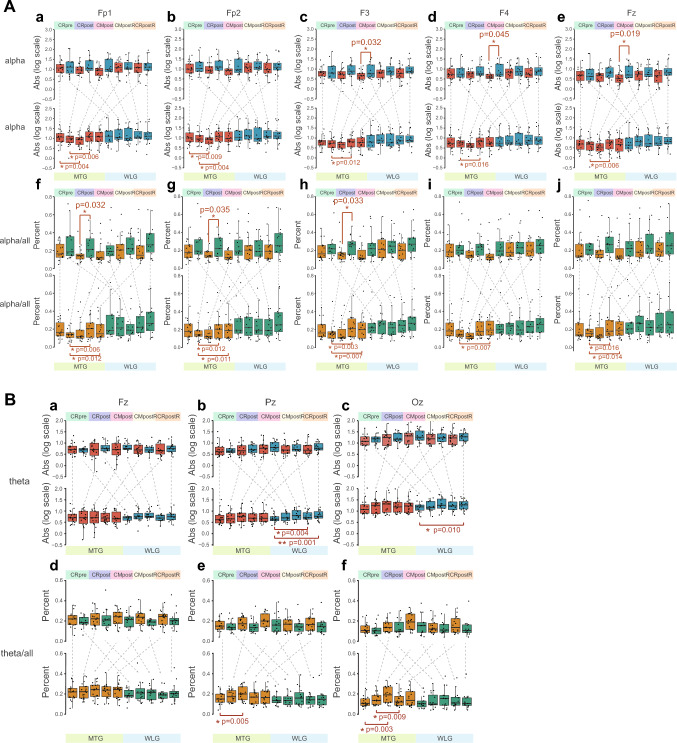
- EEG findings showed significantly increased frontal alpha power in the MTG during the autonomic mindfulness task after intervention (p < 0.017, d > 0.84), no regular theta change, and significantly lower low-beta power over midline regions in MTG than WLG (p < 0.05, d > 0.71).
## Methods
- Pilot non-randomized controlled trial conducted at the Medical Faculty of Kunming University of Science and Technology, China; volunteers were recruited from April–May 2021, and the final analysis included 63 undergraduates.
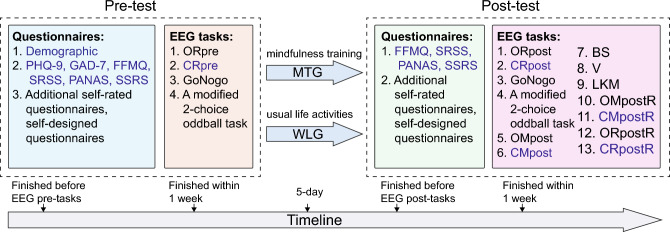
- Participants completed a 5-day, face-to-face group mindfulness course (~60 minutes/day) or were assigned to a waiting-list control; the mindfulness sessions included exercises such as sitting meditation, body scanning, mindful eating, mindful walking, loving-kindness meditation, and sharing.
- Outcomes were measured at baseline and post-intervention with questionnaires (FFMQ, SRSS, PANAS, SSRS), and EEG was recorded across multiple tasks using a BioSemi ActiveTwo system with 16 scalp electrodes; analyses used t-tests with Bonferroni adjustment for within-group EEG comparisons and effect sizes (Cohen’s d).
## Limitations
- The paper explicitly states several limitations: relatively small sample size, only 16 EEG electrodes limiting EEG data quality screening, possible false positives/false negatives, low-gamma results that “might lack reliability” due to hardware limitations, no source analysis or brain-structure analysis, inconsistent mindfulness training paradigms across studies, and reliance on single-channel band power that may miss broader or more specific indicators.
- The paper also notes a potential confound: the experiment occurred during the lockdown period, and social distancing plus group training could have influenced social support outcomes.
- Evident from the text: the study was non-randomized and used a convenience sample, which limits causal inference and generalizability.
Model-written summary. Check it against the paper before relying on it.
Integrity signals
Registry
Cites
Statistics
Figures
Verification
Claims the paper makes
9 Valid · 1 Not valid · 8 Not checked · 30 Own results and interpretations
The cited sources support only part of this claim — read each source’s verdict below.
In the paper
“During the pandemic, the mental health of college students was negatively impacted by anxiety, depressive symptoms, and acute stress, as shown by numerous studies (Bai et al. 2021; Huckins et al. 2020; Ma et al. 2020; Wu et al. 2021).”
§ Changes in Mental Health and EEG Biomarkers of Undergraduates Under Different Patterns of Mindfulness > Introduction
What the sources say
- Partly supportedcites Bai et al. 2021 matched to “Anxiety and depressive symptoms in college students during the late stage of the COVID-19 outbreak: a network approach” (2021) sourceExperimental — accuracy not yet measured
The Introduction reports increased depression and anxiety among college students during the COVID-19 outbreak. It also describes long-term stress and psychological distress associated with public-health measures, but does not support the claim specifically about acute stress. (LLM, conf=0.88)
- Partly supportedcites Huckins et al. 2020 matched to “Mental Health and Behavior of College Students During the Early Phases of the COVID-19 Pandemic: Longitudinal Smartphone and Ecological Momentary Assessment Study” (2020) sourceExperimental — accuracy not yet measured
The Results section, “Behavioral and Mental Health Changes Associated With the COVID-19 Pandemic” (page unavailable), reports that students’ depression and anxiety symptoms spiked and remained elevated relative to other terms. The paper discusses pandemic-related stress but does not report acute stress as a measured outcome in the passages reviewed, so that part of the claim is unsupported. (LLM, conf=0.88)
- Not matchedcites Ma et al. 2020
This doesn’t read as a citation we can look up.
boostedstates a cause- Asserted: passes — The authors put it forward as true.
- Checkable: passes — It can be checked against evidence.
- Load-bearing: passes — The paper’s conclusions depend on it.
- Based: passes — The paper gives a reason why it holds.
- Partly supported
The cited sources support only part of this claim — read each source’s verdict below.
In the paper
“In terms of sleep quality, the reduction in total SRSS score in MTG was consistent with the findings of a systematic review and meta-analysis of randomized controlled trials (RCTs), which showed that mindfulness meditation interventions significantly improved sleep quality (Rusch et al. 2019).”
§ Changes in Mental Health and EEG Biomarkers of Undergraduates Under Different Patterns of Mindfulness > Discussion > Mental Health-Related Outcomes
What the sources say
- Partly supportedcites Rusch et al. 2019 matched to “The effect of mindfulness meditation on sleep quality: a systematic review and meta‐analysis of randomized controlled trials” (2019) sourceExperimental — accuracy not yet measured
The Results (Nonspecific active controls) report significantly improved sleep quality compared with nonspecific active controls. The claim omits that comparator: the Discussion reports no improvement compared with evidence-based sleep treatments, so the unqualified statement overstates the findings. The cited paper does not assess the citing study’s SRSS result. (LLM, conf=0.88)
plainstates an association- Asserted: passes — The authors put it forward as true.
- Checkable: passes — It can be checked against evidence.
- Load-bearing: unclear — It is unclear whether the paper’s conclusions depend on it.
- Based: passes — The paper gives a reason why it holds.
- Partly supported
The cited sources support only part of this claim — read each source’s verdict below.
In the paper
“Herein, it is reasonable to assert that the enhancement of frequency band power, mainly alpha power over the frontal region and theta power over the midline region, especially the frontal midline region, are directly correlated with mindfulness (Tang et al. 2019; Valadez 2015).”
§ Changes in Mental Health and EEG Biomarkers of Undergraduates Under Different Patterns of Mindfulness > Introduction
What the sources say
- Partly supportedcites Tang et al. 2019 matched to “Frontal theta activity and white matter plasticity following mindfulness meditation” (2019) sourceExperimental — accuracy not yet measured
In “Theta and alpha activity following meditation,” the paper says mindfulness meditation is commonly associated with enhanced alpha and theta power, and reports increased frontal-midline theta during meditation. It does not establish that enhanced alpha power is mainly frontal or that these power changes are directly correlated with mindfulness; it also notes mixed EEG findings and distinguishes alpha activity during preparation from theta activity during meditation. (LLM, conf=0.86)
- Not matchedcites Valadez 2015
An author–year citation the paper’s reference list doesn’t settle. We don’t search these by name.
plainstates an association- Asserted: passes — The authors put it forward as true.
- Checkable: passes — It can be checked against evidence.
- Load-bearing: passes — The paper’s conclusions depend on it.
- Based: passes — The paper gives a reason why it holds.
- Partly supported
The cited sources support only part of this claim — read each source’s verdict below.
In the paper
“As both a skill and a therapy, mindfulness has been shown to improve symptoms of anxiety, depression, stress, and other mental states (Galante et al. 2018; Ji et al. 2021; Johannsen et al. 2022; Zhu et al. 2021).”
§ Changes in Mental Health and EEG Biomarkers of Undergraduates Under Different Patterns of Mindfulness > Introduction
What the sources say
- Partly supportedcites Galante et al. 2018 matched to “A mindfulness-based intervention to increase resilience to stress in university students (the Mindful Student Study): a pragmatic randomised controlled trial” (2018) sourceExperimental — accuracy not yet measured
The Introduction reports evidence that mindfulness training improves anxiety and depression symptoms, and the Results report reduced distress and improved wellbeing in students taking the MSS course. The paper mentions an earlier MBSR trial, but its own intervention was MSS; the supplied passages do not establish the claim for MBCT. (LLM, conf=0.84)
- Not matchedcites Ji et al. 2021
This doesn’t read as a citation we can look up.
- Partly supportedcites Johannsen et al. 2022 matched to “Mediators of acceptance and mindfulness-based therapies for anxiety and depression: A systematic review and meta-analysis” (2022) sourceExperimental — accuracy not yet measured
The Abstract states that acceptance and mindfulness-based therapies have shown efficacy for anxiety and depression, and the Current mediation approaches section discusses MBCT and MBSR trials. The Outcome assessment and analytical characteristics section lists stress and other mental states as secondary outcomes in some trials, but does not report that mindfulness training improved them. (LLM, conf=0.85)
plainstates a cause- Asserted: passes — The authors put it forward as true.
- Checkable: passes — It can be checked against evidence.
- Load-bearing: passes — The paper’s conclusions depend on it.
- Based: passes — The paper gives a reason why it holds.
- Partly supported
Every source the paper cites for this claim was checked and supports it.
In the paper
“In addition, even a circa 15-min guided mindfulness instructions could change the brain activity (Andreu et al. 2018).”
§ Changes in Mental Health and EEG Biomarkers of Undergraduates Under Different Patterns of Mindfulness > Introduction
What the sources say
- Supportedcites Andreu et al. 2018 matched to “Effects of a brief mindfulness-meditation intervention on neural measures of response inhibition in cigarette smokers” (2018) source
The Methods (Procedure; page unavailable) describe approximately 15 minutes of audio-guided mindfulness instructions. The Discussion (page unavailable) reports a reduced NoGo P3, a measure of brain activity, in the mindfulness group compared with controls; this finding was in cigarette smokers performing a Go/NoGo task. (LLM, conf=0.92)
hedgedstates a possible cause- Asserted: passes — The authors put it forward as true.
- Checkable: passes — It can be checked against evidence.
- Load-bearing: passes — The paper’s conclusions depend on it.
- Based: passes — The paper gives a reason why it holds.
- Supported
23 more claims · 2 with their cited sources checked
Create a free account to see all 48 claims and to verify the 1 reference still open.
- Probably not a substantial claim. 12
- It may state two separate claims as one. 11
Citations
Cites
The PHQ-9: Validity of a brief depression severity measure
Kroenke, K., Spitzer, R. L., & Williams, J. B. W. (2001) · Journal of General Internal Medicine · doi:10.1046/j.1525-1497.2001.016009606.x · Cited by 44,910 · cited 1×
“…suffer pathologically or clinically diagnosed physical or mental disease (the total score of Patient Health Questionnaire-9 (S. Chen et al. 2013; Kroenke et al. 2001; Wang et al. 2014), PHQ-9 < 20; the total score of Generalized Anxiety Disor-der-7 (Lin et al. 2021; Spitzer et al. 2006), GAD-7…”
Development and validation of brief measures of positive and negative affect: The PANAS scales.
Watson, D., Clark, L. A., & Tellegen, A. (1988) · Journal of Personality and Social Psychology · doi:10.1037/0022-3514.54.6.1063 · Cited by 32,433
A Brief Measure for Assessing Generalized Anxiety Disorder: The GAD-7
Spitzer, R. L., Kroenke, K., Williams, J. B. W., & Löwe, B. (2006) · Archives of Internal Medicine · doi:10.1001/archinte.166.10.1092 · Cited by 31,765 · cited 1×
“…pathologically or clinically diagnosed physical or mental disease (the total score of Patient Health Questionnaire-9 (S. Chen et al. 2013; Kroenke et al. 2001; Wang et al. 2014), PHQ-9 < 20; the total score of Generalized Anxiety Disor-der-7 (Lin et al. 2021; Spitzer et al. 2006), GAD-7 < 15).”
Using Self-Report Assessment Methods to Explore Facets of Mindfulness
Baer, R. A., Smith, G. T., Hopkins, J., Krietemeyer, J., & Toney, L. (2006) · Assessment · doi:10.1177/1073191105283504 · Cited by 7,511 · cited 3×
“Within-group analysis showed that after the mindfulness training intervention, the MTG exhibited a significant increase in the FFMQ total score (p = 0.03, d = 0.56), observing score (p = 0.001, d = 0.96), nonreactivity score (p = 0.03, d = 0.56), SSRS total score (p = 0.001, d = 0.95), and subjective support score (p…”
InfluentialEEG alpha and theta oscillations reflect cognitive and memory performance: a review and analysis
Klimesch, W. (1999) · Brain Research Reviews · doi:10.1016/s0165-0173(98)00056-3 · Cited by 6,889 · cited 1×
“It has been suggested (A. S. Chan et al. 2008) that relative power measurements may produce larger estimates for the dominant frequency range (Klimesch, 1999) and that individual variations can be eliminated by computing the relative value for individual frequency band (A. S. Chan et al. 2007).”
Meditation states and traits: EEG, ERP, and neuroimaging studies.
Cahn, B. R., & Polich, J. (2006) · Psychological Bulletin · doi:10.1037/0033-2909.132.2.180 · Cited by 1,734 · cited 5×
“In addition, the enhancement of alpha power is always correlated with lower anxiety, feelings of calm, positive affect and relaxation (Cahn & Polich 2006), and an increase of frontal midline theta (FMT) power is associated with internalized attention (A. S. Chan et al. 2008).”
InfluentialCreswell, J. D. (2017) · Annual Review of Psychology · doi:10.1146/annurev-psych-042716-051139 · Cited by 1,702 · cited 2×
“Mindfulness training, including traditional forms such as mindfulness-based stress reduction (MBSR) and mindfulness-based cognitive therapy (MBCT), is becoming increasingly popular in universities (Creswell 2017).”
InfluentialShort-term meditation training improves attention and self-regulation
Tang, Y.-Y., Ma, Y., Wang, J., Fan, Y., Feng, S., Lu, Q., Yu, Q., Sui, D., Rothbart, M. K., Fan, M., et al. (2007) · Proceedings of the National Academy of Sciences · doi:10.1073/pnas.0707678104 · Cited by 1,597 · cited 1×
“The short-term mindfulness training mainly referred to regular 8-week MBSR practice and 4-week practice (Demarzo et al. 2017), as well as 5-day short-term meditation training (Tang et al. 2007).”
Wang, W., Bian, Q., Zhao, Y., Li, X., Wang, W., Du, J., Zhang, G., Zhou, Q., & Zhao, M. (2014) · General Hospital Psychiatry · doi:10.1016/j.genhosppsych.2014.05.021 · Cited by 1,480 · cited 1×
“…pathologically or clinically diagnosed physical or mental disease (the total score of Patient Health Questionnaire-9 (S. Chen et al. 2013; Kroenke et al. 2001; Wang et al. 2014), PHQ-9 < 20; the total score of Generalized Anxiety Disor-der-7 (Lin et al. 2021; Spitzer et al. 2006), GAD-7 < 15).”
Time for united action on depression: a Lancet–World Psychiatric Association Commission
Herrman, H., Patel, V., Kieling, C., Berk, M., Buchweitz, C., Cuijpers, P., Furukawa, T. A., Kessler, R. C., Kohrt, B. A., Maj, M., et al. (2022) · The Lancet · doi:10.1016/s0140-6736(21)02141-3 · Cited by 1,104 · cited 1×
“Young people, particularly medical college students, were the primary victims of depression (Herrman et al. 2022; Thapar et al. 2022; Li et al. 2022).”
Ludwig, D. S. (2008) · JAMA · doi:10.1001/jama.300.11.1350 · Cited by 957
Thapar, A., Eyre, O., Patel, V., & Brent, D. (2022) · The Lancet · doi:10.1016/s0140-6736(22)01012-1 · Cited by 869 · cited 1×
“Young people, particularly medical college students, were the primary victims of depression (Herrman et al. 2022; Thapar et al. 2022; Li et al. 2022).”
Huckins, J. F., daSilva, A. W., Wang, W., Hedlund, E., Rogers, C., Nepal, S. K., Wu, J., Obuchi, M., Murphy, E. I., Meyer, M. L., et al. (2020) · Journal of Medical Internet Research · doi:10.2196/20185 · Cited by 759 · cited 1×
“During the pandemic, the mental health of college students was negatively impacted by anxiety, depressive symptoms, and acute stress, as shown by numerous studies (Bai et al. 2021; Huckins et al. 2020; Ma et al. 2020; Wu et al. 2021).”
Li, W., Zhao, Z., Chen, D., Peng, Y., & Lu, Z. (2022) · Journal of Child Psychology and Psychiatry · doi:10.1111/jcpp.13606 · Cited by 601 · cited 1×
“Young people, particularly medical college students, were the primary victims of depression (Herrman et al. 2022; Thapar et al. 2022; Li et al. 2022).”
Galante, J., Dufour, G., Vainre, M., Wagner, A. P., Stochl, J., Benton, A., Lathia, N., Howarth, E., & Jones, P. B. (2018) · The Lancet Public Health · doi:10.1016/s2468-2667(17)30231-1 · Cited by 516 · cited 2×
“Previous studies have described the impact of mindfulness on psychological or EEG-related outcomes in students (Galante et al. 2018; Kuyken et al. 2013; Morais et al. 2021; Ren et al. 2011; Sanger et al. 2018).”
A systematic review of the neurophysiology of mindfulness on EEG oscillations
Lomas, T., Ivtzan, I., & Fu, C. H. Y. (2015) · Neuroscience & Biobehavioral Reviews · doi:10.1016/j.neubiorev.2015.09.018 · Cited by 506 · cited 5×
“…of mindfulness on electroencephalography (EEG) results, for example, the alteration of brain waves pattern (Hauswald et al. 2015; Kang et al. 2022; Lomas et al. 2015; Saggar et al. 2012; Szum-ska et al. 2021), event-related potential (ERP) components (Atchley et al. 2016; Gupta et al. 2022;…”
InfluentialRusch, H. L., Rosario, M., Levison, L. M., Olivera, A., Livingston, W. S., Wu, T., & Gill, J. M. (2019) · Annals of the New York Academy of Sciences · doi:10.1111/nyas.13996 · Cited by 500 · cited 1×
“In terms of sleep quality, the reduction in total SRSS score in MTG was consistent with the findings of a systematic review and meta-analysis of randomized controlled trials (RCTs), which showed that mindfulness meditation interventions significantly improved sleep quality (Rusch et al. 2019).”
Ma, Z., Zhao, J., Li, Y., Chen, D., Wang, T., Zhang, Z., Chen, Z., Yu, Q., Jiang, J., Fan, F., et al. (2020) · Epidemiology and Psychiatric Sciences · doi:10.1017/s2045796020000931 · Cited by 437 · cited 1×
“During the pandemic, the mental health of college students was negatively impacted by anxiety, depressive symptoms, and acute stress, as shown by numerous studies (Bai et al. 2021; Huckins et al. 2020; Ma et al. 2020; Wu et al. 2021).”
Self-citationEffectiveness of the Mindfulness in Schools Programme: non-randomised controlled feasibility study
Kuyken, W., Weare, K., Ukoumunne, O. C., Vicary, R., Motton, N., Burnett, R., Cullen, C., Hennelly, S., & Huppert, F. (2013) · British Journal of Psychiatry · doi:10.1192/bjp.bp.113.126649 · Cited by 427 · cited 1×
“Previous studies have described the impact of mindfulness on psychological or EEG-related outcomes in students (Galante et al. 2018; Kuyken et al. 2013; Morais et al. 2021; Ren et al. 2011; Sanger et al. 2018).”
Epileptic source localization with high density EEG: how many electrodes are needed?
Lantz, G., Grave de Peralta, R., Spinelli, L., Seeck, M., & Michel, C. M. (2003) · Clinical Neurophysiology · doi:10.1016/s1388-2457(02)00337-1 · Cited by 413 · cited 1×
“Third, the analysis of EEG oscillations did not explore the relationships with brain structure as well as source analysis (Lantz et al. 2003).”
Increased Theta and Alpha EEG Activity During Nondirective Meditation
Lagopoulos, J., Xu, J., Rasmussen, I., Vik, A., Malhi, G. S., Eliassen, C. F., Arntsen, I. E., Sæther, J. G., Hollup, S., Holen, A., et al. (2009) · The Journal of Alternative and Complementary Medicine · doi:10.1089/acm.2009.0113 · Cited by 354 · cited 3×
“Among these, three reported mindfulness-related results primarily in the alpha and theta bands (including frontal midline theta, FMT) (Kang et al. 2022; S. H. W. Chan et al. 2021; Lagopoulos et al. 2009) and one reported result in the gamma band (Berkovich-Ohana et al. 2012).”
The Five Facet Mindfulness Questionnaire: Psychometric Properties of the Chinese Version
Deng, Y.-Q., Liu, X.-H., Rodriguez, M. A., & Xia, C.-Y. (2011) · Mindfulness · doi:10.1007/s12671-011-0050-9 · Cited by 321 · cited 1×
“The primary outcome was trait mindfulness, measured with the Five Factor Mindfulness Questionnaire (FFMQ) (Baer et al. 2006; Deng et al. 2011).”
Berkovich-Ohana, A., Glicksohn, J., & Goldstein, A. (2012) · Clinical Neurophysiology · doi:10.1016/j.clinph.2011.07.048 · Cited by 298 · cited 2×
“Among these, three reported mindfulness-related results primarily in the alpha and theta bands (including frontal midline theta, FMT) (Kang et al. 2022; S. H. W. Chan et al. 2021; Lagopoulos et al. 2009) and one reported result in the gamma band (Berkovich-Ohana et al. 2012).”
EEG power spectral measures of cognitive workload: A meta‐analysis
Chikhi, S., Matton, N., & Blanchet, S. (2022) · Psychophysiology · doi:10.1111/psyp.14009 · Cited by 258 · cited 1×
“In addition, the cognition-related frequencies are mainly below 30 Hz (Chikhi et al. 2022), and EEG beyond these frequency bands is easily confused with the electromyogram (EMG) (Sleigh et al. 2001).”
Virtual Reality for Anxiety Reduction Demonstrated by Quantitative EEG: A Pilot Study
Tarrant, J., Viczko, J., & Cope, H. (2018) · Frontiers in Psychology · doi:10.3389/fpsyg.2018.01280 · Cited by 198
A randomized controlled pilot study of a brief web-based mindfulness training
Glück, T. M., & Maercker, A. (2011) · BMC Psychiatry · doi:10.1186/1471-244x-11-175 · Cited by 168 · cited 1×
“For PANAS score, previous trials indicate that mindfulness intervention might improve positive affect (Bossi et al. 2022) and negative affect (Glück & Maercker 2011).”
El Morr, C., Ritvo, P., Ahmad, F., Moineddin, R., & MVC Team (2020) · JMIR Mental Health · doi:10.2196/18595 · Cited by 145 · cited 1×
“It was in line with another study, which found that an 8-week web-based mind-fulness could increase mindfulness scores (El Morr et al. 2020).”
Intensive training induces longitudinal changes in meditation state-related EEG oscillatory activity
Saggar, M., King, B. G., Zanesco, A. P., MacLean, K. A., Aichele, S. R., Jacobs, T. L., Bridwell, D. A., Shaver, P. R., Rosenberg, E. L., Sahdra, B. K., et al. (2012) · Frontiers in Human Neuroscience · doi:10.3389/fnhum.2012.00256 · Cited by 124 · cited 1×
“…electroencephalography (EEG) results, for example, the alteration of brain waves pattern (Hauswald et al. 2015; Kang et al. 2022; Lomas et al. 2015; Saggar et al. 2012; Szum-ska et al. 2021), event-related potential (ERP) components (Atchley et al. 2016; Gupta et al. 2022; Sanger et al. 2018;…”
Demarzo, M., Montero-Marin, J., Puebla-Guedea, M., Navarro-Gil, M., Herrera-Mercadal, P., Moreno-González, S., Calvo-Carrión, S., Bafaluy-Franch, L., & Garcia-Campayo, J. (2017) · Frontiers in Psychology · doi:10.3389/fpsyg.2017.01343 · Cited by 121 · cited 1×
“The short-term mindfulness training mainly referred to regular 8-week MBSR practice and 4-week practice (Demarzo et al. 2017), as well as 5-day short-term meditation training (Tang et al. 2007).”
Quantitative electroencephalographic profiles for children with autistic spectrum disorder.
Chan, A. S., Sze, S. L., & Cheung, M.-C. (2007) · Neuropsychology · doi:10.1037/0894-4105.21.1.74 · Cited by 120 · cited 1×
“It has been suggested (A. S. Chan et al. 2008) that relative power measurements may produce larger estimates for the dominant frequency range (Klimesch, 1999) and that individual variations can be eliminated by computing the relative value for individual frequency band (A. S. Chan et al. 2007).”
Johannsen, M., Nissen, E. R., Lundorff, M., & O'Toole, M. S. (2022) · Clinical Psychology Review · doi:10.1016/j.cpr.2022.102156 · Cited by 116 · cited 1×
“As both a skill and a therapy, mindfulness has been shown to improve symptoms of anxiety, depression, stress, and other mental states (Galante et al. 2018; Ji et al. 2021; Johannsen et al. 2022; Zhu et al. 2021).”
Sleigh, J. W., Steyn-Ross, D. A., Steyn-Ross, M. L., Williams, M. L., & Smith, P. (2001) · British Journal of Anaesthesia · doi:10.1093/bja/86.1.50 · Cited by 105 · cited 1×
“In addition, the cognition-related frequencies are mainly below 30 Hz (Chikhi et al. 2022), and EEG beyond these frequency bands is easily confused with the electromyogram (EMG) (Sleigh et al. 2001).”
Chen, S., Fang, Y., Chiu, H., Fan, H., Jin, T., & Conwell, Y. (2013) · Asia-Pacific Psychiatry · doi:10.1111/appy.12063 · Cited by 100 · cited 1×
“…study, and did not suffer pathologically or clinically diagnosed physical or mental disease (the total score of Patient Health Questionnaire-9 (S. Chen et al. 2013; Kroenke et al. 2001; Wang et al. 2014), PHQ-9 < 20; the total score of Generalized Anxiety Disor-der-7 (Lin et al. 2021; Spitzer et…”
Frontal theta activity and white matter plasticity following mindfulness meditation
Tang, Y.-Y., Tang, R., Rothbart, M. K., & Posner, M. I. (2019) · Current Opinion in Psychology · doi:10.1016/j.copsyc.2019.04.004 · Cited by 91 · cited 1×
“Herein, it is reasonable to assert that the enhancement of frequency band power, mainly alpha power over the frontal region and theta power over the midline region, especially the frontal midline region, are directly correlated with mindfulness (Tang et al. 2019; Valadez 2015).”
Bai, W., Cai, H., Liu, S., Chen, X., Sha, S., Cheung, T., Lin, J. J., Cui, X., Ng, C. H., & Xiang, Y.-T. (2021) · Translational Psychiatry · doi:10.1038/s41398-021-01738-4 · Cited by 89 · cited 1×
“During the pandemic, the mental health of college students was negatively impacted by anxiety, depressive symptoms, and acute stress, as shown by numerous studies (Bai et al. 2021; Huckins et al. 2020; Ma et al. 2020; Wu et al. 2021).”
Meditation is associated with increased brain network integration
van Lutterveld, R., van Dellen, E., Pal, P., Yang, H., Stam, C. J., & Brewer, J. (2017) · NeuroImage · doi:10.1016/j.neuroimage.2017.06.071 · Cited by 88 · cited 1×
“…al. 2021), event-related potential (ERP) components (Atchley et al. 2016; Gupta et al. 2022; Sanger et al. 2018; Verdonk et al. 2020), functional connectivity (Berkovich-Ohana et al. 2014), brain network integration (van Lutterveld et al. 2017) and brain electric microstates (Zanesco et al. 2021).”
Studying the default mode and its mindfulness-induced changes using EEG functional connectivity
Berkovich-Ohana, A., Glicksohn, J., & Goldstein, A. (2014) · Social Cognitive and Affective Neuroscience · doi:10.1093/scan/nst153 · Cited by 87
Neto, A. D., Lucchetti, A. L. G., Ezequiel, O. D. S., & Lucchetti, G. (2019) · Journal of General Internal Medicine · doi:10.1007/s11606-019-05284-0 · Cited by 85
Event-related potential correlates of mindfulness meditation competence
Atchley, R., Klee, D., Memmott, T., Goodrich, E., Wahbeh, H., & Oken, B. (2016) · Neuroscience · doi:10.1016/j.neuroscience.2016.01.051 · Cited by 84 · cited 1×
“…(Hauswald et al. 2015; Kang et al. 2022; Lomas et al. 2015; Saggar et al. 2012; Szum-ska et al. 2021), event-related potential (ERP) components (Atchley et al. 2016; Gupta et al. 2022; Sanger et al. 2018; Verdonk et al. 2020), functional connectivity (Berkovich-Ohana et al. 2014), brain…”
Mindfulness‐of‐breathing exercise modulates EEG alpha activity during cognitive performance
Bing‐Canar, H., Pizzuto, J., & Compton, R. J. (2016) · Psychophysiology · doi:10.1111/psyp.12678 · Cited by 83
Mindfulness practice for protecting mental health during the COVID-19 pandemic
Zhu, J. L., Schülke, R., Vatansever, D., Xi, D., Yan, J., Zhao, H., Xie, X., Feng, J., Chen, M. Y., Sahakian, B. J., et al. (2021) · Translational Psychiatry · doi:10.1038/s41398-021-01459-8 · Cited by 83 · cited 1×
“As both a skill and a therapy, mindfulness has been shown to improve symptoms of anxiety, depression, stress, and other mental states (Galante et al. 2018; Ji et al. 2021; Johannsen et al. 2022; Zhu et al. 2021).”
Ren, J., Huang, Z., Luo, J., Wei, G., Ying, X., Ding, Z., Wu, Y., & Luo, F. (2011) · Science China Life Sciences · doi:10.1007/s11427-011-4233-3 · Cited by 80 · cited 1×
“Previous studies have described the impact of mindfulness on psychological or EEG-related outcomes in students (Galante et al. 2018; Kuyken et al. 2013; Morais et al. 2021; Ren et al. 2011; Sanger et al. 2018).”
Self-citationDuan, W., Chen, X., Wang, Y., Zhao, W., Yuan, H., & Lei, X. (2020) · Journal of Neuroscience Methods · doi:10.1016/j.jneumeth.2020.108985 · Cited by 77 · cited 3×
“However, it is important to consider the reproducibility of different methods for analyzing resting-state EEG measures (Duan et al. 2021).”
Chan, A. S., Han, Y. M. Y., & Cheung, M.-C. (2008) · Applied Psychophysiology and Biofeedback · doi:10.1007/s10484-008-9050-5 · Cited by 76 · cited 5×
“…al. 2022; Lagopoulos et al. 2009), single site (S. H. W. Chan et al. 2021; Ng et al. 2021), and frontal, frontal midline, midline, temporal-cen-tral, posterior regions (Berkovich-Ohana et al. 2012; Hudak et al. 2021; Lagopoulos et al. 2009) and so on (Bigliassi et al. 2020; A. S. Chan et al. 2008).”
InfluentialBossi, F., Zaninotto, F., D’Arcangelo, S., Lattanzi, N., Malizia, A. P., & Ricciardi, E. (2022) · Scientific Reports · doi:10.1038/s41598-022-10361-2 · Cited by 74 · cited 1×
“For PANAS score, previous trials indicate that mindfulness intervention might improve positive affect (Bossi et al. 2022) and negative affect (Glück & Maercker 2011).”
Hauswald, A., Übelacker, T., Leske, S., & Weisz, N. (2015) · NeuroImage · doi:10.1016/j.neuroimage.2014.12.065 · Cited by 70 · cited 1×
“…of literature demonstrating the impact of mindfulness on electroencephalography (EEG) results, for example, the alteration of brain waves pattern (Hauswald et al. 2015; Kang et al. 2022; Lomas et al. 2015; Saggar et al. 2012; Szum-ska et al. 2021), event-related potential (ERP) components…”
Meditation training modulates brain electric microstates and felt states of awareness
Zanesco, A. P., Skwara, A. C., King, B. G., Powers, C., Wineberg, K., & Saron, C. D. (2021) · Human Brain Mapping · doi:10.1002/hbm.25430 · Cited by 58 · cited 1×
“…al. 2021), event-related potential (ERP) components (Atchley et al. 2016; Gupta et al. 2022; Sanger et al. 2018; Verdonk et al. 2020), functional connectivity (Berkovich-Ohana et al. 2014), brain network integration (van Lutterveld et al. 2017) and brain electric microstates (Zanesco et al. 2021).”
Sanger, K. L., Thierry, G., & Dorjee, D. (2018) · Developmental Science · doi:10.1111/desc.12646 · Cited by 55 · cited 2×
“Previous studies have described the impact of mindfulness on psychological or EEG-related outcomes in students (Galante et al. 2018; Kuyken et al. 2013; Morais et al. 2021; Ren et al. 2011; Sanger et al. 2018).”
Wu, X., Tao, S., Zhang, Y., Li, S., Ma, L., Yu, Y., Sun, G., Li, T., & Tao, F. (2021) · Journal of Medical Internet Research · doi:10.2196/23126 · Cited by 55 · cited 1×
“During the pandemic, the mental health of college students was negatively impacted by anxiety, depressive symptoms, and acute stress, as shown by numerous studies (Bai et al. 2021; Huckins et al. 2020; Ma et al. 2020; Wu et al. 2021).”
Lin, Q., Bonkano, O., Wu, K., Liu, Q., Ibrahim, T. A., & Liu, L. (2021) · Therapeutics and Clinical Risk Management · doi:10.2147/tcrm.s305623 · Cited by 51 · cited 2×
“Subjects were students attending the school who volunteered to join our study, and did not suffer pathologically or clinically diagnosed physical or mental disease (the total score of Patient Health Questionnaire-9 (S. Chen et al. 2013; Kroenke et al. 2001; Wang et al. 2014), PHQ-9 < 20; the total score of Generalized…”
Andreu, C. I., Cosmelli, D., Slagter, H. A., & Franken, I. H. A. (2018) · PLOS ONE · doi:10.1371/journal.pone.0191661 · Cited by 47 · cited 1×
“In addition, even a circa 15-min guided mindfulness instructions could change the brain activity (Andreu et al. 2018).”
Chan, S. H. W., Yu, C. K.-C., & Li, A. W. O. (2021) · Patient Education and Counseling · doi:10.1016/j.pec.2020.07.022 · Cited by 47 · cited 2×
“Among these, three reported mindfulness-related results primarily in the alpha and theta bands (including frontal midline theta, FMT) (Kang et al. 2022; S. H. W. Chan et al. 2021; Lagopoulos et al. 2009) and one reported result in the gamma band (Berkovich-Ohana et al. 2012).”
Effects of mindfulness on psychological and psychophysiological responses during self‐paced walking
Bigliassi, M., Galano, B. M., Lima‐Silva, A. E., & Bertuzzi, R. (2020) · Psychophysiology · doi:10.1111/psyp.13529 · Cited by 46 · cited 2×
“…al. 2022; Lagopoulos et al. 2009), single site (S. H. W. Chan et al. 2021; Ng et al. 2021), and frontal, frontal midline, midline, temporal-cen-tral, posterior regions (Berkovich-Ohana et al. 2012; Hudak et al. 2021; Lagopoulos et al. 2009) and so on (Bigliassi et al. 2020; A. S. Chan et al. 2008).”
Hudak, J., Hanley, A. W., Marchand, W. R., Nakamura, Y., Yabko, B., & Garland, E. L. (2021) · Neuropsychopharmacology · doi:10.1038/s41386-020-00831-4 · Cited by 46
Kang, S. S., Sponheim, S. R., & Lim, K. O. (2021) · Biological Psychiatry Cognitive Neuroscience and Neuroimaging · doi:10.1016/j.bpsc.2021.10.005 · Cited by 43 · cited 7×
“Furthermore, among these studies, seven conducted EEG acquisition during mindfulness task, and one during a post-intervention cognitive task (Kang et al. 2022).”
InfluentialAn, A., Hoang, H., Trang, L., Vo, Q., Tran, L., Le, T., Le, A., McCormick, A., Du Old, K., Williams, N. S., et al. (2022) · IBRO Neuroscience Reports · doi:10.1016/j.ibneur.2022.05.004 · Cited by 37 · cited 1×
“However, very few mindfulness practice combine with EEG studies were conducted in colleges students (An et al. 2022; A. S. Chan et al. 2008; Izhar et al. 2022).”
Toward a Refined Mindfulness Model Related to Consciousness and Based on Event-Related Potentials
Verdonk, C., Trousselard, M., Canini, F., Vialatte, F., & Ramdani, C. (2020) · Perspectives on Psychological Science · doi:10.1177/1745691620906444 · Cited by 35 · cited 1×
“…Saggar et al. 2012; Szum-ska et al. 2021), event-related potential (ERP) components (Atchley et al. 2016; Gupta et al. 2022; Sanger et al. 2018; Verdonk et al. 2020), functional connectivity (Berkovich-Ohana et al. 2014), brain network integration (van Lutterveld et al. 2017) and brain…”
Electroencephalography and subjective ratings of sleep deprivation
van den Berg, J., Neely, G., Nilsson, L., Knutsson, A., & Landström, U. (2005) · Sleep Medicine · doi:10.1016/j.sleep.2004.11.012 · Cited by 34 · cited 1×
“In contrast, MTG and WLG both had significant differences between two EEG-related tasks of Pz or Oz, which could be due to some subjects feeling tired when performing time-consuming tasks (van den Berg et al. 2005).”
Ji, X., Ivers, H., Beaulieu‐Bonneau, S., & Morin, C. M. (2021) · Sleep Medicine Reviews · doi:10.1016/j.smrv.2021.101445 · Cited by 34 · cited 1×
“As both a skill and a therapy, mindfulness has been shown to improve symptoms of anxiety, depression, stress, and other mental states (Galante et al. 2018; Ji et al. 2021; Johannsen et al. 2022; Zhu et al. 2021).”
Regions and Connections: Complementary Approaches to Characterize Brain Organization and Function
Horien, C. L., Greene, A. S., Constable, R. T., & Scheinost, D. (2019) · The Neuroscientist · doi:10.1177/1073858419860115 · Cited by 31 · cited 1×
“…to choose indicators based on regions or connections, it is crucial to consider whether they are appropriate for the study's purpose, as our objective is to explore neural and behavioral representations (Horien et al. 2020) to gain a better understanding of how the brain shapes our experiences.”
Electrophysiological effects of mindfulness meditation in a concentration test
Morais, P., Quaresma, C., Vigário, R., & Quintão, C. (2021) · Medical & Biological Engineering & Computing · doi:10.1007/s11517-021-02332-y · Cited by 31 · cited 1×
“Previous studies have described the impact of mindfulness on psychological or EEG-related outcomes in students (Galante et al. 2018; Kuyken et al. 2013; Morais et al. 2021; Ren et al. 2011; Sanger et al. 2018).”
Chen, J., Li, J., Zhou, Y., Liu, X., & Xu, W. (2020) · Journal of Affective Disorders · doi:10.1016/j.jad.2020.09.137 · Cited by 30 · cited 1×
“The finding about SSRS is among the first to examine the effects of 5-day mindfulness training in social support which may be related to human well-being (Chen et al. 2021).”
Ng, H. H., Wu, C. W., Huang, F., Cheng, Y., Guu, S.-F., Huang, C., Hsu, C., Chao, Y., Jung, T., & Chuang, C. (2021) · Frontiers in Psychology · doi:10.3389/fpsyg.2021.748584 · Cited by 27 · cited 13×
“S3, S5, and S7a) (Supplementary file 5, 7, 9), and we could easily see that the results of Abs and PSD were almost the same.”
InfluentialSzumska, I., Gola, M. K., Rusanowska, M., Krajewska, M., Żygierewicz, J., Krejtz, I., Nezlek, J. B., & Holas, P. (2020) · International Journal of Neuroscience · doi:10.1080/00207454.2020.1748621 · Cited by 23
Izhar, L. I., Babiker, A., Rizki, E. E., Lu, C.-K., & Abdul Rahman, M. (2022) · Sensors · doi:10.3390/s22072703 · Cited by 21 · cited 1×
“However, very few mindfulness practice combine with EEG studies were conducted in colleges students (An et al. 2022; A. S. Chan et al. 2008; Izhar et al. 2022).”
Electroencephalography profiles as a biomarker of wellbeing: A twin study
Chilver, M. R., Keller, A. S., Park, H. R. P., Jamshidi, J., Montalto, A., Schofield, P. R., Clark, C. R., Harmon-Jones, E., Williams, L. M., & Gatt, J. M. (2020) · Journal of Psychiatric Research · doi:10.1016/j.jpsychires.2020.04.010 · Cited by 19 · cited 2×
“The two groups were not consistent in low-beta Rel at CRpre, which may be due to some ambiguities in the quantification of relative power (Chilver et al. 2020).”
Gupta, R. S., Kujawa, A., Fresco, D. M., Kang, H., & Vago, D. R. (2022) · Mindfulness · doi:10.1007/s12671-022-01910-x · Cited by 11 · cited 1×
“…2015; Kang et al. 2022; Lomas et al. 2015; Saggar et al. 2012; Szum-ska et al. 2021), event-related potential (ERP) components (Atchley et al. 2016; Gupta et al. 2022; Sanger et al. 2018; Verdonk et al. 2020), functional connectivity (Berkovich-Ohana et al. 2014), brain network integration (van…”
Shanok, N. A., Saldias-Manieu, C., Mize, K. D., Chassin, V., & Jones, N. A. (2023) · Child Psychiatry & Human Development · doi:10.1007/s10578-022-01318-7 · Cited by 8 · cited 1×
“This study is relatively simple and may miss other valuable specific indicators compared to the other research of extended analysis on the ratio of various frequency bands (Shanok et al. 2022).”
Repetition and learning. III. Memory and thought.
Cook, T. W. (1946) · Psychological Review · doi:10.1037/h0061806 · Cited by 3 · cited 1×
“It would possibly be a result of a generate state of brain activity and/or rapid repetition itself (Cahn and Polich 2006; Cook 1946), which happens in WLG, i.e., the low-beta oscillation could be induced by audio guidance and/or during CMpostR.”
Research works printed but not linked: 4
- Huang L Yang TZ Ji ZM Applicabitity of the positive and negative affect scale in Chinese Chin Ment Health J 2003 17 01 54 56
- Li JM Self-rating scale of sleep (SRSS) China J Health Psychol 2012 20 12 1851 10.13342/j.cnki.cjhp.2012.12.040 · doi:10.13342/j.cnki.cjhp.2012.12.040
- Valadez, E. A. (2015). Mindfulness predicts efficient cognitive control: an EEG study of theta-band neural oscillations (Doctoral dissertation). University of Delaware, ProQuest Dissertations Publishing.
- Xiao SY The theoretical basis and application of social support scale J Clin Psychiatry 1994 4 02 98 100
Cited by
Recent applications of EEG-based brain-computer-interface in the medical field
Liu, X., Wang, W.-L., Liu, M., Chen, M., Pereira, T., Doda, D. Y., Ke, Y., Wang, S., Dong, W., Tong, X., et al. (2025) · Military Medical Research · doi:10.1186/s40779-025-00598-z · Cited by 171
“For example, Luo et al. [287] found that mindfulness training can improve college students’ mental health, as evidenced by changes in the α band in the frontal lobe region and θ band in the midline region on EEG.”
Nakagawa, Y., Laohakangvalvit, T., Matsubara, T., Tagai, K., & Sugaya, M. (2026) · Sensors · doi:10.3390/s26020521
“This pattern is also consistent with prior reports indicating that beta-band activity decreases during emotional relaxation or lowered arousal [89,90].”
Riemannian Geometry Methods for Enhancing EEG-Based Assessment of Mindfulness Treatment in Migraine
Arpaïa, P., Congedo, M., Marino, L. D., Visani, E., Grazzi, L., Lanteri, P., Moccaldi, N., Nalin, M., Robbio, R., & Duran, D. (2025) · IEEE International Conference on Metrology for eXtended Reality, Artificial Intelligence and Neural Engineering (MetroXRAINE) · doi:10.1109/metroxraine66377.2025.11340384
“Studies analyzing EEG signals in healthy individuals have reported changes in alpha wave amplitude and delta-theta-alpha complex activity [15].”
Metadata
- Authors
- Luo, M., Gan, Q., Huang, Z., Jiang, Y., Li, K., Wu, M., Yang, D., Shao, H., Chen, Y., Fu, Y., & Chen, Z.
- Affiliations
- Kunming University of Science and Technology (CN)
- First People's Hospital of Yunnan Province (CN)
- Corresponding author
- Chen, Zhuangfei
- Venue
- Brain Topography
- Published
- 2023-12-25
- Volume
- 37
- Issue
- 1
- Pages
- 75-87
- ISSN
- 0896-0267 (ISSN-L)
- 1573-6792
- PMC
- PMC10771601
- OpenAlex
- W4390192014
- Cited by
- 3
- References
- 72
- Citations by year
- 2026: 1 · 2025: 2
- FWCI
- 0.87
- Type
- journal article
- Language
- en
- Open access
- hybrid
- doi.org
- Licence
- cc-by
- creativecommons.org/licenses/by/4.0 (tdm)
- creativecommons.org/licenses/by/4.0 (vor)
- Locations
- Brain Topography (publishedVersion, cc-by)
- PubMed Central (publishedVersion, cc-by)
- PubMed (publishedVersion)
- Funders
- National Natural Science Foundation of China (82201597, 81760258, 32060196)
- Innovation team of Stress and disorder in nervous system in Yunnan
- Yunnan Ten Thousand Talents Plan Young and Elite Talents Project (YNWR-QNBJ-2018-056)
- Topics
- Social Sciences › Psychology › Clinical Psychology › Mindfulness and Compassion Interventions
- Social Sciences › Psychology › Social Psychology › Psychological Well-being and Life Satisfaction
- Social Sciences › Health › Religion, Spirituality, and Psychology
- Keywords
- mindfulness training, mental health, EEG biomarkers, alpha power, theta power, beta power, trait mindfulness, observation, non-reactivity, sleep quality, social support, undergraduate students, frontal cortex, neural oscillations
- MeSH terms
- Electroencephalography, Humans, Mental Health, Surveys and Questionnaires, Biomarkers, Mindfulness
About these checks
Registry, retraction, Cites and statistics results are computed, not judged, with one exception: a printed reference that no index lists is read once by a model before it counts as a citation error. Claims are extracted by a model and kept only when their quote appears verbatim in the text; each cited source is then checked, with a model’s help, for whether it says what the claim relies on. Those verdicts can be wrong — read the claim’s quote and the cited source before relying on one.
The claim verdicts this report counts are experimental: their accuracy is not yet measured.
A language model drew the claims from the paper on 2026-10-11, under version 3 of the claim definition (model deepseek-v4.1-flash, prompt extract-v3).
A second model labelled each claim on 2026-10-11 (model jev-1.13-20260917, definition revision gold-guideline-v0.2).
Cited sources are checked with a language model’s help (gpt-6-sol).
Statistics and arithmetic are recomputed, not judged.
Confidence bands are shown only for fields calibrated on our annotated test set. None is calibrated yet, so no band is shown.
What counts as a claim ›How we measure confidence ›How we check this ›
Are you an author, or do you see a problem with this page? Request a review
Data sources
Bibliographic data: Semantic Scholar, OpenAlex, Crossref.
Contains information from the Semantic Scholar Academic Graph Datasets, made available under the ODC Attribution License (ODC-BY 1.0).
Semantic Scholar’s data is described in: Kinney, R., et al. (2023). The Semantic Scholar Open Data Platform. arXiv:2301.10140.
