

Ethical and Passive Leadership and Their Joint Relationships with Burnout via Role Clarity and Role Overload
Open accessThe DOI matches its Crossref record; 81 of the 82 references it cites were found in a registry or an index.
Abstract
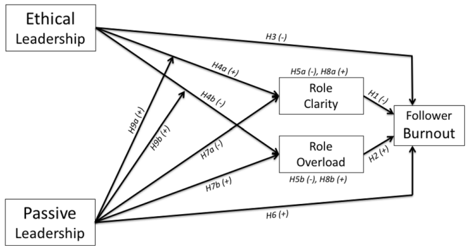
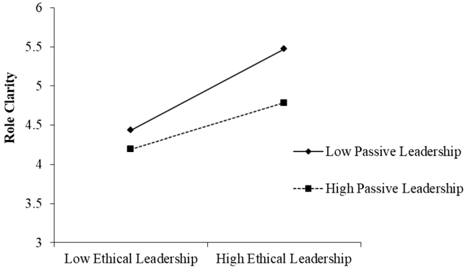
Burnout has important ramifications for employees and organizations and preventing burnout forms an ethical issue for managers. However, the role of the leader and especially the role of ethical aspects of leadership have received relatively little attention in relation to burnout to date. We conducted a survey among employees ( N = 386) of a Dutch retail organization, nested in 122 teams with a leader. Our first contribution is that we empirically show the hypothesized opposing relationships of ethical and passive leadership behavior with follower burnout. Furthermore, we examined two job characteristics as mechanisms that link these forms of leadership and burnout. Lastly, we show that the positive relationship of ethical leadership with burnout via role clarity (but not overload) is dependent on the degree of passive leadership the leader is perceived to display. Our results suggest that organizations should promote ethical leadership behaviors and limit passive leadership behaviors by stimulating leaders to be active in their role and use their social influence to promote ethical conduct.
Overview
The claims and statistics of this paper haven’t been checked yet.
Free: it reads the open-access text and checks the first 5 claims that cite a source we can check. Create a free account to check every claim.
Integrity signals
Registry
Cites
Statistics
Figures
Verification
Claims the paper makes
The claims and statistics of this paper haven’t been checked yet.
Free: it reads the open-access text and checks the first 5 claims that cite a source we can check. Create a free account to check every claim.
Claims other papers make about this one
Each is checked against this paper’s own text: does it say what the citing paper says it does?
The source backs part of the claim, not all of it — or backs it for a different population, condition or comparison.
In the citing paper
“as this leadership style is often associated with role conflict, work fatigue (Barling and Frone 2017;Skogstad et al. 2007Skogstad et al. , 2014;;Vullinghs et al. 2020), and workplace bullying (Dussault and Frenette 2015;Skogstad et al. 2007)”
From Leadership and technostress: A systematic literature review (2025) · cites this paper as Vullinghs et al. 2020
Experimental — accuracy not yet measured
Self-check
Percentages, sums and reported differences re-computed from the paper’s own numbers.
The self-check needs the paper’s full text.
Citations
Cites
Hu, L., & Bentler, P. M. (1999) · Structural Equation Modeling A Multidisciplinary Journal · doi:10.1080/10705519909540118 · Cited by 108,788
A Theory of Cognitive Dissonance
Festinger, L. (1957) · doi:10.1515/9781503620766 · Cited by 24,241 · cited 2×
“, being principled sometimes and diffusing responsibility at other times) may cause ambiguity and confusion, and may impede positive reactions (Festinger 1957).”
A Theory of Cognitive Dissonance
(2017) · Macat Library eBooks · doi:10.4324/9781912282432 · Cited by 18,122
The measurement of experienced burnout
Maslach, C., & Jackson, S. E. (1981) · Journal of Organizational Behavior · doi:10.1002/job.4030020205 · Cited by 14,496
Maslach, C., Schaufeli, W. B., & Leiter, M. P. (2001) · Annual Review of Psychology · doi:10.1146/annurev.psych.52.1.397 · Cited by 12,852
Job Demands, Job Decision Latitude, and Mental Strain: Implications for Job Redesign
Karasek, R. A. (1979) · Administrative Science Quarterly · doi:10.2307/2392498 · Cited by 12,597 · cited 7×
“Here, building on the demand-control model (Karasek 1979), we propose that role clarity and overload form two such mechanisms.”
BackgroundMethodInfluentialAddressing Moderated Mediation Hypotheses: Theory, Methods, and Prescriptions
Preacher, K. J., Rucker, D. D., & Hayes, A. F. (2007) · Multivariate Behavioral Research · doi:10.1080/00273170701341316 · Cited by 9,973
Job demands, job resources, and their relationship with burnout and engagement: a multi‐sample study
Schaufeli, W. B., & Bakker, A. B. (2004) · Journal of Organizational Behavior · doi:10.1002/job.248 · Cited by 9,297
Carroll, A. B. (1991) · Business Horizons · doi:10.1016/0007-6813(91)90005-g · Cited by 9,036 · cited 1×
“Organizations have an ethical obligation to serve the interests of all legitimate stakeholders, including employees (Carroll 1991; Donaldson and Preston 1995), and as such, Guest (2017) states that safeguarding employee well-being is an important ethical concern for managers.”
BackgroundHealthy work: stress, productivity, and the reconstruction of working life
(1990) · Choice Reviews Online · doi:10.5860/choice.28-0381 · Cited by 8,220 · cited 2×
“, Maslach and Leiter 2008), which have both received considerable research attention in studies addressing the demand-control model (Karasek 1979; Karasek and Theorell 1990).”
Background
Research works printed but not linked: 3
- 16. De Hoogh, A. H. B., Den Hartog, D. N., & Koopman, P. L. (2004). The development of the CLIO: A questionaire for measuring Charis- matic Leadership in Organisations. Gedrag & Organisatie, 100, 354-382.
- 21. Duxbury, L., & Higgins, C. (2001). Work-Life balance in the new mil- lennium: Where are we? Where do we need to go? Ottawa: Cana- dian Policy Research Networks.
- 61. Schaufeli, W. B., & Dierendonck, D. (2000). Utrechtse Burnout Scale- UBOS: Testmanual. Lisse: Swets & Zeitlinger.
Cited by
Curbing nurses' burnout during COVID‐19: The roles of servant leadership and psychological safety
Ma, Y., Faraz, N. A., Ahmed, F., Iqbal, M. K., Saeed, U., Mughal, M. F., & Raza, A. (2021) · Journal of Nursing Management · doi:10.1111/jonm.13414 · Cited by 206
“Burnout at the workplace is defined as “the employees’ negative response to chronic work stressors” (Vullinghs et al., 2018).”
BackgroundChen, J., Ghardallou, W., Comite, U., Ahmad, N., Ryu, H. B., Ariza‐Montes, A., & Han, H. (2022) · International Journal of Environmental Research and Public Health · doi:10.3390/ijerph191710941 · Cited by 189
“Previous researchers investigated the mediating effect of resilience and role clarity on burnout [12,159]; such studies did not explain how resilience and role clarity simultaneously act as mediators to reduce the risk of burnout.”
BackgroundInfluentialUsman, M., Ali, M., Yousaf, Z., Anwar, F., Waqas, M., & Khan, M. A. S. (2020) · Canadian Journal of Administrative Sciences / Revue Canadienne des Sciences de l Administration · doi:10.1002/cjas.1568 · Cited by 95
Mostafa, A. M. S., Farley, S., & Zaharie, M. A. (2020) · Journal of Business Ethics · doi:10.1007/s10551-020-04586-2 · Cited by 99
Mihalca, L., Ratiu, L. C. I., Brendea, G., Metz, D., Drâgan, M., & Dobre, F. (2021) · Oeconomia Copernicana · doi:10.24136/oc.2021.010 · Cited by 83
Consequences of Managers’ Laissez-faire Leadership During Organizational Restructuring
Lundmark, R., Richter, A., & Tafvelin, S. (2021) · Journal of Change Management · doi:10.1080/14697017.2021.1951811 · Cited by 114
“between laissez-faire leadership, role clarity and employee wellbeing outcomes (Barling & Frone, 2017; Vullinghs et al., 2018).”
BackgroundResultInfluentialGender and evaluations of leadership behaviors: A meta-analytic review of 50 years of research
Paustian‐Underdahl, S. C., Sockbeson, C. S., Hall, A. V., & Halliday, C. S. (2024) · The Leadership Quarterly · doi:10.1016/j.leaqua.2024.101822 · Cited by 94
Leadership and technostress: A systematic literature review
Rademaker, T., Klingenberg, I., & Süß, S. (2025) · Management Review Quarterly · doi:10.1007/s11301-023-00385-x · Cited by 59
Towsen, T., Stander, M. W., & van der Vaart, L. (2020) · Frontiers in Psychology · doi:10.3389/fpsyg.2020.01973 · Cited by 83
Al’Ararah, K., Çağlar, D., & Aljuhmani, H. Y. (2024) · Behavioral Sciences · doi:10.3390/bs14060490 · Cited by 74
“Healthcare leaders should prioritize initiatives to improve workplace climate aspects to reduce job overload and boost employee satisfaction and well-being [12,40,129,130].”
BackgroundInfluentialSabei, S. D. A., ABUALRUB, R. F., Yahyaei, A. A., Rawajfah, O. A., Labrague, L. J., Burney, I. A., & Al‐Maqbali, M. (2023) · International Emergency Nursing · doi:10.1016/j.ienj.2023.101321 · Cited by 61
Chang, S. M., Budhwar, P. S., & Crawshaw, J. R. (2021) · Frontiers in Psychology · doi:10.3389/fpsyg.2021.635106 · Cited by 73
Kim, N., Kang, Y. J., Choi, J., & Sohn, Y. W. (2020) · International Journal of Environmental Research and Public Health · doi:10.3390/ijerph17217742 · Cited by 50
“Research has demonstrated that role clarity has a negative association with burnout [88,103].”
BackgroundIlyas, S., Abid, G., & Ashfaq, F. (2022) · International Journal of Ethics and Systems · doi:10.1108/ijoes-04-2022-0084 · Cited by 53
Bringing Excitement to Empirical Business Ethics Research: Thoughts on the Future of Business Ethics
Babalola, M. T., Bal, P. M., Cho, C. H., Garcia‐Lorenzo, L., Guedhami, O., Liang, H., Shailer, G., & van Gils, S. (2022) · Journal of Business Ethics · doi:10.1007/s10551-022-05242-7 · Cited by 49
Telework quality and employee well‐being: Lessons learned from the COVID‐19 pandemic in Italy
Miglioretti, M., Gragnano, A., Simbula, S., & Perugini, M. (2022) · New Technology Work and Employment · doi:10.1111/ntwe.12263 · Cited by 56
Llorca‐Pellicer, M., Soto-Rubio, A. L., & Gil-Monte, P. R. (2021) · Frontiers in Psychology · doi:10.3389/fpsyg.2021.644025 · Cited by 51
“These results agree with some of the results of studies about the relationship between demand variables (Skaalvik and Skaalvik, 2007; Backhaus et al., 2018; Vullinghs et al., 2018) and resource variables (Khan et al.”
ResultMostafa, A. M. S. (2021) · Human Performance · doi:10.1080/08959285.2021.1998061 · Cited by 45
Allal‐Chérif, O., Guijarro-García, M., Ballester-Miquel, J. C., & Carrilero-Castillo, A. (2021) · Journal of Business Research · doi:10.1016/j.jbusres.2021.05.008 · Cited by 45
The Curvilinear Relationship Between Career Calling and Work Fatigue: A Moderated Mediating Model
Zhou, J., Zhang, J. W., & Xuan, X. Y. (2020) · Frontiers in Psychology · doi:10.3389/fpsyg.2020.583604 · Cited by 44
“Role overload, a typical role stressor, is a key outcome of resource loss and is positively linked to work fatigue (Frone and Tidwell, 2015) and job burnout (Posig and Kickul, 2003; Surana and Singh, 2013; De Beer et al., 2015; Vullinghs et al., 2018).”
BackgroundPajic, S., Buengeler, C., Hartog, D. N. D., & Boer, D. (2021) · Journal of Occupational Health Psychology · doi:10.1037/ocp0000309 · Cited by 43
“Passive destructive leadership can also add other job demands such as a lack of clarity or work overload (Vullinghs et al., 2020), which triggers fatigue and increases propensity to chronic stress and mental health complaints (Barling & Frone, 2017).”
BackgroundA Qualitative and Longitudinal Study on the Impact of Telework in Times of COVID-19
Maillot, A.-S., Meyer, T., Prunier‐Poulmaire, S., & Vayre, É. (2022) · Sustainability · doi:10.3390/su14148731 · Cited by 44
“However, tensions and conflicts have arisen [25,26] due to the organization of a “double day” combining work and domestic demands [27].”
BackgroundAgarwal, P. (2021) · International journal of organizational analysis · doi:10.1108/ijoa-03-2021-2688 · Cited by 38
Authoritarian leadership and nurse presenteeism: the role of workload and leader identification
Shan, G., Wang, W., Wang, S., Zhang, Y., Guo, S., & Li, Y. (2022) · BMC Nursing · doi:10.1186/s12912-022-01119-2 · Cited by 48
Zhang, Z., Wang, J., & Jia, M. (2020) · British Journal of Management · doi:10.1111/1467-8551.12418 · Cited by 39
“Furthermore, employees generally enact two roles: job-holder role (i.e. formal responsibilities of the employee) and organizational member role (i.e. individuals’ expectations to be a good employee; Vullinghs et al., 2018; Welbourne, Johnson and Erez, 1998).”
BackgroundCao, M., Zhao, S., Chen, J., & Lv, H. (2023) · Personnel Review · doi:10.1108/pr-09-2021-0632 · Cited by 38
Gender Differences in the Perceived Behavior of Narcissistic Leaders
van Gerven, E. J. G., Hoogh, A. H. B. D., Hartog, D. N. D., & Belschak, F. D. (2022) · Frontiers in Psychology · doi:10.3389/fpsyg.2022.809193 · Cited by 32
“…(how leaders vary behavior in order to be flexible or adapt to the situation or person), narrowed down to a specific type of inconsistency (e.g., word-deed alignment; Dineen et al., 2006), or focused on displaying two different leadership styles simultaneously (e.g., Vullinghs et al., 2020).”
Ali, A., Hamid, T. A., Naveed, R. T., Siddique, I., Ryu, H. B., & Han, H. (2022) · Frontiers in Psychology · doi:10.3389/fpsyg.2022.1009785 · Cited by 39
“Undoubtedly, the role of corporate leaders, especially ethical leaders, in ensuring employee wellbeing is of utmost importance to reduce burnout risk (Vullinghs et al., 2020).”
BackgroundBurnout profiles: dimensionality, replicability, and associations with predictors and outcomes
Gillet, N., Morin, A. J. S., Colombat, P., Ndiaye, A., & Fouquereau, E. (2021) · Current Psychology · doi:10.1007/s12144-021-01807-3 · Cited by 34
“For instance, Vullinghs et al. (2020) demonstrated that the negative effects of ethical leadership on burnout could be explained, at least in part, by an increase in employees’ perceptions of role clarity and a decrease in their feelings of role overload.”
BackgroundThe impact of ethical leadership on counterproductivity among cabin crews
Bouzarı, M., Safavı, H. P., & Vatankhah, S. (2020) · European Journal of Tourism Research · doi:10.54055/ejtr.v25i.422 · Cited by 27
Mobile ICT Overuse in the Construction Industry: Effects on Job Burnout of Project Managers
Jiang, S., Ma, G., Jia, J., Wu, M. F., & Wu, Z. (2022) · Journal of Construction Engineering and Management · doi:10.1061/(asce)co.1943-7862.0002274 · Cited by 24
Li, K., & Griffin, M. A. (2022) · Leadership & Organization Development Journal · doi:10.1108/lodj-10-2021-0455 · Cited by 26
How and when does centralization affect the likelihood of passive leadership?
Bani‐Melhem, S., Abukhait, R., & Bourini, I. (2022) · Leadership & Organization Development Journal · doi:10.1108/lodj-10-2021-0492 · Cited by 26
Wu, Y., Fu, Q., Akbar, S., Samad, S., Comite, U., Bucurean, M., & Bădulescu, A. (2022) · International Journal of Environmental Research and Public Health · doi:10.3390/ijerph192013102 · Cited by 34
“Among different leadership styles, current evidence suggests ethical leadership (ELP) style can mitigate the risk of EBO in an organization [21].”
BackgroundBe zhongyong and be ethical: dual leadership in promoting employees’ thriving at work
Guo, S., & Hu, Q. (2021) · Chinese Management Studies · doi:10.1108/cms-02-2021-0053 · Cited by 22
What Makes People Hide Knowledge? Influence of Passive Leadership and Creative Self-Efficacy
Mubarak, N., Osmadi, A., Khan, J., Mahdiyar, A., & Riaz, A. (2021) · Frontiers in Psychology · doi:10.3389/fpsyg.2021.740880 · Cited by 25
Lo, T. T., Chen, Y., Lai, T. Y., & Goodman, A. (2024) · Frontiers in Built Environment · doi:10.3389/fbuil.2024.1370423 · Cited by 20
Mansoori, M. S. A., Jabeen, F., Piccardi, P., & Pezone, A. (2025) · Journal of Knowledge Management · doi:10.1108/jkm-06-2024-0714 · Cited by 25
Relationship between role overload and the work–family interface
Vatharkar, P. S., & Aggarwal-Gupta, M. (2020) · South Asian Journal of Business Studies · doi:10.1108/sajbs-09-2019-0167 · Cited by 23
Zhou, S., & Yi, N. (2025) · International Journal of Hospitality Management · doi:10.1016/j.ijhm.2025.104267 · Cited by 14
Julmi, C., Pereira, J. M., Bramlage, J. K., & Jackenkroll, B. (2021) · International Journal of Organization Theory and Behavior · doi:10.1108/ijotb-11-2020-0204 · Cited by 21
Positive Behavior Values to Improve Student Self-Efficacy: A Case Study in Islamic Boarding Schools
Naqiyah, N. (2022) · Open Access Macedonian Journal of Medical Sciences · doi:10.3889/oamjms.2022.10508 · Cited by 23
“The role of the leader needs to pay attention to ethical aspects by paying attention to the condition and fatigue of students [20] that indicates positive behavior with modern Islamic cultural values of pesantren [21].”
BackgroundThe impact of work-family conflict on job burnout among community social workers in China
Song, D., Zhao, J., Wu, H., & Ji, X. J. (2025) · PLoS ONE · doi:10.1371/journal.pone.0301614 · Cited by 17
“Excessive pressure can reduce employees’ ability to control the work environment, make for individuals to have not sufficient time and resources to solve work problems, and leads to fatigue, emotional exhaustion and feeling of energy loss, which in turn leads to job burnout [65].”
Wacker, E., Fischer, A., & Schorlemmer, J. (2021) · Journal of Occupational Medicine and Toxicology · doi:10.1186/s12995-021-00303-5 · Cited by 18
Scheepers, M. D. V., Williams, P. A., Schaffer, V., Grace, A., Walling, C., Campton, J., Hands, K., Fisher, D., Banks, H. J., Loth, J., et al. (2023) · Qualitative Research Journal · doi:10.1108/qrj-04-2023-0065 · Cited by 18
The stress-inducing potential of inclusive leadership: Does resilience help?
Zaman, K., Siddiquei, A. N., Badar, K., & Qureshi, A. R. (2024) · International Journal of Project Management · doi:10.1016/j.ijproman.2024.102650 · Cited by 19
Wu, Y., Li, R. Y. M., Akbar, S., Fu, Q., Samad, S., & Comite, U. (2022) · Sustainability · doi:10.3390/su142114189 · Cited by 21
“Subsequently, different leadership frameworks have identified different mediators [7,27,28].”
BackgroundNahas, A. R. F., Elnaem, M. H., Mubarak, N., AbouKhatwa, M. M., Barakat, M. M., Faller, E. M., Kassem, L. M., Ramatillah, D. L., Jaber, A. A. S., Akkawi, M. E., et al. (2024) · Frontiers in Public Health · doi:10.3389/fpubh.2024.1366612 · Cited by 15
“Further evidence supported a relationship between ethical leadership focusing on role clarity and burnout, encouraging adopting more active leadership to mitigate burnout risk (31).”
BackgroundLee, Y., Tao, W., Li, J.-Y., & Yoon, D. (2025) · Public Relations Review · doi:10.1016/j.pubrev.2025.102583 · Cited by 28
The effect of shared leadership on employee resilience: wielding the double-edged sword
Hao, M., Min, Y. A., Liu, J., & Yuling, D. (2025) · Frontiers in Psychology · doi:10.3389/fpsyg.2025.1441660 · Cited by 21
Understanding the Relationship between Situational Strength and Burnout: A Multi-Sample Analysis
Arroyo, J., Moncayo, I. C., Gómez-García, A. R., & Segovia, A. O. (2020) · International Journal of Environmental Research and Public Health · doi:10.3390/ijerph18010162 · Cited by 15
“[19] found that role clarity moderated the effect of passive leadership on followers’ burnout.”
BackgroundPassive leadership and deviant behaviors: the moderating effect of power distance and collectivism
Wulani, F., & Junaedi, M. (2021) · Journal of Management Development · doi:10.1108/jmd-07-2020-0216 · Cited by 17
Effects of Passive Leadership in the Digital Age
Wang, C., Liu, G. H. W., & Lee, N. C.-A. (2021) · Frontiers in Psychology · doi:10.3389/fpsyg.2021.701047 · Cited by 16
“…in task planning or interacting with their subordinates, they can bring about more stress and aggravate engagement editors’ already demanding work, leading to more role overload in engagement editors (Skogstad et al., 2007; Buch et al., 2014; Barling and Frone, 2017; Vullinghs et al., 2018).”
BackgroundWang, W., Zhao, X., Zhang, X., Liu, Y., & Yuan, P. (2023) · Frontiers in Psychology · doi:10.3389/fpsyg.2023.1118099 · Cited by 15
“For example, role overload contributes to a higher level of job burnout (Vullinghs et al., 2020) and emotional exhaustion (Shantz et al.”
BackgroundTsai, H. (2023) · Current Psychology · doi:10.1007/s12144-023-05462-8 · Cited by 11
“Moreover, we introduce basic psychological needs as a new mediating pathway to deepen our understanding of how ethical leadership affects work active behavior (Tsai, 2022; Vullinghs et al., 2020).”
InfluentialWorkplace ethical climate and its relationship with depression, anxiety and stress
Borrelli, I., Melcore, G., Perrotta, A., Santoro, P. E., Rossi, M. F., & Moscato, U. (2024) · Occupational Medicine · doi:10.1093/occmed/kqae065 · Cited by 13
Sustainability and internal communication: Leveraging employee green behaviors
Sun, R., Lee, Y., & Dong, E. (2025) · Public Relations Review · doi:10.1016/j.pubrev.2025.102565 · Cited by 13
Verdorfer, A. P., Feng, X., Peus, C. V., & Frey, D. (2025) · Journal of Managerial Psychology · doi:10.1108/jmp-02-2024-0096 · Cited by 15
Digital leadership and innovative work behaviour: role of knowledge sharing and role clarity
Latif, M., Irfan, M., Rafiq, Z., Golra, O. A., & Abbas, S. M. (2025) · Knowledge Management Research & Practice · doi:10.1080/14778238.2025.2566494 · Cited by 13
Short Empirical Insight: Leadership and Artificial Intelligence in the Pharmaceutical Industry
Hu, C., Din, Q. M. U., & Zhang, L. (2024) · Engineering Technology & Applied Science Research · doi:10.48084/etasr.7025 · Cited by 15
“The former seek compelling advantages, prompting researchers to explore innovative approaches, which will motivate positive employee outcomes [3-4].”
BackgroundLundmark, R., Stenling, A., Schwarz, U. V. T., & Tafvelin, S. (2021) · Frontiers in Psychology · doi:10.3389/fpsyg.2021.668838 · Cited by 20
Linking ethical leadership to employees' emotional exhaustion: a chain mediation model
Zhou, H., Liu, S., He, Y., & Qian, X. (2022) · Leadership & Organization Development Journal · doi:10.1108/lodj-10-2021-0452 · Cited by 9
The Value of Work Flexibility: Staff Perceptions in Higher Education
Shepard, C., & McNaughtan, J. L. (2024) · The Journal of Higher Education · doi:10.1080/00221546.2024.2409027 · Cited by 11
“Vullinghs et al. (2020) even went so far as to describe the importance of role clarity as an important facet of active, ethical, and leadership practices.”
Morikawa, M., Martela, F., & Hakanen, J. (2024) · BRQ Business Research Quarterly · doi:10.1177/23409444241307734 · Cited by 19
Zheng, L., Pei, J., He, G., & Zhu, Y. (2025) · Personnel Review · doi:10.1108/pr-04-2024-0349 · Cited by 11
The Dark Side of Variability: Developing a Measure of Perceived Leader Inconsistency
van Gerven, E. J. G., Hoogh, A. H. B. D., Hartog, D. N. D., & Belschak, F. D. (2025) · Journal of Business Ethics · doi:10.1007/s10551-025-06032-7 · Cited by 10
“In line with this, research found that the simultaneous expression of positive and negative leader behaviors related to fol-lower ambivalence and stress-related outcomes (e.g., Herr et al., 2019; Suurd Ralph & Barling, 2022; Vullinghs et al., 2020).”
InfluentialHossain, M. I., Teh, B. H., Dorasamy, M., Tabash, M. I., & Ong, T. S. (2023) · Springer proceedings in business and economics · doi:10.1007/978-3-031-42511-0_6 · Cited by 16
Barnes, B. G., Cussatt, M., Dalton, D. W., & Harp, N. L. (2024) · Contemporary Accounting Research · doi:10.1111/1911-3846.12980 · Cited by 8
Yılmaz, A. A., & Konaklıoğlu, E. (2022) · Tourism & Management Studies · doi:10.18089/tms.2022.180204 · Cited by 10
The Unprecedented Lockdown: The consequences of job loss
Rughoobur-Seetah, S. (2021) · Zagreb international review of economics and business/Zagreb international review of economics & business · doi:10.2478/zireb-2021-0008 · Cited by 8
“Moreover, various studies have also related the positive link between role overload and occupational burnout (Shupe, Wambaugh and Bramble, 2015; Kilroy et al., 2016; Mohamed, 2016; Vullinghs et al., 2018).”
Kim, S. L., Mah, S., Yoon, S., & Yun, S. (2024) · Journal of Managerial Psychology · doi:10.1108/jmp-11-2023-0651 · Cited by 6
Work Environment and Job Satisfaction of Teachers
Gomez, J. A., & Tantiado, R. C. (2023) · International Journal of Research Publications · doi:10.47119/ijrp1001261620224971 · Cited by 10
A temporal approach to studying organizational leadership
Vullinghs, J. T., & Dóci, E. (2020) · Edward Elgar Publishing eBooks · doi:10.4337/9781788974387.00025 · Cited by 12
Self-citationOjeleye, Y. C., Abdullahi, M., & Salami, A. O. (2023) · Management and Entrepreneurship Trends of Development · doi:10.26661/2522-1566/2023-3/25-04 · Cited by 8
“Vullinghs, De Hoogh, Hartog, and Boon (2020) see role clarity as the degree to which employees believe they have clear direction regarding the tasks and actions connected with their jobs.”
BackgroundMake Slot not Art: Creativity and Burnout in U.S. Local Television Newsrooms
Higgins-Dobney, C. L. (2024) · Journalism Practice · doi:10.1080/17512786.2024.2352774 · Cited by 7
“In addition to overload, role ambiguity also contributes to burnout (Beehr, Walsh, and Taber 1976; Vullinghs et al. 2020).”
InfluentialHUMOR AS CATALYST AND NEUTRALIZER OF LEADERSHIP EFFECTIVENESS
Sobral, F. J. B. D. A., Furtado, L., & Islam, G. (2019) · Revista de Administração de Empresas · doi:10.1590/s0034-759020190502 · Cited by 13
Leadership in a school context: how leadership styles are associated with leadership outcomes
Hariri, H. (2020) · International Journal of Financial Accounting and Management · doi:10.35912/ijfam.v2i2.236 · Cited by 5
Swanzy, E. K., Leiva, D., & Berger, R. (2025) · The Spanish Journal of Psychology · doi:10.1017/sjp.2025.5 · Cited by 5
“For instance, studies by Vullinghs et al. (2020) and Kalay et al. (2020) showed that positive leadership behaviors such as authentic and ethical leadership behaviors were negatively associated with job role conflict by providing employees with role clarity.”
van Gils, S., & Seljeseth, I. M. (2025) · Journal of Business Research · doi:10.1016/j.jbusres.2025.115548 · Cited by 4
WORK CONDITION FACTORS AND EMPLOYEE ENGAGEMENT: THE MEDIATING ROLE OF PSYCHOLOGICAL CAPITAL
Ononye, U. H., Olayemi, O. O., & Amram, A. (2024) · Jurnal Manajemen dan Kewirausahaan · doi:10.9744/jmk.26.1.1-12 · Cited by 14
Bani-Melhem, A. J., Khassawneh, O., Abukhait, R. M., Mohammad, T., & Bouchon, F. (2024) · Journal of Human Resources in Hospitality & Tourism · doi:10.1080/15332845.2024.2374196 · Cited by 5
“According to Vullinghs et al. (2018), passive supervision is one such behavior, when a leader avoids responsibilities, disregards concerns, or is absent when they should be, delays responses, resists expressing views, and fails to follow up.”
InfluentialEmpirical Insights into AI-Augmented Leadership: A Multi-Industry Comparative Study
Munshi, J. D. (2025) · International Journal of Engineering and Information Management · doi:10.52756/ijeim.2025.v01.i01.004 · Cited by 7
Wang, L., Chen, X., Yuan, J., & Tong, R. (2025) · International Journal of Occupational Safety and Ergonomics · doi:10.1080/10803548.2025.2460368 · Cited by 5
“Previous studies have focused more on the relationship between role stressors and psychological state attrition, e.g., job burnout and fatigue [69], and some studies have examined the association between role stressors and job engagement [17], job satisfaction and organizational belonging [70].”
Mostafa, A. M. S., Yunus, S., & Au, W. C. (2025) · International Journal of Workplace Health Management · doi:10.1108/ijwhm-11-2024-0221 · Cited by 4
Vătămănescu, E., Vintilă, F., Stănescu, D. F., & Cucută, R. (2025) · EuroMed Journal of Business · doi:10.1108/emjb-08-2025-0297 · Cited by 5
Swanzy, E. K., DeSouza, M., Attiogbe, E. J. K., & Asante, R. E. (2025) · Cogent Business & Management · doi:10.1080/23311975.2025.2595719 · Cited by 7
“…roles independently, often juggling conflicting demands from various sources within the organization (ali & ullah, 2023; Berger et al., 2019). this leads to confusion about job expectations and responsibilities, resulting in heightened role stress (Ågotnes et al., 2024; Vullinghs et al., 2020).”
Looking at both sides of algorithmic control and employee well-being: a job demands−resources model
Zhang, L., Ling, X., & Yang, C. (2026) · Frontiers in Psychology · doi:10.3389/fpsyg.2026.1736349 · Cited by 8
Lauerman, R., Shuck, B., & Immekus, J. C. (2026) · European journal of training and development · doi:10.1108/ejtd-08-2025-0171 · Cited by 3
The influence of toxic leadership on emotional exhaust and reactive work behavior
Adytia, I., Meutia, M., Hanifah, I. A., & Indriana, I. (2024) · Journal of Infrastructure Policy and Development · doi:10.24294/jipd.v8i9.6937 · Cited by 6
“(Vullinghs et al., 2018) In addition, toxic leaders are excessively critical, demeaning, and abusive, which can reduce emotional resources and contribute to feelings of exhaustion.”
BackgroundWei, L., Aun, N. S. M., Ibrahim, F. B., & Rajaratnam, S. (2025) · Journal of Human Behavior in the Social Environment · doi:10.1080/10911359.2025.2469713 · Cited by 3
“These styles reduce burnout by maintaining or improving a culture that makes employees feel both respected and safe psychologically, making them feel appreciated and involved in decision-making (Julmi et al., 2021; M. Kim & Beehr, 2018; Vullinghs et al., 2020).”
Vera, M., Sánchez-Cardona, I., & Povedano, A. (2022) · The Journal of psychology · doi:10.1080/00223980.2022.2095966 · Cited by 3
“Customs officers’ leaders should consider employees’ best interests, show ethical behaviors, retrain those who violate ethical standards and provide emotional support to help alleviate employees’ burnout (Vullinghs et al., 2018).”
BackgroundArlı, Ö., Şener, H. E., & Meydan, C. H. (2023) · Hacettepe University Journal of Education · doi:10.16986/huje.2023.486 · Cited by 5
Surviving, not thriving: The impact of downsizing on team-based organizations
Patton, G. K., Neubert, E., Neubert, M. J., & Rees, R. (2024) · Business Horizons · doi:10.1016/j.bushor.2024.02.006 · Cited by 2
Kunzelmann, A., Askovic, M., Forner, V. W., Zettna, N., Jolly, A. A., Dey, S., Nguyen, H., Johnson, A. M., & Parker, S. K. (2025) · Human Resource Management Journal · doi:10.1111/1748-8583.70001 · Cited by 6
Guan, X., Frenkel, S. J., & Yu, H. (2025) · Leadership & Organization Development Journal · doi:10.1108/lodj-03-2024-0157 · Cited by 3
Pillai, R., Abukhait, R., Shaya, N., & Khattak, M. N. (2025) · Social Sciences & Humanities Open · doi:10.1016/j.ssaho.2025.101596 · Cited by 4
Ethische und destruktive Führung: Gute Führung – schlechte Führung
Lang, R., & Rybnikova, I. (2021) · Springer eBooks · doi:10.1007/978-3-658-35543-2_11 · Cited by 3
Examining the Prevalence of Burnout among Golf Operations Employees in Canada
Fetter, S., & Dixon, J. C. (2024) · Journal of Global Sport Management · doi:10.1080/24704067.2024.2353620 · Cited by 1
“…role conflict, work overload (Cordes & Dougherty, 1993; Fried et al., 2008), resistance to change (Srivastava & Agrawal, 2020), style of leadership (Vullinghs et al., 2020), lack of organizational support (Srivastava & Agrawal, 2020), lower levels of autonomy, and perceived unfairness at work…”
Kong, L., Liu, S., Ding, H., & Yu, S. (2025) · Current Psychology · doi:10.1007/s12144-025-07360-7 · Cited by 2
Nundhapana, N., Treepongkaruna, S., & Jiraporn, P. (2025) · Corporate Social Responsibility and Environmental Management · doi:10.1002/csr.3267 · Cited by 1
Metadata
- Authors
- Vullinghs, J. T., De Hoogh, A. H. B., Den Hartog, D. N., & Boon, C.
- Affiliations
- Vrije Universiteit Amsterdam (NL)
- University of Amsterdam (NL)
- Venue
- Journal of Business Ethics
- Published
- 2018-12-11
- Volume
- 165
- Issue
- 4
- Pages
- 719-733
- ISSN
- 0167-4544 (ISSN-L)
- 1573-0697
- OpenAlex
- W2905035641
- Cited by
- 132
- References
- 82
- Citations by year
- 2026: 10 · 2025: 25 · 2024: 21 · 2023: 17 · 2022: 25 · 2021: 21 · 2020: 11 · 2019: 2
- FWCI
- 14.06
- Type
- journal article
- Language
- en
- Open access
- hybrid
- doi.org
- Licence
- cc-by
- creativecommons.org/licenses/by/4.0 (tdm)
- creativecommons.org/licenses/by/4.0 (vor)
- Locations
- Journal of Business Ethics (publishedVersion, cc-by)
- VU Research Portal (publishedVersion, other-oa)
- UvA-DARE (University of Amsterdam) (submittedVersion, cc-by)
- RePEc: Research Papers in Economics (submittedVersion)
- Data Archiving and Networked Services (DANS) (submittedVersion, other-oa)
- Topics
- Social Sciences › Business, Management and Accounting › Organizational Behavior and Human Resource Management › Job Satisfaction and Organizational Behavior
- Social Sciences › Psychology › Social Psychology › Stress and Burnout Research
- Social Sciences › Business, Management and Accounting › Organizational Behavior and Human Resource Management › Ethics in Business and Education
- Keywords
- ethical leadership, passive leadership, burnout, role clarity, role overload, job characteristics, leader-follower relationships, retail employees, social influence, burnout prevention
About these checks
Registry, retraction, Cites and statistics results are computed, not judged, with one exception: a printed reference that no index lists is read once by a model before it counts as a citation error. Claims are extracted by a model and kept only when their quote appears verbatim in the text; each cited source is then checked, with a model’s help, for whether it says what the claim relies on. Those verdicts can be wrong — read the claim’s quote and the cited source before relying on one.
Statistics and arithmetic are recomputed, not judged.
Confidence bands are shown only for fields calibrated on our annotated test set. None is calibrated yet, so no band is shown.
What counts as a claim ›How we measure confidence ›How we check this ›
Are you an author, or do you see a problem with this page? Request a review
Data sources
Bibliographic data: Semantic Scholar, OpenAlex, Crossref.
Contains information from the Semantic Scholar Academic Graph Datasets, made available under the ODC Attribution License (ODC-BY 1.0).
Semantic Scholar’s data is described in: Kinney, R., et al. (2023). The Semantic Scholar Open Data Platform. arXiv:2301.10140.
