

Technology Delivered Interventions for Depression and Anxiety in Children and Adolescents: A Systematic Review and Meta-analysis
Open accessThe DOI matches its Crossref record; 98 of the 101 references it cites were found in a registry or an index.
Abstract
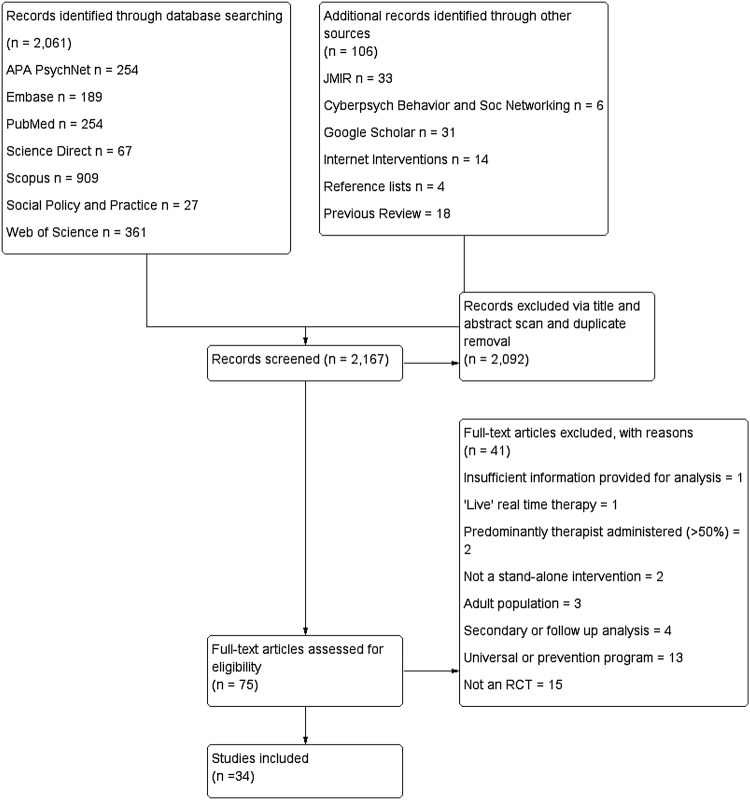
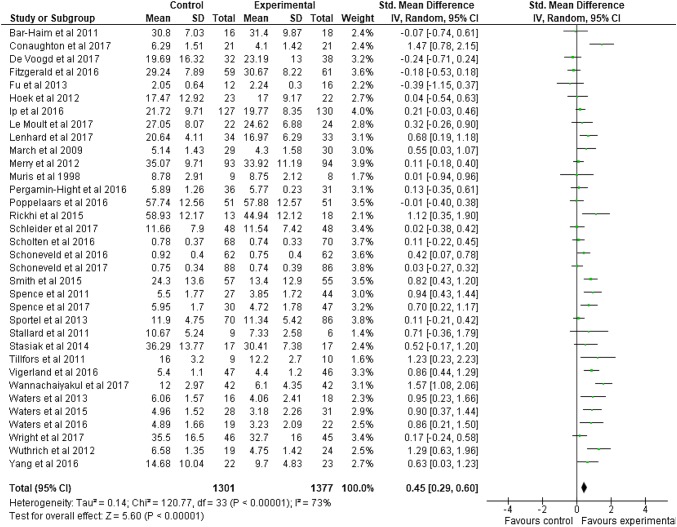
Depression and anxiety are common during adolescence. Whilst effective interventions are available treatment services are limited resulting in many adolescents being unable to access effective help. Delivering mental health interventions via technology, such as computers or the internet, offers one potential way to increase access to psychological treatment. The aim of this systematic review and meta-analysis was to update previous work and investigate the current evidence for the effect of technology delivered interventions for children and adolescents (aged up to 18 years) with depression and anxiety. A systematic search of eight electronic databases identified 34 randomized controlled trials involving 3113 children and young people aged 6-18. The trials evaluated computerized and internet cognitive behavior therapy programs (CBT: n = 17), computer-delivered attention bias modification programs (ABM: n = 8) cognitive bias modification programs (CBM: n = 3) and other interventions (n = 6). Our results demonstrated a small effect in favor of technology delivered interventions compared to a waiting list control group: g = 0.45 [95% CI 0.29, 0.60] p < 0.001. CBT interventions yielded a medium effect size (n = 17, g = 0.66 [95% CI 0.42-0.90] p < 0.001). ABM interventions yielded a small effect size (n = 8, g = 0.41 [95%CI 0.08-0.73] p < 0.01). CBM and 'other' interventions failed to demonstrate a significant benefit over control groups. Type of control condition, problem severity, therapeutic support, parental support, and continuation of other ongoing treatment significantly influenced effect sizes. Our findings suggest there is a benefit in using CBT based technology delivered interventions where access to traditional psychotherapies is limited or delayed.
Overview
The claims and statistics of this paper haven’t been checked yet.
Free: it reads the open-access text and checks the first 5 claims that cite a source we can check. Create a free account to check every claim.
Integrity signals
Registry
Cites
Statistics
Figures
Verification
Claims the paper makes
The claims and statistics of this paper haven’t been checked yet.
Free: it reads the open-access text and checks the first 5 claims that cite a source we can check. Create a free account to check every claim.
Claims other papers make about this one
Each is checked against this paper’s own text: does it say what the citing paper says it does?
The source backs part of the claim, not all of it — or backs it for a different population, condition or comparison.
In the citing paper
“Furthermore, computerized CBT, such as MoodGym, SPARX, and “Think, Feel, Do” generally have small but positive effects on mental health.96 , 97”
From Rapid Systematic Review: The Impact of Social Isolation and Loneliness on the Mental Health of Children and Adolescents in the Context of COVID-19 (2020) · cites this paper as [97]
Experimental — accuracy not yet measuredThe source backs part of the claim, not all of it — or backs it for a different population, condition or comparison.
In the citing paper
“Although mobile applications for mental health have been found to be generally acceptable to children and adolescents, there is a lack of convincing evidence of effectiveness on intended mental health outcomes98 and few mobile health apps have been thoroughly tested.97”
From Rapid Systematic Review: The Impact of Social Isolation and Loneliness on the Mental Health of Children and Adolescents in the Context of COVID-19 (2020) · cites this paper as [97]
Experimental — accuracy not yet measuredThe source backs part of the claim, not all of it — or backs it for a different population, condition or comparison.
In the citing paper
“Importantly, reviews have tended to conclude that effects are better if there is some therapist input97 , 101 and if parents are involved especially for younger children.96 , 97”
From Rapid Systematic Review: The Impact of Social Isolation and Loneliness on the Mental Health of Children and Adolescents in the Context of COVID-19 (2020) · cites this paper as [97]
Experimental — accuracy not yet measuredThe source backs part of the claim, not all of it — or backs it for a different population, condition or comparison.
In the citing paper
“Mental health interventions provided on a computer or via the Internet, which we will henceforth denote as e-mental health interventions, have acquired a solid empirical basis for the prevention and treatment of various psychological conditions in adults, including depression (Buntrock et al., 2016; Karyotaki et al., 2017), anxiety (Grist et al., 2019), and alcohol use (Riper et al., 2018).”
From The effect of e-mental health interventions on academic performance in university and college students: A meta-analysis of randomized controlled trials (2020) · cites this paper as Grist et al., 2019
Experimental — accuracy not yet measuredThe cited source says what the claim attributes to it.
In the citing paper
“A meta-analysis including 34 RCTs (17 of which were CBT-based) found that CBT-based DHIs yielded a medium effect size for reducing symptoms of depression and anxiety.45”
From Mixed-methods feasibility outcomes for a novel ACT-based video game ‘ACTing Minds’ to support mental health (2024) · cites this paper as [45]
Self-check
Percentages, sums and reported differences re-computed from the paper’s own numbers.
The self-check needs the paper’s full text.
Citations
Cites
The Efficacy of Cognitive Behavioral Therapy: A Review of Meta-analyses
Hofmann, S. G., Asnaani, A., Vonk, I. J. J., Sawyer, A. T., & Fang, A. (2012) · Cognitive Therapy and Research · doi:10.1007/s10608-012-9476-1 · Cited by 3,445
Childhood and adolescent depression: a review of the past 10 years, Part I
BIRMAHER, B., RYAN, N. D., WILLIAMSON, D. E., BRENT, D. A., KAUFMAN, J., DAHL, R. E., PEREL, J., & NELSON, B. (1996) · Journal of the American Academy of Child & Adolescent Psychiatry · doi:10.1097/00004583-199611000-00011 · Cited by 2,076
Kim-Cohen, J., Caspi, A., Moffitt, T. E., Harrington, H., Milne, B. J., & Poulton, R. (2003) · Archives of General Psychiatry · doi:10.1001/archpsyc.60.7.709 · Cited by 2,025
Merikangas, K. R., He, J.-P., Burstein, M., Swendsen, J., Avenevoli, S., Case, B., Georgiades, K., Heaton, L., Swanson, S., & Olfson, M. (2011) · Journal of the American Academy of Child & Adolescent Psychiatry · doi:10.1016/j.jaac.2010.10.006 · Cited by 1,579
Computer-based psychological treatments for depression: A systematic review and meta-analysis
Richards, D., & Richardson, T. (2012) · Clinical Psychology Review · doi:10.1016/j.cpr.2012.02.004 · Cited by 1,442
Cognitive Behavioral Therapy, Sertraline, or a Combination in Childhood Anxiety
Walkup, J. T., Albano, A. M., Piacentini, J., Birmaher, B., Compton, S. N., Sherrill, J. T., Ginsburg, G. S., Rynn, M. A., McCracken, J., Waslick, B., et al. (2008) · New England Journal of Medicine · doi:10.1056/nejmoa0804633 · Cited by 1,442
“The Medical Journal of Australia”
(1923) · Medical Journal of Australia · doi:10.5694/j.1326-5377.1923.tb64467.x · Cited by 1,439
Internet-Based and Other Computerized Psychological Treatments for Adult Depression: A Meta-Analysis
Andersson, G., & Cuijpers, P. (2009) · Cognitive Behaviour Therapy · doi:10.1080/16506070903318960 · Cited by 1,368
Andrews, G., Cuijpers, P., Craske, M. G., McEvoy, P., & Titov, N. (2010) · PLoS ONE · doi:10.1371/journal.pone.0013196 · Cited by 1,311
Youth Suicide Risk and Preventive Interventions: A Review of the Past 10 Years
GOULD, M. S., GREENBERG, T., VELTING, D. M., & SHAFFER, D. (2003) · Journal of the American Academy of Child & Adolescent Psychiatry · doi:10.1097/01.chi.0000046821.95464.cf · Cited by 1,264
Cited by
Items 101–200 of 288
Brodar, K. E., Hong, N., Liddle, M., Hernandez, L., Waks, J., Sanchez, J. E., Delamater, A. M., & Davis, E. (2021) · Journal of Clinical Psychology in Medical Settings · doi:10.1007/s10880-021-09830-z · Cited by 15
Werntz, A. J., Jasman, M., Simeon, K. M., Gunasekaran, H., Yowell, C. M., & Rhodes, J. E. (2023) · Journal of Technology in Behavioral Science · doi:10.1007/s41347-023-00303-8 · Cited by 17
“…interventions in improving the depression (i.e. Domhardt et al., 2019; Grist et al., 2019; Heber et al., 2017; Sztein et al., 2018), anxiety (i.e. Grist et al., 2019; Heber et al., 2017; Sherifali et al., 2018), and stress (i.e. Heber et al., 2017; Sherifali et al., 2018) of users.”
BackgroundWeisz, J. R., Fitzpatrick, O. M., Venturo‐Conerly, K. E., Sternberg, A., Steinberg, J. S., & Ng, M. Y. (2023) · Journal of Child Psychology and Psychiatry · doi:10.1111/jcpp.13820 · Cited by 21
von Wirth, E., Willems, S., Döpfner, M., & Kohl, L. T. (2023) · Journal of Telemedicine and Telecare · doi:10.1177/1357633x231199784 · Cited by 17
“8 Reviews and meta-analyses on “ internet-delivered interventions, ” 9,10 “ technology delivered interventions, ” 11 “ online mental health interventions, ” 12 or “ remote psychotherapies ” 13 consistently reported that mental health interventions for children and adolescents can be successfully…”
Remote Intensive Group Behavioral Treatment for Families of Children with Selective Mutism
Hong, N., Herrera, A., Furr, J. M., Georgiadis, C., Cristello, J. V., Heymann, P., Dale, C. F., Heflin, B. H., Silva, K., Conroy, K., et al. (2022) · Evidence-Based Practice in Child and Adolescent Mental Health · doi:10.1080/23794925.2022.2062688 · Cited by 20
“…suggests that telehealth formats can transcend the traditional barriers that interfere with established treatments reaching families in need through the use of remote technologies (e.g., videoconferencing; Comer & Barlow, 2014; Comer et al., 2015; Doss et al., 2017; Grist et al., 2019).”
BackgroundGonsalves, P. P., Bhat, B., Sharma, R., Jambhale, A., Chodankar, B., Verma, M., Hodgson, E., Weiss, H. A., Leurent, B., Cavanagh, K., et al. (2023) · BJPsych Open · doi:10.1192/bjo.2022.624 · Cited by 14
Keinonen, K., Lappalainen, P., Kotamäki-Viinikka, S., & Lappalainen, R. I. (2022) · Journal of Contextual Behavioral Science · doi:10.1016/j.jcbs.2022.11.010 · Cited by 22
“International research literature suggests that up to 20% of children and adolescents develop clinically significant depressive or anxiety symptoms by the age of 18 (Grist et al., 2019).”
Walder, N., Berger, T., & Schmidt, S. J. (2023) · JMIR Research Protocols · doi:10.2196/44346 · Cited by 18
“In the SAD group, we expected a small to moderate effect size (Cohen d =0.35) [18,107], and for the group with subclinical anxiety, a small effect size (Cohen d =0.20) [38,108-110].”
InfluentialAttention Training as a Low-Intensity Treatment for Concerning Anxiety in Clinic-Referred Youth
Pettit, J. W., Rey, Y., Marin, C. E., Bechor, M., Lebowitz, E. R., Vasey, M. W., Jaccard, J. J., Abend, R., Pine, D. S., Bar‐Haim, Y., et al. (2022) · Behavior Therapy · doi:10.1016/j.beth.2022.07.004 · Cited by 14
Lunkenheimer, F., Ebert, D. D., & Baumeister, H. (2023) · Springer eBooks · doi:10.1007/978-3-662-65816-1_19 · Cited by 15
Rapid Evidence Review of Digital Cognitive-Behavioral Therapy for Adolescents With Depression
Ivlev, I., Beil, T. L., Haynes, J. S., & Patnode, C. D. (2022) · Journal of Adolescent Health · doi:10.1016/j.jadohealth.2022.01.220 · Cited by 13
Gómez–Restrepo, C., Sarmiento-Suárez, M. J., Alba-Saavedra, M., Calvo-Valderrama, M. G., Rincón, C., Bird, V., Priebe, S., & van Loggerenberg, F. (2023) · JMIR Formative Research · doi:10.2196/46757 · Cited by 14
Guzick, A. G., Schneider, S. C., Garcia, A. B. P., Kook, M., Greenberg, R. L., Riddle, D., McNeel, M. M., Barajas, S. R., Yang, M. X., Upshaw, B. M., et al. (2023) · Journal of Obsessive-Compulsive and Related Disorders · doi:10.1016/j.jocrd.2023.100789 · Cited by 18
Radomski, A. D., Wozney, L., McGrath, P. J., Huguet, A., Hartling, L., Dyson, M. P., BENNETT, K. J., & Newton, A. S. (2019) · JMIR Mental Health · doi:10.2196/13807 · Cited by 13
“Internet-based CBT (iCBT) aims to increase access and availability of this beneficial first line treatment [8,9] as the delivery of CBT content no longer hinges on face-to-face appointments with specialized therapists.”
Eapen, V., Gerstl, B., Ahinkorah, B. O., John, J. R., Hawker, P. J., Nguyen, T. P., Brice, F., Winata, T., & Bowden, M. R. (2024) · BJPsych Open · doi:10.1192/bjo.2024.25 · Cited by 11
“For example, a study by Grist et al 62 found that a brief intervention for CYP with anxiety disorders was cost-effective compared with usual care.”
BackgroundGuzick, A. G., Schneider, S. C., Kook, M., Greenberg, R., Garcia, A. B. P., Lee, M. P., Garcia, J. L., Onyeka, O. “., Riddle, D. B., & Storch, E. A. (2024) · Behaviour Research and Therapy · doi:10.1016/j.brat.2024.104639 · Cited by 12
Predicting remission following CBT for childhood anxiety disorders: a machine learning approach
Bertie, L., Quiroz, J. C., Berkovsky, S., Arendt, K. B., Bögels, S. M., Coleman, J. R. I., Cooper, P., Creswell, C., Eley, T. C., Hartman, C. A., et al. (2024) · Psychological Medicine · doi:10.1017/s0033291724002654 · Cited by 11
“Nevertheless, low intensity interventions have important value, particularly when shortages in the mental health workforce reduce access to evidence-based care (Grist, Croker, Denne, & Stallard, 2019).”
Exploring Youth Perspectives on Digital Mental Health Platforms: Qualitative Descriptive Study
Daniel, S., Volcko, L., Bassi, E. M., Hews‐Girard, J., Bright, K. S., Barker, M., Norman, L., Pintson, K., Henry, G., Soufi, S., et al. (2025) · JMIR Human Factors · doi:10.2196/69907 · Cited by 16
“A 2019 systematic review and meta-analysis assessing the effectiveness of dMH platforms for youth with anxiety and depression revealed that out of the 34 identified interventions reported, none involved young people in the design process [27].”
Shen, X., & Wang, J. (2023) · Journal of Affective Disorders · doi:10.1016/j.jad.2023.01.081 · Cited by 14
The REThink Online Therapeutic Game: A Usability Study
Iuga, I. A., Tomoiagă, C. T., & David, D. (2023) · Children · doi:10.3390/children10081276 · Cited by 13
“Several meta-analyses indicate that internet-based interventions are just as effective as ones delivered in person [10,11].”
BackgroundCurrent and Future Approaches to Pediatric Anxiety Disorder Treatment
Zugman, A., Winkler, A. M., Qamar, P., & Pine, D. S. (2024) · American Journal of Psychiatry · doi:10.1176/appi.ajp.20231037 · Cited by 16
Schulte, C. E., Sachser, C., Rosner, R., Ebert, D. D., & Zarski, A. (2024) · European Journal of Psychotraumatology · doi:10.1080/20008066.2024.2364469 · Cited by 9
“Meta-analytic evidence supports the efficacy of IMIs for common mental health disorders in youth, e.g. depression and anxiety disorders (Ebert et al., 2015; Grist et al., 2019; Wu et al., 2023).”
BackgroundWhiteside, S. P. H., Sawchuk, N. R., Brennan, E., Lebow, J. R., Sawchuk, C. N., Biggs, B. K., Dammann, J. E., Tiede, M. S., Hofschulte, D. R., Reneson-Feeder, S. T., et al. (2023) · Journal of Clinical Psychology · doi:10.1002/jclp.23537 · Cited by 10
Mental health benefits and opportunities
Hamilton, J. L., Coulter, R. W. S., & Radović, A. (2020) · Elsevier eBooks · doi:10.1016/b978-0-12-817319-0.00013-x · Cited by 11
Eager, S., Johnson, S., Pitman, A., Uribe, M., Qualter, P., & Pearce, E. (2024) · BMC Psychiatry · doi:10.1186/s12888-024-05751-x · Cited by 12
“Our finding that many participants had reservations about the use of technology in these interventions is interesting given the common assumption that adolescents and young adults will be readily receptive to interventions that integrate digital components [47, 48].”
BackgroundReitegger, F., Peras, I., Wright, M., & Gasteiger‐Klicpera, B. (2024) · Adolescent Research Review · doi:10.1007/s40894-024-00237-z · Cited by 20
Grajdan, M. M. V., Etel, E., Farrell, L. J., & Donovan, C. L. (2024) · Clinical Child and Family Psychology Review · doi:10.1007/s10567-024-00505-3 · Cited by 13
“…meta-analyses comparing digital CBT interventions with and without parental involvement have produced mixed results, either finding a clear benefit (Grist et al., 2018) or no advantages for including parents (Ebert et al., 2015), or finding both favourable and unfavourable impacts depending on how…”
Schmidt, N. B., & Vereenooghe, L. (2020) · International Journal of Developmental Disabilities · doi:10.1080/20473869.2020.1720156 · Cited by 12
“(2013), allows flexible and convenient access and is likely particularly suitable for children and adolescents, a group that regularly uses digital technologies (Grist et al. 2019).”
BackgroundAndersson, R., Vigerland, S., Åhlén, J., Widström, H., Unger, I., Serlachius, E., & Engberg, H. (2023) · European Child & Adolescent Psychiatry · doi:10.1007/s00787-023-02142-7 · Cited by 13
“Previous research suggests that parental involvement might improve long-term clinical outcomes in treat-ment for adolescent depression [26, 27] and Grist et al. found that internet-based interventions were more effective if parents were involved [28].”
BackgroundYip, J. C., Wong, K., Oh, I., Sultan, F., Roldan, W., Lee, K. J., & Huh, J. (2023) · JMIR Formative Research · doi:10.2196/41726 · Cited by 16
“Another systematic review involving 34 technology-based interventions for depression and anxiety in children and adolescents found some evidence of benefits using a combination of cognitive behavioral therapy techniques through digital interventions [37].”
BackgroundNoh, D., Park, H., & Shim, M. (2023) · Journal of Korean Academy of Psychiatric and Mental Health Nursing · doi:10.12934/jkpmhn.2023.32.1.78 · Cited by 10
Sugarman, D. E., Meyer, L. E., Reilly, M. E., Rauch, S. L., & Greenfield, S. F. (2021) · Journal of Dual Diagnosis · doi:10.1080/15504263.2021.1940412 · Cited by 9
“Digital mental health interventions for young adults have focused mostly on college student and adolescent samples, with evidence for improving depression and anxiety (Grist et al., 2019; Lattie et al., 2019) and reduced substance use (Carey et al, 2009; Gulliver et al.”
BackgroundTranslational Informatics for Natural Products as Antidepressant Agents
Singla, R. K., Joon, S., Shen, L., & Shen, B. (2022) · Frontiers in Cell and Developmental Biology · doi:10.3389/fcell.2021.738838 · Cited by 10
“…management is still in its infancy struggling with issues of privacy and con fi dentiality of patient information amongst myriad other challenges (Grist et al., 2018; Graham et al., 2019; Hategan et al., 2019; Huckvale et al., 2019; Romano and Tatonetti, 2019; Tran et al., 2019; Bickman, 2020;…”
BackgroundPetersen, J. M., Donahue, M. L., Capel, L. K., Bowers, E. M., Woolley, M. G., Boghosian, S., & Twohig, M. P. (2024) · Journal of Contextual Behavioral Science · doi:10.1016/j.jcbs.2024.100764 · Cited by 8
Lawrence‐Sidebottom, D., Huffman, L. G., Beam, A. B., McAlister, K. L., Guerra, R., Parikh, A., Roots, M., & Huberty, J. (2024) · JMIR Formative Research · doi:10.2196/54816 · Cited by 10
“…across multiple countries found that specific therapies were effective for treating SITBs and self-harm [72], while another meta-analysis found that specific digital health therapies were effective for treating anxiety and depression in children and adolescents from across the globe [73].”
BackgroundBadesha, K., Wilde, S., & Dawson, D. L. (2022) · Psychology and Psychotherapy Theory Research and Practice · doi:10.1111/papt.12436 · Cited by 15
“enabled self-help to be extended to internet-based interventions (Grist et al., 2019), increasing the accessibility of self-help resources.”
BackgroundBatat, W. (2025) · Qualitative Market Research An International Journal · doi:10.1108/qmr-08-2024-0153 · Cited by 10
Adams, L., Valmaggia, L., & Simonoff, E. A. (2021) · Review Journal of Autism and Developmental Disorders · doi:10.1007/s40489-021-00275-6 · Cited by 8
Parents' acceptability of blended psychological interventions for children with emotional disorders
Moreira, H., Góis, A. C., Pereira, A. M., Gomes-Pereira, B., Caiado, B., Nepomuceno, M. I., & Pereira, A. I. (2023) · Internet Interventions · doi:10.1016/j.invent.2023.100687 · Cited by 7
“…evidence that internet-based interventions (e.g., BRAVE-online) (March et al., 2018b) are effective in reducing children's EDs (Ebert et al., 2015; Grist et al., 2019; Donovan and March, 2014; Sethi, 2013) and are acceptable to children, families and clinicians (Vigerland et al., 2014; Sweeney et…”
BackgroundO’Bree, B., Walton, C. C., Bendall, S., Wilson, M., Valentine, L., McEnery, C., D’Alfonso, S., Álvarez‐Jiménez, M., & Rice, S. (2021) · International Journal of Environmental Research and Public Health · doi:10.3390/ijerph18062796 · Cited by 11
“Alongside preliminary evidence that digital interventions can reduce social anxiety symptoms, studies generally report participant satisfaction with existing interventions [15,19].”
Backgroundde la Barrera, U., Postigo‐Zegarra, S., Mónaco, E., Gil‐Gómez, J., & Montoya‐Castilla, I. (2021) · BMJ Open · doi:10.1136/bmjopen-2021-052491 · Cited by 11
Novel mechanism-based treatments for pediatric anxiety and depressive disorders
Sylvester, C. M., Luby, J. L., & Pine, D. S. (2023) · Neuropsychopharmacology · doi:10.1038/s41386-023-01709-x · Cited by 7
“In general, clinical trials in hundreds of children provide no evidence that cognitive training leads to worsening among affected patients [79, 80, 100].”
BackgroundGonsalves, P. P., Sharma, R., Hodgson, E. S., Bhat, B., Jambhale, A., Weiss, H. A., Fairburn, C. G., Cavanagh, K., Cuijpers, P. J., Michelson, D., et al. (2021) · JMIR Research Protocols · doi:10.2196/30339 · Cited by 9
“The intervention integrates brief guidance from a lay counsellor with self-guided digital content from an app, in line with findings that human facilitation can enhance engagement with and outcomes of digital mental health interventions [12,20].”
BackgroundEmmelkamp, J., Wisman, M. A., Nauta, M., vanRijn, N., Dekker, J., & Christ, C. (2024) · Internet Interventions · doi:10.1016/j.invent.2024.100770 · Cited by 5
“Several meta-analyses have shown that internet-based treatments are effective for adolescents with anxiety and depressive disorders (e.g., Christ et al., 2020; Grist et al., 2018).”
BackgroundResultImproving the Scope of Child Mental Health Interventions in Our Modern World
Wright, B. (2023) · International Journal of Environmental Research and Public Health · doi:10.3390/ijerph20126149 · Cited by 6
Digital Media Interventions for Adolescent Mental Health
Hamilton, J. L., Siegel, D. M., & Carper, M. M. (2022) · Cambridge University Press eBooks · doi:10.1017/9781108976237.021 · Cited by 9
Crowley, T., Weyers, L., Petinger, C., & Tokwe, L. (2024) · Information Development · doi:10.1177/02666669241299768 · Cited by 8
“…their effectiveness for health promotion, prevention, and management of mental health and chronic conditions, including HIV (Celik and Toruner, 2020; Crowley et al., 2023; Grist et al., 2019; He et al., 2021; Kouvari et al., 2022; Low and Manias, 2019; Navarra et al., 2017; Park et al., 2021).”
Gonsalves, P. P., Mittal, D., Aluria, S., Khan, A., Razdan, E., Kashyap, P., Rahate, N., D’Silva, M., Iyengar, S., Gonsalves, F., et al. (2024) · Cambridge Prisms Global Mental Health · doi:10.1017/gmh.2024.148 · Cited by 8
“…well-established findings about poor engagement with purely self-directed digital interventions as compared with guided interventions offering digital and interpersonal modalities (Garrido et al., 2019; Grist et al., 2018; Halsall et al., 2023; Hollis et al., 2017; Miyamoto and Sono, 2012).”
Gómez–Restrepo, C., Marroquín-Rivera, A., Calvo-Valderrama, M. G., Ospina‐Pinillos, L., Sureshkumar, D. S., & Bird, V. (2022) · PLoS ONE · doi:10.1371/journal.pone.0272066 · Cited by 6
“More concerning, is their impact on the youth; globally, it is estimated that approximately 10–20% of children and adolescents are affected by mental health disorders [2, 3].”
BackgroundIncreasing Well-Being and Mental Health Through Cutting-Edge Technology and Artificial Intelligence
Podina, I. R., & Caculidis-Tudor, D. (2023) · Integrated science · doi:10.1007/978-3-031-15959-6_17 · Cited by 8
O’Dea, B., Li, S., Subotic-Kerry, M., Achilles, M. R., Mackinnon, A. J., Batterham, P. J., Christensen, H. M., Roberts, A., Nagendraprasad, K., Dudley, Z., et al. (2024) · medRxiv · doi:10.1101/2024.11.17.24317363 · Cited by 9
Haack, L. M., Armstrong, C. C., Travis, K., Aguilera, A., & Darrow, S. M. (2024) · JMIR Mental Health · doi:10.2196/49317 · Cited by 5
“In addition, although dHealth interventions have demonstrated promise, web-based and mobile app–based interventions are subject to more difficulties with engagement, such as problems with adherence and dropout [26,39].”
BackgroundMarch, S., Spence, S. H., Myers, L. S., Ford, M., Smith, G., & Donovan, C. L. (2024) · JMIR Mental Health · doi:10.2196/57405 · Cited by 5
Future Directions: Targeting Social Contribution in Youth Suicide Prevention
Edenbaum, E. R., & Buitron, V. (2025) · Journal of Clinical Child & Adolescent Psychology · doi:10.1080/15374416.2025.2521852 · Cited by 7
“Further, DMHIs, in a recent meta-analysis, have been found capable of reducing social anxiety and avoidance behaviors in adolescents (Grist et al., 2019).”
Li, J., Li, Y., Mei, X., He, H. G., Yu, L., Ho, G. W. K., & Chan, E. A. (2024) · International Journal of Mental Health Nursing · doi:10.1111/inm.13391 · Cited by 8
Willems, L., Rasing, S. P. A., Heijs, D. A. M., Vermulst, A. A., Huvenaars, M. J., Onrust, S. A., & Creemers, D. H. M. (2024) · BMC Public Health · doi:10.1186/s12889-024-19666-5 · Cited by 7
“Unguided iCBT, on the other hand, has a smaller but still significant clinical effect compared to a waiting list control group [23–25] and has an advantage in situations where access to traditional psychological interventions is limited or delayed [26].”
BackgroundInfluentialKumar, R., Sahu, M., Beniwal, K., Bahurupi, Y. A., & Das, A. (2025) · Medical Journal Armed Forces India · doi:10.1016/j.mjafi.2024.12.002 · Cited by 8
Mental health mobile app use to manage psychological difficulties: an umbrella review
Badesha, K., Wilde, S., & Dawson, D. L. (2022) · Mental Health Review Journal · doi:10.1108/mhrj-02-2021-0014 · Cited by 11
Gordon, T. C., Kemp, A. H., & Edwards, D. J. (2024) · BMJ Open · doi:10.1136/bmjopen-2023-080972 · Cited by 4
“45 However, a meta-analysis of 117 CBT-based applications revealed that only 12 of them provided support aligned with the evidence-based tenets of CBT. 46 This finding suggests that the observed effectiveness in earlier studies could potentially stem from participants’ interaction with a DHI…”
BackgroundHanlon, I., Hewitt, C., Evans, S., Taylor, J., Selinger, C., & Mikocka-Walus, A. (2022) · Journal of Health Psychology · doi:10.1177/1359105320945001 · Cited by 4
“The evidence from the literature suggests that online psychotherapy, CBT in particular, is effective when therapistassisted, with the addition of telephone support, or combined with face-to-face interventions (Brabyn et al., 2016; Erbe et al., 2017; Everitt et al., 2019; Grist et al., 2019; Kessler et al., 2009).”
BackgroundCrowley, T., Petinger, C., & van Wyk, B. E. (2023) · PLoS ONE · doi:10.1371/journal.pone.0281894 · Cited by 5
“Several systematic reviews have indicated that technology-enabled interventions can be effective for health promotion [17, 19–22], prevention [23, 24], the management of mental health [25, 26] and chronic conditions in adolescents [12, 16].”
BackgroundMoreira, H., Skvarc, D., Gomes-Pereira, B., Albuquerque, A., Góis, A. C., Fonseca, A., Pereira, A. M., Caiado, B., Paulino, B., Santos, C., et al. (2024) · BMC Psychology · doi:10.1186/s40359-024-01532-z · Cited by 7
Galleto, L. M. D., & Sagala, G. B. (2024) · Journal of Communication and Management · doi:10.58966/jcm2024314 · Cited by 4
“There are a few consensus on how it conceptualizes Climate Change Anxiety from the point of mental health, which some describe as the “Pop-Culture Trend” (Grist et al., 2019).”
BackgroundWare, O. D., Zerden, L. D. S., Duron, J. F., Xu, Y., McCarthy, L. P., Verbiest, S., Afkinich, J., Brown, Q. L., Williams, D. Y., & Goings, T. C. (2024) · Frontiers in Child and Adolescent Psychiatry · doi:10.3389/frcha.2024.1340480 · Cited by 6
Research progress on non-biological mechanisms of depression
Li, G., Chen, W. M., Ma, Y., Mi, Y., & Liu, W. (2024) · Biomarkers in Neuropsychiatry · doi:10.1016/j.bionps.2024.100099 · Cited by 6
Alt, A. K., Pascher, A., Seizer, L., Finkbeiner, M., Conzelmann, A., & Renner, T. J. (2024) · Internet Interventions · doi:10.1016/j.invent.2024.100785 · Cited by 7
“…showed, for example, that internet-based psychotherapy via video might be as effective for adults (Batastini et al., 2021; Giovanetti et al., 2022; Matsumoto et al., 2021) and adolescents (Grist et al., 2019; Tang et al., 2018; Vigerland et al., 2016) as traditional face-to-face therapies.”
Chatbots as Tools for Psychoeducation and Self-Help in Mental Health
Sowbarnika, A., Patra, A., Kaur, L., Suresh, S., Srivastava, S., & Chawla, D. (2025) · Advances in medical technologies and clinical practice book series · doi:10.4018/979-8-3693-3112-5.ch003 · Cited by 8
Schulte, C. E., Zarski, A., Sachser, C., Rosner, R., & Ebert, D. D. (2022) · European Journal of Psychotraumatology · doi:10.1080/20008198.2022.2101345 · Cited by 4
Li, S., Achilles, M. R., Subotic-Kerry, M., Werner‐Seidler, A., Newby, J. M., Batterham, P. J., Christensen, H. M., Mackinnon, A. J., & O’Dea, B. (2022) · BMC Psychiatry · doi:10.1186/s12888-022-04383-3 · Cited by 9
“It may be provided by therapists or non-therapists either in-person, via telephone, chat sessions or email [18, 21].”
BackgroundBarriers to Implementation of a Technology-Based Mental Health Intervention in a Rural Setting
Antle, B. F., Harris, L. M., Wright, J. H., Eells, T. D., Cappiccie, A., Williams, S. M., Katz, R., Logsdon, A. R., & Owen, J. J. (2021) · Contemporary Rural Social Work Journal · doi:10.61611/2165-4611.1220 · Cited by 3
de la Barrera, U., Postigo‐Zegarra, S., Tamarit, A., Gil‐Gómez, J., & Montoya‐Castilla, I. (2020) · KNOW AND SHARE PSYCHOLOGY · doi:10.25115/kasp.v1i4.4382 · Cited by 10
Sannes, A., Rognli, E. W., Hanssen‐Bauer, K., Torp, N. C., Storfossen, S. K., Høstaker, M. N., & Aalberg, M. (2025) · Journal of Medical Internet Research · doi:10.2196/83543 · Cited by 6
“…research on internet-delivered therapist-guided therapy (e-therapy) shows encouraging empirical support for being a clinical and cost-effective method of delivering evidence-based treat-ment across various mental disorders, age groups, levels of symptom severity, and contextual settings [4-9].”
Considerations in pediatric intervention research: Lessons learned from two pediatric pilot studies
McGovern, C. M., Hutson, E., Arcoleo, K. J., & Melnyk, B. M. (2021) · Journal of Pediatric Nursing · doi:10.1016/j.pedn.2021.10.016 · Cited by 3
Deng, L., Rattadilok, P., Hadian, G. S., & Liu, H. (2021) · International Conference on E-Society, E-Education and E-Technology (ICSET) · doi:10.1145/3485768.3485782 · Cited by 4
“Small number of participants in individual studies usually made it hard to generalise results for demonstrating the effectiveness of the technology [17, 23].”
BackgroundResultAndersson, R., Vigerland, S., Lenhard, F., Åhlén, J., Bottai, M., Mataix‐Cols, D., & Serlachius, E. (2024) · BMJ Open · doi:10.1136/bmjopen-2023-083507 · Cited by 3
Rethinking Youth Mental Health: Challenges, Interventions, and Cultural Perspectives
Angotti, M. A. (2025) · Journal for future society and education. · doi:10.3991/jfse.v2i2.54267 · Cited by 2
Applying Telemental Health Services for Adults Experiencing Trafficking
Vujanovic, A. A., Gordon, M., Coverdale, J., & Nguyen, P. T. (2022) · Public Health Reports · doi:10.1177/00333549221085243 · Cited by 4
Gaudreau, H., Radziszewski, S., Houle, J., Beaudin, A., Boisvert, L.-P., Brouri, S., Charrette, M., Côté, L., Coulombe, S., Labelle, R. J., et al. (2023) · Journal of Adolescent Research · doi:10.1177/07435584231154840 · Cited by 9
“A proportion of 10% to 20% of adolescents are experiencing mental health disorders worldwide (Grist et al., 2019; Polanczyk et al., 2015; UNICEF, 2021; WHO, 2020).”
Jones, R. B., Merry, S., Stallard, P. N., Randell, E., Weavers, B., Gray, A., Hindle, E., Gavigan, M., Clarkstone, S., Williams‐Thomas, R., et al. (2023) · BMJ Open · doi:10.1136/bmjopen-2022-070369 · Cited by 4
Self-citationHenry, L. M., & Compas, B. E. (2023) · JAACAP Open · doi:10.1016/j.jaacop.2023.09.006 · Cited by 7
Babbage, C. M., Wagner, H., Dowthwaite, L., Portillo, V., Vallejos, E. P., & Fischer, J. E. (2024) · Internet Interventions · doi:10.1016/j.invent.2024.100740 · Cited by 4
“…interventions, as they highlight weaknesses and refinements prior to the implementation of and improve efficiency when delivering interventions in different settings and to populations (Thabrew et al., 2018; Bevan Jones et al., 2020; Garrido et al., 2019; Grist et al., 2019; Hollis et al., 2016).”
Vigerland, S., Fredlander, S., Aspvall, K., Jolstedt, M., Lenhard, F., Mataix‐Cols, D., Ljótsson, B., & Serlachius, E. (2024) · Internet Interventions · doi:10.1016/j.invent.2024.100738 · Cited by 4
“…disorders had received CBT. Internet-delivered CBT (ICBT) has been suggested as a way of increasing treatment availability (Hedman et al., 2012), and has been evaluated for anxiety and OCD in children and adolescents with promising results (Grist et al., 2019; Vigerland et al., 2016a, 2016b).”
BackgroundPrävention im Kindes- und Jugendalter
Petermann, F. (2019) · Zeitschrift für Psychiatrie Psychologie und Psychotherapie · doi:10.1024/1661-4747/a000390 · Cited by 3
Zlotnik, S., Gal, E., & Weiss, P. L. (2020) · Disability and Rehabilitation Assistive Technology · doi:10.1080/17483107.2020.1774809 · Cited by 3
Wahlund, T., Wallhem, M., Serlachius, E., & Engberg, H. (2021) · The Cognitive Behaviour Therapist · doi:10.1017/s1754470x21000027 · Cited by 3
“…treatments for symptoms such as excessive worry (Holmes et al ., 2018; Kazdin, 2017), and online treatments have been developed for several clinical presentations within child and adolescent mental healthcare with promising treatment outcomes (Grist et al ., 2019; Vigerland et al ., 2016).”
Emmelkamp, J., Wisman, M. A., Beuk, N., Stikkelbroek, Y. A. J., Nauta, M. H., Dekker, J., & Christ, C. (2022) · BMC Psychiatry · doi:10.1186/s12888-022-04291-6 · Cited by 6
“For adolescents with anxiety and/or depression, a recent meta-analysis showed that guided internet-based treatments (of at least 90 min) were superior to unguided treatments [50].”
BackgroundConley, C. S., Broner, S. E., Hareli, M., Miller, L., & Rafaeli, A. K. (2023) · Journal of College Student Mental Health · doi:10.1080/87568225.2023.2276621 · Cited by 3
“First, we recruited students with mild-to-moderate symptoms of depression, and several reviews find smaller effect sizes for individuals with lower pre-treatment severity (e.g., Grist et al., 2019).”
The Role of Caregivers in Supporting Personal Recovery in Youth with Mental Health Concerns
McKern, D. B., Krishnamoorthy, G., Dallinger, V. C., Heart, D., & Maybery, D. J. (2025) · Children · doi:10.3390/children12060787 · Cited by 3
Prevalence and interventions for anxiety and depression in children and adolescents
Ali, S. S. (2025) · International Journal of Contemporary Pediatrics · doi:10.18203/2349-3291.ijcp20253488 · Cited by 2
Jago, N., Wright, S., Hartwell, B. K., & Green, R. (2020) · Educational and Child Psychology · doi:10.53841/bpsecp.2020.37.3.69 · Cited by 2
Depressionen im Kindes- und Jugendalter
Groen, G., & Ihle, W. (2021) · Springer eBooks · doi:10.1007/978-3-662-45995-9_34-1 · Cited by 2
Espinosa-Duque, D., Arcila, M. F., Ruiz, M. P., Jaramillo, J. C., Moessner, M., Bauer, S., & Krause, M. (2022) · CES Psicología · doi:10.21615/cesp.5428 · Cited by 9
Furman, D. J., Hall, S. A., Avina, C., Kulikov, V. N., Lake, J. I., & Padmanabhan, A. (2023) · JMIR Research Protocols · doi:10.2196/48740 · Cited by 2
“Cognitive behavioral therapy (CBT), a recommended form of treatment for adolescent depression by the American Academy of Pediatrics, has been shown to be effective when implemented in a digital format [40-42].”
Loades, M. E., Cliffe, B., & Perry, G. (2023) · Clinical Child Psychology and Psychiatry · doi:10.1177/13591045231212523 · Cited by 3
“Digital mental health interventions are effective (Grist et al., 2018; Lehtimaki et al., 2021; Vigerland et al., 2016) and can overcome many help-seeking barriers, including stigma and practicalities like travel and timings of appointments, with reduced costs to the healthcare system.”
BackgroundKeenan, H. T., Wade, S. L., Miron, D., Presson, A. P., Clark, A. E., & Ewing‐Cobbs, L. (2023) · Trials · doi:10.1186/s13063-023-07806-y · Cited by 3
Tassi, C., Brouzos, A., Vassilopoulos, S. P., & Koutras, V. (2024) · International Journal of Applied Positive Psychology · doi:10.1007/s41042-024-00197-8 · Cited by 3
“Finally, it would be good for the research to explore the effectiveness of Online Positive Psychological Interventions (OPPIs) in primary school students in order to achieve low-cost education for a large population (Grist et al., 2019).”
Ohashi, S., Urao, Y., Fujiwara, K., Koshiba, T., Ishikawa, S., & Shimizu, E. (2024) · BMC Psychiatry · doi:10.1186/s12888-024-06264-3 · Cited by 5
Khoziasheva, A. (2024) · Eurasian studies in business and economics · doi:10.1007/978-3-031-64140-4_2 · Cited by 4
Gee, B., Clarke, T., Garner, J., Teague, B., Coote, G., Dunne, A., McGuire, R., Laphan, A., Rathee, M., & Wilson, J. (2025) · Frontiers in Psychiatry · doi:10.3389/fpsyt.2025.1505345 · Cited by 3
Walder, N., Berger, T., Hürzeler, D., McDougal, E., Edbrooke-Childs, J. H., & Schmidt, S. J. (2025) · Scientific Reports · doi:10.1038/s41598-025-10193-w · Cited by 2
Metadata
- Authors
- Grist, R., Croker, A., Denne, M., & Stallard, P.
- Affiliations
- University of Bath (GB)
- Oxford Health NHS Foundation Trust (GB)
- Corresponding author
- Grist, Rebecca
- Venue
- Clinical Child and Family Psychology Review
- Published
- 2018-09-18
- Volume
- 22
- Issue
- 2
- Pages
- 147-171
- ISSN
- 1096-4037 (ISSN-L)
- 1573-2827
- PMC
- PMC6479049
- OpenAlex
- W2892325292
- Cited by
- 287
- References
- 101
- Citations by year
- 2026: 19 · 2025: 30 · 2024: 51 · 2023: 50 · 2022: 53 · 2021: 41 · 2020: 33 · 2019: 9
- FWCI
- 2.82
- Type
- journal article
- Language
- en
- Open access
- hybrid
- doi.org
- Licence
- cc-by
- creativecommons.org/licenses/by/4.0 (tdm)
- Locations
- Clinical Child and Family Psychology Review (publishedVersion, cc-by)
- PubMed Central (publishedVersion, cc-by)
- PubMed (publishedVersion)
- University of Brighton Repository (University of Brighton) (publishedVersion, cc-by)
- University of Brighton Repository (University of Brighton) (submittedVersion, other-oa)
- Topics
- Social Sciences › Psychology › Applied Psychology › Digital Mental Health Interventions
- Social Sciences › Psychology › Experimental and Cognitive Psychology › Anxiety, Depression, Psychometrics, Treatment, Cognitive Processes
- Social Sciences › Psychology › Clinical Psychology › Child and Adolescent Psychosocial and Emotional Development
- Keywords
- technology-based interventions, depression, anxiety, children and adolescents, online therapy, attentional bias modification, cognitive bias modification, access to mental health care, waitlist control, parental support, treatment continuation
- MeSH terms
- Adolescent, Anxiety Disorders, Child, Depressive Disorder, Humans, Therapy, Computer-Assisted, Cognitive Behavioral Therapy, Telemedicine, Interrupted Time Series Analysis
About these checks
Registry, retraction, Cites and statistics results are computed, not judged, with one exception: a printed reference that no index lists is read once by a model before it counts as a citation error. Claims are extracted by a model and kept only when their quote appears verbatim in the text; each cited source is then checked, with a model’s help, for whether it says what the claim relies on. Those verdicts can be wrong — read the claim’s quote and the cited source before relying on one.
Statistics and arithmetic are recomputed, not judged.
Confidence bands are shown only for fields calibrated on our annotated test set. None is calibrated yet, so no band is shown.
What counts as a claim ›How we measure confidence ›How we check this ›
Are you an author, or do you see a problem with this page? Request a review
Data sources
Bibliographic data: Semantic Scholar, OpenAlex, Crossref.
Contains information from the Semantic Scholar Academic Graph Datasets, made available under the ODC Attribution License (ODC-BY 1.0).
Semantic Scholar’s data is described in: Kinney, R., et al. (2023). The Semantic Scholar Open Data Platform. arXiv:2301.10140.
