

Technology Delivered Interventions for Depression and Anxiety in Children and Adolescents: A Systematic Review and Meta-analysis
Open accessThe DOI matches its Crossref record; 98 of the 101 references it cites were found in a registry or an index.
Abstract
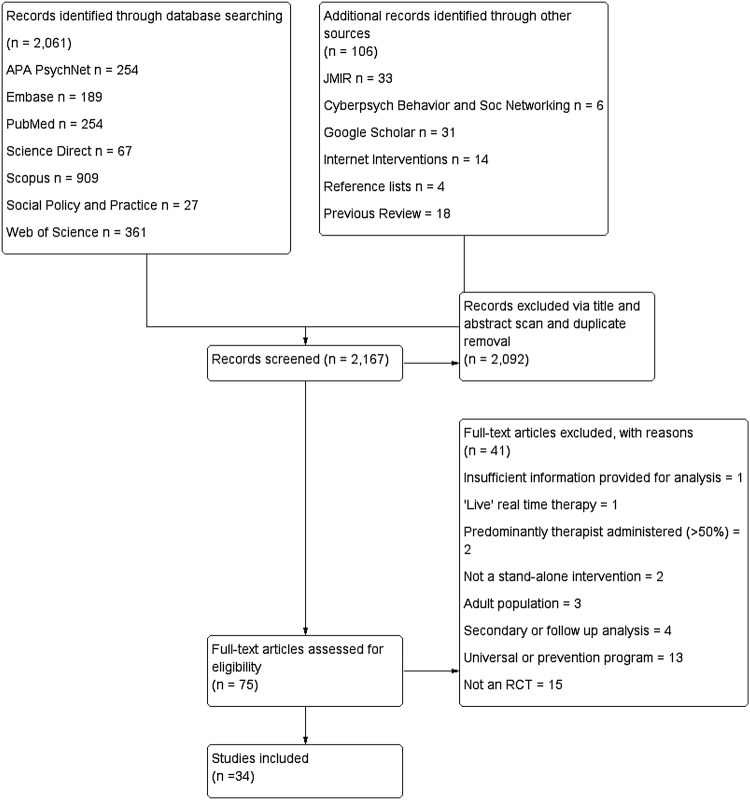
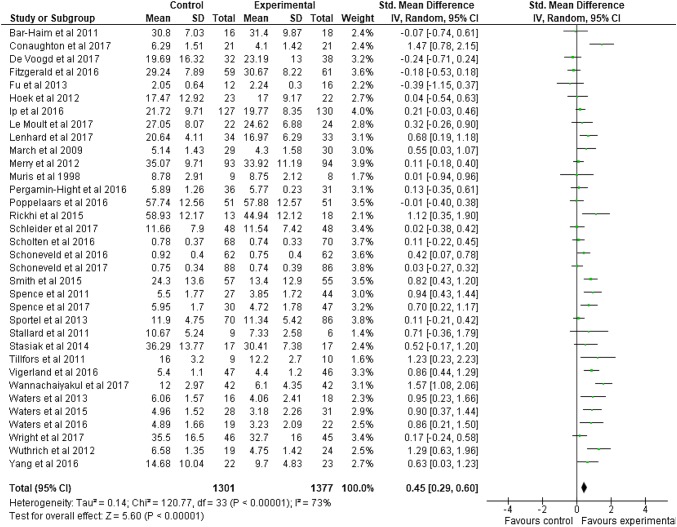
Depression and anxiety are common during adolescence. Whilst effective interventions are available treatment services are limited resulting in many adolescents being unable to access effective help. Delivering mental health interventions via technology, such as computers or the internet, offers one potential way to increase access to psychological treatment. The aim of this systematic review and meta-analysis was to update previous work and investigate the current evidence for the effect of technology delivered interventions for children and adolescents (aged up to 18 years) with depression and anxiety. A systematic search of eight electronic databases identified 34 randomized controlled trials involving 3113 children and young people aged 6-18. The trials evaluated computerized and internet cognitive behavior therapy programs (CBT: n = 17), computer-delivered attention bias modification programs (ABM: n = 8) cognitive bias modification programs (CBM: n = 3) and other interventions (n = 6). Our results demonstrated a small effect in favor of technology delivered interventions compared to a waiting list control group: g = 0.45 [95% CI 0.29, 0.60] p < 0.001. CBT interventions yielded a medium effect size (n = 17, g = 0.66 [95% CI 0.42-0.90] p < 0.001). ABM interventions yielded a small effect size (n = 8, g = 0.41 [95%CI 0.08-0.73] p < 0.01). CBM and 'other' interventions failed to demonstrate a significant benefit over control groups. Type of control condition, problem severity, therapeutic support, parental support, and continuation of other ongoing treatment significantly influenced effect sizes. Our findings suggest there is a benefit in using CBT based technology delivered interventions where access to traditional psychotherapies is limited or delayed.
Overview
The claims and statistics of this paper haven’t been checked yet.
Free: it reads the open-access text and checks the first 5 claims that cite a source we can check. Create a free account to check every claim.
Integrity signals
Registry
Cites
Statistics
Figures
Verification
Claims the paper makes
The claims and statistics of this paper haven’t been checked yet.
Free: it reads the open-access text and checks the first 5 claims that cite a source we can check. Create a free account to check every claim.
Claims other papers make about this one
Each is checked against this paper’s own text: does it say what the citing paper says it does?
The source backs part of the claim, not all of it — or backs it for a different population, condition or comparison.
In the citing paper
“Furthermore, computerized CBT, such as MoodGym, SPARX, and “Think, Feel, Do” generally have small but positive effects on mental health.96 , 97”
From Rapid Systematic Review: The Impact of Social Isolation and Loneliness on the Mental Health of Children and Adolescents in the Context of COVID-19 (2020) · cites this paper as [97]
Experimental — accuracy not yet measuredThe source backs part of the claim, not all of it — or backs it for a different population, condition or comparison.
In the citing paper
“Although mobile applications for mental health have been found to be generally acceptable to children and adolescents, there is a lack of convincing evidence of effectiveness on intended mental health outcomes98 and few mobile health apps have been thoroughly tested.97”
From Rapid Systematic Review: The Impact of Social Isolation and Loneliness on the Mental Health of Children and Adolescents in the Context of COVID-19 (2020) · cites this paper as [97]
Experimental — accuracy not yet measuredThe source backs part of the claim, not all of it — or backs it for a different population, condition or comparison.
In the citing paper
“Importantly, reviews have tended to conclude that effects are better if there is some therapist input97 , 101 and if parents are involved especially for younger children.96 , 97”
From Rapid Systematic Review: The Impact of Social Isolation and Loneliness on the Mental Health of Children and Adolescents in the Context of COVID-19 (2020) · cites this paper as [97]
Experimental — accuracy not yet measuredThe source backs part of the claim, not all of it — or backs it for a different population, condition or comparison.
In the citing paper
“Mental health interventions provided on a computer or via the Internet, which we will henceforth denote as e-mental health interventions, have acquired a solid empirical basis for the prevention and treatment of various psychological conditions in adults, including depression (Buntrock et al., 2016; Karyotaki et al., 2017), anxiety (Grist et al., 2019), and alcohol use (Riper et al., 2018).”
From The effect of e-mental health interventions on academic performance in university and college students: A meta-analysis of randomized controlled trials (2020) · cites this paper as Grist et al., 2019
Experimental — accuracy not yet measuredThe cited source says what the claim attributes to it.
In the citing paper
“A meta-analysis including 34 RCTs (17 of which were CBT-based) found that CBT-based DHIs yielded a medium effect size for reducing symptoms of depression and anxiety.45”
From Mixed-methods feasibility outcomes for a novel ACT-based video game ‘ACTing Minds’ to support mental health (2024) · cites this paper as [45]
Self-check
Percentages, sums and reported differences re-computed from the paper’s own numbers.
The self-check needs the paper’s full text.
Citations
Cites
The Efficacy of Cognitive Behavioral Therapy: A Review of Meta-analyses
Hofmann, S. G., Asnaani, A., Vonk, I. J. J., Sawyer, A. T., & Fang, A. (2012) · Cognitive Therapy and Research · doi:10.1007/s10608-012-9476-1 · Cited by 3,445
Childhood and adolescent depression: a review of the past 10 years, Part I
BIRMAHER, B., RYAN, N. D., WILLIAMSON, D. E., BRENT, D. A., KAUFMAN, J., DAHL, R. E., PEREL, J., & NELSON, B. (1996) · Journal of the American Academy of Child & Adolescent Psychiatry · doi:10.1097/00004583-199611000-00011 · Cited by 2,076
Kim-Cohen, J., Caspi, A., Moffitt, T. E., Harrington, H., Milne, B. J., & Poulton, R. (2003) · Archives of General Psychiatry · doi:10.1001/archpsyc.60.7.709 · Cited by 2,025
Merikangas, K. R., He, J.-P., Burstein, M., Swendsen, J., Avenevoli, S., Case, B., Georgiades, K., Heaton, L., Swanson, S., & Olfson, M. (2011) · Journal of the American Academy of Child & Adolescent Psychiatry · doi:10.1016/j.jaac.2010.10.006 · Cited by 1,579
Computer-based psychological treatments for depression: A systematic review and meta-analysis
Richards, D., & Richardson, T. (2012) · Clinical Psychology Review · doi:10.1016/j.cpr.2012.02.004 · Cited by 1,442
Cognitive Behavioral Therapy, Sertraline, or a Combination in Childhood Anxiety
Walkup, J. T., Albano, A. M., Piacentini, J., Birmaher, B., Compton, S. N., Sherrill, J. T., Ginsburg, G. S., Rynn, M. A., McCracken, J., Waslick, B., et al. (2008) · New England Journal of Medicine · doi:10.1056/nejmoa0804633 · Cited by 1,442
“The Medical Journal of Australia”
(1923) · Medical Journal of Australia · doi:10.5694/j.1326-5377.1923.tb64467.x · Cited by 1,439
Internet-Based and Other Computerized Psychological Treatments for Adult Depression: A Meta-Analysis
Andersson, G., & Cuijpers, P. (2009) · Cognitive Behaviour Therapy · doi:10.1080/16506070903318960 · Cited by 1,368
Andrews, G., Cuijpers, P., Craske, M. G., McEvoy, P., & Titov, N. (2010) · PLoS ONE · doi:10.1371/journal.pone.0013196 · Cited by 1,311
Youth Suicide Risk and Preventive Interventions: A Review of the Past 10 Years
GOULD, M. S., GREENBERG, T., VELTING, D. M., & SHAFFER, D. (2003) · Journal of the American Academy of Child & Adolescent Psychiatry · doi:10.1097/01.chi.0000046821.95464.cf · Cited by 1,264
Cited by
Loades, M. E., Chatburn, E., Higson-Sweeney, N., Reynolds, S., Shafran, R., Brigden, A., Linney, C., McManus, M. N., Borwick, C., & Crawley, E. (2020) · Journal of the American Academy of Child & Adolescent Psychiatry · doi:10.1016/j.jaac.2020.05.009 · Cited by 2,906
“Although mobile applications for mental health have been found to be generally acceptable to children and adolescents, there is a lack of convincing evidence of effectiveness on intended mental health outcomes(98) and few mobile health apps have been thoroughly tested.(97) Self-help interventions including bibliothera…”
BackgroundMethodTorous, J., Bucci, S., Bell, I. H., Kessing, L. V., Faurholt‐Jepsen, M., Whelan, P., Carvalho, A. F., Keshavan, M., Linardon, J., & Firth, J. (2021) · World Psychiatry · doi:10.1002/wps.20883 · Cited by 1,199
Hossain, M. M., Sultana, A., & Purohit, N. (2020) · doi:10.31234/osf.io/dz5v2 · Cited by 741
(2020) · doi:10.4178/epih.e2020038 · Cited by 741
Lehtimaki, S., Martic, J., Wahl, B., Foster, K. T., & Schwalbe, N. (2021) · JMIR Mental Health · doi:10.2196/25847 · Cited by 488
“In another systematic review, Grist et al [42] found a significant effect of therapist support (Cochran Q=27.28; P<.001) and parental involvement (Cochran Q=24.43; P<.001).”
BackgroundInfluentialAn overview of and recommendations for more accessible digital mental health services
Lattie, E. G., Stiles-Shields, C., & Graham, A. K. (2022) · Nature Reviews Psychology · doi:10.1038/s44159-021-00003-1 · Cited by 446
Philippe, T. J., Sikder, N., Jackson, A., Koblanski, M. E., Liow, E., Pilarinos, A., & Vasarhelyi, K. (2022) · JMIR Mental Health · doi:10.2196/35159 · Cited by 436
Liverpool, S., Mota, C. P., Sales, C. M. D., Čuš, A., Carletto, S., Hancheva, C., Sousa, S., Cerón, S. C., Moreno-Peral, P., Pietrabissa, G., et al. (2020) · Journal of Medical Internet Research · doi:10.2196/16317 · Cited by 408
“For some specific conditions such as social anxiety, selective mutism, autism spectrum disorders, and attention-deficit conditions, the involvement of digitized programs in the preliminary phase of therapy may be an important facilitator for therapeutic success [91,92].”
Review: Alleviating loneliness in young people – a meta‐analysis of interventions
Eccles, A. M., & Qualter, P. (2021) · Child and Adolescent Mental Health · doi:10.1111/camh.12389 · Cited by 285
Badawy, S. M., & Radovic, A. (2020) · JMIR Pediatrics and Parenting · doi:10.2196/20049 · Cited by 242
“in children and adolescents compared to waitlist control groups [42].”
BackgroundRauschenberg, C., Schick, A., Hirjak, D., Seidler, A., Paetzold, I., Apfelbacher, C., Riedel-Heller, S. G., & Reininghaus, U. (2021) · Journal of Medical Internet Research · doi:10.2196/23365 · Cited by 205
“Importantly, effectiveness has been demonstrated across differing age groups, including adults [24,54,59] and adolescents from the general population [34,52,56,61-63], and effect sizes mostly ranged from small to medium.”
BackgroundHards, E., Loades, M. E., Higson‐Sweeney, N., Shafran, R., Serafimova, T., Brigden, A., Reynolds, S., Crawley, E., Chatburn, E., Linney, C., et al. (2022) · British Journal of Clinical Psychology · doi:10.1111/bjc.12331 · Cited by 162
Christ, C., Schouten, M. J., Blankers, M., van Schaik, D. J., Beekman, A. T., Wisman, M. A., Stikkelbroek, Y. A., & Dekker, J. J. (2020) · Journal of Medical Internet Research · doi:10.2196/17831 · Cited by 148
“Our results are largely in line with those of previous studies on cCBT in children and young people aged up to 25 years [36], adolescents and young adults aged 12 to 25 years [37] and 10 to 25 years [43], and children and adolescents aged up to 18 years [44].”
BackgroundResultInfluentialProviding Human Support for the Use of Digital Mental Health Interventions: Systematic Meta-review
Werntz, A., Amado, S., Jasman, M., Ervin, A., & Rhodes, J. E. (2023) · Journal of Medical Internet Research · doi:10.2196/42864 · Cited by 158
“Six of those meta-analyses suggested that supported DMHIs result in significantly lower mental health symptoms compared with unsupported DMHIs [5,52,58,62,68,72].”
Using Peer Support to Strengthen Mental Health During the COVID-19 Pandemic: A Review
Suresh, R., Alam, A., & Karkossa, Z. (2021) · Frontiers in Psychiatry · doi:10.3389/fpsyt.2021.714181 · Cited by 182
Sharma, S., Hucker, A., Matthews, T., Grohmann, D., & Laws, K. R. (2021) · BMC Psychology · doi:10.1186/s40359-021-00658-8 · Cited by 109
“This includes when delivered in adapted formats such as briefer treatment protocols [14] and e-health [15, 16].”
MethodCraig, S. L., Leung, V. W. Y., Pascoe, R., Pang, N., Iacono, G., Austin, A., & Dillon, F. (2021) · International Journal of Environmental Research and Public Health · doi:10.3390/ijerph18041541 · Cited by 104
“Similarly, digital interventions that utilise CBT have been found to significantly reduce depression in youth and young adults [42], and a metaanalysis of 48 digital interventions on the depression of college students found small effect sizes [54].”
BackgroundAschbrenner, K. A., Naslund, J. A., Tomlinson, E. F., Kinney, A., Pratt, S. I., & Brunette, M. F. (2019) · Frontiers in Public Health · doi:10.3389/fpubh.2019.00178 · Cited by 99
Lindqvist, K., Mechler, J., Carlbring, P., Lilliengren, P., Falkenström, F., Andersson, G., Johansson, R., Edbrooke-Childs, J., Dahl, H.-S. J., Lindert Bergsten, K., et al. (2020) · Journal of Medical Internet Research · doi:10.2196/18047 · Cited by 93
“However, few studies have specifically targeted adolescent and/or childhood depression, and the ones that exist have shown a mixed pattern of findings [11-13].”
BackgroundTopooco, N., Byléhn, S., Dahlström Nysäter, E., Holmlund, J., Lindegaard, J., Johansson, S., Åberg, L., Bergman Nordgren, L., Zetterqvist, M., & Andersson, G. (2019) · Journal of Medical Internet Research · doi:10.2196/13393 · Cited by 90
“The influence of support on outcomes in computer and Web-based intervention for youth depression and anxiety, however, was recently reported in a meta-analysis by Grist et al [33], in line with results for ICBT with adult populations.”
ResultBolinski, F., Boumparis, N., Kleiboer, A., Cuijpers, P., Ebert, D. D., & Riper, H. (2020) · Internet Interventions · doi:10.1016/j.invent.2020.100321 · Cited by 87
“…denote as e-mental health interventions, have acquired a solid empirical basis for the prevention and treatment of various psychological conditions in adults, including depression (Buntrock et al., 2016; Karyotaki et al., 2017), anxiety (Grist et al., 2019), and alcohol use (Riper et al., 2018).”
BackgroundHaig-Ferguson, A., Cooper, K., Cartwright, E., Loades, M. E., & Daniels, J. (2021) · Behavioural and Cognitive Psychotherapy · doi:10.1017/s1352465820000636 · Cited by 84
“There is evidence that involvement of parents in online CBT programmes produces significantly larger effect sizes than programmes that do not involve parents (Grist et al., 2018).”
BackgroundGamifying CBT to deliver emotional health treatment to young people on smartphones
Christie, G. I., Shepherd, M., Merry, S. N., Hopkins, S., Knightly, S., & Stasiak, K. (2019) · Internet Interventions · doi:10.1016/j.invent.2019.100286 · Cited by 81
Achilles, M. R., Anderson, M., Li, S. H., Subotic-Kerry, M., Parker, B., & O’Dea, B. (2020) · DIGITAL HEALTH · doi:10.1177/2055207620926064 · Cited by 80
“A recent review examining the effectiveness of e-mental health interventions for young people identified that all programmes failed to use or report Participatory Design methods.(10) Ignoring the end user or assuming what they need may result in programme designers inadvertently including features that are: mismatched…”
BackgroundO’Dea, B., Han, J., Batterham, P. J., Achilles, M. R., Calear, A. L., Werner‐Seidler, A., Parker, B., Shand, F., & Christensen, H. (2020) · Journal of Child Psychology and Psychiatry · doi:10.1111/jcpp.13294 · Cited by 77
Hossain, M. M., Sultana, A., & Purohit, N. (2020) · SSRN Electronic Journal · doi:10.2139/ssrn.3561265 · Cited by 133
Boldt, K., Coenen, M., Movsisyan, A., Voss, S., Rehfuess, E., Kunzler, A. M., Lieb, K., & Jung-Sievers, C. (2021) · International Journal of Environmental Research and Public Health · doi:10.3390/ijerph18052361 · Cited by 72
“The efficacy of the latter in the reduction of symptoms of anxiety and depression in pediatric populations was recently reviewed, showing a medium effect size of internet-based CBT compared to waitlist control groups [36].”
BackgroundKomariah, M., Amirah, S., Faisal, E. G., Prayogo, S. A., Maulana, S., Platini, H., Suryani, S., Yosep, I., & Arifin, H. (2022) · Healthcare · doi:10.3390/healthcare10071224 · Cited by 70
“compared the effectiveness of guided online and face-to-face CBT among patients with somatic psychiatric disorders and concluded that the face-to-face therapist is not as crucial as stated in various literature [53,54].”
BackgroundRice, S., O'Bree, B., Wilson, M., McEnery, C., Lim, M. H., Hamilton, M., Gleeson, J., Bendall, S., D'Alfonso, S., Russon, P., et al. (2020) · Internet Interventions · doi:10.1016/j.invent.2020.100323 · Cited by 67
“In a meta-analysis conducted by Grist et al. (2019), four studies were reported that delivered an online intervention specifically targeting SAD in young people, with effect sizes ranging from 0.11 to 1.23.”
BackgroundResultInfluentialReynard, S., Dias, J., Mitić, M., Schrank, B., & Woodcock, K. A. (2022) · JMIR Serious Games · doi:10.2196/31456 · Cited by 112
“Mental health digital interventions for youth have attracted a number of recent systematic reviews and meta-analyses [12,35-37].”
BackgroundGonsalves, P. P., Hodgson, E. S., Bhat, B., Sharma, R., Jambhale, A., Michelson, D., & Patel, V. (2021) · Evidence Based Mental Health · doi:10.1136/ebmental-2020-300194 · Cited by 64
Brigden, A., Anderson, E., Linney, C., Morris, R., Parslow, R., Serafimova, T., Smith, L., Briggs, E., Loades, M., & Crawley, E. (2020) · Journal of Medical Internet Research · doi:10.2196/16924 · Cited by 63
“These potential disadvantages [31,32] should be carefully considered when planning and designing digital interventions.”
BackgroundBear, H. A., Ayala‐Nunes, L., Ramos, G., Manchanda, T., Fernandes, B., Chabursky, S., Walper, S., Watkins, E. R., & Fazel, M. S. (2024) · Journal of Medical Internet Research · doi:10.2196/48964 · Cited by 79
“Several systematic reviews and meta-analyses have demonstrated that app-based mental health interventions with a human-support component are more effective and more acceptable than stand-alone, fully automatized, or self-administered apps [13,25,81].”
Li, J., Li, Y., Hu, Y., Ma, C. F., Mei, X., Chan, E. A., & Yorke, J. (2025) · Worldviews on Evidence-Based Nursing · doi:10.1111/wvn.70059 · Cited by 87
“In contrast to the attrition rate of 36% in technology-delivered interventions for children and adolescents with depression and anxiety (Grist et al. 2019), most reviewed studies ( n = 18) reported attrition rates below 30%, suggesting the general feasibility of chatbot-delivered interventions in…”
Wickersham, A., Barack, T., Cross, L., & Downs, J. M. (2022) · Journal of Medical Internet Research · doi:10.2196/29842 · Cited by 78
“More recently, Grist et al [19] stratified their meta-analysis by age group but did not differentiate cCBT from other technological interventions in doing so.”
BackgroundMethodChen, T., Ou, J., Li, G., & Luo, H. (2024) · Frontiers in Psychology · doi:10.3389/fpsyg.2024.1356554 · Cited by 101
COVID-19 and mental health disorders in children and adolescents (Review)
Bai, M., Miao, C., Zhang, Y., Xue, Y., Jia, F., & Du, L. (2022) · Psychiatry Research · doi:10.1016/j.psychres.2022.114881 · Cited by 65
“CBT is primarily conducted through face-to-face communication, but can also be conducted through virtual networks (Grist et al., 2019; Välimäki et al., 2017).”
BackgroundMoeini, B., Bashirian, S., Soltanian, A. R., Ghaleiha, A., & Taheri, M. (2019) · PubMed Central · Cited by 67
The Association between Interparental Conflict and Youth Anxiety: A Three-level Meta-analysis
Ran, G., Niu, X., Zhang, Q., Li, S., Liu, J., Chen, X., & Wu, J. (2021) · Journal of Youth and Adolescence · doi:10.1007/s10964-020-01388-7 · Cited by 70
Fordham, B., Sugavanam, T., Edwards, K., Hemming, K., Howick, J., Copsey, B. J., Lee, H., Kaidesoja, M., Kirtley, S., Hopewell, S., et al. (2021) · Health Technology Assessment · doi:10.3310/hta25090 · Cited by 69
Self-citationDigital Mental Health Interventions for Young People Aged 16-25 Years: Scoping Review
Potts, C., Kealy, C., McNulty, J. M., Madrid‐Cagigal, A., Wilson, T., Mulvenna, M. D., O’Neill, S. M., Donohoe, G. J., & Barry, M. M. (2025) · Journal of Medical Internet Research · doi:10.2196/72892 · Cited by 75
“Many reviews have been undertaken to evaluate the wide range of digital mental health supports that are accessible, but there is a dearth of up-to-date reviews, with many published in 2021 or earlier, thus failing to consider the change in the digital world since COVID-19 [20,32-35].”
Craig, S. L., Iacono, G., Pascoe, R. V., & Austin, A. (2021) · Clinical Social Work Journal · doi:10.1007/s10615-021-00796-x · Cited by 57
Mechler, J., Lindqvist, K., Carlbring, P., Topooco, N., Falkenström, F., Lilliengren, P., Andersson, G., Johansson, R., Midgley, N., Edbrooke-Childs, J., et al. (2022) · The Lancet Digital Health · doi:10.1016/s2589-7500(22)00095-4 · Cited by 48
“4,5 8 Grist and colleagues 9 reported that CBT-based interventions were more effective than treatments based on other approaches, and that therapist-guided interventions showed larger effects than self-guided programmes for children and adolescents.”
BackgroundMethodWerner‐Seidler, A., Huckvale, K., Larsen, M. E., Calear, A. L., Maston, K., Johnston, L., Torok, M. H., O’Dea, B., Batterham, P. J., Schweizer, S., et al. (2020) · Trials · doi:10.1186/s13063-019-3901-7 · Cited by 62
Evidence-based practice in cognitive–behavioural therapy
Stallard, P. (2022) · Archives of Disease in Childhood · doi:10.1136/archdischild-2020-321249 · Cited by 46
Self-citationConley, C. S., Raposa, E. B., Bartolotta, K., Broner, S. E., Hareli, M., Forbes, N., Christensen, K. M., & Assink, M. (2022) · JMIR Mental Health · doi:10.2196/34254 · Cited by 63
“Reviews of TDIs and mTDIs have generally found that effects are largest when they are compared with no-intervention or wait-list groups and smaller when compared with groups that are more active and clinically potent [42,52,58,60,62,69-71].”
BackgroundResultInfluentialJohn, A., Lee, S. C., Solomon, S., Crepaz-Keay, D., McDaid, S., Morton, A., Davidson, G., Van Bortel, T., & Kousoulis, A. A. (2021) · BMJ Open · doi:10.1136/bmjopen-2020-048123 · Cited by 45
Williams, J., & Pykett, J. (2022) · Social Science & Medicine · doi:10.1016/j.socscimed.2022.114802 · Cited by 60
Ferrari, M., Sabetti, J., McIlwaine, S. V., Fazeli, S., Sadati, S. M. H., Shah, J. L., Archie, S., Boydell, K., Lal, S., Henderson, J. L., et al. (2022) · Frontiers in Digital Health · doi:10.3389/fdgth.2022.814248 · Cited by 65
Eilert, N., Wogan, R., Leen, A., & Richards, D. (2022) · JMIR Pediatrics and Parenting · doi:10.2196/33551 · Cited by 43
“68 [21,22]) but more in line with equivalent comparisons against active control groups (Hedges g=0.”
BackgroundMethodInfluentialOnline Support and Intervention for Child Anxiety (OSI): Development and Usability Testing
Hill, C., Reardon, T., Taylor, L., & Creswell, C. (2022) · JMIR Formative Research · doi:10.2196/29846 · Cited by 43
“Internet-based cognitive behavioral therapy (iCBT) for child anxiety is effective and acceptable within research settings [5,6]; however, user engagement, uptake, and adherence remain as challenges within routine clinical practice [7-9].”
BackgroundLitvin, S., Saunders, R., Jefferies, P., Seely, H., Pössel, P., & Lüttke, S. (2023) · JMIR Mental Health · doi:10.2196/47285 · Cited by 43
“Although numerous systematic reviews have found that DHIs for young people were effective when they incorporated some sort of human support [4,6,9,19], such as professional feedback or a live link to a professional, their superiority over unguided DHI approaches [20] has not been confirmed conclusively.”
BackgroundInfluentialLudlow, K., Russell, J. K., Ryan, B., Brown, R. L., Joynt, T., Uhlmann, L. R., Smith, G. E., Donovan, C., Hides, L., Spence, S. H., et al. (2023) · DIGITAL HEALTH · doi:10.1177/20552076231216410 · Cited by 42
“34 While Bevan Jones and colleagues ’ 2020 review of co-designed youth digital mental health technologies found 25 research articles (reporting on 30 DMHIs) that had involved children and young people (aged 8 – 27 years) in the design of the intervention, only fi ve involved children under the age…”
BackgroundText Message Interventions in Adolescent Mental Health and Addiction Services: Scoping Review
MacDougall, S., Jerrott, S., Clark, S., Campbell, L. A., Murphy, A., & Wozney, L. (2021) · JMIR Mental Health · doi:10.2196/16508 · Cited by 45
“Mental health systems facing these challenges increasingly look to advancements in information and communications technologies to augment provider capacity, promote healthy behavior and lifestyle changes, and overcome barriers that limit help-seeking [18,19].”
BackgroundInterventions for Young Children’s Mental Health: A Review of Reviews
Hudson, J. L., Minihan, S., Chen, W., Carl, T., Fu, M., Tully, L. A., Kangas, M., Rosewell, L., McDermott, E. A., Wang, Y., et al. (2023) · Clinical Child and Family Psychology Review · doi:10.1007/s10567-023-00443-6 · Cited by 61
“In further support of this effect, two additional reviews reported that CBT delivered stronger effects (moderate effect sizes) compared to non-CBT interventions (Grist et al., 2019; Reynolds et al., 2012).”
BackgroundResultInfluentialLi, S. H., Achilles, M. R., Spanos, S., Habak, S., Werner-Seidler, A., & O’Dea, B. (2022) · The Cognitive Behaviour Therapist · doi:10.1017/s1754470x22000095 · Cited by 39
“Given young people’s ever-evolving digital needs and preferences, and the paucity of CBT smartphone apps developed for and evaluated among adolescents and other key stakeholders (Buttazzoni et al., 2021; Grist et al., 2019), we aimed to create a new smartphone app (called ClearlyMe) that delivers CBT to reduce elevate…”
BackgroundMethodTuerk, P. W., Schaeffer, C. M., Mcguire, J. F., Larsen, M. A., Capobianco, N. B., & Piacentini, J. C. (2019) · Current Psychiatry Reports · doi:10.1007/s11920-019-1092-2 · Cited by 35
Digital technologies to support adolescents with depression and anxiety: review
Jones, R. B., Hussain, F., Agha, S. S., Weavers, B., Lucassen, M. F. G., Merry, S., Stallard, P. N., Simpson, S. A., & Rice, F. J. (2022) · BJPsych Advances · doi:10.1192/bja.2022.3 · Cited by 49
“Reviews suggest that digital CBT interventions are particularly promising (Grist 2019) and, as noted earlier, NICE guidelines have cited three digital CBT technologies (SPARX, Stressbusters, Grasp the Opportunity) for mild depression (NICE 2019).”
BackgroundSelf-citationTopooco, N., Fowler, L. A., Fitzsimmons‐Craft, E. E., DePietro, B., Vázquez, M. M., Firebaugh, M., Ceglarek, P. J. D., Monterubio, G. E., Newman, M. G., Eisenberg, D., et al. (2022) · Internet Interventions · doi:10.1016/j.invent.2022.100528 · Cited by 69
Liverpool, S., Donagh, C. M., Feather, J., Uzondu, C., Howarth, M. L., Bannerman, F., Kaehne, A., Foster, C., & Mateus, C. (2025) · European Child & Adolescent Psychiatry · doi:10.1007/s00787-025-02722-9 · Cited by 53
“%) focused on anxiety and or depression only [30, 59, 69, 73, 76, 78, 79, 81, 83–86, 88, 92, 95, 97, 101, 104–107].”
Opie, J. E., Vuong, A. T., Welsh, E. T., Gray, R. J., Pearce, N., Marchionda, S., Mutch, R., & Khalil, H. (2024) · Clinical Child and Family Psychology Review · doi:10.1007/s10567-024-00469-4 · Cited by 45
Babbage, C. M., Jackson, G. M., Davies, E. B., & Nixon, E. (2022) · JMIR Mental Health · doi:10.2196/25716 · Cited by 44
“Through the focus on young people with perceived reduced well-being, not excluding controlled pre-post studies and the inclusion of only digital self-administered interventions, this review will expand the scope of both studies by Bennett et al [16] and Grist et al [36].”
BackgroundMethodInfluentialRadomski, A. D., Bagnell, A., Curtis, S., Hartling, L., & Newton, A. S. (2020) · JMIR Mental Health · doi:10.2196/15795 · Cited by 30
“Internet-based CBT (iCBT), with its self-help format, can increase the access and availability of CBT for adolescents with mild-to-moderate anxiety [10,11].”
Midgley, N., Guerrero-Tates, B., Mortimer, R., Edbrooke-Childs, J. H., Mechler, J., Lindqvist, K., Hajkowski, S. J., Leibovich, L., Martin, P., Andersson, G., et al. (2021) · International Journal of Environmental Research and Public Health · doi:10.3390/ijerph182412993 · Cited by 33
Dülsen, P., & Baumeister, H. (2024) · European Child & Adolescent Psychiatry · doi:10.1007/s00787-024-02404-y · Cited by 37
“Integrating the present findings into the literature, we confirmed a moderate effect in comparison to passive control groups also for samples up to 18 years [ 27 ].”
InfluentialSanderson, C., Kouzoupi, N., & Hall, C. L. (2020) · Child and Adolescent Mental Health · doi:10.1111/camh.12385 · Cited by 32
Listernick, Z. I., & Badawy, S. M. (2021) · Pediatric Health Medicine and Therapeutics · doi:10.2147/phmt.s315887 · Cited by 30
“recently studied and found to be effective in patients with both anxiety and depression.(49) More importantly, it has shown to be equivalent to in-person CBT treatment.”
BackgroundThabrew, H., Stasiak, K., Kumar, H., Naseem, T., FRAMPTON, C. M. A., & Merry, S. (2021) · JMIR Serious Games · doi:10.2196/26084 · Cited by 31
“…interventions, such as Smart, Positive, Active, Realistic, X-Factor Thoughts (60%), Cool Kids online (75%), and BRAVE online (85%), and a recent systematic review that identified a mean rate of completion of 64% for technologically delivered interventions for childhood anxiety and depression [42].”
Chan, M., Jiang, Y., Lee, C. Y. C., Ramachandran, H. J., Teo, J. Y. C., Seah, C. W. A., Lin, Y., & Wang, W. (2022) · Journal of Clinical Nursing · doi:10.1111/jocn.16212 · Cited by 20
Noh, D., & Kim, H. (2023) · Prevention Science · doi:10.1007/s11121-022-01443-8 · Cited by 24
“43 (Grist et al., 2019)) and on internet and computer-based CBTs (g = 0.”
BackgroundSemerci, R., Özbay, Ö., Özbay, S. Ç., & Sarıkahya, S. D. (2025) · European Journal of Pediatrics · doi:10.1007/s00431-025-06435-8 · Cited by 26
“In light of recent findings that link increased AI usage to concerns such as reduced self-regulation and heightened anxiety [55, 56], the scale developed here enables the early identification of students at risk of cognitive overload or ethical disengagement.”
Wisman, M. A., Emmelkamp, J., Dekker, J., & Christ, C. (2022) · Internet Interventions · doi:10.1016/j.invent.2022.100596 · Cited by 39
Hugh‐Jones, S., Ulor, M. N., Nugent, T., Walshe, S., & Kirk, M. (2023) · Mental Health & Prevention · doi:10.1016/j.mhp.2023.200265 · Cited by 31
Csirmaz, L., Nagy, T., Vikor, F., & Kasos, K. (2023) · Journal of Prevention · doi:10.1007/s10935-023-00760-0 · Cited by 38
“Grist et al. (2019) in their meta-analysis, found that parental and therapist involvement had an impact on technology delivered therapy outcomes.”
BackgroundJenness, J. L., Lambert, H. K., Bitrán, D., Blossom, J. B., Nook, E. C., Sasse, S. F., Somerville, L. H., & McLaughlin, K. A. (2021) · Research on Child and Adolescent Psychopathology · doi:10.1007/s10802-020-00751-3 · Cited by 27
Hang, Y., Zhang, G., Wang, C., Zhang, N., & Liu, G. (2021) · Psychiatry Research · doi:10.1016/j.psychres.2021.113896 · Cited by 28
Mortimer, R., Somerville, M. P., Mechler, J., Lindqvist, K., Leibovich, L., Guerrero-Tates, B., Edbrooke-Childs, J. H., Martin, P., & Midgley, N. (2022) · Clinical Child Psychology and Psychiatry · doi:10.1177/13591045221081193 · Cited by 27
Huffman, L. G., Lawrence‐Sidebottom, D., Huberty, J., Roots, M., Roots, K., Parikh, A., Guerra, R., & Weiser, J. (2023) · JMIR Pediatrics and Parenting · doi:10.2196/46154 · Cited by 24
“Hollis et al [12] and Grist et al [13] found that the involvement of a therapist or caregiver in the patient’s treatment plan significantly increases the therapeutic effects.”
BackgroundPsychological eHealth interventions for people with intellectual disabilities: A scoping review
Oudshoorn, C. E. M., Frielink, N., Nijs, S. L. P., & Embregts, P. J. C. M. (2021) · Journal of Applied Research in Intellectual Disabilities · doi:10.1111/jar.12877 · Cited by 29
Díaz‐Caneja, C. M., Babarro, J. M., Abregú-Crespo, R., Huete-Diego, M. Á., Giménez‐Dasí, M., Serrano-Marugán, I., & Arango, C. (2021) · Frontiers in Pediatrics · doi:10.3389/fped.2021.628984 · Cited by 38
Alagarajah, J., Ceccolini, D., & Butler, S. (2024) · Cambridge Prisms Global Mental Health · doi:10.1017/gmh.2024.71 · Cited by 28
“Although associated with improved treatment efficacy, implementation of an intervention with external support may be inappropriate in resource-constrained LMIC contexts (Grist et al., 2019).”
BackgroundInsomnia Interventions in the Workplace: A Systematic Review and Meta-Analysis
Vega‐Escaño, J., Pórcel‐Gálvez, A. M., de Diego‐Cordero, R., Romero‐Sánchez, J. M., Romero‐Saldaña, M., & Barrientos‐Trigo, S. (2020) · International Journal of Environmental Research and Public Health · doi:10.3390/ijerph17176401 · Cited by 25
“Another meta-analysis in children and adolescents showed a benefit in using CBT-based technology (internet and computers) to reduce depression and anxiety [49].”
Schmidt, N. B., & Vereenooghe, L. (2021) · Behaviour Research and Therapy · doi:10.1016/j.brat.2021.103949 · Cited by 21
Crowley, T., Petinger, C., Azia, I. N., & van Wyk, B. E. (2023) · International Journal of Environmental Research and Public Health · doi:10.3390/ijerph20032464 · Cited by 27
“Systematic reviews have been conducted on the effectiveness of technology-enabled interventions for health promotion [15,17–20], prevention [21,22], mental health [23,24] and chronic conditions [10,14] amongst adolescents.”
BackgroundMiller, I., Peake, E., Strauss, G., Vierra, E., Koepsell, X., Shalchi, B., Padmanabhan, A., & Lake, J. (2023) · JMIR Formative Research · doi:10.2196/43260 · Cited by 19
“Preliminary data suggest that digital forms of CBT can be effective in the treatment of anxiety and depression in youth [20,21,26,29], although the available evidence in adolescents and young adults is limited.”
BackgroundMarinova, N., Rogers, T., & MacBeth, A. M. (2022) · Journal of Affective Disorders · doi:10.1016/j.jad.2022.05.058 · Cited by 20
Buelens, F., Luyten, P., Claeys, H., Assche, E. V., & Daele, T. V. (2023) · Internet Interventions · doi:10.1016/j.invent.2023.100670 · Cited by 18
“Furthermore, different meta-analyses have reported high dropout rates (Andersson et al., 2019; Grist et al., 2019; Jonsson et al., 2023).”
BackgroundCognitive training for mental health problems
Hallion, L. S., Hsu, K. J., & Schleider, J. L. (2024) · Nature Mental Health · doi:10.1038/s44220-023-00185-y · Cited by 24
Liu, C., Elhai, J. D., Montag, C., & Yang, H. (2024) · BMC Psychiatry · doi:10.1186/s12888-024-05938-2 · Cited by 25
“Although ABM can achieve intervention effects, some studies have not found significant differences when compared to control groups [18–21].”
ResultMental health interventions in adolescence
Campisi, S. C., Ataullahjan, A., Baxter, J. B., Szatmári, P., & Bhutta, Z. A. (2022) · Current Opinion in Psychology · doi:10.1016/j.copsyc.2022.101492 · Cited by 24
The Appa Health App for Youth Mental Health: Development and Usability Study
Giovanelli, A., Karver, T. S., Roundfield, K. D., Woodruff, S., Wierzba, C., Wolny, J., & Kaufman, M. R. (2023) · JMIR Formative Research · doi:10.2196/49998 · Cited by 21
“While this concept is novel, there is precedent for both the core concept of pairing human support with digital tools [21-23] and for mentors supporting the delivery of mental health interventions [11-16].”
BackgroundSteinberg, D. M., Schneider, N. M., Guler, J., Garcia, A. M., Kullgren, K. A., Agoston, A. M., Mudd, E., Carter, B. D., & Judd-Glossy, L. (2020) · Clinical Practice in Pediatric Psychology · doi:10.1037/cpp0000340 · Cited by 17
“The efficacy of telemedicine in outpatient pediatric psychology is well documented (Grist, Croker, Denne, & Stallard, 2019; Van Allen, Davis, & Lassen, 2011), and interventions have been effective in the care of children with a range of medical conditions, including diabetes, epilepsy, functional…”
Unpacking the active ingredients of internet-based psychodynamic therapy for adolescents
Leibovich, L., Mechler, J., Lindqvist, K., Mortimer, R., Edbrooke-Childs, J. H., & Midgley, N. (2022) · Psychotherapy Research · doi:10.1080/10503307.2022.2050829 · Cited by 17
“Internet-based psychotherapies, in general, have been found to be effective for treating depression both for adults and adolescents (e.g., Christ et al., 2020; Etzelmueller et al., 2020; Grist et al., 2019) and are considered to be a flexible, low-cost, and accessible option, therefore, overcoming some barriers to acc…”
BackgroundWalder, N., Frey, A., Berger, T., & Schmidt, S. J. (2025) · Journal of Medical Internet Research · doi:10.2196/67067 · Cited by 37
“Generally, the effect sizes are larger when DMHIs are compared with inactive control conditions (eg, waitlist) than with active control conditions [57,58].”
Yokomitsu, K., Irie, T., Sekiguchi, M., Shimizu, A., Matsuoka, H., Merry, S., & Stasiak, K. (2020) · JMIR Research Protocols · doi:10.2196/15164 · Cited by 17
“Additionally, a meta-analysis of RCTs to examine the effectiveness of technology-delivered interventions for depression and anxiety in children and adolescents showed an effect size of 0.45 compared to the wait-list group [37].”
InfluentialUtilisation of Digital Applications for Personal Recovery Amongst Youth with Mental Health Concerns
Dallinger, V. C., Krishnamoorthy, G., du Plessis, C., Pillai‐Sasidharan, A., Ayres, A. C., Waters, L., Groom, Y., Alston, O., Anderson, L., & Burton, L. J. (2022) · International Journal of Environmental Research and Public Health · doi:10.3390/ijerph192416818 · Cited by 20
“Youths that require MH support are least likely to seek it [9,10].”
BackgroundJenness, J. L., Bhattacharya, A., Kientz, J. A., Munson, S. A., & Nagar, R. (2022) · Behaviour Research and Therapy · doi:10.1016/j.brat.2022.104065 · Cited by 14
At-Home use of App-Based Mindfulness for Children: A Randomized Active-Controlled Trial
Treves, I. N., Olson, H. A., Ozernov‐Palchik, O., Li, C. E., Wang, K. L., Arechiga, X. M., Goldberg, S. B., & Gabrieli, J. D. E. (2023) · Mindfulness · doi:10.1007/s12671-023-02231-3 · Cited by 23
“…of 71 digital health interventions in children and adolescents found good retention (Liverpool et al., 2020), and another review identified improvements in mental health outcomes (e.g., depression and anxiety) (Grist et al., 2019) (although many of these interventions are internet-based CBT).”
BackgroundHollis, C. P., Hall, C. L., Khan, K., Novere, M. L., Marston, L., Jones, R., Hunter, R. M., Brown, B. J., Sanderson, C., Andrén, P., et al. (2023) · Health Technology Assessment · doi:10.3310/cpms3211 · Cited by 17
Do, R., Lee, S. Y., Kim, J.-S., Cho, M., Shin, H., Jang, M., & Shin, M. (2020) · Journal of Affective Disorders · doi:10.1016/j.jad.2020.12.177 · Cited by 18
Metadata
- Authors
- Grist, R., Croker, A., Denne, M., & Stallard, P.
- Affiliations
- University of Bath (GB)
- Oxford Health NHS Foundation Trust (GB)
- Corresponding author
- Grist, Rebecca
- Venue
- Clinical Child and Family Psychology Review
- Published
- 2018-09-18
- Volume
- 22
- Issue
- 2
- Pages
- 147-171
- ISSN
- 1096-4037 (ISSN-L)
- 1573-2827
- PMC
- PMC6479049
- OpenAlex
- W2892325292
- Cited by
- 287
- References
- 101
- Citations by year
- 2026: 19 · 2025: 30 · 2024: 51 · 2023: 50 · 2022: 53 · 2021: 41 · 2020: 33 · 2019: 9
- FWCI
- 2.82
- Type
- journal article
- Language
- en
- Open access
- hybrid
- doi.org
- Licence
- cc-by
- creativecommons.org/licenses/by/4.0 (tdm)
- Locations
- Clinical Child and Family Psychology Review (publishedVersion, cc-by)
- PubMed Central (publishedVersion, cc-by)
- PubMed (publishedVersion)
- University of Brighton Repository (University of Brighton) (publishedVersion, cc-by)
- University of Brighton Repository (University of Brighton) (submittedVersion, other-oa)
- Topics
- Social Sciences › Psychology › Applied Psychology › Digital Mental Health Interventions
- Social Sciences › Psychology › Experimental and Cognitive Psychology › Anxiety, Depression, Psychometrics, Treatment, Cognitive Processes
- Social Sciences › Psychology › Clinical Psychology › Child and Adolescent Psychosocial and Emotional Development
- Keywords
- technology-based interventions, depression, anxiety, children and adolescents, online therapy, attentional bias modification, cognitive bias modification, access to mental health care, waitlist control, parental support, treatment continuation
- MeSH terms
- Adolescent, Anxiety Disorders, Child, Depressive Disorder, Humans, Therapy, Computer-Assisted, Cognitive Behavioral Therapy, Telemedicine, Interrupted Time Series Analysis
About these checks
Registry, retraction, Cites and statistics results are computed, not judged, with one exception: a printed reference that no index lists is read once by a model before it counts as a citation error. Claims are extracted by a model and kept only when their quote appears verbatim in the text; each cited source is then checked, with a model’s help, for whether it says what the claim relies on. Those verdicts can be wrong — read the claim’s quote and the cited source before relying on one.
Statistics and arithmetic are recomputed, not judged.
Confidence bands are shown only for fields calibrated on our annotated test set. None is calibrated yet, so no band is shown.
What counts as a claim ›How we measure confidence ›How we check this ›
Are you an author, or do you see a problem with this page? Request a review
Data sources
Bibliographic data: Semantic Scholar, OpenAlex, Crossref.
Contains information from the Semantic Scholar Academic Graph Datasets, made available under the ODC Attribution License (ODC-BY 1.0).
Semantic Scholar’s data is described in: Kinney, R., et al. (2023). The Semantic Scholar Open Data Platform. arXiv:2301.10140.
