

The DOI matches its Crossref record; 15 of the 15 references it cites were found in a registry or an index.
Fractalkine Induces Hepcidin Expression of BV-2 Microglia and Causes Iron Accumulation in SH-SY5Y Cells
Abstract
Fractalkine (CX3CL1) is a potent inflammatory mediator of the central nervous system, which is expressed by neurons and regulates microglial functions by binding to fractalkine receptor (CX3CR1). It has been demonstrated that neuroinflammation plays an important role in iron accumulation of the brain leading to neuronal cell death. The major regulator of iron homeostasis is the peptide hormone hepcidin. Hepcidin expression is triggered by inflammatory conditions, which may contribute to the neuronal iron accumulation. In the present study, we established a bilaminar co-culture system of differentiated SH-SY5Y cells and BV-2 microglia as a neuronal model to examine the effect of soluble fractalkine on iron homeostasis of microglia and SH-SY5Y cells. We determined the hepcidin expression of fractalkine-treated microglia which showed significant elevation. We examined the relation between increased hepcidin secretion, the known hepcidin regulators and the signalling pathways controlled by fractalkine receptor. Our data revealed that TMPRSS6 and alpha 1-antitrypsin levels decreased due to fractalkine treatment, as well as the activity of NFκB pathway and the tyrosine phosphorylation of STAT5 factor. Moreover, fractalkine-induced hepcidin production of microglia initiated ferroportin internalisation of SH-SY5Y cells, which contributed to iron accumulation of neurons. Our results demonstrate that soluble form of fractalkine regulates hepcidin expression of BV-2 cells through fractalkine-mediated CX3CR1 internalisation. Moreover, fractalkine indirectly contributes to the iron accumulation of SH-SY5Y cells by activating ferroportin internalisation and by triggering the expressions of divalent metal transporter-1, ferritin heavy chain and mitochondrial ferritin.
Overview
The claims and statistics of this paper haven’t been checked yet.
Run the check — free, no account needed. It reads the open-access text and checks the sources it cites.
Integrity signals
Registry
Cites
Statistics
Figures
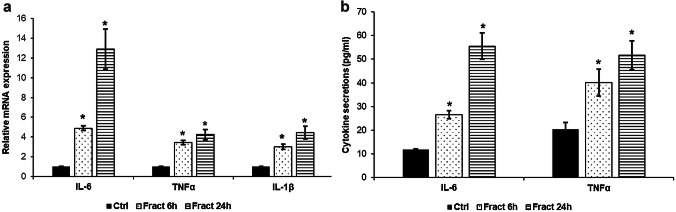
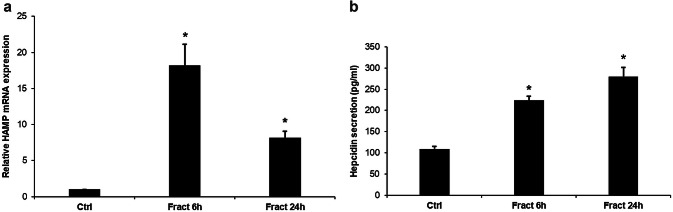
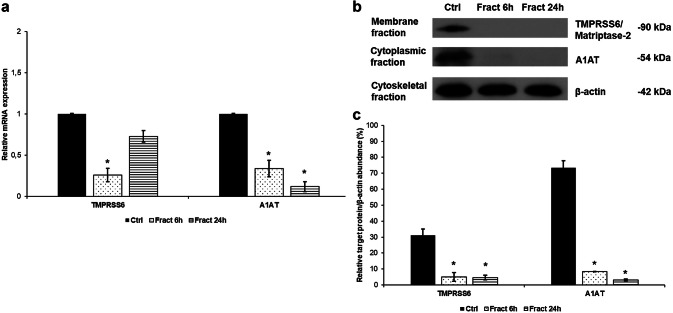
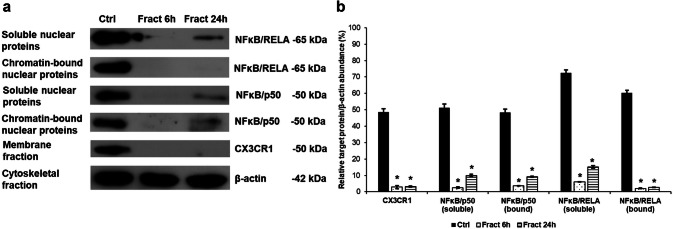
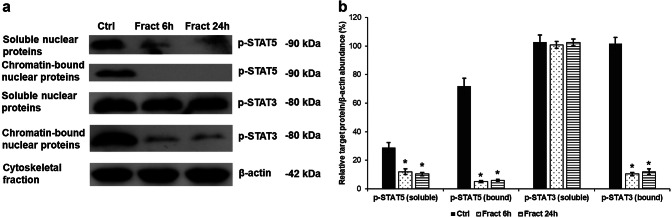
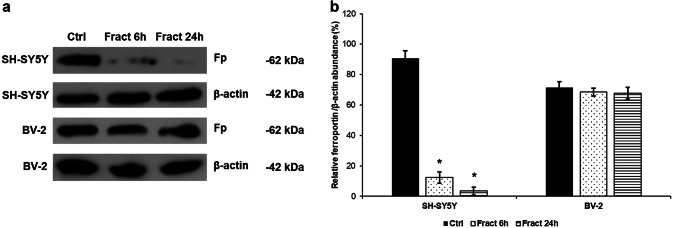
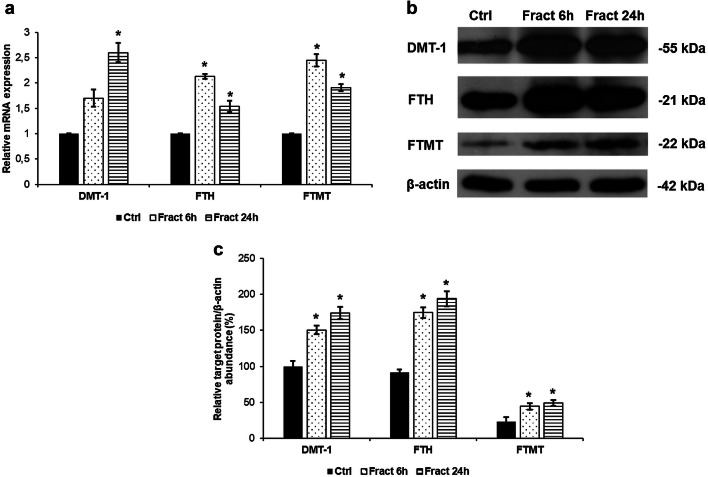
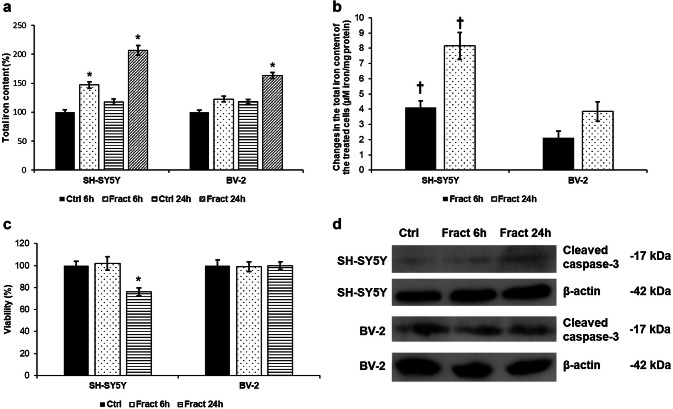
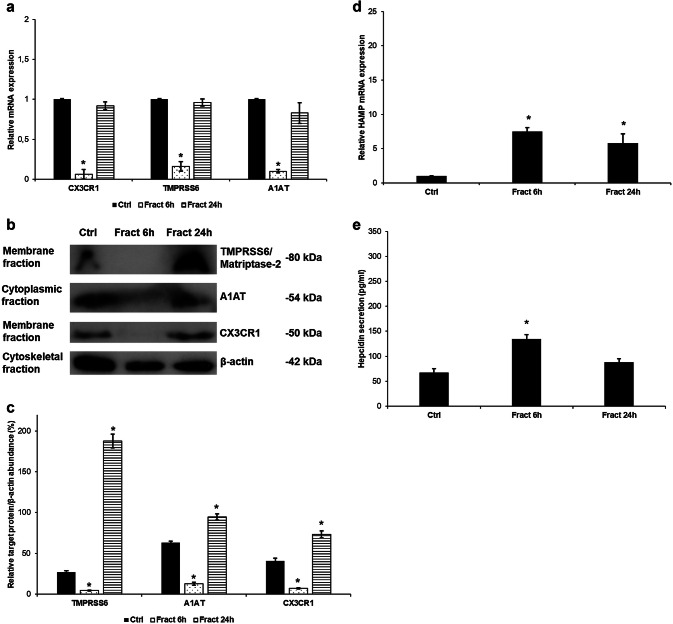
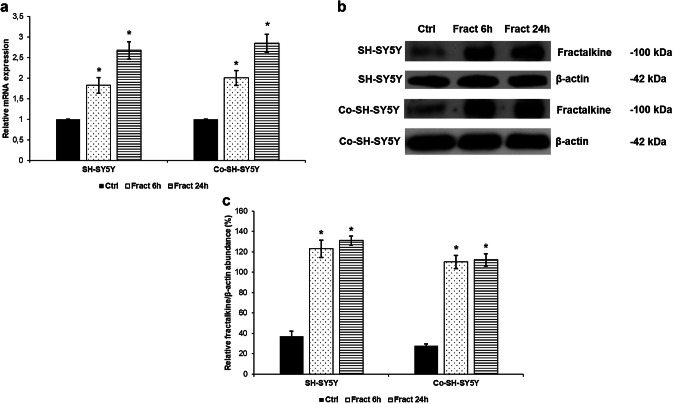
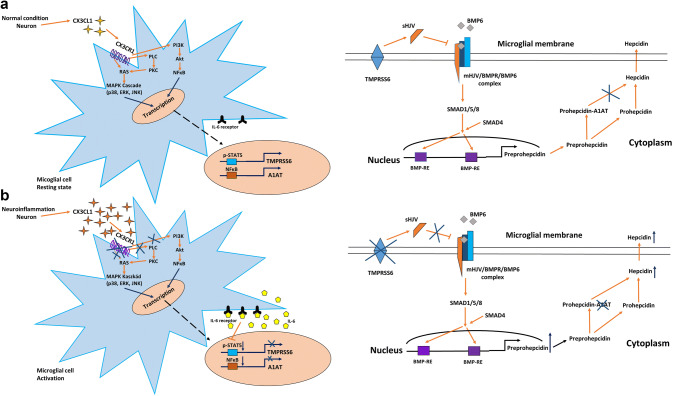
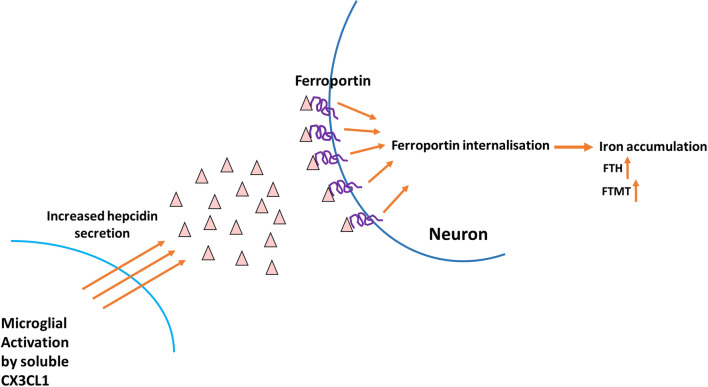
Verification
Claims the paper makes
The claims and statistics of this paper haven’t been checked yet.
Run the check — free, no account needed. It reads the open-access text and checks the sources it cites.
Claims other papers make about this one
Each is checked against this paper’s own text: does it say what the citing paper says it does?
In the citing paper
“In the normal CNS, CX3CL1 and its receptor CX3CR1 form signaling network between neurons and microglia [25, 26].”
From CX3CL1/CX3CR1 axis attenuates early brain injury via promoting the delivery of exosomal microRNA-124 from neuron to microglia after subarachnoid hemorrhage (2020) · cites this paper as [25]
In the citing paper
“In CNS, CX3CL1 mainly expressed in neurons and had two different forms: one is a membrane-bound glycoprotein providing direct interaction with CX3CR1, which expressed in microglia; the other is a soluble form working as an extracellular mediator [25].”
From CX3CL1/CX3CR1 axis attenuates early brain injury via promoting the delivery of exosomal microRNA-124 from neuron to microglia after subarachnoid hemorrhage (2020) · cites this paper as [25]
Self-check
Percentages, sums and reported differences re-computed from the paper’s own numbers.
The self-check needs the paper’s full text.
Citations
Cites
Hepcidin, a urinary antimicrobial peptide synthesized in the liver
Park, C. H., Valore, E. V., Waring, A. J., & Ganz, T. (2001) · Journal of Biological Chemistry · doi:10.1074/jbc.m008922200 · Cited by 2,168
Hepcidin, a key regulator of iron metabolism and mediator of anemia of inflammation
Ganz, T. (2003) · Blood · doi:10.1182/blood-2003-03-0672 · Cited by 1,544
Identification of erythroferrone as an erythroid regulator of iron metabolism
Kautz, L., Jung, G., Valore, E. V., Rivella, S., Nemeth, E., & Ganz, T. (2014) · Nature Genetics · doi:10.1038/ng.2996 · Cited by 1,127
Bone morphogenetic protein signaling by hemojuvelin regulates hepcidin expression
Babitt, J. L., Huang, F. W., Wrighting, D. M., Xia, Y., Sidis, Y., Samad, T. A., Campagna, J. A., Chung, R. T., Schneyer, A. L., Woolf, C. J., et al. (2006) · Nature Genetics · doi:10.1038/ng1777 · Cited by 1,026
Interleukin-6 induces hepcidin expression through STAT3
Wrighting, D. M., & Andrews, N. C. (2006) · Blood · doi:10.1182/blood-2006-06-027631 · Cited by 983
Serine phosphorylation of STATs
Decker, T., & Kovarik, P. (2000) · Oncogene · doi:10.1038/sj.onc.1203481 · Cited by 887
Layer V cortical neurons require microglial support for survival during postnatal development
Ueno, M., Fujita, Y., Tanaka, T., Nakamura, Y., Kikuta, J., Ishii, M., & Yamashita, T. (2013) · Nature Neuroscience · doi:10.1038/nn.3358 · Cited by 781
Hoshiko, M., Arnoux, I., Avignone, E., Yamamoto, N., & Audinat, E. (2012) · The Journal of Neuroscience · doi:10.1523/jneurosci.1167-12.2012 · Cited by 384
Microglia, seen from the CX3CR1 angle
Wolf, Y., Yona, S., Kim, K.-W., & Jung, S. (2013) · Frontiers in Cellular Neuroscience · doi:10.3389/fncel.2013.00026 · Cited by 316
Erythroferrone inhibits the induction of hepcidin by BMP6
Arezes, J., Foy, N., McHugh, K., Sawant, A., Quinkert, D., Terraube, V., Brinth, A., Tam, M., LaVallie, E. R., Taylor, S., et al. (2018) · Blood · doi:10.1182/blood-2018-06-857995 · Cited by 277
Liu, Z., Condello, C., Schain, A., Harb, R., & Grutzendler, J. (2010) · The Journal of Neuroscience · doi:10.1523/jneurosci.4403-10.2010 · Cited by 275
Valore, E. V., & Ganz, T. (2008) · Blood Cells Molecules and Diseases · doi:10.1016/j.bcmd.2007.07.009 · Cited by 234
Protracted downregulation of CX3CR1 on microglia of aged mice after lipopolysaccharide challenge
Wynne, A. M., Henry, C. J., Huang, Y., Cleland, A., & Godbout, J. P. (2010) · Brain, Behavior, and Immunity · doi:10.1016/j.bbi.2010.05.011 · Cited by 224
Lyons, A., Lynch, A. M., Downer, E. J., Hanley, R., O’Sullivan, J. B., Smith, A., & Lynch, M. A. (2009) · Journal of Neurochemistry · doi:10.1111/j.1471-4159.2009.06253.x · Cited by 202
Wang, J., Song, N., Jiang, H., Wang, J., & Xie, J. (2013) · Biochimica et Biophysica Acta (BBA) - Molecular Basis of Disease · doi:10.1016/j.bbadis.2013.01.021 · Cited by 150
Research works printed but not linked: 66
- Aguirre P, Mena N, Tapia V, Arredondo M, Núñez MT (2005) Iron homeostasis in neuronal cells: a role for IREG1. BMC Neurosci 6:3 · DOI
- Bishop GM, Dang TN, Dringen R, Robinson SR (2011) Accumulation of non-transferrin-bound iron by neurons, astrocytes, and microglia. Neurotox Res 19:443–451 · DOI
- Bureau G, Longpre F, Martinoli MG (2008) Resveratrol and quercetin, two natural polyphenols, reduce apoptotic neuronal cell death induced by neuroinflammation. J Neurosci Res 86:403–410 · DOI
- Clark AK, Gentry C, Bradbury EJ, McMahon SB, Malcangio M (2007) Role of spinal microglia in rat models of peripheral nerve injury and inflammation. Eur J Pain 11:223–230 · DOI
- Cook A, Hippensteel R, Shimizu S, Nicolai J, Fatatis A, Meucci O (2010) Interactions between chemokines: regulation of fractalkine/CX3CL1 homeostasis by SDF/CXCL12 in cortical neurons. J Biol Chem 285:10563–71051 · DOI
- Cotter R, Williams C, Ryan L, Erichsen D, Lopez A, Peng H, Zheng J (2002) Fractalkine (CX3CL1) and brain inflammation: Implications for HIV-1-associated dementia. J Neurovirol 8:585–598 · DOI
- De Domenico I, Ward DM, Kaplan J (2007) Hepcidin regulation: ironing out the details. J Clin Invest 117:1755–1758 · DOI
- Du F, Qian ZM, Luo Q, Yung WH, Ke Y (2015) Hepcidin suppresses brain iron accumulation by downregulating iron transport proteins in iron-overloaded rats. Mol Neurobiol 52:101–114 · DOI
- Finberg KE, Whittlesey RL, Fleming MD, Andrews NC (2010) Down-regulation of Bmp/Smad signaling by Tmprss6 is required for maintenance of systemic iron homeostasis. Blood 115:3817–3826 · DOI
- Ganz T (2018) Erythropoietic regulators of iron metabolism. Free Radic Biol Med S0891–5849:31188–31192
- Hadzhieva M, Kirches E, Mawrin C (2014) Review: iron metabolism and the role of iron in neurodegenerative disorders. Neuropathol Appl Neurobiol 40:240–257 · DOI
- Haider L (2015) Inflammation, iron, energy failure, and oxidative stress in the pathogenesis of multiple sclerosis. Oxid Med Cell Longev 2015:725370 · DOI
- Harrison JK, Jiang Y, Chen S, Xia Y, Maciejewski D, McNamara RK, Streit WJ, Salafranca MN, Adhikari S, Thompson DA, Botti P, Bacon KB, Feng L (1998) Role for neuronally derived fractalkine in mediating interactions between neurons and CX3CR17-expressing microglia. Proc Natl Acad Sci U S A 95:10896–10901 · DOI · Paper page
- Huang H, Constante M, Layoun A, Santos MM (2009) Contribution of STAT3 and SMAD4 pathways to the regulation of hepcidin by opposing stimuli. Blood 113:3593–3599 · DOI
- Hundhausen C, Misztela D, Berkhout TA, Broadway N, Saftig P, Reiss K, Hartmann D, Fahrenholz F, Postina R, Matthews V, Kallen KJ, Rose-John S, Ludwig A (2003) The disintegrin-like metalloproteinase ADAM10 is involved in constitutive cleavage of CX3CL1 (fractalkine) and regulates CX3CL1-mediated cell-cell adhesion. Blood 102:1186–1195 · DOI
- Ke Y, Ming Qian Z (2003) Iron misregulation in the brain: a primary cause of neurodegenerative disorders. Lancet Neurol 2:246–253 · DOI
- Korzus E, Nagase H, Rydell R, Travis J (1997) The mitogen-activated protein kinase and JAK-STAT signaling pathways are required for an oncostatin M-responsive element-mediated activation of matrix metalloproteinase 1 gene expression. J Biol Chem 272:1188–1196 · DOI
- Lauro C, Catalano M, Trettel F, Limatola C (2015) Fractalkine in the nervous system: neuroprotective or neurotoxic molecule? Ann N Y Acad Sci 1351:141–148 · DOI
- Lee S, Xu G, Jay TR, Bhatta S, Kim KW, Jung S, Landreth GE, Ransohoff RM, Lamb BT (2014) Opposing effects of membrane-anchored CX3CL1 on amyloid and tau pathologies via the p38 MAPK pathway. J Neurosci 34:12538–12546 · DOI · Paper page
- Leonardi-Essmann F, Emig M, Kitamura Y, Spanagel R, Gebicke-Haerter PJ (2005) Fractalkine-upregulated milk-fat globule EGF factor-8 protein in cultured rat microglia. J Neuroimmunol 160:92–101 · DOI
- Li K, Reichmann H (2016) Role of iron in neurodegenerative diseases. J Neural Transm (Vienna) 123:389–399 · DOI
- Lu H, Lian L, Shi D, Zhao H, Dai Y (2015) Hepcidin promotes osteogenic differentiation through the bone morphogenetic protein 2/small mothers against decapentaplegic and mitogen-activated protein kinase/P38 signaling pathways in mesenchymal stem cells. Mol Med Rep 11:143–150 · DOI
- Meynard D, Sun CC, Wu Q, Chen W, Chen S, Nelson CN, Waters MJ, Babitt JL, Lin HY (2013) Inflammation regulates TMPRSS6 expression via STAT5. PLoS ONE 8:e82127 · DOI
- Milligan E, Zapata V, Schoeniger D, Chacur M, Green P, Poole S, Martin D, Maier SF, Watkins LR (2005) An initial investigation of spinal mechanisms underlying pain enhancement induced by fractalkine, a neuronally released chemokine. Eur J Neurosci 22:2775–2782 · DOI
- Mizuno T, Kawanokuchi J, Numata K, Suzumura A (2003) Production and neuroprotective functions of fractalkine in the central nervous system. Brain Res 979:65–70 · DOI
- Morganti JM, Nash KR, Grimmig BA, Ranjit S, Small B, Bickford PC, Gemma C (2012) The soluble isoform of CX3CL1 is necessary for neuroprotection in a mouse model of Parkinson’s disease. J Neurosci 32:14592–14601 · DOI
- Muckenthaler MU (2008) Fine tuning of hepcidin expression by positive and negative regulators. Cell Metab 8:1–3 · DOI · Paper page
- Neiva I, Malva JO, Valero J (2014) Can we talk about microglia without neurons? A discussion of microglial cell autonomous properties in culture. Front Cell Neurosci 8:202 · DOI
- Nemeth E, Tuttle MS, Powelson J, Vaughn MB, Donovan A, Ward DM, Ganz T, Kaplan J (2004) Hepcidin regulates cellular iron efflux by binding to ferroportin and inducing its internalization. Science 306:2090–2093 · DOI · Paper page
- Nie G, Sheftel AD, Kim SF, Ponka P (2005) Overexpression of mitochondrial ferritin causes cytosolic iron depletion and changes cellular iron homeostasis. Blood 105:2161–2167 · DOI
- Núñez MT, Urrutia P, Mena N, Aguirre P, Tapia V, Salazar J (2012) Iron toxicity in neurodegeneration. Biometals 25:761–776 · DOI
- Ong WY, Farooqui AA (2005) Iron, neuroinflammation, and Alzheimer’s disease. J Alzheimers Dis 8:183–200 · DOI
- Pan Y, Sun L, Wang J, Fu W, Fu Y, Wang J, Tong Y, Pan B (2014) STI571 protects neuronal cells from neurotoxic prion protein fragment-induced apoptosis. Neuropharmacology 93:191–198 · DOI · Paper page
- Pan B, Yang L, Wang J, Wang Y, Wang J, Zhou X, Yin X, Zhang Z, Zhao D (2015) C-Abl tyrosine kinase mediates neurotoxic prion peptide-induced neuronal apoptosis via regulating mitochondrial homeostasis. Mol Neurobiol 49:1102–1116 · DOI · Paper page
- Pan B, Zhang H, Cui T, Wang X (2017) TFEB activation protects against cardiac proteotoxicity via increasing autophagic flux. J Mol Cell Cardiol 113:51–62 · DOI
- Pandur E, Nagy J, Poór VS, Sarnyai A, Huszár A, Miseta A, Sipos K (2009) Alpha-1 antitrypsin binds preprohepcidin intracellularly and prohepcidin in the serum. FEBS J 276:2012–2021 · DOI
- Pandur E, Varga E, Tamási K, Pap R, Nagy J, Sipos K (2019) Effect of inflammatory mediators lipopolysaccharide and lipoteichoic acid on iron metabolism of differentiated SH-SY5Y cells alters in the presence of BV-2 microglia. Int J Mol Sci 20:E17 · DOI
- Paolicelli RC, Bolasco G, Pagani F, Maggi L, Scianni M, Panzanelli P, Giustetto M, Ferreira TA, Guiducci E, Dumas L, Ragozzino D, Gross CT (2011) Synaptic pruning by microglia is necessary for normal brain development. Science 333:1456–1458 · DOI · Paper page
- Paolicelli RC, Bisht K, Tremblay MÈ (2014) Fractalkine regulation of microglial physiology and consequences on the brain and behavior. Front Cell Neurosci 8:129 · DOI
- Pastore N, Ballabio A, Brunetti-Pierri N (2013) Autophagy master regulator TFEB induces clearance of toxic SERPINA1/α-1-antitrypsin polymers. Autophagy 9:1094–1096 · DOI
- Raha AA, Vaishnav RA, Friedland RP, Bomford A, Raha-Chowdhury R (2013) The systemic iron-regulatory proteins hepcidin and ferroportin are reduced in the brain in Alzheimer’s disease. Acta Neuropathol Commun 1:55 · DOI
- Ramsay AJ, Hooper JD, Folgueras AR, Velasco G, López-Otín C (2009) Matriptase-2 (TMPRSS6): a proteolytic regulator of iron homeostasis. Haematologica 94:840–849 · DOI
- Ray A, Gao X, Ray BK (1995) Role of a distal enhancer containing a functional NF-kappa B-binding site in lipopolysaccharide-induced expression of a novel alpha 1-antitrypsin gene. J Biol Chem 270:29201–29208 · DOI
- Ré DB, Przedborski S (2006) Fractalkine: moving from chemotaxis to neuroprotection. Nat Neurosci 9:859–861 · DOI
- Riemer J, Hoepken HH, Czerwinska H, Robinson SR, Dringen R (2004) Colorimetric ferrozine-based assay for the quantitation of iron in cultured cells. Anal Biochem 331:370–375 · DOI
- Rishi G, Wallace DF, Subramaniam VN (2015) Hepcidin: regulation of the master iron regulator. Biosci Rep 35:e00192 · DOI · Paper page
- Rostene W, Buckingham JC (2007) Chemokines as modulators of neuroendocrine functions. J Mol Endocrinol 38:351–353 · DOI
- Sangkhae V, Nemeth E (2017) Regulation of the iron homeostatic hormone hepcidin. Adv Nutr 8:126–136 · DOI
- Santambrogio P, Erba BG, Campanella A, Cozzi A, Causarano V, Cremonesi L, Gallì A, Della Porta MG, Invernizzi R, Levi S (2011) Over-expression of mitochondrial ferritin affects the JAK2/STAT5 pathway in K562 cells and causes mitochondrial iron accumulation. Haematologica 96:1424–1432 · DOI
- Schmidt PJ (2015) Regulation of iron metabolism by hepcidin under conditions of inflammation. J Biol Chem 290:18975–18983 · DOI
- Shan S, Hong-Min T, Yi F, Jun-Peng G, Yue F, Yan-Hong T, Yun-Ke Y, Wen-Wei L, Xiang-Yu W, Jun M, Guo-Hua W, Ya-Ling H, Hua-Wei L, Ding-Fang C (2011) New evidences for fractalkine/CX3CL1 involved in substantia nigral microglial activation and behavioral changes in a rat model of Parkinson’s disease. Neurobiol Aging 32:443–458 · DOI
- Shen Y, Schlessinger K, Zhu X, Meffre E, Quimby F, Levy DE, Darnell JE Jr (2004) Essential role of STAT3 in postnatal survival and growth revealed by mice lacking STAT3 serine 727 phosphorylation. Mol Cell Biol 24:407–419 · DOI · Paper page
- Sheridan GK, Murphy KJ (2013) Neuron-glia crosstalk in health and disease: fractalkine and CX3CR62 take centre stage. Open Biol 3:130181 · DOI
- Sonnweber T, Nachbaur D, Schroll A, Nairz M, Seifert M, Demetz E, Haschka D, Mitterstiller AM, Kleinsasser A, Burtscher M, Trübsbach S, Murphy AT, Wroblewski V, Witcher DR, Mleczko-Sanecka K, Vecchi C, Muckenthaler MU, Pietrangelo A, Theurl I, Weiss G (2014) Hypoxia induced downregulation of hepcidin is mediated by platelet derived growth factor BB. Gut 63:1951–1959 · DOI · Paper page
- Szepesi Z, Manouchehrian O, Bachiller S, Deierborg T (2018) Bidirectional microglia-neuron communication in health and disease. Front Cell Neurosci 12:323 · DOI · Paper page
- Tarozzo G, Campanella M, Ghiani M, Bulfone A, Beltramo M (2002) Expression of fractalkine and its receptor, CX3CR65, in response to ischaemia-reperfusion brain injury in the rat. Eur J Neurosci 15:1663–1668 · DOI
- Urrutia P, Aguirre P, Esparza A, Tapia V, Mena NP, Arredondo M, González-Billault C, Núñez MT (2013) Inflammation alters the expression of DMT1, FPN1 and hepcidin, and it causes iron accumulation in central nervous system cells. J Neurochem 126:541–549 · DOI · Paper page
- Urrutia PJ, Mena NP, Núñez MT (2014) The interplay between iron accumulation, mitochondrial dysfunction, and inflammation during the execution step of neurodegenerative disorders. Front Pharmacol 5:38 · DOI
- Urrutia PJ, Hirsch EC, González-Billault C, Núñez MT (2017) Hepcidin attenuates amyloid beta-induced inflammatory and pro-oxidant responses in astrocytes and microglia. J Neurochem 142:140–152 · DOI
- Vela D (2018a) The dual role of hepcidin in brain iron load and inflammation. Front Neurosci 12:740 · DOI
- Vela D (2018b) Hepcidin, an emerging and important player in brain iron homeostasis. J Transl Med 16:25 · DOI
- Wang SM, Fu LJ, Duan XL, Crooks DR, Yu P, Qian ZM, Di XJ, Li J, Rouault TA, Chang YZ (2010) Role of hepcidin in murine brain iron metabolism. Cell Mol Life Sci 67:123–133 · DOI
- Ward RJ, Zucca FA, Duyn JH, Crichton RR, Zecca L (2014) The role of iron in brain ageing and neurodegenerative disorders. Lancet Neurol 13:1045–1060 · DOI · Paper page
- Wen Z, Darnell JE Jr (1997) Mapping of Stat3 serine phosphorylation to a single residue (727) and evidence that serine phosphorylation has no influence on DNA binding of Stat1 and Stat3. Nucleic Acids Res 25:2062–2067 · DOI
- Zechel S, Huber-Wittmer K, von Bohlen und Halbach O (2006) Distribution of the iron-regulating protein hepcidin in the murine central nervous system. J Neurosci Res 84:790–800 · DOI
- Zhang Y, Yan J, Hu R, Sun Y, Ma Y, Chen Z, Jiang H (2015) Microglia are involved in pruritus induced by DNFB via the CX3CR81/p38 MAPK pathway. Cell Physiol Biochem 35:1023–1033 · DOI
Cited by
Sorted by citations
Chen, X., Jiang, M., Li, H., Wang, Y., Shen, H., Li, X., Zhang, Y., Wu, J., Yu, Z., & Chen, G. (2020) · Journal of Neuroinflammation · doi:10.1186/s12974-020-01882-6 · Cited by 85
Modulation of inflammatory responses by fractalkine signaling in microglia
Inoue, K., Morimoto, H., Ohgidani, M., & Ueki, T. (2021) · PLOS ONE · doi:10.1371/journal.pone.0252118 · Cited by 22
Metadata
- Authors
- Pandur, E., Tamási, K., Pap, R., Varga, E., Miseta, A., & Sipos, K.
- ORCID
- Pandur, Edina
- Venue
- Cellular and Molecular Neurobiology
- Published
- 2019-06-06
- Volume
- 39
- Issue
- 7
- Pages
- 985-1001
- ISSN
- 0272-4340
- 1573-6830
- PMC
- PMC6711953
- Cited by
- 37
- References
- 15
- Language
- en
About these checks
Registry, retraction, Cites and statistics results are computed, not judged, with one exception: a printed reference that no index lists is read once by a model before it counts as a citation error. Claims are extracted by a model and kept only when their quote appears verbatim in the text; each cited source is then checked, with a model’s help, for whether it says what the claim relies on. Those verdicts can be wrong — read the claim’s quote and the cited source before relying on one.
Statistics and arithmetic are recomputed, not judged.
Confidence bands are shown only for fields calibrated on our annotated test set. None is calibrated yet, so no band is shown.
What counts as a claim ›How we measure confidence ›How we check this ›
Are you an author, or do you see a problem with this page? Request a review
