

A public health frame arouses hopeful emotions about climate change: A Letter
Open accessThe DOI matches its Crossref record; 29 of the 30 references it cites were found in a registry or an index.
Abstract
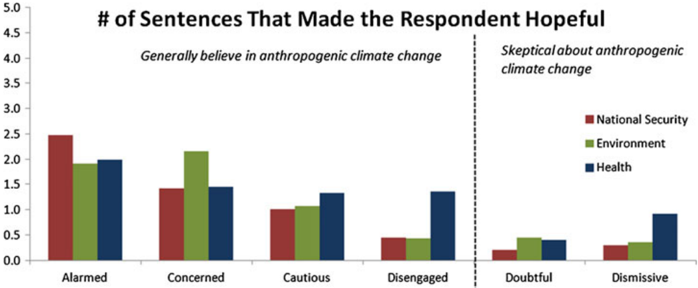
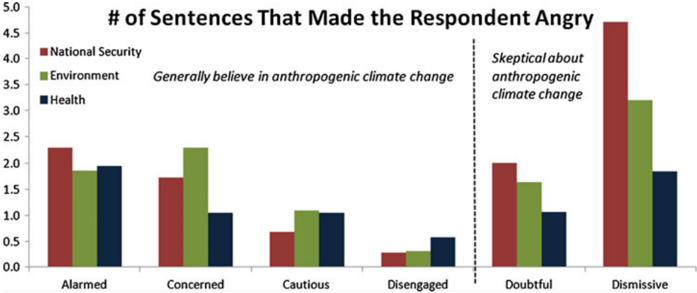
Communication researchers and practitioners have suggested that framing climate change in terms of public health and/or national security may make climate change more personally relevant and emotionally engaging to segments of the public who are currently disengaged or even dismissive of the issue. To evaluate these assumptions, using a nationally representative online survey of U.S. residents ( N = 1,127) conducted in December, 2010, we randomly assigned six previously identified audience segments on climate change to one of three experimental conditions. Subjects were asked to read uniquely framed news articles about climate change emphasizing either the risks to the environment, public health, or national security and the benefits of mitigation and adaptation-related actions. Results show that across audience segments, the public health focus was the most likely to elicit emotional reactions consistent with support for climate change mitigation and adaptation. Findings also indicated that the national security frame may possibly boomerang among audience segments already doubtful or dismissive of the issue, eliciting unintended feelings of anger.
Overview
The claims and statistics of this paper haven’t been checked yet.
Free: it reads the open-access text and checks the first 5 claims that cite a source we can check. Create a free account to check every claim.
Integrity signals
Registry
Cites
Statistics
Figures
Verification
Claims the paper makes
The claims and statistics of this paper haven’t been checked yet.
Free: it reads the open-access text and checks the first 5 claims that cite a source we can check. Create a free account to check every claim.
Claims other papers make about this one
Each is checked against this paper’s own text: does it say what the citing paper says it does?
The cited source says what the claim attributes to it.
In the citing paper
“While studies such as Myers et al (2012) and Maibach et al (2010) have found evidence for the efficacy of the Public health frame, others have found limited evidence (Walker et al 2018).”
From Framing climate change for effective communication: a systematic map (2020) · cites this paper as Myers et al 2012
Self-check
Percentages, sums and reported differences re-computed from the paper’s own numbers.
The self-check needs the paper’s full text.
Citations
Cites
Self-efficacy: Toward a unifying theory of behavioral change
Bandura, A. (1977) · Psychological Review · doi:10.1037/0033-295x.84.2.191 · Cited by 43,925
(2011) · Cited by 14,317
Self-efficacy: Toward a unifying theory of behavioral change
Bandura, A. (1978) · Advances in Behaviour Research and Therapy · doi:10.1016/0146-6402(78)90002-4 · Cited by 10,586
Frame Analysis: An Essay on the Organization of Experience.
Gamson, W. A., & Goffman, E. (1975) · Contemporary Sociology · doi:10.2307/2064022 · Cited by 10,570
Media Discourse and Public Opinion on Nuclear Power: A Constructionist Approach
Gamson, W. A., & Modigliani, A. (1989) · American Journal of Sociology · doi:10.1086/229213 · Cited by 4,971 · cited 1×
“Social scientists have long understood that the way an issue is framed has important consequences (Goffman 1974; Gamson and Modigliani 1989).”
BackgroundTARGET ARTICLE: Hope Theory: Rainbows in the Mind
Snyder, C. R. (2002) · Psychological Inquiry · doi:10.1207/s15327965pli1304_01 · Cited by 3,737 · cited 1×
“Feelings of hope related to climate change, for example, likely increase the probability that individuals will choose to engage with the issue and adopt beliefs and behaviors consistent with efforts to stem the problem (Markowitz and Shariff 2012; Snyder 2002; Swim et al. 2010).”
BackgroundClimate Change Risk Perception and Policy Preferences: The Role of Affect, Imagery, and Values
Leiserowitz, A. (2006) · Climatic Change · doi:10.1007/s10584-006-9059-9 · Cited by 2,197
Self-citationFraming as a Theory of Media Effects
Scheufele, D. A. (1999) · Journal of Communication · doi:10.1111/j.1460-2466.1999.tb02784.x · Cited by 2,179 · cited 2×
“The frame used suggests both the diagnosis of the problem as well as prescriptions for what should be done about it (Nisbet 2009; Scheufele 1999).”
BackgroundMethodBarriers perceived to engaging with climate change among the UK public and their policy implications
Lorenzoni, I., Nicholson-Cole, S., & Whitmarsh, L. (2007) · Global Environmental Change · doi:10.1016/j.gloenvcha.2007.01.004 · Cited by 2,026 · cited 3×
“Effective public engagement requires understanding the cognitive, affective, and behavioral nature of audiences (Lorenzoni et al. 2007).”
BackgroundInfluentialHow Emotion Shapes Behavior: Feedback, Anticipation, and Reflection, Rather Than Direct Causation
Baumeister, R. F., Vohs, K. D., Nathan DeWall, C., & Zhang, L. (2007) · Personality and Social Psychology Review · doi:10.1177/1088868307301033 · Cited by 1,743 · cited 1×
“Emotions serve as affective prompts for engagement with an issue and lead to forming predispositions for action when a relevant situation arises (Baumeister et al. 2007).”
BackgroundCommunicating Climate Change: Why Frames Matter for Public Engagement
Nisbet, M. C. (2009) · Environment: Science and Policy for Sustainable Development · doi:10.3200/envt.51.2.12-23 · Cited by 1,562 · cited 4×
“…have suggested a variety of potential alternative frames, each of which can validly and accurately emphasize other relevant dimensions of the issue—such as public health, national security, extreme weather events, and/or the economy (Nisbet 2009; Nisbet and Scheufele 2009; Maibach et al. 2010).”
BackgroundMethodResultInfluentialSelf-citationO'Neill, S., & Nicholson-Cole, S. (2009) · Science Communication · doi:10.1177/1075547008329201 · Cited by 1,405 · cited 2×
“studies find that messages emphasizing catastrophic, dire consequences or threats that are geographically remote can result in less concern and more hopelessness among audiences (Hart and Nisbet 2011; O’Neill and Nicholson-Cole 2009).”
BackgroundWhat's next for science communication? Promising directions and lingering distractions
Nisbet, M. C., & Scheufele, D. A. (2009) · American Journal of Botany · doi:10.3732/ajb.0900041 · Cited by 1,298 · cited 3×
“…have suggested a variety of potential alternative frames, each of which can validly and accurately emphasize other relevant dimensions of the issue—such as public health, national security, extreme weather events, and/or the economy (Nisbet 2009; Nisbet and Scheufele 2009; Maibach et al. 2010).”
BackgroundSelf-citationLiving in Denial: Climate Change, Emotions, and Everyday Life
Norgaard, K. M. (2011) · doi:10.7551/mitpress/9780262015448.001.0001 · Cited by 1,131
Hart, P. S., & Nisbet, E. C. (2012) · Communication Research · doi:10.1177/0093650211416646 · Cited by 1,123
Nabi, R. L. (2003) · Communication Research · doi:10.1177/0093650202250881 · Cited by 668 · cited 1×
“Furthermore, emotions themselves can serve as frames bywhich future information is interpreted (Nabi 2003).”
BackgroundClimate change and moral judgement
Markowitz, E. M., & Shariff, A. F. (2012) · Nature Climate Change · doi:10.1038/nclimate1378 · Cited by 542 · cited 2×
“Feelings of hope related to climate change, for example, likely increase the probability that individuals will choose to engage with the issue and adopt beliefs and behaviors consistent with efforts to stem the problem (Markowitz and Shariff 2012; Snyder 2002; Swim et al. 2010).”
BackgroundLiving in Denial: Climate Change, Emotions, and Everyday Life
(2015) · International Dialogue · doi:10.32873/uno.dc.id.5.1.1108 · Cited by 511
Reframing climate change as a public health issue: an exploratory study of public reactions
Maibach, E. W., Nisbet, M., Baldwin, P., Akerlof, K., & Diao, G. (2010) · BMC Public Health · doi:10.1186/1471-2458-10-299 · Cited by 454 · cited 7×
“Our results are also consistent with past research that has found that a diversity of audience segments respond positively to an emphasis on the public health consequences of climate change and the health benefits of action (Maibach et al. 2010).”
BackgroundResultInfluentialSelf-citationSwim, J. K., Clayton, S., Doherty, T. J., & Gifford, R. (2009) · Cited by 397
Maibach, E. W., Leiserowitz, A., Roser-Renouf, C., & Mertz, C. K. (2011) · PLoS ONE · doi:10.1371/journal.pone.0017571 · Cited by 358 · cited 1×
“2.1 Six Americas audience segmentation Following the methodology presented in Maibach et al. (2011), participants were categorized into one of six audience segments based on their existing climate change-related attitudes, beliefs, knowledge, preferences, and behaviors.”
MethodInfluentialSelf-citationThomas, E. F., McGarty, C., & Mavor, K. I. (2009) · Personality and Social Psychology Review · doi:10.1177/1088868309343290 · Cited by 314 · cited 1×
“…to be on “high-alert” and to seek more information about an issue (Baron et al. 1994), can lead to greater risk perceptions and greater policy support (Leiserowitz 2006), and have the potential to transform apathy or indifference into perceived importance and behavioral action (Thomas et al. 2009).”
BackgroundThinking Positively: Using Positive Affect when Designing Health Messages
Monahan, J. L. (1995) · Sage eBooks · doi:10.4135/9781452233451.n5 · Cited by 133 · cited 1×
“Positive emotions can also play an important role in message response (Monahan 1995).”
BackgroundAddressing the Complexities of Boundary Work in Sustainability Science through Communication
McGreavy, B., Hutchins, K., Smith, H. M., Lindenfeld, L., & Silka, L. (2013) · Sustainability · doi:10.3390/su5104195 · Cited by 91
Negative Emotion and Message Processing
Baron, R. A., Logan, H. L., Lilly, J., Inman, M. L., & BRENNAN, M. D. (1994) · Journal of Experimental Social Psychology · doi:10.1006/jesp.1994.1009 · Cited by 90
Belief Revision meets Philosophy of Science
Olsson, E. J., & Enqvist, S. (2010) · Springer eBooks · doi:10.1007/978-90-481-9609-8 · Cited by 89
Changing Minds About Climate Change: Belief Revision, Coherence, and Emotion
Thagard, P. R., & Findlay, S. D. (2010) · Springer eBooks · doi:10.1007/978-90-481-9609-8_14 · Cited by 81 · cited 1×
“Thagard and Findlay (2011) argue that “encouraging belief change…about climate change requires dealing with emotional constraints as well as cognitive ones” (p. 342) and Markowitz and Shariff (2012) identify positive emotional appeals as one of the most promising strategies for climate change…”
BackgroundMacInnis, B., Krosnick, J. A., Abeles, A. T., Caldwell, M. R., Prahler, E. E., & Dunne, D. D. (2014) · Climatic Change · doi:10.1007/s10584-014-1286-x · Cited by 39
Promoting Positive Engagement With Climate Change Through Visual and Iconic Representations
O’Neill, S. J., & Nicholson-Cole, S. A. (2009) · Cited by 37
Cited by
How to SHIFT Consumer Behaviors to be More Sustainable: A Literature Review and Guiding Framework
White, K., Habib, R., & Hardisty, D. J. (2019) · Journal of Marketing · doi:10.1177/0022242919825649 · Cited by 2,386
“Feelings of hope can be augmented by framing climate change as a health issue as opposed to an environmental issue (Myers et al. 2012).”
BackgroundHealth effects of climate change: an overview of systematic reviews
Rocque, R. J., Beaudoin, C., Ndjaboue, R., Cameron, L., Poirier-Bergeron, L., Poulin-Rheault, R.-A., Fallon, C., Tricco, A. C., & Witteman, H. O. (2021) · BMJ Open · doi:10.1136/bmjopen-2020-046333 · Cited by 932
“Twitter Ruth Ndjaboue @RutNdjab, Andrea C Tricco @ATricco and Holly O Witteman @hwitteman”
BackgroundStanley, S. K., Hogg, T. L., Leviston, Z., & Walker, I. (2021) · The Journal of Climate Change and Health · doi:10.1016/j.joclim.2021.100003 · Cited by 715
Moser, S. C. (2016) · WIREs Climate Change · doi:10.1002/wcc.403 · Cited by 581
The role of emotion in global warming policy support and opposition
Smith, N., & Leiserowitz, A. (2014) · Risk Analysis · doi:10.1111/risa.12140 · Cited by 580
“(77) In an experimental study, Myers et al.(78) presented subjects with climate change information using one of three frames (health, national security, and environmental) and assessed their hope versus anger-based emotional reactions.”
BackgroundSelf-citation
Metadata
- Authors
- Myers, T. A., Nisbet, M. C., Maibach, E. W., & Leiserowitz, A. A.
- Affiliations
- George Mason University (US)
- American University (US)
- Yale University (US)
- Corresponding author
- Nisbet, Matthew C.
- Venue
- Climatic Change
- Published
- 2012-06-28
- Volume
- 113
- Issue
- 3-4
- Pages
- 1105-1112
- ISSN
- 0165-0009 (ISSN-L)
- 1573-1480
- OpenAlex
- W1575525139
- Cited by
- 632
- References
- 30
- Citations by year
- 2026: 22 · 2025: 52 · 2024: 46 · 2023: 53 · 2022: 60 · 2021: 70 · 2020: 51 · 2019: 68 · 2018: 54 · 2017: 42 · 2016: 35 · 2015: 35 · 2014: 24 · 2013: 18 · 2012: 1
- FWCI
- 82.00
- Type
- journal article
- Language
- en
- Open access
- hybrid
- doi.org
- Licence
- cc-by
- Locations
- Climatic Change (publishedVersion, cc-by)
- RePEc: Research Papers in Economics (submittedVersion)
- Funders
- Grantham Foundation for the Protection of the Environment
- Topics
- Social Sciences › Sociology and Political Science › Climate Change Communication and Perception
- Social Sciences › Sociology and Political Science › Risk Perception and Management
- Social Sciences › Economics, Econometrics and Finance › Economics and Econometrics › Climate Change Policy and Economics
- Keywords
- climate change communication, framing effects, public health framing, national security framing, climate emotions, public attitudes toward climate change
About these checks
Registry, retraction, Cites and statistics results are computed, not judged, with one exception: a printed reference that no index lists is read once by a model before it counts as a citation error. Claims are extracted by a model and kept only when their quote appears verbatim in the text; each cited source is then checked, with a model’s help, for whether it says what the claim relies on. Those verdicts can be wrong — read the claim’s quote and the cited source before relying on one.
Statistics and arithmetic are recomputed, not judged.
Confidence bands are shown only for fields calibrated on our annotated test set. None is calibrated yet, so no band is shown.
What counts as a claim ›How we measure confidence ›How we check this ›
Are you an author, or do you see a problem with this page? Request a review
Data sources
Bibliographic data: Semantic Scholar, OpenAlex, Crossref.
Contains information from the Semantic Scholar Academic Graph Datasets, made available under the ODC Attribution License (ODC-BY 1.0).
Semantic Scholar’s data is described in: Kinney, R., et al. (2023). The Semantic Scholar Open Data Platform. arXiv:2301.10140.
