

A public health frame arouses hopeful emotions about climate change: A Letter
Open accessThe DOI matches its Crossref record; 29 of the 30 references it cites were found in a registry or an index.
Abstract
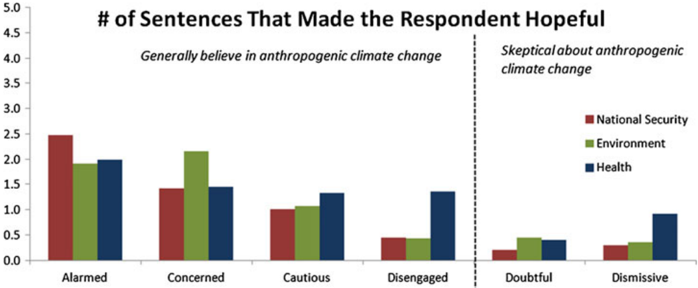
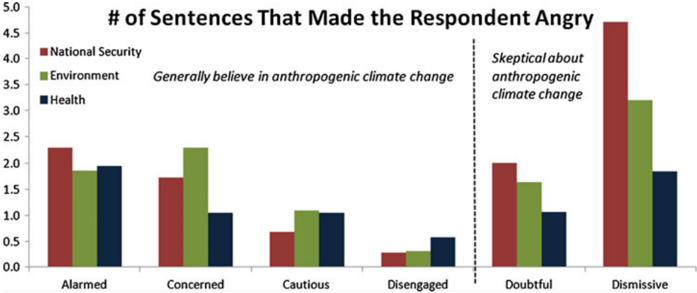
Communication researchers and practitioners have suggested that framing climate change in terms of public health and/or national security may make climate change more personally relevant and emotionally engaging to segments of the public who are currently disengaged or even dismissive of the issue. To evaluate these assumptions, using a nationally representative online survey of U.S. residents ( N = 1,127) conducted in December, 2010, we randomly assigned six previously identified audience segments on climate change to one of three experimental conditions. Subjects were asked to read uniquely framed news articles about climate change emphasizing either the risks to the environment, public health, or national security and the benefits of mitigation and adaptation-related actions. Results show that across audience segments, the public health focus was the most likely to elicit emotional reactions consistent with support for climate change mitigation and adaptation. Findings also indicated that the national security frame may possibly boomerang among audience segments already doubtful or dismissive of the issue, eliciting unintended feelings of anger.
Overview
The claims and statistics of this paper haven’t been checked yet.
Free: it reads the open-access text and checks the first 5 claims that cite a source we can check. Create a free account to check every claim.
Integrity signals
Registry
Cites
Statistics
Figures
Verification
Claims the paper makes
The claims and statistics of this paper haven’t been checked yet.
Free: it reads the open-access text and checks the first 5 claims that cite a source we can check. Create a free account to check every claim.
Claims other papers make about this one
Each is checked against this paper’s own text: does it say what the citing paper says it does?
The cited source says what the claim attributes to it.
In the citing paper
“While studies such as Myers et al (2012) and Maibach et al (2010) have found evidence for the efficacy of the Public health frame, others have found limited evidence (Walker et al 2018).”
From Framing climate change for effective communication: a systematic map (2020) · cites this paper as Myers et al 2012
Self-check
Percentages, sums and reported differences re-computed from the paper’s own numbers.
The self-check needs the paper’s full text.
Citations
Cites
Self-efficacy: Toward a unifying theory of behavioral change
Bandura, A. (1977) · Psychological Review · doi:10.1037/0033-295x.84.2.191 · Cited by 43,925
(2011) · Cited by 14,317
Self-efficacy: Toward a unifying theory of behavioral change
Bandura, A. (1978) · Advances in Behaviour Research and Therapy · doi:10.1016/0146-6402(78)90002-4 · Cited by 10,586
Frame Analysis: An Essay on the Organization of Experience.
Gamson, W. A., & Goffman, E. (1975) · Contemporary Sociology · doi:10.2307/2064022 · Cited by 10,570
Media Discourse and Public Opinion on Nuclear Power: A Constructionist Approach
Gamson, W. A., & Modigliani, A. (1989) · American Journal of Sociology · doi:10.1086/229213 · Cited by 4,971 · cited 1×
“Social scientists have long understood that the way an issue is framed has important consequences (Goffman 1974; Gamson and Modigliani 1989).”
BackgroundTARGET ARTICLE: Hope Theory: Rainbows in the Mind
Snyder, C. R. (2002) · Psychological Inquiry · doi:10.1207/s15327965pli1304_01 · Cited by 3,737 · cited 1×
“Feelings of hope related to climate change, for example, likely increase the probability that individuals will choose to engage with the issue and adopt beliefs and behaviors consistent with efforts to stem the problem (Markowitz and Shariff 2012; Snyder 2002; Swim et al. 2010).”
BackgroundClimate Change Risk Perception and Policy Preferences: The Role of Affect, Imagery, and Values
Leiserowitz, A. (2006) · Climatic Change · doi:10.1007/s10584-006-9059-9 · Cited by 2,197
Self-citationFraming as a Theory of Media Effects
Scheufele, D. A. (1999) · Journal of Communication · doi:10.1111/j.1460-2466.1999.tb02784.x · Cited by 2,179 · cited 2×
“The frame used suggests both the diagnosis of the problem as well as prescriptions for what should be done about it (Nisbet 2009; Scheufele 1999).”
BackgroundMethodBarriers perceived to engaging with climate change among the UK public and their policy implications
Lorenzoni, I., Nicholson-Cole, S., & Whitmarsh, L. (2007) · Global Environmental Change · doi:10.1016/j.gloenvcha.2007.01.004 · Cited by 2,026 · cited 3×
“Effective public engagement requires understanding the cognitive, affective, and behavioral nature of audiences (Lorenzoni et al. 2007).”
BackgroundInfluentialHow Emotion Shapes Behavior: Feedback, Anticipation, and Reflection, Rather Than Direct Causation
Baumeister, R. F., Vohs, K. D., Nathan DeWall, C., & Zhang, L. (2007) · Personality and Social Psychology Review · doi:10.1177/1088868307301033 · Cited by 1,743 · cited 1×
“Emotions serve as affective prompts for engagement with an issue and lead to forming predispositions for action when a relevant situation arises (Baumeister et al. 2007).”
Background
Cited by
How to SHIFT Consumer Behaviors to be More Sustainable: A Literature Review and Guiding Framework
White, K., Habib, R., & Hardisty, D. J. (2019) · Journal of Marketing · doi:10.1177/0022242919825649 · Cited by 2,386
“Feelings of hope can be augmented by framing climate change as a health issue as opposed to an environmental issue (Myers et al. 2012).”
BackgroundHealth effects of climate change: an overview of systematic reviews
Rocque, R. J., Beaudoin, C., Ndjaboue, R., Cameron, L., Poirier-Bergeron, L., Poulin-Rheault, R.-A., Fallon, C., Tricco, A. C., & Witteman, H. O. (2021) · BMJ Open · doi:10.1136/bmjopen-2020-046333 · Cited by 932
“Twitter Ruth Ndjaboue @RutNdjab, Andrea C Tricco @ATricco and Holly O Witteman @hwitteman”
BackgroundStanley, S. K., Hogg, T. L., Leviston, Z., & Walker, I. (2021) · The Journal of Climate Change and Health · doi:10.1016/j.joclim.2021.100003 · Cited by 715
Moser, S. C. (2016) · WIREs Climate Change · doi:10.1002/wcc.403 · Cited by 581
The role of emotion in global warming policy support and opposition
Smith, N., & Leiserowitz, A. (2014) · Risk Analysis · doi:10.1111/risa.12140 · Cited by 580
“(77) In an experimental study, Myers et al.(78) presented subjects with climate change information using one of three frames (health, national security, and environmental) and assessed their hope versus anger-based emotional reactions.”
BackgroundSelf-citationClimate Change: Challenges and Opportunities for Global Health
Patz, J. A., Frumkin, H., Holloway, T., Vimont, D. J., & Haines, A. (2014) · JAMA · doi:10.1001/jama.2014.13186 · Cited by 576
Views of health professionals on climate change and health: a multinational survey study
Kotcher, J., Maibach, E., Miller, J., Campbell, E., Alqodmani, L., Maiero, M., & Wyns, A. (2021) · The Lancet Planetary Health · doi:10.1016/s2542-5196(21)00053-x · Cited by 534
Self-citationThe relationship between personal experience and belief in the reality of global warming
Myers, T. A., Maibach, E. W., Roser-Renouf, C., Akerlof, K., & Leiserowitz, A. A. (2013) · Nature Climate Change · doi:10.1038/nclimate1754 · Cited by 515
Self-citationClimate Change: US Public Opinion
Egan, P. J., & Mullin, M. (2017) · Annual Review of Political Science · doi:10.1146/annurev-polisci-051215-022857 · Cited by 450
“…with different frames, including dire messages (Feinberg & Willer 2011); information about local impacts (Wiest et al. 2015), public health (Myers et al. 2012), or high levels of public concern (Wood & Vedlitz 2007); and arguments based on norms and science (Bolsen et al. 2014) or…”
BackgroundThe Lancet countdown: Tracking progress on health and climate change
Watts, N., Adger, W. N., Ayeb-Karlsson, S., Bai, Y., Byass, P., Campbell-Lendrum, D., Colbourn, T., Cox, P., Davies, M., Depledge, M., et al. (2017) · The Lancet · doi:10.1016/s0140-6736(16)32124-9 · Cited by 430
Public engagement with climate change: the role of human values
Corner, A., Markowitz, E., & Pidgeon, N. (2014) · WIREs Climate Change · doi:10.1002/wcc.269 · Cited by 418
Integrated Risk and Uncertainty Assessment of Climate Change Response Policies
(2015) · Climate Change 2014: Mitigation of Climate Change · doi:10.1017/cbo9781107415416.008 · Cited by 391
Vermeir, I., Weijters, B., De Houwer, J., Geuens, M., Slabbinck, H., Spruyt, A., Van Kerckhove, A., Van Lippevelde, W., De Steur, H., & Verbeke, W. (2020) · Frontiers in Psychology · doi:10.3389/fpsyg.2020.01603 · Cited by 365
Scientists’ Prioritization of Communication Objectives for Public Engagement
Dudo, A., & Besley, J. C. (2016) · PLOS ONE · doi:10.1371/journal.pone.0148867 · Cited by 326
“, [24,67]), and that scientist communicators could be more effective if they were to use messages that resonate with their audiences [44,68].”
BackgroundWibeck, V. (2014) · Environmental Education Research · doi:10.1080/13504622.2013.812720 · Cited by 314
“different segments of the US public respond to different framings of climate change (Myers et al. 2012) and to develop communication strategies targeted to different segments of the public, for example, visiting national parks (Akerlof et al.”
BackgroundMarkolf, S. A., Chester, M. V., Eisenberg, D. A., Iwaniec, D. M., Davidson, C. I., Zimmerman, R., Miller, T. R., Ruddell, B. L., & Chang, H. (2018) · Earth's Future · doi:10.1029/2018ef000926 · Cited by 312
“Additionally, on a smaller scale, education, communication, beliefs, values, attitudes, lifestyle choices, and decision making have been found to influence people’s understanding, engagement, perception, and interaction with broader ecological and technological systems (Goleman, 2010; Graham & Abrahamse, 2017; Meerow…”
BackgroundReassessing emotion in climate change communication
Chapman, D. A., Lickel, B., & Markowitz, E. M. (2017) · Nature Climate Change · doi:10.1038/s41558-017-0021-9 · Cited by 298
Mindfulness and sustainability
Ericson, T., Kjønstad, B. G., & Barstad, A. (2014) · Ecological Economics · doi:10.1016/j.ecolecon.2014.04.007 · Cited by 295
Green Taxes in a Post-Paris World: Are Millions of Nays Inevitable?
Carattini, S., Baranzini, A., Thalmann, P., Varone, F., & Vöhringer, F. (2017) · Environmental and Resource Economics · doi:10.1007/s10640-017-0133-8 · Cited by 291
“In the case of climate change, framing that emphasizes certain outcomes, included in our analysis or beyond (as mentioned, local air quality, health outcomes), may help in increasing support for climate policy (see e.g. Lakoff 2010; Lockwood 2011; Bain et al. 2012, 2016; Myers et al. 2012).”
BackgroundSimple reframing unlikely to boost public support for climate policy
Bernauer, T., & McGrath, L. F. (2016) · Nature Climate Change · doi:10.1038/nclimate2948 · Cited by 289
Emotions predict policy support: Why it matters how people feel about climate change
Wang, S., Leviston, Z., Hurlstone, M., Lawrence, C., & Walker, I. (2018) · Global Environmental Change · doi:10.1016/j.gloenvcha.2018.03.002 · Cited by 279
“Similarly, messages of hope have been found to increase action in some cases (Myers et al., 2012; Ojala, 2012b) and reduce it in others by lowering risk perceptions (Hornsey and Fielding, 2016).”
BackgroundChadwick, A. E. (2015) · Health Communication · doi:10.1080/10410236.2014.916777 · Cited by 275
The US news media, polarization on climate change, and pathways to effective communication
Bolsen, T., & Shapiro, M. A. (2018) · Environmental Communication · doi:10.1080/17524032.2017.1397039 · Cited by 274
Combining climate, economic, and social policy builds public support for climate action in the US
Bergquist, P., Mildenberger, M., & Stokes, L. C. (2020) · Environmental Research Letters · doi:10.1088/1748-9326/ab81c1 · Cited by 261
“Prior research suggests that emphasizing co-benefits such as economic development and public health can expand support for climate policy (Rabe 2004, Myers et al 2012, Stokes and Warshaw 2017).”
BackgroundSocial Movement Theory and the Prospects for Climate Change Activism in the United States
McAdam, D. (2017) · Annual Review of Political Science · doi:10.1146/annurev-polisci-052615-025801 · Cited by 253
Cole, H. V. S., Garcia Lamarca, M., Connolly, J. J. T., & Anguelovski, I. (2017) · Journal of Epidemiology and Community Health · doi:10.1136/jech-2017-209201 · Cited by 238
“Meanwhile, some city plans and planners use health as an apolitical outcome by which to justify municipal expenditures on greening initiatives, in many cases bridging social equity and environmental sustainability,[14] and as a potential benchmark by which to deem such initiatives as beneficial.”
Migrants’ and refugees’ health: towards an agenda of solutions
Matlin, S. A., Depoux, A., Schütte, S., Flahault, A., & Saso, L. (2018) · Public Health Reviews · doi:10.1186/s40985-018-0104-9 · Cited by 238
Using Political Efficacy Messages to Increase Climate Activism: The Mediating Role of Emotions
Feldman, L., & Hart, P. S. (2016) · Science Communication · doi:10.1177/1075547015617941 · Cited by 238
McCright, A. M., Charters, M., Dentzman, K., & Dietz, T. (2016) · Topics in Cognitive Science · doi:10.1111/tops.12171 · Cited by 236
How Hope and Doubt Affect Climate Change Mobilization
Marlon, J. R., Bloodhart, B., Ballew, M. T., Rolfe-Redding, J., Roser-Renouf, C., Leiserowitz, A., & Maibach, E. (2019) · Frontiers in Communication · doi:10.3389/fcomm.2019.00020 · Cited by 232
Self-citationHornsey, M. J., & Fielding, K. S. (2016) · Global Environmental Change · doi:10.1016/j.gloenvcha.2016.04.003 · Cited by 230
Messaging matters: A systematic review of the conservation messaging literature
Kidd, L. R., Garrard, G. E., Bekessy, S. A., Mills, M., Camilleri, A. R., Fidler, F., Fielding, K. S., Gordon, A., Gregg, E. A., Kusmanoff, A. M., et al. (2019) · Biological Conservation · doi:10.1016/j.biocon.2019.05.020 · Cited by 227
(2020) · doi:10.1016/j.paid.2020.110420 · Cited by 225
The Evolving Field of Risk Communication
Balog‐Way, D., McComas, K., & Besley, J. (2020) · Risk Analysis · doi:10.1111/risa.13615 · Cited by 220
Boomerangs versus javelins: how polarization constrains communication on climate change
Zhou, J. (2016) · Environmental Politics · doi:10.1080/09644016.2016.1166602 · Cited by 208
Climate policy conflict in the U.S. states: a critical review and way forward
Basseches, J. A., Bromley‐Trujillo, R., Boykoff, M., Culhane, T., Hall, G., Healy, N., Hess, D. J., Hsu, D., Krause, R. M., Prechel, H., et al. (2022) · Climatic Change · doi:10.1007/s10584-022-03319-w · Cited by 211
The Mediating Role of Emotions: News Framing Effects on Opinions About Immigration
Lecheler, S., Bos, L., & Vliegenthart, R. (2015) · Journalism & Mass Communication Quarterly · doi:10.1177/1077699015596338 · Cited by 200
“…2015 jmq.sagepub.com Downloaded from with appraisal theory—the idea that emotional response is based on how the individual evaluates a specific issue or event—each news frame is likely to lead to different emotional patterns within the individual (see, for example, Myers et al., 2012; Nabi, 1999).”
BackgroundThreat Without Efficacy? Climate Change on U.S. Network News
Hart, P. S., & Feldman, L. (2014) · Science Communication · doi:10.1177/1075547013520239 · Cited by 200
“Despite the paucity of climate change coverage, the approach taken to covering the issue still has the potential to influence public opinion, as single incidence exposures to varying types of climate change messages have been found to affect attitudes, behavior change, and policy support (e.g., Hart, 2013; Myers et al…”
BackgroundInfluentialLeveraging emotion for sustainable action
Brosch, T., & Steg, L. (2021) · One Earth · doi:10.1016/j.oneear.2021.11.006 · Cited by 206
Audience segmentation and climate change communication: conceptual and methodological considerations
Hine, D. W., Reser, J. P., Morrison, M., Phillips, W. J., Nunn, P., & Cooksey, R. (2014) · WIREs Climate Change · doi:10.1002/wcc.279 · Cited by 197
Scientists’ views about communication objectives
Besley, J. C., Dudo, A. D., & Yuan, S. (2017) · Public Understanding of Science · doi:10.1177/0963662517728478 · Cited by 199
“The inclusion of this objective reflects research showing that framing issues in different ways (Druckman and Lupia, 2016), including science and the environment, can shape outcomes such as peoples’ attitudes and behaviors (Myers et al., 2012).”
BackgroundChryst, B., Marlon, J., van der Linden, S., Leiserowitz, A., Maibach, E., & Roser-Renouf, C. (2018) · Environmental Communication · doi:10.1080/17524032.2018.1508047 · Cited by 193
“While social marketing tools like audience segmentation are sometimes characterized as forms of “data mining” that lack a theoretical basis, variations in beliefs, attitudes, and behaviors identified through the Six Americas segmentation have already been shown to reflect meaningful differences in risk perceptions and…”
BackgroundSelf-citationHathaway, J., & Maibach, E. W. (2018) · Current Environmental Health Reports · doi:10.1007/s40572-018-0190-3 · Cited by 188
Self-citationCommunicating the climate impacts of meat consumption: The effect of values and message framing
Graham, T., & Abrahamse, W. (2017) · Global Environmental Change · doi:10.1016/j.gloenvcha.2017.03.004 · Cited by 178
Evidence for a climate signal in trends of global crop yield variability over the past 50 years
Osborne, T. M., & Wheeler, T. R. (2013) · Environmental Research Letters · doi:10.1088/1748-9326/8/2/024001 · Cited by 149
Whitmarsh, L., & Corner, A. (2017) · Global Environmental Change · doi:10.1016/j.gloenvcha.2016.12.008 · Cited by 172
“In particular, elements of the narrative focused on the health benefits of energy-saving (The Good Life) were not particularly well-received (cf. Myers et al., 2012), and neither were the claims about the benefits of investing in renewable energy technologies in the ‘Smart Money’ narrative (cf.…”
BackgroundResultInfluentialSkurka, C., Niederdeppe, J., Romero-Canyas, R., & Acup, D. (2018) · Journal of Communication · doi:10.1093/joc/jqx008 · Cited by 172
Hine, D. W., Phillips, W. J., Cooksey, R., Reser, J. P., Nunn, P., Marks, A. D. G., Loi, N. M., & Watt, S. E. (2016) · Global Environmental Change · doi:10.1016/j.gloenvcha.2015.11.002 · Cited by 127
“For example, Myers et al. (2012) randomly assigned members of their Six Americas segments to one of three experimental conditions that involved reading newspaper articles about climate change emphasizing risks to public health, the environment, or national security.”
BackgroundResultFive lessons to guide more effective biodiversity conservation message framing
Kusmanoff, A. M., Fidler, F., Gordon, A., Garrard, G. E., & Bekessy, S. A. (2020) · Conservation Biology · doi:10.1111/cobi.13482 · Cited by 169
Ettinger, J., Walton, P., Painter, J., & DiBlasi, T. (2021) · Climatic Change · doi:10.1007/s10584-021-02975-8 · Cited by 173
Emotion and the Psychological Distance of Climate Change
Chu, H., & Yang, J. Z. (2019) · Science Communication · doi:10.1177/1075547019889637 · Cited by 172
Flora, J. A., Saphir, M., Lappé, M., Roser-Renouf, C., Maibach, E. W., & Leiserowitz, A. A. (2014) · Climatic Change · doi:10.1007/s10584-014-1274-1 · Cited by 164
Self-citationLewandowsky, S., Stritzke, W. G. K., Freund, A. M., Oberauer, K., & Krueger, J. I. (2013) · American Psychologist · doi:10.1037/a0034515 · Cited by 163
A just transition for coal miners? Community identity and support from local policy actors
Mayer, A. (2018) · Environmental Innovation and Societal Transitions · doi:10.1016/j.eist.2018.03.006 · Cited by 162
Kotcher, J., Maibach, E., & Choi, W.-T. (2019) · BMC Public Health · doi:10.1186/s12889-019-7373-1 · Cited by 162
Self-citationMaibach, E. W., Kreslake, J. M., Roser-Renouf, C., Rosenthal, S., Feinberg, G., & Leiserowitz, A. A. (2015) · Annals of Global Health · doi:10.1016/j.aogh.2015.08.010 · Cited by 161
Self-citationScientists' views about communication training
Besley, J. C., Dudo, A. D., & Storksdieck, M. (2015) · Journal of Research in Science Teaching · doi:10.1002/tea.21186 · Cited by 164
The Impact of Climate Change–Related Imagery and Text on Public Opinion and Behavior Change
Hart, P. S., & Feldman, L. (2016) · Science Communication · doi:10.1177/1075547016655357 · Cited by 169
“…and respond to the information to which they attend (Borah, 2011; Chong & Druckman, 2007; Feldman, Hart, Leiserowitz, Maibach, & Roser-Renouf, 2015; Hart, Feldman, Leiserowitz, & Maibach, 2015; Iyengar, 1994; Kunda, 1990; Myers et al., 2012; M. C. Nisbet, 2009; Scheufele & Tewksbury, 2007).”
Public Communication as a Tool to Implement Environmental Policies
de Vries, G. (2019) · Social Issues and Policy Review · doi:10.1111/sipr.12061 · Cited by 167
Considering local adaptation increases willingness to mitigate
Evans, L., Milfont, T. L., & Lawrence, J. (2014) · Global Environmental Change · doi:10.1016/j.gloenvcha.2013.12.013 · Cited by 158
“creating a better future) may be important too, as psychologists have already discovered with regard to other environmental topics (Dickinson et al., 2013; Evans et al., 2012; Myers et al., 2012).”
BackgroundFraming climate change for effective communication: a systematic map
Badullovich, N., Grant, W. J., & Colvin, R. M. (2020) · Environmental Research Letters · doi:10.1088/1748-9326/aba4c7 · Cited by 157
“Research into alternative climate change frames such as Public health (which emphasises the health impacts of climate change) on attitudes and behavioural intentions toward climate change mitigation have also been an area of exploration (Myers et al 2012).”
BackgroundCreative (Climate) Communications: Productive Pathways for Science, Policy and Society
Boykoff, M. (2019) · Cambridge University Press eBooks · doi:10.1017/9781108164047 · Cited by 164
A toolkit for understanding and addressing climate scepticism
Hornsey, M. J., & Lewandowsky, S. (2022) · Nature Human Behaviour · doi:10.1038/s41562-022-01463-y · Cited by 158
Vainio, A., Irz, X., & Hartikainen, H. (2018) · Appetite · doi:10.1016/j.appet.2018.02.002 · Cited by 152
Hart, P. S., & Feldman, L. (2016) · PLoS ONE · doi:10.1371/journal.pone.0157658 · Cited by 147
Bilandzic, H., Kalch, A., & Soentgen, J. (2017) · Science Communication · doi:10.1177/1075547017718553 · Cited by 144
Here and now, there and then: How “departure dates” influence climate change engagement
Rickard, L. N., Yang, J. Z., & Schuldt, J. P. (2016) · Global Environmental Change · doi:10.1016/j.gloenvcha.2016.03.003 · Cited by 145
Gollust, S. E., Niederdeppe, J., & Barry, C. L. (2013) · American Journal of Public Health · doi:10.2105/ajph.2013.301271 · Cited by 143
“However, reframing public health issues in terms of other domains and activating alternative values could also raise the possibility of backlash among subgroups who do not find the link with the new domain credible or appropriate (note that liberals ranked the message about military readiness as among the weakest).(36…”
BackgroundFear of climate change consequences and predictors of intentions to alter meat consumption
Hunter, E., & Röös, E. (2016) · Food Policy · doi:10.1016/j.foodpol.2016.06.004 · Cited by 144
Preaching to the choir: Internet-mediated advocacy, issue public mobilization, and climate change
Hestres, L. E. (2013) · New Media & Society · doi:10.1177/1461444813480361 · Cited by 143
“This research received no specific grant from any funding agency in the public, commercial, or not-for-profit sectors.”
BackgroundMotivating mitigation: when health matters more than climate change
Petrović, N., Madrigano, J., & Zaval, L. (2014) · Climatic Change · doi:10.1007/s10584-014-1192-2 · Cited by 144
“Indeed, casting climate change as a public health issue has been shown to elicit positive emotional responses (Maibach et al. 2010; Myers et al. 2012; Semenza et al. 2011).”
BackgroundMethodResultInfluentialWolstenholme, E., Poortinga, W., & Whitmarsh, L. E. (2020) · Frontiers in Psychology · doi:10.3389/fpsyg.2020.577111 · Cited by 139
The Impact of Message Source on the Effectiveness of Communications About Climate Change
Bolsen, T., Palm, R. I., & Kingsland, J. T. (2019) · Science Communication · doi:10.1177/1075547019863154 · Cited by 141
“…704) state, “A boomerang effect occurs when a message is strategically constructed with a specific intent but produces a result that is the opposite of that intent” (for other examples of such effects in climate communication studies, see Cook & Lewandowsky, 2016; Myers et al., 2012; Zhou, 2016).”
BackgroundMethodInfluentialTargeting and tailoring climate change communications
Bostrom, A., Böhm, G., & O'Connor, R. E. (2013) · Wiley Interdisciplinary Reviews Climate Change · doi:10.1002/wcc.234 · Cited by 138
Stapleton, S. R. (2018) · Environmental Education Research · doi:10.1080/13504622.2018.1472220 · Cited by 131
“Among these, particular traction has come from public health framing (Myers et al. 2012).”
BackgroundHopium or empowering hope? A meta-analysis of hope and climate engagement
Geiger, N., Dwyer, T. F., & Swim, J. K. (2023) · Frontiers in Psychology · doi:10.3389/fpsyg.2023.1139427 · Cited by 132
Image Themes and Frames in US Print News Stories about Climate Change
Rebich-Hespanha, S., Rice, R. E., Montello, D. R., Retzloff, S., Tien, S., & Hespanha, J. P. (2014) · Environmental Communication · doi:10.1080/17524032.2014.983534 · Cited by 130
“O’Neill and Smith’s (2014) integrative and far-ranging review groups climate change imagery research according to Hall’s (1980) three stages of production (conditions and practices leading to the visual appearance, genres, actors), the (visual) text (creation, composition, arrangement), and consumption (display, posit…”
BackgroundMarlon, J. R., van der Linden, S., Howe, P. D., Leiserowitz, A., Woo, S. H. L., & Broad, K. (2018) · Journal of Risk Research · doi:10.1080/13669877.2018.1430051 · Cited by 126
“people need to consciously link their affective reactions to extreme weather with the issue of climate change, which in turn may be attenuated by one’s political outlook (e.g. McCright, Dunlap, and Xiao 2014; Myers et al. 2012).”
BackgroundSelf-citationOrlove, B., Shwom, R., Markowitz, E. M., & Cheong, S. (2020) · Annual Review of Environment and Resources · doi:10.1146/annurev-environ-012320-085130 · Cited by 126
“Researchers and activists have identified climate change as an existential crisis, a problem of public health (76, 77), a threat to national security (78), an economic risk (79), and as a moral issue (60).”
BackgroundRisk or Efficacy? How Psychological Distance Influences Climate Change Engagement
Chu, H., & Yang, J. Z. (2020) · Risk Analysis · doi:10.1111/risa.13446 · Cited by 123
“For instance, Myers et al. (2012) found that framing climate change as a severe threat to public health could instigate strong emotional reaction that motivates engagement in climate change mitigation.”
BackgroundHow anticipated emotions shape behavioral intentions to fight climate change
Odou, P., & Schill, M. (2020) · Journal of Business Research · doi:10.1016/j.jbusres.2020.08.047 · Cited by 125
“Many authors have noted the need to deepen our understanding of how our emotions influence our behavior in the fight against climate change (Myers et al., 2012; Norgaard, 2011; Roeser, 2012).”
BackgroundClayton, S. (2018) · Social Justice Research · doi:10.1007/s11211-018-0303-z · Cited by 122
Exploring the role of incidental emotions in support for climate change policy
Lu, H., & Schuldt, J. P. (2015) · Climatic Change · doi:10.1007/s10584-015-1443-x · Cited by 123
Davison, S. M. C., White, M. P., Pahl, S., Taylor, T., Fielding, K. S., Roberts, B. R., Economou, T., McMeel, O., Kellett, P., & Fleming, L. E. (2021) · Global Environmental Change · doi:10.1016/j.gloenvcha.2021.102309 · Cited by 121
Madrigano, J., Lane, K., Petrović, N., Ahmed, M. S., Blum, M., & Matte, T. (2018) · International Journal of Environmental Research and Public Health · doi:10.3390/ijerph15071433 · Cited by 117
“A deeper understanding of how closely people link climate change to threats to their personal health and safety can improve climate change communication strategies and promote adaptive behaviors to protect health [18,19].”
BackgroundFeldman, L., Hart, P. S., Leiserowitz, A., Maibach, E. W., & Roser‐Renouf, C. (2015) · Communication Research · doi:10.1177/0093650214565914 · Cited by 115
Self-citationMarkowitz, E. M., & Guckian, M. L. (2018) · Elsevier eBooks · doi:10.1016/b978-0-12-813130-5.00003-5 · Cited by 115
Nisbet, M. C., & Markowitz, E. M. (2014) · PLoS ONE · doi:10.1371/journal.pone.0088473 · Cited by 110
Self-citationDeveloping a model of climate change behavior among adolescents
Stevenson, K. T., Peterson, M. N., & Bondell, H. D. (2018) · Climatic Change · doi:10.1007/s10584-018-2313-0 · Cited by 112
Framing, the media, and environmental communication
Nisbet, M. C., & Newman, T. P. (2015) · doi:10.4324/9781315887586-24 · Cited by 111
Self-citationFreudenberg, N., Franzosa, E. C., Chisholm, J., & Libman, K. (2015) · Health Education & Behavior · doi:10.1177/1090198114568304 · Cited by 109
Questionnaire Design Effects in Climate Change Surveys: Implications for the Partisan Divide
Schuldt, J. P., Roh, S., & Schwarz, N. (2015) · The ANNALS of the American Academy of Political and Social Science · doi:10.1177/0002716214555066 · Cited by 88
Dodgen, D. W., Donato, D., Kelly, N., Greca, A. L., Morganstein, J. C., Reser, J., Ruzek, J. I., Schweitzer, S., Shimamoto, M. M., Tart, K. T., et al. (2016) · doi:10.7930/j0tx3c9h · Cited by 111
The Critical Roles of Health Professionals in Climate Change Prevention and Preparedness
Kreslake, J. M., Sarfaty, M., Roser‐Renouf, C., Leiserowitz, A., & Maibach, E. W. (2017) · American Journal of Public Health · doi:10.2105/ajph.2017.304044 · Cited by 105
Self-citationSystematic Literature Review on Behavioral Barriers of Climate Change Mitigation in Households
Stankūnienė, G., Štreimikienė, D., & Kyriakopoulos, G. L. (2020) · Sustainability · doi:10.3390/su12187369 · Cited by 104
“Defining climate change in terms of public health can make climate change more personal [38,39].”
BackgroundBarnes, A., Islam, M. M., & Toma, L. (2013) · Applied Geography · doi:10.1016/j.apgeog.2013.03.011 · Cited by 104
Climate policy in hard times: Are the pessimists right?
Kachi, A., Bernauer, T., & Gampfer, R. (2015) · Ecological Economics · doi:10.1016/j.ecolecon.2015.03.002 · Cited by 100
Amelung, D., Fischer, H., Herrmann, A., Aall, C., Louis, V. R., Becher, H., Wilkinson, P., & Sauerborn, R. (2019) · Global Environmental Change · doi:10.1016/j.gloenvcha.2019.05.002 · Cited by 100
“…benefit frame (but, in contrast, not an environmental 113 risk or national security frame), elicited positive emotional responses such as hopefulness, which 114 are believed to be more in line with mitigation policy support than negative emotional responses 115 such as anger (Myers et al., 2012).”
BackgroundResultTaking climate change here and now – mitigating ideological polarization with psychological distance
Chu, H., & Yang, J. Z. (2018) · Global Environmental Change · doi:10.1016/j.gloenvcha.2018.09.013 · Cited by 99
The Effect of Framing and Normative Messages in Building Support for Climate Policies
Hurlstone, M. J., Lewandowsky, S., Newell, B. R., & Sewell, B. (2014) · PLoS ONE · doi:10.1371/journal.pone.0114335 · Cited by 97
“Those additional variables include framing the consequences of climate-mitigation in terms of gains rather than losses [52], highlighting the benefits to human health of tackling climate change [53, 54], and, notably, underscoring the pervasive scientific consensus that humans are responsible for global warming [55, 5…”
Background
Metadata
- Authors
- Myers, T. A., Nisbet, M. C., Maibach, E. W., & Leiserowitz, A. A.
- Affiliations
- George Mason University (US)
- American University (US)
- Yale University (US)
- Corresponding author
- Nisbet, Matthew C.
- Venue
- Climatic Change
- Published
- 2012-06-28
- Volume
- 113
- Issue
- 3-4
- Pages
- 1105-1112
- ISSN
- 0165-0009 (ISSN-L)
- 1573-1480
- OpenAlex
- W1575525139
- Cited by
- 632
- References
- 30
- Citations by year
- 2026: 22 · 2025: 52 · 2024: 46 · 2023: 53 · 2022: 60 · 2021: 70 · 2020: 51 · 2019: 68 · 2018: 54 · 2017: 42 · 2016: 35 · 2015: 35 · 2014: 24 · 2013: 18 · 2012: 1
- FWCI
- 82.00
- Type
- journal article
- Language
- en
- Open access
- hybrid
- doi.org
- Licence
- cc-by
- Locations
- Climatic Change (publishedVersion, cc-by)
- RePEc: Research Papers in Economics (submittedVersion)
- Funders
- Grantham Foundation for the Protection of the Environment
- Topics
- Social Sciences › Sociology and Political Science › Climate Change Communication and Perception
- Social Sciences › Sociology and Political Science › Risk Perception and Management
- Social Sciences › Economics, Econometrics and Finance › Economics and Econometrics › Climate Change Policy and Economics
- Keywords
- climate change communication, framing effects, public health framing, national security framing, climate emotions, public attitudes toward climate change
About these checks
Registry, retraction, Cites and statistics results are computed, not judged, with one exception: a printed reference that no index lists is read once by a model before it counts as a citation error. Claims are extracted by a model and kept only when their quote appears verbatim in the text; each cited source is then checked, with a model’s help, for whether it says what the claim relies on. Those verdicts can be wrong — read the claim’s quote and the cited source before relying on one.
Statistics and arithmetic are recomputed, not judged.
Confidence bands are shown only for fields calibrated on our annotated test set. None is calibrated yet, so no band is shown.
What counts as a claim ›How we measure confidence ›How we check this ›
Are you an author, or do you see a problem with this page? Request a review
Data sources
Bibliographic data: Semantic Scholar, OpenAlex, Crossref.
Contains information from the Semantic Scholar Academic Graph Datasets, made available under the ODC Attribution License (ODC-BY 1.0).
Semantic Scholar’s data is described in: Kinney, R., et al. (2023). The Semantic Scholar Open Data Platform. arXiv:2301.10140.
