

The DOI matches its Crossref record; 23 of the 23 references it cites were found in a registry or an index; 3 of the 15 sources its claims cite were checked for support.
Alternating electric fields (TTFields) inhibit metastatic spread of solid tumors to the lungs
Open accessAbstract
Tumor treating fields (TTFields) are low intensity, intermediate frequency, alternating electric fields used to treat cancerous tumors. This novel treatment modality effectively inhibits the growth of solid tumors in vivo and has shown promise in pilot clinical trials in patients with advanced stage solid tumors. TTFields were tested for their potential to inhibit metastatic spread of solid tumors to the lungs in two animal models: (1) Mice injected with malignant melanoma cells (B16F10) into the tail vein, (2) New Zealand White rabbits implanted with VX-2 tumors within the kidney capsule. Mice and rabbits were treated using two-directional TTFields at 100-200 kHz. Animals were either monitored for survival, or sacrificed for pathological and histological analysis of the lungs. The total number of lung surface metastases and the absolute weight of the lungs were both significantly lower in TTFields treated mice then in sham control mice. TTFields treated rabbits survived longer than sham control animals. This extension in survival was found to be due to an inhibition of metastatic spread, seeding or growth in the lungs of TTFields treated rabbits compared to controls. Histologically, extensive peri- and intra-tumoral immune cell infiltration was seen in TTFields treated rabbits only. These results raise the possibility that in addition to their proven inhibitory effect on the growth of solid tumors, TTFields may also have clinical benefit in the prevention of metastatic spread from primary tumors.
Overview
AI snapshot
Written from the paper’s full text.
TL;DR
In two animal models, TTFields reduced lung metastases and prolonged survival in rabbits with VX-2 kidney tumors. The effects may involve direct inhibition of metastatic cells and/or a systemic anti-tumor immune response.
Key findings
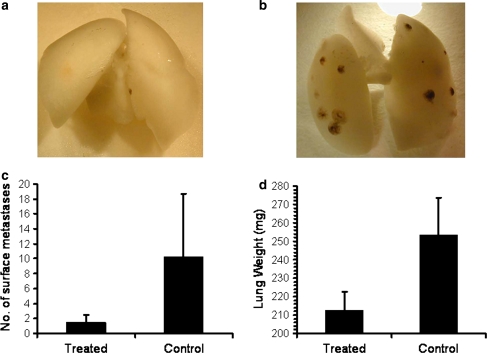
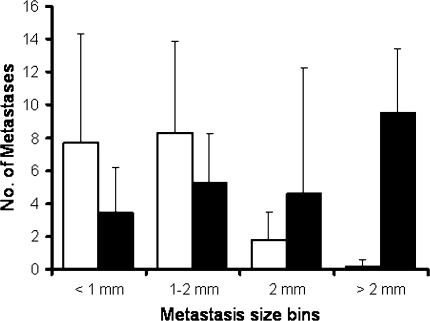
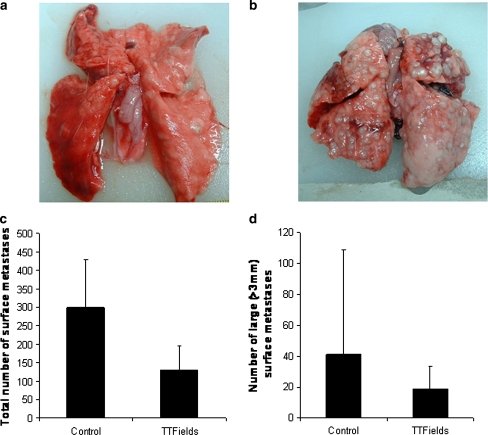
- In mice, 7 days of TTFields reduced surface lung metastases versus sham controls (1.5 ± 1 vs. 10.3 ± 8.4; P < 0.01) and lowered lung weight (212 ± 10 vs. 253 ± 20 mg; P < 0.01). After 1 week of recovery, total metastases were similar (18 ± 12 vs. 17 ± 15; P = 0.87), but size distribution differed significantly (P < 0.05), with more large metastases in controls and more small metastases in treated mice.
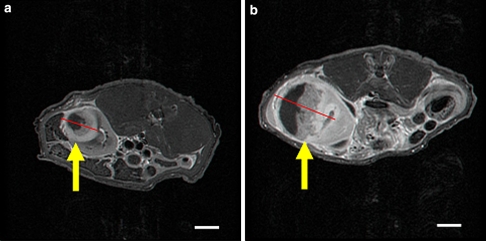
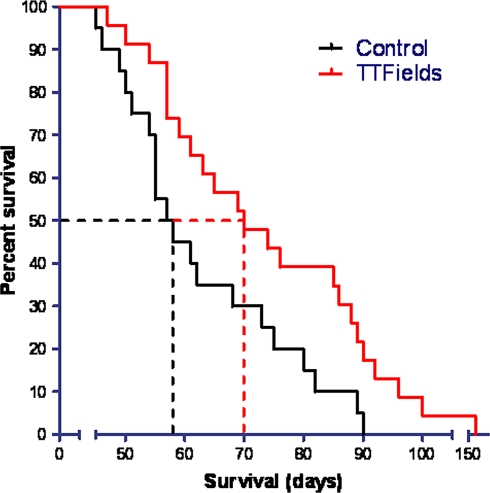
- In rabbits, TTFields reduced primary kidney tumor volume after treatment (29.0 ± 18.5 vs. 61.1 ± 38.5 cm³; P = 0.0011) and daily growth rate (1.2 ± 1.1 vs. 3.5 ± 3.2; P = 0.003). Median survival was 70 days in treated rabbits versus 57 days in controls (Log-Rank P < 0.05).
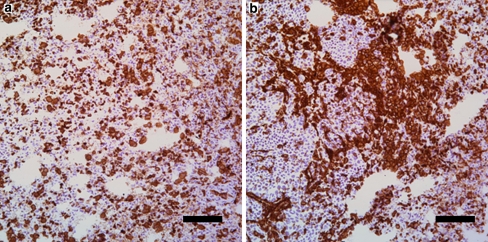
- Rabbit lung metastases were lower when treatment began before day 14 from implantation (n = 12; Fig. 6c; the text reports this as significant while listing P > 0.05), with a trend toward fewer large metastases >3 mm (P = 0.11); no difference was seen when treatment started later. Histology showed fewer metastases per cross-section (11.8 vs. 23.2), smaller mean diameter (1.4 mm vs. 6.2 mm), greater mononuclear infiltration (score 2.0 vs. 1.4), and increased CD4, CD8, and CD45 T-cell counts in TTFields-treated rabbits.
Methods
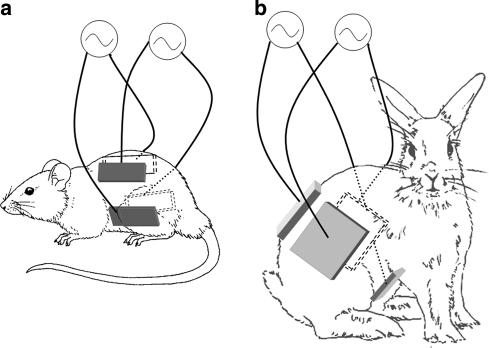
- Two animal models were used: female C57BL/6 mice (n = 35) injected IV with B16F10 melanoma and treated with two-directional 100 kHz TTFields for 7 days; and New Zealand White rabbits implanted with VX-2 tumor fragments under the kidney capsule and treated with two-directional 200 kHz TTFields for 5 weeks.
- Outcomes included mouse lung surface metastases and lung weights at 1 or 7 days after treatment; rabbit MRI tumor volume, survival, and histological/immunohistochemical analysis of lung metastases.
- Statistical analysis used Student’s t-test, Chi-squared test, Log-Rank test, and a semi-quantitative score (0–5) for immune cell infiltration.
Limitations
- The paper states that the immune marker profile is not sufficient to prove a tumor-antigen-specific immune reaction, and that the microtubule/migration hypothesis was not directly tested; future experiments are warranted.
- The paper presents several possible explanations for reduced rabbit lung metastases—lower primary tumor load, inhibited migration into circulation, and systemic immune activation—without directly distinguishing among them.
- Evident from the text: this is a preclinical animal study only, with small subgroup samples (e.g., n = 12 for early-treatment lung metastasis analysis), and one reported result is internally inconsistent (“significantly lower” with P > 0.05).
Model-written summary. Check it against the paper before relying on it.
Integrity signals
Registry
Cites
Statistics
Figures
Verification
Claims the paper makes
23 Own result · 11 Own interpretation · 8 Not checked yet · 4 Own method · 1 Partly supported · accuracy not yet measured
A result the paper reports from its own data — it cites no other source for it, so there is none to check. The quote shows it is in the paper.
In the paper
“In the lung sections, it was noted in all preparations that a mononuclear cell infiltration was present around and within the metastases.”
§ Alternating electric fields (TTFields) inhibit metastatic spread of solid tumors to the lungs > Results > Effect of TTFields therapy on the formation and growth of pulmonary metastases, and the local immune response in rabbits
plain- Asserted: passes — The authors put it forward as true.
- Checkable: passes — It can be checked against evidence.
- Load-bearing: unclear — It is unclear whether the paper’s conclusions depend on it.
- Based: passes — The paper gives a reason why it holds.
A result the paper reports from its own data — it cites no other source for it, so there is none to check. The quote shows it is in the paper.
In the paper
“Mean metastasis diameter was 1.4 mm per tumor cross-section in TTFields treated groups and 6.2 mm in the control group.”
§ Alternating electric fields (TTFields) inhibit metastatic spread of solid tumors to the lungs > Results > Effect of TTFields therapy on the formation and growth of pulmonary metastases, and the local immune response in rabbits
plain- Asserted: passes — The authors put it forward as true.
- Checkable: passes — It can be checked against evidence.
- Load-bearing: passes — The paper’s conclusions depend on it.
- Based: passes — The paper gives a reason why it holds.
A result the paper reports from its own data — it cites no other source for it, so there is none to check. The quote shows it is in the paper.
In the paper
“When treatment was started later than 14 days from implantation, no difference was seen in the number lung metastases between the groups.”
§ Alternating electric fields (TTFields) inhibit metastatic spread of solid tumors to the lungs > Results > Effect of TTFields therapy on the formation and growth of pulmonary metastases, and the local immune response in rabbits
plain- Asserted: passes — The authors put it forward as true.
- Checkable: passes — It can be checked against evidence.
- Load-bearing: passes — The paper’s conclusions depend on it.
- Based: passes — The paper gives a reason why it holds.
A result the paper reports from its own data — it cites no other source for it, so there is none to check. The quote shows it is in the paper.
In the paper
“The average TTFields intensities in the lung were 0.5 V/cm which is a fifth of the field intensity measured in the kidney (see “Methods”).”
- Also stated in: § Metastases in rabbits · hedged
“The TTFields intensity in the lungs was about 20% of the fields’ intensity in the kidney (data not shown).”
§ Alternating electric fields (TTFields) inhibit metastatic spread of solid tumors to the lungs > Results > Effect of TTFields therapy on the formation and growth of pulmonary metastases, and the local immune response in rabbits
plain- Asserted: passes — The authors put it forward as true.
- Checkable: passes — It can be checked against evidence.
- Load-bearing: passes — The paper’s conclusions depend on it.
- Based: passes — The paper gives a reason why it holds.
- Also stated in: § Metastases in rabbits · hedged
A result the paper reports from its own data — it cites no other source for it, so there is none to check. The quote shows it is in the paper.
In the paper
“This investigation revealed that TTFields treated rabbits had significantly increased CD4, CD8, and CD45 T-cell counts (Table 1) as compared to control.”
§ Alternating electric fields (TTFields) inhibit metastatic spread of solid tumors to the lungs > Results > Effect of TTFields therapy on the formation and growth of pulmonary metastases, and the local immune response in rabbits
plaindirect- Asserted: passes — The authors put it forward as true.
- Checkable: passes — It can be checked against evidence.
- Load-bearing: passes — The paper’s conclusions depend on it.
- Based: passes — The paper gives a reason why it holds.
A result the paper reports from its own data — it cites no other source for it, so there is none to check. The quote shows it is in the paper.
In the paper
“When mice were followed for an additional week after termination of the TTField treatment, the overall number of lung metastases was similar in TTFields and sham control animals (18 ± 12 vs. 17 ± 15, respectively; P = 0.87)”
§ Alternating electric fields (TTFields) inhibit metastatic spread of solid tumors to the lungs > Results > TTFields treatment of a melanoma lung metastases model in mice
plain- Asserted: passes — The authors put it forward as true.
- Checkable: passes — It can be checked against evidence.
- Load-bearing: passes — The paper’s conclusions depend on it.
- Based: passes — The paper gives a reason why it holds.
A result the paper reports from its own data — it cites no other source for it, so there is none to check. The quote shows it is in the paper.
In the paper
“The average daily growth rate of the TTFields treated tumors was also significantly lower than that of the sham controls (1.2 ± 1.1 vs. 3.5 ± 3.2, respectively; P = 0.003).”
§ Alternating electric fields (TTFields) inhibit metastatic spread of solid tumors to the lungs > Results > Effect of TTFields therapy on the formation and growth of pulmonary metastases, and the local immune response in rabbits
plaindirect- Asserted: passes — The authors put it forward as true.
- Checkable: passes — It can be checked against evidence.
- Load-bearing: passes — The paper’s conclusions depend on it.
- Based: passes — The paper gives a reason why it holds.
A result the paper reports from its own data — it cites no other source for it, so there is none to check. The quote shows it is in the paper.
In the paper
“The average number of surface metastases per lung in the TTFields group was significantly lower than in sham controls: 1.5 ± 1 compared to 10.3 ± 8.4, respectively (Fig. 2c; P < 0.01).”
§ Alternating electric fields (TTFields) inhibit metastatic spread of solid tumors to the lungs > Results > TTFields treatment of a melanoma lung metastases model in mice
plaindirect- Asserted: passes — The authors put it forward as true.
- Checkable: passes — It can be checked against evidence.
- Load-bearing: passes — The paper’s conclusions depend on it.
- Based: passes — The paper gives a reason why it holds.
A result the paper reports from its own data — it cites no other source for it, so there is none to check. The quote shows it is in the paper.
In the paper
“The average lung weight of the TTFields treated animals was also significantly lower than the average lung weight in the control group (212 ± 10 vs. 253 ± 20 mg, respectively; P < 0.01; see Fig. 2d).”
§ Alternating electric fields (TTFields) inhibit metastatic spread of solid tumors to the lungs > Results > TTFields treatment of a melanoma lung metastases model in mice
plaindirect- Asserted: passes — The authors put it forward as true.
- Checkable: passes — It can be checked against evidence.
- Load-bearing: passes — The paper’s conclusions depend on it.
- Based: passes — The paper gives a reason why it holds.
A result the paper reports from its own data — it cites no other source for it, so there is none to check. The quote shows it is in the paper.
In the paper
“The extent of this cell infiltration was more profound in TTFields treated rabbits compared to the controls with a mean score of 2.0 for the treatment group and 1.4 for the control group.”
§ Alternating electric fields (TTFields) inhibit metastatic spread of solid tumors to the lungs > Results > Effect of TTFields therapy on the formation and growth of pulmonary metastases, and the local immune response in rabbits
plaincorrelational- Asserted: passes — The authors put it forward as true.
- Checkable: passes — It can be checked against evidence.
- Load-bearing: unclear — It is unclear whether the paper’s conclusions depend on it.
- Based: passes — The paper gives a reason why it holds.
- Probably not a substantial claim. 9
- It may state two separate claims as one. 10
- The quote only partly states this claim. 1
The cited sources support only part of this claim — read each source’s verdict below.
In the paper
“TTFields are low intensity, intermediate frequency alternating electric fields that were shown to disrupt cancer cell replication in vitro and to slow tumor progression in animal cancer models and patients with recurrent and newly diagnosed glioblastoma [18–20].”
§ Alternating electric fields (TTFields) inhibit metastatic spread of solid tumors to the lungs > Introduction
What the sources say
- Partly supportedcites [18] Kirson ED, Dbaly V, Tovarys F et al (2007) Alternating electric fields arrest cell proliferation in animal tumor models and human brain tumors. Proc Natl Acad Sci USA 104(24):10152–10157. doi: 10.1073/pnas.0702916104 sourceExperimental — accuracy not yet measured
The Abstract reports inhibited tumor growth in animal models and a pilot trial in patients with recurrent glioblastoma. The Methods likewise identify the patients as having recurrent glioblastoma. Our copy does not support the claim about newly diagnosed patients. (LLM, conf=0.88)
- Partly supportedcites [19] Kirson ED, Gurvich Z, Schneiderman R et al (2004) Disruption of cancer cell replication by alternating electric fields. Cancer Res 64(9):3288–3295. doi: 10.1158/0008-5472.CAN-04-0083 sourceExperimental — accuracy not yet measured
The “Effect of TTFields on Tumors in Vivo” section reports smaller treated tumors in two mouse cancer models, supporting the animal-model part of the claim. The paper does not report outcomes in patients with recurrent or newly diagnosed glioblastoma, so it does not support that part. (LLM, conf=0.90)
- Supportedcites [20] Kirson ED, Schneiderman RS, Dbaly V et al (2009) Chemotherapeutic treatment efficacy and sensitivity are increased by adjuvant alternating electric fields (TTFields). BMC Med Phys 9(1):1. doi: 10.1186/1756-6649-9-1 source
The Results section (page not provided) reports slower tumor growth in TTFields-treated rabbits than in untreated controls. The pilot clinical trial Results report longer progression-free survival in recurrent GBM patients treated with TTFields and in newly diagnosed patients treated with TTFields plus temozolomide, compared with their respective controls. The newly diagnosed finding concerns combination treatment, not TTFields alone. (LLM, conf=0.91)
plaindirect- Asserted: passes — The authors put it forward as true.
- Checkable: passes — It can be checked against evidence.
- Load-bearing: fails — The paper’s conclusions may not depend on it.
- Based: passes — The paper gives a reason why it holds.
Probably not a substantial claim. The paper’s conclusions may not depend on it. It may state two separate claims as one.
- Partly supported
A result the paper reports from its own data — it cites no other source for it, so there is none to check. The quote shows it is in the paper.
In the paper
“However, the distribution of metastasis sizes differed significantly between the groups (P < 0.05, Chi-squared test) with a higher proportion of large metastases seen in the control group, and a higher proportion of small metastases in the TTFields treated group (Fig. 3).”
§ Alternating electric fields (TTFields) inhibit metastatic spread of solid tumors to the lungs > Results > TTFields treatment of a melanoma lung metastases model in mice
plaincorrelational- Asserted: passes — The authors put it forward as true.
- Checkable: passes — It can be checked against evidence.
- Load-bearing: passes — The paper’s conclusions depend on it.
- Based: passes — The paper gives a reason why it holds.
It may state two separate claims as one.
A result the paper reports from its own data — it cites no other source for it, so there is none to check. The quote shows it is in the paper.
In the paper
“The mean number of lung metastases per tumor cross-section was 11.8 in TTFields treated mice and 23.2 for the control group.”
§ Alternating electric fields (TTFields) inhibit metastatic spread of solid tumors to the lungs > Results > Effect of TTFields therapy on the formation and growth of pulmonary metastases, and the local immune response in rabbits
plain- Asserted: passes — The authors put it forward as true.
- Checkable: passes — It can be checked against evidence.
- Load-bearing: passes — The paper’s conclusions depend on it.
- Based: passes — The paper gives a reason why it holds.
The quote only partly states this claim.
A result the paper reports from its own data — it cites no other source for it, so there is none to check. The quote shows it is in the paper.
In the paper
“The median survival of TTFields treated animals was 70 days which is significantly longer than the 57 days of the control animals (Log-Rank test; P < 0.05).”
§ Alternating electric fields (TTFields) inhibit metastatic spread of solid tumors to the lungs > Results > Effect of TTFields therapy on the formation and growth of pulmonary metastases, and the local immune response in rabbits
plaindirectn = 23 ·- Asserted: passes — The authors put it forward as true.
- Checkable: passes — It can be checked against evidence.
- Load-bearing: passes — The paper’s conclusions depend on it.
- Based: passes — The paper gives a reason why it holds.
It may state two separate claims as one.
A result the paper reports from its own data — it cites no other source for it, so there is none to check. The quote shows it is in the paper.
In the paper
“Among the intra-tumoral infiltrating cells, CD4 T-cells were more prevalent than CD8 T-cells.”
§ Alternating electric fields (TTFields) inhibit metastatic spread of solid tumors to the lungs > Results > Effect of TTFields therapy on the formation and growth of pulmonary metastases, and the local immune response in rabbits
plaincorrelational- Asserted: passes — The authors put it forward as true.
- Checkable: passes — It can be checked against evidence.
- Load-bearing: fails — The paper’s conclusions may not depend on it.
- Based: passes — The paper gives a reason why it holds.
Probably not a substantial claim. The paper’s conclusions may not depend on it.
A result the paper reports from its own data — it cites no other source for it, so there is none to check. The quote shows it is in the paper.
In the paper
“Interestingly, though most of the immune infiltration was seen in the peri-tumoral location, the most significant difference was the presence of an abundant intra-tumoral infiltration in TTFields treated rabbits.”
§ Alternating electric fields (TTFields) inhibit metastatic spread of solid tumors to the lungs > Results > Effect of TTFields therapy on the formation and growth of pulmonary metastases, and the local immune response in rabbits
plaincorrelational- Asserted: passes — The authors put it forward as true.
- Checkable: passes — It can be checked against evidence.
- Load-bearing: unclear — It is unclear whether the paper’s conclusions depend on it.
- Based: passes — The paper gives a reason why it holds.
It may state two separate claims as one.
A result the paper reports from its own data — it cites no other source for it, so there is none to check. The quote shows it is in the paper.
In the paper
“A trend towards a lower number of large metastases (>3 mm in diameter) was also seen in TTFields treated group, however, here the difference did not reach significance (Fig. 6d; P = 0.11).”
§ Alternating electric fields (TTFields) inhibit metastatic spread of solid tumors to the lungs > Results > Effect of TTFields therapy on the formation and growth of pulmonary metastases, and the local immune response in rabbits
hedgedn = 12- Asserted: passes — The authors put it forward as true.
- Checkable: passes — It can be checked against evidence.
- Load-bearing: unclear — It is unclear whether the paper’s conclusions depend on it.
- Based: passes — The paper gives a reason why it holds.
It may state two separate claims as one.
None of the sources cited for this claim have been checked yet.
In the paper
“TTFields are low intensity, intermediate frequency alternating electric fields that were shown to disrupt cancer cell replication in vitro and to slow tumor progression in animal cancer models and patients with recurrent and newly diagnosed glioblastoma [18–20].”
§ Alternating electric fields (TTFields) inhibit metastatic spread of solid tumors to the lungs > Introduction
What the sources say
- Not checked yetcites [18] Kirson ED, Dbaly V, Tovarys F et al (2007) Alternating electric fields arrest cell proliferation in animal tumor models and human brain tumors. Proc Natl Acad Sci USA 104(24):10152–10157. doi: 10.1073/pnas.0702916104 source
- Not checked yetcites [19] Kirson ED, Gurvich Z, Schneiderman R et al (2004) Disruption of cancer cell replication by alternating electric fields. Cancer Res 64(9):3288–3295. doi: 10.1158/0008-5472.CAN-04-0083 source
- Not checked yetcites [20] Kirson ED, Schneiderman RS, Dbaly V et al (2009) Chemotherapeutic treatment efficacy and sensitivity are increased by adjuvant alternating electric fields (TTFields). BMC Med Phys 9(1):1. doi: 10.1186/1756-6649-9-1 source
plaindirect- Asserted: passes — The authors put it forward as true.
- Checkable: passes — It can be checked against evidence.
- Load-bearing: fails — The paper’s conclusions may not depend on it.
- Based: passes — The paper gives a reason why it holds.
Probably not a substantial claim. The paper’s conclusions may not depend on it.
In the paper
“It is becoming widely accepted that immune response can inhibit the proliferation of cancerous cell or even eliminate them (reviewed by Dunn et al. [23])”
§ Alternating electric fields (TTFields) inhibit metastatic spread of solid tumors to the lungs > Discussion > Metastases in rabbits
What the sources say
- Not checked yetcites [23] Dunn GP, Bruce AT, Ikeda H et al (2002) Cancer immunoediting: from immunosurveillance to tumor escape. Nat Immunol 3(11):991–998. doi: 10.1038/ni1102-991 source
plaindirect- Asserted: passes — The authors put it forward as true.
- Checkable: passes — It can be checked against evidence.
- Load-bearing: passes — The paper’s conclusions depend on it.
- Based: passes — The paper gives a reason why it holds.
Probably not a substantial claim. It may state two separate claims as one.
In the paper
“Such migration is dependant on the proper formation of a microtubule based processes in the migrating cells [22].”
§ Alternating electric fields (TTFields) inhibit metastatic spread of solid tumors to the lungs > Discussion > Metastases in rabbits
What the sources say
- Not checked yetcites [22] Suresh S (2007) Biomechanics and biophysics of cancer cells. Acta Biomater 3(4):413–438. doi: 10.1016/j.actbio.2007.04.002 source
plaindirect- Asserted: passes — The authors put it forward as true.
- Checkable: passes — It can be checked against evidence.
- Load-bearing: passes — The paper’s conclusions depend on it.
- Based: passes — The paper gives a reason why it holds.
Probably not a substantial claim.
A conclusion the paper draws from its own results — it cites no other source for it, so there is none to check. The quote shows it is in the paper.
In the paper
“Furthermore, the different size distribution between the two groups suggests that the metastases progression was inhibited in the TTFields group during treatment, an effect which may have been attenuated or partially lost after 1 week recovery.”
§ Alternating electric fields (TTFields) inhibit metastatic spread of solid tumors to the lungs > Discussion > Metastases in mice
hedgedconditional- Asserted: passes — The authors put it forward as true.
- Checkable: passes — It can be checked against evidence.
- Load-bearing: passes — The paper’s conclusions depend on it.
- Based: passes — The paper gives a reason why it holds.
It may state two separate claims as one.
What the paper did — it cites no source for this, so there is none to check. The quote shows it is in the paper.
In the paper
“Each sham electrode array was provided with an electrical heating element to match the temperature generated on the skin by the TTFields treatment electrodes.”
§ Alternating electric fields (TTFields) inhibit metastatic spread of solid tumors to the lungs > Materials and methods > Effect of TTFields therapy on the formation and growth of pulmonary metastases, and the local immune response in rabbits
plain- Asserted: passes — The authors put it forward as true.
- Checkable: passes — It can be checked against evidence.
- Load-bearing: passes — The paper’s conclusions depend on it.
- Based: passes — The paper gives a reason why it holds.
Probably not a substantial claim.
What the paper did — it cites no source for this, so there is none to check. The quote shows it is in the paper.
In the paper
“Tumor volume assessment by MRI was performed by a technician blinded to the group of each rabbit.”
§ Alternating electric fields (TTFields) inhibit metastatic spread of solid tumors to the lungs > Materials and methods > Effect of TTFields therapy on the formation and growth of pulmonary metastases, and the local immune response in rabbits
plain- Asserted: passes — The authors put it forward as true.
- Checkable: passes — It can be checked against evidence.
- Load-bearing: fails — The paper’s conclusions may not depend on it.
- Based: passes — The paper gives a reason why it holds.
Probably not a substantial claim. The paper’s conclusions may not depend on it.
A conclusion the paper draws from its own results — it cites no other source for it, so there is none to check. The quote shows it is in the paper.
In the paper
“This milieu of immune markers indicates a T-cell mediated immune response; however, it is not yet sufficient to prove a tumor-antigen specific immune reaction.”
§ Alternating electric fields (TTFields) inhibit metastatic spread of solid tumors to the lungs > Discussion > Metastases in rabbits
hedgedcorrelational- Asserted: passes — The authors put it forward as true.
- Checkable: passes — It can be checked against evidence.
- Load-bearing: unclear — It is unclear whether the paper’s conclusions depend on it.
- Based: passes — The paper gives a reason why it holds.
It may state two separate claims as one.
What the paper did — it cites no source for this, so there is none to check. The quote shows it is in the paper.
In the paper
“Control mice were treated by means of sham electrodes which were both temperature, and geometrically matched to the TTFields group.”
§ Alternating electric fields (TTFields) inhibit metastatic spread of solid tumors to the lungs > Materials and methods > TTFields treatment of a melanoma lung metastases model in mice
plain- Asserted: passes — The authors put it forward as true.
- Checkable: passes — It can be checked against evidence.
- Load-bearing: passes — The paper’s conclusions depend on it.
- Based: passes — The paper gives a reason why it holds.
Probably not a substantial claim.
A conclusion the paper draws from its own results — it cites no other source for it, so there is none to check. The quote shows it is in the paper.
In the paper
“Therefore, TTFields may not only be clinically useful in treatment of locally advanced tumors, but in prevention and treatment of metastatic disease as well.”
§ Alternating electric fields (TTFields) inhibit metastatic spread of solid tumors to the lungs > Discussion > Metastases in rabbits
hedgedconditional- Asserted: passes — The authors put it forward as true.
- Checkable: passes — It can be checked against evidence.
- Load-bearing: passes — The paper’s conclusions depend on it.
- Based: passes — The paper gives a reason why it holds.
It may state two separate claims as one.
In the paper
“Interestingly, CD45 activation can induce the production of TNFα [24] which in turn activates a family of cell-surface receptors that can mediate cell death.”
§ Alternating electric fields (TTFields) inhibit metastatic spread of solid tumors to the lungs > Discussion > Metastases in rabbits
What the sources say
- Not checked yetcites [24] Hayes AL, Smith C, Foxwell BM et al (1999) CD45-induced tumor necrosis factor alpha production in monocytes is phosphatidylinositol 3-kinase-dependent and nuclear factor-kappaB-independent. J Biol Chem 274(47):33455–33461. doi: 10.1074/jbc.274.47.33455 source
plaindirect- Asserted: passes — The authors put it forward as true.
- Checkable: passes — It can be checked against evidence.
- Load-bearing: fails — The paper’s conclusions may not depend on it.
- Based: passes — The paper gives a reason why it holds.
Probably not a substantial claim. The paper’s conclusions may not depend on it. It may state two separate claims as one.
The paper relies on this without support.
Little is known about the effect of TTFields on the metastatic spread of solid tumors.
“Yet, little is know about the effect of TTFields on the metastatic spread of solid tumors.”
The authors state this as an assumption.
The activation of the immune response in the rabbits' lungs was mediated by the TTFields treatment.
“Assuming that the activation of the immune response in the rabbits’ lungs was mediated by the TTFields treatment”
Claims other papers make about this one
Each is checked against this paper’s own text: does it say what the citing paper says it does?
In the citing paper
“These in vitro observations could also be confirmed in vivo in mice and rabbit tumor models.8”
From Tumor treating fields: A novel treatment modality and its use in brain tumors (2016) · cites this paper as [8]
In the citing paper
“TTFields have demonstrated effectiveness in the treatment of solid tumors in vitro and in vivo.[6][7][8][9][10]”
Self-check
Percentages, sums and reported differences re-computed from the paper’s own numbers.
Each contradiction between two passages listed here was confirmed by an independent check.
Rated minor: it would not touch a result — a value no result rests on, a p-value that stays on the same side of the significance level, or a conflict that is clerical, resolved elsewhere in the paper, or outside its own findings.
In the paper
§ Alternating electric fields (TTFields) inhibit metastatic spread of solid tumors to the lungs > Results > Effect of TTFields therapy on the formation and growth of pulmonary metastases, and the local immune response in rabbits
“The mean number of lung metastases per tumor cross-section was 11.8 in TTFields treated mice and 23.2 for the control group.”
§ Alternating electric fields (TTFields) inhibit metastatic spread of solid tumors to the lungs > Results > Effect of TTFields therapy on the formation and growth of pulmonary metastases, and the local immune response in rabbits
“Similar results were obtained by microscopic scanning of histological slides of lungs in TTFields treated versus sham control rabbits.”
Rated minor: it would not touch a result — a value no result rests on, a p-value that stays on the same side of the significance level, or a conflict that is clerical, resolved elsewhere in the paper, or outside its own findings.
In the paper
§ Alternating electric fields (TTFields) inhibit metastatic spread of solid tumors to the lungs > Results > Effect of TTFields therapy on the formation and growth of pulmonary metastases, and the local immune response in rabbits
“when treatment was initiated before day 14 from implantation (n = 12)”
§ Alternating electric fields (TTFields) inhibit metastatic spread of solid tumors to the lungs > Materials and methods > Effect of TTFields therapy on the formation and growth of pulmonary metastases, and the local immune response in rabbits
“Two weeks after tumor implantation, baseline MRI was performed to detect the presence of tumor and to assess its baseline volume. On the day following the baseline MRI, 4 electrode arrays each consisting of 9 insulated electrodes (2.85 mm2 each) connected in parallel were placed on torso of each tumor bearing animal of the treated group.”
Citations
Cites
Cancer immunoediting: from immunosurveillance to tumor escape
Dunn, G. P., Bruce, A. T., Ikeda, H., Old, L. J., & Schreiber, R. D. (2002) · Nature Immunology · doi:10.1038/ni1102-991 · Cited by 5,393
The tumor microenvironment and its role in promoting tumor growth
Whiteside, T. L. (2008) · Oncogene · doi:10.1038/onc.2008.271 · Cited by 2,376
Long-term results of lung metastasectomy: Prognostic analyses based on 5206 cases
Pastorino, U., Buyse, M. E., Friedel, G., Ginsberg, R. J., Girard, P., Goldstraw, P. G., Johnston, M. G., McCormack, P. M. E., Pass, H. I., & Putnam, J. B. (1997) · Journal of Thoracic and Cardiovascular Surgery · doi:10.1016/s0022-5223(97)70397-0 · Cited by 1,533
Biomechanics and biophysics of cancer cells☆
SURESH, S. (2007) · Acta Biomaterialia · doi:10.1016/j.actbio.2007.04.002 · Cited by 1,284
Alternating electric fields arrest cell proliferation in animal tumor models and human brain tumors
Kirson, E. D., Dbalý, V., Tovaryš, F., Vymazal, J., Soustiel, J. F., Itzhaki, A., Mordechovich, D., Steinberg-Shapira, S., Gurvich, Z., Schneiderman, R., et al. (2007) · Proceedings of the National Academy of Sciences · doi:10.1073/pnas.0702916104 · Cited by 894
Self-citationDisruption of cancer cell replication by alternating electric fields
Kirson, E. D., Gurvich, Z., Schneiderman, R., Dekel, E., Itzhaki, A., Wasserman, Y., Schatzberger, R., & Palti, Y. (2004) · Cancer research · doi:10.1158/0008-5472.can-04-0083 · Cited by 827
Self-citationBillingsley, K. G., Burt, M. E., Jara, E., Ginsberg, R. J., Woodruff, J. M., Leung, D. H. Y., & Brennan, M. F. (1999) · Annals of Surgery · doi:10.1097/00000658-199905000-00002 · Cited by 623
The anticancer immune response: indispensable for therapeutic success?
Zitvogel, L., Apétoh, L., Ghiringhelli, F., André, F., Tesnière, A., & Kroemer, G. (2008) · Journal of Clinical Investigation · doi:10.1172/jci35180 · Cited by 588
Kirson, E. D., Schneiderman, R. S., Dbalý, V., Tovaryš, F., Vymazal, J., Itzhaki, A., Mordechovich, D., Gurvich, Z., Shmueli, E., Goldsher, D., et al. (2009) · BMC Medical Physics · doi:10.1186/1756-6649-9-1 · Cited by 224
Self-citationD. G. C. I. N. (German Cooperative Renal Carcinoma Chemo-Immunotherapy Trials Group), Atzpodien, J., Kirchner, H. H., Illiger, H. J., Metzner, B., Ukena, D., Schott, H., Funke, P.-J., Gramatzki, M., von Jürgenson, S., et al. (2001) · British Journal of Cancer · doi:10.1054/bjoc.2001.2076 · Cited by 133
Research works printed but not linked: 1
- Sardari N, Colpaert C (2007) Lung metastases: epidemiology, clinical presentation and imaging. In: Schil P (ed) Lung metastases and isolated lung perfusion. Nova Science Publishers Inc., New York, pp 3–25
Cited by
Sorted by citations
Tumor-Treating Fields: A Fourth Modality in Cancer Treatment
Mun, E. J., Babiker, H. M., Weinberg, U., Kirson, E. D., & Von Hoff, D. D. (2018) · Clinical Cancer Research · doi:10.1158/1078-0432.ccr-17-1117 · Cited by 380
Self-citationTumour treating fields therapy for glioblastoma: current advances and future directions
Rominiyi, O., Vanderlinden, A., Clenton, S. J., Bridgewater, C. H., Al-Tamimi, Y., & Collis, S. J. (2020) · British Journal of Cancer · doi:10.1038/s41416-020-01136-5 · Cited by 342
Tumor Treating Fields Perturb the Localization of Septins and Cause Aberrant Mitotic Exit
Gera, N., Yang, A., Holtzman, T. S., Lee, S. X., Wong, E. T., & Swanson, K. D. (2015) · PLOS ONE · doi:10.1371/journal.pone.0125269 · Cited by 217
Tumor treating fields: A new frontier in cancer therapy
Davies, A. M., Weinberg, U., & Palti, Y. (2013) · Annals of the New York Academy of Sciences · doi:10.1111/nyas.12112 · Cited by 193
Self-citationVoloshin, T., Kaynan, N., Davidi, S., Porat, Y., Shteingauz, A., Schneiderman, R. S., Zeevi, E., Munster, M., Blat, R., Tempel-Brami, C., et al. (2020) · Cancer Immunology Immunotherapy · doi:10.1007/s00262-020-02534-7 · Cited by 189
Self-citationTumor treating fields: A novel treatment modality and its use in brain tumors
Hottinger, A. F., Pacheco, P., & Stupp, R. (2016) · Neuro-Oncology · doi:10.1093/neuonc/now182 · Cited by 177
Chen, D., Le, S. B., Hutchinson, T. E., Calinescu, A.-A., Sebastian, M., Jin, D., Liu, T., Ghiaseddin, A. P., Rahman, M., & Tran, D. D. (2022) · Journal of Clinical Investigation · doi:10.1172/jci149258 · Cited by 157
Tumor treating fields inhibit glioblastoma cell migration, invasion and angiogenesis
Kim, E. H., Song, H. S., Yoo, S., & Yoon, M. (2016) · Oncotarget · doi:10.18632/oncotarget.11372 · Cited by 145
Cancer cell proliferation is inhibited by specific modulation frequencies
Zimmerman, J. W., Pennison, M. J., Brezovich, I. A., Yi, N., Yang, C. T., Ramaker, R. C., Absher, D., Myers, R., Kuster, N., Costa, F. P., et al. (2011) · British Journal of Cancer · doi:10.1038/bjc.2011.523 · Cited by 144
Karanam, N. K., Kalayarasan, S., Ding, L., Sishc, B. J., Saha, D., & Story, M. D. (2017) · Cell Death and Disease · doi:10.1038/cddis.2017.136 · Cited by 134
Giladi, M., Weinberg, U., Schneiderman, R. S., Porat, Y., Munster, M., Voloshin, T., Blatt, R., Cahal, S., Itzhaki, A., Onn, A., et al. (2014) · Seminars in Oncology · doi:10.1053/j.seminoncol.2014.09.006 · Cited by 132
Self-citationPredicting the electric field distribution in the brain for the treatment of glioblastoma
Miranda, P. C., Mekonnen, A., Salvador, R., & Basser, P. J. (2014) · Physics in Medicine and Biology · doi:10.1088/0031-9155/59/15/4137 · Cited by 131
Wenger, C., Miranda, P. C., Salvador, R., Thielscher, A., Bomzon, Z., Giladi, M., Mrugala, M. M., & Korshoej, A. R. (2018) · IEEE Reviews in Biomedical Engineering · doi:10.1109/rbme.2017.2765282 · Cited by 129
Self-citationThe Mechanisms of Action of Tumor Treating Fields
Moser, J. C., Salvador, E., Deniz, K., Swanson, K. D., Tuszyński, J. A., Carlson, K. W., Karanam, N. K., Patel, C. B., Story, M. D., Lou, E., et al. (2022) · Cancer Research · doi:10.1158/0008-5472.can-22-0887 · Cited by 122
Biological activity of tumor-treating fields in preclinical glioma models
Silginer, M., Weller, M., Stupp, R., & Roth, P. (2017) · Cell Death & Disease · doi:10.1038/cddis.2017.171 · Cited by 111
Costa, F. P., de Oliveira, A. C., Meirelles, R. F., Machado, M. C. C., Zanesco, T., Surjan, R. C. T., Chammas, M. C., Rocha, M. D. S., Morgan, D. E., Cantor, A. B., et al. (2011) · British Journal of Cancer · doi:10.1038/bjc.2011.292 · Cited by 110
Pless, M., Droege, C., von Moos, R., Salzberg, M. O., & Betticher, D. C. (2013) · Lung Cancer · doi:10.1016/j.lungcan.2013.06.025 · Cited by 106
Tumor Treating Fields in the Management of Patients with Malignant Gliomas
Ghiaseddin, A. P., Shin, D. H., Melnick, K. F., & Tran, D. D. (2020) · Current Treatment Options in Oncology · doi:10.1007/s11864-020-00773-5 · Cited by 106
Giladi, M., Schneiderman, R. S., Porat, Y., Munster, M., Itzhaki, A., Mordechovich, D., Cahal, S., Kirson, E. D., Weinberg, U., & Palti, Y. (2014) · Pancreatology · doi:10.1016/j.pan.2013.11.009 · Cited by 98
Self-citationAn Overview of Sub-Cellular Mechanisms Involved in the Action of TTFields
Tuszynski, J., Wenger, C., Friesen, D., & Preto, J. (2016) · International Journal of Environmental Research and Public Health · doi:10.3390/ijerph13111128 · Cited by 95
Voloshin, T., Schneiderman, R. S., Volodin, A., Shamir, R. R., Kaynan, N., Zeevi, E., Koren, L., Klein-Goldberg, A., Paz, R., Giladi, M., et al. (2020) · Cancers · doi:10.3390/cancers12103016 · Cited by 94
Self-citationRecent Advances in the Therapeutic Strategies of Glioblastoma Multiforme
Aldoghachi, A. F., Aldoghachi, A. F., Breyne, K., Ling, K., & Cheah, P.-S. (2022) · Neuroscience · doi:10.1016/j.neuroscience.2022.03.030 · Cited by 96
Glioblastoma Therapy in the Age of Molecular Medicine
Geraldo, L. H., Garcia, C., da Fonseca, A. C. C., Dubois, L. G., Spohr, T. C. L. D. S. E., Matias, D., Magalhães, E. S. D. C., do Amaral, R. F., da Rosa, B. G., Grimaldi, I., et al. (2018) · Trends in cancer · doi:10.1016/j.trecan.2018.11.002 · Cited by 93
Kim, E. H., Kim, Y. J., Song, H. S., Jeong, Y. K., Lee, J. Y., Sung, J., Yoo, S., & Yoon, M. (2016) · Oncotarget · doi:10.18632/oncotarget.11407 · Cited by 86
Liquid metal enabled injectable biomedical technologies and applications
Sun, X., Yuan, B., Sheng, L., Rao, W., & Liu, J. (2020) · Applied Materials Today · doi:10.1016/j.apmt.2020.100722 · Cited by 84
Tumor treating fields: concept, evidence and future
Pless, M., & Weinberg, U. (2011) · Expert Opinion on Investigational Drugs · doi:10.1517/13543784.2011.583236 · Cited by 78
Tumor-Treating Fields in Glioblastomas: Past, Present, and Future
Guo, X., Yang, X., Wu, J., Yang, H., Li, Y., Li, J., Liu, Q., Chen, W., Xing, H., Liu, P., et al. (2022) · Cancers · doi:10.3390/cancers14153669 · Cited by 75
Swanson, K. D., Lok, E., & Wong, E. T. (2016) · Current Neurology and Neuroscience Reports · doi:10.1007/s11910-015-0606-5 · Cited by 66
Mittal, S., Klinger, N. V., Michelhaugh, S. K., Barger, G. R., Pannullo, S. C., & Juhász, C. (2017) · Journal of neurosurgery · doi:10.3171/2016.9.jns16452 · Cited by 66
Schneiderman, R. S., Shmueli, E., Kirson, E. D., & Palti, Y. (2010) · BMC Cancer · doi:10.1186/1471-2407-10-229 · Cited by 65
Self-citationBioelectromagnetic medicine: The role of resonance signaling
Foletti, A., Grimaldi, S., Lisi, A., Ledda, M., & Liboff, A. R. (2013) · Electromagnetic Biology and Medicine · doi:10.3109/15368378.2012.743908 · Cited by 65
Alternating Electric Fields (TTFields) Activate Cav1.2 Channels in Human Glioblastoma Cells
Neuhaus, E., Zirjacks, L., Ganser, K., Klumpp, L., Schüler, U., Zips, D., Eckert, F., & Huber, S. M. (2019) · Cancers · doi:10.3390/cancers11010110 · Cited by 63
Li, X., Yang, F., & Rubinsky, B. (2020) · IEEE Transactions on Biomedical Engineering · doi:10.1109/tbme.2020.2965883 · Cited by 59
Tanzhu, G., Chen, L., Xiao, G., Shi, W., Peng, H., Chen, D., & Zhou, R. (2022) · Cell Death Discovery · doi:10.1038/s41420-022-01206-y · Cited by 63
The distinguishing electrical properties of cancer cells
Gregorio, E. D., Israel, S. L., Staelens, M., Tankel, G., Shankar, K., & Tuszyński, J. A. (2022) · Physics of Life Reviews · doi:10.1016/j.plrev.2022.09.003 · Cited by 58
Recent advances in Tumor Treating Fields (TTFields) therapy for glioblastoma
Khagi, S., Kotecha, R. R., Gatson, N. T., Jeyapalan, S. A., Abdullah, H. I., Avgeropoulos, N. G., Batzianouli, E., Giladi, M., Lustgarten, L., & Goldlust, S. A. (2024) · The Oncologist · doi:10.1093/oncolo/oyae227 · Cited by 57
Self-citationKaranam, N. K., & Story, M. D. (2020) · International Journal of Radiation Biology · doi:10.1080/09553002.2020.1837984 · Cited by 59
Gutin, P. H., & Wong, E. T. (2012) · American Society of Clinical Oncology Educational Book · doi:10.14694/edbook_am.2012.32.122 · Cited by 54
Progress and prospect in tumor treating fields treatment of glioblastoma
Liu, S., Shi, W., Zhao, Q., Zheng, Z., Liu, Z., Meng, L., Dong, L., & Jiang, X. M. (2021) · Biomedicine & Pharmacotherapy · doi:10.1016/j.biopha.2021.111810 · Cited by 62
Tumor treating fields: a new approach to glioblastoma therapy
Rick, J. W., Chandra, A., & Aghi, M. K. (2018) · Journal of Neuro-Oncology · doi:10.1007/s11060-018-2768-x · Cited by 54
Electromagnetic field investigation on different cancer cell lines
Filipović, N., Djukic, T. R., Radovic, M. D., Cvetković, D. M., Milutinović, M. G., Marković, S., Peulić, A. S., & Jeremic, B. M. (2014) · Cancer Cell International · doi:10.1186/s12935-014-0084-x · Cited by 51
Wu, H., Yang, L., Liu, H., Zhou, D., Chen, D., Zheng, X., Yang, H., Li, C., Chang, J., Wu, A., et al. (2021) · CNS Neuroscience & Therapeutics · doi:10.1111/cns.13750 · Cited by 52
Tumor Treating Fields: At the Crossroads Between Physics and Biology for Cancer Treatment
Carrieri, F. A., Smack, C., Siddiqui, I., Kleinberg, L. R., & Tran, P. T. (2020) · Frontiers in Oncology · doi:10.3389/fonc.2020.575992 · Cited by 50
Babiker, H. M., Picozzi, V. J., Chandana, S. R., Melichar, B., Kasi, A., Gang, J., Gallego, J., Bullock, A., Chunyi, H., Wyrwicz, L. S., et al. (2025) · Journal of Clinical Oncology · doi:10.1200/jco-25-00746 · Cited by 56
Trusheim, J. E., Dunbar, E. M., Battiste, J. D., IWAMOTO, F. M., Mohile, N. A., Damek, D., Bota, D. A., & Connelly, J. (2016) · CNS Oncology · doi:10.2217/cns-2016-0032 · Cited by 48
Lee, Y., Seo, H. W., Baek, J.-H., Lim, S. H., Hwang, S., & Kim, E. H. (2020) · Scientific Reports · doi:10.1038/s41598-020-68473-6 · Cited by 54
Barsheshet, Y., Voloshin, T., Brant, B., Cohen, G., Koren, L., Blatt, R., Cahal, S., Khalil, T. H., Tov, E. Z., Paz, R., et al. (2022) · International Journal of Molecular Sciences · doi:10.3390/ijms232214073 · Cited by 49
Self-citationElectrical stimulation towards melanoma therapy via liquid metal printed electronics on skin
Li, J., Guo, C., Wang, Z., Gao, K., Shi, X., & Liu, J. (2016) · Clinical and Translational Medicine · doi:10.1186/s40169-016-0102-9 · Cited by 46
Curley, S. A., Palalon, F., Sanders, K., & Koshkina, N. V. (2014) · International Journal of Environmental Research and Public Health · doi:10.3390/ijerph110909142 · Cited by 46
Modeling Tumor Treating Fields (TTFields) application in single cells during metaphase and telophase
Wenger, C., Giladi, M., Bomzon, Z., Salvador, R., Basser, P. J., & Miranda, P. C. (2015) · 2015 37th Annual International Conference of the IEEE Engineering in Medicine and Biology Society (EMBC) · doi:10.1109/embc.2015.7319977 · Cited by 44
Self-citationLi, J., Shi, K., Drechsler, M., Tang, B. Z., Huang, J., & Yan, Y. (2016) · Chemical Communications · doi:10.1039/c6cc06432a · Cited by 42
Li, X., Liu, K., Xing, L., & Rubinsky, B. (2023) · Radiology and Oncology · doi:10.2478/raon-2023-0044 · Cited by 47
Pan, Y., Zhang, Y., Shi, X., Li, D., Xu, X., Xiao, B., Piao, Y., Xiang, J., Shao, S., Ho, F. C.-Y., et al. (2023) · 中国科学通报:英文版 · doi:10.1016/j.scib.2023.10.004 · Cited by 42
Benson, L. M. (2018) · Seminars in Oncology Nursing · doi:10.1016/j.soncn.2018.03.005 · Cited by 41
Electromagnetic fields alter the motility of metastatic breast cancer cells
Garg, A. A., Jones, T. H., Moss, S. M., Mishra, S., Kaul, K., Ahirwar, D. K., Ferree, J., Kumar, P., Subramaniam, D. S., Ganju, R. K., et al. (2019) · Communications Biology · doi:10.1038/s42003-019-0550-z · Cited by 38
Tumor-Treating Fields: A fourth modality in cancer treatment, new practice updates
Arvind, R., Chandana, S. R., Borad, M. J., Pennington, D., Mody, K., & Babiker, H. M. (2021) · Critical Reviews in Oncology/Hematology · doi:10.1016/j.critrevonc.2021.103535 · Cited by 38
Inui, T., Amitani, H., Kubo, K., Kuchiike, D., Uto, Y., Nishikata, T., & Mette, M. (2016) · PubMed · Cited by 36
An Evidence-Based Review of Alternating Electric Fields Therapy for Malignant Gliomas
Wong, E. T., Lok, E., & Swanson, K. D. (2015) · Current Treatment Options in Oncology · doi:10.1007/s11864-015-0353-5 · Cited by 35
Tumor treating fields: a comprehensive overview of the underlying molecular mechanism
Hong, P., Kudulaiti, N., Wu, S., Nie, J., & Zhuang, D. (2021) · Expert Review of Molecular Diagnostics · doi:10.1080/14737159.2022.2017283 · Cited by 34
Tumour treating fields in a combinational therapeutic approach
Branter, J., Basu, S., & Smith, S. J. (2018) · Oncotarget · doi:10.18632/oncotarget.26344 · Cited by 37
Tumor-Treating Fields for the treatment of glioblastoma: a systematic review and meta-analysis
Regev, O., Merkin, V., Blumenthal, D. T., Melamed, I., & Kaisman‐Elbaz, T. (2021) · Neuro-Oncology Practice · doi:10.1093/nop/npab026 · Cited by 36
Campana, L. G., DAUD, A. I., Lancellotti, F., Arroyo, J. P., Davalos, R. V., Prata, C. D., & Gehl, J. (2023) · Cancers · doi:10.3390/cancers15133340 · Cited by 36
On the origin of cancer: Can we ignore coherence?
Plankar, M., Jerman, I., & Krašovec, R. (2011) · Progress in Biophysics and Molecular Biology · doi:10.1016/j.pbiomolbio.2011.04.001 · Cited by 33
Wang, Y., Pandey, M. K., & Ballo, M. T. (2019) · The Oncologist · doi:10.1634/theoncologist.2017-0603 · Cited by 31
T Cells Retain Pivotal Antitumoral Functions under Tumor-Treating Electric Fields
Diamant, G., Simchony, H., Gasri-Plotnitsky, L., Roitman, M., Shiloach, T., Levin, A. G., Eshhar, Z., Haim, O., Pencovich, N., Grossman, R., et al. (2021) · The Journal of Immunology · doi:10.4049/jimmunol.2100100 · Cited by 33
Shams, S., & Patel, C. B. (2022) · Journal of Molecular Cell Biology · doi:10.1093/jmcb/mjac047 · Cited by 34
Noninvasive radiofrequency treatment effect on mitochondria in pancreatic cancer cells
Curley, S. A., Palalon, F., Lu, X., & Koshkina, N. V. (2014) · Cancer · doi:10.1002/cncr.28895 · Cited by 30
Tumor treating fields therapy device for glioblastoma: physics and clinical practice considerations
Lok, E., Swanson, K. D., & Wong, E. T. (2015) · Expert Review of Medical Devices · doi:10.1586/17434440.2015.1086641 · Cited by 28
Selective toxicity of tumor treating fields to melanoma: an in vitro and in vivo study
Jo, Y., Hwang, S., Jin, Y. B., Sung, J., Jeong, Y. K., Baek, J. H., Cho, J.-M., Kim, E. H., & Yoon, M. (2018) · Cell Death Discovery · doi:10.1038/s41420-018-0106-x · Cited by 28
Churchill, C. D. M., Winter, P., Tuszyński, J. A., & Levin, M. G. (2018) · iScience · doi:10.1016/j.isci.2018.12.003 · Cited by 27
Pohling, C., Nguyen, H., Chang, E., Schubert, K. E., Nie, Y., Bashkirov, V. A., Yamamoto, V. N., Zeng, Y., Stupp, R., Schulte, R. W., et al. (2022) · Bioelectrochemistry · doi:10.1016/j.bioelechem.2022.108287 · Cited by 29
Zhong, S., Yao, S., Zhao, Q., Wang, Z., Liu, Z., Li, L., & Wang, Z. L. (2022) · Advanced NanoBiomed Research · doi:10.1002/anbr.202200143 · Cited by 30
The Effects of Electromagnetic Fields on Human Health: Recent Advances and Future
Liu, X., Yan, X., Zhang, S., Liu, Z., Win, T., & Ren, L. (2021) · Journal of Bionic Engineering · doi:10.1007/s42235-021-0015-1 · Cited by 28
Han, Q., Chen, R., Wang, F., Chen, S., Sun, X., Guan, X., Yao, Y., Peng, B., Pan, X., Li, J., et al. (2018) · PLoS ONE · doi:10.1371/journal.pone.0192888 · Cited by 27
Evaluation of a tumor electric field treatment system in a rat model of glioma
Wu, H., Wang, C., Liu, J., Zhou, D., Chen, D., Liu, Z., Wu, A., Yang, L., Chang, J., Luo, C., et al. (2020) · CNS Neuroscience & Therapeutics · doi:10.1111/cns.13441 · Cited by 26
Nishikawa, R., Yamasaki, F., Arakawa, Y., Muragaki, Y., Narita, Y., Tanaka, S., Yamaguchi, S., Mukasa, A., & Kanamori, M. (2023) · Japanese Journal of Clinical Oncology · doi:10.1093/jjco/hyad001 · Cited by 25
Pulsed electromagnetic therapy in cancer treatment: Progress and outlook
Xu, W., Xie, X., Wu, H., Wang, X., Cai, J., Xu, Z., & Shiju, E. (2022) · Open Research (University of Surrey) · doi:10.1002/viw.20220029 · Cited by 23
Inhibition of brain tumor cell proliferation by alternating electric fields
Jeong, H., Sung, J., Oh, S.-I., Jeong, S. H., Koh, E. K., Hong, S., & Yoon, M. (2014) · Applied Physics Letters · doi:10.1063/1.4902112 · Cited by 23
Mujib, S. A., Alamsyah, F., & Taruno, W. P. (2017) · Integrative Medicine International · doi:10.1159/000485186 · Cited by 21
Wong, E. T., Lok, E., & Swanson, K. D. (2018) · Progress in neurological surgery · doi:10.1159/000469690 · Cited by 22
Revolutionizing Brain Tumor Care: Emerging Technologies and Strategies
Nguyen, T., Greene, L. A., Mnatsakanyan, H., & Badr, C. (2024) · Biomedicines · doi:10.3390/biomedicines12061376 · Cited by 13
Tumor treating fields: An emerging treatment modality for thoracic and abdominal cavity cancers
Jones, T. H., Song, J. W., & Abushahin, L. I. (2021) · Translational Oncology · doi:10.1016/j.tranon.2021.101296 · Cited by 19
Tumor Treating Fields: killing two birds with one stone
Lee, J., Grabowski, M. M., & Lathia, J. D. (2022) · Journal of Clinical Investigation · doi:10.1172/jci159073 · Cited by 19
Tumor-Treating Fields Inhibit the Metastatic Potential of Osteosarcoma Cells
Oh, J. Y., Lee, Y., & Kim, E. H. (2020) · Technology in Cancer Research & Treatment · doi:10.1177/1533033820947481 · Cited by 19
Rafiq, Z., Kang, M., Barsoumian, H. B., Manzar, G. S., Hu, Y. H., Leuschner, C., Huang, A., Masrorpour, F., Lu, W., Puebla‐Osorio, N., et al. (2025) · Journal of Experimental & Clinical Cancer Research · doi:10.1186/s13046-025-03281-2 · Cited by 21
Butters, J. T., Figueroa, X. A., & Butters, B. M. (2014) · Open Journal of Biophysics · doi:10.4236/ojbiphy.2014.44015 · Cited by 16
Modelling Tumor Treating Fields for the treatment of lung-based tumors
Bomzon, Z., Urman, N., Wenger, C., Giladi, M., Weinberg, U., Wasserman, Y., Kirson, E. D., Miranda, P. C., & Palti, Y. (2015) · Annual International Conference of the IEEE Engineering in Medicine and Biology Society (EMBC) · doi:10.1109/embc.2015.7319976 · Cited by 18
Self-citationChen, H., Liu, R., Liu, J., & Tang, J. T. (2012) · Journal of International Medical Research · doi:10.1177/147323001204000109 · Cited by 17
Immunotherapy Against Gliomas: is the Breakthrough Near?
Lukas, R. V., Wainwright, D. A., Horbinski, C., IWAMOTO, F. M., & Sonabend, A. M. (2019) · Drugs · doi:10.1007/s40265-019-01203-z · Cited by 17
Jo, Y., Han, Y. I., Lee, E., Seo, J., Oh, G., Sung, H., Gi, Y., Kim, H., Park, S., & Yoon, M. (2022) · PubMed · Cited by 16
Le, H. T., Staelens, M., Lazzari, D., Chan, G. K. T., & Tuszyński, J. A. (2022) · Cells · doi:10.3390/cells11172712 · Cited by 15
Modulation Effect in Oncothermia
Szász, O., Andócs, G., & Meggyesházi, N. (2013) · Conference Papers in Medicine · doi:10.1155/2013/398678 · Cited by 15
Theory and application of TTFields in newly diagnosed glioblastoma
Yu, A., Zeng, J., Yu, J., Cao, S., & Li, A. (2024) · CNS Neuroscience & Therapeutics · doi:10.1111/cns.14563 · Cited by 15
Smothers, A. R., Henderson, J. R., O’Connell, J. J., Stenbeck, J. M., Dean, D., Harvey, T. G., & Booth, B. W. (2023) · Discover Oncology · doi:10.1007/s12672-023-00647-w · Cited by 15
Research Progress on the Mechanism of Anti-Tumor Immune Response Induced by TTFields
Lan, Y., Zhang, S., Pan, Y., Wang, M., & Chen, G. (2023) · Cancers · doi:10.3390/cancers15235642 · Cited by 13
Lan, J., Liu, Y., Chen, J., Liu, H., Feng, Y., Liu, J., & Chen, L. (2024) · CNS Neuroscience & Therapeutics · doi:10.1111/cns.14720 · Cited by 13
Pratiwi, R., Antara, N. Y., Fadliansyah, L. G., Ardiansyah, S. A., Nurhidayat, L., Sholikhah, E. N., Sunarti, S., Widyarini, S., Fadhlurrahman, A. G., Fatmasari, H., et al. (2019) · F1000Research · doi:10.12688/f1000research.20727.1 · Cited by 13
Dieper, A., Scheidegger, S., Füchslin, R. M., Veltsista, P. D., Stein, U., Weyland, M. S., Gerster, D., Beck, M., Bengtsson, O., Zips, D., et al. (2024) · International Journal of Hyperthermia · doi:10.1080/02656736.2024.2379992 · Cited by 13
Modulation of Tumor-Treating Fields by Cerebral Edema from Brain Tumors
Lok, E., Clark, M. M., Liang, O., Malik, T., Koo, S., & Wong, E. T. (2022) · Advances in Radiation Oncology · doi:10.1016/j.adro.2022.101046 · Cited by 12
The Clinical Application of Tumor Treating Fields Therapy in Glioblastoma
Riley, M. M., San, P., Lok, E., Swanson, K. D., & Wong, E. T. (2019) · Journal of Visualized Experiments · doi:10.3791/58937 · Cited by 13
Metadata
- Authors
- Kirson, E. D., Giladi, M., Gurvich, Z., Itzhaki, A., Mordechovich, D., Schneiderman, R. S., Wasserman, Y., Ryffel, B., Goldsher, D., & Palti, Y.
- Affiliations
- Centre National de la Recherche Scientifique (FR)
- Rambam Health Care Campus (IL)
- Corresponding author
- Kirson, Eilon D.
- Venue
- Clinical & Experimental Metastasis
- Published
- 2009-04-23
- Volume
- 26
- Issue
- 7
- Pages
- 633-640
- ISSN
- 0262-0898 (ISSN-L)
- 1573-7276
- PMC
- PMC2776150
- OpenAlex
- W2168283594
- Semantic Scholar
- 4051989aa1fcef3c6a3dfb9e2be36c2583479e5c
- Cited by
- 171
- References
- 23
- Citations by year
- 2026: 5 · 2025: 12 · 2024: 14 · 2023: 12 · 2022: 19 · 2021: 14 · 2020: 16 · 2019: 12 · 2018: 10 · 2017: 7 · 2016: 14 · 2015: 8 · 2014: 8 · 2013: 8 · 2012: 3
- FWCI
- 2.37
- Type
- journal article
- Language
- en
- Open access
- hybrid
- doi.org
- Licence
- cc-by-nc
- Locations
- Clinical & Experimental Metastasis (publishedVersion, cc-by-nc)
- PubMed Central (publishedVersion, cc-by-nc)
- PubMed (publishedVersion)
- HAL (submittedVersion)
- Topics
- Life Sciences › Biochemistry, Genetics and Molecular Biology › Biophysics › Electromagnetic Fields and Biological Effects
- Life Sciences › Biochemistry, Genetics and Molecular Biology › Biotechnology › Microbial Inactivation Methods
- Health Sciences › Medicine › Oncology › Cancer Cells and Metastasis
- Keywords
- tumor treating fields, AC electric field, lung metastasis, melanoma, tumor growth inhibition, immune cell infiltration, survival extension, cancer prevention
- MeSH terms
- Animals, Disease Models, Animal, Electricity, Female, Lung Neoplasms, Melanoma, Mice, Inbred C57BL, Neoplasm Metastasis, Neoplasm Transplantation, Rabbits, Mice
About these checks
Registry, retraction, Cites and statistics results are computed, not judged, with one exception: a printed reference that no index lists is read once by a model before it counts as a citation error. Claims are extracted by a model and kept only when their quote appears verbatim in the text; each cited source is then checked, with a model’s help, for whether it says what the claim relies on. Those verdicts can be wrong — read the claim’s quote and the cited source before relying on one.
A language model drew the claims from the paper on 2026-10-10, under version 3 of the claim definition (model deepseek-v4.1-flash, prompt extract-v3).
A second model labelled each claim on 2026-10-10 (model jev-1.13-20260917, definition revision gold-guideline-v0.2).
Cited sources are checked with a language model’s help (gpt-6-sol).
Statistics and arithmetic are recomputed, not judged.
Confidence bands are shown only for fields calibrated on our annotated test set. None is calibrated yet, so no band is shown.
What counts as a claim ›How we measure confidence ›How we check this ›
Are you an author, or do you see a problem with this page? Request a review
