

Preclinical characterization of the CDK4/6 inhibitor LY2835219: in-vivo cell cycle-dependent/independent anti-tumor activities alone/in combination with gemcitabine
Open accessThe DOI matches its Crossref record; 52 of the 52 references it cites were found in a registry or an index.
Abstract
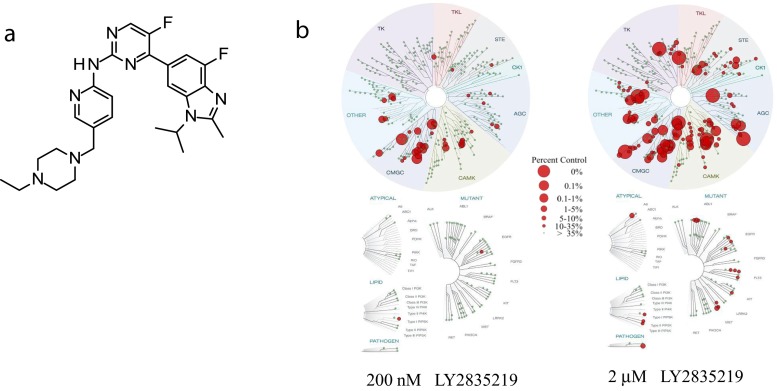
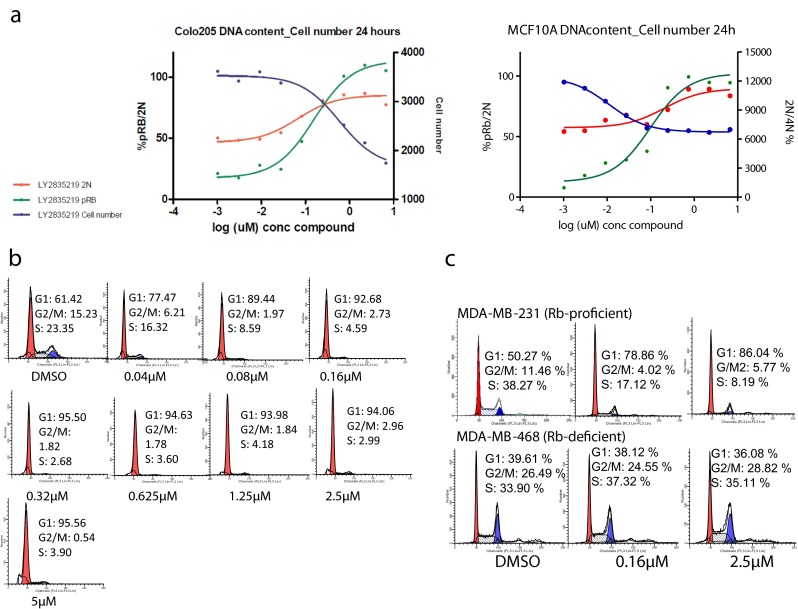
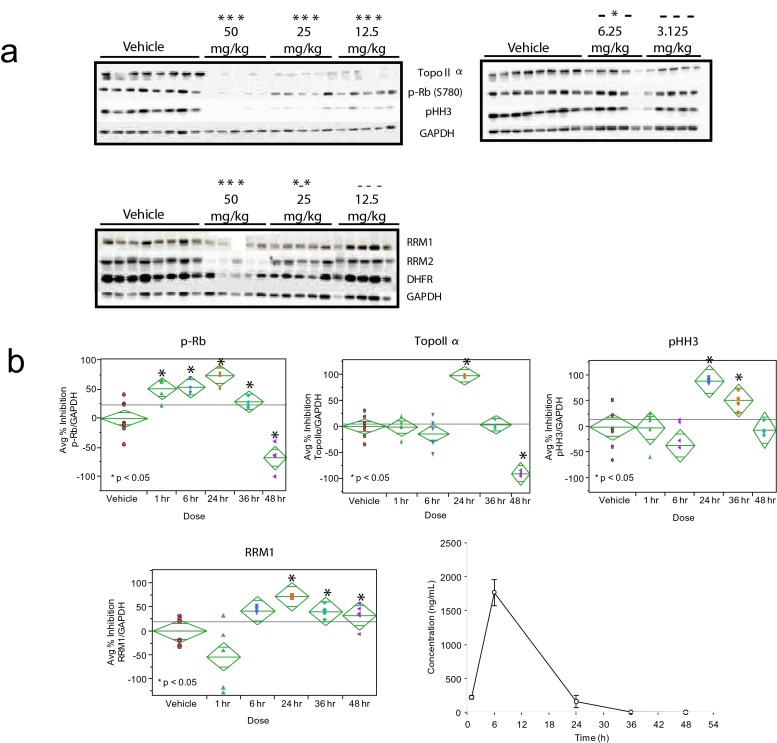
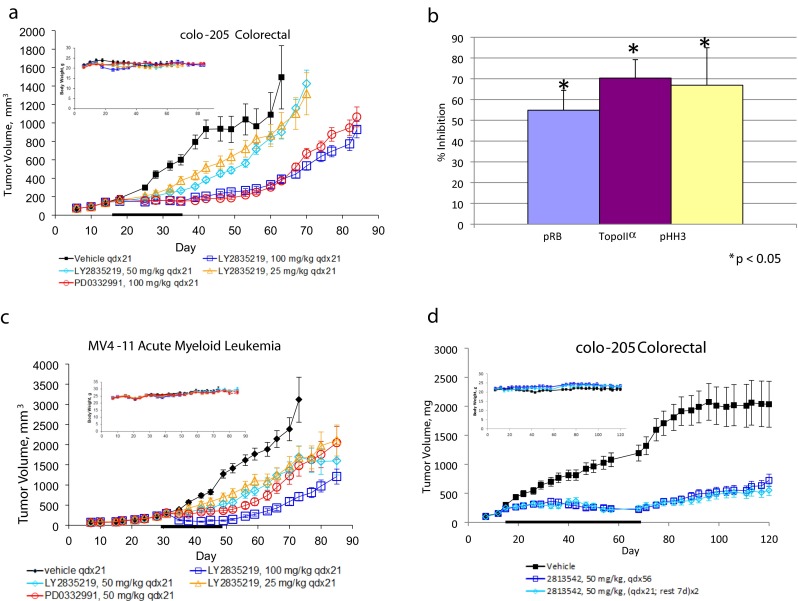
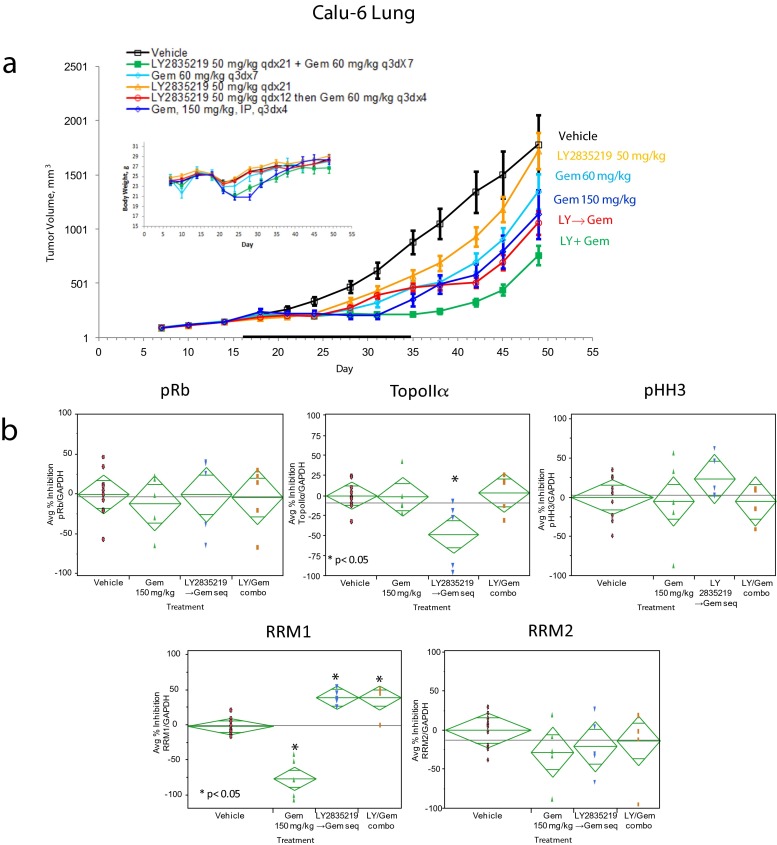
The G1 restriction point is critical for regulating the cell cycle and is controlled by the Rb pathway (CDK4/6-cyclin D1-Rb-p16/ink4a). This pathway is important because of its inactivation in a majority of human tumors. Transition through the restriction point requires phosphorylation of retinoblastoma protein (Rb) by CDK4/6, which are highly validated cancer drug targets. We present the identification and characterization of a potent CDK4/6 inhibitor, LY2835219. LY2835219 inhibits CDK4 and CDK6 with low nanomolar potency, inhibits Rb phosphorylation resulting in a G1 arrest and inhibition of proliferation, and its activity is specific for Rb-proficient cells. In vivo target inhibition studies show LY2835219 is a potent inhibitor of Rb phosphorylation, induces a complete cell cycle arrest and suppresses expression of several Rb-E2F-regulated proteins 24 hours after a single dose. Oral administration of LY2835219 inhibits tumor growth in human tumor xenografts representing different histologies in tumor-bearing mice. LY2835219 is effective and well tolerated when administered up to 56 days in immunodeficient mice without significant loss of body weight or tumor outgrowth. In calu-6 xenografts, LY2835219 in combination with gemcitabine enhanced in vivo antitumor activity without a G1 cell cycle arrest, but was associated with a reduction of ribonucleotide reductase expression. These results suggest LY2835219 may be used alone or in combination with standard-of-care cytotoxic therapy. In summary, we have identified a potent, orally active small-molecule inhibitor of CDK4/6 that is active in xenograft tumors. LY2835219 is currently in clinical development.
Overview
The claims and statistics of this paper haven’t been checked yet.
Free: it reads the open-access text and checks the first 5 claims that cite a source we can check. Create a free account to check every claim.
Integrity signals
Registry
Cites
Statistics
Figures
Verification
Claims the paper makes
The claims and statistics of this paper haven’t been checked yet.
Free: it reads the open-access text and checks the first 5 claims that cite a source we can check. Create a free account to check every claim.
Claims other papers make about this one
Each is checked against this paper’s own text: does it say what the citing paper says it does?
The cited source says what the claim attributes to it.
In the citing paper
“Like palbociclib, these orally-bioavailable and highly selective CDK4/6-targeting agents exhibit IC50 values in the low nanomolar range, whereas other CDK family members are far less sensitive (1, 88, 89).”
From Targeting CDK4 and CDK6: From Discovery to Therapy (2016) · cites this paper as [88]
The cited source says what the claim attributes to it.
In the citing paper
“The reasons for reduced hematologic toxicity and other observed non-hematologic toxicities are under active investigation but may be related to a greater selectivity for CDK4 over CDK6 with abemaciclib (88), its greater relative potency and potential to target CDK9 (Table 1), and/or its distribution into the central nervous system (93).”
From Targeting CDK4 and CDK6: From Discovery to Therapy (2016) · cites this paper as [88]
In the citing paper
“In vitro studies using cyclin D1/CDK4 and various cyclin D/CDK6 kinases determined that both abemaciclib and ribociclib are more potent against CDK4 than CDK6 (Gelbert et al., 2014; Tripathy et al., 2017) (Table 1).”
From CDK4/6 Inhibitors: The Mechanism of Action May Not Be as Simple as Once Thought (2018) · cites this paper as Gelbert et al., 2014
In the citing paper
“In such assays, abemaciclib also has modest activity, relative to its CDK4 inhibitory activity, against cyclin T1/CDK9, cyclin E2/CDK2, p25/CDK5 and p35/CDK5 (Gelbert et al., 2014) (Table 2).”
From CDK4/6 Inhibitors: The Mechanism of Action May Not Be as Simple as Once Thought (2018) · cites this paper as Gelbert et al., 2014
Self-check
Percentages, sums and reported differences re-computed from the paper’s own numbers.
The self-check needs the paper’s full text.
Citations
Cites
Hallmarks of Cancer: The Next Generation
Hanahan, D., & Weinberg, R. A. (2011) · Cell · doi:10.1016/j.cell.2011.02.013 · Cited by 66,590 · cited 1×
“Sustained proliferative capacity is a hallmark of cancer [1].”
BackgroundComprehensive genomic characterization defines human glioblastoma genes and core pathways
The Cancer Genome Atlas Research Network (2008) · Nature · doi:10.1038/nature07385 · Cited by 7,735
The regulation of E2F by pRB-family proteins.
Dyson, N. (1998) · Genes & Development · doi:10.1101/gad.12.15.2245 · Cited by 2,317 · cited 1×
“The retinoblastoma protein (Rb) is a tumor suppressor that inhibits proliferation through binding to and suppressing the activity of the E2F family of transcription factors [5].”
BackgroundTo cycle or not to cycle: a critical decision in cancer
Malumbres, M., & Barbacid, M. (2001) · Nature Reviews Cancer · doi:10.1038/35106065 · Cited by 1,468
A Restriction Point for Control of Normal Animal Cell Proliferation
Pardee, A. B. (1974) · Proceedings of the National Academy of Sciences · doi:10.1073/pnas.71.4.1286 · Cited by 1,415 · cited 1×
“originally described as the point where cell proliferation becomes independent of mitogens and growth factors [2], and the normal function of the restriction point is essential for maintaining control of cellular proliferation [3, 4].”
BackgroundFry, D. W., Harvey, P. J., Keller, P. R., Elliott, W. L., Meade, M., Trachet, E., Albassam, M., Zheng, X., Leopold, W. R., Pryer, N. K., et al. (2004) · Molecular Cancer Therapeutics · doi:10.1158/1535-7163.1427.3.11 · Cited by 1,236 · cited 1×
“recently reported a CDK4/6 inhibitor, PD 0332991, possessing improved potency and selectivity over previous inhibitors [22].”
BackgroundLundberg, A. S., & Weinberg, R. A. (1998) · Molecular and Cellular Biology · doi:10.1128/mcb.18.2.753 · Cited by 1,067 · cited 2×
“Active CDK4/6 then phosphorylates Rb, partially relieving suppression of E2F to allow expression of genes required for passage through the restriction point [7, 8].”
BackgroundHarbour, J. W., Luo, R. X., Santi, A. D., Postigo, A. A., & Dean, D. C. (1999) · Cell · doi:10.1016/s0092-8674(00)81519-6 · Cited by 1,057
Cyclin-Dependent Kinase Pathways As Targets for Cancer Treatment
Shapiro, G. I. (2006) · Journal of Clinical Oncology · doi:10.1200/jco.2005.03.7689 · Cited by 1,036 · cited 1×
“The importance of the pathway in tumorigenesis and recent success developing small molecule kinase inhibitors, make CDK4/6 a highly validated cancer drug target [33, 34].”
BackgroundThe p16INK4a/CDKN2A tumor suppressor and its relatives
Ruas, M., & Peters, G. (1998) · Biochimica et Biophysica Acta (BBA) - Reviews on Cancer · doi:10.1016/s0304-419x(98)00017-1 · Cited by 911 · cited 1×
“Both p16/ink4a and Rb act as tumor suppressors and are found to be functionally inactivated in numerous tumor types [19, 20].”
Background
Research works printed but not linked: 1
- Hughes A (2006) CDK inhibitors in 3D: Problems with the drugs, their development plans or their linkage to disease? Gene Ther Mol Biol 10:41–54
Cited by
Items 201–300 of 632
Specific CDK4/6 inhibition in breast cancer: a systematic review of current clinical evidence
Dyhl-Polk, A., Kolmos, I. L., Kümler, I., & Nielsen, D. L. (2016) · ESMO Open · doi:10.1136/esmoopen-2016-000093 · Cited by 43
Profile of abemaciclib and its potential in the treatment of breast cancer
Martin, J., & Goldstein, L. J. (2018) · OncoTargets and Therapy · doi:10.2147/ott.s149245 · Cited by 42
“In comparison with palbociclib and ribociclib, abemaciclib has a higher potency and greater specificity for CDK4 based on preclinical pharmacokinetic models, although there are no clinical data demonstrating that this impacts clinical outcome.(26,27) Also in contrast to palbociclib and ribociclib, which are both taken…”
BackgroundMechanisms of resistance to estrogen receptor modulators in ER+/HER2− advanced breast cancer
Zhang, J., Wang, Q., Wang, Q., Cao, J., Sun, J., & Zhu, Z. (2019) · Cellular and Molecular Life Sciences · doi:10.1007/s00018-019-03281-4 · Cited by 42
Mahale, S., Bharate, S. B., Manda, S., Joshi, P., Bharate, S. S., Jenkins, P. R., Vishwakarma, R. A., & Chaudhuri, B. (2014) · Journal of Medicinal Chemistry · doi:10.1021/jm5014743 · Cited by 42
Nguyen, L. V., Searle, K., & Jerzak, K. J. (2019) · Oncotarget · doi:10.18632/oncotarget.27238 · Cited by 41
“Interestingly, abemaciclib has also demonstrated anti-tumour activity in other pre-clinical models, such as non-small cell lung cancer, mantle cell lymphoma, lung cancer, acute myeloid leukemia, and colorectal cancer [5].”
BackgroundChe, Y., Liu, Y., Yao, Y., Hill, H. A., Li, Y., Cai, Q., Yan, F., Jain, P., Wang, W., Rui, L., et al. (2023) · Blood Cancer Journal · doi:10.1038/s41408-023-00799-6 · Cited by 41
“The primary cells stop growing after a few days in culture, therefore we shortened the treatment period. target [43].”
Targeting CDK4/6 pathways and beyond in breast cancer
Ribnikar, D., Volovăț, S. R., & Cardoso, F. (2018) · The Breast · doi:10.1016/j.breast.2018.10.001 · Cited by 40
Zhang, H., He, F., Gao, G., Sheng, L., Wei, Q., Hu, H., Wu, Z., Fang, M., & Wang, X. (2023) · Molecules · doi:10.3390/molecules28030943 · Cited by 39
“The hit compound 2-anilino-2,4-pyrimidinyl-benzimidazole scaffold (3a), which showed strong inhibitory activity against both CDK1 and CDK4 with IC50 value of 4 nM, was obtained through screening and data mining of extensive chemical libraries [54].”
MethodKnudsen, E. S., Shapiro, G. I., & Keyomarsi, K. (2020) · American Society of Clinical Oncology Educational Book · doi:10.1200/edbk_281085 · Cited by 39
Pesch, A. M., Hirsh, N. H., Michmerhuizen, A. R., Jungles, K. M., Wilder-Romans, K., Chandler, B. C., Liu, M., Lerner, L. M., Nino, C. A., Ward, C., et al. (2022) · JCI Insight · doi:10.1172/jci.insight.154402 · Cited by 39
“For patients whose cancers develop resistance to these therapies and who develop locoregional recurrences or metastatic disease, treatment with CDK4/6 inhibitors including palbociclib (4), ribociclib (5), and abemaciclib (6) has demon-”
Co-targeting BRAF and cyclin dependent kinases 4/6 for BRAF mutant cancers
Yadav, V., Chen, S.-H., Yue, Y. G., Buchanan, S. G., Beckmann, R. P., & Peng, S.-B. (2014) · Pharmacology & Therapeutics · doi:10.1016/j.pharmthera.2014.12.003 · Cited by 39
Thibault, S., Hu, W., Hirakawa, B. P., Kalabat, D. Y., Franks, T., Sung, T., Khoh‐Reiter, S., Lu, S., Finkelstein, M. B., Jessen, B. A., et al. (2018) · Molecular Cancer Therapeutics · doi:10.1158/1535-7163.mct-18-0734 · Cited by 38
“Several publications compared the secondary pharmacology profiles of all three CDK4/6 inhibitors and all reports consistently demonstrated that abemaciclib has the greatest kinase promiscuity (17-20).”
BackgroundResultHow selective are clinical CDK4/6 inhibitors?
Hendrychová, D., Jorda, R., & Kryštof, V. (2020) · Medicinal Research Reviews · doi:10.1002/med.21769 · Cited by 38
“Interestingly, however, CDK9 inhibition was not confirmed in cellular assays and was, therefore, considered to be inconsequential.(54,109) Abemaciclib also exhibited significant potency towards atypical CDK5 in a biochemical assay, with an IC50 value of 200 nM, 60 which was consistent with other reports.”
BackgroundResultInfluentialCDK4/6 inhibitors in lung cancer: current practice and future directions
Lv, S., Yang, J., Lin, J., Huang, X., Zhao, H., Zhao, C., & Yang, L. (2024) · European Respiratory Review · doi:10.1183/16000617.0145-2023 · Cited by 37
“These results indicate that CDK4/6 inhibitors can be used alone or in combination with standard cytotoxic therapies, and such combinations are currently in clinical development [125].”
BackgroundCell cycle checkpoint revolution: targeted therapies in the fight against malignant tumors
Song, G., Liu, J., Tang, X., Zhong, J., Zeng, Y., Zhang, X., Zhou, J., Zhou, J., Cao, L., Zhang, Q., et al. (2024) · Frontiers in Pharmacology · doi:10.3389/fphar.2024.1459057 · Cited by 39
Cell Cycle Regulation in Treatment of Breast Cancer
Cai, Z., & Liu, Q. (2017) · Advances in experimental medicine and biology · doi:10.1007/978-981-10-6020-5_12 · Cited by 37
Brisard, D., Eckerdt, F., Marsh, L. A., Blyth, G. T., Jain, S., Cristofanilli, M., Horiuchi, D., & Platanias, L. C. (2018) · Oncotarget · doi:10.18632/oncotarget.26468 · Cited by 37
“Interestingly, abemaciclib differs from the other CDKs inhibitors because it specifically targets CDK4/6 and exerts some inhibitory effects on CDK9 [41].”
BackgroundERK Inhibitor LY3214996-Based Treatment Strategies forRAS-Driven Lung Cancer
Köhler, J., Zhao, Y., Li, J., Gokhale, P. C., Tiv, H. L., Knott, A., Wilkens, M. K., Soroko, K. M., Lin, M., Ambrogio, C., et al. (2021) · Molecular Cancer Therapeutics · doi:10.1158/1535-7163.mct-20-0531 · Cited by 38
“Although tumor regressions were observed with the ERK/PI3K inhibitor combination, combining LY3214996 with the CDK4/6 inhibitor abemaciclib (26)—a concept supported by mechanistic studies which showed synthetic lethality between KRAS and CDK4 and identified MAPK pathway activation as a CDK4/6 inhibitor resistance mech…”
BackgroundDeng, Y., Ma, G., Li, W., Wang, T. I., Zhao, Y., & Wu, Q. (2018) · Clinical Breast Cancer · doi:10.1016/j.clbc.2018.04.017 · Cited by 37
Wang, Y., Chen, X., Yan, Y., Zhu, X., Liu, M., & Liu, X. (2020) · Journal of Medicinal Chemistry · doi:10.1021/acs.jmedchem.9b02121 · Cited by 37
Ki67 and PR in Patients Treated with CDK4/6 Inhibitors: A Real-World Experience
Palleschi, M., Maltoni, R., Ravaioli, S., Vagheggini, A., Mannozzi, F., Fanini, F., Pirini, F., Tumedei, M. M., Barzotti, E., Cecconetto, L., et al. (2020) · Diagnostics · doi:10.3390/diagnostics10080573 · Cited by 37
“Preclinical data and clinical trials have demonstrated the promising antitumor effect of CDK4/6i when combined with hormone therapy [7,8].”
BackgroundCDK Inhibitors as Sensitizing Agents for Cancer Chemotherapy
Gupta, P., Narayanan, S., & Yang, D. (2019) · Elsevier eBooks · doi:10.1016/b978-0-12-816435-8.00009-2 · Cited by 36
Targeting Cell Cycle Progression in HER2+ Breast Cancer: An Emerging Treatment Opportunity
Koirala, N., Dey, N., Aske, J. C., & De, P. K. (2022) · International Journal of Molecular Sciences · doi:10.3390/ijms23126547 · Cited by 36
“It is highly potent among all other approved CDKi, as evidenced by its lowest half-maximum inhibitory concentration (IC50) of 2 nM and 10 nM for CDK 4 and 6, respectively [36,68].”
BackgroundYousuf, M., Alam, M., Shamsi, A., Κhan, P., Hasan, G. M., Haque, Q. M. R., & Hassan, M. I. (2022) · International Journal of Biological Macromolecules · doi:10.1016/j.ijbiomac.2022.07.156 · Cited by 37
HR+/HER2– Advanced Breast Cancer Treatment in the First-Line Setting: Expert Review
Jerzak, K. J., Bouganim, N., Brezden‐Masley, C., Edwards, S. J., Gelmon, K. A., Henning, J., Hilton, J. F., & Sehdev, S. R. (2023) · Current Oncology · doi:10.3390/curroncol30060411 · Cited by 36
“Pre-clinical studies indicate that CDK4/6i may have activity in the CNS [63,64].”
Zhang, Z., Zhang, G., Kong, C., Zhan, B., Dong, X., & Man, X. (2016) · Scientific Reports · doi:10.1038/srep19261 · Cited by 36
RetractedThe addition of abemaciclib to sunitinib induces regression of renal cell carcinoma xenograft tumors
Small, J. S., Washburn, E. R., Millington, K. A., Zhu, J., & Holder, S. L. (2017) · Oncotarget · doi:10.18632/oncotarget.19618 · Cited by 36
“Interestingly, abemaciclib is also a potent PIM1 kinase inhibitor with an IC 50 of 50 nM [21] and much less potent PIM2 kinase inhibitor with an IC 50 of 3400 nM [21].”
CDKN2A/B Homozygous Deletion Sensitizes IDH-Mutant Glioma to CDK4/6 Inhibition
Nasser, A. M., Melamed, L., Wetzel, E. A., Chang, J. C.-C., Nagashima, H., Kitagawa, Y., Muzyka, L., Wakimoto, H., Cahill, D. P., & Miller, J. J. (2024) · Clinical Cancer Research · doi:10.1158/1078-0432.ccr-24-0562 · Cited by 36
PIM1 kinase and its diverse substrate in solid tumors
Choudhury, R., Bahadi, C. K., Ray, I. P., Dash, P., Pattanaik, I., Mishra, S., Mohapatra, S. R., Patnaik, S., & Nikhil, K. (2024) · Cell Communication and Signaling · doi:10.1186/s12964-024-01898-y · Cited by 37
“The inhibitor is currently in a Phase-1 trial and has exhibited G-1 phase arrest in colon xenografts, as well as in vivo anti-tumor activity (Table 2) [132].”
BackgroundPotential biomarkers of CDK4/6 inhibitors in hormone receptor-positive advanced breast cancer
Fang, H., Huang, D., Yang, F., & Guan, X. (2017) · Breast Cancer Research and Treatment · doi:10.1007/s10549-017-4612-y · Cited by 36
O'Sullivan, C. C. (2015) · International Journal of Cancer and Clinical Research · doi:10.23937/2378-3419/2/4/1029 · Cited by 35
“These findings implied that abemaciclib could be used as monotherapy or combined with cytotoxic chemotherapy in Rbpositive tumors [81].”
CDK4/6 blockade in breast cancer: current experience and future perspectives
Zardavas, D., Ponde, N. F., & Tryfonidis, K. (2017) · Expert Opinion on Investigational Drugs · doi:10.1080/13543784.2017.1389896 · Cited by 35
“Abemaciclib Abemaciclib, is another potent selective CDK4/6 blocking agent with preclinical evidence indicating more targeted inhibition of CDK4 as compared to palbociclib and ribociclib [50].”
BackgroundNew Approaches in Targeted Therapy for Medulloblastoma in Children
MAIER, H., Dalianis, T., & Kostopoulou, O. N. (2021) · Anticancer Research · doi:10.21873/anticanres.14936 · Cited by 34
Teh, J. L. F., Purwin, T. J., Greenawalt, E. J., Chervoneva, I., Goldberg, A. F., Davies, M. A., & Aplin, A. E. (2016) · Cancer Research · doi:10.1158/0008-5472.can-15-3384 · Cited by 36
“Recently, published data combining another CDK4/6 inhibitor, LY2835219 (25) with a BRAF inhibitor, vemurafenib, in BRAF mutant A375 xenografts led to additive effects in tumor growth inhibition (26).”
Kazi, A., Chen, L., Xiang, S., Vangipurapu, R., Yang, H., Beato, F., Fang, B., Williams, T. M., Husain, K. M., Underwood, P. W., et al. (2021) · Clinical Cancer Research · doi:10.1158/1078-0432.ccr-20-4781 · Cited by 33
Takahashi, M., Tokunaga, E., Mori, J., Tanizawa, Y., van der Walt, J., Kawaguchi, T., Goetz, M. P., & Toi, M. (2021) · Breast Cancer · doi:10.1007/s12282-021-01295-0 · Cited by 33
“Continuous inhibition of CDK4 and CDK6 by abemaciclib resulted in cellular senescence and apoptosis in human breast cancer cells [6] and had broad antitumor activity in human tumor xenograft models [4, 6].”
BackgroundBarlaam, B. C., Savi, C. D., Dishington, A. P., Drew, L., Ferguson, A. D., Ferguson, D., Gu, C., Hande, S. M., Hassall, L. A., Hawkins, J. L., et al. (2021) · Journal of Medicinal Chemistry · doi:10.1021/acs.jmedchem.1c01249 · Cited by 33
Wang, Y., Liu, W.-J., Yin, L., Li, H., Chen, Z., Zhu, D., Song, X., Cheng, Z., Song, P. Y., Wang, Z., et al. (2018) · Bioorganic & Medicinal Chemistry Letters · doi:10.1016/j.bmcl.2017.12.068 · Cited by 33
Iorfida, M., Mazza, M., & Munzone, E. (2020) · Breast Cancer Targets and Therapy · doi:10.2147/bctt.s196240 · Cited by 33
Stelitano, D., Leticia, Y. P., Dalla, E., Monte, M., Piazza, S., & Schneider, C. (2017) · Oncotarget · doi:10.18632/oncotarget.18691 · Cited by 32
Martínez-Chávez, A., Tibben, M. M., de Jong, K. A. M., Rosing, H., Schinkel, A. H., & Beijnen, J. H. (2021) · Journal of Pharmaceutical and Biomedical Analysis · doi:10.1016/j.jpba.2021.114225 · Cited by 32
Pujol, J.-L., Vansteenkiste, J., Rodríguez, L. P.-A., Gregorc, V., Mazières, J., Awad, M. M., Janne, P. A., Chisamore, M. J., Hossain, A. M., Chen, Y., et al. (2021) · JTO Clinical and Research Reports · doi:10.1016/j.jtocrr.2021.100234 · Cited by 32
“CDK 4 and 6 participate in a complex with D-type cyclins to initiate the transition through the G1 restriction point.(1)”
BackgroundInfluentialAn overview of oral carcinogenesis
Manoharan, S., Karthikeyan, S., Essa, M. M., Manimaran, A., & Selvasundram, R. (2016) · International journal of Nutrition Pharmacology Neurological Diseases · doi:10.4103/2231-0738.179964 · Cited by 32
CDK4/6 Inhibitors Impair Recovery from Cytotoxic Chemotherapy in Pancreatic Adenocarcinoma
Salvador-Barberó, B., Álvarez‐Fernández, M., Zapatero‐Solana, E., Bakkali, A. E., Menéndez, M. D. C., Lopez-Casas, P. P., Domenico, T. D., Xie, T., VanArsdale, T. L., Shields, D. J., et al. (2020) · Cancer Cell · doi:10.1016/j.ccell.2020.09.012 · Cited by 31
CDK4-6 inhibitors in breast cancer: current status and future development
Choo, J. R.-E., & Lee, S. C. (2018) · Expert Opinion on Drug Metabolism & Toxicology · doi:10.1080/17425255.2018.1541347 · Cited by 32
“Higher monotherapy ORR compared to other CDK4/6 inhibitors could be related to greater potency for CDK4 inhibition [45] or continuous dosing which may drive senescence and resultant tumor regression.”
BackgroundInfluentialLi, J., Wang, Z., & Shao, Z. (2019) · Cancer Medicine · doi:10.1002/cam4.2095 · Cited by 32
Litchfield, L. M., Boehnke, K., Brahmachary, M., Mur, C., Chen, B., Stephens, J. R., Sauder, J. M., Gutiérrez, S. M., McNulty, A. M., Ye, X. S., et al. (2020) · Oncotarget · doi:10.18632/oncotarget.27539 · Cited by 32
“For example, while abemaciclib displayed inhibitory activity against CDK9 in biochemical kinase assays (IC50 57 ± 42 nM) [20], this activity did not translate to inhibition of CDK9 substrates in cells at circulating steady-state drug concentrations achieved in patients, or even at concentrations up to 20 μM [2, 46].”
BackgroundMethodSelf-citationEmerging application of genomics-guided therapeutics in personalized lung cancer treatment
Zaman, A., & Bivona, T. G. (2018) · Annals of Translational Medicine · doi:10.21037/atm.2018.05.02 · Cited by 30
“However, in breast and colorectal cancer, the CDK4/6 inhibitor abemaciclib and palbociclib showed at best modest anti-tumor efficacy (58,59).”
BackgroundGadsden, N. J., Fulcher, C. D., Li, D., Shrivastava, N., Thomas, C., Segall, J. E., Prystowsky, M. B., Schlecht, N. F., Gavathiotis, E., & Ow, T. J. (2021) · Molecular Cancer Research · doi:10.1158/1541-7786.mcr-20-0915 · Cited by 30
“It is also notable that abemaciclib has more selectivity for CDK4, which may have implications for reduced activity in HNSCC (44, 45).”
BackgroundTherapeutic potential of CDK4/6 inhibitors in renal cell carcinoma
Sager, R., Backe, S. J., Ahanin, E. F., Smith, G., Nsouli, I. S., Woodford, M. R., Bratslavsky, G., Bourboulia, D., & Mollapour, M. (2022) · Nature Reviews Urology · doi:10.1038/s41585-022-00571-8 · Cited by 29
Hamilton, E. P., Cortés, J., Özyılkan, Ö., Chen, S., Petráková, K., Manikhas, A., Jérusalem, G., Hegg, R., Huober, J., Zhang, W., et al. (2022) · Breast Cancer Research and Treatment · doi:10.1007/s10549-022-06662-9 · Cited by 27
“This data is in line with previous reports that inhibiting both the estrogen receptor pathway and the cell cycle is more effective than inhibiting the cell cycle alone [12, 13].”
ResultWekking, D., Leoni, V. P., Lambertini, M., Dessì, M., Pretta, A., Cadoni, A., Atzori, L., Scartozzi, M., & Solinas, C. (2023) · Cytokine & Growth Factor Reviews · doi:10.1016/j.cytogfr.2023.10.001 · Cited by 28
Pharmacokinetic drug evaluation of palbociclib for the treatment of breast cancer
Luca, A. D., Maiello, M. R., D’Alessio, A., Frezzetti, D., Gallo, M., Carotenuto, M., & Normanno, N. (2018) · Expert Opinion on Drug Metabolism & Toxicology · doi:10.1080/17425255.2018.1514720 · Cited by 29
“Abemaciclib has a different chemical structure that allows inhibition of other kinases in biochemical assays, particularly CDK9, although this does not translate in CDK9 inhibition in cellular models [8].”
BackgroundRevisiting mTOR inhibitors as anticancer agents
Teng, Q., Ashar, Y. V., Gupta, P., Gadee, E., Fan, Y., Reznik, S. E., Wurpel, J. N. D., & Chen, Z. (2019) · Drug Discovery Today · doi:10.1016/j.drudis.2019.05.030 · Cited by 28
Jorda, R., Havlíček, L., Šturc, A., Tušková, D., Daumová, L., Alam, M. M., Škerlová, J., Nekardová, M., Peřina, M., Pospíšil, T., et al. (2019) · Journal of Medicinal Chemistry · doi:10.1021/acs.jmedchem.9b00189 · Cited by 27
Bouclier, C., Simon, M., Laconde, G., Pellerano, M., Diot, S., Lantuéjoul, S., Busser, B., Vanwonterghem, L., Vollaire, J., Josserand, V., et al. (2020) · Theranostics · doi:10.7150/thno.40971 · Cited by 27
“and require combined therapies to enhance their efficacy including letrozole or fulvestrant in breast cancer, cisplatin, paclitaxel, the proteasome inhibitor bortezomib or dexamethasone in multiple myeloma [15, 55-57] Moreover, the lack of selectivity of current CDK4/6 inhibitors induces several adverse secondary effe…”
BackgroundMartínez-Chávez, A., Loos, N. H. C., Lebre, M. C., Tibben, M. M., Rosing, H., Beijnen, J. H., & Schinkel, A. H. (2021) · Pharmacological Research · doi:10.1016/j.phrs.2021.105954 · Cited by 27
Antonarelli, G., Salimbeni, B. T., Marra, A., Espósito, A., Locatelli, M., Trapani, D., Pescia, C., Fusco, N., Curigliano, G., & Criscitiello, C. (2023) · Critical Reviews in Oncology/Hematology · doi:10.1016/j.critrevonc.2023.104148 · Cited by 27
van Caloen, G., & Machiels, J. (2019) · Current Opinion in Oncology · doi:10.1097/cco.0000000000000513 · Cited by 27
Richter, A., Schoenwaelder, N., Sender, S., Junghanss, C., & Maletzki, C. (2021) · Cancers · doi:10.3390/cancers13102497 · Cited by 27
“Further preclinical studies found abemaciclib effective in MLL-rearranged AML cell lines and xenografts [56] as well as myeloma cell lines [57].”
BackgroundKosovec, J. E., Zaidi, A. H., Omstead, A. N., Matsui, D., Biedka, M. J., Cox, E. J., Campbell, P. T., Biederman, R. W., Kelly, R. J., & Jobe, B. A. (2017) · Oncotarget · doi:10.18632/oncotarget.22244 · Cited by 27
“Therefore, decreased expression of these downstream markers following treatment reveals the mechanistic specificity of abemaciclib, as previously confirmed by preclinical studies of colorectal cancer and melanoma [21, 22].”
BackgroundJiang, L., Song, H., Guo, H., Wang, C., & Lu, Z.-P. (2018) · Biomedicine & Pharmacotherapy · doi:10.1016/j.biopha.2018.08.107 · Cited by 26
RetractedLi, X., Li, K., Yu, G., Yu, C., & Liu, C. (2019) · Molecular Immunology · doi:10.1016/j.molimm.2019.07.027 · Cited by 26
Giovanni, C. D., Novellino, E., Chilin, A., Lavecchia, A., & Marzaro, G. (2016) · Expert Opinion on Investigational Drugs · doi:10.1080/13543784.2016.1234603 · Cited by 26
“pound significantly inhibited the growth of Colo-205 xenograft; doses up to 100 mg/kg were well tolerated with no loss of body weight or other signs of toxicity during or after treatment [98].”
BackgroundMöller, J., Korte, K., Pörtner, R., Zeng, A., & Jandt, U. (2018) · Biotechnology and Bioengineering · doi:10.1002/bit.26828 · Cited by 28
“Cells can only pass these restriction points if CDK4/6 is active (Blagosklonny & Pardee, 2002; Gelbert et al., 2014; Pardee, 1974).”
BackgroundMöller, J., Bhat, K., Riecken, K., Pörtner, R., Zeng, A., & Jandt, U. (2019) · Biotechnology and Bioengineering · doi:10.1002/bit.27124 · Cited by 27
Meng, D., Li, L., Brown, A., Desrosiers, J., Duan, S., Hayward, C. M., He, Z., Hu, J., Makowski, T. W., Maloney, M. T., et al. (2021) · Cell Reports Physical Science · doi:10.1016/j.xcrp.2021.100394 · Cited by 25
Gallanis, G. T., Sharif, G. M., Schmidt, M. O., Friedland, B., Battina, R., Rahhal, R., Davis, J. W., Khan, I., Wellstein, A., & Riegel, A. T. (2023) · Cancers · doi:10.3390/cancers15061908 · Cited by 25
“Treatment of HUVEC with abemaciclib, another CDK4/6 inhibitor [50], also induced a significant increase in SA-β-gal positivity and G1-phase cell cycle arrest in HUVEC, which indicates that these effects are largely due to inhibition of the cyclin D-CDK4/6-RB pathway (Supplemental Figure S4C,D).”
BackgroundAn Overview of CDK Enzyme Inhibitors in Cancer Therapy
Mounika, P., Gurupadayya, B., Kumar, H. Y., & Bannimath, N. (2023) · Current Cancer Drug Targets · doi:10.2174/1568009623666230320144713 · Cited by 25
Prat, A., Solovieff, N., André, F., O’Shaughnessy, J., Cameron, D., Janni, W., Sonke, G. S., Yap, Y. S., Yardley, D. A., Partridge, A. H., et al. (2023) · Clinical Cancer Research · doi:10.1158/1078-0432.ccr-23-0561 · Cited by 25
“Ribociclib exhibits higher CDK4 versus CDK6 inhibition and has higher free drug concentrations compared with palbociclib at clinically relevant doses; these features might be more or less important to treat tumors that are often ET resistant, such as the HER2E subtype (50 – 53).”
Cyclin-dependent Kinase 7 Inhibitors in Cancer Therapy
Wang, M., Wang, T., Zhang, X., Wu, X., & Jiang, S. (2020) · Future Medicinal Chemistry · doi:10.4155/fmc-2019-0334 · Cited by 26
Mekonnen, L. B., Tadesse, S., Lenjisa, J. L., Yu, M., Noll, B. D., Heinemann, G. K., Lokman, N. A., Ricciardelli, C., Oehler, M. K., Beck, A. R., et al. (2020) · Gynecologic Oncology · doi:10.1016/j.ygyno.2020.09.012 · Cited by 25
Inoue, K., Masuda, N., Iwata, H., Takahashi, M., Ito, Y., Miyoshi, Y., Nakayama, T., Mukai, H., van der Walt, J., Mori, J., et al. (2021) · Breast Cancer · doi:10.1007/s12282-021-01239-8 · Cited by 25
“In preclinical cancer models, continuous inhibition of CDK4 and CDK6 by abemaciclib led to cell cycle arrest and death of cancer cells [18, 20].”
BackgroundGao, H., Lin, Y., Zhu, T., Ji, F., Zhang, L., Yang, C.-Q., Yang, M., Li, J., Cheng, M., & Wang, K. (2021) · The Breast · doi:10.1016/j.breast.2021.07.002 · Cited by 25
Trung, L. Q., Espinoza, J. L., An, D. T. T., Việt, N. H., Shimoda, K., & Nakao, S. (2015) · Molecular Nutrition & Food Research · doi:10.1002/mnfr.201500166 · Cited by 25
Kim, E. S., Kelly, K. L., Paz-Ares, L. G., Garrido, P., Jalal, S. I., Mahadevan, D., Gutierrez, M. E., Provencio, M., Schaefer, E. S., Shaheen, M., et al. (2018) · Clinical Cancer Research · doi:10.1158/1078-0432.ccr-18-0651 · Cited by 25
“Abemaciclib is a selective and potent small-molecule inhibitor of CDK4 and CDK6 with broad antitumor activity in preclinical models, acceptable physical and pharmacokinetic properties, and acceptable toxicity profile in nonclinical species (18, 19).”
BackgroundCombination therapy targeting Erk1/2 and CDK4/6i in relapsed refractory multiple myeloma
Adamia, S., Bhatt, S., Wen, K., Chyra, Z., Fell, G. G., Tai, Y.-T., Pioso, M. S., Abiatari, I., Letai, A., Dorfman, D. M., et al. (2022) · Leukemia · doi:10.1038/s41375-021-01475-z · Cited by 24
Zhang, Y., Zheng, L., Ma, L., Yin, F., Luo, Z., Li, S., Jiang, Y., Kong, L., & Wang, X. (2024) · Journal of Medicinal Chemistry · doi:10.1021/acs.jmedchem.4c01976 · Cited by 24
He, F., Zhang, Q., Chen, Y., Ge, S., Xie, Y., Sun, R., Wu, Y., & Xu, J. (2025) · International Journal of Molecular Medicine · doi:10.3892/ijmm.2025.5564 · Cited by 24
Xu, H., Wang, Y., Han, Y., Wu, Y., Wang, J., & Xu, B. (2022) · Frontiers in Oncology · doi:10.3389/fonc.2022.956464 · Cited by 24
“The hematologic toxicity of CDK4/6 inhibitors is mainly caused by the inhibiting effect on CDK6 in hematopoietic cells, whereas abemaciclib has a 14-fold higher affinity for CDK4 than CDK6 (68).”
BackgroundCDK Inhibitors and FDA: Approved and Orphan
Cicenas, J., & Simkus, J. (2024) · Cancers · doi:10.3390/cancers16081555 · Cited by 24
The Role of CDK Pathway Dysregulation and Its Therapeutic Potential in Soft Tissue Sarcoma
Thiel, J. T., Daigeler, A., Kolbenschlag, J., Rachunek, K., & Hoffmann, S. (2022) · Cancers · doi:10.3390/cancers14143380 · Cited by 23
Agarwal, N., Castellano, D., Alonso‐Gordoa, T., Arija, J. Á. A., Colomba, É., Gravis, G., Mourey, L., Oudard, S. M., Fléchon, A., González, M., et al. (2024) · Clinical Cancer Research · doi:10.1158/1078-0432.ccr-23-3436 · Cited by 23
“Abemaciclib is a potent, orally administered inhibitor of CDK4/6 that is 14 times more potent against CDK 4/cyclin D1 than CDK 6/cyclinD3inenzymaticassays(11,12).”
BackgroundIntegrating CDK4/6 inhibitors in the treatment of patients with early breast cancer
Loibl, S., & Furlanetto, J. (2021) · The Breast · doi:10.1016/j.breast.2021.12.008 · Cited by 23
“Palbociclib has similar potency against CDK4 and CDK6, whereas ribociclib is more potent against CDK4 [10].”
BackgroundWatson, N. W., Shatzel, J. J., & Al-Samkari, H. T. (2023) · Journal of Thrombosis and Haemostasis · doi:10.1016/j.jtha.2022.12.001 · Cited by 22
RB functions as a key regulator of senescence and tumor suppression
Gao, M., Li, H., & Zhang, J. (2024) · Seminars in Cancer Biology · doi:10.1016/j.semcancer.2024.11.004 · Cited by 22
New agents for endocrine resistance in breast cancer
Maurer, C., Martel, S., Zardavas, D., & Ignatiadis, M. (2017) · The Breast · doi:10.1016/j.breast.2017.04.007 · Cited by 22
Pan, Y., Jiang, Z., Sun, D., Li, Z., Pu, Y., Wang, D., Huang, A., He, C., & Cao, L. (2019) · Neuroscience Bulletin · doi:10.1007/s12264-019-00376-7 · Cited by 22
Biological Hallmarks and New Therapeutic Approaches for the Treatment of PDAC
Digiacomo, G., Volta, F., Garajová, I., Balsano, R., & Cavazzoni, A. (2021) · Life · doi:10.3390/life11080843 · Cited by 22
“Abemaciclib inhibits Rb phosphorylation, resulting in cell cycle arrest in G1 and inhibition of cell growth only in Rb-proficient cells [55].”
BackgroundDo CDK4/6 inhibitors have potential as targeted therapeutics for squamous cell cancers?
Kalu, N. N., & Johnson, F. M. (2017) · Expert Opinion on Investigational Drugs · doi:10.1080/13543784.2017.1274731 · Cited by 24
“The median inhibitory concentration (IC50) values for abemaciclib are 2 nM for cyclin D1-CDK4 and 10 nM for cyclin D1/2/3-CDK6 [68].”
BackgroundZha, C., Deng, W., Fu, Y., Tang, S., Lan, X., Ye, Y., Su, Y., Jiang, L., Chen, Y., Huang, Y., et al. (2018) · European Journal of Medicinal Chemistry · doi:10.1016/j.ejmech.2018.02.022 · Cited by 22
Liu, Y., Zhao, R., Fang, S., Li, Q., Jin, Y., & Liu, B. (2020) · Fundamental and Clinical Pharmacology · doi:10.1111/fcp.12574 · Cited by 21
Brett, J. O., Dubash, T. D., Johnson, G. N., Niemierko, A., Mariotti, V., Kim, L. S., Xi, J., Pandey, A., Dunne, S., Nasrazadani, A., et al. (2023) · JCO Precision Oncology · doi:10.1200/po.22.00532 · Cited by 21
Thwaites, M. J., Cecchini, M. J., Passos, D. T., Welch, I. D., & Dick, F. A. (2016) · Molecular and Cellular Biology · doi:10.1128/mcb.00561-16 · Cited by 21
The role of abemaciclib in treatment of advanced breast cancer
McCartney, A., Moretti, E., Sanna, G., Pestrin, M., Risi, E., Malorni, L., Biganzoli, L., & Leo, A. D. (2018) · Therapeutic Advances in Medical Oncology · doi:10.1177/1758835918776925 · Cited by 22
Dai, Q., Wang, Y., Liao, M., & Chen, H. (2022) · Annals of Palliative Medicine · doi:10.21037/apm-22-1306 · Cited by 20
CDK4/6 inhibitors: The Devil is in the Detail
Magge, T., Rajendran, S., Brufsky, A., & Foldi, J. (2024) · Current Oncology Reports · doi:10.1007/s11912-024-01540-7 · Cited by 20
“Abemaciclib also binds to the catalytic residue shared among many other CDKs, which is not seen with palbociclib and ribociclib [17], resulting in off-target kinase effects of abemaciclib but not palbociclib or ribociclib (summarized in Table 1) [18].”
Targeting CDK4/6 in mantle cell lymphoma
Lee, C. Y., Huang, X., Liberto, M. D., Martin, P., & Chen‐Kiang, S. (2020) · Annals of Lymphoma · doi:10.21037/aol.2019.12.01 · Cited by 20
Tetrahydro-3 H -pyrazolo[4,3- a ]phenanthridine-based CDK inhibitor
Opoku‐Temeng, C., Dayal, N., Hernandez, D. E., Naganna, N., & Sintim, H. O. (2018) · Chemical Communications · doi:10.1039/c8cc01154k · Cited by 20
Arora, M., Bogenberger, J. M., Abdelrahman, A. M., Yonkus, J. A., Alva‐Ruiz, R., Leiting, J. L., Chen, X., Usón, P. L. S., Dumbauld, C., Baker, A. T., et al. (2021) · Hepatology · doi:10.1002/hep.32102 · Cited by 19
“However, recent studies demonstrated strategies for enhanced efficacy with CDK4/6 inhibitors plus chemotherapy regimens in high grade serous ovarian cancer(31,32), small-cell lung cancer (SCLC) (33,34), TNBC (35–37) and PDAC (38– 40).”
Background
Metadata
- Authors
- Gelbert, L. M., Cai, S., Lin, X., Sanchez-Martinez, C., del Prado, M., Lallena, M. J., Torres, R., Ajamie, R. T., Wishart, G. N., Flack, R. S., Neubauer, B. L., Young, J., Chan, E. M., Iversen, P., Cronier, D., Kreklau, E., & de Dios, A.
- Affiliations
- Eli Lilly (United States) (US)
- Eli Lilly (Spain) (ES)
- Eli Lilly (United Kingdom) (GB)
- Covance (United States) (US)
- Corresponding author
- Gelbert, Lawrence M.
- Venue
- Investigational New Drugs
- Published
- 2014-06-13
- Volume
- 32
- Issue
- 5
- Pages
- 825-837
- ISSN
- 0167-6997 (ISSN-L)
- 1573-0646
- PMC
- PMC4169866
- OpenAlex
- W1991601194
- Cited by
- 577
- References
- 52
- Citations by year
- 2026: 26 · 2025: 47 · 2024: 47 · 2023: 64 · 2022: 56 · 2021: 53 · 2020: 69 · 2019: 39 · 2018: 49 · 2017: 63 · 2016: 35 · 2015: 25 · 2014: 4
- FWCI
- 20.57
- Type
- journal article
- Language
- en
- Open access
- hybrid
- doi.org
- Licence
- cc-by
- creativecommons.org/licenses/by/4.0 (tdm)
- creativecommons.org/licenses/by/4.0 (vor)
- Locations
- Investigational New Drugs (publishedVersion, cc-by)
- Europe PMC (PubMed Central) (publishedVersion, cc-by)
- PubMed Central (publishedVersion, cc-by)
- PubMed (publishedVersion)
- IUScholarWorks (Indiana University) (submittedVersion, cc-by)
- Topics
- Health Sciences › Medicine › Oncology › Cancer-related Molecular Pathways
- Health Sciences › Medicine › Oncology › Advanced Breast Cancer Therapies
- Life Sciences › Biochemistry, Genetics and Molecular Biology › Molecular Biology › PI3K/AKT/mTOR signaling in cancer
- Keywords
- CDK4/6 inhibitors, retinoblastoma protein phosphorylation, G1 cell cycle arrest, Rb/E2F pathway, gemcitabine combination therapy, oral antitumor activity, tumor xenografts, ribonucleotide reductase, small-molecule kinase inhibitors
- MeSH terms
- Gemcitabine, Aminopyridines, Animals, Antineoplastic Agents, Benzimidazoles, Deoxycytidine, Drug Therapy, Combination, Female, Humans, Neoplasms, Phosphorylation, Retinoblastoma Protein, Xenograft Model Antitumor Assays, Cell Line, Tumor, Tumor Burden, Protein Kinase Inhibitors, Cyclin-Dependent Kinase 4, Cyclin-Dependent Kinase 6, Mice, G1 Phase Cell Cycle Checkpoints
About these checks
Registry, retraction, Cites and statistics results are computed, not judged, with one exception: a printed reference that no index lists is read once by a model before it counts as a citation error. Claims are extracted by a model and kept only when their quote appears verbatim in the text; each cited source is then checked, with a model’s help, for whether it says what the claim relies on. Those verdicts can be wrong — read the claim’s quote and the cited source before relying on one.
Statistics and arithmetic are recomputed, not judged.
Confidence bands are shown only for fields calibrated on our annotated test set. None is calibrated yet, so no band is shown.
What counts as a claim ›How we measure confidence ›How we check this ›
Are you an author, or do you see a problem with this page? Request a review
Data sources
Bibliographic data: Semantic Scholar, OpenAlex, Crossref.
Contains information from the Semantic Scholar Academic Graph Datasets, made available under the ODC Attribution License (ODC-BY 1.0).
Semantic Scholar’s data is described in: Kinney, R., et al. (2023). The Semantic Scholar Open Data Platform. arXiv:2301.10140.
