

Preclinical characterization of the CDK4/6 inhibitor LY2835219: in-vivo cell cycle-dependent/independent anti-tumor activities alone/in combination with gemcitabine
Open accessThe DOI matches its Crossref record; 52 of the 52 references it cites were found in a registry or an index.
Abstract
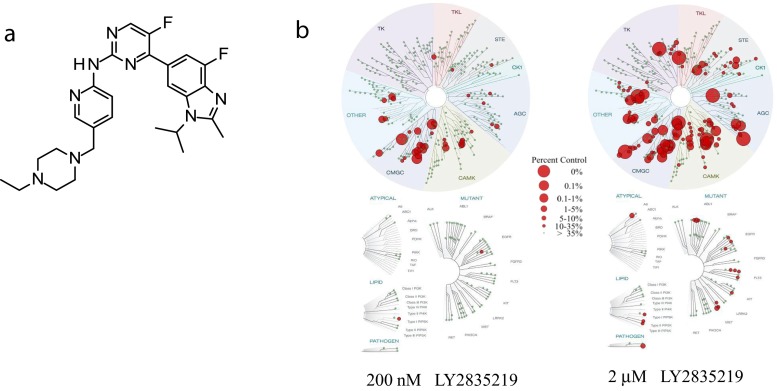
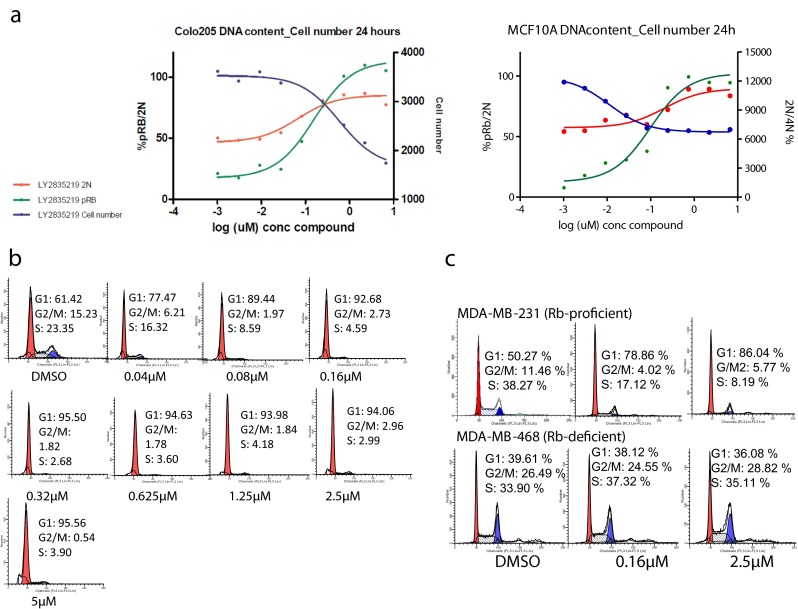
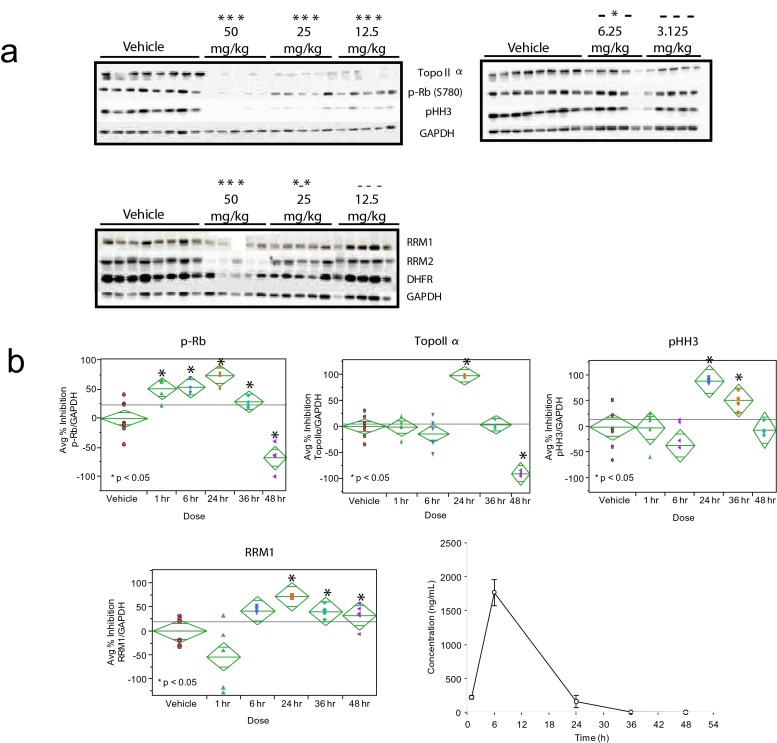
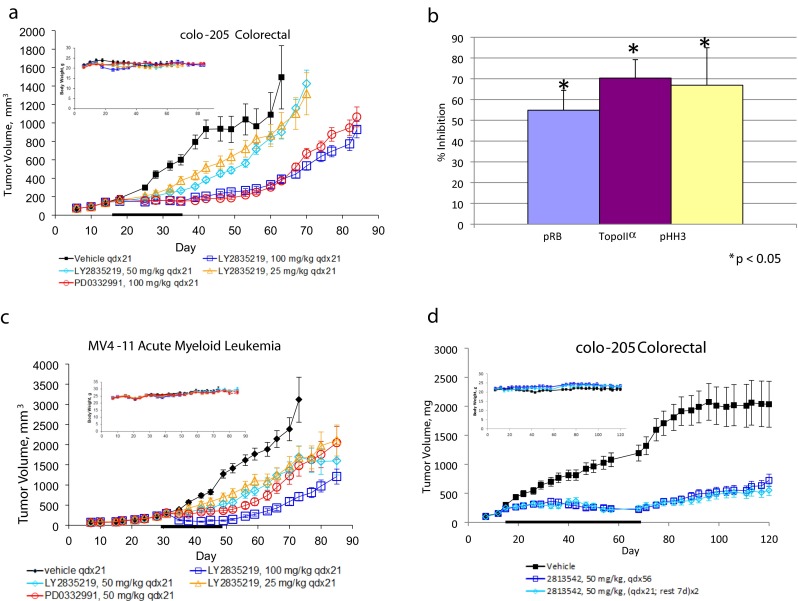
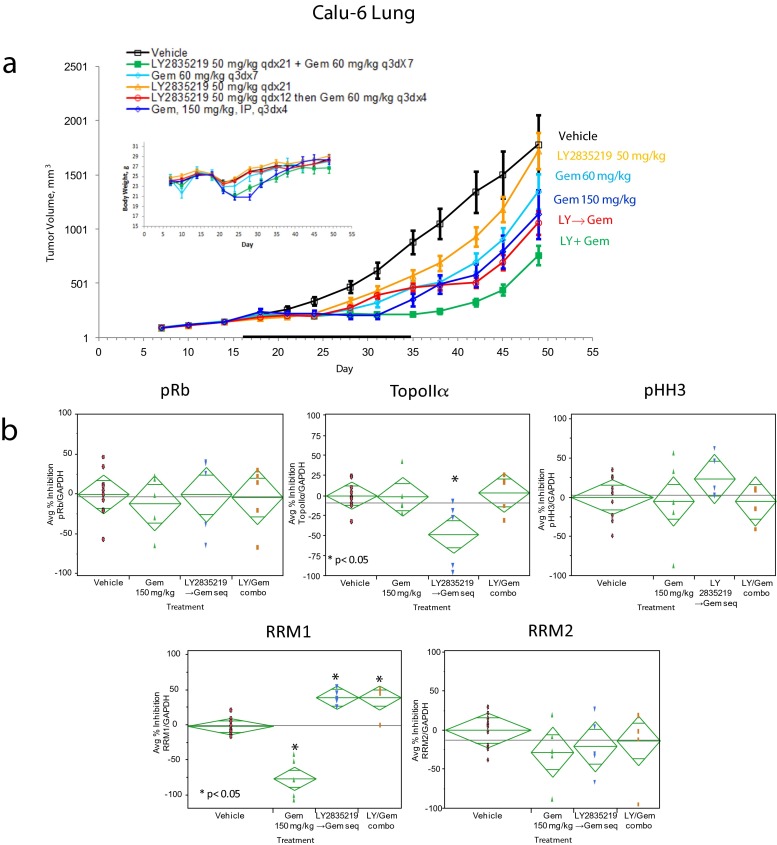
The G1 restriction point is critical for regulating the cell cycle and is controlled by the Rb pathway (CDK4/6-cyclin D1-Rb-p16/ink4a). This pathway is important because of its inactivation in a majority of human tumors. Transition through the restriction point requires phosphorylation of retinoblastoma protein (Rb) by CDK4/6, which are highly validated cancer drug targets. We present the identification and characterization of a potent CDK4/6 inhibitor, LY2835219. LY2835219 inhibits CDK4 and CDK6 with low nanomolar potency, inhibits Rb phosphorylation resulting in a G1 arrest and inhibition of proliferation, and its activity is specific for Rb-proficient cells. In vivo target inhibition studies show LY2835219 is a potent inhibitor of Rb phosphorylation, induces a complete cell cycle arrest and suppresses expression of several Rb-E2F-regulated proteins 24 hours after a single dose. Oral administration of LY2835219 inhibits tumor growth in human tumor xenografts representing different histologies in tumor-bearing mice. LY2835219 is effective and well tolerated when administered up to 56 days in immunodeficient mice without significant loss of body weight or tumor outgrowth. In calu-6 xenografts, LY2835219 in combination with gemcitabine enhanced in vivo antitumor activity without a G1 cell cycle arrest, but was associated with a reduction of ribonucleotide reductase expression. These results suggest LY2835219 may be used alone or in combination with standard-of-care cytotoxic therapy. In summary, we have identified a potent, orally active small-molecule inhibitor of CDK4/6 that is active in xenograft tumors. LY2835219 is currently in clinical development.
Overview
The claims and statistics of this paper haven’t been checked yet.
Free: it reads the open-access text and checks the first 5 claims that cite a source we can check. Create a free account to check every claim.
Integrity signals
Registry
Cites
Statistics
Figures
Verification
Claims the paper makes
The claims and statistics of this paper haven’t been checked yet.
Free: it reads the open-access text and checks the first 5 claims that cite a source we can check. Create a free account to check every claim.
Claims other papers make about this one
Each is checked against this paper’s own text: does it say what the citing paper says it does?
The cited source says what the claim attributes to it.
In the citing paper
“Like palbociclib, these orally-bioavailable and highly selective CDK4/6-targeting agents exhibit IC50 values in the low nanomolar range, whereas other CDK family members are far less sensitive (1, 88, 89).”
From Targeting CDK4 and CDK6: From Discovery to Therapy (2016) · cites this paper as [88]
The cited source says what the claim attributes to it.
In the citing paper
“The reasons for reduced hematologic toxicity and other observed non-hematologic toxicities are under active investigation but may be related to a greater selectivity for CDK4 over CDK6 with abemaciclib (88), its greater relative potency and potential to target CDK9 (Table 1), and/or its distribution into the central nervous system (93).”
From Targeting CDK4 and CDK6: From Discovery to Therapy (2016) · cites this paper as [88]
In the citing paper
“In vitro studies using cyclin D1/CDK4 and various cyclin D/CDK6 kinases determined that both abemaciclib and ribociclib are more potent against CDK4 than CDK6 (Gelbert et al., 2014; Tripathy et al., 2017) (Table 1).”
From CDK4/6 Inhibitors: The Mechanism of Action May Not Be as Simple as Once Thought (2018) · cites this paper as Gelbert et al., 2014
In the citing paper
“In such assays, abemaciclib also has modest activity, relative to its CDK4 inhibitory activity, against cyclin T1/CDK9, cyclin E2/CDK2, p25/CDK5 and p35/CDK5 (Gelbert et al., 2014) (Table 2).”
From CDK4/6 Inhibitors: The Mechanism of Action May Not Be as Simple as Once Thought (2018) · cites this paper as Gelbert et al., 2014
Self-check
Percentages, sums and reported differences re-computed from the paper’s own numbers.
The self-check needs the paper’s full text.
Citations
Cites
Hallmarks of Cancer: The Next Generation
Hanahan, D., & Weinberg, R. A. (2011) · Cell · doi:10.1016/j.cell.2011.02.013 · Cited by 66,590 · cited 1×
“Sustained proliferative capacity is a hallmark of cancer [1].”
BackgroundComprehensive genomic characterization defines human glioblastoma genes and core pathways
The Cancer Genome Atlas Research Network (2008) · Nature · doi:10.1038/nature07385 · Cited by 7,735
The regulation of E2F by pRB-family proteins.
Dyson, N. (1998) · Genes & Development · doi:10.1101/gad.12.15.2245 · Cited by 2,317 · cited 1×
“The retinoblastoma protein (Rb) is a tumor suppressor that inhibits proliferation through binding to and suppressing the activity of the E2F family of transcription factors [5].”
BackgroundTo cycle or not to cycle: a critical decision in cancer
Malumbres, M., & Barbacid, M. (2001) · Nature Reviews Cancer · doi:10.1038/35106065 · Cited by 1,468
A Restriction Point for Control of Normal Animal Cell Proliferation
Pardee, A. B. (1974) · Proceedings of the National Academy of Sciences · doi:10.1073/pnas.71.4.1286 · Cited by 1,415 · cited 1×
“originally described as the point where cell proliferation becomes independent of mitogens and growth factors [2], and the normal function of the restriction point is essential for maintaining control of cellular proliferation [3, 4].”
BackgroundFry, D. W., Harvey, P. J., Keller, P. R., Elliott, W. L., Meade, M., Trachet, E., Albassam, M., Zheng, X., Leopold, W. R., Pryer, N. K., et al. (2004) · Molecular Cancer Therapeutics · doi:10.1158/1535-7163.1427.3.11 · Cited by 1,236 · cited 1×
“recently reported a CDK4/6 inhibitor, PD 0332991, possessing improved potency and selectivity over previous inhibitors [22].”
BackgroundLundberg, A. S., & Weinberg, R. A. (1998) · Molecular and Cellular Biology · doi:10.1128/mcb.18.2.753 · Cited by 1,067 · cited 2×
“Active CDK4/6 then phosphorylates Rb, partially relieving suppression of E2F to allow expression of genes required for passage through the restriction point [7, 8].”
BackgroundHarbour, J. W., Luo, R. X., Santi, A. D., Postigo, A. A., & Dean, D. C. (1999) · Cell · doi:10.1016/s0092-8674(00)81519-6 · Cited by 1,057
Cyclin-Dependent Kinase Pathways As Targets for Cancer Treatment
Shapiro, G. I. (2006) · Journal of Clinical Oncology · doi:10.1200/jco.2005.03.7689 · Cited by 1,036 · cited 1×
“The importance of the pathway in tumorigenesis and recent success developing small molecule kinase inhibitors, make CDK4/6 a highly validated cancer drug target [33, 34].”
BackgroundThe p16INK4a/CDKN2A tumor suppressor and its relatives
Ruas, M., & Peters, G. (1998) · Biochimica et Biophysica Acta (BBA) - Reviews on Cancer · doi:10.1016/s0304-419x(98)00017-1 · Cited by 911 · cited 1×
“Both p16/ink4a and Rb act as tumor suppressors and are found to be functionally inactivated in numerous tumor types [19, 20].”
Background
Research works printed but not linked: 1
- Hughes A (2006) CDK inhibitors in 3D: Problems with the drugs, their development plans or their linkage to disease? Gene Ther Mol Biol 10:41–54
Cited by
Items 301–400 of 632
Iuliani, M., Simonetti, S., Ribelli, G., Napolitano, A., Longo, U. G., Vincenzi, B., Orsaria, P., Denaro, V., Tonini, G., Santini, D., et al. (2022) · International Journal of Molecular Sciences · doi:10.3390/ijms23052477 · Cited by 19
“In addition, palbociclib has a similar potency against cyclin D1/CDK4 and cyclin D2/CDK6 [27], while abemaciclib and ribociclib have greater potency against CDK4 than CDK 6 [28,29].”
BackgroundSawaki, M., Muramatsu, Y., Togo, K., & Iwata, H. (2023) · The Breast · doi:10.1016/j.breast.2023.05.006 · Cited by 19
Jorda, R., Bučková, Z., Řezníčková, E., Bouchal, J., & Kryštof, V. (2017) · Biochimica et Biophysica Acta (BBA) - Molecular Cell Research · doi:10.1016/j.bbamcr.2017.11.011 · Cited by 19
Inhibition Effect of Dictyophora Polysaccharides on Human Hepatocellular Carcinoma Cell Line HCC-LM3
Hu, T., Zhang, K., Pan, D., Pan, X., Yang, H., Xiao, J., Shen, X., & Luo, P. (2020) · Medical Science Monitor · doi:10.12659/msm.918870 · Cited by 19
Torres-Guzmán, R., Ganado, M. P., Mur, C., Marugán, C., Baquero, C., Yang, Y., Zeng, Y. A., Bian, H., Du, J., de Dios, A., et al. (2022) · Oncotarget · doi:10.18632/oncotarget.28249 · Cited by 18
“Full chemical names have been previously published [32].”
BackgroundSelf-citationCyclin-dependent kinase 4 and 6 inhibitors in breast cancer treatment
Guo, Z., Dong, R. W., Wu, Y., Dong, S., & Alahari, S. K. (2025) · Oncogene · doi:10.1038/s41388-025-03378-0 · Cited by 18
“It differs from ribociclib and palbociclib, because abemaciclib can inhibit other cyclin kinases such as CDK2/9 [54].”
CDK4/RB/E2Fs axis as potential therapeutic target of endometrial cancer
Hu, J., Shen, J., & Sun, J. (2020) · Biomedicine & Pharmacotherapy · doi:10.1016/j.biopha.2020.109870 · Cited by 18
Key genes and drug delivery systems to improve the efficiency of chemotherapy
Torres‐Martínez, Z., Delgado, Y., Ferrer‐Acosta, Y., Suárez-Arroyo, I. J., Joaquín-Ovalle, F. M., Delinois, L. J., & Griebenow, K. H. (2020) · Cancer Drug Resistance · doi:10.20517/cdr.2020.64 · Cited by 18
“The mechanism contributing to GLIPR1-induced apoptosis is associated with an increase in ROS and consequent activation of the c-Jun N-terminal kinase (JNK) pathway[133].”
BackgroundInfluentialFAK Inhibitors As Promising Anticancer Targets: Present and Future Directions
Mustafa, M., El‐Hafeez, A. A. A., Abdelhafeez, D. A., Abdelhamid, D. S., Mostafa, Y. A., Ghosh, P., Hayallah, A. M., & Abuo‐Rahma, G. E. A. (2021) · Future Medicinal Chemistry · doi:10.4155/fmc-2021-0015 · Cited by 18
Advances in cyclin-dependent kinase inhibitors for the treatment of melanoma
Julve, M., Clark, J. J., & Lythgoe, M. P. (2020) · Expert Opinion on Pharmacotherapy · doi:10.1080/14656566.2020.1828348 · Cited by 18
“In vitro studies have shown that palbociclib has similar relative potency for cyclin D1/CDK4 and cyclin D2/CDK6 [72], whereas ribociclib and abemaciclib have a greater potency for CDK4 compared to CDK6 [73,74].”
BackgroundInfluentialTolaney, S. M., Beeram, M., Beck, J. T., Conlin, A. K., Dees, E. C., Puhalla, S. L., Rexer, B. N., Burris, H. A., Jhaveri, K. L., Helsten, T. L., et al. (2022) · Frontiers in Oncology · doi:10.3389/fonc.2021.810023 · Cited by 17
Bøttcher, T. M., Cold, S., & Jensen, A. B. (2018) · Acta Oncologica · doi:10.1080/0284186x.2018.1532603 · Cited by 17
Das, A., Henderson, F. C., Alshareef, M., Porto, G. B. F., Kanginakudru, I., Infinger, L. K., Vandergrift, W. A., Lindhorst, S., Varma, A. K., Patel, S. J., et al. (2020) · Clinical & Translational Oncology · doi:10.1007/s12094-020-02456-x · Cited by 17
Chen, W., Zhang, W., Chen, M., Yang, C., Fang, T., Wang, H., Reid, L. M., & He, Z. (2022) · Cellular Oncology · doi:10.1007/s13402-022-00714-4 · Cited by 17
Lavery, L. A., DiSogra, K. Y., Lea, J., Trufan, S. J., Symanowski, J. T., Roberts, A., Moore, D. C., Heeke, A. L., & Pal, S. E. (2022) · Supportive Care in Cancer · doi:10.1007/s00520-022-07400-z · Cited by 17
Chigutsa, E., Kambhampati, S. R. P., Sykes, A. K., Posada, M. M., van der Walt, J., & Turner, P. K. (2020) · CPT Pharmacometrics & Systems Pharmacology · doi:10.1002/psp4.12544 · Cited by 17
Spring, L. M., Scarpetti, L., Medford, A. J., Niemierko, A., Comander, A. H., Mulvey, T. M., Schnipper, L. E., Isakoff, S. J., Moy, B., Wander, S. A., et al. (2025) · npj Breast Cancer · doi:10.1038/s41523-024-00708-5 · Cited by 17
A narrative review of the clinical development of CDK4/6 inhibitor abemaciclib in breast cancer
Yang, L., Chen, Y., Wang, N., & Han, W. (2022) · Translational Breast Cancer Research · doi:10.21037/tbcr-21-36 · Cited by 16
“In vivo , abemaciclib inhibited tumor growth in multiple human cancer xenograft models, including those derived from non-small cell lung cancer (NSCLC), melanoma, glioblastoma, mantle cell lymphoma and ER + breast cancer (17).”
BackgroundJhaveri, K. L., O’Shaughnessy, J., Fasching, P. A., Tolaney, S. M., Yardley, D. A., Sharma, V. K., Biswas, C., Thuerigen, A., Pathak, P., & Rugo, H. S. (2023) · Therapeutic Advances in Medical Oncology · doi:10.1177/17588359231216095 · Cited by 16
Martorana, F., Sanò, M. V., Valerio, M. R., Fogli, S., Vigneri, P. G., Danesi, R., & Gebbia, V. (2024) · Therapeutic Advances in Drug Safety · doi:10.1177/20420986231224214 · Cited by 16
“21 Among the available CDK4/6i, ABE is the most potent.”
BackgroundTate, S. C., Burke, T. F., Hartman, D. G., Kulanthaivel, P., Beckmann, R. P., & Cronier, D. M. (2016) · British Journal of Cancer · doi:10.1038/bjc.2016.40 · Cited by 16
“Chronic dosing with a CDK4/6 inhibitor such as abemaciclib suppresses phosphorylation of Rb (pRb) (Gelbert et al., 2014; Tate et al., 2014), which in turn downregulates Total Rb (Yadav et al., 2013) as a result of the inherent autoregulation of the E2F1-Rb pathway (Shan et al., 1994).”
BackgroundMethodSelf-citationBurris, H. A. (2018) · Expert Review of Anticancer Therapy · doi:10.1080/14737140.2018.1435275 · Cited by 16
Xie, N., Qin, T., Ren, W., Yao, H., Yu, Y., & Hong, H. (2020) · Cancer Management and Research · doi:10.2147/cmar.s254365 · Cited by 16
Hachem, G. E., Gombos, A., & Awada, A. H. (2020) · Expert Review of Anticancer Therapy · doi:10.1080/14737140.2020.1834385 · Cited by 16
Nawa, H., Niimura, T., Yagi, K., Goda, M., Zamami, Y., & Ishizawa, K. (2021) · Cancer Reports · doi:10.1002/cnr2.1402 · Cited by 16
“It was approved in 2018.(4,6) The adverse effects of abemaciclib include myelosuppression, gastrointestinal symptoms, and skin reactions, which are clearly indicated on the package insert of abemaciclib.”
BackgroundMastrantoni, L., Orlandi, A., Palazzo, A., Garufi, G., Fabi, A., Daniele, G., Giannarelli, D., Tortora, G., & Bria, E. (2023) · EClinicalMedicine · doi:10.1016/j.eclinm.2023.101824 · Cited by 16
Abemaciclib: safety and effectiveness of a unique cyclin-dependent kinase inhibitor
Gebbia, V., Valerio, M. R., Firenze, A., & Vigneri, P. G. (2020) · Expert Opinion on Drug Safety · doi:10.1080/14740338.2020.1781814 · Cited by 16
Abemaciclib, A Selective CDK4/6 Inhibitor, Restricts the Growth of Pediatric Ependymomas
Liang, M., Chen, C., Liu, Y., Huang, M., Lin, Y., Wong, T., Lin, S., Chu, S.-S., Ding, Y.-H., & Hsieh, T. (2020) · Cancers · doi:10.3390/cancers12123597 · Cited by 17
“In addition to CDK4 and CDK6, abemaciclib inhibits CDK9 and non-CDK targets, such as DYRK2, PIM1, HIPK2, and CK2 [21].”
BackgroundInfluentialChemical fragment-based CDK4/6 inhibitors prediction and web server
Wang, L., Li, Y., Xu, M., Pang, X., Liu, Z., Tan, W., & Xu, J. (2016) · RSC Advances · doi:10.1039/c5ra23289a · Cited by 16
The Role of Pharmacogenetic-Based Pharmacokinetic Analysis in Precise Breast Cancer Treatment
Wu, X., & Xiong, H. (2024) · Pharmaceutics · doi:10.3390/pharmaceutics16111407 · Cited by 16
“These inhibitors share similar pharmacokinetic profiles, rapidly absorbed and distributed, with metabolism primarily occurring in the liver [65–68].”
Targeting CDK2 and other novel cell cycle targets for breast cancer therapy
Chen, M., Luo, L., Massoumi, N. L., & Keyomarsi, K. (2025) · Expert Opinion on Therapeutic Targets · doi:10.1080/14728222.2025.2537412 · Cited by 15
“CDK4/6 inhibitors (CDK4/6i), including palbociclib, ribociclib, and abemaciclib, selectively target CDK4 and CDK6 to inhibit cell cycle progression [64–66].”
Hansra, D. M., Jackson, S., Sequeira, J., Vazirani, R., & Alvarez, R. (2019) · Molecular and Clinical Oncology · doi:10.3892/mco.2019.1955 · Cited by 15
“A common feature in human cancers is the dysregulation and aberrant activation of CDK4 and 6 therefore promoting cell cycle progression (42,43).”
BackgroundCombination of Ribociclib and Gemcitabine for the Treatment of Medulloblastoma
Pribnow, A. K., Jonchère, B., Liu, J., Smith, K. S., Campagne, O., Xu, K., Robinson, S., Patel, Y. T., Onar‐Thomas, A., Wu, G., et al. (2022) · Molecular Cancer Therapeutics · doi:10.1158/1535-7163.mct-21-0598 · Cited by 15
“Furthermore, by decreasing the activity and expression of the ribonucleotide reductase E2F target genes RRM1 and RRM2, ribociclib may cooperate with gemcitabine to delay tumor progression by affecting ribonucleotide synthesis (13, 43).”
Fisi, V., Kátai, E., Bogner, P., Miseta, A., & Nagy, T. (2016) · Cell Cycle · doi:10.1080/15384101.2016.1158361 · Cited by 15
“cycle agents, many of them are cycline dependent kinase inhibitors.(23,24) In these therapeutic approaches, cell differentiation agents are often used in combination with cytotoxic drugs(25) or with radiotherapy.”
BackgroundRecent Progress of Cyclin-Dependent Kinase Inhibitors as Potential Anticancer Agents
Li, T., Weng, T., Zuo, M., Wei, Z., Chen, M., & Li, Z. (2016) · Future Medicinal Chemistry · doi:10.4155/fmc-2016-0129 · Cited by 15
He, H., Xu, J., Xie, W., Guo, Q., Jiang, F., & Liu, Y. (2017) · Biochimica et Biophysica Acta (BBA) - General Subjects · doi:10.1016/j.bbagen.2017.11.001 · Cited by 15
Lee, K. A., Shepherd, S. T. C., & Johnston, S. R. D. (2019) · Future Oncology · doi:10.2217/fon-2019-0169 · Cited by 16
Developing a Multistep Continuous Manufacturing Process for (1R,2R)-2-Amino-1-methylcyclopentan-1-ol
Duan, S., Feng, X., Gonzalez, M., Bader, S. J., Hayward, C. M., Ljubicic, T., Lu, J., Mustakis, J. G., Maloney, M. T., Rainville, J. P., et al. (2020) · Organic Process Research & Development · doi:10.1021/acs.oprd.0c00405 · Cited by 15
Molecular Features of Non-Selective Small Molecule Antagonists of the Bradykinin Receptors
Rasaeifar, B., Gómez‐Gutierrez, P., & Pérez, J. J. (2020) · Pharmaceuticals · doi:10.3390/ph13090259 · Cited by 14
“Preliminary results of the virtual screening yielded eight drugs (Figure 4): raloxifene [37], a selective estrogen receptor modulator; sildenafil [38], a phosphodiesterase type 5 inhibitor; cefepime [39] and cefpirome [40], two β‐lactam antibiotics; imatinib [41] and ponatinib [42], two bcr‐ Abl tyrosine kinase inhibi…”
BackgroundNakamoto, S., Shien, T., Iwamoto, T., Kubo, S., Yamamoto, M., Yamashita, T., Kuwahara, C., & Ikeda, M. (2024) · Scientific Reports · doi:10.1038/s41598-024-60101-x · Cited by 15
“The three approved CDK4/6is have different dosage protocols, pharmacokinetics, and target selectivity, despite targeting the same CDK4/6 and having similar clinical indications 17,18 .”
Cell Cycle Dysregulation in Mantle Cell Lymphoma
Wang, K., Huang, X., Liberto, M. D., & Chen‐Kiang, S. (2020) · Hematology/Oncology Clinics of North America · doi:10.1016/j.hoc.2020.05.003 · Cited by 14
Development of Dual and Selective Degraders of Cyclin‐Dependent Kinases 4 and 6
Jiang, B., Wang, E. S., Donovan, K. A., Liang, Y., Fischer, E. S., Zhang, T., & Gray, N. S. (2019) · Angewandte Chemie · doi:10.1002/ange.201901336 · Cited by 14
Wang, Y., Zhang, R., Hu, S., Zhang, H., Yang, D., Zhang, W., Zhao, Y., Cui, D., Li, Y., Pan, W., et al. (2022) · Molecules · doi:10.3390/molecules27134040 · Cited by 14
“These results suggested that, despite the induction of significant apoptosis in HCT-15 cells, the anticancer activity of 16 is independent of cell cycle control [59,60], and in this respect it diverges from commonly reported anticancer agents.”
BackgroundExploring Chemistry with Pyridine Derivatives
Pal, S. (2022) · IntechOpen eBooks · doi:10.5772/intechopen.100792 · Cited by 14
Zhao, J. J., Fong, K. Y., Chan, Y. H., Tey, J. C. S., Dawood, S. S., Lee, S. C., Finn, R. S., Sundar, R., & Lim, J. S. J. (2023) · Cancers · doi:10.3390/cancers15184558 · Cited by 14
“Conversely, abemaciclib has been shown to have five-fold more potency for CDK4 and inhibit multiple other CDK kinase activities [23].”
BackgroundSynthesis and Anti-Proliferative Effects of Mono- and Bis-Purinomimetics Targeting Kinases
Bistrović, A., Harej, A., Grbčić, P., Sedić, M., Pavelić, S. K., Cetina, M., & Raić‐Malić, S. (2017) · International Journal of Molecular Sciences · doi:10.3390/ijms18112292 · Cited by 14
“Similarly, among the most advanced CDK4 and CDK6 inhibitors, purinomimetics abemaciclib (LY2835219) [22,23] and ribociclib (LEE011) (Figure 1) [23,48] showed to be potent CDK9 inhibitors.”
Influentialvan Caloen, G., Schmitz, S., van Marcke, C., Caignet, X., Mendola, A., Ruys, S. P. D., Roger, P. P., Vertommen, D., & Machiels, J. (2021) · Cancers · doi:10.3390/cancers13061251 · Cited by 14
Mavratzas, A., & Marmé, F. (2021) · Breast Care · doi:10.1159/000514561 · Cited by 14
Cyclin-Dependent Kinase 4/6 Inhibitors Against Breast Cancer
Ateş‐Alagöz, Z., & Hassan, M. (2022) · Mini-Reviews in Medicinal Chemistry · doi:10.2174/1389557522666220606095540 · Cited by 14
O'Sullivan, C. (2016) · Expert Opinion on Pharmacotherapy · doi:10.1080/14656566.2016.1201072 · Cited by 12
“These results suggested that abemaciclib may have clinical activity as monotherapy or in combination with chemotherapy [81].”
BackgroundMartinello, R., Genta, S., Galizia, D., Geuna, E., Milani, A., Zucchini, G., Valabrega, G., & Montemurro, F. (2016) · Expert Opinion on Pharmacotherapy · doi:10.1080/14656566.2016.1236914 · Cited by 13
“Tumor growth inhibition was observed in different cancer xenograft models [55,56].”
BackgroundAn Update on the Clinical Use of CDK4/6 Inhibitors in Breast Cancer
Robert, M., Frenel, J., Bourbouloux, E., Rigaud, D. B., Patsouris, A., Augereau, P., Gourmelon, C., & Campone, M. (2018) · Drugs · doi:10.1007/s40265-018-0972-9 · Cited by 13
Abemaciclib: A Review in Early Breast Cancer with a High Risk of Recurrence
Fung, S. S.-P., & Blair, H. A. (2023) · Targeted Oncology · doi:10.1007/s11523-023-00952-y · Cited by 13
“Abemaciclib potently and selectively inhibits CDK4/6 and blocks this key checkpoint to cellular proliferation [9].”
BackgroundUnlocking New Avenues in Breast Cancer Treatment: The Synergy of Kinase Inhibitors and Immunotherapy
Bravo, M. J., Burgos-Molina, A. M., García‐Aranda, M., Redondo, M., & Téllez, T. (2023) · Cancers · doi:10.3390/cancers15235499 · Cited by 13
“Three medications, namely palbociclib, ribociclib, and abemaciclib, have received approval for use in combination with aromatase inhibitors and fulvestrant for patients with HR+, HER2 − metastatic breast cancer [151–155].”
BackgroundXu, P., Zhu, L., Zhang, D., Li, Z., Ge, R., & Tian, Q. (2024) · Results in Chemistry · doi:10.1016/j.rechem.2024.101446 · Cited by 13
LEE011 and ruxolitinib: a synergistic drug combination for natural killer/T-cell lymphoma (NKTCL)
Hee, Y. T., Yan, J., Nižetić, D., & Chng, W. J. (2018) · Oncotarget · doi:10.18632/oncotarget.25835 · Cited by 13
“Here, we tested a combination of ruxolitinib and LEE011 that inhibit JAK1/2 and CDK4/6 respectively against several NKTCL cell lines, namely NKYS, KHYG and NK-S1.”
BackgroundMethodInfluentialDominguez-Benot, R., Cimini, A., Barone, D., Giordano, A., & Pentimalli, F. (2022) · Cancers · doi:10.3390/cancers14112709 · Cited by 13
“Abemaciclib exhibited the highest potency and best delivery efficiency among the three next-generation CDKIs, also showing effects on other kinases such as CDK9 and PIM1 [162,163].”
BackgroundCalucică, D. M., Manda, C. V., Găman, A. M., Răileanu, Ș., Stanca, L., Popescu, M. D. E., Mateescu, G.-O., Biţă, A., Croitoru, O., & Neamţu, S.-D. (2022) · Molecules · doi:10.3390/molecules27238604 · Cited by 13
“Collection of samples was performed at two hours and one hour post dose respectively, representing the mean time (Tmax) to reach the maximum concentration in plasma (Cmax) according to the literature [4].”
MethodPharmacokinetic drug evaluation of abemaciclib for advanced breast cancer
Robert, M., Frenel, J., Bourbouloux, E., Rigaud, D. B., Patsouris, A., Augereau, P., Gourmelon, C., & Campone, M. (2019) · Expert Opinion on Drug Metabolism & Toxicology · doi:10.1080/17425255.2019.1559816 · Cited by 13
“It is also reported to reduce CDK9 activity [22].”
BackgroundInfluentialVitiligo-like lesions associated with ribociclib in a woman with metastatic breast cancer
Türkel, A., Karaçin, C., Öner, İ., Şeyran, E., & Öksüzoğlu, B. Ç. (2023) · Journal of Oncology Pharmacy Practice · doi:10.1177/10781552231156521 · Cited by 12
Zhou, Y., Li, X., Luo, P., Chen, H., Zhou, Y., Zheng, X., Yin, Y., Wei, H., Liu, H., Xia, W., et al. (2023) · Frontiers in Pharmacology · doi:10.3389/fphar.2023.1154654 · Cited by 12
“Thus, selective and oral CDK4/6 inhibitors urgently need to be developed, particularly for monotherapy.”
BackgroundInfluentialAn overview of isatin-derived CDK2 inhibitors in developing anticancer agents
Ansari, M., Ghandadi, M., & Emami, S. (2025) · European Journal of Medicinal Chemistry · doi:10.1016/j.ejmech.2025.117819 · Cited by 12
Yoshizawa, K., Yaguchi, K., & Uehara, R. (2020) · Frontiers in Cell and Developmental Biology · doi:10.3389/fcell.2020.00721 · Cited by 13
“, 1999), or ii) early G1 phase was intermittently blocked instead of G1/S by cdk4/6 inhibitor (PD-0332991 or LY-2835219) treatment/release cycles (Fry et al., 2004; Gelbert et al., 2014) (Fig.”
BackgroundTerenziani, R., Galetti, M., Monica, S. L., Fumarola, C., Zoppi, S., Alfieri, R. R., Digiacomo, G., Cavazzoni, A., Cavallo, D., Corradi, M., et al. (2022) · Cancers · doi:10.3390/cancers14235925 · Cited by 12
“In fact, it has been shown to inhibit various kinases, including CDK9 and non-CDK targets, such as DYRK2 (Dual Specificity Tyrosine Phosphorylation Regulated Kinase 2), PIM1, HIPK2 (Homeodomain Interacting Protein Kinase 2), and CK2 (casein kinase II) [12].”
BackgroundNozawa, K., Terada, M., Onishi, M., Ozaki, Y., Takano, T., Fakhouri, W., Novick, D., Haro, J. M., Faris, L. H., Kawaguchi, T., et al. (2023) · Breast Cancer · doi:10.1007/s12282-023-01461-6 · Cited by 12
“In preclinical investigation, continuous inhibition of CDK4 and CDK6 by abemaciclib led to cell cycle arrest and death of cancer cells [13, 15].”
Dual targeting of CDK4/6 and Bcl-2 exhibits a potent antitumor effect on mantle cell lymphoma
Che, Y., Liu, Y., Li, Y., McIntosh, J. M., Jordan, A. A., Yan, F., Wang, W., Nie, L., Lee, H., Jin, J., et al. (2023) · Blood Advances · doi:10.1182/bloodadvances.2022008954 · Cited by 12
“Abemaciclib is a potent and selective inhibitor of CDK4/6, with a higher selectivity against CDK4 than CDK6.”
BackgroundGentile, G., Scagnoli, S., Arecco, L., Santini, D., Botticelli, A., & Lambertini, M. (2024) · Cancer Treatment Reviews · doi:10.1016/j.ctrv.2024.102769 · Cited by 12
O'Keefe, K., Desai, N. V., & Tan, A. R. (2024) · Breast Cancer Targets and Therapy · doi:10.2147/bctt.s271441 · Cited by 12
“30 This antitumor activity is specific to Rb-proficient cells.”
BackgroundJiang, C., Ye, Y., Kang, W., Yang, J., He, Z., Cao, Q., Lian, C., Xing, Y., Yang, Q., Zhao, J., et al. (2025) · Journal of Medicinal Chemistry · doi:10.1021/acs.jmedchem.4c01686 · Cited by 12
Management of KRAS-Mutant Non-Small Cell Lung Cancer in the Era of Precision Medicine
Aredo, J. V., & Padda, S. K. (2018) · Current Treatment Options in Oncology · doi:10.1007/s11864-018-0557-6 · Cited by 12
Preclinical discovery and development of abemaciclib used to treat breast cancer
Wright, M. D., & Abraham, J. (2021) · Expert Opinion on Drug Discovery · doi:10.1080/17460441.2021.1853097 · Cited by 12
Lai, J., Kuo, T.-H., Huang, K., Chai, L. M. X., Lee, M., Liu, C., Tsai, Y., Huang, C., Tseng, L., Hsu, C., et al. (2023) · The Oncologist · doi:10.1093/oncolo/oyad304 · Cited by 12
“52 In vitro data suggest ribociclib and abemaciclib, 53,54 but not Palbociclib, 55,56 to be more selective of CDK4 over CDK6.”
BackgroundDiscovery of a class of diheteroaromatic amines as orally bioavailable CDK1/4/6 inhibitors
Fu, Y., Tang, S., Su, Y., Lan, X., Ye, Y., Zha, C., Li, L., Cao, J., Chen, Y., Jiang, L., et al. (2017) · Bioorganic & Medicinal Chemistry Letters · doi:10.1016/j.bmcl.2017.09.050 · Cited by 12
Guo, X., Zhou, Y., Zhang, K., Lü, W., Zhong, X. Z., Wu, S., Shen, L., Chen, H., & Chen, Y. (2023) · Journal of Evidence-Based Medicine · doi:10.1111/jebm.12571 · Cited by 11
Önder, T., Ateş, Ö., Öner, İ., & Karaçin, C. (2024) · International Journal of Clinical Oncology · doi:10.1007/s10147-024-02528-w · Cited by 11
“Palbociclib has similar potency against cyclin D1/CDK4 and cyclin D2/CDK6 [56], whereas riboci-clib has greater potency against CDK4 than CDK 6 [57, 58].”
Incorporating CDK4/6 Inhibitors in the Treatment of Advanced Luminal Breast Cancer
Echavarría, I., Jerez, Y., Martín, M., & López‐Tarruella, S. (2017) · Breast Care · doi:10.1159/000481656 · Cited by 11
Cardiotoxicities of Modern Treatments in Breast Cancer
Dent, S. F., Melloni, C., Ivars, J., Sammons, S. L., & Kimmick, G. G. (2019) · Current Treatment Options in Cardiovascular Medicine · doi:10.1007/s11936-019-0738-z · Cited by 11
Song, Y., He, L., Wang, Y., Wu, Q., & Huang, W. (2020) · Oncology Reports · doi:10.3892/or.2020.7589 · Cited by 11
Sun, C., Feng, L., Sun, X., Yu, R., & Kang, C. (2020) · Journal of Biomolecular Structure and Dynamics · doi:10.1080/07391102.2020.1786458 · Cited by 11
“Compound 1, 2 and 3 were selected for molecular dynamics simulations with GROMACS 5.1.1 The GROMOS96 53a6 force field was chosen for protein and ligand (Hess et al., 2008; Stocker & Gunsteren, 2000).”
MethodInfluentialPI3K p110α Blockade Enhances Anti-Tumor Efficacy of Abemaciclib in Human Colorectal Cancer Cells
Lee, H. J., Kim, K., Sung, J. H., Nam, M., Suh, K. J., Kim, J., Kim, S. H., Kim, S. H., Kim, J. W., Lee, K., et al. (2020) · Cancers · doi:10.3390/cancers12092500 · Cited by 11
“Abemaciclib has shown superior single-agent activity when compared with palbociclib and ribociclib [14–16], and it is more selective against CDK4 than CDK6 compared with other CDK4 / 6 inhibitors [17].”
Lou Anna Laetitia Rosine, V. O. L. I., Mamyrbekova, J. A., & Bazureau, J. P. (2020) · Open Journal of Medicinal Chemistry · doi:10.4236/ojmc.2020.103007 · Cited by 11
“This means that abemaciclib (4) is a competitive ATP inhibitor [16].”
BackgroundCui, Z. L., KADZIOLA, Z. A., Lipkovich, I. A., Faries, D. E., Sheffield, K. M., & Carter, G. C. (2021) · Journal of Comparative Effectiveness Research · doi:10.2217/cer-2020-0230 · Cited by 11
Vortex keratopathy associated with ribociclib
Türkel, A., Özdoğan, S., Yekedüz, E., Şeyran, E., Karaçin, C., & Ateş, Ö. (2022) · Journal of Oncology Pharmacy Practice · doi:10.1177/10781552221101799 · Cited by 11
Cyclin-Dependent Kinases As Potential Targets for Colorectal Cancer: Past, Present and Future
Manohar, S. M. (2022) · Future Medicinal Chemistry · doi:10.4155/fmc-2022-0064 · Cited by 11
Zhang, H., Yan, S., Zhan, Y., Ma, S., Bian, Y., Li, S., Tian, J., Li, G., Zhong, D., Diao, X., et al. (2023) · Frontiers in Pharmacology · doi:10.3389/fphar.2023.1116073 · Cited by 12
“Its structure can inhibit other kinases, such as CDK9 (Gelbert et al., 2014).”
BackgroundGerber, D. E., Paik, P. K., & Dowlati, A. (2015) · American Society of Clinical Oncology Educational Book · doi:10.14694/edbook_am.2015.35.147 · Cited by 11
CDK4/6 inhibitors in breast cancer – fromin vitromodels to clinical trials
Saleh, L., Wilson, C., & Holen, I. (2019) · Acta Oncologica · doi:10.1080/0284186x.2019.1684559 · Cited by 11
“Upon further development and optimisation of third generation inhibitors, palbociclib (PD-0332991, Pfizer), ribociclib (LEE011, Novartis) and abemaciclib (LY-2835219, Eli Lilly) were identified as selective CDK4/6 inhibitors [65,66].”
BackgroundInfluentialRajesh, A., Havas, A. P., Arnold, R., Lande, K., Lei, X., Li, K. Y., Gandhi, A., Franco, A. C., Woo, S., Lagnado, A. B., et al. (2026) · Nature Aging · doi:10.1038/s43587-026-01196-x · Cited by 10
“Prior work from the Demaria laboratory showed that abemaciclib, another FDA-approved CDK4/6 inhibitor 77,78 , and palbociclib induce a p53-dependent premature senescence with low NF-κB-dependent SASP in primary cells 79 .”
A simple model of a growing tumour
Orrell, D., & Mistry, H. B. (2019) · PeerJ · doi:10.7717/peerj.6983 · Cited by 10
Zhang, J., Yang, N., Ji, D., Shen, W., Li, W., Han, R., Wang, N., Tao, H., Chapman, S. C., Sykes, A. K., et al. (2021) · Targeted Oncology · doi:10.1007/s11523-020-00789-9 · Cited by 10
Relevance of genetic alterations in squamous and small cell lung cancer
Sabari, J. K., & Paik, P. K. (2017) · Annals of Translational Medicine · doi:10.21037/atm.2017.06.72 · Cited by 10
“As an example, the CDK 4/6 inhibitor abemaciclib (LY2835219), was shown to have clear antitumor efficacy in breast and colorectal cancer models with and attendant decrease in RB phosphorylation (30).”
BackgroundHsieh, T., Liang, M., Zheng, J.-H., Lin, Y., Yang, Y. S. H., Vo, T., Liou, J., Yen, Y., & Chen, C. (2021) · Cancers · doi:10.3390/cancers13236117 · Cited by 10
“Abemaciclib has a multi-target property, targeting not only CDK4 and CDK6, but also CDK9, PIM1, HIPK2, DYRK2, CK2 and GSK3b [40].”
Discovery and preclinical evaluations of TQB3616, a novel CDK4-biased inhibitor
Xu, Z., Liu, Y., Song, B., Ren, B., Xu, X., Lin, R., Zhu, X., Chen, C., Yang, S., Zhu, Y., et al. (2024) · Bioorganic & Medicinal Chemistry Letters · doi:10.1016/j.bmcl.2024.129769 · Cited by 9
Zhang, M., Song, J. H., Guo, S., Jin, F., & Zheng, A. (2023) · Endocrine Related Cancer · doi:10.1530/erc-22-0365 · Cited by 9
Pan Cyclin-Dependent Kinase Inhibitors for the Treatment of Breast Cancer
Izadi, S., Hojjat‐Farsangi, M., Karpisheh, V., & Jadidi‐Niaragh, F. (2023) · International Journal of Drug Research in Clinics · doi:10.34172/ijdrc.2023.e2 · Cited by 9
Hu, W., Wang, L., Luo, J., Zhang, J., & Li, N. (2023) · Breast Cancer Targets and Therapy · doi:10.2147/bctt.s434973 · Cited by 9
“16,34,35 However, although clinically effective, there is still a certain chance of severe neutropenia, tumor recurrence and drug resistance during drug use.”
BackgroundHu, X., Zhang, Q., Sun, T., Yin, Y., Li, H., Yan, M., Tong, Z., Li, M., Teng, Y., Oppermann, C. P., et al. (2024) · Chinese Medical Journal · doi:10.1097/cm9.0000000000003151 · Cited by 10
“[14] Preclinically, abemaciclib induced sustained G1 cell-cycle arrest in cell lines with intact retinoblastoma protein signaling [17] and demonstrated activity in human breast cancer models, while continuous exposure resulted in sustained cell-cycle inhibition, leading to senescence and apoptosis.”
Bala, V., Chhonker, Y. S., Sleightholm, R. L., Crawford, A. J., Hollingsworth, M. A., & Murry, D. J. (2020) · Biomedical Chromatography · doi:10.1002/bmc.4859 · Cited by 9
Current challenges to underpinning the genetic basis for cholangiocarcinoma
Cigliano, A., Chen, X., & Calvisi, D. F. (2021) · Expert Review of Gastroenterology & Hepatology · doi:10.1080/17474124.2021.1915128 · Cited by 9
“In physiologic conditions and under the stimulation of extracellular signals, cyclin D-CDK4/6 phosphorylates the pocket proteins, namely the pRb, p107 (also known as RBL1), and p130 (also known as RBL2), which leads to unrestrained E2F transcription factor activity, induction of E2F-dependent transcriptional programs…”
BackgroundInfluentialThe effects of Abemaciclib on cell cycle and apoptosis regulation in anaplastic thyroid cancer cells
Abutorabi, E. S., Poursheikhani, A., Kashani, B., Shamsaiegahkani, S., Haghpanah, V., Bashash, D., Mousavi, S. A., Momeny, M., & Ghaffari, S. H. (2023) · Molecular Biology Reports · doi:10.1007/s11033-023-08255-1 · Cited by 9
“Abemaciclib impedes phosphorylation of Rb protein and thus induces cell cycle arrest in the G1 phase [16].”
Background
Metadata
- Authors
- Gelbert, L. M., Cai, S., Lin, X., Sanchez-Martinez, C., del Prado, M., Lallena, M. J., Torres, R., Ajamie, R. T., Wishart, G. N., Flack, R. S., Neubauer, B. L., Young, J., Chan, E. M., Iversen, P., Cronier, D., Kreklau, E., & de Dios, A.
- Affiliations
- Eli Lilly (United States) (US)
- Eli Lilly (Spain) (ES)
- Eli Lilly (United Kingdom) (GB)
- Covance (United States) (US)
- Corresponding author
- Gelbert, Lawrence M.
- Venue
- Investigational New Drugs
- Published
- 2014-06-13
- Volume
- 32
- Issue
- 5
- Pages
- 825-837
- ISSN
- 0167-6997 (ISSN-L)
- 1573-0646
- PMC
- PMC4169866
- OpenAlex
- W1991601194
- Cited by
- 577
- References
- 52
- Citations by year
- 2026: 26 · 2025: 47 · 2024: 47 · 2023: 64 · 2022: 56 · 2021: 53 · 2020: 69 · 2019: 39 · 2018: 49 · 2017: 63 · 2016: 35 · 2015: 25 · 2014: 4
- FWCI
- 20.57
- Type
- journal article
- Language
- en
- Open access
- hybrid
- doi.org
- Licence
- cc-by
- creativecommons.org/licenses/by/4.0 (tdm)
- creativecommons.org/licenses/by/4.0 (vor)
- Locations
- Investigational New Drugs (publishedVersion, cc-by)
- Europe PMC (PubMed Central) (publishedVersion, cc-by)
- PubMed Central (publishedVersion, cc-by)
- PubMed (publishedVersion)
- IUScholarWorks (Indiana University) (submittedVersion, cc-by)
- Topics
- Health Sciences › Medicine › Oncology › Cancer-related Molecular Pathways
- Health Sciences › Medicine › Oncology › Advanced Breast Cancer Therapies
- Life Sciences › Biochemistry, Genetics and Molecular Biology › Molecular Biology › PI3K/AKT/mTOR signaling in cancer
- Keywords
- CDK4/6 inhibitors, retinoblastoma protein phosphorylation, G1 cell cycle arrest, Rb/E2F pathway, gemcitabine combination therapy, oral antitumor activity, tumor xenografts, ribonucleotide reductase, small-molecule kinase inhibitors
- MeSH terms
- Gemcitabine, Aminopyridines, Animals, Antineoplastic Agents, Benzimidazoles, Deoxycytidine, Drug Therapy, Combination, Female, Humans, Neoplasms, Phosphorylation, Retinoblastoma Protein, Xenograft Model Antitumor Assays, Cell Line, Tumor, Tumor Burden, Protein Kinase Inhibitors, Cyclin-Dependent Kinase 4, Cyclin-Dependent Kinase 6, Mice, G1 Phase Cell Cycle Checkpoints
About these checks
Registry, retraction, Cites and statistics results are computed, not judged, with one exception: a printed reference that no index lists is read once by a model before it counts as a citation error. Claims are extracted by a model and kept only when their quote appears verbatim in the text; each cited source is then checked, with a model’s help, for whether it says what the claim relies on. Those verdicts can be wrong — read the claim’s quote and the cited source before relying on one.
Statistics and arithmetic are recomputed, not judged.
Confidence bands are shown only for fields calibrated on our annotated test set. None is calibrated yet, so no band is shown.
What counts as a claim ›How we measure confidence ›How we check this ›
Are you an author, or do you see a problem with this page? Request a review
Data sources
Bibliographic data: Semantic Scholar, OpenAlex, Crossref.
Contains information from the Semantic Scholar Academic Graph Datasets, made available under the ODC Attribution License (ODC-BY 1.0).
Semantic Scholar’s data is described in: Kinney, R., et al. (2023). The Semantic Scholar Open Data Platform. arXiv:2301.10140.
