

Preclinical characterization of the CDK4/6 inhibitor LY2835219: in-vivo cell cycle-dependent/independent anti-tumor activities alone/in combination with gemcitabine
Open accessThe DOI matches its Crossref record; 52 of the 52 references it cites were found in a registry or an index.
Abstract
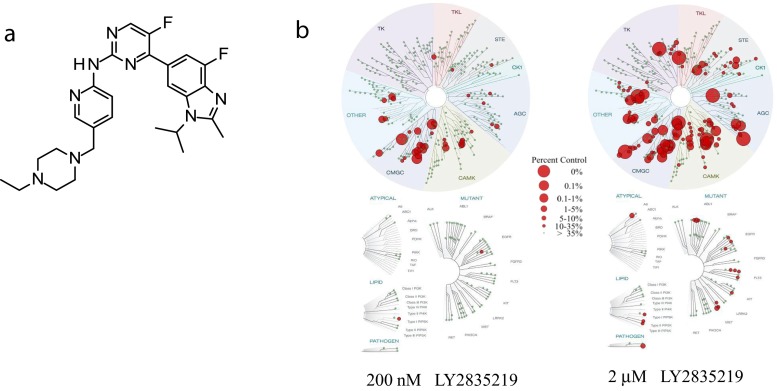
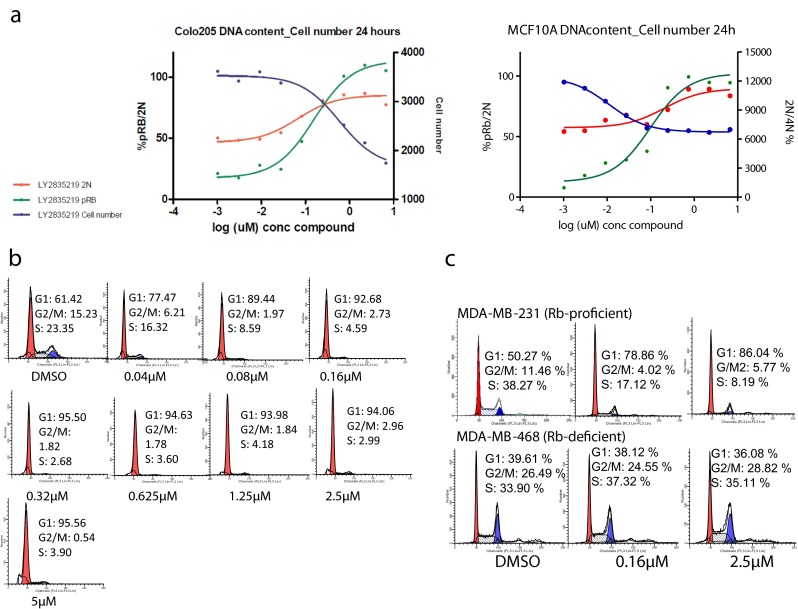
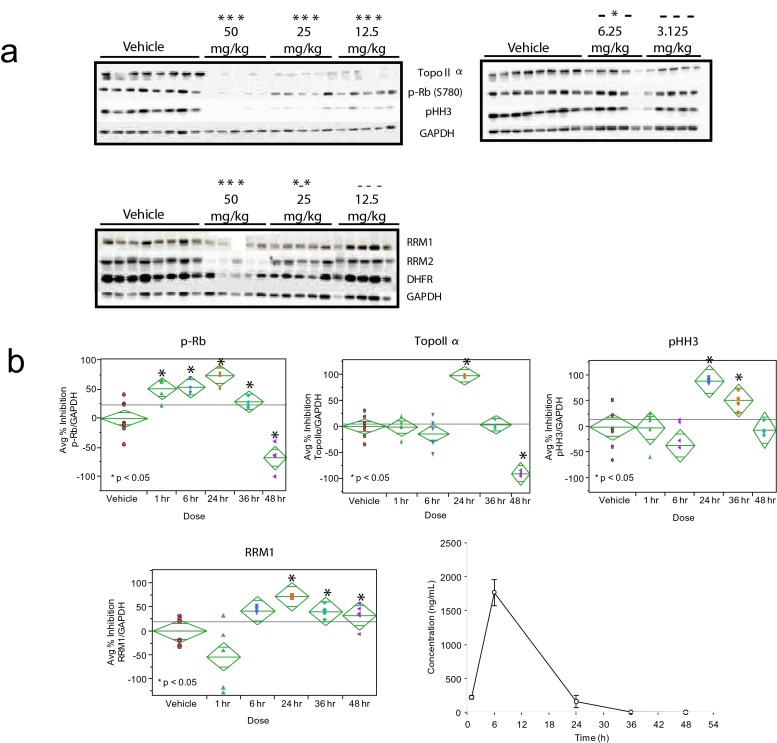
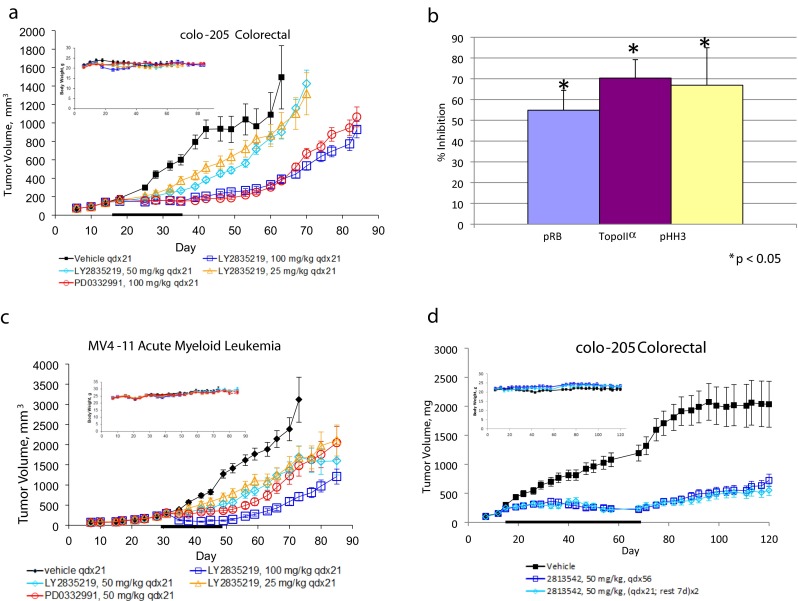
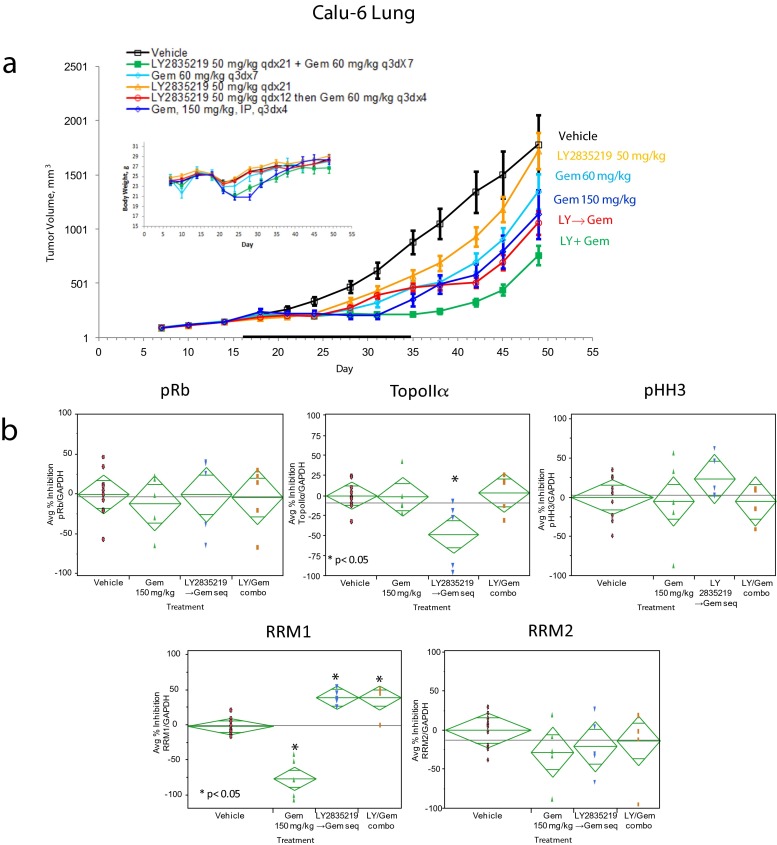
The G1 restriction point is critical for regulating the cell cycle and is controlled by the Rb pathway (CDK4/6-cyclin D1-Rb-p16/ink4a). This pathway is important because of its inactivation in a majority of human tumors. Transition through the restriction point requires phosphorylation of retinoblastoma protein (Rb) by CDK4/6, which are highly validated cancer drug targets. We present the identification and characterization of a potent CDK4/6 inhibitor, LY2835219. LY2835219 inhibits CDK4 and CDK6 with low nanomolar potency, inhibits Rb phosphorylation resulting in a G1 arrest and inhibition of proliferation, and its activity is specific for Rb-proficient cells. In vivo target inhibition studies show LY2835219 is a potent inhibitor of Rb phosphorylation, induces a complete cell cycle arrest and suppresses expression of several Rb-E2F-regulated proteins 24 hours after a single dose. Oral administration of LY2835219 inhibits tumor growth in human tumor xenografts representing different histologies in tumor-bearing mice. LY2835219 is effective and well tolerated when administered up to 56 days in immunodeficient mice without significant loss of body weight or tumor outgrowth. In calu-6 xenografts, LY2835219 in combination with gemcitabine enhanced in vivo antitumor activity without a G1 cell cycle arrest, but was associated with a reduction of ribonucleotide reductase expression. These results suggest LY2835219 may be used alone or in combination with standard-of-care cytotoxic therapy. In summary, we have identified a potent, orally active small-molecule inhibitor of CDK4/6 that is active in xenograft tumors. LY2835219 is currently in clinical development.
Overview
The claims and statistics of this paper haven’t been checked yet.
Free: it reads the open-access text and checks the first 5 claims that cite a source we can check. Create a free account to check every claim.
Integrity signals
Registry
Cites
Statistics
Figures
Verification
Claims the paper makes
The claims and statistics of this paper haven’t been checked yet.
Free: it reads the open-access text and checks the first 5 claims that cite a source we can check. Create a free account to check every claim.
Claims other papers make about this one
Each is checked against this paper’s own text: does it say what the citing paper says it does?
The cited source says what the claim attributes to it.
In the citing paper
“Like palbociclib, these orally-bioavailable and highly selective CDK4/6-targeting agents exhibit IC50 values in the low nanomolar range, whereas other CDK family members are far less sensitive (1, 88, 89).”
From Targeting CDK4 and CDK6: From Discovery to Therapy (2016) · cites this paper as [88]
The cited source says what the claim attributes to it.
In the citing paper
“The reasons for reduced hematologic toxicity and other observed non-hematologic toxicities are under active investigation but may be related to a greater selectivity for CDK4 over CDK6 with abemaciclib (88), its greater relative potency and potential to target CDK9 (Table 1), and/or its distribution into the central nervous system (93).”
From Targeting CDK4 and CDK6: From Discovery to Therapy (2016) · cites this paper as [88]
In the citing paper
“In vitro studies using cyclin D1/CDK4 and various cyclin D/CDK6 kinases determined that both abemaciclib and ribociclib are more potent against CDK4 than CDK6 (Gelbert et al., 2014; Tripathy et al., 2017) (Table 1).”
From CDK4/6 Inhibitors: The Mechanism of Action May Not Be as Simple as Once Thought (2018) · cites this paper as Gelbert et al., 2014
In the citing paper
“In such assays, abemaciclib also has modest activity, relative to its CDK4 inhibitory activity, against cyclin T1/CDK9, cyclin E2/CDK2, p25/CDK5 and p35/CDK5 (Gelbert et al., 2014) (Table 2).”
From CDK4/6 Inhibitors: The Mechanism of Action May Not Be as Simple as Once Thought (2018) · cites this paper as Gelbert et al., 2014
Self-check
Percentages, sums and reported differences re-computed from the paper’s own numbers.
The self-check needs the paper’s full text.
Citations
Cites
Hallmarks of Cancer: The Next Generation
Hanahan, D., & Weinberg, R. A. (2011) · Cell · doi:10.1016/j.cell.2011.02.013 · Cited by 66,590 · cited 1×
“Sustained proliferative capacity is a hallmark of cancer [1].”
BackgroundComprehensive genomic characterization defines human glioblastoma genes and core pathways
The Cancer Genome Atlas Research Network (2008) · Nature · doi:10.1038/nature07385 · Cited by 7,735
The regulation of E2F by pRB-family proteins.
Dyson, N. (1998) · Genes & Development · doi:10.1101/gad.12.15.2245 · Cited by 2,317 · cited 1×
“The retinoblastoma protein (Rb) is a tumor suppressor that inhibits proliferation through binding to and suppressing the activity of the E2F family of transcription factors [5].”
BackgroundTo cycle or not to cycle: a critical decision in cancer
Malumbres, M., & Barbacid, M. (2001) · Nature Reviews Cancer · doi:10.1038/35106065 · Cited by 1,468
A Restriction Point for Control of Normal Animal Cell Proliferation
Pardee, A. B. (1974) · Proceedings of the National Academy of Sciences · doi:10.1073/pnas.71.4.1286 · Cited by 1,415 · cited 1×
“originally described as the point where cell proliferation becomes independent of mitogens and growth factors [2], and the normal function of the restriction point is essential for maintaining control of cellular proliferation [3, 4].”
BackgroundFry, D. W., Harvey, P. J., Keller, P. R., Elliott, W. L., Meade, M., Trachet, E., Albassam, M., Zheng, X., Leopold, W. R., Pryer, N. K., et al. (2004) · Molecular Cancer Therapeutics · doi:10.1158/1535-7163.1427.3.11 · Cited by 1,236 · cited 1×
“recently reported a CDK4/6 inhibitor, PD 0332991, possessing improved potency and selectivity over previous inhibitors [22].”
BackgroundLundberg, A. S., & Weinberg, R. A. (1998) · Molecular and Cellular Biology · doi:10.1128/mcb.18.2.753 · Cited by 1,067 · cited 2×
“Active CDK4/6 then phosphorylates Rb, partially relieving suppression of E2F to allow expression of genes required for passage through the restriction point [7, 8].”
BackgroundHarbour, J. W., Luo, R. X., Santi, A. D., Postigo, A. A., & Dean, D. C. (1999) · Cell · doi:10.1016/s0092-8674(00)81519-6 · Cited by 1,057
Cyclin-Dependent Kinase Pathways As Targets for Cancer Treatment
Shapiro, G. I. (2006) · Journal of Clinical Oncology · doi:10.1200/jco.2005.03.7689 · Cited by 1,036 · cited 1×
“The importance of the pathway in tumorigenesis and recent success developing small molecule kinase inhibitors, make CDK4/6 a highly validated cancer drug target [33, 34].”
BackgroundThe p16INK4a/CDKN2A tumor suppressor and its relatives
Ruas, M., & Peters, G. (1998) · Biochimica et Biophysica Acta (BBA) - Reviews on Cancer · doi:10.1016/s0304-419x(98)00017-1 · Cited by 911 · cited 1×
“Both p16/ink4a and Rb act as tumor suppressors and are found to be functionally inactivated in numerous tumor types [19, 20].”
Background
Research works printed but not linked: 1
- Hughes A (2006) CDK inhibitors in 3D: Problems with the drugs, their development plans or their linkage to disease? Gene Ther Mol Biol 10:41–54
Cited by
Items 501–600 of 632
Ouyang, Q., Yuan, P., Liu, J., Teng, Y., Li, Z., Ji, X., Liu, L., Wang, M., Zou, L., Xu, L., et al. (2026) · The Oncologist · doi:10.1093/oncolo/oyag013 · Cited by 1
Zhou, Y., Chi, J., Ding, Y., Zhang, Z., Liang, R., Wang, T., Jiang, Y., Song, R., Fu, H., & Zhou, X. (2026) · Phytotherapy Research · doi:10.1002/ptr.70308 · Cited by 1
Cell cycle inhibition – Cyclin-Dependent Kinases, and G1 checkpoint
Radhakishan, M., Ananthesh, L., Patil, S., Jabeen, M., Banu, F. Z., & Mateti, U. V. (2026) · Elsevier eBooks · doi:10.1016/b978-0-443-44041-0.00005-2 · Cited by 1
Scafetta, R., Donato, M., Gullotta, C., Guarino, A., Fiore, C., Sisca, L., Speziale, E., Troiano, R., Foderaro, S., Venuti, F., et al. (2026) · The Oncologist · doi:10.1093/oncolo/oyag146 · Cited by 1
“34 The varying spectrum and degree of interactions of these agents could influence their clinical performance.”
CDK4/6-Inhibitoren beim Mammakarzinom
Thill, M., Traub, L., & Friedrich, M. (2018) · best practice onkologie · doi:10.1007/s11654-018-0105-7 · Cited by 1
“Dadurch verharrt die Zelle am Checkpoint zwischen G1- und S-Phase und ist nicht mehr in der Lage sich zu teilen [11, 12].”
BackgroundHu, J., Zhu, B., & Niu, Z.-X. (2024) · Molecules · doi:10.3390/molecules29051166 · Cited by 1
Savvidou, A., Theophanous-Kitiri, S., Zacharia, L. C., Constantinidou, A., & Petrou, C. C. (2024) · European Journal of Oncology Pharmacy · doi:10.1097/op9.0000000000000054 · Cited by 1
CDK4/6 inhibition in early and advanced hormone receptor-positive, HER2-negative breast cancer
Yarlagadda, S. R., Andrade, M. D. O., & Nanda, R. (2025) · Expert Review of Anticancer Therapy · doi:10.1080/14737140.2025.2498994 · Cited by 1
“Abemaciclib, as compared to palbociclib and ribociclib, has higher lipophilicity and has demonstrated the ability to cross the blood brain barrier [31].”
Withdrawn: Cyclic Dependent Kinases (CDKs) in Cancer Pathogenesis and Therapeutics
Geleta, B., Makonnen, E., & Abay, S. M. (2016) · International Journal of Cancer Research · doi:10.3923/ijcr.2016.109.121 · Cited by 1
Targeting the CDK4/6 Pathway in Breast Cancer
Malorni, L., Migliaccio, I., Guarducci, C., Bonechi, M., & Leo, A. D. (2017) · Springer eBooks · doi:10.1007/978-3-319-48848-6_69 · Cited by 1
Бесова, Н. С. (2020) · Meditsinskiy sovet = Medical Council · doi:10.21518/2079-701x-2020-9-27-42 · Cited by 1
Takeda, S., Hirao-Suzuki, M., Yamagishi, Y., Sugihara, T., Kaneko, M., Sakai, G., Nakamura, T., Hieda, Y., Takiguchi, M., Okada, M., et al. (2021) · Fundamental Toxicological Sciences · doi:10.2131/fts.8.75 · Cited by 1
The Expanding Role of Pyridine Derivatives as Privileged Scaffolds in Cardiac Ionic Channels
Janapati, Y. K., Cheweti, S., Chidipi, B., Srinivas, M., & Junapudi, S. (2023) · IntechOpen eBooks · doi:10.5772/intechopen.106759 · Cited by 1
Kasina, S., Nowduri, A., & Chavakula, R. (2023) · International Journal of Pharmaceutical Sciences and Drug Research · doi:10.25004/ijpsdr.2023.150504 · Cited by 1
Potential Target of CDK6 Signaling Pathway for Cancer Treatment
Basnet, R., Amissah, O. B., Basnet, B. B., Huang, R., Sun, Y., Habimana, J. D. D., & Li, Z. (2024) · Current Drug Targets · doi:10.2174/0113894501313781240627062206 · Cited by 1
Avaliação do potencial mutagênico de corantes têxteis por meio do ensaio de micronúcleo
Cesila, C. A. (2016) · Digital Library of Theses and Dissertations (Universidade de São Paulo) · doi:10.11606/d.60.2016.tde-18122015-161828 · Cited by 1
Hong, Y., He, W., Zhang, J., Shen, L., Yu, C., Yan, L., Chen, H., Wu, Y., Chen, L., Lyu, J., et al. (2020) · Research Square · doi:10.21203/rs.3.rs-125333/v1 · Cited by 1
“Recent studies demonstrated that Abemaciclib inhibits multiple human cancer xenograft models, including non-small cell lung cancer (NSCLC), melanoma, glioblastoma and mantle cell lymphoma(45-48).”
BackgroundHafner, M. A., Mills, C. E., Subramanian, K., Chen, C., Chung, M., Boswell, S. A., Everley, R. A., Liu, C., Walmsley, C. S., Juric, D., et al. (2018) · SSRN Electronic Journal · doi:10.2139/ssrn.3285804 · Cited by 1
A novel potent CDK4/6 inhibitor BPI-16350 in preclinical cancer modelsPreprint
Gao, S., Liu, R., Chen, Y., Wang, Y., Chen, H., Zhang, H., Ma, T., Wang, J., Hu, X., & Zhang, J. (2022) · Research Square · doi:10.21203/rs.3.rs-1333630/v1 · Cited by 1
Movement on Demand: Pharmacological and Protein-based Inhibition of Mitotic Kinesins
Solon, A. L. (2022) · Deep Blue (University of Michigan) · doi:10.7302/4730 · Cited by 1
Hu, L. Z., Hirschhorn, T., Goldstein, S. I., Murray, D., Trudeau, S. J., Turunen, M. M., Douglass, E. F., Pampou, S., Grunn, A., Dupire, L., et al. (2023) · bioRxiv (Cold Spring Harbor Laboratory) · doi:10.1101/2023.10.08.561457 · Cited by 1
Development of fluorescent biosensors and inhibitors to probe and target CDK4/cyclin D in melanoma
Prével, C. (2015) · theses.fr (ABES) · doi:10.70675/acc45705z7b44z4fe2zbc0ez866d13764616 · Cited by 1
“The proliferation of MDA-MB-361, a breast cancer cell line, was reduced by 50% when treated with LY2835219 at 90 +/- 31 nM (Gelbert et al., 2014).”
BackgroundCasimiro, M. C., Pestell, R. G., & Knudsen, E. S. (2015) · Springer eBooks · doi:10.1007/978-1-4614-6613-0_13-4
Castrellon, A. B., Nguyen, S. M., & Raez, L. E. (2017) · Archives in Cancer Research · doi:10.21767/2254-6081.1000123
“also confirmed this property being a requirement for abemaciclib when evaluating abemaciclib effects on Rbproficient and Rb-deficient BC cell lines [15].”
BackgroundSalvador-Barberó, B. (2019) · LA Referencia (Red Federada de Repositorios Institucionales de Publicaciones Científicas)
Characterization of p27 in Osteosarcoma
Currier, A. W. (2019) · Library, Museums and Press - UDSpace (University of Delaware) · doi:10.58088/9v5v-fj82
Opvallende trends in de borstkankerzorg
Dresden, D., & Siesling, S. (2020) · University of Twente Research Information
Dong, P., Yang, K., Zhang, T., Zhu, Y., Liu, J., & Zeng, Q. (2020) · doi:10.21203/rs.3.rs-27850/v1
“CDK4 is known to bind to to Cyclin in the G1 phase to promote cell cycle progression (Gelbert et al., 2014).”
BackgroundPortales, A. E. (2020) · El Servicio de Difusión de la Creación Intelectual (National University of La Plata) · doi:10.35537/10915/108071
Optimizing exposure of oral targeted therapies in oncology: Towards precision dosing
Groenland, S. L. (2021) · Utrecht University Repository (Utrecht University) · doi:10.33540/501
Rasaeifar, B. (2020) · UPCommons institutional repository (Universitat Politècnica de Catalunya) · doi:10.5821/dissertation-2117-340969
US FDA‐Approved Small‐Molecule Kinase Inhibitors for Cancer Therapy
Yu, M., Tadesse, S., & Wang, S. (2021) · Wiley eBooks · doi:10.1002/0471266949.bmc214.pub2
Cyclin-dependent kinase inhibitors in cancer: bioanalysis and pharmacokinetics
Chávez, D. A. M. (2021) · Utrecht University Repository (Utrecht University) · doi:10.33540/1012
Torres-Guzmán, R., Ganado, M. P., Cecilia, M., Carlos, M. F., Baquero, C., Yang, Y., Zeng, Y. A., Huimin, B., Jian, D., Alfonso, D. D., et al. (2021) · bioRxiv (Cold Spring Harbor Laboratory) · doi:10.1101/2021.11.15.468648
Casimiro, M. C., Pestell, R. G., & Knudsen, E. S. (2016) · Springer eBooks · doi:10.1007/978-1-4614-6613-0_13-5
Casimiro, M. C., Pestell, R. G., & Knudsen, E. S. (2017) · Springer eBooks · doi:10.1007/978-1-4419-0717-2_13
District Oncologic Dispensary, I., Yukalchuk, D. Y., Ponomarenko, D. M., Yukalchuk, T. N., Sidorova, S. S., Shevchuk, A. V., Novopashin, A. M., Prokopchuk, S., & Тепикина, Г. Н. (2022) · Effective Pharmacotherapy · doi:10.33978/2307-3586-2022-18-13-18-23
(2022) · Journal of Chemical Biological and Physical Sciences · doi:10.24214/jcbps.a.12.4.20116
Role of ribociclib in treatment of luminal Her-2-negative mBC with CNS metastases
Grechukhina, K., Vorontsova, K. A., Filonenko, D., Станиславович, Т. П., Shchadrova, V. V., Glebovskaya, V. V., & Zhukova, L. (2022) · Meditsinskiy sovet = Medical Council · doi:10.21518/2079-701x-2022-16-22-42-51
CDKs in Cell-Cycle Progression and Therapeutic Strategies in Human Breast Cancer
Mir, M. A., & Jan, U. (2023) · Springer eBooks · doi:10.1007/978-981-19-8911-7_14
CDK6 activity in a recurring convergent kinase network motif
Gangemi, C. G., Sabapathy, R. T., & Janovjak, H. (2023) · The FASEB Journal · doi:10.1096/fj.202201344r
Hurvitz, S. A., Martín, M., Press, M. F., Chan, D. W., Fernandez-Abad, M., Petru, E., Rostorfer, R., Guarneri, V., Huang, C., Barriga, S., et al. (2023) · doi:10.1158/1078-0432.c.6528525
Kazi, A., Chen, L., Xiang, S., Vangipurapu, R., Yang, H. J., Beato, F., Fang, B., Williams, T. M., Husain, K. M., Underwood, P. W., et al. (2023) · doi:10.1158/1078-0432.c.6530501
Açıkgöz, Ö., Aydın, S. G., Bilici, A. E., Kutlu, Y., Muğlu, H., Karcı, E., Hamdard, J., Mammadov, E., Ölmez, Ö. F., & Yıldız, Ö. (2023) · Acta Oncologica Turcica · doi:10.5505/aot.2023.00187
Corey, E. J., & Wu, Y.-J. (2023) · Wiley eBooks · doi:10.1002/9781394207145.ch6
วันชัยจิระบุญ, ภ., & ศรีอุฬารพงศ์, ว. (2017) · Chula Digiverse · doi:10.58837/chula.the.2017.1628
Spears, M., Bathurst, L., Liao, L., Hopkins, M., Crozier, C., Trinh, Q. M., Petricoin, E. F., Bayani, J., & Bartlett, J. M. S. (2024) · Research Square · doi:10.21203/rs.3.rs-3782509/v1
Prat, A., Solovieff, N., André, F., O’Shaughnessy, J., Cameron, D., Janni, W., Sonke, G. S., Yap, Y. S., Yardley, D. A., Partridge, A. H., et al. (2024) · doi:10.1158/1078-0432.c.7077775
Nićiforović, D. (2023) · Open Journal of Clinical and Medical Case Reports · doi:10.52768/2379-1039/2162
Kutic, S. S., Milović-Kovačević, M., Novaković, T., Ćosović, V., & Purić, M. (2024) · Srpski medicinski casopis Lekarske komore · doi:10.5937/smclk5-52481
Targeting CDK4 and CDK6 in hormone-dependent cancers
Bobbitt, J. R., & Keri, R. A. (2024) · Vitamins and hormones · doi:10.1016/bs.vh.2024.10.006
Breast Cancer Management and Systemic Therapies
Khan, H., Habib, S., & Moinuddin, M. (2025) · Springer eBooks · doi:10.1007/978-3-031-40858-8_339-1
Exploring the interaction between ABCL and HAG: a combined experimental and theoretical approach
Huang, J., Gu, H., Chen, D., Wu, Y., Li, L., Jiang, S., & Shi, J. (2025) · Journal of Molecular Structure · doi:10.1016/j.molstruc.2025.142450
Advances in targeting the estrogen receptor in breast cancer
Scott, J. S., Hayhow, T. G., Morrow, C. J., Robb, G. R., & Klinowska, T. C. M. (2025) · Elsevier eBooks · doi:10.1016/b978-0-443-29808-0.00003-0
Pathak, N., Kumar, S., Malón, D., Iorio, M. R. D., Savill, J., Berner-Wygoda, Y., Li, M., Moltó, C., Cuthbert, D., Gupta, A., et al. (2025) · Cancers · doi:10.3390/cancers17101609
“Continuous CDK4/6 inhibition results in a sustained inhibition of ER+ breast cancer cells in xenograft models, which may have clinical relevance [59,60].”
Hu, J., Guo, X., Jia, W., Li, X., Zhou, J., Wang, Z., Fan, Q., Amin, B., Zhang, N., Zhai, W., et al. (2025) · Research Square · doi:10.21203/rs.3.rs-6589227/v1
Davis, L. E., Zhu, L., Latour, E. J., McMahon, N. P., Nishikawa, G., Choo, F., Nusser, K. D., Pittsenbarger, J., Burch, R., Park, B. S., et al. (2025) · doi:10.1158/1078-0432.29444336
Jiang, Y., Tang, Z., Zheng, W., & Xiao, X. H. (2025) · Future Medicinal Chemistry · doi:10.1080/17568919.2025.2542720
In silico and In vitro Characterization of Potent CDK2 Inhibitors as Probable Cancer Therapeutics
Aloqbi, A. A. (2025) · Indian Journal of Pharmaceutical Education and Research · doi:10.5530/ijper.20251532
Abdelmalek, B. E. (2025) · SSRN Electronic Journal · doi:10.2139/ssrn.5398301
Hashimoto, T., Nakamura, H., Sakoda, Y., Tsuchiya, K., Fujii, M., Taki, M., Tokunaga, S., Hori, S., Nishiuma, T., & Ogino, M. (2025) · Europe PMC (PubMed Central) · doi:10.24546/0100497175
“CDK4/6 inhibitors suppress CDK4/6 expression and the phosphorylation of retinoblastoma, thereby arresting the cell cycle and inhibiting cell proliferation (8).”
CDK4/6 inhibitors for the treatment of breast cancer
Ayush, S., Snehal, P., Singh, R. M., & Kumar, D. (2025) · Elsevier eBooks · doi:10.1016/b978-0-443-33653-9.00008-9
Kulshrestha, S., Samaddar, S., Singh, A., Yadav, K., Aul, D., Singh, T., Sharma, S. K., & Singh, S. K. (2025) · Onco · doi:10.3390/onco5040049
Graetz, I., Arshad, S., Cai, C., Hernandez, S., Sapir, T., Carter, J., Heggen, C. L., McKinnon, K. E., Yang, F., Sadigh, G., et al. (2025) · JCO Clinical Cancer Informatics · doi:10.1200/cci-25-00152
CIZ1 as a therapeutic target for glioblastoma
Paxton, M. (2024) · Lancaster EPrints (Lancaster University) · doi:10.17635/lancaster/thesis/2529
Arabadjiev, J., & Zlatanova, T. (2020) · Figshare · doi:10.6084/m9.figshare.12894482
Peplinski, R. M. (2026) · Iowa Research Online (The University of Iowa) · doi:10.25820/etd.007945
Molekular gezielte Therapiestrategien beim Mantelzelllymphom
Irger, M. (2021) · Electronic Theses of LMU Munich (Ludwig-Maximilians-Universität München) · doi:10.5282/edoc.28316
Felip, E. (2023) · Tesis Doctorals en Xarxa (Consorci de Serveis Universitaris de Catalunya)
(n.d.)
PIM kinases in luminal A breast cancer: A study of three novel substrates
Eccleshall, W. B. (2025) · UTUPub (University of Turku)
Targeting mitosis in ovarian cancer : the study of bora as a future therapeutic avenue
Parrilla, A., & Molecular, U. A. D. B. D. D. B. I. D. B. (2019) · LA Referencia (Red Federada de Repositorios Institucionales de Publicaciones Científicas)
Müller, L., Schmidt, K., & Meier, P. (2021) · Asian journal of Current Research in Clinical Cancer · doi:10.51847/1bjvmejvrj
Kanameda, K., Hirao-Suzuki, M., & Takeda, S. (2026) · Toxicology Letters · doi:10.1016/j.toxlet.2026.111829
Sahebjam, S., Bazer, D. A., Rhun, É. L., Queirolo, P., Jérusalem, G., Johnston, E. L., & Conte, P. (2026) · Neuro-Oncology Advances · doi:10.1093/noajnl/vdag005
Chigutsa, E., Chapman, S. C., & Turner, P. K. (2026) · Clinical Pharmacology & Therapeutics · doi:10.1002/cpt.70212
Bathurst, L. (2023) · TSpace (University of Toronto)
A new hope: Clinical advances in targeted therapies for pediatric diffuse midline glioma
Zhu, J., Tsoli, M., Bertoldo, J. B., Mueller, S., & Ziegler, D. S. (2025) · Neuro-Oncology Advances · doi:10.1093/noajnl/vdaf008
Ferreira, B. Z. F., Pereira, D. M. C., Onyeisi, J. O. S., Machado, R. S., Tamura, R. E., Nader, H. B., & Lopes, C. C. (2026) · Cytotechnology · doi:10.1007/s10616-026-00931-x
“Considering that p16 INK4a directly inhibits CDK4 and CDK6 and consequently limits pRb phosphorylation, this coordinated modulation reinforces the idea that SDC4 influences the cyclin D–CDK4/6 axis in the control of the G1/S transition (Gelbert et al. 2014; Zhao et al. 2016; Liao et al. 2020 ).”
Caractérisation du mécanisme d'action de modulateurs allostériques de CDK5 dans le cancer du poumon
Laure, A. (2021) · theses.fr (ABES) · doi:10.70675/ff806fe8z409cz446bz8f09z5c518dae6c72
Epigenomic and 3D-genomic changes in Mantle Cell Lymphoma
Karpukhina, A. A. (2024) · theses.fr (ABES) · doi:10.70675/07b193edz7113z43b1z8a89zf8e13bc9f359
Valencia, G., Morante, Z., Ferreyra, Y., Jacome, R., Rioja, P., Saavedra, A., Neciosup, S. P., Vidaurre, T., & Gómez, H. (2026) · Biomedicines · doi:10.3390/biomedicines14040893
“Notably, abemaciclib also targets other CDK family members (CDK1, CDK2, CDK5, CDK9, CDK14, CDKs16–18, GSK3 α / β , CAMKII γ / δ , and PIM1 kinases) [26].”
Zhang, G., Wu, D., Deng, H., Xiao, Q., & Peng, H. (2026) · Anti-Cancer Drugs · doi:10.1097/cad.0000000000001803
Kutsebko, D. N., & Glushakov, R. I. (2026) · Malignant tumours · doi:10.18027/2224-5057-2026-067
Optimizing cell-free DNA analyses to improve breast cancer care
Jongbloed, L. (2025) · EUR Research Repository (Erasmus University Rotterdam)
Guo, X., Li, P., Hu, S., Ding, Y., Xie, B., Cai, Y., Chen, H., Li, X., Guo, S., Wang, Y., et al. (2026) · BMC Cancer · doi:10.1186/s12885-026-16176-y
“Preclinical studies indicate that abemaciclib exhibits relatively weaker inhibition of CDK6 compared to CDK4 [23, 37, 38], while palbociclib inhibits both kinases comparably [24].”
Duan, S.-Y., Lin-hui, Z. H. A. I., Zhang, W., Luo-yi, C., Rui-xi, Z., Zou, X., Ni, J.-H., Jia, X., Liu, T., Fu, H., et al. (2026) · Acta Pharmacologica Sinica · doi:10.1038/s41401-026-01858-x
“This prevents pRB dissociation from E2F transcription factors, leading to suppression of E2F target genes and consequent cell cycle arrest [4 – 6].”
Yu, M., Yamashita, M., Takada, M., Takabatake, D., Takahashi, M., Kochi, M., Uno, M., Kondo, M., Nagashima, T., Fujimoto, H., et al. (2026) · Scientific Reports · doi:10.1038/s41598-026-58952-7
Upadhyay, S., Khan, S., Bhardwaj, M., & Hassan, M. I. (2026) · Biochimica et Biophysica Acta (BBA) - Molecular Basis of Disease · doi:10.1016/j.bbadis.2026.168364
Lu, M., Yuan, L., Liu, J., Dou, Y., & Cui, J. (2026) · Frontiers in Medicine · doi:10.3389/fmed.2026.1876415
“As one potential mechanistic hypothesis, abemaciclib FrontiersinMedicine 09 frontiersin.org displays approximately fivefold greater inhibitory potency for CDK4 relative to CDK6 (37), and the proliferation and homeostatic renewal of intestinal crypt epithelial cells are tightly dependent on CDK4 activity (38, 39).”
InfluentialGuan, M., & Hao, H. (2026) · Cancers · doi:10.3390/cancers18152376
“In enzymatic assays, abemaciclib is the most potent CDK4/6 inhibitor, with IC50 values of 2 nM for CDK4 /cyclin D1 and 9.9 nM for CDK6 /cyclin D3, yielding a CDK4 : CDK6 selectivity ratio of approximately 1:5 (or 14-fold greater potency for CDK4 over CDK6 ) [49].”
InfluentialExploring therapeutic effects of a CDK4/6 inhibitor on suppressing late recurrence in breast cancer
Nakamura, A., Ozaki, Y., & Morita, S. (2026) · Scientific Reports · doi:10.1038/s41598-026-64176-6
“CDK4/6 inhibitors can block the actions of CDK4 and CDK6, thereby inhibiting CDK4/6-cyclin D complex activity and suppressing tumor growth 7,8 .”
The molecular mechanics of CDK4/6 inhibitors: resistance pathways and combination strategies
Dharavath, A., Mishra, B. B., & Guru, S. K. (2026) · Elsevier eBooks · doi:10.1016/b978-0-443-44611-5.00002-x
CDK4/6 inhibitors: chemistry, pharmacology and in-silico perspectives
Mishra, S., Pandey, S., Dubey, A., Singh, N., Upadhyay, A., & Kumar, R. (2026) · Elsevier eBooks · doi:10.1016/b978-0-443-44611-5.00005-5
Rosander, C., Larsson, K. F., & Karlsson, P. (2026) · Acta Oncologica · doi:10.2340/1651-226x.2026.45961
“Abemaciclib is a cyclin-dependent kinase 4 and 6 (CDK4/6) inhibitor, which prevents cell-cycle progression from the G1-phase to the S-phase [3].”
Metadata
- Authors
- Gelbert, L. M., Cai, S., Lin, X., Sanchez-Martinez, C., del Prado, M., Lallena, M. J., Torres, R., Ajamie, R. T., Wishart, G. N., Flack, R. S., Neubauer, B. L., Young, J., Chan, E. M., Iversen, P., Cronier, D., Kreklau, E., & de Dios, A.
- Affiliations
- Eli Lilly (United States) (US)
- Eli Lilly (Spain) (ES)
- Eli Lilly (United Kingdom) (GB)
- Covance (United States) (US)
- Corresponding author
- Gelbert, Lawrence M.
- Venue
- Investigational New Drugs
- Published
- 2014-06-13
- Volume
- 32
- Issue
- 5
- Pages
- 825-837
- ISSN
- 0167-6997 (ISSN-L)
- 1573-0646
- PMC
- PMC4169866
- OpenAlex
- W1991601194
- Cited by
- 577
- References
- 52
- Citations by year
- 2026: 26 · 2025: 47 · 2024: 47 · 2023: 64 · 2022: 56 · 2021: 53 · 2020: 69 · 2019: 39 · 2018: 49 · 2017: 63 · 2016: 35 · 2015: 25 · 2014: 4
- FWCI
- 20.57
- Type
- journal article
- Language
- en
- Open access
- hybrid
- doi.org
- Licence
- cc-by
- creativecommons.org/licenses/by/4.0 (tdm)
- creativecommons.org/licenses/by/4.0 (vor)
- Locations
- Investigational New Drugs (publishedVersion, cc-by)
- Europe PMC (PubMed Central) (publishedVersion, cc-by)
- PubMed Central (publishedVersion, cc-by)
- PubMed (publishedVersion)
- IUScholarWorks (Indiana University) (submittedVersion, cc-by)
- Topics
- Health Sciences › Medicine › Oncology › Cancer-related Molecular Pathways
- Health Sciences › Medicine › Oncology › Advanced Breast Cancer Therapies
- Life Sciences › Biochemistry, Genetics and Molecular Biology › Molecular Biology › PI3K/AKT/mTOR signaling in cancer
- Keywords
- CDK4/6 inhibitors, retinoblastoma protein phosphorylation, G1 cell cycle arrest, Rb/E2F pathway, gemcitabine combination therapy, oral antitumor activity, tumor xenografts, ribonucleotide reductase, small-molecule kinase inhibitors
- MeSH terms
- Gemcitabine, Aminopyridines, Animals, Antineoplastic Agents, Benzimidazoles, Deoxycytidine, Drug Therapy, Combination, Female, Humans, Neoplasms, Phosphorylation, Retinoblastoma Protein, Xenograft Model Antitumor Assays, Cell Line, Tumor, Tumor Burden, Protein Kinase Inhibitors, Cyclin-Dependent Kinase 4, Cyclin-Dependent Kinase 6, Mice, G1 Phase Cell Cycle Checkpoints
About these checks
Registry, retraction, Cites and statistics results are computed, not judged, with one exception: a printed reference that no index lists is read once by a model before it counts as a citation error. Claims are extracted by a model and kept only when their quote appears verbatim in the text; each cited source is then checked, with a model’s help, for whether it says what the claim relies on. Those verdicts can be wrong — read the claim’s quote and the cited source before relying on one.
Statistics and arithmetic are recomputed, not judged.
Confidence bands are shown only for fields calibrated on our annotated test set. None is calibrated yet, so no band is shown.
What counts as a claim ›How we measure confidence ›How we check this ›
Are you an author, or do you see a problem with this page? Request a review
Data sources
Bibliographic data: Semantic Scholar, OpenAlex, Crossref.
Contains information from the Semantic Scholar Academic Graph Datasets, made available under the ODC Attribution License (ODC-BY 1.0).
Semantic Scholar’s data is described in: Kinney, R., et al. (2023). The Semantic Scholar Open Data Platform. arXiv:2301.10140.
