

Preclinical characterization of the CDK4/6 inhibitor LY2835219: in-vivo cell cycle-dependent/independent anti-tumor activities alone/in combination with gemcitabine
Open accessThe DOI matches its Crossref record; 52 of the 52 references it cites were found in a registry or an index.
Abstract
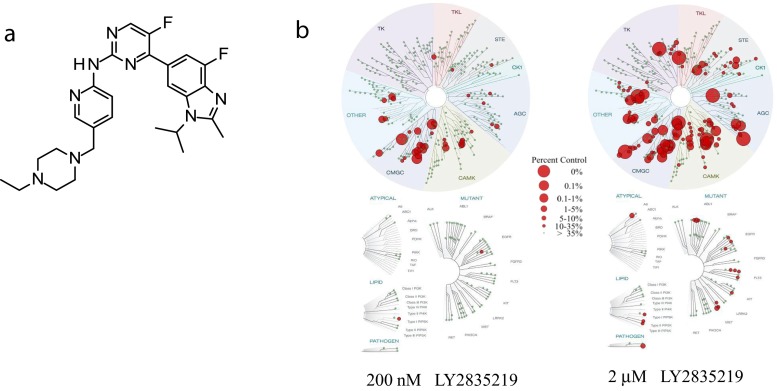
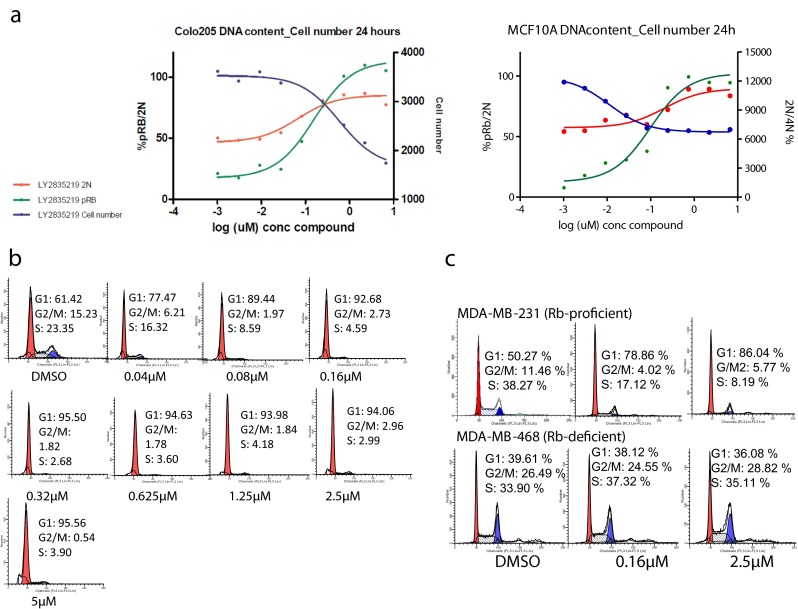
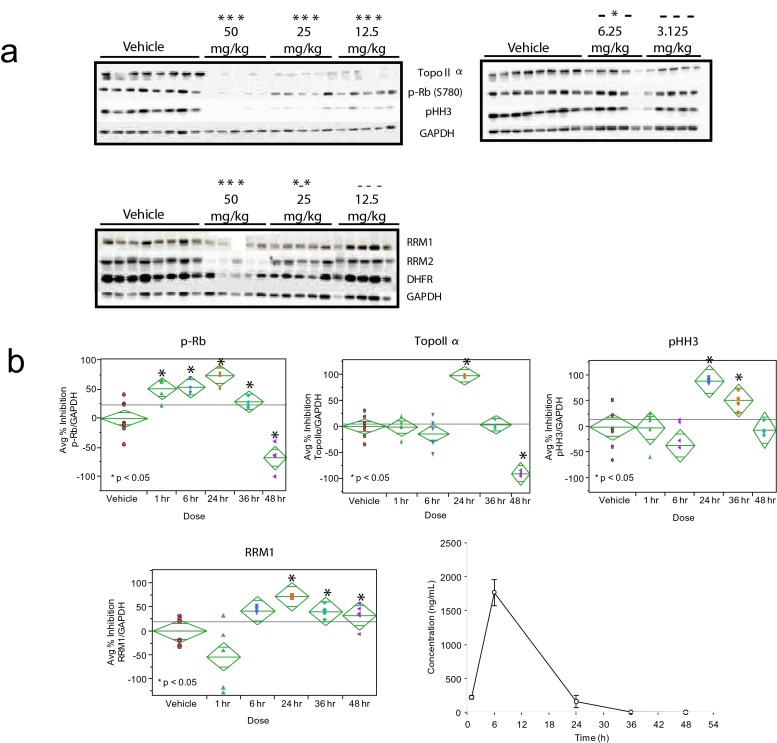
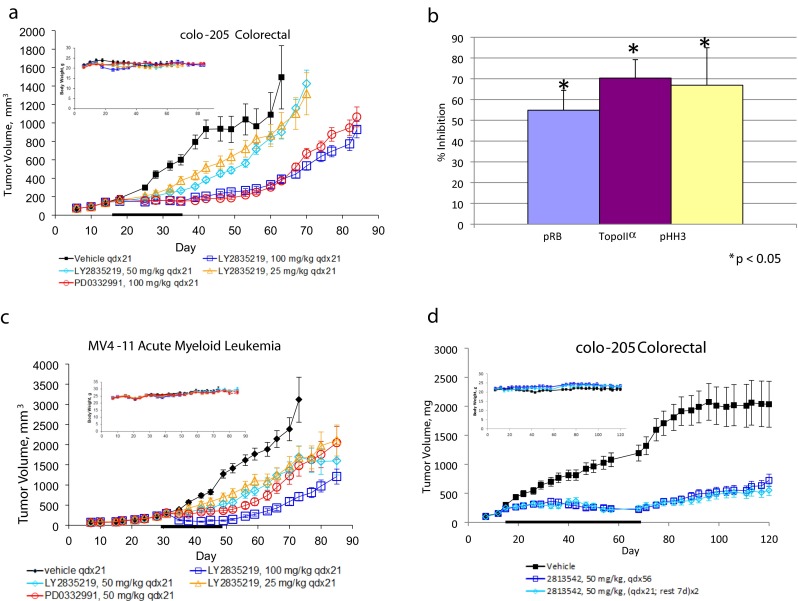
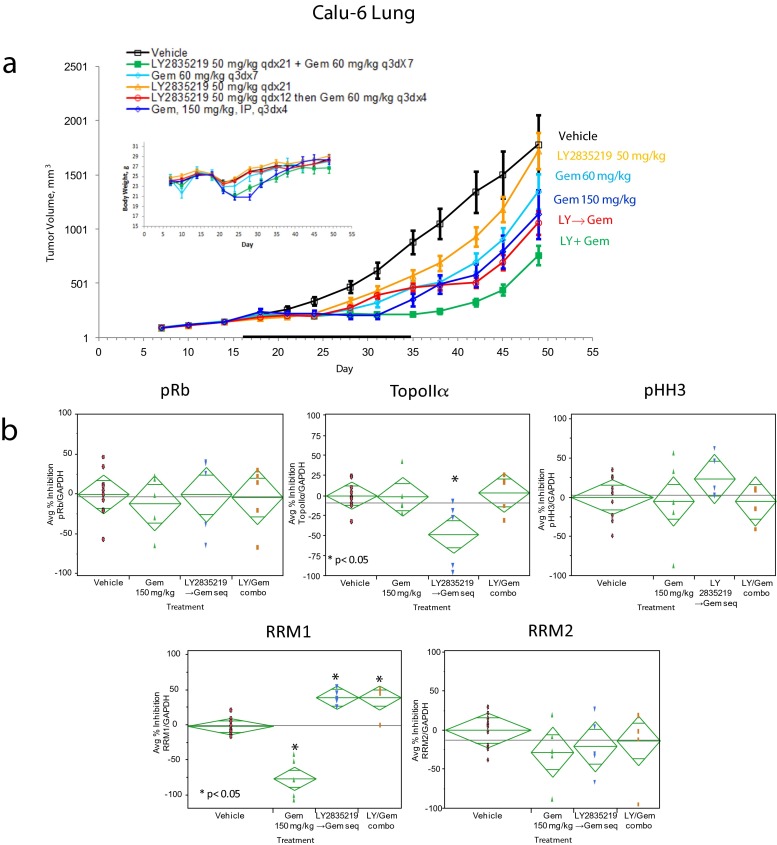
The G1 restriction point is critical for regulating the cell cycle and is controlled by the Rb pathway (CDK4/6-cyclin D1-Rb-p16/ink4a). This pathway is important because of its inactivation in a majority of human tumors. Transition through the restriction point requires phosphorylation of retinoblastoma protein (Rb) by CDK4/6, which are highly validated cancer drug targets. We present the identification and characterization of a potent CDK4/6 inhibitor, LY2835219. LY2835219 inhibits CDK4 and CDK6 with low nanomolar potency, inhibits Rb phosphorylation resulting in a G1 arrest and inhibition of proliferation, and its activity is specific for Rb-proficient cells. In vivo target inhibition studies show LY2835219 is a potent inhibitor of Rb phosphorylation, induces a complete cell cycle arrest and suppresses expression of several Rb-E2F-regulated proteins 24 hours after a single dose. Oral administration of LY2835219 inhibits tumor growth in human tumor xenografts representing different histologies in tumor-bearing mice. LY2835219 is effective and well tolerated when administered up to 56 days in immunodeficient mice without significant loss of body weight or tumor outgrowth. In calu-6 xenografts, LY2835219 in combination with gemcitabine enhanced in vivo antitumor activity without a G1 cell cycle arrest, but was associated with a reduction of ribonucleotide reductase expression. These results suggest LY2835219 may be used alone or in combination with standard-of-care cytotoxic therapy. In summary, we have identified a potent, orally active small-molecule inhibitor of CDK4/6 that is active in xenograft tumors. LY2835219 is currently in clinical development.
Overview
The claims and statistics of this paper haven’t been checked yet.
Free: it reads the open-access text and checks the first 5 claims that cite a source we can check. Create a free account to check every claim.
Integrity signals
Registry
Cites
Statistics
Figures
Verification
Claims the paper makes
The claims and statistics of this paper haven’t been checked yet.
Free: it reads the open-access text and checks the first 5 claims that cite a source we can check. Create a free account to check every claim.
Claims other papers make about this one
Each is checked against this paper’s own text: does it say what the citing paper says it does?
The cited source says what the claim attributes to it.
In the citing paper
“Like palbociclib, these orally-bioavailable and highly selective CDK4/6-targeting agents exhibit IC50 values in the low nanomolar range, whereas other CDK family members are far less sensitive (1, 88, 89).”
From Targeting CDK4 and CDK6: From Discovery to Therapy (2016) · cites this paper as [88]
The cited source says what the claim attributes to it.
In the citing paper
“The reasons for reduced hematologic toxicity and other observed non-hematologic toxicities are under active investigation but may be related to a greater selectivity for CDK4 over CDK6 with abemaciclib (88), its greater relative potency and potential to target CDK9 (Table 1), and/or its distribution into the central nervous system (93).”
From Targeting CDK4 and CDK6: From Discovery to Therapy (2016) · cites this paper as [88]
In the citing paper
“In vitro studies using cyclin D1/CDK4 and various cyclin D/CDK6 kinases determined that both abemaciclib and ribociclib are more potent against CDK4 than CDK6 (Gelbert et al., 2014; Tripathy et al., 2017) (Table 1).”
From CDK4/6 Inhibitors: The Mechanism of Action May Not Be as Simple as Once Thought (2018) · cites this paper as Gelbert et al., 2014
In the citing paper
“In such assays, abemaciclib also has modest activity, relative to its CDK4 inhibitory activity, against cyclin T1/CDK9, cyclin E2/CDK2, p25/CDK5 and p35/CDK5 (Gelbert et al., 2014) (Table 2).”
From CDK4/6 Inhibitors: The Mechanism of Action May Not Be as Simple as Once Thought (2018) · cites this paper as Gelbert et al., 2014
Self-check
Percentages, sums and reported differences re-computed from the paper’s own numbers.
The self-check needs the paper’s full text.
Citations
Cites
Hallmarks of Cancer: The Next Generation
Hanahan, D., & Weinberg, R. A. (2011) · Cell · doi:10.1016/j.cell.2011.02.013 · Cited by 66,590 · cited 1×
“Sustained proliferative capacity is a hallmark of cancer [1].”
BackgroundComprehensive genomic characterization defines human glioblastoma genes and core pathways
The Cancer Genome Atlas Research Network (2008) · Nature · doi:10.1038/nature07385 · Cited by 7,735
The regulation of E2F by pRB-family proteins.
Dyson, N. (1998) · Genes & Development · doi:10.1101/gad.12.15.2245 · Cited by 2,317 · cited 1×
“The retinoblastoma protein (Rb) is a tumor suppressor that inhibits proliferation through binding to and suppressing the activity of the E2F family of transcription factors [5].”
BackgroundTo cycle or not to cycle: a critical decision in cancer
Malumbres, M., & Barbacid, M. (2001) · Nature Reviews Cancer · doi:10.1038/35106065 · Cited by 1,468
A Restriction Point for Control of Normal Animal Cell Proliferation
Pardee, A. B. (1974) · Proceedings of the National Academy of Sciences · doi:10.1073/pnas.71.4.1286 · Cited by 1,415 · cited 1×
“originally described as the point where cell proliferation becomes independent of mitogens and growth factors [2], and the normal function of the restriction point is essential for maintaining control of cellular proliferation [3, 4].”
BackgroundFry, D. W., Harvey, P. J., Keller, P. R., Elliott, W. L., Meade, M., Trachet, E., Albassam, M., Zheng, X., Leopold, W. R., Pryer, N. K., et al. (2004) · Molecular Cancer Therapeutics · doi:10.1158/1535-7163.1427.3.11 · Cited by 1,236 · cited 1×
“recently reported a CDK4/6 inhibitor, PD 0332991, possessing improved potency and selectivity over previous inhibitors [22].”
BackgroundLundberg, A. S., & Weinberg, R. A. (1998) · Molecular and Cellular Biology · doi:10.1128/mcb.18.2.753 · Cited by 1,067 · cited 2×
“Active CDK4/6 then phosphorylates Rb, partially relieving suppression of E2F to allow expression of genes required for passage through the restriction point [7, 8].”
BackgroundHarbour, J. W., Luo, R. X., Santi, A. D., Postigo, A. A., & Dean, D. C. (1999) · Cell · doi:10.1016/s0092-8674(00)81519-6 · Cited by 1,057
Cyclin-Dependent Kinase Pathways As Targets for Cancer Treatment
Shapiro, G. I. (2006) · Journal of Clinical Oncology · doi:10.1200/jco.2005.03.7689 · Cited by 1,036 · cited 1×
“The importance of the pathway in tumorigenesis and recent success developing small molecule kinase inhibitors, make CDK4/6 a highly validated cancer drug target [33, 34].”
BackgroundThe p16INK4a/CDKN2A tumor suppressor and its relatives
Ruas, M., & Peters, G. (1998) · Biochimica et Biophysica Acta (BBA) - Reviews on Cancer · doi:10.1016/s0304-419x(98)00017-1 · Cited by 911 · cited 1×
“Both p16/ink4a and Rb act as tumor suppressors and are found to be functionally inactivated in numerous tumor types [19, 20].”
Background
Research works printed but not linked: 1
- Hughes A (2006) CDK inhibitors in 3D: Problems with the drugs, their development plans or their linkage to disease? Gene Ther Mol Biol 10:41–54
Cited by
Items 401–500 of 632
Stanciu, I.-M., Pirlog, C. F., Anghel, A. W., Paroșanu, A. I., Olaru, M., Orlov-Slavu, C. M., Iaciu, C. I., Popa, A. M., Vrabie, R. C., & Niţipir, C. (2023) · Medicina · doi:10.3390/medicina59040696 · Cited by 9
“Abemaciclib is structurally distinct from the other two CDK4/6 inhibitors and shows greater selectivity for CDK4 than CDK6 [5], being 14 times more potent against CDK4 than CDK6.”
BackgroundInfluentialLes inhibiteurs du cycle cellulaire et cancer du sein hormonodépendant
Sablin, M., Ricci, F., Loirat, D., Jobard, A., Basse, C., Romano, E., Tourneau, C. L., & Dieras, V. C. (2017) · Bulletin du Cancer · doi:10.1016/j.bulcan.2016.12.005 · Cited by 9
Inhibition of pRB Pathway Differentially Modulates Apoptosis in Esophageal Cancer Cells
Soletti, R. C., Biasoli, D., Rodrigues, N. A. L. V., Delou, J. M. D. A., Maciel, R. D. M., Chagas, V. L. A., Martins, R. A. P., Rehen, S. K., & Borges, H. L. (2017) · Translational Oncology · doi:10.1016/j.tranon.2017.06.008 · Cited by 9
“Recently, more specific CDK-4 and -6 inhibitors such as Palbociclib and Abemaciclib have been tested [30] showing promise as either mono or combined therapy [29,52,53].”
Background[Research Progress of CDK4/6 Inhibitors in Non-small Cell Lung Cancer].
Qin, Q., Ren, Y., & Zhong, D. (2020) · PubMed Central · doi:10.3779/j.issn.1009-3419.2020.03.07 · Cited by 9
Prediction of allosteric druggable pockets of cyclin-dependent kinases
Ning, S., Wang, H., Zeng, C., & Zhao, Y. (2022) · Briefings in Bioinformatics · doi:10.1093/bib/bbac290 · Cited by 8
Development of Kinase‐Centric Drugs: A Computational Perspective
Gajulapalli, V. P. R. (2023) · ChemMedChem · doi:10.1002/cmdc.202200693 · Cited by 8
Novel Small Molecule Inhibitors of Cyclin-dependent Kinases as Anticancer Agents
Srivastava, N., & Saxena, A. K. (2025) · Current Medicinal Chemistry · doi:10.2174/0109298673331685241205180307 · Cited by 8
An update on the developing mitotic inhibitors for the treatment of non-small cell carcinoma
Sacco, P. C., & Gridelli, C. (2017) · Expert Opinion on Emerging Drugs · doi:10.1080/14728214.2017.1369952 · Cited by 9
“CDK6 inhibiting RB phosphorylation and leads to G1 arrest in RB-proficient cell lines [64].”
BackgroundTargeted Therapies for Breast Cancer Brain Metastases
Daylan, A. E. C., & Leone, J. P. (2020) · Clinical Breast Cancer · doi:10.1016/j.clbc.2020.11.014 · Cited by 8
CDK4/6 inhibitor resistance: A bibliometric analysis
Pang, J., Li, H., & Sheng, Y. (2022) · Frontiers in Oncology · doi:10.3389/fonc.2022.917707 · Cited by 8
Son, K.-H., Kim, M.-Y., Shin, J.-Y., Kim, J.-O., & Kang, J.-H. (2021) · Anticancer Research · doi:10.21873/anticanres.15296 · Cited by 8
The Structure–property Relationships of Clinically Approved Protein Kinase Inhibitors
Choi, K. (2022) · Current Medicinal Chemistry · doi:10.2174/0929867329666220822123552 · Cited by 8
Management of Metastatic Hormone Receptor-Positive Breast Cancer Beyond CDK4/6 Inhibitors
Tracy, P. D., Bopp, E., Milner, E. M., Garrido-Castro, A. C., Giordano, A., Mayer, E. L., Tolaney, S. M., Tarantino, P., & Schlam, I. M. (2025) · Current Oncology Reports · doi:10.1007/s11912-025-01689-9 · Cited by 7
Lu, X., Hu, C., Duan, L., Chen, K., Hao, H., & He, Y. (2024) · Clinical & Translational Oncology · doi:10.1007/s12094-024-03666-3 · Cited by 7
“It could prevent the phosphorylation of CDK4/6 of Rb tumor suppressors as well, inducing G1 cell cycle arrest and thereby eliminating cell growth [8].”
Local Control of Advanced Breast Cancer—Debate in Multidisciplinary Tumor Board
Pantelimon, I., Stancu, A. M., Coniac, S., Ionescu, A.-I., Atasiei, D.-I., Georgescu, D. E., & Gales, L. N. (2025) · Journal of Clinical Medicine · doi:10.3390/jcm14020510 · Cited by 8
“Moreover, Abemaciclib has a broader target range, including CDKs 4 and 6, as well as CDKs 1, 2, 3, 5, 6, 9, 14, 16, 17, and 18; the later are less potent [83,84].”
Ribociclib for the Treatment of Advanced Hormone Receptor-Positive, HER2-Negative Breast Cancer
López‐Tarruella, S., Jerez, Y., Márquez‐Rodas, I., Echavarría, I., & Martín, M. (2017) · Future Oncology · doi:10.2217/fon-2017-0183 · Cited by 7
Cyclin-dependent kinase inhibitors: efficacy and safety
Кононенко, И. Б., Снеговой, А. В., & Selchuk, V. Y. (2019) · Meditsinskiy sovet = Medical Council · doi:10.21518/2079-701x-2019-10-42-55 · Cited by 7
Liao, L., Deng, L., Zhang, Y., Yang, S., Andriani, L., Hu, S., Zhang, F.-L., Shao, Z., & Li, D. (2023) · Clinical and Translational Medicine · doi:10.1002/ctm2.1480 · Cited by 7
“…recently, evidence from several clinical trials demonstrate that some TNBC patients can benefit from CDK4/6 inhibitor treatment because of the heterogeneity of TNBC. 5,45 The mechanism of CDK4/6 inhibitors targeting cancer is to prevent the transition from G1-phase to S-phase of the cell cycle.”
BackgroundZheng, M., Zhang, X., Chen, W., Xia, F., Yang, H., Yuan, K., & Yang, P. (2024) · Future Medicinal Chemistry · doi:10.4155/fmc-2023-0259 · Cited by 7
AKT Inhibition Sensitizes to Polo-Like Kinase 1 Inhibitor Onvansertib in Prostate Cancer
Nouri, M., Varkaris, A. S., Ridinger, M., Dalrymple, S. L., Dennehy, C. M., Isaacs, J. T., Einstein, D. J., Brennen, W. N., & Balk, S. P. (2024) · Molecular Cancer Therapeutics · doi:10.1158/1535-7163.mct-23-0933 · Cited by 7
Wang, Y., Jiang, S.-Q., & Zhang, S. (2024) · Molecules · doi:10.3390/molecules29133029 · Cited by 7
“Abemaciclib is a potent Abemaciclib is a potent inhibitor CDK4 and CDK6 (IC 50 = 2 nM for CDK4, IC 50 = 10 nM for CDK6) [24]. of CDK4 and CDK6 CDK4, IC 50 = 10 nM for CDK6) [24].”
BackgroundCruz, M. R. D. S., Reinert, T., & Cristofanilli, M. (2018) · Clinical Pharmacology & Therapeutics · doi:10.1002/cpt.965 · Cited by 7
Guo, X., Chen, H., Zhou, Y., Shen, L., Wu, S., & Chen, Y. (2022) · Expert Opinion on Investigational Drugs · doi:10.1080/13543784.2022.2097067 · Cited by 7
Perrone, M., Giuliani, F., Sanna, V., Bruno, S., Melaccio, A., Santoro, A. N., Laface, C., Maselli, F. M., Iaia, M. L., Guarini, C., et al. (2023) · Expert Opinion on Pharmacotherapy · doi:10.1080/14656566.2023.2201373 · Cited by 7
Krieghoff‐Henning, E., Michaeli, T., Boch, T., Kirchhof, J., Haselmann, V., Neumaier, M., Hofmann, W.-K., Betge, J., Ebert, M. P. A., Teufel, A., et al. (2025) · ESMO Open · doi:10.1016/j.esmoop.2025.105894 · Cited by 6
Lu, X. (2023) · Elsevier eBooks · doi:10.1016/b978-0-443-18611-0.00012-7 · Cited by 6
Zhang, J., Xu, X., Zhou, Y., Su, J., & Wang, J. (2025) · Frontiers in Oncology · doi:10.3389/fonc.2025.1472407 · Cited by 6
Tumor Pro-Senescence Strategy to Enhance Mild Photothermal Therapy of Diffuse Large B-Cell Lymphoma
Kang, Y., Yu, L., Yang, C., Zhao, J., Liu, Z., Chen, G., Hu, X., Mou, X., Cai, Y., & Tong, X. (2025) · ACS Applied Materials & Interfaces · doi:10.1021/acsami.4c22979 · Cited by 6
Gu, J., Dai, Z., Shen, T., Chen, X. '., Yang, Z., Sun, S., Chen, D., Luo, H., Wang, X., & Xu, J. (2025) · Cancer Drug Resistance · doi:10.20517/cdr.2025.38 · Cited by 6
Abemaciclib does not increase the corrected QT interval in healthy participants
Chappell, J. C., Chiang, A. Y., Royalty, J. E., Coleman, H., Kulanthaivel, P., & Turner, P. K. (2023) · Clinical and Translational Science · doi:10.1111/cts.13573 · Cited by 6
Palbociclib (Ibrance): The First‐in‐Class CDK4/6 Inhibitor for Breast Cancer
Toogood, P. L., & Ide, N. D. (2015) · Wiley eBooks · doi:10.1002/9781118819951.ch9 · Cited by 6
Divya, V., Lalithabhai, P. V., & Bahuleyan, M. K. (2018) · Chemical Biology & Drug Design · doi:10.1111/cbdd.13452 · Cited by 6
“…2013; Asghar et al., 2015; Chashoo & Saxena, 2014; Cicenas et al., 2014; Dickson, 2014; Dipippo et al., 2016; Fischer, 2004; Fry et al., 2004, 2004; Gelbert et al., 2014; Honma, Yoshizumi, Hashimoto, Hayashi, & Kawanishi, 2001; Honma et al., 2001; Ikuta et al., 2001; Konstantinidis et al., 1998;…”
BackgroundInfluentialCdk 4/6 inhibitors revolutionized breast cancer therapy
Bandivadekar, P. V., Neve, V., & Patil, P. (2018) · Journal of Pharmacognosy and Phytochemistry · doi:10.22271/phyto.2018.v7.isp6.1.04 · Cited by 6
Benzimidazoles Against Certain Breast Cancer Drug Targets: A Review
Ateş‐Alagöz, Z., & Kışla, M. M. (2022) · Mini-Reviews in Medicinal Chemistry · doi:10.2174/1389557522666220328161217 · Cited by 6
Su, H., Lin, H.-W., & Tam, K. (2024) · Targeted Oncology · doi:10.1007/s11523-024-01118-0 · Cited by 5
“Direct inhibition of CDK4/6 disrupts this pathway and results in senescence and apoptosis, which can lead to decreased breast cancer cell growth [6].”
Wang, X., Li, C., Li, C., Qin, M., Wu, J., Qin, Y., Zou, Y., Zeng, H., Li, C., Huang, X., et al. (2025) · Frontiers in Pharmacology · doi:10.3389/fphar.2025.1600892 · Cited by 5
Selective CDK6 Degradation via the KLHDC2 E3 Ubiquitin Ligase
Jeon, E., Kim, Y., Ahn, H., Martinez, M. J., Hwang, K., Cho, S., Dwyer, B. G., Romero, B. A., Hinshaw, S. M., Gray, N. S., et al. (2025) · Journal of Medicinal Chemistry · doi:10.1021/acs.jmedchem.5c02713 · Cited by 5
Historia de los receptores hormonales y de la terapia hormonal en cáncer de mama
Guerra, L. M. B., Rodríguez-Orihuela, D. L., Soto‐Pérez‐de‐Celis, E., & Chávarri-Guerra, Y. (2021) · Medicina · doi:10.56050/01205498.1594 · Cited by 5
Advancing treatment choices: CDK4/6 inhibitor switching in HR+/HER2- metastatic breast cancer
Zagami, P., Espósito, A., Salimbeni, B. T., Giachetti, P. P. M. B., Scafetta, R., Lambertini, M., Maïo, M. D., Curigliano, G., Criscitiello, C., & Cinieri, S. (2025) · The Breast · doi:10.1016/j.breast.2025.103875 · Cited by 5
“Contrarily, palbociclib and ribociclib induce BC cells quiescence with rebound induction of DNA synthesis [26,28].”
Promise of Cyclin-Dependent Kinases 4/6 as Therapeutic Targets in Breast Cancer
Yang, C. (2014) · Journal of Carcinogenesis & Mutagenesis · doi:10.4172/2157-2518.1000191 · Cited by 5
“Both compounds are orally bioavailable and both have the potential to be used in breast cancer treatment [24,25].”
BackgroundKarthikeyan, S. (2016) · International Journal of Pharma and Bio Sciences · Cited by 5
Gemcitabine-associated digital necrosis in metastatic breast cancer
Türkel, A., Özdemir, M., Kurtulus, A., & Doğan, M. (2023) · Journal of Oncology Pharmacy Practice · doi:10.1177/10781552231182356 · Cited by 5
Beyaz, H., Uludağ, H., Kavaz, D., & Rizaner, N. (2021) · Advances in experimental medicine and biology · doi:10.1007/5584_2021_648 · Cited by 5
Tolaney, S. M., Sahebjam, S., Rhun, É. L., Bachelot, T., Kabos, P., Awada, A. H., Yardley, D. A., Chan, A., Conte, P., Dieras, V. C., et al. (2021) · Clinical Cancer Research · doi:10.1158/1078-0432.ccr-21-0193 · Cited by 5
Bobbitt, J. R., Cuellar-Vite, L., Weber-Bonk, K. L., Yancey, M. R., Majmudar, P. R., & Keri, R. A. (2025) · Journal of Biological Chemistry · doi:10.1016/j.jbc.2025.108196 · Cited by 4
Baeten, D., Kohsaka, H., & Miura, D. (2025) · Clinical and Experimental Rheumatology · doi:10.55563/clinexprheumatol/4fyfje · Cited by 5
“To date, five CDK4/6 inhibitors have been approved for the treatment of HR + / HER2 - advanced breast cancer: palbo-ciclib (85), ribociclib (86), abemaciclib (87), trilaciclib (88), and dalpiciclib (89).”
Zhao, F., Liu, Y., Jiang, H., Yang, L., Zhu, Q., Ma, X., Li, H., & Zhan, Q. (2026) · Advances in Therapy · doi:10.1007/s12325-026-03538-y · Cited by 4
“Abemaciclib is an orally administered, continuously dosed CDK4/6 inhibitor for the treat-ment of patients with HR+, human epidermal growth factor receptor 2-negative (HER2−) breast cancer in combination with ET [7, 8].”
Kataoka, N., Hata, T., Hosomi, K., Hirata, A., Ota, R., Nishihara, M., Kimura, K., Iwamoto, M., Ashida, A., & Neo, M. (2024) · BMC Cancer · doi:10.1186/s12885-024-13091-y · Cited by 4
“Abe-maciclib targets cyclin D, preventing the formation of complexes between CDK4 and 6 and cyclin D, and preventing the phosphorylation of retinoblastoma protein, thereby stopping the progression of the cell cycle from G1 to S phase and suppressing tumor growth [6, 7].”
BackgroundRamos-Esquivel, A., Ramírez-Jiménez, I., & Víquez-Jaikel, Á. (2024) · Cureus · doi:10.7759/cureus.73738 · Cited by 4
Ullah, H., Zhang, B., Sharma, N. K., McCrea, P. D., & Srivastava, Y. (2022) · Frontiers in Molecular Biosciences · doi:10.3389/fmolb.2022.981020 · Cited by 4
Cdk4/Cdk6 Dysregulation in Estrogen-Positive Receptor Breast Cancers
Mir, M. A., & Jan, U. (2023) · Springer eBooks · doi:10.1007/978-981-19-8911-7_10 · Cited by 4
RECENT ADVANCES IN THE DISCOVERY OF CYCLIN-DEPENDENT KINASE 2 (CDK2) SELECTIVE INHIBITORS
Freeman‐Cook, K. D., & Hoffman, R. L. (2023) · Medicinal chemistry reviews · doi:10.1021/mc-2023-vol58.ch12 · Cited by 4
P53-Independent G1-Cell Cycle Arrest Increases SARS-CoV-2 RNA Replication
Husser, C., Kwon, H., Andersson, K., Appelberg, S., Montserrat, N., Mirazimi, A., & Monteil, V. (2024) · Microorganisms · doi:10.3390/microorganisms12030443 · Cited by 4
“To 5B. Inhibitors do this, we used several compounds that are known to block the cell cycle in G0/G1 in A549 cells (Palbociclib [25], Abemaciclib [26,27], Gefitinib [28], Cediranib [29], Resveratrol [30], and Hesperidin [31]). of growth factor receptors (EGFR and VEGFR) tyrosine These compounds…”
BackgroundIppolito, E., Pantano, F., Silipigni, S., Alaimo, R., Infante, J., Onorati, E., Talocco, C., Greco, C., Fiore, M., Donato, M., et al. (2024) · Chemotherapy · doi:10.1159/000538847 · Cited by 4
Kamal, Ä., Nekkanti, S., Shankaraiah, N., & Sathish, M. (2017) · Springer eBooks · doi:10.1007/978-3-319-48683-3_27 · Cited by 4
Sekizaki, N., Yashima, H., Araki, T., & Yamamoto, K. (2021) · Indonesian Journal of Pharmaceutics · doi:10.24198/idjp.v2i3.31586 · Cited by 4
Garrido-Castro, A. C., & Metzger, O. (2016) · Current Breast Cancer Reports · doi:10.1007/s12609-016-0228-1 · Cited by 4
Kim, S., Tiedt, R., Loo, A. T., Horn, T. D., Delach, S. M., Kovats, S., Haas, K., Engstler, B. S., Cao, Z. A., Pinzon-Ortiz, M. C., et al. (2020) · Oncotarget · doi:10.18632/oncotarget.27407 · Cited by 4
Hill, K. L., Abbott, N. L., Na, J. Y., Rudek, M. A., Moore, K. N., Lee, E. Q., & Phelps, M. A. (2024) · Journal of Pharmaceutical and Biomedical Analysis · doi:10.1016/j.jpba.2024.116531 · Cited by 3
Li, J., Lei, H., Wang, H., Xu, P., Yuan, C., Yuan, Z., Huang, M., & Jiang, L. (2025) · International Journal of Biological Macromolecules · doi:10.1016/j.ijbiomac.2025.149613 · Cited by 3
CAZENAVE, M. G., Elahi, L., Mahiou, K., Bonneau, C., Ammendola, O., & Benoit, L. (2025) · The Breast · doi:10.1016/j.breast.2025.104683 · Cited by 3
“CDK4 and CDK6 promote progression from G 1 phase to S phase of the cell cycle and are essential for regulation of cell proliferation Abema-ciclib causes a decrease in phosphorylation of Rb, arrest at G1, and a decrease in cell proliferation [3,4].”
CDK4/6 Inhibition With Abemaciclib in Patients With Previously Treated Advanced Renal Cell Carcinoma
McGregor, B. A., Xie, W., Berg, S. A., Xu, W. V., Viswanathan, S. R., McDermott, D. F., Signoretti, S., Kaelin, W. G., & Choueiri, T. K. (2025) · Clinical Genitourinary Cancer · doi:10.1016/j.clgc.2025.102318 · Cited by 3
Endocrine Therapeutic Strategies for Patients with Hormone Receptor-positive Advanced Breast Cancer
Schmid, P. (2017) · European Oncology & Haematology · doi:10.17925/eoh.2017.13.02.127 · Cited by 3
“Abemaciclib Abemaciclib is potent inhibitor of Rb phosphorylation and has been found to inhibit tumour growth in mouse models.(42) This compound has been investigated in combination with endocrine therapy, in two clinical trials.”
Yıldırım, A., Duygulu, M. E., & Fidan, E. (2024) · Journal of College of Physicians And Surgeons Pakistan · doi:10.29271/jcpsp.2024.07.785 · Cited by 3
Unveiling promising bioactives for breast cancer: a novel approach for herbal-based drug discovery
Arvindekar, A., Arvindekar, S., Mali, S. N., & Mali, S. S. (2024) · Phytochemistry Reviews · doi:10.1007/s11101-024-10024-2 · Cited by 3
Sammons, S. L., Moore, H., Cushman, J., & Hamilton, E. P. (2022) · Expert Review of Anticancer Therapy · doi:10.1080/14737140.2022.2093719 · Cited by 3
“Abemaciclib differs from palbociclib and ribociclib in that it is 14 times more potent against CDK4/cyclin D1 based on enzymatic assays [21].”
BackgroundNiraula, S. (2018) · The Breast · doi:10.1016/j.breast.2018.11.008 · Cited by 3
Genome-Driven Therapy for Chemotherapy-Resistant MetastaticCDK6-Amplified Osteosarcoma
Lazow, M., Johnson, S. L., Johnson, N. D., Breneman, J. C., Dexheimer, P. J., Szabo, S., & Pressey, J. G. (2020) · JCO Precision Oncology · doi:10.1200/po.20.00032 · Cited by 3
Multiple molecular interactions redundantly contribute to RB-mediated cell cycle control
Thwaites, M. J., Cecchini, M. J., Talluri, S., Passos, D. T., Carnevale, J., & Dick, F. A. (2017) · Cell Division · doi:10.1186/s13008-017-0029-6 · Cited by 3
The Role of Kinase Inhibitors in Cancer Therapies
Kurşunluoğlu, G., Erdoğan, D., Cagatay, E., Atalay, E. B., Guler, S., Gungor, Y., & Kayalı, H. A. (2021) · Biochemistry · doi:10.5772/intechopen.99070 · Cited by 3
Hafner, M. A., Mills, C. E., Subramanian, K., Chen, C., Chung, M., Boswell, S. A., Everley, R. A., Liu, C., Walmsley, C. S., Juric, D., et al. (2017) · bioRxiv (Cold Spring Harbor Laboratory) · doi:10.1101/211680 · Cited by 3
Simonet, S. (2018) · theses.fr (ABES) · doi:10.70675/791e42afzc736z4d97zb3ccz2fb0fb5f761d · Cited by 3
Wei, X., Ning, G., Ma, H., Yin, Y., Jian-chun, M., Han, L., Chen, D., & Shi, Z. (2025) · Archives of Biochemistry and Biophysics · doi:10.1016/j.abb.2025.110349 · Cited by 2
Models of Early Resistance to CDK4/6 Inhibitors Unveil Potential Therapeutic Treatment Sequencing
Zapatero‐Solana, E., Ding, Y. P., Pulliam, N., de Dios, A., Ortiz-Ruiz, M. J., & Lallena, M. J. (2025) · International Journal of Molecular Sciences · doi:10.3390/ijms26062643 · Cited by 2
“Full chemical names have been previously published [62].”
Self-citationProgress in Clinical Trials of CDK4/6 Inhibitors
Mizukami, T., & Montero, A. J. (2025) · Current Breast Cancer Reports · doi:10.1007/s12609-025-00606-0 · Cited by 2
“CDK4 is crucial to promote the cell cycle especially in ER + BC. Abemaciclib is considered the most potent of all three FDA-approved CDK4/6 inhibitors due to its greater specificity toward CDK4 over CDK6[26, 27].”
Effect of honokiol on abemaciclib metabolism both in vitro and in vivo
Yang, T., Song, W., Lu, Z., Zhou, G., Wang, Z., Zhou, Q., Geng, P., Mamun, A. A., Wang, S., & Shi, Y. (2025) · Journal of Pharmacy and Pharmacology · doi:10.1093/jpp/rgaf108 · Cited by 2
Dual Targeting of Tau Kinases and Autophagy by Abemaciclib Independent of CDK4/6 Inhibition
Han, J., Jeong, J., Lee, D., Jung, Y., Jin, Y., Jung, E. S., Kim, H. J., Kim, W. Y., Lee, C., & Mook‐Jung, I. (2026) · Advanced Science · doi:10.1002/advs.202513135 · Cited by 2
“The inhibitory effects of abe-maciclib on multiple tau kinases are consistent with previous multi-omics profiling data demonstrating that abemaciclib can reduce the activities of several kinases beyond its canonical CDK4/6 targets [ 26, 27 ].”
The good, the bad, and the manageable: real-world outcomes with CDK4/6 inhibitors
Paulet, A., Mancini, S., Catalano, M., Shtembari, K., Angelis, C. D., Petrioli, R., Generali, D., & Roviello, G. (2026) · Anti-Cancer Drugs · doi:10.1097/cad.0000000000001810 · Cited by 2
Huang, Z., Jiang, T., Palacios, M. M. S., Ouyang, T., Abdallah, A. S., Niu, L., Chen, J., Zhai, X., Ciolak, E., Qiang, W., et al. (2026) · Cancer Letters · doi:10.1016/j.canlet.2026.218771 · Cited by 2
CDK4/6 Inhibitors in Breast Cancer Therapy: Mechanisms, Resistance, and Emerging Opportunities
Chinea, L. E., Hauer, C., Pal, K., Chang, H. L., & Chan, I. S. (2026) · Targeted Oncology · doi:10.1007/s11523-026-01232-1 · Cited by 2
“Because CDK6 inhibition arrests hematopoietic progenitor cells, abemaciclib exhibits lower rates of severe neutropenia compared with palbociclib and ribociclib [36].”
Yalçın, G. D., Mutlu, P., Kazan, H. H., & Gündüz, U. (2024) · Journal of Chemotherapy · doi:10.1080/1120009x.2024.2345454 · Cited by 2
Mechanisms of action for FDA-approved drugs targeting breast cancer
Francis, D., Binitha, R. N., Nissar, R., Divya, S., Rima, J., Janish, P. A., & Subin, B. (2024) · Revista de Senología y Patología Mamaria · doi:10.1016/j.senol.2024.100632 · Cited by 2
“The G1 to S phase transition, controlled by the retinoblastoma tumor suppressor protein (Rb)-mediated pathway, involves CDK 4 and 6 interacting with D-type cyclins to phosphorylate Rb. 28,29 This phosphorylation releases the suppression of E2F transcription factors, promoting gene expression required for cell cycle pr…”
InfluentialDavis, L. E., Zhu, L., Latour, E. J., McMahon, N. P., Nishikawa, G., Choo, F., Nusser, K. D., Pittsenbarger, J., Burch, R., Park, B. S., et al. (2025) · Clinical Cancer Research · doi:10.1158/1078-0432.ccr-24-4001 · Cited by 2
Lazarte, J. M. S., Ofosu-Asante, K., Tilghman, S. L., & Lamango, N. S. (2025) · Oncotarget · doi:10.18632/oncotarget.28759 · Cited by 2
Management of Hormone Receptor-Positive Metastatic Breast Cancer
Chiu, J. W. Y. (2018) · IntechOpen eBooks · doi:10.5772/intechopen.75759 · Cited by 2
Cyclin-Dependent Kinase 4 and 6 Inhibitors as Breast Cancer Therapy: Research Progress and Prospects
Li, X. (2022) · Pharmaceutical Chemistry Journal · doi:10.1007/s11094-022-02599-x · Cited by 2
Kisquali (Ribociclib): A promising therapeutic candidate against breast cancer
Sharma, S., Joshi, S., Anuradha, A., Kaur, S., & Mittal, A. (2023) · AIP conference proceedings · doi:10.1063/5.0169010 · Cited by 2
Go, M., Kimura, M., Yamada, S., Usami, E., Noguchi, Y., & Yoshimura, T. (2024) · Journal of Pharmacy Practice · doi:10.1177/08971900241247653 · Cited by 2
Advancements in nanosensors for an early detection of cancer
Verma, A., Kumar, P., Kuddushi, M., Joshi, G., Khatua, S., Dhanka, M., & Chauhan, D. S. (2024) · Elsevier eBooks · doi:10.1016/b978-0-443-19129-9.00006-6 · Cited by 2
Kim, S., Choi, J.-Y., Suh, Y.-H., Song, K.-H., Ryu, M., & Seo, K. (2025) · Frontiers in Veterinary Science · doi:10.3389/fvets.2025.1603686 · Cited by 2
Advances in molecular and immunologic targeted therapies for squamous cell carcinoma of the lung
Leukam, M. J., & Villaflor, V. M. (2015) · Translational Cancer Research · doi:10.21037/5043 · Cited by 2
“Preclinical data gathered involving cell-cycle regulation include the development of two different inhibitors of CDK4/6 (LY2835219 and PD 0332991) that are active against xenograft tumors formed from human cancer cell lines in mice (53,54).”
BackgroundAbemaciclib for the treatment of HR+/HER2- breast cancer
Exman, P., & Tolaney, S. M. (2018) · Expert Review of Precision Medicine and Drug Development · doi:10.1080/23808993.2018.1465341 · Cited by 2
“The median time to reach maximum plasma concentration (Tmax) ranges from 4 to 6 h, but may range up to 24 h, and the absolute bioavailability of the drug is reported to be 45% [18,19].”
BackgroundInfluentialCDK inhibitors in hormone receptor positive advanced breast cancer
Aktaş, B. (2015) · Marmara medical journal · doi:10.5472/mmj.77406 · Cited by 2
“Abemaciclib Preclinical data for abemaciclib have shown activity as both monotherapy and in combination with chemotherapy, as well as possible passage across the blood-brain barrier compared to palbociclib [42, 43].”
BackgroundLertsuwan, J., Sawasdichai, A., Tasnawijitwong, N., Gaston, K., Jayaraman, P.-S., & Satayavivad, J. (2021) · Anticancer Research · doi:10.21873/anticanres.15435 · Cited by 2
Zhou, M., Wang, Y., Shen, J., & Fei, G. (2022) · Research Square · doi:10.21203/rs.3.rs-1230442/v1 · Cited by 2
“The inhibition of tumor growth was observed in several cancers by orally taking an CDK4/6 inhibitor (Gelbert et al., 2014; Yadav et al., 2014).”
BackgroundDoval, D. C., Maksud, T., Nagarkar, R. V., Thunagappa, S. C., Taran, R., Prasad, S., Anoop, T. M., Jain, M. M., Mehta, D., Mohapatra, P. N., et al. (2025) · South Asian Journal of Cancer · doi:10.1055/s-0045-1802565 · Cited by 1
“17,18 21 The MONARCH plus phase 3 study included patients with HR þ /HER2 – advanced or metastatic BC from China, Brazil, South Africa, and India and reported that the ef fi cacy and safetyofabemaciclib plus ETwere consistent with the results of MONARCH 2 and 3.”
Jain, A., Prajapati, S. K., Jain, D., Jain, R., Panda, A. K., Parveen, N., Bisht, S. S., & Behera, S. K. (2023) · BENTHAM SCIENCE PUBLISHERS eBooks · doi:10.2174/9789815080506123010004 · Cited by 1
Yuan, K., Chen, W., Wang, X., & Yang, P. (2024) · Elsevier eBooks · doi:10.1016/b978-0-443-23932-8.00022-4 · Cited by 1
Chang, G., Chen, H., Zhai, J., Jia, X., Wang, Y., Zhang, L., Cui, Y., Sun, B., Bi, J., & Sang, F. (2025) · ChemistrySelect · doi:10.1002/slct.202500504 · Cited by 1
Ambere, G. D., Prajapati, D. N., Mathure, D. M., & Kumar, D. (2025) · Current Problems in Cancer · doi:10.1016/j.currproblcancer.2025.101235 · Cited by 1
Metadata
- Authors
- Gelbert, L. M., Cai, S., Lin, X., Sanchez-Martinez, C., del Prado, M., Lallena, M. J., Torres, R., Ajamie, R. T., Wishart, G. N., Flack, R. S., Neubauer, B. L., Young, J., Chan, E. M., Iversen, P., Cronier, D., Kreklau, E., & de Dios, A.
- Affiliations
- Eli Lilly (United States) (US)
- Eli Lilly (Spain) (ES)
- Eli Lilly (United Kingdom) (GB)
- Covance (United States) (US)
- Corresponding author
- Gelbert, Lawrence M.
- Venue
- Investigational New Drugs
- Published
- 2014-06-13
- Volume
- 32
- Issue
- 5
- Pages
- 825-837
- ISSN
- 0167-6997 (ISSN-L)
- 1573-0646
- PMC
- PMC4169866
- OpenAlex
- W1991601194
- Cited by
- 577
- References
- 52
- Citations by year
- 2026: 26 · 2025: 47 · 2024: 47 · 2023: 64 · 2022: 56 · 2021: 53 · 2020: 69 · 2019: 39 · 2018: 49 · 2017: 63 · 2016: 35 · 2015: 25 · 2014: 4
- FWCI
- 20.57
- Type
- journal article
- Language
- en
- Open access
- hybrid
- doi.org
- Licence
- cc-by
- creativecommons.org/licenses/by/4.0 (tdm)
- creativecommons.org/licenses/by/4.0 (vor)
- Locations
- Investigational New Drugs (publishedVersion, cc-by)
- Europe PMC (PubMed Central) (publishedVersion, cc-by)
- PubMed Central (publishedVersion, cc-by)
- PubMed (publishedVersion)
- IUScholarWorks (Indiana University) (submittedVersion, cc-by)
- Topics
- Health Sciences › Medicine › Oncology › Cancer-related Molecular Pathways
- Health Sciences › Medicine › Oncology › Advanced Breast Cancer Therapies
- Life Sciences › Biochemistry, Genetics and Molecular Biology › Molecular Biology › PI3K/AKT/mTOR signaling in cancer
- Keywords
- CDK4/6 inhibitors, retinoblastoma protein phosphorylation, G1 cell cycle arrest, Rb/E2F pathway, gemcitabine combination therapy, oral antitumor activity, tumor xenografts, ribonucleotide reductase, small-molecule kinase inhibitors
- MeSH terms
- Gemcitabine, Aminopyridines, Animals, Antineoplastic Agents, Benzimidazoles, Deoxycytidine, Drug Therapy, Combination, Female, Humans, Neoplasms, Phosphorylation, Retinoblastoma Protein, Xenograft Model Antitumor Assays, Cell Line, Tumor, Tumor Burden, Protein Kinase Inhibitors, Cyclin-Dependent Kinase 4, Cyclin-Dependent Kinase 6, Mice, G1 Phase Cell Cycle Checkpoints
About these checks
Registry, retraction, Cites and statistics results are computed, not judged, with one exception: a printed reference that no index lists is read once by a model before it counts as a citation error. Claims are extracted by a model and kept only when their quote appears verbatim in the text; each cited source is then checked, with a model’s help, for whether it says what the claim relies on. Those verdicts can be wrong — read the claim’s quote and the cited source before relying on one.
Statistics and arithmetic are recomputed, not judged.
Confidence bands are shown only for fields calibrated on our annotated test set. None is calibrated yet, so no band is shown.
What counts as a claim ›How we measure confidence ›How we check this ›
Are you an author, or do you see a problem with this page? Request a review
Data sources
Bibliographic data: Semantic Scholar, OpenAlex, Crossref.
Contains information from the Semantic Scholar Academic Graph Datasets, made available under the ODC Attribution License (ODC-BY 1.0).
Semantic Scholar’s data is described in: Kinney, R., et al. (2023). The Semantic Scholar Open Data Platform. arXiv:2301.10140.
