

Preclinical characterization of the CDK4/6 inhibitor LY2835219: in-vivo cell cycle-dependent/independent anti-tumor activities alone/in combination with gemcitabine
Open accessThe DOI matches its Crossref record; 52 of the 52 references it cites were found in a registry or an index.
Abstract
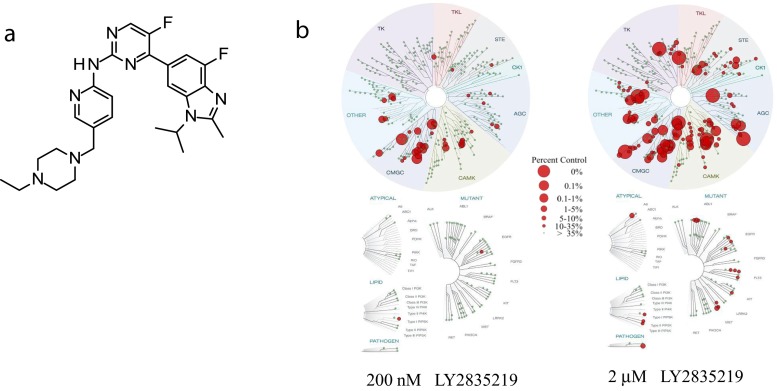
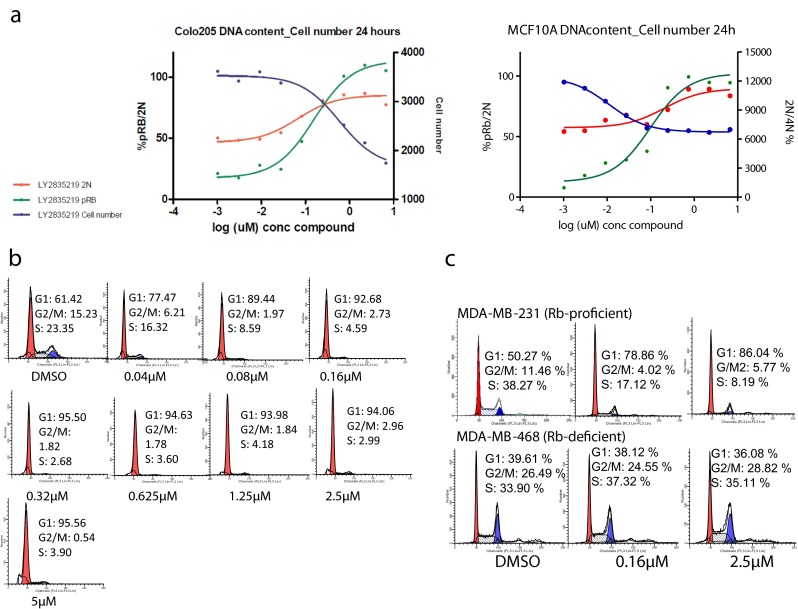
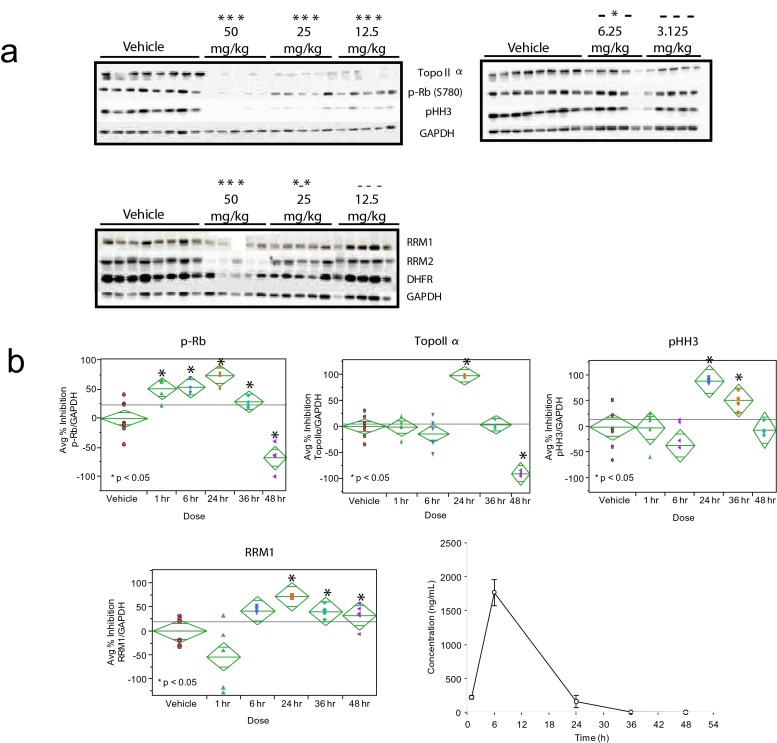
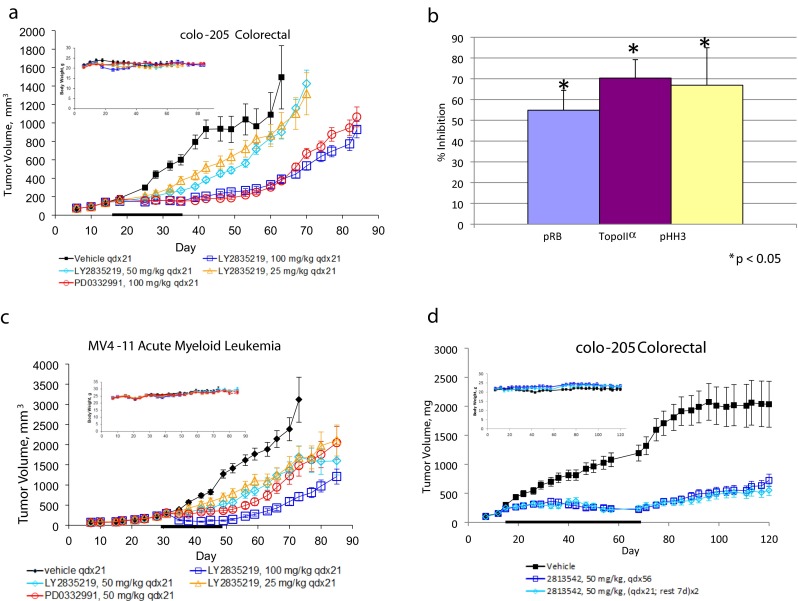
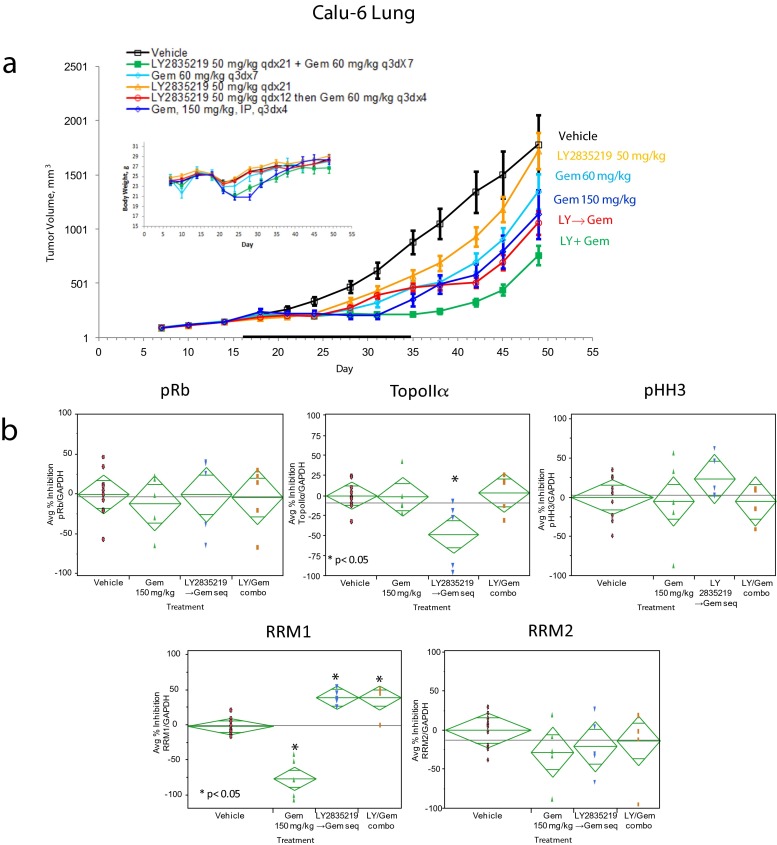
The G1 restriction point is critical for regulating the cell cycle and is controlled by the Rb pathway (CDK4/6-cyclin D1-Rb-p16/ink4a). This pathway is important because of its inactivation in a majority of human tumors. Transition through the restriction point requires phosphorylation of retinoblastoma protein (Rb) by CDK4/6, which are highly validated cancer drug targets. We present the identification and characterization of a potent CDK4/6 inhibitor, LY2835219. LY2835219 inhibits CDK4 and CDK6 with low nanomolar potency, inhibits Rb phosphorylation resulting in a G1 arrest and inhibition of proliferation, and its activity is specific for Rb-proficient cells. In vivo target inhibition studies show LY2835219 is a potent inhibitor of Rb phosphorylation, induces a complete cell cycle arrest and suppresses expression of several Rb-E2F-regulated proteins 24 hours after a single dose. Oral administration of LY2835219 inhibits tumor growth in human tumor xenografts representing different histologies in tumor-bearing mice. LY2835219 is effective and well tolerated when administered up to 56 days in immunodeficient mice without significant loss of body weight or tumor outgrowth. In calu-6 xenografts, LY2835219 in combination with gemcitabine enhanced in vivo antitumor activity without a G1 cell cycle arrest, but was associated with a reduction of ribonucleotide reductase expression. These results suggest LY2835219 may be used alone or in combination with standard-of-care cytotoxic therapy. In summary, we have identified a potent, orally active small-molecule inhibitor of CDK4/6 that is active in xenograft tumors. LY2835219 is currently in clinical development.
Overview
The claims and statistics of this paper haven’t been checked yet.
Free: it reads the open-access text and checks the first 5 claims that cite a source we can check. Create a free account to check every claim.
Integrity signals
Registry
Cites
Statistics
Figures
Verification
Claims the paper makes
The claims and statistics of this paper haven’t been checked yet.
Free: it reads the open-access text and checks the first 5 claims that cite a source we can check. Create a free account to check every claim.
Claims other papers make about this one
Each is checked against this paper’s own text: does it say what the citing paper says it does?
The cited source says what the claim attributes to it.
In the citing paper
“Like palbociclib, these orally-bioavailable and highly selective CDK4/6-targeting agents exhibit IC50 values in the low nanomolar range, whereas other CDK family members are far less sensitive (1, 88, 89).”
From Targeting CDK4 and CDK6: From Discovery to Therapy (2016) · cites this paper as [88]
The cited source says what the claim attributes to it.
In the citing paper
“The reasons for reduced hematologic toxicity and other observed non-hematologic toxicities are under active investigation but may be related to a greater selectivity for CDK4 over CDK6 with abemaciclib (88), its greater relative potency and potential to target CDK9 (Table 1), and/or its distribution into the central nervous system (93).”
From Targeting CDK4 and CDK6: From Discovery to Therapy (2016) · cites this paper as [88]
In the citing paper
“In vitro studies using cyclin D1/CDK4 and various cyclin D/CDK6 kinases determined that both abemaciclib and ribociclib are more potent against CDK4 than CDK6 (Gelbert et al., 2014; Tripathy et al., 2017) (Table 1).”
From CDK4/6 Inhibitors: The Mechanism of Action May Not Be as Simple as Once Thought (2018) · cites this paper as Gelbert et al., 2014
In the citing paper
“In such assays, abemaciclib also has modest activity, relative to its CDK4 inhibitory activity, against cyclin T1/CDK9, cyclin E2/CDK2, p25/CDK5 and p35/CDK5 (Gelbert et al., 2014) (Table 2).”
From CDK4/6 Inhibitors: The Mechanism of Action May Not Be as Simple as Once Thought (2018) · cites this paper as Gelbert et al., 2014
Self-check
Percentages, sums and reported differences re-computed from the paper’s own numbers.
The self-check needs the paper’s full text.
Citations
Cites
Hallmarks of Cancer: The Next Generation
Hanahan, D., & Weinberg, R. A. (2011) · Cell · doi:10.1016/j.cell.2011.02.013 · Cited by 66,590 · cited 1×
“Sustained proliferative capacity is a hallmark of cancer [1].”
BackgroundComprehensive genomic characterization defines human glioblastoma genes and core pathways
The Cancer Genome Atlas Research Network (2008) · Nature · doi:10.1038/nature07385 · Cited by 7,735
The regulation of E2F by pRB-family proteins.
Dyson, N. (1998) · Genes & Development · doi:10.1101/gad.12.15.2245 · Cited by 2,317 · cited 1×
“The retinoblastoma protein (Rb) is a tumor suppressor that inhibits proliferation through binding to and suppressing the activity of the E2F family of transcription factors [5].”
BackgroundTo cycle or not to cycle: a critical decision in cancer
Malumbres, M., & Barbacid, M. (2001) · Nature Reviews Cancer · doi:10.1038/35106065 · Cited by 1,468
A Restriction Point for Control of Normal Animal Cell Proliferation
Pardee, A. B. (1974) · Proceedings of the National Academy of Sciences · doi:10.1073/pnas.71.4.1286 · Cited by 1,415 · cited 1×
“originally described as the point where cell proliferation becomes independent of mitogens and growth factors [2], and the normal function of the restriction point is essential for maintaining control of cellular proliferation [3, 4].”
BackgroundFry, D. W., Harvey, P. J., Keller, P. R., Elliott, W. L., Meade, M., Trachet, E., Albassam, M., Zheng, X., Leopold, W. R., Pryer, N. K., et al. (2004) · Molecular Cancer Therapeutics · doi:10.1158/1535-7163.1427.3.11 · Cited by 1,236 · cited 1×
“recently reported a CDK4/6 inhibitor, PD 0332991, possessing improved potency and selectivity over previous inhibitors [22].”
BackgroundLundberg, A. S., & Weinberg, R. A. (1998) · Molecular and Cellular Biology · doi:10.1128/mcb.18.2.753 · Cited by 1,067 · cited 2×
“Active CDK4/6 then phosphorylates Rb, partially relieving suppression of E2F to allow expression of genes required for passage through the restriction point [7, 8].”
BackgroundHarbour, J. W., Luo, R. X., Santi, A. D., Postigo, A. A., & Dean, D. C. (1999) · Cell · doi:10.1016/s0092-8674(00)81519-6 · Cited by 1,057
Cyclin-Dependent Kinase Pathways As Targets for Cancer Treatment
Shapiro, G. I. (2006) · Journal of Clinical Oncology · doi:10.1200/jco.2005.03.7689 · Cited by 1,036 · cited 1×
“The importance of the pathway in tumorigenesis and recent success developing small molecule kinase inhibitors, make CDK4/6 a highly validated cancer drug target [33, 34].”
BackgroundThe p16INK4a/CDKN2A tumor suppressor and its relatives
Ruas, M., & Peters, G. (1998) · Biochimica et Biophysica Acta (BBA) - Reviews on Cancer · doi:10.1016/s0304-419x(98)00017-1 · Cited by 911 · cited 1×
“Both p16/ink4a and Rb act as tumor suppressors and are found to be functionally inactivated in numerous tumor types [19, 20].”
Background
Research works printed but not linked: 1
- Hughes A (2006) CDK inhibitors in 3D: Problems with the drugs, their development plans or their linkage to disease? Gene Ther Mol Biol 10:41–54
Cited by
Items 101–200 of 632
Kim, S., Tiedt, R., Loo, A., Horn, T., Delach, S., Kovats, S., Haas, K., Engstler, B. S., Cao, A., Pinzon-Ortiz, M., et al. (2018) · Oncotarget · doi:10.18632/oncotarget.26215 · Cited by 93
“In line with previous reports, and in contrast with ribociclib and palbociclib, abemaciclib was less selective [23, 24], producing 53 and 115 kinase binding signals in addition to CDK4 at 0.1 μM and 1.0 μM, respectively (Figure 1 and Supplementary Figure 1).”
InfluentialHow Selective Are Pharmacological Inhibitors of Cell-Cycle-Regulating Cyclin-Dependent Kinases?
Jorda, R., Hendrychová, D., Voller, J., Řezníčková, E., Gucký, T., & Kryštof, V. (2018) · Journal of Medicinal Chemistry · doi:10.1021/acs.jmedchem.8b00049 · Cited by 97
Mechanisms of therapeutic CDK4/6 inhibition in breast cancer
Scott, S. C., Lee, S. S., & Abraham, J. (2017) · Seminars in Oncology · doi:10.1053/j.seminoncol.2018.01.006 · Cited by 96
Glaviano, A., Wander, S. A., Baird, R. D., Yap, K. C.-Y., Lam, H. Y., Toi, M., Carbone, D., Geoerger, B., Serra, V., Jones, R. H., et al. (2024) · Drug Resistance Updates · doi:10.1016/j.drup.2024.101103 · Cited by 97
“Nevertheless, though active CDK4/6 is commonly present in a trimer with cyclin D and p21 or cyclin D and p27 (LaBaer et al., 1997), in vitro efficacy of these compounds has been demonstrated using cyclin D-CDK4/6 dimers (Fry et al., 2004) (Gelbert et al., 2014) (Bisi et al., 2016).”
Sammons, S. L., Topping, D. L., & Blackwell, K. (2017) · Current Cancer Drug Targets · doi:10.2174/1568009617666170330120452 · Cited by 96
“2Dickler, M.; Tolaney, S.; Rugo, H.; Cortes, J.; Diéras, V.; Patt, D.A.; Wildiers, H.; Frenzel, M.; Koustenis, A.; Baselga, J. MONARCH 1: Results from a phase II study of abemaciclib, a CDK4 and CDK6 inhibitor, as monotherapy, in patients with HR+/HER2- breast cancer, after chemotherapy for advanced disease.”
BackgroundResultInfluentialc-myc regulates the sensitivity of breast cancer cells to palbociclib via c-myc/miR-29b-3p/CDK6 axis
Ji, W., Zhang, W., Wang, X., Shi, Y., Yang, F., Xie, H., Zhou, W., Wang, S., & Guan, X. (2020) · Cell Death and Disease · doi:10.1038/s41419-020-02980-2 · Cited by 94
Sumi, N. J., Kuenzi, B. M., Knezevic, C. E., Remsing Rix, L. L., & Rix, U. (2015) · ACS Chemical Biology · doi:10.1021/acschembio.5b00368 · Cited by 84
Wang, J., Li, Q., Yuan, J., Wang, J., Chen, Z., Liu, Z., Li, Z., Lai, Y., Gao, J., & Shen, L. (2017) · Journal of Translational Medicine · doi:10.1186/s12967-017-1231-7 · Cited by 92
“It has been reported that dual inhibition of CDK4/6 inhibitor and gemcitabine enhanced the antitumor effect in a xenograft model of lung cancer [22] and CDK4/6 inhibition also sensitized neuroblastoma cells to doxorubicin-induced apoptosis [23].”
Mechanisms of Resistance to CDK4/6 Inhibitors in Breast Cancer and Potential Biomarkers of Response
Guarducci, C., Bonechi, M., Boccalini, G., Benelli, M., Risi, E., Leo, A. D., Malorni, L., & Migliaccio, I. (2017) · Breast Care · doi:10.1159/000484167 · Cited by 91
Hu, Q., Peng, J., Jiang, L., Li, W., Su, Q., Zhang, J., Li, H., Song, M., Cheng, B., Xia, J., et al. (2020) · Cell Death and Disease · doi:10.1038/s41419-020-03126-0 · Cited by 90
Kaufman, P. A., Toi, M., Neven, P., Sohn, J., Grischke, E., Andre, V., Stoffregen, C., Shekarriz, S., Price, G. L., Carter, G. C., et al. (2019) · The Oncologist · doi:10.1634/theoncologist.2019-0551 · Cited by 90
Venous thromboembolism in breast cancer patients receiving cyclin‐dependent kinase inhibitors
Gervaso, L., Montero, A. J., Jia, X., & Khorana, A. A. (2019) · Journal of Thrombosis and Haemostasis · doi:10.1111/jth.14630 · Cited by 86
Hino, H., Iriyama, N., Kokuba, H., Kazama, H., Moriya, S., Takano, N., Hiramoto, M., Aizawa, S., & Miyazawa, K. (2020) · Cancer Science · doi:10.1111/cas.14419 · Cited by 80
Lessons Learned from Past Cyclin-Dependent Kinase Drug Discovery Efforts
Xie, Z., Hou, S., Yang, X., Duan, Y., Han, J., Wang, Q., & Liao, C. (2022) · Journal of Medicinal Chemistry · doi:10.1021/acs.jmedchem.1c02190 · Cited by 80
CDK4/6 Inhibitors in Melanoma: A Comprehensive Review
Garutti, M., Targato, G., Buriolla, S., Palmero, L., Minisini, A. M., & Puglisi, F. (2021) · Cells · doi:10.3390/cells10061334 · Cited by 80
“Furthermore, it has shown in vitro activity against other cyclin-dependent kinases as CDK1, CDK2, CDK7, and particularly CDK9, but also against other pathways involved in cellular proliferation and survivorship [46].”
BackgroundTargeting Breast Cancer with CDK Inhibitors
Mayer, E. L. (2015) · Current Oncology Reports · doi:10.1007/s11912-015-0443-3 · Cited by 79
New Treatment Options in Advanced Squamous Cell Lung Cancer
Paik, P. K., Pillai, R. N., Lathan, C. S., Alarcon, S. V., & Papadimitrakopoulou, V. A. (2019) · American Society of Clinical Oncology Educational Book · doi:10.1200/edbk_237829 · Cited by 78
Advances in Endocrine-Based Therapies for Estrogen Receptor-Positive Metastatic Breast Cancer
Aggelis, V., & Johnston, S. (2019) · Drugs · doi:10.1007/s40265-019-01208-8 · Cited by 65
Dissolution of oncofusion transcription factor condensates for cancer therapy
Wang, Y., Yu, C., Pei, G., Jia, W., Li, T., & Li, P. (2023) · Nature Chemical Biology · doi:10.1038/s41589-023-01376-5 · Cited by 78
Tate, S. C., Sykes, A. K., Kulanthaivel, P., Chan, E. M., Turner, P. K., & Cronier, D. M. (2017) · Clinical Pharmacokinetics · doi:10.1007/s40262-017-0559-8 · Cited by 78
“Notably, the majority of responders to abemaciclib treatment exhibited C60% inhibition of p-Rb expression in epidermal keratinocytes [8], which is consistent with pre-clinical findings in human xenograft tumors [5, 9].”
MethodResultSelf-citationChen, S.-H., Gong, X., Zhang, Y., Horn, R. D. V., Yin, T., Huber, L., Burke, T., Manro, J. R., Iversen, P. W., Wu, W., et al. (2017) · Oncogene · doi:10.1038/onc.2017.384 · Cited by 79
Self-citationThe Renaissance of Cyclin Dependent Kinase Inhibitors
Ettl, T., Schulz, D., & Bauer, R. J. (2022) · Cancers · doi:10.3390/cancers14020293 · Cited by 76
O'Sullivan, C. C., Clarke, R. C., Goetz, M. P., & Robertson, J. F. R. (2023) · JAMA Oncology · doi:10.1001/jamaoncol.2023.2000 · Cited by 75
Cell cycle control as a promising target in melanoma
Lee, B., Sandhu, S. K., & McArthur, G. A. (2015) · Current Opinion in Oncology · doi:10.1097/cco.0000000000000159 · Cited by 75
“All rights rese inhibition at nanomolar concentrations [25].”
BackgroundKnudsen, E. S., Hutcheson, J., Vail, P. J., & Witkiewicz, A. K. (2017) · Oncotarget · doi:10.18632/oncotarget.18435 · Cited by 75
“However, abemaciclib can also inhibit multiple other kinases in vitro at concentrations less than 100 nM [12, 13].”
BackgroundInfluentialLi, X., Xu, Y., Yao, H., & Lin, K. (2020) · Journal of Cheminformatics · doi:10.1186/s13321-020-00446-3 · Cited by 77
Resistance mechanisms and therapeutic strategies of CDK4 and CDK6 kinase targeting in cancer
Asciolla, J. J., Wu, X., Adamopoulos, C., Gavathiotis, E., & Poulikakos, P. I. (2025) · Nature Cancer · doi:10.1038/s43018-024-00893-z · Cited by 74
“43,55)) and in the kinome 56 , which may account for its relatively differentiated therapeutic profile and its increased toxicity compared to other CDK4/6 inhibitors.”
Lu, J. M. (2015) · Journal of Hematology & Oncology · doi:10.1186/s13045-015-0194-5 · Cited by 73
“Abemaciclib (LY2835219) is another selective oral CDK4/6 inhibitor that is being developed in preclinical settings and clinical trials [15–17].”
BackgroundCDK4/6 Inhibition in Breast Cancer: Mechanisms of Response and Treatment Failure
Garrido-Castro, A. C., & Goel, S. (2017) · Current Breast Cancer Reports · doi:10.1007/s12609-017-0232-0 · Cited by 69
Singh, U., Chashoo, G., Khan, S. U., Mahajan, P., Nargotra, A., Mahajan, G., Singh, A., Sharma, A., Mintoo, M. J., Guru, S. K., et al. (2017) · Journal of Medicinal Chemistry · doi:10.1021/acs.jmedchem.7b00663 · Cited by 72
Inhibitors targeting CDK4/6, PARP and PI3K in breast cancer: a review
Husna, S. M. N., Tan, H. T., Mohamud, R., Dyhl-Polk, A., & Wong, K. K. (2018) · Therapeutic Advances in Medical Oncology · doi:10.1177/1758835918808509 · Cited by 71
Roberto, M., Astone, A., Botticelli, A., Carbognin, L., Cassano, A., D’Auria, G., Fabbri, A., Fabi, A., Gamucci, T., Krasniqi, E., et al. (2021) · Cancers · doi:10.3390/cancers13020332 · Cited by 72
“Abemaciclib is also a highly selective, reversible CDK 4/6 inhibitor with the highest half maximal inhibitory concentrations of 2 nM and 10 nM for CDK4 and CDK6, respectively [15].”
BackgroundThe Growing Role of CDK4/6 Inhibitors in Treating Hormone Receptor-Positive Advanced Breast Cancer
Shah, A. N., & Cristofanilli, M. (2017) · Current Treatment Options in Oncology · doi:10.1007/s11864-017-0443-7 · Cited by 71
Figura, N. B., Potluri, T. K., Mohammadi, H., Oliver, D. E., Arrington, J. A., Robinson, T. J., Etame, A. B., Tran, N., Liu, J. K., Soliman, H. H., et al. (2019) · Journal of Neuro-Oncology · doi:10.1007/s11060-019-03260-6 · Cited by 71
Dowless, M. S., Lowery, C. D., Shackleford, T. J., Renschler, M., Stephens, J., Flack, R. S., Blosser, W. D., Gupta, S., Stewart, J. A., Webster, Y., et al. (2018) · Clinical Cancer Research · doi:10.1158/1078-0432.ccr-18-1256 · Cited by 71
“ES is characterized by specific chromosomal translocations resulting in a chimeric EWS/ETS transcription factor, the most common of which is EWS/FLI1 generated by the t(11;22)(q24;q12) translocation (8, 9).”
BackgroundSelf-citationMartín, M., Hegg, R., Kim, S., Schenker, M., Grecea, D., García-Sáenz, J. Á., Papazisis, K. T., Ouyang, Q., Łacko, A., Öksüzoğlu, B. Ç., et al. (2022) · JAMA Oncology · doi:10.1001/jamaoncol.2022.1488 · Cited by 70
Emerging roles of DYRK2 in cancer
Tandon, V., de la Vega, L., & Banerjee, S. (2020) · Journal of Biological Chemistry · doi:10.1074/jbc.rev120.015217 · Cited by 70
Okuma, A., Hanyu, A., Watanabe, S., & Hara, E. (2017) · Nature Communications · doi:10.1038/s41467-017-02281-x · Cited by 69
Rej, R. K., Roy, J., & Allu, S. R. (2024) · Cancers · doi:10.3390/cancers16030552 · Cited by 71
CDK4/6 inhibition in early and metastatic breast cancer: A review
de Groot, A. F., Kuijpers, C. C. H. J., & Kroep, J. R. (2017) · Cancer Treatment Reviews · doi:10.1016/j.ctrv.2017.09.003 · Cited by 73
Implications of KRAS mutations in acquired resistance to treatment in NSCLC
Re, M. D., Rofi, E., Restante, G., Crucitta, S., Arrigoni, E., Fogli, S., Maïo, M. D., Petrini, I., & Danesi, R. (2017) · Oncotarget · doi:10.18632/oncotarget.23553 · Cited by 68
“Abemaciclib, a CDK4 inhibitor, have shown efficacy in various xenograft models for human cancer including NSCLC [86].”
BackgroundKnudsen, E. S., Kumarasamy, V. M., Ruiz, A., Sivinski, J., Chung, S., Grant, A. D., Vail, P. J., Chauhan, S. S., Jie, T., Riall, T. S., et al. (2019) · Oncogene · doi:10.1038/s41388-018-0650-0 · Cited by 68
“Work from multiple laboratories have found that RB loss is associated with intrinsic resistance to these agents [40, 41].”
CDK4/6 inhibitor resistance in estrogen receptor positive breast cancer, a 2023 perspective
Zhou, F. H., Downton, T. D., Freelander, A., Hurwitz, J., Caldon, C. E., & Lim, E. (2023) · Frontiers in Cell and Developmental Biology · doi:10.3389/fcell.2023.1148792 · Cited by 67
“Palbociclib, ribociclib and abemaciclib differ in biochemical kinase activity assays, their effects on cell proliferation, and on senescence in ER + breast cancer (Fry et al., 2004; Gelbert et al., 2014; Chen et al., 2016; Hafner et al., 2019).”
BackgroundFujiwara, Y., Tamura, K., Kondo, S., Tanabe, Y., Iwasa, S., Shimomura, A., Kitano, S., Ogasawara, K., Turner, P. K., Mori, J., et al. (2016) · Cancer Chemotherapy and Pharmacology · doi:10.1007/s00280-016-3085-8 · Cited by 66
Self-citationAbemaciclib Is Effective Against Pancreatic Cancer Cells and Synergizes with HuR and YAP1 Inhibition
Dhir, T., Schultz, C. W., Jain, A., Brown, S. Z., Haber, A. O., Goetz, A. B., Xi, C., Su, G. H., Xu, L., Posey, J. A., et al. (2019) · Molecular Cancer Research · doi:10.1158/1541-7786.mcr-19-0589 · Cited by 65
“Previously, it has been reported that palbociclib is synergistic with gemcitabine in PDAC (18) and abemaciclib is synergetic with gemcitabine in lung cancer (52).”
BackgroundChemotherapy and CDK4/6 Inhibitors: Unexpected Bedfellows
Roberts, P. J., Kumarasamy, V. M., Witkiewicz, A. K., & Knudsen, E. S. (2020) · Molecular Cancer Therapeutics · doi:10.1158/1535-7163.mct-18-1161 · Cited by 66
Goetz, M. P., Martín, M., Tokunaga, E., Park, I. H., Huober, J., Toi, M., Stoffregen, C., Shekarriz, S., Andre, V., Gainford, M. C., et al. (2020) · The Oncologist · doi:10.1634/theoncologist.2020-0084 · Cited by 63
Trial watch: Tumor-targeting monoclonal antibodies for oncological indications
Vacchelli, E., Pol, J. G., Bloy, N., Eggermont, A. M. M., Cremer, I., Fridman, W. H., Galon, J., Marabelle, A., Kohrt, H. E. K., Zitvogel, L., et al. (2015) · OncoImmunology · doi:10.4161/2162402x.2014.985940 · Cited by 63
Positive Allosteric Modulation of the Glucagon-like Peptide-1 Receptor by Diverse Electrophiles
Bueno, A. B., Showalter, A. D., Wainscott, D. B., Stutsman, C., Marín, A., Ficorilli, J., Cabrera, O., Willard, F. S., & Sloop, K. W. (2016) · Journal of Biological Chemistry · doi:10.1074/jbc.m115.696039 · Cited by 59
“b Enzymatic activity was quantified using radiometric filter binding with a compound preincubation of 180 min and a maximal compound concentration of 20 M, as described previously (65).”
MethodKu, B. M., Yi, S. Y., Koh, J., Bae, Y.-H., Sun, J.-M., Lee, S.-H., Ahn, J. S., Park, K., & Ahn, M.-J. (2016) · Oncotarget · doi:10.18632/oncotarget.7543 · Cited by 56
“com/oncotarget or with a vehicle control as previously described [12, 13].”
BackgroundMethodInfluentialKubeček, O., Paterová, P., & Novosadová, M. (2021) · Life · doi:10.3390/life11121387 · Cited by 60
Wu, T., Chen, Z., To, K. K. W., Fang, X., Wang, F., Cheng, B., & Fu, L. (2016) · Biochemical Pharmacology · doi:10.1016/j.bcp.2016.10.015 · Cited by 60
Recent Advances of Cell-Cycle Inhibitor Therapies for Pediatric Cancer
Mills, C. C., Kolb, E. A., & Sampson, V. B. (2017) · Cancer Research · doi:10.1158/0008-5472.can-17-2066 · Cited by 62
“Abemaciclib shows potency against CDK4, CDK6 and CDK9 at 2, 10, and 57 nmol/L, respectively (22).”
BackgroundCousins, E. M., Goldfarb, D., Yan, F., Roques, J., Darr, D., Johnson, G. L., & Major, M. B. (2018) · Molecular Cancer Research · doi:10.1158/1541-7786.mcr-17-0468 · Cited by 60
“Previous studies have identified some of these kinases as abemaciclib targets, including GSK3b, although no follow-up studies were reported for GSK3b (27, 28).”
BackgroundResultNavarro-Yepes, J., Kettner, N. M., Rao, X., Bishop, C. S., Bui, T. N., Wingate, H. F., Raghavendra, A. S., Wang, Y., Wang, J., Şahin, A. A., et al. (2023) · Cancer Research · doi:10.1158/0008-5472.can-23-0705 · Cited by 59
Pavlovic, D., Nićiforović, D., Papic, D., Milojevic, K., & Marković, M. (2023) · Therapeutic Advances in Medical Oncology · doi:10.1177/17588359231205848 · Cited by 57
“50 Its potency against CDK4 is 14 times greater than its potency against CDK6.”
BackgroundInfluentialResearch Progress of Long Non-Coding RNA GAS5 in Malignant Tumors
Lin, G., Wu, T., Gao, X., He, Z., & Nong, W. (2022) · Frontiers in Oncology · doi:10.3389/fonc.2022.846497 · Cited by 58
Selective impact of CDK4/6 suppression on patient-derived models of pancreatic cancer
Witkiewicz, A. K., Borja, N. A., Franco, J., Brody, J. R., Yeo, C. J., Mansour, J., Choti, M. A., McCue, P., & Knudsen, E. S. (2015) · Oncotarget · doi:10.18632/oncotarget.3819 · Cited by 56
Ki-67, 21-Gene Recurrence Score, Endocrine Resistance, and Survival in Patients With Breast Cancer
Lee, J., Lee, Y.-J., Bae, S. J., Baek, S. H., Kook, Y., Cha, Y. J., Lee, J. W., Son, B. H., Ahn, S. H., Lee, H. J., et al. (2023) · JAMA Network Open · doi:10.1001/jamanetworkopen.2023.30961 · Cited by 56
Recent Advances in CDK Inhibitors for Cancer Therapy
Heptinstall, A. B., Adiyasa, I., Cano, C., & Hardcastle, I. R. (2018) · Future Medicinal Chemistry · doi:10.4155/fmc-2017-0246 · Cited by 56
Cyclin-dependent kinase inhibitors in brain cancer: current state and future directions
Jurić, V., & Murphy, B. M. (2020) · Cancer Drug Resistance · doi:10.20517/cdr.2019.105 · Cited by 56
Abemaciclib is a potent inhibitor of DYRK1A and HIP kinases involved in transcriptional regulation
Kaltheuner, I. H., Anand, K., Moecking, J., Düster, R., Wang, J., Gray, N. S., & Geyer, M. (2021) · Nature Communications · doi:10.1038/s41467-021-26935-z · Cited by 56
CDK4/6 inhibitors in the treatment of metastatic breast cancer: Focus on toxicity and safety
Wekking, D., Lambertini, M., Dessì, M., Denaro, N., Bardanzellu, F., Garrone, O., Scartozzi, M., & Solinas, C. (2023) · Seminars in Oncology · doi:10.1053/j.seminoncol.2024.01.002 · Cited by 55
CDK4/6 and MAPK—Crosstalk as Opportunity for Cancer Treatment
Scheiblecker, L., Kollmann, K., & Sexl, V. (2020) · Pharmaceuticals · doi:10.3390/ph13120418 · Cited by 55
“Selective targeting of CDK4/6 by the ATP-competitive inhibitors palbociclib [60], abemaciclib [61] and ribociclib [62] induces cell cycle arrest via prevention of Rb phosphorylation (Figure 3a).”
BackgroundYin, L., Li, H., Liu, W., Yao, Z., Cheng, Z., Zhang, H., & Zou, H. (2018) · European Journal of Medicinal Chemistry · doi:10.1016/j.ejmech.2017.12.003 · Cited by 54
Cyclin-Dependent Kinase 4 and 6 Inhibitors in Cell Cycle Dysregulation for Breast Cancer Treatment
Susanti, N. M. P., & Tjahjono, D. H. (2021) · Molecules · doi:10.3390/molecules26154462 · Cited by 54
“Furthermore, resveratrol is believed to target miR-122-5 and influence CDK2, CDK4, and CDK6, leading to a cell cycle capture in addition to improving chemotherapy sensitivity [119].”
BackgroundTargeting CDK4/6 for Anticancer Therapy
Qi, J., & Ouyang, Z. (2022) · Biomedicines · doi:10.3390/biomedicines10030685 · Cited by 53
Targeting CDK4 and 6 in Cancer Therapy: Emerging Preclinical Insights Related to Abemaciclib
Wander, S. A., O’Brien, N. A., Litchfield, L. M., O’Dea, D., Guimaraes, C. M., Slamon, D. J., & Goel, S. (2022) · The Oncologist · doi:10.1093/oncolo/oyac138 · Cited by 54
CDK4/6 inhibitors in breast cancer
Dukelow, T., Kishan, D., Khasraw, M., & Murphy, C. G. (2015) · Anti-Cancer Drugs · doi:10.1097/cad.0000000000000249 · Cited by 54
Goldman, J. W., Mazieres, J., Barlesi, F., Dragnev, K. H., Koczywas, M., Göskel, T., Cortot, A. B., Girard, N., Wesseler, C., Bischoff, H., et al. (2020) · Frontiers in Oncology · doi:10.3389/fonc.2020.578756 · Cited by 52
Cortés, J., Im, S., Holgado, E., Pérez-García, J. M., Schmid, P., & Chávez‐MacGregor, M. (2017) · Cancer Treatment Reviews · doi:10.1016/j.ctrv.2017.09.011 · Cited by 52
CDK4/6 inhibitors in breast cancer: beyond hormone receptor-positive HER2-negative disease
Matutino, A. R. B., Amaro, C. P., & Verma, S. (2018) · Therapeutic Advances in Medical Oncology · doi:10.1177/1758835918818346 · Cited by 52
Aminopyrimidines: Recent synthetic procedures and anticancer activities
Filho, É. V., Pinheiro, E. M. C., Pinheiro, S., & Greco, S. J. (2021) · Tetrahedron · doi:10.1016/j.tet.2021.132256 · Cited by 53
Gadag, S., Sinha, S., Nayak, Y., Garg, S., & Nayak, U. Y. (2020) · Pharmaceutics · doi:10.3390/pharmaceutics12060524 · Cited by 51
“The potency of cyclin-dependent kinase (CDK)-inhibitors [15].”
BackgroundPreusser, M., Mattos‐Arruda, L. D., Thill, M., Criscitiello, C., Bartsch, R., Ruhstaller, T., de Azambuja, E., & Zielinski, C. C. (2018) · ESMO Open · doi:10.1136/esmoopen-2018-000368 · Cited by 49
“Abemaciclib is another potent selective CDK4/6 inhibitor with more pronounced inhibition of CDK4.”
BackgroundPalbociclib-mediated cell cycle arrest can occur in the absence of the CDK inhibitors p21 and p27
Pennycook, B. R., & Barr, A. R. (2021) · Open Biology · doi:10.1098/rsob.210125 · Cited by 49
“…cancer, and their use in the treatment of other cancers is an area of active investigation (Álvarez-Fernández & Malumbres, 2020; Dickler et al., 2017; Finn et al., 2016; Fry et al., 2004; Gelbert et al., 2014; Hortobagyi et al., 2016; Rader et al., 2013; Sledge et al., 2017; Tripathy et al., 2017).”
BackgroundAbdelmalak, M., Singh, R., Anwer, M. I., Ivanchenko, P., Randhawa, A., Ahmed, M., Ashton, A. W., Du, Y., Jiao, X., & Pestell, R. G. (2022) · Cancers · doi:10.3390/cancers14215388 · Cited by 50
Development of CDK4/6 Inhibitors: A Five Years Update
Ammazzalorso, A., Agamennone, M., Filippis, B. D., & Fantacuzzi, M. (2021) · Molecules · doi:10.3390/molecules26051488 · Cited by 50
Yu, Z., Zhan, C., Du, H., Zhang, L., Liang, C., & Zhang, L. (2020) · Molecular and Cellular Biochemistry · doi:10.1007/s11010-020-03739-1 · Cited by 48
Bhurta, D., & Bharate, S. B. (2021) · Medicinal Research Reviews · doi:10.1002/med.21856 · Cited by 48
“these toxicities; however, the abemaciclib (3) has a low prevalence of such toxic effects, and thus it is dosed continuously.(54) All three approved CDK4/6 inhibitors have been crystallized with CDK6, and the NH of the amino‐pyrimidine framework in all three drugs was found to interact with the vital hinge binding poc…”
BackgroundBilgin, B., Şendur, M. A. N., Dede, D. Ş., Akıncı, M. B., & Yalçın, B. (2017) · Current Medical Research and Opinion · doi:10.1080/03007995.2017.1348344 · Cited by 48
Stanciu, I.-M., Paroșanu, A. I., & Niţipir, C. (2023) · Biomolecules · doi:10.3390/biom13091422 · Cited by 48
“In vivo, abemaciclib inhibited tumor growth in multiple human cancer xenograft models, including those derived from non-small cell lung cancer (NSCLC), melanoma, glioblastoma, mantle cell lymphoma, and ER+ breast cancer [63].”
BackgroundChio, C., Chen, K.-Y., Chang, C.-K., Chuang, J., Liu, C., Liu, S., & Chen, R. (2018) · BMC Cancer · doi:10.1186/s12885-018-4267-z · Cited by 47
“reported that treatment of colorectal cancer and acute myeloid leukemia cells with LY2835219, a CDK4/6 inhibitor, resulted in G1 phase arrest, cell apoptosis, and further suppression of tumor growth in tumor xenografts [30].”
Li, J., Fu, F.-M., Yu, L.-W., Huang, M., Lin, Y., Mei, Q., Lv, J., & Wang, C.-W. (2020) · Breast Cancer Research and Treatment · doi:10.1007/s10549-020-05528-2 · Cited by 31
Xi, J., & Ma, C. X. (2020) · Current Oncology Reports · doi:10.1007/s11912-020-00917-8 · Cited by 47
Non-BRAF Mutant Melanoma: Molecular Features and Therapeutical Implications
Vanni, I., Tanda, E. T., Dalmasso, B., Pastorino, L., Andreotti, V., Bruno, W., Boutros, A., Spagnolo, F., & Ghiorzo, P. (2020) · Frontiers in Molecular Biosciences · doi:10.3389/fmolb.2020.00172 · Cited by 47
Mechanisms and Implications of CDK4/6 Inhibitors for the Treatment of NSCLC
Zhang, J., Xu, D., Zhou, Y., Zhu, Z.-F., & Yang, X. (2021) · Frontiers in Oncology · doi:10.3389/fonc.2021.676041 · Cited by 47
“For example, CDK4/6 inhibitors in combination with gemcitabine improved antitumor activity without G1 cell cycle arrest in calu-6 xenografts tumor-bearing mice (36).”
BackgroundZhang, Y., Ma, Z., Sun, X., Feng, X., & An, Z. (2022) · The Breast · doi:10.1016/j.breast.2022.02.011 · Cited by 46
CDK4/6 inhibitors in P16/HPV16-negative squamous cell carcinoma of the head and neck
Billard-Sandu, C., Tao, Y., Sablin, M., Dumitrescu, G., Billard, D., & Deutsch, É. (2020) · European Archives of Oto-Rhino-Laryngology · doi:10.1007/s00405-020-05891-2 · Cited by 45
Anwer, M. K., Fatima, F., Ahmed, M. M., Aldawsari, M. F., Alali, A. S., Kalam, M. A., Alshamsan, A., Alkholief, M. A., Malik, A., Alanazi, A. Z., et al. (2022) · Saudi Pharmaceutical Journal · doi:10.1016/j.jsps.2022.03.019 · Cited by 45
Antitumour potential of BPT: a dual inhibitor of cdk4 and tubulin polymerization
Mahale, S., Bharate, S. B., Manda, S., Joshi, P., Jenkins, P. R., Vishwakarma, R. A., & Chaudhuri, B. (2015) · Cell Death and Disease · doi:10.1038/cddis.2015.96 · Cited by 45
Centrosome – a promising anti-cancer target
Rivera-Rivera, Y., & Saavedra, H. I. (2016) · Biologics · doi:10.2147/btt.s87396 · Cited by 44
Abemaciclib: The Newest CDK4/6 Inhibitor for the Treatment of Breast Cancer
Palumbo, A., Lau, G., & Saraceni, M. M. (2018) · Annals of Pharmacotherapy · doi:10.1177/1060028018795146 · Cited by 45
“Both schedules produced a similar inhibition of tumor growth; however, the pharmacokinetic/pharmacodynamic analysis concluded that continuous in vivo pRb inhibition and cell cycle arrest are required for robust efficacy.(27) Palbociclib and ribociclib are both given on an intermittent schedule for 21 days of a 28-day…”
BackgroundMasurkar, P. P., Damgacioglu, H., Deshmukh, A. A., & Trivedi, M. V. (2023) · PharmacoEconomics · doi:10.1007/s40273-023-01245-y · Cited by 44
Tao, Y.-F., Wang, N.-N., Xu, L.-X., Li, Z.-H., Li, X.-L., Xu, Y.-Y., Fang, F., Li, M., Qian, G.-H., Li, Y.-H., et al. (2017) · Cancer Cell International · doi:10.1186/s12935-017-0405-y · Cited by 40
“Another CDK4/6 inhibitor, LY2835219, has been reported to inhibit CDK4 and 6 at very low concentrations, resulting in proliferation inhibition and G1 cell cycle arrest [13].”
BackgroundRecent advances in multitarget-directed ligands via in silico drug discovery
Krishnaiah, M., Yada, B., Kumari, S., McHale, C. C., Pal, D., & Durden, D. L. (2024) · Drug Discovery Today · doi:10.1016/j.drudis.2024.103904 · Cited by 45
Lin, C., Chang, Y.-A., Lin, Y., Liu, S., Chang, C.-K., & Chen, R. (2016) · Phytomedicine · doi:10.1016/j.phymed.2016.02.021 · Cited by 43
Estepa‐Fernández, A., García‐Fernández, A., Lérida‐Viso, A., Blandez, J. F., Galiana, I., Sancenón, F., Orzáez, M., & Martínez‐Máñez, R. (2022) · Pharmacological Research · doi:10.1016/j.phrs.2022.106628 · Cited by 44
Targeting CDKs in cancer therapy: advances in PROTACs and molecular glues
Marei, H. E. S., Bedair, K., Hasan, A., Al-Mansoori, L., Gaiba, A., Morrione, A., Cenciarelli, C., & Giordano, A. (2025) · npj Precision Oncology · doi:10.1038/s41698-025-00931-8 · Cited by 43
McCain, J. (2015) · PubMed Central · Cited by 42
Metadata
- Authors
- Gelbert, L. M., Cai, S., Lin, X., Sanchez-Martinez, C., del Prado, M., Lallena, M. J., Torres, R., Ajamie, R. T., Wishart, G. N., Flack, R. S., Neubauer, B. L., Young, J., Chan, E. M., Iversen, P., Cronier, D., Kreklau, E., & de Dios, A.
- Affiliations
- Eli Lilly (United States) (US)
- Eli Lilly (Spain) (ES)
- Eli Lilly (United Kingdom) (GB)
- Covance (United States) (US)
- Corresponding author
- Gelbert, Lawrence M.
- Venue
- Investigational New Drugs
- Published
- 2014-06-13
- Volume
- 32
- Issue
- 5
- Pages
- 825-837
- ISSN
- 0167-6997 (ISSN-L)
- 1573-0646
- PMC
- PMC4169866
- OpenAlex
- W1991601194
- Cited by
- 577
- References
- 52
- Citations by year
- 2026: 26 · 2025: 47 · 2024: 47 · 2023: 64 · 2022: 56 · 2021: 53 · 2020: 69 · 2019: 39 · 2018: 49 · 2017: 63 · 2016: 35 · 2015: 25 · 2014: 4
- FWCI
- 20.57
- Type
- journal article
- Language
- en
- Open access
- hybrid
- doi.org
- Licence
- cc-by
- creativecommons.org/licenses/by/4.0 (tdm)
- creativecommons.org/licenses/by/4.0 (vor)
- Locations
- Investigational New Drugs (publishedVersion, cc-by)
- Europe PMC (PubMed Central) (publishedVersion, cc-by)
- PubMed Central (publishedVersion, cc-by)
- PubMed (publishedVersion)
- IUScholarWorks (Indiana University) (submittedVersion, cc-by)
- Topics
- Health Sciences › Medicine › Oncology › Cancer-related Molecular Pathways
- Health Sciences › Medicine › Oncology › Advanced Breast Cancer Therapies
- Life Sciences › Biochemistry, Genetics and Molecular Biology › Molecular Biology › PI3K/AKT/mTOR signaling in cancer
- Keywords
- CDK4/6 inhibitors, retinoblastoma protein phosphorylation, G1 cell cycle arrest, Rb/E2F pathway, gemcitabine combination therapy, oral antitumor activity, tumor xenografts, ribonucleotide reductase, small-molecule kinase inhibitors
- MeSH terms
- Gemcitabine, Aminopyridines, Animals, Antineoplastic Agents, Benzimidazoles, Deoxycytidine, Drug Therapy, Combination, Female, Humans, Neoplasms, Phosphorylation, Retinoblastoma Protein, Xenograft Model Antitumor Assays, Cell Line, Tumor, Tumor Burden, Protein Kinase Inhibitors, Cyclin-Dependent Kinase 4, Cyclin-Dependent Kinase 6, Mice, G1 Phase Cell Cycle Checkpoints
About these checks
Registry, retraction, Cites and statistics results are computed, not judged, with one exception: a printed reference that no index lists is read once by a model before it counts as a citation error. Claims are extracted by a model and kept only when their quote appears verbatim in the text; each cited source is then checked, with a model’s help, for whether it says what the claim relies on. Those verdicts can be wrong — read the claim’s quote and the cited source before relying on one.
Statistics and arithmetic are recomputed, not judged.
Confidence bands are shown only for fields calibrated on our annotated test set. None is calibrated yet, so no band is shown.
What counts as a claim ›How we measure confidence ›How we check this ›
Are you an author, or do you see a problem with this page? Request a review
Data sources
Bibliographic data: Semantic Scholar, OpenAlex, Crossref.
Contains information from the Semantic Scholar Academic Graph Datasets, made available under the ODC Attribution License (ODC-BY 1.0).
Semantic Scholar’s data is described in: Kinney, R., et al. (2023). The Semantic Scholar Open Data Platform. arXiv:2301.10140.
