

Preclinical characterization of the CDK4/6 inhibitor LY2835219: in-vivo cell cycle-dependent/independent anti-tumor activities alone/in combination with gemcitabine
Open accessThe DOI matches its Crossref record; 52 of the 52 references it cites were found in a registry or an index.
Abstract
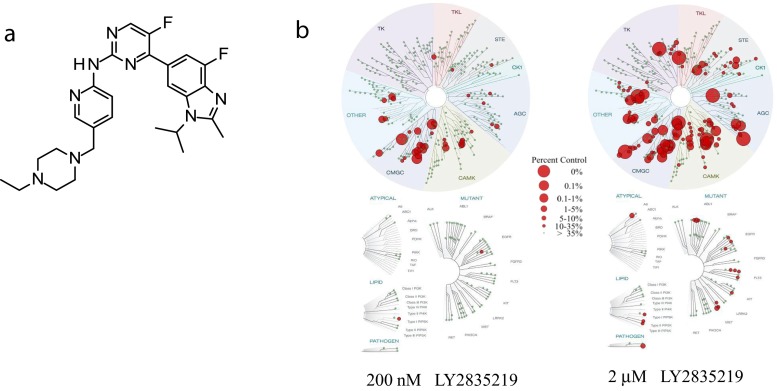
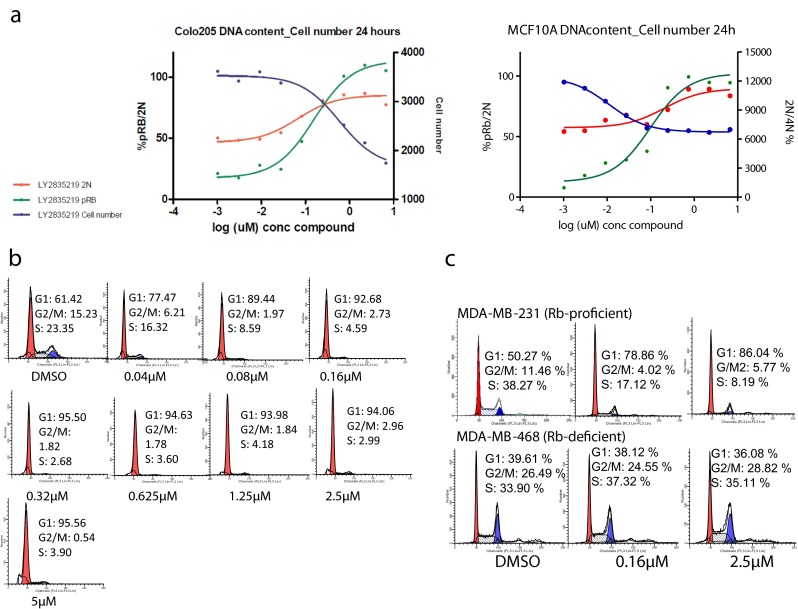
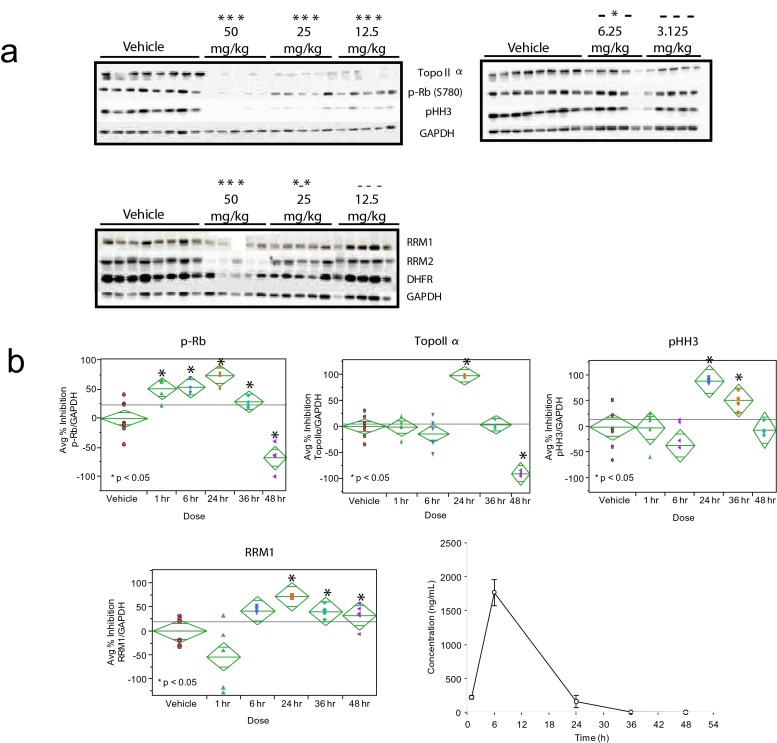
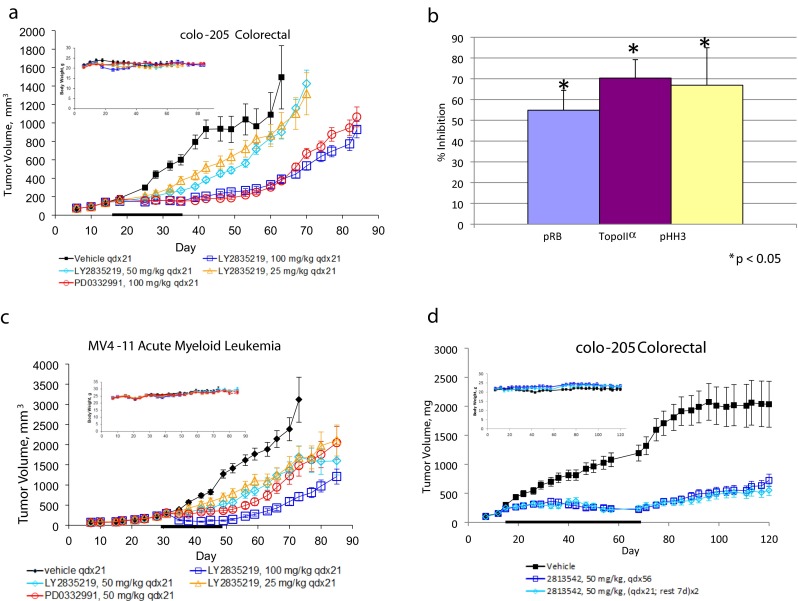
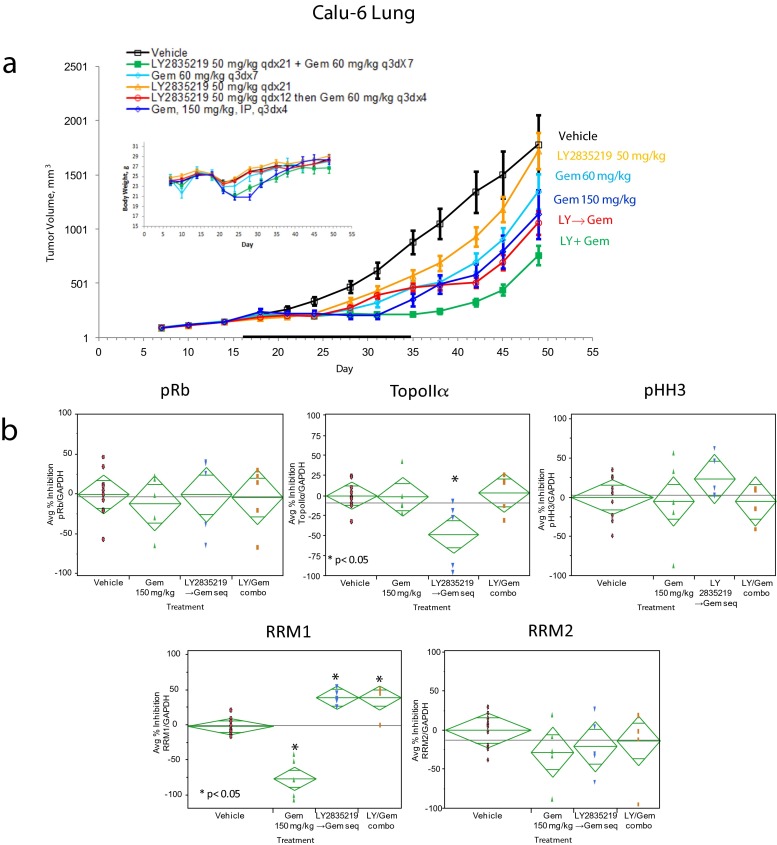
The G1 restriction point is critical for regulating the cell cycle and is controlled by the Rb pathway (CDK4/6-cyclin D1-Rb-p16/ink4a). This pathway is important because of its inactivation in a majority of human tumors. Transition through the restriction point requires phosphorylation of retinoblastoma protein (Rb) by CDK4/6, which are highly validated cancer drug targets. We present the identification and characterization of a potent CDK4/6 inhibitor, LY2835219. LY2835219 inhibits CDK4 and CDK6 with low nanomolar potency, inhibits Rb phosphorylation resulting in a G1 arrest and inhibition of proliferation, and its activity is specific for Rb-proficient cells. In vivo target inhibition studies show LY2835219 is a potent inhibitor of Rb phosphorylation, induces a complete cell cycle arrest and suppresses expression of several Rb-E2F-regulated proteins 24 hours after a single dose. Oral administration of LY2835219 inhibits tumor growth in human tumor xenografts representing different histologies in tumor-bearing mice. LY2835219 is effective and well tolerated when administered up to 56 days in immunodeficient mice without significant loss of body weight or tumor outgrowth. In calu-6 xenografts, LY2835219 in combination with gemcitabine enhanced in vivo antitumor activity without a G1 cell cycle arrest, but was associated with a reduction of ribonucleotide reductase expression. These results suggest LY2835219 may be used alone or in combination with standard-of-care cytotoxic therapy. In summary, we have identified a potent, orally active small-molecule inhibitor of CDK4/6 that is active in xenograft tumors. LY2835219 is currently in clinical development.
Overview
The claims and statistics of this paper haven’t been checked yet.
Free: it reads the open-access text and checks the first 5 claims that cite a source we can check. Create a free account to check every claim.
Integrity signals
Registry
Cites
Statistics
Figures
Verification
Claims the paper makes
The claims and statistics of this paper haven’t been checked yet.
Free: it reads the open-access text and checks the first 5 claims that cite a source we can check. Create a free account to check every claim.
Claims other papers make about this one
Each is checked against this paper’s own text: does it say what the citing paper says it does?
The cited source says what the claim attributes to it.
In the citing paper
“Like palbociclib, these orally-bioavailable and highly selective CDK4/6-targeting agents exhibit IC50 values in the low nanomolar range, whereas other CDK family members are far less sensitive (1, 88, 89).”
From Targeting CDK4 and CDK6: From Discovery to Therapy (2016) · cites this paper as [88]
The cited source says what the claim attributes to it.
In the citing paper
“The reasons for reduced hematologic toxicity and other observed non-hematologic toxicities are under active investigation but may be related to a greater selectivity for CDK4 over CDK6 with abemaciclib (88), its greater relative potency and potential to target CDK9 (Table 1), and/or its distribution into the central nervous system (93).”
From Targeting CDK4 and CDK6: From Discovery to Therapy (2016) · cites this paper as [88]
In the citing paper
“In vitro studies using cyclin D1/CDK4 and various cyclin D/CDK6 kinases determined that both abemaciclib and ribociclib are more potent against CDK4 than CDK6 (Gelbert et al., 2014; Tripathy et al., 2017) (Table 1).”
From CDK4/6 Inhibitors: The Mechanism of Action May Not Be as Simple as Once Thought (2018) · cites this paper as Gelbert et al., 2014
In the citing paper
“In such assays, abemaciclib also has modest activity, relative to its CDK4 inhibitory activity, against cyclin T1/CDK9, cyclin E2/CDK2, p25/CDK5 and p35/CDK5 (Gelbert et al., 2014) (Table 2).”
From CDK4/6 Inhibitors: The Mechanism of Action May Not Be as Simple as Once Thought (2018) · cites this paper as Gelbert et al., 2014
Self-check
Percentages, sums and reported differences re-computed from the paper’s own numbers.
The self-check needs the paper’s full text.
Citations
Cites
Hallmarks of Cancer: The Next Generation
Hanahan, D., & Weinberg, R. A. (2011) · Cell · doi:10.1016/j.cell.2011.02.013 · Cited by 66,590 · cited 1×
“Sustained proliferative capacity is a hallmark of cancer [1].”
BackgroundComprehensive genomic characterization defines human glioblastoma genes and core pathways
The Cancer Genome Atlas Research Network (2008) · Nature · doi:10.1038/nature07385 · Cited by 7,735
The regulation of E2F by pRB-family proteins.
Dyson, N. (1998) · Genes & Development · doi:10.1101/gad.12.15.2245 · Cited by 2,317 · cited 1×
“The retinoblastoma protein (Rb) is a tumor suppressor that inhibits proliferation through binding to and suppressing the activity of the E2F family of transcription factors [5].”
BackgroundTo cycle or not to cycle: a critical decision in cancer
Malumbres, M., & Barbacid, M. (2001) · Nature Reviews Cancer · doi:10.1038/35106065 · Cited by 1,468
A Restriction Point for Control of Normal Animal Cell Proliferation
Pardee, A. B. (1974) · Proceedings of the National Academy of Sciences · doi:10.1073/pnas.71.4.1286 · Cited by 1,415 · cited 1×
“originally described as the point where cell proliferation becomes independent of mitogens and growth factors [2], and the normal function of the restriction point is essential for maintaining control of cellular proliferation [3, 4].”
BackgroundFry, D. W., Harvey, P. J., Keller, P. R., Elliott, W. L., Meade, M., Trachet, E., Albassam, M., Zheng, X., Leopold, W. R., Pryer, N. K., et al. (2004) · Molecular Cancer Therapeutics · doi:10.1158/1535-7163.1427.3.11 · Cited by 1,236 · cited 1×
“recently reported a CDK4/6 inhibitor, PD 0332991, possessing improved potency and selectivity over previous inhibitors [22].”
BackgroundLundberg, A. S., & Weinberg, R. A. (1998) · Molecular and Cellular Biology · doi:10.1128/mcb.18.2.753 · Cited by 1,067 · cited 2×
“Active CDK4/6 then phosphorylates Rb, partially relieving suppression of E2F to allow expression of genes required for passage through the restriction point [7, 8].”
BackgroundHarbour, J. W., Luo, R. X., Santi, A. D., Postigo, A. A., & Dean, D. C. (1999) · Cell · doi:10.1016/s0092-8674(00)81519-6 · Cited by 1,057
Cyclin-Dependent Kinase Pathways As Targets for Cancer Treatment
Shapiro, G. I. (2006) · Journal of Clinical Oncology · doi:10.1200/jco.2005.03.7689 · Cited by 1,036 · cited 1×
“The importance of the pathway in tumorigenesis and recent success developing small molecule kinase inhibitors, make CDK4/6 a highly validated cancer drug target [33, 34].”
BackgroundThe p16INK4a/CDKN2A tumor suppressor and its relatives
Ruas, M., & Peters, G. (1998) · Biochimica et Biophysica Acta (BBA) - Reviews on Cancer · doi:10.1016/s0304-419x(98)00017-1 · Cited by 911 · cited 1×
“Both p16/ink4a and Rb act as tumor suppressors and are found to be functionally inactivated in numerous tumor types [19, 20].”
Background
Research works printed but not linked: 1
- Hughes A (2006) CDK inhibitors in 3D: Problems with the drugs, their development plans or their linkage to disease? Gene Ther Mol Biol 10:41–54
Cited by
Cell cycle proteins as promising targets in cancer therapy
Otto, T., & Sicinski, P. (2017) · Nature Reviews Cancer · doi:10.1038/nrc.2016.138 · Cited by 1,858
The history and future of targeting cyclin-dependent kinases in cancer therapy
Asghar, U., Witkiewicz, A. K., Turner, N. C., & Knudsen, E. S. (2015) · Nature Reviews Drug Discovery · doi:10.1038/nrd4504 · Cited by 1,767
MONARCH 3: Abemaciclib As Initial Therapy for Advanced Breast Cancer
Goetz, M. P., Toi, M., Campone, M., Sohn, J., Paluch-Shimon, S., Huober, J., Park, I. H., Trédan, O., Chen, S.-C., Manso, L., et al. (2017) · Journal of Clinical Oncology · doi:10.1200/jco.2017.75.6155 · Cited by 1,744
Sledge, G. W., Toi, M., Neven, P., Sohn, J., Inoue, K., Pivot, X., Burdaeva, O., Okera, M., Masuda, N., Kaufman, P. A., et al. (2017) · Journal of Clinical Oncology · doi:10.1200/jco.2017.73.7585 · Cited by 1,680
“Abemaciclib prevents CDK 4 and 6 phosphorylation of the retinoblastoma tumor suppressor protein, thereby inducing G1 arrest and abrogating cell growth.(15) Preclinical evaluation demonstrated the antitumor activity of abemaciclib in an ER+/human epidermal growth factor receptor 2-negative (HER2−) breast cancer xenogra…”
BackgroundMatthews, H. K., Bertoli, C., & de Bruin, R. A. M. (2022) · Nature Reviews Molecular Cell Biology · doi:10.1038/s41580-021-00404-3 · Cited by 1,506
Treating cancer with selective CDK4/6 inhibitors
O'Leary, B., Finn, R. S., & Turner, N. C. (2016) · Nature Reviews Clinical Oncology · doi:10.1038/nrclinonc.2016.26 · Cited by 1,137
Sledge, G. W., Toi, M., Neven, P., Sohn, J., Inoue, K., Pivot, X., Burdaeva, O., Okera, M., Masuda, N., Kaufman, P. A., et al. (2020) · JAMA Oncology · doi:10.1001/jamaoncol.2019.4782 · Cited by 991
Targeting CDK4 and CDK6: From Discovery to Therapy
Sherr, C. J., Beach, D., & Shapiro, G. I. (2016) · Cancer Discovery · doi:10.1158/2159-8290.cd-15-0894 · Cited by 936
“4–5 nmol/L CDK 9: 57 nmol/L CDK1: >1 μmol/L CDK2: >500 nmol/L (1, 88) PK Tmax 4.”
Patnaik, A., Rosen, L. S., Tolaney, S. M., Tolcher, A. W., Goldman, J. W., Gandhi, L., Papadopoulos, K. P., Beeram, M., Rasco, D. W., Hilton, J. F., et al. (2016) · Cancer Discovery · doi:10.1158/2159-8290.cd-16-0095 · Cited by 743
Self-citationMONARCH 3 final PFS: a randomized study of abemaciclib as initial therapy for advanced breast cancer
Johnston, S., Martin, M., Di Leo, A., Im, S.-A., Awada, A., Forrester, T., Frenzel, M., Hardebeck, M. C., Cox, J., Barriga, S., et al. (2019) · npj Breast Cancer · doi:10.1038/s41523-018-0097-z · Cited by 685
Dickler, M. N., Tolaney, S. M., Rugo, H. S., Cortés, J., Diéras, V., Patt, D., Wildiers, H., Hudis, C. A., O'Shaughnessy, J., Zamora, E., et al. (2017) · Clinical Cancer Research · doi:10.1158/1078-0432.ccr-17-0754 · Cited by 676
“of CDK4 and CDK6 and consequent cell-cycle arrest leads to shrinkage of HRþ breast cancers in xenograft models, while shorter term inhibition of CDK4 and CDK6 leads to temporary cell cycle arrest with a rebound induction of DNA synthesis on withdrawal (37, 38).”
BackgroundSabe, V. T., Ntombela, T., Jhamba, L. A., Maguire, G. E. M., Govender, T., Naicker, T., & Kruger, H. G. (2021) · European Journal of Medicinal Chemistry · doi:10.1016/j.ejmech.2021.113705 · Cited by 625
Ding, L., Cao, J., Lin, W., Chen, H., Xiong, X., Ao, H., Yu, M., Lin, J., & Cui, Q. (2020) · International Journal of Molecular Sciences · doi:10.3390/ijms21061960 · Cited by 618
Johnston, S. R. D., Toi, M., O'Shaughnessy, J., Rastogi, P., Campone, M., Neven, P., Huang, C.-S., Huober, J., Jaliffe, G. G., Cicin, I., et al. (2023) · The Lancet Oncology · doi:10.1016/s1470-2045(22)00694-5 · Cited by 599
Advancements in clinical aspects of targeted therapy and immunotherapy in breast cancer
Ye, F., Dewanjee, S., Li, Y., Jha, N. K., Chen, Z.-S., Kumar, A., Vishakha, Behl, T., Jha, S. K., & Tang, H. (2023) · Molecular Cancer · doi:10.1186/s12943-023-01805-y · Cited by 554
“It also demonstrated inhibitory effects on other kinases, such as CDK9 and proto-oncogene serine/threonine-protein kinase (PIM1) [80].”
BackgroundTargeting CDK4 and CDK6 in cancer
Goel, S., Bergholz, J. S., & Zhao, J. J. (2022) · Nature Reviews Cancer · doi:10.1038/s41568-022-00456-3 · Cited by 531
CDK4/6 Inhibition in Cancer: Beyond Cell Cycle Arrest
Goel, S., DeCristo, M. J., McAllister, S. S., & Zhao, J. J. (2018) · Trends in Cell Biology · doi:10.1016/j.tcb.2018.07.002 · Cited by 501
Targeting Mitosis in Cancer: Emerging Strategies
Dominguez-Brauer, C., Thu, K. L., Mason, J. M., Blaser, H., Bray, M. R., & Mak, T. W. (2015) · Molecular Cell · doi:10.1016/j.molcel.2015.11.006 · Cited by 495
“The next generation of anti-CDK agents to reach clinical trial testing includes the highly selective oral CDK4/6 inhibitors PD0332991 (palbociclib), LEE011 (ribociclib), and LY2835219 (abemaciclib) (Fry et al., 2004; Gelbert et al., 2014; Zhang et al., 2014).”
BackgroundTargeting CDK4/6 in patients with cancer
Hamilton, E., & Infante, J. R. (2016) · Cancer Treatment Reviews · doi:10.1016/j.ctrv.2016.03.002 · Cited by 481
“models [5,34–38,42,45,89] MCL, myeloma, breast, lung, brain,”
BackgroundInfluentialSpring, L. M., Wander, S. A., Andre, F., Moy, B., Turner, N. C., & Bardia, A. (2020) · The Lancet · doi:10.1016/s0140-6736(20)30165-3 · Cited by 468
Spectrum and Degree of CDK Drug Interactions Predicts Clinical Performance
Chen, P., Lee, N. V., Hu, W., Xu, M., Ferre, R. A., Lam, H., Bergqvist, S., Solowiej, J., Diehl, W., He, Y.-A., et al. (2016) · Molecular Cancer Therapeutics · doi:10.1158/1535-7163.mct-16-0300 · Cited by 444
Braal, C. L., Jongbloed, E. M., Wilting, S. M., Mathijssen, R. H. J., Koolen, S. L. W., & Jager, A. (2021) · Drugs · doi:10.1007/s40265-020-01461-2 · Cited by 438
Yang, C., Li, Z., Bhatt, T., Dickler, M., Giri, D., Scaltriti, M., Baselga, J., Rosen, N., & Chandarlapaty, S. (2017) · Oncogene · doi:10.1038/onc.2016.379 · Cited by 415
“As such, kinase inhibition of the cyclin D-CDK4/6 complex was developed as a therapeutic approach to hormone receptor expressing breast cancer 6– 8 .”
Maier, P., Hartmann, L., Wenz, F., & Herskind, C. (2016) · International Journal of Molecular Sciences · doi:10.3390/ijms17010102 · Cited by 414
“CDK4/6 palbociclib (PD0332991) human glioblastoma U87 intracranial xenografts and brainstem glioma mouse model FDA approval for potential treatment of breast cancer [84,85]”
BackgroundThe Expanding Role of Pyridine and Dihydropyridine Scaffolds in Drug Design
Ling, Y., Hao, Z.-Y., Liang, D., Zhang, C.-L., Liu, Y.-F., & Wang, Y. (2021) · Drug Design, Development and Therapy · doi:10.2147/dddt.s329547 · Cited by 414
Molecular pathways: targeting the cyclin D-CDK4/6 axis for cancer treatment
VanArsdale, T., Boshoff, C., Arndt, K. T., & Abraham, R. T. (2015) · Clinical Cancer Research · doi:10.1158/1078-0432.ccr-14-0816 · Cited by 396
“Abemaciclib inhibits CDK4andCDK6with an IC50 of 2 nmol/L and 10 nmol/L, respectively, and is at least 160-fold less potent against the cyclin–CDK1 complex (36).”
BackgroundCDK inhibitors in cancer therapy, an overview of recent development.
Zhang, M., Zhang, L., Hei, R., Li, X., Cai, H., Wu, X., Zheng, Q., & Cai, C. (2021) · PubMed · Cited by 393
Mechanisms of Sensitivity and Resistance to CDK4/6 Inhibition
Álvarez-Fernández, M., & Malumbres, M. (2020) · Cancer Cell · doi:10.1016/j.ccell.2020.03.010 · Cited by 390
Inhibitors of cyclin-dependent kinases as cancer therapeutics.
Whittaker, S. R., Mallinger, A., Workman, P., & Clarke, P. A. (2017) · Pharmacology & Therapeutics · doi:10.1016/j.pharmthera.2017.02.008 · Cited by 384
“Treatment was well tolerated and tumor xenograft growth was significantly inhibited (Gelbert et al., 2014).”
Harbeck, N., Rastogi, P., Martin, M., Tolaney, S. M., Shao, Z. M., Fasching, P. A., Huang, C. S., Jaliffe, G. G., Tryakin, A., Goetz, M. P., et al. (2021) · Annals of Oncology · doi:10.1016/j.annonc.2021.09.015 · Cited by 381
“In preclinical studies, abemaciclib has shown a tolerability profile that allows for a continuous dosing required for sustainable G1/S arrest and inhibition of tumor growth.(24,25) In addition, continuous inhibition of CDK4 and 6 by abemaciclib led to cell senescence and apoptosis to a greater extent than was seen wit…”
BackgroundCDK4/6 Inhibitors: The Mechanism of Action May Not Be as Simple as Once Thought
Klein, M. E., Kovatcheva, M., Davis, L. E., Tap, W. D., & Koff, A. (2018) · Cancer Cell · doi:10.1016/j.ccell.2018.03.023 · Cited by 378
Breast Cancer: Conventional Diagnosis and Treatment Modalities and Recent Patents and Technologies
Nounou, M. I., ElAmrawy, F., Ahmed, N., Abdelraouf, K., Goda, S., & Syed-Sha-Qhattal, H. (2015) · Breast Cancer: Basic and Clinical Research · doi:10.4137/bcbcr.s29420 · Cited by 364
Cell-Cycle Therapeutics Come of Age
Ingham, M., & Schwartz, G. K. (2017) · Journal of Clinical Oncology · doi:10.1200/jco.2016.69.0032 · Cited by 353
“Antitumor activity mediated by reversible G1 arrest was demonstrated in several models, and, in colon xenografts, no acquired resistance developed after prolonged dosing.(33) Abemaciclib was evaluated in a phase I study in advanced solid tumors using once per day and twice per day regimens, with the latter selected as…”
BackgroundCDK4/6 inhibition in breast cancer: current practice and future directions
Pernas, S., Tolaney, S. M., Winer, E. P., & Goel, S. (2018) · Therapeutic Advances in Medical Oncology · doi:10.1177/1758835918786451 · Cited by 316
Cyclin-dependent protein kinases and cell cycle regulation in biology and disease
Pellarin, I., Dall’Acqua, A., Favero, A., Segatto, I., Rossi, V., Crestan, N., Karimbayli, J., Belletti, B., & Baldassarre, G. (2025) · Signal Transduction and Targeted Therapy · doi:10.1038/s41392-024-02080-z · Cited by 304
Cell cycle regulation and anticancer drug discovery
Jingwen, B., Yaochen, L., & Guojun, Z. (2017) · Cancer Biology & Medicine · doi:10.20892/j.issn.2095-3941.2017.0033 · Cited by 302
The Strange Case of CDK4/6 Inhibitors: Mechanisms, Resistance, and Combination Strategies
Knudsen, E. S., & Witkiewicz, A. K. (2017) · Trends in Cancer · doi:10.1016/j.trecan.2016.11.006 · Cited by 285
Raub, T. J., Wishart, G. N., Kulanthaivel, P., Staton, B. A., Ajamie, R. T., Sawada, G. A., Gelbert, L. M., Shannon, H. E., Sanchez-Martinez, C., & De Dios, A. (2015) · Drug Metabolism and Disposition · doi:10.1124/dmd.114.062745 · Cited by 284
“4 nM (Gelbert et al., 2014), suggesting that abemaciclib would be able to This article has not been copyedited and formatted.”
BackgroundInfluentialSelf-citationThe CDK4/6 inhibitor revolution — a game-changing era for breast cancer treatment
Morrison, L., Loibl, S., & Turner, N. C. (2024) · Nature Reviews Clinical Oncology · doi:10.1038/s41571-023-00840-4 · Cited by 280
“57,58), with CDK6 inhibition resulting in greater bone marrow-related adverse events 98 and thus potentially limiting the tolerability of palbociclib, provide support for this view.”
Development of dual and selective degraders of cyclin-dependent kinases 4 and 6
Jiang, B., Wang, E. S., Donovan, K. A., Liang, Y., Fischer, E. S., Zhang, T., & Gray, N. S. (2019) · Angewandte Chemie International Edition · doi:10.1002/anie.201901336 · Cited by 272
Hafner, M., Mills, C. E., Subramanian, K., Chen, C., Chung, M., Boswell, S. A., Everley, R. A., Liu, C., Walmsley, C. S., Juric, D., et al. (2019) · Cell Chemical Biology · doi:10.1016/j.chembiol.2019.05.005 · Cited by 250
“The ‘Adapta™’ assay was used for CDK4/cyclin D1, CDK4/cyclin D3, CDK6/cyclin D1, CDK7/cyclin H/MNAT1, and CDK9/cyclin T1.”
BackgroundMethodResultInfluentialLee, Y. T., Tan, Y. J., & Oon, C. E. (2023) · Acta Pharmaceutica Sinica B · doi:10.1016/j.apsb.2022.09.010 · Cited by 249
Tripathy, D., Bardia, A., & Sellers, W. R. (2017) · Clinical Cancer Research · doi:10.1158/1078-0432.ccr-16-3157 · Cited by 247
“While the half-lives of ribociclib and palbociclib enable oncedaily, 3-weeks-on/1-week-off dosing (14), the PK/pharmacodynamic profile of abemaciclib favors twice-daily, continuous dosing (29, 70).”
Cyclin-dependent protein kinase inhibitors including palbociclib as anticancer drugs
Roskoski, R. (2016) · Pharmacological Research · doi:10.1016/j.phrs.2016.03.012 · Cited by 237
Gong, X., Litchfield, L. M., Webster, Y., Chio, L.-C., Wong, S. S., Stewart, T. R., Dowless, M., Dempsey, J., Zeng, Y., Torres, R., et al. (2017) · Cancer Cell · doi:10.1016/j.ccell.2017.11.006 · Cited by 236
“These data are consistent with the stable disease observed in a prior study with abemaciclib in CDKN2A mutant H2122 xenografts and other Rb tumor xenografts, and in a substantial fraction of non-small-cell lung cancer patients (Gelbert et al., 2014; Patnaik et al., 2016).”
InfluentialSelf-citationCyclin dependent kinase (CDK) inhibitors as anticancer drugs
Sánchez-Martínez, C., Gelbert, L. M., Lallena, M. J., & de Dios, A. (2015) · Bioorganic & Medicinal Chemistry Letters · doi:10.1016/j.bmcl.2015.05.100 · Cited by 230
Self-citationHurvitz, S. A., Martin, M., Press, M. F., Chan, D., Fernandez-Abad, M., Petru, E., Rostorfer, R., Guarneri, V., Huang, C.-S., Barriga, S., et al. (2020) · Clinical Cancer Research · doi:10.1158/1078-0432.ccr-19-1425 · Cited by 227
“Neutropenia 6 (3) 19 (9) 21 (9) 0 46 (21)”
BackgroundResultInfluentialCyclin D-CDK4/6 functions in cancer
(2020) · Advances in Cancer Research · doi:10.1016/bs.acr.2020.02.002 · Cited by 218
Sirvent, J. A., & Lücking, U. (2017) · ChemMedChem · doi:10.1002/cmdc.201700044 · Cited by 213
Chemically induced degradation of CDK9 by a proteolysis targeting chimera (PROTAC)
Robb, C. M., Contreras, J. I., Kour, S., Taylor, M. A., Abid, M., Sonawane, Y. A., Zahid, M., Murry, D. J., Natarajan, A., & Rana, S. (2017) · Chemical Communications · doi:10.1039/c7cc03879h · Cited by 211
Kalinsky, K., Accordino, M. K., Chiuzan, C., Mundi, P. S., Sakach, E., Sathe, C., Ahn, H., Trivedi, M. S., Novik, Y., Tiersten, A., et al. (2023) · Journal of Clinical Oncology · doi:10.1200/jco.22.02392 · Cited by 210
“2) 0 (0) 0 (0) 9 (15) 0 (0) 0 (0) QTc prolongation 2 (3.”
Tolaney, S. M., Sahebjam, S., Le Rhun, E., Bachelot, T., Kabos, P., Awada, A., Yardley, D., Chan, A., Conte, P., Diéras, V., et al. (2020) · Clinical Cancer Research · doi:10.1158/1078-0432.ccr-20-1764 · Cited by 203
“One potential explanation for this associationwith ET is that ETmay induce G1-phase arrest (31), similar to abemaciclib (32), and the combination of both leads to enhanced G1-phase arrest and greater efficacy.”
BackgroundCyclin-dependent kinase 4/6 inhibitors in breast cancer: palbociclib, ribociclib, and abemaciclib
Kwapisz, D. (2017) · Breast Cancer Research and Treatment · doi:10.1007/s10549-017-4385-3 · Cited by 202
“The preclinical study results suggest abemaciclib may be used alone or in combination with other compounds [58].”
BackgroundCDK 4/6 Inhibitors as Single Agent in Advanced Solid Tumors
Schettini, F., De Santo, I., Rea, C. G., De Placido, P., Formisano, L., Giuliano, M., Arpino, G., De Laurentiis, M., Puglisi, F., De Placido, S., et al. (2018) · Frontiers in Oncology · doi:10.3389/fonc.2018.00608 · Cited by 201
Targeting Cell Cycle in Breast Cancer: CDK4/6 Inhibitors
Piezzo, M., Cocco, S., Caputo, R., Cianniello, D., Gioia, G. D., Lauro, V. D., Fusco, G., Martinelli, C., Nuzzo, F., Pensabene, M., et al. (2020) · International Journal of Molecular Sciences · doi:10.3390/ijms21186479 · Cited by 200
“Palbociclib and ribociclib have a similar structure optimized for high selectivity toward CDK4/6, while abemaciclib has a different chemical structure that allows inhibition of other kinases, particularly CDK9, although this does not translate in CDK9 inhibition in cellular models [28,31].”
BackgroundInfluentialPreclinical characterization of abemaciclib in hormone receptor positive breast cancer
Torres-Guzmán, R., Calsina, B., Hermoso, A., Baquero, C., Alvarez, B., Amat, J., McNulty, A. M., Gong, X., Boehnke, K., Du, J., et al. (2017) · Oncotarget · doi:10.18632/oncotarget.17778 · Cited by 196
“Full chemical names have been previously published [16].”
BackgroundMethodResultInfluentialSelf-citationCell Cycle and Beyond: Exploiting New RB1 Controlled Mechanisms for Cancer Therapy
Knudsen, E. S., Pruitt, S. C., Hershberger, P. A., Witkiewicz, A. K., & Goodrich, D. W. (2019) · Trends in Cancer · doi:10.1016/j.trecan.2019.03.005 · Cited by 185
Targeted Therapy and Mechanisms of Drug Resistance in Breast Cancer
Kinnel, B., Singh, S. K., Oprea-Ilies, G., & Singh, R. (2023) · Cancers · doi:10.3390/cancers15041320 · Cited by 184
“Abemaciclib is a small molecule inhibitor that inhibits CDK4 more effectively than CDK6 [128].”
BackgroundInfluentialSpring, L. M., Zangardi, M. L., Moy, B., & Bardia, A. (2017) · The Oncologist · doi:10.1634/theoncologist.2017-0142 · Cited by 178
“Palbociclib and ribociclib are both orally active, highly selective reversible inhibitors of CDK4 and CDK6 that are approved by the U.S. Food and Drug Administration (FDA) for hormone receptor-positive metastatic breast cancer in combination with specific endocrine therapies.”
BackgroundInfluentialCDK4/6 Inhibitors Impair Recovery from Cytotoxic Chemotherapy in Pancreatic Adenocarcinoma
Salvador-Barbero, B., Álvarez-Fernández, M., Zapatero-Solana, E., El Bakkali, A., Menéndez, M. D. C., López-Casas, P. P., Di Domenico, T., Xie, T., VanArsdale, T., Shields, D. J., et al. (2020) · Cancer Cell · doi:10.1016/j.ccell.2020.01.007 · Cited by 176
Abemaciclib: a CDK4/6 inhibitor for the treatment of HR+/HER2– advanced breast cancer
Corona, S. P., & Generali, D. (2018) · Drug Design, Development and Therapy · doi:10.2147/dddt.s137783 · Cited by 157
“Preclinical studies in vitro and in vivo have shown that short-term inhibition of CDK4/6 in tumor cells causes a rebound effect with increased cellular proliferation when the inhibition is withdrawn.(23,57) This effect could explain the efficacy of continuously dosed abemaciclib as monotherapy in comparison to intermi…”
Watt, A. C. S., & Goel, S. (2022) · Breast Cancer Research · doi:10.1186/s13058-022-01510-6 · Cited by 173
“Multiple preclinical studies have reported a CDK4/6 inhibitor-induced “senescence-like state,” characterized by cellular enlargement and flattening, and increased β-galactosidase activity [4, 32, 33, 37, 38].”
BackgroundTargeted therapy for breast cancer: An overview of drug classes and outcomes
Jacobs, A. T., Castaneda-Cruz, D. M., Rose, M. M., & Connelly, L. (2022) · Biochemical Pharmacology · doi:10.1016/j.bcp.2022.115209 · Cited by 173
Thill, M., & Schmidt, M. (2018) · Therapeutic Advances in Medical Oncology · doi:10.1177/1758835918793326 · Cited by 172
Cellular Senescence: Molecular Targets, Biomarkers, and Senolytic Drugs
Kudlova, N., De Sanctis, J. B., & Hajduch, M. (2022) · International Journal of Molecular Sciences · doi:10.3390/ijms23084168 · Cited by 171
CDK 4/6 Inhibitors in Breast Cancer: Current Controversies and Future Directions
Spring, L. M., Wander, S. A., Zangardi, M., & Bardia, A. (2019) · Current Oncology Reports · doi:10.1007/s11912-019-0769-3 · Cited by 170
Recent advances of highly selective CDK4/6 inhibitors in breast cancer
Xu, H., Yu, S., Liu, Q., Yuan, X., Mani, S., Pestell, R. G., & Wu, K. (2017) · Journal of Hematology & Oncology · doi:10.1186/s13045-017-0467-2 · Cited by 168
Cyclin Dependent Kinase 9 Inhibitors for Cancer Therapy: Miniperspective
Sonawane, Y. A., Taylor, M. A., Napoleon, J. V., Rana, S., Contreras, J. I., & Natarajan, A. (2016) · Journal of Medicinal Chemistry · doi:10.1021/acs.jmedchem.6b00150 · Cited by 155
Brufsky, A. M., & Dickler, M. N. (2018) · The Oncologist · doi:10.1634/theoncologist.2017-0423 · Cited by 165
“Studies are ongoing with the CDK4/6 inhibitor, abemaciclib (LY2835219), either alone or in combination with ET, for patients with HR1, HER22 advanced or metastatic BC who have relapsed after ET [76], including studies to treat brain metastases [12, 77, 78].”
BackgroundHuppert, L. A., Gumusay, O., Idossa, D., & Rugo, H. S. (2023) · CA: A Cancer Journal for Clinicians · doi:10.3322/caac.21777 · Cited by 164
“Abemaciclib, which is more selective to CDK4 and CDK6, is administered continuously because of the lower risk of hematologic toxicities.(178) Other than hematologic toxicities, each agent has unique toxicities that may require special”
Immunomodulation by anticancer cell cycle inhibitors
Petroni, G., Formenti, S. C., Chen-Kiang, S., & Galluzzi, L. (2020) · Nature Reviews Immunology · doi:10.1038/s41577-020-0300-y · Cited by 163
Targeting CDK6 in cancer: State of the art and new insights
Tadesse, S., Yu, M., Kumarasiri, M., Le, B. T., & Wang, S. (2015) · Cell Cycle · doi:10.1080/15384101.2015.1084445 · Cited by 163
Overcoming CDK4/6 inhibitor resistance in ER-positive breast cancer
Portman, N., Alexandrou, S., Carson, E., Wang, S., Lim, E., & Caldon, C. E. (2019) · Endocrine-Related Cancer · doi:10.1530/erc-18-0317 · Cited by 163
Clinical and Pharmacologic Differences of CDK4/6 Inhibitors in Breast Cancer
George, M. A., Qureshi, S., Omene, C. O., Toppmeyer, D., & Ganesan, S. (2021) · Frontiers in Oncology · doi:10.3389/fonc.2021.693104 · Cited by 163
Selective inhibition of CDK4/6: A safe and effective strategy for developing anticancer drugs
Yuan, K., Wang, X., Dong, H., Min, W., Hao, H., & Yang, P. (2020) · Acta Pharmaceutica Sinica B · doi:10.1016/j.apsb.2020.05.001 · Cited by 156
Guarducci, C., Bonechi, M., Benelli, M., Biagioni, C., Boccalini, G., Romagnoli, D., Verardo, R., Schiff, R., Osborne, C. K., Angelis, C. D., et al. (2018) · npj Breast Cancer · doi:10.1038/s41523-018-0092-4 · Cited by 153
“succeeded in the development of models of CAMA1 resistant to abemaciclib,(10) probably due to the different approach used(10) and the different inhibitory profile of abemaciclib.(27) As a first step, we explored the effects of palbociclib on the Rb/ E2F pathway, which is the target of CDK4/6 inhibitors.”
Small Molecule Kinase Inhibitors for the Treatment of Brain Cancer
Heffron, T. P. (2016) · Journal of Medicinal Chemistry · doi:10.1021/acs.jmedchem.6b00618 · Cited by 151
Palafox, M., Monserrat, L., Bellet, M., Villacampa, G. J., González-Pérez, A., Oliveira, M., Brasó‐Maristany, F., Ibrahimi, N., Kannan, S., Mina, L. B., et al. (2022) · Nature Communications · doi:10.1038/s41467-022-32828-6 · Cited by 150
Senescence as a therapeutically relevant response to CDK4/6 inhibitors
Wagner, V., & Gil, J. (2020) · Oncogene · doi:10.1038/s41388-020-1354-9 · Cited by 148
New Insights into CDK Regulators: Novel Opportunities for Cancer Therapy
Bury, M., Calvé, B. L., Ferbeyre, G., Blank, V., & Lessard, F. (2021) · Trends in Cell Biology · doi:10.1016/j.tcb.2021.01.010 · Cited by 144
Yadav, V., Burke, T. F., Huber, L., Van Horn, R. D., Zhang, Y., Buchanan, S. G., Chan, E. M., Starling, J. J., Beckmann, R. P., & Peng, S.-B. (2014) · Molecular Cancer Therapeutics · doi:10.1158/1535-7163.mct-14-0257 · Cited by 132
“We further demonstrate that LY2835219, a selective dual CDK4/6 inhibitor currently in phase II clinic studies (29), can overcome vemurafenib resistance in these resistant models.”
BackgroundSelf-citationChou, A., Froio, D., Nagrial, A. M., Parkin, A., Murphy, K. J., Chin, V. T., Wohl, D., Steinmann, A., Stark, R., Drury, A., et al. (2018) · Gut · doi:10.1136/gutjnl-2017-315144 · Cited by 117
Eggersmann, T. K., Degenhardt, T., Gluz, O., Wuerstlein, R., & Harbeck, N. (2019) · BioDrugs · doi:10.1007/s40259-019-00337-6 · Cited by 128
“There were no grade 4–5 toxicities; the most frequent grade 3 toxicities included diarrhea (31%), neutropenia (17%), fatigue (14%), nausea (6%), abdominal pain (3%), and vomiting (28%) [34].”
BackgroundOnesti, C. E., & Jérusalem, G. (2020) · Expert Review of Anticancer Therapy · doi:10.1080/14737140.2021.1852934 · Cited by 127
Lee, M. S., Helms, T. L., Feng, N., Gay, J., Chang, Q. E., Tian, F., Wu, J. Y., Toniatti, C., Heffernan, T. P., Powis, G., et al. (2016) · Oncotarget · doi:10.18632/oncotarget.9153 · Cited by 123
Poratti, M., & Marzaro, G. (2019) · European Journal of Medicinal Chemistry · doi:10.1016/j.ejmech.2019.03.064 · Cited by 123
Are all cyclin-dependent kinases 4/6 inhibitors created equal?
Marra, A., & Curigliano, G. (2019) · npj Breast Cancer · doi:10.1038/s41523-019-0121-y · Cited by 123
Groenland, S. L., Martínez-Chávez, A., van Dongen, M. G. J., Beijnen, J. H., Schinkel, A. H., Huitema, A. D. R., & Steeghs, N. (2020) · Clinical Pharmacokinetics · doi:10.1007/s40262-020-00930-x · Cited by 121
Pooled ctDNA analysis of MONALEESA phase III advanced breast cancer trials
André, F., Su, F., Solovieff, N., Hortobágyi, G. N., Chia, S., Neven, P., Bardia, A., Tripathy, D., Lu, Y.-S., Lteif, A., et al. (2023) · Annals of Oncology · doi:10.1016/j.annonc.2023.08.011 · Cited by 121
Inhibitors of Cyclin-Dependent Kinases: Types and Their Mechanism of Action
Łukasik, P., Baranowska‐Bosiacka, I., Kulczycka, K., & Gutowska, I. (2021) · International Journal of Molecular Sciences · doi:10.3390/ijms22062806 · Cited by 120
CDK inhibitors from past to present: A new wave of cancer therapy
Jameel, M., Bhadresha, K. P., & Kwok, H. F. (2022) · Seminars in Cancer Biology · doi:10.1016/j.semcancer.2022.12.006 · Cited by 120
Synergistic Drug Combinations with a CDK4/6 Inhibitor in T-cell Acute Lymphoblastic Leukemia
Pikman, Y., Alexe, G., Roti, G., Conway, A. S., Furman, A. A., Lee, E. S., Place, A. E., Kim, S., Saran, C., Modiste, R., et al. (2017) · Clinical Cancer Research · doi:10.1158/1078-0432.ccr-15-2869 · Cited by 120
“Moreover, there are examples of chemotherapy agents not tested in this study that have been combined with CDK4/6 inhibitors without antagonism between the two drugs, such as in the case of cytarabine in AML (36) and gemcitabine in a Calu-6 lung cancer xenograftmodel (37).”
BackgroundO’Brien, N. A., Conklin, D. F., Beckmann, R. P., Luo, T., Chau, K., Thomas, J. D., Nulty, A. M., Marchal, C. C., Kalous, O., von Euw, E., et al. (2018) · Molecular Cancer Therapeutics · doi:10.1158/1535-7163.mct-17-0290 · Cited by 116
“These data led to the clinical development and recent approval of palbociclib for use in ER+/HER2- metastatic breast cancer (13, 21-23) and subsequently, a second CDK4/6 inhibitor, ribociclib in the same breast cancer subtype (15).”
BackgroundMethodA unique CDK4/6 inhibitor: Current and future therapeutic strategies of abemaciclib
Chong, Q.-Y., Kok, Z. H., Bui, N.-L.-C., Xiang, X., Wong, A. L., Yong, W. P., Sethi, G., Lobie, P. E., Wang, L., & Goh, B.-C. (2020) · Pharmacological Research · doi:10.1016/j.phrs.2020.104686 · Cited by 115
Chohan, T. A., Qayyum, A., Rehman, K., Tariq, M., & Akash, M. S. H. (2018) · Biomedicine & Pharmacotherapy · doi:10.1016/j.biopha.2018.08.116 · Cited by 112
Niu, Y., Xu, J., & Sun, T. (2019) · Journal of Cancer · doi:10.7150/jca.32628 · Cited by 109
“The breast cancer cell lines treated with LY2835219 showed a concentrationdependent inhibition of pRb, and corresponding arrest of cells in G1 phase, which inhibited proliferation and led to decreased cell number [72].”
BackgroundMiglietta, F., Bottosso, M., Griguolo, G., Dieci, M. V., & Guarneri, V. (2022) · ESMO Open · doi:10.1016/j.esmoop.2022.100409 · Cited by 109
Witzleben, A. V., Goerttler, L. T., Marienfeld, R. B., Barth, H., Lechel, A., Mellert, K., Böhm, M., Kornmann, M., Mayer‐Steinacker, R., von Baer, A., et al. (2015) · Cancer Research · doi:10.1158/0008-5472.can-14-3270 · Cited by 107
Spring, L. M., Bardia, A., & Modi, S. (2016) · PubMed · Cited by 102
The Emerging Role of Cyclin-Dependent Kinases (CDKs) in Pancreatic Ductal Adenocarcinoma
García-Reyes, B., Kretz, A.-L., Ruff, J.-P., von Karstedt, S., Hillenbrand, A., Knippschild, U., Henne‐Bruns, D., & Lemke, J. (2018) · International Journal of Molecular Sciences · doi:10.3390/ijms19103219 · Cited by 101
“The effect was enhanced in an epithelial tumour xenograft when the inhibitor was administered in combination with gemcitabine [194].”
Background
Metadata
- Authors
- Gelbert, L. M., Cai, S., Lin, X., Sanchez-Martinez, C., del Prado, M., Lallena, M. J., Torres, R., Ajamie, R. T., Wishart, G. N., Flack, R. S., Neubauer, B. L., Young, J., Chan, E. M., Iversen, P., Cronier, D., Kreklau, E., & de Dios, A.
- Affiliations
- Eli Lilly (United States) (US)
- Eli Lilly (Spain) (ES)
- Eli Lilly (United Kingdom) (GB)
- Covance (United States) (US)
- Corresponding author
- Gelbert, Lawrence M.
- Venue
- Investigational New Drugs
- Published
- 2014-06-13
- Volume
- 32
- Issue
- 5
- Pages
- 825-837
- ISSN
- 0167-6997 (ISSN-L)
- 1573-0646
- PMC
- PMC4169866
- OpenAlex
- W1991601194
- Cited by
- 577
- References
- 52
- Citations by year
- 2026: 26 · 2025: 47 · 2024: 47 · 2023: 64 · 2022: 56 · 2021: 53 · 2020: 69 · 2019: 39 · 2018: 49 · 2017: 63 · 2016: 35 · 2015: 25 · 2014: 4
- FWCI
- 20.57
- Type
- journal article
- Language
- en
- Open access
- hybrid
- doi.org
- Licence
- cc-by
- creativecommons.org/licenses/by/4.0 (tdm)
- creativecommons.org/licenses/by/4.0 (vor)
- Locations
- Investigational New Drugs (publishedVersion, cc-by)
- Europe PMC (PubMed Central) (publishedVersion, cc-by)
- PubMed Central (publishedVersion, cc-by)
- PubMed (publishedVersion)
- IUScholarWorks (Indiana University) (submittedVersion, cc-by)
- Topics
- Health Sciences › Medicine › Oncology › Cancer-related Molecular Pathways
- Health Sciences › Medicine › Oncology › Advanced Breast Cancer Therapies
- Life Sciences › Biochemistry, Genetics and Molecular Biology › Molecular Biology › PI3K/AKT/mTOR signaling in cancer
- Keywords
- CDK4/6 inhibitors, retinoblastoma protein phosphorylation, G1 cell cycle arrest, Rb/E2F pathway, gemcitabine combination therapy, oral antitumor activity, tumor xenografts, ribonucleotide reductase, small-molecule kinase inhibitors
- MeSH terms
- Gemcitabine, Aminopyridines, Animals, Antineoplastic Agents, Benzimidazoles, Deoxycytidine, Drug Therapy, Combination, Female, Humans, Neoplasms, Phosphorylation, Retinoblastoma Protein, Xenograft Model Antitumor Assays, Cell Line, Tumor, Tumor Burden, Protein Kinase Inhibitors, Cyclin-Dependent Kinase 4, Cyclin-Dependent Kinase 6, Mice, G1 Phase Cell Cycle Checkpoints
About these checks
Registry, retraction, Cites and statistics results are computed, not judged, with one exception: a printed reference that no index lists is read once by a model before it counts as a citation error. Claims are extracted by a model and kept only when their quote appears verbatim in the text; each cited source is then checked, with a model’s help, for whether it says what the claim relies on. Those verdicts can be wrong — read the claim’s quote and the cited source before relying on one.
Statistics and arithmetic are recomputed, not judged.
Confidence bands are shown only for fields calibrated on our annotated test set. None is calibrated yet, so no band is shown.
What counts as a claim ›How we measure confidence ›How we check this ›
Are you an author, or do you see a problem with this page? Request a review
Data sources
Bibliographic data: Semantic Scholar, OpenAlex, Crossref.
Contains information from the Semantic Scholar Academic Graph Datasets, made available under the ODC Attribution License (ODC-BY 1.0).
Semantic Scholar’s data is described in: Kinney, R., et al. (2023). The Semantic Scholar Open Data Platform. arXiv:2301.10140.
