

Key factors in digital literacy in learning and education: a systematic literature review using text mining
Open accessThe DOI matches its Crossref record; 97 of the 97 references it cites were found in a registry or an index; 13 of the 40 sources its claims cite were checked for support.
Abstract
This research aims at providing an overview of the research field of digital literacy into learning and education. Using text mining, it reviews 1037 research articles published on the topic between 2000 and 2020. This review reveals that there is a plurality of terms associated with digital literacy. Moreover, our research identifies six key factors that define the literature, which are information literacy, developing digital literacy, digital learning, ICT, social media, and twenty-first century digital skills. These factors can be grouped into three main streams, which are 1) digital literacy, 2) digital learning and 3) twenty-first century digital skills. These three streams are supported by informational and technological foundations. These results provide research avenues and offer a framework for digital literacy in education.
Overview
CoChat Summary
TL;DR
This systematic review uses text mining on 1,037 articles published between 2000 and 2020 to map digital literacy in learning and education. It finds fragmented terminology and six key factors grouped into three streams—digital literacy, digital learning, and twenty-first century digital skills—supported by informational and technological foundations.
Key findings
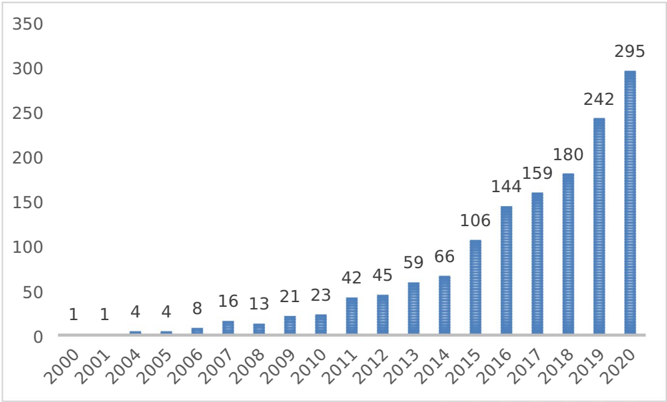
- The corpus contained 1,037 articles after duplicate removal; publication volume grew from 42 articles in 2011 to 242 in 2019 and almost 300 in 2020, with a threshold crossed in 2015 when yearly publications exceeded 100. Four journals published more than 20 papers, led by *Computers & Education* (41) and *International Journal of Digital Literacy and Digital Competence* (27).
- Terminology was plural: “digital literacy” occurred 1,734 times across 849 articles (59.41%), followed by “digital competence” (556 occurrences among 235 articles), “digital skills” (455 among 308), and “digital competencies” (255 among 148); the authors note these terms are often used interchangeably.
- Factor analysis identified six factors with eigenvalues higher than 1: information literacy (2.48), developing digital literacy (1.97), digital learning (1.63), ICT (1.49), social media (1.28), and twenty-first century digital skills (1.26). These group into three main streams—digital literacy, digital learning, and twenty-first century digital skills—supported by informational and technological foundations.
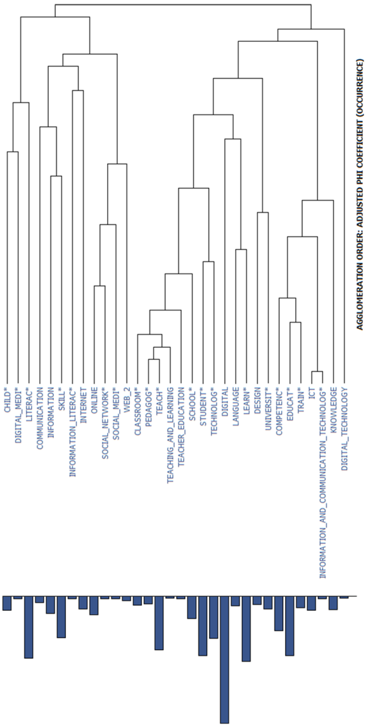
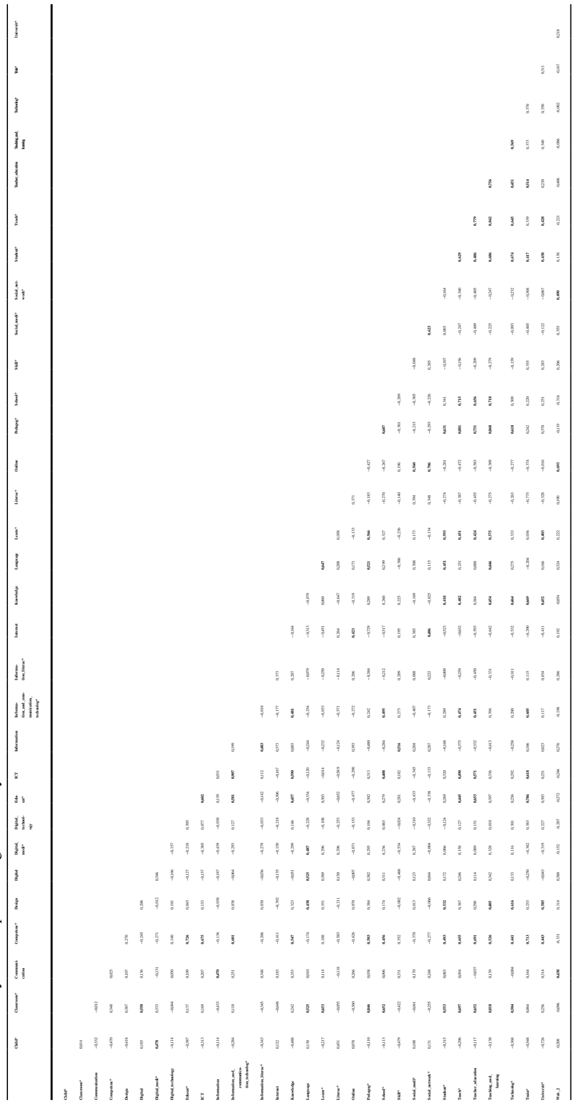
- Co-occurrence analysis separated classroom/learning terms from everyday-life/practice terms: “internet” was negatively associated with pedagogy (phi = -.729), teaching (-.652), teaching and learning (-.642), school (-.517), and student (-.523); classroom-related terms had associations higher than .5 with “classroom”; competence was strongly related to “train*” (phi = .713) and “universit*” (.443).
Methods
- Systematic literature review using text mining. Searched PsycINFO, Web of Science, and ERIC for English peer-reviewed journal articles published January 2000–November 2020, requiring constructs such as “digital*”, “learn*”, and “educ*” in title and/or abstract; initial pool was 1,460 articles, reduced to 1,037 after removing duplicates.
- Analyzed titles and abstracts with WordStat 8 using frequency analysis, co-occurrence analysis, multidimensional scaling, link analysis, and latent semantic analysis via factor analysis with Varimax rotation. Phrases were sequences of 2–8 co-occurring words; dictionary items occurred more than 100 times; phrases occurring less than 30 times were removed; factors accounting for at least 20% of cases were retained; loadings higher than .3 were kept; Phi coefficient measured associations.
Limitations
- Stated: text mining allows only a surface analysis and may miss keywords; the review focuses on education only, limiting understanding of digital skills in daily life and work; it cannot provide the depth of traditional systematic literature reviews; private/personal-context literature was absent because no single keyword captured it.
- Evident from the text: the analysis is based on titles and abstracts rather than full article texts, and inclusion was restricted to English peer-reviewed journal articles, which may further narrow the mapped literature.
Model-written summary. Check it against the paper before relying on it.
Integrity signals
Registry
Cites
Statistics
Figures
Verification
Claims the paper makes
12 Valid · 1 Not valid · 15 Not checked · 83 Own results and interpretations
The sources with a verdict support this claim; the rest weren’t checked yet, have no full text we could read, or their verdicts aren’t rated yet.
In the paper
“This factor, however, plays an important role in the research as it seems to be a determinant of digital literacy.”
§ Key factors in digital literacy in learning and education: a systematic literature review using text mining > 4 Discussion
What the sources say
- Not checked — no full text of the sourcecites Juhaňák et al., 2019 matched to “The relationship between the age at first computer use and students' perceived competence and autonomy in ICT usage: A mediation analysis” (2019) source
- Supportedcites Gui & Argentin, 2011 matched to “Digital skills of internet natives: Different forms of digital literacy in a random sample of northern Italian high school students” (2011) source
The 'Differences in skills due to ascriptive characteristics' section frames the core analysis as testing whether ascriptive (personal) characteristics — gender and family education background — affect students' digital-skills scores, and reports that the mean differences 'are not random and prove the existence of a digital skills divide; hence, gender and family background generate inequality'. The Discussion and Conclusions likewise state that the data support Hypothesis 1 (impact of parental education) and that gender is a significant factor for theoretical knowledge, so the hedged attribution ('seems to be a determinant of digital literacy') matches. The only caveat is magnitude: the paper stresses the effects are small (gender 0.40, parental education 0.30, cumulative 0.62 SD), so 'plays an important role' is at the upper end of what the source claims, but the source does treat these personal factors as determinants. (LLM, conf=0.82)
- Not checked — no full text of the sourcecites Hatlevik et al., 2015 matched to “Predictors of digital competence in 7th grade: a multilevel analysis” (2015) source
hedgedstates a possible cause- Asserted: passes — The authors put it forward as true.
- Checkable: passes — It can be checked against evidence.
- Load-bearing: unclear — It is unclear whether the paper’s conclusions depend on it.
- Based: passes — The paper gives a reason why it holds.
Every source the paper cites for this claim was checked and supports it.
In the paper
“While this is crucial for pupils, the implementation of such digital literacy pedagogies strongly relies on the teachers' digital skills (Fernández-Cruz & Fernández-Díaz, 2016), revealing that there is a gap between teachers' actual skills and the optimal skills required for them to efficiently propose learning activities using technological tools.”
§ Key factors in digital literacy in learning and education: a systematic literature review using text mining > 3.4 Factor analysis
What the sources say
- Supportedcites Fernández-Cruz & Fernández-Díaz, 2016 matched to “Generation Z’s teachers and their digital skills” (2016) source
The Abstract states that the results show an 'alarmante diferencia' between the competences teachers should have to develop digital competence in their students and those they actually have, directly matching the claimed gap between actual and optimal skills. Passage (Additional information) adds that the low profile in the 'Uso de las TIC' subdimension means teachers lacking technical knowledge of digital tools can hardly implement them effectively in educational activities with students — supporting the 'efficiently propose learning activities using technological tools' element. The Abstract also states that the key is determined by teachers' technological and pedagogical competences, supporting the reliance clause of the citing sentence. Population is Primary/Secondary teachers in the Community of Madrid (80 schools, 1,433 teachers), consistent with the general phrasing used. (LLM, conf=0.90)
plain- Asserted: passes — The authors put it forward as true.
- Checkable: passes — It can be checked against evidence.
- Load-bearing: unclear — It is unclear whether the paper’s conclusions depend on it.
- Based: passes — The paper gives a reason why it holds.
- Supported
A result the paper reports from its own data — it cites no other source for it, so there is none to check. The quote shows it is in the paper.
In the paper
“These terms are also strongly related with the term “competence” (association higher than .4).”
§ Key factors in digital literacy in learning and education: a systematic literature review using text mining > 3.3 Co-occurrence analysis: Classroom versus everyday life
boostedstates an association- Asserted: passes — The authors put it forward as true.
- Checkable: passes — It can be checked against evidence.
- Load-bearing: unclear — It is unclear whether the paper’s conclusions depend on it.
- Based: passes — The paper gives a reason why it holds.
A result the paper reports from its own data — it cites no other source for it, so there is none to check. The quote shows it is in the paper.
In the paper
“This leads us to the second main group of phrases, which are related to the classroom.”
§ Key factors in digital literacy in learning and education: a systematic literature review using text mining > 3.3 Co-occurrence analysis: Classroom versus everyday life
plainstates an association- Asserted: passes — The authors put it forward as true.
- Checkable: passes — It can be checked against evidence.
- Load-bearing: unclear — It is unclear whether the paper’s conclusions depend on it.
- Based: passes — The paper gives a reason why it holds.
A result the paper reports from its own data — it cites no other source for it, so there is none to check. The quote shows it is in the paper.
In the paper
“Moreover, our research identifies six key factors that define the literature, which are information literacy, developing digital literacy, digital learning, ICT, social media, and twenty-first century digital skills.”
§ Key factors in digital literacy in learning and education: a systematic literature review using text mining > Abstract
plain- Asserted: passes — The authors put it forward as true.
- Checkable: passes — It can be checked against evidence.
- Load-bearing: passes — The paper’s conclusions depend on it.
- Based: passes — The paper gives a reason why it holds.
30 more claims
Create a free account to see all 111 claims and to verify the 4 references still open.
- Probably not a substantial claim. 57
- It may state two separate claims as one. 34
- The quote only partly states this claim. 1
Self-check
Percentages, sums and reported differences re-computed from the paper’s own numbers.
Each contradiction between two passages listed here was confirmed by an independent check.
Rated minor: it would not touch a result — a value no result rests on, a p-value that stays on the same side of the significance level, or a conflict that is clerical, resolved elsewhere in the paper, or outside its own findings.
In the paper
§ Key factors in digital literacy in learning and education: a systematic literature review using text mining > 3.4 Factor analysis
“This factor focuses on the development of digital literacy, being related with keywords such as classroom (loading = .389)and pedagogy (loading = .227).”
§ Key factors in digital literacy in learning and education: a systematic literature review using text mining > 2.3 Data analysis
“To define our factors, we retained words whose loadings (standardized link between a word and its factor) were higher than .3.”
Rated minor: it would not touch a result — a value no result rests on, a p-value that stays on the same side of the significance level, or a conflict that is clerical, resolved elsewhere in the paper, or outside its own findings.
In the paper
§ Key factors in digital literacy in learning and education: a systematic literature review using text mining > 5 Conclusion
“5. Social media (Informational base)”
§ Key factors in digital literacy in learning and education: a systematic literature review using text mining > 3.4 Factor analysis
“Factor five focuses on a specific aspect of digital communication tools that is social media, which can be considered as another part of the "technological base" of digital literacy.”
Citations
Cites
PRISMA-P Group, Moher, D., Shamseer, L., Clarke, M., Ghersi, D., Liberati, A., Petticrew, M., Shekelle, P., & Stewart, L. A. (2015) · Systematic Reviews · doi:10.1186/2046-4053-4-1 · Cited by 26,223 · cited 1×
“As defined by Moher et al. (2015), the purpose of a systematic review is “to collate all relevant evidence that fits pre-specified eligibility criteria to answer a specific research question” (Moher et al., 2015, p. 3).”
BackgroundIntroduction to Information Retrieval
Manning, C. D., Raghavan, P., & Schütze, H. (2008) · doi:10.1017/cbo9780511809071 · Cited by 11,288
Understanding digital transformation: A review and a research agenda
Vial, G. (2019) · The Journal of Strategic Information Systems · doi:10.1016/j.jsis.2019.01.003 · Cited by 7,337 · cited 1×
“In the same way that the term digital transformation covers a vast and varied set of phenomena (Audrin, 2019; Vial, 2019), there is a wide range of concepts for addressing the notions of digital skills in education literature, with some specificities and overlaps among definitions.”
BackgroundThe relation between 21st-century skills and digital skills: A systematic literature review
van Laar, E., van Deursen, A. J. A. M., van Dijk, J. A. G. M., & de Haan, J. (2017) · Computers in Human Behavior · doi:10.1016/j.chb.2017.03.010 · Cited by 2,006 · cited 4×
“This definition offers a very interesting starting point as to what digital literacy encompasses by emphasizing that digital literacy is not only about technical skills but also encompasses a cognitive dimension (van Laar et al., 2017; Spante et al., 2018).”
BackgroundMethodInfluentialCan we teach digital natives digital literacy?
Ng, W. (2012) · Computers & Education · doi:10.1016/j.compedu.2012.04.016 · Cited by 1,621 · cited 2×
“Other scholars such as Aviram and Eshet-Alkalai (2006); Ng (2012); Tuamsuk and Subramaniam (2017) even go beyond in suggesting that there is another dimension to digital literacy, which is the socio-emotional dimen-sion.”
Background(1997) · Cited by 1,482
Digital Literacy: A Conceptual Framework for Survival Skills in the Digital era
Eshet‐Alkalai, Y. (2004) · Journal of educational multimedia and hypermedia · Cited by 1,326
A New Paradigm for Systematic Literature Reviews in Supply Chain Management
Durach, C. F., Kembro, J., & Wieland, A. (2017) · Journal of Supply Chain Management · doi:10.1111/jscm.12145 · Cited by 924 · cited 1×
“As specified by Durach et al. (2017), researchers performing a literature review are required to summarize the findings of the different studies.”
BackgroundSpante, M., Hashemi, S. S., Lundin, M., & Algers, A. (2018) · Cogent Education · doi:10.1080/2331186x.2018.1519143 · Cited by 832 · cited 6×
“This point has already been highlighted in various literature reviews on the topic (Aviram & Eshet-Alkalai, 2006; Spante et al., 2018), where scholars have tried to decipher the relationships between e-skills, digital literacy, information and communication technology (ICT) literacy, digital…”
BackgroundResultInfluentialLivingstone, S., Ólafsson, K., Helsper, E. J., Lupiáñez-Villanueva, F., Veltri, G. A., & Folkvord, F. (2017) · Journal of Communication · doi:10.1111/jcom.12277 · Cited by 724 · cited 1×
“…on children’s first use of ICT (Juhaňák et al., 2019), cultural background (Gui & Argentin, 2011), socioeconomic status (Hatlevik et al., 2015; Jara et al., 2015; Zhong, 2011), parental active mediation of ICT use (Livingstone et al., 2017), parental level of education (Cabello-Hutt et al., 2018).”
Background
Research works printed but not linked: 6
- 6. Alvermann, D. E., Hutchins, R. J., & McDevitt, R. (2012). Adolescents' engagement with web 2.0 and social media: Research, theory, and practice. Research in the Schools, 19(1), 33-44.
- 10. Audrin, B. (2019). Making sense of digitization: three studies on the digitization concept and its imple- mentation in organizations (Doctoral dissertation, Université de Fribourg).
- 35. European Commission. (2020, February 18). The European digital strategy [text]. Shaping Europe's Digital Future -European Commission. https:// ec. europa. eu/ digit al-single-market/ en/ conte nt/ europ ean-digit al-strat egy
- 42. Fieldhouse, M., & Nicholas, D. (2008). Digital literacy as information savvy: The road to information literacy. In C. Lankshear & M. Knobel (Eds.), digital literacies: Concepts, policies and practices (Peter Lange).
- 95. van Dijk, J. (2006). The network society: Social aspects of new media (2nd ed). Sage Publications.
- 101. Vijayarani, S., Ilamathi, M. J., & Nithya, M. (2015). Preprocessing techniques for text mining-an over- view. International Journal of Computer Science & Communication Networks, 5(1), 7-16.
Cited by
Ng, D. T. K., Wu, W., Leung, J. K. L., Chiu, T. K. F., & Chu, S. K. W. (2024) · British Journal of Educational Technology · doi:10.1111/bjet.13411 · Cited by 390
Educational Research and Innovation
OECD, & Centre for Educational Research and Innovation (2009) · Educational research and innovation · doi:10.1787/20769679 · Cited by 134
Knoth, N., Decker, M., Laupichler, M. C., Pinski, M., Buchholtz, N., Bata, K., & Schultz, B. (2024) · Computers and Education Open · doi:10.1016/j.caeo.2024.100177 · Cited by 117
“…literacy should encompass a broader set of competencies, including socio-emotional literacy [130], socio-cultural abilities [78], and other transferable skills such as communication and collaboration [12,128], fundamentally enabling AI non-experts to thrive and participate in an AI-infused world.”
Xia, Q., Chiu, T. K. F., & Chai, C. S. (2022) · Education and Information Technologies · doi:10.1007/s10639-022-11547-x · Cited by 156
“Many studies have stressed the importance of digital literacy/competence in non-AI environments (Anthonysamy et al., 2020; Audrin & Audrin, 2022; Chan et al., 2017; List et al., 2020; Polizzi, 2020), this study responded to their appeals by showing that computer efficacy also elicits SRL in AI…”
BackgroundHow “basic” is basic digital literacy for older adults? Insights from digital skills instructors
Vercruyssen, A., Schirmer, W., Geerts, N., & Mortelmans, D. (2023) · Frontiers in Education · doi:10.3389/feduc.2023.1231701 · Cited by 158
Digital skills at work – Conceptual development and empirical validation of a measurement scale
Audrin, B., Audrin, C., & Salamin, X. (2024) · Technological Forecasting and Social Change · doi:10.1016/j.techfore.2024.123279 · Cited by 172
Self-citationMore than just emotional intelligence online: introducing “digital emotional intelligence”
Audrin, C., & Audrin, B. (2023) · Frontiers in Psychology · doi:10.3389/fpsyg.2023.1154355 · Cited by 126
“Research has revealed a strong interest in the study of DC in (tertiary) educational settings (Zhao et al., 2021; Audrin and Audrin, 2022).”
BackgroundSelf-citationIbrahim, R. K., & Aldawsari, A. N. (2023) · BMC Nursing · doi:10.1186/s12912-023-01593-2 · Cited by 128
“Digital literacy, on the other hand, is a concept frequently used in the digital health care literature, which is related to digitalization, but it focuses on the skills used to locate and cite information [20, 21].”
BackgroundWang, C., & Si, L. (2023) · Sustainability · doi:10.3390/su15075769 · Cited by 87
Consoli, T., Schmitz, M.-L., Antonietti, C., Gonon, P., Cattáneo, A., & Petko, D. (2024) · Education and Information Technologies · doi:10.1007/s10639-024-13118-8 · Cited by 145
“In the recent literature review on digital literacy in learning and education by Audrin and Audrin (2022) digital learning skills have emerged as a core aspect next to more general digital competencies and 21st-century skills.”
Wang, C., & Si, L. (2024) · Sustainability · doi:10.3390/su16051878 · Cited by 117
Ghrbeia, S. B., & Alzubi, A. B. (2024) · Sustainability · doi:10.3390/su16093749 · Cited by 92
Using Android-Based E-Module to Improve Students’ Digital Literacy on Chemical Bonding
Dewi, C. A., Awaliyah, N., Fitriana, N., et al. (2022) · International Journal of Interactive Mobile Technologies (iJIM) · doi:10.3991/ijim.v16i22.34151 · Cited by 39
International student mobility: A systematic review and research agenda
Luo, Y., Latukha, M. O., & Panibratov, A. Y. (2023) · International Journal of Consumer Studies · doi:10.1111/ijcs.12911 · Cited by 61
Primary school students’ perceptions of artificial intelligence – for good or bad
Walan, S. (2024) · International Journal of Technology and Design Education · doi:10.1007/s10798-024-09898-2 · Cited by 77
“Another approach could be to use the concept of digital literacy, which has been extensively defined and utilised (Audrin & Audrin, 2022 ; Tinmaz, Lee, Fanea-Ivanovici, 2022 ).”
BackgroundLyu, W., & Salam, Z. A. (2025) · Learning and Motivation · doi:10.1016/j.lmot.2025.102129 · Cited by 42
Palacios‐Rodríguez, A., Guillén‐Gámez, F. D., Almenara, J. C., & Castillo, J. J. G. (2023) · Interaction design & architecture(s)/ID&A Interaction design & architecture(s) · doi:10.55612/s-5002-057-007 · Cited by 61
Developing a conceptual framework for digital platform literacy
Ha, S., & Kim, S. (2023) · Telecommunications Policy · doi:10.1016/j.telpol.2023.102682 · Cited by 62
Raharjo, K., Afrianty, T. W., & Prakasa, Y. (2024) · Cogent Business & Management · doi:10.1080/23311975.2024.2376282 · Cited by 113
“(audrin & audrin, 2022). the influence of social capital on digital literacy was found to have a coefficient of 0.458 and a p -value <0.05, which means that both variables have a positive and significant relationship. this positive coefficient of 45.8% indicates that the better the social capital…”
InfluentialJoshi, D. R., Khanal, J., Chapai, K. P. S., & Adhikari, K. P. (2025) · International Journal of Educational Research Open · doi:10.1016/j.ijedro.2025.100443 · Cited by 81
Wiig, A. C., Sellberg, C., & Solberg, M. (2023) · WMU Journal of Maritime Affairs · doi:10.1007/s13437-023-00307-4 · Cited by 52
“2019), including digital literacy (Audrin and Audrin 2022).”
MethodInfluentialIbrahim, R. K., Al-Sabbah, S., Al-Jarrah, M. D., Senior, J. R., Almomani, J. A., Darwish, A., Albannay, F., & Naimat, A. A. (2024) · BMC Medical Education · doi:10.1186/s12909-024-06279-0 · Cited by 93
“It is the ability to generate and distribute meaning in various formats, effectively create, collaborate, and communicate, and grasp how and when digital tools may best support these processes [20, 21].”
Shi, R., & Wan, X. (2024) · Humanities and Social Sciences Communications · doi:10.1057/s41599-024-03010-8 · Cited by 25
“…international research on digitalization in education mainly focuses on topics such as research related to teachers ’ and students ’ digital literacy (Audrin and Audrin 2022), research on the impact of video games on education (Boyle et al. 2016), and research on equity in education under…”
Sarıtepeci, M., Durak, H. Y., Özüdoğru, G., & Uslu, N. A. (2024) · Online Information Review · doi:10.1108/oir-03-2023-0122 · Cited by 50
Emotional intelligence in digital interactions – A call for renewed assessments
Audrin, C., & Audrin, B. (2024) · Personality and Individual Differences · doi:10.1016/j.paid.2024.112613 · Cited by 51
Self-citationChen, S. X., Zhang, Y., & Tse, S. W. T. (2024) · Journal of Travel & Tourism Marketing · doi:10.1080/10548408.2024.2404839 · Cited by 29
“Audrin and Audrin (2022) argued that fostering digital literacy through increased usage of smart devices is pivotal for the successful adoption of smart technologies and minimizing technology avoidance.”
Li, P., Tan, R., Yang, T., & Meng, L. (2025) · BMC Medical Education · doi:10.1186/s12909-024-06624-3 · Cited by 38
“Digital literacy for educators extends beyond mere technological application; it encompasses their capacity to process, analyze, and critically evaluate digital information [4, 5].”
Natural language processing in educational research: The evolution of research topics
Wu, H., Li, S., Gao, Y., Weng, J., & Ding, G. (2024) · Education and Information Technologies · doi:10.1007/s10639-024-12764-2 · Cited by 31
“Example studies includes analyzing factors affecting the adoption and integration of information and communication technologies (ICT) in classroom teaching (Sang et al., 2011) or delineating key factors for digital literacy in education (Audrin & Audrin, 2022).”
McPhee, S., & Jerowsky, M. (2025) · Frontiers in Education · doi:10.3389/feduc.2025.1593278 · Cited by 47
Akman, E., İdil, Ö., & Çakır, R. (2023) · Participatory Educational Research · doi:10.17275/per.23.85.10.5 · Cited by 53
Sharma, Y., Suri, A., Sijariya, R., & Jindal, L. (2023) · E-Learning and Digital Media · doi:10.1177/20427530231221073 · Cited by 41
“Critical thinking, problem-solving, and digital citizenship are all encouraged by the development of digital literacy in students (Audrin and Audrin, 2022).”
InfluentialKreuder, A., Frick, U., Rakoczy, K., & Schlittmeier, S. J. (2024) · Humanities and Social Sciences Communications · doi:10.1057/s41599-023-02501-4 · Cited by 44
Abella, J. L., & Rosa, E. D. D. (2023) · IJORER International Journal of Recent Educational Research · doi:10.46245/ijorer.v4i5.378 · Cited by 51
Apata, S. B., Adeniyi, J. T., Ajiwoju, J. A., et al. (2025) · British Journal of Contemporary Education · doi:10.52589/bjce-s8gby9m3 · Cited by 16
Ličen, S., & Prosen, M. (2024) · Sustainability · doi:10.3390/su16229937 · Cited by 44
Harmony in diversity: Digital literacy research in a multidisciplinary landscape
Yang, F., Yao, R., Ren, Y., & Guo, L. (2025) · Computers & Education · doi:10.1016/j.compedu.2025.105265 · Cited by 30
Policy responses to false and misleading digital content: A snapshot of Children’s Media Literacy
Hill, J. (2022) · OECD education working papers · doi:10.1787/1104143e-en · Cited by 34
Tang, X., Yuan, Z., Deng, X., & Xiang, L. (2023) · Electronic Research Archive · doi:10.3934/era.2023318 · Cited by 14
“The abilities to access, manage, understand, integrate, communicate, evaluate, create and disseminate information safely and appropriately through digital technologies [2] are becoming more and more important for each citizen, which is especially true for every teacher [3,4].”
BackgroundSetyadi, A., Pawirosumarto, S., Damaris, A., & Dharma, R. (2025) · Education and Information Technologies · doi:10.1007/s10639-025-13380-4 · Cited by 51
“( Audrin & Audrin, 2022).”
Zhang, Y. (2025) · Acta Psychologica · doi:10.1016/j.actpsy.2025.105452 · Cited by 58
Loock, V. S., Fleischer, J., Scheunemann, A., Froese, L., Teich, K., & Wirth, J. (2022) · Frontiers in Psychology · doi:10.3389/fpsyg.2022.1033524 · Cited by 25
“All these factors may have an impact on learning outcome and may account for one or more dimensions of e-learning readiness (e.g., Audrin and Audrin, 2022).”
BackgroundYan, D., & Li, G. (2023) · Interactive Learning Environments · doi:10.1080/10494820.2023.2266496 · Cited by 19
“Audrin and Audrin (2022) have divided various digital literacy and its related terms into the following three major groups: (1) digital literacy, (2) digital learning, and (3) digital skills of the twenty-fi rst century.”
Assessment of academic achievements in m-learning
Lebedeva, M. V., Taranova, M. V., & Beketov, V. D. (2022) · Education and Information Technologies · doi:10.1007/s10639-022-11423-8 · Cited by 21
“With the completion of a new type of assignment in online learning or cloud computing programs, students expand their visions of such programs’ or apps’ feature sets, which involves the integration of technology into the learning process (Audrin & Audrin, 2022).”
BackgroundDeterminants of Economical High School Students’ Attitudes toward Mobile Devices Use
Moca, M., & Bădulescu, A. (2023) · Sustainability · doi:10.3390/su15129331 · Cited by 19
Lin, D., Fu, B., Xie, K., Zheng, W., Chang, L., & Lin, J. (2023) · Agriculture · doi:10.3390/agriculture13101859 · Cited by 18
Ata, R., & Alpaslan, M. M. (2024) · International Journal of Information and Learning Technology · doi:10.1108/ijilt-08-2023-0142 · Cited by 20
Lin, X., Xu, G., & Xiong, B. (2025) · PLoS ONE · doi:10.1371/journal.pone.0332175 · Cited by 39
“This is consistent with the objectives proposed in previous studies [29,65], as digital tools create richer learning opportunities for teachers and students, thereby enhancing student engagement and establishing more interaction between teachers and students in the context of digital platforms…”
Alkan, B. B., Karakuş, L., & DİREKÇİ, B. (2023) · Scientometrics · doi:10.1007/s11192-023-04783-6 · Cited by 12
“Their quantity and quality are important for the development of these fields (Audrin & Audrin, 2022).”
BackgroundWong, G. K. W., Reichert, F., & Law, N. W. Y. (2023) · Educational Technology Research and Development · doi:10.1007/s11423-023-10278-1 · Cited by 24
“However, Audrin and Audrin (2022) confirmed that one important research axis in the literature is the technological aspect of DL, after conducting a systematic review recently using text mining to identify key factors of learning DL in education from 1037 research studies.”
BackgroundChemistry students’ digital literacy skills on thermochemistry context “hydrogen fuel issue”
Putri, P. A. W., Rahayu, S. L., Widarti, H. R., & Yahmin, Y. (2022) · Eurasia Journal of Mathematics Science and Technology Education · doi:10.29333/ejmste/12699 · Cited by 27
Digital by Default? A Critical Review of Age-Driven Inequalities in Payment Innovation
Panetta, I. C., Anjomrouz, E., Paiardini, P., & Leo, S. (2025) · Journal of risk and financial management · doi:10.3390/jrfm18060313 · Cited by 21
Emergent digital literacy in Chinese preschoolers: developmental patterns and associated predicators
Cao, S., Dong, C., & Li, H. (2024) · Early Child Development and Care · doi:10.1080/03004430.2024.2303480 · Cited by 20
RELIGIOUS DIGITAL LITERACY OF URBAN MUSLIM SOCIETY IN INDONESIA: A SYSTEMATIC LITERATURE REVIEW
Athoillah, S., Ashari, M. K., & Alauddin, M. B. (2023) · AKADEMIKA Jurnal Pemikiran Islam · doi:10.32332/akademika.v28i2.7088 · Cited by 35
“21st century digital skills (Audrin & Audrin, 2022).”
Meridha, J. M. (2024) · SN Social Sciences · doi:10.1007/s43545-024-01010-8 · Cited by 26
Is it time for India to set social media age limits for adolescents?
Prakash, O. (2025) · Indian Journal of Psychiatry · doi:10.4103/indianjpsychiatry.indianjpsychiatry_1012_24 · Cited by 12
“[24] Risk of exacerbating the digital divide For adolescents in underserved regions, social media often serves as a critical source of information and social The Children’s Online Privacy Protection Act (COPPA) mandates parental consent before collecting data from users under 13 years.”
Jaya, F., & Nurqamarani, A. S. (2023) · Jurnal Kependidikan Jurnal Hasil Penelitian dan Kajian Kepustakaan di Bidang Pendidikan Pengajaran dan Pembelajaran · doi:10.33394/jk.v9i3.7947 · Cited by 24
Xu, S., Wang, L., Zhu, S., & Dai, Y. (2025) · Scientific Reports · doi:10.1038/s41598-025-04078-1 · Cited by 20
Fang, W., & Nie, C. (2025) · Frontiers in Communication · doi:10.3389/fcomm.2025.1601240 · Cited by 16
Clark, O., Reynolds, T. L., Ugwuabonyi, E. C., & Joshi, K. P. (2024) · ACM Workshop on Secure and Trustworthy Cyber-Physical Systems (SaT-CPS) · doi:10.1145/3643650.3658611 · Cited by 13
Digital Literacy from 2018-2021: A scientometric study of the literaturePreprint
Miaomiao Wu1, D. D. (2022) · Research Square · doi:10.21203/rs.3.rs-1848300/v1 · Cited by 8
Xiao, W., Wang, M., & Li, X. (2025) · Teaching and Teacher Education · doi:10.1016/j.tate.2025.105301 · Cited by 10
Empowering Citizens: Preparing for the Future of Digital Literacy and AI in Education
Kaletski-Maisel, G., & Jowallah, R. J. (2025) · Advances in computational intelligence and robotics book series · doi:10.4018/979-8-3693-9015-3.ch005 · Cited by 6
Distorting Your Perception of Russia’s Aggression: How Can We Combat Information Warfare?
Hung, H. T. (2022) · Connections The Quarterly Journal · doi:10.11610/connections.21.3.05 · Cited by 9
The Process and Algorithm Analysis of Text Mining System Based on Artificial Intelligence
Chai, X., Xu, S., Li, S., & Zhao, J. (2023) · Procedia Computer Science · doi:10.1016/j.procs.2023.11.066 · Cited by 9
Yurzhenko, A. Y., Diahyleva, O. S., & Kononova, O. (2023) · Educational Dimension · doi:10.31812/ed.641 · Cited by 5
“They made a significant contribution to the study of “digital literacy” (Audrin and Audrin [2], Peng and Yu [17]), “digital competence” (Cabero-Almenara et al. [6]), “digital culture” (Kergel [12], Mihelj et al. [15]).”
BackgroundDiahyleva, O. S., Kononova, O., & Yurzhenko, A. Y. (2024) · Advances in Mobile Learning Educational Research · doi:10.25082/amler.2024.01.014 · Cited by 5
Luo, S., King, R. B., Wang, F., & Leung, S. O. (2024) · Asia Pacific Journal of Education · doi:10.1080/02188791.2024.2398120 · Cited by 8
“Given the concern about the factors that produce the best digital reading outcomes (Erdem et al., 2023), Audrin and Audrin (2022) called for more studies on the role of digital reading literacy.”
Can intergenerational relationships mitigate digital exclusion among China’s elderly population?
Zhang, Y., Feng, D., Wang, Y., Yao, B., & Deng, Y. (2024) · Applied Economics · doi:10.1080/00036846.2024.2422638 · Cited by 8
Haider, N., & Habiba, U. (2025) · European Journal of Education · doi:10.1111/ejed.70144 · Cited by 5
Information Literacy in Engineering Education
Tripon, C. (2025) · Sustainable development · doi:10.5772/intechopen.1012562 · Cited by 15
Religious Digital Literacy of Students in Indonesia and Malaysia
Ashari, M. K., Faizin, M., & Shiddiq, J. (2023) · TADRIS Jurnal Pendidikan Islam · doi:10.19105/tjpi.v18i1.8794 · Cited by 37
A CORRELATION ANALYSIS METHOD BETWEEN STUDENTS’ DIGITAL LITERACY AND MENTAL HEALTH
BAO, K., HU, J., Leung, C. K., et al. (2024) · Journal of Mechanics in Medicine and Biology · doi:10.1142/s0219519424400815 · Cited by 4
Communicating for Sustainability in the Digital Age: Toward a New Paradigm of Literacy
Ott, B. L. (2024) · Challenges · doi:10.3390/challe15020029 · Cited by 4
Kovács-Szépvölgyi, E., Tóth, D. A., & Келемен, Р. (2025) · Societies · doi:10.3390/soc15090243 · Cited by 7
“Thus, beyond technical proficiency, digital literacy encompasses cognitive, social and emotional as well as civic and ethical dimensions [29,30].”
Rusdi, R., Ristanto, . H., Prabowo, G. O., & Sarwono, E. (2023) · Journal of Science Learning · doi:10.17509/jsl.v6i1.47269 · Cited by 16
Hicks, T. W., Baleja, K., & Zhang, M. (2019) · Oxford University Press eBooks · doi:10.1093/obo/9780199756841-0239 · Cited by 6
Shahini, A. (2025) · SSRN Electronic Journal · doi:10.2139/ssrn.5212998 · Cited by 6
Pelumi, I., & Gordon, N. A. (2025) · Multimodal Technologies and Interaction · doi:10.3390/mti9100101 · Cited by 5
“Audrin and Audrin [11], using text mining techniques, identified key factors for digital learning success, including 21st-century digital skills and proactive engagement practices.”
Yang, C., Xu, Z., Lin, Y., & Zhang, Y. (2026) · Computers & Education · doi:10.1016/j.compedu.2026.105720 · Cited by 3
Ji, J. (2024) · International Conference on Intelligent Algorithms for Computational Intelligence Systems (IACIS) · doi:10.1109/iacis61494.2024.10721777 · Cited by 3
“The application based on the CNN-LSTM model significantly improves the performance of recommendation systems, enabling more accurate matching of user learning needs and preferences [13].”
MethodA Bibliometric Analysis of Research on Teachers’ Digital Competences
Gündüzalp, S., & Yaraş, Z. (2024) · Discourse and Communication for Sustainable Education · doi:10.2478/dcse-2024-0023 · Cited by 4
Suprayitno, Dwiatmadja, C., & Suharti, L. (2025) · Problems and Perspectives in Management · doi:10.21511/ppm.23(1).2025.19 · Cited by 5
Anand, P., & Pandey, A. (2025) · SAGE Open · doi:10.1177/21582440251343381 · Cited by 5
“Digital adoption, or the ability to use digital technologies to their fullest capacities, has been shown to have multiple determinants such as gender, age, income levels, education, etc. (Audrin & Audrin, 2022; Dong et al., 2021).”
Reducing Technological Anxiety Through Intercultural Competence
Shonfeld, M., Ahmad, M. Y. A., Liverant, R. C., & Amichai‐Hamburger, Y. (2025) · Technology Knowledge and Learning · doi:10.1007/s10758-025-09880-4 · Cited by 5
“Therefore, teacher-training programs can play a key role in reducing technological anxiety and assisting students in effectively utilizing these technologies (Shonfeld & Magen-Nager, 2020 ; Audrin & Audrin, 2022; Daumiller et al., 2021; He et al., 2024; Usher, 2021 ).”
InfluentialThe Impact of Digital Transformation on Freelancer Well-Being: Insight From Slovenia
Huđek, I., & Širec, K. (2022) · Advances in human and social aspects of technology book series · doi:10.4018/978-1-6684-6108-2.ch003 · Cited by 5
EXAMINATION OF DIGITAL LITERACY LEVELS OF MUSIC TEACHER CANDIDATES
BABACAN, M. D. (2022) · JOURNAL OF ACADEMIC SOCIAL RESOURCES · doi:10.29228/asrjournal.65839 · Cited by 3
Wambua, R. N. (2023) · International Journal of Research Publications · doi:10.47119/ijrp1001171120234446 · Cited by 4
Asogwa, C. E., Oyesomi, K., Olijo, I. I., Igboke, A., Onah, O. G., & Gever, V. C. (2023) · Journal of Agribusiness in Developing and Emerging Economies · doi:10.1108/jadee-05-2023-0115 · Cited by 5
Moaz, A., & Awny, M. M. (2024) · Advances in wireless technologies and telecommunication book series · doi:10.4018/979-8-3373-1132-6.ch006 · Cited by 4
Brummer, L. (2025) · Innovations in Pedagogy and Technology · doi:10.63385/ipt.v1i2.125 · Cited by 5
“Moreover, more recent research emphasizes “a plurality of terms associated with digital literacy” [14] .”
AN EVALUATION OF STUDENTS PROFICIENCY IN DIGITAL LITERACY AT ECONOMIC SUBJECTS
Moca, M., & Bădulescu, A. (2023) · Annals of Faculty of Economics · doi:10.47535/1991auoes32(1)016 · Cited by 5
Pamungkas, R., Suwono, H., & Ibrohim, I. (2025) · Salud Ciencia y Tecnología · doi:10.56294/saludcyt20251976 · Cited by 4
Jin, Y., Osman, K., & Arsad, N. M. (2026) · Learning and analytics in intelligent systems · doi:10.1007/978-3-032-09058-4_15 · Cited by 4
Ghaluh, B. M., Wulandari, E., Sari, E. S., & Suryaman, M. (2026) · Current Issues in Language Planning · doi:10.1080/14664208.2026.2633476 · Cited by 6
He, H., You, T., Luo, W., Berson, I. R., Berson, M. J., Zhou, L., Fan, L., & Xu, X. (2026) · IEEE Transactions on Learning Technologies · doi:10.1109/tlt.2026.3675859 · Cited by 2
Pamungkas, R., Suwono, H., Susilo, H., Ibrohim, I., Saefi, M., Marlina, R., & Sari, T. M. (2023) · JPBI (Jurnal Pendidikan Biologi Indonesia) · doi:10.22219/jpbi.v9i3.29203 · Cited by 8
Javanese language learning assistance through digital media for teachers and students
Darihastining, S., Susilo, J., Hidayat, R., et al. (2023) · Diksi · doi:10.21831/diksi.v31i2.61570 · Cited by 2
“Digital literacy skills must be possessed by students (Audrin & Audrin, 2022; Frau-Meigs, 2022; Silva-Quiroz & Morales-Morgado, 2022; Tinmaz et al., 2022).”
BackgroundDigital Transformation to Improve Teachers' Learning Management and Students' Science Life Skills
Nurdin, D., Marnita, M., & Ghani, M. F. B. A. (2023) · Jurnal Pendidikan IPA Indonesia · doi:10.15294/jpii.v12i3.44253 · Cited by 17
Digital literacy: a current view to understand its impact on education and learning
Cruz, L. M. H. (2023) · Revista de Tecnologías de la Información · doi:10.35429/jit.2023.29.10.1.18 · Cited by 4
Classroom-ready open-source educational exoskeleton for biomedical and control engineering
Al-Tashi, M., Lennartson, B., Ortiz-Catalan, M., & Just, F. (2024) · at - Automatisierungstechnik · doi:10.1515/auto-2023-0208 · Cited by 3
Metadata
- Authors
- Audrin, C., & Audrin, B.
- Affiliations
- University of Fribourg (CH)
- Corresponding author
- Audrin, Catherine
- Venue
- Education and Information Technologies
- Published
- 2022-02-10
- Volume
- 27
- Issue
- 6
- Pages
- 7395-7419
- ISSN
- 1360-2357 (ISSN-L)
- 1573-7608
- OpenAlex
- W4210963630
- Cited by
- 206
- References
- 95
- Citations by year
- 2026: 42 · 2025: 54 · 2024: 52 · 2023: 41 · 2022: 15
- FWCI
- 5.11
- Type
- journal article
- Language
- en
- Open access
- hybrid
- doi.org
- Licence
- cc-by
- creativecommons.org/licenses/by/4.0 (tdm)
- creativecommons.org/licenses/by/4.0 (vor)
- Locations
- Education and Information Technologies (publishedVersion, cc-by)
- Topics
- Social Sciences › Education › Digital literacy in education
- Social Sciences › Education › Literacy, Media, and Education
- Social Sciences › Library and Information Sciences › Library Science and Information Literacy
- Keywords
- digital literacy, online learning, information literacy, ICT in education, social media in education, digital literacy development, digital literacy framework
About these checks
Registry, retraction, Cites and statistics results are computed, not judged, with one exception: a printed reference that no index lists is read once by a model before it counts as a citation error. Claims are extracted by a model and kept only when their quote appears verbatim in the text; each cited source is then checked, with a model’s help, for whether it says what the claim relies on. Those verdicts can be wrong — read the claim’s quote and the cited source before relying on one.
The claim verdicts this report counts are experimental: their accuracy is not yet measured.
A language model drew the claims from the paper on 2026-10-10, under version 3 of the claim definition (model deepseek-v4.1-flash, prompt extract-v3).
A second model labelled each claim on 2026-10-10 (model jev-1.13-20260917, definition revision gold-guideline-v0.2).
Cited sources are checked with a language model’s help (qwen3.8-omni-flash).
Statistics and arithmetic are recomputed, not judged.
Confidence bands are shown only for fields calibrated on our annotated test set. None is calibrated yet, so no band is shown.
What counts as a claim ›How we measure confidence ›How we check this ›
Are you an author, or do you see a problem with this page? Request a review
Data sources
Bibliographic data: Semantic Scholar, OpenAlex, Crossref.
Contains information from the Semantic Scholar Academic Graph Datasets, made available under the ODC Attribution License (ODC-BY 1.0).
Semantic Scholar’s data is described in: Kinney, R., et al. (2023). The Semantic Scholar Open Data Platform. arXiv:2301.10140.
