

The Impact of Peer Assessment on Academic Performance: A Meta-analysis of Control Group Studies
Open accessThe DOI matches its Crossref record; 120 of the 125 references it cites were found in a registry or an index; 15 of the 72 sources its claims cite were checked for support.
Abstract
Abstract Peer assessment has been the subject of considerable research interest over the last three decades, with numerous educational researchers advocating for the integration of peer assessment into schools and instructional practice. Research synthesis in this area has, however, largely relied on narrative reviews to evaluate the efficacy of peer assessment. Here, we present a meta-analysis (54 studies, k = 141) of experimental and quasi-experimental studies that evaluated the effect of peer assessment on academic performance in primary, secondary, or tertiary students across subjects and domains. An overall small to medium effect of peer assessment on academic performance was found ( g = 0.31, p < .001). The results suggest that peer assessment improves academic performance compared with no assessment ( g = 0.31, p = .004) and teacher assessment ( g = 0.28, p = .007), but was not significantly different in its effect from self-assessment ( g = 0.23, p = .209). Additionally, meta-regressions examined the moderating effects of several feedback and educational characteristics (e.g., online vs offline, frequency, education level). Results suggested that the effectiveness of peer assessment was remarkably robust across a wide range of contexts. These findings provide support for peer assessment as a formative practice and suggest several implications for the implementation of peer assessment into the classroom.
Overview
CoChat Summary
## TL;DR
This meta-analysis of 54 studies (k = 141; ultimately 55 articles and 143 effect sizes were identified in the search) found that peer assessment has a small-to-medium positive effect on academic performance overall. The effect was stronger than no assessment and teacher assessment, but not significantly different from self-assessment.
## Key findings
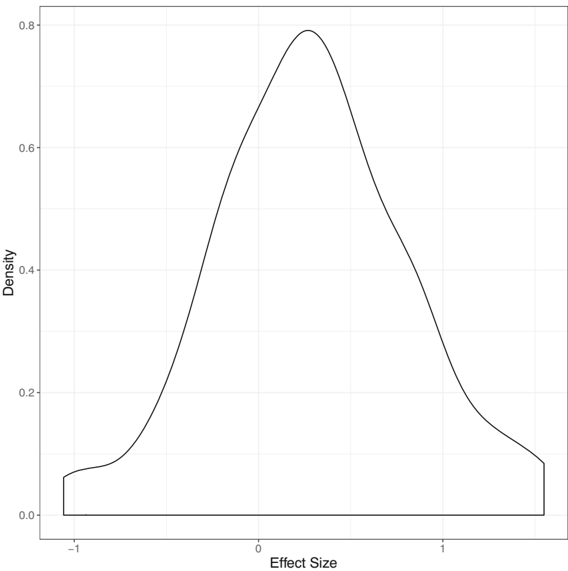
- Overall, peer assessment had a significant positive effect on academic performance: Hedges’ g = 0.31, SE = .06, 95% CI .18 to .44, p < .001.
- Compared with controls, peer assessment improved performance versus no assessment (g = 0.31, p = .004) and teacher assessment (g = 0.28, p = .007), but was not significantly different from self-assessment (g = 0.23, p = .209).
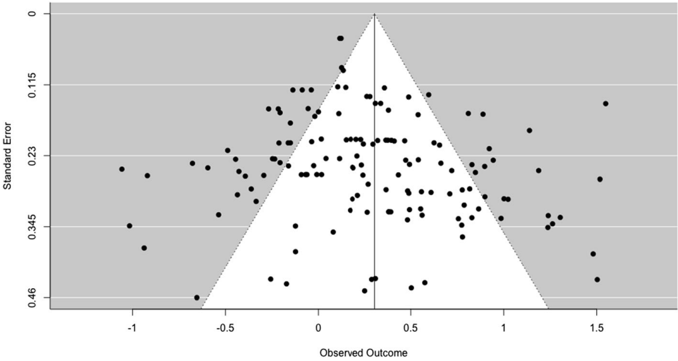
- Heterogeneity was large: I² = 81.08%.
- Moderator analyses found no significant differences by education level, comparison group (after meta-regression), assessment role, subject area (writing vs other subjects), written feedback, dialog, online vs offline, anonymity, frequency, transfer, or allocation; the paper describes the overall effects as “remarkably robust” across contexts.
- One notable interaction was that grading mattered by education level: grading was beneficial for tertiary students (g = .55, p = .009) but not for secondary (g = .002, p = .991) or primary (g = -.08, p = .762) students.
## Methods
- Meta-analysis of experimental and quasi-experimental control-group studies on peer assessment in primary, secondary, and tertiary students across subjects and domains; only studies with non-self-reported academic performance outcomes were included.
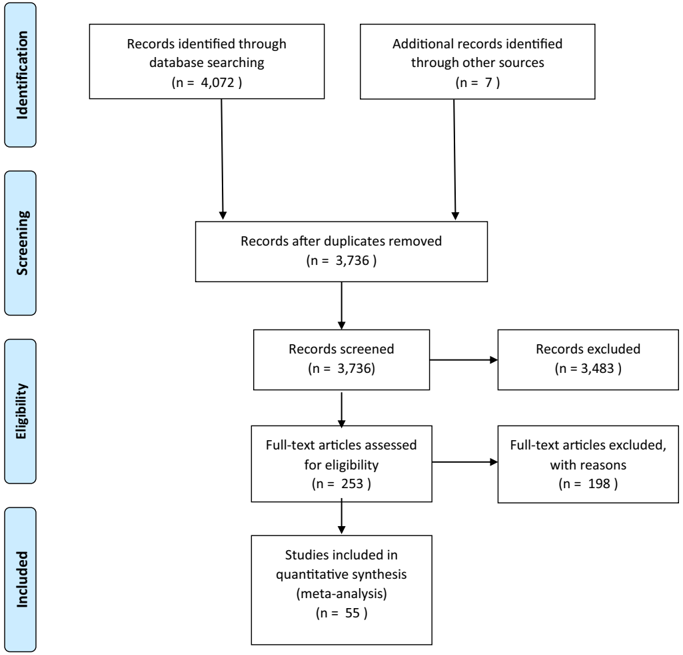
- Search on 8 June 2018 in PsycInfo, Google Scholar, and ERIC, plus ancestry searches, conference programs, and author/social-media outreach; final inclusion was 55 articles with 143 effect sizes (the abstract reports 54 studies, k = 141).
- Used a random-effects, multilevel meta-analysis in R with Hedges’ g as the effect size and robust variance estimation; moderator analyses were done with meta-regressions and subgroup analyses.
## Limitations
- The paper states a major limitation is that it cannot adequately distinguish giving feedback from receiving feedback because most studies confound the assessor and assessee roles; thus, it cannot say whether benefits come from giving, receiving, or both.
- The text also states that results are limited because the studies covered very different outcome measures and too few studies existed in most academic domains to test domain-specific moderator effects.
- Evident from the text: many study descriptors were missing or incomplete (e.g., sex recorded for only 55.5% of studies and mean age for only 18.5%), and many studies were quasi-experiments that were not analyzed with appropriate clustered-data techniques.
Model-written summary. Check it against the paper before relying on it.
Integrity signals
Registry
Cites
Statistics
Figures
Verification
Claims the paper makes
12 Valid · 1 Not valid · 39 Not checked · 81 Own results and interpretations
The cited sources that could be checked couldn’t confirm or dispute this claim.
In the paper
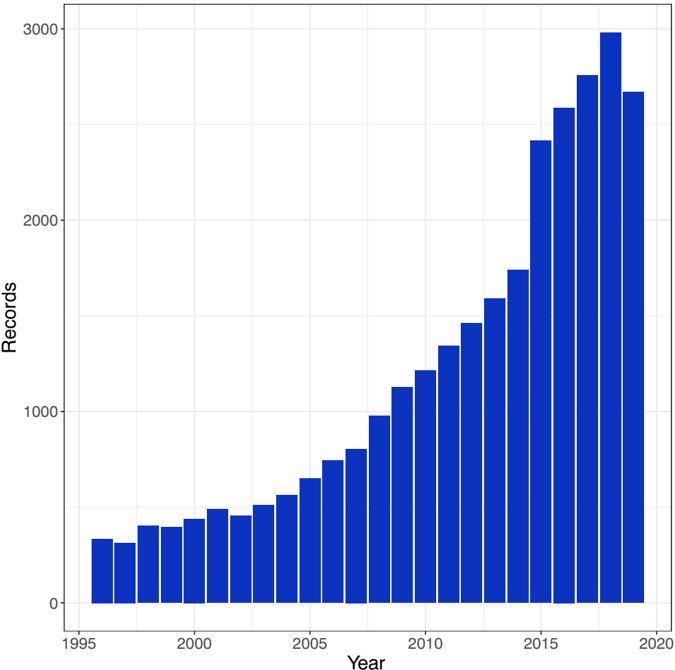
“The number of studies of peer assessment using control group designs also appears to be increasing in frequency (e.g., van Ginkel et al. 2017; Wang et al. 2017).”
§ The Author(s) 2019 Published online: 10 December 2019 > Empirical Studies
What the sources say
- Could not verifycites van Ginkel et al. 2017 matched to “The impact of the feedback source on developing oral presentation competence” (2017) sourceExperimental — accuracy not yet measured
The available Abstract metadata lists “quasi-experimental design” as a keyword, but does not describe a peer-assessment study or a control group. Searches for “control group” and peer-feedback comparisons returned no substantive passages, so our copy cannot verify that this paper is the example cited; it also cannot establish an increasing frequency of such studies. (LLM, conf=0.70)
- Not checked — no full text of the sourcecites Wang et al. 2017
hedgedstates an association- Asserted: passes — The authors put it forward as true.
- Checkable: passes — It can be checked against evidence.
- Load-bearing: passes — The paper’s conclusions depend on it.
- Based: passes — The paper gives a reason why it holds.
- Could not verify
The cited sources support only part of this claim — read each source’s verdict below.
In the paper
“Moreover, interventions involving peer assessment often confound the effect of peer assessment with other assessment practices that are theoretically related under the umbrella of formative assessment (Black and Wiliam 2009).”
§ The Author(s) 2019 Published online: 10 December 2019 > Empirical Studies
What the sources say
- Partly supportedcites Black and Wiliam 2009 matched to “Developing the theory of formative assessment” (2009) sourceExperimental — accuracy not yet measured
Section 7 (Conclusions; page unavailable) describes a conceptual framework for practices assembled under the umbrella of formative assessment, while Section 2 (A unifying basis; page unavailable) links peer activity to other formative strategies. The paper does not say that peer-assessment interventions often combine those practices in ways that confound estimates of peer assessment’s effect. (LLM, conf=0.82)
plainstates an association- Asserted: passes — The authors put it forward as true.
- Checkable: passes — It can be checked against evidence.
- Load-bearing: passes — The paper’s conclusions depend on it.
- Based: passes — The paper gives a reason why it holds.
- Partly supported
The cited sources support only part of this claim — read each source’s verdict below.
In the paper
“These studies have typically compared the formative effect of peer assessment with either teacher assessment (e.g., Chaney and Ingraham 2009; Sippel and Jackson 2015; van Ginkel et al. 2017) or no assessment conditions (e.g., Kamp et al. 2014; L. Li and Steckelberg 2004; Schonrock-Adema et al. 2007).”
§ The Author(s) 2019 Published online: 10 December 2019 > Empirical Studies
What the sources say
- Partly supportedcites Chaney and Ingraham 2009 matched to “Using Peer Grading And Proofreading To Ratchet Student Expectations In Preparing Accounting Cases” (2009) sourceExperimental — accuracy not yet measured
The Treatment Groups section describes a comparison between peer-evaluation groups and a control group, so the paper does study the formative effects of peer assessment. But the control cases were graded by a team of senior and master’s students, not by teachers; the paper therefore does not support its placement among studies comparing peer assessment with teacher assessment. (LLM, conf=0.85)
- Not checked — no full text of the sourcecites Sippel and Jackson 2015 matched to “Teacher vs. Peer Oral Corrective Feedback in the German Language Classroom” (2015) source
- Could not verifycites van Ginkel et al. 2017 matched to “The impact of the feedback source on developing oral presentation competence” (2017) sourceExperimental — accuracy not yet measured
The supplied passages and additional indexed matches contain bibliographic information and keywords, but no methods or results describing the comparison groups. Searches for peer-versus-teacher feedback and formative assessment did not locate a passage establishing that this study made that comparison. (LLM, conf=0.70)
plain- Asserted: passes — The authors put it forward as true.
- Checkable: passes — It can be checked against evidence.
- Load-bearing: unclear — It is unclear whether the paper’s conclusions depend on it.
- Based: passes — The paper gives a reason why it holds.
- Partly supported
The cited sources support only part of this claim — read each source’s verdict below.
In the paper
“It is somewhat surprising that most studies that examine the effect of peer assessment tend to only assess the impact on the assessee and not the assessor (van Popta et al. 2017).”
§ The Author(s) 2019 Published online: 10 December 2019 > Role
What the sources say
- Partly supportedcites van Popta et al. 2017 matched to “Exploring the value of peer feedback in online learning for the provider” (2017) sourceExperimental — accuracy not yet measured
The Introduction says that most studies of peer feedback in online learning focus on effects for the receiver rather than benefits for the provider. The citing sentence broadens this observation to studies of peer assessment generally, without the online-learning qualifier; the cited passage does not establish that broader claim. (LLM, conf=0.84)
plain- Asserted: passes — The authors put it forward as true.
- Checkable: passes — It can be checked against evidence.
- Load-bearing: passes — The paper’s conclusions depend on it.
- Based: passes — The paper gives a reason why it holds.
- Partly supported
Every source the paper cites for this claim was checked and supports it.
In the paper
“we opted to include it in the first instance because including only published studies can result in a metaanalysis over-estimating effect sizes due to publication bias (Hopewell et al. 2007).”
§ The Author(s) 2019 Published online: 10 December 2019 > Literature Search
What the sources say
- Supportedcites Hopewell et al. 2007 matched to “Grey literature in meta-analyses of randomized trials of health care interventions” (2007) source
The Discussion states that excluding grey trials from a systematic review or meta-analysis may artificially inflate its results. The Results also report that published trials showed, on average, a greater treatment effect than grey trials. This supports the claim that including only published studies can overestimate effects. (LLM, conf=0.94)
plainstates a cause- Asserted: passes — The authors put it forward as true.
- Checkable: passes — It can be checked against evidence.
- Load-bearing: passes — The paper’s conclusions depend on it.
- Based: passes — The paper gives a reason why it holds.
- Supported
77 more claims · 1 with their cited sources checked
Create a free account to see all 133 claims and to verify the 1 reference still open.
- Probably not a substantial claim. 32
- It may state two separate claims as one. 25
- The quote only partly states this claim. 3
Claims other papers make about this one
Each is checked against this paper’s own text: does it say what the citing paper says it does?
The cited source doesn’t support the claim as written.
In the citing paper
“Furthermore, the meta-analyses (Double et al., 2020;Huisman et al., 2019;Li et al., 2020) showed that different moderator variables can improve the effects of peer-feedback on processes and outcomes.”
From Enhancing the Peer-Feedback Process Through Instructional Support: A Meta-Analysis (2025) · cites this paper as Double et al., 2020
Checked by a reasoning model — may be wrong.
Experimental — accuracy not yet measuredThe cited source doesn’t support the claim as written.
In the citing paper
“Particularly important in the context of this article are the significant positive effects of rater training for the feedback provider, explicit rating criteria, and rubrics, which suggest that instructional support can play an important role in the peer-feedback process (Double et al., 2020;Li et al., 2020).”
From Enhancing the Peer-Feedback Process Through Instructional Support: A Meta-Analysis (2025) · cites this paper as Double et al., 2020
Checked by a reasoning model — may be wrong.
Experimental — accuracy not yet measured
12 more claims about this paper
Create a free account to see every claim other papers make about this one.
Citations
Cites
R: A Language and Environment for Statistical Computing
R Core Team (2025) · doi:10.32614/r.manuals · Cited by 352,181
The Measurement of Observer Agreement for Categorical Data
Landis, J. R., & Koch, G. G. (1977) · Biometrics · doi:10.2307/2529310 · Cited by 81,148
Cochrane Handbook for Systematic Reviews of Interventions: Cochrane Book Series
(2008) · doi:10.1002/9780470712184 · Cited by 25,048
Hattie, J., & Timperley, H. (2007) · Review of Educational Research · doi:10.3102/003465430298487 · Cited by 12,905
(2000) · Cited by 9,198
Measuring nominal scale agreement among many raters.
Fleiss, J. L. (1971) · Psychological Bulletin · doi:10.1037/h0031619 · Cited by 8,733
Assessment and Classroom Learning
Black, P., & Wiliam, D. (1998) · Assessment in Education: Principles, Policy & Practice · doi:10.1080/0969595980050102 · Cited by 8,152
Kluger, A. N., & DeNisi, A. (1996) · Psychological Bulletin · doi:10.1037/0033-2909.119.2.254 · Cited by 5,882
Distribution Theory for Glass's Estimator of Effect Size and Related Estimators
Hedges, L. V. (1981) · Journal of Educational Statistics · doi:10.2307/1164588 · Cited by 5,695
Developing the theory of formative assessment
Black, P., & Wiliam, D. (2009) · Educational Assessment, Evaluation and Accountability · doi:10.1007/s11092-008-9068-5 · Cited by 3,301
Research works printed but not linked: 9
- Bangert, A. W. (1995). Peer assessment: an instructional strategy for effectively implementing performancebased assessments. (Unpublished doctoral dissertation). University of South Dakota.
- Benson, N. L. (1979). The effects of peer feedback during the writing process on writing performance, revision behavior, and attitude toward writing. (Unpublished doctoral dissertation). University of Colorado, Boulder.
- Brown, G. T., Irving, S. E., Peterson, E. R., & Hirschfeld, G. H. (2009). Use of interactive -informal assessment practices: New Zealand secondary students' conceptions of assessment. Learning and Instruction, 19 (2), 97 -111. * Califano, L. Z. (1987). Teacher and peer editing: Their effects on students' writing as measured by t-unit length, holistic scoring, and the attitudes of fifth and sixth grade students (Unpublished doctoral dissertation), Northern Arizona University.
- Farrell, K. J. (1977). A comparison of three instructional approaches for teaching written composition to high school juniors: teacher lecture, peer evaluation, and group tutoring (Unpublished doctoral dissertation), Boston University, Boston.
- Flórez, M. T., & Sammons, P. (2013). Assessment for learning: Effects and impact: CfBT Education Trust . England: Reading.
- Higgins, J. P., & Green, S. (2011). Cochrane handbook for systematic reviews of interventions. The Cochrane Collaboration. Version 5.1.0, www.handbook.cochrane.org - Hoaglin, D. C., & Iglewicz, B. (1987). Fine-tuning some resistant rules for outlier labeling. Journal of the American Statistical Association, 82 (400), 1147 -1149. <!-- image -->
- Liu, C.-C., Lu, K.-H., Wu, L. Y ., & Tsai, C.-C. (2016). The impact of peer review on creative self-efficacy and learning performance in Web 2.0 learning activities. Journal of Educational Technology & Society, 19 (2):286-297
- *Pierson, H. (1967). Peer and teacher correction: A comparison of the effects of two methods of teaching composition in grade nine English classes. (Unpublished doctoral dissertation), New York University.
- Wang, J. H., Hsu, S. H., Chen, S. Y ., Ko, H. W., Ku, Y . M., & Chan, T. W. (2014b). Effects of a mixed-mode peer response on student response behavior and writing performance. Journal of Educational Computing Research , 51 (2), 233-256. · DOI
Cited by
Items 101–200 of 421
Havard, B., Podsiad, M., & Valaitis, K. L. (2023) · TechTrends · doi:10.1007/s11528-022-00832-8 · Cited by 12
“Peer assessments have been shown to positively influence academic performance (Double et al., 2020; Tenório et al., 2016; Yan et al., 2022).”
BackgroundFormative Assessment and Feedback Strategies
Narciss, S., & Zumbach, J. (2022) · Springer international handbooks of education · doi:10.1007/978-3-030-28745-0_63 · Cited by 13
Contextualizing assessment feedback in translation education: A corpus-assisted ecological approach
Man, D., Zhu, C., Chau, M. H., & Maruthai, E. (2022) · Frontiers in Psychology · doi:10.3389/fpsyg.2022.1057018 · Cited by 13
“Despite an increasing body of research on assessment feedback in areas such as second language (L2) writing (Ruegg, 2015; Falchikov and Goldfinch, 2016; Double et al., 2019; Yang et al., 2021), relatively few studies have investigated assessment feedback in translation education.”
BackgroundAttiogbe, E. J. K., Oheneba-Sakyi, Y., Kwapong, O. A. T. F., & Boateng, J. K. (2023) · Journal of Research in Innovative Teaching & Learning · doi:10.1108/jrit-10-2022-0061 · Cited by 20
Safadi, R., & Hawa, N. (2023) · Instructional Science · doi:10.1007/s11251-023-09648-2 · Cited by 11
“However, the meta-analyses that have compared peer assessment to self-assessment (Double et al., 2020; Huisman et al., 2019; Li et al., 2020; Yan et al., 2022) have only drawn on a small number of studies that directly compared peer assessment to self-assessment.”
Lin, Z., Yan, H., & Zhao, L. (2024) · Journal of Computer Assisted Learning · doi:10.1111/jcal.12970 · Cited by 15
Ortiz, L. G., Maina, M. F., Lanzo, N. C., & Fernández-Ferrer, M. (2024) · Revista de Educación a Distancia (RED) · doi:10.6018/red.599511 · Cited by 26
Wang, C., OuYang, J., & Wu, F. S. (2021) · Journal of Science Education and Technology · doi:10.1007/s10956-021-09922-3 · Cited by 13
Wu, H., Zhu, H., & Yang, X. (2022) · Frontiers in Psychology · doi:10.3389/fpsyg.2022.1059555 · Cited by 17
Senden, M., Jaeger, D. D., & Coertjens, L. (2023) · Frontiers in Education · doi:10.3389/feduc.2023.1198011 · Cited by 10
Yu, F., Liu, Y.-H., & Liu, K. (2023) · Studies In Educational Evaluation · doi:10.1016/j.stueduc.2023.101279 · Cited by 11
Ørevik, S. (2023) · Designs for Learning · doi:10.16993/dfl.216 · Cited by 17
The impact of peer assessment design on interpersonal processes: A systematic review
Senden, M., & Coertjens, L. (2024) · Studies In Educational Evaluation · doi:10.1016/j.stueduc.2024.101405 · Cited by 15
Opening Pandora’s Box: How Does Peer Assessment Affect EFL Students’ Writing Quality?
Meletiadou, E. (2021) · Languages · doi:10.3390/languages6030115 · Cited by 13
Ruiz, J. F., & Panadero, E. (2022) · Assessment & Evaluation in Higher Education · doi:10.1080/02602938.2022.2099811 · Cited by 14
Taopan, L. L., & Siregar, R. A. (2021) · Journal on English as a Foreign Language · doi:10.23971/jefl.v11i2.2866 · Cited by 12
Supplemental Instruction as a Tool for Students' Academic Performance in Higher Education
Adebola, O. O. (2021) · Journal of Culture and Values in Education · doi:10.46303/jcve.2021.4 · Cited by 14
Devaki, V. (2024) · Advances in educational technologies and instructional design book series · doi:10.4018/979-8-3693-3645-8.ch015 · Cited by 19
Munk, S., Ziernwald, L., Heine, J.-H., & Holzberger, D. (2024) · International Journal of Educational Research Open · doi:10.1016/j.ijedro.2024.100382 · Cited by 10
Impact of a professional development program in formative assessment for mathematics teachers
Balbi, A., Bonilla, M., Curione, K., Ibarra, A., & Camargo, P. M. (2024) · Professional Development in Education · doi:10.1080/19415257.2024.2433051 · Cited by 11
“2016, Double et al .”
InfluentialLi, J., & Zhang, L. J. (2025) · Assessing Writing · doi:10.1016/j.asw.2025.101009 · Cited by 9
Linn, Z., Tashiro, Y., Morio, K., & Hori, H. (2022) · BMC Medical Education · doi:10.1186/s12909-022-03165-5 · Cited by 12
Embed sustainability in the curriculum: transform the world
Kaur, K. (2022) · Language Learning in Higher Education · doi:10.1515/cercles-2022-2061 · Cited by 7
Sofjan, A. K., Nguyen, K. A., Surati, D., & Marette, C. (2023) · Currents in Pharmacy Teaching and Learning · doi:10.1016/j.cptl.2023.04.004 · Cited by 9
Greisel, M., Hornstein, J., & Kollar, I. (2024) · Studies In Educational Evaluation · doi:10.1016/j.stueduc.2024.101438 · Cited by 11
How Reducing Discomfort Impacts Peer Assessments of Preservice Teachers
Lim, W., Son, J., & Kang, S.-H. (2021) · Sustainability · doi:10.3390/su13116435 · Cited by 7
Students and Teachers as Changemakers
Jacobs, G. M., Chau, M. H., & Hamzah, N. H. (2022) · rEFLections · doi:10.61508/refl.v29i1.258858 · Cited by 10
Digital Hardware for Peer Assessment in K-12 Schools and Universities
Topping, K. J. (2021) · Frontiers in Education · doi:10.3389/feduc.2021.666538 · Cited by 12
“…have been many literature reviews on peer assessment which have all been positive, from the earliest reviews of face-to-face PA (e.g., Topping, 1998, on peer grades and feedback; and Falchikov and Gold fi nch, 2000, on peer grades) to the latest meta-analyses (Double et al., 2020; Li et al., 2020).”
BackgroundInfluentialHuang, M. (2024) · Computer Assisted Language Learning · doi:10.1080/09588221.2024.2382851 · Cited by 9
“As a form of formative evaluation and cooperative learning in language learning classroom (Topping, 1998), empirical and observational research has demonstrated the efficacy and advantages conferred by peer assessment in language instruction and learning (Dochy et al., 1999; Double et al., 2020).”
Unheard and unused: why students reject teacher and peer feedback
Lipnevich, A. A., Lopera-Oquendo, C., Tomazin, L., Gutterman, J., & Florentin, C. (2025) · Frontiers in Education · doi:10.3389/feduc.2025.1567704 · Cited by 18
Rethinking Learning Assessment in Education for Sustainable Development: A Call for Action
Fischer, D., King, J., & Redman, A. (2025) · Journal of Education for Sustainable Development · doi:10.1177/09734082251355050 · Cited by 14
Hadyaoui, A., & Cheniti‐Belcadhi, L. (2025) · SN Computer Science · doi:10.1007/s42979-025-04220-w · Cited by 9
“The findings align with prior work (e.g [ 33]), which highlights the academic benefits of structured peer feedback across learning contexts.”
High Structure Renewable Assignments: A Design Study
Wallis, P., White, J. M., & Kerr, S. T. (2022) · Open Praxis · doi:10.55982/openpraxis.14.1.146 · Cited by 6
Lertsakulbunlue, S., & Kantiwong, A. (2024) · Advances in Simulation · doi:10.1186/s41077-024-00301-7 · Cited by 18
Sigalov, S. E., Cohen, A., & Nachmias, R. (2024) · Journal of Computers in Education · doi:10.1007/s40692-024-00334-x · Cited by 24
“As shown in academic literature, well-managed peer evaluation methodologies can scale up, alleviate faculty workload, and enhance student learning processes (Alqassab et al., 2023; Double et al., 2020; Jonsson et al., 2015).”
Student Perspectives of Peer Assessment in Programming Courses
Alkhalifa, A. K., & Devlin, M. (2021) · doi:10.1145/3481282.3481292 · Cited by 10
“Peer assessment is supposed to result in more in-depth learning because it leads to critical thinking [14], deep learning [17], and improved academic performance [8].”
BackgroundAvaliação formativa e autorregulação da aprendizagem no ensino superior
Alvés, I. P., Faria, I., & Pereira, J. L. (2022) · Revista Internacional de Educação Superior · doi:10.20396/riesup.v9i00.8668636 · Cited by 19
La evaluación en la clase de Educación Física desde la percepción de los estudiantes de secundaria
Grisales, N. E. M., Palacio, E. V. G., Montoya, L. F. J., Vélez, C. P., & Vélez, H. H. (2023) · Revista Virtual Universidad Católica del Norte · doi:10.35575/rvucn.n68a5 · Cited by 6
Becker, K., & Sloan, J. A. (2023) · Journal of Civil Engineering Education · doi:10.1061/jceecd.eieng-1927 · Cited by 6
How Personality Traits Affect Peer Assessment in Distance Learning
Alves, T., Sousa, F., Gama, S. P., Jorge, J. A., & Gonçalves, D. J. V. (2023) · Technology Knowledge and Learning · doi:10.1007/s10758-023-09694-2 · Cited by 11
“…shows that peer assessment has great potential to improve students’ academic performance (Black and Wiliam, 2009; Yan et al., 2022) by applying pedagogical activities that facilitate learning (Adachi et al., 2018; Double et al., 2020) and promote social-affective development (Li et al., 2020).”
Colognesi, S., Coppe, T., Leroux, L., & Wiertz, C. (2024) · British Educational Research Journal · doi:10.1002/berj.4014 · Cited by 16
Rezaei, E., & shirazi, S. S. B. (2024) · Education and Information Technologies · doi:10.1007/s10639-024-12607-0 · Cited by 10
“…aloud; Evaluating others’ work encourages critical analysis, reflection, and justification of reasoning, fostering criti - cal thinking skills (Double et al., 2020 ; Liu et al., 2016 ) and Online platforms can support TAPA activities and enable interaction between students, addressing the…”
Designing Dialogic Peer Feedback in Collaborative Learning: The Role of Thinq Tank
Hoe, A. V., Wiebe, J. P., Slotta, J., Rotsaert, T., & Schellens, T. (2024) · Education Sciences · doi:10.3390/educsci14111231 · Cited by 14
Expert Credibility Prediction Model Based on Fuzzy C-Means Clustering and Similarity Association
Liu, C., Guo, J., Zhang, X., Wu, D., & Yu, L. (2025) · IEEE Transactions on Fuzzy Systems · doi:10.1109/tfuzz.2025.3574947 · Cited by 7
“Accurately assessing the credibility of experts can significantly enhance the quality and effectiveness of decisions in decision support systems, risk assessment, and strategic planning [3], [4].”
A novel diversity-based selective ensemble method for small sample expert credibility assessment
Liu, C., Zhang, X., Xi, X., Wan, C., & Yu, L. (2025) · Science China Technological Sciences · doi:10.1007/s11431-024-2917-8 · Cited by 5
The Effect of Student and Peer Assessment Engagement on Learning Performance in Online Open Courses
Ma, M., & Luo, C. (2022) · International Journal of Emerging Technologies in Learning (iJET) · doi:10.3991/ijet.v17i10.30931 · Cited by 10
Matuk, C. F., Yetman-Michaelson, L., Martin, R., Vasudevan, V., Burgas, K., Davidesco, I., Shevchenko, Y., Chaloner, K., & Dikker, S. (2023) · Instructional Science · doi:10.1007/s11251-023-09633-9 · Cited by 7
The Daily Smirk: A Preliminary Prototype for Continuous Peer Assessment of Team-based Projects
Lu, Y., & van der Hoek, A. (2023) · IEEE International Conference on Software Engineering Education and Training (CSEE&T) · doi:10.1109/cseet58097.2023.00014 · Cited by 5
“Peer assessment has been employed as an approach advocated by many educational researchers to integrate into team-based projects, as it is considered to deliver feedback efficiently to learners [4].”
MethodImproving Peer Assessment Validity and Reliability Through a Fuzzy Coherence Measure
Alaoui, M. E. (2023) · IEEE Transactions on Learning Technologies · doi:10.1109/tlt.2023.3321660 · Cited by 6
“Peerassessment,alsocalledpeerreview,peerevaluation,peer grading,orpeerfeedback[12],[13],consistsoftheprearrange-mentoflearnerstoconsiderandspecifythelevel,value,or qualityofaproductorperformanceofotherequal-statuslearners [14].”
BackgroundA Flipped Remote Lab: Using a Peer-Assessment Tool for Learning 3-D Modeling
Vallarino, M., Iacono, S., Bellanti, E., & Vercelli, G. (2024) · IEEE Transactions on Learning Technologies · doi:10.1109/tlt.2024.3358800 · Cited by 6
“Restrictions apply. that peer assessment is an effective classroom technique that enhances academic performance [46], [47], [48].”
BackgroundData-Driven Support Infrastructure for Iterative Team-Based Learning
Liang, C., Majumdar, R., Horikoshi, I., & Ogata, H. (2024) · IEEE Access · doi:10.1109/access.2024.3393421 · Cited by 9
“Considering the developmental stage, cognitive abilities, and social dynamics of learners [82], peer evaluation activities are more suitable for higher education settings.”
BackgroundJongsma, M. V., Scholten, D. J., Houtkamp, J., Meeter, M., & van Muijlwijk‐Koezen, J. E. (2024) · Cogent Education · doi:10.1080/2331186x.2024.2349355 · Cited by 8
“Research indicates that the impact of peer feedback on learning outcomes is often comparable to, if not better than, teacher feedback (Double et al., 2020; Huisman et al., 2019; Topping, 1998).”
Recipe Modification as a Means of Learning and Applying the Scientific Method
Dabrowski, J. A., & McManamy, M. E. M. (2021) · Journal of Chemical Education · doi:10.1021/acs.jchemed.0c01446 · Cited by 6
Educating Students in Technology Enhanced Learning Design by Interweaving Instruction and Assessment
Γόγουλου, Α., & Grigoriadou, M. (2021) · Informatics in Education · doi:10.15388/infedu.2021.17 · Cited by 9
Learning Activities of the of Students in Peer-Jury Practices in the Architecture Design Studio
Tafahomi, R. (2021) · Aksara Jurnal Ilmu Pendidikan Nonformal · doi:10.37905/aksara.7.3.795-814.2021 · Cited by 5
Lack of interest? Self and peer assessment as a means to improve students’ engagement
Díez, J. (2021) · Innovations in Education and Teaching International · doi:10.1080/14703297.2021.2013288 · Cited by 6
“Participation was voluntary and without incentives, as it was unclear how incentives could be included without altering the normal progression of the course (Double et al., 2020).”
BackgroundFormative Assessment and Feedback Strategies
Narciss, S., & Zumbach, J. (2022) · Springer international handbooks of education · doi:10.1007/978-3-030-26248-8_63-1 · Cited by 11
Mao, A., Cheong, P. L., Van, I., & Tam, H. L. (2023) · Education Sciences · doi:10.3390/educsci13101053 · Cited by 7
The impact of alternative authentic assessment outcomes in Palestinian fourth grade math classrooms
Ayyoub, A. A., Bsharat, A., & Suleiman, M. F. (2021) · Studies In Educational Evaluation · doi:10.1016/j.stueduc.2021.101056 · Cited by 11
Abo, A. L., Wubshet, H., & Abeba, B. D. (2025) · Social Sciences & Humanities Open · doi:10.1016/j.ssaho.2025.101618 · Cited by 9
AI-ding peer feedback: a randomized study of self-generated vs. ai-assisted peer feedback
Noel, Z. R., Lee, H., Sherrill, C. H., Hollis, I. B., & McLaughlin, J. E. (2025) · BMC Medical Education · doi:10.1186/s12909-025-08225-0 · Cited by 11
“[1, 2] Research has shown that well-structured peer feedback can significantly enhance student learning, communication, and teamwork [3–7].”
Aben, J. E. J., Lara, M. M., Timmermans, A. C., Dingyloudi, F., & Strijbos, J.-W. (2024) · Instructional Science · doi:10.1007/s11251-024-09660-0 · Cited by 8
“…we studied the processes of peer-feedback provision and processing in the domain of argumentative writing, as this is a domain where peer-feedback is frequently used to enhance students’ writing skills and performance (Double et al., 2020; Hoogeveen & Van Gelderen, 2013; Huisman et al., 2019).”
Prompiengchai, S., Baby, N. K., & Joordens, S. (2024) · Social Sciences & Humanities Open · doi:10.1016/j.ssaho.2024.101058 · Cited by 8
Temel, G. Y., Barenthien, J. M., & Padubrin, T. (2025) · Education and Information Technologies · doi:10.1007/s10639-025-13507-7 · Cited by 8
Gorham, T., Majumdar, R., & Ogata, H. (2025) · Smart Learning Environments · doi:10.1186/s40561-025-00387-0 · Cited by 13
“This meta-analysis led to a call for more research into the factors that modulate the effects of peer assessment on learning (Double et al., 2020).”
InfluentialAben, J. E. J., Timmermans, A. C., Dingyloudi, F., & Strijbos, J.-W. (2023) · Studies In Educational Evaluation · doi:10.1016/j.stueduc.2023.101248 · Cited by 8
Mrema, B. J., Mlemba, A., & Massam, W. (2024) · JOURNAL OF ISSUES AND PRACTICE IN EDUCATION · doi:10.61538/jipe.v16i.1427 · Cited by 6
Online assessment practices during the pandemic in secondary schools in Catalonia
Cano, E., Molins, L. L., & Alpiste, M. F. I. (2024) · Technology Pedagogy and Education · doi:10.1080/1475939x.2024.2342354 · Cited by 6
“The main characteristics of online assessment practices have already been set out and defined (Double et al., 2020; JISC, 2010; UNESCO, 2021).”
Davidoff, Y., & Jayusi, W. (2024) · Education and Information Technologies · doi:10.1007/s10639-024-12958-8 · Cited by 8
“Three additional categories focus on TLE interactions among students, which were found to promote effective learning and improve academic achievements (Arendale, 2017 ; Double et al., 2020 ), as follows: 4.”
Fraile, J., Monguillot, M., Arévalo, C. G., Lehane, P., & Panadero, E. (2024) · Studies In Educational Evaluation · doi:10.1016/j.stueduc.2024.101410 · Cited by 13
Özbek, T., Daumiller, M. H., Roshany-Tabrizi, A., Mömke, T., & Kollar, I. (2024) · Computers in Human Behavior Reports · doi:10.1016/j.chbr.2024.100540 · Cited by 7
Peer Assessment-based Digital Literacy, EFL Students’ Reading Competency, and Engagement
Lailiyah, L., Ratminingsih, N. M., Utami, I. L. P., Artini, L. P., Padmadewi, N. N., & Marsakawati, N. P. E. (2022) · Journal of Education Research and Evaluation · doi:10.23887/jere.v6i4.53012 · Cited by 10
Yuzar, E. (2022) · JETLEE Journal of English Language Teaching Linguistics and Literature · doi:10.47766/jetlee.v2i2.484 · Cited by 9
Nursing students' perspectives on peer assessment in basic nursing procedures: A qualitative study
Fan, S., Wang, S., Zhao, Y., Zhang, N., Wei, Y., Liu, H., Li, Z., Yu, Y., Gu, Y., Feng, N., et al. (2024) · Nurse Education Today · doi:10.1016/j.nedt.2024.106348 · Cited by 3
The role of platform design in online peer feedback: a comparison of two digital environments
Jongsma, M. V., Meeter, M., van Muijlwijk‐Koezen, J. E., & Scholten, D. J. (2025) · Education and Information Technologies · doi:10.1007/s10639-025-13598-2 · Cited by 5
“Research suggests that peer feedback can have a similar or even greater impact on learning outcomes than teacher feedback (Double et al., 2020; Huisman et al., 2019; Topping, 1998 ).”
GenAI as a Peer Review Support: Impact on Feedback Quality, Quantity, and Student Perceptions
Chase, C. C., & Venook, R. D. (2025) · Proceedings. · doi:10.22318/icls2025.160205 · Cited by 3
Oeksuez, S. S., Buholzer, A., Hascher, T., Zulliger, S., Maskos, K., & Schulz, A. (2026) · Teaching and Teacher Education · doi:10.1016/j.tate.2026.105662 · Cited by 4
Saifani, A. S. I., & Adawiyah, R. (2023) · JIIP - Jurnal Ilmiah Ilmu Pendidikan · doi:10.54371/jiip.v6i6.2116 · Cited by 3
Peer Assessment Reliability in an Organic Chemistry Activity: Do Students Overrate Their Peers?
Atarés, L., & Molina, J. A. L. (2023) · Journal of Chemical Education · doi:10.1021/acs.jchemed.2c00945 · Cited by 6
Nikolovska, A., Bekar, M., & Trajkova, Z. (2023) · Studies in Linguistics Culture and FLT · doi:10.46687/fwvc2082 · Cited by 6
Design of Future Classrooms: A Review of Learning Space Designs and Learning Methods
Shehata, B. (2024) · Lecture notes in educational technology · doi:10.1007/978-981-97-0076-9_11 · Cited by 8
Studying how social relationships affect peer assessment in an E-learning environment
Sousa, F., Alves, T., Gama, S. P., Jorge, J. A., & Gonçalves, D. J. V. (2024) · Learning Environments Research · doi:10.1007/s10984-024-09505-0 · Cited by 9
“…mechanisms in teaching and learning nowadays (Zheng et al., 2020; Li et al., 2020; Yan et al., 2022) by improving students’ academic performance (Black and Wiliam, 2009; Yan et al., 2022) through pedagogical activities that facilitate learning (Chie Adachi and Dawson, 2018; Double et al., 2020).”
Zamorano, D., Panadero, E., Alqassab, M., & Amillano, A. (2025) · The Journal of Experimental Education · doi:10.1080/00220973.2025.2466146 · Cited by 4
“…significantly impacts student’s task performance, feedback implementation, and students’ perceptions of learning and trust, suggesting that involving students in both roles in the classroom can be equally beneficial for student learning and task performance (Double et al., 2020; Li et al., 2020).”
InfluentialKeller, M. V., Daumiller, M. H., & Dresel, M. (2025) · Learning and Instruction · doi:10.1016/j.learninstruc.2025.102152 · Cited by 9
Baş, G. (2025) · European Journal of Psychology of Education · doi:10.1007/s10212-025-00988-w · Cited by 8
Effectiveness of Peer Evaluation in Learning Process: A Case from Dental Technology Students
Mortadi, N. A. A., Al-Houry, S. S., Alzoubi, K. H., & Khabour, O. F. (2020) · The Open Dentistry Journal · doi:10.2174/1874210602014010692 · Cited by 4
Peer-to-Peer Learning Process (PPLP) Framework to Enhance Problem Solving Skills
Abirami, A. M., Karthikeyan, P., & Thangavel, M. (2023) · Journal of Engineering Education/Journal of engineering education transformations/Journal of engineering education transformation · doi:10.16920/jeet/2023/v36is2/23035 · Cited by 3
Priyambodo, P., Paidi, Wilujeng, I., & Djukri (2023) · Pegem Journal of Education and Instruction · doi:10.47750/pegegog.13.03.35 · Cited by 13
Karaçöp, A., & İnaltekin, T. (2023) · Journal of Formative Design in Learning · doi:10.1007/s41686-023-00081-9 · Cited by 7
“However, a limited number of literature reviews (Lee et al., 2020), meta-analysis (Double et al., 2020), and bibliometric analysis (Sudakova et al., 2022) have been conducted.”
:null (2023) · Waxmann Verlag GmbH eBooks · doi:10.31244/9783830997498 · Cited by 5
Tantangan Pembelajaran Online Menggunakan Learning Management System SPADA
Wicaksana, M. F., Marmoah, S., & Nurhasanah, F. (2023) · Kalam Cendekia Jurnal Ilmiah Kependidikan · doi:10.20961/jkc.v11i3.78013 · Cited by 3
Palm, T., Andersson, C., Palmberg, B., & Winberg, M. (2024) · CADMO · doi:10.3280/cad2023-002002 · Cited by 3
Contextualizing synchronous online EFL classroom assessment: A face saving perspective
Bui, H. P. (2024) · Education and Information Technologies · doi:10.1007/s10639-024-12849-y · Cited by 8
Peer feedback and learning: a case study with 8th-grade Portuguese students
Asper, G., Faria, C., Serra, P., & Galvão, C. (2024) · Education 3-13 · doi:10.1080/03004279.2024.2364610 · Cited by 6
“These results are supported by several authors, who attribute to peer feedback a key role in explaining the influence of peer assessment in improving the pupil learning process (Double, McGrane, and Hopfenbeck 2020; Sadeghi, Hassani, and Mohammadloo 2015; Topping 2009).”
Lehane, S., & O’Mahony, T. (2024) · European Journal of Higher Education · doi:10.1080/21568235.2024.2402361 · Cited by 4
“…studies indicate that when done well, peer feedback can align with lecturer feedback (Iglesias Pérez, Vidal-Puga, and Pino Juste 2022) and, relative to lecturer feedback, peer feedback can achieve learning outcomes of comparable quality (Huisman et al. 2019; Double, McGrane, and Hopfenbeck 2020).”
Effect of self and peer assessments on mathematics learning achievement
Baiduri, B. (2022) · Al-Jabar Jurnal Pendidikan Matematika · doi:10.24042/ajpm.v13i1.10731 · Cited by 9
The Global Conference on Education and Research: Volume 4
James, W. B., Cobanoglu, C., & Cavusoglu, M. (2021) · Conference proceedings · doi:10.5038/2572-6374-v4 · Cited by 5
Li, R., Bill, V., Paredes, I. J., & Bringardner, J. (2024) · ASEE Annual Conference & Exposition · doi:10.18260/1-2--42873 · Cited by 2
Successful self-employment in microenterprise for persons with disabilities in a rural setting
Monareng, L. L., Soeker, M. S., & Naidoo, D. (2025) · African Journal of Disability · doi:10.4102/ajod.v14i0.1564 · Cited by 3
Rallying for Reflection: Pilot Use of Rubric to Facilitate Self‐Reflection in Dental Education
Katser, M. S., Veremis, B. M., Danciu, T., Ramaswamy, V., & Popov, V. (2025) · European Journal Of Dental Education · doi:10.1111/eje.13088 · Cited by 3
Metadata
- Authors
- Double, K. S., McGrane, J. A., & Hopfenbeck, T. N.
- Affiliations
- University of Oxford (GB)
- Corresponding author
- Double, Kit S.
- Venue
- Educational Psychology Review
- Published
- 2019-12-10
- Volume
- 32
- Issue
- 2
- Pages
- 481-509
- ISSN
- 1040-726X (ISSN-L)
- 1573-336X
- OpenAlex
- W2996399622
- Cited by
- 446
- References
- 125
- Citations by year
- 2026: 83 · 2025: 76 · 2024: 92 · 2023: 74 · 2022: 62 · 2021: 50 · 2020: 9
- FWCI
- 8.63
- Type
- journal article
- Language
- en
- Open access
- hybrid
- doi.org
- Licence
- cc-by
- creativecommons.org/licenses/by/4.0 (tdm)
- creativecommons.org/licenses/by/4.0 (vor)
- Locations
- Educational Psychology Review (publishedVersion, cc-by)
- Funders
- University of Oxford
- Topics
- Social Sciences › Education › Student Assessment and Feedback
- Social Sciences › Psychology › Developmental and Educational Psychology › Innovative Teaching and Learning Methods
- Social Sciences › Education › Evaluation of Teaching Practices
- Keywords
- peer assessment, academic performance, teacher assessment, self-assessment, feedback, formative assessment, assessment frequency, educational attainment, classroom implementation
About these checks
Registry, retraction, Cites and statistics results are computed, not judged, with one exception: a printed reference that no index lists is read once by a model before it counts as a citation error. Claims are extracted by a model and kept only when their quote appears verbatim in the text; each cited source is then checked, with a model’s help, for whether it says what the claim relies on. Those verdicts can be wrong — read the claim’s quote and the cited source before relying on one.
The claim verdicts this report counts are experimental: their accuracy is not yet measured.
A language model drew the claims from the paper on 2026-09-30, under version 3 of the claim definition (model deepseek-v4.1-flash, prompt extract-v3).
A second model labelled each claim on 2026-09-30 (model jev-1.13-20260917, definition revision gold-guideline-v0.2).
Cited sources are checked with a language model’s help (gpt-6-sol).
Statistics and arithmetic are recomputed, not judged.
Confidence bands are shown only for fields calibrated on our annotated test set. None is calibrated yet, so no band is shown.
What counts as a claim ›How we measure confidence ›How we check this ›
Are you an author, or do you see a problem with this page? Request a review
Data sources
Bibliographic data: Semantic Scholar, OpenAlex, Crossref.
Contains information from the Semantic Scholar Academic Graph Datasets, made available under the ODC Attribution License (ODC-BY 1.0).
Semantic Scholar’s data is described in: Kinney, R., et al. (2023). The Semantic Scholar Open Data Platform. arXiv:2301.10140.
