

The Impact of Peer Assessment on Academic Performance: A Meta-analysis of Control Group Studies
Open accessThe DOI matches its Crossref record; 120 of the 125 references it cites were found in a registry or an index; 15 of the 72 sources its claims cite were checked for support.
Abstract
Abstract Peer assessment has been the subject of considerable research interest over the last three decades, with numerous educational researchers advocating for the integration of peer assessment into schools and instructional practice. Research synthesis in this area has, however, largely relied on narrative reviews to evaluate the efficacy of peer assessment. Here, we present a meta-analysis (54 studies, k = 141) of experimental and quasi-experimental studies that evaluated the effect of peer assessment on academic performance in primary, secondary, or tertiary students across subjects and domains. An overall small to medium effect of peer assessment on academic performance was found ( g = 0.31, p < .001). The results suggest that peer assessment improves academic performance compared with no assessment ( g = 0.31, p = .004) and teacher assessment ( g = 0.28, p = .007), but was not significantly different in its effect from self-assessment ( g = 0.23, p = .209). Additionally, meta-regressions examined the moderating effects of several feedback and educational characteristics (e.g., online vs offline, frequency, education level). Results suggested that the effectiveness of peer assessment was remarkably robust across a wide range of contexts. These findings provide support for peer assessment as a formative practice and suggest several implications for the implementation of peer assessment into the classroom.
Overview
CoChat Summary
## TL;DR
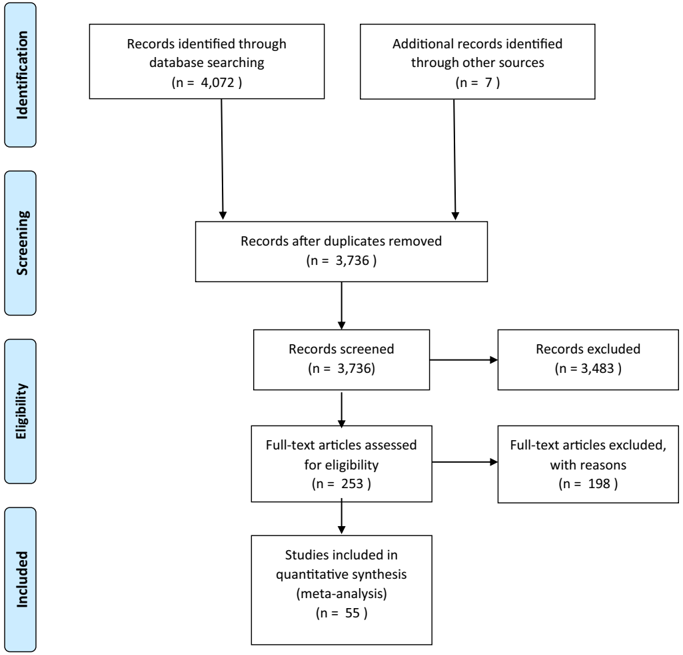
This meta-analysis of 54 studies (k = 141; ultimately 55 articles and 143 effect sizes were identified in the search) found that peer assessment has a small-to-medium positive effect on academic performance overall. The effect was stronger than no assessment and teacher assessment, but not significantly different from self-assessment.
## Key findings
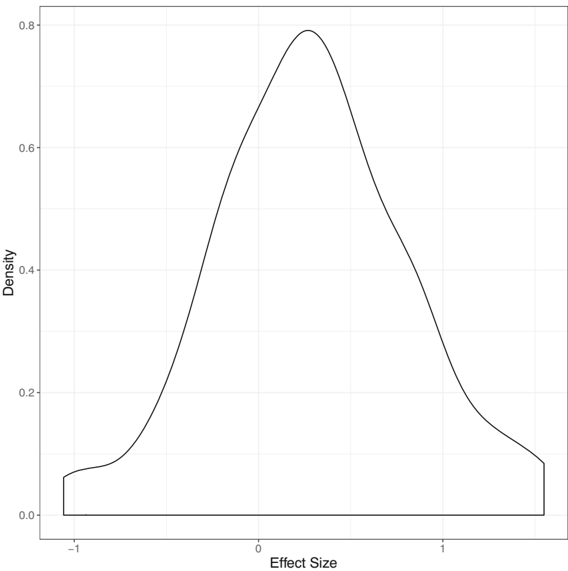
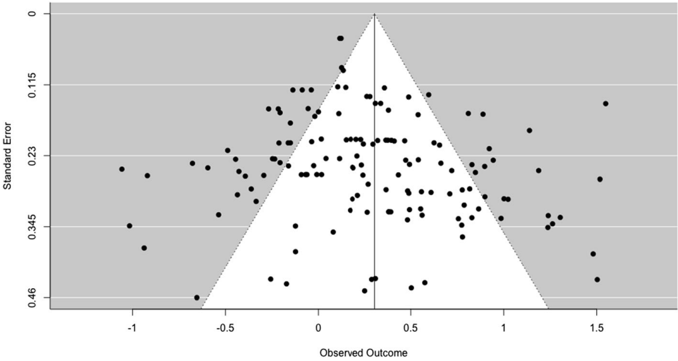
- Overall, peer assessment had a significant positive effect on academic performance: Hedges’ g = 0.31, SE = .06, 95% CI .18 to .44, p < .001.
- Compared with controls, peer assessment improved performance versus no assessment (g = 0.31, p = .004) and teacher assessment (g = 0.28, p = .007), but was not significantly different from self-assessment (g = 0.23, p = .209).
- Heterogeneity was large: I² = 81.08%.
- Moderator analyses found no significant differences by education level, comparison group (after meta-regression), assessment role, subject area (writing vs other subjects), written feedback, dialog, online vs offline, anonymity, frequency, transfer, or allocation; the paper describes the overall effects as “remarkably robust” across contexts.
- One notable interaction was that grading mattered by education level: grading was beneficial for tertiary students (g = .55, p = .009) but not for secondary (g = .002, p = .991) or primary (g = -.08, p = .762) students.
## Methods
- Meta-analysis of experimental and quasi-experimental control-group studies on peer assessment in primary, secondary, and tertiary students across subjects and domains; only studies with non-self-reported academic performance outcomes were included.
- Search on 8 June 2018 in PsycInfo, Google Scholar, and ERIC, plus ancestry searches, conference programs, and author/social-media outreach; final inclusion was 55 articles with 143 effect sizes (the abstract reports 54 studies, k = 141).
- Used a random-effects, multilevel meta-analysis in R with Hedges’ g as the effect size and robust variance estimation; moderator analyses were done with meta-regressions and subgroup analyses.
## Limitations
- The paper states a major limitation is that it cannot adequately distinguish giving feedback from receiving feedback because most studies confound the assessor and assessee roles; thus, it cannot say whether benefits come from giving, receiving, or both.
- The text also states that results are limited because the studies covered very different outcome measures and too few studies existed in most academic domains to test domain-specific moderator effects.
- Evident from the text: many study descriptors were missing or incomplete (e.g., sex recorded for only 55.5% of studies and mean age for only 18.5%), and many studies were quasi-experiments that were not analyzed with appropriate clustered-data techniques.
Model-written summary. Check it against the paper before relying on it.
Integrity signals
Registry
Cites
Statistics
Figures
Verification
Claims the paper makes
12 Valid · 1 Not valid · 39 Not checked · 81 Own results and interpretations
The cited sources that could be checked couldn’t confirm or dispute this claim.
In the paper
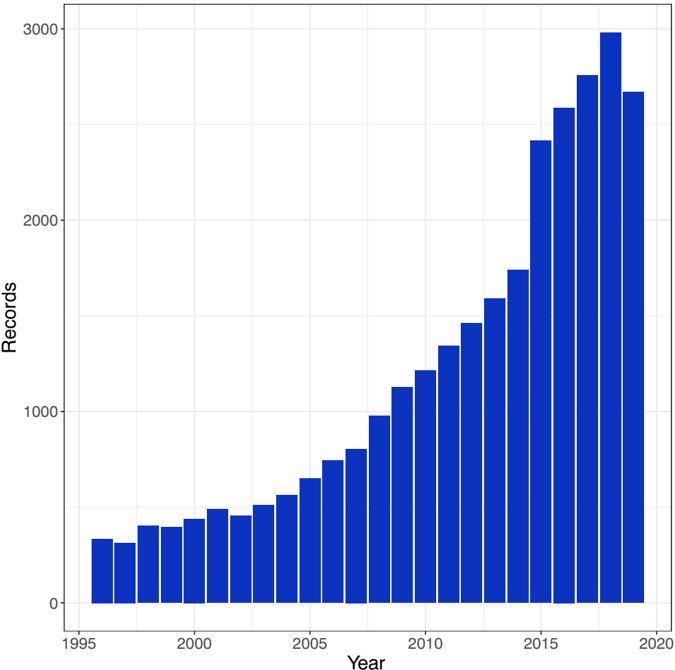
“The number of studies of peer assessment using control group designs also appears to be increasing in frequency (e.g., van Ginkel et al. 2017; Wang et al. 2017).”
§ The Author(s) 2019 Published online: 10 December 2019 > Empirical Studies
What the sources say
- Could not verifycites van Ginkel et al. 2017 matched to “The impact of the feedback source on developing oral presentation competence” (2017) sourceExperimental — accuracy not yet measured
The available Abstract metadata lists “quasi-experimental design” as a keyword, but does not describe a peer-assessment study or a control group. Searches for “control group” and peer-feedback comparisons returned no substantive passages, so our copy cannot verify that this paper is the example cited; it also cannot establish an increasing frequency of such studies. (LLM, conf=0.70)
- Not checked — no full text of the sourcecites Wang et al. 2017
hedgedstates an association- Asserted: passes — The authors put it forward as true.
- Checkable: passes — It can be checked against evidence.
- Load-bearing: passes — The paper’s conclusions depend on it.
- Based: passes — The paper gives a reason why it holds.
- Could not verify
The cited sources support only part of this claim — read each source’s verdict below.
In the paper
“Moreover, interventions involving peer assessment often confound the effect of peer assessment with other assessment practices that are theoretically related under the umbrella of formative assessment (Black and Wiliam 2009).”
§ The Author(s) 2019 Published online: 10 December 2019 > Empirical Studies
What the sources say
- Partly supportedcites Black and Wiliam 2009 matched to “Developing the theory of formative assessment” (2009) sourceExperimental — accuracy not yet measured
Section 7 (Conclusions; page unavailable) describes a conceptual framework for practices assembled under the umbrella of formative assessment, while Section 2 (A unifying basis; page unavailable) links peer activity to other formative strategies. The paper does not say that peer-assessment interventions often combine those practices in ways that confound estimates of peer assessment’s effect. (LLM, conf=0.82)
plainstates an association- Asserted: passes — The authors put it forward as true.
- Checkable: passes — It can be checked against evidence.
- Load-bearing: passes — The paper’s conclusions depend on it.
- Based: passes — The paper gives a reason why it holds.
- Partly supported
The cited sources support only part of this claim — read each source’s verdict below.
In the paper
“These studies have typically compared the formative effect of peer assessment with either teacher assessment (e.g., Chaney and Ingraham 2009; Sippel and Jackson 2015; van Ginkel et al. 2017) or no assessment conditions (e.g., Kamp et al. 2014; L. Li and Steckelberg 2004; Schonrock-Adema et al. 2007).”
§ The Author(s) 2019 Published online: 10 December 2019 > Empirical Studies
What the sources say
- Partly supportedcites Chaney and Ingraham 2009 matched to “Using Peer Grading And Proofreading To Ratchet Student Expectations In Preparing Accounting Cases” (2009) sourceExperimental — accuracy not yet measured
The Treatment Groups section describes a comparison between peer-evaluation groups and a control group, so the paper does study the formative effects of peer assessment. But the control cases were graded by a team of senior and master’s students, not by teachers; the paper therefore does not support its placement among studies comparing peer assessment with teacher assessment. (LLM, conf=0.85)
- Not checked — no full text of the sourcecites Sippel and Jackson 2015 matched to “Teacher vs. Peer Oral Corrective Feedback in the German Language Classroom” (2015) source
- Could not verifycites van Ginkel et al. 2017 matched to “The impact of the feedback source on developing oral presentation competence” (2017) sourceExperimental — accuracy not yet measured
The supplied passages and additional indexed matches contain bibliographic information and keywords, but no methods or results describing the comparison groups. Searches for peer-versus-teacher feedback and formative assessment did not locate a passage establishing that this study made that comparison. (LLM, conf=0.70)
plain- Asserted: passes — The authors put it forward as true.
- Checkable: passes — It can be checked against evidence.
- Load-bearing: unclear — It is unclear whether the paper’s conclusions depend on it.
- Based: passes — The paper gives a reason why it holds.
- Partly supported
The cited sources support only part of this claim — read each source’s verdict below.
In the paper
“It is somewhat surprising that most studies that examine the effect of peer assessment tend to only assess the impact on the assessee and not the assessor (van Popta et al. 2017).”
§ The Author(s) 2019 Published online: 10 December 2019 > Role
What the sources say
- Partly supportedcites van Popta et al. 2017 matched to “Exploring the value of peer feedback in online learning for the provider” (2017) sourceExperimental — accuracy not yet measured
The Introduction says that most studies of peer feedback in online learning focus on effects for the receiver rather than benefits for the provider. The citing sentence broadens this observation to studies of peer assessment generally, without the online-learning qualifier; the cited passage does not establish that broader claim. (LLM, conf=0.84)
plain- Asserted: passes — The authors put it forward as true.
- Checkable: passes — It can be checked against evidence.
- Load-bearing: passes — The paper’s conclusions depend on it.
- Based: passes — The paper gives a reason why it holds.
- Partly supported
Every source the paper cites for this claim was checked and supports it.
In the paper
“we opted to include it in the first instance because including only published studies can result in a metaanalysis over-estimating effect sizes due to publication bias (Hopewell et al. 2007).”
§ The Author(s) 2019 Published online: 10 December 2019 > Literature Search
What the sources say
- Supportedcites Hopewell et al. 2007 matched to “Grey literature in meta-analyses of randomized trials of health care interventions” (2007) source
The Discussion states that excluding grey trials from a systematic review or meta-analysis may artificially inflate its results. The Results also report that published trials showed, on average, a greater treatment effect than grey trials. This supports the claim that including only published studies can overestimate effects. (LLM, conf=0.94)
plainstates a cause- Asserted: passes — The authors put it forward as true.
- Checkable: passes — It can be checked against evidence.
- Load-bearing: passes — The paper’s conclusions depend on it.
- Based: passes — The paper gives a reason why it holds.
- Supported
77 more claims · 1 with their cited sources checked
Create a free account to see all 133 claims and to verify the 1 reference still open.
- Probably not a substantial claim. 32
- It may state two separate claims as one. 25
- The quote only partly states this claim. 3
Claims other papers make about this one
Each is checked against this paper’s own text: does it say what the citing paper says it does?
The cited source doesn’t support the claim as written.
In the citing paper
“Furthermore, the meta-analyses (Double et al., 2020;Huisman et al., 2019;Li et al., 2020) showed that different moderator variables can improve the effects of peer-feedback on processes and outcomes.”
From Enhancing the Peer-Feedback Process Through Instructional Support: A Meta-Analysis (2025) · cites this paper as Double et al., 2020
Checked by a reasoning model — may be wrong.
Experimental — accuracy not yet measuredThe cited source doesn’t support the claim as written.
In the citing paper
“Particularly important in the context of this article are the significant positive effects of rater training for the feedback provider, explicit rating criteria, and rubrics, which suggest that instructional support can play an important role in the peer-feedback process (Double et al., 2020;Li et al., 2020).”
From Enhancing the Peer-Feedback Process Through Instructional Support: A Meta-Analysis (2025) · cites this paper as Double et al., 2020
Checked by a reasoning model — may be wrong.
Experimental — accuracy not yet measured
12 more claims about this paper
Create a free account to see every claim other papers make about this one.
Citations
Cites
R: A Language and Environment for Statistical Computing
R Core Team (2025) · doi:10.32614/r.manuals · Cited by 352,181
The Measurement of Observer Agreement for Categorical Data
Landis, J. R., & Koch, G. G. (1977) · Biometrics · doi:10.2307/2529310 · Cited by 81,148
Cochrane Handbook for Systematic Reviews of Interventions: Cochrane Book Series
(2008) · doi:10.1002/9780470712184 · Cited by 25,048
Hattie, J., & Timperley, H. (2007) · Review of Educational Research · doi:10.3102/003465430298487 · Cited by 12,905
(2000) · Cited by 9,198
Measuring nominal scale agreement among many raters.
Fleiss, J. L. (1971) · Psychological Bulletin · doi:10.1037/h0031619 · Cited by 8,733
Assessment and Classroom Learning
Black, P., & Wiliam, D. (1998) · Assessment in Education: Principles, Policy & Practice · doi:10.1080/0969595980050102 · Cited by 8,152
Kluger, A. N., & DeNisi, A. (1996) · Psychological Bulletin · doi:10.1037/0033-2909.119.2.254 · Cited by 5,882
Distribution Theory for Glass's Estimator of Effect Size and Related Estimators
Hedges, L. V. (1981) · Journal of Educational Statistics · doi:10.2307/1164588 · Cited by 5,695
Developing the theory of formative assessment
Black, P., & Wiliam, D. (2009) · Educational Assessment, Evaluation and Accountability · doi:10.1007/s11092-008-9068-5 · Cited by 3,301
New Effect Size Rules of Thumb
Sawilowsky, S. S. (2009) · Journal of Modern Applied Statistical Methods · doi:10.22237/jmasm/1257035100 · Cited by 3,254
Knowing What Students Know: The Science and Design of Educational Assessment
Pellegrino, J. W., Chudowsky, N., & Glaser, R. A. (2013) · Cited by 2,402
Peer Assessment between Students in Colleges and Universities
Topping, K. (1998) · Review of Educational Research · doi:10.2307/1170598 · Cited by 2,173
Estimating effect sizes from pretest-posttest-control group designs
Morris, S. B. (2008) · Organizational Research Methods · doi:10.1177/1094428106291059 · Cited by 2,133
Robust variance estimation in meta‐regression with dependent effect size estimates
Hedges, L. V., Tipton, E., & Johnson, M. C. (2010) · Research Synthesis Methods · doi:10.1002/jrsm.5 · Cited by 2,086
Schwarzer, G., Carpenter, J. R., & Rücker, G. (2015) · Use R! · doi:10.1007/978-3-319-21416-0 · Cited by 1,230
Fine-Tuning Some Resistant Rules for Outlier Labeling
Hoaglin, D. C., & Iglewicz, B. (1987) · Journal of the American Statistical Association · doi:10.1080/01621459.1987.10478551 · Cited by 1,211
The use of self-, peer and co-assessment in higher education: A review
Dochy, F., Segers, M., & Sluijsmans, D. (1999) · Studies in Higher Education · doi:10.1080/03075079912331379935 · Cited by 1,206
Student Peer Assessment in Higher Education: A Meta-Analysis Comparing Peer and Teacher Marks
Falchikov, N., & Goldfinch, J. (2000) · Review of Educational Research · doi:10.3102/00346543070003287 · Cited by 1,170
Why Peer Discussion Improves Student Performance on In-Class Concept Questions
Smith, M. K., Wood, W. B., Adams, W. K., Wieman, C., Knight, J. K., Guild, N., & Su, T. T. (2009) · Science · doi:10.1126/science.1165919 · Cited by 956
To give is better than to receive: The benefits of peer review to the reviewer's own writing
Lundstrom, K., & Baker, W. (2009) · Journal of Second Language Writing · doi:10.1016/j.jslw.2008.06.002 · Cited by 843
The use of scoring rubrics for formative assessment purposes revisited: A review
Panadero, E., & Jonsson, A. (2013) · Educational Research Review · doi:10.1016/j.edurev.2013.01.002 · Cited by 839
Topping, K. J. (2009) · Theory Into Practice · doi:10.1080/00405840802577569 · Cited by 785
Assessment in Education: Principles, Policy & Practice
Wiliam, D. (2008) · Cited by 695
Teachers developing assessment for learning: impact on student achievement
Wiliam *, D., Lee, C., Harrison, C., & Black, P. (2004) · Assessment in Education: Principles, Policy & Practice · doi:10.1080/0969594042000208994 · Cited by 664
Developmental Change in Children's Assessment of Intellectual Competence
Stipek, D. J., & Iver, D. M. (1989) · Child Development · doi:10.1111/j.1467-8624.1989.tb02734.x · Cited by 627
Improving the effectiveness of peer feedback for learning
Gielen, S., Peeters, E., Dochy, F., Onghena, P., & Struyven, K. (2010) · Learning and Instruction · doi:10.1016/j.learninstruc.2009.08.007 · Cited by 615
Grey literature in meta-analyses of randomized trials of health care interventions
Hopewell, S., McDonald, S., Clarke, M. J., & Egger, M. (2007) · Cochrane Database of Systematic Reviews · doi:10.1002/14651858.mr000010.pub3 · Cited by 598
Using peer feedback in the ESL writing class
Rollinson, P. (2005) · ELT Journal · doi:10.1093/elt/cci003 · Cited by 581
Effective peer assessment processes: Research findings and future directions
van Zundert, M., Sluijsmans, D., & van Merriënboer, J. (2010) · Learning and Instruction · doi:10.1016/j.learninstruc.2009.08.004 · Cited by 536
The Impact of Self- and Peer-Grading on Student Learning
Sadler, P., & Good, E. (2006) · Educational Assessment · doi:10.1207/s15326977ea1101_1 · Cited by 535
The effect of peer and teacher feedback on student writing
Paulus, T. M. (1999) · Journal of Second Language Writing · doi:10.1016/s1060-3743(99)80117-9 · Cited by 522
Multilevel Modeling: When and Why
Hox, J. (1998) · Studies in Classification, Data Analysis, and Knowledge Organization · doi:10.1007/978-3-642-72087-1_17 · Cited by 500
Strijbos, J.-W., Narciss, S., & Dünnebier, K. (2010) · Learning and Instruction · doi:10.1016/j.learninstruc.2009.08.008 · Cited by 361
Comparing meta-analytic moderator estimation techniques under realistic conditions.
Steel, P. D., & Kammeyer-Mueller, J. D. (2002) · Journal of Applied Psychology · doi:10.1037/0021-9010.87.1.96 · Cited by 309
The assessment cycle: a model for learning through peer assessment
Reinholz, D. (2016) · Assessment & Evaluation in Higher Education · doi:10.1080/02602938.2015.1008982 · Cited by 297
The effect of peer feedback for blogging on college students' reflective learning processes
Xie, Y., Ke, F., & Sharma, P. (2008) · The Internet and Higher Education · doi:10.1016/j.iheduc.2007.11.001 · Cited by 288
Moeyaert, M., Ugille, M., Natasha Beretvas, S., Ferron, J., Bunuan, R., & Van den Noortgate, W. (2017) · International Journal of Social Research Methodology · doi:10.1080/13645579.2016.1252189 · Cited by 274
Exploring the value of peer feedback in online learning for the provider
van Popta, E., Kral, M., Camp, G., Martens, R. L., & Simons, P. R.-J. (2017) · Educational Research Review · doi:10.1016/j.edurev.2016.10.003 · Cited by 269
Should Unpublished Data Be Included in Meta-analyses?: Current Convictions and Controversies
Cook, D. J. (1993) · JAMA · doi:10.1001/jama.1993.03500210049030 · Cited by 259
Cho, K., & MacArthur, C. (2011) · Journal of Educational Psychology · doi:10.1037/a0021950 · Cited by 246
Hwang, G.-J., Hung, C.-M., & Chen, N.-S. (2014) · Educational Technology Research and Development · doi:10.1007/s11423-013-9320-7 · Cited by 237
Cho, K., Schunn, C. D., & Charney, D. (2006) · Written Communication · doi:10.1177/0741088306289261 · Cited by 235
Panadero, E., & Alqassab, M. (2019) · Assessment & Evaluation in Higher Education · doi:10.1080/02602938.2019.1600186 · Cited by 232
van den Boom, G., Paas, F., & van Merriënboer, J. J. G. (2007) · Learning and Instruction · doi:10.1016/j.learninstruc.2007.09.003 · Cited by 232
Peer assessment in the digital age: a meta-analysis comparing peer and teacher ratings
Li, H., Xiong, Y., Zang, X., L. Kornhaber, M., Lyu, Y., Chung, K. S., & K. Suen, H. (2016) · Assessment & Evaluation in Higher Education · doi:10.1080/02602938.2014.999746 · Cited by 209
Panadero, E., Romero, M., & Strijbos, J.-W. (2013) · Studies in Educational Evaluation · doi:10.1016/j.stueduc.2013.10.005 · Cited by 195
Improving the Quality of Undergraduate Peer Assessment: A Case for Student and Staff Development
Smith, H., Cooper, A., & Lancaster, L. (2002) · Innovations in Education and Teaching International · doi:10.1080/13558000110102904 · Cited by 178
Gielen, S., Tops, L., Dochy, F., Onghena, P., & Smeets, S. (2010) · British Educational Research Journal · doi:10.1080/01411920902894070 · Cited by 160
The relative effects of peer and teacher feedback on improvement in EFL students’ writing ability
Ruegg, R. (2014) · Linguistics and Education · doi:10.1016/j.linged.2014.12.001 · Cited by 142
Grey literature in meta-analyses of randomized trials of health care interventions
Hopewell, S., McDonald, S., Clarke, M., & Egger, M. (2006) · Cochrane Database of Systematic Reviews · doi:10.1002/14651858.mr000010.pub2 · Cited by 137
Birjandi, P., & Hadidi Tamjid, N. (2012) · Assessment & Evaluation in Higher Education · doi:10.1080/02602938.2010.549204 · Cited by 134
Training teachers in peer-assessment skills: effects on performance and perceptions
Sluijsmans *, D. M. A., Brand-Gruwel, S., van Merriënboer, J. J. G., & Martens, R. L. (2004) · Innovations in Education and Teaching International · doi:10.1080/1470329032000172720 · Cited by 127
Rotsaert, T., Panadero, E., & Schellens, T. (2018) · European Journal of Psychology of Education · doi:10.1007/s10212-017-0339-8 · Cited by 126
Feedback both helps and hinders learning: The causal role of prior knowledge.
Fyfe, E. R., & Rittle-Johnson, B. (2016) · Journal of Educational Psychology · doi:10.1037/edu0000053 · Cited by 125
Sanchez, C. E., Atkinson, K. M., Koenka, A. C., Moshontz, H., & Cooper, H. (2017) · Journal of Educational Psychology · doi:10.1037/edu0000190 · Cited by 112
Wiliam, D. (2010) · Review of Research in Education · doi:10.3102/0091732x09351544 · Cited by 112
Brown, G. T. L., Irving, S. E., Peterson, E. R., & Hirschfeld, G. H. F. (2009) · Learning and Instruction · doi:10.1016/j.learninstruc.2008.02.003 · Cited by 97
What if pupils can assess their peers anonymously? A quasi-experimental study
Vanderhoven, E., Raes, A., Montrieux, H., Rotsaert, T., & Schellens, T. (2015) · Computers & Education · doi:10.1016/j.compedu.2014.10.001 · Cited by 96
The Revising Processes of Sixth-Grade Writers With and Without Peer Feedback
Brakel, V. L. (1990) · The Journal of Educational Research · doi:10.1080/00220671.1990.10885987 · Cited by 96
The costs and benefits of providing feedback during learning
Hays, M. J., Kornell, N., & Bjork, R. A. (2010) · Psychonomic Bulletin & Review · doi:10.3758/pbr.17.6.797 · Cited by 94
The impact of the feedback source on developing oral presentation competence
van Ginkel, S., Gulikers, J., Biemans, H., & Mulder, M. (2017) · Studies in Higher Education · doi:10.1080/03075079.2015.1117064 · Cited by 94
Teacher, self and peer evaluation of lesson plans written by preservice teachers
Özoğul, G., Olina, Z., & Sullivan, H. J. (2006) · Educational Technology Research and Development · doi:10.1007/s11423-006-9012-7 · Cited by 93
Alqassab, M., Strijbos, J.-W., & Ufer, S. (2018) · European Journal of Psychology of Education · doi:10.1007/s10212-017-0342-0 · Cited by 92
Diab, N. M. (2011) · Assessing Writing · doi:10.1016/j.asw.2011.08.001 · Cited by 90
The Effects of Giving Feedback on the Persuasive Writing of Fourth- and Fifth-Grade Students
Philippakos, Z. A. T., & MacArthur, C. A. (2016) · Reading Research Quarterly · doi:10.1002/rrq.149 · Cited by 85
Yu, F., & Liu, Y. (2009) · British Journal of Educational Technology · doi:10.1111/j.1467-8535.2008.00905.x · Cited by 81
The effect of peer assessment on project performance of students at different learning levels
Li, L., & Gao, F. (2016) · Assessment & Evaluation in Higher Education · doi:10.1080/02602938.2015.1048185 · Cited by 79
(2017) · Educational Technology & Society · Cited by 78
Hsia, L., Huang, I., & Hwang, G. (2016) · British Journal of Educational Technology · doi:10.1111/bjet.12248 · Cited by 73
Hwang, G., Tu, N.-T., & Wang, X. (2018) · Educational Technology & Society · Cited by 73
Using peer computer-mediated corrective feedback to support EFL learners' writing
AbuSeileek, A., & Abualsha'r, A. (2014) · Language Learning & Technology · doi:10.64152/10125/44355 · Cited by 72
Teacher vs. Peer Oral Corrective Feedback in the German Language Classroom
Sippel, L., & Jackson, C. N. (2015) · Foreign Language Annals · doi:10.1111/flan.12164 · Cited by 68
Gorard, S. A. C. (2002) · Research Papers in Education · doi:10.1080/0267152022000031405 · Cited by 64
McCurdy, B. L., & Shapiro, E. S. (1992) · The Journal of Special Education · doi:10.1177/002246699202600203 · Cited by 62
Schönrock‐Adema, J., Heijne‐Penninga, M., Van Duijn, M. A. J., Geertsma, J., & Cohen‐Schotanus, J. (2007) · Medical Education · doi:10.1111/j.1365-2923.2007.02817.x · Cited by 62
The Effects of Peer Editing on the Writing Proficiency of Low-Achieving Tenth Grade Students
Karegianes, M. J., Pascarella, E. T., & Pflaum, S. W. (1980) · The Journal of Educational Research · doi:10.1080/00220671.1980.10885236 · Cited by 60
What attributes guide best practice for effective feedback? A scoping review
Ossenberg, C., Henderson, A., & Mitchell, M. (2019) · Advances in Health Sciences Education · doi:10.1007/s10459-018-9854-x · Cited by 60
The effectiveness and reliability of peer‐marking in first‐year medical students
English, R., Brookes, S. T., Avery, K., Blazeby, J. M., & Ben‐Shlomo, Y. (2006) · Medical Education · doi:10.1111/j.1365-2929.2006.02565.x · Cited by 52
Young, J. E. J., & Jackman, M. G.-A. (2014) · Assessment in Education Principles Policy and Practice · doi:10.1080/0969594x.2014.919248 · Cited by 49
Negy, C., Snyder, D. K., & Diáz-Loving, R. (2004) · Assessment · doi:10.1177/1073191103257402 · Cited by 43
Sun, D. L., Harris, N., Walther, G., & Baiocchi, M. (2015) · PLOS ONE · doi:10.1371/journal.pone.0143177 · Cited by 43
Birney, D. P., Beckmann, J. F., Beckmann, N., & Double, K. S. (2017) · Intelligence · doi:10.1016/j.intell.2017.01.005 · Cited by 43
Self-citationStrijbos, J.-W., & Wichmann, A. (2017) · European Journal of Psychology of Education · doi:10.1007/s10212-017-0353-x · Cited by 41
Scaffolding peer-assessment skills: Risk of interference with learning domain-specific skills?
Könings, K. D., van Zundert, M., & van Merriënboer, J. J. G. (2019) · Learning and Instruction · doi:10.1016/j.learninstruc.2018.11.007 · Cited by 41
The Effect of Assessment Type (Self Vs. Peer) on Iranian University EFL Students’ Course Achievement
Khonbi, Z. A., & Sadeghi, K. (2013) · Procedia - Social and Behavioral Sciences · doi:10.1016/j.sbspro.2013.01.223 · Cited by 41
Erratum: Robust variance estimation in meta-regression with dependent effect size estimates
Hedges, L. V., Tipton, E., & Johnson, M. C. (2010) · Research Synthesis Methods · doi:10.1002/jrsm.17 · Cited by 41
Revision Workshops: An Alternative to Peer Editing Groups
Graner, M. H. (1987) · The English Journal · doi:10.2307/818540 · Cited by 39
Double, K. S., & Birney, D. P. (2017) · Thinking & Reasoning · doi:10.1080/13546783.2017.1289121 · Cited by 39
Self-citationPeters, O., Körndle, H., & Narciss, S. (2018) · European Journal of Psychology of Education · doi:10.1007/s10212-017-0344-y · Cited by 37
Papadopoulos, P. M., Lagkas, T. D., & Demetriadis, S. N. (2012) · Computers & Education · doi:10.1016/j.compedu.2012.01.005 · Cited by 36
Using Peer Feedback to Enhance Student Meaningful Learning.
Li, L., & Steckelberg, A. (2004) · Cited by 31
Reactivity to confidence ratings in older individuals performing the latin square task
Double, K. S., & Birney, D. P. (2018) · Metacognition and Learning · doi:10.1007/s11409-018-9186-5 · Cited by 31
Self-citationUsing Peer Response Groups with Limited English Proficient Writers
Prater, D., & Bermudez, A. (1993) · Bilingual Research Journal · doi:10.1080/15235882.1993.10162650 · Cited by 30
Kamp, R. J. A., Berkel, H. J. M. V., Popeijus, H. E., Leppink, J., Schmidt, H. G., & Dolmans, D. H. J. M. (2013) · Advances in Health Sciences Education · doi:10.1007/s10459-013-9460-x · Cited by 29
The Effect of Peer Review on Student Learning Outcomes in a Research Methods Course
Crowe, J. A., Silva, T., & Ceresola, R. (2015) · Teaching Sociology · doi:10.1177/0092055x15578033 · Cited by 28
Bloom, A. J., & Hautaluoma, J. E. (1987) · The Journal of Social Psychology · doi:10.1080/00224545.1987.9713712 · Cited by 28
Chang, S.-H., Wu, T.-C., Kuo, Y., & You, L. (2012) · The Turkish Online Journal of Educational Technology · Cited by 25
Knowing and Doing in the ESL Writing Class
Ha, H. W. M., & Storey, P. R. G. (2006) · Language Awareness · doi:10.2167/la365/0 · Cited by 24
Do Peer Reviews Help Improve Student Writing Abilities in an EFL High School Classroom?
Kurihara, N. (2016) · TESOL Journal · doi:10.1002/tesj.282 · Cited by 24
How Can Assessment Support Learning? A Response to Wilson and Shepard, Penuel, and Pellegrino
Wiliam, D. (2018) · Educational Measurement Issues and Practice · doi:10.1111/emip.12192 · Cited by 24
Iranian university students’ experiences of and attitudes towards alternatives in assessment
Sadeghi, K., & Khonbi, Z. A. (2014) · Assessment & Evaluation in Higher Education · doi:10.1080/02602938.2014.941324 · Cited by 22
Demetriadis, S., Egerter, T., Hanisch, F., & Fischer, F. (2011) · Computer Science Education · doi:10.1080/08993408.2010.539069 · Cited by 20
Calibrated Peer Review for Interpreting Linear Regression Parameters: Results from a Graduate Course
Enders, F. B., Jenkins, S. M., & Hoverman, V. R. (2010) · Journal of Statistics Education · doi:10.1080/10691898.2010.11889489 · Cited by 20
(2016) · Educational Technology & Society · Cited by 18
Montanero, M., Lucero, M., & Fernández, M.-J. (2014) · Infancia y Aprendizaje · doi:10.1080/02103702.2014.881653 · Cited by 18
Horn, G. C. (2009) · ScholarWorks (Boise State University) · Cited by 15
Effects of a Mixed-Mode Peer Response on Student Response Behavior and Writing Performance
Wang, J., Hsu, S.-H., Chen, S. Y., Ko, H., Ku, Y.-M., & Chan, T.-W. (2014) · Journal of Educational Computing Research · doi:10.2190/ec.51.2.e · Cited by 15
Calibrated Peer Review Assignments for the Earth Sciences
Rudd, J. A., Wang, V. Z., Spencer‐Cervato, C., & Ridky, R. W. (2009) · Journal of Geoscience Education · doi:10.5408/1.3559673 · Cited by 13
Erfani, S. S., & Nikbin, S. (2015) · English Language Teaching · doi:10.5539/elt.v8n4p128 · Cited by 11
The Impact of Peer Review on Writing in a Psychology Course: Lessons Learned.
Bhullar, N., Rose, K. C., Utell, J. M., & Healey, K. N. (2014) · Journal on excellence in college teaching · Cited by 8
The Power of Peer Reviewing to Enhance Writing in Horticulture: Greenhouse Management.
Anderson, N. O., & Flash, P. (2014) · International journal on teaching and learning in higher education · Cited by 6
Using Peer Grading And Proofreading To Ratchet Student Expectations In Preparing Accounting Cases
Chaney, B. A., & Ingraham, L. R. (2009) · American Journal of Business Education (AJBE) · doi:10.19030/ajbe.v2i3.4047 · Cited by 5
Rijlaarsdam, G., & Schoonen, R. (1988) · UvA-DARE (University of Amsterdam) · Cited by 5
Hussein, M. A. H., & Ashri, I. I. E. S. A. F. A. (2013) · Cited by 3
The Effects of Revision Instruction On Eighth Graders' Persuasive Writing
Wise, W. G. (1992) · University Libraries (University of Maryland) · doi:10.13016/m2bg2hc3x · Cited by 2
Learning about academic writing through holistic peer assessment
Usher, N. (2018) · Oxford University Research Archive (ORA) (University of Oxford) · doi:10.5287/ora-gayeoqxxw · Cited by 2
A Comparison of E-Response: Two Experiences; One Conclusion
Tannacito, T. T. (2002) · Kairos: A Journal of Rhetoric, Technology, and Pedagogy · doi:10.7940/m37.3.coverweb.tannacito-et-al
Why peer discussion improves student performance on in-class concept questions
Smith, M. K., Wood, W. B., Adams, W. K., et al. (2009) · Developmental Biology · doi:10.1016/j.ydbio.2009.05.104
Research works printed but not linked: 9
- Bangert, A. W. (1995). Peer assessment: an instructional strategy for effectively implementing performancebased assessments. (Unpublished doctoral dissertation). University of South Dakota.
- Benson, N. L. (1979). The effects of peer feedback during the writing process on writing performance, revision behavior, and attitude toward writing. (Unpublished doctoral dissertation). University of Colorado, Boulder.
- Brown, G. T., Irving, S. E., Peterson, E. R., & Hirschfeld, G. H. (2009). Use of interactive -informal assessment practices: New Zealand secondary students' conceptions of assessment. Learning and Instruction, 19 (2), 97 -111. * Califano, L. Z. (1987). Teacher and peer editing: Their effects on students' writing as measured by t-unit length, holistic scoring, and the attitudes of fifth and sixth grade students (Unpublished doctoral dissertation), Northern Arizona University.
- Farrell, K. J. (1977). A comparison of three instructional approaches for teaching written composition to high school juniors: teacher lecture, peer evaluation, and group tutoring (Unpublished doctoral dissertation), Boston University, Boston.
- Flórez, M. T., & Sammons, P. (2013). Assessment for learning: Effects and impact: CfBT Education Trust . England: Reading.
- Higgins, J. P., & Green, S. (2011). Cochrane handbook for systematic reviews of interventions. The Cochrane Collaboration. Version 5.1.0, www.handbook.cochrane.org - Hoaglin, D. C., & Iglewicz, B. (1987). Fine-tuning some resistant rules for outlier labeling. Journal of the American Statistical Association, 82 (400), 1147 -1149. <!-- image -->
- Liu, C.-C., Lu, K.-H., Wu, L. Y ., & Tsai, C.-C. (2016). The impact of peer review on creative self-efficacy and learning performance in Web 2.0 learning activities. Journal of Educational Technology & Society, 19 (2):286-297
- *Pierson, H. (1967). Peer and teacher correction: A comparison of the effects of two methods of teaching composition in grade nine English classes. (Unpublished doctoral dissertation), New York University.
- Wang, J. H., Hsu, S. H., Chen, S. Y ., Ko, H. W., Ku, Y . M., & Chan, T. W. (2014b). Effects of a mixed-mode peer response on student response behavior and writing performance. Journal of Educational Computing Research , 51 (2), 233-256. · DOI
Cited by
Artificial Intelligence for Assessment and Feedback to Enhance Student Success in Higher Education
Hooda, M., Rana, C., Dahiya, O., Rizwan, A., & Hossain, M. S. (2022) · Mathematical Problems in Engineering · doi:10.1155/2022/5215722 · Cited by 444
A review of feedback models and typologies: Towards an integrative model of feedback elements
Panadero, E., & Lipnevich, A. A. (2022) · Educational Research Review · doi:10.1016/j.edurev.2021.100416 · Cited by 389
Bauer, E., Greisel, M., Kuznetsov, I., Berndt, M., Kollar, I., Dresel, M., Fischer, M. R., & Fischer, F. (2023) · British Journal of Educational Technology · doi:10.1111/bjet.13336 · Cited by 130
Yan, Z., Lao, H., Panadero, E., Fernández‐Castilla, B., Yang, L., & Yang, M. (2022) · Educational Research Review · doi:10.1016/j.edurev.2022.100484 · Cited by 213
Røe, Y., Wojniusz, S., & Bjerke, A. H. (2022) · Frontiers in Education · doi:10.3389/feduc.2021.784701 · Cited by 168
“It should also be noted that peer assessment as a formative practice has been found to be effective across a wide range of contexts (Double et al., 2020).”
Background
Metadata
- Authors
- Double, K. S., McGrane, J. A., & Hopfenbeck, T. N.
- Affiliations
- University of Oxford (GB)
- Corresponding author
- Double, Kit S.
- Venue
- Educational Psychology Review
- Published
- 2019-12-10
- Volume
- 32
- Issue
- 2
- Pages
- 481-509
- ISSN
- 1040-726X (ISSN-L)
- 1573-336X
- OpenAlex
- W2996399622
- Cited by
- 446
- References
- 125
- Citations by year
- 2026: 83 · 2025: 76 · 2024: 92 · 2023: 74 · 2022: 62 · 2021: 50 · 2020: 9
- FWCI
- 8.63
- Type
- journal article
- Language
- en
- Open access
- hybrid
- doi.org
- Licence
- cc-by
- creativecommons.org/licenses/by/4.0 (tdm)
- creativecommons.org/licenses/by/4.0 (vor)
- Locations
- Educational Psychology Review (publishedVersion, cc-by)
- Funders
- University of Oxford
- Topics
- Social Sciences › Education › Student Assessment and Feedback
- Social Sciences › Psychology › Developmental and Educational Psychology › Innovative Teaching and Learning Methods
- Social Sciences › Education › Evaluation of Teaching Practices
- Keywords
- peer assessment, academic performance, teacher assessment, self-assessment, feedback, formative assessment, assessment frequency, educational attainment, classroom implementation
About these checks
Registry, retraction, Cites and statistics results are computed, not judged, with one exception: a printed reference that no index lists is read once by a model before it counts as a citation error. Claims are extracted by a model and kept only when their quote appears verbatim in the text; each cited source is then checked, with a model’s help, for whether it says what the claim relies on. Those verdicts can be wrong — read the claim’s quote and the cited source before relying on one.
The claim verdicts this report counts are experimental: their accuracy is not yet measured.
A language model drew the claims from the paper on 2026-09-30, under version 3 of the claim definition (model deepseek-v4.1-flash, prompt extract-v3).
A second model labelled each claim on 2026-09-30 (model jev-1.13-20260917, definition revision gold-guideline-v0.2).
Cited sources are checked with a language model’s help (gpt-6-sol).
Statistics and arithmetic are recomputed, not judged.
Confidence bands are shown only for fields calibrated on our annotated test set. None is calibrated yet, so no band is shown.
What counts as a claim ›How we measure confidence ›How we check this ›
Are you an author, or do you see a problem with this page? Request a review
Data sources
Bibliographic data: Semantic Scholar, OpenAlex, Crossref.
Contains information from the Semantic Scholar Academic Graph Datasets, made available under the ODC Attribution License (ODC-BY 1.0).
Semantic Scholar’s data is described in: Kinney, R., et al. (2023). The Semantic Scholar Open Data Platform. arXiv:2301.10140.
