

The Impact of Peer Assessment on Academic Performance: A Meta-analysis of Control Group Studies
Open accessThe DOI matches its Crossref record; 120 of the 125 references it cites were found in a registry or an index; 15 of the 72 sources its claims cite were checked for support.
Abstract
Abstract Peer assessment has been the subject of considerable research interest over the last three decades, with numerous educational researchers advocating for the integration of peer assessment into schools and instructional practice. Research synthesis in this area has, however, largely relied on narrative reviews to evaluate the efficacy of peer assessment. Here, we present a meta-analysis (54 studies, k = 141) of experimental and quasi-experimental studies that evaluated the effect of peer assessment on academic performance in primary, secondary, or tertiary students across subjects and domains. An overall small to medium effect of peer assessment on academic performance was found ( g = 0.31, p < .001). The results suggest that peer assessment improves academic performance compared with no assessment ( g = 0.31, p = .004) and teacher assessment ( g = 0.28, p = .007), but was not significantly different in its effect from self-assessment ( g = 0.23, p = .209). Additionally, meta-regressions examined the moderating effects of several feedback and educational characteristics (e.g., online vs offline, frequency, education level). Results suggested that the effectiveness of peer assessment was remarkably robust across a wide range of contexts. These findings provide support for peer assessment as a formative practice and suggest several implications for the implementation of peer assessment into the classroom.
Overview
CoChat Summary
## TL;DR
This meta-analysis of 54 studies (k = 141; ultimately 55 articles and 143 effect sizes were identified in the search) found that peer assessment has a small-to-medium positive effect on academic performance overall. The effect was stronger than no assessment and teacher assessment, but not significantly different from self-assessment.
## Key findings
- Overall, peer assessment had a significant positive effect on academic performance: Hedges’ g = 0.31, SE = .06, 95% CI .18 to .44, p < .001.
- Compared with controls, peer assessment improved performance versus no assessment (g = 0.31, p = .004) and teacher assessment (g = 0.28, p = .007), but was not significantly different from self-assessment (g = 0.23, p = .209).
- Heterogeneity was large: I² = 81.08%.
- Moderator analyses found no significant differences by education level, comparison group (after meta-regression), assessment role, subject area (writing vs other subjects), written feedback, dialog, online vs offline, anonymity, frequency, transfer, or allocation; the paper describes the overall effects as “remarkably robust” across contexts.
- One notable interaction was that grading mattered by education level: grading was beneficial for tertiary students (g = .55, p = .009) but not for secondary (g = .002, p = .991) or primary (g = -.08, p = .762) students.
## Methods
- Meta-analysis of experimental and quasi-experimental control-group studies on peer assessment in primary, secondary, and tertiary students across subjects and domains; only studies with non-self-reported academic performance outcomes were included.
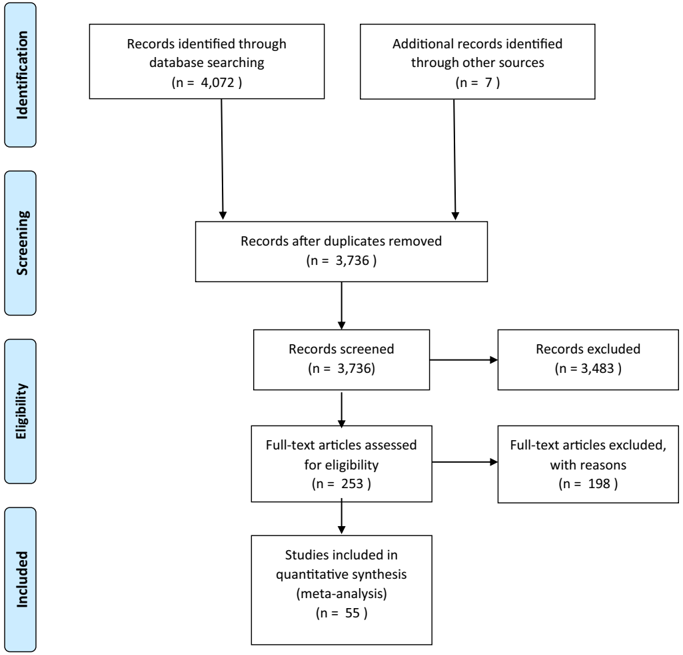
- Search on 8 June 2018 in PsycInfo, Google Scholar, and ERIC, plus ancestry searches, conference programs, and author/social-media outreach; final inclusion was 55 articles with 143 effect sizes (the abstract reports 54 studies, k = 141).
- Used a random-effects, multilevel meta-analysis in R with Hedges’ g as the effect size and robust variance estimation; moderator analyses were done with meta-regressions and subgroup analyses.
## Limitations
- The paper states a major limitation is that it cannot adequately distinguish giving feedback from receiving feedback because most studies confound the assessor and assessee roles; thus, it cannot say whether benefits come from giving, receiving, or both.
- The text also states that results are limited because the studies covered very different outcome measures and too few studies existed in most academic domains to test domain-specific moderator effects.
- Evident from the text: many study descriptors were missing or incomplete (e.g., sex recorded for only 55.5% of studies and mean age for only 18.5%), and many studies were quasi-experiments that were not analyzed with appropriate clustered-data techniques.
Model-written summary. Check it against the paper before relying on it.
Integrity signals
Registry
Cites
Statistics
Figures
Verification
Claims the paper makes
12 Valid · 1 Not valid · 39 Not checked · 81 Own results and interpretations
The cited sources that could be checked couldn’t confirm or dispute this claim.
In the paper
“The number of studies of peer assessment using control group designs also appears to be increasing in frequency (e.g., van Ginkel et al. 2017; Wang et al. 2017).”
§ The Author(s) 2019 Published online: 10 December 2019 > Empirical Studies
What the sources say
- Could not verifycites van Ginkel et al. 2017 matched to “The impact of the feedback source on developing oral presentation competence” (2017) sourceExperimental — accuracy not yet measured
The available Abstract metadata lists “quasi-experimental design” as a keyword, but does not describe a peer-assessment study or a control group. Searches for “control group” and peer-feedback comparisons returned no substantive passages, so our copy cannot verify that this paper is the example cited; it also cannot establish an increasing frequency of such studies. (LLM, conf=0.70)
- Not checked — no full text of the sourcecites Wang et al. 2017
hedgedstates an association- Asserted: passes — The authors put it forward as true.
- Checkable: passes — It can be checked against evidence.
- Load-bearing: passes — The paper’s conclusions depend on it.
- Based: passes — The paper gives a reason why it holds.
- Could not verify
The cited sources support only part of this claim — read each source’s verdict below.
In the paper
“Moreover, interventions involving peer assessment often confound the effect of peer assessment with other assessment practices that are theoretically related under the umbrella of formative assessment (Black and Wiliam 2009).”
§ The Author(s) 2019 Published online: 10 December 2019 > Empirical Studies
What the sources say
- Partly supportedcites Black and Wiliam 2009 matched to “Developing the theory of formative assessment” (2009) sourceExperimental — accuracy not yet measured
Section 7 (Conclusions; page unavailable) describes a conceptual framework for practices assembled under the umbrella of formative assessment, while Section 2 (A unifying basis; page unavailable) links peer activity to other formative strategies. The paper does not say that peer-assessment interventions often combine those practices in ways that confound estimates of peer assessment’s effect. (LLM, conf=0.82)
plainstates an association- Asserted: passes — The authors put it forward as true.
- Checkable: passes — It can be checked against evidence.
- Load-bearing: passes — The paper’s conclusions depend on it.
- Based: passes — The paper gives a reason why it holds.
- Partly supported
The cited sources support only part of this claim — read each source’s verdict below.
In the paper
“These studies have typically compared the formative effect of peer assessment with either teacher assessment (e.g., Chaney and Ingraham 2009; Sippel and Jackson 2015; van Ginkel et al. 2017) or no assessment conditions (e.g., Kamp et al. 2014; L. Li and Steckelberg 2004; Schonrock-Adema et al. 2007).”
§ The Author(s) 2019 Published online: 10 December 2019 > Empirical Studies
What the sources say
- Partly supportedcites Chaney and Ingraham 2009 matched to “Using Peer Grading And Proofreading To Ratchet Student Expectations In Preparing Accounting Cases” (2009) sourceExperimental — accuracy not yet measured
The Treatment Groups section describes a comparison between peer-evaluation groups and a control group, so the paper does study the formative effects of peer assessment. But the control cases were graded by a team of senior and master’s students, not by teachers; the paper therefore does not support its placement among studies comparing peer assessment with teacher assessment. (LLM, conf=0.85)
- Not checked — no full text of the sourcecites Sippel and Jackson 2015 matched to “Teacher vs. Peer Oral Corrective Feedback in the German Language Classroom” (2015) source
- Could not verifycites van Ginkel et al. 2017 matched to “The impact of the feedback source on developing oral presentation competence” (2017) sourceExperimental — accuracy not yet measured
The supplied passages and additional indexed matches contain bibliographic information and keywords, but no methods or results describing the comparison groups. Searches for peer-versus-teacher feedback and formative assessment did not locate a passage establishing that this study made that comparison. (LLM, conf=0.70)
plain- Asserted: passes — The authors put it forward as true.
- Checkable: passes — It can be checked against evidence.
- Load-bearing: unclear — It is unclear whether the paper’s conclusions depend on it.
- Based: passes — The paper gives a reason why it holds.
- Partly supported
The cited sources support only part of this claim — read each source’s verdict below.
In the paper
“It is somewhat surprising that most studies that examine the effect of peer assessment tend to only assess the impact on the assessee and not the assessor (van Popta et al. 2017).”
§ The Author(s) 2019 Published online: 10 December 2019 > Role
What the sources say
- Partly supportedcites van Popta et al. 2017 matched to “Exploring the value of peer feedback in online learning for the provider” (2017) sourceExperimental — accuracy not yet measured
The Introduction says that most studies of peer feedback in online learning focus on effects for the receiver rather than benefits for the provider. The citing sentence broadens this observation to studies of peer assessment generally, without the online-learning qualifier; the cited passage does not establish that broader claim. (LLM, conf=0.84)
plain- Asserted: passes — The authors put it forward as true.
- Checkable: passes — It can be checked against evidence.
- Load-bearing: passes — The paper’s conclusions depend on it.
- Based: passes — The paper gives a reason why it holds.
- Partly supported
Every source the paper cites for this claim was checked and supports it.
In the paper
“we opted to include it in the first instance because including only published studies can result in a metaanalysis over-estimating effect sizes due to publication bias (Hopewell et al. 2007).”
§ The Author(s) 2019 Published online: 10 December 2019 > Literature Search
What the sources say
- Supportedcites Hopewell et al. 2007 matched to “Grey literature in meta-analyses of randomized trials of health care interventions” (2007) source
The Discussion states that excluding grey trials from a systematic review or meta-analysis may artificially inflate its results. The Results also report that published trials showed, on average, a greater treatment effect than grey trials. This supports the claim that including only published studies can overestimate effects. (LLM, conf=0.94)
plainstates a cause- Asserted: passes — The authors put it forward as true.
- Checkable: passes — It can be checked against evidence.
- Load-bearing: passes — The paper’s conclusions depend on it.
- Based: passes — The paper gives a reason why it holds.
- Supported
77 more claims · 1 with their cited sources checked
Create a free account to see all 133 claims and to verify the 1 reference still open.
- Probably not a substantial claim. 32
- It may state two separate claims as one. 25
- The quote only partly states this claim. 3
Claims other papers make about this one
Each is checked against this paper’s own text: does it say what the citing paper says it does?
The cited source doesn’t support the claim as written.
In the citing paper
“Furthermore, the meta-analyses (Double et al., 2020;Huisman et al., 2019;Li et al., 2020) showed that different moderator variables can improve the effects of peer-feedback on processes and outcomes.”
From Enhancing the Peer-Feedback Process Through Instructional Support: A Meta-Analysis (2025) · cites this paper as Double et al., 2020
Checked by a reasoning model — may be wrong.
Experimental — accuracy not yet measuredThe cited source doesn’t support the claim as written.
In the citing paper
“Particularly important in the context of this article are the significant positive effects of rater training for the feedback provider, explicit rating criteria, and rubrics, which suggest that instructional support can play an important role in the peer-feedback process (Double et al., 2020;Li et al., 2020).”
From Enhancing the Peer-Feedback Process Through Instructional Support: A Meta-Analysis (2025) · cites this paper as Double et al., 2020
Checked by a reasoning model — may be wrong.
Experimental — accuracy not yet measured
12 more claims about this paper
Create a free account to see every claim other papers make about this one.
Citations
Cites
R: A Language and Environment for Statistical Computing
R Core Team (2025) · doi:10.32614/r.manuals · Cited by 352,181
The Measurement of Observer Agreement for Categorical Data
Landis, J. R., & Koch, G. G. (1977) · Biometrics · doi:10.2307/2529310 · Cited by 81,148
Cochrane Handbook for Systematic Reviews of Interventions: Cochrane Book Series
(2008) · doi:10.1002/9780470712184 · Cited by 25,048
Hattie, J., & Timperley, H. (2007) · Review of Educational Research · doi:10.3102/003465430298487 · Cited by 12,905
(2000) · Cited by 9,198
Measuring nominal scale agreement among many raters.
Fleiss, J. L. (1971) · Psychological Bulletin · doi:10.1037/h0031619 · Cited by 8,733
Assessment and Classroom Learning
Black, P., & Wiliam, D. (1998) · Assessment in Education: Principles, Policy & Practice · doi:10.1080/0969595980050102 · Cited by 8,152
Kluger, A. N., & DeNisi, A. (1996) · Psychological Bulletin · doi:10.1037/0033-2909.119.2.254 · Cited by 5,882
Distribution Theory for Glass's Estimator of Effect Size and Related Estimators
Hedges, L. V. (1981) · Journal of Educational Statistics · doi:10.2307/1164588 · Cited by 5,695
Developing the theory of formative assessment
Black, P., & Wiliam, D. (2009) · Educational Assessment, Evaluation and Accountability · doi:10.1007/s11092-008-9068-5 · Cited by 3,301
Research works printed but not linked: 9
- Bangert, A. W. (1995). Peer assessment: an instructional strategy for effectively implementing performancebased assessments. (Unpublished doctoral dissertation). University of South Dakota.
- Benson, N. L. (1979). The effects of peer feedback during the writing process on writing performance, revision behavior, and attitude toward writing. (Unpublished doctoral dissertation). University of Colorado, Boulder.
- Brown, G. T., Irving, S. E., Peterson, E. R., & Hirschfeld, G. H. (2009). Use of interactive -informal assessment practices: New Zealand secondary students' conceptions of assessment. Learning and Instruction, 19 (2), 97 -111. * Califano, L. Z. (1987). Teacher and peer editing: Their effects on students' writing as measured by t-unit length, holistic scoring, and the attitudes of fifth and sixth grade students (Unpublished doctoral dissertation), Northern Arizona University.
- Farrell, K. J. (1977). A comparison of three instructional approaches for teaching written composition to high school juniors: teacher lecture, peer evaluation, and group tutoring (Unpublished doctoral dissertation), Boston University, Boston.
- Flórez, M. T., & Sammons, P. (2013). Assessment for learning: Effects and impact: CfBT Education Trust . England: Reading.
- Higgins, J. P., & Green, S. (2011). Cochrane handbook for systematic reviews of interventions. The Cochrane Collaboration. Version 5.1.0, www.handbook.cochrane.org - Hoaglin, D. C., & Iglewicz, B. (1987). Fine-tuning some resistant rules for outlier labeling. Journal of the American Statistical Association, 82 (400), 1147 -1149. <!-- image -->
- Liu, C.-C., Lu, K.-H., Wu, L. Y ., & Tsai, C.-C. (2016). The impact of peer review on creative self-efficacy and learning performance in Web 2.0 learning activities. Journal of Educational Technology & Society, 19 (2):286-297
- *Pierson, H. (1967). Peer and teacher correction: A comparison of the effects of two methods of teaching composition in grade nine English classes. (Unpublished doctoral dissertation), New York University.
- Wang, J. H., Hsu, S. H., Chen, S. Y ., Ko, H. W., Ku, Y . M., & Chan, T. W. (2014b). Effects of a mixed-mode peer response on student response behavior and writing performance. Journal of Educational Computing Research , 51 (2), 233-256. · DOI
Cited by
Items 301–400 of 421
Assessment of Teacher Competencies BYs Stakeholders of Education: A Literature Review
Pandey, S., & Kukreti, P. B. R. (2022) · International Journal of Advanced Research in Science Communication and Technology · doi:10.48175/ijarsct-2644
Peer Review: Cultivating Self-Efficacy for Emerging Writers and Their Teachers
Chamberlain, K. A. (2022) · Advances in educational technologies and instructional design book series · doi:10.4018/978-1-6684-3745-2.ch006 · Cited by 1
Managing Assessments for Supporting Progressed Learners in Vhembe District, Limpopo, South Africa
Muedi, F. P., Kutame, A. P., Ngidi, T., & Uleanya, C. (2022) · UMT Education Review · doi:10.32350/uer.51.02 · Cited by 2
Real-Time Preceptor Interviews to Improve Faculty Feedback to Students
Reppert, A. E., Miravelle, A., Adams, J. E., et al. (2022) · Academic Medicine · doi:10.1097/acm.0000000000004891
SOME ASPECTS OF THE INTEGRATION OF PEER-ASSESSMENT IN EFL WRITING CLASSROOM (CASE OF GEORGIA)
Diakonidze, I. (2022) · International Journal of Innovative Technologies in Social Science · doi:10.31435/rsglobal_ijitss/30122022/7877
Attitudes of English Students Whose Skills are Peer-Assessed
Daukšaitė-Kolpakovienė, A. (2022) · Human, Technologies and Quality of Education · doi:10.22364/htqe.2022.26
Matching Authors and Reviewers in Peer Assessment Based on Authors’ Profiles
Alkhalifa, A. K., Devlin, M., & Alkhattabi, M. (2022) · Journal of Information Technology Education Innovations in Practice · doi:10.28945/5038 · Cited by 2
“Peer assessment is assumed to lead to more meaningful, in - depth learning because it engages students in the learning process and generates deep learning (Lynch et al., 2012), critical thinking (H. Li et al., 2016) , and increased academic performance (Double et al., 2020).”
BackgroundUSING TEACHER-STUDENT COLLABORATIVE ASSESSMENT TO DEVELOP CHINESE EFL LEARNERS’ WRITING
Xiaomeng, Z., & Ravindran, L. (2023) · Journal of Language and Communication · doi:10.47836/jlc.10.01.05 · Cited by 2
Alternatif Pilihan Teknik Penilaian di Masa Pandemi
Wicaksana, M. F., & Muryati, S. (2022) · Jurnal Nusantara Raya · doi:10.24090/jnr.v1i1.6596 · Cited by 2
Rezaei, E., & shirazi, S. S. B. (2023) · Research Square · doi:10.21203/rs.3.rs-3162781/v1
Liem, N. T. (2023) · EPH - International Journal of Educational Research · doi:10.53555/ephijer.v7i3.98
Roles and Responsibilities of a Virtual Teacher
Ahluwalia, D., Hothi, N., & Dutt, I. (2023) · Contributions to environmental sciences & innovative business technology · doi:10.1007/978-981-99-3497-3_1 · Cited by 1
Naufal, M. R. U. (2023) · Journal of SPORT (Sport Physical Education Organization Recreation and Training) · doi:10.37058/sport.v7i3.8674
Study on Effectiveness of Online Peer Review in C-E Translation
Pan, L. (2023) · Education Language and Sociology Research · doi:10.22158/elsr.v5n1p13
The Dual Role of a Reflective Future Teacher during School Practise
Krzeczkowska, M., & Augustinovič, A. (2024) · Acta Educationis Generalis · doi:10.2478/atd-2024-0001
PANULAYA, A. S. H. (2024) · International Journal of Research Publications · doi:10.47119/ijrp1001441320246183
How to promote students to share more knowledge with peers?
Zong, Z. (2024) · SHS Web of Conferences · doi:10.1051/shsconf/202418703015
“[13] Therefore, the main purpose of this study is to identify influencing factors that affect students sharing knowledge based on peer assessment.”
BackgroundWhen Do Haters Act? Peer Evaluation, Negative Relationships, and Brokerage
Greenberg, J., Liu, C., & ten Brinke, L. (2024) · Sociological Science · doi:10.15195/v11.a16 · Cited by 1
Enhancing Learning through Post-Exam Review: A Case Study on Collaborative Coding Assessments
Ghosh, A., & Skipper, J. K. (2024) · IEEE SoutheastCon · doi:10.1109/southeastcon52093.2024.10500153
“Properly implemented peer assessment activities have been linked to substantial improvements in academic performance across many fields [4].”
Backgroundمبارک, ر. ب. ع. ا. آ. (2024) · Maǧallaẗ Kulliyyaẗ Al-Tarbiyyaẗ Bil-Manṣūraẗ · doi:10.21608/maed.2024.349657
Anna, R.-A., Mondéjar-Pont, M., Vaqué-Crusellas, C., Goutan‐Roura, E., Montserrat, S. M., Castro-Prat, R., María, N.-M. E., & Desirée, V.-G. (2024) · Research Square · doi:10.21203/rs.3.rs-4327307/v1
Effectiveness of Inclusive, Reflective Teaching Practices on Problem Solving Proficiency
Ankeny, C. J., O'Neill, D., Gentry, K., & Eshun, P. (2024) · ASEE Annual Conference & Exposition · doi:10.18260/1-2--47221
Kamil, G. K. (2024) · BATARA DIDI English Language Journal · doi:10.56209/badi.v3i2.111 · Cited by 2
Unfolding the Network of Peer Grades: A Latent Variable Approach
Mignemi, G., Chen, Y., & Moustaki, I. (2025) · Psychometrika · doi:10.1017/psy.2025.10021 · Cited by 3
“Consequently, it is widely used in many educational settings, including massive open online courses (MOOCs; Gamage et al., 2021), large university courses (Double et al., Figure 1: Network diagram representing the network structure of peer grading data.”
Mawak, J. J., & Odulum, F. C. (2024) · Greener Journal of Educational Research · doi:10.15580/gjer.2024.1.021324020
Guo, C., Chen, Y., Tian, S., & Lili, C. (2024) · Greener Journal of Educational Research · doi:10.15580/gjer.2024.1.071824096
Roque, I. M. S., Aza-Blanc, G., Arriaza, M. H., & Fernández, E. (2024) · European Journal of Psychology of Education · doi:10.1007/s10212-024-00935-1 · Cited by 2
Rendons l’évaluation plus inclusive
Monney, N., & Rajotte, T. (2024) · Apprendre et enseigner aujourd’hui Revue du Conseil pédagogique interdisciplinaire du Québec · doi:10.7202/1114680ar
Using Rubrics to Enhance Accuracy of Peer Assessment and Self-Judgment in Biology Learning
Fadillah, S. M., & Ha, M. (2024) · Asia-Pacific Science Education · doi:10.1163/23641177-bja10080 · Cited by 9
Reddiger, M., & Scherfner, M. (2024) · Teaching Mathematics and its Applications An International Journal of the IMA · doi:10.1093/teamat/hrae026
Geringer, J. L., Lindholm, D. A., Neubauer, B. E., & Ratcliffe, T. A. (2024) · Journal of Medical Education and Curricular Development · doi:10.1177/23821205241300945 · Cited by 1
“19 20 – 23 When combined with other sources like supervisor feedback, it can begin to move the needle towards a 360-degree feedback approach, providing triangulation from different perspectives.”
Statistical Analysis of Peer Grading: A Latent Variable Approach
Mignemi, G., Chen, Y., & Moustaki, I. (2025) · Springer eBooks · doi:10.1007/978-3-031-64447-4_45
La Retroalimentación por Pares a través del Diálogo Vista por el Alumnado
García, C. C., Campos, M. D. G., & García, L. M. (2024) · Revista Iberoamericana de Evaluación Educativa · doi:10.15366/riee2024.17.2.003
A Web-Based Peer Assessment System for Language Learning and Processing
Gao, Y. (2024) · Asia-Pacific Artificial Intelligence and Big Data Forum (AIBDF) · doi:10.1145/3718491.3718507 · Cited by 1
A avaliação das e para as aprendizagens: Percepções sobre conceitos e práticas
Ferreira, C. A., & Pereira, E. (2025) · Estudos em Avaliação Educacional · doi:10.18222/eae.v36.11209
Self-Efficacy and Peer Support on Alternative Learning System Learners' Performance in Mathematics
Galamiton, E. (2025) · Psychology and Education A Multidisciplinary Journal · doi:10.70838/pemj.350806
Enhancing Peer Feedback Practices with Generative AI
Greisel, M., Hornstein, J., Kollar, I., Noroozi, O., Haddadian, G., Gao, X., Alqassab, M., Banihashem, K., Khosravi, H., Pozdniakov, S., et al. (2025) · Computer-supported collaborative learning/The Computer-Supported Collaborative Learning Conference · doi:10.22318/cscl2025.921873 · Cited by 2
AI-Facilitated Formative Assessment: Reimagining Feedback in the English Language Classroom
Kishore, S. (2025) · Advances in computational intelligence and robotics book series · doi:10.4018/979-8-3373-1952-0.ch004 · Cited by 1
Chang, C., Yen, W.-H., & Wu, J.-Y. (2025) · Lecture notes in computer science · doi:10.1007/978-3-031-98185-2_23
Aleksić-Hajduković, I., & Mužar, A. P. (2025) · doi:10.18485/lsp.2025.6.ch45
Charoensuk, V., & Wanchid, R. (2025) · rEFLections · doi:10.61508/refl.v32i2.282179 · Cited by 1
Relevance of Artificial Intelligence in Assessment: A Balanced Approach
Dubey, P., Crevar, A. R., & Rischard, M. W. (2025) · Advances in computational intelligence and robotics book series · doi:10.4018/979-8-3373-2397-8.ch016 · Cited by 1
Postgraduate student’s perception of using peer review as a pedagogical tool
SHIUNA, A. (2025) · The Maldives National Journal of Research · doi:10.62338/tkhqky40
Gerges, E., & Rice, B. (2025) · Assessment & Evaluation in Higher Education · doi:10.1080/02602938.2025.2536565 · Cited by 2
“A general consensus, though, is that PA and SA, if implemented formatively, have the potential to improve student learning and have a positive impact on their academic performance (Double, McGrane, and Hopfenbeck 2020; Panadero, Jonsson, and Botella 2017; Sanchez et al. 2017; Yan and Brown 2017).”
Assess or Discuss: Comparing Peer Assessment and Online Discussion for Enhancing Learning at Scale
Ou, C., & Joyner, D. A. (2025) · ACM Conference on Learning @ Scale (L@S) · doi:10.1145/3698205.3733927 · Cited by 1
Biton, Y. (2025) · Eurasia Journal of Mathematics Science and Technology Education · doi:10.29333/ejmste/16774 · Cited by 1
Peer Assessment Analysis via the Many-Facet Rasch Model
Ayçiçek, B. (2025) · Mersin Üniversitesi Eğitim Fakültesi Dergisi · doi:10.17860/mersinefd.1642676 · Cited by 2
Liu, H., Zong, Z., & Feng, Y. (2025) · Acta Psychologica · doi:10.1016/j.actpsy.2025.105494 · Cited by 6
Learning with Peers in Higher Education: Exploring Strengths and Weaknesses of Formative Assessment
Parmigiani, D., Nicchia, E., Pario, M., Murgia, E., Radović, S., & Ingersoll, M. (2025) · Trends in Higher Education · doi:10.3390/higheredu4030048 · Cited by 4
“…et al. [40] listed a series of advantages of peer-assessment: it can provide benefits for both assessor and assessee, as stated by Double et al. [41], Huisman et al. [42], and Nicol et al. [43]; it develops students’ higher-order cognitive, problem-solving and metacognitive thinking skills, as…”
Hua, M. (2025) · International Conference on Education, Knowledge and Information Management (ICEKIM) · doi:10.1145/3756580.3756624
Enhancing the Learning of Key Concepts in Applied Thermodynamics Through Group Concept Maps
Linares, M., & Orcajo, G. (2025) · Thermo · doi:10.3390/thermo5040037
Parmentier, J., Sigayret, K., & Silvestre, F. (2025) · Frontiers in Psychology · doi:10.3389/fpsyg.2025.1659735
Käpylä, J., & Palvalin, M. (2025) · Assessment & Evaluation in Higher Education · doi:10.1080/02602938.2025.2566659 · Cited by 4
“Recent meta-analyses by Double, McGrane, and Hopfenbeck (2020) and Li et al. (2020) demonstrate that peer assessment is associated with improved academic performance.”
Chen, H., Zhang, Y., Wang, J., Yang, J., & Pi, Z. (2025) · SSRN Electronic Journal · doi:10.2139/ssrn.5573626
Kollar, I., & Fischer, F. (2025) · Springer eBooks · doi:10.1007/978-3-662-69557-9_20
Farmasari, S., Wardana, L. A., Munandar, L. O. A. H., & Suryaningsih, H. (2025) · Journal Evaluation in Education (JEE) · doi:10.37251/jee.v6i4.2113 · Cited by 2
“Predictive validity is particularly crucial because when peer evaluations strongly align with teacher ratings, peer assessment may serve not only as a formative learning tool but also as credible evidence of teaching competence [10][11].”
Peer Assessment im Team-Based Learning
Delic, S., & Schlegel, C. (2025) · Springer eBooks · doi:10.1007/978-3-662-71879-7_8
Assessment for Distance Education
Simonson, M., & Zvacek, S. (2024) · Emerald Group Publishing Limited eBooks · doi:10.1108/979-8-88730-513-420251012
Li, X., & Lin, D. T. A. (2025) · Cogent Education · doi:10.1080/2331186x.2025.2593031 · Cited by 2
“In addition, peer feedback might bring about more superficial comments and face-threatening situations when learners receive negative comments (Double et al., 2020).”
Equity and Inclusion of Learners With Special Needs in a Diverse Mathematics Class in Nigeria
Abaver, M. S. (2025) · IGI Global eBooks · doi:10.4018/979-8-3373-2888-1.ch008
Mithani, S., Nazrin, S. N., Ahmad, N., Sahoo, M., Sham, R. B., Yahaya, S., Alhajri, N., Akrami, F., Bakather, A. A., & Raihan, A. (2025) · Discover Sustainability · doi:10.1007/s43621-025-02380-6 · Cited by 1
Grading the group effort: evaluating moderation models for facilitating meaningful collaboration
Sridharan, B., McKay, J., Boud, D. J., & Mustard, J. (2025) · Assessment & Evaluation in Higher Education · doi:10.1080/02602938.2025.2584130
“Mode of study has also been found to influence PA outcomes (Double, McGrane, and Hopfenbeck 2020).”
Benson, O. O., Tsakeni, M., & Nwafor, S. C. (2025) · Journal of Baltic Science Education · doi:10.33225/jbse/25.24.1049 · Cited by 1
Data-Driven Education Evaluation Using Multiple Linear Regression for Enhanced Fairness and Accuracy
Yang, W., Qin, B., & Gao, X. (2026) · Journal of Circuits Systems and Computers · doi:10.1142/s0218126626501008
van Staden, D. B., Dlamini, L., Mathe, N., Moodley, J., Nguse, S., Shozi, M., Zikhali, S., & Gopaul, S. (2026) · African vision and eye health · doi:10.4102/aveh.v85i1.1089
Thukuse, B., & Nodangala, N. Z. (2025) · E-Journal of Humanities Arts and Social Sciences · doi:10.38159/ehass.202561436
Effects of peer feedback and self-assessment on writing
Lorca, A. L., Peltzer, K., Busse, V., & Krause, U.-M. (2026) · Learning and Instruction · doi:10.1016/j.learninstruc.2025.102253 · Cited by 6
Structured AI Integration for Equitable STEM Writing: A Pilot Study of the DISCO Framework
Brian, B., Denise, K., & Lagna, G. (2026) · The journal of college science teaching · doi:10.1080/0047231x.2026.2625111
The Implementation and Challenges of a Project-Based STEM Programme in Rural Minority China
Yi, X., Chua, K. H., & Fadzil, H. M. (2026) · Canadian Journal of Science Mathematics and Technology Education · doi:10.1007/s42330-026-00454-9
Abo, A. L., Wubshet, H., & Abeba, B. D. (2026) · Acta Psychologica · doi:10.1016/j.actpsy.2026.106612
Iwata, Y., Kimura, L., Yoshikubo, H., et al. (2026) · Journal of JSEE · doi:10.4307/jsee.74.2_30
Abbas, U., Fatima, M., Kamran, D. S., et al. (2026) · BMC Medical Education · doi:10.1186/s12909-026-09042-9
Tella, A., & Dlamini, P. N. (2026) · Emerald Group Publishing Limited eBooks · doi:10.1108/978-1-80592-965-920261010
Qin, W., Xu, F., Gu, C., Xiaomeng, Y. A. N. G., Yu, Y., Peng, J., Li, J., & Hu, B. Y. (2026) · Thinking Skills and Creativity · doi:10.1016/j.tsc.2026.102215 · Cited by 1
Irwin, B., & Muller, T. (2026) · Education Sciences · doi:10.3390/educsci16040544 · Cited by 2
Watari, H. (2026) · Springer eBooks · doi:10.1007/978-981-95-6163-6_13
GPT-4 feedback increases student activation and learning outcomes in higher education
Geschwind, S., Lambsdorff, J. G., Voss, D., & Hackl, V. (2026) · International Journal of Artificial Intelligence in Education · doi:10.1016/j.ijaied.2026.100014 · Cited by 4
Validity evidence for the internal structure of the peer feedback orientation scale
Kalz, M., Schulze, A., Meeh, H., & Weidlich, J. (2026) · Technology Knowledge and Learning · doi:10.1007/s10758-026-09972-9
Chen, M.-S., & Hsu, T.-C. (2026) · Interactive Learning Environments · doi:10.1080/10494820.2026.2653064
“Nevertheless, peer assessment is particularly valuable for developing reflective, metacognitive, and self-regulatory abilities, which may not immediately manifest in performance scores but contribute to sustainable learning benefits over time (Double et al., 2020).”
The power of praise: the central role of affective peer feedback in interest-based learning
Zhang, Y., Schunn, C. D., & Chen, P. (2026) · Assessment & Evaluation in Higher Education · doi:10.1080/02602938.2026.2653879 · Cited by 1
A SYSTEMATIC REVIEW OF FORMATIVE ASSESSMENT IN ENGLISH AS A FOREIGN LANGUAGE WRITING
Diao, J., Shak, P., & Loo, D. B. (2026) · International Journal of Education Psychology and Counseling · doi:10.35631/ijepc.1162034
Why do students hide knowledge in peer assessment? The role of knowledge interaction inequalities
Li, Y., Wang, Y., Zhao, L., Niu, N., & Jiang, Y. (2026) · Studies In Educational Evaluation · doi:10.1016/j.stueduc.2026.101611
Karyanto, Y., Asmaul, R., Evawati, D., & Sholikha, K. R. (2026) · Jurnal Penelitian Pendidikan IPA · doi:10.29303/jppipa.v12i4.14639
Social and academic experience analysis of student engagement using structural equation modeling
Wongso, R., Hardjodipuro, R. D. R., Hariman, S., Sudana, P. I., & Permai, S. D. (2026) · AIP conference proceedings · doi:10.1063/5.0336772
Evaluating Peer Contributions by Rubrics, Feedback Loops, and Fair Assessment in Online Courses
Bùi, T. V. T. (2026) · IGI Global eBooks · doi:10.4018/979-8-3373-1732-8.ch007
Small Routines, Big Shifts: Embedding Classroom-Based Formative Assessment through a Blended MOOCPreprint
Rodrigues, C. J. L., Castro, C., & Silva, E. M. (2026) · SSRN Electronic Journal · doi:10.2139/ssrn.6818700
Bazarbekova, R., Yerkebaeva, S. Z., Turalbayeva, A., Yerkebayeva, A., & Amangeldikyzy, A. (2026) · Education Sciences · doi:10.3390/educsci16050813 · Cited by 1
Ershova, T., & Gray, R. (2026) · Assessment & Evaluation in Higher Education · doi:10.1080/02602938.2026.2676652
Tong, Y., Schunn, C. D., Zhang, Y., & Zhang, X. (2026) · International Journal of Computer-Supported Collaborative Learning · doi:10.1007/s11412-026-09487-6
Zamorano, D. P., Alqassab, M., & Panadero, E. (2026) · European Journal of Psychology of Education · doi:10.1007/s10212-026-01148-4
“These outcomes have received the most attention in the experimental research and are the focus of several meta-analyses, which consistently show moderate positive effects of peer assessment on academic performance (Double et al., 2020; Li et al., 2020; Yan et al., 2022).”
InfluentialAn AI-Enhanced Peer Assessment Approach for Project-Based Learning in Engineering Education
Douss, R., Bouhdid, B., Khémiri, A., & Marouki, A. (2026) · IEEE Global Engineering Education Conference (EDUCON) · doi:10.1109/educon67543.2026.11574175
“Despite numerous implementations across disciplines, traditional peer assessment systems still suffer from bias, including leniency and friendship effects, as well as scalability limitations in large classes [6].”
InfluentialLongitudinal Shifts in Student Peer Feedback Before and During the GenAI Era
Stabauer, M., & Katzlinger, E. (2026) · International Conference on Information Technology Based Higher Education and Training (ITHET) · doi:10.1109/ithet69978.2026.11585001
“A meta-analysis of experimental and quasi-experimental studies reports a small-to-moderate overall effect on academic performance, highlighting that peer assessment can contribute meaningfully to learning when implemented well [2].”
Lin, X. Y., Hu, R., & Xu, L. (2026) · Interactive Learning Environments · doi:10.1080/10494820.2026.2689534 · Cited by 2
Kandasamy, S., Kothandan, T., Gopalakrishnan, S., Muthureddy, Y., James, V. A., & Kumar, P. G. (2026) · Research and Development in Medical Education · doi:10.34172/rdme.33367
“8,9 However, some hesitate to participate due to concerns about fairness or relationships.”
Chan, Y. Y., & Ho, K. M. K. (2026) · Education Sciences · doi:10.3390/educsci16071163
“Peer assessment may also provide a scalable means of expanding feedback opportunities while engaging students in evaluating the quality of alternative designs (Double et al., 2020).”
What have researchers examined? Capturing the conceptual diversity of peer feedback quality measures
Zhang, Y., & Schunn, C. D. (2026) · Studies In Educational Evaluation · doi:10.1016/j.stueduc.2026.101642
Involving Students in Decision Making
Hadi, B. A. A. (2026) · Springer eBooks · doi:10.1007/978-3-032-27958-3_24
Liang, C., Chen, Y., Yan, Y., & Ogata, H. (2026) · Computers and Education Open · doi:10.1016/j.caeo.2026.100402
Machisi, E., Selepe, S. E., & Manamela, M. G. (2026) · Eurasia Journal of Mathematics Science and Technology Education · doi:10.29333/ejmste/19050
“It also aligns with evidence that well-structured peer assessment can improve learners ’ academic performance while promoting deeper engagement with learning (Double et al., 2020).”
Sapitri, E., & Juliana, R. (2026) · Women Education and Social Welfare · doi:10.70211/wesw.v3i3.659
Metadata
- Authors
- Double, K. S., McGrane, J. A., & Hopfenbeck, T. N.
- Affiliations
- University of Oxford (GB)
- Corresponding author
- Double, Kit S.
- Venue
- Educational Psychology Review
- Published
- 2019-12-10
- Volume
- 32
- Issue
- 2
- Pages
- 481-509
- ISSN
- 1040-726X (ISSN-L)
- 1573-336X
- OpenAlex
- W2996399622
- Cited by
- 446
- References
- 125
- Citations by year
- 2026: 83 · 2025: 76 · 2024: 92 · 2023: 74 · 2022: 62 · 2021: 50 · 2020: 9
- FWCI
- 8.63
- Type
- journal article
- Language
- en
- Open access
- hybrid
- doi.org
- Licence
- cc-by
- creativecommons.org/licenses/by/4.0 (tdm)
- creativecommons.org/licenses/by/4.0 (vor)
- Locations
- Educational Psychology Review (publishedVersion, cc-by)
- Funders
- University of Oxford
- Topics
- Social Sciences › Education › Student Assessment and Feedback
- Social Sciences › Psychology › Developmental and Educational Psychology › Innovative Teaching and Learning Methods
- Social Sciences › Education › Evaluation of Teaching Practices
- Keywords
- peer assessment, academic performance, teacher assessment, self-assessment, feedback, formative assessment, assessment frequency, educational attainment, classroom implementation
About these checks
Registry, retraction, Cites and statistics results are computed, not judged, with one exception: a printed reference that no index lists is read once by a model before it counts as a citation error. Claims are extracted by a model and kept only when their quote appears verbatim in the text; each cited source is then checked, with a model’s help, for whether it says what the claim relies on. Those verdicts can be wrong — read the claim’s quote and the cited source before relying on one.
The claim verdicts this report counts are experimental: their accuracy is not yet measured.
A language model drew the claims from the paper on 2026-09-30, under version 3 of the claim definition (model deepseek-v4.1-flash, prompt extract-v3).
A second model labelled each claim on 2026-09-30 (model jev-1.13-20260917, definition revision gold-guideline-v0.2).
Cited sources are checked with a language model’s help (gpt-6-sol).
Statistics and arithmetic are recomputed, not judged.
Confidence bands are shown only for fields calibrated on our annotated test set. None is calibrated yet, so no band is shown.
What counts as a claim ›How we measure confidence ›How we check this ›
Are you an author, or do you see a problem with this page? Request a review
Data sources
Bibliographic data: Semantic Scholar, OpenAlex, Crossref.
Contains information from the Semantic Scholar Academic Graph Datasets, made available under the ODC Attribution License (ODC-BY 1.0).
Semantic Scholar’s data is described in: Kinney, R., et al. (2023). The Semantic Scholar Open Data Platform. arXiv:2301.10140.
