

The Impact of Peer Assessment on Academic Performance: A Meta-analysis of Control Group Studies
Open accessThe DOI matches its Crossref record; 120 of the 125 references it cites were found in a registry or an index; 15 of the 72 sources its claims cite were checked for support.
Abstract
Abstract Peer assessment has been the subject of considerable research interest over the last three decades, with numerous educational researchers advocating for the integration of peer assessment into schools and instructional practice. Research synthesis in this area has, however, largely relied on narrative reviews to evaluate the efficacy of peer assessment. Here, we present a meta-analysis (54 studies, k = 141) of experimental and quasi-experimental studies that evaluated the effect of peer assessment on academic performance in primary, secondary, or tertiary students across subjects and domains. An overall small to medium effect of peer assessment on academic performance was found ( g = 0.31, p < .001). The results suggest that peer assessment improves academic performance compared with no assessment ( g = 0.31, p = .004) and teacher assessment ( g = 0.28, p = .007), but was not significantly different in its effect from self-assessment ( g = 0.23, p = .209). Additionally, meta-regressions examined the moderating effects of several feedback and educational characteristics (e.g., online vs offline, frequency, education level). Results suggested that the effectiveness of peer assessment was remarkably robust across a wide range of contexts. These findings provide support for peer assessment as a formative practice and suggest several implications for the implementation of peer assessment into the classroom.
Overview
CoChat Summary
## TL;DR
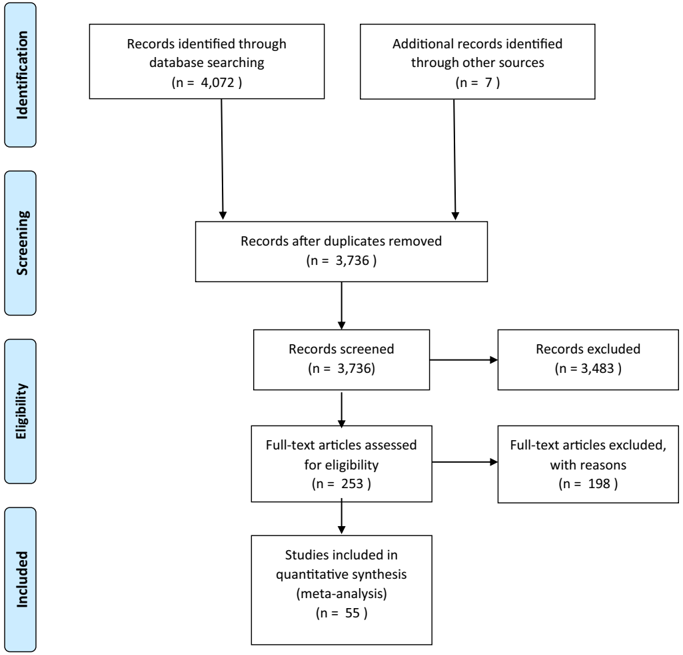
This meta-analysis of 54 studies (k = 141; ultimately 55 articles and 143 effect sizes were identified in the search) found that peer assessment has a small-to-medium positive effect on academic performance overall. The effect was stronger than no assessment and teacher assessment, but not significantly different from self-assessment.
## Key findings
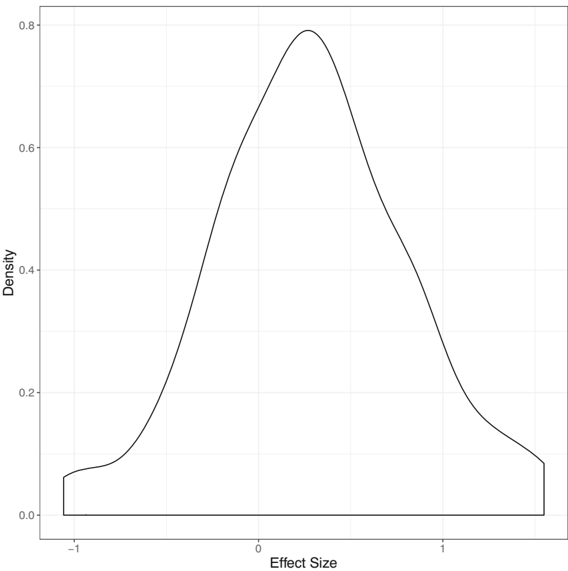
- Overall, peer assessment had a significant positive effect on academic performance: Hedges’ g = 0.31, SE = .06, 95% CI .18 to .44, p < .001.
- Compared with controls, peer assessment improved performance versus no assessment (g = 0.31, p = .004) and teacher assessment (g = 0.28, p = .007), but was not significantly different from self-assessment (g = 0.23, p = .209).
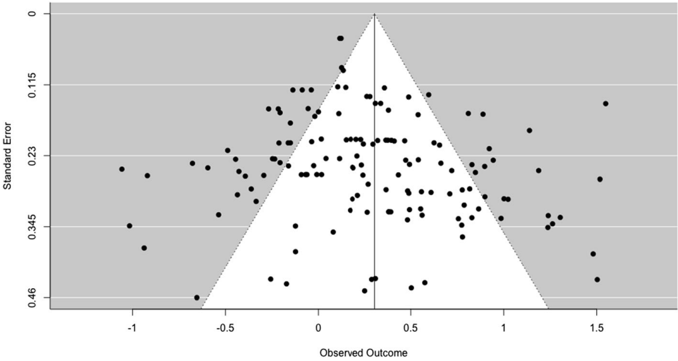
- Heterogeneity was large: I² = 81.08%.
- Moderator analyses found no significant differences by education level, comparison group (after meta-regression), assessment role, subject area (writing vs other subjects), written feedback, dialog, online vs offline, anonymity, frequency, transfer, or allocation; the paper describes the overall effects as “remarkably robust” across contexts.
- One notable interaction was that grading mattered by education level: grading was beneficial for tertiary students (g = .55, p = .009) but not for secondary (g = .002, p = .991) or primary (g = -.08, p = .762) students.
## Methods
- Meta-analysis of experimental and quasi-experimental control-group studies on peer assessment in primary, secondary, and tertiary students across subjects and domains; only studies with non-self-reported academic performance outcomes were included.
- Search on 8 June 2018 in PsycInfo, Google Scholar, and ERIC, plus ancestry searches, conference programs, and author/social-media outreach; final inclusion was 55 articles with 143 effect sizes (the abstract reports 54 studies, k = 141).
- Used a random-effects, multilevel meta-analysis in R with Hedges’ g as the effect size and robust variance estimation; moderator analyses were done with meta-regressions and subgroup analyses.
## Limitations
- The paper states a major limitation is that it cannot adequately distinguish giving feedback from receiving feedback because most studies confound the assessor and assessee roles; thus, it cannot say whether benefits come from giving, receiving, or both.
- The text also states that results are limited because the studies covered very different outcome measures and too few studies existed in most academic domains to test domain-specific moderator effects.
- Evident from the text: many study descriptors were missing or incomplete (e.g., sex recorded for only 55.5% of studies and mean age for only 18.5%), and many studies were quasi-experiments that were not analyzed with appropriate clustered-data techniques.
Model-written summary. Check it against the paper before relying on it.
Integrity signals
Registry
Cites
Statistics
Figures
Verification
Claims the paper makes
12 Valid · 1 Not valid · 39 Not checked · 81 Own results and interpretations
The cited sources that could be checked couldn’t confirm or dispute this claim.
In the paper
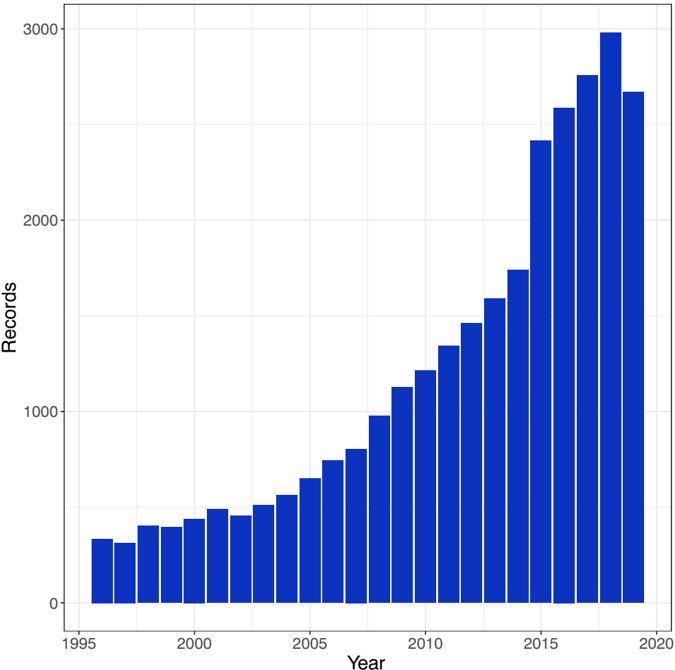
“The number of studies of peer assessment using control group designs also appears to be increasing in frequency (e.g., van Ginkel et al. 2017; Wang et al. 2017).”
§ The Author(s) 2019 Published online: 10 December 2019 > Empirical Studies
What the sources say
- Could not verifycites van Ginkel et al. 2017 matched to “The impact of the feedback source on developing oral presentation competence” (2017) sourceExperimental — accuracy not yet measured
The available Abstract metadata lists “quasi-experimental design” as a keyword, but does not describe a peer-assessment study or a control group. Searches for “control group” and peer-feedback comparisons returned no substantive passages, so our copy cannot verify that this paper is the example cited; it also cannot establish an increasing frequency of such studies. (LLM, conf=0.70)
- Not checked — no full text of the sourcecites Wang et al. 2017
hedgedstates an association- Asserted: passes — The authors put it forward as true.
- Checkable: passes — It can be checked against evidence.
- Load-bearing: passes — The paper’s conclusions depend on it.
- Based: passes — The paper gives a reason why it holds.
- Could not verify
The cited sources support only part of this claim — read each source’s verdict below.
In the paper
“Moreover, interventions involving peer assessment often confound the effect of peer assessment with other assessment practices that are theoretically related under the umbrella of formative assessment (Black and Wiliam 2009).”
§ The Author(s) 2019 Published online: 10 December 2019 > Empirical Studies
What the sources say
- Partly supportedcites Black and Wiliam 2009 matched to “Developing the theory of formative assessment” (2009) sourceExperimental — accuracy not yet measured
Section 7 (Conclusions; page unavailable) describes a conceptual framework for practices assembled under the umbrella of formative assessment, while Section 2 (A unifying basis; page unavailable) links peer activity to other formative strategies. The paper does not say that peer-assessment interventions often combine those practices in ways that confound estimates of peer assessment’s effect. (LLM, conf=0.82)
plainstates an association- Asserted: passes — The authors put it forward as true.
- Checkable: passes — It can be checked against evidence.
- Load-bearing: passes — The paper’s conclusions depend on it.
- Based: passes — The paper gives a reason why it holds.
- Partly supported
The cited sources support only part of this claim — read each source’s verdict below.
In the paper
“These studies have typically compared the formative effect of peer assessment with either teacher assessment (e.g., Chaney and Ingraham 2009; Sippel and Jackson 2015; van Ginkel et al. 2017) or no assessment conditions (e.g., Kamp et al. 2014; L. Li and Steckelberg 2004; Schonrock-Adema et al. 2007).”
§ The Author(s) 2019 Published online: 10 December 2019 > Empirical Studies
What the sources say
- Partly supportedcites Chaney and Ingraham 2009 matched to “Using Peer Grading And Proofreading To Ratchet Student Expectations In Preparing Accounting Cases” (2009) sourceExperimental — accuracy not yet measured
The Treatment Groups section describes a comparison between peer-evaluation groups and a control group, so the paper does study the formative effects of peer assessment. But the control cases were graded by a team of senior and master’s students, not by teachers; the paper therefore does not support its placement among studies comparing peer assessment with teacher assessment. (LLM, conf=0.85)
- Not checked — no full text of the sourcecites Sippel and Jackson 2015 matched to “Teacher vs. Peer Oral Corrective Feedback in the German Language Classroom” (2015) source
- Could not verifycites van Ginkel et al. 2017 matched to “The impact of the feedback source on developing oral presentation competence” (2017) sourceExperimental — accuracy not yet measured
The supplied passages and additional indexed matches contain bibliographic information and keywords, but no methods or results describing the comparison groups. Searches for peer-versus-teacher feedback and formative assessment did not locate a passage establishing that this study made that comparison. (LLM, conf=0.70)
plain- Asserted: passes — The authors put it forward as true.
- Checkable: passes — It can be checked against evidence.
- Load-bearing: unclear — It is unclear whether the paper’s conclusions depend on it.
- Based: passes — The paper gives a reason why it holds.
- Partly supported
The cited sources support only part of this claim — read each source’s verdict below.
In the paper
“It is somewhat surprising that most studies that examine the effect of peer assessment tend to only assess the impact on the assessee and not the assessor (van Popta et al. 2017).”
§ The Author(s) 2019 Published online: 10 December 2019 > Role
What the sources say
- Partly supportedcites van Popta et al. 2017 matched to “Exploring the value of peer feedback in online learning for the provider” (2017) sourceExperimental — accuracy not yet measured
The Introduction says that most studies of peer feedback in online learning focus on effects for the receiver rather than benefits for the provider. The citing sentence broadens this observation to studies of peer assessment generally, without the online-learning qualifier; the cited passage does not establish that broader claim. (LLM, conf=0.84)
plain- Asserted: passes — The authors put it forward as true.
- Checkable: passes — It can be checked against evidence.
- Load-bearing: passes — The paper’s conclusions depend on it.
- Based: passes — The paper gives a reason why it holds.
- Partly supported
Every source the paper cites for this claim was checked and supports it.
In the paper
“we opted to include it in the first instance because including only published studies can result in a metaanalysis over-estimating effect sizes due to publication bias (Hopewell et al. 2007).”
§ The Author(s) 2019 Published online: 10 December 2019 > Literature Search
What the sources say
- Supportedcites Hopewell et al. 2007 matched to “Grey literature in meta-analyses of randomized trials of health care interventions” (2007) source
The Discussion states that excluding grey trials from a systematic review or meta-analysis may artificially inflate its results. The Results also report that published trials showed, on average, a greater treatment effect than grey trials. This supports the claim that including only published studies can overestimate effects. (LLM, conf=0.94)
plainstates a cause- Asserted: passes — The authors put it forward as true.
- Checkable: passes — It can be checked against evidence.
- Load-bearing: passes — The paper’s conclusions depend on it.
- Based: passes — The paper gives a reason why it holds.
- Supported
77 more claims · 1 with their cited sources checked
Create a free account to see all 133 claims and to verify the 1 reference still open.
- Probably not a substantial claim. 32
- It may state two separate claims as one. 25
- The quote only partly states this claim. 3
Claims other papers make about this one
Each is checked against this paper’s own text: does it say what the citing paper says it does?
The cited source doesn’t support the claim as written.
In the citing paper
“Furthermore, the meta-analyses (Double et al., 2020;Huisman et al., 2019;Li et al., 2020) showed that different moderator variables can improve the effects of peer-feedback on processes and outcomes.”
From Enhancing the Peer-Feedback Process Through Instructional Support: A Meta-Analysis (2025) · cites this paper as Double et al., 2020
Checked by a reasoning model — may be wrong.
Experimental — accuracy not yet measuredThe cited source doesn’t support the claim as written.
In the citing paper
“Particularly important in the context of this article are the significant positive effects of rater training for the feedback provider, explicit rating criteria, and rubrics, which suggest that instructional support can play an important role in the peer-feedback process (Double et al., 2020;Li et al., 2020).”
From Enhancing the Peer-Feedback Process Through Instructional Support: A Meta-Analysis (2025) · cites this paper as Double et al., 2020
Checked by a reasoning model — may be wrong.
Experimental — accuracy not yet measured
12 more claims about this paper
Create a free account to see every claim other papers make about this one.
Citations
Cites
R: A Language and Environment for Statistical Computing
R Core Team (2025) · doi:10.32614/r.manuals · Cited by 352,181
The Measurement of Observer Agreement for Categorical Data
Landis, J. R., & Koch, G. G. (1977) · Biometrics · doi:10.2307/2529310 · Cited by 81,148
Cochrane Handbook for Systematic Reviews of Interventions: Cochrane Book Series
(2008) · doi:10.1002/9780470712184 · Cited by 25,048
Hattie, J., & Timperley, H. (2007) · Review of Educational Research · doi:10.3102/003465430298487 · Cited by 12,905
(2000) · Cited by 9,198
Measuring nominal scale agreement among many raters.
Fleiss, J. L. (1971) · Psychological Bulletin · doi:10.1037/h0031619 · Cited by 8,733
Assessment and Classroom Learning
Black, P., & Wiliam, D. (1998) · Assessment in Education: Principles, Policy & Practice · doi:10.1080/0969595980050102 · Cited by 8,152
Kluger, A. N., & DeNisi, A. (1996) · Psychological Bulletin · doi:10.1037/0033-2909.119.2.254 · Cited by 5,882
Distribution Theory for Glass's Estimator of Effect Size and Related Estimators
Hedges, L. V. (1981) · Journal of Educational Statistics · doi:10.2307/1164588 · Cited by 5,695
Developing the theory of formative assessment
Black, P., & Wiliam, D. (2009) · Educational Assessment, Evaluation and Accountability · doi:10.1007/s11092-008-9068-5 · Cited by 3,301
Research works printed but not linked: 9
- Bangert, A. W. (1995). Peer assessment: an instructional strategy for effectively implementing performancebased assessments. (Unpublished doctoral dissertation). University of South Dakota.
- Benson, N. L. (1979). The effects of peer feedback during the writing process on writing performance, revision behavior, and attitude toward writing. (Unpublished doctoral dissertation). University of Colorado, Boulder.
- Brown, G. T., Irving, S. E., Peterson, E. R., & Hirschfeld, G. H. (2009). Use of interactive -informal assessment practices: New Zealand secondary students' conceptions of assessment. Learning and Instruction, 19 (2), 97 -111. * Califano, L. Z. (1987). Teacher and peer editing: Their effects on students' writing as measured by t-unit length, holistic scoring, and the attitudes of fifth and sixth grade students (Unpublished doctoral dissertation), Northern Arizona University.
- Farrell, K. J. (1977). A comparison of three instructional approaches for teaching written composition to high school juniors: teacher lecture, peer evaluation, and group tutoring (Unpublished doctoral dissertation), Boston University, Boston.
- Flórez, M. T., & Sammons, P. (2013). Assessment for learning: Effects and impact: CfBT Education Trust . England: Reading.
- Higgins, J. P., & Green, S. (2011). Cochrane handbook for systematic reviews of interventions. The Cochrane Collaboration. Version 5.1.0, www.handbook.cochrane.org - Hoaglin, D. C., & Iglewicz, B. (1987). Fine-tuning some resistant rules for outlier labeling. Journal of the American Statistical Association, 82 (400), 1147 -1149. <!-- image -->
- Liu, C.-C., Lu, K.-H., Wu, L. Y ., & Tsai, C.-C. (2016). The impact of peer review on creative self-efficacy and learning performance in Web 2.0 learning activities. Journal of Educational Technology & Society, 19 (2):286-297
- *Pierson, H. (1967). Peer and teacher correction: A comparison of the effects of two methods of teaching composition in grade nine English classes. (Unpublished doctoral dissertation), New York University.
- Wang, J. H., Hsu, S. H., Chen, S. Y ., Ko, H. W., Ku, Y . M., & Chan, T. W. (2014b). Effects of a mixed-mode peer response on student response behavior and writing performance. Journal of Educational Computing Research , 51 (2), 233-256. · DOI
Cited by
Items 201–300 of 421
Dias, A. I. D. A. S., Guarda, G. F., & Pinto, S. C. C. D. S. (2025) · doi:10.5753/educomp.2025.5344 · Cited by 2
Uçan, S., Hoş, H. Y., Karataş, İ. H., & Bülbül, Y. (2025) · Assessment & Evaluation in Higher Education · doi:10.1080/02602938.2025.2511792 · Cited by 4
“Student involvement in assessment can enhance ownership and fairness perceptions (Double, McGrane, and Hopfenbeck 2020).”
Hornstein, J., Greisel, M., & Kollar, I. (2025) · Instructional Science · doi:10.1007/s11251-025-09745-4 · Cited by 7
Creative AI-agency: How AI elicits human creative potential
Zielińska, A., & Karwowski, M. (2025) · Elsevier eBooks · doi:10.1016/b978-0-443-34073-4.00007-1 · Cited by 3
Abo, A. L., Wubshet, H., & Abeba, B. D. (2025) · Thinking Skills and Creativity · doi:10.1016/j.tsc.2025.102117 · Cited by 4
Du, L., Kuo, W. T., Tang, Y. K., & Ho, G. T. S. (2026) · BMC Psychology · doi:10.1186/s40359-025-03914-3 · Cited by 5
“Performance is evaluated through peer feedback and structured assessments, helping students improve precision, coordination, and overall proficiency [55].”
Gürbüz, M. Ç., Özkul, R., & Şen, S. (2026) · Frontiers in Psychology · doi:10.3389/fpsyg.2025.1724725 · Cited by 11
Meta-analyses of Peer Assessment and Affective Outcomes: Motivation, Self-efficacy, and Anxiety
Lu, Z., Lei, H., Chiu, M. M., Mao, W., & Wang, S. (2026) · Educational Psychology Review · doi:10.1007/s10648-025-10098-0 · Cited by 3
“…lower quality work (Yan et al., 2022 ), metacognitive awareness (Kim & Ryu, 2013), learning strategies and academic mind-sets (Li et al., 2021 ), academic performance (Double et al., 2020), cognitive development (Topping & Ehly, 2001 ), and social-affective development (van Gennip et al., 2009).”
Valencia‐Forrester, F. (2026) · Assessment & Evaluation in Higher Education · doi:10.1080/02602938.2026.2620646 · Cited by 7
Graduate grade inflation at a U.S. research-intensive university: A 22-year longitudinal analysis
Lee, V., Kuncel, N. R., & Sackett, P. R. (2026) · PLoS ONE · doi:10.1371/journal.pone.0341315 · Cited by 5
“Meta-analytic evidence supports the notion that peer assessments are generally effective in improving academic performance [39].”
Yan, Z., Lao, H., Panadero, E., & Fernández-Castilla, B. (2026) · Assessment in Education Principles Policy and Practice · doi:10.1080/0969594x.2026.2681630 · Cited by 9
“Despite the variations of SA and PA forms, an increasing empirical corpus shows that SA and PA are associated with pedagogical values (e.g. Brown & Harris, 2013; Double et al., 2020; Sanchez et al., 2017).”
InfluentialExploring EFL Students’ Perception in Using Guided Questions for Giving Feedback
Anaktototy, K. (2021) · doi:10.7176/jep/12-5-05 · Cited by 2
Laposa, J. M., & Rector, N. A. (2022) · Behavior Modification · doi:10.1177/01454455221118349 · Cited by 2
“was demonstrated across a variety of contexts (Double et al., 2020).”
BackgroundBanerjee, A. (2022) · The Qualitative Report · doi:10.46743/2160-3715/2022.5470 · Cited by 3
THE EFFECT OF PEER-ASSISTED LEARNING ON MEDICAL LABORATORY SCIENCE STUDENTS’ ACHIEVEMENT
Osman, S., Abukaraig, E. A. B., Elsheikh, N. M. A., Alameen, M. A. A., Ahmed, E. M. E. M., Ahmed, A., & Almahi, O. M. (2022) · International Journal of Research -GRANTHAALAYAH · doi:10.29121/granthaalayah.v10.i11.2022.4900 · Cited by 2
Participatory learning as a student-centered teaching technique during the COVID-19 pandemic
Mafugu, T. (2023) · Journal of University Teaching and Learning Practice · doi:10.53761/1.20.01.15 · Cited by 3
Strelnyk, O., Kosarevska, R., Lysenko, G., Kampi, Y., & Holovchak, N. I. (2023) · EDUWEB · doi:10.46502/issn.1856-7576/2023.17.01.19 · Cited by 2
Teaching and Evaluating an Occupational Perspective in Canada: A Descriptive Qualitative Study
Bunting, K. L., Honeybourne, K., Wheeler, M., & Forwell, S. J. (2023) · Canadian Journal of Occupational Therapy · doi:10.1177/00084174231212759 · Cited by 3
“Peer assessment of learning has robust research to support its ef fi cacy (Double et al., 2020), as does the emerging approach of students as partners, where students take an equitable and active role in developing student learning and assessment (Mercer-Mapstone et al., 2017).”
BackgroundHsiao, T., Chuang, Y.-H., Chang, C., Chen, T., Zhang, H., & Chang, J.-C. (2023) · SAGE Open · doi:10.1177/21582440231217715 · Cited by 2
“There are many empirical results in teaching and other educational fields that prove that using peer assessment in the educational field can serve as a formative practice, which helps to improve student’s learning outcomes (Double et al., 2020).”
BackgroundAimah, F. R., & Suhartoyo, E. (2024) · Journal on English as a Foreign Language · doi:10.23971/jefl.v14i1.7247 · Cited by 6
Peer oral exams: A learner-centered authentic assessment approach scalable to large classes
Lubarda, M. V., Phan, A., Ghazinejad, M., Delson, N., Baghdadchi, S., Schurgers, C., Kim, M., Relaford‐Doyle, J., Sandoval, C. L., & Qi, H. (2024) · ASEE Annual Conference & Exposition · doi:10.18260/1-2--43878 · Cited by 3
Teamwork Improvement in Group Projects of Professional Software Development
Wee, E. T. S., Sani, M. R. B., Norshahid, N. A. S. B., Loo, A. W., Chuang, T. M. M., & Cao, Q. P. (2023) · International Conference on Educational Technology (ICET) · doi:10.1109/icet59358.2023.10424397 · Cited by 3
The Effects of Integrated Feedback based on AWE on English Writting of Chinese EFL Learners
Liu, M., & Shao, C. (2024) · Scalable Computing Practice and Experience · doi:10.12694/scpe.v25i2.2617 · Cited by 4
Use of Peer-Assessment in ESL Writing Classes: Learners’ Perception
Pushpakumara, P. B. S. L. (2024) · Vidyodaya Journal of Humanities and Social Sciences · doi:10.31357/fhss/vjhss.v09irchss2023.a01 · Cited by 2
Heizelman, I., Bittner, N., Vazquez, E. A., et al. (2024) · ASEE Annual Conference & Exposition · doi:10.18260/1-2--47245 · Cited by 2
Mitigating Generosity Bias in Peer Assessment: a Tool for Oral Class Presentations
Dery, L., & Lange, M. (2024) · IEEE International Conference on Advanced Learning Technologies (ICALT) · doi:10.1109/icalt61570.2024.00086 · Cited by 2
Moshy, G. H., Chidyau, A. J., & Lyamtane, E. C. (2024) · International Journal of Innovative Science and Research Technology (IJISRT) · doi:10.38124/ijisrt/ijisrt24aug647 · Cited by 3
Buddychecking, a Way to Enhance Student Participation in Bioscience Project-Based Learning
Wood, D., & Pranjol, M. Z. I. (2024) · Education Sciences · doi:10.3390/educsci14101103 · Cited by 9
The interplay of incivility, peer support, and psychological capital in higher education
Phạm, M., Nguyen, L. T., Nguyen, A. T. T., & Nguyen, A. V. (2025) · Scientific Reports · doi:10.1038/s41598-025-09076-x · Cited by 7
“The results of this study and previous research 102,103 demonstrate that perceived peer support affects academic performance.”
Friendship bias in peer assessment of EFL oral presentations
Tanaka, M. (2025) · Assessment in Education Principles Policy and Practice · doi:10.1080/0969594x.2025.2570248 · Cited by 4
“This method can enhance various aspects of learning, including cognition, metacognition, motivation, and academic performance (Double et al., 2020; Li et al., 2020; Panadero et al., 2016; Topping, 1998; van Zundert et al., 2010).”
Can, A. A. (2021) · International Journal of Progressive Education · doi:10.29329/ijpe.2020.329.9 · Cited by 2
Bias in First-Year Engineering Student Peer Evaluations
Wittie, L., Bennett, J., Merrill, C., Graham, J., & Schwab, T. (2021) · ASEE Annual Conference & Exposition · doi:10.18260/1-2--36748 · Cited by 2
Roleplaying to develop students’ awareness and robust learning of advanced mathematical concepts
Telloni, A. I. (2022) · International Journal of Mathematical Education in Science and Technology · doi:10.1080/0020739x.2022.2077852 · Cited by 5
“To overcome this obstacle, it would be useful, even if time-consuming, to propose more peer-assessment activities during the course so that students become familiar with them (Double et al., 2020).”
BackgroundInfluentialMarion, C., Laferrière, T., & Tremblay-Gagnon, D. (2022) · Revue internationale du CRIRES innover dans la tradition de Vygotsky · doi:10.51657/ric.v6i1.51446 · Cited by 9
Jia, Q., Cao, Y., & Gehringer, E. F. (2022) · Workshop on Innovative Use of NLP for Building Educational Applications · doi:10.18653/v1/2022.bea-1.8 · Cited by 4
Peer Assessment of Oral Presentations in EFL Classes: Assessors’ View
Daukšaitė-Kolpakovienė, A., & Mačianskienė, N. (2023) · Pedagogika · doi:10.15823/p.2023.150.6 · Cited by 2
Wahyuni, N. A., Suriaman, A., Usman, S., Darmawan, D., Marhum, M., Dewi, A. K., & Romero, J. (2023) · SOSIOHUMANIORA Jurnal Ilmiah Ilmu Sosial dan Humaniora · doi:10.30738/sosio.v9i2.15548 · Cited by 2
Son, M., & Ha, M. (2024) · SAGE Open · doi:10.1177/21582440241256538 · Cited by 4
“This contradicts previous research (Double et al., 2020; Sanchez et al., 2017) that suggests that high school students do not benefit from peer review.”
InfluentialPetchamé, J., Iriondo, I., Amo, D., de Torres, E., Alves, V. A. S., & Solanellas, F. (2024) · Lecture notes in educational technology · doi:10.1007/978-981-97-1814-6_85 · Cited by 3
Interactive and Iterative Peer Assessment
Dery, L. (2024) · Frontiers in artificial intelligence and applications · doi:10.3233/faia240656 · Cited by 5
Design and Implementation of a Configurable Software Architecture for Peer Learning
Petrov, M. (2022) · International Scientific Conference on Information, Communication and Energy Systems and Technologies (ICEST) · doi:10.1109/icest55168.2022.9828640 · Cited by 2
Poornesh, M. (2024) · Research Square · doi:10.21203/rs.3.rs-4625252/v1 · Cited by 2
Interdisciplinary Week in Game Design: A Learning Experience
Barbedo, I., & Barroso, B. (2023) · International Conference on Higher Education Advances (HEAd) · doi:10.4995/head23.2023.16375 · Cited by 1
Is collaborative peer assessment model effective for genre-based writing in university?
Mazulfah, M., Faridi, A., Rukmini, D., & Mujiyanto, Y. (2023) · International Journal of Evaluation and Research in Education (IJERE) · doi:10.11591/ijere.v12i4.25640 · Cited by 2
A Comparison of Online Peer Assessment and Face-to-face Peer Assessment
Güven, U., Kush, J. C., & Sezer, B. B. (2023) · Fìlologìčnì traktati · doi:10.21272/ftrk.2023.15(2)-10 · Cited by 1
Physical Education by Improving Students’ Interpersonal Communication Skills
Purnomo, E., Marheni, E., Afrizal, S., Gumilar, A., Jermaina, N., & Abidin, N. E. Z. (2024) · Physical Education Theory and Methodology · doi:10.17309/tmfv.2024.4.02 · Cited by 9
Jefryadi, J., Setiawati, L., As, L. F., & Devi, D. (2024) · Bulletin of Counseling and Psychotherapy · doi:10.51214/002024061077000 · Cited by 1
“Instead, peer interaction has a negative impact and can cause a decline in motivation in learning and achievement in poor academics (Double et al., 2020).”
BackgroundMaximize the Impacts of Forgiveness Education with Moral Agency Development
Wong, L. Y. (2024) · Education Sciences · doi:10.3390/educsci14121346 · Cited by 5
Peer Feedback in Academic Writing: Students' Perspectives on Learning and Improvement
Nurkhamidah, N., Lustyantie, N., & Chaeruman, U. A. (2024) · Jo-ELT (Journal of English Language Teaching) Fakultas Pendidikan Bahasa & Seni Prodi Pendidikan Bahasa Inggris IKIP · doi:10.33394/jo-elt.v11i2.13330 · Cited by 21
Saliyeva, A., Kozhakhmetova, S., Tokatligil, Y. S., & Mambetalina, A. (2025) · Leadership and Policy in Schools · doi:10.1080/15700763.2025.2480614 · Cited by 3
“This conclusion aligns with studies asserting that peer assessment, although enriching the learning experience, requires careful implementation to be effective (Double et al., 2020; Leenknecht & Prins, 2018).”
Beyond the Visible Gain: Recognizing the Role of Peer Feedback in Vocabulary Learning
Huang, C. (2025) · English Teaching & Learning · doi:10.1007/s42321-025-00205-3 · Cited by 1
“…sustained opportunities of practice for example, a peer assessor with less experience and expertise can even create feedback equal to that of a teacher both in terms of reliability and validity (Double et al., 2020; Topping, 2009) and in terms of improved learning outcomes (Huisman et al., 2019).”
Kuo, Y.-S., Wang, S. I. C., & Liu, E. Z.-F. (2025) · Computers and Education Open · doi:10.1016/j.caeo.2025.100262 · Cited by 5
Mathematics Assessment Practices and the Students’ Academic Achievement
Largo, M., & Adanza, J. G. (2025) · Journal of interdisciplinary perspectives · doi:10.69569/jip.2025.190 · Cited by 1
Visualizing Frequent Peer Assessment Results to Uncover Problems in Team Dynamics
Yu, L., & van der Hoek, A. (2025) · IEEE International Conference on Software Engineering Education and Training (CSEE&T) · doi:10.1109/cseet66350.2025.00045 · Cited by 3
“Toward students’ learning, peer assessment has been found to promote active engagement [17], positively affect academic performance [30], and enhance learning outcomes [13].”
Gumala, A. (2025) · Currents in Pharmacy Teaching and Learning · doi:10.1016/j.cptl.2025.102465 · Cited by 1
Enriching online flipped classrooms with feedback strategies
Badali, M., Dehghani, M., Banihashem, S. K., Papadopoulos, P. M., & Noroozi, O. (2025) · Innovations in Education and Teaching International · doi:10.1080/14703297.2025.2561884 · Cited by 1
“This result is in line with the studies that showed that group peer feedback (see Double et al., 2020; Kerman et al., 2024; Ruegg, 2015; Taheri & Abdollahi-Guilani, 2018; Tian & Zhou, 2020) and teacher feedback (Badali et al., 2020; Zhang et al., 2022) are effective methods to increase students’…”
Rezazadeh, Y., Pazokian, M., Moosavi, S., et al. (2025) · Nurse Education in Practice · doi:10.1016/j.nepr.2025.104603 · Cited by 1
Toward Scalable, Ethical, and AI-Supported Peer Assessment in Higher Education
Bouhdid, B., & Douss, R. (2025) · IEEE International Conference on Teaching, Assessment, and Learning for Engineering · doi:10.1109/tale66047.2025.11346723 · Cited by 1
“A recent meta-analysis of 54 experiments found that peer assessment produced a small-to-medium improvement in academic performance over no assessment or instructor-only assessment [5].”
InfluentialZamorano, D. E., Panadero, E., Alqassab, M., & Gómez-Varela, J. (2026) · Studies In Educational Evaluation · doi:10.1016/j.stueduc.2026.101560 · Cited by 2
How Well Can Experienced Teachers Provide Peer and Self-Assessment in a New Subject?
Miková, K., & Kubincová, Z. (2026) · Lecture notes in networks and systems · doi:10.1007/978-3-032-15743-0_28 · Cited by 1
Senden, M., Frenay, M., Charlier, B., & Coertjens, L. (2026) · Assessment & Evaluation in Higher Education · doi:10.1080/02602938.2026.2643337 · Cited by 1
“First, PF can be even more effective than teacher feedback to foster students’ learning (Double, McGrane, and Hopfenbeck 2020; Wisniewski, Zierer, and Hattie 2019), as students often formulate their feedback in a more accessible and encouraging way (Nicol and Macfarlane-Dick 2006) and benefit from…”
Родиков, И. Е. (2026) · Pedagogy Theory & Practice · doi:10.30853/ped20260091 · Cited by 2
Zapata, G. C., Tzirides, A. O., Cope, B., Kalantzis, M., & Searsmith, D. (2026) · Pedagogy Culture and Society · doi:10.1080/14681366.2026.2667388 · Cited by 3
“In practice, such dialogic feedback has most often been realised through instructor commentary and peer review (i.e., suggestions exchanged among students who share task context, assessment criteria, and a common learning trajectory) (Double, McGrane, and Hopfenbeck 2020; Ryan et al. 2021).”
PROPER SAMPLE SIZES FOR ENGLISH LANGUAGE TESTING: A SIMPLE STATISTICAL ANALYSIS
Mustafa, F., & Robillos, R. J. (2020) · Humanities & Social Sciences Reviews · doi:10.18510/hssr.2020.8443 · Cited by 6
Web Apps for Intercultural Competences and Sustainable Development: A Case Study in Higher Education
Barreto, C. R., Haydar, J. M., Jabba, D., Solano, H. L., Medina, A., Acevedo, C. M. A., Acevedo, P., Santodomingo, J. M. P., Baloco, C., & Villa, S. M. V. (2021) · Advances in religious and cultural studies (ARCS) book series · doi:10.4018/978-1-7998-7283-2.ch018 · Cited by 4
G-PAT: A Group Peer Assessment Tool to Support Group Projects
Tiew, H.-B., Chua, F.-F., & Chan, G.-Y. (2021) · International Conference on Research and Innovation in Information Systems · doi:10.1109/icriis53035.2021.9617037 · Cited by 1
Investigating Students' Views on Assessment Models in EFL Classroom
Hasan, J. R., & Habibie, A. (2022) · Journal of English Language Teaching Linguistics and Literature Studies · doi:10.30984/jeltis.v2i2.2064 · Cited by 2
Wang, S. (2023) · Journal of Education Humanities and Social Sciences · doi:10.54097/ehss.v15i.9317 · Cited by 3
Senden, M., Jaeger, D. D., Rotsaert, T., Leroy, F., & Coertjens, L. (2023) · Social interaction in learning and development · doi:10.1007/978-3-031-29411-2_15 · Cited by 2
Pagone, B., Primogerio, C., & Sajón, M. P. (2023) · Springer eBooks · doi:10.1007/978-3-031-17841-2_9 · Cited by 1
Teacher�s Perspective on Student Center Learning Paradigm in Inclusive Madrasa
Kurniawan, R., Bakar, M. Y. A., & Fuad, A. Z. (2023) · TA DIBUNA Jurnal Pendidikan Agama Islam · doi:10.30659/jpai.6.1.1-9 · Cited by 8
Student and Instructor Ratings in Geographic Information Systems: A Comparative Analysis
Ortega, E., Martín, B., & Avila, S. G. (2024) · Education Sciences · doi:10.3390/educsci14010098 · Cited by 2
Citing as an online learning support tool for student-generated assessment
Yu, F., & Wei, J.-K. (2024) · Technology Pedagogy and Education · doi:10.1080/1475939x.2024.2304858 · Cited by 2
“As a result of this momentous development, the concept and practice of learning community members contributing to each other’s knowledge creation and competency development are being stressed (Double et al., 2020).”
BackgroundAl-Hammoud, R., & Pasalkar, V. (2024) · ASEE Annual Conference & Exposition · doi:10.18260/1-2--41504 · Cited by 1
Enhance Engineering Pedagogy in Programming Course via Knowledge Graph-Based Recommender System
Li, Y., & Ma, Z. (2023) · IEEE International Conference on Computer and Communications (ICCC) · doi:10.1109/iccc59590.2023.10507318 · Cited by 1
“Peer assessment is effective and encouraged in the classroom [20].”
BackgroundIdris, N. S. A. (2024) · Journal of interdisciplinary perspectives · doi:10.69569/jip.2024.0166 · Cited by 5
Peer Assessment Experience as Summative Evaluation
Caravantes, A., Míguez-Souto, A., Jiménez-Rivero, A., & Nicolás, B. G. (2023) · International Conference on Virtual Campus (JICV) · doi:10.1109/jicv59748.2023.10565664 · Cited by 1
Berbudi, A., Rabbani, F. A., & Wahyudi, K. (2024) · Studies in Learning and Teaching · doi:10.46627/silet.v5i1.351 · Cited by 1
“Furthermore, the effectiveness of peer assessment can be influenced by the clarity of assessment criteria and guidelines, which need to be carefully developed and communicated to students (Double et al., 2020).”
BackgroundHughes, E., & Kavanagh, W. (2024) · Conference on Computing Education Practice (CEP) · doi:10.1145/3702212.3702216 · Cited by 2
“Peer assessment is a known effective strategy for counteracting this masking [5], and has been shown to have the expected motivational effect on students.”
Creative Products in Education
Patston, T. (2025) · Springer eBooks · doi:10.1007/978-3-031-82415-9_4 · Cited by 2
Piloting Two Sets of Peer Assessment Rubrics on Arab EFL Learners’ Academic Writing Performance
Almahasneh, A. M. S., & Abdul-Hamid, S. (2021) · Advances in Social Science, Education and Humanities Research/Advances in social science, education and humanities research · doi:10.2991/assehr.k.210312.073 · Cited by 2
Andriamiseza, R., Silvestre, F., Parmentier, J., & Broisin, J. (2021) · ACM Conference on Learning @ Scale (L@S) · doi:10.1145/3430895.3460153 · Cited by 1
Nguyen, M. C., Elliott, N. C., Begany, D. P., Best, K. M., Cook, M. D., Jong, M. R., Matuzsan, Z., Morolla, L., Partington, S. S., & Kane, B. G. (2021) · Cureus · doi:10.7759/cureus.16812 · Cited by 1
Implicando al alumnado para que sea consciente de su nivel de conocimientos
Díez, J. (2021) · Congreso de Innovación Educativa y Docencia en Red (IN-RED) · doi:10.4995/inred2021.2021.13726 · Cited by 1
Leveraging student self-directed learning through online tutoring and integrated ipsative assessment
Chahine, I., & Belkasim, S. O. (2021) · NWU self-directed learning series · doi:10.4102/aosis.2021.bk280.05 · Cited by 1
Olivier, J. (2021) · NWU self-directed learning series · doi:10.4102/aosis.2021.bk280.02 · Cited by 1
Building evidence-informed innovation. The case of 21st-century skills
Curtis, D. D. (2022) · Routledge eBooks · doi:10.1201/9781003265061-9 · Cited by 2
Khoza, R. T., Masehela, K. F., Mbhalati, L., & Morake, K. (2023) · Issues in Social and Environmental Accounting · doi:10.7176/isea/s2-10 · Cited by 2
Cantaert, G. R., Pype, P. F., & Lauwerier, E. (2023) · Research Square · doi:10.21203/rs.3.rs-3296691/v1 · Cited by 2
Ready OER Not: Engaging Teachers with Student Identity through Open Pedagogy
Helton, E. (2024) · The Research Repository @ WVU (West Virginia University) · doi:10.33915/etd.12381 · Cited by 2
GPT-4 Feedback Increases Student Activation and Learning Outcomes in Higher EducationPreprint
Geschwind, S., Lambsdorff, J. G., Voss, D., & Hackl, V. (2024) · Research Square · doi:10.21203/rs.3.rs-5505291/v1 · Cited by 1
Sidharthan, A., & M, K. M. K. (2020) · International Journal of Contemporary Medical Research [IJCMR] · doi:10.21276/ijcmr.2020.7.6.10
Zikrillah, Z., Nasir, N. S. M., & Sulaiman, S. (2020) · International Journal of Academic Research in Business and Social Sciences · doi:10.6007/ijarbss/v10-i9/7834
Dorado, M. Á., Rey-Sánchez, B. M., Pérez, J. M., et al. (2021) · Advances in Building Education · doi:10.20868/abe.2021.1.4570
PEER ASSESSMENT EFFECT ON STUDENTS’ WRITING PERFORMANCE
Setiani, R. (2021) · Edukasi Lingua Sastra · doi:10.47637/elsa.v19i1.310
Rethinking Evaluation Within a College Pathology Course
Morch, E. A., & Fovet, F. (2021) · Advances in educational technologies and instructional design book series · doi:10.4018/978-1-7998-7106-4.ch011 · Cited by 1
The Assessment Cycle: A Simple Model to Capture Student Growth
Hushman, G., Hushman, C. J., & Lucero, A. (2021) · Strategies · doi:10.1080/08924562.2021.1948473
Kamanga, E. H., Beer, J. J. D., & Lubbe, A. (2021) · NWU self-directed learning series · doi:10.4102/aosis.2021.bk280.10 · Cited by 1
Mentz, E., & Lubbe, A. (2021) · NWU self-directed learning series · doi:10.4102/aosis.2021.bk280.0p · Cited by 1
Predictors of peer assessment in junior leader training
Uhl, E. R., Toumbeva, T. H., Wittig, A. H., Diedrich, F. J., Flanagan, S., Koschny, R. L., & Kirshenbaum, J. M. (2022) · Military Psychology · doi:10.1080/08995605.2022.2043733 · Cited by 1
Metadata
- Authors
- Double, K. S., McGrane, J. A., & Hopfenbeck, T. N.
- Affiliations
- University of Oxford (GB)
- Corresponding author
- Double, Kit S.
- Venue
- Educational Psychology Review
- Published
- 2019-12-10
- Volume
- 32
- Issue
- 2
- Pages
- 481-509
- ISSN
- 1040-726X (ISSN-L)
- 1573-336X
- OpenAlex
- W2996399622
- Cited by
- 446
- References
- 125
- Citations by year
- 2026: 83 · 2025: 76 · 2024: 92 · 2023: 74 · 2022: 62 · 2021: 50 · 2020: 9
- FWCI
- 8.63
- Type
- journal article
- Language
- en
- Open access
- hybrid
- doi.org
- Licence
- cc-by
- creativecommons.org/licenses/by/4.0 (tdm)
- creativecommons.org/licenses/by/4.0 (vor)
- Locations
- Educational Psychology Review (publishedVersion, cc-by)
- Funders
- University of Oxford
- Topics
- Social Sciences › Education › Student Assessment and Feedback
- Social Sciences › Psychology › Developmental and Educational Psychology › Innovative Teaching and Learning Methods
- Social Sciences › Education › Evaluation of Teaching Practices
- Keywords
- peer assessment, academic performance, teacher assessment, self-assessment, feedback, formative assessment, assessment frequency, educational attainment, classroom implementation
About these checks
Registry, retraction, Cites and statistics results are computed, not judged, with one exception: a printed reference that no index lists is read once by a model before it counts as a citation error. Claims are extracted by a model and kept only when their quote appears verbatim in the text; each cited source is then checked, with a model’s help, for whether it says what the claim relies on. Those verdicts can be wrong — read the claim’s quote and the cited source before relying on one.
The claim verdicts this report counts are experimental: their accuracy is not yet measured.
A language model drew the claims from the paper on 2026-09-30, under version 3 of the claim definition (model deepseek-v4.1-flash, prompt extract-v3).
A second model labelled each claim on 2026-09-30 (model jev-1.13-20260917, definition revision gold-guideline-v0.2).
Cited sources are checked with a language model’s help (gpt-6-sol).
Statistics and arithmetic are recomputed, not judged.
Confidence bands are shown only for fields calibrated on our annotated test set. None is calibrated yet, so no band is shown.
What counts as a claim ›How we measure confidence ›How we check this ›
Are you an author, or do you see a problem with this page? Request a review
Data sources
Bibliographic data: Semantic Scholar, OpenAlex, Crossref.
Contains information from the Semantic Scholar Academic Graph Datasets, made available under the ODC Attribution License (ODC-BY 1.0).
Semantic Scholar’s data is described in: Kinney, R., et al. (2023). The Semantic Scholar Open Data Platform. arXiv:2301.10140.
