

Citizens' adoption of an electronic government system: towards a unified view
Open accessThe DOI matches its Crossref record; 118 of the 118 references it cites were found in a registry or an index.
Abstract
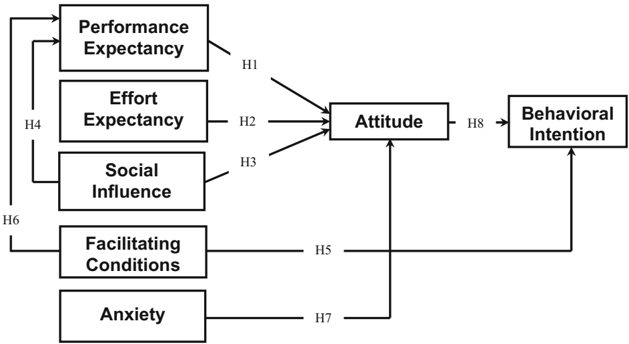
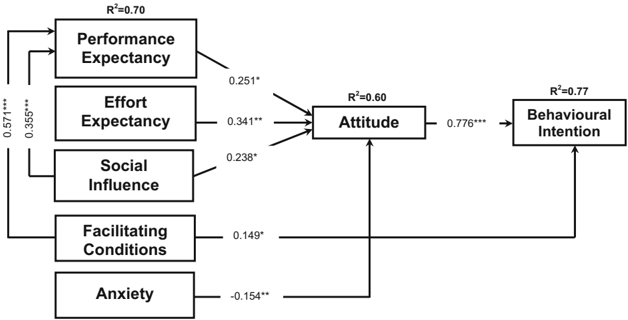
Sluggish adoption of emerging electronic government (eGov) applications continues to be a problem across developed and developing countries. This research tested the nine alternative theoretical models of technology adoption in the context of an eGov system using data collected from citizens of four selected districts in the state of Bihar in India. Analysis of the models indicates that their performance is not up to the expected level in terms of path coefficients, variance in behavioural intention, or the fit indices of the models. In response to the underperformance of the alternative theoretical models to explain the adoption of an eGov system, this research develops a unified model of electronic government adoption and tests it using the same data. The results indicate that the proposed research model outperforms all alternative models of technology adoption by explaining 77 % of variance in behavioural intention, with acceptable values of fit indices and significant relationships between each pair of hypothesised factors.
Overview
The claims and statistics of this paper haven’t been checked yet.
Free: it reads the open-access text and checks the first 5 claims that cite a source we can check. Create a free account to check every claim.
Integrity signals
Registry
Cites
Statistics
Figures
Verification
Claims the paper makes
The claims and statistics of this paper haven’t been checked yet.
Free: it reads the open-access text and checks the first 5 claims that cite a source we can check. Create a free account to check every claim.
Claims other papers make about this one
Each is checked against this paper’s own text: does it say what the citing paper says it does?
The source backs part of the claim, not all of it — or backs it for a different population, condition or comparison.
In the citing paper
“Rana et al. (2016) and Rana et al. (2017) examined electronic government system adoption by citizens from selected cities in India and found that facilitating conditions such as government support in terms of providing training had a positive and significant impact on performance expectancy.”
From Understanding managers’ attitudes and behavioral intentions towards using artificial intelligence for organizational decision-making (2021) · cites this paper as Rana et al., 2017
Experimental — accuracy not yet measured
Self-check
Percentages, sums and reported differences re-computed from the paper’s own numbers.
The self-check needs the paper’s full text.
Citations
Cites
The theory of planned behavior
Ajzen, I. (1991) · Organizational Behavior and Human Decision Processes · doi:10.1016/0749-5978(91)90020-t · Cited by 134,657
Evaluating Structural Equation Models with Unobservable Variables and Measurement Error
Fornell, C., & Larcker, D. F. (1981) · Journal of Marketing Research · doi:10.2307/3151312 · Cited by 109,314 · cited 1×
“AVE, which measures the variation explained by the latent variable as opposed to random measurement error (Netemeyer et al. 1990), ranged from 0.512 to 0.733 for all constructs, thus exceeding the recommended lower limit of 0.50 (Fornell and Larcker 1981).”
BackgroundInfluentialEvaluating structural equation models with unobservable variables and measurement error
Fornell, C., & Larcker, D. F. (1981) · Journal of Marketing Research · doi:10.1177/002224378101800104 · Cited by 109,190
Perceived usefulness, perceived ease of use, and user acceptance of information technology
Davis, F. D. (1989) · MIS Quarterly · doi:10.2307/249008 · Cited by 68,483 · cited 11×
“…2003); CLX: Complexity [Thompson et al. 1991]; EU: Ease of Use (Davis 1989; Davis et al. 1989; Moore and Benbasat 1991); EOU: Perceived Ease of Use (Davis 1989; Davis et al. 1989; Moore and Benbasat 1991); FC: Facilitating Conditions (Thompson et al. 1991; Venkatesh et al. 2003); IMG: Image…”
BackgroundMethodInfluentialUser Acceptance of Information Technology: Toward A Unified View1
Venkatesh, V., Morris, M. G., Davis, G. B., & Davis, F. D. (2003) · MIS Quarterly · doi:10.2307/30036540 · Cited by 45,035 · cited 15×
“Variables including perceived usefulness (TAM/TAM2), relative advantage (DOI, IDT) and outcome expectations (SCT) are similar in nature to performance expectancy (Venkatesh et al. 2003).”
BackgroundMethodInfluentialStructural equation modeling in practice: A review and recommended two-step approach
Anderson, J. C., & Gerbing, D. W. (1988) · Psychological Bulletin · doi:10.1037/0033-2909.103.3.411 · Cited by 41,941 · cited 3×
“Discriminant validity was assessed with the test recommended by Anderson and Gerbing (1988).”
BackgroundMethodRogers, E. M., Singhal, A., & Quinlan, M. M. (2019) · An Integrated Approach to Communication Theory and Research · doi:10.4324/9780203710753-35 · Cited by 37,322
(1975) · PhilPapers (PhilPapers Foundation) · Cited by 36,737
Alternative Ways of Assessing Model Fit
Browne, M. W., & Cudeck, R. (1992) · Sociological Methods & Research · doi:10.1177/0049124192021002005 · Cited by 27,200 · cited 1×
“Finally, RMSEA should be below 0.10 (Browne and Cudeck 1993), but has also been suggested to represent a very good fit if below a more restrictive threshold of 0.08.”
MethodInfluential(1980) · Medical Entomology and Zoology · Cited by 25,810
Research works printed but not linked: 3
- 71. Mujtava, S., & Pandey, P. K. (2012). The E-Governance architecture of global ICT program. International Journal of Computer Science and Telecommunications, 3(5), 136-140.
- 74. Nunnaly, J. (1978). Psychometric theory. New York: McGraw-Hill.
- 84. Rogers, E. M. (1995). Diffusion of innovations (4th ed.). New York: Free Press.
Cited by
Items 201–300 of 424
Dutta, B., Peng, M.-H., Chen, C.-C., & Sun, S.-L. (2022) · International Journal of Environmental Research and Public Health · doi:10.3390/ijerph19031347 · Cited by 22
Public service reformation: Relationship building by mobile technology
Shareef, M. A., Raman, R., Baabdullah, A. M., Mahmud, R., Ahmed, J. U., Kabir, H., Kumar, V., Kumar, U., Akram, M. S., Kabir, A., et al. (2019) · International Journal of Information Management · doi:10.1016/j.ijinfomgt.2019.03.007 · Cited by 28
Designing a customer-experience-management model for the banking-services sector
Heshmati, E., Saeednia, H., & Badizadeh, A. (2019) · Journal of Islamic marketing · doi:10.1108/jima-10-2018-0200 · Cited by 23
Hosain, S., & Mamun, A. M. A. (2023) · Business Analyst Journal · doi:10.1108/baj-06-2023-0053 · Cited by 23
Effects of UTAUT 2 Model on the Use of BCA Mobile Banking in Indonesia
al., A. S. E. (2021) · Türk bilgisayar ve matematik eğitimi dergisi · doi:10.17762/turcomat.v12i3.2183 · Cited by 35
Soomro, R. B., Al-Rahmi, W. M., Dahri, N. A., Alblehai, F., Alshimai, A., Aldaijy, A., & Salameh, A. A. M. (2024) · IEEE Access · doi:10.1109/access.2024.3510375 · Cited by 31
“Several empirical research studies have investigated the perceived ease of use as a key factor influencing customer attitude towards adopting different digital banking systems [54], [61], [62].”
Elsotouhy, M. M., Mobarak, A. M. A., Dakrory, M. I., Ghonim, M. A., & Khashan, M. A. (2023) · EuroMed Journal of Business · doi:10.1108/emjb-02-2023-0046 · Cited by 19
In Search for Holistic ICT4D Research: A Systematic Literature Review
Ramadani, L., Kurnia, S., & Breidbach, C. F. (2018) · Hawaii International Conference on System Sciences (HICSS) · doi:10.24251/hicss.2018.304 · Cited by 28
Burhanudddin, B., Badruddin, S., & Yapid, B. M. (2019) · Polish Journal of Management Studies · doi:10.17512/pjms.2019.20.1.10 · Cited by 21
Fakultas Ilmu Sosial dan Ilmu Politik, U. M., Irawan, B., Nizar, M., Akbar, P., & Khanz, A. H. (2020) · Matra Pembaruan · doi:10.21787/mp.4.2.2020.135-145 · Cited by 22
Adoption of Digital Banking: Insights from a UTAUT Model
Nepal, S., & Nepal, B. (2023) · Journal of Business and Social Sciences Research · doi:10.3126/jbssr.v8i1.56580 · Cited by 27
“In earlier research, performance expectations were seen as a major influence on attitude (Dwivedi et al., 2019; Rana et al., 2017).”
BackgroundAdenuga, K. I., Mbarika, V. W. A., & Omogbadegun, Z. O. (2019) · IFIP advances in information and communication technology · doi:10.1007/978-3-030-20671-0_5 · Cited by 24
Impact of Cybersecurity Disclosures on Stakeholder Intentions
Bansal, G., & Axelton, Z. (2023) · Journal of Computational Information Systems · doi:10.1080/08874417.2023.2180785 · Cited by 16
“…to specific disclosure items based on Rosenthal 11 and Song and Zahedi 16 Intention items were adapted from Alniacik et al. 9 and Rana et al. 33 Perceived seriousness of news, trust propensity and ability-based trust beliefs, and overall trust items were adapted from Bansal and Zahedi 20…”
MethodE-Government Services Adoption Assessment From the Citizen Perspective in Jordan
Alryalat, M. A. A., Alryalat, H., Alhamzi, K. H. M., & Hewahi, N. M. (2023) · International Journal of Electronic Government Research · doi:10.4018/ijegr.322440 · Cited by 21
“To date, a number of studies (e.g., Janssen et al., 2018; Lallmahomed et al., 2021; Rana and Dwivedi, 2015; Rana et al., 2015, 2017) have been published to understand the adoption of e-government services for developed as well as developing countries.”
The role of smart governance in ensuring the success of smart cities: a case of Thailand
Worrakittimalee, T., Pienwisetkaew, T., & Naruetharadhol, P. (2024) · Cogent Social Sciences · doi:10.1080/23311886.2024.2388827 · Cited by 21
“(Neves et al., 2020; rana et al., 2017). through the concept of open government, smart cities can also enhance efficiency, effectiveness, and transparency in managing and providing public services.”
Chen, P., Li, Y., Zhang, X., Feng, X. L., & Sun, X. (2024) · BMC Public Health · doi:10.1186/s12889-024-19667-4 · Cited by 18
“It has been applied to validate the adoption intentions of diverse technologies across various environments [30], encompassing areas such as e-government [31], mobile banking [32], mobile payment [33], mobile commerce [34], and more.”
MethodContributions to the Technological Adoption Model for the Peruvian Agro-Export Sector
Salas, C., Vega-Huerta, H., & Rodriguez, C. R. (2021) · International Journal of E-Adoption · doi:10.4018/ijea.2021010101 · Cited by 17
Understanding information technology culture in digital-based public services
Nugraha, J. T., Achmad, T., Warsono, H., & Yuniningsih, T. (2022) · Journal of Governance and Regulation · doi:10.22495/jgrv11i2art6 · Cited by 18
Alryalat, M. A. A. (2024) · International Journal of Electronic Government Research · doi:10.4018/ijegr.344421 · Cited by 15
Tian, Y., Chan, T. J., Liew, T. W., Chen, M. H., & Liu, H. N. (2024) · Kybernetes · doi:10.1108/k-10-2023-2213 · Cited by 17
Afrizal, D., Luthfi, A., Wallang, M., Hildawati, H., & Ekareesakul, K. (2024) · Journal of Local Government Issues · doi:10.22219/logos.v7i2.32437 · Cited by 23
“More precisely, this study used a model where attitude played a role in mediating the effect of three fundamental factors from UTAUT (performance expectancy, effort expectancy, and social influence) on behavioral intention (Rana et al., 2017).”
MethodAlalwan, A. A., Baabdullah, A. M., Rana, N. P., Dwivedi, Y. K., & Kizgin, H. (2019) · Lecture notes in computer science · doi:10.1007/978-3-030-29374-1_5 · Cited by 19
Self-citationKhechine, H., Raymond, B., & Lakhal, S. (2022) · Behaviour and Information Technology · doi:10.1080/0144929x.2022.2099297 · Cited by 18
Alkhaldi, A. N. (2022) · International Journal of Electronic Government Research · doi:10.4018/ijegr.306231 · Cited by 16
Awa, H. O., & UKOHA, K. (2020) · Journal of Sustainability Science and Management · doi:10.46754/jssm.2020.07.010 · Cited by 19
Hoque, S. M. S. (2020) · International Journal of Electronic Government Research · doi:10.4018/ijegr.2020070103 · Cited by 15
Mohamad, I., Hughes, L., Alalwan, A. A., Malik, T., & Dwivedi, Y. K. (2025) · Technological Forecasting and Social Change · doi:10.1016/j.techfore.2025.124398 · Cited by 18
“Computer or technology anxiety refers to the degree of a user's apprehension, or even fear, regarding using information system (Rana et al., 2017).”
Self-citationTalukder, M. S., Islam, Q. T., & Karim, Z. (2024) · PLoS ONE · doi:10.1371/journal.pone.0315009 · Cited by 16
Examining the Factors Affecting Behavioural Intention to Adopt Mobile Health in Jordan
Alalwan, A. A., Baabdullah, A. M., Rana, N. P., Dwivedi, Y. K., Hudaib, F., & Shammout, A. B. (2018) · Lecture notes in computer science · doi:10.1007/978-3-030-02131-3_41 · Cited by 18
“Such results related to perceived usefulness are in the line with these studies that have supported the related area of Mhealth applications (i.e. Rana et al., 2017; Lee and Han, 2015; Dwivedi et al., 2016).”
ResultSelf-citationHsu, C. (2024) · Entertainment Computing · doi:10.1016/j.entcom.2024.100658 · Cited by 16
Alryalat, M. A. A. (2017) · International Journal of Electronic Government Research · doi:10.4018/ijegr.2017040103 · Cited by 18
GENDER IN MOBILE WALLET ADOPTION BY USING UTAUT MODEL
Ompusunggu, H., & Anugrah, M. D. (2021) · JRAK · doi:10.23969/jrak.v13i1.3486 · Cited by 13
Nandru, P., & Senthilkumar, S. (2024) · SDMIMD Journal of Management · doi:10.18311/sdmimd/2024/32806 · Cited by 14
Saed, H., Manzli, Y. S., Jeribi, A., & Alnafisah, H. (2025) · Scientific Reports · doi:10.1038/s41598-025-12608-0 · Cited by 12
“Research has consistently identified FC as a key factor influencing behavioral intention toward technology adoption 50,65,66,67 ).”
Towards a multidimensional model for assessing e-government service gaps
Mahlangu, G., & Ruhode, E. (2020) · South African journal of information management · doi:10.4102/sajim.v22i1.1234 · Cited by 15
“Expected performance The expected performance of the e-government system is a metric of how the system should perform from the perspective of the users (Rana et al. 2017).”
BackgroundDeterminants of Continuous Use Intention of News Apps in India: Towards an Integrated Model
Sharma, S., Cheng, Y., & Sharma, P. (2022) · International Journal of Human-Computer Interaction · doi:10.1080/10447318.2022.2076774 · Cited by 12
“The findings are consistent with extant literature (Alalwan et al., 2017; Kim et al., 2011; Rana et al., 2017).”
ResultA Framework for Public eServices Transparency
Lourenço, R. P. (2023) · International Journal of Electronic Government Research · doi:10.4018/ijegr.317415 · Cited by 13
Readiness of Smart City: Emerging Economy Perspective
Chatterjee, S., & Kar, A. K. (2018) · Advances in theory and practice of emerging markets · doi:10.1007/978-3-319-75013-2_17 · Cited by 12
Almukhlifi, A., Deng, H., & Kam, B. (2019) · International Conference on Theory and Practice of Electronic Governance · doi:10.1145/3326365.3326418 · Cited by 12
“[63] examine the critical factors for the adoption of e-government in India.”
BackgroundVerástegui, M. D.-G., Quintero, J. M. M., & Ortiz, F. (2025) · Journal of technology management & innovation · doi:10.4067/s0718-27242025000100049 · Cited by 24
Adoption of artificial intelligence in the judiciary: a comparison of 28 advanced democracies
Guitton, C., Druta, V., Hinterleitner, M., Tamò‐Larrieux, A., & Mayer, S. (2025) · Discover Artificial Intelligence · doi:10.1007/s44163-025-00311-y · Cited by 18
Behera, R. K., Bala, P. K., Panigrahi, P. K., & Dasgupta, S. A. (2023) · Journal of Systems and Information Technology · doi:10.1108/jsit-10-2021-0221 · Cited by 13
Saha, A. S., Raut, R. D., Kumar, M., Paul, S. K., & Cheikhrouhou, N. (2024) · Journal of Modelling in Management · doi:10.1108/jm2-10-2023-0238 · Cited by 12
Morote, R. P., Rosa, C. P., & Alfaro, E. (2020) · International Journal of Electronic Government Research · doi:10.4018/ijegr.2020070102 · Cited by 13
Policy and Information Systems Implementation: the Greek Property Tax Information System Case
Anagnostopoulos, D., Παπαδόπουλος, Θ., Stamati, T., & Balta, M. E. (2018) · Information Systems Frontiers · doi:10.1007/s10796-018-9887-y · Cited by 11
“…technology acceptance and diffusion of innovations (Davis 1989; Rogers 2003; Venkatesh et al. 2003; Dwivendi et al. 2017; Fosso Wamba et al. 2017; Rana et al. 2017); and secondly, discussing IS implementation by underlining the culture and context as complex structures characterised by the…”
BackgroundA User-Centred E-Government Service Design Framework to Enhance Public Trust in Sustainable Policies
Suradi, A., Purnomo, H. D., & Hendry (2026) · Engineering Technology & Applied Science Research · doi:10.48084/etasr.14851 · Cited by 10
“Third, the UTAUT was extensively applied to explain the determinants of e-government adoption in developing countries [55].”
Zhang, X., & Zhou, M. (2023) · Education and Information Technologies · doi:10.1007/s10639-023-12106-8 · Cited by 11
“Three items on Mobile Application Anxiety are adapted from Rana et al. (2017).”
Evaluating the Current Situation of Mobile Services (M-Services) in the Kingdom of Saudi Arabia
Baabdullah, A. M., Alalwan, A. A., & Al-Qadi, N. S. (2018) · Advances in theory and practice of emerging markets · doi:10.1007/978-3-319-75013-2_13 · Cited by 12
Factors Affecting Jordanian Consumers’ Attitudes Towards Facebook Advertising: Case Study of Tourism
Abu-Ghosh, D. H., Al-Dmour, H. H., Alalwan, A. A., & Al-Dmour, R. (2018) · Advances in theory and practice of emerging markets · doi:10.1007/978-3-319-75013-2_22 · Cited by 12
Long, Y., Yang, K., Huang, R., Yuan, G., & Xia, Y. (2025) · Telematics and Informatics · doi:10.1016/j.tele.2025.102355 · Cited by 11
Muneer, F., Azam, A., Yang, H., & Saeed, M. (2024) · International Journal of Human-Computer Interaction · doi:10.1080/10447318.2024.2430429 · Cited by 11
“Attitude was measured adapting a 5-item scale (Dwivedi et al., 2017; Rana et al., 2017).”
InfluentialLi, J., Wang, C., Peng, J., Shuai, J., & Shuai, C. (2024) · Energy · doi:10.1016/j.energy.2024.134250 · Cited by 9
The Adoption and Diffusion of Wearables
Spil, T. A. M., Kijl, B., & Romijnders, V. (2019) · IFIP advances in information and communication technology · doi:10.1007/978-3-030-20671-0_4 · Cited by 12
Key Factors for Green IS Acceptance in Banking Segment: Pragmatic Analysis
Singh, M., & Sahu, G. P. (2021) · International Journal of Electronic Government Research · doi:10.4018/ijegr.2021010104 · Cited by 9
Unearthing citizens' acceptance factors for e‐participation initiatives through Facebook
Alarabiat, A., & Wahbeh, N. (2021) · The Electronic Journal of Information Systems in Developing Countries · doi:10.1002/isd2.12194 · Cited by 11
Salama, M., & Farag, R. (2024) · ASU International Conference in Emerging Technologies for Sustainability and Intelligent Systems (ICETSIS) · doi:10.1109/icetsis61505.2024.10459505 · Cited by 10
“Respondents selected their answers on a Likert scale (1 – 5), where 1 means extremely disagree while 5 means extremely agree, the scale is also driven from the literature of similar acceptance models (Rana et al., 2017).”
BackgroundA Meta-analysis of Social Commerce Adoption Research
Sarker, P., Rana, N. P., Hughe, L., & Dwivedi, Y. K. (2020) · IFIP advances in information and communication technology · doi:10.1007/978-3-030-64861-9_35 · Cited by 11
Self-citationFactors deterring the use of mobile payment among Generation Z
Schrank, J. (2025) · Family and Consumer Sciences Research Journal · doi:10.1111/fcsr.70016 · Cited by 8
Wong, A. K. L., Lee, D., & Chan, C. (2022) · Education and Information Technologies · doi:10.1007/s10639-022-11133-1 · Cited by 8
Kate, N. T., Chaudhary, P., Kumar, K. S. K., Raut, N., & More, M. (2024) · International Journal of Electronic Government Research · doi:10.4018/ijegr.347505 · Cited by 11
“Future research should also examine alternative theoretical models of technology adoption and establish an improved research model aligning reasons-for and reasons-against aspects (Rana & Dwivedi, 2016; Rana et al., 2011, 2012, 2015, 2017; Dwivedi et al., 2017, 2019; Tamilmani et al., 2019).”
Advances in Electronic Government (e-Government) Adoption Research in SAARC Countries
Rana, N. P., Dwivedi, Y. K., Luthra, S., Lal, B., & Alryalat, M. A. A. (2017) · Lecture notes in computer science · doi:10.1007/978-3-319-68557-1_14 · Cited by 8
“Electronic government (hereafter, e-government) is one of the most fascinating concepts to have appeared in the area of public administration and has become a substantially evident aspect of governance in the last few years [1, 2].”
BackgroundSelf-citationSharma, R., & Ray, S. (2019) · International Conference on Theory and Practice of Electronic Governance · doi:10.1145/3326365.3326421 · Cited by 8
Innovation in Tax Administration: Digitizing Tax Payments, Trust And Information Security Risk
Maphumula, F., & Njenga, K. (2019) · Open Innovations Conference (OI) · doi:10.1109/oi.2019.8908232 · Cited by 13
“Benefits of e-Government At the core of e-government innovation is the need for governments to offer convenient access of its services through web-based infrastructure to its citizens securely while minimising any security risk [19].”
BackgroundInfluentialMobile App Stores from the User’s Perspective
Baabdullah, A. M., Alalwan, A. A., Rana, N. P., Shraah, A. A., Kizgin, H., & Patil, P. P. (2019) · IFIP advances in information and communication technology · doi:10.1007/978-3-030-20671-0_3 · Cited by 7
Self-citationAnugrah, M. D., & Ompusunggu, H. (2021) · Jurnal Ilmiah Ekonomi Dan Bisnis · doi:10.31849/jieb.v18i1.5465 · Cited by 13
“Efikasi diri diadaptasi dari Shaw (2014) dan Venkatesh et al., (2003).”
Predicting the acceptance of e-government: a systematic review
Wu, X., Chong, A. Y., Peng, Y., & Bao, H. (2024) · Internet Research · doi:10.1108/intr-12-2022-0970 · Cited by 11
Kaium, M. A., Zahan, I., Rahman, M. S., & Masud, A. A. (2024) · Journal of Sustainability Research · doi:10.20900/jsr20240067 · Cited by 11
“Information systems (IS) based research has explored for a long time how and why people adopt new information technologies [40].”
BackgroundMaldonado-Canca, L.-A., Cabrera-Sánchez, J.-P., & Molinillo, S. (2025) · International Journal of Human-Computer Interaction · doi:10.1080/10447318.2025.2470287 · Cited by 7
“This emotion acts as an emotional barrier towards the adoption of new technologies (Rana et al., 2017).”
Hooda, A., & Hooda, A. (2021) · International Journal of Electronic Government Research · doi:10.4018/ijegr.2021070103 · Cited by 7
Morote, R. P., Rosa, C. P., & Alfaro, E. (2021) · IGI Global eBooks · doi:10.4018/978-1-6684-3706-3.ch054 · Cited by 9
Barriers towards Adoption of E-Government Services
Shahzad, K., Tahir, Z., Cheema, U. A., & Ahmad, M. A. (2024) · Journal of Business and Social Review in Emerging Economies · doi:10.26710/jbsee.v10i2.2966 · Cited by 7
“This result runs counter to the literature on the adoption of e-government, which claims that individuals anticipate that their governments will provide them e-services (Rana et al., 2017) and believe that e-government is generally advantageous (Belanche et al., 2012).”
ResultE-Government Adoption Model Extended with Public Value in Peru
Pérez, S., Cabrera, J., Rodríguez, J. J. S., & Raymundo, C. (2019) · International Conference on Industrial Technology and Management (ICITM) · doi:10.1109/icitm.2019.8710646 · Cited by 7
“This model was extended by other authors adding the intent of behavioral use, the factors of internet trust and government confidence [19], adding attitude and anxiety in the model [25], adding the quality of the system, quality of information, perception of effectiveness and use of satisfaction [4], including confide…”
MethodKwofie, M., & Adjei, J. K. (2019) · IFIP advances in information and communication technology · doi:10.1007/978-3-030-20671-0_8 · Cited by 8
Adopting generative AI for supply chain management decision-making
Alghababsheh, M., Butt, A. S., Mardenli, A., & Knio, M. (2026) · International Journal of Information Management Data Insights · doi:10.1016/j.jjimei.2026.100411 · Cited by 8
Enablers and Challenges for E-Health Services: A Systematic Literature Review
Kumari, R., Singh, A. K., Verma, R., & Fetais, A. H. M. A. (2022) · International Journal of Electronic Government Research · doi:10.4018/ijegr.298626 · Cited by 6
Exploring the Factors Affecting User Satisfaction With Metrash2 System
Hassan, A., & Abu-Shanab, E. A. (2020) · International Journal of Electronic Government Research · doi:10.4018/ijegr.2020010102 · Cited by 9
Predicting the Determinants of Mobile Payment Acceptance: A Hybrid SEM-Neural Network Approach
Akgül, Y. (2020) · Advances in computational intelligence and robotics book series · doi:10.4018/978-1-7998-4042-8.ch006 · Cited by 10
Explaining Technology Adoption with Financial Motivation
Budu, J., Seneadza, J. S., Entee, E., Fosu, M. O., Asare, B. T., & Mensah, C. (2019) · IFIP advances in information and communication technology · doi:10.1007/978-3-030-20671-0_10 · Cited by 6
Tounekti, O., Ruiz‐Martínez, A., & Skármeta, A. (2021) · Sustainability · doi:10.3390/su13094711 · Cited by 7
Evaluation of the Factors Influencing the Trust of Millennial Citizens in E-Government
Assegaff, S., Andrianti, A. S., & Astri, L. Y. (2021) · Journal of Physics Conference Series · doi:10.1088/1742-6596/1898/1/012009 · Cited by 8
“The informational amenities are delivered through web pages, while the transactional is implemented horizontally and vertically by the millennial generation in conjunction with the government between related agencies [2].”
BackgroundFate of AI for Smart City Services in India: A Qualitative Study
Kuberkar, S., Singhal, T. K., & Singh, S. (2022) · International Journal of Electronic Government Research · doi:10.4018/ijegr.298216 · Cited by 7
The Journal of Management Theory and Practice (JMTP)
Afthanorhan, A., Foziah, H., & Arifin, J. (2021) · The Journal of Management Theory and Practice (JMTP) · Cited by 6
Acceptance of Smart Teaching Tools and Its Influencing Factors Among University and College Teachers
Cui, X., Zhang, Z., Zhang, S., Shen, J., Han, W., & Zhang, H. (2024) · IEEE Transactions on Education · doi:10.1109/te.2024.3358896 · Cited by 5
“Many studies using the UTAUT model also use Attitude as an intermediary variable between Performance Expectancy and Effort Expectancy [29], [30], [31].”
Chat, Tap, Scan, Pay, and Repeat: WeChat Pay’s Continuous Usage Intention Through the S‐O‐R Model
Tian, Y., Chan, T. J., Liew, T. W., Chen, M. H., & Liu, H. N. (2025) · Human Behavior and Emerging Technologies · doi:10.1155/hbe2/5077482 · Cited by 5
Ukeje, N., Gutiérrez, J., Petrova, K., & Okolie, U. C. (2025) · Future Internet · doi:10.3390/fi17080326 · Cited by 5
Qatanani, N. O., Alghababsheh, M., Aburayya, A., & Nasaj, M. (2025) · VINE Journal of Information and Knowledge Management Systems · doi:10.1108/vjikms-10-2023-0255 · Cited by 6
Digital literacy and the capability to manage e-government in today’s Hungary
Budai, B. B., Bozsó, G., Csuhai, S., & Tózsa, I. (2024) · Regional Statistics · doi:10.15196/rs140608 · Cited by 5
Predicting Adoption Behaviour to Digital Government Transformation in Construction Sector
Chomistriana, D., Mulyono, A. T., & Najid, N. (2024) · Journal of Construction in Developing Countries · doi:10.21315/jcdc-12-23-0177 · Cited by 6
Barua, S., & Barua, A. (2021) · The Journal of Management Theory and Practice (JMTP) · doi:10.37231/jmtp.2021.2.1.90 · Cited by 6
“Prior research suggested that SI has positive impact on users’ intention to accept technology (Chiu & Tsai, 2014; Rasmi et al., 2018).”
BackgroundDIGITAL PAYMENT PLATFORMS AND SUBSISTENCE ENTREPRENEURS: CHAMPIONING BEYOND THE PANDEMIC
Agarwal, A., Jha, A. K., & Jagasia, J. (2024) · Journal of Organizational Computing and Electronic Commerce · doi:10.1080/10919392.2024.2316474 · Cited by 6
“…in a study on the adoption of an e-Government system as it is used by individuals who are influenced majorly by their surroundings and the people who make up that surrounding, such as their friends, colleagues, and family that can sway their decision-making significantly (Rana et al. 2017).”
BackgroundMethodOdusanya, K. A., Aluko, O., & Lal, B. (2019) · IFIP advances in information and communication technology · doi:10.1007/978-3-030-20671-0_14 · Cited by 8
Self-citationBisoyi, B., Nayak, B., Das, B. K., & Pasumarti, S. S. (2021) · Lecture notes in electrical engineering · doi:10.1007/978-981-15-7504-4_16 · Cited by 8
Manalu, P. O., Kusumastati, W. W., & Safiq, M. (2021) · Jurnal Inovasi Penelitian · doi:10.47492/jip.v2i2.741 · Cited by 5
“Taxpayers’ compliance behavior would be increased and tax authority will get trust by taxpayers if they treat taxpayers fairly and nicely [19].”
BackgroundAnalisis Pelayanan Publik Berbasis Media Sosial: Studi Kasus Provinsi Jawa Tengah
Sukarno, M., Winarsih, A. S., Wijaya, H. H., & Cahyani, P. S. (2021) · Journal of Social Politics and Governance (JSPG) · doi:10.24076/jspg.2021v3i1.507 · Cited by 5
Intrinsic Antecedents to mHealth Adoption Intention: An SEM-ANN Approach
Bhatt, V., & Chakraborty, S. (2022) · International Journal of Electronic Government Research · doi:10.4018/ijegr.298139 · Cited by 5
A proposed model for assess E-government adoption in local government
Suradi, A., Purnomo, H. D., & Hendry, H. (2024) · AIP conference proceedings · doi:10.1063/5.0218211 · Cited by 4
Relating Smart Governance as a University Feature to Students' University Perceptions
Jadrić, M., Ćukušić, M., & Mijač, T. (2021) · Journal of information and organizational sciences · doi:10.31341/jios.45.1.1 · Cited by 4
“Convergent validity was checked using three tests (recommended by Anderson and Gerbing as cited in [53]): standardized factor loadings, composite reliabilities and average variance extracted.”
MethodInvestigating Social Commerce Factors: Motivation, Price Value, Habit, Risk and Attitude
Sarker, P., Dwivedi, Y. K., & Hughes, L. (2023) · Lecture notes in computer science · doi:10.1007/978-3-031-50040-4_16 · Cited by 7
Self-citationPreparing instructors to transition to online distance learning: a pandemic panacea?
Atiqah, S. N., Hanafiah, M. H., Ismail, H., & Balasubramaniam, K. (2024) · Innoeduca International Journal of Technology and Educational Innovation · doi:10.24310/ijtei.101.2024.16820 · Cited by 5
Qasem, Z. (2018) · Advances in theory and practice of emerging markets · doi:10.1007/978-3-319-75013-2_15 · Cited by 5
Metadata
- Authors
- Rana, N. P., Dwivedi, Y. K., Lal, B., Williams, M. D., & Clement, M.
- Affiliations
- Swansea University (GB)
- Nottingham Trent University (GB)
- Corresponding author
- Dwivedi, Yogesh K.
- Venue
- Information Systems Frontiers
- Published
- 2015-11-24
- Volume
- 19
- Issue
- 3
- Pages
- 549-568
- ISSN
- 1387-3326 (ISSN-L)
- 1572-9419
- OpenAlex
- W2218975180
- Cited by
- 373
- References
- 117
- Citations by year
- 2026: 22 · 2025: 24 · 2024: 39 · 2023: 38 · 2022: 38 · 2021: 44 · 2020: 46 · 2019: 56 · 2018: 41 · 2017: 20 · 2016: 4 · 2015: 1
- FWCI
- 143.04
- Type
- journal article
- Language
- en
- Open access
- hybrid
- doi.org
- Locations
- Information Systems Frontiers (publishedVersion, cc-by)
- RePEc: Research Papers in Economics (submittedVersion)
- Bradford Scholars (University of Bradford) (submittedVersion, cc-by)
- Nottingham Trent University's Institutional Repository (Nottingham Trent Repository) (submittedVersion)
- University of Bedfordshire Repository (University of Bedfordshire) (submittedVersion, cc-by-nc-nd)
- Funders
- Nuffield Foundation
- European Commission
- Swansea University
- Israel Science Foundation
- Topics
- Social Sciences › Political Science and International Relations › E-Government and Public Services
- Social Sciences › Decision Sciences › Information Systems and Management › Technology Adoption and User Behaviour
- Social Sciences › Business, Management and Accounting › Organizational Behavior and Human Resource Management › Employer Branding and e-HRM
- Keywords
- e-government, e-government adoption, technology adoption model, behavioral intention, citizens, Bihar, model comparison
About these checks
Registry, retraction, Cites and statistics results are computed, not judged, with one exception: a printed reference that no index lists is read once by a model before it counts as a citation error. Claims are extracted by a model and kept only when their quote appears verbatim in the text; each cited source is then checked, with a model’s help, for whether it says what the claim relies on. Those verdicts can be wrong — read the claim’s quote and the cited source before relying on one.
Statistics and arithmetic are recomputed, not judged.
Confidence bands are shown only for fields calibrated on our annotated test set. None is calibrated yet, so no band is shown.
What counts as a claim ›How we measure confidence ›How we check this ›
Are you an author, or do you see a problem with this page? Request a review
Data sources
Bibliographic data: Semantic Scholar, OpenAlex, Crossref.
Contains information from the Semantic Scholar Academic Graph Datasets, made available under the ODC Attribution License (ODC-BY 1.0).
Semantic Scholar’s data is described in: Kinney, R., et al. (2023). The Semantic Scholar Open Data Platform. arXiv:2301.10140.
