

Citizens' adoption of an electronic government system: towards a unified view
Open accessThe DOI matches its Crossref record; 118 of the 118 references it cites were found in a registry or an index.
Abstract
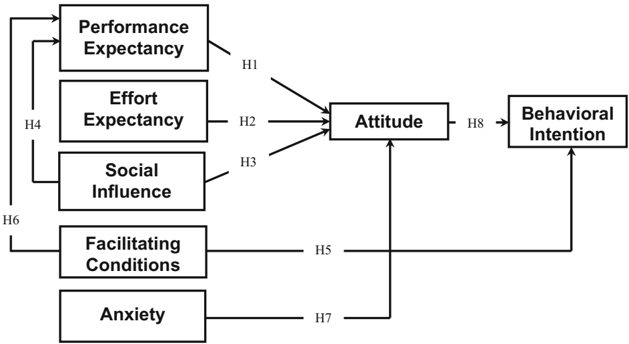
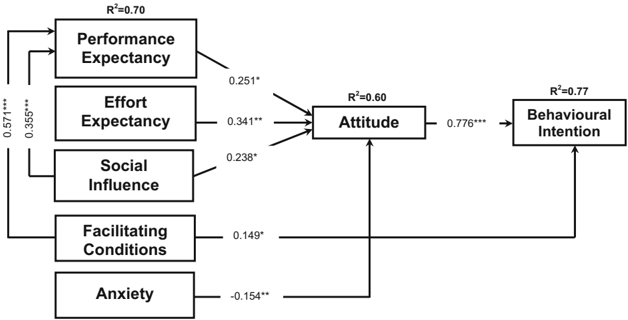
Sluggish adoption of emerging electronic government (eGov) applications continues to be a problem across developed and developing countries. This research tested the nine alternative theoretical models of technology adoption in the context of an eGov system using data collected from citizens of four selected districts in the state of Bihar in India. Analysis of the models indicates that their performance is not up to the expected level in terms of path coefficients, variance in behavioural intention, or the fit indices of the models. In response to the underperformance of the alternative theoretical models to explain the adoption of an eGov system, this research develops a unified model of electronic government adoption and tests it using the same data. The results indicate that the proposed research model outperforms all alternative models of technology adoption by explaining 77 % of variance in behavioural intention, with acceptable values of fit indices and significant relationships between each pair of hypothesised factors.
Overview
The claims and statistics of this paper haven’t been checked yet.
Free: it reads the open-access text and checks the first 5 claims that cite a source we can check. Create a free account to check every claim.
Integrity signals
Registry
Cites
Statistics
Figures
Verification
Claims the paper makes
The claims and statistics of this paper haven’t been checked yet.
Free: it reads the open-access text and checks the first 5 claims that cite a source we can check. Create a free account to check every claim.
Claims other papers make about this one
Each is checked against this paper’s own text: does it say what the citing paper says it does?
The source backs part of the claim, not all of it — or backs it for a different population, condition or comparison.
In the citing paper
“Rana et al. (2016) and Rana et al. (2017) examined electronic government system adoption by citizens from selected cities in India and found that facilitating conditions such as government support in terms of providing training had a positive and significant impact on performance expectancy.”
From Understanding managers’ attitudes and behavioral intentions towards using artificial intelligence for organizational decision-making (2021) · cites this paper as Rana et al., 2017
Experimental — accuracy not yet measured
Self-check
Percentages, sums and reported differences re-computed from the paper’s own numbers.
The self-check needs the paper’s full text.
Citations
Cites
Evaluating Structural Equation Models with Unobservable Variables and Measurement Error
Fornell, C., & Larcker, D. F. (1981) · Journal of Marketing Research · doi:10.2307/3151312 · Cited by 109,314 · cited 1×
“AVE, which measures the variation explained by the latent variable as opposed to random measurement error (Netemeyer et al. 1990), ranged from 0.512 to 0.733 for all constructs, thus exceeding the recommended lower limit of 0.50 (Fornell and Larcker 1981).”
BackgroundInfluentialEvaluating structural equation models with unobservable variables and measurement error
Fornell, C., & Larcker, D. F. (1981) · Journal of Marketing Research · doi:10.1177/002224378101800104 · Cited by 109,190
The theory of planned behavior
Ajzen, I. (1991) · Organizational Behavior and Human Decision Processes · doi:10.1016/0749-5978(91)90020-t · Cited by 90,587
Perceived usefulness, perceived ease of use, and user acceptance of information technology
Davis, F. D. (1989) · MIS Quarterly · doi:10.2307/249008 · Cited by 68,483 · cited 11×
“…2003); CLX: Complexity [Thompson et al. 1991]; EU: Ease of Use (Davis 1989; Davis et al. 1989; Moore and Benbasat 1991); EOU: Perceived Ease of Use (Davis 1989; Davis et al. 1989; Moore and Benbasat 1991); FC: Facilitating Conditions (Thompson et al. 1991; Venkatesh et al. 2003); IMG: Image…”
BackgroundMethodInfluentialUser Acceptance of Information Technology: Toward A Unified View1
Venkatesh, V., Morris, M. G., Davis, G. B., & Davis, F. D. (2003) · MIS Quarterly · doi:10.2307/30036540 · Cited by 45,035 · cited 15×
“Variables including perceived usefulness (TAM/TAM2), relative advantage (DOI, IDT) and outcome expectations (SCT) are similar in nature to performance expectancy (Venkatesh et al. 2003).”
BackgroundMethodInfluentialStructural equation modeling in practice: A review and recommended two-step approach
Anderson, J. C., & Gerbing, D. W. (1988) · Psychological Bulletin · doi:10.1037/0033-2909.103.3.411 · Cited by 41,941 · cited 3×
“Discriminant validity was assessed with the test recommended by Anderson and Gerbing (1988).”
BackgroundMethodRogers, E. M., Singhal, A., & Quinlan, M. M. (2019) · An Integrated Approach to Communication Theory and Research · doi:10.4324/9780203710753-35 · Cited by 37,322
(1975) · PhilPapers (PhilPapers Foundation) · Cited by 36,737
Alternative Ways of Assessing Model Fit
Browne, M. W., & Cudeck, R. (1992) · Sociological Methods & Research · doi:10.1177/0049124192021002005 · Cited by 27,200 · cited 1×
“Finally, RMSEA should be below 0.10 (Browne and Cudeck 1993), but has also been suggested to represent a very good fit if below a more restrictive threshold of 0.08.”
MethodInfluential(1980) · Medical Entomology and Zoology · Cited by 25,810
Research works printed but not linked: 3
- 71. Mujtava, S., & Pandey, P. K. (2012). The E-Governance architecture of global ICT program. International Journal of Computer Science and Telecommunications, 3(5), 136-140.
- 74. Nunnaly, J. (1978). Psychometric theory. New York: McGraw-Hill.
- 84. Rogers, E. M. (1995). Diffusion of innovations (4th ed.). New York: Free Press.
Cited by
Items 101–200 of 424
More trust or more risk? User acceptance of artificial intelligence virtual assistant
Xiong, Y., Shi, Y., Pu, Q., & Liu, N. (2023) · Human Factors and Ergonomics in Manufacturing & Service Industries · doi:10.1002/hfm.21020 · Cited by 87
“Prior studies also showed that performance expectancy can influence behavioral intention mediated by attitude (Alshare & Lane, 2011; Rana et al., 2017).”
BackgroundFactors Influencing Adoption of Mobile Social Network Games (M-SNGs): The Role of Awareness
Baabdullah, A. M. (2018) · Information Systems Frontiers · doi:10.1007/s10796-018-9868-1 · Cited by 82
“The scope of Information System (IS) is authenticated and based on several valid theories and frameworks (Dwivedi et al. 2015, 2017a, c; Orlikowski and Baroudi 1991; Rana et al. 2015a, b; Straub et al. 2005).”
BackgroundMethodSharma, R., & Mishra, R. (2017) · Government Information Quarterly · doi:10.1016/j.giq.2017.10.001 · Cited by 88
Shareef, M. A., Dwivedi, Y. K., Kumar, V., Davies, G., Rana, N., & Baabdullah, A. (2019) · Information Technology & People · doi:10.1108/itp-05-2018-0241 · Cited by 65
Self-citationNandru, P., Senthilkumar, S., & Madhavaiah, C. (2023) · Journal of Science and Technology Policy Management · doi:10.1108/jstpm-03-2023-0035 · Cited by 86
Lee, T., Park, H., & Lee, J. (2019) · Government Information Quarterly · doi:10.1016/j.giq.2018.12.008 · Cited by 83
Marimón, F., Llach, J., Alonso-Almeida, M., & Mas‐Machuca, M. (2019) · International Journal of Information Management · doi:10.1016/j.ijinfomgt.2019.03.009 · Cited by 81
Enterprise systems knowledge, beliefs, and attitude: A model of informed technology acceptance
Mullins, J. K., & Cronan, T. P. (2021) · International Journal of Information Management · doi:10.1016/j.ijinfomgt.2021.102348 · Cited by 60
Li, J., Zhang, C., Li, X., & Zhang, C. (2020) · International Journal of Information Management · doi:10.1016/j.ijinfomgt.2019.102054 · Cited by 68
The digital divide and E-government in European economies
Botrić, V., & Božić, L. (2021) · Economic Research-Ekonomska Istraživanja · doi:10.1080/1331677x.2020.1863828 · Cited by 82
“One version of the model designed for e-government adoption also includes anxiety instead of perceived risk as a factor that affects attitudes (Rana et al., 2017).”
BackgroundEnhancing the adoption of digital public services: Evidence from a large-scale field experiment
Hyytinen, A., Tuimala, J., & Hammar, M. (2022) · Government Information Quarterly · doi:10.1016/j.giq.2022.101687 · Cited by 76
Gong, X., Lee, M., Liu, Z., & Zheng, X. (2018) · Information Systems Frontiers · doi:10.1007/s10796-018-9852-9 · Cited by 75
“For instance, drawing upon a revised UTAUT, scholars demonstrated that attitude is central to user IS adoption intention and usage behaviors (Dwivedi et al. 2017 ; Rana et al. 2017).”
BackgroundMuhammad, S. S., Dey, B. L., Kamal, M. M., & Alwi, S. F. S. (2021) · Computers in Human Behavior · doi:10.1016/j.chb.2021.106802 · Cited by 73
Enhancing Organisational Competitiveness Via Social Media - a Strategy as Practice Perspective
Kwayu, S., Lal, B., & Abubakre, M. (2017) · Information Systems Frontiers · doi:10.1007/s10796-017-9816-5 · Cited by 84
“The impact of this mobile and telecommunication growth prompts citizens to learn new ways of exploiting this technology in a wide range of styles (Rana et al. 2017) such as communicating and seeking information through social media.”
BackgroundSelf-citationWang, C., Teo, T. S. H., Dwivedi, Y. K., & Janssen, M. (2021) · Information Technology and People · doi:10.1108/itp-02-2020-0097 · Cited by 72
Self-citationSabani, A., Vinh Van, T. H. A. I., & Hossain, M. A. (2023) · Journal of Global Information Management · doi:10.4018/jgim.318131 · Cited by 74
Influence of IoT Policy on Quality of Life: From Government and Citizens' Perspectives
Chatterjee, S. (2019) · International Journal of Electronic Government Research · doi:10.4018/ijegr.2019040102 · Cited by 66
Factors affecting physicians using mobile health applications: an empirical study
Wu, P., Zhang, R., Luan, J., & Zhu, M. (2022) · BMC Health Services Research · doi:10.1186/s12913-021-07339-7 · Cited by 71
Osman, I. H., Anouze, A. L., Irani, Z., Lee, H., Medeni, T. D., & Weerakkody, V. (2019) · European Journal of Operational Research · doi:10.1016/j.ejor.2019.02.018 · Cited by 63
Use of Social Media in Citizen-Centric Electronic Government Services: A Literature Analysis
Alryalat, M. A. A., Rana, N. P., Sahu, G. P., Dwivedi, Y. K., & Tajvidi, M. (2017) · International Journal of Electronic Government Research · doi:10.4018/ijegr.2017070104 · Cited by 83
Self-citationThe Role of Social Influence in Blockchain Adoption: The Brazilian Supply Chain Case
Wamba, S. F., & de Queiroz, M. M. (2019) · IFAC-PapersOnLine · doi:10.1016/j.ifacol.2019.11.448 · Cited by 68
Shahbaz, M., Gao, C., Zhai, L., Shahzad, F., & Arshad, M. R. (2020) · Complexity · doi:10.1155/2020/2173765 · Cited by 74
“e 7 points Likert scale used to record the responses from 1 to 7, strongly disagree to strongly agree, as many studies used it [48, 76, 77].”
MethodAnalysis of e-Government Services: A Study of the Adoption of Electronic Tax Filing in Indonesia
Sijabat, R. (2020) · Jurnal Ilmu Sosial dan Ilmu Politik · doi:10.22146/jsp.52770 · Cited by 77
“digital connectivity in organizational, public, and private life (Rana et al., 2017; Zahid & Din, 2019).”
BackgroundAlthunibat, A., Binsawad, M. H., Almaiah, M. A., Almomani, O., Alsaaidah, A. M., Al-Rahmi, W. M., & Seliaman, M. E. (2021) · Sustainability · doi:10.3390/su13063028 · Cited by 65
“Almuraqab and Jasimuddin [40] The study aimed to understand the main factors that influence UAE users’ adoption of smartgovernment services.”
BackgroundThe role of artificial intelligence in effective business operations during COVID-19
Chen, Y., Biswas, M. I., & Talukder, M. S. (2022) · International Journal of Emerging Markets · doi:10.1108/ijoem-11-2021-1666 · Cited by 77
Thabet, Z., Albashtawi, S., Ansari, H., Al‐Emran, M., Al-Sharafi, M. A., & AlQudah, A. A. (2023) · IEEE Transactions on Engineering Management · doi:10.1109/tem.2023.3296132 · Cited by 69
“The influence of an individual’s social circle on their awareness of a specific technology directly impacts their behavioral intention to adopt that technology [40].”
BackgroundResultDrivers of Mobile Payment Services Adoption: A Behavioral Reasoning Theory Perspective
Mobarak, A. M. A., Dakrory, M. I., Elsotouhy, M. M., Ghonim, M. A., & Khashan, M. A. (2022) · International Journal of Human-Computer Interaction · doi:10.1080/10447318.2022.2144122 · Cited by 61
“The four statements of anxiety were adopted from Patil et al. (2020) and Rana et al. (2017), while the four statements of perceived time risk were adopted from Yang et al. (2015).”
BackgroundComparison of crowdsourcing platforms from social-psychological and motivational perspectives
Bakici, T. Y. (2020) · International Journal of Information Management · doi:10.1016/j.ijinfomgt.2020.102121 · Cited by 65
Electronic health records in Brazil: Prospects and technological challenges
Barbalho, I. M. P., Fernandes, F. R. D. S., Barros, D. M. S., de Paiva, J. C., Henriques, J. M. O., de Morais, A. H. F., Coutinho, K. D., Neto, G. C. C., Chioro, A., & Valentim, R. A. D. M. (2022) · Frontiers in Public Health · doi:10.3389/fpubh.2022.963841 · Cited by 72
“, the citizen/patient, through “single window” type solutions (54).”
BackgroundMukred, M., Yusof, Z. M., Mokhtar, U. A., Sadiq, A. S., Hawash, B., & Ahmed, W. A. (2021) · KSII Transactions on Internet and Information Systems · doi:10.3837/tiis.2021.01.006 · Cited by 71
“…using various theories including Innovation Diffusion Theory [46]; Theory of Reasoned Action [62]; Technology Acceptance Model [63]; Theory of Planned Behavior [49]; combined TAM-TPB [64]; Motivational Model [65]; Social Cognitive Theory [66]; Unified Model of E-government Adoption [50, 52].”
BackgroundMethodExploring pre-service teachers’ intention to use virtual reality: A mixed method approach
Adelana, O. P., Ayanwale, M. A., Ishola, A. M., Oladejo, A. I., & Adewuyi, H. O. (2023) · Computers & Education X Reality · doi:10.1016/j.cexr.2023.100045 · Cited by 68
Indonesia in the Spotlight: Combating Corruption through ICT enabled Governance
Sabani, A., Farah, M. H., & Dewi, D. R. S. (2019) · Procedia Computer Science · doi:10.1016/j.procs.2019.11.130 · Cited by 56
Mamadiyarov, Z. T. (2021) · International Conference on Future Networks and Distributed Systems (ICFNDS) · doi:10.1145/3508072.3508119 · Cited by 59
“Consumers who started using digital media to share data are now using company communication, online shopping, and many other new internet services (Alalwan et al., 2018; Alalwan et al., 2018; Cuesta et al., 2015; Rana et al., 2015).”
BackgroundPatergiannaki, Z., & Pollalis, Y. (2024) · International Journal of Public Sector Management · doi:10.1108/ijpsm-07-2023-0229 · Cited by 61
A Systematic Review of Indicators for Evaluating the Effectiveness of Digital Public Services
Pedrosa, G. V., Kosloski, R. A. D., de Menezes, V. G., Iwama, G. Y., da Silva, W. C. M. P., & Figueiredo, R. M. D. C. (2020) · Information · doi:10.3390/info11100472 · Cited by 70
“Experiences of applying TAM to the public sector in some countries, such as India [19,20], Saudi Arabia [21,22], Tanzania [23], Jordan [24] have been studied.”
BackgroundBaillette, P., Barlette, Y., & Leclercq‐Vandelannoitte, A. (2018) · International Journal of Information Management · doi:10.1016/j.ijinfomgt.2018.07.007 · Cited by 61
Upadhyay, N., Kamble, A. A., & Navare, A. V. (2023) · Government Information Quarterly · doi:10.1016/j.giq.2022.101800 · Cited by 57
Examining consumer adoption of social commerce: An extended META-UTAUT model
Sarker, P., Hughes, L., Malik, T., & Dwivedi, Y. K. (2024) · Technological Forecasting and Social Change · doi:10.1016/j.techfore.2024.123956 · Cited by 58
“In specific countries such as India, the grievance redressal system deals with various problems of citizens ’ everyday lives and attempts to solve them via interaction with government systems (Khurshid et al., 2019; Rana et al., 2017).”
InfluentialSelf-citationFinding and Ranking High-Quality Answers in Community Question Answering Sites
Roy, P. K., Ahmad, Z., Singh, J. P., Alryalat, M. A. A., Rana, N. P., & Dwivedi, Y. K. (2017) · Global Journal of Flexible Systems Management · doi:10.1007/s40171-017-0172-6 · Cited by 52
“Hence, it is recommended that the future studies should employ existing technology adoption theories and models (Dwivedi et al. 2016, 2017b, c; Rana et al. 2016, 2017) for examining behavioural antecedents for using such emerging and innovative solutions in order to encourage wider adoption and use…”
BackgroundSelf-citationBaba, N., Hanafiah, M. H., Shahril, A. M., & Zulkifly, M. I. (2023) · Journal of Hospitality and Tourism Technology · doi:10.1108/jhtt-08-2021-0226 · Cited by 58
Baabdullah, A. M., Rana, N. P., Alalwan, A. A., Islam, R., Patil, P. P., & Dwivedi, Y. K. (2019) · Information Systems Management · doi:10.1080/10580530.2019.1651107 · Cited by 55
“…and Internet banking (AbuShanab et al., 2010; Alryalat et al., 2013; Chiu et al., 2010; Dwivedi, Shareef, Simintiras, Lal, & Weerakkody, 2016; Rana, Dwivedi, Lal, Williams, & Clement, 2017; Rana, Dwivedi, Williams, & Weerakkody, 2016; Slade, Dwivedi, Piercy, & Williams, 2015; Van Raaij &…”
Self-citationWiafe, I., Koranteng, F. N., Tettey, T., Katsriku, F. A., & Abdulai, J. (2019) · Journal of Systems and Information Technology · doi:10.1108/jsit-06-2018-0091 · Cited by 61
Theres, C., & Strohmeier, S. (2023) · Management Review Quarterly · doi:10.1007/s11301-023-00367-z · Cited by 61
“Regarding expected effort, our suggestions are in line with earlier IS contributions, i.e., firms are encouraged to align system capabilities with user requirements by pursuing clean and easy-to-use designs (Martín and Herrero 2012; Rana et al. 2015).”
Huang, T. (2023) · PLoS ONE · doi:10.1371/journal.pone.0295581 · Cited by 57
Adoption of UPI among Indian users: Using extended meta-UTAUT model
Razi-ur-Rahim, M., Rabbani, M. R., Uddin, F., & Shaikh, Z. H. (2024) · Digital Business · doi:10.1016/j.digbus.2024.100093 · Cited by 66
Zaman, U., Zahid, H., Habibullah, M. S., & Din, B. H. (2021) · Cogent Business & Management · doi:10.1080/23311975.2021.1880253 · Cited by 57
“…intention towards information technologies (Bélanger & Carter, 2008; Hung et al., 2009; Nripendra P Rana & Dwivedi, 2015; Nripendra P Rana, Dwivedi, Lal et al., 2015; Nripendra Pratap, 2015; Nripendra P Rana et al., 2017; Nripendra P Rana, Dwivedi, Williams et al., 2015; Zahid & Haji Din, 2019).”
Backgroundm-Government Security Response System: Predicting Citizens’ Adoption Behavior
Shahzad, F., Xiu, G., Khan, I., & Wang, J. (2018) · International Journal of Human-Computer Interaction · doi:10.1080/10447318.2018.1516844 · Cited by 50
A living lab as socio-technical ecosystem: Evaluating the Korean living lab of internet of things
Shin, D. (2018) · Government Information Quarterly · doi:10.1016/j.giq.2018.08.001 · Cited by 54
Rahman, M. S., Das, S., Hossain, G. M. S., & Tajrin, T. (2021) · Journal of Science and Technology Policy Management · doi:10.1108/jstpm-05-2020-0088 · Cited by 50
Taxpayers’ adoption of online tax return reporting: extended meta-UTAUT model perspective
Hermanto, A. H., Windasari, N. A., & Purwanegara, M. S. (2022) · Cogent Business & Management · doi:10.1080/23311975.2022.2110724 · Cited by 50
Ngusie, H. S., Kassie, S. Y., Zemariam, A. B., Walle, A. D., Enyew, E. B., Kasaye, M. D., Seboka, B. T., & Mengiste, S. A. (2024) · BMC Health Services Research · doi:10.1186/s12913-024-11378-1 · Cited by 52
“…think they should use the new system [32, 51, 62] H11: Social influence will have a positive and direct effect on the attitude to use EHR [21, 43, 44] H12: Social influence will have a positive and direct effect on the intention to use EHR [19, 21, 42, 46, 55, 56, 58] Hedonic motivation is…”
BackgroundMethodInfluentialOjiako, U., Chipulu, M., Marshall, A. J., & Williams, T. (2017) · International Journal of Project Management · doi:10.1016/j.ijproman.2017.10.002 · Cited by 51
“This raises trust questions for ODR of which within the context of justice, is not dissimilar to concerns raised in respect to trust for e-government (see for example Dwivedi et al., 2017; Rana et al., 2015, 2017; Janssen et al., 2017).”
BackgroundUnderstanding the Adoption of SADAD E-Payments: UTAUT Combined with Religiosity as Moderator
Soomro, Y. A. (2018) · International Journal of E-Business Research · doi:10.4018/ijebr.2019010104 · Cited by 65
Consumers' willingness to share digital footprints on social media: the role of affective trust
Muhammad, S. S., Dey, B. L., Alwi, S. F. S., Kamal, M. M., & Asaad, Y. (2022) · Information Technology and People · doi:10.1108/itp-10-2020-0694 · Cited by 56
Kar, A. K., Ilavarasan, P. V., Gupta, M. P., Dwivedi, Y. K., Mäntymäki, M., Janssen, M., Simintiras, A. C., & Al-Sharhan, S. (2017) · Lecture notes in computer science · doi:10.1007/978-3-319-68557-1 · Cited by 45
Self-citationAcceptance of public cloud storage services in South Korea: A multi-group analysis
Song, C.-H., Kim, S. W., & Young-Woo, S. (2019) · International Journal of Information Management · doi:10.1016/j.ijinfomgt.2019.11.003 · Cited by 48
Alam, M. Z., Alam, M. M. D., Uddin, M. A., & Noor, N. A. M. (2020) · Journal of Marketing Communications · doi:10.1080/13527266.2020.1848900 · Cited by 50
Food delivery, ghost kitchens and virtual restaurants: temporary or long-lasting game changers?
Nigro, C., Iannuzzi, E., di Santo, N., & Sisto, R. (2022) · British Food Journal · doi:10.1108/bfj-02-2022-0095 · Cited by 47
Alam, T., Aftab, M., Abbas, Z., Ugli, K. M. M., & Bokhari, S. A. A. (2023) · Sustainability · doi:10.3390/su15032694 · Cited by 48
“Empirical studies on E-government adoption [46–48] have increasingly concentrated on conventional theoretical frameworks of information systems/information technology such as the theory of planned behaviour and the technology acceptance model, or compositions among these, to determine the variables…”
BackgroundUnderstanding consumer adoption of mobile payment in Pakistan
Khan, S., Khan, S. U., Khan, I. U., Khan, S. Z., & Khan, R. U. (2023) · Journal of Science and Technology Policy Management · doi:10.1108/jstpm-07-2021-0110 · Cited by 50
Dwivedi, Y. K., Sahu, G. P., Rana, N. P., Singh, M., & Chandwani, R. K. (2016) · Transforming Government People Process and Policy · doi:10.1108/tg-01-2016-0006 · Cited by 56
Self-citationPatil, P. P., Rana, N. P., & Dwivedi, Y. K. (2018) · Lecture notes in computer science · doi:10.1007/978-3-030-02131-3_6 · Cited by 55
Self-citationRoy, P. K., Singh, J. P., Baabdullah, A. M., Kizgin, H., & Rana, N. P. (2018) · International Journal of Information Management · doi:10.1016/j.ijinfomgt.2018.05.003 · Cited by 43
Self-citationRamirez-Madrid, J. P., Escobar-Sierra, M., Lans, I., & Hincapié, J. M. M. (2022) · Public Management Review · doi:10.1080/14719037.2022.2078500 · Cited by 54
“In contrast, some others reveal facilitating conditions as an influencing factor for active use (Dwivedi et al. 2017; Rana et al. 2017; Camilleri 2020), which may be explained by the relevance of resources and knowledge available to decide whether to use the service.”
BackgroundLin, X., Suanpong, K., Ruangkanjanases, A., Lim, Y.-T., & Chen, S.-C. (2022) · Frontiers in Psychology · doi:10.3389/fpsyg.2021.634911 · Cited by 38
e-Governance, citizen satisfaction and net benefits: the moderating effect of digital divide
C., S. B. G., Gurung, S. K., Rana, S. B. J. B., & Dhungana, B. R. (2024) · Cogent Business & Management · doi:10.1080/23311975.2024.2402512 · Cited by 46
“…research is needed to develop and validate a precise model addressing these dynamics (azamela et al., 2022; Bhagat et al., 2022; Mensah, 2020; Rana et al., 2017). therefore, this study attempts to fill this gap by employing the D&M framework to examine how information, system and service…”
Mensah, I. K., Luo, C., & Abu-Shanab, E. A. (2021) · International Journal of Electronic Government Research · doi:10.4018/ijegr.2021040102 · Cited by 45
Zhang, Q., Khan, S., Khan, S. U., & Khan, I. U. (2023) · SAGE Open · doi:10.1177/21582440231199320 · Cited by 38
“Moreover, the subsequent studies used facilitating conditions (H1) in technology adoption (Hew et al., 2015; Rana et al., 2017; Venkatesh et al., 2003, 2012).”
BackgroundBehl, A., Sampat, B. H., Pereira, V. E., Jayawardena, N. S., & Laker, B. (2023) · Annals of Operations Research · doi:10.1007/s10479-023-05290-w · Cited by 45
“Socialinfluencecomesinmanydifferentforms,includingfamily influence(Ranaetal.,2017).”
InfluentialImpact of acculturation, online participation and involvement on voting intentions
Jamal, A., Kizgin, H., Rana, N. P., Laroche, M., & Dwivedi, Y. K. (2019) · Government Information Quarterly · doi:10.1016/j.giq.2019.04.001 · Cited by 40
Self-citationWu, C.-G., & Ho, J. C. (2021) · International Journal of Bank Marketing · doi:10.1108/ijbm-09-2020-0465 · Cited by 50
Emerging Markets from a Multidisciplinary Perspective: Challenges, Opportunities and Research Agenda
Dwivedi, Y., Rana, N. P., Slade, E. L., Shareef, M. A., Clement, M., Simintiras, A. C., & Lal, B. (2018) · Advances in theory and practice of emerging markets · doi:10.1007/978-3-319-75013-2 · Cited by 39
Self-citationLiu, A., Grande, E. U., López-Sánchez, P., & López, Á. R. (2022) · Technology in Society · doi:10.1016/j.techsoc.2022.102041 · Cited by 40
Afieroho, P., PERKINS, R. A., Zhou, X., Hoanca, B., & Protasel, G. J. (2023) · Heliyon · doi:10.1016/j.heliyon.2023.e18552 · Cited by 33
“E-government adoption is admired for its promise to solve socioeconomic problems and improve a country ’ s capacity to address public needs and demands, especially in developed countries with mature ICT infrastructure [7,8].”
BackgroundEmotional straying: Flux and management of women’s emotions in social media
Li, P., & Zhuo, Q. (2023) · PLoS ONE · doi:10.1371/journal.pone.0295835 · Cited by 35
“Based on existing literature, on the one hand, the content posted by social media users often tends to moderate highly polarized emotional expressions, which can be categorized as neutral emotions when subjected to machine data mining [106].”
BackgroundOmonov, M. S., & Ahn, Y. (2025) · Administrative Sciences · doi:10.3390/admsci15080324 · Cited by 37
Nandru, P., Madhavaiah, C., & Senthilkumar, S. A. (2023) · Journal of Science and Technology Policy Management · doi:10.1108/jstpm-03-2023-0044 · Cited by 38
Recommendations for digital inclusion in the use of European digital public services
Morte-Nadal, T., & Esteban-Navarro, M. Á. (2025) · Humanities and Social Sciences Communications · doi:10.1057/s41599-025-04576-7 · Cited by 30
Evaluating the Performance of E-Government in Indonesia: A Thematic Analysis
Sabani, A., Deng, H., & Vinh Van, T. H. A. I. (2019) · International Conference on Theory and Practice of Electronic Governance · doi:10.1145/3326365.3326422 · Cited by 34
“e demand side based research is about the evaluation of e-government performance from the view of citizens [1; 24; 39].”
BackgroundSaputra, M. R. Y., Winarno, W. W., Henderi, H., & Shaddiq, S. (2020) · Journal of Robotics and Control (JRC) · doi:10.18196/jrc.1532 · Cited by 33
A New Secured E-Government Efficiency Model for Sustainable Services Provision
Alotaibi, Y. A. (2020) · Journal of Information Security and Cybercrimes Research · doi:10.26735/caak6285 · Cited by 28
“Most models that are discussed among the current models consist of six stages, besides the technological developments [1-3], [5-8].”
BackgroundUniversity of South Alabama, Howard, M. C., Hair, J. F., & University of South Alabama (2023) · AIS Transactions on Human-Computer Interaction · doi:10.17705/1thci.00084 · Cited by 27
“Specifically, we propose that task-technology fit and tasktechnology misfit both produce indirect effects on attitude towards use via the mediators perceived usefulness and ease of use (Dwivedi et al., 2017; Patil et al., 2020; Rana et al., 2017), which results in a dual mediation effect.”
Is there a bottleneck for mobile money adoption in WAEMU?
Senou, M. M., Ouattara, W., & Houensou, D. A. (2019) · Transnational Corporation Review · doi:10.1080/19186444.2019.1641393 · Cited by 31
“Like Rana et al. (2017), they found that attitude is key in the adoption and use of new technologies.”
BackgroundA Conceptual Framework for the Adoption of E-Government in Indonesia
Sabani, A., Deng, H., & Vinh Van, T. H. A. I. (2018) · University of Technology, Sydney eBooks · doi:10.5130/acis2018.bi · Cited by 34
“Meanwhile, community expectation is defined as the compression by a person's proximity to take specific actions or adopt certain values (Rana et al. 2017).”
BackgroundAmankwa, E., Amissah, G., & Okoampa-Larbi, R. (2023) · Journal of Science and Technology Policy Management · doi:10.1108/jstpm-09-2021-0137 · Cited by 26
E-Government Adoption in Saudi Arabia: The Moderation Influence of Transparency
Almukhlifi, A., Deng, H., & Kam, B. (2019) · Journal of Advances in Information Technology · doi:10.12720/jait.10.1.1-8 · Cited by 29
“It can enhance the interaction between citizens and public organizations [3].”
BackgroundAI in Companies' Production Processes: What Do Their CEOs Think?
Maldonado-Canca, L.-A., Cabrera-Sánchez, J.-P., Molina, A. M. C., & González, G. J. B. (2025) · Journal of Global Information Management · doi:10.4018/jgim.366653 · Cited by 29
Dang, Y. M., Zhang, Y. G., & Morgan, J. (2015) · Information Systems Frontiers · doi:10.1007/s10796-015-9618-6 · Cited by 29
“Information systems play an increasingly important role in the modern era (Beck et al. 2008; Brown 2008; Rana et al. 2015).”
BackgroundSome antecedent factors that shape actors’ adoption of enterprise systems
Awa, H. O. (2018) · Enterprise Information Systems · doi:10.1080/17517575.2018.1466368 · Cited by 28
“It defines the judgment of one’s capabilities and confidence to organize and execute courses expected to deal with prospective situations in order to attain designated outcomes (Rana et al. 2017; Bandura 1982; Taylor and Todd 1995).”
BackgroundInfluentialPatil, P. P., Rana, N. P., & Dwivedi, Y. K. (2018) · IFIP advances in information and communication technology · doi:10.1007/978-3-030-04315-5_14 · Cited by 25
Self-citationBhatt, E. A. D. V. (2021) · Türk bilgisayar ve matematik eğitimi dergisi · doi:10.17762/turcomat.v12i10.5338 · Cited by 44
“In an investigation led by White and Nteli (2004), S.Gomathinayagam, V. Bharrathi, C.Azhakappan (2019), Alkhowaiter (2020) PRR was discovered to be the main help quality measurement among the financial clients in UK and practically all the European nations banking frameworks(Bhoomi Parekh and Viral Bhatt 2020).”
BackgroundJena, R. K. (2021) · Journal of Information Systems · doi:10.2308/isys-2020-050 · Cited by 28
Singh, S., Kumar, V., Paliwal, M., Verma, P., & Rajak, B. K. (2022) · Information Polity · doi:10.3233/ip-220001 · Cited by 29
The Impact of Political Efficacy on Citizens’ E-Participation in Digital Government
Lai, R., & Beh, L. (2025) · Administrative Sciences · doi:10.3390/admsci15010017 · Cited by 24
“The behavioral intention model has been widely demonstrated in studies of e-government adoption and e-participation (Ahmed et al., 2015; Alryalat et al., 2015; Rana et al., 2015; Thao, 2017).”
Ebizie, P. I., Nkamnebe, A. D., & Ojiaku, O. C. (2022) · British Journal of Marketing Studies · doi:10.37745/bjms.2013/vo10.n3pp2537 · Cited by 25
User adoption and value of e-government services (Citizen-centric empirical study from Hungary)
Aranyossy, M. (2022) · Acta Oeconomica · doi:10.1556/032.2022.00032 · Cited by 25
Al‐Mamary, Y. H., Alshallaqi, M., Abubakar, A. A., Alhakimi, W., & Alhaidan, H. (2025) · Future Business Journal · doi:10.1186/s43093-025-00621-8 · Cited by 24
“People become less likely to follow through on their behavioral change intentions when they hold unfavorable attitudes or skeptical views about digital public services, which hinders successful digital public service transformation [37, 39].”
InfluentialAdvanced Technology Use by Care Professionals
Brandsma, T., Stoffers, J., & Schrijver, I. (2020) · International Journal of Environmental Research and Public Health · doi:10.3390/ijerph17030742 · Cited by 23
“[29] found that individuals adjust their attitudes based on other people’s information and stories [29,33].”
BackgroundAlQudah, A. A., Al‐Emran, M., Daim, T. U., & Shaalan, K. F. (2022) · IEEE Transactions on Engineering Management · doi:10.1109/tem.2022.3223520 · Cited by 22
Behavioral Acceptance of Electronic Government in Jordan
Al-Haddad, S., Sharabati, A. A., Khasawneh, M. H. A., Mazahreh, S. A., & Kawar, Y. T. (2023) · International Journal of Electronic Government Research · doi:10.4018/ijegr.321459 · Cited by 24
Metadata
- Authors
- Rana, N. P., Dwivedi, Y. K., Lal, B., Williams, M. D., & Clement, M.
- Affiliations
- Swansea University (GB)
- Nottingham Trent University (GB)
- Corresponding author
- Dwivedi, Yogesh K.
- Venue
- Information Systems Frontiers
- Published
- 2015-11-24
- Volume
- 19
- Issue
- 3
- Pages
- 549-568
- ISSN
- 1387-3326 (ISSN-L)
- 1572-9419
- OpenAlex
- W2218975180
- Cited by
- 373
- References
- 117
- Citations by year
- 2026: 22 · 2025: 24 · 2024: 39 · 2023: 38 · 2022: 38 · 2021: 44 · 2020: 46 · 2019: 56 · 2018: 41 · 2017: 20 · 2016: 4 · 2015: 1
- FWCI
- 143.04
- Type
- journal article
- Language
- en
- Open access
- hybrid
- doi.org
- Locations
- Information Systems Frontiers (publishedVersion, cc-by)
- RePEc: Research Papers in Economics (submittedVersion)
- Bradford Scholars (University of Bradford) (submittedVersion, cc-by)
- Nottingham Trent University's Institutional Repository (Nottingham Trent Repository) (submittedVersion)
- University of Bedfordshire Repository (University of Bedfordshire) (submittedVersion, cc-by-nc-nd)
- Funders
- Nuffield Foundation
- European Commission
- Swansea University
- Israel Science Foundation
- Topics
- Social Sciences › Political Science and International Relations › E-Government and Public Services
- Social Sciences › Decision Sciences › Information Systems and Management › Technology Adoption and User Behaviour
- Social Sciences › Business, Management and Accounting › Organizational Behavior and Human Resource Management › Employer Branding and e-HRM
- Keywords
- e-government, e-government adoption, technology adoption model, behavioral intention, citizens, Bihar, model comparison
About these checks
Registry, retraction, Cites and statistics results are computed, not judged, with one exception: a printed reference that no index lists is read once by a model before it counts as a citation error. Claims are extracted by a model and kept only when their quote appears verbatim in the text; each cited source is then checked, with a model’s help, for whether it says what the claim relies on. Those verdicts can be wrong — read the claim’s quote and the cited source before relying on one.
Statistics and arithmetic are recomputed, not judged.
Confidence bands are shown only for fields calibrated on our annotated test set. None is calibrated yet, so no band is shown.
What counts as a claim ›How we measure confidence ›How we check this ›
Are you an author, or do you see a problem with this page? Request a review
Data sources
Bibliographic data: Semantic Scholar, OpenAlex, Crossref.
Contains information from the Semantic Scholar Academic Graph Datasets, made available under the ODC Attribution License (ODC-BY 1.0).
Semantic Scholar’s data is described in: Kinney, R., et al. (2023). The Semantic Scholar Open Data Platform. arXiv:2301.10140.
