

Citizens' adoption of an electronic government system: towards a unified view
Open accessThe DOI matches its Crossref record; 118 of the 118 references it cites were found in a registry or an index.
Abstract
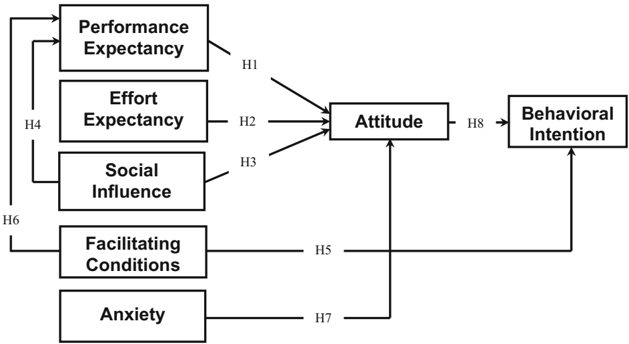
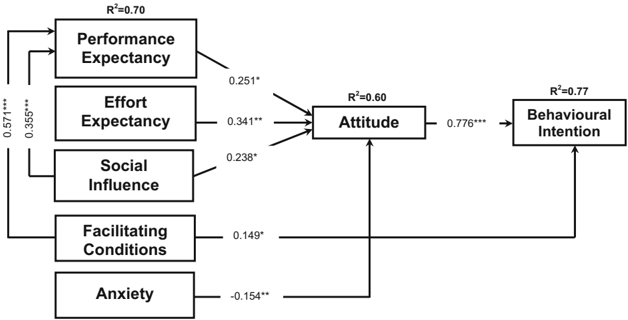
Sluggish adoption of emerging electronic government (eGov) applications continues to be a problem across developed and developing countries. This research tested the nine alternative theoretical models of technology adoption in the context of an eGov system using data collected from citizens of four selected districts in the state of Bihar in India. Analysis of the models indicates that their performance is not up to the expected level in terms of path coefficients, variance in behavioural intention, or the fit indices of the models. In response to the underperformance of the alternative theoretical models to explain the adoption of an eGov system, this research develops a unified model of electronic government adoption and tests it using the same data. The results indicate that the proposed research model outperforms all alternative models of technology adoption by explaining 77 % of variance in behavioural intention, with acceptable values of fit indices and significant relationships between each pair of hypothesised factors.
Overview
The claims and statistics of this paper haven’t been checked yet.
Free: it reads the open-access text and checks the first 5 claims that cite a source we can check. Create a free account to check every claim.
Integrity signals
Registry
Cites
Statistics
Figures
Verification
Claims the paper makes
The claims and statistics of this paper haven’t been checked yet.
Free: it reads the open-access text and checks the first 5 claims that cite a source we can check. Create a free account to check every claim.
Claims other papers make about this one
Each is checked against this paper’s own text: does it say what the citing paper says it does?
The source backs part of the claim, not all of it — or backs it for a different population, condition or comparison.
In the citing paper
“Rana et al. (2016) and Rana et al. (2017) examined electronic government system adoption by citizens from selected cities in India and found that facilitating conditions such as government support in terms of providing training had a positive and significant impact on performance expectancy.”
From Understanding managers’ attitudes and behavioral intentions towards using artificial intelligence for organizational decision-making (2021) · cites this paper as Rana et al., 2017
Experimental — accuracy not yet measured
Self-check
Percentages, sums and reported differences re-computed from the paper’s own numbers.
The self-check needs the paper’s full text.
Citations
Cites
The theory of planned behavior
Ajzen, I. (1991) · Organizational Behavior and Human Decision Processes · doi:10.1016/0749-5978(91)90020-t · Cited by 134,657
Evaluating Structural Equation Models with Unobservable Variables and Measurement Error
Fornell, C., & Larcker, D. F. (1981) · Journal of Marketing Research · doi:10.2307/3151312 · Cited by 109,314 · cited 1×
“AVE, which measures the variation explained by the latent variable as opposed to random measurement error (Netemeyer et al. 1990), ranged from 0.512 to 0.733 for all constructs, thus exceeding the recommended lower limit of 0.50 (Fornell and Larcker 1981).”
BackgroundInfluentialEvaluating structural equation models with unobservable variables and measurement error
Fornell, C., & Larcker, D. F. (1981) · Journal of Marketing Research · doi:10.1177/002224378101800104 · Cited by 109,190
Perceived usefulness, perceived ease of use, and user acceptance of information technology
Davis, F. D. (1989) · MIS Quarterly · doi:10.2307/249008 · Cited by 68,483 · cited 11×
“…2003); CLX: Complexity [Thompson et al. 1991]; EU: Ease of Use (Davis 1989; Davis et al. 1989; Moore and Benbasat 1991); EOU: Perceived Ease of Use (Davis 1989; Davis et al. 1989; Moore and Benbasat 1991); FC: Facilitating Conditions (Thompson et al. 1991; Venkatesh et al. 2003); IMG: Image…”
BackgroundMethodInfluentialUser Acceptance of Information Technology: Toward A Unified View1
Venkatesh, V., Morris, M. G., Davis, G. B., & Davis, F. D. (2003) · MIS Quarterly · doi:10.2307/30036540 · Cited by 45,035 · cited 15×
“Variables including perceived usefulness (TAM/TAM2), relative advantage (DOI, IDT) and outcome expectations (SCT) are similar in nature to performance expectancy (Venkatesh et al. 2003).”
BackgroundMethodInfluentialStructural equation modeling in practice: A review and recommended two-step approach
Anderson, J. C., & Gerbing, D. W. (1988) · Psychological Bulletin · doi:10.1037/0033-2909.103.3.411 · Cited by 41,941 · cited 3×
“Discriminant validity was assessed with the test recommended by Anderson and Gerbing (1988).”
BackgroundMethodRogers, E. M., Singhal, A., & Quinlan, M. M. (2019) · An Integrated Approach to Communication Theory and Research · doi:10.4324/9780203710753-35 · Cited by 37,322
(1975) · PhilPapers (PhilPapers Foundation) · Cited by 36,737
Alternative Ways of Assessing Model Fit
Browne, M. W., & Cudeck, R. (1992) · Sociological Methods & Research · doi:10.1177/0049124192021002005 · Cited by 27,200 · cited 1×
“Finally, RMSEA should be below 0.10 (Browne and Cudeck 1993), but has also been suggested to represent a very good fit if below a more restrictive threshold of 0.08.”
MethodInfluential(1980) · Medical Entomology and Zoology · Cited by 25,810
Research works printed but not linked: 3
- 71. Mujtava, S., & Pandey, P. K. (2012). The E-Governance architecture of global ICT program. International Journal of Computer Science and Telecommunications, 3(5), 136-140.
- 74. Nunnaly, J. (1978). Psychometric theory. New York: McGraw-Hill.
- 84. Rogers, E. M. (1995). Diffusion of innovations (4th ed.). New York: Free Press.
Cited by
Pappas, I. O., & Woodside, A. G. (2021) · International Journal of Information Management · doi:10.1016/j.ijinfomgt.2021.102310 · Cited by 2,254
Dwivedi, Y. K., Rana, N. P., Jeyaraj, A., Clement, M., & Williams, M. D. (2019) · Information Systems Frontiers · doi:10.1007/s10796-017-9774-y · Cited by 2,137
“Meta-analysis enables results from multiple studies (Glass 1976; Hunter and Schmidt 1990; Rana et al. 2015a; Wu and Du 2012; Wu and Lederer 2009) to be accumulated for estimates of the true effect sizes of relationships.”
BackgroundMethodSelf-citationAdvances in Social Media Research: Past, Present and Future
Kapoor, K. K., Tamilmani, K., Rana, N. P., Patil, P., Dwivedi, Y. K., & Nerur, S. (2018) · Information Systems Frontiers · doi:10.1007/s10796-017-9810-y · Cited by 1,285
“It is noteworthy that dominant IS adoption theories such as Unified Theory of Acceptance and Use of Technology (Dwivedi et al. 2017b, c; Rana et al. 2017; Venkatesh et al. 2003), Technology Acceptance Model (Davis 1989) and Innovation Diffusion Theory (Kapoor et al. 2015) are less widely utilised.”
Self-citationConsumers acceptance of artificially intelligent (AI) device use in service delivery
Gursoy, D., Chi, O. H., Lu, L., & Nunkoo, R. (2019) · International Journal of Information Management · doi:10.1016/j.ijinfomgt.2019.03.008 · Cited by 1,437
Investigating the impact of social media advertising features on customer purchase intention
Alalwan, A. A. (2018) · International Journal of Information Management · doi:10.1016/j.ijinfomgt.2018.06.001 · Cited by 906
“Informativeness was articulated by Rotzoll and Haefner (1990) as the extent to which a firm can provide adequate information based on which customers can make better purchasing decisions.”
BackgroundMethodQueiroz, M. M., & Fosso Wamba, S. (2019) · International Journal of Information Management · doi:10.1016/j.ijinfomgt.2018.11.021 · Cited by 1,079
Alalwan, A. A. (2020) · International Journal of Information Management · doi:10.1016/j.ijinfomgt.2019.04.008 · Cited by 777
“Furthermore, the applicability of UTAUT2 was shown in relation to mobile banking applications in Jordan (Alalwan, Dwivedi, & Rana, 2017).”
BackgroundHughes, L., Dwivedi, Y. K., Misra, S. K., Rana, N. P., Raghavan, V., & Akella, V. (2019) · International Journal of Information Management · doi:10.1016/j.ijinfomgt.2019.02.005 · Cited by 823
Self-citationWong, L.-W., Leong, L.-Y., Hew, J.-J., Tan, G. W.-H., & Ooi, K.-B. (2020) · International Journal of Information Management · doi:10.1016/j.ijinfomgt.2019.08.005 · Cited by 739
Smart cities: Advances in research—An information systems perspective
Ismagilova, E., Hughes, L., Dwivedi, Y. K., & Raman, K. R. (2019) · International Journal of Information Management · doi:10.1016/j.ijinfomgt.2019.01.004 · Cited by 848
Self-citationPatil, P., Tamilmani, K., Rana, N. P., & Raghavan, V. (2020) · International Journal of Information Management · doi:10.1016/j.ijinfomgt.2020.102144 · Cited by 820
“Attitude has also been used as a mediating variable between performance expectancy and effort expectancy across several studies (e.g., Alshare & Lane, 2011; Rana et al., 2017; Šumak et al., 2010) that have used UTAUT as a basic model.”
MethodSelf-citationSharma, S. K., & Sharma, M. (2019) · International Journal of Information Management · doi:10.1016/j.ijinfomgt.2018.09.013 · Cited by 655
Consumer use of mobile banking (M-Banking) in Saudi Arabia: Towards an integrated model
Baabdullah, A. M., Alalwan, A. A., Rana, N. P., Kizgin, H., & Patil, P. (2019) · International Journal of Information Management · doi:10.1016/j.ijinfomgt.2018.09.002 · Cited by 577
“Such results are comparable with those of prior studies that have examined related issues of mobile banking (i.e. Alalwan et al., 2017; Lee and Chung, 2009; Rana et al., 2017; Wang and Shih, 2009; Yu, 2012; Zhou et al., 2010).”
BackgroundResultSelf-citationThe Effect of Electronic Word of Mouth Communications on Intention to Buy: A Meta-Analysis
Ismagilova, E., Slade, E. L., Rana, N. P., & Dwivedi, Y. K. (2020) · Information Systems Frontiers · doi:10.1007/s10796-019-09924-y · Cited by 440
Self-citationTamilmani, K., Rana, N. P., Wamba, S. F., & Dwivedi, R. (2021) · International Journal of Information Management · doi:10.1016/j.ijinfomgt.2020.102269 · Cited by 660
Self-citationAn empirical validation of a unified model of electronic government adoption (UMEGA)
Dwivedi, Y. K., Rana, N. P., Janssen, M., Lal, B., Williams, M. D., & Clement, M. (2017) · Government Information Quarterly · doi:10.1016/j.giq.2017.03.001 · Cited by 622
“Prior literature on perceived risk found that 80 percent of Internet users are concerned about making their personal identities known on the web (Gonsalves, 2005; Rana et al., 2015; Schaupp & Carter, 2010).”
BackgroundSelf-citationAlalwan, A. A., Dwivedi, Y. K., Rana, N. P., & Algharabat, R. (2018) · Journal of Retailing and Consumer Services · doi:10.1016/j.jretconser.2017.08.026 · Cited by 576
“…drivers of behavioural intention to adopt and use information systems (IS)/information technology (IT) (e.g. Dwivedi et al., 2017a, 2017b, Rana et al., 2015, 2016, 2017) in general and IB (Alalwan et al., 2017; AbuShanab et al., 2010; Riffai et al., 2012; Martins et al., 2014) in…”
BackgroundSelf-citationCao, G., Duan, Y., Edwards, J. S., & Dwivedi, Y. K. (2021) · Technovation · doi:10.1016/j.technovation.2021.102312 · Cited by 571
“Attitude was measured using four indicators from Dwivedi et al. (2017) in terms of the extent to which managers feel that they like the idea of using AI; using AI is a good idea, a foolish idea, and/or pleasant.”
MethodSelf-citationIsmagilova, E., Hughes, L., Rana, N. P., & Dwivedi, Y. K. (2022) · Information Systems Frontiers · doi:10.1007/s10796-020-10044-1 · Cited by 482
Self-citationThe non-monetary benefits of mobile commerce: Extending UTAUT2 with perceived value
Shaw, N., & Sergueeva, K. (2019) · International Journal of Information Management · doi:10.1016/j.ijinfomgt.2018.10.024 · Cited by 483
Alalwan, A. A., Baabdullah, A. M., Rana, N. P., Tamilmani, K., & Dwivedi, Y. K. (2018) · Technology in Society · doi:10.1016/j.techsoc.2018.06.007 · Cited by 444
Self-citationConsumer Acceptance and Use of Information Technology: A Meta-Analytic Evaluation of UTAUT2
Tamilmani, K., Rana, N. P., & Dwivedi, Y. K. (2021) · Information Systems Frontiers · doi:10.1007/s10796-020-10007-6 · Cited by 341
Self-citationDigital payment and banking adoption research in Gulf countries: A systematic literature review
Alkhowaiter, W. A. (2020) · International Journal of Information Management · doi:10.1016/j.ijinfomgt.2020.102102 · Cited by 364
Alam, M. Z., Hoque, M. R., Hu, W., & Barua, Z. (2020) · International Journal of Information Management · doi:10.1016/j.ijinfomgt.2019.04.016 · Cited by 358
Queiroz, M. M., Fosso Wamba, S., De Bourmont, M., & Telles, R. (2021) · International Journal of Production Research · doi:10.1080/00207543.2020.1803511 · Cited by 339
“…studies that used facilitating conditions (H1) in technology adoption (Venkatesh et al. 2003; Venkatesh, Thong, and Xu 2012; Hew et al.2015; Rana et al.2017), our model showed that facilitating conditions positively affect the behavioural intention to adopt a technology (in this case, BCT).”
BackgroundDwivedi, Y. K., Rana, N. P., Tamilmani, K., & Raman, R. (2020) · Current Opinion in Psychology · doi:10.1016/j.copsyc.2020.03.008 · Cited by 266
Self-citationKar, A. K. (2021) · Information Systems Frontiers · doi:10.1007/s10796-020-10045-0 · Cited by 275
“…additional constructs along with these main constructs as indicated in Table 1 are available, like perceived trust, perceived security, price value, performance expectancy, to name a few (Slade et al. 2013; Rana et al. 2017; Chhonker et al. 2017, 2018; Dwivedi et al. 2019; Tamilmani et al. 2020).”
BackgroundBarriers to the Development of Smart Cities in Indian Context
Rana, N. P., Luthra, S., Mangla, S. K., Islam, R., Roderick, S., & Dwivedi, Y. K. (2019) · Information Systems Frontiers · doi:10.1007/s10796-018-9873-4 · Cited by 284
Self-citationThe effects of trust on behavioral intention and use behavior within e-government contexts
Hooda, A., Gupta, P., Jeyaraj, A., Giannakis, M., & Dwivedi, Y. K. (2022) · International Journal of Information Management · doi:10.1016/j.ijinfomgt.2022.102553 · Cited by 236
Self-citationHossain, A., Quaresma, R., & Rahman, H. (2019) · International Journal of Information Management · doi:10.1016/j.ijinfomgt.2018.09.016 · Cited by 270
Delivering public value through open government data initiatives in a Smart City context
Pereira, G. V., Macadar, M. A., Luciano, E. M., & Testa, M. G. (2017) · Information Systems Frontiers · doi:10.1007/s10796-016-9673-7 · Cited by 265
Thusi, P., & Maduku, D. K. (2020) · Computers in Human Behavior · doi:10.1016/j.chb.2020.106405 · Cited by 221
Adoption of online public grievance redressal system in India: toward developing a unified view
Rana, N. P., Dwivedi, Y. K., Williams, M. D., & Weerakkody, V. (2016) · Computers in Human Behavior · doi:10.1016/j.chb.2016.02.019 · Cited by 274
Self-citationShareef, M. A., Baabdullah, A., Dutta, S., Kumar, V., & Dwivedi, Y. K. (2018) · Journal of Retailing and Consumer Services · doi:10.1016/j.jretconser.2018.03.003 · Cited by 245
Self-citationChatterjee, S., Rana, N. P., Khorana, S., Mikalef, P., & Sharma, A. (2023) · Information Systems Frontiers · doi:10.1007/s10796-021-10181-1 · Cited by 207
“Further, the sense of compatibility is perceived to affect the use behavior through users ’ attitude (Kim et al., 2009; Rana et al., 2017).”
BackgroundSelf-citationMobile banking use: A comparative study with Brazilian and U.S. participants
Malaquias, R. F., & Hwang, Y. (2019) · International Journal of Information Management · doi:10.1016/j.ijinfomgt.2018.10.004 · Cited by 213
“Trust also affects users’ perception of mobile banking satisfaction (Lee & Chung, 2009), and it increases the adoption of mobile banking by customers (Lin, 2011), being a crucial factor in this regard (Alalwan, Dwivedi, & Rana, 2017).”
BackgroundTsai, J.-M., Cheng, M.-J., Tsai, H.-H., Hung, S.-W., & Chen, Y.-L. (2019) · International Journal of Information Management · doi:10.1016/j.ijinfomgt.2019.03.003 · Cited by 257
Success of IoT in Smart Cities of India: An empirical analysis
Chatterjee, S., Kar, A. K., & Gupta, M. P. (2018) · Government Information Quarterly · doi:10.1016/j.giq.2018.05.002 · Cited by 236
Factors influencing adoption of online teaching by school teachers: A study during COVID‐19 pandemic
Sangeeta, & Tandon, U. (2021) · Journal of Public Affairs · doi:10.1002/pa.2503 · Cited by 213
“Attitude has also been validated by previous researchers that used UTAUT also (Aboelmaged, 2010; Alshare & Lane, 2011; Chen & Lu, 2011; Mosunmola et al., 2018; Rana, Dwivedi, Lal, Williams, & Clement, 2017; Tandon et al., 2016).”
MethodOpen data and its usability: an empirical view from the Citizen’s perspective
Weerakkody, V., Irani, Z., Kapoor, K., Sivarajah, U., & Dwivedi, Y. K. (2017) · Information Systems Frontiers · doi:10.1007/s10796-016-9679-1 · Cited by 213
“However, the spread of digital governance and associated norms, such as responsiveness, accessibility and efficiency of public services, transparency and accountability (Carter and Weerakkody 2008; Wilcox 2010; Rana et al. 2015), have motivated governments to exploit the potential of wider distribution and use of such…”
BackgroundSelf-citationImpact of internet of things (IoT) in disaster management: a task-technology fit perspective
Sinha, A., Kumar, P., Rana, N. P., Islam, R., & Dwivedi, Y. K. (2019) · Annals of Operations Research · doi:10.1007/s10479-017-2658-1 · Cited by 213
Self-citationGutierrez, A., O'Leary, S., Rana, N. P., Dwivedi, Y. K., & Calle, T. (2019) · Computers in Human Behavior · doi:10.1016/j.chb.2018.09.015 · Cited by 214
Self-citationModelling internet banking adoption in Fiji: A developing country perspective
Sharma, R., Singh, G., & Sharma, S. (2020) · International Journal of Information Management · doi:10.1016/j.ijinfomgt.2020.102116 · Cited by 193
Mahroof, K. (2019) · International Journal of Information Management · doi:10.1016/j.ijinfomgt.2018.11.008 · Cited by 223
Janssen, M., Rana, N. P., Slade, E. L., & Dwivedi, Y. K. (2018) · Public Management Review · doi:10.1080/14719037.2017.1305689 · Cited by 181
Self-citationUnderstanding the determinants of mHealth apps adoption in Bangladesh: A SEM-Neural network approach
Alam, M. Z., Hu, W., Kaium, M. A., Hoque, M. R., & Alam, M. M. D. (2020) · Technology in Society · doi:10.1016/j.techsoc.2020.101255 · Cited by 196
Baabdullah, A. M. (2018) · Technology in Society · doi:10.1016/j.techsoc.2018.01.004 · Cited by 186
Al-Adwan, A. S., & Al-Debei, M. M. (2024) · Education and Information Technologies · doi:10.1007/s10639-023-12080-1 · Cited by 171
“Thus, such exclusion enables a model that can be applied to any context instead of relying on a specific setting (Dwivedi et al., 2017; Rana et al., 2017).”
Examining the core knowledge on facebook
Shiau, W.-L., Dwivedi, Y. K., & Lai, H.-H. (2018) · International Journal of Information Management · doi:10.1016/j.ijinfomgt.2018.06.006 · Cited by 189
Self-citationAl-Emran, M. (2023) · Technology in Society · doi:10.1016/j.techsoc.2023.102383 · Cited by 174
Sharma, S. K., Al-Badi, A., Rana, N. P., & Al-Azizi, L. (2018) · Government Information Quarterly · doi:10.1016/j.giq.2018.07.002 · Cited by 183
“…the fact that performance expectancy is the important predictor of behavioral intention towards acceptance of a new technology (Alalwan, Dwivedi & Rana, 2017; Alalwan et al., 2015; Hanafizadeh et al., 2014; Luo et al., 2010; Venkatesh, Thong & Xu, 2012; Venkatesh et al., 2003; Zhou, 2012).”
BackgroundSelf-citationExploring barriers of m-commerce adoption in SMEs in the UK: Developing a framework using ISM
Rana, N. P., Barnard, D. J., Baabdullah, A. M. A., Rees, D., & Roderick, S. (2019) · International Journal of Information Management · doi:10.1016/j.ijinfomgt.2018.10.009 · Cited by 169
“…can select some more relevant variables suitable to their context and formulate and empirically test their corresponding items and validate the proposed research model and their performance (e.g. Alalwan et al., 2016, 2017; Baabdullah et al., 2019; Dwivedi et al., 2017b; Rana et al., 2016, 2017).”
BackgroundSelf-citationManfreda, A., Ljubi, K., & Groznik, A. (2021) · International Journal of Information Management · doi:10.1016/j.ijinfomgt.2019.102050 · Cited by 169
Examining gender differences in people’s information-sharing decisions on social networking sites
Lin, X., & Wang, X. (2020) · International Journal of Information Management · doi:10.1016/j.ijinfomgt.2019.05.004 · Cited by 165
Alkraiji, A. I., & Ameen, N. (2021) · Information Technology and People · doi:10.1108/itp-04-2020-0229 · Cited by 202
Beyond user experience: What constitutes algorithmic experiences?
Shin, D., Zhong, B., & Biocca, F. A. (2020) · International Journal of Information Management · doi:10.1016/j.ijinfomgt.2019.102061 · Cited by 174
An integrated model for m-banking adoption in Saudi Arabia
Baabdullah, A. M., Alalwan, A. A., Rana, N. P., Patil, P., & Dwivedi, Y. K. (2019) · International Journal of Bank Marketing · doi:10.1108/ijbm-07-2018-0183 · Cited by 133
Self-citationYang, Y., Gong, Y. Y., Land, L. P. W., & Chesney, T. (2019) · International Journal of Information Management · doi:10.1016/j.ijinfomgt.2019.102046 · Cited by 185
An integrated model for using social media applications in non-profit organizations
Albanna, H., Alalwan, A. A., & Al‐Emran, M. (2021) · International Journal of Information Management · doi:10.1016/j.ijinfomgt.2021.102452 · Cited by 187
E-Government Services Adoption: An Extension of the Unified Model of Electronic Government Adoption
Mensah, I. K., Zeng, G., & Luo, C. (2020) · SAGE Open · doi:10.1177/2158244020933593 · Cited by 189
Bouteraa, M., Bin-Nashwan, S. A., Al-Daihani, M., Dirie, K. A., Benlahcene, A., Sadallah, M., Zaki, H. O., Lada, S., Ansar, R., Fook, L. M., et al. (2024) · Computers in Human Behavior Reports · doi:10.1016/j.chbr.2024.100402 · Cited by 162
Namahoot, K. S., & Jantasri, V. (2022) · Journal of Science and Technology Policy Management · doi:10.1108/jstpm-07-2020-0102 · Cited by 187
Smart Monitoring and Controlling of Government Policies Using Social Media and Cloud Computing
Singh, P., Dwivedi, Y. K., Kahlon, K. S., Sawhney, R. S., Alalwan, A. A., & Rana, N. P. (2019) · Information Systems Frontiers · doi:10.1007/s10796-019-09916-y · Cited by 167
“…such powerful tool that holds all the essentials to improve the relationship between the general public and the government (Dwivedi et al. 2017a, b; Rana et al. 2016, 2017; Shareef et al. 2016) as it strongly put emphasis on maintaining trans-parency, enhancing public participation and upgrading…”
Self-citationInvestigating the influence of transparency on the adoption of e-Government in Indonesia
Sabani, A. (2020) · Journal of Science and Technology Policy Management · doi:10.1108/jstpm-03-2020-0046 · Cited by 170
Exploring factors affecting the adoption of MOOC in Generation Z using extended UTAUT2 model
Meet, R. K., Kala, D., & Al-Adwan, A. S. (2022) · Education and Information Technologies · doi:10.1007/s10639-022-11052-1 · Cited by 127
“Additionally, excluding the moderators contributes significantly to building models that could be utilized in any context (Rana et al., 2017).”
BackgroundThe Impact of Social Media on Consumers’ Acculturation and Purchase Intentions
Kizgin, H., Jamal, A., Dey, B. L., & Rana, N. P. (2018) · Information Systems Frontiers · doi:10.1007/s10796-017-9817-4 · Cited by 129
“theory of acceptance and use of technology (Dwivedi et al. 2017a; Dwivedi et al. 2017b; Rana et al. 2016; Rana et al. 2017; Venkatesh et al. 2003;Williams et al. 2015), technology acceptance model (Davis 1989; Rana and Dwivedi 2016), theory of reasoned action (Alryalat et al.”
BackgroundSelf-citationCai, L., Yuen, K. F., Xie, D., Fang, M., & Wang, X. (2021) · Technology in Society · doi:10.1016/j.techsoc.2021.101789 · Cited by 152
Sustainable consumption from the consumer’s perspective: Antecedents of solar innovation adoption
Kapoor, K. K., & Dwivedi, Y. K. (2019) · Resources Conservation and Recycling · doi:10.1016/j.resconrec.2019.104501 · Cited by 150
“The literature offers various theoretical models highly concentrated in the sociology and psychology theories (Alalwan et al., 2017; Dwivedi et al., 2019;2017; Rana et al. 2017; 2016; Shareef et al., 2017; Venkatesh et al., 2012) to study the acceptance of such technological innovations.”
BackgroundSelf-citationA Hybrid SEM-Neural Network Model for Predicting Determinants of Mobile Payment Services
Sharma, S. K., Sharma, H., & Dwivedi, Y. K. (2019) · Information Systems Management · doi:10.1080/10580530.2019.1620504 · Cited by 145
“several researchers (Kapoor, Dwivedi & Williams, 2015; Liébana-Cabanillas et al., 2017a, Liébana-Cabanillas, Marinković, & Kalinić, 2017b; Sharma, 2017; Dwivedi et al. 2017 A; Dwivedi et al., 2017 B; Rana et al., 2017; Rana et al., 2016; Slade, Williams, Dwivedi, & Piercy, 2015a; Slade, Dwivedi, Piercy, & Williams, 20…”
Self-citationFactors Affecting the Behavioral Intention to Adopt Mobile Payment: An Empirical Study in Taiwan
Lin, W. R., Lin, C.-Y., & Ding, Y.-H. (2020) · Mathematics · doi:10.3390/math8101851 · Cited by 143
Kaushik, K., Mishra, R., Rana, N. P., & Dwivedi, Y. K. (2018) · Journal of Retailing and Consumer Services · doi:10.1016/j.jretconser.2018.08.002 · Cited by 146
Self-citationZahid, H., & Din, B. H. (2019) · Resources · doi:10.3390/resources8030128 · Cited by 149
“To date, as per the best of the researchers’ knowledge, few studies have investigated the intention to use e-government services [43].”
BackgroundDigital Payments Adoption: An Analysis of Literature
Patil, P. P., Dwivedi, Y. K., & Rana, N. P. (2017) · Lecture notes in computer science · doi:10.1007/978-3-319-68557-1_7 · Cited by 146
“In addition, the future research should also validate the modified UTAUT model developed by some recent studies (e.g. Dwivedi et al. [39, 40]; Rana et al. [41, 42]) in the areas of technology and e-government adoption.”
ResultSelf-citationInvolvement in emergency supply chain for disaster management: a cognitive dissonance perspective
Dwivedi, Y. K., Shareef, M. A., Mukerji, B., Rana, N. P., & Kapoor, K. K. (2017) · International Journal of Production Research · doi:10.1080/00207543.2017.1378958 · Cited by 122
“…of planned behaviour argue that attitude has a direct cause–effect relationship with behavioural intention, which is also demonstrated by several recently published studies (see Dwivedi, Rana, Janssen, et al. 2017, Dwivedi, Rana, Jeyaraj, et al. 2017; Rana et al. 2016, 2017) on technology adoption.”
ResultSelf-citationMustafa, S. Z., Kar, A. K., & Janssen, M. (2020) · International Journal of Information Management · doi:10.1016/j.ijinfomgt.2020.102119 · Cited by 127
Sullivan, Y. W., & Koh, C. E. (2019) · International Journal of Information Management · doi:10.1016/j.ijinfomgt.2019.03.014 · Cited by 120
Mensah, I. K. (2019) · Sage Open · doi:10.1177/2158244019855823 · Cited by 104
“Effectiveness in service delivery Transparency, accountability attitude and facilitating conditions determine the behavioral intention to use e-government services (Dwivedi et al., 2017; Rana, Dwivedi, Lal, Williams, & Clement, 2017).”
BackgroundKaium, M. A., Bao, Y., Alam, M. Z., & Hoque, M. R. (2020) · International Journal of Pharmaceutical and Healthcare Marketing · doi:10.1108/ijphm-06-2019-0041 · Cited by 120
The Impact of Perceived Risk on Consumers’ Cross-Platform Buying Behavior
Zhang, X., & Yu, X. (2020) · Frontiers in Psychology · doi:10.3389/fpsyg.2020.592246 · Cited by 103
“For instance, how the perceived usefulness (or performance expectancy) and perceived ease of use (or effort expectancy) have an effect on the continual use of information technology (IT) (Davis, 1989; Rana et al., 2016, 2017; Dwivedi et al., 2017a,b).”
BackgroundFactors influencing the adoption of e-government services among Jordanian citizens
Almaiah, M. A., & Nasereddin, Y. A. (2020) · Electronic Government an International Journal · doi:10.1504/eg.2020.108453 · Cited by 129
Examining the antecedents and outcomes of smart government usage: An integrated model
Hujran, O., Al‐Debei, M. M., Al‐Adwan, A. S., Alarabiat, A., & Altarawneh, N. (2022) · Government Information Quarterly · doi:10.1016/j.giq.2022.101783 · Cited by 126
Baabdullah, A. M. (2023) · International Journal of Information Management · doi:10.1016/j.ijinfomgt.2023.102745 · Cited by 127
Rana, N. P., Slade, E. L., Kitching, S., & Dwivedi, Y. K. (2019) · Computers in Human Behavior · doi:10.1016/j.chb.2019.07.022 · Cited by 112
Self-citationMorte-Nadal, T., & Navarro, M. Á. E. (2022) · International Journal of Qualitative Methods · doi:10.1177/16094069211070935 · Cited by 107
Rodríguez-Hevía, L. F., Navío-Marco, J., & Ruiz-Gómez, L. M. (2020) · Sustainability · doi:10.3390/su12176807 · Cited by 112
“, [46–51]) to examine the factors influencing the speed of adoption of egovernment systems or the reluctance of users to adopt them [2,52].”
BackgroundManrai, R., Goel, U., & Yadav, P. D. (2021) · Aslib Journal of Information Management · doi:10.1108/ajim-12-2020-0396 · Cited by 114
Alarabiat, A., Soares, D. D. S., & Estévez, E. (2020) · Government Information Quarterly · doi:10.1016/j.giq.2020.101537 · Cited by 109
Al‐Okaily, M., Al-Fraihat, D., Al‐Debei, M. M., & Al-Okaily, A. (2022) · International Journal of Electronic Government Research · doi:10.4018/ijegr.313635 · Cited by 108
Wang, Y., Li-fu, J., & Mao, H. (2019) · Information Systems Frontiers · doi:10.1007/s10796-019-09909-x · Cited by 97
A Comparative Analysis of the Impact of Political Trust on the Adoption of E-Government Services
Mensah, I. K., & Adams, S. (2019) · International Journal of Public Administration · doi:10.1080/01900692.2019.1645687 · Cited by 98
“For instance it has been used in the context of e-government services to understand citizens/users behavioral intention to use (Ebbers, 2017; Rana, Dwivedi, Lal, Williams, & Clement, 2017; Taiwo, 2018), e-business and e-commerce context (Goswami & Dutta, 2017; Warsame & Ireri, 2018), e-learning…”
MethodDeterminants of intention to use e-government services: An integrated marketing relation view
Zahid, H., Ali, S., Abu-Shanab, E., & Javed, H. M. U. (2022) · Telematics and informatics · doi:10.1016/j.tele.2022.101778 · Cited by 65
Ray, A., Bala, P. K., & Dasgupta, S. A. (2019) · International Journal of Information Management · doi:10.1016/j.ijinfomgt.2019.01.015 · Cited by 88
Gao, F., & Sunyaev, A. (2019) · International Journal of Information Management · doi:10.1016/j.ijinfomgt.2019.02.002 · Cited by 92
Alam, M. Z., Hu, W., Hoque, M. R., & Kaium, M. A. (2020) · International Journal of Pharmaceutical and Healthcare Marketing · doi:10.1108/ijphm-03-2019-0023 · Cited by 101
Wattoo, M. U., & Iqbal, S. M. J. (2022) · SAGE Open · doi:10.1177/21582440221097920 · Cited by 94
Gulati, A., Saini, H., Singh, S., & Kumar, V. (2024) · Marketing Education Review · doi:10.1080/10528008.2023.2300139 · Cited by 61
“Hence, we argued that the moderators outlined in the original UTAUT model may not be universally relevant across all settings and consequently face the risk of lacking relevance in certain circumstances (Rana, Dwivedi, Lal, Williams, & Clement, 2017), including the present study.”
Tandon, U., Mittal, A., & Manohar, S. (2021) · Electronic Markets · doi:10.1007/s12525-020-00436-1 · Cited by 81
“Owing to the modifications in customers’ lifestyle, they use ecommerce and m-commerce to simplify their routine shopping activities (Shareef et al. 2019; Rana et al. 2017).”
Background“Privacy by Design” implementation: Information system engineers’ perspective
Bu, F., Wang, N., Jiang, B., & Liang, H. (2020) · International Journal of Information Management · doi:10.1016/j.ijinfomgt.2020.102124 · Cited by 109
Bu, F., Wang, N., Jiang, B., & Jiang, Q. (2021) · International Journal of Information Management · doi:10.1016/j.ijinfomgt.2021.102358 · Cited by 90
Sharma, S., Singh, G., Pratt, S., & Narayan, J. J. (2020) · International Journal of Culture Tourism and Hospitality Research · doi:10.1108/ijcthr-03-2020-0064 · Cited by 89
Metadata
- Authors
- Rana, N. P., Dwivedi, Y. K., Lal, B., Williams, M. D., & Clement, M.
- Affiliations
- Swansea University (GB)
- Nottingham Trent University (GB)
- Corresponding author
- Dwivedi, Yogesh K.
- Venue
- Information Systems Frontiers
- Published
- 2015-11-24
- Volume
- 19
- Issue
- 3
- Pages
- 549-568
- ISSN
- 1387-3326 (ISSN-L)
- 1572-9419
- OpenAlex
- W2218975180
- Cited by
- 373
- References
- 117
- Citations by year
- 2026: 22 · 2025: 24 · 2024: 39 · 2023: 38 · 2022: 38 · 2021: 44 · 2020: 46 · 2019: 56 · 2018: 41 · 2017: 20 · 2016: 4 · 2015: 1
- FWCI
- 143.04
- Type
- journal article
- Language
- en
- Open access
- hybrid
- doi.org
- Locations
- Information Systems Frontiers (publishedVersion, cc-by)
- RePEc: Research Papers in Economics (submittedVersion)
- Bradford Scholars (University of Bradford) (submittedVersion, cc-by)
- Nottingham Trent University's Institutional Repository (Nottingham Trent Repository) (submittedVersion)
- University of Bedfordshire Repository (University of Bedfordshire) (submittedVersion, cc-by-nc-nd)
- Funders
- Nuffield Foundation
- European Commission
- Swansea University
- Israel Science Foundation
- Topics
- Social Sciences › Political Science and International Relations › E-Government and Public Services
- Social Sciences › Decision Sciences › Information Systems and Management › Technology Adoption and User Behaviour
- Social Sciences › Business, Management and Accounting › Organizational Behavior and Human Resource Management › Employer Branding and e-HRM
- Keywords
- e-government, e-government adoption, technology adoption model, behavioral intention, citizens, Bihar, model comparison
About these checks
Registry, retraction, Cites and statistics results are computed, not judged, with one exception: a printed reference that no index lists is read once by a model before it counts as a citation error. Claims are extracted by a model and kept only when their quote appears verbatim in the text; each cited source is then checked, with a model’s help, for whether it says what the claim relies on. Those verdicts can be wrong — read the claim’s quote and the cited source before relying on one.
Statistics and arithmetic are recomputed, not judged.
Confidence bands are shown only for fields calibrated on our annotated test set. None is calibrated yet, so no band is shown.
What counts as a claim ›How we measure confidence ›How we check this ›
Are you an author, or do you see a problem with this page? Request a review
Data sources
Bibliographic data: Semantic Scholar, OpenAlex, Crossref.
Contains information from the Semantic Scholar Academic Graph Datasets, made available under the ODC Attribution License (ODC-BY 1.0).
Semantic Scholar’s data is described in: Kinney, R., et al. (2023). The Semantic Scholar Open Data Platform. arXiv:2301.10140.
