

A Close Eye on the Eagle-Eyed Visual Acuity Hypothesis of Autism
Open accessThe DOI matches its Crossref record; 58 of the 59 references it cites were found in a registry or an index.
Abstract
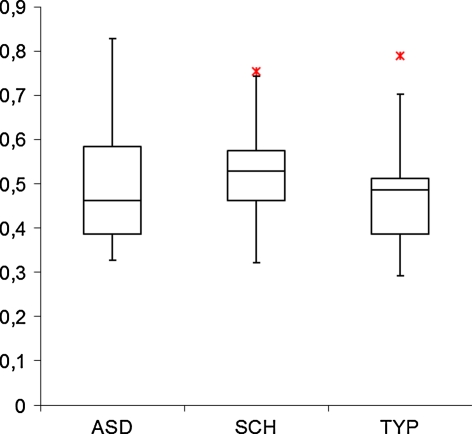
Autism spectrum disorders (ASD) have been associated with sensory hypersensitivity. A recent study reported visual acuity (VA) in ASD in the region reported for birds of prey. The validity of the results was subsequently doubted. This study examined VA in 34 individuals with ASD, 16 with schizophrenia (SCH), and 26 typically developing (TYP). Participants with ASD did not show higher VA than those with SCH and TYP. There were no substantial correlations of VA with clinical severity in ASD or SCH. This study could not confirm the eagle-eyed acuity hypothesis of ASD, or find evidence for a connection of VA and clinical phenotypes. Research needs to further address the origins and circumstances associated with altered sensory or perceptual processing in ASD.
Overview
The claims and statistics of this paper haven’t been checked yet.
Free: it reads the open-access text and checks the first 5 claims that cite a source we can check. Create a free account to check every claim.
Integrity signals
Registry
Cites
Statistics
Figures
Verification
Claims the paper makes
The claims and statistics of this paper haven’t been checked yet.
Free: it reads the open-access text and checks the first 5 claims that cite a source we can check. Create a free account to check every claim.
Claims other papers make about this one
Each is checked against this paper’s own text: does it say what the citing paper says it does?
In the citing paper
“These hypersensitivities cannot be explained as outcomes of abnormally enhanced sensation (29 -31).”
From Autism as a disorder of prediction (2014) · cites this paper as [30]
Self-check
Percentages, sums and reported differences re-computed from the paper’s own numbers.
The self-check needs the paper’s full text.
Citations
Cites
The assessment and analysis of handedness: The Edinburgh inventory
Oldfield, R. C. (1971) · Neuropsychologia · doi:10.1016/0028-3932(71)90067-4 · Cited by 35,900 · cited 1×
“The groups were comparable with regard to sex distribution [v2(2) = 2.7, p = .31], handedness (Edinburgh Handedness Inventory) (Oldfield 1971) [v2(4) = 3.6, p = .50], and nonverbal IQ (Raven’s SPM) (Kratzmeier and Horn 1987) [F(2,75) = 1.3, p = .28, g2 = .03].”
MethodInfluentialThe Positive and Negative Syndrome Scale (PANSS) for schizophrenia.
Kay, S. R., Fiszbein, A., & Opler, L. A. (1987) · Schizophrenia Bulletin · doi:10.1093/schbul/13.2.261 · Cited by 21,378
Philosophical transactions of the Royal Society of London. B
Press, H. (1886) · Cited by 10,081
The weak coherence account: detail-focused cognitive style in autism spectrum disorders
Happé, F., & Frith, U. (2006) · Journal of Autism and Developmental Disorders · doi:10.1007/s10803-005-0039-0 · Cited by 2,884
Enhanced Perceptual Functioning in Autism: An Update, and Eight Principles of Autistic Perception
Mottron, L., Dawson, M., Soulières, I., Hubert, B., & Burack, J. (2006) · Journal of Autism and Developmental Disorders · doi:10.1007/s10803-005-0040-7 · Cited by 1,957 · cited 1×
“…of Turin, Turin, Italy H. Walter Department of Psychiatry, Charité, Berlin, Germany overconnectivity (Belmonte and Yurgelun-Todd 2003; Geschwind and Levitt 2007) and enhanced perceptual functioning and discrimination (Mottron et al. 2006; Plaisted 2001) have been postulated to cause ATD.”
BackgroundTomchek, S. D., & Dunn, W. (2007) · American Journal of Occupational Therapy · doi:10.5014/ajot.61.2.190 · Cited by 1,534
Autism spectrum disorders: developmental disconnection syndromes
Geschwind, D. H., & Levitt, P. (2007) · Current Opinion in Neurobiology · doi:10.1016/j.conb.2007.01.009 · Cited by 1,411 · cited 2×
“On the biological level, neural disconnectivity or S. Bölte (&) Department of Women’s and Children’s Health, Astrid Lindgren Children’s Hospital, Q2:07, Center of Neurodevelopmental Disorders (KIND), Karolinska Institutet, 17176 Stockholm, Sweden e-mail: sven.bolte@ki.se S. Bölte Department of Child and Adolescent P…”
BackgroundThe Freiburg Visual Acuity Test???Automatic Measurement of Visual Acuity
Bach, M. (1996) · Optometry and Vision Science · doi:10.1002/j.1538-9235.1996.tb04409.x · Cited by 984
An islet of ability in autistic children: a research note
Shah, A., & Frith, U. (1983) · Journal of Child Psychology and Psychiatry · doi:10.1111/j.1469-7610.1983.tb00137.x · Cited by 888 · cited 3×
“the Embedded Figures Test (Shah and Frith 1983), or resisting the influence of context in visual illusions (Happé”
BackgroundVision in autism spectrum disorders
Simmons, D. R., Robertson, A. E., McKay, L. S., Toal, E., McAleer, P., & Pollick, F. E. (2009) · Vision Research · doi:10.1016/j.visres.2009.08.005 · Cited by 827
Research works printed but not linked: 7
- Achenbach TM Rescorla LA Manual for ASEBA adult forms & profiles 2003 Burlington, VT University of Vermont, Research Center for Children, Youth & Families
- Bölte S Rühl D Schmötzer G Poustka F Diagnostisches Interview für Autismus–Revidiert (ADI-R) 2006 Bern Huber
- Bulheller S Häcker H Peadbody picture vocabulary test (PPVT) 2004 Frankfurt/M Harcourt
- Kratzmeier H Horn R Raven-matrizen-test (SPM) 1987 Göttingen Beltz
- Rassow B Cavazos H Wesemann W Normgerechte Sehschärfenbestimmung mit Buchstaben Augenärztliche Fortbildung 1990 13 105 114
- Rühl D Bölte S Feineis-Matthews S Poustka F Diagnostische Beobachtungsskala für Autistische Störungen (ADOS) 2004 Bern Huber 14992047
- Tavassoli, T., Latham, K., & Baron-Cohen, S. (2010). Visual processing in autism spectrum conditions. Poster presented at the 3rd conference of the Scientific Society Autism Spectrum (WTAS), 18th–19th February, Frankfurt/M., Germany.
Cited by
Precise minds in uncertain worlds: Predictive coding in autism.
Van de Cruys, S., Evers, K., Van der Hallen, R., Van Eylen, L., Boets, B., de-Wit, L., & Wagemans, J. (2014) · Psychological Review · doi:10.1037/a0037665 · Cited by 885
“Bach & Dakin, 2009), and replication attempts have failed (Bölte et al., 2012; Kéïta, Mottron, & Bertone, 2010).”
BackgroundAutism as a disorder of prediction
Sinha, P., Kjelgaard, M. M., Gandhi, T. K., Tsourides, K., Cardinaux, A. L., Pantazis, D., Diamond, S. P., & Held, R. M. (2014) · Proceedings of the National Academy of Sciences · doi:10.1073/pnas.1416797111 · Cited by 563
The Sensory Experiences of Adults with Autism Spectrum Disorder: A Qualitative Analysis
Robertson, A. E., & Simmons, D. R. (2015) · Perception · doi:10.1068/p7833 · Cited by 293
Autismo infantil: impacto do diagnóstico e repercussões nas relações familiares
Pinto, R. N. M., Torquato, I. M. B., Collet, N., Reichert, A. P. D. S., Souza Neto, V. L. D., & Saraiva, A. M. (2016) · Revista Gaúcha de Enfermagem · doi:10.1590/1983-1447.2016.03.61572 · Cited by 162
The Mechanisms Underlying the ASD Advantage in Visual Search
Káldy, Z., Giserman, I., Carter, A. S., & Blaser, E. (2013) · Journal of Autism and Developmental Disorders · doi:10.1007/s10803-013-1957-x · Cited by 160
The Role of Sensorimotor Difficulties in Autism Spectrum Conditions
Hannant, P., Tavassoli, T., & Cassidy, S. (2016) · Frontiers in Neurology · doi:10.3389/fneur.2016.00124 · Cited by 103
Enhanced olfactory sensitivity in autism spectrum conditions
Ashwin, C., Chapman, E., Howells, J., Rhydderch, D., Walker, I. O., & Baron‐Cohen, S. (2014) · Molecular Autism · doi:10.1186/2040-2392-5-53 · Cited by 121
Vision in children with autism spectrum disorder: a critical review
Little, J. (2018) · Clinical and Experimental Optometry · doi:10.1111/cxo.12651 · Cited by 114
Low endogenous neural noise in autism
Davis, G., & Plaisted-Grant, K. (2015) · Autism · doi:10.1177/1362361314552198 · Cited by 99
“While either the high- or low-noise account can explain Bertone and colleagues’ findings, neither offers a natural account of why visual acuity (Bölte et al., 2012; Kéïta et al., 2010) and the contrast sensitivity function (Koh et al., 2010) should be normal in autism.”
BackgroundA Systematic Review of Assessments for Sensory Processing Abnormalities in Autism Spectrum Disorder
Burns, C. O., Dixon, D. R., Novack, M. N., & Granpeesheh, D. (2017) · Review Journal of Autism and Developmental Disorders · doi:10.1007/s40489-017-0109-1 · Cited by 77
Sensory processing in autism across exteroceptive and interoceptive domains.
Proff, I., Williams, G. L., Quadt, L., & Garfinkel, S. N. (2022) · Psychology & Neuroscience · doi:10.1037/pne0000262 · Cited by 69
“Basic visual discrimination In the visual domain, a compelling number of studies measuring visual acuity (Bölte et al., 2012; Kéïta et al., 2010; Tavassoli et al., 2016), orientation (Freyberg et al.”
BackgroundReduced Sensory Habituation in Autism and Its Correlation with Behavioral Measures
Jamal, W., Cardinaux, A., Haskins, A. J., Kjelgaard, M., & Sinha, P. (2021) · Journal of Autism and Developmental Disorders · doi:10.1007/s10803-020-04780-1 · Cited by 69
Psychophysical measures of visual acuity in autism spectrum conditions
Tavassoli, T., Latham, K., Bach, M., Dakin, S. C., & Baron-Cohen, S. (2011) · Vision Research · doi:10.1016/j.visres.2011.06.004 · Cited by 62
Pei, F., Baldassi, S., & Norcia, A. M. (2014) · Journal of Vision · doi:10.1167/14.11.3 · Cited by 58
Brosnan, M., Gwilliam, L. R., & Walker, I. O. (2012) · Journal of Autism and Developmental Disorders · doi:10.1007/s10803-012-1505-0 · Cited by 46
Accommodative Function in Individuals with Autism Spectrum Disorder
Anketell, P. M., Saunders, K. J., Gallagher, S. M., Bailey, C., & Little, J. (2018) · Optometry and Vision Science · doi:10.1097/opx.0000000000001190 · Cited by 40
Perna, J., Bellato, A., Ganapathy, P. S., Solmi, M., Zampieri, A., Faraone, S. V., & Cortese, S. (2023) · Molecular Psychiatry · doi:10.1038/s41380-023-02143-7 · Cited by 39
Robertson, A. (2012) · Enlighten: Theses (The University of Glasgow) · Cited by 34
Schauder, K. B., Park, W. J., Tadin, D., & Bennetto, L. (2017) · Clinical Psychological Science · doi:10.1177/2167702617707733 · Cited by 32
Falkmer, M. (2013) · Jonkoping University Library (Jönköping University) · Cited by 54
Whitaker, L., Jones, C. R. G., Wilkins, A. J., & Roberson, D. D. (2015) · Autism Research · doi:10.1002/aur.1506 · Cited by 31
Atypical visual processing in a mouse model of autism
Cheng, N., Pagtalunan, E. B., Abushaibah, A., Naidu, J., Stell, W. K., Rho, J. M., & Sauvé, Y. (2020) · Scientific Reports · doi:10.1038/s41598-020-68589-9 · Cited by 27
Brief Report: Vision in Children with Autism Spectrum Disorder: What Should Clinicians Expect?
Anketell, P. M., Saunders, K. J., Gallagher, S. M., Bailey, C., & Little, J. (2015) · Journal of Autism and Developmental Disorders · doi:10.1007/s10803-015-2431-8 · Cited by 26
Ophthalmologic diagnoses in youths with autism spectrum disorder: Prevalence and clinical correlates
Wu, C., Tsai, T., Chen, W., Tsai, H., & Chien, Y. (2023) · Autism Research · doi:10.1002/aur.3019 · Cited by 24
When do individuals with autism spectrum disorder show superiority in visual search?
Shirama, A., Kato, N., & Kashino, M. (2016) · Autism · doi:10.1177/1362361316656943 · Cited by 24
Autonomic and Electrophysiological Evidence for Reduced Auditory Habituation in Autism
Gandhi, T. K., Tsourides, K., Singhal, N., Cardinaux, A. L., Jamal, W., Pantazis, D., Kjelgaard, M., & Sinha, P. (2020) · Journal of Autism and Developmental Disorders · doi:10.1007/s10803-020-04636-8 · Cited by 24
Milne, E., Scope, A., Griffiths, H., Codina, C. J., & Buckley, D. (2012) · Journal of Autism and Developmental Disorders · doi:10.1007/s10803-012-1730-6 · Cited by 24
van Elst, L. T., Bach, M., Blessing, J., Riedel, A., & Bubl, E. (2015) · Frontiers in Human Neuroscience · doi:10.3389/fnhum.2015.00460 · Cited by 22
Brief Report: Visual Acuity in Children with Autism Spectrum Disorders
Albrecht, M. A., Stuart, G. W., Falkmer, M., Ordqvist, A., Leung, D., Foster, J. K., & Falkmer, T. (2014) · Journal of Autism and Developmental Disorders · doi:10.1007/s10803-014-2086-x · Cited by 22
Sysoeva, O., Galuta, I. A., Davletshina, M. S., Orekhova, E. V., & Stroganova, T. A. (2017) · Frontiers in Neuroscience · doi:10.3389/fnins.2017.00164 · Cited by 20
Behrmann, M., & Minshew, N. J. (2015) · Key issues in mental health (Online)/Key issues in mental health (Print) · doi:10.1159/000363586 · Cited by 18
“Neural Noise” in Auditory Responses in Young Autistic and Neurotypical Children
Dwyer, P. S. R., Vukušić, S., Williams, Z. J., Saron, C. D., & Rivera, S. M. (2022) · Journal of Autism and Developmental Disorders · doi:10.1007/s10803-022-05797-4 · Cited by 16
Typical magnitude and spatial extent of crowding in autism
Freyberg, J., Robertson, C. E., & Baron‐Cohen, S. (2016) · Journal of Vision · doi:10.1167/16.5.17 · Cited by 15
Sensory theory in autism makes sense: A brief review of the past and present research
Bogdashina, O. (2013) · OA Autism · doi:10.13172/2052-7810-1-1-391 · Cited by 16
Habituation of auditory responses in young autistic and neurotypical children
Dwyer, P. S. R., Williams, Z. J., Vukušić, S., Saron, C. D., & Rivera, S. M. (2023) · Autism Research · doi:10.1002/aur.3022 · Cited by 14
How Do Children and Adolescents with ASD Look at Animals? A Scoping Review
Toutain, M., Dollion, N., Henry, L., & Grandgeorge, M. (2024) · Children · doi:10.3390/children11020211 · Cited by 14
Troubles de la fonction visuelle, troubles de l’interaction et développement cognitif
Chokron, S., & Zalla, T. (2017) · Revue de neuropsychologie · doi:10.1684/nrp.2017.0404 · Cited by 9
Uljarević, M. (2013) · ORCA Online Research @Cardiff (Cardiff University) · Cited by 9
DiCriscio, A. S., Hu, Y., & Troiani, V. (2019) · Journal of Autism and Developmental Disorders · doi:10.1007/s10803-019-04028-7 · Cited by 7
de Cruys, S. V. (2014) · Lirias · Cited by 6
Maternal immune activation alters visual acuity and retinogeniculate axon pruning in offspring mice
Ren, J., Yan, Y., Cheng, S., Long, J., Zhang, H.-X. B., Wang, J., Shen, Y., Zhou, Y., & Anderson, M. P. (2020) · Brain Behavior and Immunity · doi:10.1016/j.bbi.2020.08.017 · Cited by 5
Visual acuity in children with autism spectrum disorder
García-Liévanos, O., Cotero, A. G. G., Suárez, E. L., & Galván, A. K. M. (2012) · Optometry Reports · doi:10.4081/optometry.2012.e5 · Cited by 3
Alteraciones de la percepción socioemocional en adultos con autismo : correlatos psicopatológicos
del Rincón, P. L. N., Villamisar, D. G., & Polaino-Lorente, A. M. (2014) · LA Referencia (Red Federada de Repositorios Institucionales de Publicaciones Científicas) · Cited by 3
Gow, L. (2015) · Research Open (London South Bank University) · doi:10.18744/pub.002001 · Cited by 2
Perception, expectation and uncertainty in autism
Parsons, O. (2019) · Apollo (University of Cambridge) · doi:10.17863/cam.38847 · Cited by 1
Critical period plasticity and sensory function in a neuroligin-3 model of autism
LeBlanc, J. J. (2013) · Digital Access to Scholarship at Harvard (DASH) (Harvard University)
Why hasn't studying perception in autism spectrum disorders helped us create a cognitive model?
Adlam, J. (2015) · PubMed
Investigating visual integration in autism using contour integration tasks
Subri, N. S. (2018) · Research Explorer (The University of Manchester)
Internal and External Attention in Autism Spectrum Disorder
Eilam‐Stock, T. (2019) · CUNY Academic Works (City University of New York)
Пептидная регуляция репаративных процессов в органах иммунной системы при ускоренном старении
Хавинсон, В. Х., Линькова, Н. С., Кветной, И. М., Полякова, В. О., Трофимов, А. В., Sevostyanova, N. N., & Абдулрагимов, Р. И. (2010) · Open Access Repository (Belgorod State National Research University)
Chiodo, L. (2022) · ORBi (University of Liège)
Metadata
- Authors
- Bölte, S., Schlitt, S., Gapp, V., Hainz, D., Schirman, S., Poustka, F., Weber, B., Freitag, C., Ciaramidaro, A., & Walter, H.
- Affiliations
- Karolinska Institutet (SE)
- Goethe University Frankfurt (DE)
- University of Turin (IT)
- Stiftung Charité (DE)
- Corresponding author
- Bölte, Sven
- Venue
- Journal of Autism and Developmental Disorders
- Published
- 2011-06-10
- Volume
- 42
- Issue
- 5
- Pages
- 726-733
- ISSN
- 0162-3257 (ISSN-L)
- 1573-3432
- PMC
- PMC3324676
- OpenAlex
- W2048667767
- Cited by
- 44
- References
- 59
- Citations by year
- 2024: 1 · 2023: 3 · 2022: 1 · 2021: 1 · 2020: 4 · 2019: 2 · 2018: 3 · 2017: 3 · 2016: 4 · 2015: 6 · 2014: 6 · 2013: 5 · 2012: 3
- FWCI
- 2.43
- Type
- journal article
- Language
- en
- Open access
- hybrid
- doi.org
- Licence
- cc-by-nc
- Locations
- Journal of Autism and Developmental Disorders (publishedVersion, cc-by-nc)
- Europe PMC (PubMed Central) (publishedVersion, cc-by-nc)
- PubMed Central (publishedVersion, cc-by-nc)
- PubMed (publishedVersion)
- IRIS UNIMORE (University of Modena and Reggio Emilia) (submittedVersion, cc-by-nc)
- eSpace (Curtin University) (submittedVersion)
- IRIS Research product catalog (Sapienza University of Rome) (submittedVersion)
- Publication Server of Goethe University Frankfurt am Main (Goethe University Frankfurt) (submittedVersion, cc-by-nc)
- Topics
- Life Sciences › Neuroscience › Cognitive Neuroscience › Autism Spectrum Disorder Research
- Life Sciences › Neuroscience › Cognitive Neuroscience › Visual perception and processing mechanisms
- Health Sciences › Medicine › Psychiatry and Mental health › Schizophrenia research and treatment
- Keywords
- autism spectrum disorder, visual acuity, sensory hypersensitivity, schizophrenia, clinical severity, perceptual processing, raptors
- MeSH terms
- Adolescent, Adult, Attention, Autistic Disorder, Female, Humans, Male, Schizophrenia, Vision, Ocular, Visual Acuity, Visual Perception
About these checks
Registry, retraction, Cites and statistics results are computed, not judged, with one exception: a printed reference that no index lists is read once by a model before it counts as a citation error. Claims are extracted by a model and kept only when their quote appears verbatim in the text; each cited source is then checked, with a model’s help, for whether it says what the claim relies on. Those verdicts can be wrong — read the claim’s quote and the cited source before relying on one.
Statistics and arithmetic are recomputed, not judged.
Confidence bands are shown only for fields calibrated on our annotated test set. None is calibrated yet, so no band is shown.
What counts as a claim ›How we measure confidence ›How we check this ›
Are you an author, or do you see a problem with this page? Request a review
Data sources
Bibliographic data: Semantic Scholar, OpenAlex, Crossref.
Contains information from the Semantic Scholar Academic Graph Datasets, made available under the ODC Attribution License (ODC-BY 1.0).
Semantic Scholar’s data is described in: Kinney, R., et al. (2023). The Semantic Scholar Open Data Platform. arXiv:2301.10140.
