

The DOI matches its Crossref record; 55 of the 55 references it cites were found in a registry or an index.
Executive Function: Cognition and Behaviour in Adults with Autism Spectrum Disorders (ASD)
Open accessAbstract
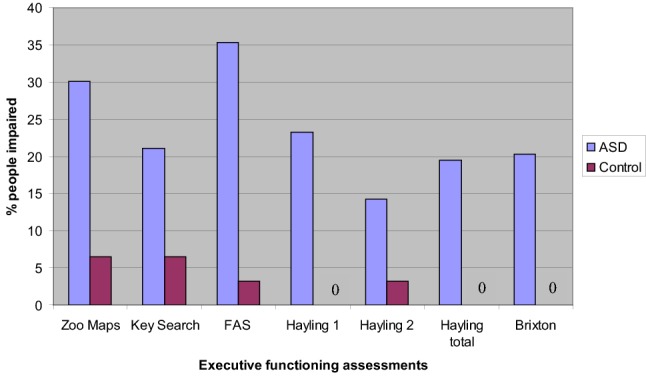
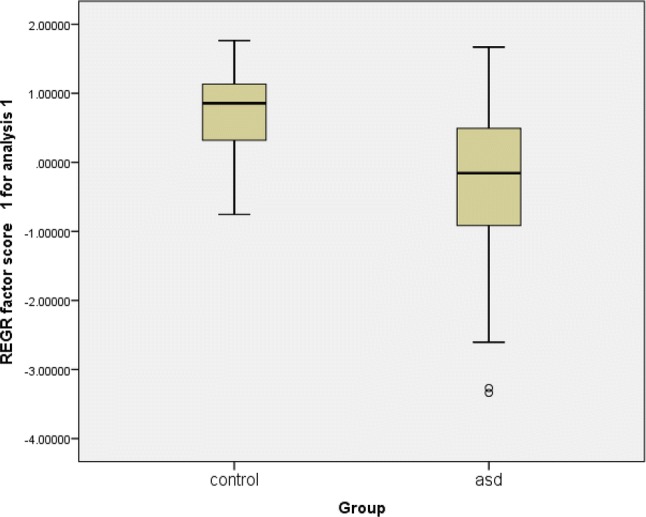
Studies of executive function (EF) in autism spectrum disorder (ASD) have reported mixed findings. Possible confounds include EF domain assessed and co-occurring neurodevelopmental diagnoses. EF task performance across multiple domains and everyday function of autistic adults (n = 110) was significantly different to age- and IQ-matched controls (n = 31). Although significantly more likely to fall into the clinically impaired range, 35.8% of the ASD group showed no impairment on EF measures. Factor analysis revealed a single unifying EF construct rather than a selective pattern of impairment. Dysexecutive behaviours were frequently reported in the ASD group, unrelated to Autism symptoms, EF task performance or co-occurring conditions. This study suggests autistic adults can experience clinically significant executive function difficulties and co-occuring dysexecutive behaviours that are disabling in everyday life.
Overview
The claims and statistics of this paper haven’t been checked yet.
Run the check — free, no account needed. It reads the open-access text and checks the sources it cites.
Integrity signals
Registry
Cites
Statistics
Figures
Verification
Claims the paper makes
The claims and statistics of this paper haven’t been checked yet.
Run the check — free, no account needed. It reads the open-access text and checks the sources it cites.
Claims other papers make about this one
Each is checked against this paper’s own text: does it say what the citing paper says it does?
The source backs part of the claim, not all of it — or backs it for a different population, condition or comparison.
In the citing paper
“Other strategies may require sustained attention, focus and out-of-session practice to maximize effectiveness, which may be challenging for autistic adults who often have cooccurring executive functioning difficulties (Johnston et al., 2019).”
From A mixed methods study of autistic adults' mental health therapy experiences (2023) · cites this paper as Johnston et al., 2019
Experimental — accuracy not yet measuredThe cited source says what the claim attributes to it.
In the citing paper
“Autistic adults who have problems with attention and concentration (Johnston et al., 2019) may need additional supports to facilitate focussed awareness.”
From A mixed methods study of autistic adults' mental health therapy experiences (2023) · cites this paper as Johnston et al., 2019
Self-check
Percentages, sums and reported differences re-computed from the paper’s own numbers.
The self-check needs the paper’s full text.
Citations
Cites
Diagnostic and Statistical Manual of Mental Disorders
American Psychiatric Association (2013) · doi:10.1176/appi.books.9780890425596 · Cited by 116,369
Diagnostic and Statistical Manual of Mental Disorders
Williams, J. B. W., & First, M. B. (2013) · Oxford University Press eBooks · doi:10.1093/acrefore/9780199975839.013.104 · Cited by 109,845
Lord, C., Rutter, M., & Le Couteur, A. (1994) · Journal of Autism and Developmental Disorders · doi:10.1007/bf02172145 · Cited by 9,065
Baron-Cohen, S., Wheelwright, S., Skinner, R., Martin, J., & Clubley, E. (2001) · Journal of Autism and Developmental Disorders · doi:10.1023/a:1005653411471 · Cited by 6,450
A compendium of neuropsychological tests: administration, norms, and commentary
(1991) · Choice Reviews Online · doi:10.5860/choice.29-2400 · Cited by 6,118
Sample size in factor analysis.
MacCallum, R. C., Widaman, K. F., Zhang, S., & Hong, S. (1999) · Psychological Methods · doi:10.1037/1082-989x.4.1.84 · Cited by 5,497
Attention to Action: Willed and Automatic Control of Behavior
Norman, D. A., & Shallice, T. (1986) · Consciousness and Self-Regulation · doi:10.1007/978-1-4757-0629-1_1 · Cited by 4,455
Mendelson, G. (1995) · Australian & New Zealand Journal of Psychiatry · doi:10.3109/00048679509064964 · Cited by 2,592
Exploring the Central Executive
Baddeley, A. (1996) · The Quarterly Journal of Experimental Psychology Section A · doi:10.1080/713755608 · Cited by 2,390
A simple objective technique for measuring flexibility in thinking
Berg, E. A. (1948) · The Journal of General Psychology · doi:10.1080/00221309.1948.9918159 · Cited by 2,255
Lord, C., Rutter, M., Goode, S., Heemsbergen, J., Jordan, H., Mawhood, L., & Schopler, E. (1989) · Journal of Autism and Developmental Disorders · doi:10.1007/bf02211841 · Cited by 2,030
DEFICITS IN STRATEGY APPLICATION FOLLOWING FRONTAL LOBE DAMAGE IN MAN
SHALLICE, T., & BURGESS, P. W. (1991) · Brain · doi:10.1093/brain/114.2.727 · Cited by 2,017
TEST REVIEW behavior rating inventory of executive function.
Gioia, G. A., Isquith, P. K., Guy, S. C., & Kenworthy, L. (2000) · Child Neuropsychology · doi:10.1076/chin.6.3.235.3152 · Cited by 1,925
Executive function deficits in high-functioning autistic individuals: Relationship to theory of mind
Ozonoff, S., Pennington, B. F., & Rogers, S. J. (1991) · Journal of Child Psychology and Psychiatry · doi:10.1111/j.1469-7610.1991.tb00351.x · Cited by 1,766
Behavior Rating Inventory for Executive Function
Gioia, G. A., Isquith, P. Κ., & Roth, R. M. (2017) · Springer eBooks · doi:10.1007/978-3-319-56782-2_1881-2 · Cited by 1,571
Identification of a Common Neurobiological Substrate for Mental Illness
Goodkind, M., Eickhoff, S. B., Oathes, D. J., Jiang, Y., Chang, A., Jones-Hagata, L. B., Ortega, B. N., Zaiko, Y. V., Roach, E. L., Korgaonkar, M. S., et al. (2015) · JAMA Psychiatry · doi:10.1001/jamapsychiatry.2014.2206 · Cited by 1,404
Castelli, F. (2002) · Brain · doi:10.1093/brain/awf189 · Cited by 1,377
Neuropsychological studies of the frontal lobes.
Stuss, D. T., & Benson, D. F. (1984) · Psychological Bulletin · doi:10.1037/0033-2909.95.1.3 · Cited by 1,073
Consciousness and self-regulation : advances in research and theory
SCHWARTZ, G. E. R., Shapiro, D. L., & Davidson, R. J. (1976) · Plenum Press eBooks · Cited by 1,015
Burgess, P. W., & Shallice, T. (1997) · UCL Discovery (University College London) · Cited by 1,008
Autism spectrum disorders: a meta-analysis of executive function
Demetriou, E. A., Lampit, A., Quintana, D. S., Naismith, S. L., Song, Y. J. C., Pye, J. E., Hickie, I., & Guastella, A. J. (2018) · Molecular Psychiatry · doi:10.1038/mp.2017.75 · Cited by 841
Woodbury-Smith, M. R., Robinson, J., Wheelwright, S., & Baron-Cohen, S. (2005) · Journal of Autism and Developmental Disorders · doi:10.1007/s10803-005-3300-7 · Cited by 771
Rolls, E. T. (1996) · Philosophical Transactions of the Royal Society B Biological Sciences · doi:10.1098/rstb.1996.0128 · Cited by 755
Gillberg, C. (2010) · Research in Developmental Disabilities · doi:10.1016/j.ridd.2010.06.002 · Cited by 742
Autism as an executive disorder
Jarrold, C. (1997) · Oxford University Press eBooks · Cited by 662
Architecture of the Prefrontal Cortex and the Central Executive
Goldman, P. S. (1995) · Annals of the New York Academy of Sciences · doi:10.1111/j.1749-6632.1995.tb38132.x · Cited by 654
Diamond, A., & Goldman-Rakic, P. S. (1989) · Experimental Brain Research · doi:10.1007/bf00248277 · Cited by 628
Lopez, B. R., Lincoln, A. J., Ozonoff, S., & Lai, Z. (2005) · Journal of Autism and Developmental Disorders · doi:10.1007/s10803-005-5035-x · Cited by 603
Autism as an executive disorder
Russell, J. A. (1997) · Cited by 483
Barkley, R. A., & Murphy, K. R. (2010) · Archives of Clinical Neuropsychology · doi:10.1093/arclin/acq014 · Cited by 468
Toplak, M. E., Bucciarelli, S. M., Jain, U., & Tannock, R. (2008) · Child Neuropsychology · doi:10.1080/09297040802070929 · Cited by 444
Adaptive skills and executive function in autism spectrum disorders.
Gilotty, L., Kenworthy, L., Sirian, L., Black, D. O., & Wagner, A. E. (2002) · Child Neuropsychology · doi:10.1076/chin.8.4.241.13504 · Cited by 421
Joshi, G., Wozniak, J., Petty, C., Martelon, M. K., Fried, R., Bolfek, A., Kotte, A., Stevens, J., Furtak, S. L., Bourgeois, M., et al. (2013) · Journal of Autism and Developmental Disorders · doi:10.1007/s10803-012-1679-5 · Cited by 419
Behavioural assessment of the dysexecutive syndrome (BADS)
Spikman, J. M., & Saan, R. (2012) · University of Groningen research database (University of Groningen / Centre for Information Technology) · Cited by 392
Higher-Order Cognitive Impairments and Frontal Lobe Lesions in Man
Shallice, T., & Burgess, P. W. (1991) · Oxford University Press eBooks · doi:10.1093/oso/9780195062847.003.0006 · Cited by 381
Neocortical system abnormalities in autism
Luna, B., Minshew, N. J., Garver, K. E., Lazar, N. A., Thulborn, K. R., Eddy, W. F., & Sweeney, J. A. (2002) · Neurology · doi:10.1212/wnl.59.6.834 · Cited by 344
Rosenthal, M., Wallace, G. L., Lawson, R., Wills, M. C., Dixon, E., Yerys, B. E., & Kenworthy, L. (2013) · Neuropsychology · doi:10.1037/a0031299 · Cited by 312
Norris, G., & Tate, R. L. (2000) · Neuropsychological Rehabilitation · doi:10.1080/096020100389282 · Cited by 266
Wallace, G. L., Kenworthy, L., Pugliese, C. E., Popal, H. S., White, E. I., Brodsky, E., & Martin, A. (2016) · Journal of Autism and Developmental Disorders · doi:10.1007/s10803-015-2655-7 · Cited by 261
Neurodevelopmental Disorders (ASD and ADHD): DSM-5, ICD-10, and ICD-11
Doernberg, E., & Hollander, E. (2016) · CNS Spectrums · doi:10.1017/s1092852916000262 · Cited by 260
Jones, C. R. G., Simonoff, E., Baird, G., Pickles, A., Marsden, A. J. S., Tregay, J., Happé, F., & Charman, T. (2018) · Autism Research · doi:10.1002/aur.1873 · Cited by 259
Executive processes in Asperger syndrome: Patterns of performance in a multiple case series
Hill, E. L., & Bird, C. M. (2006) · Neuropsychologia · doi:10.1016/j.neuropsychologia.2006.06.007 · Cited by 228
Cederlund, M., Hagberg, B., & Gillberg, C. (2010) · Research in Developmental Disabilities · doi:10.1016/j.ridd.2009.09.006 · Cited by 145
The Neuropsychology of Male Adults With High‐Functioning Autism or Asperger Syndrome
Wilson, C., Happe, F. G. E., Wheelwright, S. J., Ecker, C., Lombardo, M. V., Johnston, P., Daly, E., Murphy, C. M., Spain, D., Lai, M., et al. (2014) · Autism Research · doi:10.1002/aur.1394 · Cited by 123
Self-citationVan Eylen, L., Boets, B., Steyaert, J., Wagemans, J., & Noens, I. (2015) · European Child & Adolescent Psychiatry · doi:10.1007/s00787-015-0689-1 · Cited by 123
Real-Life-Type Problem-Solving in Asperger's Syndrome
Channon, S., Charman, T., Heap, J., Crawford, S., & Rios, P. (2001) · Journal of Autism and Developmental Disorders · doi:10.1023/a:1012212824307 · Cited by 121
van den Bergh, S. F. W. M., Scheeren, A. M., Begeer, S., Koot, H. M., & Geurts, H. M. (2014) · Journal of Autism and Developmental Disorders · doi:10.1007/s10803-014-2071-4 · Cited by 110
Comparison of ICD-10R, DSM-IV-TR and DSM-5 in an Adult Autism Spectrum Disorder Diagnostic Clinic
Wilson, C. E., Gillan, N., Spain, D., Robertson, D., Roberts, G., Murphy, C. M., Maltezos, S., Zinkstok, J., Johnston, K., Dardani, C., et al. (2013) · Journal of Autism and Developmental Disorders · doi:10.1007/s10803-013-1799-6 · Cited by 99
Self-citationThe Triple I Hypothesis: Taking Another(’s) Perspective on Executive Dysfunction in Autism
White, S. J. (2012) · Journal of Autism and Developmental Disorders · doi:10.1007/s10803-012-1550-8 · Cited by 99
Verbal fluency in adults with high functioning autism or Asperger syndrome
Spek, A. A., Schatorjé, T., SCHOLTE, E. M., & van Berckelaer‐Onnes, I. (2008) · Neuropsychologia · doi:10.1016/j.neuropsychologia.2008.11.015 · Cited by 94
A review of executive function deficits and pharmacological management in children and adolescents.
Hosenbocus, S., & Chahal, R. (2012) · Europe PMC (PubMed Central) · Cited by 85
Axelrod, B. N., Ryan, J. J., & Ward, L. C. (2001) · Archives of Clinical Neuropsychology · doi:10.1016/s0887-6177(99)00054-2 · Cited by 76
Gilbert, S. J., Meuwese, J. D. I., Towgood, K. J., Frith, C. D., & Burgess, P. W. (2009) · Brain · doi:10.1093/brain/awn365 · Cited by 73
Johnston, K., Madden, A., Bramham, J., & Russell, A. (2010) · Journal of Autism and Developmental Disorders · doi:10.1007/s10803-010-1113-9 · Cited by 64
Self-citationAttention Deficit Hyperactivity Disorder Symptoms in Adults with Autism Spectrum Disorders
Johnston, K., Dittner, A. J., Bramham, J., Murphy, C. M., Knight, A. K., & Russell, A. (2013) · Autism Research · doi:10.1002/aur.1283 · Cited by 52
Self-citation
Research works printed but not linked: 2
- Weschler, D. (1997). Weschler Adult Intelligence Scale III. New York: Psychological Corporation.
- Weschler, D. (2008). Weschler Adult Intelligence Scale IV. New York: Psychological Corporation.
Cited by
Sorted by citations
A review of executive functioning challenges and strengths in autistic adults
John, T. S., Woods, S. E. O., Bode, T., Ritter, C., & Estes, A. M. (2021) · The Clinical Neuropsychologist · doi:10.1080/13854046.2021.1971767 · Cited by 79
“…ADhD or depression were reported (Cederlund et al., 2010; hagberg et al., 2015; Shmulsky et al., 2017). in contrast, another study has found no significant association between self-reported EF difficulties when autistic adults with and without comorbidities are compared (Johnston et al., 2019).”
BackgroundResultInfluentialGhanouni, P., Quirke, S., Blok, J., & Casey, A. (2021) · Research in Developmental Disabilities · doi:10.1016/j.ridd.2021.104085 · Cited by 64
Hajri, M., Abbes, Z. S., Yahia, H. B., Jelili, S., Halayem, S., Mrabet, A., & Bouden, A. (2022) · Frontiers in Psychiatry · doi:10.3389/fpsyt.2022.917121 · Cited by 57
“The latter require, among other factors, self-mentoring skills and response initiation, which are impaired in patients with ASD (30).”
BackgroundDeng, J., Lei, T., & Du, X. (2023) · Frontiers in Psychology · doi:10.3389/fpsyg.2023.1269462 · Cited by 50
“Specifically, EF has implications not just for learning and task execution (Hill, 2004a), but it also further impairs abilities related to social adaptation and independent living (Merchán-Naranjo et al., 2016; Johnston et al., 2019).”
BackgroundAccounting for the preference for literal meanings in autism spectrum conditions
Vicente, A., & Falkum, I. L. (2021) · Mind & Language · doi:10.1111/mila.12371 · Cited by 43
Metadata
- Authors
- Johnston, K., Murray, K., Spain, D., Walker, I., & Russell, A.
- Affiliations
- National Health Service (GB)
- King's College London (GB)
- University of Bath (GB)
- Corresponding author
- Russell, Ailsa
- Venue
- Journal of Autism and Developmental Disorders
- Published
- 2019-07-08
- Volume
- 49
- Issue
- 10
- Pages
- 4181-4192
- ISSN
- 0162-3257 (ISSN-L)
- 1573-3432
- PMC
- PMC6751156
- OpenAlex
- W2960029572
- Cited by
- 113
- References
- 55
- Citations by year
- 2026: 14 · 2025: 15 · 2024: 19 · 2023: 20 · 2022: 15 · 2021: 21 · 2020: 9
- FWCI
- 6.54
- Type
- journal article
- Language
- en
- Open access
- hybrid
- doi.org
- Locations
- Journal of Autism and Developmental Disorders (publishedVersion, cc-by)
- PubMed Central (publishedVersion, cc-by)
- PubMed (publishedVersion)
- Research Portal (King's College London) (publishedVersion, other-oa)
- Topics
- Life Sciences › Neuroscience › Cognitive Neuroscience › Autism Spectrum Disorder Research
- Social Sciences › Psychology › Neuropsychology and Physiological Psychology › Developmental and Educational Neuropsychology
- Health Sciences › Medicine › Psychiatry and Mental health › Schizophrenia research and treatment
- Keywords
- executive function, autism spectrum disorder, autistic adults, daily functioning, executive dysfunction
- MeSH terms
- Autism Spectrum Disorder, Adult, Cognition, Female, Humans, Male, Executive Function
About these checks
Registry, retraction, Cites and statistics results are computed, not judged, with one exception: a printed reference that no index lists is read once by a model before it counts as a citation error. Claims are extracted by a model and kept only when their quote appears verbatim in the text; each cited source is then checked, with a model’s help, for whether it says what the claim relies on. Those verdicts can be wrong — read the claim’s quote and the cited source before relying on one.
Statistics and arithmetic are recomputed, not judged.
Confidence bands are shown only for fields calibrated on our annotated test set. None is calibrated yet, so no band is shown.
What counts as a claim ›How we measure confidence ›How we check this ›
Are you an author, or do you see a problem with this page? Request a review
