

The DOI matches its Crossref record; 72 of the 75 references it cites were found in a registry or an index.
The impact of emotional well-being on long-term recovery and survival in physical illness: a meta-analysis
Open accessAbstract
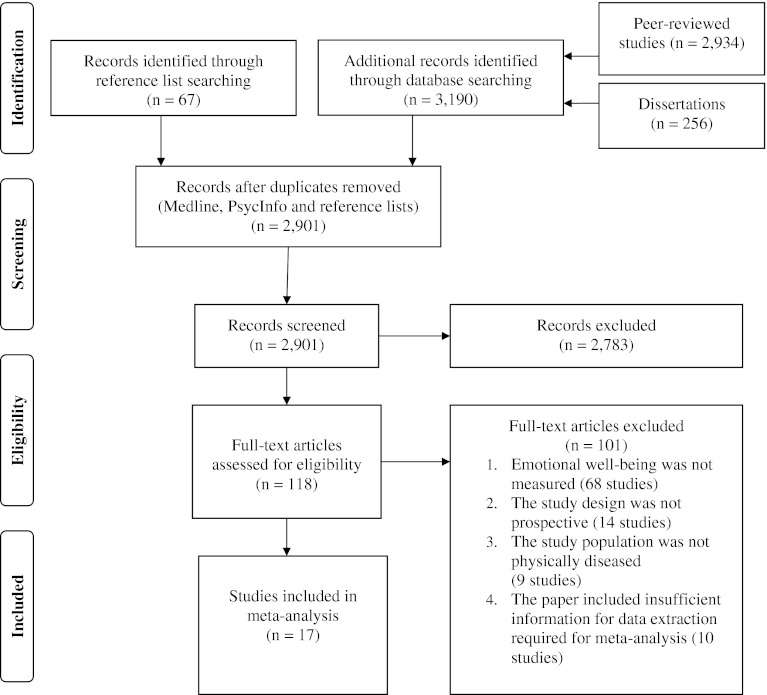
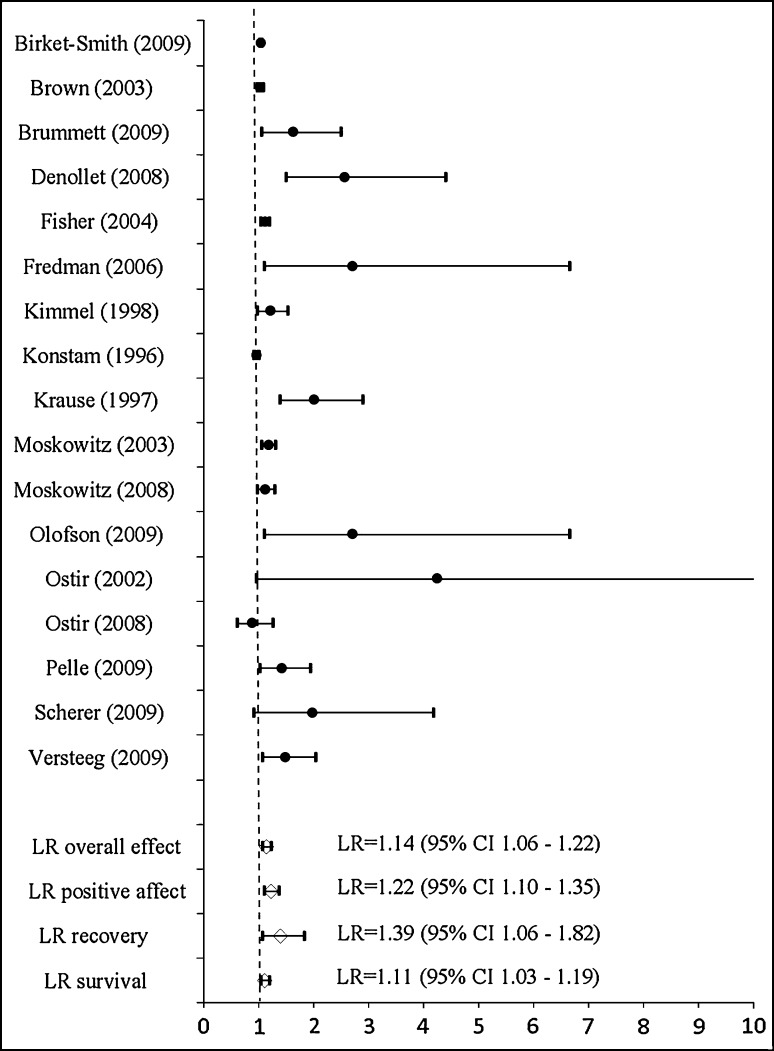
This meta-analysis synthesized studies on emotional well-being as predictor of the prognosis of physical illness, while in addition evaluating the impact of putative moderators, namely constructs of well-being, health-related outcome, year of publication, follow-up time and methodological quality of the included studies. The search in reference lists and electronic databases (Medline and PsycInfo) identified 17 eligible studies examining the impact of general well-being, positive affect and life satisfaction on recovery and survival in physically ill patients. Meta-analytically combining these studies revealed a Likelihood Ratio of 1.14, indicating a small but significant effect. Higher levels of emotional well-being are beneficial for recovery and survival in physically ill patients. The findings show that emotional well-being predicts long-term prognosis of physical illness. This suggests that enhancement of emotional well-being may improve the prognosis of physical illness, which should be investigated by future research.
Overview
The claims and statistics of this paper haven’t been checked yet.
Run the check — free, no account needed. It reads the open-access text and checks the sources it cites.
Integrity signals
Registry
Cites
Statistics
Figures
Verification
Claims the paper makes
The claims and statistics of this paper haven’t been checked yet.
Run the check — free, no account needed. It reads the open-access text and checks the sources it cites.
Claims other papers make about this one
Each is checked against this paper’s own text: does it say what the citing paper says it does?
The source backs part of the claim, not all of it — or backs it for a different population, condition or comparison.
In the citing paper
“Psychological distress can exacerbate physical symptoms, interfere with treatment adherence, and negatively influence overall well-being and recovery [7].”
From Effectiveness of Acceptance and Commitment Therapy (ACT) on disease acceptance for breast cancer patients: Study protocol of a randomized controlled trial (2024) · cites this paper as [7]
Experimental — accuracy not yet measuredIn the citing paper
“A meta-analysis even showed that emotional well-being predicts long-term prognosis of physical illness [5].”
From How to increase reach and adherence of web-based interventions: a design research viewpoint (2015) · cites this paper as [5]
Self-check
Percentages, sums and reported differences re-computed from the paper’s own numbers.
The self-check needs the paper’s full text.
Citations
Cites
Preferred Reporting Items for Systematic Reviews and Meta-Analyses: the PRISMA statement
Moher, D., Liberati, A., Tetzlaff, J., Altman, D. G., & for the PRISMA Group (2009) · BMJ · doi:10.1136/bmj.b2535 · Cited by 83,823
Preferred Reporting Items for Systematic Reviews and Meta-Analyses: The PRISMA Statement
Moher, D., Liberati, A., Tetzlaff, J., Altman, D. G., & The PRISMA Group (2009) · PLoS Medicine · doi:10.1371/journal.pmed.1000097 · Cited by 64,042
The CES-D Scale: A Self-Report Depression Scale for Research in the General Population
Radloff, L. S. (1977) · Applied Psychological Measurement · doi:10.1177/014662167700100306 · Cited by 53,267
Preferred reporting items for systematic reviews and meta-analyses: the PRISMA Statement.
(2009) · PubMed Central · Cited by 44,859
Development and validation of brief measures of positive and negative affect: The PANAS scales.
Watson, D., Clark, L. A., & Tellegen, A. (1988) · Journal of Personality and Social Psychology · doi:10.1037/0022-3514.54.6.1063 · Cited by 32,433
The satisfaction with life scale
Diener, E., Emmons, R. A., Larsen, R. J., & Griffin, S. (1985) · Journal of Personality Assessment · doi:10.1207/s15327752jpa4901_13 · Cited by 31,768 · cited 1×
“Life satisfaction was measured by the Satisfaction With Life Scale (n = 1; Diener et al., 1985), the MOS short form general health survey (n = 1; Stewart et al., 1988), and the Life Situation Questionnaire (n = 1; Krause, 1992).”
MethodCochrane Handbook for Systematic Reviews of Interventions: Cochrane Book Series
(2008) · doi:10.1002/9780470712184 · Cited by 25,048
EuroQol: a new facility for the measurement of health-related quality of life
(1990) · Health Policy · doi:10.1016/0168-8510(90)90421-9 · Cited by 15,736
Subjective well-being: Three decades of progress.
Diener, E., Suh, E. M., Lucas, R. E., & Smith, H. L. (1999) · Psychological Bulletin · doi:10.1037/0033-2909.125.2.276 · Cited by 12,910
From dissertation abstracts international
(1974) · ACM SIGGRAPH Computer Graphics · doi:10.1145/988616.988619 · Cited by 12,208
Research works printed but not linked: 2
- Hamilton, A. B. (1996). Do psychosocial factors predict metastatic cancer survival? A longitudinal assessment of breast, colon, and lung cancer patients. Dissertation Abstracts International, 57, 4029. (UMI No. 9632697).
- Ostir, G. V. (2001). Emotional well-being and subsequent health, functional ability and mortality in older non-Hispanic Whites, Blacks and Mexican Americans. Dissertation Abstracts International, 61, 2865. (UMI No. 9981512).
Cited by
Sorted by citations
Positive psychology interventions: a meta-analysis of randomized controlled studies
Bolier, L., Haverman, M., Westerhof, G. J., Riper, H., Smit, F., & Bohlmeijer, E. (2013) · BMC Public Health · doi:10.1186/1471-2458-13-119 · Cited by 1,996
“In addition, the available evidence suggests that well-being reduces the risk of developing mental symptoms and disorders [21,22] and helps reduce mortality risks in people with physical disease [23].”
Self-citationHandbook of Religion and Health
Koenig, H. G., VanderWeele, T. J., & Peteet, J. R. (2023) · doi:10.1093/oso/9780190088859.001.0001 · Cited by 1,160
Advances and Open Questions in the Science of Subjective Well-Being
Diener, E., Lucas, R. E., & Oishi, S. (2018) · Collabra Psychology · doi:10.1525/collabra.115 · Cited by 1,333
van den Bosch, M. A., & Sang, Å. O. (2017) · Environmental Research · doi:10.1016/j.envres.2017.05.040 · Cited by 1,070
If, Why, and When Subjective Well‐Being Influences Health, and Future Needed Research
Diener, E., Pressman, S. D., Hunter, J. F., & Delgadillo‐Chase, D. (2017) · Applied Psychology Health and Well-Being · doi:10.1111/aphw.12090 · Cited by 816
Effectiveness of positive psychology interventions: a systematic review and meta-analysis
Carr, A., Cullen, K., Keeney, C., Canning, C., Mooney, O., Chinseallaigh, E., & O’Dowd, A. (2021) · The Journal of Positive Psychology · doi:10.1080/17439760.2020.1818807 · Cited by 645
Financial Toxicity of Cancer Care: It’s Time to Intervene
Zafar, S. Y. (2015) · JNCI Journal of the National Cancer Institute · doi:10.1093/jnci/djv370 · Cited by 552
A systematic review and meta-analysis of psychological interventions to improve mental wellbeing
van Agteren, J., Iasiello, M., Lo, L., Bartholomaeus, J., Kopsaftis, Z., Carey, M., & Kyrios, M. (2021) · Nature Human Behaviour · doi:10.1038/s41562-021-01093-w · Cited by 510
Steptoe, A. (2019) · Annual Review of Public Health · doi:10.1146/annurev-publhealth-040218-044150 · Cited by 474
“A meta-analysis of studies on a range of conditions, including spinal cord injury, coronary artery disease, and heart failure, documented a small protective effect of hedonic and eudaimonic well-being on recovery and survival (77).”
BackgroundThe influence of subjective aging on health and longevity: a meta-analysis of longitudinal data
Westerhof, G. J., Miche, M., Brothers, A. F., Barrett, A. E., Diehl, M., Montepare, J. M., Wahl, H.-W., & Wurm, S. (2014) · Psychology and Aging · doi:10.1037/a0038016 · Cited by 403
“We refer to different ratios (hazard, risk, and odds ratios) as likelihood ratios (LR; Lamers et al., 2012).”
MethodSelf-citationTrompetter, H. R., de Kleine, E., & Bohlmeijer, E. T. (2017) · Cognitive Therapy and Research · doi:10.1007/s10608-016-9774-0 · Cited by 368
“…Department of Psychology, Health and Technology, University of Twente, P.O. Box 217, 7500 AE Enschede, The Netherlands survival despite physical illness, and decreased cortisol levels and cardiovascular disease risk (Boehm and Kubzansky 2012; Lamers et al. 2012; Ryff 2013; Steptoe et al. 2009).”
BackgroundSelf-citationChakhssi, F., Kraiss, J. T., Sommers‐Spijkerman, M., & Bohlmeijer, E. T. (2018) · BMC Psychiatry · doi:10.1186/s12888-018-1739-2 · Cited by 397
Self-citationGratitude and health: An updated review
Jans-Beken, L., Jacobs, N., Janssens, M., Peeters, S. C. T., Reijnders, J. S. A. M., Lechner, L., & Lataster, J. (2019) · The Journal of Positive Psychology · doi:10.1080/17439760.2019.1651888 · Cited by 320
Eudaimonic and Hedonic Well-Being
Ryff, C. D., Boylan, J. M., & Kirsch, J. A. (2021) · Oxford University Press eBooks · doi:10.1093/oso/9780197512531.003.0005 · Cited by 305
What Factors are Associated with Flourishing? Results from a Large Representative National Sample
Schotanus-Dijkstra, M., Pieterse, M. E., Drossaert, C. H. C., Westerhof, G. J., de Graaf, R., ten Have, M., Walburg, J. A., & Bohlmeijer, E. T. (2015) · Journal of Happiness Studies · doi:10.1007/s10902-015-9647-3 · Cited by 306
“This finding is in agreement with previous empirical studies about predictors of well-being (Demir and Weitekamp 2007; Lamers et al. 2012b).”
BackgroundMethodResultInfluentialSelf-citationHow to increase reach and adherence of web-based interventions: a design research viewpoint
Ludden, G. D., van Rompay, T. J., Kelders, S. M., & van Gemert-Pijnen, J. E. (2015) · Journal of Medical Internet Research · doi:10.2196/jmir.4201 · Cited by 185
“A meta-analysis even showed that emotional well-being predicts long-term prognosis of physical illness [5].”
Longitudinal effects of subjective aging on health and longevity: An updated meta-analysis.
Westerhof, G. J., Nehrkorn-Bailey, A. M., Tseng, H.-Y., Brothers, A. F., Siebert, J., Wurm, S., Wahl, H., & Diehl, M. K. (2023) · Psychology and Aging · doi:10.1037/pag0000737 · Cited by 174
Self-citationSchotanus-Dijkstra, M., Drossaert, C. H. C., Pieterse, M. E., Boon, B. J. F., Walburg, J. A., & Bohlmeijer, E. T. (2017) · Internet Interventions · doi:10.1016/j.invent.2017.04.002 · Cited by 140
“There is also compelling evidence that higher well-being increases longevity by several years in healthy populations and in some somatic illness populations (Chida and Steptoe, 2008; Diener and Chan, 2011; Keyes and Simoes, 2012; Lamers et al., 2012; Veenhoven, 2007).”
BackgroundSelf-citationWesterhof, G. J., & Wurm, S. (2014) · Annual Review of Gerontology and Geriatrics · doi:10.1891/0198-8794.35.145 · Cited by 129
Self-citationDevelopment of Subjective Well-Being in Adolescence
Steinmayr, R., Wirthwein, L., Modler, L., & Barry, M. M. (2019) · International Journal of Environmental Research and Public Health · doi:10.3390/ijerph16193690 · Cited by 118
“Countless studies on Subjective Well-Being (SWB) have demonstrated the importance of SWB for several important outcomes in adulthood such as, mental health [1], survival [2], disease progression and recovery [3], cardiovascular functioning [4], health behavior [5,6] and vocational success [7,8].”
BackgroundDoes Happiness Improve Health? Evidence From a Randomized Controlled Trial
Kushlev, K., Heintzelman, S. J., Lutes, L. D., Wirtz, D., Kanippayoor, J. M., Leitner, D., & Diener, E. (2020) · Psychological Science · doi:10.1177/0956797620919673 · Cited by 102
Parks, A. C., Williams, A. L., Tugade, M. M., Hokes, K. E., Honomichl, R. D., & Zilca, R. D. (2018) · International Journal of Wellbeing · doi:10.5502/ijw.v8i2.745 · Cited by 87
Regular Doses of Nature: The Efficacy of Green Exercise Interventions for Mental Wellbeing
Rogerson, M., Wood, C., Pretty, J., Schoenmakers, P. P. J. M., Bloomfield, D., & Barton, J. (2020) · International Journal of Environmental Research and Public Health · doi:10.3390/ijerph17051526 · Cited by 86
“Wellbeing is important to health because it increases life expectancy, improves recovery from illness [13,14] and is associated with positive health behaviours.”
BackgroundPalmer, J. D., Patel, T. T., Eldredge-Hindy, H., Keith, S. W., Patel, T., Malatesta, T. M., DiNome, J., Lowther, A., Ferguson, L., Wagenborg, S., et al. (2018) · International Journal of Radiation Oncology*Biology*Physics · doi:10.1016/j.ijrobp.2018.03.014 · Cited by 77
Positive psychological interventions for neurological disorders: A systematic review
Lai, S.-T., Lim, K. S., Low, W. Y., & Tang, V. Y. H. (2018) · The Clinical Neuropsychologist · doi:10.1080/13854046.2018.1489562 · Cited by 75
No time to lose – Green the cities now
van den Bosch, M. A., & Nieuwenhuijsen, M. J. (2016) · Environment International · doi:10.1016/j.envint.2016.11.025 · Cited by 78
Trompetter, H. R., Bohlmeijer, E. T., Lamers, S. M. A., & Schreurs, K. M. G. (2016) · Frontiers in Psychology · doi:10.3389/fpsyg.2016.00353 · Cited by 51
Self-citationKotera, Y., Mayer, C., & Vanderheiden, E. (2021) · Frontiers in Psychology · doi:10.3389/fpsyg.2021.627851 · Cited by 59
Auyeung, L., & Mo, P. K. H. (2018) · Journal of Happiness Studies · doi:10.1007/s10902-018-0054-4 · Cited by 51
Parks, A. C., Williams, A. L., Kackloudis, G. M., Stafford, J. L., Boucher, E. M., & Honomichl, R. D. (2019) · Journal of Medical Internet Research · doi:10.2196/16211 · Cited by 52
“Greater emotional well-being also predicts better long-term prognoses among patients with physical illnesses [12]; in cardiac patients specifically, an increase of 1 SD in psychological well-being is associated with an 11% reduction in rehospitalization risk [14].”
InfluentialThe Relationship between Gratitude, Wellbeing, Spirituality, and Experiencing Meaningful Work
Loi, N. M., & Ng, D. H. (2021) · Psych · doi:10.3390/psych3020009 · Cited by 64
“Other studies have shown that wellbeing reduces the risk of depression [18] and improves the prognosis of certain diseases [21].”
BackgroundIf, Why, and When Subjective Well-Being Influences Health, and Future Needed ResearchPreprint
Diener, E. F. (2017) · PsyArXiv (OSF Preprints) · doi:10.31234/osf.io/k6tvg · Cited by 46
Sang, Å. O., Thorpert, P., & Fransson, A. (2022) · Frontiers in Ecology and Evolution · doi:10.3389/fevo.2022.804500 · Cited by 56
Estévez‐López, F., Gray, C. M., Segura‐Jiménez, V., Soriano‐Maldonado, A., Álvarez‐Gallardo, I. C., Grajera, M. J. A., Carbonell‐Baeza, A., Aparicio, V. A., Delgado‐Fernández, M., & Pulido‐Martos, M. (2015) · Quality of Life Research · doi:10.1007/s11136-015-0917-7 · Cited by 45
“It is widely recognized that people with high levels of subjective well-being (both patient and non-patient groups) have better perceptions of their global health [24, 25].”
BackgroundLarsson, B., Dragioti, E., Gerdle, B., & Björk, J. (2019) · Annals of General Psychiatry · doi:10.1186/s12991-019-0231-9 · Cited by 42
Subjective wellbeing and longevity: Findings from a 22-year cohort study
Gana, K., Broc, G., Saada, Y., Amieva, H., & Quintard, B. (2016) · Journal of Psychosomatic Research · doi:10.1016/j.jpsychores.2016.04.004 · Cited by 48
“The three meta-analyses dealing with this issue [7,30,51] provided convergent results indicating that subjective wellbeing (SWB) and/or positive psychological constructs (e.”
BackgroundGugushvili, N., Täht, K., Rozgonjuk, D., Raudlam, M., Ruiter, R. A. C., & Verduyn, P. (2020) · Cyberpsychology Journal of Psychosocial Research on Cyberspace · doi:10.5817/cp2020-2-3 · Cited by 56
“However, emotional well-being is also associated with other crucial outcomes such as increased physical health (Lamers et al., 2012) or productivity (Oswald et al.”
BackgroundThe State of Cancer Rehabilitation in the United States.
Silver, J. K., Stout, N. L., Fu, J. B., Pratt‐Chapman, M. L., Haylock, P. J., & Sharma, R. M. (2018) · PubMed · Cited by 41
Kraiss, J. T., Redelinghuys, K., & Weiss, L. (2022) · Journal of Happiness Studies · doi:10.1007/s10902-022-00545-y · Cited by 46
Bjørnnes, A. K., Parry, M. J. E., Lie, I., Falk, R. S., Leegaard, M., & Rustøen, T. (2018) · BMC Women s Health · doi:10.1186/s12905-017-0501-0 · Cited by 39
Beer, T. M., Miller, K., TOMBAL, B. F., Cella, D. F., Phung, D., Holmström, S., Ivanescu, C., Skaltsa, K., & Naidoo, S. (2017) · European Journal of Cancer · doi:10.1016/j.ejca.2017.09.035 · Cited by 39
Chongwo, E. J., Ssewanyana, D., Nasambu, C., Mwangala, P. N., Mwangi, P. M., Nyongesa, M. K., Newton, C. R. J. C., & Abubakar, A. A. (2018) · Global Health Research and Policy · doi:10.1186/s41256-018-0081-z · Cited by 37
van Agteren, J., Iasiello, M., Ali, K., Fassnacht, D. B., Furber, G., Woodyatt, L., Howard, A., & Kyrios, M. (2021) · Frontiers in Psychology · doi:10.3389/fpsyg.2021.648678 · Cited by 33
Iwano, S., Kambara, K., & Aoki, S. (2022) · Journal of Happiness Studies · doi:10.1007/s10902-022-00497-3 · Cited by 45
“For example, older adults with better well-being are more likely to engage in healthy behaviors (LawlerRow & Piferi, 2006) and have better recovery after physical illness (Lamers et al., 2012).”
BackgroundRoth, L. H. O., Bencker, C., Lorenz, J., & Laireiter, A. (2024) · Frontiers in Psychology · doi:10.3389/fpsyg.2024.1405272 · Cited by 46
Disease progression impacts health-related quality of life in amyotrophic lateral sclerosis
Prell, T., Gaur, N., Stubendorff, B., Rödiger, A., Witte, O. W., & Großkreutz, J. (2018) · Journal of the Neurological Sciences · doi:10.1016/j.jns.2018.12.035 · Cited by 33
Impact of the coronavirus disease 2019 pandemic on irritable bowel syndrome
Quek, S. X. Z., Loo, E. X. L., Demutska, A., Chua, C. E., Kew, G. S., Wong, S., Lau, H. X., Low, E. X. S., Loh, T. L., Ooi, S. L., et al. (2021) · Journal of Gastroenterology and Hepatology · doi:10.1111/jgh.15466 · Cited by 33
Halpin, D. M. G., Hyland, M. E., Blake, S., Seamark, C. J., Pinnuck, M., Ward, D. G., Whalley, B., Greaves, C. J., Hawkins, A., & Seamark, D. (2015) · JRSM Open · doi:10.1177/2054270415614543 · Cited by 33
“Research shows that chronic obstructive pulmonary disease patients high in positive dispositional characteristics have improved quality of life,(27) and it has been suggested that enhancement of well-being through positive psychology techniques could improve prognosis.(28) Progressive relaxation and relaxation tapes h…”
BackgroundCabrita, M., Lousberg, R., Tabak, M., Hermens, H. J., & Vollenbroek-Hutten, M. M. R. (2017) · European Review of Aging and Physical Activity · doi:10.1186/s11556-016-0170-2 · Cited by 50
Freak‐Poli, R., Mirza, S. S., Franco, O. H., Ikram, M. A., Albert Hofman, D., & Tiemeier, H. W. (2015) · Preventive Medicine · doi:10.1016/j.ypmed.2015.01.032 · Cited by 32
Association between subjective well-being and all-cause mortality among older adults in China
Zhu, C., Lian, Z., Huang, Y., Zhong, Q., & Wang, J. (2023) · BMC Psychiatry · doi:10.1186/s12888-023-05079-y · Cited by 31
“Three types of covariates were included following previous studies [14, 28]: demographic characteristics, lifestyle-related factors, and chronic physical comorbidities.”
MethodFear of happiness through the prism of the dual continua model of mental health
Blasco‐Belled, A., Rogoza, R., Alsinet, C., & Nadal, C. T. (2021) · Journal of Clinical Psychology · doi:10.1002/jclp.23165 · Cited by 39
“, 2009), better recovery from and survival from illness (Lamers et al., 2012), work productivity (Krause, 2013) and income (De Neve & Oswald, 2012).”
Backgroundvan der Horst, A. Y., Trompetter, H. R., Pakvis, D. F. M., Kelders, S. M., Schreurs, K. M. G., & Bohlmeijer, E. T. (2019) · International Journal of Orthopaedic and Trauma Nursing · doi:10.1016/j.ijotn.2019.07.003 · Cited by 30
Positive mental health : measurement, relevance and implications
Lamers, S. M. A. (2012) · doi:10.3990/1.9789036533706 · Cited by 37
Self-citationKocjan, G. Z., Avsec, A., & Kavčič, T. (2023) · Social Science & Medicine · doi:10.1016/j.socscimed.2023.116546 · Cited by 36
Predictive Power of Positive Mental Health: A Scoping Review
Margraf, J., Teismann, T., & Brailovskaia, J. (2024) · Journal of Happiness Studies · doi:10.1007/s10902-024-00788-x · Cited by 31
“…instruments to assess facets of PMH, such as for example the Psychological Well-Being Scales (Ryff, 1989), the Mental Health Continuum (Keyes et al., 2008 ; Lamers et al., 2011 ), the Euthymia Scale (Fava & Bech, 2016 ), or the Positive Mental Health Questionnaire (Lluch-Canut et al., 2013 ).”
Ferentinos, P. P., Yotsidi, V., Porichi, E., Douzenis, A., Papageorgiou, C., & Stalikas, A. (2019) · Journal of Clinical Psychology · doi:10.1002/jclp.22780 · Cited by 23
Cox, R. B., Brosi, M. W., Spencer, T. A., & Masri, K. (2021) · Journal of Divorce & Remarriage · doi:10.1080/10502556.2021.1871831 · Cited by 29
“An abundant literature supports multiple benefits of psychological well-being such as increases in work productivity, meaningful relationships, and physical health (e.g., Diener & Chan, 2011; Howell et al., 2007; Keyes & Grzywacz, 2005; Lamers et al., 2012).”
BackgroundThe Disability Paradox? Trajectories of Well-Being in Older Adults With Functional Decline
van Loon, A. M., Depla, M. F. I. A., Hertogh, C. M. P. M., Huisman, M. A., & Kok, A. A. L. (2022) · Journal of Aging and Health · doi:10.1177/08982643221108660 · Cited by 28
“Although there is theoretical and empirical research suggesting that promotion of SWB can lead to improvement of functioning or delay of decline (Howell et al., 2007; Lamers et al., 2012), more research should be directed towards addressing how to improve SWB and which factors contribute to maintenance of SWB despite…”
BackgroundPropiedades psicométricas de la Escala de Satisfacción con la Vida en población ecuatoriana adulta
Arias, P. R., & García, F. E. (2018) · Pensamiento Psicológico · doi:10.11144/javerianacali.ppsi16-2.ppes · Cited by 28
Weiss, L., Westerhof, G. J., & Bohlmeijer, E. T. (2013) · Health and Quality of Life Outcomes · doi:10.1186/1477-7525-11-159 · Cited by 19
“Meta-analyses show that the promotion of well-being will lead to considerable health gains for the individual and society [13,17-20].”
BackgroundSelf-citationRao, S., Wallace, L. M. K., Theou, O., & Rockwood, K. J. (2016) · International Journal of Geriatric Psychiatry · doi:10.1002/gps.4559 · Cited by 20
“Many arguments have been made to suggest that mental illness can and should be treated by promoting wellness strategies, and that positive psychology approaches may be instrumental in order to delay adverse health outcomes (Lamers et al., 2011).”
BackgroundAndersen, N. K., Wimmelmann, C. L., Mortensen, E. L., & Flensborg‐Madsen, T. (2021) · Journal of Psychosomatic Research · doi:10.1016/j.jpsychores.2021.110529 · Cited by 18
LA PSICOLOGÍA POSITIVA Y SUS ENEMIGOS: UNA RÉPLICA EN BASE A LA EVIDENCIA CIENTÍFICA
Vázquez, C. (2013) · DOAJ (DOAJ: Directory of Open Access Journals) · Cited by 23
Shapiro, J. F., Ortiz, D., Ree, Y. Y., & Sarwar, M. (2016) · BMC Medical Education · doi:10.1186/s12909-016-0614-4 · Cited by 18
“Research on doctor-patient communication has long noted the role emotional factors play in clinical encounters because of their relationship to adherence, compliance, and satisfaction in patients [19, 20].”
BackgroundPoor emotional well-being is associated with rapid progression in amyotrophic lateral sclerosis
Prell, T., Steinbach, R., Witte, O. W., & Großkreutz, J. (2019) · eNeurologicalSci · doi:10.1016/j.ensci.2019.100198 · Cited by 18
“There is a link between mental health and physical health, and many studies showed that psychological factors are related to the course and severity of several physical diseases [7].”
BackgroundThe ethics of positive thinking in healthcare
Andrade, G. E. (2019) · Journal of Medical Ethics and History of Medicine · doi:10.18502/jmehm.v12i18.2148 · Cited by 18
“For example, optimism is related to a lower mortality rate (17), better standards of health and faster recovery rates in some diseases (18) and improved immunological response (19).”
BackgroundWeijers, A., Rasing, S. P. A., Creemers, D. H. M., Vermulst, A. A., Schellekens, A., & Westerhof, G. J. (2020) · Journal of Clinical Psychology · doi:10.1002/jclp.23083 · Cited by 17
“Well ‐ being was measured by the Dutch version of the Mental Health Continuum ‐ Short Form (MHC ‐ SF; Keyes et al., 2008; Lamers et al., 2011).”
BackgroundMethodResultInfluentialSelf-citationGana, K., Saada, Y., Broc, G., Quintard, B., Amieva, H., & Dartigues, J. (2015) · Social Science & Medicine · doi:10.1016/j.socscimed.2015.11.038 · Cited by 17
“The three meta-analyses dealing with PA-health/longevity relationships (Chida and Steptoe, 2008; Lamers et al., 2012; Rasmussen et al., 2009) provided convergent results indicating that SWB and/or positive psychological constructs (e.g., optimism) are associated with increased longevity in both…”
BackgroundWho Are the Flourishing Emerging Adults on the Urban East Coast of Australia?
Sofija, E., Harris, N., Sebar, B., & Phung, D. T. (2021) · International Journal of Environmental Research and Public Health · doi:10.3390/ijerph18031125 · Cited by 17
Jin, Y., Wang, Y., Ma, H., Tian, X., & Wang, H. (2022) · Supportive Care in Cancer · doi:10.1007/s00520-022-06951-5 · Cited by 17
Assessing the Need for a Medical Respite: Perceptions of Service Providers and Homeless Persons
Biederman, D. J., Gamble, J., Manson, M., & Taylor, D. (2014) · Journal of Community Health Nursing · doi:10.1080/07370016.2014.926675 · Cited by 16
Cabrita, M., Lamers, S. M. A., Trompetter, H. R., Tabak, M., & Vollenbroek-Hutten, M. M. R. (2016) · Aging & Mental Health · doi:10.1080/13607863.2016.1204982 · Cited by 18
Self-citationUnderstanding Social Marketing and Well-being: A Review of Selective Databases
Bhat, S. A., Darzi, M. A., & Hakim, I. A. (2019) · Vikalpa The Journal for Decision Makers · doi:10.1177/0256090919861010 · Cited by 16
Sato, M. R., Ramos, A., Silva, C. C., Gameiro, G. R., & Scatena, C. (2015) · Interface - Comunicação Saúde Educação · doi:10.1590/1807-57622015.0178 · Cited by 15
Intervenciones clínicas positivas: ¿Por qué son importantes y cómo funcionan?
Bohlmeijer, E. T., Bolier, L., Lamers, S. M. A., & Westerhof, G. J. (2017) · Papeles del Psicólogo - Psychologist Papers · doi:10.23923/pap.psicol2017.2819 · Cited by 17
Self-citationTapsell, A., Martin, K. M., Moxham, L. J., Burns, S., Perlman, D., & Patterson, C. (2020) · Issues in Mental Health Nursing · doi:10.1080/01612840.2019.1663566 · Cited by 15
Active and pleasant ageing supported by technology
Cabrita, M. (2017) · doi:10.3990/1.9789036543903 · Cited by 14
Bohlmeijer, E. T., Frielingsdorf, L., Kraiss, J. T., Meezenbroek, E. D. J., Visser, A., & ten Klooster, P. M. (2023) · Journal of Happiness Studies · doi:10.1007/s10902-023-00640-8 · Cited by 20
Self-citationImplementation and Impact of Health Care Gardens: A Systematic Scoping Review
Carroll, C., Higgs, J., McCray, S. J., & Utter, J. (2023) · Journal of Integrative and Complementary Medicine · doi:10.1089/jicm.2023.0212 · Cited by 14
“16 Like schools and communities, health care settings such as hospitals, medical centers, aged care, and rehabilitation facilities can serve as valuable sites for gardens.”
Arends, R., Bode, C., Taal, E., & van de Laar, M. A. F. J. (2013) · BMC Musculoskeletal Disorders · doi:10.1186/1471-2474-14-239 · Cited by 14
“For example, emotional well-being is found to predict long-term prognosis of physical illness; higher levels of emotional well-being tend to benefit recovery and survival rates [14].”
BackgroundCarrillo, G. M., Gómez, O., Aldana, E. A., Barrera, S., & Rodríguez, K. A. (2016) · Enfermería Nefrológica · doi:10.4321/s2254-28842016000300009 · Cited by 14
Investigating the Relationship between Social Media Use, Big Five Personality, and Well-being
Bunz, U. K. (2021) · Journal of Communication Technology · doi:10.51548/joctec-2021-016 · Cited by 14
“For example, people who experience high well-being are more likely to overcome physical illness (e.g., Lamers et al., 2011) and experience higher quality of life (e.g., Finocchiaro et al., 2014).”
BackgroundEncuesta de caracterización para el cuidado de una persona con enfermedad crónica
Ortíz, L. B., Rosero, E. V., & Cendales, P. A. (2014) · Investigación en Enfermería Imagen y Desarrollo · doi:10.11144/javeriana.ie17-1.eccp · Cited by 13
“Varios estudios indican que el bienestar está asociado positivamente con una mejor salud (43).”
BackgroundFreak‐Poli, R., Ikram, M. A., Franco, O. H., Albert Hofman, D., & Tiemeier, H. W. (2017) · Depression and Anxiety · doi:10.1002/da.22689 · Cited by 13
Scalp hypothermia to reduce chemotherapy-induced alopecia: A systematic review and meta-analysis
Lambert, K. A., Albright, B. B., Anastasio, M. K., Kaplan, S. J., & McNally, L. J. (2024) · Gynecologic Oncology · doi:10.1016/j.ygyno.2024.06.012 · Cited by 13
Roncaglia, I. (2017) · Psychological Thought · doi:10.5964/psyct.v10i1.203 · Cited by 12
Azubuike, P. C., Imo, U. F., & Ogbonna, C. K. (2023) · International Health · doi:10.1093/inthealth/ihad090 · Cited by 11
Koenig, H. G., VanderWeele, T. J., & Peteet, J. R. (2023) · Oxford University Press eBooks · doi:10.1093/oso/9780190088859.003.0001 · Cited by 12
Chen, R., Dai, F., Yang, H., Zhang, X., Zhang, H., & Liu, M. (2020) · Health & Social Care in the Community · doi:10.1111/hsc.13252 · Cited by 11
Block, E. P., Wong, M. D., Kataoka, S., & Zimmerman, F. J. (2021) · Social Science & Medicine · doi:10.1016/j.socscimed.2021.114615 · Cited by 11
Psychometric evaluation of the Positive Mental Health (PMH) scale using item response theory
Vaganian, L., Boecker, M., Bussmann, S., Kusch, M., Labouvie, H., Margraf, J., Gerlach, A. L., & Cwik, J. C. (2022) · BMC Psychiatry · doi:10.1186/s12888-022-04162-0 · Cited by 11
“Especially interventions for improving PMH for cancer patients like ACT or meaning-based interventions in psycho-oncology can reduce mental health problems and have positive effects on recovery and survival rates [10, 14].”
BackgroundSubjective well-being: Mental health study among student in the Islamic boarding school
Dewi, L., Tentama, F., & Diponegoro, A. M. (2021) · International Journal of Public Health Science (IJPHS) · doi:10.11591/ijphs.v10i1.20610 · Cited by 25
“Several studies suggest that subjective wellbeing can determine mental health [1], survival [2], developmental stages [3], and learning success [4, 5].”
BackgroundScarinci, N., Tulloch, K., Meyer, C., Ekberg, K., & Lind, C. (2022) · Audiology Research · doi:10.3390/audiolres12060060 · Cited by 10
“Healthcare providers taking an interest in non-clinical concerns can help foster emotional wellbeing, which is predictive of physical health [23].”
BackgroundSong, W., Shari, N. I., Song, J., Zhang, R., Mansor, N. S., Leong Bin Abdullah, M. F. I., & Zhang, Z. (2024) · PLoS ONE · doi:10.1371/journal.pone.0312669 · Cited by 9
Psychological Impact of Hospital Discharge on the Older Person: A Systematic Review
Hussein, Y., Edwards, S. L., & Patel, H. P. (2024) · Geriatrics · doi:10.3390/geriatrics9060167 · Cited by 9
“Studies have found that emotional well-being is a strong predictor of long-term prognosis of physical illness, suggesting that enhancing well-being could improve the prognosis of physical illness [32].”
The role of psychological capital and meaningful work in enhancing well-being
Aprilia, E. D., Adam, M., Zulkarnain, Z., & Mawarpury, M. (2025) · SA Journal of Human Resource Management · doi:10.4102/sajhrm.v23i0.2984 · Cited by 14
Oberndorfer, M., Stolz, E., & Dorner, T. E. (2022) · Public Health · doi:10.1016/j.puhe.2022.09.004 · Cited by 9
Campion, J. (2018) · Springer eBooks · doi:10.1007/978-3-319-70554-5_31 · Cited by 9
Subjective well‐being among rheumatoid arthritis patients
Kageyama, G., Ōnishi, A., Ueda, Y., Naka, I., Tsuda, K., Okano, T., Akashi, K., Nishimura, K., Sendo, S., Saegusa, J., et al. (2019) · International Journal of Rheumatic Diseases · doi:10.1111/1756-185x.13704 · Cited by 9
Metadata
- Authors
- Lamers, S. M. A., Bolier, L., Westerhof, G. J., Smit, F., & Bohlmeijer, E. T.
- Affiliations
- University of Twente (NL)
- Trimbos Institute (NL)
- Corresponding author
- Lamers, Sanne M. A.
- Venue
- Journal of Behavioral Medicine
- Published
- 2011-09-15
- Volume
- 35
- Issue
- 5
- Pages
- 538-547
- ISSN
- 0160-7715 (ISSN-L)
- 1573-3521
- PMC
- PMC3439612
- OpenAlex
- W2052269750
- Cited by
- 306
- References
- 75
- Citations by year
- 2026: 14 · 2025: 22 · 2024: 25 · 2023: 62 · 2022: 19 · 2021: 61 · 2020: 15 · 2019: 14 · 2018: 19 · 2017: 12 · 2016: 14 · 2015: 11 · 2014: 8 · 2013: 8 · 2012: 1
- FWCI
- 0.73
- Type
- journal article
- Language
- en
- Open access
- hybrid
- doi.org
- Licence
- cc-by-nc
- Locations
- Journal of Behavioral Medicine (publishedVersion, cc-by-nc)
- PubMed Central (publishedVersion, cc-by-nc)
- PubMed (publishedVersion)
- Pure Amsterdam UMC (publishedVersion)
- Amsterdam UMC (VU Amsterdam) - Institutional Repository (publishedVersion)
- VU Research Portal (publishedVersion, other-oa)
- University of Twente Research Information (publishedVersion, cc-by-nc)
- Digital Academic REpository of VU University Amsterdam (Vrije Universiteit Amsterdam) (submittedVersion)
- University of Twente Research Information (submittedVersion, other-oa)
- Data Archiving and Networked Services (DANS) (submittedVersion)
- Data Archiving and Networked Services (DANS) (submittedVersion, other-oa)
- Topics
- Social Sciences › Psychology › Social Psychology › Psychological Well-being and Life Satisfaction
- Health Sciences › Medicine › Oncology › Cancer survivorship and care
- Health Sciences › Health Professions › General Health Professions › Health, psychology, and well-being
- Keywords
- emotional well-being, positive affect, life satisfaction, physical illness, prognosis, long-term recovery, survival, physical health outcomes, moderators
- MeSH terms
- Affect, Disease, Emotions, Humans, Mental Health, Prognosis, Patient Satisfaction, Survivors
About these checks
Registry, retraction, Cites and statistics results are computed, not judged, with one exception: a printed reference that no index lists is read once by a model before it counts as a citation error. Claims are extracted by a model and kept only when their quote appears verbatim in the text; each cited source is then checked, with a model’s help, for whether it says what the claim relies on. Those verdicts can be wrong — read the claim’s quote and the cited source before relying on one.
Statistics and arithmetic are recomputed, not judged.
Confidence bands are shown only for fields calibrated on our annotated test set. None is calibrated yet, so no band is shown.
What counts as a claim ›How we measure confidence ›How we check this ›
Are you an author, or do you see a problem with this page? Request a review
