

The Participation of People with Disabilities in the Workplace Across the Employment Cycle: Employer Concerns and Research Evidence
Open accessThe DOI matches its Crossref record; 119 of the 128 references it cites were found in a registry or an index; 24 of the 233 sources its claims cite were checked for support.
Abstract
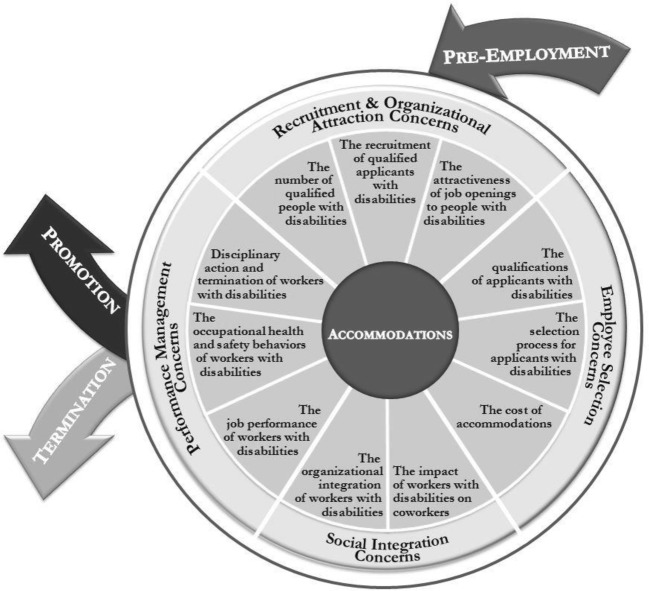
Despite legislation on diversity in the workplace, people with disabilities still do not experience the same access to work opportunities as do their counterparts without disabilities. Many employers have been shown to harbor sincere yet ill-founded views about the work-related abilities of people with disabilities; these negative views are often a result of interrelated concerns that permeate the entire employment cycle.
Overview
CoChat Summary
## TL;DR
This paper reviews 11 employer concerns about hiring and managing people with disabilities across the full employment cycle and evaluates each concern against empirical evidence. Its central conclusion is that most common employer fears are not supported by the literature, and inclusive practices are both feasible and beneficial.
## Key findings
- The paper states that in the US only 34.9% of individuals with disabilities are employed, versus 76% of those without disabilities; it also reports gaps in Canada (49% vs. 79%) and the EU (47.3% vs. 66.9%).
- Employers’ concern that people with disabilities are not interested in work is contradicted by survey evidence: over 60% of nonemployed working-age people with disabilities in the US preferred to be employed, and another national survey found the figure was closer to 80%.
- Accommodation costs are usually low: 59% of JAN survey respondents reported $0 cost, most others reported a one-time cost of less than $500, and the paper cites an estimate of $40 saved for every $1 invested in accommodation.
- On performance and safety, the paper summarizes evidence that workers with disabilities are generally not less productive, are not more likely to be late or absent, and are not more likely to injure themselves or others than workers without disabilities; it also reports that in one study of 31 locations in three distribution centers, productivity differences were statistically insignificant in 18 locations, while workers with disabilities were more productive in 10 and workers without disabilities in 3.
## Methods
- The paper is a narrative review / evidence synthesis organized around the employment cycle, covering recruitment, selection, social integration, performance management, safety, and termination.
- To gather evidence, the authors used cited reference searches of key papers and reviewed handbook chapters and review articles, then searched PsycINFO, Scopus, EBSCO, PubMed, Medline, and Google Scholar with disability- and employment-cycle-related keywords.
- The analysis consists of summarizing and evaluating empirical evidence for each of the 11 concerns and translating that evidence into practice recommendations.
## Limitations
- The paper does not report a systematic review protocol, formal inclusion/exclusion criteria, or study quality appraisal; this is evident from the text.
- It notes several areas where “research is necessary” or “more research is needed” (e.g., disclosure, recruitment barriers, team effects, accommodation processes), which indicates that some conclusions remain tentative.
- The review is focused on employer concerns, and the authors explicitly state that future work should mirror these concerns from the employees’ perspective; this is a limitation stated in the paper.
Model-written summary. Check it against the paper before relying on it.
Integrity signals
Registry
Cites
Statistics
Figures
Verification
Claims the paper makes
23 Valid · 2 Not valid · 134 Not checked · 44 Own results and interpretations
The sources with a verdict support this claim; the rest weren’t checked yet, have no full text we could read, or their verdicts aren’t rated yet.
In the paper
“Many employers have been shown to harbor sincere yet ill-founded views about the work-related abilities of people with disabilities; these negative views are often a result of interrelated concerns that permeate the entire employment cycle.”
§ The Participation of People with Disabilities in the Workplace Across the Employment Cycle: Employer Concerns and Research Evidence > Abstract
What the sources say
- Not checked — no full text of the sourcecites Gold et al., 2012 matched to “Negotiating reasonable workplace accommodations: Perspectives of employers, employees with disabilities, and rehabilitation service providers” (2012) source
- Not checked — no full text of the sourcecites Hernandez et al., 2008 matched to “Reflections from Employers on the Disabled Workforce: Focus Groups with Healthcare, Hospitality and Retail Administrators” (2008) source
- Supportedcites Kaye et al., 2011 matched to “Why Don’t Employers Hire and Retain Workers with Disabilities?” (2011) source
The Discussion’s “Ignorance” section says employers may rely on stereotypes about poor job performance and hold an erroneous belief that workers with disabilities are often absent. The “Legal Liability” section likewise reports respondents’ views that employers worry about disabled workers’ ability to meet job standards. These passages support the paraphrase, though the paper reports respondents’ assessments of employers rather than directly testing employers’ beliefs. (LLM, conf=0.86)
boosted- Asserted: passes — The authors put it forward as true.
- Checkable: passes — It can be checked against evidence.
- Load-bearing: passes — The paper’s conclusions depend on it.
- Based: passes — The paper gives a reason why it holds.
The cited sources support only part of this claim — read each source’s verdict below.
In the paper
“We note that these pessimistic views have been well-documented in the literature”
§ The Participation of People with Disabilities in the Workplace Across the Employment Cycle: Employer Concerns and Research Evidence > Abstract
What the sources say
- Not checked — no full text of the sourcecites Gold et al., 2012 matched to “Negotiating reasonable workplace accommodations: Perspectives of employers, employees with disabilities, and rehabilitation service providers” (2012) source
- Not checked — no full text of the sourcecites Hernandez et al., 2008 matched to “Reflections from Employers on the Disabled Workforce: Focus Groups with Healthcare, Hospitality and Retail Administrators” (2008) source
- Partly supportedcites Kaye et al., 2011 matched to “Why Don’t Employers Hire and Retain Workers with Disabilities?” (2011) sourceExperimental — accuracy not yet measured
The Discussion (page unavailable) reports that respondents believed employers worry workers with disabilities may not meet job standards or perform essential duties, supporting the existence of pessimistic views about work ability. But the Introduction says only a few prior studies found somewhat negative attitudes and that most employer surveys presented a more favorable picture. It does not support describing those pessimistic views as well-documented in the literature. (LLM, conf=0.86)
boosted- Asserted: passes — The authors put it forward as true.
- Checkable: passes — It can be checked against evidence.
- Load-bearing: passes — The paper’s conclusions depend on it.
- Based: passes — The paper gives a reason why it holds.
The cited sources support only part of this claim — read each source’s verdict below.
In the paper
“Indeed, many employers acknowledge that they lack the necessary training at all stages of the employment relationship (Kaye et al., 2011; Wilson-Kovacs et al., 2008).”
§ The Participation of People with Disabilities in the Workplace Across the Employment Cycle: Employer Concerns and Research Evidence > Employee Selection > Concern 5: the Selection Process for Applicants with Disabilities
What the sources say
- Partly supportedcites Kaye et al., 2011 matched to “Why Don’t Employers Hire and Retain Workers with Disabilities?” (2011) sourceExperimental — accuracy not yet measured
The Results section, “Strategies to Improve Hiring and Retention,” says respondents ranked more or better training highest among proposed strategies; the Discussion, “Awareness and Expertise,” says about three-quarters rated training for supervisors and managers “very helpful.” But respondents assessed employers in general. The paper does not establish that many employers acknowledged their own lack of training at all stages of the employment relationship. (LLM, conf=0.86)
- Not checked — no full text of the sourcecites Wilson-Kovacs et al., 2008 matched to “‘Just because you can get a wheelchair in the building doesn't necessarily mean that you can still participate’: barriers to the career advancement of disabled professionals” (2008) source
plain- Asserted: passes — The authors put it forward as true.
- Checkable: passes — It can be checked against evidence.
- Load-bearing: unclear — It is unclear whether the paper’s conclusions depend on it.
- Based: passes — The paper gives a reason why it holds.
- Partly supported
The sources with a verdict support this claim; the rest weren’t checked yet, have no full text we could read, or their verdicts aren’t rated yet.
In the paper
“which shows that people with disabilities are viewed as having high warmth (e.g., friendly, good-natured) but low competence (e.g., incapable, unskilled).”
§ The Participation of People with Disabilities in the Workplace Across the Employment Cycle: Employer Concerns and Research Evidence > Employee Selection > Concern 4: the Qualifications of Applicants with Disabilities
What the sources say
- Supportedcites Cuddy et al., 2009 matched to “Stereotype content model across cultures: Towards universal similarities and some differences” (2009) source
The General Discussion, under “Towards pancultural principles of stereotyping” (page not provided), names disability as an example of a stigma targeted by pity and says pity targets groups viewed as low in competence and high in warmth. This supports the attributed stereotype, though the passage does not report separate ratings for people with disabilities. (LLM, conf=0.88)
- Not checked — no full text of the sourcecites Fiske, Cuddy, Glick, & Xu, 2002 matched to “A model of (often mixed) stereotype content: Competence and warmth respectively follow from perceived status and competition.” (2002) source
plain- Asserted: passes — The authors put it forward as true.
- Checkable: passes — It can be checked against evidence.
- Load-bearing: passes — The paper’s conclusions depend on it.
- Based: passes — The paper gives a reason why it holds.
- Supported
The sources with a verdict support this claim; the rest weren’t checked yet, have no full text we could read, or their verdicts aren’t rated yet.
In the paper
“However, managers often have reservations concerning the perceived value of accommodating employees with disabilities (Gold et al., 2012; Hernandez et al., 2008; Kaye et al., 2011; Lengnick-Hall et al., 2008; see also Domzal et al., 2008).”
§ The Participation of People with Disabilities in the Workplace Across the Employment Cycle: Employer Concerns and Research Evidence > Employee Selection > Concern 6: the Cost of Accommodations4
What the sources say
- Not checked — no full text of the sourcecites Gold et al., 2012 matched to “Negotiating reasonable workplace accommodations: Perspectives of employers, employees with disabilities, and rehabilitation service providers” (2012) source
- Not checked — no full text of the sourcecites Hernandez et al., 2008 matched to “Reflections from Employers on the Disabled Workforce: Focus Groups with Healthcare, Hospitality and Retail Administrators” (2008) source
- Supportedcites Kaye et al., 2011 matched to “Why Don’t Employers Hire and Retain Workers with Disabilities?” (2011) source
The Discussion’s Costs section says employers often see reasonable accommodations as a substantial financial burden despite evidence that they can pay for themselves through productivity and retention. This supports the claim that managers have reservations about the perceived value of accommodations; the paper presents these concerns as reported by its survey respondents. (LLM, conf=0.90)
plain- Asserted: passes — The authors put it forward as true.
- Checkable: passes — It can be checked against evidence.
- Load-bearing: passes — The paper’s conclusions depend on it.
- Based: passes — The paper gives a reason why it holds.
113 more claims · 7 with their cited sources checked
Create a free account to see all 203 claims and to verify the 5 references still open.
- Probably not a substantial claim. 27
- It may state two separate claims as one. 65
Claims other papers make about this one
Each is checked against this paper’s own text: does it say what the citing paper says it does?
In the citing paper
“Suggested social factors include the characteristics of the individual requesting the adjustments and the impact of adjustments on others within the organisation [34, 35], while suggested organisational factors include the size of the organisation, workplace adjustment policies in place and the cost of the adjustment to the organisation [36–38].”
From Autistic adults’ views and experiences of requesting and receiving workplace adjustments in the UK (2022) · cites this paper as [34]
In the citing paper
“Participants in this study provided insights into the factors they perceived to impact the implementation of adjustments, which largely mapped onto those that have been reported within the broader disability and workplace inclusion literature.”
From Autistic adults’ views and experiences of requesting and receiving workplace adjustments in the UK (2022) · cites this paper as [34]
In the citing paper
“These factors included organisational ones, such as the cost of adjustments to the organisation, and social ones such as the perceived status of the individual and the impact of adjustments on others (see for example, [34]).”
From Autistic adults’ views and experiences of requesting and receiving workplace adjustments in the UK (2022) · cites this paper as [34]
Citations
Cites
The theory of planned behavior
Ajzen, I. (1991) · Organizational Behavior and Human Decision Processes · doi:10.1016/0749-5978(91)90020-t · Cited by 90,587
Academy of Management Executive
(2010) · The Academy of Management executive/Academy of Management executive · doi:10.5465/ame · Cited by 8,844
Fiske, S. T., Cuddy, A. J. C., Glick, P., & Xu, J. (2002) · Journal of Personality and Social Psychology · doi:10.1037/0022-3514.82.6.878 · Cited by 7,364
Signaling Theory: A Review and Assessment
Connelly, B. L., Certo, S. T., Ireland, R. D., & Reutzel, C. R. (2011) · Journal of Management · doi:10.1177/0149206310388419 · Cited by 6,735
The ripple effect: emotional contagion and its influence on group behavior
Barsade, S. G. (2002) · Administrative Science Quarterly · doi:10.2307/3094912 · Cited by 3,361 · cited 1×
“This can further benefit organizations if emotions are transferred to others (Barsade, 2002).”
BackgroundPerceived organizational support: a meta-analytic evaluation of organizational support theory.
Kurtessis, J. N., Eisenberger, R., Ford, M. T., Buffardi, L. C., Stewart, K. A., & Adis, C. S. (2017) · Journal of Management · doi:10.1177/0149206315575554 · Cited by 2,354 · cited 1×
“Signaling organizational support is not trivial, inasmuch as these perceptions lead to positive work experiences, such as affective commitment (e.g., Kurtessis et al., 2017).”
BackgroundShakespeare, T., & Officer, A. (2011) · Disability and Rehabilitation · doi:10.3109/09638288.2011.590392 · Cited by 1,792
(2018) · فصلنامه علمی پژوهشی توانبخشی · doi:10.32598/rj · Cited by 1,446
NISHII, L. H., LEPAK, D. P., & SCHNEIDER, B. (2008) · Personnel Psychology · doi:10.1111/j.1744-6570.2008.00121.x · Cited by 1,410
Chapman, D. S., Uggerslev, K. L., Carroll, S. A., Piasentin, K. A., & Jones, D. A. (2005) · Journal of Applied Psychology · doi:10.1037/0021-9010.90.5.928 · Cited by 1,182 · cited 1×
“Practical Implications and Research DirectionsWhat the above results suggest is that, just as for people without disabilities, what attracts an employee to an organization is a matter of personal preferences and perceived fit (Chapman, Uggerslev, Carroll, Piasentin, & Jones, 2005).”
Background
Research works printed but not linked: 13
- Arim R A profile of persons with disabilities among Canadians aged 15 years or older, 2012 (Statistics Canada Cat. No. 89-654-X) 2015 Ottawa Statistics Canada
- Du Pont Equal to the task II: 1990 Du Pont survey of employment of people with disabilities 1990 Wilmington Du Pont
- Federal Register Customized employment program. June 26, Vol. 67, No. 123 2002 Washington, DC United States Government Publishing Office 43154 43169
- Heidkamp, M., & Hilliard, T. (n.d.). A review of community college-employer partnerships and initiatives: Expanding opportunities for job seekers with disabilities. Retrieved from http://www.askearn.org/wp-content/uploads/2018/03/A-Review-of-Community-College-Employer-Partnerships-and-Initiatives-Final.pdf. Accessed 18 May 2018.
- Kaye HS Disability watch, volume 2; the status of people with disabilities in the United States 2001 Oakland Disability Rights Advocates
- Kraus L 2016 disability statistics annual report 2017 Durham University of New Hampshire
- Kruse D Schur L Ali M Disability and occupational projection Monthly Labor Review 2010 133 10 31
- Lengnick-Hall ML Gaunt P Collison J Employer incentives for hiring individuals with disabilities 2003 Alexandria Society for Human Resource Management Research Department
- Poulakos ED Selection assessment methods: A guide to implementing formal assessments to build a high-quality workforce 2005 Alexandria Society for Human Resources Management, SHRM
- Statistics Sweden The labour market situation for people with disabilities 2016 (Information om utbildining och arbetsmarknad rapport 2017:2) 2017 Stockholm Statistics Sweden
- Till M Leonard T Yeung S Nicholls G A profile of the labour market experiences of adults with disabilities among Canadians aged 15 years and older, 2012 (Statistics Canada Cat. No. 89-654-X2015005) 2015 Ottawa Statistics Canada
- Turcotte M Persons with disabilities and employment (Statistics Canada Cat. No. 75-006-X) 2014 Ottawa Statistics Canada
- U.S. Census Bureau Selected economic characteristics for the civilian noninstitutionalized population by disability status: 2015 American community survey 1-year estimates (American FactFinder Report No. S1811) 2015 Washington, DC U.S. Census Bureau
Cited by
Telework After COVID: A “Silver Lining” for Workers with Disabilities?
Schur, L. A., Ameri, M., & Kruse, D. (2020) · Journal of Occupational Rehabilitation · doi:10.1007/s10926-020-09936-5 · Cited by 244
“1 Why are people with disabilities less likely to be employed? While some individuals with disabilities have limitations that make gainful work difficult, many face other barriers to employment [8].”
BackgroundA review on health and well‐being at work: More than stressors and strains
Sonnentag, S., Tay, L., & Nesher Shoshan, H. (2023) · Personnel Psychology · doi:10.1111/peps.12572 · Cited by 212
Nagtegaal, R., de Boer, N., van Berkel, R., Derks, B., & Tummers, L. G. (2023) · Journal of Occupational Rehabilitation · doi:10.1007/s10926-022-10076-1 · Cited by 138
“Other reviews have focused on either the negative side [18] or the positive side [19] of hiring people with disabilities, or both [20, 21].”
BackgroundFovet, F. (2020) · Education Journal · doi:10.11648/j.edu.20200906.13 · Cited by 72
“UDL, this far, has remained conspicuously absent from the literature on learner diversity in trades education [60].”
BackgroundAutistic adults’ views and experiences of requesting and receiving workplace adjustments in the UK
Davies, J., Heasman, B., Livesey, A., Walker, A., Pellicano, E., & Remington, A. (2022) · PLOS ONE · doi:10.1371/journal.pone.0272420 · Cited by 65
“These factors included organisational ones, such as the cost of adjustments to the organisation, and social ones such as the perceived status of the individual and the impact of adjustments on others (see for example, [34]).”
BackgroundAchieving disability inclusive employment – Are the current approaches deep enough?
Shaw, J., Wickenden, M., Thompson, S., & Mader, P. (2022) · Journal of International Development · doi:10.1002/jid.3692 · Cited by 97
Bhaskar, A. U., Baruch, Y., & Gupta, S. (2022) · Human Relations · doi:10.1177/00187267221103529 · Cited by 74
“…and human rights issue because PWDs continue to suffer as they do not benefit from employment and career growth opportunities available to their non-disabled counterparts (Bonaccio et al., 2019) resulting in low employment, low pay, job insecurity, and poor quality of life (Shantz et al., 2018).”
Organizational Inclusion and Turnover Intentions of Federal Employees with Disabilities
Chordiya, R. (2020) · Review of Public Personnel Administration · doi:10.1177/0734371x20942305 · Cited by 65
“Visible and invisible forms of workplace discrimination and structural, cultural, and attitudinal barriers to employment and career success remain (e.g., Baldwin & Johnson, 1995; Bonaccio et al., 2020; Domzal et al., 2008; Fine & Asch, 1988; Lewis & Allee, 1992; Schur et al., 2017; Slack, 1995; Yelin & Trupin, 2003).”
BackgroundInfluentialMartel, A., Day, K., Jackson, M. A., & Kaushik, S. (2021) · International Journal of Architectural Research Archnet-IJAR · doi:10.1108/arch-10-2020-0225 · Cited by 51
The working disadvantaged: the role of age, job tenure and disability in precarious work
Jetha, A., Ginis, K. A. M., Ibrahim, S. A., & Gignac, M. A. M. (2020) · BMC Public Health · doi:10.1186/s12889-020-09938-1 · Cited by 51
“In addition, previous research indicates that people with disabilities who are new to a job experience challenges navigating the physical and psychosocial work environment, independently managing their health at work and are less likely to access accommodations and to receive opportunities for career advancement [21].”
BackgroundNot in My Schoolyard: Disability Discrimination in Educational Access
Rivera, L. A., & Tilcsik, A. (2023) · American Sociological Review · doi:10.1177/00031224221150433 · Cited by 40
“Only about one-third of disabled adults are employed in the United States, even though many are actively seeking work, compared to threefourths of nondisabled adults (Bonaccio et al. 2020).”
BackgroundKarcz, K., Schiffmann, B., Schwegler, U., Staubli, S., & Finger, M. E. (2022) · Frontiers in Rehabilitation Sciences · doi:10.3389/fresc.2022.872782 · Cited by 32
Working from home and disabled people's employment outcomes
Hoque, K., & Bacon, N. (2021) · British Journal of Industrial Relations · doi:10.1111/bjir.12645 · Cited by 50
Chumo, I., Kabaria, C. W., & Mberu, B. U. (2023) · Frontiers in Rehabilitation Sciences · doi:10.3389/fresc.2023.1125129 · Cited by 56
“, obstacles, limitations, and contests in view of PWDs seeking employment or being employed) (23, 24), and to our knowledge, no specific studies in low- and middle-income countries (LMICs) loomed these employment and inclusion issues from the employers’ perspective (20), more so in the informal settlements.”
BackgroundGupta, S., Jaiswal, A., Sukhai, M. A., & Wittich, W. (2022) · Disability and Rehabilitation · doi:10.1080/09638288.2022.2076938 · Cited by 41
Ocran, J. (2022) · Cogent Social Sciences · doi:10.1080/23311886.2022.2084893 · Cited by 53
The impact of transportation on the employment of people with disabilities: a scoping review
Tessier, A., Clément, M.-A., Gélinas, I., Boucher, N., Croteau, C., Morin, D., Turcotte, M., & Archambault, P. S. (2023) · Transport Reviews · doi:10.1080/01441647.2023.2229031 · Cited by 32
Thriving at work with ADHD: antecedents and outcomes of proactive disclosure
McIntosh, C. K., Hyde, S. A., Bell, M. P., & Yeatts, P. E. (2022) · Equality Diversity and Inclusion An International Journal · doi:10.1108/edi-02-2022-0033 · Cited by 52
The role of workplace accommodations in explaining the disability employment gap in the UK
Chandola, T., & Rouxel, P. L. (2021) · Social Science & Medicine · doi:10.1016/j.socscimed.2021.114313 · Cited by 41
Inclusive Design of Workspaces: Mixed Methods Approach to Understanding Users
Narenthiran, O. P., Torero, J. L., & Woodrow, M. (2022) · Sustainability · doi:10.3390/su14063337 · Cited by 44
Disability and COVID‐19: Impact on Workers, Intersectionality With Race, and Inclusion Strategies
Jashinsky, T. L., King, C. L., Kwiat, N. M., Henry, B. L., & Lockett‐Glover, A. (2021) · The Career Development Quarterly · doi:10.1002/cdq.12276 · Cited by 44
“Second, training is needed on select aspects of disability, best practice, and creative approaches for accommodations, social integration, and policies and practices that maximize safety, performance, and productivity (Bonaccio et al., 2020).”
BackgroundInfluentialJetha, A., Gignac, M. A. M., Ibrahim, S. A., & Ginis, K. A. M. (2020) · American Journal of Industrial Medicine · doi:10.1002/ajim.23203 · Cited by 31
“Within industrialized contexts, studies point to a lack of employer awareness regarding the legal requirement for reasonable accommodations or an understanding of how to adjust the work environment for people with different disabling conditions.(5,6,12) Unmet workplace support needs can also be attributed to difficult…”
BackgroundFisher, S. L., & Connelly, C. E. (2020) · Canadian Journal of Disability Studies · doi:10.15353/cjds.v9i4.669 · Cited by 32
Fuentes, K., & Lindsay, S. (2022) · Work · doi:10.3233/wor-220129 · Cited by 34
“[13, 22], and extend working life [23] among peo-”
BackgroundColl, C., & Mignonac, K. (2022) · The International Journal of Human Resource Management · doi:10.1080/09585192.2022.2054284 · Cited by 33
Employer-focused interventions targeting disability employment: A systematic review
Derbyshire, D. W., Jeanes, E., Morasae, E. K., Reh, S., & Rogers, M. (2024) · Social Science & Medicine · doi:10.1016/j.socscimed.2024.116742 · Cited by 44
Trezzini, B., Schuller, V., Schüpbach, S., & Bickenbach, J. (2020) · Disability & Society · doi:10.1080/09687599.2020.1768053 · Cited by 23
“enhance the recognition of and respect for disabled peoples’ needs and contributions in the workplace) (Bonaccio et al. 2020).”
BackgroundPu, W., Roth, P. L., Thatcher, J. B., Nittrouer, C., & Hebl, M. R. (2022) · Personnel Psychology · doi:10.1111/peps.12520 · Cited by 27
Hansen, J. K., Hansen, H., Nilsson, C. J., Ekholm, O., & Mølsted, S. (2023) · BMJ Open · doi:10.1136/bmjopen-2023-073523 · Cited by 25
The Impact of Telework on Conflict between Work and Family: A Meta-Analytic Investigation
Beckel, J. L. O., Kunz, J. J., Prasad, J. J., Finch, H. M., & Kaldahl, K. (2023) · Occupational Health Science · doi:10.1007/s41542-023-00158-8 · Cited by 38
“…we present these recommendations in response to the increased rate of work-family conflict among primarily female samples in our study, we also acknowledge accommodations meant to better the working conditions for a given demographic often also benefit workers as whole (Bonaccio et al., 2020).”
BackgroundHyseni, F., Kruse, D. L., Schur, L. A., & Blanck, P. (2023) · Journal of Participation and Employee Ownership · doi:10.1108/jpeo-10-2022-0017 · Cited by 23
Examining the Use of Game-Based Assessments for Hiring Autistic Job Seekers
Willis, C. M. G., Powell-Rudy, T., Colley, K. L., & Prasad, J. J. (2021) · Journal of Intelligence · doi:10.3390/jintelligence9040053 · Cited by 26
Daniel, D., Nastiti, A., Surbakti, H. Y., & Dwipayanti, N. M. U. (2023) · Scientific Reports · doi:10.1038/s41598-023-30586-z · Cited by 26
Breaking Barriers: Strategies for Fostering Inclusivity in The Workplace
Garrick, A. M., Johnson, W. D., & Arendt, S. W. (2024) · International Journal of Academic Research in Business and Social Sciences · doi:10.6007/ijarbss/v14-i2/20799 · Cited by 37
Barriers to the employability of people with disabilities in the South African public service
Charles, W. P., Gie, L., & Musakuro, R. N. (2023) · African Journal of Disability · doi:10.4102/ajod.v12i0.1178 · Cited by 19
Work participation in adults with rare genetic diseases - a scoping review
Velvin, G., Dammann, B., Haagensen, T., Johansen, H., Strømme, H., Geirdal, A. Ø., & Bathen, T. (2023) · BMC Public Health · doi:10.1186/s12889-023-15654-3 · Cited by 24
“Lack of WP seems to affect both the economic growth and the social inclusion levels in society, and has several consequences on the individual level for people with RDs [21, 23].”
BackgroundMinbashrazgah, M. M., Garbollagh, H. B., & Varmaghani, M. (2021) · Kybernetes · doi:10.1108/k-03-2021-0201 · Cited by 18
Abtew, M. A., Atalie, D., Dejene, B. K., & McBee‐Black, K. (2025) · Journal of Industrial Textiles · doi:10.1177/15280837251346789 · Cited by 27
Bailey, S. M., Carnemolla, P., Loosemore, M., Darcy, S., & Sankaran, S. (2022) · Buildings · doi:10.3390/buildings12122196 · Cited by 24
Nkansah‐Dwamena, E. (2022) · Journal of International Development · doi:10.1002/jid.3663 · Cited by 20
Librea‐Carden, M. R., Mulvey, B. K., Borgerding, L. A., Wiley, A., & Ferdous, T. (2021) · International Journal of Science Education · doi:10.1080/09500693.2021.1893857 · Cited by 24
“In addition, few people with disabilities tend to pursue STEM degrees, and they have a low rate of employment in the STEM fields (Bonaccio et al., 2020; Jeannis et al., 2018; NSF, 2019, NCSES, 2019).”
BackgroundBechange, S., Jolley, E., Gascoyne, B., Smith, K., Griffiths, A., Ngorok, J., & Schmidt, E. (2021) · Disability and health journal · doi:10.1016/j.dhjo.2021.101069 · Cited by 24
How do individuals with autism participate in work life? A study on inclusive employability
Efeoğlu, İ. E., & Kılınçarslan, Ö. (2023) · Equality Diversity and Inclusion An International Journal · doi:10.1108/edi-09-2022-0254 · Cited by 18
Perspectives on Employer-Initiated Terminations Among Young Adults on the Autism Spectrum
Pezzimenti, F., Durrani, E., Zheng, S., Adams, R. E., Bishop, S. L., & Taylor, J. L. (2023) · Journal of Autism and Developmental Disorders · doi:10.1007/s10803-022-05884-6 · Cited by 22
“…identified for terminations may be limited to the job market in the US, and how labor policy and companies protect (or not) employees with autism in the workplace, as well as hiring managers’ attitudes towards hiring or train - ing someone with autism or with a disability (Bonaccio et al., 2020 ).”
Schiffmann, B., Finger, M. E., Karcz, K., Staubli, S., & Trezzini, B. (2022) · Frontiers in Rehabilitation Sciences · doi:10.3389/fresc.2022.876389 · Cited by 12
“(28) address the various fears of employers when hiring, employing and dismissing a person with a disability and counter these with scientific evidence on the topic of work and disability.”
BackgroundCase study on the effects of a disability inclusive mindset in a large biotechnology company
Ochrach, C. M., Thomas, K. N., Phillips, B. N., Mpofu, N., Tansey, T., & Castillo, S. (2021) · Journal of Work-Applied Management · doi:10.1108/jwam-06-2021-0045 · Cited by 17
Ableism and Employment: A Scoping Review of the Literature
Sharma, R. H., Asselin, R., Stainton, T., & Hole, R. (2025) · Social Sciences · doi:10.3390/socsci14020067 · Cited by 33
A Study on Effect of Employee Diversity on Organizational Performance
Sweety Regina Mary, S., Malhotra, L., Goswami, I., Kumari, P., & Priya, U. (2023) · International Journal of Professional Business Review · doi:10.26668/businessreview/2023.v8i4.1239 · Cited by 30
Inclusive entrepreneurship ecosystem for PwDs: a reflection on SDGs
Malhotra, S., Kaur, T., Jain, K., Pandey, P. K., & Sengupta, A. (2024) · International Journal of Manpower · doi:10.1108/ijm-01-2024-0042 · Cited by 28
Mahasneh, R., Randle, M., Gordon, R., Algie, J. A., & Dolničar, S. (2023) · Journal of Social Marketing · doi:10.1108/jsocm-08-2022-0174 · Cited by 28
The importance of disability representation to address implicit bias in the workplace
Derbyshire, D. W., Spencer, A. E., Brit Grosskopf, A., & Blackmore, T. (2023) · Frontiers in Rehabilitation Sciences · doi:10.3389/fresc.2023.1048432 · Cited by 18
“Stigma and stereotyping are cited as a key barrier to employment for people with disabilities with persistent myths about lower productivity, high physical adaptation costs and high absenteeism [see (6) for an extensive review].”
BackgroundKim, S., & Jeon, B. (2023) · International Journal of Public Health · doi:10.3389/ijph.2023.1605312 · Cited by 12
Lyons, B. J., BALDRIDGE, D. C., Yang, L., & Bryan, C. (2023) · Journal of Management · doi:10.1177/01492063221143714 · Cited by 29
Guest editorial The benefits of inclusion: disability and work in the 21st century
Tompa, E., Samosh, D. S., & Santuzzi, A. M. (2022) · Equality Diversity and Inclusion An International Journal · doi:10.1108/edi-04-2022-376 · Cited by 22
Jetha, A., Tucker, L. B., Backman, C. L., Kristman, V. L., Bowring, J., Hazel, E. M., Perlin, L., Proulx, L., Chen, C., & Gignac, M. A. M. (2021) · Arthritis Care & Research · doi:10.1002/acr.24620 · Cited by 15
“disease and the types of accommodations and modifications that are most needed (40).”
BackgroundDiversity in disability: leaders' accounts on inclusive employment in the Indian context
Suresh, V., & Dyaram, L. (2021) · Equality Diversity and Inclusion An International Journal · doi:10.1108/edi-05-2020-0133 · Cited by 26
Emidy, M. B., Lewis, G. B., & Pizarro-Bore, X. (2024) · Public Personnel Management · doi:10.1177/00910260241253577 · Cited by 20
“…employees without disabilities (Chordiya, 2022; Lewis & Allee, 1992), and managers and co-workers tend to expect their productivity to be lower (Bonaccio et al., 2020; Bruyère, 2000; Schur et al., 2017), employees with disabilities are expected to have lower job satisfaction, organizational…”
A Place for Critical Race Theory and Wokeness in Diversity Strategies
Opoku‐Dakwa, A., & Rice, D. B. (2023) · Academy of Management Perspectives · doi:10.5465/amp.2023.0015 · Cited by 21
Job matching for Persons with Disabilities: An Exploratory Study
Suresh, V., & Dyaram, L. (2022) · Employee Responsibilities and Rights Journal · doi:10.1007/s10672-022-09421-6 · Cited by 17
“…practices that attend to job matching, emphasizing the role of HR managers in the assessment of job applicant’s personal characteristics (e.g., job-related knowledge, skills, abilities) and application of this knowledge to the requirements of the job for its suitability (Bonaccio et al., 2020).”
BackgroundEmployers’ attitude, intention, skills and barriers in relation to employment of vulnerable workers
Hulsegge, G., Otten, W., van de Ven, H. A., Hazelzet, A. M., & Blonk, R. W. B. (2022) · Work · doi:10.3233/wor-210898 · Cited by 22
“For example, they can assist in job advertising and ensuring that recruitment processes and messages do not act as barriers [28, 31] highlight that potentially effective hiring and retention practices, such as using available tax incentives, internship opportunities, mentor programs, and formation of disability-focuse…”
BackgroundFathy, E. A., & Fouad, A. M. (2022) · مجلة کلية السياحة والفنادق جامعة المنصورة · doi:10.21608/mkaf.2022.254025 · Cited by 20
Accommodating workers with disabilities in the post-Covid world
McNamara, K. A., & Stanch, P. M. (2021) · Journal of Occupational and Environmental Hygiene · doi:10.1080/15459624.2021.1902531 · Cited by 15
Organizational Practices for the Inclusion of People with Disabilities. A Scoping Review
van Berkel, R., & Breit, E. (2024) · Journal of Occupational Rehabilitation · doi:10.1007/s10926-024-10228-5 · Cited by 35
“These studies point at the importance of addressing inclusion in organizational practices across the employment cycle [26].”
Ruggs, E. N., & McGonagle, A. K. (2022) · Journal of Business and Psychology · doi:10.1007/s10869-022-09857-5 · Cited by 15
“A review of the literature shows that employers express a number of concerns at almost every stage of the employment process, which leads to bias and discrimination against individuals with disabilities (Bonaccio et al., 2020).”
BackgroundRepresentative‐negotiated i ‐deals for people with disabilities
Ho, J. A., Bonaccio, S., Connelly, C. E., & Gellatly, I. R. (2022) · Human Resource Management · doi:10.1002/hrm.22118 · Cited by 18
Review of employment and disability: bibliographic analysis
Palacios, C. M., Márquez, Ó. C., & Lohan, R. P. (2021) · Journal of Enterprising Communities People and Places in the Global Economy · doi:10.1108/jec-05-2021-0074 · Cited by 15
Employee disability disclosure and managerial prejudices in the return-to-work context
Lyubykh, Z., Turner, N., Barling, J. I., Reich, T. C., & Batten, S. (2020) · Personnel Review · doi:10.1108/pr-11-2019-0654 · Cited by 16
Goodman, N. J., Deane, S., Hyseni, F., Soffer, M., Shaheen, G., & Blanck, P. (2024) · Journal of Occupational Rehabilitation · doi:10.1007/s10926-024-10201-2 · Cited by 20
Jessiman‐Perreault, G., Gignac, M. A. M., Thompson, A., & Smith, P. M. (2023) · Journal of Occupational Rehabilitation · doi:10.1007/s10926-023-10132-4 · Cited by 17
“However, evidence indicates that most people living with disabilities want to work and have the capacity to do so [11].”
BackgroundCoutts, E., & Cooper, K. (2023) · JBI Evidence Synthesis · doi:10.11124/jbies-22-00174 · Cited by 13
Tinta, N., & Kolanisi, U. (2023) · African Journal of Disability · doi:10.4102/ajod.v12i0.1133 · Cited by 28
“Even when employed, people with disabilities are more likely to be underemployed, earn less money and have fewer development opportunities than non-disabled people (Bonaccio et al. 2020).”
BackgroundStratton, E., Glozier, N., Woolard, A. J., Gibbs, V., Demetriou, E. A., Boulton, K., Hickie, I. B., Pellicano, E., & Guastella, A. J. (2022) · Disability and Rehabilitation · doi:10.1080/09638288.2022.2066207 · Cited by 12
“In a disability context one way to promote inclusivity within the organisational culture is through the creation of employee resource groups [64].”
BackgroundBlondel, T., Alfes, K., & Lup, D. (2024) · Human Resource Management · doi:10.1002/hrm.22266 · Cited by 15
Factors and key interactions influencing successful employment outcomes for people with disabilities
Ikutegbe, P., Randle, M., Sheridan, L. M., Gordon, R. A., & Dolničar, S. (2023) · Asia Pacific Journal of Human Resources · doi:10.1111/1744-7941.12377 · Cited by 25
Maxfield, M., McVilly, K., Devine, A. E., & Jordan, H. (2023) · Advances in Neurodevelopmental Disorders · doi:10.1007/s41252-023-00323-8 · Cited by 11
“They continue to experience discrimination and inadequate support from educators, employers, and colleagues (Bonaccio et al., 2020; Devine et al., 2019; Kavanagh et al., 2013; La Montagne et al. 2016).”
BackgroundGinis, K. A. M., Jetha, A., & Gignac, M. A. M. (2023) · Disability and health journal · doi:10.1016/j.dhjo.2023.101448 · Cited by 15
Fisher, S. L., Bonaccio, S., Jetha, A., Winkler, M., Birch, G. E., & Gignac, M. A. M. (2022) · Applied Psychology · doi:10.1111/apps.12438 · Cited by 12
Diversifying the Teaching Profession: Dimensions, Dilemmas and Directions for the Future
Keane, E., Heinz, M., & Daid, R. M. (2022) · Routledge eBooks · doi:10.4324/9781003188735 · Cited by 34
Striving for Inclusion of Diverse Employees: How Important is the Context?
Saqib, Z., & Khan, M. A. (2022) · South Asian Journal of Human Resources Management · doi:10.1177/23220937221083813 · Cited by 16
“This was unsurprising as PWDs usually make-up a small portion of the workforce in countries around the world (Anuaruddin et al., 2018; Bonaccio et al., 2020), including Pakistan (Gul, 2020).”
BackgroundZałuska, U., Grześkowiak, A., Kozyra, C., & Kwiatkowska-Ciotucha, D. (2020) · International Journal of Environmental Research and Public Health · doi:10.3390/ijerph17197036 · Cited by 11
“Unfortunately, very often these provisions are not respected in practice, since the employment rate for this group of people is still very low [2,3].”
BackgroundAlmalky, H. A., Alqahtani, S. S., & Trainor, A. A. (2020) · Children and Youth Services Review · doi:10.1016/j.childyouth.2020.105514 · Cited by 16
Chеrnaya, A. V., & Obukhova, Y. S. (2019) · SHS Web of Conferences · doi:10.1051/shsconf/20197010003 · Cited by 11
Essentializing Merit: Disability and Exclusion in Elite Private School Admissions
Diaz, E. B., & Rivera, L. A. (2025) · American Sociological Review · doi:10.1177/00031224251326096 · Cited by 11
“Adults with disabilities are less likely to be employed full-time and are more likely to be underemployed relative to their educational credentials and to earn less than nondisabled workers in similar jobs (Baldwin and Choe 2014; Bonaccio et al. 2020; Kruse et al. 2018; Neufeldt 1995).”
Almalky, H. A., & Alwadei, A. M. (2024) · Children and Youth Services Review · doi:10.1016/j.childyouth.2024.108003 · Cited by 15
Disability-based discrimination in organizations
Boehm, S. A., & Jammaers, E. (2024) · Current Opinion in Psychology · doi:10.1016/j.copsyc.2024.101932 · Cited by 14
Tessier, A., Gélinas, I., Boucher, N., Croteau, C., Morin, D., & Archambault, P. S. (2024) · Disabilities · doi:10.3390/disabilities4020025 · Cited by 16
A classification of human resource management bundles for the inclusion of vulnerable workers
Kersten, A., van Woerkom, M., Geuskens, G., & Blonk, R. W. B. (2024) · Work · doi:10.3233/wor-230314 · Cited by 13
“Future research is needed to study to what extent biased beliefs about lacking job-person fit play a role [35], to what extent job crafting interventions may be beneficial to help craft jobs to vulnerable employee’s needs [47], and how employers can be supported to apply such inclusive HRM practices.”
BackgroundMaisikeli, S. G. (2023) · Technology and Disability · doi:10.3233/tad-220393 · Cited by 10
Rana, S., Murray, N., Sapkota, K. P., & Gurung, P. (2022) · Scandinavian Journal of Disability Research · doi:10.16993/sjdr.860 · Cited by 14
Grześkowiak, A., Załuska, U., Kwiatkowska-Ciotucha, D., et al. (2021) · International Journal of Environmental Research and Public Health · doi:10.3390/ijerph182010934 · Cited by 9
Vocational Education Services in Schools for Children with Special Needs
Jauhari, M. N., Irvan, M., & Sunarya, P. B. (2020) · doi:10.2991/assehr.k.201214.315 · Cited by 9
“Students who are given vocational service programs are usually students who do not have severe special conditions or still have potential that can be trained and developed with various skills so that service providers can help students to live independently (Bonaccio et al., 2020).”
BackgroundDisability and Employment in Transition: Challenges, Innovations, and Opportunities
Colella, A. J., & Boehm, S. A. (2026) · Annual Review of Organizational Psychology and Organizational Behavior · doi:10.1146/annurev-orgpsych-110622-055845 · Cited by 17
Mirza, M., Esht, V., Verma, M., et al. (2025) · BMJ Open · doi:10.1136/bmjopen-2024-090220 · Cited by 8
Jones, S. E. (2025) · British Journal of Social Psychology · doi:10.1111/bjso.12893 · Cited by 9
“These echo (unfounded) stereotypes of employers, who are often fearful of employing disabled people (see Bonaccio et al., 2020) and which may explain the employment gap cited above.”
Gendered vulnerabilities in climate shocks: the role of social protection interventions
Dasgupta, A. (2024) · Environmental Research Climate · doi:10.1088/2752-5295/ad8d03 · Cited by 9
“…susceptible groups, such as those facing gender discrimination and poor infrastructure (e.g. lack of training facilities, mobility aids, and accessible transportation), reveals an increase in the vulnerability of disabled people by exacerbating their job access during crisis (Bonaccio et al 2020).”
An integrated framework for disability workforce research: A macro-meso-micro analysis
Lu, S. E., Moyle, B., Yang, E. C. L., & Reid, S. (2024) · Tourism Management Perspectives · doi:10.1016/j.tmp.2024.101318 · Cited by 13
Crip Spacetime: Access, Failure, and Accountability in Academic Life
Price, M. (2024) · Duke University Press eBooks · doi:10.2307/jj.14638157 · Cited by 85
How a DEI Climate Can Enable Allies and Support People Who Are Neurodivergent
Dahunsi, O., Robinson, N., Parks, C., & Nittrouer, C. (2024) · Palgrave studies in equity, diversity, inclusion, and indigenization in business · doi:10.1007/978-3-031-55072-0_10 · Cited by 9
Mental Health Nurses Who Experience Disabilities: Adapting to Workplace Barriers
Thomson, A. E., & Murray, J. W. (2023) · Issues in Mental Health Nursing · doi:10.1080/01612840.2023.2266849 · Cited by 9
“Despite legislation people with disabilities do not experience the same access to work opportunities as those without a disability (Bonaccio et al., 2020).”
BackgroundSmith, T. J., Hugh, C., & Fontechia, S. A. (2023) · IntechOpen eBooks · doi:10.5772/intechopen.1003706 · Cited by 13
Metadata
- Authors
- Bonaccio, S., Connelly, C. E., Gellatly, I. R., Jetha, A., & Martin Ginis, K. A.
- Affiliations
- University of Ottawa (CA)
- McMaster University (CA)
- University of Alberta (CA)
- University of Toronto (CA)
- Corresponding author
- Bonaccio, Silvia
- Venue
- Journal of Business and Psychology
- Published
- 2019-01-22
- Volume
- 35
- Issue
- 2
- Pages
- 135-158
- ISSN
- 0889-3268 (ISSN-L)
- 1573-353X
- PMC
- PMC7114957
- OpenAlex
- W2911439198
- Cited by
- 491
- References
- 128
- Citations by year
- 2026: 72 · 2025: 98 · 2024: 97 · 2023: 89 · 2022: 62 · 2021: 51 · 2020: 19 · 2019: 3
- FWCI
- 58.95
- Type
- journal article
- Language
- en
- Open access
- hybrid
- doi.org
- Licence
- cc-by
- creativecommons.org/licenses/by/4.0 (tdm)
- Locations
- Journal of Business and Psychology (publishedVersion, cc-by)
- PubMed Central (publishedVersion, cc-by)
- PubMed (publishedVersion)
- Funders
- Social Sciences and Humanities Research Council of Canada (#895-2013-1021)
- Topics
- Social Sciences › Education › Disability Education and Employment
- Social Sciences › Sociology and Political Science › Disability Rights and Representation
- Social Sciences › Demography › Retirement, Disability, and Employment
- Keywords
- people with disabilities, employment of people with disabilities, employer concerns, employment cycles, workplace inclusion, disability discrimination, pre-employment screening, employee retention, workplace diversity, disability employment legislation
About these checks
Registry, retraction, Cites and statistics results are computed, not judged, with one exception: a printed reference that no index lists is read once by a model before it counts as a citation error. Claims are extracted by a model and kept only when their quote appears verbatim in the text; each cited source is then checked, with a model’s help, for whether it says what the claim relies on. Those verdicts can be wrong — read the claim’s quote and the cited source before relying on one.
The claim verdicts this report counts are experimental: their accuracy is not yet measured.
A language model drew the claims from the paper on 2026-10-10, under version 3 of the claim definition (model deepseek-v4.1-flash, prompt extract-v3).
A second model labelled each claim on 2026-10-10 (model jev-1.13-20260917, definition revision gold-guideline-v0.2).
Cited sources are checked with a language model’s help (gpt-6-sol).
Statistics and arithmetic are recomputed, not judged.
Confidence bands are shown only for fields calibrated on our annotated test set. None is calibrated yet, so no band is shown.
What counts as a claim ›How we measure confidence ›How we check this ›
Are you an author, or do you see a problem with this page? Request a review
Data sources
Bibliographic data: Semantic Scholar, OpenAlex, Crossref.
Contains information from the Semantic Scholar Academic Graph Datasets, made available under the ODC Attribution License (ODC-BY 1.0).
Semantic Scholar’s data is described in: Kinney, R., et al. (2023). The Semantic Scholar Open Data Platform. arXiv:2301.10140.
