

Playing Games with Ais: The Limits of GPT-3 and Similar Large Language Models
Open accessThe DOI matches its Crossref record; 51 of the 51 references it cites were found in a registry or an index.
Abstract
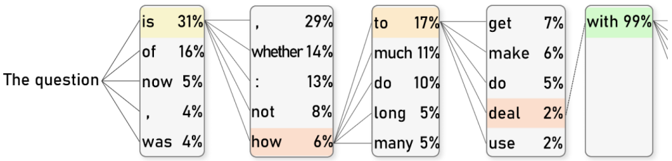
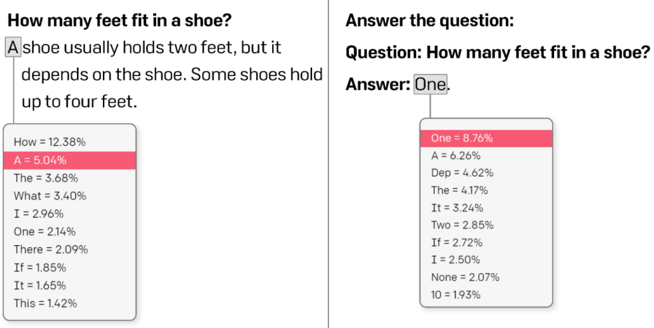
This article contributes to the debate around the abilities of large language models such as GPT-3, dealing with: firstly, evaluating how well GPT does in the Turing Test, secondly the limits of such models, especially their tendency to generate falsehoods, and thirdly the social consequences of the problems these models have with truth-telling. We start by formalising the recently proposed notion of reversible questions, which Floridi & Chiriatti (2020) propose allow one to ‘identify the nature of the source of their answers’, as a probabilistic measure based on Item Response Theory from psychometrics. Following a critical assessment of the methodology which led previous scholars to dismiss GPT’s abilities, we argue against claims that GPT-3 completely lacks semantic ability. Using ideas of compression, priming, distributional semantics and semantic webs we offer our own theory of the limits of large language models like GPT-3, and argue that GPT can competently engage in various semantic tasks. The real reason GPT’s answers seem senseless being that truth-telling is not amongst them. We claim that these kinds of models cannot be forced into producing only true continuation, but rather to maximise their objective function they strategize to be plausible instead of truthful. This, we moreover claim, can hijack our intuitive capacity to evaluate the accuracy of its outputs. Finally, we show how this analysis predicts that a widespread adoption of language generators as tools for writing could result in permanent pollution of our informational ecosystem with massive amounts of very plausible but often untrue texts.
Overview
The claims and statistics of this paper haven’t been checked yet.
Free: it reads the open-access text and checks the first 5 claims that cite a source we can check. Create a free account to check every claim.
Integrity signals
Registry
Cites
Statistics
Figures
Verification
Claims the paper makes
The claims and statistics of this paper haven’t been checked yet.
Free: it reads the open-access text and checks the first 5 claims that cite a source we can check. Create a free account to check every claim.
Claims other papers make about this one
Each is checked against this paper’s own text: does it say what the citing paper says it does?
The cited source says what the claim attributes to it.
In the citing paper
“Notably, LLMs use deep neural networks to predict the next word in a sequence of text and provide responses based on statistical patterns learned during training [12].”
From High Rates of Fabricated and Inaccurate References in ChatGPT-Generated Medical Content (2023) · cites this paper as [12]
Self-check
Percentages, sums and reported differences re-computed from the paper’s own numbers.
The self-check needs the paper’s full text.
Citations
Cites
Hochreiter, S., & Schmidhuber, J. (1997) · Neural Computation · doi:10.1162/neco.1997.9.8.1735 · Cited by 102,318
A Mathematical Theory of Communication
Shannon, C. E. (1948) · Bell System Technical Journal · doi:10.1002/j.1538-7305.1948.tb01338.x · Cited by 88,486
Language Models are Few-Shot Learners
Brown, T. B., Mann, B., Ryder, N., Subbiah, M., Kaplan, J., Dhariwal, P., Neelakantan, A., Shyam, P., Sastry, G., Askell, A., et al. (2020) · arXiv · doi:10.48550/arxiv.2005.14165 · Cited by 23,372
A spreading-activation theory of semantic processing.
Collins, A. M., & Loftus, E. F. (1975) · Psychological Review · doi:10.1037/0033-295x.82.6.407 · Cited by 8,141 · cited 1×
“The metaphor of activation spreading through a semantic web has been introduced in context of human cognition (Collins & Quillian, 1969; Collins & Loftus, 1975 ) and while a simplification of human abilities, it may capture how these learnt links of different complexity are utilized by GPT.”
Searle, J. R. (1980) · Behavioral and Brain Sciences · doi:10.1017/s0140525x00005756 · Cited by 6,954 · cited 1×
“Searle argued, that computers ‘have syntax but not semantics’ (Searle, 1980; p. 423).”
BackgroundRetrieval time from semantic memory
Collins, A. M., & Quillian, M. R. (1969) · Journal of Verbal Learning and Verbal Behavior · doi:10.1016/s0022-5371(69)80069-1 · Cited by 3,109
GPT-3: Its Nature, Scope, Limits, and Consequences
Floridi, L., & Chiriatti, M. (2020) · Minds and Machines · doi:10.1007/s11023-020-09548-1 · Cited by 2,519 · cited 3×
“Previous investigations (like that of Floridi & Chiriatti 2020 , Marcus & Davis, 2020) focused on challenging GPT-3 with tests and observing, whether they succeeded in tripping it up.”
BackgroundResultSPERBER, D., CLÉMENT, F., HEINTZ, C., MASCARO, O., MERCIER, H., ORIGGI, G., & WILSON, D. (2010) · Mind & Language · doi:10.1111/j.1468-0017.2010.01394.x · Cited by 1,795
A Review of Relational Machine Learning for Knowledge Graphs
Nickel, M., Murphy, K., Tresp, V., & Gabrilovich, E. (2016) · Proceedings of the IEEE · doi:10.1109/jproc.2015.2483592 · Cited by 1,638
Gilbert, D. T. (1991) · American Psychologist · doi:10.1037//0003-066x.46.2.107 · Cited by 1,515
Evaluating Large Language Models Trained on Code
Chen, M., Tworek, J., Jun, H., Yuan, Q., Pinto, H. P. D. O., Kaplan, J., Edwards, H., Burda, Y., Joseph, N., Brockman, G., et al. (2021) · arXiv · doi:10.48550/arxiv.2107.03374 · Cited by 1,436
AutoPrompt: Eliciting Knowledge from Language Models with Automatically Generated Prompts
Shin, T., Razeghi, Y., Logan IV, R. L., Wallace, E., & Singh, S. (2020) · Proceedings of the 2020 Conference on Empirical Methods in Natural Language Processing (EMNLP) · doi:10.18653/v1/2020.emnlp-main.346 · Cited by 1,279
Shifting attention to accuracy can reduce misinformation online
Pennycook, G., Epstein, Z., Mosleh, M., Arechar, A. A., Eckles, D., & Rand, D. G. (2021) · Nature · doi:10.1038/s41586-021-03344-2 · Cited by 1,155
Prompt Programming for Large Language Models: Beyond the Few-Shot Paradigm
Reynolds, L., & McDonell, K. (2021) · Extended Abstracts of the 2021 CHI Conference on Human Factors in Computing Systems · doi:10.1145/3411763.3451760 · Cited by 952 · cited 3×
“It turns out variations on this simple procedure prove extremely effective and have become the primary way of interacting with large language models (Reynolds & McDonell, 2021 ).”
BackgroundMethod(2019) · Cited by 771
Embretson, S. E., & Reise, S. P. (2013) · Psychology Press eBooks · doi:10.4324/9781410605269 · Cited by 761
(2017) · Harvard University Press eBooks · doi:10.4159/9780674977860 · Cited by 673
What you can cram into a single $&!#* vector: Probing sentence embeddings for linguistic properties
Conneau, A., Kruszewski, G., Lample, G., Barrault, L., & Baroni, M. (2018) · Proceedings of the 56th Annual Meeting of the Association for Computational Linguistics (Volume 1: Long Papers) · doi:10.18653/v1/p18-1198 · Cited by 657
An Introduction to Variational Autoencoders
Kingma, D. P., & Welling, M. (2019) · doi:10.1561/9781680836233 · Cited by 643
Unsupervised Machine Translation Using Monolingual Corpora Only
Lample, G., Conneau, A., Denoyer, L., & Ranzato, M. (2017) · arXiv · doi:10.48550/arxiv.1711.00043 · Cited by 584 · cited 2×
“…over answers, additionally embedded into a sentence space to get rid of their superficial differences (Mulder & van der Linden, 2009; p. 81–84; Conneau et al., 2018 for a discussion of sentence embeddings), but in simpler terms what we’ve gained is the insight that the expected amount of…”
BackgroundCalibrate Before Use: Improving Few-Shot Performance of Language Models
Zhao, T. Z., Wallace, E., Feng, S., Klein, D., & Singh, S. (2021) · arXiv · doi:10.48550/arxiv.2102.09690 · Cited by 513 · cited 1×
“If GPT cannot get to know our intentions, how is it that we can find different ways of prompting the model to get the relevant answer to our question (e.g. Zhao et al., 2021 ; Shin et al., 2020 ; Reynolds & McDonell, 2021 )?”
MethodFrom words to meaning: A semantic illusion
Erickson, T. D., & Mattson, M. E. (1981) · Journal of Verbal Learning and Verbal Behavior · doi:10.1016/s0022-5371(81)90165-1 · Cited by 504
The Robots Are Coming: Exploring the Implications of OpenAI Codex on Introductory Programming
Finnie-Ansley, J., Denny, P., Becker, B. A., Luxton-Reilly, A., & Prather, J. (2022) · Proceedings of the 24th Australasian Computing Education Conference · doi:10.1145/3511861.3511863 · Cited by 463
Word Embeddings: A SurveyPreprint
Almeida, F. D. M., & Xexeo, G. B. (2019) · arXiv (Cornell University) · doi:10.48550/arxiv.1901.09069 · Cited by 424
Possible Worlds in Literary Theory
Ronen, R. (1994) · Cambridge University Press eBooks · doi:10.1017/cbo9780511597480 · Cited by 356
MERCIER, H., & SPERBER, D. (2017) · doi:10.2307/j.ctv2sp3dd8 · Cited by 317
Measuring Mathematical Problem Solving With the MATH Dataset
Hendrycks, D., Burns, C., Kadavath, S., Arora, A., Basart, S., Tang, E., Song, D., & Steinhardt, J. (2021) · arXiv · doi:10.48550/arxiv.2103.03874 · Cited by 306
What you can cram into a single vector: Probing sentence embeddings for linguistic properties
Conneau, A., Kruszewski, G., Lample, G., Barrault, L., & Baroni, M. (2018) · arXiv (Cornell University) · doi:10.48550/arxiv.1805.01070 · Cited by 263
Distributional Semantics and Linguistic Theory
Boleda, G. (2020) · Annual Review of Linguistics · doi:10.1146/annurev-linguistics-011619-030303 · Cited by 213
Understanding How Prior Knowledge Influences Memory in Older Adults
Umanath, S., & Marsh, E. J. (2014) · Perspectives on Psychological Science · doi:10.1177/1745691614535933 · Cited by 191
What the Near Future of Artificial Intelligence Could Be
Floridi, L. (2019) · Philosophy & Technology · doi:10.1007/s13347-019-00345-y · Cited by 191 · cited 1×
“If engineers of these models do not address their problems with truth, this deterioration could be accelerated by the use of synthetic data (Floridi, 2019) - that is, by the next models being trained on the outputs of the previous models.”
A DEFENCE OF CONSTRUCTIONISM: PHILOSOPHY AS CONCEPTUAL ENGINEERING
FLORIDI, L. (2011) · Metaphilosophy · doi:10.1111/j.1467-9973.2011.01693.x · Cited by 163
Not Born Yesterday: The Science of Who We Trust and What We Believe
Mercier, H. (2020) · Princeton University Press eBooks · doi:10.1515/9780691198842 · Cited by 162
Robo-writers: the rise and risks of language-generating AI
Hutson, M. (2021) · Nature · doi:10.1038/d41586-021-00530-0 · Cited by 141
Multidimensional Adaptive Testing with Optimal Design Criteria for Item Selection
Mulder, J., & van der Linden, W. J. (2008) · Psychometrika · doi:10.1007/s11336-008-9097-5 · Cited by 123
A Class of Multidimensional IRT Models for Testing Unidimensionality and Clustering Items
Bartolucci, F. (2007) · Psychometrika · doi:10.1007/s11336-005-1376-9 · Cited by 110
Reasoning with Cause and Effect
Pearl, J. (1999) · eScholarship (California Digital Library) · doi:10.1609/aimag.v23i1.1612 · Cited by 100
Dissertatio de arte combinatoria
Leibniz, G. W. (1666) · Kollektionen Digitale Sammlungen (SLUB Dresden) · Cited by 85
Language Models are Open Knowledge Graphs
Wang, C., Liu, X., & Song, D. (2020) · arXiv · doi:10.48550/arxiv.2010.11967 · Cited by 79
Digital’s Cleaving Power and Its Consequences
Floridi, L. (2017) · Philosophy & Technology · doi:10.1007/s13347-017-0259-1 · Cited by 77
Semantic Information and the Correctness Theory of Truth
Floridi, L. (2010) · Erkenntnis · doi:10.1007/s10670-010-9249-8 · Cited by 63
Montemayor, C. (2021) · Minds and Machines · doi:10.1007/s11023-021-09568-5 · Cited by 45
Measuring the Efficiency of the Intraday Forex Market with a Universal Data Compression Algorithm
Shmilovici, A., Kahiri, Y., Ben‐Gal, I., & Hauser, S. (2008) · Computational Economics · doi:10.1007/s10614-008-9153-3 · Cited by 37
Gunser, V. E., Gottschling, S., Brucker, B., Richter, S., & Gerjets, P. (2021) · Communications in Computer and Information Science · doi:10.1007/978-3-030-78635-9_67 · Cited by 25 · cited 1×
“But as texts written by GPT-3 have already been shown to be almost indistinguishable from those written by humans (Gunser et al., 2021 ) the desire to express vigilance towards the source becomes unattainable.”
BackgroundAutomatic Program Repair with OpenAI's Codex: Evaluating QuixBugs
Prenner, J. A., & Robbes, R. (2021) · arXiv · doi:10.48550/arxiv.2111.03922 · Cited by 25 · cited 2×
“Prenner and Robbes’ (2021) implementation of it to fix bugs in code is also interesting, as is Finnie-Ansley et al. (2022) who recently tested CODEX against students of introductory programming courses, and found that it outperformed the students in exams.”
BackgroundHow Good Are We At Evaluating Communicated Information?
Mercier, H. (2021) · Royal Institute of Philosophy Supplement · doi:10.1017/s1358246121000096 · Cited by 20
Do Computers "Have Syntax, But No Semantics"?
Peregrin, J. (2021) · Minds and Machines · doi:10.1007/s11023-021-09564-9 · Cited by 10
Rethinking, Reworking and Revolutionising the Turing Test
Damassino, N., & Novelli, N. (2020) · Minds and Machines · doi:10.1007/s11023-020-09553-4 · Cited by 8
Computing the Information Content of Trained Neural NetworksPreprint
Bernstein, J., & Yue, Y. (2021) · arXiv (Cornell University) · doi:10.48550/arxiv.2103.01045 · Cited by 6
Latent Variable Modelling and Item Response Theory Analyses in Marketing Research
Brzezińska, J. (2016) · Folia Oeconomica Stetinensia · doi:10.1515/foli-2016-0032 · Cited by 4
AutoPrompt: eliciting knowledge from language models with automatically generated prompts
Shin, T., Razeghi, Y., Logan, R. L., Wallace, E., & Singh, S. (2020) · arXiv · doi:10.48550/arxiv.2010.15980
Research works printed but not linked: 4
- Hendrycks, D., Burns, C., Kadavath, S., Arora, A., Basart, S., Tang, E. … Steinhardt, J. (2021). Measuring mathematical problem solving with the math dataset. ArXiv preprint ArXiv:2103.03874. · arXiv
- 32. Lewis, D. K. (1986). On the plurality of worlds (322 vol.). Oxford: Blackwell
- 44. Pearl, J., & Mackenzie, D. (2019). The book of why. Penguin Books
- 48. Radford, A., Wu, J., Child, R., Luan, D., Amodei, D., & Sutskever, I. (2019). & others. Language models are unsupervised multitask learners. OpenAI Blog, 1(8), 9
Cited by
(2024) · doi:10.1109/access.2024.3365742 · Cited by 934
Recent advancements and challenges of NLP-based sentiment analysis: A state-of-the-art review
Jim, J. R., Talukder, M. A. R., Malakar, P., Kabir, M. M., Nur, K., & Mridha, M. F. (2024) · Natural Language Processing Journal · doi:10.1016/j.nlp.2024.100059 · Cited by 297
High Rates of Fabricated and Inaccurate References in ChatGPT-Generated Medical Content
Bhattacharyya, M., Miller, V. M., Bhattacharyya, D., & Miller, L. E. (2023) · Cureus · doi:10.7759/cureus.39238 · Cited by 294
Auditing Large Language Models: A Three-Layered Approach
Mökander, J., Schuett, J., Kirk, H. R., & Floridi, L. (2023) · doi:10.2139/ssrn.4361607 · Cited by 292
Auditing large language models: a three-layered approach
Mökander, J., Schuett, J., Kirk, H. R., & Floridi, L. (2023) · arXiv · doi:10.48550/arxiv.2302.08500 · Cited by 292
Metadata
- Authors
- Sobieszek, A., & Price, T.
- Affiliations
- University of Warsaw (PL)
- University of Nottingham (GB)
- Corresponding author
- Price, Tadeusz
- Venue
- Minds and Machines
- Published
- 2022-05-03
- Volume
- 32
- Issue
- 2
- Pages
- 341-364
- ISSN
- 0924-6495 (ISSN-L)
- 1572-8641
- OpenAlex
- W4225411436
- Semantic Scholar
- d072b46a0504ac023d5035d8ec0c7876151245c4
- Cited by
- 86
- References
- 41
- Citations by year
- 2026: 12 · 2025: 17 · 2024: 22 · 2023: 34 · 2022: 1
- FWCI
- 21.44
- Type
- journal article
- Language
- en
- Open access
- hybrid
- doi.org
- Licence
- cc-by
- creativecommons.org/licenses/by/4.0 (tdm)
- creativecommons.org/licenses/by/4.0 (vor)
- Locations
- Minds and Machines (publishedVersion, cc-by)
- Topics
- Physical Sciences › Computer Science › Artificial Intelligence › Ethics and Social Impacts of AI
- Physical Sciences › Computer Science › Artificial Intelligence › Topic Modeling
- Social Sciences › Arts and Humanities › History and Philosophy of Science › Cybernetics and Technology in Society
- Keywords
- GPT-3, large language models, Turing test, item response theory, semantic abilities, truth-telling, factual errors, distributional semantics, priming, compression, semantic web, information pollution, AI-generated text
About these checks
Registry, retraction, Cites and statistics results are computed, not judged, with one exception: a printed reference that no index lists is read once by a model before it counts as a citation error. Claims are extracted by a model and kept only when their quote appears verbatim in the text; each cited source is then checked, with a model’s help, for whether it says what the claim relies on. Those verdicts can be wrong — read the claim’s quote and the cited source before relying on one.
Statistics and arithmetic are recomputed, not judged.
Confidence bands are shown only for fields calibrated on our annotated test set. None is calibrated yet, so no band is shown.
What counts as a claim ›How we measure confidence ›How we check this ›
Are you an author, or do you see a problem with this page? Request a review
Data sources
Bibliographic data: Semantic Scholar, OpenAlex, Crossref.
Contains information from the Semantic Scholar Academic Graph Datasets, made available under the ODC Attribution License (ODC-BY 1.0).
Semantic Scholar’s data is described in: Kinney, R., et al. (2023). The Semantic Scholar Open Data Platform. arXiv:2301.10140.
