

Protein, amino acids and obesity treatment
Open accessThe DOI matches its Crossref record; 116 of the 116 references it cites were found in a registry or an index.
Abstract
Dietary proteins have been used for years to treat obesity. Body weight loss is beneficial when it concerns fat mass, but loss of fat free mass – especially muscle might be detrimental. This occurs because protein breakdown predominates over synthesis, thus administering anabolic dietary compounds like proteins might counter fat free mass loss while allowing for fat mass loss. Indeed, varying the quantity of proteins will decrease muscle anabolic response and increase hyperphagia in rodents fed a low protein diet; but it will favor lean mass maintenance and promote satiety, in certain age groups of humans fed a high protein diet. Beyond protein quantity, protein source is an important metabolic regulator: whey protein and plant based diets exercize favorable effects on the risk of developing obesity, body composition, metabolic parameters or fat free mass preservation of obese patients. Specific amino-acids like branched chain amino acids (BCAA), methionine, tryptophan and its metabolites, and glutamate can also positively influence parameters and complications of obesity especially in rodent models, with less studies translating this in humans. Tuning the quality and quantity of proteins or even specific amino-acids can thus be seen as a potential therapeutic intervention on the body composition, metabolic syndrome parameters and appetite regulation of obese patients. Since these effects vary across age groups and much of the data comes from murine models, long-term prospective studies modulating proteins and amino acids in the human diet are needed.
Overview
The claims and statistics of this paper haven’t been checked yet.
Free: it reads the open-access text and checks the first 5 claims that cite a source we can check. Create a free account to check every claim.
Integrity signals
Registry
Cites
Statistics
Figures
Verification
Claims the paper makes
The claims and statistics of this paper haven’t been checked yet.
Free: it reads the open-access text and checks the first 5 claims that cite a source we can check. Create a free account to check every claim.
Claims other papers make about this one
Each is checked against this paper’s own text: does it say what the citing paper says it does?
The source backs part of the claim, not all of it — or backs it for a different population, condition or comparison.
In the citing paper
“Overall, moderately high protein intake (1.0-1.3 g/kg body weight/day), including supplementation, appears effective for preserving muscle mass in sarcopenic obesity [156]”
From Nutritional Approaches to Enhance GLP-1 Analogue Therapy in Obesity: A Narrative Review (2025) · cites this paper as [156]
Experimental — accuracy not yet measuredIn the citing paper
“Whey protein (WP), a high-quality milk-derived protein, contains all essential amino acids required for muscle growth and repair, supporting its applications in sports nutrition, weight management, and sarcopenia [156,266]”
From Nutritional Approaches to Enhance GLP-1 Analogue Therapy in Obesity: A Narrative Review (2025) · cites this paper as [156]
In the citing paper
“In older adults with sarcopenia, a meta-analysis (n = 1154) demonstrated that WP-enriched supplementation, with or without resistance training, improved appendicular skeletal muscle mass, muscle mass index, and gait speed, though not handgrip strength or overall body composition”
From Nutritional Approaches to Enhance GLP-1 Analogue Therapy in Obesity: A Narrative Review (2025) · cites this paper as [156]
Self-check
Percentages, sums and reported differences re-computed from the paper’s own numbers.
The self-check needs the paper’s full text.
Citations
Cites
Newgard, C. B., An, J., Bain, J. R., Muehlbauer, M. J., Stevens, R. D., Lien, L. F., Haqq, A. M., Shah, S. H., Arlotto, M., Slentz, C. A., et al. (2009) · Cell Metabolism · doi:10.1016/j.cmet.2009.02.002 · Cited by 3,165
Metabolite profiles and the risk of developing diabetes
Wang, T. J., Larson, M. G., Vasan, R. S., Cheng, S., Rhee, E. P., McCabe, E., Lewis, G. D., Fox, C. S., Jacques, P. F., Fernandez, C., et al. (2011) · Nature Medicine · doi:10.1038/nm.2307 · Cited by 3,143
Defining the role of mTOR in cancer
Guertin, D. A., & Sabatini, D. M. (2007) · Cancer Cell · doi:10.1016/j.ccr.2007.05.008 · Cited by 2,833
Sancak, Y., Bar-Peled, L., Zoncu, R., Markhard, A. L., Nada, S., & Sabatini, D. M. (2010) · Cell · doi:10.1016/j.cell.2010.02.024 · Cited by 2,464
Human gut microbes impact host serum metabolome and insulin sensitivity
Pedersen, H. K., Gudmundsdottir, V., Nielsen, H. B., Hyotylainen, T., Nielsen, T., Jensen, B. A. H., Forslund, K., Hildebrand, F., Prifti, E., Falony, G., et al. (2016) · Nature · doi:10.1038/nature18646 · Cited by 2,116
Oxidative stress and metabolic disorders: Pathogenesis and therapeutic strategies
Rani, V., Deep, G., Singh, R. K., Palle, K., & Yadav, U. C. S. (2016) · Life Sciences · doi:10.1016/j.lfs.2016.02.002 · Cited by 1,139
Springmann, M., Wiebe, K., Mason-D'Croz, D., Sulser, T. B., Rayner, M., & Scarborough, P. (2018) · The Lancet Planetary Health · doi:10.1016/s2542-5196(18)30206-7 · Cited by 952
Understanding the Physiology of FGF21
Fisher, F. M., & Maratos-Flier, E. (2016) · Annual Review of Physiology · doi:10.1146/annurev-physiol-021115-105339 · Cited by 912
Plasma Amino Acid Levels and Insulin Secretion in Obesity
Felig, P., Marliss, E., & Cahill, G. F. (1969) · New England Journal of Medicine · doi:10.1056/nejm196910092811503 · Cited by 812
Metabolomics and Metabolic Diseases: Where Do We Stand?
Newgard, C. B. (2017) · Cell Metabolism · doi:10.1016/j.cmet.2016.09.018 · Cited by 750
Plant proteins in relation to human protein and amino acid nutrition
Young, V., & Pellett, P. (1994) · The American Journal of Clinical Nutrition · doi:10.1093/ajcn/59.5.1203s · Cited by 717
She, P., Van Horn, C., Reid, T., Hutson, S. M., Cooney, R. N., & Lynch, C. J. (2007) · American Journal of Physiology-Endocrinology and Metabolism · doi:10.1152/ajpendo.00134.2007 · Cited by 502
Quantitative Analysis of the Whole-Body Metabolic Fate of Branched-Chain Amino Acids
Neinast, M. D., Jang, C., Hui, S., Murashige, D. S., Chu, Q., Morscher, R. J., Li, X., Zhan, L., White, E., Anthony, T. G., et al. (2019) · Cell Metabolism · doi:10.1016/j.cmet.2018.10.013 · Cited by 496
Wyant, G. A., Abu-Remaileh, M., Wolfson, R. L., Chen, W. W., Freinkman, E., Danai, L. V., Vander Heiden, M. G., & Sabatini, D. M. (2017) · Cell · doi:10.1016/j.cell.2017.09.046 · Cited by 470
Insulin signaling meets mitochondria in metabolism
Cheng, Z., Tseng, Y., & White, M. F. (2010) · Trends in Endocrinology & Metabolism · doi:10.1016/j.tem.2010.06.005 · Cited by 449
The starvation hormone, fibroblast growth factor-21, extends lifespan in mice
Zhang, Y., Xie, Y., Berglund, E. D., Coate, K. C., He, T. T., Katafuchi, T., Xiao, G., Potthoff, M. J., Wei, W., Wan, Y., et al. (2012) · eLife · doi:10.7554/elife.00065 · Cited by 420 · cited 1×
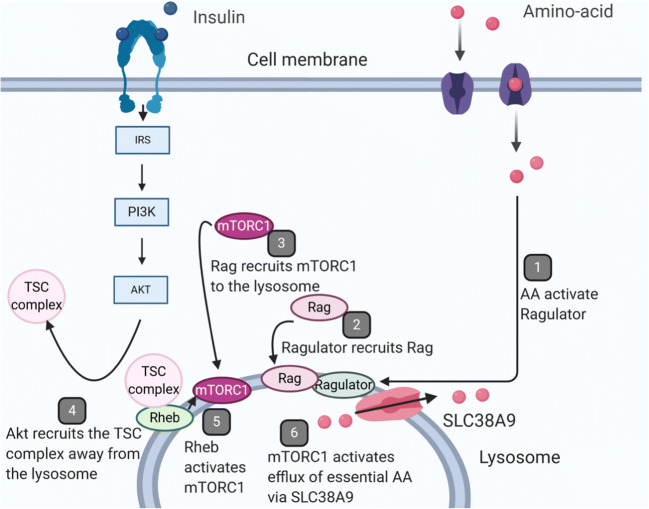
“The complex mTORC1 also crosstalks with FGF21, a liver protein secreted during fasting which extends lifespan, improves insulin sensitivity and diminishes adiposity and liver steatosis [63, 64].”
BackgroundSplanchnic and whole-body leucine kinetics in young and elderly men
Boirie, Y., Gachon, P., & Beaufrère, B. (1997) · The American Journal of Clinical Nutrition · doi:10.1093/ajcn/65.2.489 · Cited by 353
Self-citationCeddia, R. B., Somwar, R., Maida, A., Fang, X., Bikopoulos, G., & Sweeney, G. (2005) · Diabetologia · doi:10.1007/s00125-004-1609-y · Cited by 345
Solon-Biet, S. M., Cogger, V. C., Pulpitel, T., Wahl, D., Clark, X., Bagley, E. E., Gregoriou, G. C., Senior, A. M., Wang, Q.-P., Brandon, A. E., et al. (2019) · Nature Metabolism · doi:10.1038/s42255-019-0059-2 · Cited by 332
Lackey, D. E., Lynch, C. J., Olson, K. C., Mostaedi, R., Ali, M., Smith, W. H., Karpe, F., Humphreys, S., Bedinger, D. H., Dunn, T. N., et al. (2013) · American Journal of Physiology-Endocrinology and Metabolism · doi:10.1152/ajpendo.00630.2012 · Cited by 319
The gut microbiota regulates white adipose tissue inflammation and obesity via a family of microRNAs
Virtue, A. T., McCright, S. J., Wright, J. M., Jimenez, M. T., Mowel, W. K., Kotzin, J. J., Joannas, L., Basavappa, M. G., Spencer, S. P., Clark, M. L., et al. (2019) · Science Translational Medicine · doi:10.1126/scitranslmed.aav1892 · Cited by 317
Branched-chain amino acids in disease
White, P. J., & Newgard, C. B. (2019) · Science · doi:10.1126/science.aav0558 · Cited by 302
Lynch, H., Johnston, C., & Wharton, C. (2018) · Nutrients · doi:10.3390/nu10121841 · Cited by 267
Hsu, K.-J., Liao, C.-D., Tsai, M.-W., & Chen, C.-N. (2019) · Nutrients · doi:10.3390/nu11092163 · Cited by 258
Ables, G. P., Perrone, C. E., Orentreich, D., & Orentreich, N. (2012) · PLoS ONE · doi:10.1371/journal.pone.0051357 · Cited by 240
Plasma Amino Acid Levels and Insulin Secretion in Obesity
Felig, P. (1970) · Laboratory Medicine · doi:10.1093/labmed/1.9.39 · Cited by 212
Kim, H., Kim, M., Kojima, N., Fujino, K., Hosoi, E., Kobayashi, H., Somekawa, S., Niki, Y., Yamashiro, Y., & Yoshida, H. (2016) · Journal of the American Medical Directors Association · doi:10.1016/j.jamda.2016.06.016 · Cited by 199
Protein leverage and energy intake
Gosby, A. K., Conigrave, A. D., Raubenheimer, D., & Simpson, S. J. (2014) · Obesity Reviews · doi:10.1111/obr.12131 · Cited by 196
Dietary Methionine Restriction Increases Fat Oxidation in Obese Adults with Metabolic Syndrome
Plaisance, E. P., Greenway, F. L., Boudreau, A., Hill, K. L., Johnson, W. D., Krajcik, R. A., Perrone, C. E., Orentreich, N., Cefalu, W. T., & Gettys, T. W. (2011) · The Journal of Clinical Endocrinology & Metabolism · doi:10.1210/jc.2010-2493 · Cited by 181
Elshorbagy, A. K., Valdivia-Garcia, M., Mattocks, D. A. L., Plummer, J. D., Smith, A. D., Drevon, C. A., Refsum, H., & Perrone, C. E. (2011) · Journal of Lipid Research · doi:10.1194/jlr.m010215 · Cited by 177
Heianza, Y., Sun, D., Li, X., DiDonato, J. A., Bray, G. A., Sacks, F. M., & Qi, L. (2019) · Gut · doi:10.1136/gutjnl-2018-316155 · Cited by 177
Celis-Morales, C., Livingstone, K. M., Marsaux, C. F. M., Forster, H., O’Donovan, C. B., Woolhead, C., Macready, A. L., Fallaize, R., Navas-Carretero, S., San-Cristobal, R., et al. (2015) · Genes & Nutrition · doi:10.1007/s12263-014-0450-2 · Cited by 173
Hydrogen sulfide in signaling pathways
Olas, B. (2015) · Clinica Chimica Acta · doi:10.1016/j.cca.2014.10.037 · Cited by 172
Cumulative consumption of branched-chain amino acids and incidence of type 2 diabetes
Zheng, Y., Li, Y., Qi, Q., Hruby, A., Manson, J. E., Willett, W. C., Wolpin, B. M., Hu, F. B., & Qi, L. (2016) · International Journal of Epidemiology · doi:10.1093/ije/dyw143 · Cited by 168
Hydrogen sulfide and the liver
Mani, S., Cao, W., Wu, L., & Wang, R. (2014) · Nitric Oxide · doi:10.1016/j.niox.2014.02.006 · Cited by 158
Protein Leverage: Theoretical Foundations and Ten Points of Clarification
Raubenheimer, D., & Simpson, S. J. (2019) · Obesity · doi:10.1002/oby.22531 · Cited by 157
Kahleova, H., Fleeman, R., Hlozkova, A., Holubkov, R., & Barnard, N. D. (2018) · Nutrition & Diabetes · doi:10.1038/s41387-018-0067-4 · Cited by 153
Oppert, J., Bellicha, A., Roda, C., Bouillot, J., Torcivia, A., Clement, K., Poitou, C., & Ciangura, C. (2018) · Obesity · doi:10.1002/oby.22317 · Cited by 141
Patho-physiological and toxicological aspects of monosodium glutamate
Chakraborty, S. P. (2019) · Toxicology Mechanisms and Methods · doi:10.1080/15376516.2018.1528649 · Cited by 140
The role of higher protein diets in weight control and obesity-related comorbidities
Astrup, A., Raben, A., & Geiker, N. (2015) · International Journal of Obesity · doi:10.1038/ijo.2014.216 · Cited by 137
Biswas, D., Duffley, L., & Pulinilkunnil, T. (2019) · The FASEB Journal · doi:10.1096/fj.201802842rr · Cited by 134
Lizarbe, B., Soares, A. F., Larsson, S., & Duarte, J. M. N. (2019) · Frontiers in Neuroscience · doi:10.3389/fnins.2018.00985 · Cited by 130
Nabuco, H. C. G., Tomeleri, C. M., Fernandes, R. R., Sugihara Junior, P., Cavalcante, E. F., Cunha, P. M., Antunes, M., Nunes, J. P., Venturini, D., Barbosa, D. S., et al. (2019) · Clinical Nutrition ESPEN · doi:10.1016/j.clnesp.2019.04.007 · Cited by 125
mTORC1 Is a Major Regulatory Node in the FGF21 Signaling Network in Adipocytes
Minard, A. Y., Tan, S.-X., Yang, P., Fazakerley, D. J., Domanova, W., Parker, B. L., Humphrey, S. J., Jothi, R., Stöckli, J., & James, D. E. (2016) · Cell Reports · doi:10.1016/j.celrep.2016.08.086 · Cited by 117
Methionine restriction prevents onset of type 2 diabetes in NZO mice
Castaño-Martínez, T., Schumacher, F., Schumacher, S., Kochlik, B., Weber, D., Grune, T., Biemann, R., McCann, A., Abraham, K., Weikert, C., et al. (2019) · The FASEB Journal · doi:10.1096/fj.201900150r · Cited by 109
The Impact of Dietary Methionine Restriction on Biomarkers of Metabolic Health
Orgeron, M. L., Stone, K. P., Wanders, D., Cortez, C. C., van, N. T., & Gettys, T. W. (2014) · Progress in Molecular Biology and Translational Science · doi:10.1016/b978-0-12-800101-1.00011-9 · Cited by 105
Improving the levels of essential amino acids and sulfur metabolites in plants
Galili, G., Amir, R., Hoefgen, R., & Hesse, H. (2005) · Biological Chemistry · doi:10.1515/bc.2005.097 · Cited by 104
Low protein diets produce divergent effects on energy balance
Pezeshki, A., Zapata, R. C., Singh, A., Yee, N. J., & Chelikani, P. K. (2016) · Scientific Reports · doi:10.1038/srep25145 · Cited by 103
Kanerva, N., Larsson, I., Peltonen, M., Lindroos, A. K., & Carlsson, L. M. S. (2017) · American Journal of Clinical Nutrition · doi:10.3945/ajcn.116.149112 · Cited by 103
Plant-Based Diets in the Reduction of Body Fat: Physiological Effects and Biochemical Insights
Najjar, R. S., & Feresin, R. G. (2019) · Nutrients · doi:10.3390/nu11112712 · Cited by 100
Regulation of metabolic health by essential dietary amino acids
Green, C. L., & Lamming, D. W. (2019) · Mechanisms of Ageing and Development · doi:10.1016/j.mad.2018.07.004 · Cited by 89
Obesity Alters the Muscle Protein Synthetic Response to Nutrition and Exercise
Beals, J. W., Burd, N. A., Moore, D. R., & van Vliet, S. (2019) · Frontiers in Nutrition · doi:10.3389/fnut.2019.00087 · Cited by 88
Indole-3-Propionic Acid, a Tryptophan-Derived Bacterial Metabolite, Reduces Weight Gain in Rats
Konopelski, P., Konop, M., Gawrys-Kopczynska, M., Podsadni, P., Szczepanska, A., & Ufnal, M. (2019) · Nutrients · doi:10.3390/nu11030591 · Cited by 87
Yang, Y., Wang, Y., Sun, J., Zhang, J., Guo, H., Shi, Y., Cheng, X., Tang, X., & Le, G. (2019) · Food & Function · doi:10.1039/c8fo01629a · Cited by 84
Søndergaard Nielsen, M., Rasmussen, S., Just Christensen, B., Ritz, C., le Roux, C. W., Berg Schmidt, J., & Sjödin, A. (2018) · Obesity · doi:10.1002/oby.22272 · Cited by 83
Klementová, M., Thieme, L., Haluzík, M., Pavlovičová, R., Hill, M., Pelikánová, T., & Kahleová, H. (2019) · Nutrients · doi:10.3390/nu11010157 · Cited by 81
Gomes, D. L., Moehlecke, M., da Silva, F. B. L., Dutra, E. S., Schaan, B. D., & de Carvalho, K. M. B. (2016) · Obesity Surgery · doi:10.1007/s11695-016-2308-8 · Cited by 79
Pal, S., Radavelli‐Bagatini, S., Hagger, M. S., & Ellis, V. (2014) · European Journal of Clinical Nutrition · doi:10.1038/ejcn.2014.84 · Cited by 75
Maltais, M. L., Perreault, K., Courchesne-Loyer, A., Lagacé, J.-C., Barsalani, R., & Dionne, I. J. (2016) · International Journal of Sport Nutrition and Exercise Metabolism · doi:10.1123/ijsnem.2015-0160 · Cited by 73
Branched-chain amino acid, meat intake and risk of type 2 diabetes in the Women’s Health Initiative
Isanejad, M., LaCroix, A. Z., Thomson, C. A., Tinker, L., Larson, J. C., Qi, Q., Qi, L., Cooper-DeHoff, R. M., Phillips, L. S., Prentice, R. L., et al. (2017) · British Journal of Nutrition · doi:10.1017/s0007114517001568 · Cited by 73
Brown-Borg, H. M., & Buffenstein, R. (2017) · Ageing Research Reviews · doi:10.1016/j.arr.2016.08.007 · Cited by 70
Olsén, T., Øvrebø, B., Turner, C., Bastani, N. E., Refsum, H., & Vinknes, K. J. (2018) · Nutrients · doi:10.3390/nu10121822 · Cited by 65
Schiavo, L., Scalera, G., Pilone, V., Sena, G. D., Quagliariello, V., Iannelli, A., & Barbarisi, A. (2016) · Obesity Surgery · doi:10.1007/s11695-016-2382-y · Cited by 63
Dagan, S. S., Tovim, T. B., Keidar, A., Raziel, A., Shibolet, O., & Zelber‐Sagi, S. (2016) · Surgery for Obesity and Related Diseases · doi:10.1016/j.soard.2016.05.026 · Cited by 62
The relevance of dietary protein after bariatric surgery: what do we know?
Steenackers, N., Gesquiere, I., & Matthys, C. (2018) · Current Opinion in Clinical Nutrition & Metabolic Care · doi:10.1097/mco.0000000000000437 · Cited by 61
Dietary Methionine Restriction Reduces Inflammation Independent of FGF21 Action
Sharma, S., Dixon, T., Jung, S., Graff, E. C., Forney, L. A., Gettys, T. W., & Wanders, D. (2019) · Obesity · doi:10.1002/oby.22534 · Cited by 61
Golzarand, M., Toolabi, K., & Djafarian, K. (2018) · Obesity Surgery · doi:10.1007/s11695-018-3528-x · Cited by 60
Lifestyle Habits, Dietary Factors, and the Metabolically Unhealthy Obese Phenotype in Youth
Roberge, J., Hulst, A. V., Barnett, T. A., Drapeau, V., Benedetti, A., Tremblay, A., & Henderson, M. (2018) · The Journal of Pediatrics · doi:10.1016/j.jpeds.2018.08.063 · Cited by 60
Lee-Ødegård, S., Olsén, T., Vinknes, K. J., Refsum, H., Gulseth, H. L., Birkeland, K. I., & Drevon, C. A. (2018) · Nutrients · doi:10.3390/nu11010010 · Cited by 60
Integration of signals generated by nutrients, hormones, and exercise in skeletal muscle
Kimball, S. R. (2013) · American Journal of Clinical Nutrition · doi:10.3945/ajcn.113.068387 · Cited by 56
Fast digestive proteins and sarcopenia of aging
Boirie, Y., & Guillet, C. (2018) · Current Opinion in Clinical Nutrition & Metabolic Care · doi:10.1097/mco.0000000000000427 · Cited by 56
Self-citationEvaluation of an Eight-Week Whole-Food Plant-Based Lifestyle Modification Program
Campbell, E. K., Fidahusain, M., & Campbell, T. M. (2019) · Nutrients · doi:10.3390/nu11092068 · Cited by 54
Janmohammadi, P., Sajadi, F., Alizadeh, S., & Daneshzad, E. (2019) · Obesity Surgery · doi:10.1007/s11695-018-03663-w · Cited by 51
Xu, Y., Yang, Y., Sun, J., Zhang, Y., Luo, T., Li, B., Jiang, Y., Shi, Y., & Le, G. (2019) · Food & Function · doi:10.1039/c8fo01922c · Cited by 51
Circulating glutamate level as a potential biomarker for abdominal obesity and metabolic risk
Maltais-Payette, I., Allam-Ndoul, B., Pérusse, L., Vohl, M.-C., & Tchernof, A. (2019) · Nutrition, Metabolism and Cardiovascular Diseases · doi:10.1016/j.numecd.2019.08.015 · Cited by 51
The Potential Role of Protein Leverage in the US Obesity Epidemic
Hall, K. D. (2019) · Obesity · doi:10.1002/oby.22520 · Cited by 48
Badely, M., Sepandi, M., Samadi, M., Parastouei, K., & Taghdir, M. (2019) · Diabetes & Metabolic Syndrome: Clinical Research & Reviews · doi:10.1016/j.dsx.2019.11.001 · Cited by 48
Beavers, K. M., Nesbit, B. A., Kiel, J. R., Sheedy, J. L., Arterburn, L. M., Collins, A. E., Ford, S. A., Henderson, R. M., Coleman, C. D., & Beavers, D. P. (2019) · The Journals of Gerontology: Series A · doi:10.1093/gerona/gly146 · Cited by 46
Deibert, P., Lazaro, A., Schaffner, D., Berg, A., Koenig, D., Kreisel, W., Baumstark, M. W., Steinmann, D., Buechert, M., & Lange, T. (2019) · World Journal of Gastroenterology · doi:10.3748/wjg.v25.i9.1116 · Cited by 44
Woo, S., Yang, J., Hsu, M., Yang, A., Zhang, L., Lee, R., Gilbuena, I., Thames, G., Huang, J., Rasmussen, A. M., et al. (2019) · American Journal of Clinical Nutrition · doi:10.1093/ajcn/nqz024 · Cited by 44
Dietary methionine restriction improves glucose metabolism in the skeletal muscle of obese mice
Luo, T., Yang, Y., Xu, Y., Gao, Q., Wu, G., Jiang, Y., Sun, J., Shi, Y., & Le, G. (2019) · Food & Function · doi:10.1039/c8fo02571a · Cited by 44
Animal Models of Liver Diseases
Takahashi, Y., & Fukusato, T. (2017) · Elsevier eBooks · doi:10.1016/b978-0-12-809468-6.00013-9 · Cited by 43
Bariatric surgery affects obesity-related protein requirements
Guillet, C., Masgrau, A., Mishellany-Dutour, A., Blot, A., Caille, A., Lyon, N., Pereira, B., Slim, K., Robert, M., Disse, E., et al. (2020) · Clinical Nutrition ESPEN · doi:10.1016/j.clnesp.2020.06.007 · Cited by 40 · cited 1×
“This explains the need to further strengthen the post-bariatric protein intake and allows new recommendations to be made [43].”
BackgroundSelf-citationWeaver, A. A., Houston, D. K., Shapses, S. A., Lyles, M. F., Henderson, R. M., Beavers, D. P., Baker, A. C., & Beavers, K. M. (2018) · American Journal of Clinical Nutrition · doi:10.1093/ajcn/nqy237 · Cited by 39
Hu, C., Jiang, Q., Zhang, T., Yin, Y., Li, F. N., SU, J., Wu, G., & Kong, X. (2017) · Journal of Animal Science · doi:10.2527/jas2017.1703 · Cited by 37
Baldeon, M. E., Zertuche, F., Flores, N., & Fornasini, M. (2019) · Nutrients · doi:10.3390/nu11092239 · Cited by 37
Rigamonti, A. E., Leoncini, R., Casnici, C., Marelli, O., De Col, A., Tamini, S., Lucchetti, E., Cicolini, S., Abbruzzese, L., Cella, S. G., et al. (2019) · Nutrients · doi:10.3390/nu11020247 · Cited by 36
Zapata, R. C., Singh, A., Ajdari, N. M., & Chelikani, P. K. (2018) · Obesity · doi:10.1002/oby.22136 · Cited by 36
Larsen, A. E., Bibby, B. M., & Hansen, M. (2018) · Nutrients · doi:10.3390/nu10121918 · Cited by 33
Zapata, R. C., Singh, A., Pezeshki, A., Avirineni, B. S., Patra, S., & Chelikani, P. K. (2019) · Molecular Nutrition & Food Research · doi:10.1002/mnfr.201900088 · Cited by 33
Vieira, F. T., Faria, S. L., Dutra, E. S., Ito, M., Reis, C. E. G., da Costa, T. H. M., & de Carvalho, K. M. B. (2018) · Obesity Surgery · doi:10.1007/s11695-018-03628-z · Cited by 33
Is protein metabolism changed with obesity?
Guillet, C., Masgrau, A., & Boirie, Y. (2011) · Current Opinion in Clinical Nutrition and Metabolic Care · doi:10.1097/mco.0b013e328341389e · Cited by 32
Self-citationTran, L., Kras, K. A., Hoffman, N., Ravichandran, J., Dickinson, J. M., D'Lugos, A., Carroll, C. C., Patel, S. H., Mandarino, L. J., Roust, L., et al. (2018) · Obesity · doi:10.1002/oby.22213 · Cited by 32
Rakvaag, E., Fuglsang-Nielsen, R., Knudsen, K. E. B., Landberg, R., Hjelholt, A. J., Søndergaard, E., Hermansen, K., & Gregersen, S. (2019) · Nutrients · doi:10.3390/nu11092091 · Cited by 32
Wu, G., Wang, Y., Yang, Y., Shi, Y., Sun, J., Xu, Y., Luo, T., & Le, G. (2018) · Molecular Nutrition & Food Research · doi:10.1002/mnfr.201800735 · Cited by 32
Associations of Fat and Lean Body Mass with Circulating Amino Acids in Older Men and Women
Mikkola, T. M., Salonen, M. K., Kajantie, E., Kautiainen, H., & Eriksson, J. G. (2019) · The Journals of Gerontology Series A · doi:10.1093/gerona/glz126 · Cited by 32
Pan, Q., Liu, Q., Wan, R., Kalavagunta, P. K., Liu, L., Lv, W., Qiao, T., Shang, J., & Wu, H. (2019) · Metabolic Brain Disease · doi:10.1007/s11011-019-0392-x · Cited by 31
Carlin, G., Chaumontet, C., Blachier, F., Barbillon, P., Darcel, N., Blais, A., Delteil, C., Guillin, F. M., Blat, S., van der Beek, E. M., et al. (2019) · Nutrients · doi:10.3390/nu11010096 · Cited by 29
Giglio, B. M., Schincaglia, R. M., da Silva, A. D. S., Fazani, I. C. S., Monteiro, P. A., Mota, J. F., Cunha, J., Pichard, C., & Pimentel, G. D. (2019) · Nutrients · doi:10.3390/nu11092051 · Cited by 27
Effect of Macronutrient Composition on Appetite Hormone Responses in Adolescents with Obesity
Nguo, K., Bonham, M. P., Truby, H., Barber, E., Brown, J. J., & Huggins, C. E. (2019) · Nutrients · doi:10.3390/nu11020340 · Cited by 24
Abidi, W. M., Nestoridi, E., Feldman, H. A., Stefater, M. A., Clish, C. B., Thompson, C. C., & Stylopoulos, N. (2019) · Digestive Diseases and Sciences · doi:10.1007/s10620-019-05714-3 · Cited by 24
Defining the caudal hypothalamic arcuate nucleus with a focus on anorexic excitatory neurons
van den Pol, A. N., Acuna, C., Davis, J. N., Huang, H., & Zhang, X. (2019) · The Journal of Physiology · doi:10.1113/jp277152 · Cited by 22
Sattari, Z., Nielsen, T. S., & Hedemann, M. S. (2018) · International Journal of Food Sciences and Nutrition · doi:10.1080/09637486.2018.1499711 · Cited by 20
Higher intakes of energy-adjusted dietary amino acids are inversely associated with obesity risk
Okekunle, A. P., Wu, X., Feng, R., Li, Y., & Sun, C. (2018) · Amino Acids · doi:10.1007/s00726-018-2672-x · Cited by 20
Serra, M. C., Beavers, D. P., Henderson, R. M., Kelleher, J. L., Kiel, J., & Beavers, K. M. (2019) · Annals of Nutrition and Metabolism · doi:10.1159/000497066 · Cited by 20
Spring, S., Singh, A., Zapata, R. C., Chelikani, P. K., & Pezeshki, A. (2019) · Nutrients · doi:10.3390/nu11030707 · Cited by 18
Zapata, R. C., Singh, A., Pezeshki, A., & Chelikani, P. K. (2018) · The Journal of Nutritional Biochemistry · doi:10.1016/j.jnutbio.2018.12.006 · Cited by 17
Eneli, I., Xu, J., Tindall, A., Watowicz, R. P., Worthington, J., Tanner, K. J., Pratt, K. J., & Walston, M. (2019) · International Journal of Environmental Research and Public Health · doi:10.3390/ijerph16173061 · Cited by 17
Navas‐Carretero, S., San-Cristóbal, R., Livingstone, K. M., Celis-Morales, C. A., Marsaux, C. F. M., Macready, A. L., Fallaize, R., O’Donovan, C. B., Forster, H., Woolhead, C., et al. (2018) · International Journal of Food Sciences and Nutrition · doi:10.1080/09637486.2018.1492524 · Cited by 16
Pinto, S. L., Juvanhol, L. L., & Bressan, J. (2019) · Obesity Surgery · doi:10.1007/s11695-019-04124-8 · Cited by 16
Effect of macronutrient composition on meal-induced thermogenesis in adolescents with obesity
Nguo, K., Huggins, C. E., Truby, H., Brown, J. J., & Bonham, M. P. (2018) · European Journal of Nutrition · doi:10.1007/s00394-018-1783-1 · Cited by 12
for The European Childhood Obesity Trial Study Group, Kirchberg, F. F., Hellmuth, C., Totzauer, M., Uhl, O., Closa‐Monasterolo, R., Escribano, J., Gruszfeld, D., Gradowska, K., Verduci, E., et al. (2019) · International Journal of Obesity · doi:10.1038/s41366-019-0398-9 · Cited by 12
Smelt, H. J. M., Pouwels, S., Çelik, A., Gupta, A. K., & Smulders, J. F. (2019) · Medicina · doi:10.3390/medicina55060281 · Cited by 11
Grippi, C., Ahrens, W., Buchecker, K., Chadjigeorgiou, C., Henauw, S. D., Koni, A. C., Foraita, R., Lissner, L., Molnár, D., Moreno, L. A., et al. (2019) · Appetite · doi:10.1016/j.appet.2019.104376 · Cited by 9
Dairy Whey Proteins and Obesity
Pal, S., McKay, J., Jane, M., & Ho, S. S. (2019) · Elsevier eBooks · doi:10.1016/b978-0-12-816093-0.00020-3 · Cited by 9
OR27: Bariatric Surgery Affects Obesity-Related Protein Requirements
Guillet, C., Masgrau, A., Mishellany‐Dutour, A., Blot, A., Caillé, A., Lyon, N., Pereira, B., Slim, K., Robert, M., Disse, E., et al. (2019) · Clinical Nutrition · doi:10.1016/s0261-5614(19)32499-9 · Cited by 1
Self-citation
Cited by
Barik, S. (2020) · International Journal of Molecular Sciences · doi:10.3390/ijms21228776 · Cited by 231
Dietary regulation in health and disease
Wu, Q., Gao, Z.-J., Yu, X., & Wang, P. (2022) · Signal Transduction and Targeted Therapy · doi:10.1038/s41392-022-01104-w · Cited by 176
Weight loss strategies and the risk of skeletal muscle mass loss
McCarthy, D., & Berg, A. (2021) · Nutrients · doi:10.3390/nu13072473 · Cited by 163
“However, the focus of attention has tended to be directed towards the ability of dietary protein to suppress hunger and promote satiety [60,61], its effect on energy intake, resting metabolic rate, and thermogenesis [62], and endocrine and gut hormone responses [63].”
BackgroundEarly-Life Origins of Metabolic Syndrome: Mechanisms and Preventive Aspects
Hsu, C., Hou, C., Hsu, W.-H., & Tain, Y. (2021) · International Journal of Molecular Sciences · doi:10.3390/ijms222111872 · Cited by 127
Mechanism of insulin resistance in obesity: a role of ATP
Ye, J. (2021) · Frontiers of Medicine · doi:10.1007/s11684-021-0862-5 · Cited by 77
Metadata
- Authors
- Simonson, M., Boirie, Y., & Guillet, C.
- Affiliations
- Université Clermont Auvergne (FR)
- Venue
- Reviews in Endocrine and Metabolic Disorders
- Published
- 2020-08-21
- Volume
- 21
- Issue
- 3
- Pages
- 341-353
- ISSN
- 1389-9155 (ISSN-L)
- 1573-2606
- PMC
- PMC7455583
- OpenAlex
- W3080339908
- Semantic Scholar
- cf57b6d5a1234c6613bacc59fe727d820df9a43e
- Cited by
- 128
- References
- 116
- Citations by year
- 2026: 13 · 2025: 33 · 2024: 28 · 2023: 20 · 2022: 24 · 2021: 8 · 2020: 1
- FWCI
- 1.54
- Type
- journal article
- Language
- en
- Open access
- hybrid
- doi.org
- Licence
- cc-by
- creativecommons.org/licenses/by/4.0 (tdm)
- creativecommons.org/licenses/by/4.0 (vor)
- Locations
- Reviews in Endocrine and Metabolic Disorders (publishedVersion, cc-by)
- PubMed Central (publishedVersion, cc-by)
- PubMed (publishedVersion)
- HAL (submittedVersion, other-oa)
- Topics
- Health Sciences › Nursing › Nutrition and Dietetics › Muscle metabolism and nutrition
- Life Sciences › Neuroscience › Endocrine and Autonomic Systems › Regulation of Appetite and Obesity
- Health Sciences › Medicine › Physiology (medical) › Nutrition and Health in Aging
- Keywords
- dietary protein, obesity treatment, amino acids, fat loss, muscle protein synthesis, hyperphagia, satiety, whey protein, plant-based diet, branched-chain amino acids, methionine, tryptophan, glutamate, body composition, metabolic syndrome, appetite regulation
- MeSH terms
- Diet, High-Protein, Amino Acids, Amino Acids, Branched-Chain, Animals, Diet, Dietary Proteins, Energy Metabolism, Humans, Obesity, Mice
About these checks
Registry, retraction, Cites and statistics results are computed, not judged, with one exception: a printed reference that no index lists is read once by a model before it counts as a citation error. Claims are extracted by a model and kept only when their quote appears verbatim in the text; each cited source is then checked, with a model’s help, for whether it says what the claim relies on. Those verdicts can be wrong — read the claim’s quote and the cited source before relying on one.
Statistics and arithmetic are recomputed, not judged.
Confidence bands are shown only for fields calibrated on our annotated test set. None is calibrated yet, so no band is shown.
What counts as a claim ›How we measure confidence ›How we check this ›
Are you an author, or do you see a problem with this page? Request a review
Data sources
Bibliographic data: Semantic Scholar, OpenAlex, Crossref.
Contains information from the Semantic Scholar Academic Graph Datasets, made available under the ODC Attribution License (ODC-BY 1.0).
Semantic Scholar’s data is described in: Kinney, R., et al. (2023). The Semantic Scholar Open Data Platform. arXiv:2301.10140.
